On This Page

July 24, 20268 min read
High food hygiene standards are crucial for every food business, from home caterers to busy restaurant chains.
To stay compliant and achieve a 5-star food hygiene rating, every food business should follow a well-structured food hygiene rating checklist. This checklist keeps everything in check, starting from kitchen cleanliness to food storage, pest control and staff hygiene. Helping you run smooth daily operations while staying inspection-ready at all times.
An Environmental Health Officer (EHO) is a government official responsible for inspecting food businesses to ensure compliance with health and safety laws. Their job is to ensure that your kitchen operates safely and that the food you serve is safe for consumption.
EHO inspections are conducted regularly to ensure that food businesses comply with food hygiene and food safety standards. These officers visit your premises to conduct a formal food hygiene inspection, and based on their findings, your business receives a rating under the Food Hygiene Rating Scheme (FHRS). Their reports can directly impact your business's reputation and ability to trade. If they find hygiene practices falling short, it could result in anything from a poor rating to closure in extreme cases.
These inspections often happen without any prior notice. As these inspections often occur unexpectedly, it's essential to implement and maintain a food hygiene checklist that's followed consistently, not just before an inspection, but every single day.

When an EHO visits your food premises, they assess your operation based on three key criteria under the FHRS. These areas help determine your final hygiene rating, so it's crucial to understand them thoroughly.
EHOs will observe how food is prepared, cooked, cooled, stored, and reheated. Their goal is to ensure that every stage of food handling is safe and hygienic.
They'll assess:
Cleanliness of work surfaces and utensils
Safe handling of raw and cooked foods (avoiding cross-contamination)
Food temperature control during storage and reheating
Proper food labelling and shelf-life monitoring
The physical condition of your kitchen or workspace is also evaluated. First impression matters!
EHOs will check:
General cleanliness and organisation
Structural condition walls, floors, ceilings, sinks, etc.
Proper lighting and ventilation
Functioning hand-washing facilities
Signs of pest infestation and proof of pest control
Overall maintenance and repair
This area focuses on how well your business manages food safety. EHOs want to see that you've implemented proper systems and that your staff are trained and confident in following them.
They'll look for:
A written food safety management system, such as HACCP principles
Records of temperature checks and cleaning schedules
Staff food safety training (e.g. Level 2 Food Hygiene Course)
Safe use and storage of cleaning chemicals
If you're responsible for overseeing food safety standards, managing teams, and ensuring all systems are in place, the Level 3 Food Hygiene and Safety Course is ideal for you.
This advanced course covers:
Legal responsibilities of managers
Implementing and monitoring food safety systems (like HACCP)
Handling inspections with confidence
Supervising and training staff effectively
Equip yourself with the tools to lead a food-safe workplace.
In addition to the core three, EHOs may also check:
Pest control measures and monitoring
Equipment condition and cleanliness
Waste management processes
Labelling accuracy and allergen information
Availability of hand-washing facilities
Supplier delivery checks
Keeping all the above elements in check is crucial for passing an unannounced EHO visit and maintaining a food hygiene rating that builds trust with your customers.
Environmental Health Officers don't just check surfaces - they assess everything from allergen handling to your overall food safety system. Make sure your team is inspection-ready with targeted training:
Food Allergy Awareness Online Course
Learn how to identify, manage, and effectively communicate food allergens - especially vital for high-risk customers and ensuring legal compliance.
Gain confidence with Hazard Analysis and Critical Control Points (HACCP), a vital system for protecting against contamination and meeting EHO expectations.
Both courses are CPD-accredited, online, and ideal for businesses of all sizes.
While we've summarised the key EHO focus areas above in brief, in order to stay at the top of your game, download our detailed, ready-to-use EHO inspection checklist covering inspection pointers in greater detail.
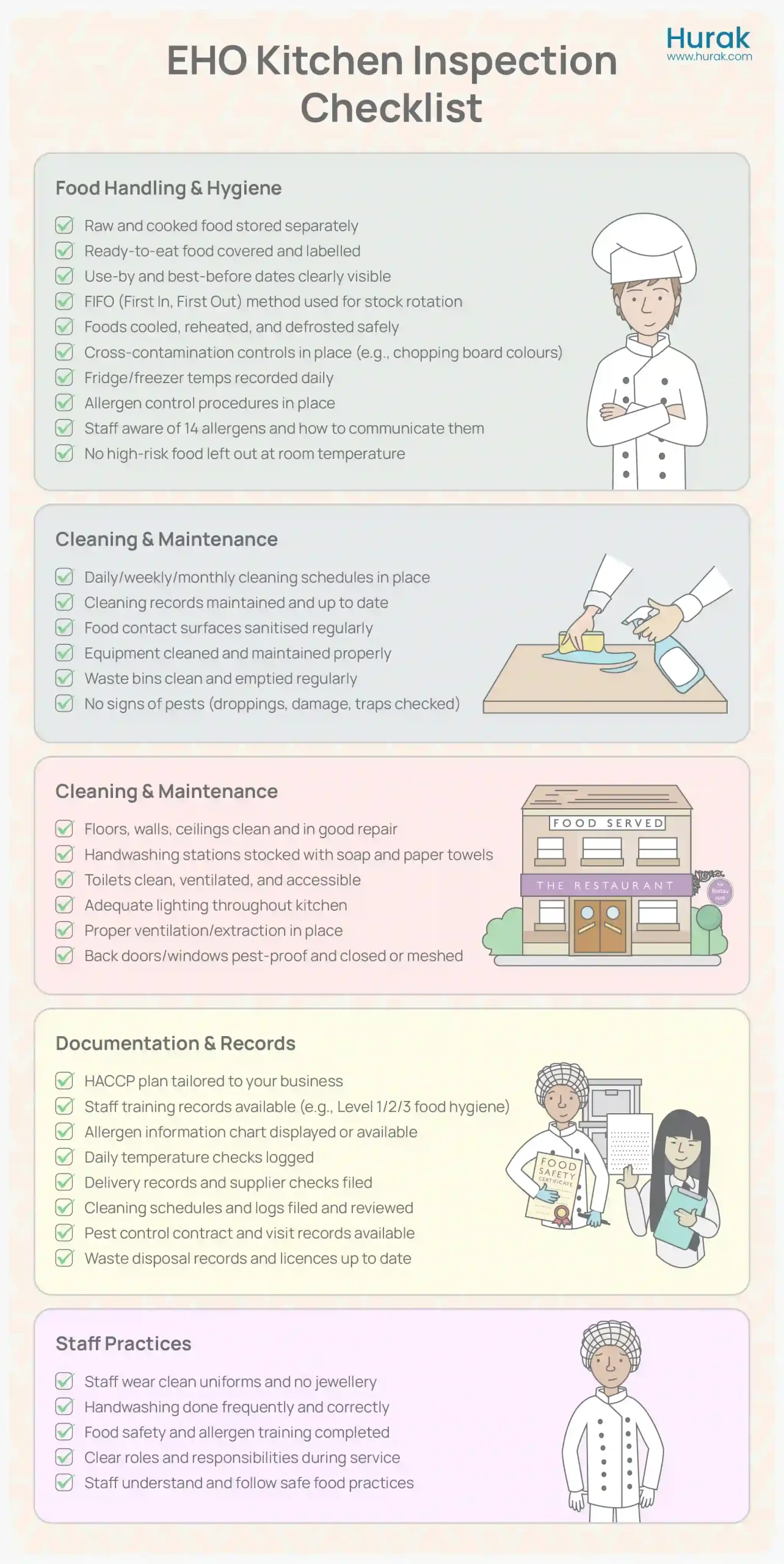
*Note: This checklist is based on official guidance from the Food Standards Agency and best practices for UK food businesses. It's designed to help you stay prepared for EHO inspections and maintain a 5-star hygiene rating.
A checklist is essential, but what's even more important is putting that checklist to good use every single day.
A checklist only works if your team knows how to use it effectively every day. Here's how to turn your EHO inspection checklist into a practical tool that drives daily food safety.
Allocate specific tasks such as cleaning, stock rotation, and monitoring fridge temperatures to individual team members and display responsibilities visibly.
Conduct quick daily or weekly self-inspections and review your records regularly to catch issues early.
Ensure that everyone understands HACCP principles and knows the significance of each task on the checklist.
Want to implement HACCP effectively? Explore our Level 2 HACCP Online Course to train your team and streamline operations.
Link your checklist with cleaning rotas, stock control, and training records to create a seamless workflow.
Let's understand how you can utilise the checklist in your daily kitchen operations and how maintaining it consistently can make inspections more manageable and smoother, with a real-life example.
Maria runs a fast-paced takeaway kitchen with three chefs and two helpers. During a surprise visit, the Environmental Health Officer (EHO) requested to review records on fridge temperatures, cleaning schedules, and allergen management. Maria had:
A printed environmental health inspection checklist filled out daily,
Digital logs of fridge temperatures updated every 4 hours,
A whiteboard displaying the cleaning rota and the names of the responsible staff.
The EHO was impressed, not just with the records, but also with how the team could explain their duties. Maria's kitchen earned a good hygiene rating.
Why it worked: Maria didn't just have a checklist - she built it into the team's routine. Every member knew their role, and the documentation was always up to date.
This is why using a food hygiene inspection checklist on a day-to-day basis is crucial - it not only helps you stay compliant with the Food Safety Act 1990 and avoid costly penalties, but also boosts your Food Hygiene Rating, builds customer trust, and protects your business reputation.
When an Environmental Health Officer (EHO) visits your premises, there are clear standards they must follow. They're expected to be professional, respectful, and transparent throughout the process.
Here are a few things that the EHO inspector must follow during their visit:
The EHO will always present official identification before commencing the inspection.
They must maintain courtesy, respect, and transparency at all times.
EHOs will highlight hygiene or safety risks and suggest practical corrective actions.
They will clarify what is legally required versus what is recommended as best practice.
If a breach of the law occurs, the officer must clearly state which law has been violated.
All required actions must be explained in writing for your understanding and records.
You'll typically be given time to address any issues, unless there's an immediate public health risk.
You're entitled to information on how to appeal any decisions or enforcement actions.
Using a structured food hygiene rating checklist isn't just about passing inspections it's about building a safe, efficient, and trusted kitchen environment. By following proper procedures and knowing what to expect from an EHO visit, you're actively protecting your customers, your team, and your business reputation.
A food hygiene rating checklist helps businesses prepare for inspections by ensuring hygiene standards meet the criteria set by local authorities.
Yes, both a kitchen inspection checklist and an EHO inspection checklist UK cover areas like food safety, cleanliness, and legal compliance during routine checks.
A food hygiene inspection checklist UK typically includes checks for food storage, staff hygiene, temperature control, and pest prevention.
An environmental health inspection checklist focuses on broader safety measures, including waste disposal, cleanliness, and food safety documentation.
A workplace inspection checklist in the UK covers general health and safety aspects beyond the kitchen, including fire exits, PPE, and equipment checks.
A kitchen health and safety checklist helps prevent accidents and injuries by ensuring safe working conditions in food prep areas.
Restaurant checklists can include opening/closing procedures, cleaning tasks, stock checks, and hygiene control to maintain consistent standards.
Courses
Upskill with job-ready training.
Mock Tests
Measure your learning progress.
Create an online video course, reach students across the globe and earn money