

Tips for Reversing Safely
Many individuals do not consider reversing to be a big risk because of the relatively slow impact speed; however, over 60% of all commercial vehicle accident claims include reversing, with heavy goods vehicles (HGVs) leading the pack with 19% of these claims, vans coming in at 15%, and corporate cars coming in at 10%.However, people can also get hurt in addition to risking damage to their cars and other property. Surprisingly, reversing accounts for nearly a quarter of all vehicle-related workplace fatalities.Poor rearward view and the driver�s failure to account for the vehicle�s size and obstruction are two factors contributing to many collisions. Most reversing collisions happen at modest speeds and might be avoided with basic safety measures and altered driving habits.Even experienced drivers occasionally require assistance while trying to reverse their cars in tricky situations. Attending a driving school that offers specialized courses on reversing and maneuvering in tight spaces can be incredibly beneficial. We can all contribute to lowering these statistics by taking extra care and attention. Here are some of our top suggestions for safer reversing.Safety Tips Before ReversingWalk around the car to check for dangers and ensure the path is clear of obstacles. If it�s blocked, is there another way to get there?Is the area where you need to be clear of other workers and/or pedestrians?Check for impediments from the overhead and ground levels. Think about whether your car will fit in this space.Before reversing, get out of your vehicle and verify if you can see behind you.Put on your hazard warning lights or use your horn to warn nearby workers and/or pedestrians.What is the distance that you intend to go backwards? If possible, steer clear of reverse-driving long distances.Keep an eye out for other people, pedestrians, and kids. Children are unpredictable and have no idea why you�re relocating the car.Safety Tips After ReversingUtilise the assistance of a trained banksman (enrol in a traffic marshal course to become a trained banksman) whose responsibility it is to direct traffic and maintain the reversing area clear of pedestrians. Always ask for assistance if needed rather than taking a chance of getting hurt.Make sure you comprehend the banksman�s signs before beginning the reversing manoeuvre when using one. Stop right away if you lose sight of him or her.Reversing into space is significantly simpler than doing so to enter moving traffic. When you deliver, start your reversing manoeuvre as soon as you get there.Use any floor-mounted recommendations that are there to precisely position your car.Reverse gently and cautiously, keeping the distance to a minimum. Be ready to cease right away.If the area you can see in your mirrors becomes blocked or you�re unsure of the distances, stop, exit your car, and inspect the area�s accessibility before attempting the manoeuvre again.Tips for Reversing SafelyTo lessen the risk involved with reversing automobiles, consider the following advice:Is reversing both prudent and required?Ensure the car�s rear-view mirrors are clean and correctly set to maximise rear vision.Consider installing blind spot mirrors or �fish eye� mirrors to improve side and rear vision.A long reverse should not be performed. Driving around the block or turning around may be safer and simpler.Visually scan the environment as you approach a reverse parking spot for obstructions.Any road should always be approached and exited from in a forward orientation.Never go backwards onto a major road from a minor road.Use the horn on the car to alert pedestrians before reversing over a path that is obscured or another area where there may be pedestrians, or add an audible reverse alarm.Whenever entering a roadway from a driveway, give way to pedestrians.Use the mirrors to examine both sides as you carefully reverse. Look back and keep looking back while you are travelling backwards.Vehicles in reverse do not have the right of way. If a car comes up behind you, stop and GIVE WAY until it passes.Someone might be able to direct the driver if there is any doubt about whether the path is clear due to blind spots. If not, the driver should exit the vehicle and look for obstructions.Don�t be embarrassed to ask someone to advise you when you reverse. Using a guide is less awkward than crashing a car.Before reversing from a parking space with a limited rear view, walk around the car and look for any hazards.When operating an unknown vehicle, practise backing up to become familiar with the vehicle�s turning radius, blind spots, and rear view.Use smaller automobiles for the greatest fit and simpler parking in confined parking spaces.Vehicle Safety DevicesExternal rear-view and side-mounted mirrorsRefractive lenses are installed in rear-view mirrors or CCTV systems to improve rear-view visibility for drivers.Fitted reversing alarms, either audible or with flashing lights�Sensing� or �trip� systems that alert the driver or cause the vehicle to stop when they detect an impediment close to or in touch with the vehicle

What is Anaphylaxis
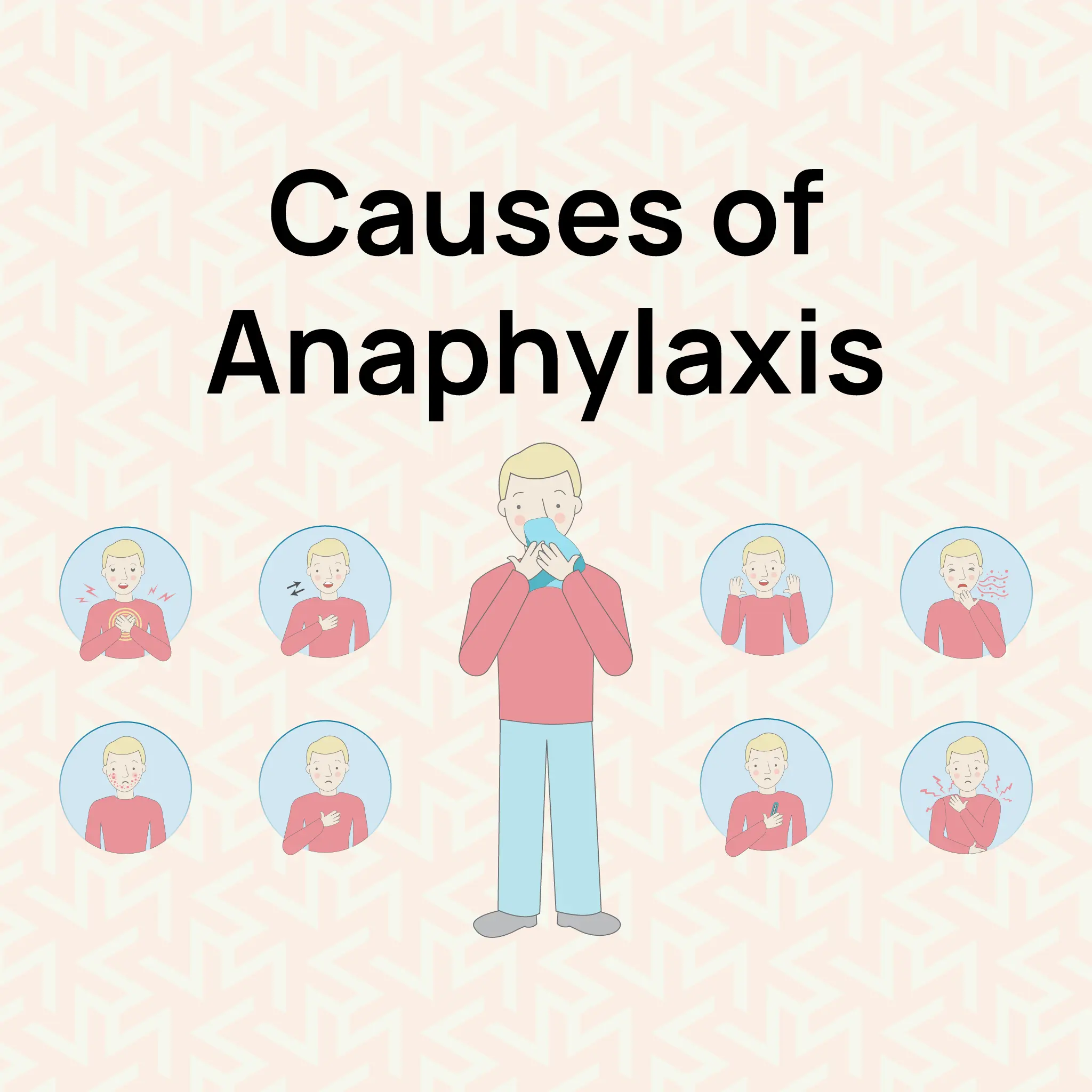
Anaphylaxis represents a frequent medical emergency, including a life-threatening acute hypersensitivity response. This condition is marked by a widespread allergic reaction affecting multiple bodily systems. If left untreated, anaphylaxis can quickly lead to respiratory failure and even death.What is AnaphylaxisAnaphylaxis is a severe allergic reaction that leads to a life-threatening condition. It causes systemic shock, leading to impaired respiratory function.Symptoms of an anaphylactic allergic reaction may include angioedema (swelling) affecting the face, neck, tongue, or lips.Respiratory distress can occur, potentially leading to shock, including hypotension and altered consciousness.What are the Causes of AnaphylaxisAnaphylaxis is triggered by various allergens, which are substances that provoke an allergic reaction. Common triggers include:Food: Peanuts, tree nuts (such as almonds and cashews), shellfish, milk, eggs, soy, and wheat.Insect Venom: Bee stings, wasp stings, and other insect bites.Medications: Antibiotics (like penicillin), nonsteroidal anti-inflammatory drugs (NSAIDs), and certain vaccines.Other Substances: Latex, chemicals, and even exercise-induced factors in some individuals.What are the Signs and Symptoms of AnaphylaxisThe signs and symptoms of anaphylaxis can develop rapidly and affect multiple organ systems:Respiratory System: Difficulty breathing, wheezing, throat tightness, and coughing.Cardiovascular System: Drop in blood pressure (hypotension), weak or rapid pulse.Skin: Itching, hives symptoms (urticaria), redness, and swelling (angioedema) of the face, lips, tongue, or throat.Gastrointestinal System: Nausea, vomiting, abdominal pain, and diarrhoea.Neurological System: Dizziness, confusion, and loss of consciousness.What are the Stages of an Allergic Reaction?Allergic reactions generally involve several stages, varying in severity and duration depending on the individual and the allergen involved. Here are the typical stages:Exposure: This is the initial stage where the person comes into contact with the allergen, whether through ingestion, inhalation, skin contact, or injection (as with insect stings).Sensitisation: In this stage, the immune system recognises the allergen as a threat and starts producing specific antibodies against it (IgE). This sensitisation process may occur over time and can involve repeated exposures to the allergen.Activation: Upon exposure to the allergen, the antibodies trigger the release of chemicals such as histamine from mast cells and basophils in the body. This release leads to the onset of allergic symptoms.Occurrence of Symptoms: This stage involves an allergic reaction, which can vary widely depending on the allergen and the individual's immune response. Symptoms can affect various systems, including:Skin (itching, hives)Respiratory system (wheezing, difficulty breathing)Gastrointestinal system (nausea, vomiting)Cardiovascular system (rapid heartbeat, drop in blood pressure).5. Resolution: The symptoms typically disappear after removing or neutralising the allergen (e.g., by medications like antihistamines or epinephrine).The resolution stage may vary in duration, depending on the reaction's severity and the treatment's effectiveness.How is Anaphylaxis PreventedPrevention of Anaphylaxis is important for immuno-compromised people, who are vulnerable to allergens. Preventing anaphylaxis involves:Medical Alert Identification: Wear medical alert jewellery (e.g., bracelets) indicating allergies and carry an epinephrine auto-injector.Education: Educate oneself and others about triggers, symptoms, and emergency response protocols.Allergy Testing: Undergo allergy testing to identify specific triggers and develop a management plan with healthcare providers.Food Allergy Management: Properly managing allergens during food processing and packaging is crucial to prevent cross-contact contamination. Key methods for allergen control include:Clear Allergen LabellingProper RefrigerationStaff and Equipment HygieneColour-Coded UtensilsImplementing the HACCP System: Process and PrinciplesWhat is the Treatment of an Anaphylactic Allergic ReactionImmediate treatment of anaphylaxis involves administering epinephrine (adrenaline) via an auto-injector device (such as an EpiPen) to counteract the allergic response. Additional measures may include:Monitoring: Continuous monitoring of vital signs (blood pressure, pulse, and oxygen saturation).Supportive Care: Medicinal treatment includes oxygen therapy, intravenous fluids to maintain blood pressure, and medications like antihistamines and corticosteroids to reduce inflammation.Emergency Medical Attention: Prompt transfer to a hospital emergency room for further evaluation and management.Ready to Learn More?Knowing how to manage anaphylaxis is important in emergencies, but there's more to first aid. Our First Aid courses offer complete training to help you handle critical situations. Whether you want to improve your skills or workplace safety, these courses help build confidence and expertise. View our Emergency First Aid at Work (EFAW) and Level 3 First Aid at Work courses. These courses meet the UK legal requirements and help you keep people safe.What are the Types of Anaphylactic ReactionsAnaphylaxis can be classified into different types based on triggers and clinical presentation:Food-Induced Anaphylaxis: Triggered by ingestion of allergenic foods.Insect Sting Anaphylaxis: Caused by venom from insect stings or bites.Drug-Induced Anaphylaxis: Reaction to medications or vaccines.Exercise-Induced Anaphylaxis: Triggered by physical exertion in conjunction with specific factors.Idiopathic Anaphylaxis: Cases where the trigger is unknown.ConclusionAnaphylaxis is a serious allergic reaction that must be immediately identified and treated to prevent life-threatening complications. Understanding the causes, signs, treatment options, triggers, types, and prevention strategies empowers individuals to effectively manage and reduce the risks associated with anaphylaxis. For those with known allergies, proactive measures are essential to ensuring safety outcomes in an anaphylactic emergency.

How To Perform the Primary Survey Using the DRABC Steps
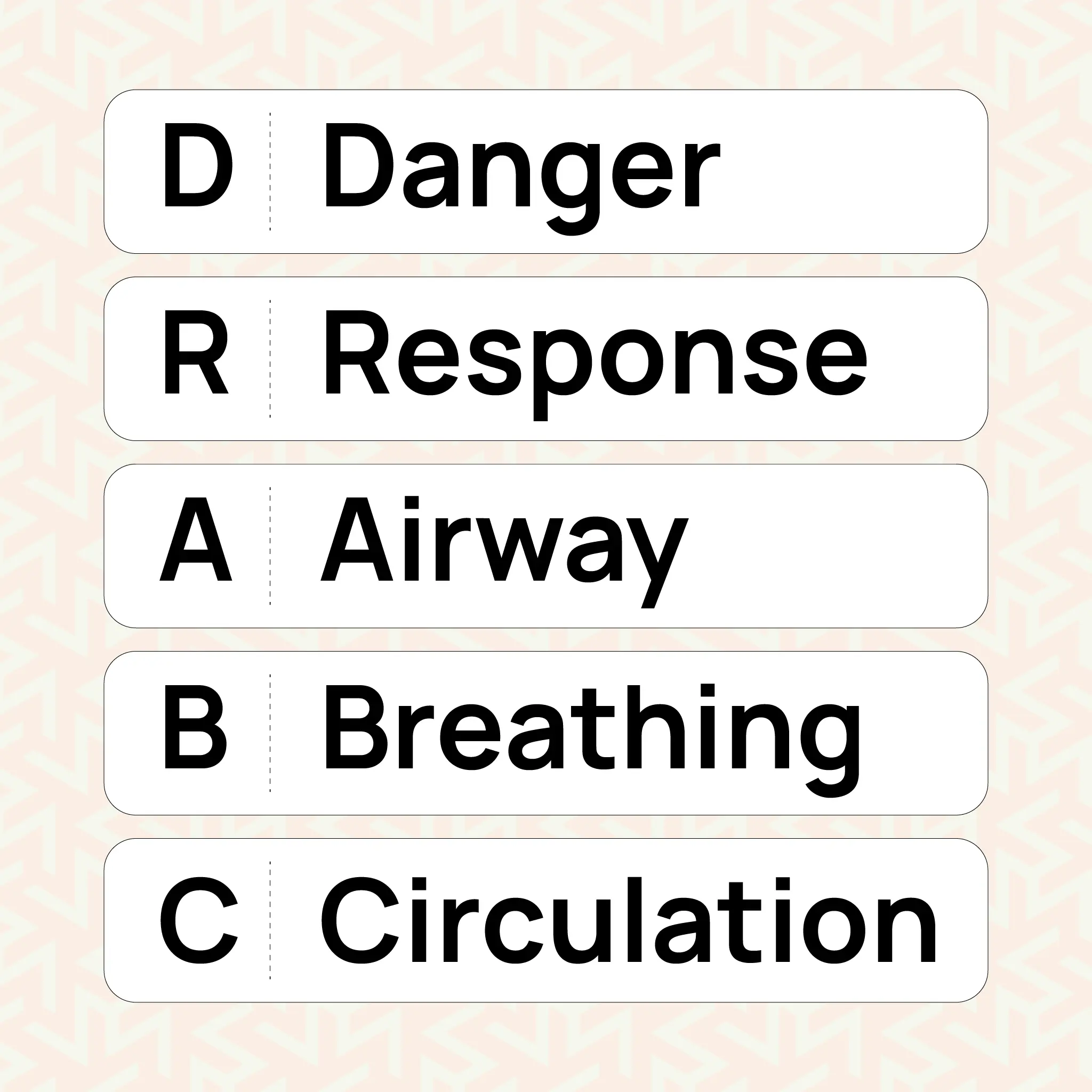
When someone is unconscious, their life is in danger. Their airway might be blocked, they may not be breathing, and their blood circulation could have stopped. It is important to follow the primary survey steps to assess casualties in the order of DRABC: Danger, Response, Airway, Breathing, and Circulation. Remember to take quick action because brain damage or even death can happen quickly. A secondary survey is performed after completing the primary steps of first aid.Primary Survey in First Aid Using DRABCWhen helping someone in an emergency, you always start with the primary survey. This means you quickly assess what is happening and the person's needs.The primary survey uses the letters DRABC to help you remember the steps: Danger, Response, Airway, Breathing and Circulation.D - Danger: First, you check for danger around you, such as oncoming traffic or a falling object.R - Response: Next, see if the person responds. Gently shake their shoulders when you talk to them. Are they awake or unconscious?A - Airway: Then, make sure their airway is clear. That means checking if anything is blocking their breathing passage.B - Breathing: After that, check if they're breathing normally. Look, listen, and feel for any signs of breathing.C - Circulation: Finally, check for signs of circulation, like a pulse. This tells you if their heart is beating.Knowing what to do next could help save someone's life, so it's important to follow these steps in the correct order.DRABC StepsDANGER - 1st Step of the Primary Survey DRABCThe first thing to do in an emergency is to check for dangers. Look around to see if anything could harm you, the person needing help, or anyone nearby. This helps you decide if it's safe to go close to someone who needs help.WHAT TO DOIf you see any hazards, like live electricity, try to make the area safe first. For example, if there's electricity, turn it off. Otherwise, use an insulating object, such as wood or plastic, to move the person away. When there is a risk of electricity, do not touch them directly.When you are sure it is safe, you can approach the person who needs assistance. But if it's still not secure, don't go near them. Instead, get emergency medical helpRESPONSE - 2nd Step of the Primary Survey DRABCA person can lose consciousness when something disrupts the brain's normal functioning. Here are some signs that someone might be unconscious:They can't respond to simple questions or touch.They might not realise when they're in danger and can't protect themselves.They can't clear their airways by coughing or swallowing. This means saliva, blood, vomit, or objects could block their breathing tubes. The tongue, which becomes floppy, might also fall back and block the throat.WHAT TO DOFirst, try to determine whether the person is unconscious by asking simple questions or telling them to do something simple, such as "What's your name?" or "Open your eyes," and gently shake them. If they don't respond, they're probably unconscious. Don't shake them vigorously, especially if they're children or babies.Place the individual in the side position, and examine his airway, breathing and pulse.If the unconscious person is breathing and has a pulse, keep them in the side position. Ensure their airway remains open and clear, and monitor their breathing and pulse regularly until medical assistance arrives.�How to Keep the Unconscious Person in a Side PositionThis is also called the lateral, recovery, or stable side position.Kneel beside the person.Straighten their far arm out, perpendicular to their body. Bend their near arm at the elbow and place it across their chest, with the fingers near the far shoulder.Bend their near leg up to the right angle of their body.Hold the shoulder and hip closest to you, gently rolling them onto their side. Their top leg should rest on the ground with the thigh at a right angle and the calf parallel to the straight leg.Rest their uppermost, bent arm on the elbow of the straight arm.the person is a child older than 1 year, gently tilt their head back. Their face should be slightly downwards so any fluid can drain from their mouth, and their tongue can fall forward, away from the airway.Pro Tip:When someone is unconscious, act fast. Use DRABC: Danger, Response, Airway, Breathing, Circulation. Brain damage or death can happen quickly if you delay.AIRWAY - 3rd Step of the Primary Survey DRABCNow, ensure the person's airway is clear. If they're unconscious:Gently tilt their head back and lift their chin with your hand on their forehead.Peep in their mouth to check whether something is obstructing their passageway.What to Do: If the person is responsiveCheck whether anything is obstructing their airway and causing difficulty breathing.If you see something, encourage them to clear it by coughing or using their hands.For adults and kids, you can help them by giving back slaps or abdominal thrusts. For babies under a year old, you can help them with back blows or chest thrusts.Once the blockage is cleared, move on to the next step.What To Do: If the person is responsiveCheck whether anything is obstructing their airway and causing difficulty breathing.If you see something, encourage them to clear it by coughing or using their hands.For adults and kids, you can help them by giving back slaps or abdominal thrusts. For babies under a year old, you can help them with back blows or chest thrusts.Once the blockage is cleared, move on to the next step.What To Do: If the person is unresponsiveIf you see something, try to remove it carefully. But don't put your fingers in their mouth if you can't see anything, as you might push a blockage deeper.BREATHING - 4th Step of the Primary Survey DRABCBreathing should be regular, quiet, and easy. Tilt the head back, watch the chest for movement, and listen for breathing sounds. Do this for about ten seconds to see if air comes from the mouth or nose.WHAT TO DOIf they're unresponsive and not breathing normally, call emergency services immediately. If you know CPR, start with rescue breaths. If not, do chest compressions. If there's an AED nearby, ask someone to bring it.Giving Rescue BreathsMouth-to-mouth resuscitation is the best way to give rescue breaths. Mouth-to-nose resuscitation is used for a jaw injury or if the person needs to be revived in water. Mouth-to-mask resuscitation is done by trained people to avoid direct contact, especially if the person might have a disease like hepatitis or HIV.Typically, 30 compressions followed by 2 rescue breaths are performed in case of abnormal breathing.Mouth-Mouth ResuscitationKneel beside the person.Lay them on their back.Gently tilt their head back and support their jaw with your fingers. Don't press on their throat. Their mouth should be slightly open.Pinch their nose closed. Take a deep breath and cover their mouth with yours, sealing gaps.Keep their head tilted and give 2 breaths, enough to make their chest rise slightly.Start compressions as recommended.When they start breathing again, please put them in the side position and check their airway, breathing, and pulse regularly.Follow similar steps for mouth-to-nose and mouth-to-mask resuscitation but adjust for the different techniques.CIRCULATION - 5th Step of the Primary Survey DRABCIn this step, check the person for any significant bleeding.What To DoIf they're bleeding heavily, try to stop it by pressing directly on the wound with a clean cloth or dressing. Then, call emergency services for help.Stay with them until help arrives. Try to keep them calm and reassure them that help is coming. If they're not bleeding but still unresponsive, put them in the recovery position. This helps keep their airway clear if they vomit.Cardiopulmonary Resuscitation (CPR)If someone's heart has stopped, CPR is vital to keep them alive until help arrives. CPR is exhausting, so it's best if two people can take turns to keep the rhythm right. Remember, even if you're not trained, attempting CPR is better than doing nothing.What To Remember During an EmergencyPlease don't go near the person unless it's safe. Check for danger to yourself, others, and the injured person first.Stay as calm as possible, even though you might feel upset, and try to reassure the injured person.Time is significant.Don't move the person unless you have to for safety reasons.Please don't leave them alone. Get someone to call for medical help straight away. But if you're alone and help won't come soon, you'll need to go for help yourself. Call 999 or the emergency number in your area.Keep messages to the emergency services short: say where you are, what's happened, how many people are involved, and how badly they're hurt.Please don't give them anything to eat or drink.First-Aid TrainingThe Emergency First Aid training course is designed for low-risk environments such as offices and small retail stores. It gives participants the fundamental knowledge and skills to effectively manage emergencies in these settings.Get Trained in All First-Aid SkillsFirst Aid CoursesBook NowRated Excellenton major review sitesFAQsWhat does DRABC stand for in first aid?DRABC in the first-aid primary survey stands for Danger, Response, Airway, Breathing and Circulation.Should you carry out a primary survey on every casualty?Use a primary survey and apply the DRABC steps whenever you witness a casualty, such as an accident or a fall, provided it is safe to approach the injured person.What is the purpose of the primary survey?The purpose of the primary survey is to treat life-threatening casualties quickly. These accidents could include airway blockage, breathing difficulties, shock or a brain injury.How can you assess the responsiveness of a casualty?First, check if the person is unconscious by asking simple questions and gently shaking them. If they don't respond, they're likely unconscious. Avoid shaking them vigorously, especially if they're children or babies. Next, put the person in the side position and check their airway, breathing, and pulse.How many compressions must be performed in case of abnormal breathing?Typically, 30 compressions followed by 2 rescue breaths are performed in case of abnormal breathing.
How To Conduct First Aid in a Road Accident
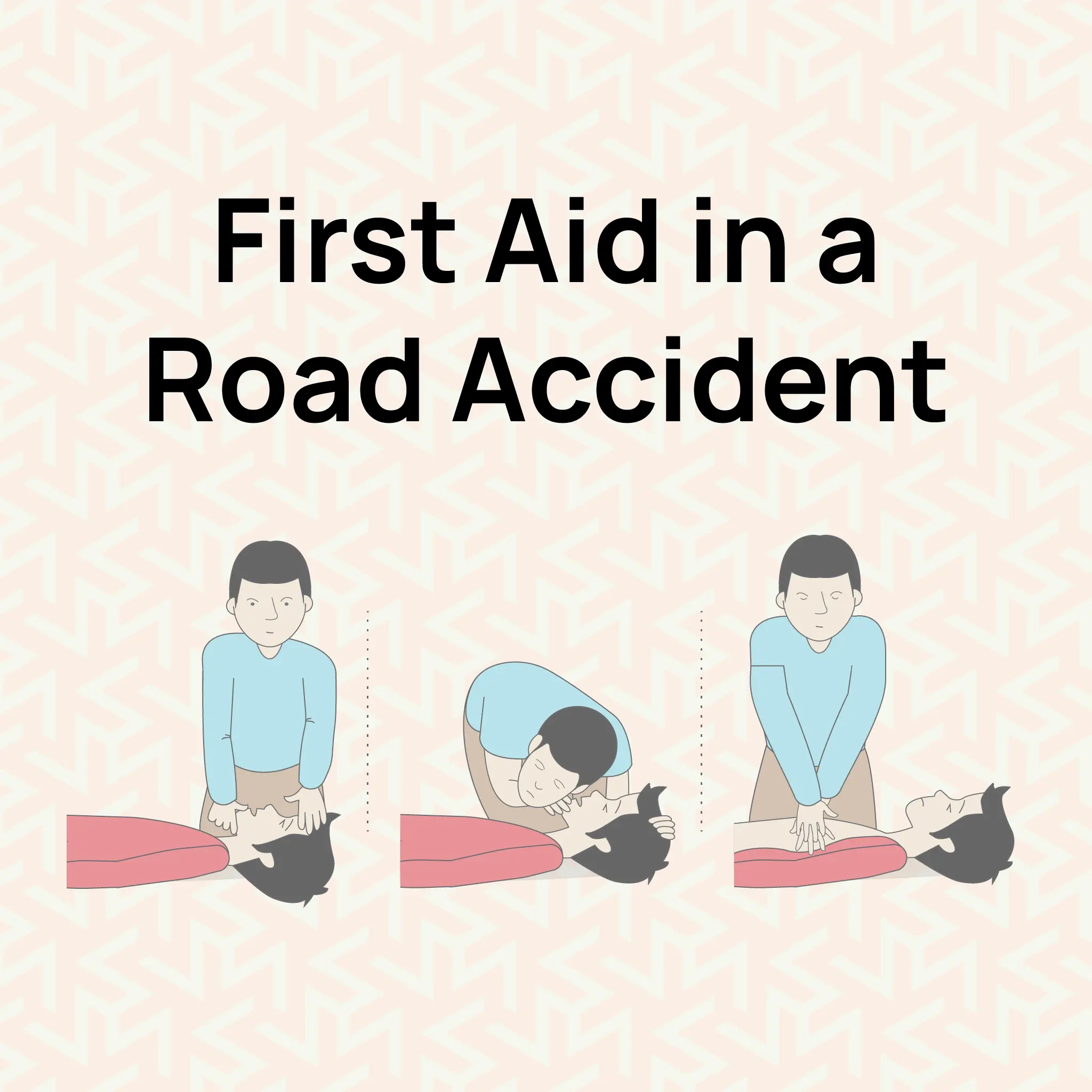
Traffic accidents can be small incidents like bicycle accidents or more severe ones like car crashes. It is important to make sure the area is safe before you help anyone who has been hurt. This will keep you, injured people, and other drivers safe.Once you have confirmed the safety of an area, take a quick look at the people who are hurt. Decide who needs help the most urgently. Always conduct first aid on a casualty who is not breathing before you help anyone else.Call 999 for emergency help. Inform them about what has happened. This includes information such as:The number of people who are hurtThe age of the injured peopleAre the injuries critical or non-critical?What To Do If You Witness a Road AccidentIf you come across a road accident, a step-by-step method should be followed:Scene Safety AssessmentWhen you approach an accident scene, safety comes first. To avoid further injuries, ensure all traffic stops, and everyone knows about the accident.Keep an eye out for any oncoming traffic that could pose a danger. Check for fuel spillage or fire risks, and turn off car ignitions if possible. Use hazard lights and warning triangles if available.If there are other people around, ask them to call emergency services. If alone, assess the situation and help anyone with life-threatening injuries first.Check the Quiet Ones FirstAlways prioritise checking quiet and motionless individuals first. Check if they are responsive and breathing. If they are unresponsive but breathing, position them to keep their airway clear and keep them warm.Administer CPR on Unconscious PeopleIf someone is not breathing, you may need to administer CPR. Call an ambulance immediately if you have not already done so. Only move an unconscious person from a vehicle if there is an immediate danger.Determine the Safety of Conscious PeopleConscious casualties should be moved to a safe area and kept warm and calm. Look out for any severe bleeding or life-threatening injuries and treat them first. Monitor anyone trapped in a vehicle and notify emergency services immediately.Be Careful How and When You Move ThemOnly remove a motorcyclist's helmet if they are unconscious, and it is necessary to assess their breathing. If a casualty is lying on their back unconscious and breathing, roll them into the recovery position with help to avoid twisting their spine.The Recovery Position:To place someone in the recovery position, straighten their legs. Remove any glasses or bulky items from their pockets. Position the nearest arm at a right angle to the body, with the palm facing upward. Bring the other arm across the chest. Place the back of the hand against the nearest cheek. Lift the far knee and gently roll them onto their side by pulling on the far leg.If they are conscious and lying on the road, encourage them to stay still and support their head and neck until help arrives.Following these steps, you can provide crucial assistance at a road accident scene and help keep everyone safe until professional help arrives.Assessing an Injured Person after a Road AccidentWhen dealing with someone hurt in a road accident, remember the primary survey DRABC steps: Danger, Response, Airway, Breathing, and Circulation. After assessing the casualty's danger and response, carry out the ABC steps.AirwayResponsiveIf the person is not responsive, ask them loudly if they are okay. Check if they can open their eyes. If they respond, you can leave them as they are until help arrives.While you wait, keep checking if they are:Awake and alertResponding to your voiceNot responding at all (unconscious)UnresponsiveIf there is no response, gently lay them on their back. Place one hand on their forehead and gently tilt their head back. Lift their chin using two fingers to move the tongue away from the throat. Avoid pushing on the mouth floor, as this can block the airway.If you suspect a neck injury, use the jaw thrust technique: place your hands on either side of the head. Gently lift their jaw forward and upwards without moving their head.BreathingTo check if they are breathing:Look for their chest rising and fallingListen for breathing sounds over their mouth and noseFeel their breath against your cheek for 10 secondsIf they are breathing normally, put them in recovery to keep their airway clear.Gasping or irregular breathing is not normal. If they are not breathing normally, call 999 for an ambulance and start CPR.CirculationIf their breathing is not normal, start chest compressions immediately. Gasping and irregular breaths after a sudden cardiac arrest are not expected. In this case, administer CPR right away.If they are not breathing, call 999 for an ambulance and start CPR.Supporting Those with PTSD After Giving CPRPerforming CPR can be a tough experience for everyone involved. The situations in which you need to perform CPR vary greatly.For example, you might see a stranger collapse on the street, and you are the only one there to help. Or maybe you have to do CPR on someone you love, even a child.Even people who have done CPR many times, like paramedics, nurses, and doctors, can find it hard emotionally.PTSD, which stands for post-traumatic stress disorder, is a type of anxiety disorder that can happen after really scary or stressful events. CPR situations often fit into this category.It is good to know the signs of PTSD so you can recognise if you or someone else might be dealing with it. Symptoms can last a long time and affect your daily life.Common PTSD symptoms include:Having nightmares or flashbacks of the event.Feeling alone or isolated.Feeling easily annoyed.Feeling guilty.Having trouble focusing.Having problems sleeping, like not being able to sleep well.Get Trained in All First-Aid SkillsFirst Aid CoursesBook NowRated Excellenton major review sitesGetting the Right Help After a Road AccidentGetting the right help after a traumatic experience such as a road accident is essential. This could mean talking to family, friends, or people you work with. It might also mean getting counselling.There are online groups and places where you can find support from others who have been through similar things. Sharing experiences can help a lot.Many charities and groups help with mental health, such as Mind, SANE, or Anxiety UK.Your doctor (GP) can also give extra help, especially if you feel anxious or restless.If the crash involved a rideshare service such as Uber or Lyft, injured individuals may also need legal guidance to understand insurance coverage and liability, and to pursue a rideshare injury claim.How To Treat Shock After a Road AccidentAccidents, like car crashes, falls, or near-drowning incidents, can often trigger shock. Even if you witnessed the accident, it can still affect you.Symptoms of ShockShock can show up in different ways, like:Feeling pumped up with adrenaline.Shaking or feeling jittery.The feeling of sickness.Having a tight chest.Finding it hard to think clearly.Feeling aggressive or agitatedExperiencing hallucinationsFeeling numbEveryone reacts differently, and there is no right or wrong way to feel after something scary happens.Supporting Someone in ShockIf someone you know is in shock, here are some things you can do to help:Please make sure they are safe and try to keep them calm.Help them take slow, deep breaths.Please do not ask them to make any big decisions right away.Let them know that how they are feeling will pass.Help them find ways to manage any pain they might be feeling.Explain that adrenaline can hide pain so that they might feel it later.Remember, it is important to give yourself time to heal, too. Getting support from friends, family, or professionals can help.Take care of yourself by staying active, eating well and following a routine. Finding ways to relax can make a big difference during tough times.ConclusionTraffic accidents, whether minor or severe, can significantly impact those involved. Confirming safety before offering help at the scene for yourself and others is important. Prioritise first-aid for the most severely injured and call emergency services promptly. Assess the airway, breathing, and circulation of those who are injured. Offer support to those affected by shock or PTSD after the road accident. Taking care of others and yourself after a traumatic event is important for healing and well-being.
What is Epilepsy?
Millions of individuals worldwide are impacted by epilepsy, including those who support or care for those with the disorder. It is a typical neurological illness that can afflict anyone, regardless of age, sex, or race, and frequently results in seizures.The definition of epilepsy, key distinctions between it and seizures, indications and symptoms of a seizure, ways to support someone with epilepsy, and what to do in the case of a seizure are all covered in this article.What is epilepsy?A frequent disorder that affects the brain and can result in seizures is epilepsy. Brain electrical activity surges, known as seizures, can cause symptoms like losing consciousness, trembling, or falling.Epilepsy typically begins in childhood or after age 60 and lasts a lifetime. Epilepsy symptoms can sometimes be controlled with medicine, and the illness occasionally gets better with time. However, epilepsy is a chronic disorder for many people.Each individual�s case of epilepsy has a unique set of causes, which are numerous and varied. A severe head injury, a stroke, or an infection of the brain are a few typical causes of brain damage.There are various varieties of epilepsy as well as various causes. Four different forms of epilepsy have been identified by the International League Against Epilepsy (ILAE).Focal epilepsy � seizures that start on just one side of the brain.Generalised epilepsy � starts on both sides of the brain.Combined generalised and focused epilepsy � are a part of combined general and focal epilepsy.Unknown � Sometimes, it is difficult to pinpoint the origin of these kinds of seizures.What are the differences between epilepsy and seizures?An electrical surge in the brain, known as a seizure, can result in aberrant muscle tone, movements, behaviours, perceptions, and levels of consciousness. Depending on whatever portion of the brain is affected, seizures have a distinct impact on various people. People frequently fall to the ground during generalised seizures, for instance.Numerous factors, including drug usage, high blood sugar, and fever, can cause seizures. It is typically accepted that someone has epilepsy if they experience two or more seizures separated by at least 24 hours.It is significant to remember that seizures can occur in people who do not have epilepsy. Seizures are necessary for epilepsy, even if they don�t have overt consequences. Seizures, as was previously established, are not always brought on by epilepsy and can be brought on by various factors.Making the distinction between seizure triggers and epilepsy causes is crucial. For instance, a person with epilepsy who is sleep deprived may experience a seizure. The seizure is brought on by insufficient sleep, but brain damage may be the underlying factor in their epilepsy. In this case, the seizure rather than the lack of sleep is what has triggered their epilepsy.Among the causes of epilepsy are:A brain infection.A lack of oxygen during birth.Genetics.Alzheimer�s disease.A brain or head injury.A brain tumour.Drug or alcohol misuse.A stroke.Seizure-inducing factors include:Missing medication.Changes in hormones.A fever is especially common in children.Stress.A lack of sleep.Alcohol and recreational drugs.Skipping or missing meals.Over excitement.Flashing and flickering lights.What are the symptoms and signs of epileptic seizures?Depending on the type of seizure a person is experiencing, their signs and symptoms will change. Not all seizures are accompanied by strange shaking or body movements, and some last only a few seconds.The following are some symptoms and warning indicators that someone may be suffering an epileptic seizure:Rapid blinking.Breathing problems.Appear confused or in a daze.Unconsciousness.Losing muscle tone.Changes in hearing, vision, taste, smell and feel.Difficulty talking.An increased heart rate.Lip-smacking, chewing motions, or rubbing hands and fingers.Uncontrollable body movements, shaking or jerking.People must be aware of a seizure�s warning signs and symptoms to recognise it quickly and render aid if necessary.Particularly if they persist for more than five minutes or the victim stops breathing, seizures can be exceedingly dangerous. Knowing how to assist someone with epilepsy during a seizure is vital since seizures can cause other injuries, such as bruises, scrapes, and head trauma.Our First Aid at Work training course describes the various reactions to various kinds of seizures, how to spot an emergency, and how to assist a person after a seizure.How to help someone with epilepsy?Each person with epilepsy is different; thus, the kind of support they need will differ. You can only provide someone with the most suitable and helpful assistance if you comprehend how their disease affects them.How to respond to seizures?Respond as follows if someone is having a seizure:Do:Remove any dangerous things from the area.Remain composed, reassuring, and by their side until the seizure is done.After the seizure, check in with them to see if they�re alright and give them a seat.Don�t:Do not grab them, restrain them, or make any sudden motions.Presume that they are aware of what is taking place.Try to entice them over or provide them with food or beverages.'Call 112 or 999 if:A person has a series of seizures without gaining awareness between them.It is their first seizure.More than five minutes pass as the seizure continues.The individual is hurt, or you believe they require medical attention.As previously said, the sort of seizure the person is experiencing will determine how you should react. Take a look at one of our first aid training courses if you want to understand how to handle various seizure types and how to spot an emergency.Some people will recover from a seizure immediately, while others may need a few minutes or even hours. People may experience confusion and fatigue during the postictal state, which is the period following a seizure. The best method to provide support is to be there for the person and stick with them till they recover.Learning about it and spreading as much information as possible to increase awareness are two of the most significant things you can do for a friend with epilepsy. The complexity of epilepsy is more than most people realise, and any knowledge gained is beneficial to all those who are affected.
Event Stewards Stewarding at Spectator Events
IntroductionThe requirement for security is great as the events sector begins to thrive again. Frequently, when someone works at an event or venue, everyone immediately thinks of the security guard position. The function of an event steward is sometimes disregarded, but if you�ve ever attended a football game, concert, festival, or other public events, you�ve probably come across stewards and seen the crucial work they do. But what does a steward do during a gathering? What exactly do they do? Ultimately, they are there to protect you and ensure that your experience is safe and pleasurable.�Event StewardsEvent Stewards are skilled team members who are crucial to the smooth operation of an event and the safety of all attendees. Stewards can perform a wide range of duties and have many distinct responsibilities. Stewarding at Spectator Events includes being a comforting, approachable presence; controlling who is allowed entry to the event; and taking on the duty of handling any anti-social behaviour. They can also conduct any necessary searches, although legally speaking, they must be qualified to do so, such as having a Level 2 Certificate in Spectator Safety. Additionally, to conduct searches, they must be employed directly by the stadium or arena where the event occurs. To ensure that an event proceeds as planned while ensuring the health and safety of the audience, event stewards play a crucial role in managing crowd management. They perform their duties at gatherings like sporting events, music festivals, protests, vehicle rallies, and important transportation hubs.Role of a StewardStewarding at Spectator Events means a great deal of responsibility for keeping an eye out for any dangers that might endanger everyone attending a particular event. As an event steward, you have many duties before, during, and after an event. One of them is to avoid the location being too crowded. This is crucial since crowded gatherings are frequently the source of harmful accidents, and experienced stewards can stop this from happening. To lead people out during an emergency evacuation, they must also be aware of the locations of the fire exits and other escape routes.Additionally, they can conduct ticket entry checks and traffic/pedestrian management (crossing points, pedestrian pathways) to guarantee that automobiles and pedestrians can enter and exit the area in a secure, orderly manner. To learn more about the role and responsibilities of an event steward, enrol in a stewarding course today.Importance of StewardsThe presence of stewards has several advantages, and it is now necessary when planning events. Any type of event planning is never simple or easy; it can be stressful and involve complications. An event steward makes it possible to assign various jobs to qualified individuals who can subsequently complete them, making everything operate more smoothly. When planning an event, it is crucial to conduct a risk assessment since it enables you to look for any potential safety hazards. This is also an excellent technique to estimate the number of stewards required for this. The following is a helpful generalisation for selecting an adequate number of stewards: At least one steward is required for every ten attendees, per location, for groups of 1 to 100. The number of stewards needed will also be determined by the access and egress plan, which should be carefully established. You may require a certain number of stewards to check tickets and guide the public as they enter, but once the majority have arrived, their tasks may shift to other aspects of the event or getting the venue or site ready for everyone to safely leave.Another significant benefit of stewarding is that it makes the event feel safer, increasing attendees� enjoyment. They provide reassurance to attendees and security for the audience and the venue. Stewarding at spectator events should be done professionally as the stewards are frequently attendees� initial point of contact. It is crucial to act professionally so that people know they have a reliable person they can turn to if they need assistance with anything. Like with many events, there is always a chance that someone would go to cause trouble and not for the proper reasons. Any problem like this can be immediately resolved by a steward stepping in.Preparation for an EventPreparation is one of the most vital components, regardless of the event�s size. Event stewards should always be well-prepared because an equipment check is one of the most important tasks they perform in advance. They must make sure everything is there and functional. They need to know they can do their jobs well and to a high standard because of this. Radio and battery checks are also conducted to ensure that all communication is crystal-clear and simple to receive. Before the event, time is mostly employed to identify potential issues so they can be resolved as soon as possible.An event would struggle to go as smoothly without a steward. Therefore, there is no straightforward response to the question, �What is a steward�s duty at an event?� because they participate in various aspects of events. They facilitate smooth operations, provide guests with a safe environment, and aid in keeping people safe. They reassure workers and attendees that anything could be handled professionally if the worst were to happen.
How to Plan the Safety of the People at Spectator events?
IntroductionManaging a crowd and spectators can be demanding and time-consuming. A single incident can swiftly turn a crowd that initially appears calm into turmoil. Event stewards must ensure that they are ready to handle it. Because crowds can be so unpredictable, it needs to be carefully managed.This management is your responsibility as the event steward. Whether it�s a sporting event, music festival, or fair, event stewards have a legal responsibility to protect the audiences� safety as much as is reasonably practical. Depending on the scope of the event, event stewards may be able to assign some tasks related to crowd control to staff members or outside vendors. Still, as an event steward, you are ultimately responsible for maintaining public safety.Pre-Event PlanningEvent Organisers should consider crowd safety even before selecting a location for their event. In selecting the safest, most suitable venue for your event, take into account the following aspects in the early phases of planning:1. Expected TurnoutForecast the number of attendees you expect by considering variables like advance ticket sales, attendance at past events, and the proposed level of exposure. Always be prepared to host more guests than you had planned.2. Types of VisitorsWhen making planning choices, consider the expected demographics of the spectators. For instance, will the majority of the audience be older folks who could require specific accommodations?3. Transportation System Analyse the transportation system in the vicinity of the chosen venue to see if it can accommodate the anticipated number of spectators.4. Venue SuitabilityTake note of the venue�s maximum capacity and compare it to that number to see if your event can accommodate it. Are there adequate restrooms, first aid stations, entrances, and exits?5. Excess SpectatorsCreate a plan of action for handling a packed venue to prevent a catastrophe. Avoid being taken by surprise by an unanticipatedly large and possibly tense crowd.6. Previous InformationUtilise your understanding of prior occurrences by drawing lessons from them. Consider adding extra security for a gathering with a history of the disorder.Planning for an EventLong before the event itself, crowd and spectator safety should be managed. Event stewards can reduce the risks, the earlier they plan and identify them. Avoid planning just general event preparation and then thinking about crowd and spectator safety management; instead, plan them simultaneously.For branding your event, use an online poster maker to create a poster. Crafting captivating visuals becomes effortless, saving time and effort.Assess Event�s RiskOnce a location has been selected, thoroughly consider the objectives of the event and look for any potential risks that could endanger the staff, volunteers, attendees, or the general public.According to UK legislation, you must do a risk assessment to determine what safety measures you should take. You can obtain comprehensive instructions on conducting a risk assessment by enrolling in a stewarding course.Crowd HazardsThere are too many crowd safety issues for event planners to cover here fully. Instead, use the following example of a crowd-specific risk to begin identifying potential risks for your event:Crashing into other individualsCrashing against stationary objects like barricadesSurging, swinging, or rushingTrampling underfootAggressive behaviour, especially amongst groups of opposing supportersRisky behaviour, such as scaling items, sprinting down steep inclines or hurling objectsIndividuals becoming entrapped, such as wheelchair users in a vast gatheringDrunk and disorderly bystandersVenue HazardsSlipping or tripping due to dim lighting or poorly maintained floorsmoving vehicles sharing a pedestrian�s pathstructural collapse, such as the falling of a fence or barrierobstructions that slow down trafficmalfunction of equipment, such as turnstiles; andPoorly designed lines impede crowd movement and cause crossflows as people cut through the crowd to get to other locations.Early Planning is Successful PlanningTo ensure an event�s success and become an event steward, enrol in a Spectator Safety course as soon as feasible. Our stewarding course is taught by experienced instructors who have a wealth of information and tools to teach you about monitoring spectators and dealing with crowd problems.
What Security Guards Can and Cannot Do?
IntroductionIt�s interesting to know what security guards can and cannot do, whether you�re thinking about working in security or are simply a member of the public.You will know if security guards can touch, search, or detain you after reading this article, whether you are out clubbing or shopping. So continue reading to gain a better understanding of your rights and the security sector.Security officers have less authority than police officers. Security personnel are typically more like regular citizens. They are no different from other members of the public in terms of rights.Every security guard must identify themselves by wearing their badge and licence visible to the public at all times on their uniform. You should alert the company the security guard works for if you notice them without a badge. If you misplace your badge as a security guard, you must immediately notify the SIA, but you may continue to work until a new one is delivered. If the SIA learns that someone is working without a badge, they have the right to revoke their licence or even take legal action against them for licence violations.What Security Guards Can Do?Can Arrest a CitizenAny public member would be within a security guard�s rights to arrest if someone was committing an offence or if a crime had already been committed and they had good reason to believe that someone was guilty. Security guards have no more authority in this sense than the general public, albeit they are permitted to make citizen arrests under certain circumstances. Security personnel are more trained in the physical actions required to arrest since they are in a position where they are more likely to use force. Only police officers have the authority to intensify a physical arrest.Can Detain a CitizenA security guard can detain you but must have a valid justification. They make a citizen�s arrest when they detain you, and Section 24A of the Police and Criminal Evidence Act outlines the procedures they must follow.They either observe a crime or have solid evidence to support their suspicions.To stop someone from hurting oneself or other people.To prevent someone from harming property.Stop someone from leaving the area before a police officer arrives to take over.Can Touch YouSecurity guards are only allowed to touch you while holding you in custody.Can Request a Physical SearchSecurity personnel have the right to ask to physically check you and any items you have on you before allowing you to enter a place. Additionally, they have the right to demand a physical inspection whenever you enter or leave a store for whatever reason, especially if they have cause to believe you have stolen something. This is perfectly legal.Only if you give your permission can a security guard search you, your bag, or your vehicle. They aren�t allowed to search you if you object. If you enter a club and ask them not to search your bag, they will likely reject your admittance and send you on your way.Again, if you decline the bag search after being stopped by a security guard who believes you are hiding stolen items in your bag, the guard may not search. If you continue to object, they will hold you until a police officer shows up so they can perform a legitimate and forced search.A security guard may only search someone�s possessions, such as a bag if the area has been left unattended and the guard is looking for a possible bomb threat. The security guard may inspect your belongings to identify you or locate any prescriptions that might be useful for your health emergency. When you are unconscious, they can inspect your backpack as well.Get your Legal SIA Licence by signing up for our SIA Security coursesSecurity CoursesBook NowRated Excellenton major review sitesWhat Security Guards Cannot Do?Cannot Use an Excessive Amount of ForceSecurity officers, concierge security, and mobile patrols are prohibited from using excessive force when effecting a citizen's arrest. Excessive use of force would make the arrest of the civilian illegal, which would harm the security guards and their employer's reputation, making proper incident reporting, witness statements, de-escalation reviews, and tools such as body worn camera footage increasingly important. Guards should not use more force than is necessary to detain an arrested person; physical force should only be used if the suspect resists. Additionally, restraint should only be applied while waiting for the police to arrive and take control of the issue.Cannot Carry a WeaponSecurity officers aren�t authorised to carry guns because they have the same legal rights as everyone else. They are not allowed to carry weapons on their person as a deterrent or to use them, whether it be pepper spray, batons, or a gun. Front-of-house security personnel are more likely to emphasise negotiation techniques than physical force.Since it is illegal to carry weapons in the UK, no one is authorised to carry weapons like guns, batons, tasers, or pepper spray, including security personnel. A set of handcuffs is the only thing a security guard possesses. These are not weapons; they are a tool for keeping a person when the security guard makes a citizen�s arrest, and they are only used until the police show up. Guards will be taught how to use handcuffs effectively and safely, although anyone in public is technically allowed to carry them. Handcuffs are allowed for citizen arrests.
Crowd Safety During Emergencies
IntroductionAn essential factor to consider in any crowd safety plan is how to evacuate spectators from events safely and effectively. It will undoubtedly save lives and ensure everyone is kept as safe as possible in emergencies.Preparations During an EmergencyEvery venue will have emergency lights, signage, and preparations to send guests to the appropriate emergency exit. The distribution and crowding of people inside the arena, stadium, or green field site may make some of these exits inaccessible during catastrophes due to safety issues brought on by the situation itself, incident management of threats from outside the venue, or the emergency itself.The crowd�s density will determine people�s typical movement during such emergencies. Therefore, if everyone takes the same exit route or takes a route without being aware of the potential of convergence up ahead, they may wind up contributing to that convergence and reducing or slowing it to the point where the exit flow fails.Designing evacuation contingency plans that tell people how quickly and in which direction to move, based on real-time information that can adjust to the distribution of the population in any given circumstance, can be demonstrated to be a crucial aspect of the safety plan for these reasons.Crowd SafetyCrowd safety and the actions of event organisers, safety management teams, and emergency services have never been more in the spotlight thanks to the Hillsborough Inquest verdict that the 96 victims in 1989 were unlawfully killed, as well as the German Courts� decision that the 2010 Love Parade tragedy, in which 21 people died.Building design, crowd psychology, the competence of crowd safety planners and management to ensure this can be tasked safely, supported by appropriately trained and competent safety stewarding staff to implement the evacuation, will be the main factors that will contribute to the ability of people to evacuate an open space or building safely. .banner-blue { border-radius: 10px; overflow: hidden; border: 2px solid #ccc; box-shadow: 0 4px 8px rgba(0, 0, 0, 0.2); background-color: #fdf9ee; } .book-now { color: white; background-color: #DF3D52; border: none; padding: 15px 60px; border-radius: 5px; cursor: pointer; font-size: 20px; text-decoration: none; } .book-now:hover { /*text-decoration: none;*/ color: white; background-color: #c33f50; } Get your Legal SIA Licence by signing up for our SIA Security courses Security Courses Book Now Rated Excellent on major review sites Crowd Behaviour TheoriesMany crowd behaviour theories were brought into crowd science over the 20th century. These include the well-known beliefs of Gustave Le Bon (1908), whose best-selling book �The Crowd�, written in 1895, was the first to identify perceived unfavourable characteristics of crowds. In the anonymity of the crowd, he claimed, civilised behaviour was replaced by primeval savagery, making mob behaviour unhealthy and aberrant. One of crowd science�s most influential early hypotheses was his (1908) �Group Mind Theory�. He said that when a person joins a group anonymously, they lose their sense of identity and accountability for their activities.These people believe that being in groups gives them a sense of strength and invincibility; this �contagion� causes people to degrade and turn to their animalistic impulses. Many of these crowd behaviour theories are no longer viable, and many are even viewed as dangerous to rely on (The Cabinet Office and Emergency Planning College, 2009).According to Anthony R. Mawson�s Social Attachment Model (Mawson AR 2005), being around familiar people and places has a calming effect and lowers the �flight� reaction, which can lead to stampeding and pushing. He claimed that social rules of behaviour do not fall apart that often.According to John Turner�s self-categorisation theory (Turner J 1987), catastrophes and emergencies can foster a sense of a shared identity or �we-ness�. As individuals flee a common threat, orderly, charitable, and cooperative behaviours would emerge.Crowd Behaviour ExamplesNumerous global catastrophes have occurred, and inquiry and analysis have revealed how this might be the case.2983 people died in the Twin Towers collapse in 2001. Later studies showed that even when people were aware of the threat, it could take minutes or even hours for them to leave a building. More than a general panic, this inaction contributed to the numerous fatalities. Before deciding to flee, people sought information to analyse (Fahy & Proulx, 2002). According to reports, several individuals left Tower 1 immediately, but many more continued with their �normal� activities. In 2001, individuals took about 45 minutes to leave the 90th floor.The July 7th London bombings were the subject of research, which revealed that people�s emotional responses to the explosion caused them to experience individual dread and suffering (Drury, Reicher, Scholfield, Langston, and Cocking 2007). However, during the evacuations, individuals behaved in a calm, orderly manner, and Londoners showed a sense of camaraderie by putting the needs of others above their own. No signs of fear could be seen, and despite the smoke-filled subway trains and platforms, there seemed to be a shared social identity, common aspirations, and solidarity to help others with the idea that others would do the same (Drury, 2016).Therefore, it would seem that people can retain social cohesion, resist panic, and show a high level of resilience when faced with difficulty and confusion.Spectator Safety CourseTo ensure an event�s success and how to prevent an emergency during an event, enrol in a Spectator Safety course.�Our stewarding course is taught by experienced instructors who have a wealth of information and tools to teach you about monitoring spectators and dealing with crowd problems.