

When Is an Accident Book Legally Required in the Workplace?
Understanding when an organisation is legally required to have an accident book is essential, not just for compliance, but also for creating a safer work environment. Businesses with 10 or more employees in the UK must keep an accident book to document injuries.�Even if your team is small, tracking any workplace injuries or incidents is essential for ensuring safety and complying with regulations. Having a clear record helps meet legal requirements and improve overall workplace safety and support your employees' well-being.Why Every Workplace Needs an Accident Book and How It HelpsAn accident book is an essential record that employers and employees use to document injuries, illnesses, or incidents at work. It ensures legal compliance, helps track safety trends, and is crucial in investigating how incidents occur.By identifying unsafe practices, the accident book aids in preventing future accidents and reducing workplace risks. Whether it�s a first aid accident book or a standard accident report book, keeping accurate records supports both safety and compliance.Accident Book Legal Requirements in the UK (SSCPR & RIDDOR)The accident book legal requirement in the UK is set out under SSCPR, and further reporting duties come under RIDDOR. If your organisation has 10 or more employees, the law requires you to keep an accident book under the Social Security (Claims and Payments) Regulations 1979 (SSCPR).�You also need to follow RIDDOR 2013 (Reporting of Injuries, Diseases, and Dangerous Occurrences Regulations), which means reporting certain serious incidents to the Health and Safety Executive (HSE).While both SSCPR and RIDDOR aim to protect employees and keep your workplace compliant, SSCPR focuses on record-keeping, and RIDDOR focuses on reporting specific types of incidents.Key Requirements for Employers to Keep an Accident BookEmployers must understand what should be recorded in an accident book to stay compliant and protect staff from future risks. Here�s a breakdown of the essential information you need to know about maintaining an accident book:RequirementsDetailsWho must keep an accident book?Employers with 10 or more employees working on the same premises and owners or occupiers of mines, quarries, or premises covered by the Factories Act 1961.What must be recorded?Any accident that causes personal injury to an employee must be recorded. The injured person or someone on their behalf can make the entry.How should the records be kept?The accident book must be in a format approved by the Secretary of State and readily accessible.How long should the records be kept?Once the accident book is complete, it must be preserved for at least 3 years from the date of the last entry.Essential Details to Record in an Accident BookThe injured party should fill in the accident details; however, under Regulation 25(3) of the SSCPR, someone acting on their behalf can also complete the record. The accident book should include the following information:Date and Time: The exact moment the incident occurred.Injured Person�s Name: The full name of the individual involved.Accident Description: A brief account of what happened.Injury Type: The specific nature of the injury sustained.Witnesses: Names and contact details of any individuals who witnessed the incident.Medical Treatment: Any medical care or treatment provided to the injured party.Further Actions: Any follow-up actions, such as investigations or safety measures. Physical vs. Digital: Which Accident Book Format is Required?Whether you keep a digital or physical accident book at work, it must be accessible and secure. While a physical book is often easier to access quickly, a digital version may pose challenges, such as login barriers or unfamiliarity with the system for the person reporting the incident. There's also a risk of losing or accidentally deleting digital records, which could compromise important information.Ultimately, the choice between a physical or digital format depends on your workplace�s needs and preferences, but it should always prioritise safety, accessibility, and efficiency.ConclusionAccident books are vital in maintaining workplace safety and ensuring legal compliance. Whether in physical or digital format, they must be accessible and accurately maintained. Coupled with first aid awareness, this simple tool can help protect employees, meet legal responsibilities, and support a safer working environment.Frequently Asked QuestionsWho is responsible for filling in the accident book?The injured employee or a witness usually fills in the accident book. Employers must ensure it�s accessible and properly maintained.How long do you have to put an accident in the accident book?Accidents should be recorded as soon as possible after they occur. Records must be kept for at least three years from the date of the last entry.�Where must first aid incidents be recorded?Employers should ensure that first aid incidents are recorded in the accident book as required.What should be recorded in an accident book?Key details include the incident's date, time, and location, names of those involved, injury details, and any treatment given.Explore Popular First Aid Courses at HurakLooking to boost your skills? Explore our range of first aid courses to find the right one for you.Here are some of our most popular first aid courses to help you stay prepared:Emergency First Aid at Work (1 Day): A one-day course covering essential life-saving skills, including CPR, choking, bleeding control, and managing emergencies. Ideal for low-risk workplaces.First Aid at Work (3 Days): A comprehensive three-day training that prepares you to respond to a wide range of injuries and illnesses in the workplace. Meets HSE requirements for high-risk environments.Basic First Aid Course: Perfect for general awareness. It covers basic skills like dealing with minor wounds, burns, shock, and fainting and is suitable for non-workplace settings.Advanced First Aid Training: Intended for those needing higher-level skills. Includes oxygen administration, advanced trauma management, and secondary assessments.First Aid for Mental Health: Focuses on identifying, understanding, and supporting individuals with mental health conditions. Covers stress, anxiety, depression, and early intervention strategies.

Teaching Assistant Pay Scale Explained: TA Salary by Level Grade in the UK
Understanding the teaching assistant pay scale is essential for anyone considering or already working in this vital educational role. In this article, we break down the TA salary structure in the UK, covering different levels and grades, and explain how qualifications, experience, and regional factors influence earnings. Whether you�re just starting or looking to advance your career, this guide will provide a clear picture of what to expect regarding pay.What Is the Teaching Assistant Pay Scale?The teaching assistant (TA) pay scale refers to the structured salary system used to determine the compensation of TAs based on their role, experience, and qualifications. Most teaching assistants in the UK are employed by local authorities or academies, which follow pay guidelines set out in the local government pay spine or individual school policies. The teaching assistant pay scale in the UK typically follows local authority guidelines, which are based on the National Joint Council (NJC) pay spine.�It�s influenced by factors such as job level, responsibilities, experience, and qualifications. Most schools follow a local government pay structure or academy trust policy, which outlines different pay bands.Understanding where you fall on this scale helps you track your career growth and determine what salary to expect at each stage, from entry-level to senior roles, such as HLTA.For teaching assistants looking to boost their qualifications and earning potential � particularly in schools with multilingual student populations � obtaining language certifications can be valuable. Taking German proficiency test or similar language assessment helps TAs qualify for specialist roles supporting EAL (English as an Additional Language) students, which often come with higher pay bands and enhanced responsibilities.Teaching Assistant Salary by Level and GradeTeaching assistants are paid according to their level of responsibility, experience, and qualifications. Most schools follow a structured pay scale based on levels or grades. As of 2025, UK teaching assistant salaries reflect updates to the National Joint Council (NJC) pay scales, which are often used by local authorities.Employment TypeAverage TA Salary (2025)DescriptionLevel 1�20,000 � �21,000Entry-level support with basic classroom tasksLevel 2�21,000 � �23,000Assists with group work and one-to-one supportLevel 3�23,000 � �25,000Works with minimal supervision; may plan activitiesLevel 4 / HLTA�25,000 � �26,500+High-level responsibility; covers classes, plans lessonsWhile these are national estimates, actual pay can vary by location and whether the school follows local authority or academy trust rates. TAs in Greater London or specialist roles (e.g., SEN) often earn on the higher end of the spectrum.Why Do Teaching Assistant Salaries Vary?Several key factors determine how much a teaching assistant earns. While pay scales provide a baseline, actual earnings can vary depending on the following:Experience and Length of Service:�The more years you�ve worked as a TA, the more likely you are to move up the pay scale. Many schools reward long-term staff with incremental increases.Qualifications and Training:�Holding a recognised TA qualification, such as Level 2, Level 3, or HLTA status, can lead to higher pay. Some roles require specific credentials, especially in SEN (Special Educational Needs) or early years support.School Type and EmployerYour salary might differ depending on whether you work in a local authority-maintained school, an academy, a multi-academy trust (MAT) or an independent or private schoolLocation and Regional Pay VariationsTAs working in London and the South East often receive higher pay due to the increased cost of living. Local authority pay bands also vary across England, Wales, and Northern Ireland.Full-Time vs Part-Time HoursMost TA roles are part-time or term-time only, meaning your take-home salary could be lower than the full-time equivalent listed on job descriptions.How Teaching Assistants Can Increase Their Salary Over TimeBeing a teaching assistant can be more than a supporting role; it can be the start of a long-term career in education. Here�s how your TA journey can evolve:Level 2 to Level 3 ProgressionStart as a general classroom assistant and move into more structured teaching support roles by completing further qualifications.Achieve HLTA StatusBecoming a Higher Level Teaching Assistant allows you to work with minimal supervision, run lessons, and even lead subject interventions, all of which come with better pay.Consider SEN or EAL SpecialismsBy specialising in areas like Special Educational Needs (SEN) or English as an Additional Language (EAL), you not only become more valuable but may also qualify for additional funding or allowancesStep Into TeachingSome TAs choose to train as teachers through part-time Initial Teacher Training (ITT) programmes, transforming their career and salary range entirely.Advance Your Teaching Assistant Career with HurakBeing a Teaching Assistant is just the beginning. Explore these courses to enhance your skills, increase your earning potential, and open doors to new opportunities:Level 2 Certificate in Supporting Teaching and Learning in Schools (STALIS/STLS): Ideal for those new to education, this course provides foundational knowledge in supporting teaching and learning in schools.Level 3 Award in Supporting Teaching and Learning in Schools (STALIS/STLS): A step up for those looking to deepen their understanding and skills in supporting teaching and learning.Level 3 Diploma in Specialist Support for Teaching and Learning in Schools (RQF): Focuses on inclusivity, meeting diverse learning needs, and building positive student and colleague relationships.Level 4 Certificate for Higher Level Teaching Assistants (HLTA): Achieve HLTA status to work with minimal supervision, run lessons, and lead subject interventions.Level 5 Diploma in Teaching (DiT) - Further Education and Skills: For those aiming to step into teaching, this qualification provides the skills and knowledge needed to succeed in colleges and adult education settings.Start your journey today with HurakGeographical Variation in Teaching Assistant Pay: How Location Affects SalaryWhile national pay scales offer general guidance, where you work has a significant impact on your salary as a teaching assistant. Regional cost of living, local authority funding, and demand all play a roleLondon and the South EastHigher salaries due to increased living costs.Often includes London Weighting, a financial allowance on top of base salary.Inner London TAs can earn up to �3,000��5,000 more than those elsewhereNorth of EnglandGenerally offers lower starting salaries.Some local authorities supplement pay to retain staff.High demand in urban centres like Manchester, Leeds, and Liverpool.Midlands and East of EnglandSalaries sit around the national averageAcademies and MATs may vary slightly in what they offerWales, Scotland, and Northern IrelandSeparate pay structures from England.Pay progression and contracts are often governed by devolved government frameworks.Rural vs Urban DifferencesTAs in rural areas may have fewer hours or part-time roles.Urban schools often face higher pupil needs, which may result in increased pay for SEN or HLTA rolesAdditional Pay and Benefits for Teaching AssistantsTeaching assistants can earn more than just their base salary. Extra duties, such as supervising clubs, supporting SEN pupils, or covering absences, may be compensated with overtime pay or allowances. Some schools also offer small incentives for roles like lunchtime supervision or first aid.Beyond pay, many TAs benefit from the Local Government Pension Scheme, enhanced sick leave, and maternity or paternity benefits. Term-time contracts include paid holidays throughout the year, and flexible hours make the role ideal for achieving a good work-life balanceFrequently Asked Questions (FAQs)What is the average salary for a teaching assistant in the UK?The average salary for a teaching assistant in the UK typically ranges from �15,000 to �24,000 per year, depending on experience, location, and job level. London-based TAs and those in specialist roles, such as SEN, often earn more.Do teaching assistants get paid during school holidays?Most TAs are on term-time only contracts, which means their pay is spread evenly across 12 months, including holidays. However, the total salary reflects only the weeks worked during the academic year.Is there a difference in TA pay between regions?Yes. TAs working in London and the South East typically receive higher salaries due to regional weighting. Pay bands also differ across local authorities in England, Wales, and Northern Ireland.Can teaching assistants earn more with additional qualifications?Absolutely. Gaining Level 3, HLTA, or SEN specialism qualifications can significantly increase earning potential and open doors to higher-level roles.Are there opportunities for career progression?Yes. Many TAs progress by completing further training to become HLTAs, specialise in SEN or EAL, or even transition into Initial Teacher Training (ITT) to become qualified teachers.Do teaching assistants receive pensions and benefits?Teaching assistants in state-funded schools usually qualify for the Local Government Pension Scheme (LGPS), which offers a secure, defined benefit pension. Additional benefits may include maternity and paternity leave, enhanced sick pay, and term-time flexibility.Final Thoughts on Teaching Assistant Salaries in the UKUnderstanding the teaching assistant pay scale helps you make informed decisions about your career. While salaries vary by level, qualifications, and location, most teaching assistants (TAs) can expect structured pay progression over time. Additional responsibilities, training, and specialist roles (like SEN) can lead to higher earnings, and many schools offer pension schemes, flexible hours, and other benefits that add real value beyond the monthly salary.Whether you're just starting or looking to advance, knowing what influences your pay and how to boost it can help you make the most of a rewarding career in education.Take the Next Step in Your TA CareerReady to boost your earning potential as a Teaching Assistant? Whether you're starting with the Level 2 Award in Support Work in Schools or aiming for a Level 3 Diploma in Specialist Support for Teaching and Learning in Schools or an HLTA role, the right qualifications can make all the difference.Explore our accredited TA courses at Hurak


EDI in Education: Building Equitable, Inclusive and Diverse School Communities
Equality, Diversity and Inclusion (EDI) are not just educational terms. They�re essential to creating fair and adequate school environments. A strong EDI approach ensures every student feels valued and supported, regardless of background. As classrooms grow more diverse, educators, staff, and leaders must promote inclusivity and actively address unconscious bias. This article examines the significance of EDI in education and how to integrate it into everyday school life.What Is EDI in Education?EDI stands for Equality, Diversity, and Inclusion, three interconnected values that guide how schools create supportive and fair environments for all students and staff.Equality: Providing all students equal access to learning, resources, and opportunities by identifying and removing barriers to success.Diversity: Acknowledging and valuing the differences in students' cultures, backgrounds, experiences, and perspectives.Inclusion: Creating an environment where every student feels welcome, safe, and fully able to participate, adapting the system to the pupil, not vice versa.While EDI is often outlined in policy documents, its real impact lies in how schools apply these values in everyday teaching, leadership, and support.EDI is no longer just a compliance measure. It�s a core part of creating effective and inclusive learning. It encourages educators and school leaders to reflect on their approaches and ensure that every pupil has a fair chance to thrive.�When EDI is embedded in everyday practice, it helps all students feel seen, safe, and supportedWhy EDI Matters in SchoolsIn today�s increasingly diverse society, EDI in schools is more than a policy requirement; it�s central to delivering quality education. Schools prioritising equality, diversity and inclusion provide all students with the opportunity to succeed, regardless of their background, identity, or learning needs. This has a direct and lasting impact on student outcomes, school culture, staff wellbeing and ethical responsibilities.Impact on Student OutcomesA diverse and inclusive school helps pupils develop a strong sense of identity, belonging, and confidence. When students see their backgrounds and experiences reflected and respected in school, they�re more likely to engage with learning and achieve their full potential. EDI practices also help reduce bullying, discrimination, and exclusion, contributing to better academic performance and emotional well-being.Positive School CultureSchools that embrace diversity foster open-mindedness, empathy, and respect across the entire community. This creates a more harmonious learning environment where differences are celebrated, not challenged. Inclusive classrooms promote collaboration and understanding, preparing pupils for life in a multicultural society.Enhancing Staff Wellbeing and Professional PracticeEDI isn�t just about students; it also plays a vital role in staff wellbeing and retention. When educators work in inclusive environments, they feel more valued, supported, and empowered to grow. Diverse leadership and staff teams also serve as role models for pupils and bring varied perspectives to curriculum delivery and decision-making.Meeting Legal and Ethical ResponsibilitiesSchools are legally required to comply with the Equality Act 2010, which protects against discrimination based on characteristics such as race, gender, disability, and religion. But effective EDI goes beyond legal compliance. It�s about creating ethical learning spaces that reflect the values of fairness, representation, and opportunity.When embedded effectively, EDI in schools helps create a learning environment where all pupils feel valued, safe, and supported.Benefits of EDI for teachers, learners, and the wider school communityWhen Equality, Diversity, and Inclusion are embedded into school culture, the benefits extend far beyond compliance; they impact teaching quality, learner outcomes, and community cohesion.For TeachersEDI enhances the classroom environment by promoting respectful interactions, inclusive teaching approaches, and stronger teacher-student relationships, which lead to job satisfaction and growth. Classroom management becomes more empathetic and practical. It supports professional development, helping educators build cultural awareness, address unconscious bias, and effectively manage diverse classrooms.For LearnersEDI creates a safe and supportive space where every pupil feels valued, regardless of background or ability. This boosts confidence, increases participation, and strengthens a sense of belonging. Students are more likely to stay engaged, collaborate with peers, and perform better academically.For the Wider School CommunityAn inclusive school promotes trust, open communication, and strong partnerships among all stakeholders, including staff, pupils, and families. When EDI principles are prioritised, relationships are strengthened, fostering a collaborative culture that values and respects diverse perspectives. This not only creates a more supportive environment within the school but also prepares young people to navigate and thrive in a diverse society, equipping them with the skills and understanding needed for life beyond the classroomHurak offers a range of certified courses to support your journey.�From foundational options like the Level 3 Award in Education and Training (AET) to advanced qualifications such as the Level 5 Diploma in Teaching (DiT), and enhance your ability to support diverse learners by enrolling in the Level 3 Certificate in Supporting Teaching and Learning in Schools (STLS), focusing on practical approaches to inclusion each course is designed to help you create a more inclusive, equitable, and supportive learning environment.�Explore all our teaching courses and take your next step towards inclusive practice today.How Schools Can Embed EDI into Policies and CultureEmbedding EDI in schools requires a holistic approach that involves leadership-driven strategies, policy development, and a shift in school culture. To ensure that EDI is not just a theoretical concept but a practical reality, schools need to focus on the following areas:Developing an EDI Policy�Leadership must start by creating a clear EDI policy that aligns with the school�s mission and values. This policy should be more than a set of guidelines; it must reflect the school�s ongoing commitment to diversity, inclusion, and equality, setting the foundation for a truly inclusive environment.Embedding EDI in School GovernanceEDI should be incorporated into the school�s governance framework, ensuring that decision-making at all levels reflects the principles of inclusion. Ensuring that governance bodies, including leadership and trustees, are diverse and inclusive, creating a leadership structure that champions EDI and models inclusivity for students and staff alike.Inclusive Recruitment and Retention PracticesSchools must ensure that their staff recruitment processes reflect a commitment to diversity. This involves reviewing recruitment procedures to ensure fair representation from different backgrounds. Creating an environment that supports the retention and professional growth of staff from diverse backgrounds, enabling educators to thrive and contribute fully to school lifeLeadership Training for EDIIncorporating EDI into the culture of the school begins with leadership. Leaders must undergo specific training in EDI principles, including unconscious bias and inclusive management techniques. School leaders should actively model inclusive practices to inspire both staff and students, ensuring the values of fairness and equality are visible in all aspects of school lifePromoting EDI at the Classroom LevelEDI isn�t just a policy; it is something that should be visible and lived out in daily classroom interactions. From the way lessons are planned to how students are supported, inclusive practices make a real difference.�The table below highlights practical classroom-level applications of EDI principles:EDI PracticeExampleSEND SupportTailored learning plans and classroom adaptations for pupils with special educational needs and disabilities.Diverse CurriculumStudy materials that represent a variety of authors, cultures, identities, and perspectives.Inclusive LanguageUsing respectful, gender-neutral, and culturally sensitive language in all communication and learning materials.Adapting Teaching MethodsDifferentiating instruction to suit varied learning styles, abilities, and backgrounds.Gender InclusionRespecting students' chosen names and pronouns, providing gender-neutral uniforms and facilities where possible.Religious InclusionProviding prayer rooms and allowing time for religious observance.Cultural Dietary OptionsOffering halal, vegetarian, and allergy-sensitive meals in the canteen.Challenging StereotypesUsing counter-stereotypical examples in lessons and discussions to break down bias and assumptions.Anti-Bullying CampaignsAddressing bullying based on race, sexuality, and disability.Staff TrainingRegular sessions on unconscious bias and inclusive teaching strategies.Pupil ParticipationDiversity councils allow students to help shape school policies.Key Challenges in Implementing EDIWhile many schools are committed to Equality, Diversity and Inclusion (EDI), putting it into practice often proves difficult. Unconscious bias, inconsistent training, and limited resources can prevent meaningful progress. Teachers may struggle to address sensitive issues confidently, and systemic inequalities like socio-economic disparity or cultural misunderstandings can impact how pupils experience education.Even where EDI policies exist, they are not always applied consistently across classrooms or departments. Without strong leadership and whole-school commitment, efforts can lose momentum.Addressing these barriers is essential for creating lasting, equitable change in school culture.Conclusion: Embedding EDI for Lasting ImpactEquality, Diversity and Inclusion are essential components of a thriving, modern educational environment. From policy to practice, EDI shapes how students learn, how teachers teach, and how schools operate as inclusive communities. By embedding EDI into governance, recruitment, classroom practices, and leadership, schools create safer, fairer and more empowering spaces for everyone.While challenges exist, they shouldn�t deter action. Meaningful change starts with awareness, is strengthened through training, and succeeds when inclusion becomes part of daily school life. Whether you�re a school leader, educator or support staff, embracing EDI is a shared responsibility that ultimately benefits students, staff and society as a whole.Investing in EDI today helps build schools where every individual feels seen, respected and able to thrive, because proper education includes everyoneFAQsWhat does EDI stand for in education?EDI stands for Equality, Diversity, and Inclusion. It refers to creating a fair and supportive learning environment where all students and staff are valued and treated equally.Why is EDI important in UK schools?EDI helps promote fairness, reduce discrimination, and improve student outcomes by recognising different backgrounds, needs, and identities in the classroom.How is EDI implemented in schools?Schools implement EDI through inclusive policies, staff training, curriculum development, and initiatives like celebrating cultural diversity or supporting SEND students.What are some examples of EDI in action?Examples include using inclusive language, offering learning support for students with disabilities, celebrating different cultures, and creating anti-bullying policies.What training can educators take to support EDI?Teachers can take Equality and Diversity, Safeguarding, and Mental Health Awareness courses to better understand and apply EDI practicesAdvance Your Teaching Career with Accredited Courses from HurakWhether you're beginning your journey in education or seeking to deepen your expertise, Hurak offers a range of accredited courses to support your professional growth:�Level 3 Award in Education and Training (AET): Start teaching with confidence using inclusive methods. Level 4 Certificate in Education and Training (CET): Enhance your planning, delivery, and assessment skills. �Level 5 Diploma in Teaching (DiT) � Further Education and Skills: Advance your career in further education teaching. Level 3 Certificate in Supporting Teaching and Learning in Schools (STLS): Support pupils and teachers effectively in schools. Level 2 Award in Support Work in Schools (RQF): Learn EDI, safeguarding, and classroom support basics.Explore our full range of Teaching and Academics Courses on Hurak

Qualified Teacher Learning and Skills (QTLS): Meaning, Requirements How to Apply
If you're looking to teach in further education or adult learning settings, Qualified Teacher Learning and Skills(QTLS) could be the stepping stone you need. This professional status is designed for those who want to establish a credible, long-term teaching career beyond the traditional school environment.�In this article, we�ll cover everything you need to know about QTLS, from its meaning and requirements to how it differs from QTS and the application process. Whether you're new to teaching or looking to elevate your qualifications, this guide will help you navigate your journey to QTLS status.What is QTLS?Qualified Teacher Learning and Skills is a nationally recognised status for individuals teaching learners aged 16 and above in further education, adult education, and workplace training environments.�QTLS is often a requirement for roles in:Further education collegesIndependent training providersSixth-form collegesAdult and community learningWork-based learning organisationsQTLS is awarded by the Society for Education and Training (SET) and is designed to demonstrate your ability to meet the professional standards required for teaching and learning in this specific area. QTLS provides a pathway to Qualified Teacher Status (QTS) for those working in further education, but it is distinct in focus.Holding QTLS demonstrates that you meet the national professional standards for teaching and learning, significantly boosting your employability, professional credibility, and access to better career opportunities within the education sector.Understanding Qualified Teacher Status: QTSQualified Teacher Status (QTS) is the qualification required to teach in state-maintained schools in the UK, including primary and secondary schools. It ensures that teachers meet professional standards and have the necessary knowledge and skills to teach effectively. Earning QTS is essential for becoming a fully qualified teacher and improving your chances of employment, higher pay, and career progression within the education sector.QTLS vs QTS: Key Differences You Should Know Understanding the difference between QTLS and QTS is key if you're considering a teaching role in the UK. While both are respected teaching qualifications, they serve different sectors and offer different pathways depending on your career goals. Here�s a clear comparison:Focus and Scope:QTS is required for those teaching in primary and secondary schools. It�s specifically designed for educators working within the school system.QTLS is for those working in further education (FE), adult education, and vocational training. This qualification caters to teachers who work in colleges, training providers, and adult learning centres.Educational Requirements:To achieve QTS, teachers typically must complete a teacher training programme, such as a PGCE or School Direct, which includes practical classroom experience and assessments.For QTLS, you need to have a Level 5 teaching qualification (such as a Level 5 Diploma in Education and Training) and prove your competency in teaching through a professional development route.Recognition and Career Pathways:QTS is mandatory for teaching in UK schools, and it�s the qualification you�ll need to pursue if your career goal is to teach in a school setting.QTLS recognises professionals working outside the school system and opens career pathways in the further education and vocational sectors. It also allows for equivalence to QTS in terms of teaching status.Status and Professional Development:QTS is often considered the gold standard for school teachers, and it�s recognised across the UK as the qualification for effective classroom teaching.QTLS is similarly regarded as a mark of professional competence, but it�s more specific to the further education sectorTransferability:QTS allows you to teach across all UK schools, whereas QTLS is typically valid in further education and training settings.�QTLS can sometimes be used as a route to gain QTS, depending on the career path and sector.QTLS Requirements and Benefits� To apply for Qualified Teacher Learning and Skills status, you must meet a set of eligibility criteria. These requirements ensure that applicants have the necessary skills, qualifications, and teaching experience to work effectively in the further education and training sectorQTLS Requirements:Level 5 teaching qualification such as:Diploma in Education and Training (DET)�Certificate in Education (CertEd)SET MembershipYou need to be a current member of the Society for Education and Training (SET). Only SET members are eligible to apply for QTLS and access the Professional Formation programme.English and Maths QualificationsLevel 2 English and Maths (equivalent to GCSE Grade C/4 or above)Professional Formation PortfolioApplicants must complete the Professional Formation process, which is a structured online portfolio and is then assessed by SET, which involves:Providing evidence of teaching practiceDemonstrating continued professional development (CPD)Meeting the professional standards for teachers and trainersImportant Note: The Professional Formation process typically takes around 4�6 months, and the application fee is approximately �500, though this may vary5. Current Teaching RoleYou must be actively teaching or have recent experience in a relevant post-16 or further education setting. This ensures your evidence and reflections are grounded in real practice.Key Benefits of QTLSProfessional Recognition: Gain a status equivalent to QTS, recognised by employers in both further education and maintained schools.Teacher Reference Number (TRN): Receive an official TRN from the Department for Education for easy qualification verification.Official DfE Listing: Your name is added to the DfE's list of qualified teachers, boosting your employability.Career Flexibility: Move between FE colleges, sixth forms, and schools with confidence and recognised credentials.Your First Step Towards QTLS Starts HereStart your teaching journey today with Hurak. Whether you're aiming for QTLS or QTS, your journey begins with the proper qualification.Enrol in the Level 5 Diploma in Education and Training- This course is the essential first step to gaining QTLS status and advancing your teaching career in the post-16 sectorQuick Overview of how to apply for QTLS�Meeting the above requirements is essential for progressing with your QTLS application. Applying for Qualified Teacher Learning and Skills status is a structured process managed by the Society for Education and Training (SET).Once awarded, QTLS not only validates your teaching practice but also opens the door to broader teaching opportunities, especially in further education and sometimes even in schools where QTLS is recognised as equivalent to QTS.How to apply for QTS� :� Three main routes depending on your background:Through Initial Teacher Training (ITT)Complete a course such as PGCE or School DirectThe course includes school placements and leads to QTSApply via the assessment-only route�For experienced teachers without formal trainingProvide classroom evidence and have your teaching assessedOverseas teachers applying for QTSApply if you're qualified and experienced abroadNew rules (2023 onwards) allow more countries to qualifyWhich is right for you: QTLS or QTS�Choosing between QTLS and QTS �depends on where, what, and who you want to teach. Here's a quick decision guide to help you identify the most suitable qualification for your teaching career goals:�Your Goal�QualificationWhy It�s Right for YouTeach children in UK schoolsQTSQTS is mandatory for teaching ages 5�16 in state-maintained schools in England and Wales.Teach adults or vocational learnersQTLSQTLS is designed for the post-16 sector, including FE, adult, and skills-based training.Already have experience but no QTSAssessment-only routeIdeal if you're experienced and want to fast-track your QTS without going back to training.Already teaching in FEQTLSBuild on your experience and gain a recognised professional status to grow your career.Want flexibility + legal parityQTLS (with school discretion)QTLS has legal parity with QTS and is accepted in many schools, offering broader options.Conclusion Both QTS and QTLS are highly regarded teaching qualifications, each serving distinct sectors of the education industry. If you aim to teach in the post-16 education or vocational training sectors, QTLS offers the credibility and flexibility you need. On the other hand, QTS remains the benchmark qualification for those pursuing a career in schools. By understanding the key differences, benefits, and requirements of each, you can make an informed decision that aligns with your career aspirations.FAQs:Can I teach in schools with QTLS?Yes, in maintained schools in England.Is QTLS equivalent to QTS?Yes. QTLS is legally recognised as equivalent to QTS in state-funded maintained schools in England.Do I need a degree to get QTLS?No, a degree isn�t required, but a Level 5 teaching qualification is.Is QTLS mandatory?It�s not legally required for all FE roles, but it is highly valued and often preferred.Explore all our popular Teaching and Academic coursesPopular Teaching and Academic courses at Hurak:Level 3 Award in Education and Training (AET or PTLLS)Level 3 Diploma in Specialist Support for Teaching and Learning in Schools RQF�HLTA Level 4 Certificate for Higher Level Teaching Assistants (RQF) QualificationLevel 4 Certificate in Education and Training
How AI Surveillance Improves Workplace Safety Compliance
According to the International Labour Organization, there are approximately 2.78 million work-related deaths each year, and 374 million non-fatal work injuries annually. Moreover, the global market for AI in workplace safety is expected to grow at a CAGR of 14.8%, reaching over $3.8 billion by 2027. These figures highlight the urgent need for more proactive and data-driven approaches to health and safety compliance.Furthermore, this article explores how AI-driven surveillance systems can revolutionize health and safety protocols across industries. It delves into real?time monitoring, hazard detection, policy enforcement, data collection for audits, and cost-benefit analysis. Additionally, this piece will showcase use cases, address privacy and ethical issues, and outline best practices for implementing AI surveillance in the workplace.Why Real Time Monitoring MattersEnhanced Visibility into Hazardous EnvironmentsConsequently, AI surveillance systems equipped with real-time video analytics enable continuous monitoring of complex or dangerous zones. For example, AI-powered cameras can automatically detect the presence of workers in restricted areas and trigger alerts. This improves oversight and ensures that response teams can react immediately in case of incidents. Companies offering AI development services play a crucial role in building such intelligent surveillance solutions tailored to specific safety and compliance requirements.Automated PPE ComplianceMoreover, machine?vision algorithms can analyze whether employees are wearing the correct personal protective equipment (PPE), such as hard hats, safety goggles, or high-visibility vests. When non-compliance is detected, the system can automatically notify workers or supervisors, thereby reducing manual checks and improving compliance rates.Intelligent Behavior TrackingFurthermore, AI systems can identify unsafe behaviors like slipping, improper lifting, or unsafe proximity to moving machinery. By analyzing body posture and movements, these systems notify managers in real time to enforce corrective actions before accidents occur.Proactive Hazard DetectionIdentifying Unsafe Conditions Before They EscalateAdditionally, AI surveillance�can detect physical hazards such as loose cables, wet floors, or obstacles blocking emergency exits. Using pattern recognition, the system can distinguish between normal and hazardous conditions and send alerts when anomalies are detected. This early warning helps prevent accidents before they happen.Environmental Risk SensingSimilarly, AI combined with sensors can detect environmental risks like smoke, chemical leaks, or excessive heat. These systems allow for rapid detection and automated escalation, significantly reducing potential harm to workers and property.Integration of night vision camera TechnologyFirstly, companies like Coram AI have begun integrating advanced�night vision camera�functionality into their systems to enhance round-the-clock safety monitoring. These cameras, capable of detecting movement and identifying workers even in low-light environments, are often powered by solutions developed by top AI development firms. This ensures consistent surveillance regardless of lighting conditions and reflects the growing role of AI in workplace safety innovation.Ensuring Policy and Procedure EnforcementAutomated Documentation of ComplianceConsequently, AI systems can automatically record footage and generate detailed logs of compliance events�such as PPE usage, machine operation procedures, or scheduled safety drills.When integrated with automated compliance software, these logs create a traceable audit trail, which supports regulatory inspections and internal reviews. To take compliance a step further, organizations can integrate these automated logs into a broader AI governance framework. This ensures that safety events, regulatory data, and access records are centrally managed, auditable, and aligned with company-wide policies. By combining real-time surveillance with structured governance, businesses can not only track incidents but also demonstrate accountability and regulatory readiness.To translate automated logs into structured compliance processes, many organisations combine safety analytics with IT compliance services that support risk assessments, policy development, and ongoing audits. This type of compliance framework support helps align surveillance data with regulatory requirements, ensuring consistent documentation, improved audit readiness, and more efficient incident management.Intelligent Access ControlFurthermore, many AI-based surveillance systems integrate with access control solutions to ensure only authorized personnel enter restricted zones. The system cross-checks ID badges, biometric data, and authorized access lists, preventing unauthorized entry and enhancing workplace safety.Data-Driven Decision MakingAnalytics and ReportingMoreover, using AI agents within data analytics dashboards, safety teams can identify trends, high-risk areas, and recurring infractions. This enables organizations to allocate resources effectively, develop targeted training programs, and measure the impact of safety initiatives over time.Predictive Risk ModelsAdditionally, AI-driven surveillance data can be used to build predictive models that forecast potential incidents based on historical patterns. Organizations can then proactively address underlying issues�such as adjusting workflows, redesigning workstations, or reinforcing training protocolsCost Benefit AnalysisReducing Incident-Related CostsConsequently, using AI surveillance to prevent accidents can result in substantial savings by lowering medical care expenses, legal fees, and regulatory fines. Fewer accidents also mean reduced downtime and higher productivity, which results in operational savings over time.Optimizing Resource AllocationMoreover, automated surveillance eliminates the need for constant manual inspection by health and safety officers. This enables organizations to reassign staff to other strategic tasks. Over time, the combination of reduced labor costs and incident avoidance typically yields a positive return on investment (ROI) within 12�18 months.Addressing Privacy and Ethical ConsiderationsTransparency and Clear GuidelinesFurthermore, transparent communication about surveillance practices helps build employee trust. Employers should clearly outline what is being monitored, how data is stored, who has access, and how long it will be retained.Data Security and Access ControlAdditionally, securing video data with encryption, unidirectional data transfer equipment and access control ensures that sensitive footage is not misused or accessed by unauthorized personnel. This minimizes the risk of data breaches and promotes ethical surveillance.Fair Use and Bias MitigationSimilarly, AI systems must be trained on diverse datasets to avoid biases that could unfairly target certain employee groups. Regular audits and algorithm reviews help maintain fairness and prevent discrimination.Implementation Best PracticesPilot ProgramsConsequently, organizations should begin with small-scale pilot programs to evaluate system performance, identify gaps, and adjust policies. Pilots help validate metrics such as detection accuracy, false alarm rates, and alert response times.Training for StaffMoreover, employees and supervisors should be trained on AI surveillance systems�both its capabilities and limitations. They must be informed how to respond to alerts, interpret data dashboards, and engage in incident documentation.Continuous EvaluationAdditionally, safety teams should regularly review system logs, performance metrics, and incident outcomes. Ongoing evaluation allows for fine-tuning alert thresholds, adding new detection capabilities, or expanding coverage as needed.FAQsWhat types of hazards can AI surveillance detect?AI systems can identify unsafe conditions like wet floors, missing PPE, spine-straining postures, smoke, chemical leaks, and unauthorized access.How does AI surveillance integrate with existing safety systems?AI surveillance can interface with access-control systems, environmental sensors, incident-reporting platforms, and company dashboards to streamline data flow and workflow.Can AI surveillance respect worker privacy?Yes. By implementing clear monitoring policies, data encryption, retention limits, and access controls, organizations can maintain transparency and trust.ConclusionIn summary, AI surveillance enhances workplace health and safety compliance by enabling real-time monitoring, automating hazard detection, ensuring procedural adherence, and providing data-driven insights. It also delivers measurable cost savings while addressing privacy and ethical concerns. As a result, organizations that deploy well-structured AI surveillance systems can create safer work environments and foster a culture of continuous improvement.Key TakeawaysAI surveillance supports proactive risk management through real-time detection of hazards and unsafe behavior.Integration of AI with environmental sensors and analytics improves policy enforcement and audit readiness.Advanced features like night vision enhance low-light monitoring and round-the-clock safety.Ethical implementation�including privacy safeguards and bias mitigation�is essential.ROI from reduced incidents and labor optimization can occur within 12�18 months with proper deployment.


Further Education vs Higher Education | Key Differences
Choosing the right path in education can be confusing, especially when terms like further and higher education are often used interchangeably. Whether you're returning to study, exploring career progression, or supporting someone else's learning journey, understanding the difference is essential. This quick guide breaks down what sets further education and higher education apart, from qualifications and course levels to career outcomes, so you can make an informed decision that suits your goals.We�ll clearly explain what each pathway involves, what qualifications you can earn,�internships for high school students, and how they align with your personal or professional goals, helping you make the right decision with confidence.�Top NVQ Courses Offered by HurakLooking to boost your career with a nationally recognised qualification? Hurak provides a range of NVQ courses tailored to various industries. Here are some of their top offerings:Level 2 NVQ in Plant Operations: Perfect for operatives aiming for the CPCS Blue Card.Level 2 NVQ in Controlling Lifting Operations (Slinger Signaller): Ideal for those working in crane and lifting operations.Level 3 NVQ Diploma in Adult Health and Social Care: Advance your role in care with this popular qualification.Level 3 Award in Education and Training (AET): Start your journey to becoming a certified trainer or teacher.Browse All NVQ Courses at Hurak.What Is Further Education (FE)?Further education (FE) refers to any type of learning that takes place after secondary school but isn�t part of a university degree or higher education. It offers a diverse range of qualifications, from academic courses to practical and vocational training, providing individuals with the skills needed for the workforce or further studies.FE is typically delivered in colleges, training centres, or adult education providers. Common qualifications include:A-LevelsBTECsNVQs (National Vocational Qualifications)ApprenticeshipsFunctional Skills�The good thing about FE lies in its flexibility; courses are available part-time, in the evenings, or even online, making it an ideal option for those with work or family commitments. Whether you're looking to build practical skills, pursue a specific career path, or prepare for higher education, further education offers a variety of routes to meet your personal and professional goals.What Is Higher Education (HE)?Each year, thousands of UK adults enrol in higher education to gain specialist qualifications, switch careers, or advance in their current roles. Higher education refers to studies undertaken after completing further education, typically at university level. It includes qualifications such as:Bachelor�s DegreesFoundation DegreesHigher National Certificates (HNCs) and Diplomas (HNDs)Master�s DegreesDoctorates (PhDs)These programmes are more academically focused and often involve in-depth study, research, or theoretical learning.Most full-time HE courses take three to four years to complete, though part-time and distance learning options, such as online MBA, are available .Unlike further education, HE often leads to advanced qualifications required for roles in law, engineering, teaching, or healthcare.Key differences between further and higher educationFurther education (FE) and higher education (HE) serve as distinct milestones in your learning journey, each providing unique opportunities for career progression and academic development.�Level of StudyFE: Post-secondary study, often providing a foundation for future higher learning or specific job preparation.HE: Advanced academic study, typically pursued after completing FE, offering qualifications like Bachelor�s and Master�s degrees.Qualification TypesFE: Focuses on practical skills and vocational qualifications such as BTECs, NVQs, and apprenticeships.HE: Offers academic qualifications like degrees, which delve deeper into specialised knowledge and research.Duration & FlexibilityFE: Shorter, flexible study options, often one to two years, with part-time or online opportunities.HE: Longer courses, generally lasting three to four years, are usually full-time with more structure.Career PathwaysFE: Ideal for entry-level positions, apprenticeships, or preparation for higher study.HE: Leads to professional and specialist careers requiring advanced qualifications, such as law, engineering, and medicine.Below is a table for your quick reference of the key differences:CATEGORY�FURTHER EDUCATIONHIGHER EDUCATION�Qualification LevelsLevel 1 to Level 3Level 4 and aboveTypical Providers�College, Training CentresUniversities, HE institutionsEntry RequirementsOften minimal, depending on the courseUsually A-levels or equivalentCostOften free or low-costTuition fees apply (loans available)Study FocusPractical, job-ready skillsAcademic, subject-specific knowledgeTime CommitmentVaries, often short or part-time2�4+ years (mostly full-time)Which Path Is Right for You?Deciding between further education (FE) and higher education (HE) comes down to your goals, qualifications, and learning preferences. Each route offers valuable opportunities; it�s about finding what fits your current stage and career plan.Choose Further Education if you:Need to gain foundational or Level 2�3 qualifications.Need to develop job-ready skills quickly.Prefer practical, hands-on learning environments.Explore career options or return to study with flexibility in mind.Choose Higher Education if you:Aim to earn a university-level qualification (Bachelor�s, Master�s, etc.).Plan to enter a profession that requires a degree (e.g. law, teaching, healthcare).Enjoy academic study and want to explore a subject in depth.Prefer a longer-term learning commitment with research opportunitiesWhichever route you choose, both FE and HE can lead to rewarding careers. It�s about picking the one that aligns with your personal circumstances and long-term goals. For those who have already completed higher education and wish to take their expertise to the next level, postgraduate programs such as MBAs can be a powerful way to advance professionally. These programs, like the Evening MBA Degree, offer a flexible, innovation-driven curriculum designed for experienced professionals seeking leadership growth in dynamic industries.�Not Sure Which Path to Take?Hurak offers courses to support both Further and Higher Education goals:Choose Further Education if you want job-ready skills fast:Level 3 AET (Teaching) �Health & Safety in Construction�Food Hygiene & SafetyChoose Higher Education Prep if you're aiming for advanced roles:Level 4 CET (Teaching)Level 5 Diploma in Teaching (QTLS Route)Browse all our Courses at Hurak.FAQsWhat is the main difference between further education and higher education?Further education (FE): Courses below degree level (e.g. A-levels, BTECs)Higher education (HE): Degree-level and above (e.g. BA, BSc, Master�s)Do I need further education before I can do higher education?Often yes, as most university courses require Level 3 qualificationsAlternative pathways, like Access to HE or relevant work experience, may applyCan I go to university without A-levels?�Yes, through:Access to HE DiplomaBTEC Level 3NVQ Level 3Foundation degreesWork experience in some casesIs further education free in the UK?Yes, for most 16�19-year-oldsAdults may qualify for:Free Level 3 coursesAdvanced Learner LoansSupport based on income or employment statusHow long does further education take?Short courses: A few weeks or monthsFull-time courses: 1�2 yearsPart-time/evening options: Flexible durationWhat support is available for adult learners?Financial support (grants, bursaries, or personal loans)Flexible schedules (evenings, online, part-time)Free advice via the National Careers Service or local collegesIs higher education worth it?Yes, for careers that require degrees (e.g., teacher, nurse, lawyer). Vocational jobs may offer strong earnings with FE alone.Can I do both further and higher education?Yes, many learners progress from FE to HE. Example: BTEC Level 3 ? University degree.Final ThoughtsBoth further education and higher education play important roles in helping you reach your personal and professional goals. Whether you�re aiming to enter the workforce quickly, build practical skills, or pursue a degree for a specialised career, the right path depends on your current situation and long-term ambitions.Understanding the difference between further and higher education helps you make informed decisions about your future. FE provides flexible, skills-based learning, while HE offers academic depth and professional qualifications. Consider your career goals, study preferences, and current qualifications before deciding.You can also speak to an education provider or careers adviser to get tailored guidance and make the most confident choice for your future.Explore Hurak�s career guides to find the right path for your goals.Hurak offers accredited courses that open doors in teaching, assessing, and supporting roles in education.Start building your future today: Award in Education and Training (AET) �| Teaching Assistant Courses�We also offer pathways into quality assurance and assessment: Assessment Training | IQA Training
Understanding the Different Levels of First Aid Training
Whether you're an employer aiming to meet legal obligations, an HR professional managing workplace safety, or an individual looking to gain vital life-saving skills, understanding the different levels of first aid training is essential. With various course options available, each designed for specific environments and risk levels, it�s important to choose the right training that aligns with your responsibilities.This guide breaks down the most common first aid courses, what they cover, how long they�re valid, and who they�re best suited for, so you can make a confident and informed decision that supports both compliance and preparedness.Legal Requirements for First Aid Training in the WorkplaceFirst aid training is more than just a recommendation, and it�s a legal requirement in many workplaces. Under the Health and Safety (First-Aid) Regulations 1981, employers are required to provide adequate and appropriate first aid equipment, facilities, and trained personnel to ensure employees receive immediate care if injured or taken ill at work. The exact number of trained first aiders needed depends on the size and nature of your business. Beyond compliance, being skilled in first aid helps reduce workplace injuries and can even save lives.Different Levels of First Aid Training ExplainedWhile the Health and Safety Executive (HSE) does not formally assign �levels,� training providers commonly use these informal categories:�Level�CourseBest ForLevel 2Emergency First Aid at WorkLow-risk workplaces (e.g., offices)Level 3First Aid at WorkHigher-risk environments (e.g., factories, construction)RefresherAnnual First Aid RefresherAll workplaces (recommended annually)Let�s now take a closer look at the most common types of first aid training courses, what they cover, who they�re for, and how long the certifications last.Emergency First Aid at Work (EFAW)This entry-level Emergency First Aid at Work course focuses on essential skills like CPR, treating minor injuries, and responding to common incidents until help arrives. It�s ideal for low-risk environments such as offices, retail shops, or community centres. The training usually takes one day and is valid for three years.Upon completion, you�ll receive an Emergency First Aid at Work certificate. This certification meets the Health and Safety Executive (HSE) requirements for workplace first aiders and is fully recognised for compliance purposes.How long is the Emergency First Aid certificate valid?Your certificate remains valid for 3 years from the course completion date, as required by HSE. To stay certified, you�ll need to retake the course before it expires.Topics covered in this course:This course will equip you with practical skills and the confidence to act in emergencies. You�ll learn how to:Understand the responsibilities and duties of a designated first aiderApproach and assess emergency situations safely and effectivelyAdminister aid to an unconscious person (including those not breathing normally)Respond to choking incidents with appropriate techniquesControl bleeding and manage open woundsIdentify signs of shock and provide appropriate supportTreat minor injuries such as small cuts, bruises, or burns First Aid at Work (FAW)For workplaces with higher risks, the First Aid at Work course offers more in-depth training. It covers a wider range of conditions, including fractures, burns, cardiac emergencies, and medical conditions. This course is recommended for larger organisations, factories, or construction sites. It typically takes three days to complete and includes both theory and practical assessments.After finishing, you�ll receive a First Aid at Work certificate, qualifying you as a workplace first aider in medium to high-risk environments. This certification also complies with HSE guidelines.How long is the First Aid at Work certificate valid?Your certificate is valid for 3 years. To maintain your certification, you�ll need to take a requalification course before it expires.Topics covered in this course:Building on the Emergency First Aid content, this course trains you to:Assess the scene and manage complex incidents effectivelyProvide first aid to an unresponsive casualty and perform CPRUse an Automated External Defibrillator (AED) safely and confidentlyManage serious injuries and conditions such as heavy bleeding, burns, fractures, heart attacks, strokes, seizures, choking, and shock First Aid At Work Refresher (FAW Annual Refresher)The First Aid at Work Refresher course is designed for those who already hold a FAW certificate and want to maintain their skills and knowledge. This refresher training is recommended annually to ensure you stay confident and competent in handling workplace emergencies.This course revisits essential first aid techniques and updates you on any changes in procedures. It covers the key elements of the full FAW course but in a shorter format, making it ideal for individuals and organisations looking to refresh their first aid training without repeating the entire initial course.Upon successful completion, you�ll receive a First Aid at Work Refresher certificate, helping you remain compliant with workplace safety requirements.How long is the FAW Refresher certificate valid?While annual renewal is recommended, the refresher certificate supports maintaining your qualification until the full FAW certification expires after 3 years.Topics covered in this course:Review of scene assessment and managing incidentsFirst aid for unresponsive casualties and CPR practiceUsing an Automated External Defibrillator (AED)Managing serious injuries, including bleeding, burns, fractures, cardiac emergencies, strokes, seizures, choking, and shock Advanced and Specialist CoursesIf you need training tailored to specific groups or industries, there are specialised courses such as:Paediatric First Aid � Designed for those working with infants and children, like teachers and childcare professionals. This course covers a broad range of topics, from managing choking and seizures to treating burns, fractures, and allergic reactions. Successful learners receive a Highfield-accredited certificate valid for three years.Mental Health First Aid � Focuses on recognising and supporting individuals experiencing mental distress. You�ll learn to identify common mental health disorders, offer initial aid, and practice empathetic, non-judgmental listening. The certification lasts for three years.Industry-specific courses �Tailored for sectors such as hospitality, sports, and construction to meet the unique demands of those workplaces.How to Choose the Right First Aid Training CourseThe type of first aid training your workplace needs depends on several factors, including:The number of employeesWorkplace hazardsDifferent work environmentsAny special requirementsSmaller, low-risk workplaces may only need Emergency First Aid at Work training. At the same time, larger or higher-risk environments typically require a more comprehensive First Aid at Work course for nominated first aiders. Some workplaces may benefit from a mix of training levels or specialist courses, such as Paediatric First Aid and Mental Health First Aid, depending on their specific needs and risks. Assessing your unique situation helps ensure you have the right first aid provision in place.Consider the following when choosing your training:Low-risk, small workplaces: Emergency First Aid at Work (EFAW) is usually sufficient.Larger or higher-risk workplaces: First Aid at Work (FAW) is recommended for nominated first aiders.Mixed environments: A combination of EFAW and FAW courses may be necessary.Childcare or education settings: Paediatric First Aid is essential.Workplaces prioritising mental wellbeing: Mental Health First Aid helps support colleagues facing mental health challenges.Special environments: Activity-specific courses for outdoor or remote work may also be needed.ConclusionChoosing the right first aid training is a vital step in creating a safe and prepared workplace. Whether you work in a low-risk office or a high-risk industrial environment, there is a course designed to meet your specific needs, from the foundational Emergency First Aid at Work to specialised programs like Paediatric and Mental Health First Aid.Investing in proper first aid training not only ensures legal compliance but also equips you and your team with the confidence and skills to respond effectively during emergencies. Ready to get started? Explore our range of certified first aid courses today, and take the first step toward a safer workplace.Frequently Asked QuestionsWhat are the different levels of first aid training in the UK?First aid training in the UK is commonly divided into three levels: Emergency First Aid at Work (EFAW), First Aid at Work (FAW), and the Annual First Aid Refresher. EFAW is a basic one-day course for low-risk settings, while FAW is a more comprehensive three-day course for higher-risk environments. Though the HSE doesn�t formally assign levels, these classifications are widely recognised among training providers.How long is first aid training valid for?Most first aid qualifications, including both EFAW and FAW, are valid for three years. To maintain certification, you must retake the course before it expires. Taking an annual refresher course is strongly recommended to keep your skills sharp and compliant with workplace standards.Which level of first aid training should I choose?The right level of first aid training depends on your workplace�s size and risk level. EFAW is suitable for small, low-risk environments like offices, while FAW is better for high-risk settings such as factories or construction sites. Workplaces involving children or mental health support may require specialised courses like Paediatric or Mental Health First Aid.What�s the difference between Emergency First Aid at Work and First Aid at Work?The main difference is in depth and duration. Emergency First Aid at Work is a one-day course focused on essential skills, whereas First Aid at Work spans three days and includes more advanced topics like fractures, cardiac events, and serious trauma. Your workplace risk assessment will help determine which is appropriate.Can I take a refresher instead of the full course?�If your current certificate is still valid, you can take an Annual First Aid Refresher to stay updated or a requalification course to extend your certification. However, if your certificate has expired, you�ll need to complete the full training again to remain qualified.
Understanding What to Record and Report in an Accident Form at Work
Accurately reporting workplace accidents is essential, not just to meet legal requirements, but to help maintain a safe working environment. In the UK, under RIDDOR 2013 (Reporting of Injuries, Diseases and Dangerous Occurrences Regulations), employers are required to report certain work-related injuries, illnesses, and dangerous occurrences. Accident forms play a key role in this process, helping to document incidents, identify risks, and prevent future harm.In this article, we�ll cover the key points about accident forms, their purpose, when they�re needed, and how they contribute to overall workplace safety.The Importance of Accident Forms in Workplace SafetyAn accident form is a crucial document used to report incidents that occur in the workplace. It serves as a detailed record of what happened, helping to ensure the event is documented for legal purposes. In cases where injuries or damages are involved, the form can act as evidence in court during legal proceedings.By accurately documenting incidents, employers can identify potential hazards, address risks early, and take proactive steps to reduce accidents in the future. This makes accident forms an integral part of any workplace safety strategy. .main{ border:3px solid #0f7c90; border-radius:20px; position: relative; font-family:roboto; font-weight: 400; color: #000; } .main-two{ position: absolute; top:-25px; left:45px; background-color:white; } .img-div{ border-radius : 100%; padding:2px 7px; background-color:#0f7c90; margin-right:5px; width: 50px; height: 50px; } .img{ width:30px; object-fit:contain; height:auto; border-radius : 100%; } @media only screen and (max-width: 600px) { .heading{ font-size:20px; } .img{ width:20px; object-fit:contain; height:auto; border-radius : 100%; } .img-div{ width: 40px; height: 40px; } .main-two{ left:25px; } } Put Your First Aid Knowledge into Practice by enrolling in a course today! Our First Aid courses equip you to handle critical situations and enhance workplace safety. Build confidence and expertise with Emergency First Aid at Work (EFAW) and Level 3 First Aid at Work meeting UK legal requirements. Key Information to Include on an Accident Report FormThe chart below outlines key information you should include in a workplace accident report form, which aligns with RIDDOR guidelines.SectionDetails to RecordInjured Person�s DetailsName, job title, department, contact informationDate & TimeExact date and time the accident occurredLocation of IncidentSpecific area or site within the workplaceIncident DescriptionClear explanation of what happened and howInjury DetailsType of injury, body part affected, severityImmediate Action TakenFirst aid given, emergency response, by whom and whenWitness InformationNames and contact details of any witnessesReported ByName, job role of the person completing the form, and date completedFollow-Up ActionsPreventive measures taken, referrals, or investigation stepsSignaturesFrom the injured person (if possible), the reporter, and a manager/supervisorTypes of Workplace Incidents That Require an Accident ReportUnder the Reporting of Injuries, Diseases and Dangerous Occurrences Regulations (RIDDOR), employers and those responsible for workspaces are expected to report specific incidents to the Health and Safety Executive (HSE). These include:Fatalities and Major Injuries: In case of serious injuries, such as fractures or amputations, these should be reported as soon as possible, either online or by phone.Over-Seven-Day Injuries: If an employee is unable to work for more than seven days, the incident should be reported within 15 days using the HSE�s online form.Occupational Diseases: If an employee is diagnosed with conditions like asthma or carpal tunnel syndrome related to their work, these should be reported within 10 days using the appropriate RIDDOR form.Dangerous Occurrences: In the event of a near miss or equipment failure that could have caused serious harm, it�s essential to report it promptly through the HSE system.Gas Incidents: If there are any gas-related issues, such as leaks, injuries, or unsafe fittings, these should be reported right away. Gas engineers and employers have designated online forms to use for these incidents. Accident Reporting: A Step-by-Step GuideWhen an accident occurs, responding quickly and correctly is essential. Here are the key steps to follow:Ensure safety: First, ensure that the area is safe to prevent further harm.Administer first aid: Provide immediate care to the injured person.Record first aid: If treatment was given, fill out a first aid report form.Notify management: Inform a supervisor or manager as soon as possible.Complete the accident form: Document the incident with all relevant details.Report under RIDDOR: Visit the HSE's online form to submit details of any work-related injuries or incidents and complete the accident report.Preserve the scene: If necessary, secure the area for investigation.ConclusionAccident reporting isn�t just about meeting legal obligations; it is vital in identifying risks, preventing future incidents, and promoting a safer workplace for everyone. Using accident forms helps capture essential details and supports continuous improvement in workplace safety.Frequently Asked QuestionsWhat must be recorded on an accident report form?Date, time, location, people involved, injury details, and witnesses.What is the accident reporting procedure in the workplace?Notify a supervisor, complete an accident form, and report under RIDDOR if required.In the event of an accident, what should be completed?An accident form or a first aid report form.What is a first aid report form used for?To record the treatment given and who provided it.Explore Our Popular First Aid CoursesLooking to boost your skills? Explore our range of first aid courses to find the right one for you.Here are some of our most popular first aid courses to help you stay prepared:Emergency First Aid at Work (1 Day): A one-day course covering vital skills like CPR, choking, bleeding control, and managing common emergencies. Ideal for low-risk workplaces.First Aid at Work (3 Days): A comprehensive three-day course that prepares you to respond to a wide range of injuries and illnesses. Meets HSE standards for high-risk environments.Paediatric First Aid (2 Days): Designed for those working with infants and children. Covers child-specific emergencies such as seizures, choking, and allergic reactions.Basic First Aid Course: Perfect for low-risk environments like offices, shops, and restaurants. This course is also ideal for those preferring online training. It teaches key first aid skills and builds confidence to handle everyday emergencies safely and effectively.Advanced First Aid Training: For those who need higher-level skills. Covers oxygen use, advanced trauma care, and secondary assessments for more complex situations.First Aid for Mental Health: Focuses on recognising and supporting people with mental health conditions like stress, anxiety, and depression, with an emphasis on early intervention.
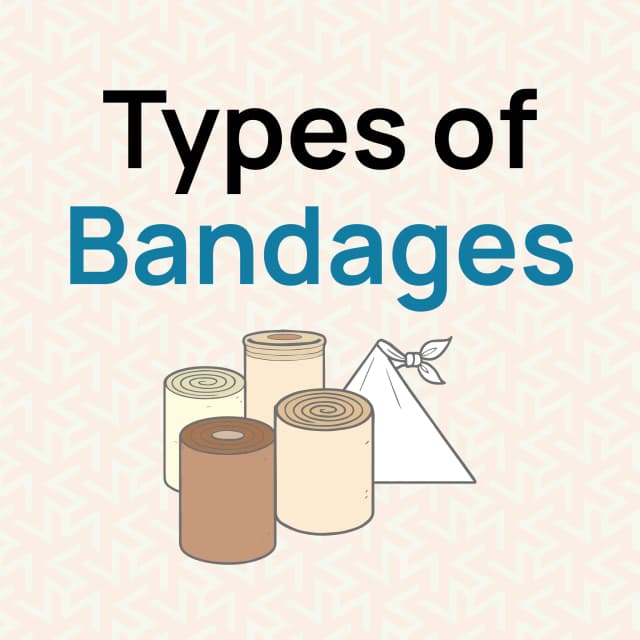
5 Essential Types of Bandages Used in First Aid
Injuries can happen at any moment, and knowing how to treat them effectively is essential. Bandages are a crucial part of any first aid kit, designed to protect wounds, support injured areas, and encourage healing.Whether you're managing a sprain, cut, or other injury, choosing the right bandage is key to providing proper care. With so many different types of bandages available, it�s important to understand their unique purposes.In this article, we�ll explore the five most important types of bandages and how to use them to provide effective first aid.Exploring Different Types of Bandages and Their Practical UsesNot all bandages do the same job. Knowing which one to grab is a crucial step in any first-aid emergency. Here�s a look at the different types and when to use each.Roller bandagesRoller bandages are flexible and commonly used to secure dressings, support joints, or apply pressure. They�re ideal for covering large areas and are easy to wrap around limbs.When to use:To hold a dressing in place.To provide support for a sprain or strain.To apply pressure to control bleeding.To cover large wound areas on arms or legs.Triangular bandagesTriangular bandages are adaptable cloths used to support, cover, or immobilise injuries. Their shape makes them especially useful for upper limb injuries.When to use:To create an arm or shoulder slingTo immobilise a fractured limbTo secure a dressing on the head or scalpAs a temporary wrap for splintingTubular bandagesTubular bandages are slip-on coverings designed for fingers, toes, and limbs. They offer light compression and protect minor injuries.When to use:To cover cuts or abrasions on fingers or toesTo protect dressings on minor woundsTo provide gentle compression for swellingTo secure padding on elbows, knees, or other jointsCrepe bandagesCrepe bandages are elastic wraps that provide compression and support for joint or muscle injuries. They help reduce swelling and stabilise affected areas.When to use:To support sprains or strainsTo reduce swelling in sprained areasTo keep wound dressings in placeFor compression in soft tissue injuriesCohesive bandagesCohesive bandages stick to themselves, not the skin, making them ideal for tricky areas. They offer flexible support and compression without the need for clips or tape.When to use:To support sprains and strainsTo wrap joints like wrists, knees, or fingersTo secure dressings on moving areasFor compression without adhesive on the skinComparison of Bandage Types and Their UsesHere�s a quick comparison of the five bandage types covered above, summarising their typical uses.Types of bandagesUsesRoller BandagesUsed for securing dressings, providing support, and stopping bleeding.Triangular BandagesUsed to create slings, immobilise limbs, or cover wounds.Tubular BandagesUsed to cover fingers, toes, and minor injuries for light compression.Crepe BandagesUsed for compression, support, and reducing swelling in sprains and strains.Cohesive BandagesUsed for compression and support, adheres to itself, ideal for joints. .main{ border:3px solid #0f7c90; border-radius:20px; position: relative; font-family:roboto; font-weight: 400; color: #000; } .main-two{ position: absolute; top:-25px; left:45px; background-color:white; } .img-div{ border-radius : 100%; padding:2px 7px; background-color:#0f7c90; margin-right:5px; width: 50px; height: 50px; } .img{ width:30px; object-fit:contain; height:auto; border-radius : 100%; } @media only screen and (max-width: 600px) { .heading{ font-size:20px; } .img{ width:20px; object-fit:contain; height:auto; border-radius : 100%; } .img-div{ width: 40px; height: 40px; } .main-two{ left:25px; } } Put Your First Aid Knowledge into Practice by enrolling in a course today! Our First Aid courses equip you to handle critical situations and enhance workplace safety. Build confidence and expertise with Emergency First Aid at Work (EFAW) and Level 3 First Aid at Work meeting UK legal requirements. How to Apply Different Types of BandagesEach type of bandage has its own special use, and applying them the right way makes all the difference in providing effective care. Whether you're tending to a small cut or helping someone with a sprain, knowing the best way to use each bandage will help things heal properly. To make sure you're applying each bandage correctly, refer to the guide below.Bandage TypeQuick Application GuideRollerAnchor at the far end; wrap toward the body, overlapping each layer by half its width; secure and check circulation.TriangularFold to the correct width for a sling; place under the limb; tie over the shoulder; tuck or pin ends out of the way.TubularSlide over the injured area (use an applicator if available); smooth out any wrinkles for a snug fit.CrepeWrap in a spiral or figure-eight pattern; overlap each layer by one-third of its width; secure and verify circulation.CohesiveTear to the needed length; wrap so it sticks to itself; press the end down; avoid wrapping too tightly. Quick-Reference: 5 Simple Steps to Apply a BandageThese five steps will help you bandage any minor injury quickly and confidently.Clean and dry the wound: Wash your hands, then gently clean the wound with water or a sterile saline solution. Pat the area dry with a clean gauze or cloth.Place a sterile dressing: Place a sterile dressing or pad over the wound without touching the side that will contact the skin. Smooth it down so it lies flat.Choose the right bandage: Select the appropriate bandage type (roller, crepe, cohesive, etc.) based on the injury location and required support or compression.Wrap from the lower end: Anchor your bandage at the point farthest from the heart, then wrap toward the body with even tension, overlapping each turn by about one-third.Secure and check circulation: Fasten the end of the bandage (with clips, tape, or by self-adhesion) and then check that the fingers or toes beyond the bandage are warm and pink and have a normal sensation.ConclusionUnderstanding how and when to use different bandages is a key part of effective first aid. Recognising their specific uses and applying them correctly can make all the difference in an emergency. To build your confidence and gain hands-on experience, consider enrolling in one of our First Aid Courses, a valuable step towards being fully prepared when it matters most.Frequently Asked QuestionsWhat are the 5 types of bandages in first aid?Roller, triangular, tubular, crepe, and cohesive bandages.When should I use each type of bandage?Use a roller for limbs, a triangular for slings, tubular for fingers, crepe for sprains, and cohesive for secure wrapping.Can I learn bandaging in a first aid course?Yes, first aid courses teach how to use and apply bandages correctly.Explore Popular First Aid Courses at HurakLooking to boost your skills? Explore our range of first aid courses to find the right one for you.Here are some of our most popular first aid courses to help you stay prepared:Emergency First Aid at Work (1 Day): Get equipped with essential life-saving skills in just one day. This course covers CPR, choking, bleeding control, and how to manage various workplace emergencies, ideal for low-risk environments.First Aid at Work (3 Days): A thorough three-day course designed to help you handle a wide range of injuries and illnesses in the workplace. Fully compliant with HSE requirements and perfect for high-risk settings.Paediatric First Aid (2 Days): Tailored for anyone working with babies and young children. Learn how to respond to emergencies like choking, febrile seizures, allergic reactions, and more in a childcare context.Basic First Aid Course: Great for general awareness outside the workplace. Learn how to treat minor injuries, burns, fainting, shock, and other common incidents.Advanced First Aid Training: For those needing a higher level of care. This course covers oxygen therapy, advanced trauma response, and detailed secondary assessments.First Aid for Mental Health: Learn how to identify and support individuals facing mental health challenges. Topics include stress, anxiety, depression, and practical early intervention techniques.