On This Page

October 13, 20268 min read
Understanding the teaching assistant pay scale is essential for anyone considering or already working in this vital educational role. In this article, we break down the TA salary structure in the UK, covering different levels and grades, and explain how qualifications, experience, and regional factors influence earnings. Whether youre just starting or looking to advance your career, this guide will provide a clear picture of what to expect regarding pay.

The teaching assistant (TA) pay scale refers to the structured salary system used to determine the compensation of TAs based on their role, experience, and qualifications. Most teaching assistants in the UK are employed by local authorities or academies, which follow pay guidelines set out in the local government pay spine or individual school policies. The teaching assistant pay scale in the UK typically follows local authority guidelines, which are based on the National Joint Council (NJC) pay spine.
It's influenced by factors such as job level, responsibilities, experience, and qualifications. Most schools follow a local government pay structure or academy trust policy, which outlines different pay bands.
Understanding where you fall on this scale helps you track your career growth and determine what salary to expect at each stage, from entry-level to senior roles, such as HLTA.
For teaching assistants looking to boost their qualifications and earning potential particularly in schools with multilingual student populations obtaining language certifications can be valuable. Taking German proficiency test or similar language assessment helps TAs qualify for specialist roles supporting EAL (English as an Additional Language) students, which often come with higher pay bands and enhanced responsibilities. For those managing administrative tasks or working independently, using invoice software for business can also help streamline invoicing and payment tracking.
Teaching assistants are paid according to their level of responsibility, experience, and qualifications. Most schools follow a structured pay scale based on levels or grades. As of 2025, UK teaching assistant salaries reflect updates to the National Joint Council (NJC) pay scales, which are often used by local authorities.
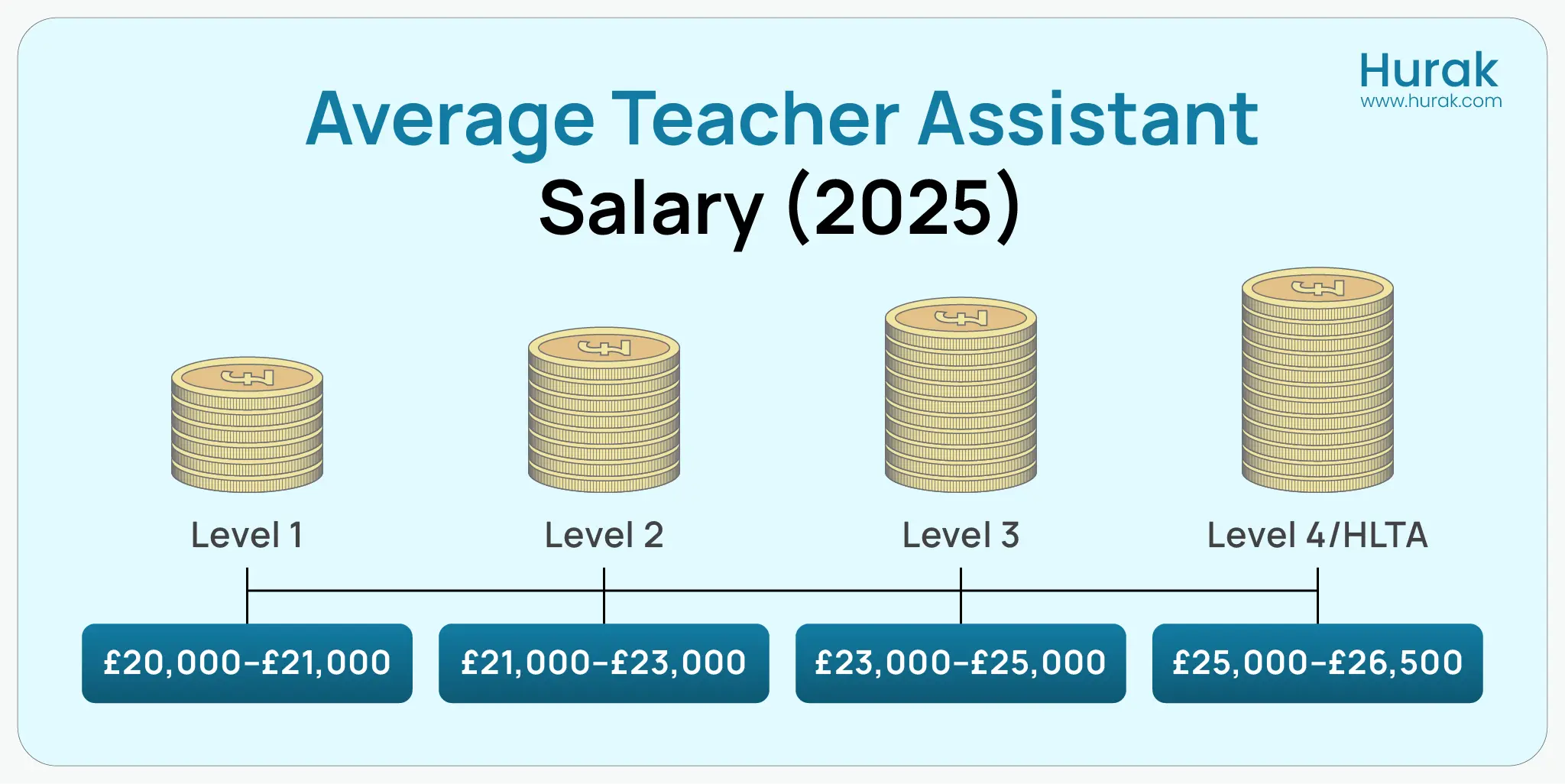
Employment Type | Average TA Salary (2025) | Description |
Level 1 | £20,000 - £21,000 | Entry-level support with basic classroom tasks |
Level 2 | £21,000 to £23,000 | Assists with group work and one-to-one support |
Level 3 | £23,000 - £25,000 | Works with minimal supervision; may plan activities |
Level 4 / HLTA | £25,000 - £26,500+ | High-level responsibility; covers classes, plans lessons |
While these are national estimates, actual pay can vary by location and whether the school follows local authority or academy trust rates. TAs in Greater London or specialist roles (e.g., SEN) often earn on the higher end of the spectrum.
Several key factors determine how much a teaching assistant earns. While pay scales provide a baseline, actual earnings can vary depending on the following:
The more years you've worked as a TA, the more likely you are to move up the pay scale. Many schools reward long-term staff with incremental increases.
Holding a recognised TA qualification, such as Level 2, Level 3, or HLTA status, can lead to higher pay. Some roles require specific credentials, especially in SEN (Special Educational Needs) or early years support.
Your salary might differ depending on whether you work in a local authority-maintained school, an academy, a multi-academy trust (MAT) or an independent or private school
TAs working in London and the South East often receive higher pay due to the increased cost of living. Local authority pay bands also vary across England, Wales, and Northern Ireland.
Most TA roles are part-time or term-time only, meaning your take-home salary could be lower than the full-time equivalent listed on job descriptions.

Being a teaching assistant can be more than a supporting role; it can be the start of a long-term career in education. Here's how your TA journey can evolve:
Start as a general classroom assistant and move into more structured teaching support roles by completing further qualifications.
Becoming a Higher Level Teaching Assistant allows you to work with minimal supervision, run lessons, and even lead subject interventions, all of which come with better pay.
By specialising in areas like Special Educational Needs (SEN) or English as an Additional Language (EAL), you not only become more valuable but may also qualify for additional funding or allowances
Some TAs choose to train as teachers through part-time Initial Teacher Training (ITT) programmes, transforming their career and salary range entirely.
Advance Your Teaching Assistant Career with Hurak
Being a Teaching Assistant is just the beginning. Explore these courses to enhance your skills, increase your earning potential, and open doors to new opportunities:
Level 2 Certificate in Supporting Teaching and Learning in Schools (STALIS/STLS): Ideal for those new to education, this course provides foundational knowledge in supporting teaching and learning in schools.
Level 3 Award in Supporting Teaching and Learning in Schools (STALIS/STLS): A step up for those looking to deepen their understanding and skills in supporting teaching and learning.
Level 3 Diploma in Specialist Support for Teaching and Learning in Schools (RQF): Focuses on inclusivity, meeting diverse learning needs, and building positive student and colleague relationships.
Level 4 Certificate for Higher Level Teaching Assistants (HLTA): Achieve HLTA status to work with minimal supervision, run lessons, and lead subject interventions.
Level 5 Diploma in Teaching (DiT) - Further Education and Skills: For those aiming to step into teaching, this qualification provides the skills and knowledge needed to succeed in colleges and adult education settings.
Start your journey today with Hurak
While national pay scales offer general guidance, where you work has a significant impact on your salary as a teaching assistant. Regional cost of living, local authority funding, and demand all play a role
Higher salaries due to increased living costs.
Often includes London Weighting, a financial allowance on top of base salary.
Inner London TAs can earn up to 3,000 - 5,000 more than those elsewhere
Generally offers lower starting salaries.
Some local authorities supplement pay to retain staff.
High demand in urban centres like Manchester, Leeds, and Liverpool.
Salaries sit around the national average
Academies and MATs may vary slightly in what they offer
Separate pay structures from England.
Pay progression and contracts are often governed by devolved government frameworks.
TAs in rural areas may have fewer hours or part-time roles.
Urban schools often face higher pupil needs, which may result in increased pay for SEN or HLTA roles

Teaching assistants can earn more than just their base salary. Extra duties, such as supervising clubs, supporting SEN pupils, or covering absences, may be compensated with overtime pay or allowances. Some schools also offer small incentives for roles like lunchtime supervision or first aid.
Beyond pay, many TAs benefit from the Local Government Pension Scheme, enhanced sick leave, and maternity or paternity benefits. Term-time contracts include paid holidays throughout the year, and flexible hours make the role ideal for achieving a good work-life balance
The average salary for a teaching assistant in the UK typically ranges from 15,000 to 24,000 per year, depending on experience, location, and job level. London-based TAs and those in specialist roles, such as SEN, often earn more.
Most TAs are on term-time only contracts, which means their pay is spread evenly across 12 months, including holidays. However, the total salary reflects only the weeks worked during the academic year.
Yes. TAs working in London and the South East typically receive higher salaries due to regional weighting. Pay bands also differ across local authorities in England, Wales, and Northern Ireland.
Absolutely. Gaining Level 3, HLTA, or SEN specialism qualifications can significantly increase earning potential and open doors to higher-level roles.
Yes. Many TAs progress by completing further training to become HLTAs, specialise in SEN or EAL, or even transition into Initial Teacher Training (ITT) to become qualified teachers.
Teaching assistants in state-funded schools usually qualify for the Local Government Pension Scheme (LGPS), which offers a secure, defined benefit pension. Additional benefits may include maternity and paternity leave, enhanced sick pay, and term-time flexibility.
Understanding the teaching assistant pay scale helps you make informed decisions about your career. While salaries vary by level, qualifications, and location, most teaching assistants (TAs) can expect structured pay progression over time. Additional responsibilities, training, and specialist roles (like SEN) can lead to higher earnings, and many schools offer pension schemes, flexible hours, and other benefits that add real value beyond the monthly salary.
Whether you're just starting or looking to advance, knowing what influences your pay and how to boost it can help you make the most of a rewarding career in education.

Courses
Upskill with job-ready training.
Mock Tests
Measure your learning progress.
Create an online video course, reach students across the globe and earn money