On This Page

July 17, 20268 min read
Selective abstraction is a powerful cognitive distortion that can quietly shape how you think and feel every day. In psychology, it refers to the tendency to focus on a single negative detail while ignoring the broader context, also known as mental filtering. For example, you might receive positive feedback at work but obsess over one small criticism, believing you've failed.
This pattern of thinking not only distorts your perception of reality but can also fuel anxiety, low self-esteem, and depression. By understanding how selective abstraction works and exploring clear examples of abstraction, you can learn to recognise when your mind is filtering out important information.
In this article, we'll explain what selective abstraction is, how it differs from other common cognitive distortions, and practical strategies to challenge these unhelpful thoughts so you can build a healthier, more balanced mindset.

Selective abstraction is a cognitive distortion in which you focus on one negative detail while ignoring the broader context. Also called mental filtering, it's like using a magnifying glass to exaggerate flaws and dismiss everything else.
This pattern can show up at work, in relationships, or in how you see yourself, for example, fixating on a single mistake despite overall success. Over time, it can damage your confidence and reinforce beliefs like I'm not good enough. Recognizing and questioning this thinking is the first step toward a more balanced perspective and better emotional well-being.
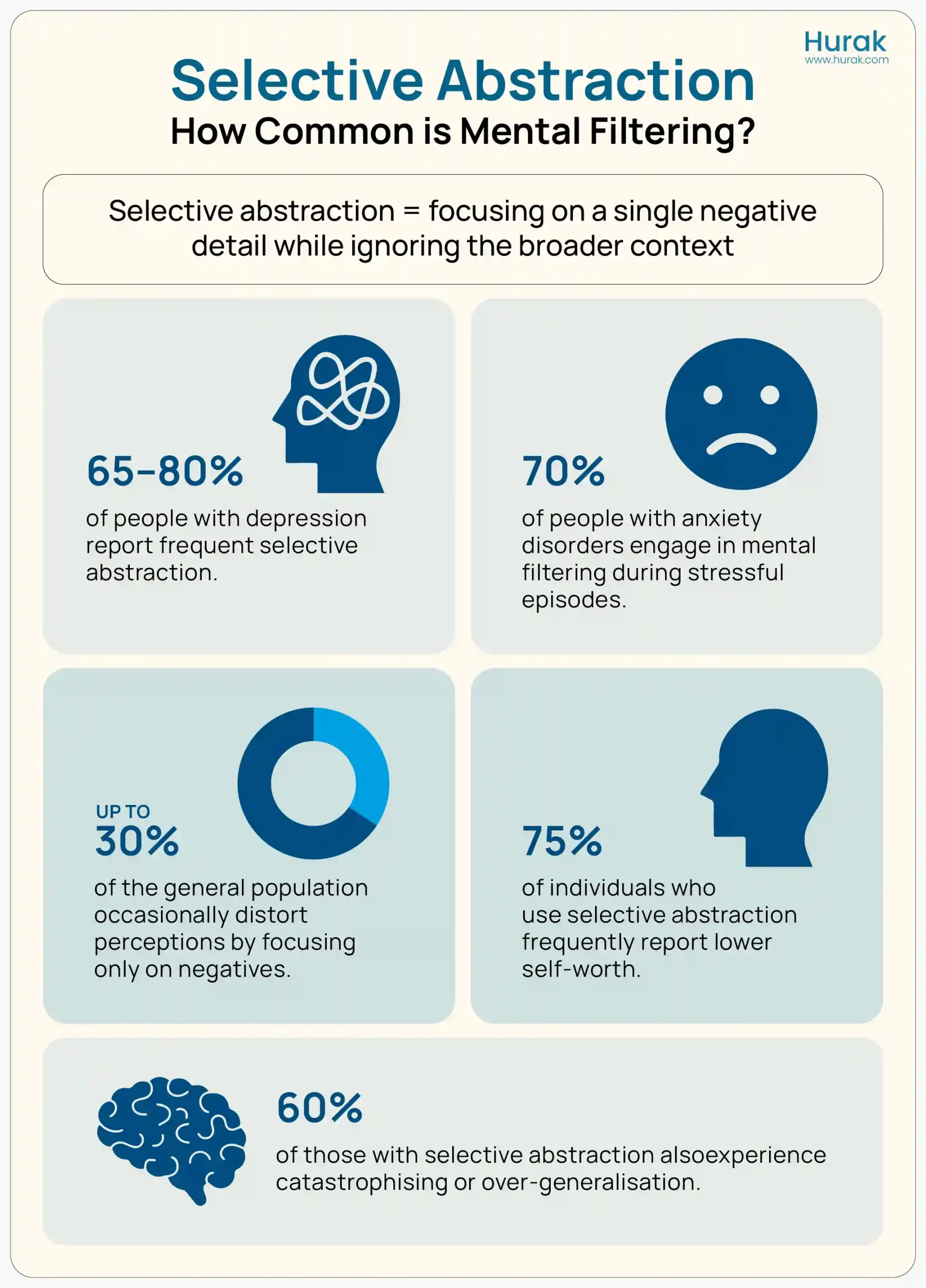
This chart illustrates how commonly it occurs among people with depression and anxiety, and how strongly it affects mood, self-esteem, and daily functioning.
Selective abstraction can lead to a range of emotional and mental symptoms that affect how you feel, think, and behave. Here are some of the most common signs you might be experiencing this cognitive distortion:
Focus mainly on the negative, ignoring any positives
Feel inadequate even when reassured by others
Replay small mistakes and worry about outcomes
Expect flawlessness and fear even minor errors
Use harsh, critical thoughts about yourself
Dwell on flaws instead of enjoying successes
Often feel guilt, shame, sadness, or frustration
Avoid situations to prevent future mistakes
Selective abstraction subtly changes the way you see your experiences, often without you even noticing. When you focus on a single negative detail and dismiss everything else, you end up creating a distorted view of reality. Over time, this habit can have a powerful impact on your thoughts, emotions, and behaviour.
How Selective Abstraction Distorts Thinking | Description |
Magnifying Negatives | Small issues feel huge because you ignore the positive aspects. For example, one criticism outweighs dozens of compliments. |
Ignoring Context | Details are pulled out of context. You focus on a single mistake while dismissing the overall success and support. |
Reinforcing Negative Beliefs | Constant focus on negatives strengthens beliefs like I'm not good enough, fueling self-doubt. |
Fueling Emotional Distress | Filtering out positives increases anxiety, guilt, sadness, and makes neutral situations feel negative. |
Triggering Other Cognitive Distortions | Often combines with catastrophizing and overgeneralization, leading you to believe one setback defines everything |
Selective abstraction doesn't just distort how you see situations; it also gradually erodes your emotional well-being. Recognising this pattern is essential for protecting your mental health and developing a more balanced perspective.
Creates Chronic Stress: Constantly focusing on negative details keeps your mind in a state of worry, which can lead to ongoing stress and tension.
Feeds Anxiety and Depression: When you ignore positive evidence, you reinforce feelings of hopelessness, sadness, and fear, which can deepen anxiety or depression.
Damages Self-Esteem: Over time, selective abstraction makes you believe you're never good enough, no matter how much you achieve.
Promotes Negative Thinking Patterns: This habit reinforces other cognitive distortions, such as overgeneralization and catastrophizing, creating a cycle of distorted thinking.
Reduces Resilience: By only seeing flaws or setbacks, you may struggle to cope with challenges and recover from difficulties.
Impairs Relationships: Fixating on small negative moments can lead to misunderstandings, resentment, or withdrawal from people who care about you.
Limits Personal Growth: When you dismiss successes and progress, you're less likely to build confidence or try new things.
Are you tired of feeling stuck in patterns of self-criticism and distorted thinking? Selective abstraction can make even small setbacks feel overwhelming.
Our Mental Health First Aid courses will equip you with the skills to recognise cognitive distortions like selective abstraction. Take the first step toward clarity and confidence today. Enrol in our Mental Health First Aid course.
Overcoming selective abstraction takes practice, but every step you take helps you build a more realistic, compassionate view of yourself and your experiences. With time and effort, you can break the cycle of distorted thinking and feel more confident and at peace.
The first step is noticing when selective abstraction shows up. Pay attention to situations where you feel upset or discouraged. Ask yourself:
Am I ignoring any positive or neutral details?
Is this thought balanced, or am I filtering out important information?
Simply becoming aware of the pattern can start to weaken its power over you.
Challenge your thoughts by asking yourself:
What evidence supports this thought?
What evidence contradicts it?
Would I say this to a friend in the same situation?
These questions help you step back and see your experience more objectively.
Treat yourself with the same kindness you'd offer someone you care about. Remind yourself:
Mistakes don't define my worth.
Everyone has setbacks.
This is one moment, not the whole story.
Self-compassion reduces shame and helps you move forward instead of getting stuck.
Ruminating, replaying the same negative detail in your mind, fuels stress and reinforces distorted thinking. Try to:
Set a time limit for thinking about the issue
Distract yourself with a healthy activity like exercise, reading, or talking with a friend
Practice grounding techniques, like focusing on your breath or describing your surroundings out loud
Deliberately look for a more balanced or positive perspective. Ask:
What did I learn from this?
What did I handle well?
Is there another way to interpret this?
Reframing doesn't mean ignoring problems; it means recognising that setbacks are just one part of the picture.
If selective abstraction is causing significant distress or interfering with your daily life, consider working with a therapist. Cognitive-behavioural therapy (CBT) is especially helpful in:
Identifying cognitive distortions
Practising balanced thinking
Developing healthier coping strategies
Selective abstraction can distort how you see yourself and your experiences, often leading to anxiety and low self-esteem. By learning to recognize and challenge this pattern, you can start to build a more balanced and realistic perspective. Remember, small steps, like reframing your thoughts or seeking support, can make a big difference in improving your mental well-being.
Selective abstraction is a cognitive distortion where you focus on one negative detail while ignoring the broader context, which can lead to a distorted and overly negative view of situations.
While both involve focusing on negatives, mental filtering is a broader term for dismissing positives entirely, whereas selective abstraction specifically means highlighting a single negative aspect out of a situation.
Examples include fixating on one critical comment after an otherwise successful presentation or believing youre a failure because of one small mistake despite overall progress.
It can increase anxiety, lower self-esteem, and contribute to depression by reinforcing negative thinking patterns and preventing you from seeing balanced evidence.
You can challenge this thinking by writing down all the facts of a situation, asking yourself balanced thinking questions, practicing self-compassion, and seeking professional support like cognitive-behavioral therapy.
Emergency First Aid at Work
A short, hands-on course designed for low-risk workplaces. This training gives participants the essential skills and confidence to respond effectively to medical emergencies.
First Aid at Work
A comprehensive, Ofqual-regulated Level 3 qualification delivered over three days in a classroom setting. Perfect for designated first aiders working in higher-risk environments like construction sites, warehouses, and manufacturing facilities.
Paediatric First Aid
A two-day, Ofqual-regulated course focused on first aid for infants (01 year) and children up to puberty. Ideal for childcare professionals, teachers, and parents who want to be fully prepared to handle emergencies involving young children.
Basic First Aid Course
An introductory, self-paced program suitable for anyone who wants a general understanding of first aid or a quick annual refresher to keep their skills current.
Advanced First Aid Course
A fully online, self-paced Level 3 course that offers in-depth training for those looking to develop advanced first aid knowledge and skills beyond the basics.
Courses
Upskill with job-ready training.
Mock Tests
Measure your learning progress.
Create an online video course, reach students across the globe and earn money