On This Page

July 16, 20269 min read
Have you ever wondered why some days feel heavier than others, or why certain thoughts suddenly become hard to control? It’s something many people experience, often without realising it could be linked to their mental health. Mental illness doesn’t always appear the way we expect; sometimes it shows up as constant worrying, unexplained sadness, trouble focusing, or simply feeling “off” for longer than usual. The truth is, mental illness can affect anyone, regardless of their age, background, or lifestyle. It influences how we think, feel, and handle everyday situations, making simple tasks feel overwhelming.
Mental illness develops through a blend of biological, psychological, and social factors. Some people may be born with a higher risk due to genetics, while others may experience mental health problems after trauma, stress, or difficult life changes. Chemical imbalances in the brain, childhood experiences, and physical health conditions can also influence how someone feels and behaves.
Understanding these root causes is essential, not just for recognising early symptoms, but for breaking stigma and helping people access the right support sooner. In this article, we will cover what mental illness is, the common symptoms to look out for, possible causes, how they affect mental health and how you can seek help or support someone who may be struggling.

Mental illness refers to a wide range of conditions that affect how a person thinks, feels, behaves, and manages daily life. These conditions can include depression, anxiety disorders, bipolar disorder, schizophrenia, and many others. Mental illness is not just feeling sad, stressed, or overwhelmed for a short time; it involves ongoing patterns of thoughts or behaviours that make everyday functioning difficult. These conditions can range from mild and temporary to severe and long-lasting.
Understanding mental illness is important because it encourages early recognition and helps people seek support before symptoms worsen. With the right treatment, guidance, and coping strategies, most individuals can manage their condition effectively and lead fulfilling, meaningful lives.
Mental illnesses come in many forms, and each type affects people in different ways. While every condition has its own set of symptoms, they all impact how a person thinks, feels, or behaves. Below are some of the most common types of mental illnesses:
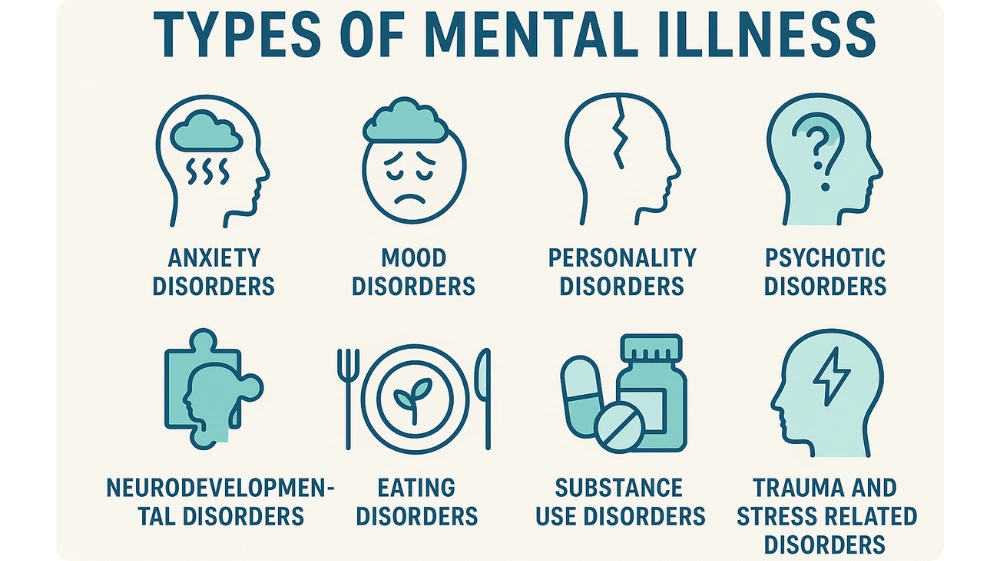
These involve persistent fear, worry, or tension that feels difficult to control. Common examples include generalised anxiety disorder (GAD), panic disorder, social anxiety disorder, and phobias. People may experience racing thoughts, restlessness, or physical symptoms like a fast heartbeat or sweating.
Mood disorders affect a person’s emotional state over a long period. This includes depression, where individuals feel deep sadness or loss of interest, and bipolar disorder, which involves extreme mood shifts between high energy (mania) and low mood. These conditions can influence sleep, energy levels, motivation, and overall outlook.
Personality disorders are long-term mental health conditions that affect the way a person thinks, feels, and behaves. These patterns are deeply rooted and can make it difficult to manage emotions, build healthy relationships, or cope with everyday situations. Examples include borderline personality disorder, paranoid personality disorder, and antisocial personality disorder.
Psychotic disorders are mental health conditions that affect a person’s perception of reality. People may experience hallucinations (seeing or hearing things that aren’t there) or delusions (strong beliefs that aren’t true), along with disorganised thoughts and behaviour. These symptoms can make it difficult to think clearly, communicate, or carry out daily tasks. Schizophrenia is one of the most well-known psychotic disorders.
Neurodevelopmental disorders are conditions that affect how the brain grows and develops, usually appearing in early childhood. They can impact learning, behaviour, communication, and social skills. Common examples include autism spectrum disorder (ASD) and attention-deficit hyperactivity disorder (ADHD). These conditions vary widely; some children may struggle with focus, while others may have difficulty with social interaction or speech.
Eating disorders are serious mental health conditions that affect a person’s relationship with food, body image, and weight. They can lead to dangerous eating habits, such as severely restricting food, overeating, or purging. Common types include anorexia nervosa, bulimia nervosa, and binge-eating disorder. These conditions can harm both physical and emotional health, often causing intense stress or guilt around eating.
Substance use disorders are mental health conditions where a person becomes dependent on alcohol, drugs, or other substances, leading to harmful patterns of use. These disorders affect self-control, making it difficult to stop even when the substance causes problems in health, relationships, or daily life. These disorders can range from mild to severe and often develop gradually.
Trauma and stress-related disorders are mental health conditions that develop after experiencing or witnessing deeply distressing or overwhelming events. These disorders can cause symptoms like flashbacks, nightmares, severe anxiety, or emotional numbness. Common types include post-traumatic stress disorder (PTSD) and acute stress disorder.
Understanding the different types of mental illnesses helps us recognise signs early and support those who may be struggling. Each condition affects people differently, but with proper care, awareness, and compassion, recovery becomes much more achievable.
Mental illness can develop because of many reasons, and often it’s the result of several factors combined. These causes vary from person to person, which is why two people may react differently to similar situations.
Some of the major causes are explained below:
Family history of mental illness:
A person whose close relatives have a mental health condition may be more likely to develop one. Genetics can influence how the brain responds to stress, emotions, and environmental factors.
Brain chemistry and neurotransmitters:
Imbalances in brain chemicals such as serotonin, dopamine, or norepinephrine can affect mood, thinking, and behaviour. These disruptions can contribute to conditions like depression, anxiety, and bipolar disorder.
Hormonal changes:
Significant hormonal shifts during puberty, pregnancy, postpartum periods, or menopause can influence mental health. These changes may trigger mood disorders in some individuals.
Childhood trauma:
Experiences like physical or emotional harm, violence, or unsafe environments can leave long-term effects on mental and emotional development.
Neglect, abuse, bullying:
Growing up without proper emotional support or being exposed to bullying and abuse increases vulnerability to mental health problems later in life.
Unstable family environment:
Constant conflict, parental separation, substance misuse in the home, or inconsistent caregiving can disrupt a child’s sense of safety and stability.
Loneliness and social isolation:
Limited social support or prolonged periods of isolation can increase the risk of depression and anxiety.
Poverty, housing instability:
Living in unsafe or unstable conditions creates constant stress, which can negatively impact mental health over time.
Work-related stress:
High-pressure work environments, long hours, or job insecurity can contribute to burnout and emotional exhaustion.
Chronic illness:
Long-term medical conditions such as diabetes, heart disease, or chronic pain can affect emotional resilience and trigger mental health symptoms.
Neurological conditions:
Diseases that affect the brain or nervous system, like epilepsy or multiple sclerosis, can be linked to mental health disorders.
Substance misuse:
Alcohol or drug misuse can change brain chemistry and increase the likelihood of developing mental illnesses, while also worsening existing symptoms.
Poor sleep:
Lack of quality sleep disrupts emotional regulation and increases the risk of anxiety, depression, and irritability.
Lack of physical activity:
Regular movement supports brain health, so a sedentary lifestyle can negatively affect mood and energy levels.
Unhealthy coping habits:
Behaviours like overeating, smoking, or excessive screen time may temporarily relieve stress but often worsen mental health in the long run.
Understanding the many causes of mental illness helps us recognise that these conditions are rarely the result of one single factor. With the right awareness and support, people can address these causes more confidently and work toward better mental and emotional well-being.
Mental health symptoms can vary widely depending on the type and severity of the condition, but they often affect thoughts, emotions, and behaviour. Identifying these symptoms early is crucial for effective mental health care and support.
Category | Common Symptoms |
Emotional Symptoms | Persistent sadness, irritability, mood swings, excessive fear or worry |
Cognitive Symptoms | Difficulty concentrating, racing thoughts, memory problems, indecisiveness |
Physical Symptoms | Fatigue, headaches, sleep disturbances, unexplained aches or pains |
Behavioural Symptoms | Withdrawal from others, changes in eating or sleeping habits, reduced productivity |
Psychological Symptoms | Hopelessness, feeling overwhelmed, loss of interest in activities, intrusive thoughts |
Being aware of mental health symptoms allows individuals and their loved ones to act before problems escalate. Timely support, therapy, and coping strategies can lead to better emotional and physical health.
Help Break the Stigma Around Mental Illness
Mental illness affects people in ways we often can’t see. With the right training, you can offer comfort, guidance, and informed help.
Our Mental Health First Aid (MHFA) courses equip you with practical, life-saving skills.
Start your training and make a real difference.
Mental health treatment encompasses a range of approaches designed to help individuals manage symptoms, improve daily functioning, and enhance their overall well-being. The right treatment depends on the type and severity of the condition, as well as the individual’s personal needs and circumstances.
Also called counselling or talk therapy, psychotherapy involves discussing thoughts, feelings, and behaviours with a trained professional. Common types include:
Cognitive Behavioural Therapy (CBT): Helps identify and change negative thought patterns.
Interpersonal Therapy (IPT): Focuses on improving relationships and social functioning.
Dialectical Behaviour Therapy (DBT): Often used for emotional regulation and self-harm behaviours.
Certain mental health conditions may benefit from medications that help balance brain chemistry or reduce symptoms. Common examples include:
Antidepressants for depression or anxiety
Mood stabilisers for bipolar disorder
Antipsychotics for schizophrenia or severe psychotic disorders
Supporting mental health through daily habits is essential. This includes:
Regular physical activity and exercise
Adequate sleep and healthy nutrition
Mindfulness practices, meditation, or relaxation techniques
Connecting with others who share similar experiences can provide emotional support, reduce stigma, and promote recovery.
Talking to trusted friends or family
Joining peer support or community groups
Accessing helplines and online mental health resources
Recognising early signs of poor mental health and seeking help promptly can prevent conditions from worsening. Regular check-ins with mental health professionals and adherence to treatment plans ensure long-term well-being.
Effective mental health treatment is often a combination of therapy, medication, lifestyle changes, and support. Early intervention and consistent care significantly improve outcomes, allowing individuals to lead fulfilling and productive lives.
Mental health is an essential aspect of overall well-being, yet it is often overlooked or misunderstood. It affects how we think, feel, and behave, influencing our relationships, work, and daily functioning. Understanding mental illness from its causes and symptoms to the types and treatment options is crucial for recognising when help is needed and reducing the stigma surrounding these conditions. While everyone may experience stress or emotional struggles from time to time, persistent changes in thoughts, emotions, behaviour, or daily functioning can be signs of poor mental health.
Ultimately, mental health is a lifelong journey that requires awareness, compassion, and proactive care. By staying informed, attentive, and supportive of ourselves and those around us, we can contribute to a world where mental well-being is prioritised, stigma is reduced, and everyone has the opportunity to live a fulfilling, balanced life.
Mental illness refers to a wide range of conditions that affect a person’s thoughts, emotions, and behaviour. These conditions can impact daily functioning, relationships, and overall well-being.
Mental illness can develop due to a combination of genetic factors, brain chemistry, trauma, stress, lifestyle habits, and environmental influences. Often, several factors work together rather than one single cause.
Symptoms can appear emotionally, physically, cognitively, and behaviourally. People may experience persistent sadness, anxiety, irritability, sleep issues, difficulty concentrating, or withdrawal from daily activities. Symptoms vary depending on the type of mental illness.
Signs of poor mental health include difficulty managing daily tasks, noticeable changes in mood, withdrawal from social life, loss of motivation, and persistent negative thinking. These changes often appear gradually and may signal the need for support.
Listen without judgment, encourage them to seek help, learn about their condition, and offer consistent emotional support. Simple understanding often makes a big difference.
If symptoms last for more than two weeks, interfere with daily life, or cause distress, it’s important to reach out to a GP, therapist, or mental health professional.
Many people manage or fully recover from mental illness with the right treatment and support. Recovery is often a gradual process that focuses on improving well-being and quality of life.
Yes. Millions of people experience mental health problems every year. Conditions like anxiety, depression, and phobias are among the most common.
Courses
Upskill with job-ready training.
Mock Tests
Measure your learning progress.
Create an online video course, reach students across the globe and earn money