

The Power of Personalisation in Learning and Development
Personalisation in learning and development (L&D) goes beyond simply delivering training it's about designing experiences that recognise every employee as an individual. Each person brings different strengths, goals, and ways of learning, which means traditional, uniform training models often fail to achieve lasting results. By tailoring learning programs to suit each individual's pace, skill level, and professional aspirations, personalisation transforms learning into a more meaningful and motivating experience.The idea of personalising learning isn't new; it begins in childhood, where stories and activities are shaped around a child's interests to keep them engaged. Books featuring relatable characters or familiar experiences capture imagination and make learning memorable. In much the same way, adults learn best when training reflects their goals and challenges, creating a sense of relevance and connection.In modern workplaces, where employees expect opportunities for growth that feel relevant and purposeful, personalised learning plays a critical role. It allows organisations to move away from generic content and towards strategies that adapt dynamically to the learner. Whether that means offering role-specific modules, interactive learning paths, or AI-driven feedback, the goal remains the same: to make learning resonate on a personal level and help employees feel genuinely supported in their development journey.Why Personalisation Matters in L&DJust as personalisation plays an important role in how we learn as children, it remains equally powerful in our professional lives. From an early age, we absorb information best when it feels relevant, engaging, and designed just for us. Personalised learning experiences, such as reading WonderWraps personalised childrens books that place children at the centre of the story, spark imagination and make learning exciting rather than instructional. These stories dont just entertain they nurture curiosity, build confidence, and help children see themselves as active learners capable of exploring the world around them. The same principle carries forward into adulthood, where personalised learning fosters engagement, ownership, and lasting growth.When employees experience learning that reflects their own goals, pace, and strengths, they become far more invested in the process. Personalised L&D programs create a sense of relevance and connection, turning workplace training into something meaningful rather than routine. Employees who see their personal and professional growth reflected in their learning journey are more likely to stay motivated, perform better, and retain what they learn. For instance, the Mental Health First Aid Course is designed to be flexible and adaptable to the needs of different organisations and individuals, ensuring that every learner gains real value from the experience.The Different Types of Personalisation in L&DPersonalisation in L&D can be applied in several ways, each designed to make the learning journey more engaging, relevant, and effective for every individual. By adapting content, structure, and delivery to suit different learners, organisations can ensure that training not only meets objectives but also feels meaningful to the people taking part.Content CustomisationContent personalisation focuses on tailoring learning materials to the learner's role, prior experience, and interests. This might include using examples that mirror real workplace situations, offering elective modules that enable employees to explore specific topics, or incorporating multimedia resources that cater to different learning preferences. The goal is to make the content directly relevant and useful so that learners can easily connect it to their daily responsibilities. When training reflects real challenges and opportunities, it feels more personal and impactful.When training reflects real challenges and opportunities, it feels more personal and impactful. In digital learning environments, this also extends to maintaining authenticity, where tools like an AI detector for students can help ensure that personalised learning outcomes genuinely reflect individual understanding.Pacing and ProgressionEvery learner absorbs information at a different pace. Some employees prefer to work through material quickly, while others may need more time to practise and apply new concepts. Personalised pacing allows learners to progress at a speed that suits them, helping to reduce stress and improve comprehension. Techniques such as self-paced e-learning, adaptive assessments, and flexible deadlines ensure that no one feels rushed or left behind. This flexibility helps learners stay motivated and promotes better long-term retention.Learning PathwaysPersonalised learning pathways give employees a sense of ownership over their development. Instead of following a single, standard curriculum, learners can choose a route that matches their career goals and current skill level. For example, a new employee might begin with foundation-level courses, while an experienced professional might focus on leadership, mentoring, or specialist skills. Offering multiple pathways ensures that training remains relevant at every stage of an employee's journey. Over time, this approach builds confidence, encourages continuous growth, and keeps the learning experience aligned with each person's evolving role.Benefits of Personalised Learning for Employees and OrganisationsPersonalised learning has a significant impact on both individual and organisational performance. By focusing on each learner's specific needs and goals, it creates an environment where people feel more engaged, supported, and capable of applying what they learn in real situations. Some of the key benefits include:Higher engagement and motivation through relevant and meaningful content.Better knowledge retention as learners progress at a pace that suits them.Increased confidence by recognising individual strengths and learning styles.Improved job satisfaction through tailored development opportunities.Enhanced performance and productivity linked to practical, role-specific training.Greater accountability as employees take ownership of their learning journey.Higher retention rates due to stronger commitment and career growth.Personalised L&D programs help organisations build a motivated, skilled, and future-ready workforce that thrives through continuous, meaningful learning.Challenges and ConsiderationsWhile the benefits of personalised learning are undeniable, implementing it effectively requires time, effort, and careful planning. Creating meaningful, individualised learning experiences depends on a combination of the right tools, resources, and strategic decisions. Below are some key challenges and considerations to keep in mind:Time and Resources: Developing and maintaining personalised learning programs can be time-consuming. Creating adaptive materials, monitoring learner progress, and updating content regularly require ongoing commitment from training teams.Data Collection and Privacy: Personalised learning depends on gathering detailed learner data, including skills, behaviours, and preferences. Organisations must ensure this information is collected ethically, securely stored, and used responsibly to maintain trust and comply with data protection laws.Technology Integration: Many organisations need to adopt or upgrade systems such as Learning Management Systems (LMS) or AI-driven platforms to support personalisation. This often requires financial investment and staff training to ensure the technology is used effectively.Scalability and Consistency: As personalised learning expands across teams, maintaining consistent quality and outcomes can become challenging. Organisations must balance individual learning paths with common performance standards and objectives.Change Management and Adoption: Employees and managers may initially resist new learning approaches. Communicating the value of personalisation and providing proper support is essential to encourage participation and engagement.Despite these challenges, the long-term rewards make the effort worthwhile. When implemented thoughtfully, personalized learning enhances engagement, boosts performance, and fosters a culture of continuous improvement that benefits both employees and organisations.Tools and Technologies Enabling Personalisation in L&DTechnology is the driving force behind personalised learning, helping organisations design and deliver training that adapts to each learner's needs. The tools below play a key role in supporting and scaling personalisation in learning and development.Tool/TechnologyPurposeLearning Management Systems (LMS)Manages, tracks, and delivers personalised training content.AI-Powered Learning PlatformsAdjusts learning materials based on user behaviour and progress.Learning Experience Platforms (LXP)Provides personalised content recommendations for self-directed learning.Data Analytics ToolsCollects and analyses learner data to improve training relevance.Gamified Learning ToolsMakes learning engaging through rewards, challenges, and interactivity.Mobile Learning AppsAllows learners to access personalised training anytime, anywhere. How to Implement Personalisation in L&DSuccessfully implementing personalisation in learning and development requires a clear understanding of employees' needs, the right technology, and a commitment to continuous improvement. The goal is to create a learning environment that adapts to individuals while supporting organisational objectives.Some key examples of how personalisation can be implemented in L&D include:Conducting learner assessments and surveys to identify individual training needs.Using performance data to map skill gaps and tailor content accordingly.Segmenting learners based on job roles, experience, and preferred learning methods.Designing flexible learning paths that align with both employee and business goals.Integrating adaptive learning platforms that adjust content in real time.Allowing self-paced and on-demand learning options for greater flexibility.Gathering continuous feedback to refine and enhance the learning experience.ConclusionPersonalisation has become a cornerstone of modern learning and development, helping organisations move beyond one-size-fits-all training to create experiences that truly connect with individuals. Just as personalised storybooks engage children by placing them at the centre of their own adventures, personalised learning allows employees to see themselves reflected in their development journey.When learning feels relevant and personal, it inspires greater engagement, ownership, and motivation. By recognising each learner's unique strengths, preferences, and goals, organisations can build a workforce that grows with purpose much like how a well-crafted story helps its reader grow with every chapter.

Child Drowning in the UK: Alarming Statistics Essential First Aid Tips
Did you know that at least one child drowns every month in the UK?According to the NCMD's report, drowning deaths among children in England have more than doubled in recent years, with 37 deaths recorded in 2021�22 alone.�Drowning fatalities rose from 20 in 2019-20 to 37 in 2021-22, with a total of 125 deaths in the last four years. What�s most concerning is that many of these deaths occur in homes, where a child is left unsupervised around water.�Drowning can occur in the most unexpected places, from bathtubs to backyard ponds. On average, one child per month drowns at home in England, and even a brief moment of distraction can result in tragedy.�This highlights the importance of constant supervision around water and the need for heightened awareness to prevent such tragedies. To prevent any incident from worsening, it is also crucial for parents to be equipped with first aid training for drowning and other emergencies, as it can be a valuable asset, enabling them to take immediate action and save lives in emergency situations.Understanding Child Drowning Incidents: The Importance of DataTo effectively prevent child drowning, it�s essential to first understand the scope of the problem and the circumstances in which these tragic events occur. The statistics not only reveal the scale of the issue but also highlight the most vulnerable groups and situations.The chart below illustrates the alarming rise in child drowning incidents over the years.As the data shows, child drowning deaths have risen significantly, underscoring the urgent need for parents to remain vigilant at all times. It's important to note that 86% of drownings occur when the child is unsupervised by an adult, a stark reminder of how quickly tragedy can strike, even in what may seem like the safest of environments.Drowning can happen in an instant, even in the smallest amounts of water�whether in a bath or a small puddle. On average, one child drowns every month at home in the UK.�In the last four years, 35 children drowned in baths, and 70% of these incidents involved a bath seat. In addition, 16 drownings occurred in paddling pools, hot tubs, and ponds, demonstrating that the risk extends beyond swimming pools.Parents often assume that older children, particularly those aged between 8 and 15, are safe because they know how to swim, but the statistics tell a different story. Nearly 16% of drowning victims were between 5 and 12 years old, a clear indication that even those with basic swimming skills are not immune to this danger.�Let�s break these numbers down in the chart below.These figures underscore the critical need for constant supervision, particularly in areas such as baths, paddling pools, and any other water vessels found at home. By understanding where these incidents occur, we can better target our prevention strategies.�It is crucial for parents and caregivers to understand the risks and ensure that children are always adequately supervised around water, regardless of how small or seemingly safe the water source may seem.�Additionally, being familiar with key first aid principles, such as the 3Ps of First Aid, enables them to take swift and effective action when needed.Spot the Drowning Child: Early Signs of DistressEven a few centimetres of water can pose a serious danger to children. Drowning often happens quickly and quietly, without the splashing or shouting that most people expect. Babies and young children can slip beneath the surface without any warning or noise.�It is vital for parents and caregivers to stay alert at all times, even during brief moments of inattention.Early Indicators to Spot a Drowning Child:Sudden immersion with little or no movement.Arms pressing down or flailing sideways, trying to stay afloat.Head tilted back, mouth just above water, eyes wide or closed.Vertical body position, with minimal kicking or swimming motions.Gasping or sudden changes in breathing patterns.Early recognition of these subtle signs is critical, as drowning can occur silently and rapidly, giving parents and caregivers only moments to intervene and prevent potentially tragic incidents. Identifying these early warning signs can be truly life-saving.Taking children to supervised swimming lessons at public pools or beaches with lifeguards helps them develop water safety skills and confidence. When in unguarded pools, paddling pools, or on holiday near water, always stay close, maintain constant eye contact, and be prepared to act immediately.CPR for Drowning: Step-by-Step Guide for Children and InfantsCPR, or Cardiopulmonary Resuscitation, is a life-saving first aid technique used when someone�s heart stops or they stop breathing normally. Performing CPR is a critical component of first aid for drowning.�Cardiopulmonary Resuscitation helps maintain oxygenated blood flow when the heart stops or breathing ceases. Knowing CPR for drowning is especially crucial, as children often experience respiratory arrest before cardiac arrest, making early rescue breaths vital.CPR for a Child (1�8 years)Performing CPR on a child requires careful attention and sensitivity. Follow these steps:Check responsiveness:Gently tap the child�s shoulders and call their name.Look for any signs of movement or sound.Check breathing and injuries:Observe if the child is breathing normally.Look for any severe bleeding or other life-threatening conditions.Call 999 immediately:If the child is unresponsive and not breathing, or only gasping, alert emergency services.Place the child on a firm, flat surface:Kneel beside them for correct positioning.Chest compressions:Place the heel of one hand in the centre of the chest. For older children, use both hands, interlocking fingers.Keep your elbows straight, shoulders directly above your hands.Compress the chest about 2 inches (5 cm) at a rate of 100�120 compressions per minute.Allow the chest to fully recoil after each compression.Rescue breaths (mouth-to-mouth):Open the airway using the head-tilt/chin-lift technique.Give 2 breaths, each lasting about 1 second, observing the chest rise.If the chest doesn�t rise, adjust the head position and try again.Continue cycles:Perform 30 compressions, followed by 2 breaths, and repeat this sequence until professional help arrives or the child starts breathing normally.CPR for an Infant (Under 1 Year)CPR for infants requires special care due to their smaller size and fragile bodies.Check responsiveness:Tap the sole of the foot gently while calling the infant�s name.Call 999:If breathing is absent or abnormal, immediately alert emergency services.Place the infant on a firm, flat surfaceChest compressions:Use the two-thumb technique: place both thumbs side by side in the centre of the chest, fingers encircling the back for support.Compress the chest about 1� inches (4 cm) at a rate of 100�120 compressions per minute.Alternatively, if depth is difficult, use a one-hand technique.Allow the chest to fully recoil after each compression.Rescue breaths (mouth-to-mouth and nose):Perform the head tilt/chin lift carefully to open the airway.Give 2 gentle breaths over 1 second, watching for chest rise.If the chest doesn�t rise, reposition and try again.Continue cycles:Perform 30 compressions and 2 breaths until help arrives or the infant begins breathing.Key Points to RememberOnly perform CPR if you are trained or guided by a healthcare professional.Always ensure both your safety and the victim�s safety before starting.Use correct hand placement and body alignment, and compress to the correct depth.Continue CPR until medical professionals take over or the child/infant starts breathing.Early and correct first aid for drowning can save lives, making CPR not just a skill, but a vital responsibility.�Therefore, it is essential for everyone to know how to perform effective CPR and understand key details, such as how many rescue breaths for drowning are required and how long after drowning can a child be revived.Even minutes after a drowning incident, timely and properly administered CPR can be life-saving, giving the child or infant the best chance of survival.ConclusionChild drowning is a growing and serious risk in the UK, occurring quickly and often silently, even in seemingly safe home environments.�Parents and caregivers must take proactive steps to protect children around all water sources, from bathtubs and paddling pools to ponds and hot tubs. Constant supervision, secure water areas, and age-appropriate swimming lessons are essential preventive measures.Equally crucial is being prepared to act in the event of an emergency. Knowing how to perform effective first aid for drowning, including CPR, can dramatically improve a child�s chances of survival.Understanding key details, such as how many rescue breaths for drowning are needed and how long after drowning can you be revived, ensures that immediate intervention is both effective and life-saving. Even minutes after a drowning incident, timely and properly administered CPR can make the difference between life and death.By combining vigilance, preventive strategies, and emergency preparedness, parents and caregivers can not only reduce the risk of drowning but also respond decisively when every second counts, turning potential tragedies into life-saving outcomes.Immediate Action Can Save LivesAccidents can happen in the blink of an eye. Equip yourself with essential first aid knowledge and practical CPR techniques.Learn how to save lives with expert guidance through our Level 3 Paediatric First Aid Training (2 Days).�FAQsWhat are the main causes of child drowning in the UK?Child drowning can occur in unexpected places, from bathtubs to paddling pools, hot tubs, ponds, and even small puddles. Most incidents happen when children are unsupervised, highlighting the critical need for constant vigilance around water.How can parents spot the drowning child early?It is crucial to spot the drowning child before it�s too late. Early warning signs include sudden immersion, minimal movement, flailing arms, vertical body position, gasping, or head tilted back with mouth above water. Recognising these subtle indicators enables timely intervention.What is CPR for drowning and why is it important?CPR for drowning is a life-saving technique that helps maintain oxygenated blood flow when a child or infant stops breathing. Early CPR is especially vital because children often experience respiratory arrest before cardiac arrest. Timely and correct CPR can significantly increase survival chances.How many rescue breaths for drowning should be given?For both children and infants, the recommended guideline is 2 rescue breaths for every 30 chest compressions. Proper technique ensures effective oxygen delivery and improves the chances of revival.How long after drowning can you be revived?Even minutes after drowning, timely and properly administered CPR can be life-saving. Immediate first aid and rapid intervention can restore breathing and circulation, giving the child the best chance of survival.Why is first aid for drowning essential for parents and caregivers?Being trained in first aid for drowning equips parents and caregivers to act quickly during emergencies. Knowledge of CPR, rescue breaths, and early signs of distress allows immediate intervention, preventing serious injury or fatalities.


What is the Difference Between Use By and Best Before Dates
Food labels provide information about the food we buy, from nutritional content to important dates. When you check food labels, you might encounter two important terms: "use by" and "best before." These dates guide you on when to eat your food, but they mean different things. Understanding the difference between use-by and best-before dates is useful for making informed food consumption and storage decisions.Meaning of Use By Date on Food PackagingThe use-by date indicates when a product may no longer be safe to consume. This is because, after the use-by-date, microbial contamination of food or spoilage may occur. Therefore, follow these dates to prevent foodborne illnesses.Meaning of Best Before Date on Food PackagingBest-before dates show when the food is expected to keep its peak quality. While food after this date is generally safe, its fresh taste and texture may change.Use By and Best Before Dated Food TypesUse By Dates: For perishable items like meat, dairy, and ready-to-eat meals.Best Before Dates: Non-perishable items like dry pasta, canned goods, and snacks often have best-before dates.What is the Difference Between Use By and Best Before Dates on Food Packages?Best-before and use-by dates give information about two different aspects of food.If thoroughly cooked, food can be eaten after the best-before date, but it is unsafe to eat food beyond its use-by date. Proper storage, according to the manufacturers instructions, maintains food's freshness.Food Safety Importance of Use By and Best Before DatesPrevents Food PoisoningUnderstanding these labels helps us avoid getting sick. If we eat something past its use-by date, we could risk getting food poisoning from bacteria like Listeria. This bacteria can grow quickly in certain foods and can be dangerous, especially for people with weaker immune systems.Food PreservationBest-before and use-by labelling on food packaging helps preserve food for the right amount of time and protects us from eating contaminated food. It also tells us whether food must be stored in the refrigerator or a freezer. For example, fresh meat, poultry, and fish can go off quickly and are usually labelled with use-by or freeze-by dates. Correctly freezing and refrigerating these food types is important for their preservation.Reduces Food WastageWhile use-by dates are important for food safety, they also help us reduce food waste. By paying attention to use-by dates, food can be consumed and bought in time without adding extra bulk, which can lead to food waste.Facilitates the FIFO Food Stock Rotation SystemRemember to organise your fridge so that older items are used first, as the First-In, First-Out (FIFO) rule suggests. If you can't eat food before its "use by" date, freeze it.Sniff Test for Dated Food TypesIf you're checking foods with a "best before" date about quality rather than safety, you can use your senses to help decide if it's still good to eat. For example, you can look for mould on bread or taste biscuits or crisps to check if they're stale.However, if the food has a "use-by" date, the sniff test isn't reliable for checking if it's safe to eat. Even if the food looks and smells okay after the use-by date, eating might still be unsafe. That's because harmful bacteria that can make you sick aren't always visible or noticeable by smell.It's up to the manufacturers to decide whether to put a use-by date or a best-before date on their products. They consider how the food is made and how risky it might be. They make sure to use the right label to keep us safe.Examples of Dated Food TypesEggsThe eggs you buy from the shop will have a date on them, either "best if used by" or "expiration" (EXP). Always get eggs on the box before the best-before date. When you get home, put the eggs in the fridge in their original box and keep them at the back of one of the middle shelves, not in the fridge door. Do not freeze raw eggs.For the best quality, try to use the eggs within 3 to 5 weeks of buying them. You can eat eggs up to 24-48 hours after their best-before date, but make sure you cook them well. Cook them until both the white and yolk are hard.After the best-before date, eggs might not taste as good, and more salmonella bacteria could make you ill. If you're eating eggs after this date, it's important to cook them properly to kill any harmful bacteria.MilkMilk cartons have best-before dates. If you put them in the fridge immediately when you bring them home from the shop and don't leave them out during meals, they can still be okay to drink after that date, only for a few hours.Pasteurised milk lasts 7 to 14 days. Milk processed under ultra-high temperatures can be stored at room temperature for up to 90 days. Once opened, UHT milk deteriorates at the same rate as regular milk and should be kept in the fridge.BreadBread usually has a 'Best by' or 'Use by' date stamped on the plastic bag or tag if it's sliced. Freshly baked bread from the bakery tends to go stale faster because it often doesn't have preservatives added. When the bread starts to go off, you'll notice green or white mould spots forming. If you see these, throwing away the whole loaf, not just the affected slices, is best.Reliability of Best Before DatesManufacturers set best-before dates to encourage consumption while the food is at its peak quality. However, proper storage and handling can extend the freshness beyond this date, but caution should be exercised.Sell By and Display Until DatesSell-by and display-until dates are important for retailers in managing inventory. Consumers should primarily focus on use-by and best-before dates for food safety and quality.FAQsCan I eat food after the Best Before date?While consuming food after the best-before date is generally safe, its quality may decline over time. Discard food if it has an unusual texture, smell and taste.Is it safe to consume food after the Use By date?Do not consume food after the use-by date, as it may cause food poisoning due to potential bacterial growth or spoilage. Follow use-by dates strictly for food safety.How can I maximise the shelf life of food?Proper storage is key to maximising the shelf life of food. Follow storage instructions provided on the label, keep perishable items refrigerated in proper packaging to prevent contamination.How long can you eat eggs after the expiration date?You can eat eggs up to 24-48 hours after their best-before date, but cook them well. Cook them until both the white and yolk are hard.ConclusionUnderstanding the distinction between use-by and best-before dates on food labels is important for informed decision-making regarding food consumption and storage. While use-by dates indicate safety and the risk of microbial contamination, best-before dates signify peak quality. These labels help prevent foodborne illnesses, reduce food waste, and guide consumers in proper storage practices.

Top 6 Online Cybersecurity Master's Degrees with Embedded Training Paths
Choosing an online cybersecurity master's with training paths is key for professionals seeking career-ready skills. These programs feature hands-on labs, embedded cert prep, and real-world threat simulations. Here are 6 top-rated cybersecurity MS programs�led by Potomac�that offer applied learning built into their virtual classrooms.The cybersecurity industry faces a critical skills shortage, with the (ISC)� 2025 Workforce Study revealing a global deficit of over 4 million cybersecurity professionals. This shortage creates exceptional opportunities for qualified practitioners, but success requires more than theoretical knowledge�today's cyber threats demand hands-on experience, industry certifications, and practical application skills that traditional academic programs often lack.What Makes Online Cybersecurity Master's Programs Career-ReadyThe most effective online cybersecurity master's with training paths programs integrate multiple learning modalities to bridge the gap between academic theory and professional practice. These programs distinguish themselves through embedded certification preparation, virtual lab environments that simulate real-world attack scenarios, and curricula aligned with industry frameworks like NICE (National Initiative for Cybersecurity Education) and DoD 8140.Quality programs also emphasize competency-based learning, allowing working professionals to advance through material at their own pace while demonstrating mastery of practical skills. Students should look for programs that include hands-on experience with current security tools, incident response simulations, and collaboration with active cybersecurity practitioners who bring real-world context to classroom learning.Professionals working with open-source systems in laboratory environments should establish secure network connections, such as through Linux-based VPN configurations, to protect sensitive training data and authentication credentials during remote or distributed exercises Top 6 Online Cybersecurity Master's Degrees for Applied Learning1. University of the Potomac � MS Cybersecurity (Online) � Best Comprehensive Training IntegrationPotomac's Cybersecurity degree program stands out for its tailored approach to working adults, featuring embedded preparation for industry-leading certifications including CompTIA Security+, Certified Ethical Hacker (CEH), and CISSP. The curriculum seamlessly integrates live threat modeling exercises, secure network design projects, and virtual lab scenarios that mirror real-world cybersecurity challenges. The program's alignment with DoD 8140 and NICE frameworks ensures graduates meet federal cybersecurity workforce requirements, making it particularly valuable for professionals seeking government or contractor positions. Students engage with practical simulations covering advanced persistent threats, incident response protocols, and security architecture design, providing comprehensive hands-on experience that translates directly to professional environments.2. EC-Council University � MS in Cybersecurity � Best Industry Certification AuthorityEC-Council University offers a unique advantage as the authoritative source for many of the cybersecurity industry's most recognized certifications, including CEH, Computer Hacking Forensic Investigator (CHFI), and Licensed Penetration Tester (LPT). The MS program features five specialized tracks: Security Analyst, Cloud Security Architect, Digital Forensics, Incident Management and Business Continuity, and Executive Leadership in Information Assurance. Recently ranked in the top 10 by Fortune for online cybersecurity master's programs, ECCU maintains a 92% retention rate and serves students from 79 countries. Students exploring cybersecurity career development strategies will find the direct connection to EC-Council's certification ecosystem invaluable for building credible professional credentials while earning their degree.3. Western Governors University (WGU) � MS Cybersecurity and Information Assurance � Best Value with Embedded CertificationsWGU's competency-based program allows students to accelerate through familiar material while earning multiple industry certifications at no additional cost, including CompTIA CySA+, CASP+, and (ISC)� credentials like SSCP and CCSP. The program aligns with NICE Framework, NSA Center of Academic Excellence guidelines, and CISSP Common Body of Knowledge, ensuring comprehensive coverage of cybersecurity fundamentals. With 63% of graduates completing the program within 18 months and tuition charged per six-month term rather than per credit, WGU offers exceptional value for working professionals. The curriculum covers advanced topics including cloud security, governance risk and compliance (GRC), penetration testing, and enterprise architecture design through practical applications and virtual lab exercises.4. University of Maryland Global Campus (UMGC) � MS Cybersecurity Technology � Best Government-Aligned Practical TrainingUMGC's 30-credit program emphasizes hands-on coursework designed to develop real-world skills through threat intelligence analysis, digital forensics investigations, and incident response scenarios. The curriculum aligns with NSA/DHS Center of Academic Excellence in Cyber Defense (CAE-CD) standards and features red team/blue team exercises that simulate actual attack and defense operations. Students complete practical projects including analyzing cyberattack response procedures, developing mitigation strategies for live threats, and implementing security controls for hypothetical organizations. The program's focus on current technologies and emerging threats ensures graduates understand both foundational principles and cutting-edge cybersecurity challenges, with completion possible in as little as 15 months for approximately $21,000.5. Capella University � MS Information Assurance and Cybersecurity � Best Self-Paced Applied LearningCapella's FlexPath learning model allows students to progress through coursework at their own pace while maintaining rigorous academic standards and practical skill development. The program features comprehensive virtual lab simulations focused on incident response, digital forensics, and ethical hacking techniques using industry-standard tools and methodologies. Students engage with realistic scenarios including malware analysis, network security assessment, and vulnerability management through hands-on laboratory exercises. The flexible format particularly benefits working professionals who need to balance career demands with advanced education, while the emphasis on applied learning ensures graduates develop practical skills that employers value in today's competitive cybersecurity job market.6. MITRE ATT&CK + Open-Source Cybersecurity Learning Consortium � Best Free Practical ResourcesThis innovative approach combines MITRE's globally-recognized ATT&CK framework with curated training modules from leading platforms including TryHackMe, Cybrary, and SANS Community. The consortium provides free access to adversary emulation exercises, threat detection scenarios, and security tool training that complement formal degree programs. Students can access hands-on labs covering the complete cybersecurity lifecycle, from threat intelligence gathering to incident response and recovery. While not offering formal degrees, this resource serves as an excellent supplement to traditional education or as professional development for practicing cybersecurity professionals seeking to enhance their practical skills with current threat landscapes and defensive techniques.Strategic Career Benefits of Embedded Training ProgramsGraduates from online cybersecurity master's with training paths programs report significant advantages in professional advancement and salary growth. The combination of advanced academic knowledge and practical certification credentials positions them competitively for leadership roles in cybersecurity management, consulting, and specialized technical positions.According to the EC-Council's Cybersecurity Salary 2025 report, professionals with 3-5 years of experience often see 20-30% salary increases when transitioning to mid-level or senior roles, with advanced degrees serving as key differentiators. The global cybersecurity market continues expanding, with CyberSeek data showing over 1.1 million people currently employed in cybersecurity roles and substantial growth projected through 2025.These programs particularly benefit working IT professionals seeking to transition into cybersecurity, offering the practical skills and credentials needed to demonstrate competency to hiring managers while providing the strategic knowledge required for leadership positions.Making Your Investment: Choosing the Right Program for Your Career GoalsSelecting the appropriate online cybersecurity master's program requires careful evaluation of your current skill level, career objectives, and learning preferences. Consider factors such as certification alignment, hands-on learning opportunities, program flexibility, and industry recognition when evaluating options.The programs highlighted here offer proven approaches to developing both technical expertise and strategic thinking capabilities essential for cybersecurity leadership. From Potomac's comprehensive DoD-aligned training to WGU's accelerated competency-based model and EC-Council's certification authority, each provides unique advantages for different career trajectories.Take the next step in your cybersecurity career by researching these programs thoroughly and connecting with admissions representatives to understand how their embedded training approaches align with your professional goals. For additional guidance on professional cybersecurity skill development, explore resources that can help you maximize the return on your educational investment and position yourself for leadership roles in this critical and rapidly growing field.

How to improve a child's mental health? - Parental Responsibilities
Taking care of a child's health is a challenging task, whether it involves physical or mental well-being. Children are an integral part of any family.We don't want to see them sad or suffering. Parents getting worried about their children is a normal thing. The key challenge for any parent is knowing when to take action on a worry.As children grow, their behaviour changes. Their perception of the world changes. They become irritated, angered, and unable to perform well in their studies. It is the parents' responsibility to properly care for their emotional well-being and to counsel them when needed.In this article, I will explain what common child mental health issues are and what strategies parents and caretakers opt for to improve their child's emotional well-being.Common Child Mental Health IssuesChildren are more emotional than adults. It is difficult for them to regulate their emotions. These are some commonly occurring psychological issues your child might be facing.Anxiety DisordersThe term anxiety revolves around excessive fear or worry that is too difficult to control and interferes with daily life activities. A child may face general anxiety, social anxiety, or separation anxiety. They can have physical symptoms like headaches, stomach problems, or trouble sleeping.Attention-Deficit/Hyperactivity Disorder (ADHD)It is a neurodevelopmental disorder that occurs in children due to constant following of a pattern, inattention, and hyperactivity. Children with ADHD can not perform tasks requiring focus, act without thinking, and fight constantly.Behavioral DisordersChildren with this disorder show resistance and aggressive behaviour towards teachers and their peers. Such a child refuses to follow rules, easily gets angered, or deliberately annoys othersDepressionChildren with this mental disorder show signs of persistent feelings of sadness, irritability, and loss of interest in activities they used to enjoy. Physical symptoms include a change in appetite, sleep, and mood.Eating DisorderChildren with such a disorder are too concerned about their body weight, body image, and the food they eat, which leads to severe physical and mental health issues like anxiety and depression.Post-traumatic stress disorder (PTSD)PTSD is a long-term emotional upset, worry, nightmares, or a scary moment that a child is going through. Children often face this issue after violence, abuse, injury, or trauma.SchizophreniaIn this mental disorder, a child sees a person or hears voices that do not exist in reality. They lose touch with reality. Their minds create odd thoughts and behaviours.Strategies to Implement for Child Mental HealthThe following are some strategies you can apply to improve your child's mental health, many of which are also emphasized in mental health training courses.Create a Communication SpaceA child may feel broken or detached from their peers. It is difficult for children to express their feelings openly because they have a fear of judgment.As parents, you can help them by creating a safe and supportive environment. Show them some empathy. Make them feel that you are not alone; we are here to find a possible solution.Validate their feelings by commenting like "I can understand", "That must be painful/frustrating/annoying." Show them your concerns and love. It will help children in their healing process.Eliminate Mental Health StigmaIt is a common stigma in the family about mental health issues. Family members and society treat them as a negative trait if a child has any psychological concerns.Some families don't even take them seriously and talk about it. Discuss the benefits of treatment, spread awareness about mental health, and let them know that these concerns are treatable, common, and that anyone can experience them.Play Games with themGames are an effective method to reduce stress and anxiety among children. Winning a challenge gives a sense of accomplishment. You can have a fun and exciting time with your kids. You can include various word games, logic puzzles, and board games to play with kids.You can engage your children with strands game, which makes them curious about finding hidden words according to themes. This step will help them to think logically and may reduce your child's anxiety and stress, benefiting their mental health.Include Physical ActivitiesPhysical activities reduce anxiety and depression symptoms, improve mood, and cognitive function of the brain. As a parent, you can improve your child's mental health by encouraging them to add healthy activities to their daily life.You can encourage children to engage in physical exercise or activities. You can go hiking with them or play basketball, cricket, or badminton. Join them in playing a video game requiring movement, not just holding the controller and sitting on the sofa. Many VR games and dance games need body movement.Perform Artistic ActivitiesCreative activities relax the mind and are beneficial for mental well-being. These activities lower stress hormones, release anxiety, and improve mood through serotonin and dopamine release.Encourage your children to engage in digital art, painting, sculpting, music, and theatre activities. Let them know, they don't have to be good at any activity. They simply have to enjoy and relax.Celebrate Their Small WinsPraise and appreciation boost a child's self-esteem and build confidence. It helps children develop coping mechanisms for anxiety and depression. As a parent, you can appreciate their act and compliment them on small things.For example, when they tie their shoes, put their toys back after playing, make eye contact, share a toy with a sibling, complete a puzzle, read a book independently, and learn new games.Take Care of YourselfIt is not easy to care for and get yourself involved with emotionally unstable children. First, as parents, you have to take care of yourself. Take time to eat well, get plenty of sleep, and follow hobbies you like because an empty cup can't fill another cup.Find a Support NetworkTo treat a psychological issue of a child, you need multiple people to support your child's well-being. Dealing alone with such a kind may drain your energy.Sometimes, you may not be emotionally available to support the child. If you have a supportive family network, you can ask for help. Encourage your child to share or have contact with those family members.Family Routine to Follow for Better Child Mental HealthChild mental health improves with great family connections. A supportive family plays a decisive role in healing a child's mental health. You can consider these activities to follow with your child for better psychological well-being.MeditationMeditation is an effective activity that releases stress and anxiety among kids and adults. It improves focus and takes dedicated time for meditation.Sit on the floor and take deep breaths without thinking about anything. Please do it for 10 minutes a day, or you can adjust the timing according to your schedule.Play Brain GamesBrain games are a great activity that helps children recover from mental health issues. Playing games requires focus, concentration, and memory usage. Especially games like Connections Unlimited need it more.It requires both vocabulary skills and logical reasoning. The child will shift his focus from being worried to solving the word puzzle. It is an essential step in a child's inner harmony.Exercise DailyEngaging in exercise with kids is a great way to foster a strong bond with them. Exercise releases dopamine, a neurotransmitter associated with happiness, which promotes children's mental well-being. You can fix a time from a routine. It could be a cardio exercise, zumba dance, or a simple walk or jogging around the block.Fix Sleeping ScheduleSleep time is essential for anyone dealing with mental health issues. During sleep, our body recovers and heals. Minds get relaxed. As a family head, establish a consistent sleep schedule for your child to maintain a healthy mind. Don't allow your child to have screen time, as it creates a hindrance to their sleeping pattern.Family Meal TimeEating together at the dining table leaves a healthy impact on a child's psychological health. As a family, everyone shares their thoughts at the table. It feels like being connected with family.Motivate your child to share their problems and feelings with family members. With family members, the child considers himself safe and protected, which is good for mental health.ConclusionChildhood is a beautiful phase of human life, but mental health issues create a hindrance to enjoying life. Cognitive issues in children, like depression, anxiety, and ADHD, are common problems that exist. These psychological issues are curable with the proper steps.Parents can help their children by creating a safe talking environment, playing games with them, supporting them, and encouraging them to participate in hobbies.Moreover, parents can change the family routine, like doing meditation, physical activities, and fixing sleep time with children, which helps in recovering the child's mental health illness.

Top Master of Arts in Culinary Business Management: Ideal for Professionals with a Training Background
The search for advanced culinary business training leads many professionals toward MA in Culinary Business Management programs that build on hands-on culinary experience. This list highlights the best master in culinary business management options featuring CAAS and top-rated international programs designed for chefs and food professionals ready to steer concepts into businesses with strategic insight.Today's culinary landscape demands more than exceptional cooking skills. Food industry professionals with culinary training increasingly need business acumen, entrepreneurial vision, and leadership capabilities to launch successful ventures, manage restaurant operations, or drive innovation in food companies. The programs featured here recognize this evolution and provide advanced education that transforms skilled practitioners into strategic business leaders.What Defines Excellence in Culinary Business Management EducationThe most effective MA in Culinary Business Management programs combine rigorous business education with deep understanding of culinary operations and food industry dynamics. These programs recognize that successful food entrepreneurs and culinary managers need expertise in concept development, financial planning, supply chain management, and team leadership all while maintaining the creativity and quality standards that define exceptional culinary experiences.Quality programs also emphasize real-world application through business plan development, industry partnerships, and hands-on management experiences. Students should look for curricula that integrate traditional business disciplines with specialized knowledge of food service operations, menu engineering, and culinary innovation processes.Top 6 Master of Arts Programs in Culinary Business ManagementCulinary Arts Academy Switzerland (CAAS) MA in Culinary Business Management Best Swiss Excellence with Entrepreneurial FocusCAAS delivers a one-year, English-taught MA program at the Le Bouveret campus, awarding degrees from both CAAS and the University of Derby (UK). The curriculum for an MA in culinary arts is specifically designed for career changers and food entrepreneurs, featuring comprehensive concept development, recipe creation, and strategic business planning components. Students gain access to 17 professional-standard training kitchens that mirror Michelin-starred restaurant environments, plus hands-on experience in the 100-seat Restaurant Alpina, which serves real customers. CAAS holds the distinction of being the only culinary school ranked in the QS World University Rankings, placing 8th globally in hospitality education for 2025. The program's unique Swiss location provides exposure to diverse European cuisines while the comprehensive curriculum splits time equally between kitchen and classroom learning.Institute Life MSc in Culinary Leadership & Innovation Best Innovation and Leadership CurriculumInstitute Life's program ranks #2 in Masters in Gastronomy Management by Ed universal 2025, offering an innovative 18-month curriculum taught entirely in English across two renowned culinary destinations: France and Finland. Students train at Institute Life in Lyon and Haaga Helia University of Applied Sciences in Finland, gaining international perspective on culinary leadership and innovation strategies. The program emphasizes skill acquisition through collaborative projects with leading companies including General Mills, Food Service Vision, and Kraft-Heinz, providing direct industry exposure and networking opportunities. With 100% of graduates finding employment within three months, the program demonstrates exceptional career outcomes for professionals seeking culinary business development strategies in the global food industry.University College Birmingham MA Culinary Arts Management Best Industry Placement OpportunitiesUCB's MA program offers flexible 1 to 1.5 year duration with optional 36 month professional placements, providing practical management experience in real-world culinary environments. The university operates professional-standard kitchens used for prestigious competitions, including Michel Roux Jr's annual scholarship contest, plus the AA Rosette Highly Commended Restaurant at Birmingham College of Food where students develop operational management skills. Students have access to the cutting-edge Food Science and Innovation Suite featuring advanced food testing technology and state-of-the-art development facilities. UCB has earned recognition as the highest-ranking university in the region according to student choice (Whatuni Student Choice Awards 2023), reflecting its commitment to practical, industry-focused education that prepares graduates for immediate impact in culinary management roles.Culinary Institute of America Master's in Food Business (Online) Best Online Flexibility with Immersive ResidenciesThe CIA's fully online two-year program uniquely combines flexible remote learning with three intensive residencies at their prestigious Napa Valley and Hudson Valley campuses. The curriculum focuses on leadership development, product concepting, branding strategies, and operational excellence specifically for food entrepreneurs and industry executives. Students benefit from access to the CIA's extensive 50,000+ alumni network, which includes many of the food industry's most influential leaders and innovators. The program's executive format allows working professionals to advance their careers without career interruption, while the residency components provide hands-on experience with industry-standard facilities and direct mentorship from renowned faculty members who are active industry practitioners.Glion Institute of Higher Education MSc in Hospitality Business Leadership (Culinary Focus) Best Luxury Hospitality IntegrationGlion's program consistently ranks among the top institutions in QS World University Rankings for Hospitality and Leisure Management, offering specialized tracks that integrate luxury hospitality management with advanced culinary business principles. The program features strong industry connections through the Culinary Arts Committee and partnerships with high-end hospitality brands, providing students with exposure to premium market segments and luxury service standards. Students engage in gourmet event collaborations and real-world projects with prestigious hotels and restaurants, developing expertise in managing culinary operations within luxury hospitality environments. The Swiss location and international student body create a truly global learning environment that prepares graduates for leadership roles in the world's most prestigious culinary and hospitality establishments.Global Culinary Business MOOC Consortium Best Open-Source Collaborative LearningThis innovative platform represents the democratization of advanced culinary business education, offering free access to modules curated by industry experts and leading academic institutions worldwide. The consortium provides comprehensive coverage of food entrepreneurship, business modeling, and practical case studies from successful culinary ventures across diverse markets and cultures. Students can access virtual workshops, peer collaboration opportunities, and mentorship from established food industry professionals without the financial barriers of traditional graduate programs. While not offering formal degrees, the platform serves as an excellent supplement to formal education or as a starting point for professionals exploring culinary business management concepts before committing to full degree programs.Strategic Career Impact of Advanced Culinary Business EducationGraduates from these MA in Culinary Business Management programs report significant advantages in their professional development and entrepreneurial ventures. The combination of culinary expertise and business acumen positions them uniquely in a competitive market where food industry success increasingly depends on strategic thinking, financial literacy, and operational excellence.The global food service market continues expanding, with growing demand for innovative concepts, sustainable practices, and technology integration. Professionals with advanced culinary business training are particularly well-positioned to capitalize on emerging opportunities in food tech, sustainable dining, and experiential gastronomy.Many graduates successfully launch their own restaurants, food brands, or consulting practices, while others advance to executive positions in established food companies, hotel groups, or institutional food service operations.Making Your Investment: Choosing the Right Culinary Business ProgramSelecting the appropriate MA in Culinary Business Management program requires careful consideration of your career goals, learning preferences, and professional circumstances. Consider factors such as program format, geographic location, industry partnerships, and specialized focus areas when evaluating options.The programs highlighted here offer proven approaches to developing the business skills that complement culinary expertise, from CAAS's hands-on Swiss excellence to the CIA's flexible online format and Institut Lyfe's innovation focus. Each provides unique advantages for different career trajectories and professional goals.Take the next step in your culinary career by researching these programs thoroughly and connecting with admissions teams to understand how their business-focused curricula align with your entrepreneurial aspirations. For additional guidance on professional culinary career planning, explore resources that can help you maximize the return on your educational investment and position yourself for long-term success in the evolving food industry.
Food Safety Act 1990 Explained: UK Legal Guide for Food Businesses
Food safety is a legal and moral obligation that protects public health by ensuring the food we produce, distribute, and consume is safe, hygienic, and accurately labelled. In the UK, this responsibility is enforced through a strong regulatory framework led by the Food Standards Agency (FSA) and local authorities, who work together to uphold national food safety standards.At the heart of this framework is the Food Safety Act 1990 a foundational piece of legislation that sets out clear duties for anyone involved in the production, processing, storage, distribution, and sale of food. Whether you manage a catering business, operate a warehouse, or handle food in a retail setting, understanding this Act is essential for staying compliant and protecting consumers.This article explains how the Food Safety Act 1990 works, what it covers, who it applies to, and why it remains critical to food safety in the UK today.Food Safety Act 1990The Food Safety Act 1990 is a key part of the legal framework governing food safety in the United Kingdom. It outlines the responsibilities of those involved in the food chain and gives enforcement powers to local authorities and the Food Standards Agency (FSA), which monitors food businesses and investigates breaches.This Act supports more detailed food regulations that came later, covering hygiene, labelling, allergens, traceability, and use-by dates.It helps ensure consistency in how food safety is maintained and monitored across all types of food businesses in the UK.Related Reading:Difference Between Food Hygiene and Food SafetyDifference Between Use By and Best Before DatesUnderstanding Food AdditivesThe Act is not just about food quality it's about public health. It forms the legal foundation for other UK legislation, including:Food Hygiene (England) Regulations 2006General Food Regulations 2004Retained EU Regulation (EC) No. 178/2002These laws work together to ensure safe handling, accurate information, and consumer protection.Purpose of the Food Safety Act 1990The purpose of the Food Safety Act 1990 is to provide a legal basis for regulating the safety, quality, and integrity of food throughout the supply chain.It was introduced to:Protect consumers from unsafe or mislabelled foodClarify legal duties for food producers, suppliers, and retailersProvide enforcement powers to regulatory authorities such as the FSA and local councilsAuthorities can:Inspect food businessesRemove unsafe products from the marketProsecute those who commit offences under the ActIt also aligns UK food law with international food safety standards, helping the country meet its public health obligations.Want to know how hygiene standards are assessed in UK food businesses?Learn how the Food Hygiene Rating Scheme works.Get Trained in Food Safety with CPD-Certified CoursesHurak's CPD-certified Level 2 Food Hygiene courses are ideal for those working in manufacturing, catering, or retail food environments.These courses support your legal duties under the Food Safety Act 1990 and prepare you for inspections with confidence.Level 2 Food Hygiene and Safety for CateringLevel 2 Food Hygiene and Safety for ManufacturingLevel 2 Food Hygiene and Safety for RetailStart learning today to stay compliant and protect your customers.Best Containers for Cooling and Storing Hot FoodStoring hot food safely starts with choosing the proper containers. Here's how to do it right.Start Smart: The Right Containers Make All the DifferenceUsing appropriate containers can significantly reduce cooling time and ensure your fridge stays safe and hygienic.Shallow Containers (?5cm deep)Encourage even cooling and prevent the centre from staying hot for too long.Glass or Food-Grade Stainless SteelThese materials cool faster than thick plastic and are non-reactive.Ventilated Lids or CoversLeave lids slightly ajar during the initial cooling process; fully seal them before refrigerating.Portion-Sized ContainersDivide large batches into smaller containers to help them cool more quickly.Avoid Deep Plastic Tubs for Hot FoodsThey trap heat and prolong time in the danger zone.Tip: Always label containers with time and date if storing food commercially.Using the correct container isn't just a storage choice it's a safety measure. Whether you're meal-prepping or running a kitchen, smart storage keeps bacteria at bayWhat Does the Food Safety Act 1990 Cover?The Food Safety Act 1990 sets out the legal requirements that food businesses must follow to ensure food is safe, honestly presented, and of acceptable quality.It applies to every stage of the food chain from farming and manufacturing to packaging, transport, retail, and catering. Here's what it covers:Food must be safe to eat it must not be harmful to healthFood must be correctly described and labelled no misleading packaging or marketingFood must meet expected quality standards in line with what consumers reasonably expectThese standards are applied through inspection, traceability checks, and enforcement action when needed.Day-to-day hygiene and operational procedures are guided by additional legislation like the Food Safety and Hygiene (England) Regulations 2013. These cover cleaning, temperature control, pest control, food handler training, and require food businesses to implement procedures based on HACCP (Hazard Analysis and Critical Control Points).To better understand the everyday food safety practices that support these legal duties, explore the following guides:Methods of Pest Control in Food PremisesThe HACCP System: Process and Principles Explained7 Steps of Hygienic Hand Washing: A Practical GuideCommon Types of Food ContaminationThe Temperature Danger Zone for Food: What You Need to KnowWho Does the Food Safety Act 1990 Apply To?The Food Safety Act 1990 applies to everyone involved at any stage of the food supply chain in the UK.If your work involves the production, processing, storage, distribution, or sale of food, this law applies to you whether you're a multinational food manufacturer, a takeaway operator, a caterer, or a food importer.Key Sectors Covered:Food manufacturers those producing packaged goods or ready mealsCaterers and restaurants from small cafes to large chainsRetailers supermarkets, convenience stores, delisImporters and exporters including agents and distributors bringing food into the UKFood storage and logistics warehouses and transport operatorsMobile food vendors vans, market stalls and temporary eventsThe Act extends across Great Britain. The Enforcement falls to local authorities and the Food Standards Agency, who check that businesses registered with them are meeting their obligations.Non-compliance can lead to prohibition orders, fines, or prosecution.Now that we know who must comply, let's examine what constitutes a breach and what penalties could follow.Offences Under the Food Safety Act 1990Under the Food Safety Act 1990, it is a criminal offence to sell, prepare, or handle food in ways that could harm consumers or deceive them.Failing to comply can result in prosecution, fines, or even imprisonment, so understanding the offences and penalties is crucial.What Counts as an Offence?Supplying or Selling Unsafe FoodE.g., food contaminated with bacteria, chemicals, or allergens without warning.Misleading or False Labelling and PresentationIncludes packaging that hides ingredients, misleading allergens, or inaccurate dates.Selling Food of the Wrong Nature or QualitySuch as substituting ingredients (e.g., peanuts instead of almonds).Obstructing Enforcement OfficerRefusing inspections or lying about compliance to local authority officers.Ignoring Official NoticesFailure to comply with Improvement, Emergency, or Remedial Action Notices issued under the Act.Understanding Penalties: What Happens If You Commit These Offences?UK law categorises offences under this Act as either summary or indictable, which affects where and how they're tried, and what penalties can be applied.Summary Offences (Magistrates Court)For less serious breaches, like minor labelling errors.Penalties include:Up to 6 months imprisonmentFines of up to 20,000 per offence(E.g. selling unsafe food)Indictable Offences (Crown Court)For serious breaches, such as selling contaminated food that causes harm.Penalties include:Up to 2 years imprisonmentUnlimited finesSourceWhat is Unlimited Fine?An "unlimited fine" simply means that the court is not restricted by a predefined cap and can impose any amount deemed appropriate based on factors like harm caused and the offenders financial situation, ensuring penalties can be proportionate to the offence.Lets understand how these offences apply in real situations with two examples, where breaches of the Food Safety Act led to legal consequences:Examples of Offences in PracticeCaseDetailsOffence TypeOutcomeJamie OLeary Luxury Food TruckA well-known chef operating JOL's Food Truck was found guilty of 23 hygiene offences including unsafe storage of raw fish and meat, poor cleaning standards, and inadequate handwashing facilities following inspections that revealed ponded food waste, unclean equipment, and broken fridges.SourceSummary offence under hygiene regulationsFined 344, plusUpto 2,283.75 court costsThe food business closedNo prison sentenceSamir Najeeb Allergy BreachThe operator of a restaurant in Newcastle served a peanut-free dish that actually contained peanuts, prompting anaphylactic shock in a customer. Environmental Health charged him under Food Hygiene Regulations for providing unsafe food and misrepresentation.SourceSummary offence under both hygiene and safety regulationsFined 450 plusUpto 3,000 costsNo prisonConviction recordedWhy These Cases MatterJamie OLearys case highlights how failing to maintain even basic hygiene, such as cleaning equipment or keeping fridges at the correct temperature, can result in legal action, fines, and business closure.Samir Najeebs case demonstrates how seriously the law treats misrepresentation and allergen risks, even in the absence of illness, with clear consequences under both hygiene and food safety standards.These examples show that even minor offences under the Act can lead to real financial and operational consequences.Offences under the Food Safety Act 1990 range from hygiene lapses and labelling errors to unsafe food handling.While many cases are summarised and dealt with through the Magistrates Court, they can still result in fines, costs, and reputational damage.It's imperative that businesses address these risks head-on with robust hygiene systems and accurate food information.How Does the Food Safety Act 1990 Impact Imported Food?Imported food must meet the same legal standards as domestically produced items in the UK. Under the Food Safety Act 1990, importers are responsible for ensuring the food they bring in is safe, properly labelled, and traceable.Key Points:All imported food must comply with UK food laws including hygiene, labelling, and safety requirements.The Food Standards Agency (FSA) and port health authorities can inspect and detain imported goods that do not meet legal standards.Non-compliant or unsafe food can be seized, rejected at the border, or even result in the prosecution of the importer.Whether you're sourcing goods from the EU or outside it, ensuring compliance with UK food law is essential.The Food Safety Act holds importers accountable, reinforcing the UK's commitment to consumer protection, regardless of the country of origin.Other Key UK Food LegislationFor food businesses, staying compliant goes beyond understanding a single law. While the Food Safety Act 1990 provides the legal foundation, it's supported by several detailed regulations that guide everyday operations - from hygiene checks and accurate labelling to staff training and food handling procedures.Key Supporting Regulations:Food Hygiene (England) Regulations 2006 Focuses on hygiene practices, food premises, and staff training requirements.General Food Law Regulation (EC) No. 178/2002 Establishes the principles of food law and responsibilities across the supply chain.Food Information Regulations 2014 Covers consumer rights related to allergen labelling and nutritional information.Laws on Food Labelling, Sampling, and Additives Ensure accurate representation of products and safe ingredient use.Collectively, these regulations reinforce the Food Safety Act 1990 by addressing specific aspects of hygiene, labelling, and food traceability.Understanding how these laws interconnect enables food businesses to develop comprehensive compliance systems that not only meet legal standards but also foster consumer trust.Conclusion: Why the Food Safety Act Still MattersThe Food Safety Act 1990 isn't just another piece of legislation it's the backbone of food safety in the UK. While newer regulations support it, the Act remains central in setting out clear responsibilities for food producers, handlers, importers, and retailers alike.By defining what constitutes safe food, empowering authorities to act, and holding businesses accountable, it has helped shape a safer and more transparent food system.As consumer expectations continue to rise and legislation evolves, staying informed isn't just a legal requirement it's a competitive advantage.Support Safer Food Practices in Your WorkplaceThe responsibility of food safety doesn't just sit with inspectors it starts with you.Take the initiative to protect consumers and boost your team's confidence with Hurak's CPD-certified food hygiene & safety courses, suitable for all levels and sectors.See All Food Hygiene & Safety CoursesFAQsWhat is the Food Safety Act 1990?The Food Safety Act 1990 is a UK law that outlines food safety regulations for all individuals involved in the production, storage, sale, or service of food. It ensures food is safe to eat, properly labelled, and of the right quality.What is the purpose of the Food Safety Act 1990?The Act was created to protect consumers from unsafe or misleading food. It gives regulators the power to inspect food businesses, remove unsafe products, and take legal action where necessary.Who does the Food Safety Act 1990 apply to?It applies to everyone in the UK food supply chain from manufacturers and caterers to retailers and food importers. If you handle food at any stage, this law covers you.Which is an offence under the Food Safety Act 1990?Offences include selling unsafe food, misleading labelling, using poor hygiene practices, or obstructing inspections. Even minor breaches can lead to fines or legal action.What is the maximum fine per offence under the Food Safety Act 1990?For serious offences, there's no maximum limit. Courts can issue unlimited fines based on the severity of the breach and the offender's circumstances. Less serious offences can lead to fines of up to 20,000.How does the Food Safety Act 1990 relate to food safety legislation?The Act is the foundation of UK food safety legislation. It works alongside other laws like the Food Hygiene Regulations and General Food Law to regulate hygiene, labelling, allergens, and training.Does the Food Safety Act 1990 cover imported food?Yes. Imported food must meet the same safety and labelling standards as UK-produced food. Importers are legally responsible for compliance, and unsafe goods can be seized or rejected at the border
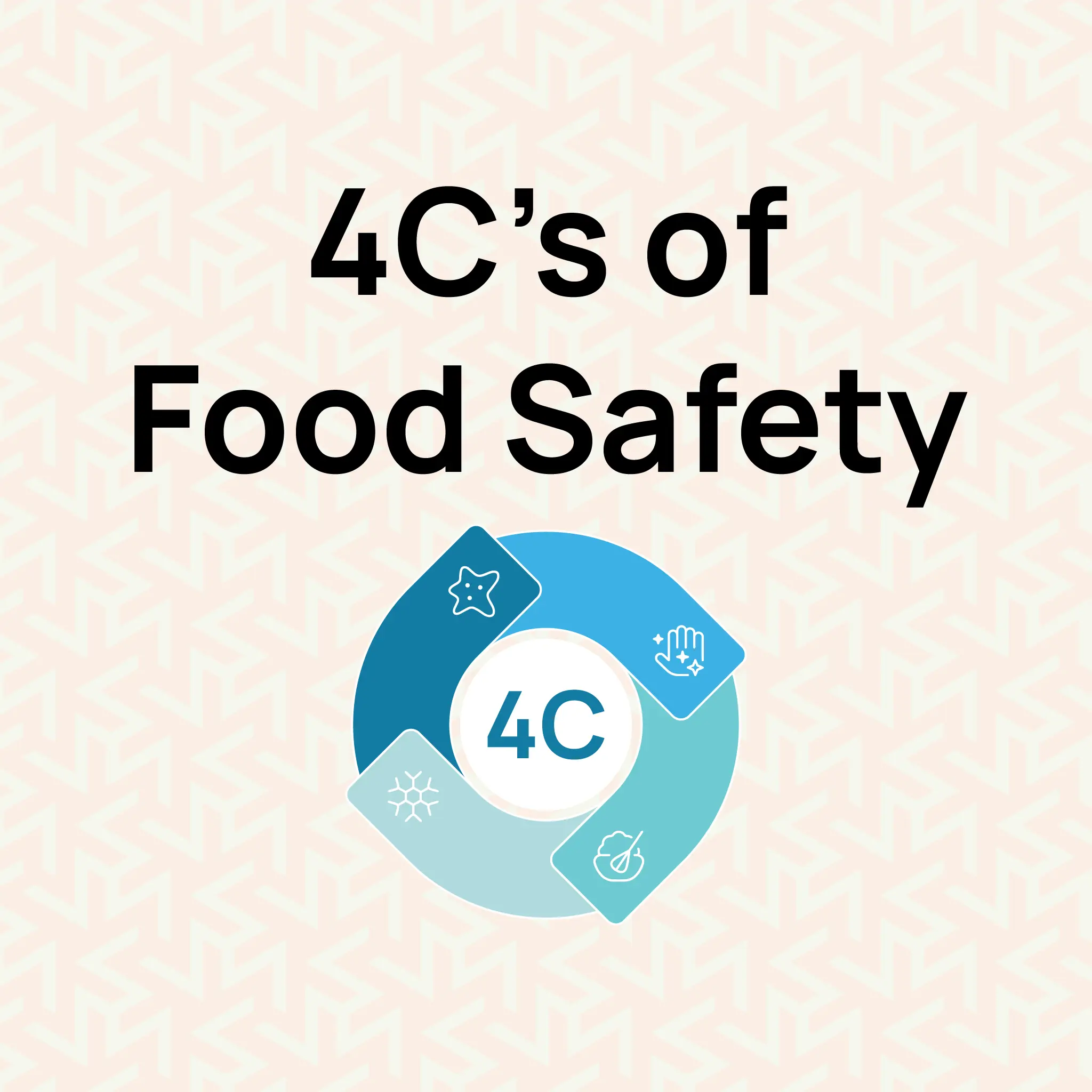
The Complete Guide to the 4?Cs of Food Safety for UK Food Businesses
Running a food business in the UK requires adhering to strict food safety standards to protect your customers and fulfil your legal obligations. From restaurants and cafes to catering services and takeaways, maintaining high levels of hygiene and safe food handling is essential to avoid health risks and regulatory consequences.The 4Cs of food safety Cleaning, Cooking, Chilling, and avoiding Cross-contamination are key principles promoted by the Food Standards Agency (FSA). They provide a clear and practical framework for managing food safety throughout every stage of food preparation and service.Although the 4Cs themselves aren't explicitly outlined in legislation, the practices they support are fundamental to complying with UK food laws, including the Food Safety Act 1990 and the Food Hygiene Regulations 2006. Failing to implement these practices can lead to foodborne illnesses, poor hygiene ratings, and legal action.In this article, we'll break down each of the 4Cs, explore why they're so important for food businesses, and offer practical tips to help you apply them in day-to-day operations.But first, let's look at why these four principles are considered essential across the UK food industry.Why Is Following the 4Cs Important for Food Businesses?What are the 4Cs of food safety, and why are they important?Simply put, they are Cleaning, Cooking, Chilling, and avoiding Cross-contamination, four essential principles that safeguard food safety and help UK businesses comply with legal and hygiene standards.The 4Cs aren't just a checklist; they form the foundation of safe food handling by reducing health risks, supporting legal compliance, and ensuring you're prepared for inspections.Here's how each of these principles reinforces why the 4Cs should be at the heart of every UK food business.They Reflect FSA Guidelines and ExpectationsThe Food Standards Agency (FSA) strongly promotes the 4Cs because they provide a clear foundation for safe food handling and hygiene. While not explicitly mentioned in the law, the FSA considers the 4Cs to be essential to good food safety practices, and inspectors will expect to see them applied in kitchens, storage areas, and front-of-house environments.Following the 4Cs can also help businesses achieve a better food hygiene rating, which in turn influences customer trust and reputationIgnoring the 4Cs Increases Health RisksWhen businesses don't follow the 4Cs, they increase the risk of foodborne illnesses caused by harmful bacteria like Salmonella, Listeria, or E. coli. Cross-contamination, incorrect cooking temperatures, or inadequate chilling can all contribute to the growth and spread of these pathogens, posing a serious risk to your customers' health.There Are Serious Legal ConsequencesAlthough the 4Cs themselves aren't written into legislation, the practices they represent are enforceable under UK food law. The Food Safety Act 1990 requires all food businesses to produce and serve food that is safe to eat. Failure to control food safety hazards could result in prosecution, fines, business closure, or even imprisonment in serious cases.Helps You Stay Inspection-ReadyFood safety inspections don't happen on your schedule; they can occur at any time. Following the 4Cs ensures you're prepared, with strong cleaning routines, proper temperature control, labelled storage, and clear procedures in place. This makes risk assessments easier and helps maintain compliance across your team.For detailed guidance on how to be prepared for a Food Safety Inspection, read our article on the food hygiene rating checklist.Incorporating the 4Cs into your daily operations isn't just about passing inspections; it's about building a food safety culture that protects people, supports your brand, and reduces long-term risks.Now let's look more closely at each of the 4Cs in action.Ready to upskill your staff or meet legal training requirements?Start with a certified course: ? Level 2 Food Hygiene and Safety for Catering ? Level 2 Food Hygiene and Safety for RetailThe 4Cs of Food SafetyNow that we've explored why the 4Cs matter, let's look at each one in practice. Together, they create a strong framework that protects food from common hazards, but each one plays a unique role in keeping your premises inspection-ready and legally compliantCleaningCleaning is the first and arguably the most continuous step in food safety. It's about creating and maintaining a hygienic environment, not just at the start or end of the day, but throughout the entire day.A clean-as-you-go approach ensures that spills, food scraps, and splashes are addressed promptly. Why wait until the end of a shift to wipe down a counter that's been touched dozens of times? By cleaning as you work, you prevent harmful bacteria from building up and spreading to food or equipment. It's proactive, not reactive.Go beyond a simple wipe-down. The six stages of cleaning are key: pre-clean, main clean, rinse, disinfect, final rinse, and drying. These aren't just steps, they're safeguards. Miss one, and you risk leaving behind dangerous residues or ineffective sanitisation.Use colour-coded chopping boards to separate raw meat, cooked food, dairy, and vegetables. It's a small thing that goes a long way in reducing cross-contamination, especially when multiple people are prepping in a busy kitchen.And don't overlook the basics: hand hygiene. Hands can transfer thousands of bacteria in a single touch. Follow the 7 steps of hygienic hand washing, especially after handling raw foods, using the toilet, or taking out the bins.Lastly, wash fruits and vegetables under running water before cooking or serving. This removes dirt and pesticide residues, but do not wash raw meat; it can splash bacteria across your sink and counters, increasing the risk of contamination.CookingCooking is more than getting food hot, it's your defence against harmful microorganisms like Salmonella or E. coli. If meat isn't cooked properly, these bacteria can survive and cause serious illness.Every food type has its specific requirements. The core cooking temperature generally recommended is 75C; however, checking with a food probe is the most reliable way to ensure the food is safe. You should always be aware of the Temperature Danger Zone while cooking.If you're cooking something with packaging (like a frozen pie or pre-made meal), follow the manufacturer's guidelines. But if there are no instructions, stick with FSA advice, especially for:Poultry (chicken, duck, turkey)PorkMinced meats (like sausages, kebabs, burgers)Offal (liver, kidneys)Rolled joints, where bacteria can be pushed from the surface into the centre during preparationThese foods are considered high-risk because they're more likely to carry harmful bacteria. That's why undercooking them isn't just a mistake, it's a danger.Poor cooking practices can also breach the Food Safety Act 1990. If your food harms someone, even unintentionally, the consequences are legal.ChillingChilling slows down the growth of bacteria, but only if it's done right.It is essential to understand the ideal fridge storage temperature and make sure your fridge is set to 5C or below. Also, never overload your fridge. Cold air needs space to circulate; otherwise, certain spots warm up, creating the perfect breeding ground for bacteria.Always store raw meats on the bottom shelf of the fridge to prevent their juices from dripping onto ready-to-eat foods, which can lead to cross-contamination and serious foodborne illnesses. For tips on safe fridge storage, see our full guide on how to organise a fridge.Understand the food dates. A use-by date is about safety; eat it after that and you're taking a risk. A best-before date, on the other hand, is about quality. It is crucial to be aware of the difference between use-by and best-before date.When it comes to leftovers, many wonder: Can you put warm food in the fridge? The answer is yes, but let it cool slightly first ideally for no more than 12 hours. Placing steaming food directly into the fridge can raise its internal temperature and potentially affect other items stored nearby.Understand your freezing limits, too. Beef and other meats can only last a certain amount of time, even when stored in the freezer. Learn how long you can safely freeze food, the best methods for cooking it from frozen, and how to defrost it properly.Cross-ContaminationCross-contamination is silent and quick. A knife used for raw chicken, then reused for salad without washing, that's all it takes.To protect food from cross-contamination:Always use separate equipment and colour-coded boards for raw and cooked food.Store raw food below cooked food in the fridge to prevent drips.Wash your hands every time you switch tasks.Clean and disinfect surfaces between jobs.Be aware of cross-contact, especially when it comes to allergens, as even a trace can trigger a serious reaction.Understand the different types of contamination:Physical (e.g. hair, glass)Microbial (bacteria, viruses)Chemical (cleaning agents)This is where habits matter most a well-trained team that's alert, organised, and consistent makes all the difference.Advance Your Food Safety Skills With Professional TrainingUnderstanding the 4Cs is essential, but it's only the beginning. To truly lead safe, compliant food operations, especially in supervisory roles, formal training is a must.Level 3 Food Hygiene and Safety Course Ideal for managers and supervisors, this course dives deeper into food law, risk assessments, and hygiene practices, helping you implement the 4Cs across your team and stay compliant with UK regulations.Food Allergy Awareness Course Allergen cross-contact is a serious risk. This short course trains you to identify, label, and control allergens in food preparation a vital extension of your cross-contamination strategy.Take charge of food safety today!Going Beyond the 4Cs: Best Practices to Prevent Food Safety FailuresNow that we've seen how each of the 4Cs plays a role in preventing foodborne risks, let's shift focus to the broader strategies businesses can adopt to keep those risks at bay before they even start.Here are three proven ways to stay proactive about food safety compliance:Implement a HACCP PlanHazard Analysis and Critical Control Points (HACCP) is more than just a checklist it's a structured system designed to identify, assess, and control food safety risks at every stage of your operation. From storage to service, every potential hazard is identified and managed effectively.Stay Inspection-Ready at All TimesWaiting until an EHO visit is announced is a recipe for panic. By maintaining your premises, documentation, and adhering to food safety protocols on a daily basis, you ensure that you're always prepared for a spot check. This includes having updated cleaning logs, temperature records, and allergen labelling processes in place.Invest in Regular Staff TrainingEven the best systems fall apart without well-trained staff. Ongoing training ensures that your team is confident in consistently applying the 4Cs. Refresher sessions are especially crucial in high-turnover environments, such as the hospitality industry. A simple misunderstanding of cross-contact, for example, could put a customer with allergies at serious risk.HACCP Training for Safer PremisesLearn how to assess food safety risks, apply adequate controls, and keep your kitchen inspection-ready with Hurak's Level 2 HACCP Course.Start TodayIncorporating these measures won't just help you avoid food safety issues; they'll help you build a culture of accountability across your team.Let's now understand how things can quickly go wrong when even one of the 4Cs of food safety is ignored, with an example.This example shows how one small lapse in chilling can escalate into a serious breach, reinforcing why every C counts.How a Small Oversight Can Lead to a Major Food Safety BreachLet's examine a scenario that could occur at any food outlet, where a minor lapse in judgment puts customer health at risk.Note: This example is provided for educational purposes only.Scenario: A Busy Cafe and a Chilling OversightIn a small high-street cafe, the kitchen staff cooked large batches of minced beef chilli during morning prep. Due to time pressure and limited fridge space, hot food was placed directly into the fridge to cool faster. Later that evening, several customers reported symptoms of food poisoning. An investigation by local authorities revealed that the food had spent too long in the temperature danger zone between 8C and 63C. Allowing bacteria like Clostridium perfringens to multiply. No chilling logs were maintained, and the team was unaware of proper cooling procedures.What went wrong?A failure to follow safe chilling practices, one of the 4Cs, triggered a chain reaction, demonstrating how a single oversight can impact public health, damage your brand reputation, and result in legal action.The story also illustrates why understanding guidelines isn't enough; you must apply them, monitor their implementation, and train your staff to do the same.Conclusion: Food Safety is a Constant CommitmentMastering the 4Cs Cleaning, Cooking, Chilling, and Cross-Contamination forms the backbone of any safe food environment. But food safety doesn't end there.To truly protect your customers and reputation, you must go the extra mile.Consider TACCP and VACCP strategies to protect against intentional food threats, or implement regular risk assessments to identify vulnerabilities before they cause harm. Leveraging smart kitchen technology for temperature logs and hygiene audits can also add precision and confidence to your operations.Whether you run a food truck or manage a full-service kitchen, your safety systems must evolve with the industry. When done right, these steps not only reduce risk but also boost customer trust and business resilience.Go Beyond the 4Cs Train SmarterMaster legal compliance, inspections, allergen safety and more with Hurak's CPD-certified Food Hygiene and Safety Courses.Find Your Course NowFAQsWhat are the 4Cs of food safety, and why are they important?The 4Cs of food safety are Cleaning, Cooking, Chilling, and avoiding Cross-contamination.They are important because they form the foundation of safe food handling practices, helping to prevent foodborne illnesses, protect public health, and ensure compliance with UK food safety laws. By following the 4Cs, food businesses can reduce health risks, maintain hygiene standards, and pass inspections with confidence.How can I train my staff on the 4Cs?Enrol them in a certified Food Hygiene Course, such as Hurak's Level 2 or Level 3 programmes, which cover the 4Cs in depth.Is it mandatory to follow the 4Cs in a home kitchen?While not legally required for home use, following the 4Cs helps protect your family from harmful bacteria and ensures safer food practices.Are there practices beyond the 4Cs that I should know?Yes, advanced methods such as TACCP, VACCP, digital temperature monitoring, and regular risk assessments extend beyond the 4Cs to address intentional food threats and complex safety risks.
How Long Does Beef Last in the Fridge?
Ever stood in front of your fridge wondering, Is this beef still safe to eat?Whether it's leftovers from Sunday roast or raw mince from yesterday's shop, knowing how long beef lasts in the fridge (or freezer) can be confusing and potentially risky if you get it wrong.In this guide, we'll walk you through how to store beef correctly, how long it lasts depending on the type and condition, safe defrosting practices, how to spot signs of spoilage, and even UK food safety laws you need to know, especially if you're running a food business.Let's make food safety simple and your fridge, safer.How to Store Beef in the Fridge or FreezerStoring beef properly is crucial for maintaining its freshness, preventing foodborne illness, and minimising waste. Whether it's raw, cooked, minced, or sliced, how you pack and store beef (in your fridge or freezer) plays a crucial role in determining how long it will last.Choose the Right Packaging: Airtight is EssentialStore beef in airtight containers or sealed freezer-safe bags to prevent contamination and moisture loss.Wrap raw cuts in cling film and foil, or better yet, vacuum seal them if possible.Avoid leaving beef in supermarket packaging for long-term storage. Transfer to proper containers once you're home.Set the Right TemperatureYour fridge should always be kept at 5C or below, and your freezer at -18C or colder, to stop bacteria from multiplying.Keeping your appliances within these limits helps you avoid entering the Temperature Danger Zone where harmful microbes can grow quickly, as explained in our food safety fridge storage temperature guideline.Store in the Right Place: Raw Below, Cooked AboveRaw beef should always be stored on the bottom shelf, in a leak-proof container, to prevent drips from contaminating other foods.Cooked beef can be placed on upper shelves but must be kept away from raw items at all times to prevent cross-contamination.An organised fridge, with clearly defined zones for raw and cooked foods, is not only safer but also more efficient. If you're unsure how to set it up, our guide on how to organise your fridge offers practical tips for arranging shelves properly and maximising space.Label Before You StoreMark each item with the storage date and note whether it's raw or cooked.This helps track freshness and reduces the risk of consuming spoiled beef or discarding safe food too soon.Portion Before FreezingDivide large packs of beef into smaller portions before freezing to avoid repeatedly defrosting and refreezing.Lay bags flat for faster freezing and to save space.Remove as much air as possible from the packaging to prevent freezer burn.Safe storage starts with small habits, using the proper packaging, setting the correct temperature, and placing beef where it won't contaminate other foods. These steps not only help your food last longer but also reduce waste and protect your health.Want to build a stronger foundation in food hygiene?Start the Level 1 Food Hygiene and Safety Course Perfect for home cooks, kitchen staff, and anyone handling food, this concise online course teaches you how to store, prepare, and serve food safely, including tips for preventing cross-contamination and maintaining a well-organised fridge.How Long Does Beef Last in the Fridge or Freezer?Storing beef safely isn't just about keeping it cold; it's about knowing how long each type can stay fresh without putting your health at risk. From steaks and mince to cooked leftovers, each has its own shelf life in the fridge and freezer.Let's look at how long you can store different types of beef in the fridge and freezer based on UK food safety standards.Beef Storage Chart (UK Guidelines)Type of BeefStorage StyleFridge (? 5C)Freezer (? -18C)Raw steak or roasting jointUncooked cut35 days6 to 12 monthsRaw minced/ground beefUncooked mince1 to 2 days3-4 monthsCooked beef (any type)Leftovers3 to 4 days2 to 3 monthsStews and beef-based mealsMixed dishes3 to 4 days2 to 3 monthsRaw beef sausagesFresh packed1 to 2 days1 to 2 monthsCold cuts/sliced beefDeli-style3 to 5 days (opened)1 to 2 monthsBeef gravy or stockCooked liquids1 to 2 days2 to 3 monthsNow that you've seen the chart, let's understand what it means in practical terms. Not all beef is created equal, mince spoils quicker than steaks, and leftovers have different timelines than raw cuts.Each category also requires different handling to keep it safe in the fridge or freezer.Here's a quick breakdown of why:Whole cuts like steaks and joints have a longer shelf life because they're exposed to less air and bacteria.Minced beef should be treated with urgency. The grinding process increases bacterial exposure, so it's best used within 1 to 2 days.Cooked beef dishes, such as roast beef or bolognese, can be stored in the refrigerator for 3 to 4 days. If you're not sure you'll eat it in that time, freeze it to extend its life.Gravy, stock, or cold cuts may look harmless, but they can spoil quickly. Store them in airtight containers and clearly label the date on each container.Pro Tip: No matter the type, always label and date what you freeze; it's easy to forget when that container was put in.Let's understand how long beef lasts in the fridge with an example for better understanding:Example:Anna, a busy parent, buys beef mince and steaks every Saturday. She keeps the mince in the fridge and uses it for Sunday lasagne. She freezes the steak for next weekend. Leftover cooked beef is placed in labelled containers and eaten for lunch within 3 days, or frozen if not.Meanwhile, James, who runs a catering business, logs every beef delivery and moves anything unused into the deep freeze within 48 hours. This process helps him stay compliant, organised, and waste-free.Whether you are storing food at your home or at a restaurant, understanding the timelines is key to avoiding spoilage and keeping your kitchen safe.Want to dive deeper into food safety?Explore related articles:high-risk foods | food preservation methods | how to cook frozen foodDoes the Type of Beef Cut Affect Fridge Life?Absolutely and more than you might expect.As discussed earlier, whole cuts stay fresh longer thanks to their minimal surface exposure.Here's a quick breakdown:Whole Cuts (e.g. steak, joint): Last longer; fewer exposed surfaces mean slower spoilage.Minced or Ground Beef: Spoils faster due to increased exposure to air and bacteria during processing.Cooked Beef: Shorter life once cooked, even if it started fresh.Sliced Cold Cuts: High risk, especially once opened; they spoil quickly.Tip: When in doubt, opt for vacuum-sealed cuts and store them in the coldest part of your refrigerator.While storage rules apply broadly to all beef, understanding the type of cut can help you fine-tune how long you keep it in your fridge or freezer. Whole cuts last longer than ground or sliced beef, and cooked beef has a much shorter shelf life regardless of the cut.Being aware of these nuances helps you avoid food waste and reduce the risk of spoilageTake charge of food safety in your kitchen.The Level 3 Food Hygiene and Safety Course is designed for supervisors, managers, and owners to build a strong foundation in food hygiene systems and solve day-to-day safety challenges.How to Defrost Beef SafelyWe've just seen how different cuts affect how long beef lasts, but that's not all. Once you're ready to use it, how you defrost your beef is just as crucial for maintaining safety, flavour, and texture. Defrosting incorrectly can undo all the careful storage you've done so far.Here's how to do it right:Safe Defrosting MethodsIn the fridge (best method): Place your beef on a tray at the bottom of the refrigerator to prevent drips from contaminating other food. This slow, controlled method keeps the meat below 5C, which helps prevent the growth of harmful bacteria.In cold water: Submerge the beef in a leak-proof plastic bag in a bowl of cold water. Change the water every 30 minutes to maintain its freezing temperature. Cook immediately after thawing.In the microwave: Use the defrost setting and cook the beef straight away. Be aware that microwave defrosting may partially cook the outer layers, so timing matters. Our guide on how to defrost food in the microwave explains how to do it safely and avoid uneven cooking.Proper defrosting keeps your beef safe to eat, preserves quality, and supports good kitchen hygiene. And if you're handling food in a business setting, knowing the correct methods is essential for staying compliant with UK food safety law.How to Tell if Beef Has Gone BadAfter defrosting, it's essential to check whether the beef is still safe to use, especially if it has been in storage for an extended period. Even when stored or defrosted correctly, beef can still spoil due to improper handling, inadequate packaging, or prolonged storage.Knowing the signs of spoilage helps you avoid food waste, but more importantly, it protects against foodborne illness, whether you're cooking at home or running a kitchen.Look out for these common indicators that your beef is no longer safe to eat:Strange or sour smell: Fresh beef should have a neutral scent. A sour, ammonia-like, or rotten smell means it's spoiled and should be discarded immediately.Slimy or sticky surface: Spoiled beef often develops a slippery film on the surface. This is caused by bacterial growth and is a clear sign that the meat should not be used.Discolouration: Beef naturally darkens slightly with age, especially when exposed to air. But if it turns green, grey, or has unusual patches, it's a red flag.Off taste (in cooked beef): If the flavour is bitter, metallic, or off, it's better to be safe than sorry don't eat it.Note: Microbial contamination isn't always visible. Even if beef looks and smells okay, if it's been stored improperly or past its use-by and best-before dates, it can still be unsafe.Spotting spoiled beef isn't always about what you can see; it's also about how it's been stored, handled, and defrosted. When in doubt, throw it out -- safety comes first.Regular fridge checks and proper labelling go a long way in keeping your kitchen safe.Beef Storage in the UK: Essential GuidelinesNow that you know how to identify spoiled beef, let's talk about prevention. Taking a few simple steps when storing, preparing, and handling beef can significantly extend its shelf life and reduce waste.Label and Date Everything ClearlyWhether you're storing raw steaks or cooked mince, always label with the storage date. Not only does this support FIFO (First In, First Out) rotation, but it's essential for traceability under UK food law, particularly in commercial kitchens.Keep Beef at Safe TemperaturesStore beef in the fridge at 5C or below, and freeze it at -18'C or lower. UK regulations set a legal maximum of 8C for chilled foods, but best practice recommends a lower temperature to ensure safety.Use Airtight or Vacuum-Sealed ContainersPackaging beef in sealed, air-tight containers or vacuum bags prevents exposure to air and slows bacterial growth. This protects quality and meets hygiene standards that help prevent contamination.Store Raw Beef on the Bottom ShelfIn both home and professional settings, placing raw meat at the bottom of the fridge stops juices from dripping onto ready-to-eat foods, a key step in avoiding food contamination, which is strictly regulated under UK food safety law.Avoid Overpacking the Fridge or FreezerProper airflow ensures the entire unit maintains safe temperatures. Overcrowding can lead to uneven cooling and breach legal storage limits.Follow Use-By Dates They're Legally BindingUnlike best-before dates, use-by dates are enforceable. Selling, serving, or even consuming beef past this point is illegal under the Food Safety and Hygiene (England) Regulations 2013..Ensure Staff Are Trained in Food Storage PracticesFor food businesses, having trained staff is not just good sense, it's a requirement under Regulation (EC) No. 852/2004. Even basic storage mishandling can lead to legal action if safety is compromised.For a deeper dive into your responsibilities as a food business, visit our guide to the Food Safety Act 1990.Combining good habits with legal knowledge is the key to safe beef storage. Whether you're labelling meat at home or running a catering operation, the rules are there to protect health and ensure accountability. Doing things properly means reducing risk and doing right by your customersConclusion:Proper beef storage is about more than just keeping your food fresh; it's a vital step in protecting yourself, your family, or your customers from foodborne illness. Understanding the differences in shelf life between cuts, following safe defrosting practices, recognising spoilage signs, and complying with UK food safety laws all contribute to safer kitchens at home and in business.By combining simple storage habits with clear labelling and correct temperatures, you can significantly reduce waste and keep your food safe to enjoy. Whether you're cooking dinner or running a busy catering business, these practical steps build a foundation of food safety everyone can rely on.So, how long does beef last in the fridge? Now you know, and with the right approach, you can store your beef safely and confidently every time.Boost your food safety skills with expert training.Explore a wide range of accredited food hygiene and safety courses designed for every level, from home cooks to food business professionals.Find the right course for you at Hurak!!FAQHow long does beef last in the fridge?Beef can last between 1 to 5 days in the fridge, depending on the cut and whether it's raw or cooked. For example, raw steaks and roasting joints usually stay fresh for 3 to 5 days, while minced beef should be used within 1 to 2 days. Cooked beef leftovers typically last 3 to 4 days in the fridge. Always store beef at or below 5C and label it with the date to keep track of freshness.How long can you keep chicken in the freezer?Chicken can be safely stored in the freezer for varying lengths depending on the cut and whether it's cooked or raw. Raw whole chicken can last up to 12 months in the freezer, while raw chicken pieces are best used within 9 months. Cooked chicken typically lasts 2 to 6 months in the refrigerator. Always freeze chicken at -18C or below and use airtight packaging to maintain quality.What's the best way to store beef and chicken to maximise their shelf life?Use airtight containers or vacuum-sealed bags to store both beef and chicken. Label your packages with the storage date. Keep raw meat on the bottom shelf of your refrigerator to prevent drips, and ensure the temperature stays at 5C or lower. For freezing, wrap meat tightly to avoid freezer burn and portion it for easy thawing.Can you refreeze beef or chicken after thawing?Its safe to refreeze beef or chicken only if it has been thawed in the fridge and hasn't been left out at room temperature. Refreezing may affect texture and flavour, so it's best to freeze in smaller portions to avoid the need for multiple thawing cycles.