

What is the Difference Between Use By and Best Before Dates
Food labels provide information about the food we buy, from nutritional content to important dates. When you check food labels, you might encounter two important terms: "use by" and "best before." These dates guide you on when to eat your food, but they mean different things. Understanding the difference between use-by and best-before dates is useful for making informed food consumption and storage decisions.Meaning of Use By Date on Food PackagingThe use-by date indicates when a product may no longer be safe to consume. This is because, after the use-by-date, microbial contamination of food or spoilage may occur. Therefore, follow these dates to prevent foodborne illnesses.Meaning of Best Before Date on Food PackagingBest-before dates show when the food is expected to keep its peak quality. While food after this date is generally safe, its fresh taste and texture may change.Use By and Best Before Dated Food TypesUse By Dates: For perishable items like meat, dairy, and ready-to-eat meals.Best Before Dates: Non-perishable items like dry pasta, canned goods, and snacks often have best-before dates.What is the Difference Between Use By and Best Before Dates on Food Packages?Best-before and use-by dates give information about two different aspects of food.If thoroughly cooked, food can be eaten after the best-before date, but it is unsafe to eat food beyond its use-by date. Proper storage, according to the manufacturers instructions, maintains food's freshness.Food Safety Importance of Use By and Best Before DatesPrevents Food PoisoningUnderstanding these labels helps us avoid getting sick. If we eat something past its use-by date, we could risk getting food poisoning from bacteria like Listeria. This bacteria can grow quickly in certain foods and can be dangerous, especially for people with weaker immune systems.Food PreservationBest-before and use-by labelling on food packaging helps preserve food for the right amount of time and protects us from eating contaminated food. It also tells us whether food must be stored in the refrigerator or a freezer. For example, fresh meat, poultry, and fish can go off quickly and are usually labelled with use-by or freeze-by dates. Correctly freezing and refrigerating these food types is important for their preservation.Reduces Food WastageWhile use-by dates are important for food safety, they also help us reduce food waste. By paying attention to use-by dates, food can be consumed and bought in time without adding extra bulk, which can lead to food waste.Facilitates the FIFO Food Stock Rotation SystemRemember to organise your fridge so that older items are used first, as the First-In, First-Out (FIFO) rule suggests. If you can't eat food before its "use by" date, freeze it.Sniff Test for Dated Food TypesIf you're checking foods with a "best before" date about quality rather than safety, you can use your senses to help decide if it's still good to eat. For example, you can look for mould on bread or taste biscuits or crisps to check if they're stale.However, if the food has a "use-by" date, the sniff test isn't reliable for checking if it's safe to eat. Even if the food looks and smells okay after the use-by date, eating might still be unsafe. That's because harmful bacteria that can make you sick aren't always visible or noticeable by smell.It's up to the manufacturers to decide whether to put a use-by date or a best-before date on their products. They consider how the food is made and how risky it might be. They make sure to use the right label to keep us safe.Examples of Dated Food TypesEggsThe eggs you buy from the shop will have a date on them, either "best if used by" or "expiration" (EXP). Always get eggs on the box before the best-before date. When you get home, put the eggs in the fridge in their original box and keep them at the back of one of the middle shelves, not in the fridge door. Do not freeze raw eggs.For the best quality, try to use the eggs within 3 to 5 weeks of buying them. You can eat eggs up to 24-48 hours after their best-before date, but make sure you cook them well. Cook them until both the white and yolk are hard.After the best-before date, eggs might not taste as good, and more salmonella bacteria could make you ill. If you're eating eggs after this date, it's important to cook them properly to kill any harmful bacteria.MilkMilk cartons have best-before dates. If you put them in the fridge immediately when you bring them home from the shop and don't leave them out during meals, they can still be okay to drink after that date, only for a few hours.Pasteurised milk lasts 7 to 14 days. Milk processed under ultra-high temperatures can be stored at room temperature for up to 90 days. Once opened, UHT milk deteriorates at the same rate as regular milk and should be kept in the fridge.BreadBread usually has a 'Best by' or 'Use by' date stamped on the plastic bag or tag if it's sliced. Freshly baked bread from the bakery tends to go stale faster because it often doesn't have preservatives added. When the bread starts to go off, you'll notice green or white mould spots forming. If you see these, throwing away the whole loaf, not just the affected slices, is best.Reliability of Best Before DatesManufacturers set best-before dates to encourage consumption while the food is at its peak quality. However, proper storage and handling can extend the freshness beyond this date, but caution should be exercised.Sell By and Display Until DatesSell-by and display-until dates are important for retailers in managing inventory. Consumers should primarily focus on use-by and best-before dates for food safety and quality.FAQsCan I eat food after the Best Before date?While consuming food after the best-before date is generally safe, its quality may decline over time. Discard food if it has an unusual texture, smell and taste.Is it safe to consume food after the Use By date?Do not consume food after the use-by date, as it may cause food poisoning due to potential bacterial growth or spoilage. Follow use-by dates strictly for food safety.How can I maximise the shelf life of food?Proper storage is key to maximising the shelf life of food. Follow storage instructions provided on the label, keep perishable items refrigerated in proper packaging to prevent contamination.How long can you eat eggs after the expiration date?You can eat eggs up to 24-48 hours after their best-before date, but cook them well. Cook them until both the white and yolk are hard.ConclusionUnderstanding the distinction between use-by and best-before dates on food labels is important for informed decision-making regarding food consumption and storage. While use-by dates indicate safety and the risk of microbial contamination, best-before dates signify peak quality. These labels help prevent foodborne illnesses, reduce food waste, and guide consumers in proper storage practices.

How to Use a Fire Extinguisher: The PASS Method Explained
In the modern workplace, fire safety isnt just about alarms, sprinklers, and signs. Its about ensuring that every person on the premises knows how to respond safely, confidently, and responsibly in the face of a fire emergency. Whether youre a health and safety officer, a site worker, a manager, or someone seeking to build a career in workplace safety, understanding the PASS technique is one of the most fundamental skills you can learn.PASS is more than an acronym. It is a process, a mindset, and a legal expectation, one that has the power to prevent small fires from escalating into large-scale emergencies. This article will walk you through what PASS means, why its important, and how mastering it can contribute to your safety credentials and professional value.Demystifying PASS: The Fire Safety Technique That Saves LivesThe word PASS is used to simplify the steps involved in correctly using a fire extinguisher. It stands for: Pull, Aim, Squeeze, Sweep. While this may sound straightforward, each of these actions plays a vital role in ensuring the extinguisher is used effectively and safely.PullThe process begins by pulling the safety pin, a small but essential step that allows the handle to be engaged. This pin prevents the extinguisher from being discharged accidentally, acting as a safeguard when the device is not in use. In an emergency, people often forget this step, leading to confusion when the extinguisher wont activate. The action of pulling the pin should be firm, and often a slight twist is required to release it. This first step mentally prepares the user to take control of the situation.AimOnce the pin is removed, the next crucial step is to aim the nozzle or hose. Importantly, this should not be directed at the flames themselves; rather, the target must be the base of the fire. Fires are fuelled from their origin point, and aiming at the base cuts off the fuel source. This distinction is commonly misunderstood, and often the reason why fire extinguishing efforts fail. Learning how to aim correctly, especially under pressure, can be the defining factor in suppressing a fire successfully.SqueezeThe user must then squeeze the handle to discharge the extinguishing agent. This should be done steadily and with control. Jerky or inconsistent pressure may result in interrupted flow or misdirection of the substance, reducing its effectiveness. This part of the process also requires the user to remain composed, as the force of the release may be stronger than expected, especially with larger extinguishers.SweepThe final action is to sweep the nozzle side to side across the base of the fire. This ensures comprehensive coverage, allowing the agent to suffocate the flames more effectively. The sweeping motion should be continuous, even after the visible flames appear to have died down, to prevent re-ignition. Users are advised to maintain focus and continue this motion until they are certain the fire is fully extinguished.If youre interested in seeing how PASS is applied in real-life scenarios, Huraks blog on How to Use Fire Extinguishers offers step-by-step illustrations and practical context.The Real-World Relevance of PASS in Professional EnvironmentsUnderstanding PASS is not merely about fire safety; its about situational awareness, confidence, and legal compliance in the workplace. In high-risk industries such as construction, manufacturing, and hospitality, the ability to act decisively during a fire emergency is a core component of responsible work behaviour. Employers expect more than just technical skills; they value employees who can keep themselves and others safe.Many organisations appoint designated fire marshals or safety officers, but general awareness of fire safety practices is expected across all levels of the organisation. This is especially true for roles in leadership, operations, facilities management, and retail. When employees are trained in the PASS technique, the entire team benefits from faster response times, more controlled evacuations, and lower risk of injury or damage.Fire Extinguishers: Matching the Tool with the FireWhile PASS describes how to use an extinguisher, it does not explain which extinguisher to use. Selecting the wrong type can exacerbate the situation or pose a risk to the user. Understanding fire classes and extinguisher types is a necessary extension of PASS training.Water extinguishers are effective against fires involving paper, wood, or textiles, but they should never be used on electrical fires due to the risk of electrocution. Foam extinguishers are suitable for flammable liquids like petrol or paint, while CO? extinguishers are preferred in offices or electrical environments because they leave no residue and reduce equipment damage.However, they displace oxygen and should not be used in tight, enclosed spaces without ventilation. Dry powder extinguishers are multipurpose but create visibility issues and inhalation risks indoors. Wet chemical extinguishers are designed for kitchen fires involving fats and oils, which is especially relevant in catering and hospitality roles.Training courses such as Huraks Fire Marshal Training explore all these extinguisher types and include scenario-based guidance to help users select and operate the correct device with confidence.?NEBOSH Fire Safety CertificateDesigned for professionals seeking a comprehensive understanding of fire risk management, the NEBOSH Fire Safety Certificate combines real-world scenarios with in-depth legal and safety knowledge. Its a trusted qualification across industries and a solid step for those aiming to lead in fire safety.Understanding When to Act and When to EvacuateThe PASS technique is only applicable when it is safe to do so. In cases where the fire is large, spreading rapidly, or the room is filled with smoke, attempting to use an extinguisher can be dangerous. If your exit is blocked, the fire is beyond control, or you are untrained, you should evacuate immediately and alert emergency services.Fire safety training should always include the ability to assess the situation, not just to act, but also to know when not to. The key to workplace fire safety is a balance between knowledge and judgment. Huraks blog on Fire Safety at Your Workplace provides practical examples of when and how to intervene.Legal Obligations and Training ExpectationsFire safety isn't just a best practice; its a legal requirement. The Regulatory Reform (Fire Safety) Order 2005 requires employers to provide suitable fire safety measures, including staff training. The Health and Safety at Work etc. 1974 Act reinforces this by placing the responsibility for employee welfare firmly on the employer.These laws apply to all non-domestic premises, including offices, warehouses, schools, hotels, and retail units. Employers must conduct fire risk assessments, implement evacuation procedures, and ensure that staff understand their roles in the event of a fire emergency.To see how these legal frameworks apply to your role, refer to the UK Governments official fire safety guidance.For career-minded individuals, courses such as IOSH Managing Safely and CITB Health and Safety Awareness Course (HSA) provide formal recognition of fire safety competency and enhance employability across multiple sectors.? Fire Safety Manager Advanced DiplomaStep up into a leadership role in fire safety. This advanced diploma dives into fire legislation, strategic planning, and high-level risk assessment, ideal for workplace managers.Conclusion: Turning PASS Into PreparednessThe PASS technique represents more than just four actions; it is a critical component of workplace safety, professional development, and legal compliance. By learning how to Pull, Aim, Squeeze, and Sweep, individuals equip themselves with the skills and confidence needed to respond responsibly in emergency situations.Whether you're just entering the workforce or stepping into a health and safety role, understanding PASS is a powerful starting point. With accessible training pathways like those offered by Hurak, every professional can develop the knowledge to protect lives, fulfil legal obligations, and enhance their career potential.Mastering the PASS method equips you with a powerful tool in a fire emergency, but its only one piece of the fire safety puzzle. Ongoing training ensures you're ready to act with confidence and clarity when it matters most.Frequently Asked QuestionsWhat does PASS stand for in fire extinguisher use?PASS stands for Pull, Aim, Squeeze, and Sweep. Its a simple method for operating a fire extinguisher effectively in an emergency.Can anyone use a fire extinguisher at work?Yes, but only if its safe to do so and the person has received basic fire safety training. Evacuation is the priority if a fire is spreading or blocking escape routes.Which type of extinguisher should I use for electrical fires?Use a CO? or dry powder extinguisher for electrical fires. Avoid water-based extinguishers as they can cause electrocution.Do fire extinguishers expire?Yes, they do. Most have a lifespan of 5 to 15 years. Regular servicing and inspection are crucial to ensuring the readiness of fire extinguishers.Is fire extinguisher training a legal requirement?Under UK fire safety regulations, employers must ensure staff are trained in using fire extinguishers and emergency procedures relevant to their workplace.Want to Learn More? Take a Fire Safety Course with HurakIf you want to turn this knowledge into practical, confidence-boosting skills, youre in the right place.At Hurak, we offer a variety of industry-recognised fire safety courses:Fire Safety Manager Advanced Diploma Advance your career in fire safety with this in-depth diploma designed for future fire safety leaders.Fire Marshal Course Become a certified Fire Marshal and take charge of workplace fire safety and emergency response.NEBOSH Certificate in Fire Safety Gain global recognition in fire safety with the NEBOSH Certificate, ideal for those managing fire risks at work.Whether youre an employee, student, or business owner, gaining formal training improves confidence, compliance, and peace of mind.


Maslow's Hierarchy of Needs in Education: Understanding and Applying the Basic Needs Pyramid
Maslow's Hierarchy isn't just a theory; it's a powerful lens for understanding what drives human behaviour in and beyond the classroom. From ensuring basic comfort to encouraging self-confidence, each stage of the needs pyramid affects how students absorb and apply knowledge. Maslow's Hierarchy of Needs, a foundational theory in psychology, provides a valuable framework for understanding these needs and their role in education.This article outlines how teachers can integrate Maslow's principles to support learning at every level.What Is Maslow's Hierarchy of Needs?First introduced in 1943 by psychologist Abraham Maslow, this widely recognised theory presents a five-level pyramid of human needs, starting with the basics like food, water, and safety, progressing to emotional wellbeing, confidence, and ultimately, self-actualisation.Maslow's five-tier model includes:LEVELDESCRIPTIONPhysiological NeedsFood, water, shelter, sleepSafety NeedsSecurity, stability, safe environmentLove and BelongingFriendships, family, and supportive peer relationshipsEsteem NeedsConfidence, achievement, and respect from othersSelf-ActualisationPersonal growth, creativity, and achieving one's full potentialThe principle is clear: individuals must have their fundamental needs met before they can focus on learning or personal growth. Maslow's theory continues to shape how educators meet the needs of every learner, starting from the ground up. In classrooms, this framework is increasingly used to understand student behaviour, identify barriers to learning, and design support systems that promote inclusive, effective education.Breaking Down the Five Levels of Maslow's PyramidUnderstanding each stage of Maslow's hierarchy is essential for creating learning environments where students can succeed. These five levels act as a checklist for identifying what might be affecting a student's ability to engage and progress.Physiological NeedsThese are the most basic needs: food, water, sleep, and warmth. In schools, this means making sure students aren't distracted by hunger, tiredness, or physical discomfort. Breakfast clubs and well-ventilated, comfortable classrooms support this level.Safety NeedsA stable and secure environment is vital. This includes physical safety, like safeguarding procedures, and emotional safety, like having consistent routines and trusted adults. A calm, predictable setting builds trust and helps students concentrate.Tip: Together, the safety and physiological levels of Maslow's hierarchy of needs are referred to as basic needs.Love and BelongingFriendships, peer support, and healthy teacher-student relationships foster a sense of inclusion. Group work, social activities, and anti-bullying initiatives help students feel they belong and are valued by their community.Promote mutual respect through clear ground rules.Encourage teamwork and inclusive activities.Use group work to build collaboration.Arrange seating to support positive interaction and inclusion.To advance your career in teaching, consider enrolling in the Level 4 Certificate in Higher Level Teaching Assistant (HLTA).For more support in educational settings, consider our teaching courses at Hurak.Esteem NeedsEsteem needs, the fourth level of Maslow's hierarchy, involve self-respect and recognition from others. These include confidence, independence, achievement, and the respect or acknowledgement learners receive. When students feel valued and capable, they are more willing to embrace challenges and grow.Educators can support self-esteem by offering constructive feedback, celebrating achievements, and encouraging autonomy.Tip: The esteem, love and belonging levels together form what is known as the "psychological needs" within Maslow's hierarchy.Self-ActualisationAt the very peak of Maslow's hierarchy are the self-actualisation needs. These refer to the pursuit of a person's full potential and personal growth. At the self-actualisation pyramid, students pursue personal interests, creativity, and ambitious goals. Once lower needs are met, learners can fully engage in education and achieve their potential.This is where students can truly thrive. Encouraging curiosity, creativity, and independent thinking allows them to explore their potential. With their lower needs met, learners are better equipped to take initiative and growWant to Apply Maslow's Hierarchy in Your School or Classroom?Whether you're supporting students basic needs, building safer environments, or helping them realise their full potential, the right training can make all the difference. Here are some professional courses to help you implement Maslow's principles in real-world education:Level 2 Food Hygiene and Safety at Work: Ensure student health through safe food practicesEmergency First Aid at Work | Level 3 | 1-Day EFAW: Create safer learning spacesLevel 2 Certificate in Supporting Teaching and Learning in Schools: Support inclusive classroom relationshipsLevel 3 Award in Education and Training (AET or PTLLS): Build confidence and improve teaching deliveryLevel 5 Diploma in Teaching (DiT): Empower students to reach their full potentialTrain today, transform tomorrow.Explore all education and teaching courses on Hurak.Why is Maslow's Theory Important in Education?Maslow's hierarchy shows us that learning doesn't happen in isolation; it depends on whether a student's basic needs are met. A hungry or anxious child is unlikely to engage in class or retain information, no matter how good the teaching is. Recognising the importance of Maslow's hierarchy reveals the real barriers students may face. When basic needs go unmet, learning suffers. Educators who address these needs can:Increase engagement.Enhance emotional well-being.Lower rate of absenteeism.Support diverse learners.By fulfilling each level of the hierarchy, schools create a strong foundation for both academic and personal growth. In the UK, schools increasingly recognise the need to support the whole child. From providing free meals to creating emotionally safe spaces, Maslow's model offers a clear framework for removing barriers to learning and creating classrooms where every pupil has the chance to succeed.How Teachers Can Apply Maslow's Theory in the Classroom:Practical ApplicationsUsing Maslow's Hierarchy in real classroom settings helps teachers support the whole child, not just their academic outcomes. When educators design learning environments with student needs in mind, they create a space where engagement and growth naturally follow.Maslow's LevelSchool StrategyWho Implements It?Physiological NeedsFree school meals, water breaks, nap zones in early years, and health screeningsWelfare teams, teaching assistantsSafety NeedsAnti-bullying policies, school counsellors, safeguarding protocols, trauma-informed teachingDSLs, SENCOs, safeguarding leadsLove and BelongingPeer mentoring, buddy systems, inclusive seating plans, PSHE lessonsForm tutors, classroom teachersEsteem NeedsAchievement boards, leadership roles, student voice initiatives, personalised praiseSLT, pastoral support teamsSelf-ActualisationCreative clubs, stretch & challenge tasks, goal-setting workshops, career planningSubject leaders, career advisersAddressing Challenges in Meeting Students' NeedsMeeting students needs is not always straightforward. Socio-economic challenges, limited resources, and external stressors can hinder students ability to focus on learning. However, with creative strategies such as community partnerships, peer support programs, and accessible mental health resources, schools can overcome these barriers. By fostering a supportive and inclusive environment, teachers can help ensure that every student's needs are met, paving the way for academic success.Understanding Student Motivation Through Maslow's TheoryMaslow's hierarchy has become a key tool in education for understanding what drives student engagement. By identifying where learners are on the pyramid, from basic safety to self-actualisation, educators can better support their development and learning outcomes.When pupils feel safe, supported, and valued, their motivation increases. They are more likely to participate in lessons, overcome challenges, and reach their full potential. Aligning teaching strategies with these needs not only enhances academic performance but also fosters personal growth. In this way, classrooms become spaces where meaningful learning can truly flourish.FAQsWhat is Maslow's hierarchy of needs in education?A framework showing that students must meet basic needs (food, safety, belonging) before achieving academic success.How does it affect student learning?Unmet basic needs can lower focus, motivation, and performance.What are physiological needs in education?Essentials like food, water, shelter, and sleep support a student's ability to learn.Why is it important for teachers?Helps identify and remove non-academic barriers to learning.How can UK schools apply it?Free meals, anti-bullying programs, emotional support, and encouraging personal growth.Final Thoughts: Empowering Educators to Unlock Student PotentialMaslow's Hierarchy of Needs offers a powerful framework for understanding student behaviour and promoting success in the classroom. By ensuring that students' foundational needs are met, educators can foster environments that support academic achievement and personal growth. Recognising and addressing these needs allows teachers to create classrooms where all students can thriveStart Creating a Supportive Classroom TodayUnderstanding what drives your students is only the first step. Take the next step in your teaching career with Hurak's accredited qualifications.Level 4 Certificate in Higher Level Teaching Assistant (HLTA): Gain advanced skills to support learners and lead in your school.| Level 3 Award in Education and Training (AET): A great starting point if you're new to teaching or training.| Level 5 Diploma in Education and Training (DET): Advance toward qualified teacher status and open up new opportunities.All Teaching and Education Courses. Explore courses tailored to aspiring and experienced educators.

Food Safety Act 1990 Explained: UK Legal Guide for Food Businesses
Food safety is a legal and moral obligation that protects public health by ensuring the food we produce, distribute, and consume is safe, hygienic, and accurately labelled. In the UK, this responsibility is enforced through a strong regulatory framework led by the Food Standards Agency (FSA) and local authorities, who work together to uphold national food safety standards.At the heart of this framework is the Food Safety Act 1990 � a foundational piece of legislation that sets out clear duties for anyone involved in the production, processing, storage, distribution, and sale of food. Whether you manage a catering business, operate a warehouse, or handle food in a retail setting, understanding this Act is essential for staying compliant and protecting consumers.This article explains how the Food Safety Act 1990 works, what it covers, who it applies to, and why it remains critical to food safety in the UK today.Food Safety Act 1990The Food Safety Act 1990 is a key part of the legal framework governing food safety in the United Kingdom. It outlines the responsibilities of those involved in the food chain and gives enforcement powers to local authorities and the Food Standards Agency (FSA), which monitors food businesses and investigates breaches.This Act supports more detailed food regulations that came later, covering hygiene, labelling, allergens, traceability, and use-by dates.�It helps ensure consistency in how food safety is maintained and monitored across all types of food businesses in the UK.Related Reading:Difference Between Food Hygiene and Food SafetyDifference Between Use By and Best Before DatesUnderstanding Food AdditivesThe Act is not just about food quality � it�s about public health. It forms the legal foundation for other UK legislation, including:Food Hygiene (England) Regulations 2006General Food Regulations 2004Retained EU Regulation (EC) No. 178/2002These laws work together to ensure safe handling, accurate information, and consumer protection.Purpose of the Food Safety Act 1990The purpose of the Food Safety Act 1990 is to provide a legal basis for regulating the safety, quality, and integrity of food throughout the supply chain.It was introduced to:Protect consumers from unsafe or mislabelled foodClarify legal duties for food producers, suppliers, and retailersProvide enforcement powers to regulatory authorities such as the FSA and local councilsAuthorities can:Inspect food businessesRemove unsafe products from the marketProsecute those who commit offences under the ActIt also aligns UK food law with international food safety standards, helping the country meet its public health obligations.Want to know how hygiene standards are assessed in UK food businesses?�Learn how the Food Hygiene Rating Scheme works.Get Trained in Food Safety with CPD-Certified CoursesHurak�s CPD-certified Level 2 Food Hygiene courses are ideal for those working in manufacturing, catering, or retail food environments.�These courses support your legal duties under the Food Safety Act 1990 and prepare you for inspections with confidence.Level 2 Food Hygiene and Safety for CateringLevel 2 Food Hygiene and Safety for ManufacturingLevel 2 Food Hygiene and Safety for RetailStart learning today to stay compliant and protect your customers.Best Containers for Cooling and Storing Hot FoodStoring hot food safely starts with choosing the proper containers. Here�s how to do it right.Start Smart: The Right Containers Make All the DifferenceUsing appropriate containers can significantly reduce cooling time and ensure your fridge stays safe and hygienic.Shallow Containers (?5cm deep)Encourage even cooling and prevent the centre from staying hot for too long.Glass or Food-Grade Stainless SteelThese materials cool faster than thick plastic and are non-reactive.Ventilated Lids or CoversLeave lids slightly ajar during the initial cooling process; fully seal them before refrigerating.Portion-Sized ContainersDivide large batches into smaller containers to help them cool more quickly.Avoid Deep Plastic Tubs for Hot FoodsThey trap heat and prolong time in the danger zone.? Tip: Always label containers with time and date if storing food commercially.Using the correct container isn�t just a storage choice � it�s a safety measure. Whether you�re meal-prepping or running a kitchen, smart storage keeps bacteria at bayWhat Does the Food Safety Act 1990 Cover?The Food Safety Act 1990 sets out the legal requirements that food businesses must follow to ensure food is safe, honestly presented, and of acceptable quality.It applies to every stage of the food chain � from farming and manufacturing to packaging, transport, retail, and catering. Here�s what it covers:Food must be safe to eat � it must not be harmful to healthFood must be correctly described and labelled � no misleading packaging or marketingFood must meet expected quality standards � in line with what consumers reasonably expectThese standards are applied through inspection, traceability checks, and enforcement action when needed.Day-to-day hygiene and operational procedures are guided by additional legislation like the Food Safety and Hygiene (England) Regulations 2013. These cover cleaning, temperature control, pest control, food handler training, and require food businesses to implement procedures based on HACCP (Hazard Analysis and Critical Control Points).To better understand the everyday food safety practices that support these legal duties, explore the following guides:Methods of Pest Control in Food PremisesThe HACCP System: Process and Principles Explained7 Steps of Hygienic Hand Washing: A Practical GuideCommon Types of Food ContaminationThe Temperature Danger Zone for Food: What You Need to KnowWho Does the Food Safety Act 1990 Apply To?The Food Safety Act 1990 applies to everyone involved at any stage of the food supply chain in the UK.�If your work involves the production, processing, storage, distribution, or sale of food, this law applies to you whether you're a multinational food manufacturer, a takeaway operator, a caterer, or a food importer.Key Sectors Covered:Food manufacturers � those producing packaged goods or ready mealsCaterers and restaurants � from small caf�s to large chainsRetailers � supermarkets, convenience stores, delisImporters and exporters � including agents and distributors bringing food into the UKFood storage and logistics � warehouses and transport operatorsMobile food vendors � vans, market stalls and temporary eventsThe Act extends across Great Britain. The Enforcement falls to local authorities and the Food Standards Agency, who check that businesses registered with them are meeting their obligations.�Non-compliance can lead to prohibition orders, fines, or prosecution.Now that we know who must comply, let�s examine what constitutes a breach and what penalties could follow.Offences Under the Food Safety Act 1990Under the Food Safety Act 1990, it is a criminal offence to sell, prepare, or handle food in ways that could harm consumers or deceive them.�Failing to comply can result in prosecution, fines, or even imprisonment, so understanding the offences and penalties is crucial.What Counts as an Offence?Supplying or Selling Unsafe FoodE.g., food contaminated with bacteria, chemicals, or allergens without warning.Misleading or False Labelling and PresentationIncludes packaging that hides ingredients, misleading allergens, or inaccurate dates.Selling Food of the Wrong Nature or QualitySuch as substituting ingredients (e.g., peanuts instead of almonds).Obstructing Enforcement OfficerRefusing inspections or lying about compliance to local authority officers.Ignoring Official NoticesFailure to comply with Improvement, Emergency, or Remedial Action Notices issued under the Act.Understanding Penalties: What Happens If You Commit These Offences?UK law categorises offences under this Act as either summary or indictable, which affects where and how they�re tried, and what penalties can be applied. Summary Offences (Magistrates� Court)For less serious breaches, like minor labelling errors.Penalties include:Up to 6 months� imprisonmentFines of up to �20,000 per offence (E.g. selling unsafe food) Indictable Offences (Crown Court)For serious breaches, such as selling contaminated food that causes harm.Penalties include:Up to 2 years� imprisonmentUnlimited finesSource�What is �Unlimited Fine�?An "unlimited fine" simply means that the court is not restricted by a predefined cap and can impose any amount deemed appropriate based on factors like harm caused and the offender�s financial situation, ensuring penalties can be proportionate to the offence.Let�s understand how these offences apply in real situations with two examples, where breaches of the Food Safety Act led to legal consequences:Examples of Offences in PracticeCaseDetailsOffence TypeOutcomeJamie O�Leary � Luxury Food TruckA well-known chef operating �JOL�s Food Truck� was found guilty of 23 hygiene offences�including unsafe storage of raw fish and meat, poor cleaning standards, and inadequate handwashing facilities�following inspections that revealed ponded food waste, unclean equipment, and broken fridges.SourceSummary offence under hygiene regulationsFined �344, plusUpto �2,283.75 court costs�The food business closedNo prison sentenceSamir Najeeb � Allergy BreachThe operator of a restaurant in Newcastle served a �peanut-free� dish that actually contained peanuts, prompting anaphylactic shock in a customer. Environmental Health charged him under Food Hygiene Regulations for providing unsafe food and misrepresentation.SourceSummary offence under both hygiene and safety regulationsFined �450 plus�Upto �3,000 costsNo prisonConviction recordedWhy These Cases MatterJamie O�Leary�s case highlights how failing to maintain even basic hygiene, such as cleaning equipment or keeping fridges at the correct temperature, can result in legal action, fines, and business closure.Samir Najeeb�s case demonstrates how seriously the law treats misrepresentation and allergen risks, even in the absence of illness, with clear consequences under both hygiene and food safety standards.These examples show that even minor offences under the Act can lead to real financial and operational consequences.Offences under the Food Safety Act 1990 range from hygiene lapses and labelling errors to unsafe food handling.�While many cases are summarised and dealt with through the Magistrates� Court, they can still result in fines, costs, and reputational damage.�It�s imperative that businesses address these risks head-on with robust hygiene systems and accurate food information. How Does the Food Safety Act 1990 Impact Imported Food?Imported food must meet the same legal standards as domestically produced items in the UK. Under the Food Safety Act 1990, importers are responsible for ensuring the food they bring in is safe, properly labelled, and traceable.Key Points:All imported food must comply with UK food laws � including hygiene, labelling, and safety requirements.The Food Standards Agency (FSA) and port health authorities can inspect and detain imported goods that do not meet legal standards.Non-compliant or unsafe food can be seized, rejected at the border, or even result in the prosecution of the importer.Whether you're sourcing goods from the EU or outside it, ensuring compliance with UK food law is essential.�The Food Safety Act holds importers accountable, reinforcing the UK's commitment to consumer protection, regardless of the country of origin.Other Key UK Food LegislationFor food businesses, staying compliant goes beyond understanding a single law. While the Food Safety Act 1990 provides the legal foundation, it�s supported by several detailed regulations that guide everyday operations - from hygiene checks and accurate labelling to staff training and food handling procedures.Key Supporting Regulations:Food Hygiene (England) Regulations 2006 � Focuses on hygiene practices, food premises, and staff training requirements.General Food Law Regulation (EC) No. 178/2002 � Establishes the principles of food law and responsibilities across the supply chain.Food Information Regulations 2014 � Covers consumer rights related to allergen labelling and nutritional information.Laws on Food Labelling, Sampling, and Additives � Ensure accurate representation of products and safe ingredient use.Collectively, these regulations reinforce the Food Safety Act 1990 by addressing specific aspects of hygiene, labelling, and food traceability.�Understanding how these laws interconnect enables food businesses to develop comprehensive compliance systems that not only meet legal standards but also foster consumer trust.Conclusion: Why the Food Safety Act Still MattersThe Food Safety Act 1990 isn�t just another piece of legislation � it�s the backbone of food safety in the UK. While newer regulations support it, the Act remains central in setting out clear responsibilities for food producers, handlers, importers, and retailers alike.By defining what constitutes safe food, empowering authorities to act, and holding businesses accountable, it has helped shape a safer and more transparent food system.As consumer expectations continue to rise and legislation evolves, staying informed isn't just a legal requirement � it's a competitive advantage.Support Safer Food Practices in Your WorkplaceThe responsibility of food safety doesn�t just sit with inspectors � it starts with you.�Take the initiative to protect consumers and boost your team's confidence with Hurak�s CPD-certified food hygiene & safety courses, suitable for all levels and sectors.? See All Food Hygiene & Safety CoursesFAQs��What is the Food Safety Act 1990?The Food Safety Act 1990 is a UK law that outlines food safety regulations for all individuals involved in the production, storage, sale, or service of food. It ensures food is safe to eat, properly labelled, and of the right quality.What is the purpose of the Food Safety Act 1990?The Act was created to protect consumers from unsafe or misleading food. It gives regulators the power to inspect food businesses, remove unsafe products, and take legal action where necessary.Who does the Food Safety Act 1990 apply to?It applies to everyone in the UK food supply chain � from manufacturers and caterers to retailers and food importers. If you handle food at any stage, this law covers you.Which is an offence under the Food Safety Act 1990?Offences include selling unsafe food, misleading labelling, using poor hygiene practices, or obstructing inspections. Even minor breaches can lead to fines or legal action.What is the maximum fine per offence under the Food Safety Act 1990?For serious offences, there�s no maximum limit. Courts can issue unlimited fines based on the severity of the breach and the offender�s circumstances. Less serious offences can lead to fines of up to �20,000.How does the Food Safety Act 1990 relate to food safety legislation?The Act is the foundation of UK food safety legislation. It works alongside other laws like the Food Hygiene Regulations and General Food Law to regulate hygiene, labelling, allergens, and training.Does the Food Safety Act 1990 cover imported food?Yes. Imported food must meet the same safety and labelling standards as UK-produced food. Importers are legally responsible for compliance, and unsafe goods can be seized or rejected at the border


Understanding the Roles and Responsibilities of a Teacher: A Simple Guide
Teachers are at the heart of any learning environment, but what exactly does the role entail? A teacher is a professional dedicated to supporting the learning and development of students across all age groups.�Their job goes beyond delivering lessons; they guide, assess, and facilitate students to reach their full potential. From managing classrooms to planning curricula, teachers carry a range of responsibilities that extend far beyond teaching alone.�This article outlines the core duties of a teacher, helping you understand what to expect in the profession, whether you're pursuing a teaching career or seeking clarity for compliance-related purposes.What are the Roles of a Teacher?Teachers do much more than deliver lessons; they play a vital part in shaping students� academic, emotional, and social development. A teacher�s role is varied and central to creating a meaningful learning experience that prepares learners for both academic exams and real-life challenges.�Whether working in primary, secondary, or further education, teachers contribute to far more than subject knowledge. They create inclusive classrooms, support personal growth, and work closely with parents and professionals to help every student succeed.Key roles of a teacher include:�RoleDescriptionEducatorDelivers subject knowledge in a structured, engaging way.FacilitatorEncourages student interaction and active learning.AssessorMonitors student progress and provides feedback.PlannerDesigns lessons and learning materials.MentorOffers support, motivation, and guidance.SafeguarderEnsures a safe, inclusive learning environment.The Teacher�s Role in Student DevelopmentA teacher�s impact extends far beyond delivering subject knowledge. They play an essential role in nurturing each student�s growth emotionally, socially, and academically. To do this effectively, teachers must adapt their approach to meet the unique needs of every learner while maintaining a classroom environment that supports focus, inclusion, and positive behaviour.�Supporting Diverse Learning NeedsNot all students learn the same way. A skilled teacher recognises this and tailors their methods accordingly. From adapting lesson materials to offering additional support, the goal is to make learning accessible and engaging for everyone.Differentiating instruction based on learning styles and ability levels.Supporting students with special educational needs (SEN).Using varied resources to keep lessons inclusive and stimulating.Encouraging participation from both confident and quieter learners.Effective Classroom ManagementA productive learning environment doesn�t happen by chance; it�s actively built and maintained. Good classroom management helps students feel safe, respected, and ready to learn.Setting clear expectations for behaviour and routines.Creating a respectful and inclusive atmosphere.Encouraging active engagement through structure and variety.Addressing disruptions calmly to maintain focus and momentum.Tip: Many schools in the UK now require teachers to complete safeguarding and compliance training, such as the Level 3 Award in Education and Training (AET), before they can teach independently.Core Responsibilities of a Teacher�Teaching is a dynamic profession that requires careful balance between planning, delivery, and student support. Teachers must create a positive, structured environment where learning can thrive. Their responsibilities are broad and essential to student development, from managing behaviour to safeguarding wellbeing. Teachers have both legal and professional duties. These can differ depending on the age group and setting.�Below is a breakdown of the core duties that shape everyday teaching practice.Planning and PreparationDesigning structured lesson plans aligned with the national curriculum.Differentiating tasks and materials to support mixed abilities, special educational needs, and learning styles.Delivering LessonsUsing a variety of teaching methods, such as group work, discussions, and interactive tools, to engage all learners.Promoting curiosity, critical thinking, and active participation.Assessing and Reporting�Setting homework, quizzes, and formal assessments to monitor understanding.Keeping accurate records of student progress and sharing updates with parents or carers.Classroom ManagementEstablishing routines and clear behaviour expectations.Creating an inclusive environment where students feel safe, respected, and ready to learn.Safeguarding DutiesIdentifying any concerns around student welfare, including mental health or abuse.Following school safeguarding protocols and reporting procedures promptly.Professional DevelopmentAttending training sessions, courses, and staff meetings.Keeping up to date with changes in education policy, teaching strategies, and curriculum updates.Legal and Ethical Responsibilities of a TeacherTeachers in the UK carry responsibilities that extend beyond the classroom. Alongside delivering education, they are expected to uphold legal and ethical standards that safeguard students and maintain the integrity of the profession. This includes adhering to safeguarding protocols, promoting equality and diversity, and complying with school policies and national education regulations. By meeting these obligations, teachers help create a safe, inclusive, and legally sound learning environment where all students can thrive.Ready to Take the Next Step?You can begin with the Level 3 Award in Education and Training (AET or PTLLS). Understanding a teacher�s responsibilities gives you a solid foundation for a successful career in education.Explore accredited teaching courses and qualifications on Hurak to start or progress your journey with confidence.How the Role of a Teacher Is EvolvingThe responsibilities of a teacher are no longer confined to textbooks and blackboards. As education systems adapt to new challenges and opportunities, teachers are expected to take on dynamic, forward-thinking roles that support long-term student development and institutional progress. Here�s how the role is evolving:Embracing Technology: Teachers now integrate digital tools, learning platforms, and virtual classrooms to enhance student engagement and accessibility.Championing Inclusivity: Creating inclusive learning environments that support students from diverse backgrounds, abilities, and learning needs has become a priority.Supporting Mental Health: Teachers play a more active role in recognising and supporting student wellbeing, often working alongside pastoral or safeguarding teams.�Fostering Independent Learning: There's a growing shift from instruction-based teaching to encouraging students to take ownership of their learning through problem-solving and collaboration.Addressing Real-World Issues: Teachers are incorporating themes like climate change, digital citizenship, and social justice into their lessons to prepare students for the modern world.Continuous Professional Development: Educators are expected to stay current with new teaching methods, technologies, and curriculum updates through ongoing training and professional development.This evolution reflects the increasing importance of teachers as leaders, innovators, and advocates in education, shaping not just learners but future-ready individuals.Why Understanding These Roles and Responsibilities Is ImportantUnderstanding the full scope of a teacher's roles and responsibilities is crucial not only for those already in the profession but also for aspiring educators, school leaders, and anyone involved in the education sector. For those considering a teaching career, having this clarity can help determine if the profession aligns with their interests, skills, and long-term ambitions. It sets realistic expectations and provides a clearer picture of what it truly means to be an effective educator.For trainee teachers or those just entering the field, this knowledge ensures better preparation. It allows them to develop the right mindset, build relevant competencies, and approach the classroom with confidence. It also facilitates better collaboration within schools, where understanding the scope of a teacher�s duties can help colleagues and leaders create more effective support systems.Moreover, when teachers are confident in their responsibilities from planning and assessment to safeguarding and leadership, it reflects directly on student outcomes. Well-informed teachers are more organised, responsive, and effective in creating positive learning experiences. Lastly, a solid understanding of these expectations is essential for meeting professional, ethical, and legal standards, especially in formal teaching settingsFAQsDo all teachers need QTS in the UK?No, QTS is required for teaching in most state schools, but it is not necessarily needed in independent or further education institutions.Is classroom management part of a teacher�s responsibility?Yes, maintaining a positive learning environment is a key part of the role.Can I teach adults without a degree?In some settings, yes. You may need a Level 3 Award in Education and Training to begin.Conclusion: More Than Just a Job TitleBeing a teacher involves much more than standing in front of a classroom. It�s a role built on trust, responsibility, and the ability to shape young minds and futures. From delivering lessons and assessing progress to promoting inclusion and safeguarding students, teachers wear many hats. Understanding these roles and responsibilities is essential, whether you're exploring teaching as a career, already working in education, or simply curious about what the profession entails.If you're considering a future in teaching or looking to upskill, having a clear grasp of what the role demands is the first step.�Ready to Develop Your Teaching Skills?Whether you're starting your teaching journey or looking to enhance your expertise, Hurak offers a range of accredited courses designed to equip you with the essential knowledge and qualifications needed for today�s education sector.�Explore some of our courses on teaching and academics, all tailored to help you succeed in your teaching career.Level 3 Award in Education and Training (AET or PTLLS)Level 4 Certificate in Education and TrainingLevel 5 Diploma in Teaching (DiT) - Further Education and SkillsHLTA Level 4 Certificate for Higher Level Teaching Assistants (RQF) QualificationLevel 3 Award in Supporting Teaching and Learning in Schools (STALIS/STLS)Level 2 Award in Support Work in Schools (RQF)Level 3 Diploma in Specialist Support for Teaching and Learning in Schools RQF�Visit Hurak today and take the next step towards becoming a confident and effective teacher!
What Is Inclusive Practice? Meaning, Benefits and Examples in Education
Inclusive practice is more than a buzzword in education, it�s a commitment to creating a learning environment where every student, regardless of background, ability, or need, feels valued and supported. Whether you're a teacher, teaching assistant, or school leader, understanding inclusive practice is essential to meeting the diverse needs of learners. In this blog, we�ll break down what inclusive practice really means, explore why it matters, and how you can apply it with simple, effective strategies.�What Is Inclusive Practice in Education?�Inclusive practice in education is about creating fair, accessible learning environments where all students can succeed. It involves adapting teaching methods and classroom support to meet individual needs, whether they relate to disability, language, culture, or learning style. It�s about creating an environment where all students feel valued, respected, and able to participate fully. It means recognising that each student brings unique strengths, experiences, and challenges to the classroom, and adapting teaching methods, materials, and assessment to ensure no one is excluded or left behind.Rather than providing the same support to every learner, inclusive practice focuses on offering equitable opportunities. This may involve adjusting lesson formats, using differentiated instruction, or creating a classroom culture that values respect, collaboration, and accessibility.The goal is to remove barriers, promote participation, and ensure no learner is excluded from opportunities to achieve their full potential.Why Is Inclusive Practice Important in the Classroom?Inclusive practice plays a vital role in creating a positive, supportive learning environment where all students feel respected and valued. In a diverse classroom, learners may come from different cultural backgrounds, have varying abilities, or face barriers such as language difficulties or special educational needs. Inclusive teaching helps ensure these differences are embraced rather than overlooked. When educators implement inclusive strategies, it leads to:Improved student engagement and motivation.Stronger academic outcomes for all learners.Greater empathy and cooperation among peers.Reduced discrimination and bias in the classroom.Inclusive practice not only benefits those with additional needs, but it also enhances the learning experience for every student. By promoting fairness and adaptability, schools create a culture of belonging where all learners can thrive both socially and academically.The Role of Inclusion in Modern EducationInclusion plays a vital role in shaping today�s education system. It ensures that no learner is left behind due to disability, socioeconomic status, cultural background, or learning differences. More than just a teaching strategy, inclusion is a mindset, one that promotes fairness, access, and active participation for all students.�The Equality Act 2010 legally requires educational institutions to promote inclusivity, making it both an ethical and regulatory obligation.Key Outcomes of Inclusion in Education:Equal learning opportunities for all.Protection from discrimination.Development of inclusive values across the community.Significantly, inclusion not only benefits those from marginalised groups. It creates more collaborative, empathetic, and dynamic classrooms, improving the educational experience for everyone.Benefits of Inclusive Practice in a Learning Environment:Benefit�Impact on Learning�Increased learner motivationStudents feel seen, heard, and supportedEnhanced social cohesionLearners collaborate, respect, and learn from each otherBoost in academic outcomesTailored support drives progress across all levelsGreater retention & engagementGreater retention & engagementCompliance with UK legislationMeets statutory duties under the Equality Act 2010Build a More Inclusive Classroom. Gain the skills to teach diverse learners effectively. Teach Better. Reach Everyone. Advance your skills with the Level 4 CET course. Explore our range of Teaching Courses at Hurak.��The Importance of Inclusive Practice in Early Childhood EducationInclusive practice during early childhood lays the groundwork for how children perceive themselves, others, and the learning environment. These early years are essential for building key cognitive, emotional, and social skills.Supports Holistic Child DevelopmentInclusive settings encourage physical, emotional, and cognitive growth by offering tailored learning experiences. Children benefit from environments that respect their individual pace and style of learning.Encourages Emotional SecurityWhen children feel safe, accepted, and valued, they develop confidence and resilience. Inclusive classrooms promote emotional security through consistent support and positive reinforcement.Improves School ReadinessChildren exposed to inclusive teaching strategies early on are more likely to enter primary school ready to engage and succeed. This includes early literacy, numeracy, and communication skills.Reinforces Parental InvolvementInclusive settings often work closely with families to support children�s individual needs, fostering a stronger school-family partnership and shared responsibility for learning outcomes.Key Principles of Inclusive PracticeInclusive practice is guided by several key principles that ensure every learner feels valued, supported, and able to succeed. These principles are essential for creating a learning environment that recognises and responds to the diverse needs of all students.Equity, Not EqualityWhile equality gives everyone the same support, equity recognises that learners may need different resources or approaches to achieve similar outcomes. Inclusive educators focus on levelling the playing field by tailoring support to individual needs.Respect for DiversityInclusive practice embraces differences in ability, background, culture, language, and experience. Educators value these differences as assets, not barriers, and foster a culture of respect and understanding in the classroom.Accessible LearningTeaching methods, materials, and assessments should be accessible to all learners. This could mean using visual aids, providing extra time, offering content in multiple formats, or incorporating assistive technologies.Learner-Centred ApproachInclusive educators actively involve students in their learning. This includes recognising different learning styles, encouraging participation, and adapting lesson plans based on feedback and observation.Collaboration and PartnershipWorking with colleagues, families, and support staff is vital to delivering effective inclusion. Collaborative planning ensures that learners receive consistent support across their education journey.Real-World Examples of Inclusive PracticeInclusive practice in schools is not just a philosophy; it�s a daily commitment to ensuring that all students, regardless of their background or needs, can participate, progress, and feel a sense of belonging. Here are some practical, real-world examples of inclusive practice:Differentiated InstructionTeachers adapt lesson plans to suit different learning styles, abilities, and interests. This may include visual aids, group work, hands-on activities, or technology-based learning tools.Assistive TechnologiesTeachers adapt lesson plans to suit different learning styles, abilities, and interests. This may include visual aids, group work, hands-on activities, or technology-based learning tools.Flexible Seating and LayoutsClassrooms are arranged to be physically accessible, with spaces that support collaboration, movement, or quiet reflection based on student needs.Cultural Awareness in ContentIncorporating diverse perspectives, holidays, and case studies that reflect the backgrounds of all learners.Inclusive Language and CurriculumLanguage used in classrooms is respectful and free of bias. Curriculum choices reflect diverse cultures, identities, and experiences to make learning relevant and affirmingOngoing Staff TrainingTeachers and support staff engage in continuous professional development to understand inclusive strategies, unconscious bias, and legal obligations under the Equality Act 2010.Overcoming the Barriers to Inclusive PracticeInclusive practice is powerful, but not without hurdles. Below are key barriers and how schools can overcome them:BarrierImpactPotential SolutionLack of training or awarenessTeachers may feel overwhelmed or unsureCPD sessions, Equality and Diversity Awareness CourseLimited resourcesSchools may lack the funding, staff, or learning aids necessary for inclusive provision.Maximise existing tools creatively, apply for grants, and use free assistive technologies. Collaborative planning helps distribute the workload efficiently.Time constraintsLimits personalised planning or follow-upPlan ahead, and use group activities efficiently. Use collaborative planning and shared resourcesBias or assumptionsUnconscious bias can lead to lower expectations for specific learners.Implement regular reflection, training on equality and diversity, and encourage a school-wide inclusive ethos.Curriculum rigidityStandardised curricula may not accommodate all learning styles or abilities.Adopt flexible teaching models, differentiated learning, and varied assessment methods.FAQs�What is meant by inclusion and inclusive practices?Inclusion = equal access to learning for all.Inclusive practices = teaching methods that support diverse needs (e.g., visual aids, differentiated tasks).Why is inclusion important in education?Promotes fairness and equality.Helps all learners feel valued and supported.Encourages positive behaviour and classroom cohesion.What are some examples of inclusive practice?Using subtitles for videos.Providing learning materials in multiple formats.Offering extra time or alternative assessments.Choosing culturally relevant content.What are the core principles of inclusive teaching?Equality:� Everyone is treated fairly.Equity: Support based on individual need.Accessibility: Removing barriers.Diversity: Embracing differences.Participation: Involving all learners.How can teachers promote inclusive learning?Plan lessons for mixed abilities.Use assistive tools and resources.Collaborate with SEN coordinators.Respect learners' backgrounds and experiences.Reflect on feedback to improve classroom inclusivity.ConclusionInclusive practice isn�t just a teaching method, it�s a mindset that shapes the entire learning environment. By embracing diversity, promoting equity, and removing barriers, educators create spaces where all learners feel valued, supported, and empowered to succeed.Whether it�s through differentiated teaching, collaborative planning, or a focus on accessibility, inclusion benefits everyone, not just those with additional needsIt�s the foundation of an engaging, respectful, and effective learning environment. When educators commit to inclusion, they build classrooms where all students, regardless of background or ability, have the chance to thrive.As the educational landscape evolves, inclusive practice will remain essential in building fairer, more empathetic, and dynamic institutions.Strengthen your expertise with certified training designed to help you meet inclusive education standards. Gain real-world skills to create safe, effective, and engaging classroomsReady to Champion Inclusive Practice in EducationInclusion isn�t just a policy it�s a mindset. Whether you're working with early years learners or supporting students with diverse needs, Hurak offers practical, accredited courses designed to help you foster inclusive, supportive, and equitable learning environments.Understand inclusive teaching strategiesGain practical skills for supporting diverse learnersBoost your qualifications and career prospectsPopular Courses That Promote Inclusive Education:Level 3 Award in Supporting Teaching and Learning in SchoolsHLTA Level 4 Certificate for Higher Level Teaching Assistants (RQF)Level 2 Award in Support Work in Schools (RQF)Level 3 Diploma in Specialist Support for Teaching and Learning in SchoolsLevel 3 Award in Education and Training (AET/PTLLS)Explore Inclusive Teaching Courses at Hurak �

Types of Asbestos: What They Are, Why They Matter, and How to Stay Safe
Although asbestos has been banned in the UK since 1999, it remains present in countless buildings constructed before that date. For professionals working in construction, renovation, or property management, this is not just historical trivia; it is a real and present danger. Inhalation of asbestos fibres continues to be a significant health concern, with the Health and Safety Executive (HSE) estimating around 5,000 asbestos-related deaths each year in the UK. These deaths often arise from diseases that take decades to develop, making awareness and prevention more crucial than ever.The purpose of this article is to help you understand what asbestos is, why its different forms matter, how to identify potential exposure risks, and most importantly, how to stay safe and compliant with UK regulations.What Is Asbestos and Why Was It So Widely Used?Asbestos is not a man-made material; it�s a group of six naturally occurring minerals found in the earth. What makes asbestos unique is its combination of valuable properties: it�s resistant to heat, fire, electricity, and chemical damage. Due to this, it was widely used throughout the 20th century in products such as cement, insulation, roofing, brake pads, and floor tiles.However, the same fibrous structure that makes asbestos durable is also what makes it dangerous. When asbestos-containing materials are disturbed by cutting, drilling, sanding, or even deterioration, they release tiny fibres into the air. These fibres are invisible to the naked eye and can easily be inhaled. Once inside the body, they become lodged in the lungs or other tissues, where they can remain for decades. Over time, this can cause severe diseases such as asbestosis, lung cancer, and mesothelioma.The Six Types of Asbestos and Their CharacteristicsAsbestos minerals are divided into two main categories based on their physical structure: serpentine and amphibole. The serpentine group has only one type, chrysotile, while the amphibole group includes five: amosite, crocidolite, tremolite, actinolite, and anthophyllite. Each type has a distinct fibre shape, colour, mineral composition, and level of risk. Understanding these differences is key to recognising and managing asbestos in real-world situations.Chrysotile (White Asbestos)Chrysotile, also known as white asbestos, is by far the most common type found in UK buildings, making up over 90% of all asbestos used before the ban. It features long, curly fibres and was considered easier to handle due to its flexibility. This made it popular in insulation, roofing materials, ceilings, walls, and vehicle brake linings. Its colour, usually white or grey, comes from its magnesium-based composition. Although some previously considered it �less dangerous,� modern science recognises that chrysotile fibres are still highly carcinogenic. Prolonged exposure can lead to deadly diseases, just like any other form of asbestos.Amosite (Brown Asbestos)Amosite, often called brown asbestos, was the second most common type used in the UK. It belongs to the amphibole family and has rigid, needle-like fibres that are more brittle and more dangerous when airborne. Its colour, brown or dark grey, is due to its high iron content. Amosite was commonly used in fireproof insulation boards, ceiling tiles, and pipe lagging. The sharpness of its fibres makes it more likely to become deeply embedded in lung tissue, significantly increasing the risk of mesothelioma and lung cancer.Crocidolite (Blue Asbestos)Crocidolite, or blue asbestos, is widely regarded as the most dangerous type. It's fine; sharp fibres can be inhaled more easily than those of any other asbestos type. Crocidolite was used in high-temperature insulation products such as pipe lagging, sprayed-on coatings, and some cement-based materials. Its vibrant blue colour is a visual indicator of its unique mineral makeup, which includes sodium and iron. Even brief exposure to crocidolite fibres can lead to mesothelioma, making it a significant cause of asbestos-related cancer deaths.TremoliteTremolite was not used commercially on its own but has been found as a contaminant in talc, vermiculite, paints, and sealants. It can range in colour from white to green depending on its mineral content. Like other amphiboles, tremolite has sharp, needle-like fibres that can be easily inhaled when disturbed. Although less commonly encountered, tremolite exposure has caused serious health effects, particularly in regions where contaminated talc was widely used.ActinoliteActinolite is another amphibole asbestos type, typically green to grey in colour. It has a fibrous, splinter-like structure and was also not used deliberately in most commercial products. However, it can be found as a contaminant in construction materials such as insulation, plaster, and drywall. Inhalation of actinolite fibres poses serious risks, including lung cancer and pleural diseases, even though its usage was limited.AnthophylliteAnthophyllite is the rarest of the six types and appears in shades of brown, green, or grey. It was used in limited applications, including some insulation and cement products, and also found as a contaminant in talc. Though less commonly encountered, anthophyllite fibres pose the same dangers as other types and can lead to chronic lung conditions when inhaled.Each type of asbestos derives its colour from its unique mineral composition. For example, amosite's iron-rich content gives it a brown hue, while crocidolite�s sodium and iron produce a blue colour. These visual differences are useful for categorisation, but they are not reliable for on-site identification. Only professional lab testing can confirm asbestos presence.Where Asbestos May Still Be Found in BuildingsAsbestos-containing materials (ACMs) are still found in many homes, schools, hospitals, and workplaces built before the year 2000. It�s not always obvious, and that�s what makes it dangerous. In many cases, asbestos may be hidden in old ceiling tiles, roof sheets, pipe lagging, floor tiles, sprayed coatings, and even in adhesives behind walls or under flooring.Because asbestos fibres are not visible and materials may look perfectly intact, people often don�t realise they�re at risk. During renovation or demolition, these materials can become crumbly, meaning they easily crumble and release fibres. That�s why anyone working with or around older buildings must know what to look for and when to stop and call in professionals.If you're taking on responsibilities related to site safety, training like the SMSTS or SSSTS courses will help you manage these risks more confidently.The Hidden Health Risks of Asbestos ExposureOne of the most tragic things about asbestos-related illnesses is how long they take to develop. A person exposed to asbestos fibres in their 20s might not show symptoms until their 50s or 60s. This long latency period makes early detection difficult and prevention critical.The most well-known disease caused by asbestos exposure is mesothelioma, a rare and aggressive cancer that affects the lining of the lungs and abdomen. There is no cure, and survival rates remain low. Another condition is asbestosis, a chronic lung disease that results in scarring and progressive shortness of breath. Lung cancer is also a significant risk, particularly among people who smoke and have been exposed to asbestos. Finally, pleural thickening, a condition where the lining of the lungs becomes stiff, can reduce lung function and lead to chronic discomfort.No level of asbestos exposure is considered safe. The risk may vary depending on fibre type, duration of exposure, and individual health conditions, but the only truly safe approach is prevention. Your Legal Duties Under UK Asbestos RegulationsIn the UK, the Control of Asbestos Regulations 2012 places a legal responsibility on those managing non-domestic buildings to protect workers and the public from asbestos exposure. This includes identifying ACMs, assessing their condition, keeping up-to-date records, and informing anyone who might come into contact with them.Employers must also provide training to any worker who could disturb asbestos during their work. This includes tradespeople, maintenance staff, and even office workers in buildings with known asbestos materials. Failure to comply with the law can lead to legal penalties and, more importantly, significant health consequences.To support workplace compliance, many individuals choose to take a CITB Health and Safety Awareness Course or the more comprehensive Level 2 Health and Safety in the Workplace courseHow to Identify and Manage Asbestos SafelyBecause asbestos fibres are invisible and dangerous, you should never attempt to inspect, remove, or repair asbestos yourself. The first step is to hire a licensed asbestos surveyor. These professionals conduct detailed surveys, either a management survey for ongoing building use or a refurbishment and demolition survey for construction work.After a survey confirms the presence of asbestos, proper management involves creating an asbestos register, marking affected areas, and using licensed contractors for removal or containment. In some cases, you may also need to carry out air testing to ensure no fibres remain suspended after any disturbance.Education is just as critical as containment. If you or your team work in environments where asbestos may be present, it�s essential to complete certified training like Hurak�s Asbestos Awareness Course, which covers everything from identification and legal duties to emergency proceduresConclusionAsbestos might be banned, but the danger hasn�t disappeared. For many professionals working in today�s construction and maintenance sectors, the risk is still very much alive. That�s why asbestos awareness is not just about ticking a compliance box; it�s about protecting yourself and those around you.Understanding the six types of asbestos, recognising where they may be found, and knowing the associated health risks are all essential components of creating safer working environments. Complying with UK safety regulations is also crucial. With proper training and precautions, these risks are manageable; however, ignoring them can be deadly.Compliant. Certified. Confident.UK regulations require asbestos awareness training for anyone likely to disturb asbestos-containing materials (ACMs).With Hurak, you�ll get practical knowledge, legal compliance, and CPD-recognised certification, all in one short course.Stay protected and professional, start your training now.FAQsWhat is white asbestos called?White asbestos is called chrysotile. It was the most widely used type in UK construction and is still the most commonly found in older buildings. Despite earlier claims of being "safer," chrysotile is a known health hazard and is fully banned.What is the name of blue asbestos?Blue asbestos is known as crocidolite. It has the finest fibres of all types and poses the highest risk. Even short exposure can lead to diseases like mesothelioma, making it the most dangerous form.What is brown asbestos?Brown asbestos refers to amosite, commonly used in insulation boards and ceiling tiles. Its rigid, needle-like fibres are highly hazardous and strongly linked to lung disease.How many types of asbestos are commonly found?There are six types of asbestos, but the three most common in UK buildings are:Chrysotile (white)Amosite (brown)Crocidolite (blue)These were used in everything from pipe lagging to cement and insulation.Do asbestos colours mean anything?Yes, the colours reflect the fibre type, white, brown, and blue, but they�re not reliable for on-site identification. Always consult a licensed surveyor or complete Asbestos Awareness Training to be sure.Asbestos and Your Career: What You Should KnowWhether you�re managing a site or just getting started on the tools, asbestos awareness plays a critical role in ensuring workplace safety. Many careers today still involve contact with buildings that may contain asbestos. Here�s how asbestos knowledge applies across key roles:Site Manager: Oversees all health and safety responsibilities on-site, including ensuring asbestos surveys are completed and regulations are followed during refurbishment or demolition.Site Supervisor: Coordinates daily site activities, ensuring workers don�t unknowingly disturb asbestos-containing materials and that proper procedures are followed when risks are identified.Labourer or Tradesperson: Frequently works hands-on with older materials. Without training, these roles are at high risk of accidental asbestos exposure during drilling, cutting, or removal tasks.Asbestos Surveyor: Specialises in identifying and assessing asbestos-containing materials. Plays a vital role in informing site safety decisions and ensuring compliance with UK asbestos laws.Health & Safety Officer: Monitors and enforces health and safety standards, including training requirements, safe work practices, and asbestos documentation under the Control of Asbestos Regulations 2012.If your job might bring you into contact with pre-2000 buildings, completing an Asbestos Awareness Course is not just recommended, it�s a legal requirement.
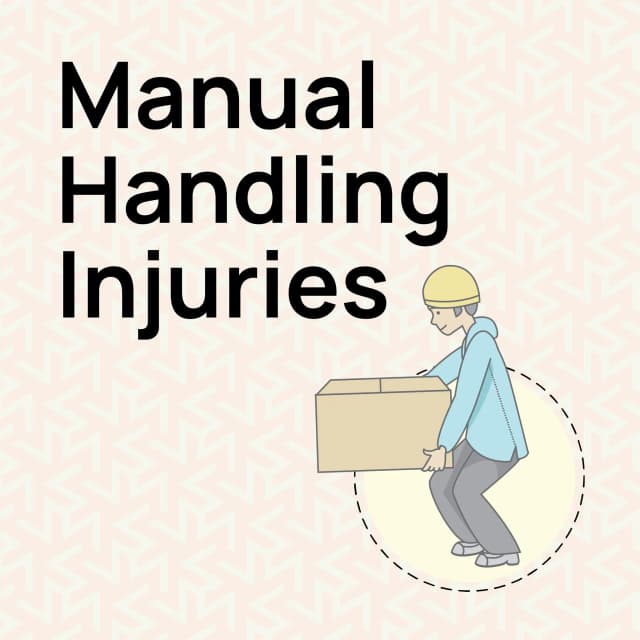
Manual Handling Injuries: The Most Common Types and How to Prevent Them
Manual handling is a common part of work across countless industries. From warehouse staff and healthcare workers to cleaners, retail employees, and construction workers, many people regularly lift, carry, push, or pull items as part of their daily duties. While these tasks may appear straightforward, incorrect handling techniques can lead to painful, sometimes life-changing injuries. Worse still, they�re often overlooked until they force someone to take time off work or even reconsider their career path.This article breaks down everything you need to know about manual handling injuries, what they are, why they happen, and how you can avoid them. Whether you�re new to the workforce, looking to build your skills, or simply want to stay safe on the job, this guide will help you make more informed, confident decisions.Understanding Manual Handling InjuriesManual handling refers to any activity involving the lifting, carrying, lowering, pushing, pulling, or moving of loads by hand or bodily force. It�s one of the most common tasks in the workplace and a leading cause of injury.The injuries associated with manual handling typically affect the musculoskeletal system, which includes muscles, joints, ligaments, and the spine. According to the Health and Safety Executive (HSE), manual handling injuries account for a significant number of all workplace incidents, particularly in physically intensive jobs.What makes them particularly concerning is their long-term impact. A strained back or a repetitive shoulder injury might seem manageable at first, but if ignored or repeated, these injuries can become chronic and prevent people from doing their jobs safely or at allThe Most Common Types of Manual Handling InjuriesWhile there are many ways a person can injure themselves during manual handling tasks, three types of injuries are especially common. Understanding these can help individuals recognise risks early and act before problems worsenBack InjuriesBack injuries, especially in the lower back, are the most frequently reported. These typically result from bending at the waist, twisting while lifting, or carrying loads that are too heavy or unbalanced. The spine is under immense pressure during improper lifting, and over time, this can lead to serious damage, such as herniated discs, long-term back pain, and restricted mobility.A logistics worker, for example, might lift dozens of boxes daily. If they don�t use proper form, the strain accumulates, and the injury often strikes suddenly after what seems like a routine movementStrains and SprainsStrains (to muscles) and sprains (to ligaments) occur in areas such as the shoulders, arms, wrists, and legs. These often develop over time through repetitive lifting or awkward postures, particularly when tasks involve reaching, twisting, or carrying loads in uncomfortable positions.Jobs in sectors such as healthcare, where moving people or equipment is part of the role, are particularly prone to these types of injuries. Our article on how to avoid manual handling risks provides a more detailed examination of these issues.Crush Injuries and FracturesAlthough less frequent, crush injuries and broken bones tend to be more severe and are often the result of sudden accidents, such as items falling, fingers getting caught, or heavy equipment tipping over. These are more likely to occur in busy environments, such as construction sites or warehouses, where large objects are frequently moved and stored.Why These Injuries Keep OccurringManual handling injuries are so prevalent because poor habits are easy to fall into, especially when staff are busy, under time pressure, or inadequately trained. Many workers lift loads instinctively, without pausing to assess the situation or plan the safest method of lifting.Common causes include:Poor technique (e.g. bending with the back rather than the knees)Overexertion, lifting too much alone instead of asking for helpRepetitive movements without restSlippery or cluttered workspacesLack of understanding about how injuries build up over timeIn some cases, there may also be a cultural problem where people �push through� discomfort or view injuries as part of the job. However, with proper awareness and training, these risks can be significantly reduced.?? Just getting started with workplace safety?Our IOSH Working Safely course provides a clear and practical introduction to health and safety principles. It�s perfect for employees in any role who want to work more safely and responsibly.How to Prevent Manual Handling Injuries Preventing manual handling injuries begins with education. Workers need to be trained not just on the right techniques but also on how to assess risk and use equipment effectively. Here are the most effective steps individuals and employers can take.Use Correct Lifting TechniquesBend at the knees, not the waist. Keep the load close to the body. Avoid twisting. Lift smoothly and avoid sudden movements. While these steps may seem simple, applying them consistently, especially in fast-paced environments, requires attention and habit formationAssess the Load and EnvironmentBefore handling anything, pause and think:Is the item too heavy or awkward to handle?Can it be broken into smaller loads?Is the path clear, and are there hazards nearby?This simple risk assessment only takes a few seconds but can prevent serious injury.Use Equipment and Ask for HelpManual handling doesn�t mean you have to do everything by hand. Use trolleys, hoists, or other tools whenever available. Don�t hesitate to ask for help with large or heavy items. Many serious injuries happen when someone tries to prove they can do it alone.Refresh Training RegularlyManual handling isn�t just about common sense. It involves understanding anatomy, physics, and workplace regulations. Whether you�re new to the job or have years of experience, ongoing training can help correct bad habits and keep you up to date with best practices The Wider Impact on Career and Safety CultureFor many professionals, physical ability is directly tied to job performance. A single injury can not only interrupt work but also limit future opportunities, especially in industries that rely on strength and stamina. In serious cases, individuals have had to retrain for entirely new careers due to long-term damage from poor manual handling.That�s why knowledge and prevention aren�t just safety concerns, they�re career strategies. By working safely and demonstrating awareness of risks, individuals also position themselves as responsible, promotable team members. Supervisors and managers, in particular, are expected to lead by example and protect their teams.For those in or aspiring to these leadership roles, courses such as SSSTS or SMSTS provide a deeper understanding of managing safety on-site, including how to mitigate the risk of manual handling injuries across an entire team.? Ready to take on more responsibility at work?The SSSTS course is ideal for team leaders and supervisors. It teaches you how to manage health and safety on-site, prevent injuries such as manual handling accidents, and comply with your legal obligations.A Safer Future Starts With AwarenessManual handling injuries are more than an inconvenience; they�re a barrier to long-term success. Whether it�s a strained back or a broken wrist, these injuries can sideline your career, limit opportunities, or cost your employer time and money.However, the good news is that they�re avoidable. With the right habits, regular training, and a safety-first mindset, you can protect yourself and contribute to creating a safer workplace for others. And if you're aiming for roles with more responsibility, knowledge of health and safety isn't just helpful, it's essential.To explore additional topics, such as fire prevention, hazard control, or the role of safety officers, browse our expanding health and safety blog?? Leading a site team? Safety starts with you.The SMSTS course is designed for site managers who want to lead by example. Gain in-depth knowledge of managing risks, protecting your workforce, and staying compliant with health and safety laws.Frequently Asked QuestionsWhat are the most common accidents and injuries that can occur when moving and handling people?When moving and handling people, such as in healthcare or care home settings, the most common injuries include back strains, shoulder injuries, and muscle pulls. These incidents occur when workers attempt to lift or reposition patients without proper assistance or technique. Unlike handling objects, moving people often involves awkward angles and unpredictable shifts in weight. These conditions make it easier to strain muscles or cause joint injuries. To avoid such risks, training in proper people-handling techniques and the use of hoists or slide sheets is essential.What are the 3 most common types of manual handling injuries?The three most common manual handling injuries are:Lower back injuries are often caused by bending or twisting while lifting.Muscle strains and sprains, typically occurring in the shoulders, arms, or wrists, are often caused by repetitive motion or overexertion.Crush injuries or fractures may happen when heavy items fall or shift unexpectedly.These injuries occur across a wide range of jobs and often result from poor lifting techniques, overexertion, or rushing through physical tasks.What is the most common type of manual handling incident?The most common type of manual handling incident involves injuries to the lower back, often resulting from lifting heavy or awkward objects incorrectly. These incidents typically stem from bending with the back rather than the knees, twisting during a lift, or carrying loads that are too far from the body. Over time, these practices can lead to chronic conditions that limit mobility and work capacity.Give two examples of injuries which may be caused by poor manual handling.Two common injuries caused by poor manual handling are:A herniated disc in the lower back can occur from lifting with bad posture or carrying excessive weight.Rotator cuff strain in the shoulder often results from reaching overhead or lifting while twisting.These injuries may start with mild discomfort but can escalate into long-term health problems without proper care or adjustments to working habits.Which of the following is the most common form of injury resulting from manual handling?Among the different types of manual handling injuries, musculoskeletal disorders affecting the lower back are the most common. They�re frequently seen in industries such as warehousing, construction, and care services. Repeated strain, awkward postures, and incorrect lifting techniques contribute heavily to this type of injury, making it crucial for both employers and employees to prioritise manual handling safety training.Explore Related CoursesWhether you're looking to improve your safety, lead a team, or move into a supervisory role, these courses support your journey:Manual Handling Awareness: Understand safe lifting techniques, reduce injury risks, and work more efficiently in physically demanding roles.CITB SSSTS (Site Supervisor Safety Training Scheme): For team leaders responsible for safety on-site, including proper manual handling practices.CITB SMSTS (Site Management Safety Training Scheme): Designed for site managers looking to manage risks, meet legal duties, and build safer teams.SSSTS Refresher: Keep your supervisor certification valid while refreshing your knowledge of site safety and manual handling.SMSTS Refresher: Update Your Understanding of Workplace Risks and Continue Leading by Example.Health and Safety Awareness Course: A foundational course covering key responsibilities, ideal for new starters across all industries.
Manual Handling Techniques: A Complete Guide to Safe Lifting and Movement
The most common physical activity that is performed in the UK workplaces is manual handling. Whether it�s lifting boxes in a warehouse, repositioning patients in a care home, or moving tools on a construction site, it�s part of everyday working life for many. However, in spite of its widespread use, poor manual handling is a primary cause of workplace injuries, which frequently have prolonged effects.This guide explains how to apply manual handling techniques properly, how they affect your role and future employability, and how learning them is a smart move not only for beginners but also for experienced professionals.Understanding Manual HandlingManual handling is any task that involves the use of physical force to lift, drop, carry, push, pull, or move an object or load. A �load� may be anything: people, boxes, materials, or tools. These tasks are especially widespread in industries such as construction, healthcare, retail, and logistics.When carried out incorrectly, manual handling can lead to musculoskeletal disorders (MSDs) such as back pain, joint injuries, or long-term mobility problems. The Health and Safety Executive (HSE) reports that manual handling injuries account for more than a third of all work-related injuries in the UK, with most being preventable with the right knowledge and techniqueWhy Manual Handling Skills MatterCorrect manual handling techniques are important for anyone working in a physically active role. For employees, it prevents injury and maintains productivity. For employers, this often results in fewer absences, lower compensation claims, and smoother day-to-day operations.In sectors like construction, improper lifting and carrying can lead to more severe incidents, which often connect with broader health and safety risks on construction sites. Understanding how manual handling fits into the broader picture of workplace safety helps you take responsibility for your own health and that of the people around you.Moreover, having good practice on a regular basis in the handling of manuals will increase your employability. Workers who have basic knowledge about safety expectations and seem responsible in physical work activities tend to be appreciated more by employers.Core Manual Handling TechniquesPlan the TaskBefore you lift anything, stop and assess the situation. Ask yourself:Is the load too heavy or awkward to lift alone?Is the path clear of obstacles or trip hazards?Are there aids, such as trolleys or lifting equipment, that you could use?This is the time to prevent the risks even before they happen. There are cases where lifting is not required at all.Position Your Feet for StabilitySafe lifting is based on your position. Keep your feet roughly shoulder-width apart, with one foot slightly forward to maintain balance. Standing with your feet too close together when moving a load reduces your ability to adjust if the load shifts unexpectedly.Use Your Legs, Not Your BackThe most widespread error in handling involves bending at the waist in order to pick up an object. Instead, bend your knees while keeping your back straight and your head up. As you lift, use the strength of your leg muscles to raise the load. This approach significantly reduces strain on your spine.Hold the Load Close to Your BodyThe further away a load is from your body, the more strain it places on your arms, shoulders, and back. Always hold the load as close as possible, preferably at waist level, and ensure a secure grip before proceeding.Avoid Twisting Your BodyWhen you have picked up the load, you must always turn on your feet, not your body. Twisting while lifting is a significant cause of injury. If you need to change direction, stop, pivot your feet, and then continue.Know When to Ask for HelpUnderstanding your limits is part of safe practice. In case a load is heavy, bulky or uneven, then seek help or use a handling aid to make sure that you are safe. You should also be aware of how to avoid manual handling risks, such as working in confined spaces or lifting while fatigued.Safe Lifting in Action: A Step-by-Step ExampleAssume you are at a warehouse and a package has to be picked up from the floor and placed on a trolley. The way you would do it based on the above principles is as follows:Examine the track leading to the trolley, and clear it if necessary.Stand with feet shoulder-width apart, one foot slightly forward.Sit down, using your knees and hips, not your back.Get a firm grip on the package using both hands.Lift smoothly using your legs, keeping the box close to your body.Move slowly, do not turn or make any sudden movements when carrying the load.Lower the box onto the trolley using the same motion in reverse.This might seem methodical, but once practised, these steps become second nature and significantly reduce the risk of injury.The Bigger Picture: Creating Safer Work EnvironmentsWhile individual technique is important, safe manual handling is part of a larger system of health and safety controls. This includes:Clear signage and risk assessmentsProper lighting and ventilationErgonomic equipment and lifting aidsTraining and supervision tailored to job rolesPoor manual handling is often a symptom of broader issues. As highlighted in the consequences of poor health and safety procedures in the workplace, organisations that neglect basic safety often face greater financial, legal, and human costs.Those in charge of teams or projects are particularly responsible for ensuring these systems are in place. If you�re in or preparing for a leadership role, training like the SSSTS course equip you with the knowledge to enforce safe practices and supervise others effectively.? For SSSTS (Site Supervisor Safety Training Scheme):Stepping into a supervisory role? The SSSTS course equips you with essential knowledge to manage safety on-site, identify manual handling risks, and lead by example. Ideal for individuals seeking to advance in construction supervision.Training That Makes a DifferenceReading about techniques is helpful, but practical training is where it really clicks. Hurak Manual Handling Course provides a practical introduction to safe practices of handling in different working environments. You will be taught how to assess loads, using techniques and adhere to the health and safety laws.For those managing sites or larger teams, our SMSTS course builds on this knowledge by teaching how to plan and implement safe working systems, including manual handling processes, across entire projects.?? For SMSTS (Site Management Safety Training Scheme):Managing teams and safety at a larger scale? SMSTS is designed for site managers and senior staff who need a deeper understanding of health and safety responsibilities, including overseeing manual handling practices across complex operations.ConclusionManual handling injuries can be prevented, but only when the proper techniques and awareness are in place. For workers, it�s about taking care of your body and being able to perform your job without unnecessary risk. For employers and supervisors, it�s about leadership, responsibility, and fostering a safe environment for all.Whether you�re just starting out or working toward a supervisory role, your understanding of manual handling could make a real difference, not only to your safety but to your long-term employability and career satisfaction.If you�re considering taking on more health and safety responsibilities, understanding the key roles of a safety officer can be your next step. And remember, safety doesn't end with lifting.Check out these guides on fire safety at your workplace and practical fire safety tips to complete your knowledge Frequently Asked QuestionsWhat should always be done prior to lifting a load?Before lifting any load, always conduct a quick risk assessment to ensure safety. This involves checking the size, weight, and stability of the object, as well as the surrounding space. Is the path clear? Is the load too heavy to lift alone? These steps help prevent unexpected strain or injury. When lifting a load, plan ahead; even a few seconds of preparation can significantly reduce the risk of injury.Where should you hold and carry your load?Always keep the load close to your body, ideally at waist height. Holding the object close minimises the leverage force on your back and shoulders, helping you maintain control. Avoid stretching your arms out; this can cause imbalance and place unnecessary strain on your spine. If you're wondering where you should hold and carry your load, remember: the closer and more centred, the safer.In general, how should you position your feet when performing a lift?Place your feet shoulder-width apart to create a strong, stable base. One foot should be slightly in front of the other to help with balance, especially when lifting from the ground. The phrase "feet must be close together when moving a load" is misleading; too narrow a stance actually reduces stability. A broader base gives you greater control during the lift.What should you not do when lifting a load?You should not twist your body, bend your back, or jerk the load upwards. These are common mistakes that lead to injuries. Another thing to avoid is lifting something that feels too heavy; always ask for help or use equipment. Also, avoid rushing. What should you not do when lifting a load often comes down to poor posture, poor judgment, or both.What is the correct technique for lifting?The correct technique involves the following steps: assess the load, position your feet correctly, bend your knees (not your back), grasp the object securely, lift using your leg muscles, and keep the load close to your body. Avoid twisting while lifting, and instead, pivot your feet to turn. These manual handling principles apply to most lifting tasks, regardless of the setting.State one tip for safe handling and lifting.One essential tip is to keep the load close to your body throughout the lift. This simple action reduces pressure on your spine and improves balance. It's a fundamental part of safe manual handling and is often the difference between a smooth lift and a painful strain.What is the safe limit of force to push a load?There isn�t a fixed legal limit, but guidance from the HSE suggests that the maximum recommended force for pushing a load on a flat surface is about 20kg of force for men and 15kg for women under ideal conditions. However, the actual safe limit depends on surface friction, posture, and the height of the load. You should never push or pull a load that feels difficult to control.When handling an uneven load, what should you do?You should test the load first and check its centre of gravity. If one side is heavier, try to adjust your grip to keep the load balanced and close to your body. If necessary, reposition the contents or seek assistance. When handling an uneven load, you should avoid sudden movements, as they can lead to instability and injury.Moving and handling include which of the following actions?Manual handling encompasses a range of activities, including lifting, carrying, pushing, pulling, lowering, and holding loads using physical effort. It�s not just about lifting; any movement involving force on an object is considered manual handling. Recognising this helps identify more risks, especially when handling repetitive or awkward movements.Explore Related CoursesStrengthen your knowledge of workplace safety and grow your career with training tailored to your role:Manual Handling Training � Understand lifting techniques, reduce injury risk, and stay compliant.SSSTS (Site Supervisor Safety Training Scheme) � For those stepping into a site supervision role.SMSTS (Site Management Safety Training Scheme) � Designed for site managers to lead safely and legally.Health and Safety Awareness (HSA) � A solid starting point for beginners entering the construction or industrial sector.Fire Marshal (Fire Warden) Course � Learn fire prevention responsibilities and emergency actions.IOSH Working Safely � A short, engaging course ideal for staff across all industries.IOSH Managing Safely � For team leaders and managers responsible for health and safety.