
Fire Extinguisher Types and Their Uses (With Colour Codes Explained)
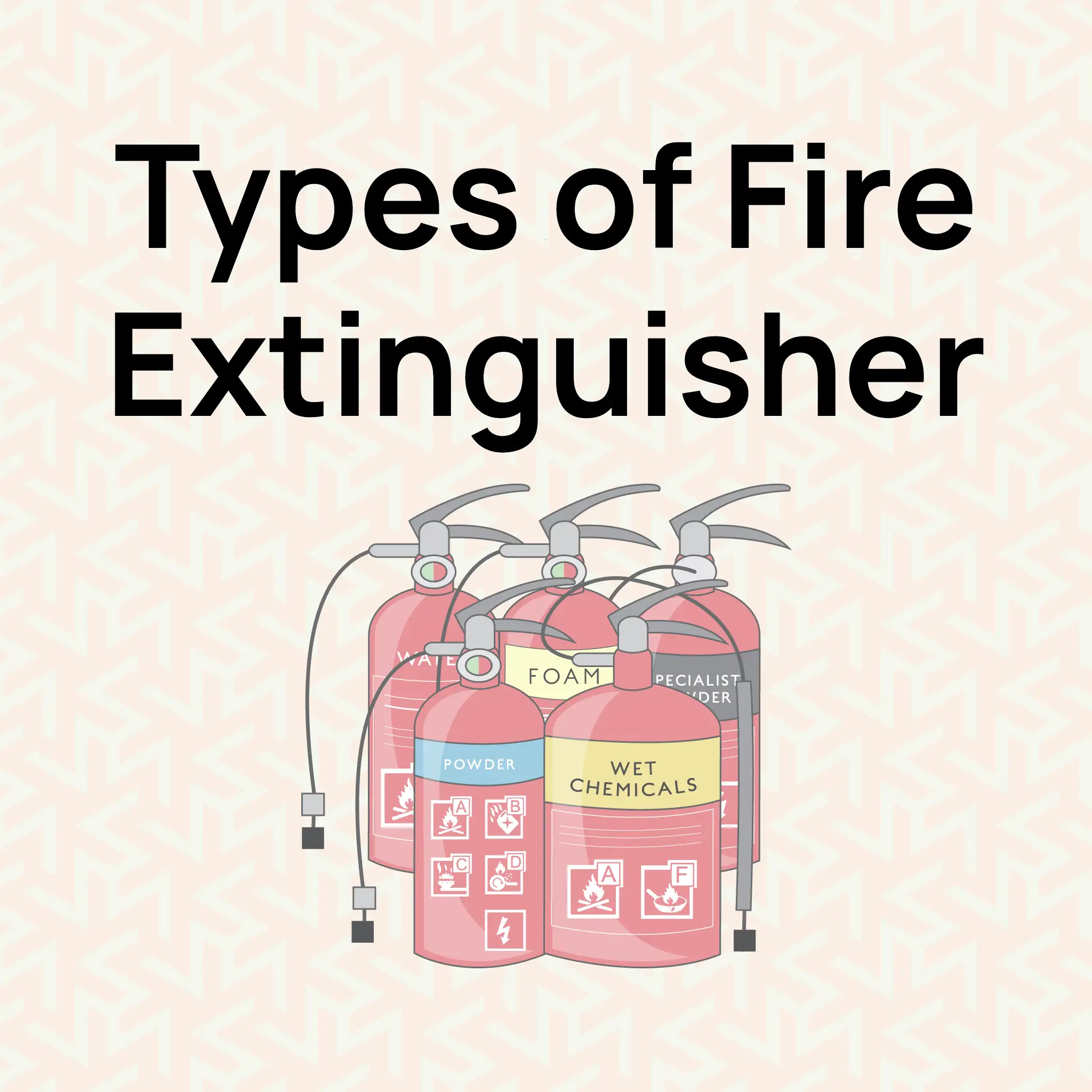
Fires are unpredictable, but your response to them doesn�t have to be. Whether you're working in construction, retail, hospitality, or an office, understanding fire extinguishers is essential. It�s not just about reacting in emergencies; it�s about being prepared, responsible, and compliant with UK workplace safety standards.This guide explains the various types of fire extinguishers, their relationship to fire classes, and how to use them safely, whether you�re new to the topic or a workplace supervisor managing health and safety.What Are Fire Classes and Why Do They Matter?In the UK, fires are grouped into classes based on the type of material that�s burning. This classification is important because each fire type requires a different extinguishing method. Using the wrong one can be dangerous or even fatal.Class A: Solid combustibles like wood, paper, fabricClass B: Flammable liquids such as petrol, oils, and solventsClass C: Flammable gases like propane or butaneClass D: Flammable metals (e.g. magnesium, aluminium)Class F: Cooking oils and fats (common in kitchens)Electrical Fires: Not a separate class, but a common and serious risk involving powered equipmentOnce you understand what�s burning, you can safely match the fire to the correct type of extinguisher.Want a deeper understanding of the dangers in the workplace? See our post on common health and safety risks on construction sites.Types of Fire Extinguishers (and What They�re Used For)Fire extinguishers in the UK are colour-coded and designed to fight specific fire classes. Here's a detailed look at the most common types you�ll see in the workplace:Water Extinguisher (Red Label)Water extinguishers are used for Class A fires, which involve materials such as wood, paper, or cloth. They work by cooling the burning material and reducing heat. However, they must never be used on electrical fires or flammable liquids, as this could spread the fire or result in electrocution.These are commonly found in schools, offices, and public buildings where solid materials are the main fire risk.Foam Extinguisher (Cream Label)Foam extinguishers are suitable for Class A and B fires, meaning they can handle solids and flammable liquids. They work by forming a film over the liquid�s surface, cutting off oxygen. Foam extinguishers are versatile but still unsafe on live electrical equipment.You�ll often see these in garages, workshops, and warehouses.Dry Powder Extinguisher (Blue Label)Also known as ABC extinguishers, dry powder models are suitable for Class A, B, and C fires and can also be used on electrical fires. They work by smothering the fire and interrupting the chemical reaction. However, they create a lot of residue and can make it hard to see or breathe indoors.Dry powder extinguishers are useful for outdoor settings, petrol stations, and sites with mixed fire risks.CO? Extinguisher (Black Label)CO? extinguishers are ideal for electrical fires and flammable liquids. They work by displacing oxygen, effectively suffocating the fire. Since CO? leaves no residue, it�s ideal for offices, IT rooms, and electrical cabinets.However, they�re ineffective on Class A fires and not suitable for outdoor use where wind can disperse the gas.Wet Chemical Extinguisher (Yellow Label)Designed explicitly for Class F fires, wet chemical extinguishers are essential in kitchens. They cool burning oil and chemically react to form a soapy layer that seals the surface and prevents re-ignition. While highly effective in kitchens, they should never be used on electrical fires.This extinguisher is a must-have in catering environments, canteens, and food production units.Curious about how these types apply in real settings? Read our guide to fire safety at your workplace.?Be the Person Who Knows What to DoFire Marshals are essential in every workplace. Get trained to lead evacuations, use extinguishers safely, and prevent fire risks.Explore the Fire Marshal Online CourseWhy Using the Correct Extinguisher Is CriticalUsing the wrong extinguisher can have serious consequences. For instance, spraying water on burning oil can cause the flames to spread violently. Similarly, using foam or water on an electrical fire could lead to electrocution.Employers and designated fire wardens must ensure that the correct extinguishers are not only present but also clearly labelled, accessible, and maintained. As part of their training, they must understand how to assess which extinguisher is appropriate based on the fire class.If you're assigned fire safety responsibilities at work, it�s worth knowing that Fire Marshal training prepares you to take charge in emergencies, from extinguisher use to evacuation leadership.Legal Responsibilities Under UK LawAccording to the Regulatory Reform (Fire Safety) Order 2005, all workplaces in the UK are required to:Conduct regular fire risk assessmentsInstall appropriate fire extinguishers based on identified risksEnsure that extinguishers are regularly servicedTrain staff in fire awareness and extinguisher useAssign responsible persons for managing fire safetyThese duties apply to all employers, building owners, and anyone in control of premises. Non-compliance can lead to enforcement notices, fines, or prosecution, especially if someone is harmed due to a lack of preparation.For supervisors, particularly in construction and high-risk settings, understanding these duties in depth is covered in formal training, such as the SSSTS course, which focuses on real-world responsibilities and safe working practices.If you�re unsure how roles and responsibilities are structured within an organisation, our article on the key responsibilities of a health and safety officer offers practical insights. Why Training Makes the DifferenceEven when the right extinguishers are in place, they�re only effective if people know how to use them. Training helps employees understand the types of fires they may face and equips them with the confidence to act safely.If you�re just starting your health and safety journey or looking to refresh your knowledge, the Level 2 Health and Safety in the Workplace course is a great foundation. It teaches you how to identify risks, handle equipment such as extinguishers, and understand the laws that govern workplace safety.For those in catering, retail, or hospitality roles where fire hazards are specific to the environment, such tailored training helps build long-term confidence and prevent incidents before they happen.For further risk reduction strategies, read about how to avoid manual handling risks and the differences between risk control and hazard control, key topics in creating a safer environment.?Take Your Fire Safety Skills to a Professional LevelA respected qualification for those managing fire risk or aiming for specialist roles.Discover the NEBOSH Fire Safety CertificateFinal ThoughtsWhether you're a site supervisor, office worker, or someone responsible for safety, understanding the types of fire extinguishers is a basic yet powerful skill. It can help protect not just your workplace, but your colleagues and your future.When matched with proper training and a commitment to compliance, even the most basic knowledge, like recognising extinguisher colours or fire classes, can save lives.Frequently Asked QuestionsWhat are the different fire extinguisher colours and what do they mean?In the UK, fire extinguisher colours help identify their contents and appropriate use. A red label indicates a water extinguisher, suitable for solid combustibles like paper and wood. A cream label marks a foam extinguisher, used on flammable liquids and solids. A blue label represents a dry powder extinguisher, which is versatile across multiple fire classes. A black label is used for CO? extinguishers, ideal for electrical fires. Finally, a yellow label is for wet chemical extinguishers, designed specifically for cooking oil fires (Class F). These fire extinguisher colours make it easier to act quickly and correctly during a fire emergency.What extinguisher should be used for electrical fires?For an electrical fire, the safest extinguishers to use are CO? extinguishers (black label) and dry powder extinguishers (blue label). These types are non-conductive and won�t cause electrocution, unlike water or foam. CO? is often preferred in offices and server rooms because it leaves no residue, while dry powder is more suitable in industrial or outdoor areas where electrical and flammable risks coexist. If you�re unsure, always look for extinguishers that explicitly state they are safe on Class E or electrical fires.What is a water extinguisher used for?A water extinguisher is primarily used for Class A fires, which involve solid materials like paper, wood, and textiles. They work by cooling the flames and lowering the temperature below the ignition point. However, they should never be used on flammable liquids or electrical fires, as this can spread the fire or create electrocution hazards. You�ll usually find water extinguishers in schools, office buildings, and public spaces with low electrical risk. Understanding the purpose of a water extinguisher helps prevent its misuse in hazardous situations.What are the 4 main types of fire extinguishers?The four main fire extinguisher types commonly used in workplaces are water (red), foam (cream), dry powder (blue), and CO? (black). Each is suited for different fire classes:Water: For solid materials (Class A)Foam: For solids and flammable liquids (Class A & B)Dry Powder: For solids, flammable liquids, gases, and electrical equipment (A, B, C & electrical)CO?: Primarily for electrical fires and flammable liquids (electrical & B)Wet chemical extinguishers (yellow label) are also widely used in kitchens, particularly in the hospitality sector, to handle Class F fires involving cooking oils.Which extinguisher should be used on flammable liquids?Fires involving flammable liquids like petrol or solvents are classified as Class B fires. The best extinguishers for these are foam extinguishers (cream label) and dry powder extinguishers (blue label). CO? extinguishers are also effective, particularly in indoor spaces where clean use is important. Never use water extinguishers on flammable liquids; it will likely spread the fire. Knowing the right fire extinguisher for flammable liquids can prevent disasters in fuel-handling or chemical workspaces.What are the different classes of fire in the UK?In the UK, fires are categorised into six main classes of fire:Class A � solids like wood and paperClass B � flammable liquids such as oils, fuels, or alcoholsClass C � flammable gases like butane or propaneClass D � combustible metals such as magnesium or lithiumClass F � cooking oils and fatsElectrical fires � involving powered appliances (not a formal class but treated uniquely)Each fire class demands a specific extinguisher, making it crucial to understand this system for safe fire management.What type of extinguisher should be used on different materials?Different materials ignite differently, and not all extinguishers can be used safely across them. Solid materials, such as paper and wood, require water or foam extinguishers. Flammable liquids are best handled with foam, CO?, or dry powder. For electrical equipment, CO? or dry powder is the safest option. Cooking oil fires need wet chemical extinguishers, and metal fires require specialist dry powder types (not to be confused with standard ABC powder). Understanding the kind of extinguisher suitable for a particular material reduces the risk of igniting the fire.What is the cream fire extinguisher used for?The cream fire extinguisher is a foam extinguisher. It�s used on Class A and B fires, which involve solids (such as paper and textiles) and flammable liquids (like petrol or paint). It works by creating a cooling foam barrier that suffocates the fire and prevents re-ignition. However, cream extinguishers should never be used on electrical fires, as foam conducts electricity. These are common in industrial and commercial environments where both solid and liquid fire risks are present.Explore Related CoursesLooking to boost your confidence in handling fire safety and workplace risks? These trusted courses can help:Level 2 Health and Safety in the Workplace � Covers core safety principles, including fire prevention and hazard awareness.Fire Marshal / Fire Warden Online � Learn how to respond to workplace fires and lead safe evacuations.SSSTS (Site Supervisor Safety Training Scheme) � Ideal for those supervising high-risk environments like construction sites.SMSTS (Site Management Safety Training Scheme) � A comprehensive course for managers overseeing fire and site safety.
How AI Surveillance Improves Workplace Safety Compliance
According to the International Labour Organization, there are approximately 2.78 million work-related deaths each year, and 374 million non-fatal work injuries annually. Moreover, the global market for AI in workplace safety is expected to grow at a CAGR of 14.8%, reaching over $3.8 billion by 2027. These figures highlight the urgent need for more proactive and data-driven approaches to health and safety compliance.Furthermore, this article explores how AI-driven surveillance systems can revolutionize health and safety protocols across industries. It delves into real?time monitoring, hazard detection, policy enforcement, data collection for audits, and cost-benefit analysis. Additionally, this piece will showcase use cases, address privacy and ethical issues, and outline best practices for implementing AI surveillance in the workplace.Why Real Time Monitoring MattersEnhanced Visibility into Hazardous EnvironmentsConsequently, AI surveillance systems equipped with real-time video analytics enable continuous monitoring of complex or dangerous zones. For example, AI-powered cameras can automatically detect the presence of workers in restricted areas and trigger alerts. This improves oversight and ensures that response teams can react immediately in case of incidents. Companies offering AI development services play a crucial role in building such intelligent surveillance solutions tailored to specific safety and compliance requirements.Automated PPE ComplianceMoreover, machine?vision algorithms can analyze whether employees are wearing the correct personal protective equipment (PPE), such as hard hats, safety goggles, or high-visibility vests. When non-compliance is detected, the system can automatically notify workers or supervisors, thereby reducing manual checks and improving compliance rates.Intelligent Behavior TrackingFurthermore, AI systems can identify unsafe behaviors like slipping, improper lifting, or unsafe proximity to moving machinery. By analyzing body posture and movements, these systems notify managers in real time to enforce corrective actions before accidents occur.Proactive Hazard DetectionIdentifying Unsafe Conditions Before They EscalateAdditionally, AI surveillance�can detect physical hazards such as loose cables, wet floors, or obstacles blocking emergency exits. Using pattern recognition, the system can distinguish between normal and hazardous conditions and send alerts when anomalies are detected. This early warning helps prevent accidents before they happen.Environmental Risk SensingSimilarly, AI combined with sensors can detect environmental risks like smoke, chemical leaks, or excessive heat. These systems allow for rapid detection and automated escalation, significantly reducing potential harm to workers and property.Integration of night vision camera TechnologyFirstly, companies like Coram AI have begun integrating advanced�night vision camera�functionality into their systems to enhance round-the-clock safety monitoring. These cameras, capable of detecting movement and identifying workers even in low-light environments, are often powered by solutions developed by top AI development firms. This ensures consistent surveillance regardless of lighting conditions and reflects the growing role of AI in workplace safety innovation.Ensuring Policy and Procedure EnforcementAutomated Documentation of ComplianceConsequently, AI systems can automatically record footage and generate detailed logs of compliance events�such as PPE usage, machine operation procedures, or scheduled safety drills.When integrated with automated compliance software, these logs create a traceable audit trail, which supports regulatory inspections and internal reviews. To take compliance a step further, organizations can integrate these automated logs into a broader AI governance framework. This ensures that safety events, regulatory data, and access records are centrally managed, auditable, and aligned with company-wide policies. By combining real-time surveillance with structured governance, businesses can not only track incidents but also demonstrate accountability and regulatory readiness.To translate automated logs into structured compliance processes, many organisations combine safety analytics with IT compliance services that support risk assessments, policy development, and ongoing audits. This type of compliance framework support helps align surveillance data with regulatory requirements, ensuring consistent documentation, improved audit readiness, and more efficient incident management.Intelligent Access ControlFurthermore, many AI-based surveillance systems integrate with access control solutions to ensure only authorized personnel enter restricted zones. The system cross-checks ID badges, biometric data, and authorized access lists, preventing unauthorized entry and enhancing workplace safety.Data-Driven Decision MakingAnalytics and ReportingMoreover, using AI agents within data analytics dashboards, safety teams can identify trends, high-risk areas, and recurring infractions. This enables organizations to allocate resources effectively, develop targeted training programs, and measure the impact of safety initiatives over time.Predictive Risk ModelsAdditionally, AI-driven surveillance data can be used to build predictive models that forecast potential incidents based on historical patterns. Organizations can then proactively address underlying issues�such as adjusting workflows, redesigning workstations, or reinforcing training protocolsCost Benefit AnalysisReducing Incident-Related CostsConsequently, using AI surveillance to prevent accidents can result in substantial savings by lowering medical care expenses, legal fees, and regulatory fines. Fewer accidents also mean reduced downtime and higher productivity, which results in operational savings over time.Optimizing Resource AllocationMoreover, automated surveillance eliminates the need for constant manual inspection by health and safety officers. This enables organizations to reassign staff to other strategic tasks. Over time, the combination of reduced labor costs and incident avoidance typically yields a positive return on investment (ROI) within 12�18 months.Addressing Privacy and Ethical ConsiderationsTransparency and Clear GuidelinesFurthermore, transparent communication about surveillance practices helps build employee trust. Employers should clearly outline what is being monitored, how data is stored, who has access, and how long it will be retained.Data Security and Access ControlAdditionally, securing video data with encryption, unidirectional data transfer equipment and access control ensures that sensitive footage is not misused or accessed by unauthorized personnel. This minimizes the risk of data breaches and promotes ethical surveillance.Fair Use and Bias MitigationSimilarly, AI systems must be trained on diverse datasets to avoid biases that could unfairly target certain employee groups. Regular audits and algorithm reviews help maintain fairness and prevent discrimination.Implementation Best PracticesPilot ProgramsConsequently, organizations should begin with small-scale pilot programs to evaluate system performance, identify gaps, and adjust policies. Pilots help validate metrics such as detection accuracy, false alarm rates, and alert response times.Training for StaffMoreover, employees and supervisors should be trained on AI surveillance systems�both its capabilities and limitations. They must be informed how to respond to alerts, interpret data dashboards, and engage in incident documentation.Continuous EvaluationAdditionally, safety teams should regularly review system logs, performance metrics, and incident outcomes. Ongoing evaluation allows for fine-tuning alert thresholds, adding new detection capabilities, or expanding coverage as needed.FAQsWhat types of hazards can AI surveillance detect?AI systems can identify unsafe conditions like wet floors, missing PPE, spine-straining postures, smoke, chemical leaks, and unauthorized access.How does AI surveillance integrate with existing safety systems?AI surveillance can interface with access-control systems, environmental sensors, incident-reporting platforms, and company dashboards to streamline data flow and workflow.Can AI surveillance respect worker privacy?Yes. By implementing clear monitoring policies, data encryption, retention limits, and access controls, organizations can maintain transparency and trust.ConclusionIn summary, AI surveillance enhances workplace health and safety compliance by enabling real-time monitoring, automating hazard detection, ensuring procedural adherence, and providing data-driven insights. It also delivers measurable cost savings while addressing privacy and ethical concerns. As a result, organizations that deploy well-structured AI surveillance systems can create safer work environments and foster a culture of continuous improvement.Key TakeawaysAI surveillance supports proactive risk management through real-time detection of hazards and unsafe behavior.Integration of AI with environmental sensors and analytics improves policy enforcement and audit readiness.Advanced features like night vision enhance low-light monitoring and round-the-clock safety.Ethical implementation�including privacy safeguards and bias mitigation�is essential.ROI from reduced incidents and labor optimization can occur within 12�18 months with proper deployment.
Further Education vs Higher Education | Key Differences
Choosing the right path in education can be confusing, especially when terms like further and higher education are often used interchangeably. Whether you're returning to study, exploring career progression, or supporting someone else's learning journey, understanding the difference is essential. This quick guide breaks down what sets further education and higher education apart, from qualifications and course levels to career outcomes, so you can make an informed decision that suits your goals.We�ll clearly explain what each pathway involves, what qualifications you can earn,�internships for high school students, and how they align with your personal or professional goals, helping you make the right decision with confidence.�Top NVQ Courses Offered by HurakLooking to boost your career with a nationally recognised qualification? Hurak provides a range of NVQ courses tailored to various industries. Here are some of their top offerings:Level 2 NVQ in Plant Operations: Perfect for operatives aiming for the CPCS Blue Card.Level 2 NVQ in Controlling Lifting Operations (Slinger Signaller): Ideal for those working in crane and lifting operations.Level 3 NVQ Diploma in Adult Health and Social Care: Advance your role in care with this popular qualification.Level 3 Award in Education and Training (AET): Start your journey to becoming a certified trainer or teacher.Browse All NVQ Courses at Hurak.What Is Further Education (FE)?Further education (FE) refers to any type of learning that takes place after secondary school but isn�t part of a university degree or higher education. It offers a diverse range of qualifications, from academic courses to practical and vocational training, providing individuals with the skills needed for the workforce or further studies.FE is typically delivered in colleges, training centres, or adult education providers. Common qualifications include:A-LevelsBTECsNVQs (National Vocational Qualifications)ApprenticeshipsFunctional Skills�The good thing about FE lies in its flexibility; courses are available part-time, in the evenings, or even online, making it an ideal option for those with work or family commitments. Whether you're looking to build practical skills, pursue a specific career path, or prepare for higher education, further education offers a variety of routes to meet your personal and professional goals.What Is Higher Education (HE)?Each year, thousands of UK adults enrol in higher education to gain specialist qualifications, switch careers, or advance in their current roles. Higher education refers to studies undertaken after completing further education, typically at university level. It includes qualifications such as:Bachelor�s DegreesFoundation DegreesHigher National Certificates (HNCs) and Diplomas (HNDs)Master�s DegreesDoctorates (PhDs)These programmes are more academically focused and often involve in-depth study, research, or theoretical learning.Most full-time HE courses take three to four years to complete, though part-time and distance learning options, such as online MBA, are available .Unlike further education, HE often leads to advanced qualifications required for roles in law, engineering, teaching, or healthcare.Key differences between further and higher educationFurther education (FE) and higher education (HE) serve as distinct milestones in your learning journey, each providing unique opportunities for career progression and academic development.�Level of StudyFE: Post-secondary study, often providing a foundation for future higher learning or specific job preparation.HE: Advanced academic study, typically pursued after completing FE, offering qualifications like Bachelor�s and Master�s degrees.Qualification TypesFE: Focuses on practical skills and vocational qualifications such as BTECs, NVQs, and apprenticeships.HE: Offers academic qualifications like degrees, which delve deeper into specialised knowledge and research.Duration & FlexibilityFE: Shorter, flexible study options, often one to two years, with part-time or online opportunities.HE: Longer courses, generally lasting three to four years, are usually full-time with more structure.Career PathwaysFE: Ideal for entry-level positions, apprenticeships, or preparation for higher study.HE: Leads to professional and specialist careers requiring advanced qualifications, such as law, engineering, and medicine.Below is a table for your quick reference of the key differences:CATEGORY�FURTHER EDUCATIONHIGHER EDUCATION�Qualification LevelsLevel 1 to Level 3Level 4 and aboveTypical Providers�College, Training CentresUniversities, HE institutionsEntry RequirementsOften minimal, depending on the courseUsually A-levels or equivalentCostOften free or low-costTuition fees apply (loans available)Study FocusPractical, job-ready skillsAcademic, subject-specific knowledgeTime CommitmentVaries, often short or part-time2�4+ years (mostly full-time)Which Path Is Right for You?Deciding between further education (FE) and higher education (HE) comes down to your goals, qualifications, and learning preferences. Each route offers valuable opportunities; it�s about finding what fits your current stage and career plan.Choose Further Education if you:Need to gain foundational or Level 2�3 qualifications.Need to develop job-ready skills quickly.Prefer practical, hands-on learning environments.Explore career options or return to study with flexibility in mind.Choose Higher Education if you:Aim to earn a university-level qualification (Bachelor�s, Master�s, etc.).Plan to enter a profession that requires a degree (e.g. law, teaching, healthcare).Enjoy academic study and want to explore a subject in depth.Prefer a longer-term learning commitment with research opportunitiesWhichever route you choose, both FE and HE can lead to rewarding careers. It�s about picking the one that aligns with your personal circumstances and long-term goals. For those who have already completed higher education and wish to take their expertise to the next level, postgraduate programs such as MBAs can be a powerful way to advance professionally. These programs, like the Evening MBA Degree, offer a flexible, innovation-driven curriculum designed for experienced professionals seeking leadership growth in dynamic industries.�Not Sure Which Path to Take?Hurak offers courses to support both Further and Higher Education goals:Choose Further Education if you want job-ready skills fast:Level 3 AET (Teaching) �Health & Safety in Construction�Food Hygiene & SafetyChoose Higher Education Prep if you're aiming for advanced roles:Level 4 CET (Teaching)Level 5 Diploma in Teaching (QTLS Route)Browse all our Courses at Hurak.FAQsWhat is the main difference between further education and higher education?Further education (FE): Courses below degree level (e.g. A-levels, BTECs)Higher education (HE): Degree-level and above (e.g. BA, BSc, Master�s)Do I need further education before I can do higher education?Often yes, as most university courses require Level 3 qualificationsAlternative pathways, like Access to HE or relevant work experience, may applyCan I go to university without A-levels?�Yes, through:Access to HE DiplomaBTEC Level 3NVQ Level 3Foundation degreesWork experience in some casesIs further education free in the UK?Yes, for most 16�19-year-oldsAdults may qualify for:Free Level 3 coursesAdvanced Learner LoansSupport based on income or employment statusHow long does further education take?Short courses: A few weeks or monthsFull-time courses: 1�2 yearsPart-time/evening options: Flexible durationWhat support is available for adult learners?Financial support (grants, bursaries, or personal loans)Flexible schedules (evenings, online, part-time)Free advice via the National Careers Service or local collegesIs higher education worth it?Yes, for careers that require degrees (e.g., teacher, nurse, lawyer). Vocational jobs may offer strong earnings with FE alone.Can I do both further and higher education?Yes, many learners progress from FE to HE. Example: BTEC Level 3 ? University degree.Final ThoughtsBoth further education and higher education play important roles in helping you reach your personal and professional goals. Whether you�re aiming to enter the workforce quickly, build practical skills, or pursue a degree for a specialised career, the right path depends on your current situation and long-term ambitions.Understanding the difference between further and higher education helps you make informed decisions about your future. FE provides flexible, skills-based learning, while HE offers academic depth and professional qualifications. Consider your career goals, study preferences, and current qualifications before deciding.You can also speak to an education provider or careers adviser to get tailored guidance and make the most confident choice for your future.Explore Hurak�s career guides to find the right path for your goals.Hurak offers accredited courses that open doors in teaching, assessing, and supporting roles in education.Start building your future today: Award in Education and Training (AET) �| Teaching Assistant Courses�We also offer pathways into quality assurance and assessment: Assessment Training | IQA Training
Qualification levels in the UK, explained: A simple guide to your education and career path
In the UK, qualifications follow a clear level-based framework�from Entry Level (basic skills) to Level 8 (doctorates). But if terms like �Level 2� or �Level 6� sound confusing, you�re not alone.Whether aiming for a promotion, changing careers, or returning to learning, knowing how these levels compare (e.g., to GCSE, A-levels, or degrees) can save you time, money, and effort. This guide breaks it down simply, so you can pick the right course, meet job or compliance requirements, and confidently move forwardIdeal for adult learners, job seekers, or employers planning staff training, this article helps you navigate your next step clearly and quickly.What Are Qualification Levels in the UK?Qualification levels in the UK are designed to show the depth and difficulty of a course, whether academic, vocational, or professional. They range from Entry Level (basic skills) to Level 8 (doctorate-level study), helping learners and employers understand how different qualifications compare.Here's how the levels break down:Entry Level � Focuses on foundational learning and life skills.Levels 1�2 � Covers qualifications like GCSE and equivalent awards.Levels 3�5 � Includes A-Levels, vocational training, apprenticeships, and foundation degrees, common routes into employment or further education.Levels 6�8 � Encompasses higher education qualifications such as bachelor�s, master�s, and doctoral degrees.Understanding this structure helps you choose the right course for your career goals, meet compliance standards, and invest in learning that aligns with your current skills and future ambitions.Why Qualification Levels Matter for Your Career and Education ProgressionUnderstanding qualification levels isn�t just about knowing where you stand, It�s about making informed decisions that impact your future. Here�s how they add real value:Plan with Purpose � Identify the qualifications needed for your chosen career path or industry.Know Where You Stand � Recognise your skill level and map out realistic next steps.Strengthen Job Applications � Match your qualifications to role requirements and stand out to employers.Save Time and Effort � Avoid enrolling in courses that don�t support your goals or meet compliance standards.Take the Next Step with the Right QualificationWhether you're starting or aiming to progress into roles like Teaching, Assessing, Education & Training, or get certified in Health & Safety, Hurak offers accredited online courses aligned with the UK qualification framework.Popular options include:Level 3 Award in Education and Training (AET)Level 3 First Aid at Work Training Course (3 Days)Level 3 NVQ Certificate in Occupational Health and SafetyLevel 2 Health and Safety in the WorkplaceLevel 2 Food Hygiene and Safety at WorkLevel 2 Fire Safety AwarenessCSCS Green Card Course for LabourersStart learning today and unlock your next qualification. Explore All Courses at HurakQualification Levels: A Quick ReferenceLEVELQUALIFICATIONSSKILL LEVELEntryEntry Level Certificate, Functional SkillsBasic knowledgeLevel 1�GCSES (Grades 1�3 / G�D), Level 1 NVQIntroductoryLevel 2GCSES (Grades 4�9 / C�A*), Intermediate Apprenticeship, Level 2 NVQFoundationLevel 3A Levels, T Levels, BTEC Nationals, Advanced Apprenticeship, Level 3 AETComplex applicationLevel 4HNC, Level 4 NVQ, Level 4 Certificate in Education and Training (CET)Specialist knowledgeLevel 5HND, Foundation Degree, Level 5 Diploma in Education and Training (DET)Higher education levelLevel 6Bachelor's Degree (BA, BSc), Level 6 NVQProfessional skillsLevel 7Master�s Degree (MA, MSc), Level 7 NVQAdvanced expertiseLevel 8Doctorate (PhD, DPhil)Research & leadershipEducation Levels in the UK ExplainedIn the UK, education and qualification levels often overlap, but serve different purposes.Education levels refer to the general stages of learning, from primary school to university and beyond.Qualification levels, on the other hand, measure a specific course's difficulty, depth, and academic or vocational focus.Understanding both helps clearly map out your learning journey � whether you're returning to study, retraining in a new sector, or seeking a recognised qualification for career progression.Below is a breakdown of how the primary education stages align with qualification levels:Early & Secondary EducationThis covers the foundational years from ages 5 to 16.It focuses on basic subjects like English, maths, and science.Develops core thinking, literacy, and numeracy skills.Ends with formal school-leaving qualifications (usually GCSE).This stage is compulsory and sets the groundwork for further or vocational learning.Further Education (FE)Begins after secondary school and continues into adulthood.Offers more choice and flexibility, including academic, vocational, and practical training paths.Often delivered in colleges, training centres, or online platforms.Open to both young adults and mature learners.This is for individuals seeking to specialise in particular industries, enhance their career prospects, or pursue further academic qualifications.Higher Education (HE)Focuses on advanced academic or professional study, usually at universities.Involves in-depth learning in a chosen field or profession.Encourages independent research, analysis, and specialisation.Typically leads to recognised degrees or postgraduate credentials.Best suited for learners aiming for leadership roles or expert-level knowledge.Adult & Continuing EducationLifelong learning options are designed around work, family, or career goals.Includes short courses, online certifications, and professional development programmes.Highly flexible � learn part-time, remotely, or alongside a job.Popular with adult learners returning to education after a break.Supports upskilling, compliance training, and personal development at any age.ConclusionUnderstanding qualification levels in the UK is key to making informed decisions about your education and career. These levels define the depth and complexity of qualifications, guiding learners and employers in assessing skills and knowledge.From Entry-Level qualifications, focused on basic skills, to Level 8 qualifications like doctorates, this framework helps you navigate your learning journey. Whether you're pursuing vocational training, academic study, or professional development, knowing the appropriate level ensures you choose the right path.Education stages, from Early & Secondary Education to Further Education (FE) and Higher Education (HE), offer clear progression that helps you reach your career goals. Adult & Continuing Education provides flexible options for adults returning to learning to fit around work and life commitments.By understanding these qualification levels, you can confidently plan your education, meet job requirements, and take the proper steps toward advancing your career.FAQsWhat are the qualification levels in the UK?Qualification levels in the UK are a way to show how advanced a course or learning achievement is. They range from basic skills (Entry Level) to the highest academic and professional awards (Level 8, Doctorate).How many qualification levels are there in the UK?The UK has nine primary qualification levels, starting from Entry Level, then Levels 1 to 8. Each level represents an increase in difficulty, complexity, and depth of knowledge.What is the difference between education levels and qualification levels?Education levels describe stages like school, college, and university. Qualification levels describe the difficulty of a specific course within those stages. For example, A Levels are part of further education at Level 3.Why are qualification levels important?Understanding qualification levels helps learners choose the right course for their career goals, compare qualifications easily, and know what skills or knowledge they will gain.What level is a Bachelor's degree in the UK?A Bachelor's degree (such as a BA or BSc) is classified as a Level 6 qualification under the UK framework.Can I move between levels even if I am an adult?Yes. Adults in the UK can start or continue their education at any qualification level, depending on their current skills, career needs, or personal interests. Many part-time, online, and flexible options are available.Explore our Teaching Qualification CoursesInterested in progressing through the teaching qualification levels in the UK? Here are some of the key courses we offer at Hurak:Level 3 AET � An entry-level course for teaching in adult and further education.Level 4 CET � Builds practical teaching skills for those with some experience.Level 5 DET � A full teaching qualification leading to QTLS status.Explore our full range of Teaching and Academics Courses to find the right course for your next step.
Types of Assessment: Formative vs Summative
Many people think of "assessment" as just taking a test, but it's more than that. There are two main types of assessment: summative assessment and formative assessment. Sometimes, these are called "assessment of learning" and "assessment for learning."Both types are used in almost every classroom. The key to good assessment is understanding what each type does and using them best to help students learn.Formative vs Summative AssessmentAssessment and its methods help teachers and students track progress toward learning goals and can be done in many ways.Formative AssessmentsFormative assessment is used during the learning process to identify areas where students struggle or have gaps in their knowledge. It helps the teacher and student determine how to improve and close those gaps.This assessment type focuses on learning, not final grades, encouraging students to take charge of their learning. Formative assessments include self-assessments, peer assessments, quizzes, discussions, or written activities. The goal is to improve education as it happens, not just to grade the students.Summative AssessmentsOn the other hand, summative assessment happens at the end of a lesson, unit, or course. It�s used to measure how well students have learned and their success. Summative assessments are usually graded and are often considered more important, though they don�t always have to be.These assessments can be most effective when used alongside formative assessments, allowing teachers to see how students learn throughout the course and how much they have learned at the end, provided that the assessors follow the principles of assessment. .main{ border:3px solid #0f7c90; border-radius:20px; position: relative; font-family:roboto; font-weight: 400; color: #000; } .main-two{ position: absolute; top:-25px; left:45px; background-color:white; } .img-div{ border-radius : 100%; padding:2px 7px; background-color:#0f7c90; margin-right:5px; width: 50px; height: 50px; } .img{ width:30px; object-fit:contain; height:auto; border-radius : 100%; } @media only screen and (max-width: 600px) { .heading{ font-size:20px; } .img{ width:20px; object-fit:contain; height:auto; border-radius : 100%; } .img-div{ width: 40px; height: 40px; } .main-two{ left:25px; } } Learn more about formative and summative assessments in the assessment and teaching process. Our assessor and IQA courses, including the Level 3 CAVA Certificate and the Level 4 Award in the Internal Quality Assurance of Assessment Processes and Practice, offer a range of learning modules to help you become a trainer for renowned organisations. Formative vs Summative Assessment: Key DifferencesHere�s a simple table comparing formative and summative assessments:FeatureFormative AssessmentSummative AssessmentTimingOngoing, during the learning processAt the end of a lesson, unit, or coursePurposeTo monitor progress and improve learningTo evaluate overall learning or achievementFocusIdentifies learning gaps and misconceptionsMeasures final knowledge, skills, or proficiencyFeedbackProvides feedback to improve learningProvides a final grade or evaluationExamplesQuizzes, discussions, peer reviews, self-assessments, assignmentsFinal exams, end-of-term projects, standardised testsGradingOften not graded or lightly graded, it focuses on improvementUsually graded and heavily weightedStudent InvolvementEncourages self-reflection and active participationFocuses on the result, often a final judgment of the student's workEffect on LearningHelps students adjust and improve during learningReflects what students have learned at the end of instructionFormative assessments are ongoing and aimed at improving learning, while summative assessments are final evaluations that measure overall achievement.
Accredited Qualifications in the UK: QCF, NVQ and RQF
The QCF replaces NVQs, which were phased out in September 2011. There are many benefits to taking a QCF course, no matter your situation. For example, studying for a QCF qualification can help you gain valuable skills and experience if you're unemployed and looking for work.The Qualifications and Credit Framework (QCF) is a new system that replaces the National Qualification Framework (NQF). It works by giving credits for different qualifications and units.Each unit has a set number of credits, which can be transferred, allowing you to earn qualifications at your own pace. Regulators manage the system in England (Ofqual), Wales (DCELLS), and Northern Ireland (CCEA).The Old Frameworks (QCF & NVQ)NVQ (National Vocational Qualifications)NVQs were qualifications that showed you had the skills needed for a particular job. You earned an NVQ by showing you could do specific tasks at work, usually through a portfolio of your work and observation by an assessor. There were eight levels in NVQs:Level 1: Basic workplace skillsLevel 8: Management levelQCF (Qualifications and Credit Framework)The QCF was introduced in 2008 to replace the NVQ system. It made understanding and comparing qualifications from different areas and schools easier. The QCF focused on the difficulty of a qualification and how many credits it was worth.Award: 1-12 creditsCertificate: 13-36 creditsDiploma: 37+ creditsQCF courses were more flexible and quicker than NVQ courses, allowing learners to work independently.What is the Qualification and Credit Framework (QCF)?The Qualifications and Credit Framework (QCF) is a system that makes it easier to earn qualifications by awarding credits for different units. It replaced the older National Qualification Framework (NQF). Each unit you complete has a certain number of credits, and these credits can be transferred, giving you the ability to earn qualifications at your own pace. Three regulators manage the QCF:Ofqual in EnglandDCELLS in WalesCCEA in Northern IrelandQCF Levels: How Does the QCF System Work?The QCF system is based on units with a credit value and level. These levels range from Entry Level to Level 8 (the highest).1 credit = about 10 learning hours.This means you can estimate how much time you�ll need to complete your qualification.You can earn three types of qualifications through the QCF:AwardsCertificatesDiplomasQCF Credit Value: How Are Credit Points Awarded?You need 1 to 12 credits to earn an Award, which equals 10 to 120 hours of learning.You need 13 to 26 credits or 130 to 260 hours to earn a certificate.To earn a Diploma, you need 37 credits or more, which means 370 hours or more of learning.The QCF system measures the size of the qualification, not its difficulty. The difficulty level is shown by the title of the qualification, and the size and subject of the qualification are linked to how many credits it has.How is Quality Ensured?The QCF regulators are responsible for ensuring that all qualifications meet the required standards. They:Develop and approve units and qualificationsMaintain a unit databankMonitor the organisations that offer QCF qualifications to ensure qualityThis helps ensure that every qualification awarded through the QCF meets the proper standards.The New System (RQF)RQF (Regulated Qualifications Framework)The RQF replaced the QCF in 2015. It still classifies qualifications based on how difficult they are and how much learning they need. But now, there are no strict deadlines to finish your qualification so you can work through it at your own pace.The RQF also allows more freedom for schools and organisations to update and improve their courses. It focuses more on the quality of the results than on strict rules.Differences Between RQF and QCFWhile the RQF and QCF systems share some similarities, there are a few key differences that set them apart:FeatureRQF (Regulated Qualifications Framework)QCF (Qualifications and Credit Framework)Qualification TimeIntroduces Total Qualification Time (TQT), which estimates how long a qualification will take to completeBased on credits and units, where each unit had a credit value that showed the time needed to complete itQualification DescriptorsUses qualification descriptors to explain what�s expected at each level, providing more clarity for studentsHad level descriptors, but they were less detailed than the RQF'sFlexibility and Credit TransferIt offers more flexibility for learners to accumulate credits and transfer them between different qualifications and institutionsCredit accumulation is allowed, but with stricter rules, making it less flexible than the RQFFocus and DevelopmentMore focus on outcomes, creativity, and personalised learning. Awarding bodies can update qualifications more easilyFocusing more on structure and rules makes it harder to update qualifications quicklyKey TakeawaysRQF offers flexibility, explicit expectations, and more freedom to update qualifications.QCF was more rigid with its rules and structure but allowed credit accumulation.RQF is considered an improvement over QCF because of its focus on clear outcomes, flexibility, and creativity. .main{ border:3px solid #0f7c90; border-radius:20px; position: relative; font-family:roboto; font-weight: 400; color: #000; } .main-two{ position: absolute; top:-25px; left:45px; background-color:white; } .img-div{ border-radius : 100%; padding:2px 7px; background-color:#0f7c90; margin-right:5px; width: 50px; height: 50px; } .img{ width:30px; object-fit:contain; height:auto; border-radius : 100%; } @media only screen and (max-width: 600px) { .heading{ font-size:20px; } .img{ width:20px; object-fit:contain; height:auto; border-radius : 100%; } .img-div{ width: 40px; height: 40px; } .main-two{ left:25px; } } Want to become a part of RQF Qualifications in the assessment process? Our assessor and IQA courses, including the Level 3 CAVA Certificate and the Level 4 Award in the Internal Quality Assurance of Assessment Processes and Practice, offer a range of learning modules to help you become a trainer for renowned organisations.
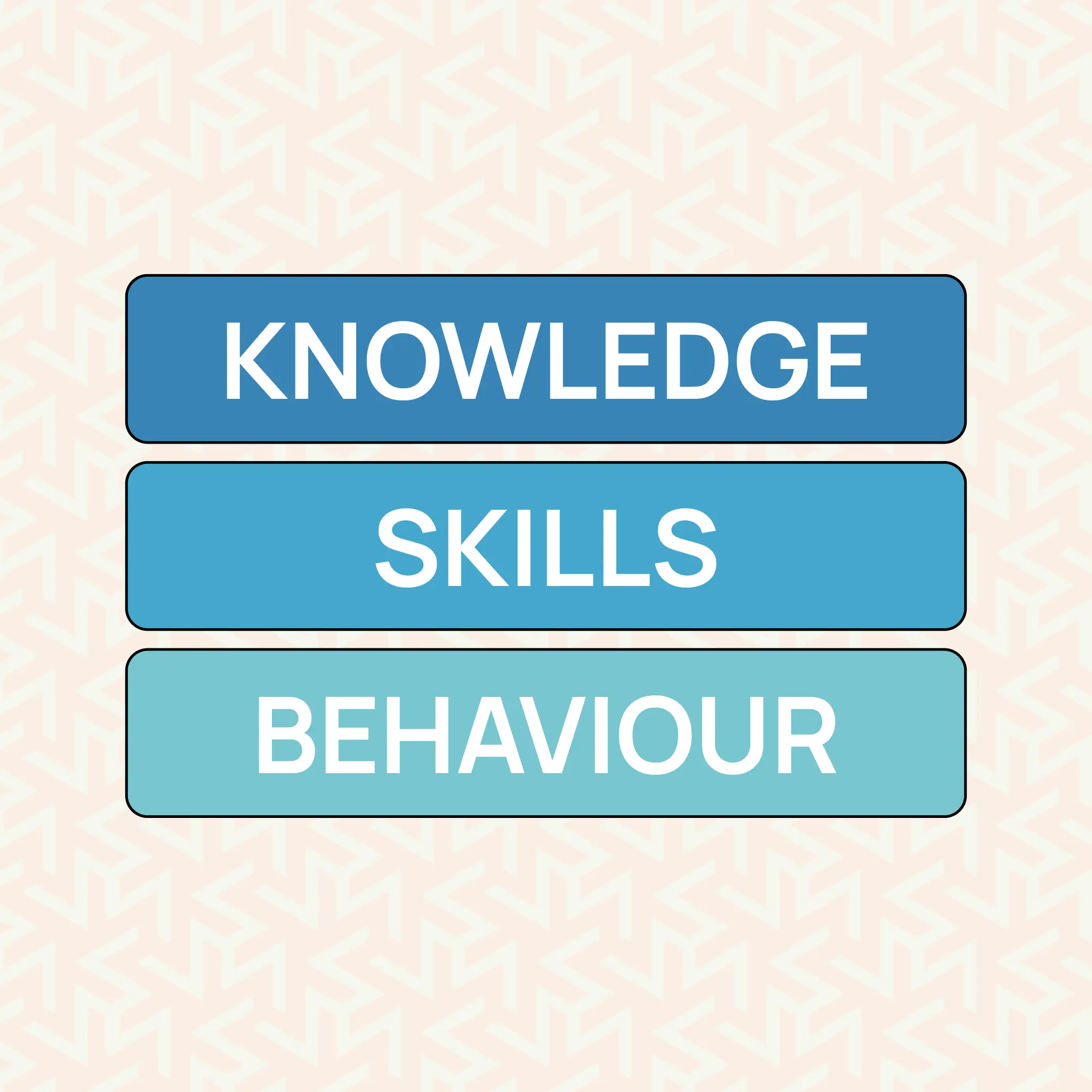
Knowledge, Skills, and Behaviour in Teaching and Education
Three main things help teachers do their job well: Knowledge, Skills, and Behaviour. These are often called KSBs. Together, they make a teacher effective in the classroom and help students learn better.What are Knowledge, Skills, and Behaviour (KSB)?KnowledgeKnowledge is what a teacher knows about their subject, how children learn, and how to teach. It�s the foundation that helps teachers design lessons, assess students, and understand how to help students succeed.Examples of Knowledge in Teaching:Understanding how kids grow and learn at different ages.Knowing the subject you teach, like math, history, or science.Familiarity with the curriculum (the plan for what students should learn).Knowing how to assess students' progress.SkillsSkills are what a teacher can do with their knowledge. It�s how teachers use their understanding to help students learn. Skills include managing a classroom, talking to students in a way they understand, and using different teaching methods to meet students� needs.Examples of Skills in Teaching:Managing the classroom to keep students focused and respectful.Explain things clearly so students understand.Adjusting lessons to help students who learn differently.Testing students to see what they�ve learned.BehaviourBehaviour refers to how a teacher acts in the classroom. It�s about showing respect, patience, and good attitudes and values. How teachers behave helps create a positive and supportive classroom environment.Examples of Behaviour in Teaching:Being patient and understanding with students.Being on time and prepared for lessons.Showing excitement and interest in the subject and in helping students succeed.Creating an atmosphere where students feel safe, respected, and included.Why KSBs Matter in TeachingTeachers with strong knowledge, skills, and positive behaviour can help students learn better and enjoy their education. These three things work together to make teaching effective.Helping Students Learn BetterWhen teachers know their subject (knowledge), can explain things clearly, keep students engaged (skills), and behave in a kind, respectful way (behaviour), students are more likely to succeed in school.Teacher DevelopmentTeachers grow and improve over time by building their knowledge, improving their skills, and reflecting on their behaviour. The more teachers work on these areas, the better they become.Meeting Professional StandardsIn many places, teachers have to meet specific standards to be successful. These standards usually focus on knowledge, skills, and behaviour, ensuring teachers are prepared to teach effectively and professionally.Knowledge, Skills, and Behaviour in Apprenticeship ProgramsIn apprenticeship programs, which teach people practical skills on the job, the focus is often on applying knowledge and skills in real situations. While teachers still need to understand their subjects (knowledge), apprentices are mainly learning how to teach in the classroom (skills) and how to behave professionally.For example, an apprenticeship in teaching might include:Knowledge: Learning about different teaching methods and what works best for students.Skills: Practicing those methods in real classroom settings.Behaviour: Acting professionally, being kind, and staying organised.Key Differences between Knowledge, Skills, and Behaviour (KSB)Here�s a simple table to show how Knowledge, Skills, and Behaviour are different from each other:AspectKnowledgeSkillsBehaviourWhat It IsWhat you knowWhat you can doHow you act and interact with othersFocusLearning facts and ideasUsing what you know to help studentsActing in a respectful, professional wayRole in TeachingIt helps teachers understand what to teachHelps teachers teach effectivelyIt helps create a positive, supportive classroomExamplesKnowing the subject, understanding teaching methodsExplaining things clearly, managing the classBeing patient, enthusiastic, respectfulHow It DevelopsLearned through study and researchLearned through practice and experienceDeveloped through reflection and feedbackConclusionKnowledge, Skills, and Behaviour (KSB) are the core things that make a teacher successful. A teacher needs to know their subject (knowledge), be able to teach well (skills), and act in a way that helps students feel respected and motivated (behaviour). By improving all three areas, teachers can create better learning environments and help students reach their full potential. .main{ border:3px solid #0f7c90; border-radius:20px; position: relative; font-family:roboto; font-weight: 400; color: #000; } .main-two{ position: absolute; top:-25px; left:45px; background-color:white; } .img-div{ border-radius : 100%; padding:2px 7px; background-color:#0f7c90; margin-right:5px; width: 50px; height: 50px; } .img{ width:30px; object-fit:contain; height:auto; border-radius : 100%; } @media only screen and (max-width: 600px) { .heading{ font-size:20px; } .img{ width:20px; object-fit:contain; height:auto; border-radius : 100%; } .img-div{ width: 40px; height: 40px; } .main-two{ left:25px; } } Want to learn more about KSBs in the assessment process? Our assessor courses including the Level 3 CAVA Certificate offer a range of learning modules to help you become an endpoint apprenticeship assessor for any renowned organisation.
Initial Assessment in Teaching and Education
Doing an initial assessment is important when you work with learners for the first time. This helps because each learner is unique�they have different knowledge, skills, experiences, and expectations.What is an Initial Assessment?An initial assessment is something all learners should complete. It�s figuring out a learner's needs and the kind of support they may need. This helps the teacher or tutor create the best learning plan for the student.Learning needs are the skills, knowledge, and abilities the learner needs to develop during their course. Supportive needs are any extra help the learner may need to overcome challenges preventing them from finishing their qualification.An initial assessment helps you plan inclusive lessons that meet each student�s needs. Here are some things to find out during the evaluation:Their level of knowledgeWhat skills do they already haveIf they have any specific learning needs (like dyslexia or dyspraxia)Any extra support they might needWhat motivates them to take the courseWhat they expect from the courseAny previous experience or qualifications they haveWhy is Initial Assessment Important in Education?Initial assessments are key because they help tutors understand where each student starts. By knowing what students already know, tutors can make lessons more relevant and helpful for each person.Every student has different levels of knowledge and skills. These assessments help identify areas where students are strong and where they may need extra help. You can focus on the weaker areas to help each student succeed. Once you know what a student needs, you can adjust your teaching plans to match those needs. This makes learning more effective because it's tailored to each student's level.By understanding where students start, you can track their progress over time and set achievable goals for their growth. Initial assessments also help uncover gaps in knowledge so you can fill in those gaps before moving on to more complex topics.Types and Examples of Initial AssessmentsThere are several ways to make an assessment of students at the start of a course to understand their needs. Each type of assessment gives you a different view of what each student needs.Diagnostic Tests: Short tests check what students already know about a subject. They help you see which topics students understand well and which ones they might need to review.Interviews and Questionnaires: You can ask students questions directly or have them fill out forms. These can include questions about what they like, how they learn best, or how confident they feel in different subjects.Observations: Watching how students behave in class can give you much information. You can observe how they interact with others, complete tasks, and solve problems. This type of assessment helps you understand their practical skills.Self-Assessments: Sometimes, students assess themselves. They can rate their skills or explain what they find challenging. This helps you understand how students see their abilities and where they might need extra support. .main{ border:3px solid #0f7c90; border-radius:20px; position: relative; font-family:roboto; font-weight: 400; color: #000; } .main-two{ position: absolute; top:-25px; left:45px; background-color:white; } .img-div{ border-radius : 100%; padding:2px 7px; background-color:#0f7c90; margin-right:5px; width: 50px; height: 50px; } .img{ width:30px; object-fit:contain; height:auto; border-radius : 100%; } @media only screen and (max-width: 600px) { .heading{ font-size:20px; } .img{ width:20px; object-fit:contain; height:auto; border-radius : 100%; } .img-div{ width: 40px; height: 40px; } .main-two{ left:25px; } } Want to learn more about initial and holistic assessment in the UK Teaching Industry? Our assessor courses including the Level 3 CAVA Certificate offer a range of learning modules to help you become an endpoint apprenticeship assessor for any renowned organisation. What is the Difference Between Initial Assessors and OthersThe main difference between an initial assessor and other assessors is the timing and focus of their assessments. For example, an initial assessor is the person who carries out the first assessment of a learner at the beginning of a course or program. An NVQ assessor evaluates learners working towards accredited qualifications. They work like on-programme assessors by guiding and supporting learners throughout their course. NVQ assessors usually work for colleges or independent training organisations.An Early Years assessor evaluates and checks the skills and knowledge of people working towards early childhood education qualifications. An End-Point Assessor (EPA) is a professional responsible for conducting the final assessment of apprentices during their End Point Assessment.Other AssessorsOther types of assessors include:Formative Assessors: These assessors focus on ongoing assessments during the learning process. They track progress, identify areas where learners may need more support, and help adjust the learning plan accordingly. Examples include teachers who give quizzes, assignments, or feedback during a course.Summative Assessors: Summative assessors evaluate the learner's overall performance at the end of a learning period (e.g., at the end of a course or program). They often use final exams, projects, or presentations to assess whether the learner has achieved the required outcomes. This is where grades and final qualifications come into play.
What is an End Point Assessor and How to Become One
The end-point assessor works with the apprentice only at the end of their apprenticeship to assess their skills. The assessor has no previous contact with the training provider, employer, or apprentice to ensure they remain fair and unbiased when judging the apprentice's abilities.What is an End-Point Assessor?An End-Point Assessor is an independent professional who evaluates apprentices at the end of their training. They are not connected to the learning institution and do not participate in the apprentice's training. Also known as Independent End-Point Assessors (IEPAs), they carry out final assessments using different methods.End-Point Assessors are employed by End-Point Assessment Organisations (EPAOs), which operate independently from training institutions. Many EPAOs nationwide, including Awarding Bodies, Training Providers, and specialist EPAOs. To proceed, you must find a suitable EPAO approved to conduct assessments in your sector.How to Become an End-Point AssessorTo become an End-Point Assessor (IEPA), you need to complete a recognised assessor qualification and meet certain requirements. While there isn�t one specific qualification for becoming an IEPA, here�s what you�ll need:Assessor Qualification: You�ll need an accredited qualification, such as the Level 3 Certificate in Assessing Vocational Achievement also known as the CAVA qualification. This qualification is the best option for becoming a fully qualified assessor and covers key skills needed for End-Point Assessments.Industry Experience: You must have hands-on experience in the industry you wish to assess, not just experience in evaluating. .main{ border:3px solid #0f7c90; border-radius:20px; position: relative; font-family:roboto; font-weight: 400; color: #000; } .main-two{ position: absolute; top:-25px; left:45px; background-color:white; } .img-div{ border-radius : 100%; padding:2px 7px; background-color:#0f7c90; margin-right:5px; width: 50px; height: 50px; } .img{ width:30px; object-fit:contain; height:auto; border-radius : 100%; } @media only screen and (max-width: 600px) { .heading{ font-size:20px; } .img{ width:20px; object-fit:contain; height:auto; border-radius : 100%; } .img-div{ width: 40px; height: 40px; } .main-two{ left:25px; } } Interested in Becoming an End Point Assessor in the UK Teaching Industry? Our assessor courses including the Level 3 CAVA Certificate offer a range of learning modules to help you become an endpoint apprenticeship assessor for any renowned organisation. What is End-Point Assessment (EPA)?End-Point Assessment (EPA) is the final stage of an apprenticeship. It evaluates whether an apprentice has gained the skills, knowledge, and behaviours required to perform their role effectively in the workplace. Unlike ongoing assessments during the apprenticeship, the EPA is conducted by an independent organisation to ensure fairness and objectivity.The EPA involves several methods, which may include:Practical assessmentsProfessional discussionsWritten testsPresentations or project workEach apprenticeship standard includes an Assessment Plan that outlines the specific requirements and methods used by the EPA. Passing the EPA confirms the apprentice�s competence and leads to the completion of their apprenticeship.What is the Difference between an NVQ Assessor and End Point Assessor?An NVQ assessor evaluates learners working towards accredited qualifications. They work like on-programme assessors by guiding and supporting learners throughout their course. NVQ assessors usually work for colleges or independent training organizations.AspectNVQ AssessorEnd-Point Assessor (EPA)RoleGuides and supports learners throughout their qualificationAssesses the apprentice�s skills and knowledge at the end of the apprenticeshipAssessment TimingOngoing assessments during the course or qualificationFinal assessment conducted after the apprenticeship is completedContact with LearnerWorks closely with the learner, providing guidance and feedback.Has no prior contact with the learner, employer, or training provider to ensure objectivityEmployer/Provider LinkWorks directly with the training provider or employerIndependent from the employer and training providerWork EnvironmentTypically works in colleges, training providers, or workplacesWorks for End-Point Assessment Organizations (EPAOs)FocusEnsures the learner progresses through the qualification successfullyEvaluates whether the apprentice meets the required industry standardsQualification TypesAssesses a wide range of accredited qualifications, including NVQsAssesses apprenticeship standards as outlined by Assessment PlansAssessment MethodsIncludes portfolios, observations, and assignmentsIncludes professional discussions, practical tests, and written exams (as per the apprenticeship standard)This table highlights their different roles and responsibilities in assessing learners.What is an End-Point Assessor Job?An End-Point Assessor (EPA) is a professional responsible for conducting the final assessment of apprentices during their EPA. Their role is to ensure apprentices meet the required industry standards and are ready to perform their job roles effectively.Responsibilities of an End-Point AssessorConducting Assessments: Using observations, professional discussions, or reviewing projects to evaluate apprentices' skills and knowledge.Providing Feedback: Offering fair and constructive feedback to apprentices based on the assessment.Ensuring Fairness: Maintaining objectivity and working independently from the training provider or employer.Compliance: Following the rules and guidelines set by the End-Point Assessment Organization (EPAO) and apprenticeship standards.Where Do End-Point Assessors Work?End-Point Assessors usually work for End-Point Assessment Organizations (EPAOs), which include awarding bodies, training providers, or specialised EPA agencies. They may work as employees or freelancers, depending on the demand in their sector.End-point assessor jobs are critical in ensuring apprenticeships maintain high-quality standards, contributing to workforce readiness and development.