

What are the 3 Methods of Food Pest Control
Pests can be a nuisance and a health risk. They can contaminate food, damage property and spread diseases and harmful bacteria that cause food poisoning. No matter how good your business is, pests like insects or rodents can eventually become problematic.Pests are often found near waste, food, and other areas where they can spread diseases. They can carry and spread harmful bacteria such as Salmonella, E. Coli, Campylobacter, and Listeria.Food hygiene laws require businesses to protect against pests and have proper procedures to control them.The pest control industry has grown in the past five years. Food businesses must follow hygiene laws, so more food businesses in the UK mean more pest control needs.What is a Pest?A pest is any living thing that negatively affects humans. This can include unwanted plants (weeds), fungi, worms, microbes (like bacteria or viruses), and insects. What are the Different Types of Pests?Food businesses often deal with four main types of pests:Rodents: rats and miceInsects: cockroaches, beetles, fliesBirds: pigeons, seagulls, and similar birdsMicrobes: Bacteria, fungi and virusesWhat is the Meaning of Pest ControlPest control involves protecting our health and property. It is important for food safety and hygiene. Rodents eat about 20% of the world�s food supply. They also carry fleas, ticks, and mites and spread diseases to people and animals.Cockroaches are dirty insects that can trigger allergies in 7�8% of people. Good pest control helps maintain food hygiene and health standards. Without it, food safety and health regulations would be hard to follow.What are the 3 Methods of Pest ControlPhysical Pest ControlThis approach involves using non-chemical methods to manage pests through physical means or barriers. It is often used to prevent physical contaminants of food from entering an area or to capture and remove them.Control TechniquesPest-proofing is the process of closing cracks, gaps, and building entry points to prevent pests from entering. It may also include installing screens on doors and windows.Traps use various methods to capture and kill pests. There are several common traps, such as glue traps, snap traps, and live traps. These are particularly useful for small animals like rodents and insects.Temperature Control refers to the use of extreme temperatures to kill pests. As an example, bedbugs can be killed using heat treatments, which increase the temperature to unbearable levels. Conversely, freezing can kill pests in food items or other stored products.AdvantagesNon-toxic and not harmful even around human beings and pets.Provides immediate results in some cases, like when using traps.DisadvantagesRequires regular maintenance and monitoring.May not be effective for large infestations or pests that are difficult to physically capture.Chemical Pest ControlThis method uses chemical substances to kill or repel pests that may cause danger to food. It is often used when other methods are not effective or practical.Control TechniquesControl TechniquesPesticides: These are chemicals that are used to kill insects. They are available in different forms, such as sprays, powders, and granules. They are able to attack specific pests like ants, cockroaches, or fleas.Rodenticides: Strong chemicals used to control rodent populations. These are usually in the form of bait or pellets and are placed in areas where rodents are active.Poison Baits: They are used to attract pests. The pests consume the bait and then return to their nests, where the poison has the capacity to affect other members of the population.Advantages:Highly effective for large or difficult infestations.Gives fast results and is capable of attacking certain pests.DisadvantagesImproper use of chemicals may harm humans, pets, and beneficial insects.This may lead to pesticide resistance in pests over time.Environmental impact if not handled carefully.Biological Pest ControlThis method uses natural predators, parasites, or pathogens to control pest populations.Control TechniquesThis is a technique of using natural predators, parasites or pathogens to regulate the population of the pests.�Control TechniquesIntroducing Natural Predators: Release of predators such as ladybugs, which feed on aphids, or birds that eat insects. This helps in the reduction of pest populations naturally.Using Parasites: The introduction of parasites that specifically attack pests. For example, parasitic wasps can lay eggs in or on pests like caterpillars, which are then consumed by the developing larvae.Planting Repellent Species: Growing plants that naturally repel pests. As an example, marigolds can deter nematodes in the soil, and certain herbs can repel insects.AdvantagesEnvironment-friendly and sustainable.Reduces the need for chemical pesticides.Can provide long-term pest management solutions.DisadvantagesTakes a long time to give results as compared to chemical methods.Requires careful management to avoid disrupting the local ecosystem.Effectiveness can be influenced by environmental conditions and pest species.Each method has its strengths and is chosen based on factors such as the type of pest and environmental considerations. A combination of these methods is often used for the most effective pest control strategy.What are the Ways of Controlling Pest Control in the KitchenMicrobial or biological contamination is the most common type of food contamination. Kitchens must be use appropriate methods to prevent infestation of food by pathogens. Some of the ways of controlling bacterial pest control in the kitchen are: .second-cta-block .main-heading { font-weight: bold; font-size: 22px; } .second-cta-block .book-now { background: #DF3D52; color: #FFFFFF !important; border-radius: 8px; } .second-cta-block .second-heading { font-size: 17px; } .second-cta-block .card { border: 0 !important; } .second-cta-block .card-body { border: 1px solid #909090; box-shadow: rgba(0, 0, 0, 0.16) 0px 1px 4px; border-top-right-radius: 100px; border-bottom-right-radius: 100px; background: #fdf9ee; } .second-cta-block .image-wrapper { height: 330px; position: absolute; right: -60px; top: calc(50% - 210px); /* Center the image vertically */ } .second-cta-block .image-wrapper img { height: 100%; } .second-cta-block .trustpilot-widget { width: 256px; } .cta-heading-section { width: 75%; } @media screen and (max-width:991px) { .second-cta-block { padding-top: 100px; } .second-cta-block .card-body { border: 1px solid #909090; box-shadow: rgba(0, 0, 0, 0.16) 0px 1px 4px; border-radius: 19px; border-radius: 14px; background: #fdf9ee; } .cta-heading-section { width: 100%; padding-top: 50px; } .second-cta-block .image-wrapper { height: 270px; right: 0; position: absolute; left: calc(50% - 90px); top: calc(50% - 315px); } } Get Online Food Safety Courses Food Hygiene And Safety Check the Course Rated Excellent on major review sites Food Temperature RegulationsThe Food Hygiene (England) Regulations 2006 require food businesses to manage food temperatures to prevent harmful bacteria growth. Keeping food at the right temperature helps lower the risk of food poisoning. Bacteria grow best in temperatures between 8�C and 63�C.ng, avoid storing food within this �Danger Zone� temperature range.Chilled FoodChilled foods must be kept at or below 8�C. This is the temperature of the food itself, not just the air in the fridge. Aim for 5�C or lower to be safe, especially if you open the fridge door often.Hot FoodAfter cooking or reheating, keep hot food at or above 63�C.The Two-Hour RuleYou can keep hot food below 63�C for up to two hours while on display. Use a system to track the time and dispose of any food that has been out for more than two hours unless you are sure it is still safe. If the food is safe, quickly chill it to 8�C or below or reheat it to 63�C or more.DefrostingDefrost food in a way that prevents harmful bacteria or toxins from growing. Keep defrosting food at a safe temperature. If liquid from the defrosting food (like raw meat) could be a health risk, drain it properly. Handle the food carefully after defrosting to reduce the risk of bacteria and toxins.Use By Dates and Shelf LifeThe �Use By� date is the last day the manufacturer guarantees the product is safe. Do not use or store products past this date.Perishable, high-risk food types made and stored on-site should have a �Use By� date. Generally, food should be used within two days of production.Freezing and �Use By� DatesDo not freeze food labelled with a manufacturer�s �Use By� date. Freezing can affect safety. If you must freeze them:Freeze on the day you buy or receive them, not on the last day of the shelf life.Label the package with the freeze date and the defrost date.Use the food on the day you defrost it.FIFO Food Stock RotationFIFO is a storage method that enables the correct placement of food. The food with the earliest best-before or expiry date is placed at the front or on top in a visible position. The item with a later expiration date is placed on the back.Proper food storage helps prevent cross-contamination and keeps food quality high.Cross ContaminationCross-contamination occurs when germs transfer from one surface to another, such as from raw meat or dirty hands to ready-to-eat foods.To reduce cross-contamination:Organise your fridgeWash hands frequentlyUse color-coded chopping boardsFollow the HACCP systemWhat to Do if You Find a Pest ProblemTo handle pests effectively, find them early by regularly checking your premises. Follow these steps if you discover a pest issue:Close the Business: Stop operating until pests like mice, rats, or cockroaches are removed from all food areas.Hire a Professional: Contact a qualified pest control expert to inspect and treat the infestation. Set up a contract if you do not already have a pest control service.Clean Thoroughly: Disinfect all equipment and surfaces that might be contaminated. Dispose of any contaminated food and wear gloves to avoid disease.Remove Pests: Clean up droppings, dead cockroaches, and egg cases.Prevent Future Infestations: Fix any issues that might let pests into your business.Dispose of Contaminated Food: Throw away any food that might have been affected by pests.If an Environmental Health Officer finds pests, your business could be closed immediately. This can lead to lost income, bad publicity, and costs over �1000.
What are TACCP and VACCP in Food Safety
An effective food safety management system includes the principles of HACCP, TACCP, and VACCP. Generally, food safety is maintained through HACCP (Hazard Analysis Critical Control Points), which manages potential hazards arising from processing errors or human mistakes.However, there has been a rise in threats involving deliberate tampering or contamination of food for malicious or financial reasons, which are not specifically addressed by HACCP.As an ethical and legal strategy to fulfil high food safety and hygiene standards, TACCP and VACCP complement HACCP in maintaining food safety across the entire supply chain. Both strategies focus on preventing food adulteration.What Does TACCP Stand For?TACCP stands for "Threat Assessment and Critical Control Point." It is a food safety management approach used to identify and assess potential food safety threats not covered by traditional HACCP (Hazard Analysis Critical Control Point) systems.What is TACCP? While HACCP focuses on managing known hazards, TACCP addresses more specific and often less predictable threats, such as deliberate contamination or sabotage. By including TACCP, food businesses can better safeguard their products from unintentional and intentional risks.What are the TACCP PrinciplesThe principles of TACCP (Threat Assessment and Critical Control Point) are:Identify Threats: Find out what intentional harm could happen to food, like sabotage or fraud.Find Weak Spots: Examine the production process and supply chain to see where these threats could enter.Evaluate Risks: Consider how likely these threats will be used and how easily they can exploit the weak spots.Set Control Points: Choose key areas where you can implement measures to prevent or stop the threats.Implement Controls: Put security measures in place to address the threats, such as better storage or surveillance, and train staff to spot problems.Monitor and Check: Regularly check if the controls are working and update them as needed based on new information or changes in risks.Prepare for Incidents: Prepare a plan for responding to an intentional contamination incident, including who to contact and what actions to take.What is an Example of TACCP?To explain how TACCP works in food safety, we can use the example of a small-town bakery.The bakery's team starts the TACCP process by checking for possible threats, such as contamination of ingredients like flour. They then identify vulnerable points in the production process and assess how likely these vulnerabilities will be exploited. The bakery implements security measures to reduce these risks, such as secure ingredient storage and surveillance. The staff is trained to detect and respond to suspicious activities. By proactively addressing potential threats, the bakery successfully prevents deliberate contamination.What does VACCP Stand For?VACCP stands for "Vulnerability Assessment and Critical Control Points." It is a food safety approach focused on identifying and managing vulnerabilities in the food supply chain that could lead to food fraud and financial loss.What is VACCP?VACCP is a type of risk assessment that helps find and manage weaknesses in the food supply chain that could lead to food fraud for financial gain. VACCP aims to prevent intentional fraud, where food is deliberately tampered with during production for economic reasons.In a VACCP assessment, a food business examines its processes and supply chain to identify potential food fraud. This helps the business understand and address specific types of fraud.Food fraud involves tricking customers or consumers for financial benefit. VACCP focuses on preventing two key types:Adulteration: Adding something not listed on the label to reduce costs or fake a higher quality.Substitution: Replacing a food or ingredient with a similar but lower-quality substance. .second-cta-block .main-heading { font-weight: bold; font-size: 22px; } .second-cta-block .book-now { background: #DF3D52; color: #FFFFFF !important; border-radius: 8px; } .second-cta-block .second-heading { font-size: 17px; } .second-cta-block .card { border: 0 !important; } .second-cta-block .card-body { border: 1px solid #909090; box-shadow: rgba(0, 0, 0, 0.16) 0px 1px 4px; border-top-right-radius: 100px; border-bottom-right-radius: 100px; background: #fdf9ee; } .second-cta-block .image-wrapper { height: 330px; position: absolute; right: -60px; top: calc(50% - 210px); /* Center the image vertically */ } .second-cta-block .image-wrapper img { height: 100%; } .second-cta-block .trustpilot-widget { width: 256px; } .cta-heading-section { width: 75%; } @media screen and (max-width:991px) { .second-cta-block { padding-top: 100px; } .second-cta-block .card-body { border: 1px solid #909090; box-shadow: rgba(0, 0, 0, 0.16) 0px 1px 4px; border-radius: 19px; border-radius: 14px; background: #fdf9ee; } .cta-heading-section { width: 100%; padding-top: 50px; } .second-cta-block .image-wrapper { height: 270px; right: 0; position: absolute; left: calc(50% - 90px); top: calc(50% - 315px); } } Get Online Food Safety Courses Food Hygiene And Safety Check the Course Rated Excellent on major review sites What are the VACCP Principles?The principles of VACCP (Vulnerability Assessment and Critical Control Points) are:Identify Vulnerabilities: Recognise production and supply chain areas where food fraud could occur.Assess Risks: Evaluate how likely these vulnerabilities could be targeted and the potential impact of such fraud.Determine Critical Control Points: Identify key stages where controls can be applied to prevent or detect food fraud.Implement Controls: Put in place measures to address the identified vulnerabilities and risks.Monitor and Review: Regularly check the effectiveness of the controls and review the vulnerability assessment.Respond to Incidents: Have a clear plan for addressing food fraud incidents, including investigation procedures and corrective actions to prevent recurrence.What is an Example of VACCP?We can use a juice manufacturing company as an example to explain how VACCP works in the food industry.In a juice manufacturing company, VACCP is used to combat food fraud by focusing on supply chain vulnerabilities and production processes. The company identifies risks such as the potential substitution of high-quality fruit concentrates with cheaper alternatives and the threat of counterfeit packaging. They implement controls like quality checks on ingredients and tamper-evident packaging. Regular monitoring and audits are conducted to ensure these measures are effective. If fraud is detected, the company follows a response plan to trace the source, notify affected parties, and prevent future incidents. This approach helps maintain the integrity and authenticity of their products.What is the Difference between TACCP & VACCPTACCP and VACCP aim to prevent intentional food contamination, unlike HACCP, which deals with unintentional contamination. VACCP targets system vulnerabilities, focusing on where weaknesses could be exploited for fraud.In contrast, TACCP identifies specific threats, concentrating on what could happen. Essentially, TACCP is concerned with the nature of the threats, while VACCP addresses the timing and opportunity for fraud.TACCP and VACCP focus on identifying and preventing potential adulteration in the food supply chain but address different threats. TACCP aims to prevent malicious threats such as sabotage or extortion. In contrast, VACCP focuses on preventing food fraud driven by economic motives, like substituting ingredients or falsifying product information for financial gain.What are the Benefits of TACCP and VACCP?Using TACCP and VACCP in a food business offers several advantages:Shows your commitment to food safetyLowers the risk of intentional attacks or fraudEnsures reasonable precautions are taken to protect the supply chainAssures stakeholders and customers that risks are managed properlyMinimises the impact of any attack on your businessProtects and improves your brand and reputationConclusionTACCP and VACCP are strong defences against food fraud and contamination. When used correctly, they help reduce the chances of attacks and lessen the damage if they occur. Together with HACCP, they confirm food safety and protection from intentional and unintentional contamination.
Career Guide: Hospitality and Catering
In the United Kingdom, there's a growing demand for skilled professionals who can deliver high-quality hospitality service and safe, hygienic cuisine.Hospitality and Catering ApprenticeshipsOn-the-job hospitality and catering training offers opportunities to gain practical skills and industry insights. It also helps build professional connections and networking with industry professionals.In the UK, main apprenticeships include:Chef de PartieThe apprentice would learn skills in:Cooking techniquesMenu planningFood preparationSafety and hygiene guidelinesAdvanced ButcherThe apprentice would learn skills in:Meat cuttingMeat preparationMeat storage and sellingHospitality SupervisorThe apprentice would learn skills in:Administrative tasksManaging staffSolving customer complaintsOverseeing smooth operationsDesk managementEvent coordinationEvent AssistantThe apprentice would learn skills in:Event organisation executionEvent logisticsVendor coordinationBudget managementClient communicationThe Growing Employment Rate in the UK Hospitality and Catering IndustryHospitality and catering is the third largest employer in the UK. The sector employs 3.5 million people and is one of the nation�s biggest employers.Moreover, the hospitality sector contributed 17% of overall UK employment growth between 2009 and 2019, placing it fifth in total number of jobs created.Essential Skills for Hospitality and Catering EmployeesA few of the essential skills needed to thrive and succeed in the competitive sector of hospitality and catering are as follows:Effective CommunicationImpeccable Customer Service Strong LeadershipCulinary ExpertiseFood safety and hygiene practicesTraining and Education Courses in Hospitality and CateringRunning a successful hospitality or catering business requires more than just culinary skills�it also requires a solid understanding of hygiene and safety principles. These regulated practices confirm compliance with various food and safety laws.Plenty of courses and qualifications are available to help you improve your skills and prepare for a career in the industry. Formal education can give you the knowledge and credentials you need to succeed. .second-cta-block .main-heading { font-weight: bold; font-size: 22px; } .second-cta-block .book-now { background: #DF3D52; color: #FFFFFF !important; border-radius: 8px; } .second-cta-block .second-heading { font-size: 17px; } .second-cta-block .card { border: 0 !important; } .second-cta-block .card-body { border: 1px solid #909090; box-shadow: rgba(0, 0, 0, 0.16) 0px 1px 4px; border-top-right-radius: 100px; border-bottom-right-radius: 100px; background: #fdf9ee; } .second-cta-block .image-wrapper { height: 330px; position: absolute; right: -60px; top: calc(50% - 210px); /* Center the image vertically */ } .second-cta-block .image-wrapper img { height: 100%; } .second-cta-block .trustpilot-widget { width: 256px; } .cta-heading-section { width: 75%; } @media screen and (max-width:991px) { .second-cta-block { padding-top: 100px; } .second-cta-block .card-body { border: 1px solid #909090; box-shadow: rgba(0, 0, 0, 0.16) 0px 1px 4px; border-radius: 19px; border-radius: 14px; background: #fdf9ee; } .cta-heading-section { width: 100%; padding-top: 50px; } .second-cta-block .image-wrapper { height: 270px; right: 0; position: absolute; left: calc(50% - 90px); top: calc(50% - 315px); } } Get Online Food Safety Courses Food Hygiene And Safety Check the Course Rated Excellent on major review sites Five Sectors of the Hospitality and Catering IndustryAccommodation:�This sector includes the supply of comfortable lodging facilities to clients. Services include:HotelsMotelsResortsRoom serviceHousekeepingFood and Beverage:Food and beverage focuses on providing customers with a quality dining experience through catering and refreshment services.Travel and Tourism:This sector is important in facilitating travel for leisure, business, and other purposes by offering transportation and sightseeing attractions.Event management:Event management is concerned with planning, coordinating, and executing events. It involves selecting locations, managing crowd numbers, and controlling budgets.Leisure and Recreation:This category of hospitality and catering includes pursuing activities that lead to mental and physical well-being. The activities include relaxation exercises, social experiences, and adventurous pursuits for pleasure.ConclusionThe hospitality and catering industry in the UK is experiencing a surge in demand for skilled professionals. Apprenticeships in this field offer invaluable hands-on training. Hospitality and catering is the third largest employer in the UK, employing 3.5 million people. Training and education courses are available to improve these skills and prepare individuals for success in the industry.
The HACCP System: Process and Principles
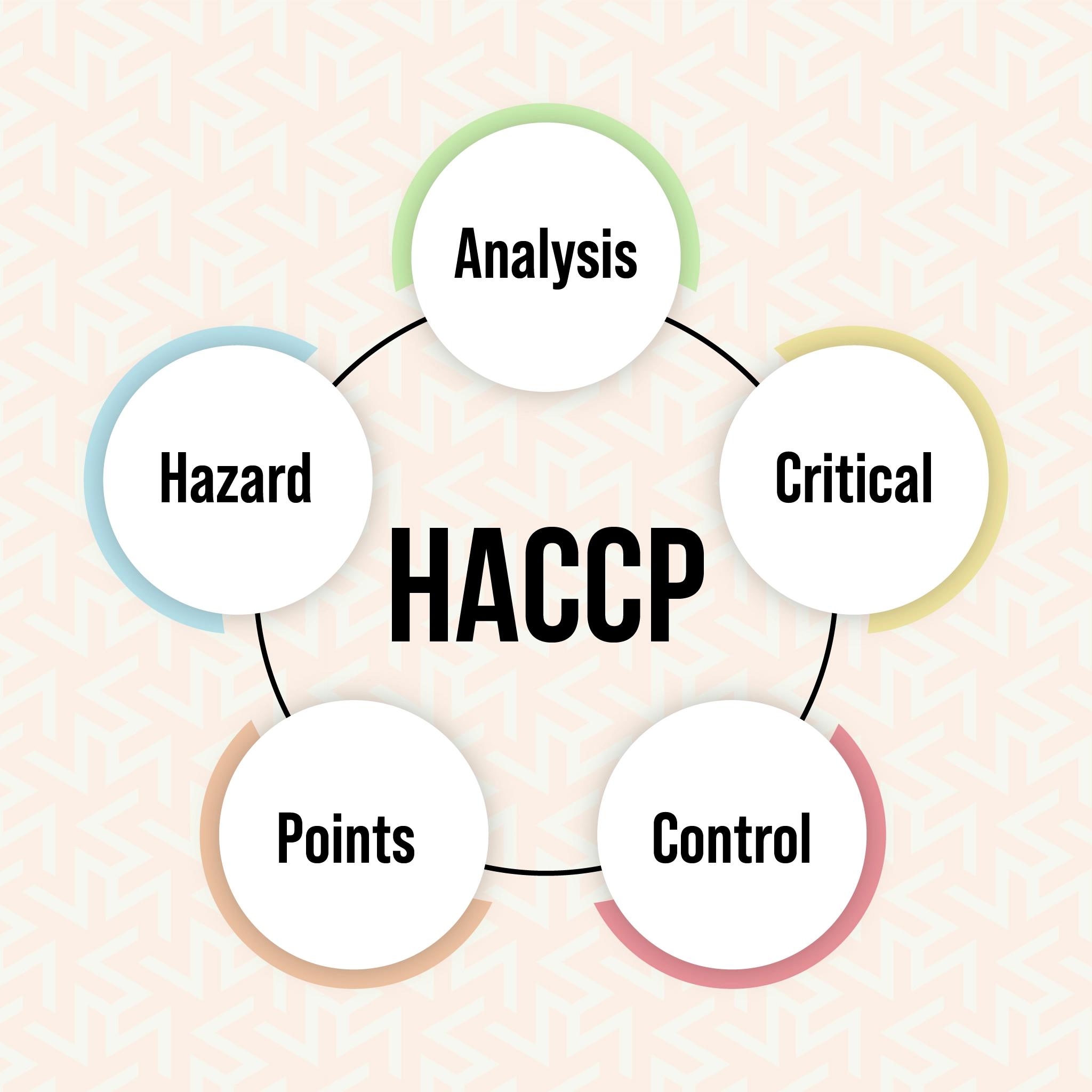
The HACCP is a contamination control procedure applied across all stages of the food supply chain to assess and control potential risks. It is the primary risk management process of food safety. The HACCP system provides a systematic preventive approach for food-related contaminants and mishaps.Explaining the Acronym: HACCPHACCP stands for Hazard Analysis Critical Control Point.HazardHazards are possible risks in the form of pollutants or unacceptable material and unsafe practices in the food production system. They can affect the safety, quality, and purity of the food product. Hazards include microbial, physical, chemical, and allergenic contaminants. The entry of pollutants through cross-contamination in food is another hazardous risk to food safety.AnalysisHazards identified in the food preparation process undergo standardised examination. This occurs through a series of regulated steps. Critical points for hazard entry and damage are predictively marked to proactively control them.Critical Control PointAll points in the food production stage where corrective measures are applied are critical control points (CCPs). These are contamination control measures that reduce the risk of food-related complications. CCPs look for �critical dangerous areas� and aim to eliminate them.The HACCP System for Food SafetyThe HACCP system monitors and supervises food quality throughout the food production chain, from food processing to food service. It puts in place preventive controls to eliminate potential adverse risks from the food system.Application of the HACCP system for food safety includes seven important steps, also known as the seven HACCP principles. The principles of the HACCP system identify and eradicate physical, microbiological and chemical pollutants that may have occurred due to cross-contamination or cross-contact contamination.HACCP is more of a preventive approach than a responsive one. It predicts areas of unsafety in the food production cycle and charts out a plan to control them on time. It focuses more on in-process hazard control than finished product analysis. .second-cta-block .main-heading { font-weight: bold; font-size: 22px; } .second-cta-block .book-now { background: #DF3D52; color: #FFFFFF !important; border-radius: 8px; } .second-cta-block .second-heading { font-size: 17px; } .second-cta-block .card { border: 0 !important; } .second-cta-block .card-body { border: 1px solid #909090; box-shadow: rgba(0, 0, 0, 0.16) 0px 1px 4px; border-top-right-radius: 100px; border-bottom-right-radius: 100px; background: #fdf9ee; } .second-cta-block .image-wrapper { height: 330px; position: absolute; right: -60px; top: calc(50% - 210px); /* Center the image vertically */ } .second-cta-block .image-wrapper img { height: 100%; } .second-cta-block .trustpilot-widget { width: 256px; } .cta-heading-section { width: 75%; } @media screen and (max-width:991px) { .second-cta-block { padding-top: 100px; } .second-cta-block .card-body { border: 1px solid #909090; box-shadow: rgba(0, 0, 0, 0.16) 0px 1px 4px; border-radius: 19px; border-radius: 14px; background: #fdf9ee; } .cta-heading-section { width: 100%; padding-top: 50px; } .second-cta-block .image-wrapper { height: 270px; right: 0; position: absolute; left: calc(50% - 90px); top: calc(50% - 315px); } } Get Online Food Safety Courses Food Hygiene And Safety Check the Course Rated Excellent on major review sites The Process of the HACCP SystemThe main steps to implementing the HACCP plan include creating the required sanitation and hygiene programs. This is followed by building a team of competent people responsible for carrying out the HACCP plan. Educating the team about the food product they are dealing with is important. This should include information about the type of food, its ingredients, customer assessment, storage, and distribution conditions. The last and most important step in the HACCP system is implementing the seven HACCP principles.The 7 Principles of the HACCP ProcessPrinciple 1: Perform Hazard AnalysisHazard analysis and identification are conducted for all stages of the food production process. Special attention is given to areas where hazards are most likely found. If not controlled, hazards can cause injury or illness. Performing hazard analysis is the most important step of the HACCP system. It allows necessary preemptive actions to be taken. For hazard listing and assessing control measures, emphasis is placed on the following areas:staff competence in assessing any potential hazardconditions for food transportationfood quality and ingredients for young, elderly and immune-sensitive peoplefood storage conditionshygiene of food handlersequipment maintenance and sanitationSome common examples of analysing hazards include:Microbes are found in stored raw meat due to unsuitable temperature conditions.Peanuts containing food delivered to allergic customers.Principle 2: Establish Critical Control Points (CCPs)Critical Control Points refer to those potentially dangerous areas in the food system that should be promptly addressed and controlled. They are control procedures that reduce contaminants and risks identified during the hazard analysis stage. The hazards are brought to a minimum level until they are eliminated from the food production chain.The CCP Decision TreeThe HACCP team uses a hierarchical decision-making map known as the �Critical Control Point Decision Tree' to identify crucial areas of concern in the food safety process. It consists of a series of questions that lead to an informed decision about whether a particular identified hazard should be managed as a critical control point.Principle 3: Establish Critical Limits (CLs)Critical limits are established in response to the critical control points to regulate and manage the identified hazard. These limits are measurable and assessed to ensure the threat remains within the bounds established by the HACCP team. Limits can be set for variables to which food is exposed, such as temperature, pH, time, and moisture content.Some common examples of setting critical limits include:The critical limit for reheating temperature for food leftovers is 74�C or 165�F in microwaves and on stovetops.The critical limit for fridge storage temperature for food is between 0 �C and 4�C.Principle 4: Monitoring ProceduresThe HACCP team must monitor and supervise the identification of Critical Control Points and the application of subsequent critical limits. Proper monitoring procedures are implemented to ensure the hazard is dealt with effectively.If any deviation from the standard critical limit is recorded, the monitoring staff takes the necessary steps to correct the irregularity. The HACCP principles' monitoring procedures uphold food safety and quality standards.Some common examples of performing monitoring procedures include:Monitoring the reheating temperature for food leftovers based on the set critical limits.Monitoring the fridge storage temperature for food based on the set critical limits.Principle 5: Corrective ActionsIf the critical limits set for the critical control points are not followed, corrective actions are performed to re-standardise the process. Errors are reported at the monitoring stage, and measures are taken to resolve them.Some common examples of performing corrective actions include:Discarding food stored at room temperature for more than two hours.Proper identification of food allergens on non-packaged and packaged food.Principle 6: Verification MethodsThe HACCP system is a scientific plan that can be measured, assessed, and verified. It is important to holistically evaluate the program to determine its reliability and validity. Frequent observations, recording, and monitoring of the HACCP plan can help make necessary changes and improvements.For a thorough verification process, the HACCP team can run a survey among customers and employees. The survey will contain relevant questions about the quality of the end product and areas of concern in the food production chain. This approach will maintain a constructive feedback loop about the effectiveness of the HACCP program.Principle 7: Documentation & Record-KeepingCareful documentation is key for the successful operation of any program. It helps assess progress and continuous improvements made at each plan step. Similarly, the HACCP system's record-keeping is important. This is to confirm that the established standards for food safety and hygiene are met along different stages of the food supply chain.Documentation can be written by a trained team member by hand or digitally in the form of a central database, accessible to all members of the HACCP team. This will confirm transparency and accountability. Record keeping can include subjects ranging from basic hygiene measures to implementing critical limits.Space Food: The Birth of the HACCP SystemHACCP was an outcome of the Cold War when the space race between the US and USSR was at its peak. It was initiated to provide safe and hygienic food to astronauts for space expeditions. National Aeronautics and Space Administration (NASA), the Pillsbury Company, and the U.S. Army Laboratories worked together to find a standardised method of confirming food safety to be sent to outer space missions.The Critical Control Points (CCPs) system was historically related to NASA�s engineering management system. It tested the durability of American weapons and machinery by marking areas of failure and mapping out their control plan. This similar approach was further applied to space-related food safety management. In 1997, it expanded into the HACCP system for food safety management and is still practised today.FAQsWhat does HACCP stand for?HACCP stands for Hazard Analysis Critical Control Point.What is HACCP?The HACCP is a contamination control procedure applied across all stages of the food supply chain to assess and control potential risks. It is the primary risk management process of food safety.How many steps must be followed in a HACCP system?The HACCP process has four steps. The HACCP has seven principles that are included in the HACCP process.What is HACCP in food?HACCP is the primary risk management process for food safety. The HACCP system provides a systematic preventive approach to food-related contaminants and mishaps.What is HACCP designed to control?HACCP is more of a preventive approach than a responsive one. It predicts areas of unsafety in the food production cycle and charts out a plan to control them on time.ConclusionThe Hazard Analysis Critical Control Point (HACCP) is fundamental to food safety management. It was initially developed for food safety in space missions for the United States. However, it has now evolved into a universal standard for identifying and addressing risks associated with global food production. Implementing the HACCP process and principles allows proactive steps to be taken against the identified food-related hazard.
What is the Difference Between a Chef and a Cook
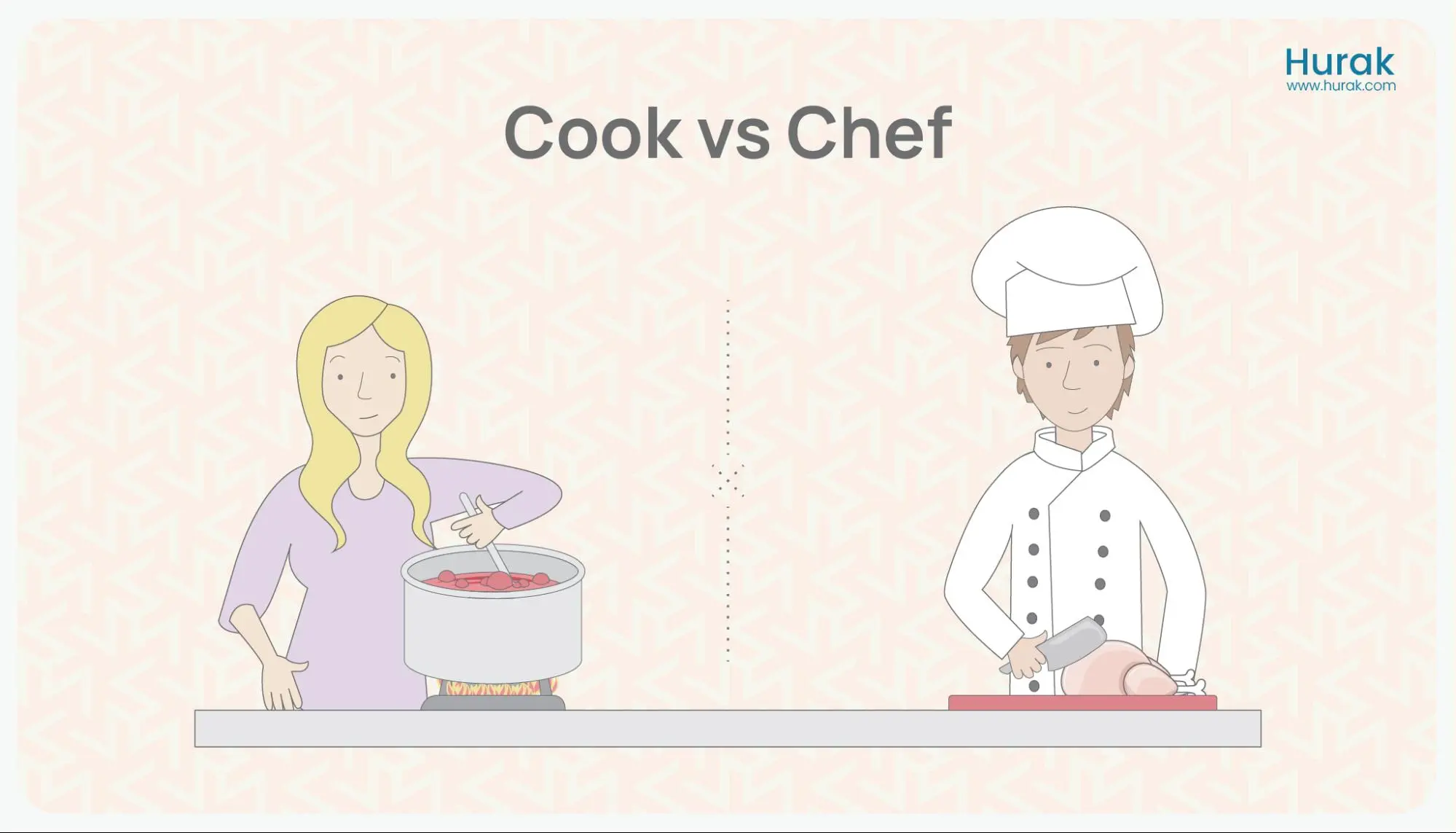
The terms chef and cook are often used interchangeably. However, they have key differences in their job descriptions and responsibilities. A cook prepares and cooks food, whereas a chef is a skilled and trained cook who works in a hotel or restaurant setting.Kitchen Hierarchy of Chefs and CooksKnowledge of the kitchen brigade system is important for better understanding the difference between a chef and a cook.CooksCooks in different roles support the chef's culinary vision within the kitchen structure.Stagiaires: Interns in the kitchen, often in apprenticeships or fresh from culinary school.Kitchen Porters: Assist in upper-level kitchens with basic cooking tasks and some cleaning, varying in training.Junior Cooks/Commis: Work under line cooks to learn specific kitchen sections, with or without culinary training.Line Cooks: Specialize in running specific food preparation stations on the kitchen line.ChefsChefs have more diverse roles in kitchens, from entry-level positions to executive leadership. They oversee tasks important for restaurant operations.Chef de Partie (Station Chefs): Manage specific kitchen stations, creating dishes and recipes under the head or sous chef's guidance.Sous Chef: Deputy to the head chef, supervising daily cooking and kitchen operations, sometimes stepping in for the head chef.Chef de Cuisine: Head chef responsible for kitchen management, menu creation, staff supervision, and restaurant operations.Executive Chef: Top-level chef overseeing kitchen operations, managing costs, multiple locations, and focusing on the business aspects rather than daily cooking.Personal Chefs: Work independently, preparing diverse meals for private clients onsite or for delivery.Chefs hold the highest position in the kitchen hierarchy. They blend culinary expertise with managerial skills for efficient kitchen functioning and high-quality menu execution.The Difference Between a Chef and a CookWhile chefs are a subset of the broader category of cooks, they stand out with their specialised skills and formal training. This distinction also means that chefs are more likely to have experience in high-end culinary establishments, showing the difference between a chef and a cook. The following table summarises the key differences between chefs and cooks, focusing on their approach to recipes, skill levels, training, innovation, adaptation, and typical work environments.Similarities between a Chef and a CookEveryone involved in food preparation, whether cook or chef, must prioritise kitchen cleanliness and food safety, to prevent contamination and food allergen reactions.Both chefs and cooks need to receive comprehensive training in food safety protocols. .second-cta-block .main-heading { font-weight: bold; font-size: 22px; } .second-cta-block .book-now { background: #DF3D52; color: #FFFFFF !important; border-radius: 8px; } .second-cta-block .second-heading { font-size: 17px; } .second-cta-block .card { border: 0 !important; } .second-cta-block .card-body { border: 1px solid #909090; box-shadow: rgba(0, 0, 0, 0.16) 0px 1px 4px; border-top-right-radius: 100px; border-bottom-right-radius: 100px; background: #fdf9ee; } .second-cta-block .image-wrapper { height: 330px; position: absolute; right: -60px; top: calc(50% - 210px); /* Center the image vertically */ } .second-cta-block .image-wrapper img { height: 100%; } .second-cta-block .trustpilot-widget { width: 256px; } .cta-heading-section { width: 75%; } @media screen and (max-width:991px) { .second-cta-block { padding-top: 100px; } .second-cta-block .card-body { border: 1px solid #909090; box-shadow: rgba(0, 0, 0, 0.16) 0px 1px 4px; border-radius: 19px; border-radius: 14px; background: #fdf9ee; } .cta-heading-section { width: 100%; padding-top: 50px; } .second-cta-block .image-wrapper { height: 270px; right: 0; position: absolute; left: calc(50% - 90px); top: calc(50% - 315px); } } Get Online Food Safety Courses Food Hygiene And Safety Check the Course Rated Excellent on major review sites ConclusionThe distinction between chefs and cooks is important to understand despite their interchangeable use of common language. Cooks primarily prepare food following recipes, while chefs with formal training and specialised skills oversee kitchen operations and innovate dishes. Understanding the kitchen hierarchy, from stagiaires to executive chefs, clarifies their respective roles in managing kitchen tasks and food safety. Chefs and cooks contribute significantly to culinary settings by maintaining high standards of cleanliness and following food safety protocols that are important for delivering quality meals.�
What are High-Risk Food Types and How To Prevent Their Contamination
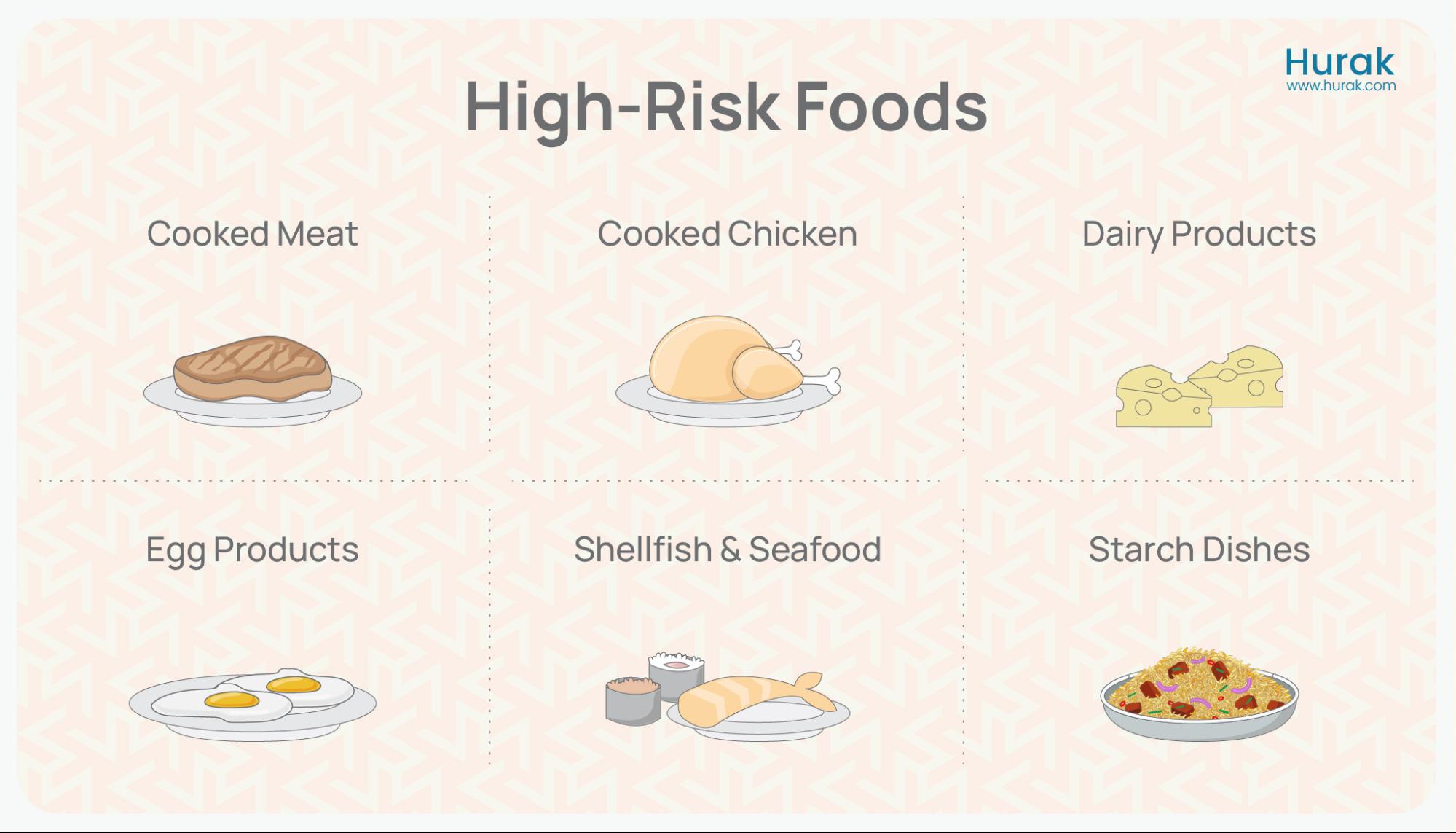
Certain types of food are more likely to get contaminated, and it is important to identify these high-risk food types. Understanding the sources of contamination and taking proper storage measures is key to reducing food contamination.The Food Standards Agency (FSA) reported increased food poisoning cases in the UK. In 2009, there were around 1 million cases annually, but by 2022, this number had risen to 2.4 million. Food poisoning is a serious health issue when contaminated food is eaten.What are the Food Risk CategoriesHigh-risk food types have an increased chance of harmful bacteria growing and are stored under refrigeration.Low-risk food is typically low in moisture and contains high sugar and salt content. Bacteria struggle to multiply under these conditions, so it is stored safely at room temperature. .second-cta-block .main-heading { font-weight: bold; font-size: 22px; } .second-cta-block .book-now { background: #DF3D52; color: #FFFFFF !important; border-radius: 8px; } .second-cta-block .second-heading { font-size: 17px; } .second-cta-block .card { border: 0 !important; } .second-cta-block .card-body { border: 1px solid #909090; box-shadow: rgba(0, 0, 0, 0.16) 0px 1px 4px; border-top-right-radius: 100px; border-bottom-right-radius: 100px; background: #fdf9ee; } .second-cta-block .image-wrapper { height: 330px; position: absolute; right: -60px; top: calc(50% - 210px); /* Center the image vertically */ } .second-cta-block .image-wrapper img { height: 100%; } .second-cta-block .trustpilot-widget { width: 256px; } .cta-heading-section { width: 75%; } @media screen and (max-width:991px) { .second-cta-block { padding-top: 100px; } .second-cta-block .card-body { border: 1px solid #909090; box-shadow: rgba(0, 0, 0, 0.16) 0px 1px 4px; border-radius: 19px; border-radius: 14px; background: #fdf9ee; } .cta-heading-section { width: 100%; padding-top: 50px; } .second-cta-block .image-wrapper { height: 270px; right: 0; position: absolute; left: calc(50% - 90px); top: calc(50% - 315px); } } Get Online Food Safety Courses Food Hygiene And Safety Check the Course Rated Excellent on major review sites Explaining High-Risk FoodHigh-risk food types are ready-to-eat items. They do not undergo further heat treatment or cooking to protect against microbial contamination. They act as breeding grounds for the growth of pathogenic bacteria.High-risk food has a high protein content and a higher chance of bacterial spread. It requires careful handling and storage to prevent microbial growth.Examples of High-Risk food include:Cooked meat and poultry:Beef, pork, ham, lamb, chicken, turkey, duckCooked meat products:Meat pies, pasties, p�t�, meat stock, gravy, cook-chill mealsDairy products:Milk, cream, artificial cream, custards, products with unpasteurised milk, ripened soft and moulded cheesesEgg products:Cooked eggs, quiche, products containing raw or lightly cooked eggs (e.g., mayonnaise, mousse, homemade ice cream)Shellfish and seafood:Mussels, cockles, cooked prawns, raw oystersStarch dishes:Cooked rice, pastaExplaining Low-Risk FoodLow-risk food remains safe at room temperature. It is less likely to cause food poisoning. Examples include:Preserved food:Smoked or salted fishDry good:Bread, flour, biscuitsAcidic food:Pickled foods, vinegar, fruitFermented productsSalami, pepperoniFood with high sugar/fat content:Jam, chocolateUnopened tinned foodThese food types typically contain low moisture or are preserved to inhibit bacterial growth, reducing the risk of contamination and foodborne illnesses.Is Raw Chicken a High-Risk Food?There is a misunderstanding that raw chicken is high-risk. Although eating improperly cooked or thawed raw chicken can lead to illness, it is not a high-risk food type. In the UK, it undergoes additional cooking or roasting before consumption, destroying bacteria.For instance, raw chicken provides an ideal environment for bacterial growth due to its protein content and moisture. However, this does not categorise it as a high-risk food unless eaten raw.On the other hand, cooked chicken, having undergone preparation and cooking, is immediately eaten without further treatment. If contaminated post-cooking, it can lead to foodborne illnesses. Therefore, it is a high-risk food.How Does Bacterial Spread Occur in FoodBacteria can multiply rapidly under suitable conditions. Especially at the Danger Zone�Temperature, bacteria can double in number every 10 to 20 minutes.These multiplying bacteria absorb nutrients from their surroundings through their cell walls and release toxins that can cause illness if consumed.For bacteria to multiply, they require:ProteinMoistureWarmthNeutral pH conditions (not too acidic or alkaline)Sufficient timeFor example, an apple contains moisture but lacks the protein needed to support bacterial growth, making it a low-risk food.How Should You Store and Handle High-Risk FoodDetecting contamination of high-risk food is not always possible through sight, smell, or taste. Therefore, correct storage is important for preventing contamination with high-risk food.Lowering temperatures significantly slow down this growth process, making refrigerators and freezers important for preventing bacterial spread.The table below lists the causes and prevention of high-risk food types.Cause of High-Risk Food ContaminationPrevention of High-Risk Food ContaminationInappropriate cooking or reheating temperature�Confirm that the internal temperature of the food reaches 75 degrees or above while cooking or reheating�Inappropriate food storage conditionsRaw and cooked food must be stored separately�Properly rearrange food according to their type.�Maintain fridge temperature at below 5 �C and your freezer below -15 �C.�High-risk food left exposed at the Temperature Danger ZoneDo not leave food to thaw or defrost at room temperature for over 2 hours.Handling food using unclean equipment or surfacesUse different colour-coded chopping boards or utensils for different food types�Handling food using unwashed hands�Wash hands before and during food preparation using the 7 steps for hand hygieneFood eaten after the �Use By� date�Microbial growth will likely occur in high-risk food types if eaten beyond their �Use By� date.�Follow the FIFO Food Stock Rotation Method for the timely consumption of food to prevent food-borne illnesses.Carelessness in detecting food-related hazards�Implement the HACCP process throughout the food production and supply cycle.ConclusionColour-coded chopping boards help keep your food and customers safe by minimising microbial cross-contamination and allergenic cross-contact risk. Using separate chopping boards for different food types is a good kitchen practice that controls contamination. Be consistent with your specific chopping boards, and discard those with prominent cracks and damage.
What Colour Chopping Board Do I Use
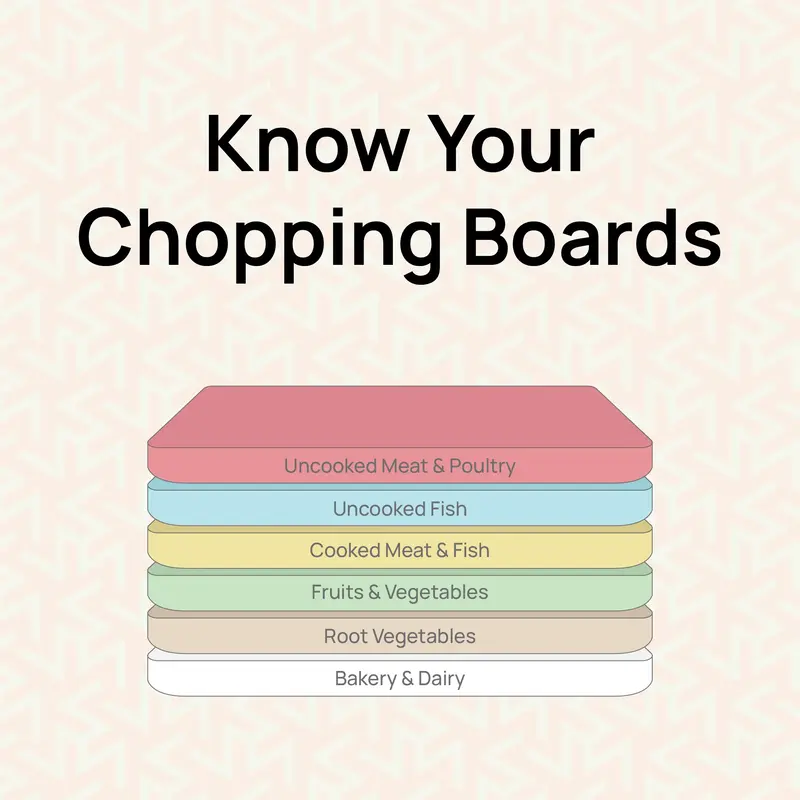
Providing safe and hygienic food is a top priority in the food industry. Customers trust food manufacturers and restaurants to meet food safety standards. To maintain this trust, kitchen hazards must be controlled to prevent contamination and customer harm. One such hazard control is using a colour-coded chopping board system in the kitchen so that low and high-risk food types do not mix. Assigning different colours to chopping boards for different food types is a good kitchen practice that will help prevent cross-contamination. Using colour-coded boards is also a HACCP practice for hazard analysis and contamination control.Understanding Different Colour-Coded Chopping BoardsNo law says you have to use specific-coloured chopping boards in kitchens. However, it is wise to follow the common practice of colour-coding to prevent microbial contamination. For kitchen safety, chefs and cooks must know what each chopping board colour means.What Colour Chopping Board Should Be Used?Keeping a red-coloured chopping board in sight is advisable if you regularly deal with raw meat. For cooked meat, use a yellow chopping board. A white chopping board is typically used for dairy food and bread, while a blue one is used for handling raw fish. The brown board is used for unwashed vegetables, while green is used for fresh fruits and vegetables. .second-cta-block .main-heading { font-weight: bold; font-size: 22px; } .second-cta-block .book-now { background: #DF3D52; color: #FFFFFF !important; border-radius: 8px; } .second-cta-block .second-heading { font-size: 17px; } .second-cta-block .card { border: 0 !important; } .second-cta-block .card-body { border: 1px solid #909090; box-shadow: rgba(0, 0, 0, 0.16) 0px 1px 4px; border-top-right-radius: 100px; border-bottom-right-radius: 100px; background: #fdf9ee; } .second-cta-block .image-wrapper { height: 330px; position: absolute; right: -60px; top: calc(50% - 210px); /* Center the image vertically */ } .second-cta-block .image-wrapper img { height: 100%; } .second-cta-block .trustpilot-widget { width: 256px; } .cta-heading-section { width: 75%; } @media screen and (max-width:991px) { .second-cta-block { padding-top: 100px; } .second-cta-block .card-body { border: 1px solid #909090; box-shadow: rgba(0, 0, 0, 0.16) 0px 1px 4px; border-radius: 19px; border-radius: 14px; background: #fdf9ee; } .cta-heading-section { width: 100%; padding-top: 50px; } .second-cta-block .image-wrapper { height: 270px; right: 0; position: absolute; left: calc(50% - 90px); top: calc(50% - 315px); } } Get Online Food Safety Courses Food Hygiene And Safety Check the Course Rated Excellent on major review sites Red - Raw MeatsRed chopping boards are used for raw meat and poultry. Given their high risk of causing foodborne illnesses, reserving these boards solely for handling uncooked meats is essential.The red chopping board can cook, marinate, or debone raw food. However, use it solely for raw meat to prevent cross-contamination between raw and ready-to-eat food.Yellow - Cooked Meat and FishYellow chopping boards are used strictly for cooked meat and fish. Using them for raw animal products compromises food safety standards. The yellow board is specifically designed for slicing or deboning cooked meats:beef jointroasted chickenham, salami, and turkey slicescooked salmoncooked troutWhite - Dairy and Baked GoodsWhite chopping boards serve a dual purpose, catering to dairy and bakery items. From slicing cake to grating cheese, they carry out many tasks. However, washing the board between uses is essential due to the risk of cross-contact contamination caused by potential allergens. Having separate boards for dairy and baked goods is an option, but it may not be practical. Therefore, it is advisable to reserve white chopping boards for non-allergenic food items to confirm safety.Blue - Raw FishBlue chopping boards are used for raw fish. Given the high risk associated with raw seafood, limit the use of blue boards solely to handling uncooked fish. Thoroughly clean the chopping board daily to maintain hygiene standards.Therefore, when it comes to raw fish, turn to the blue chopping board. Examples include:Raw codRaw haddockRaw tunaRaw salmonRaw prawnsRaw musselsBrown - Root VegetablesBrown chopping boards are intended for preparing uncooked root vegetables like potatoes and carrots. These vegetables often retain traces of soil, making them prone to microbial contamination. By using brown boards exclusively for this purpose, cross-contamination risks are minimised.Green - Washed Fruits and VegetablesAs the colour suggests, a green chopping board is used to wash fruits and salad vegetables. It can also be used to cut up fruit, such as apples and bananas, and salad items like tomatoes, peppers, and cucumbers. Do not use the green chopping board for unwashed fruits and vegetables carrying soil; use the brown board instead.Purple - Allergen-Free FoodPurple boards are dedicated to "free-from" food, especially for people suffering from allergies or food intolerances. Using a separate board for these food helps prevent cross-contamination of allergens for the safety of sensitive individuals. As allergens pose significant risks to certain individuals, it is important to utilise purple boards correctly in the kitchen.Food such as gluten-free bread relies on the purple chopping board. This practice is smart and prevents allergic reactions. Avoid cross-contact to keep everyone safe from allergens.Promoting AwarenessA prominent poster of the colour-coded chopping boards in the kitchen reminds the staff to follow the designated colours during food preparation. This can uphold food safety standards and minimise the risk of cross-contamination.Why Do We Use Different Chopping BoardsDifferent-coloured chopping boards in kitchens help keep high-risk food separate. They also reduce the chance of cross-contamination and cross-contact among different food types. Chefs can work faster because they instantly know which board to use for each food. We can use the same colour system to make knives extra safe.Put up a poster in the kitchen to remind everyone which colour board to use for each type of food. It is an easy way to keep things safe when you're cooking.Be Consistent with Colour-Coded Chopping BoardsAssign specific colours for different food groups, like red for raw meat and yellow for cooked meat. Maintain consistency to prevent cross-contamination. Avoid mixing colours for different food groups to confirm kitchen safety.The Debate about Using Plastic Chopping Boards for SafetyWhen chefs choose chopping boards, they consider more than just colours. The material of the board matters, too. The two main options are plastic and wood.Many people choose plastic chopping boards when handling risky food like raw meat. They believe plastic is safer and easier to clean.However, experts do not all agree on this. Some say plastic boards are better for hygiene because they do not soak up liquids and are easier to clean.Knowing When to Replace Your Chopping BoardFor food safety, it is important to frequently change your chopping boards. Even with colour coding, old and worn boards can pose risks.Deep Knife Scratches: While knife marks are standard, many deep scratches provide a breeding ground for bacteria. If you spot many deep cuts, it is time to replace the board.Uneven Surface: A board no longer sits flat on your counter is unsafe. Constant cleaning can cause warping, making it wobble during use, increasing the risk of accidents.Accidental Use of the Wrong Coloured Board: If someone mistakenly uses the wrong board for a task. For instance, if you cut raw meat on a board meant for vegetables, replace that board for safety standards.ConclusionColour-coded chopping boards help keep your food and customers safe by minimising microbial cross-contamination and allergenic cross-contact risk. Using separate chopping boards for different food types is a good kitchen practice that controls contamination. Be consistent with your specific chopping boards, and discard those with prominent cracks and damage.
What is the Difference between Food Hygiene and Food Safety
Food safety and hygiene cannot be used interchangeably as they have key differences in meaning and practice. Food hygiene is based on sanitation and cleanliness practices. Food safety is a holistic guide that upholds consumer protection from foodborne hazards. Food hygiene can be considered as part of the complete food safety procedure.The Main Difference between Food Hygiene and Food SafetyFood hygiene confirms product value and quality. It deals with measures that maintain equipment and facilities cleanliness and proper hygiene. For hygienic food production, washing hands and sanitising surfaces is important. Food hygiene practices prevent bacterial contamination and promote food safety.On the other hand, food safety is largely concerned with consumer welfare and protecting food from physical, chemical, and microbial contaminants. It involves complete food supply chain safety by following good manufacturing and storage practices. Examples include cooking and storing food at suitable temperatures and protecting food from cross-contamination.Food Safety & Food Hygiene with ExamplesPrimary Concern of Food Safety PracticesThe primary concern of food safety practices is the prevention of contamination at all stages of the food supply chain.Example: In agricultural food production, farmers implement Good Agricultural Practices (GAPs) to minimise the risk of contamination. This includes proper irrigation practices, pest management strategies, and worker hygiene protocols.Primary Concern of Food Hygiene PracticesFood hygiene practices aim to prevent microbial contamination. They help keep the environment clean in food-handling areas, such as kitchens, restaurants, and food-processing facilities. This involves maintaining the cleanliness of surfaces, equipment and employees.Example: In a restaurant kitchen, food hygiene practices may include regular handwashing by food handlers. They also include proper cleaning and sanitising of food contact surfaces.Target Hazards in Food Safety PracticesThe main types of hazards encountered in food safety are microbiological, chemical, and physical. Microbiological hazards refer to harmful bacteria, viruses, parasites, and fungi that can contaminate food and cause illness.Some of the chemical hazards include cleaning agents, food additives, and pesticides. Physical hazards are any foreign object, such as glass, metal, or plastic, that may accidentally enter food products.Example: A microbiological hazard could be the presence of Salmonella bacteria in raw poultry, which can cause food poisoning if not properly cooked. These chemical hazards can be the pesticides left on fruits and vegetables. Pieces of broken glass in a salsa jar could be physical hazards.Target Hazard of Food Hygiene PracticesFood hygiene measures are specifically aimed at microbiological food contamination that may lead to foodborne diseases. This requires maintaining strict hygiene practices and sanitation standards to reduce the risk of contamination.Example: Pest control measures are implemented to prevent food contamination by insects or rodents, which can act as microorganism carriers.For more information, visit our blog article �Four Common Types of Food Contamination�Standard Regulation of Food Safety PracticesGovernments and international organisations set rules and standards to keep food safe and protect people�s health. These rules include food labelling, hygiene practices, and inspection standards.Example: The Food Standards Agency (FSA) is responsible for food safety and hygiene in England, Wales and Northern Ireland.Standard Regulation of Food Hygiene PracticesLocal health departments and municipal governments impose regulations and standards for food hygiene practices within their jurisdictions. These regulations may include requirements for food handler training, facility inspections, and pest control measures.Example: Health inspectors conduct routine inspections of food establishments to oversee compliance with hygiene regulations. They can check food handling procedures, cleanliness facilities and storage of food products. Key Food Safety MeasuresKey measures of food safety include cooking foods to appropriate temperatures to kill harmful bacteria, conducting hazard analysis, and testing food products for contaminants.Example: The Hazard Analysis and Critical Control Points (HACCP) system is a preventive approach food businesses use to identify and address potential hazards. This involves conducting a hazard analysis, establishing critical control points (CCPs), and implementing control measures.Key Food Hygiene MeasuresKey measures for maintaining food hygiene include personal hygiene practices among food handlers, such as proper cleaning and sanitation of equipment and facilities. Pest control management is also a step towards food hygiene.Example:�Food handlers must wash their hands frequently, especially after handling raw meat or using the restroom, to prevent the spread of bacteria.Food preparation equipment is washed and sanitised on a regular basis to eliminate food residue or microbial contamination.Sealing cracks and crevices is done to prevent the entry and spread of pests carrying microbes in food-handling areas. .second-cta-block .main-heading { font-weight: bold; font-size: 22px; } .second-cta-block .book-now { background: #DF3D52; color: #FFFFFF !important; border-radius: 8px; } .second-cta-block .second-heading { font-size: 17px; } .second-cta-block .card { border: 0 !important; } .second-cta-block .card-body { border: 1px solid #909090; box-shadow: rgba(0, 0, 0, 0.16) 0px 1px 4px; border-top-right-radius: 100px; border-bottom-right-radius: 100px; background: #fdf9ee; } .second-cta-block .image-wrapper { height: 330px; position: absolute; right: -60px; top: calc(50% - 210px); /* Center the image vertically */ } .second-cta-block .image-wrapper img { height: 100%; } .second-cta-block .trustpilot-widget { width: 256px; } .cta-heading-section { width: 75%; } @media screen and (max-width:991px) { .second-cta-block { padding-top: 100px; } .second-cta-block .card-body { border: 1px solid #909090; box-shadow: rgba(0, 0, 0, 0.16) 0px 1px 4px; border-radius: 19px; border-radius: 14px; background: #fdf9ee; } .cta-heading-section { width: 100%; padding-top: 50px; } .second-cta-block .image-wrapper { height: 270px; right: 0; position: absolute; left: calc(50% - 90px); top: calc(50% - 315px); } } Get Online Food Safety Courses Food Hygiene And Safety Check the Course Rated Excellent on major review sites ConclusionWhile food safety and hygiene are essential aspects of food quality and safety, they cannot be used interchangeably. Food hygiene is primarily concerned with the cleanliness and sanitation of the food handling environment to avoid the contamination of food by microbes. Food safety, on the other hand, is a broader term that focuses on protecting consumers from harmful contaminants and foodborne illnesses throughout the entire food supply chain.
What is the Kitchen Brigade System
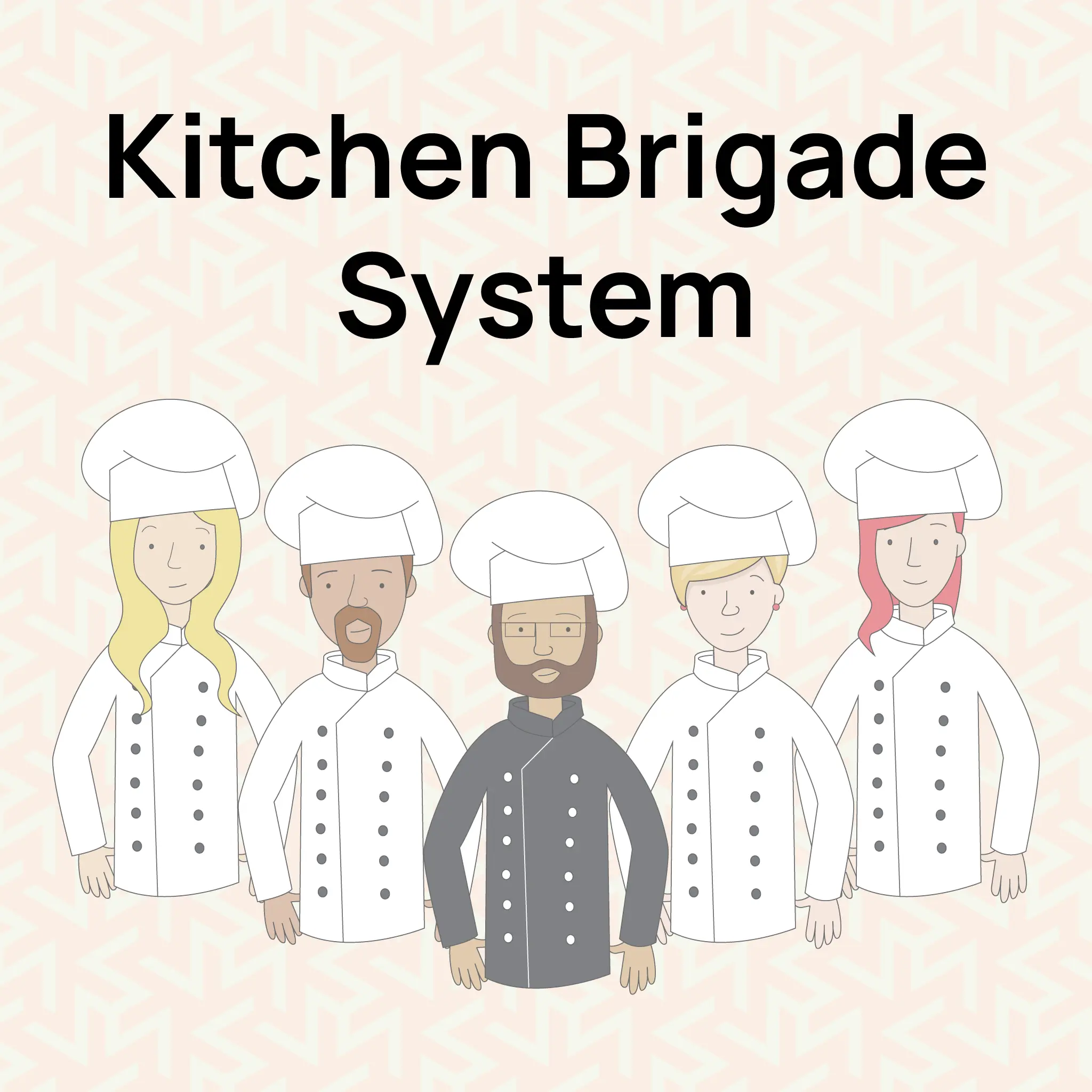
There is a system called the Brigade de Cuisine in many professional kitchens today. It is a fancy French way of saying there is a specific order to how things are done in the kitchen.What's the Kitchen Brigade System?The kitchen brigade system, or "brigade de cuisine", organises the people who work in a restaurant kitchen so that everything runs smoothly. Each person has a specific job, which helps the kitchen work well.In a big kitchen, there are many different jobs, like the boss chef (called the executive chef) and the assistant boss (sous chef). Other chefs (line cooks) look after different parts of the cooking.�For example, the chef in charge of making soups is the potager. Another one for seafood dishes is the poissonnier. For desserts, the chef is called the p�tissier.The kitchen brigade idea started in fancy restaurants, but even fast-food places use a simpler version. In fast-food kitchens, there are stations for frying, grilling, and putting meals together. Cooks are hired to work at these stations and keep things running smoothly.The Birth of the Kitchen HierarchyGeorges Auguste Escoffier was a clever chef who devised a way to organise kitchen work like an army. In the 1800s, he used his experience from the French military to set up a system in hotel kitchens. The aim was to keep things running smoothly and avoid chaos.�Escoffier created a way to organise the kitchen staff. He gave each person a specific job to do. As time passed, kitchens got smaller, and wages went up. Escoffier's system could still be adapted to fit any kitchen. .second-cta-block .main-heading { font-weight: bold; font-size: 22px; } .second-cta-block .book-now { background: #DF3D52; color: #FFFFFF !important; border-radius: 8px; } .second-cta-block .second-heading { font-size: 17px; } .second-cta-block .card { border: 0 !important; } .second-cta-block .card-body { border: 1px solid #909090; box-shadow: rgba(0, 0, 0, 0.16) 0px 1px 4px; border-top-right-radius: 100px; border-bottom-right-radius: 100px; background: #fdf9ee; } .second-cta-block .image-wrapper { height: 330px; position: absolute; right: -60px; top: calc(50% - 210px); /* Center the image vertically */ } .second-cta-block .image-wrapper img { height: 100%; } .second-cta-block .trustpilot-widget { width: 256px; } .cta-heading-section { width: 75%; } @media screen and (max-width:991px) { .second-cta-block { padding-top: 100px; } .second-cta-block .card-body { border: 1px solid #909090; box-shadow: rgba(0, 0, 0, 0.16) 0px 1px 4px; border-radius: 19px; border-radius: 14px; background: #fdf9ee; } .cta-heading-section { width: 100%; padding-top: 50px; } .second-cta-block .image-wrapper { height: 270px; right: 0; position: absolute; left: calc(50% - 90px); top: calc(50% - 315px); } } Get Online Food Safety Courses Food Hygiene And Safety Check the Course Rated Excellent on major review sites The 'Mother' Sauces�Escoffier also created five important sauces, the starting points for many others. These sauces are b�chamel, velout�, espagnole, hollandaise, and tomato. They are handy in cooking, and each has special uses. Making them is easy, with simple ingredients like flour, butter, and some liquid.Chef hierarchy in the kitchenJust like an army has a general at the top, a restaurant kitchen has an executive chef as the big boss. According to the kitchen brigade system, the next in line is the chef de cuisine. Sometimes, a restaurant might have one or the other, not both. Right under the chef de cuisine is the sous chef (also known as the sous chef de cuisine).Under the sous chef are the line cooks, also called chefs de partie. They are in charge of different parts of the kitchen, called stations. Some stations might have more than one chef. For instance, the pastry section might have a pastry chef, a baker, and someone who makes frozen desserts. The brigade is completed by junior chefs known as commis chefs.The Kitchen Hierarchy Explained�The kitchen hierarchy, the Brigade de Cuisine, is like a team structure in a restaurant kitchen. Each team member has a particular job that helps the kitchen run smoothly.Here are the leading kitchen position roles:Executive Chef: The big boss of the kitchen. They handle the management side and only sometimes cook directly.Chef de Cuisine (Head Chef): This is like the boss of cooking. They manage the whole kitchen, from staff to costs, and work closely with the restaurant manager and suppliers.Sous Chef (Deputy Chef): They help the head chef and often step in when needed. They're hands-on with the cooking.Chef de Partie (Station Chef): These are the specialist cooks. Each one looks after a different kitchen part, making sure everything is cooked perfectly.There are various types of station chefs.�Sauce Chef: Makes sauces and gravies.Butcher Chef: Prepares meat and poultry.Fish Chef: Deals with fish and seafood.Roast Chef: Cooks roast meats.Fry Chef: Specialises in fried food.Grill Chef: The master of grilling.Pantry Chef: Prepares cold dishes like salads.Pastry Chef: Makes desserts and pastries.Roundsman: Fills in wherever needed.Commis Chef (Junior Chef): They learn from the station chefs and are usually still training.Kitchen Porter: They help with basic kitchen tasks and cleaning.Dishwasher: Washes all the dishes and equipment used in cooking.Waiter/Waitress: These folks work in the dining area, serving customers and letting the kitchen know if there are any issues with the food.The following table summarises different kitchen positions and their roles.Each role is important for keeping the kitchen running smoothly and ensuring customers get tasty food served just right.ConclusionIn conclusion, the Brigade de Cuisine, or kitchen hierarchy, is like an organised team structure in restaurant kitchens. It confirms that every task is handled efficiently, just like an army operates. This system, introduced by Georges Auguste Escoffier, assigns specific roles to each kitchen staff member, from the top boss, the executive chef, down to the line cooks and junior chefs.Even in fast-food kitchens, a simplified version of this system helps maintain order. Escoffier's legacy extends beyond just organisation, he also introduced the 'Mother' sauces, which are important foundations for many dishes. Whether in a high-end restaurant or a fast-food joint, the kitchen brigade system allows everything to run smoothly, resulting in delicious meals served just right.