

Top European Hospitality Schools Offering Strategic Business Training
Aspiring leaders in hospitality often look to European institutions that combine traditional service excellence with sharp business acumen. This list highlights the best European hospitality schools for strategic business training, featuring SHMS and other top-rated programs renowned for blending operational expertise with strategic thinking.The modern hospitality industry demands more than exceptional service delivery it requires visionary leaders who can navigate complex global markets, drive digital transformation, and create sustainable business models. European hospitality schools have long recognized this evolution, developing programs that merge time-honored hospitality traditions with cutting-edge business strategy education.What Sets European Hospitality Schools Apart in Strategic Business TrainingEuropean hospitality schools strategic business training programs distinguish themselves through their emphasis on real-world application, international perspective, and industry integration. These institutions leverage their proximity to global hospitality markets, luxury brands, and diverse cultural environments to provide students with authentic business challenges and cross-cultural leadership experiences.The most effective programs combine rigorous academic curricula with hands-on operational training, allowing students to understand both the service foundation and strategic imperatives of hospitality businesses. Students gain exposure to revenue management, digital marketing, sustainable operations, and international expansion strategies while developing the soft skills essential for leading multicultural teams.Top 6 European Hospitality Schools for Strategic Business Leadership1. Swiss Hotel Management School (SHMS) MA in International Hospitality Business Management Best Swiss Excellence with Strategic IntegrationSHMS ranks #3 in the 2025 QS World University Rankings for Hospitality and Leisure Management, making it the highest-ranked conventional hotel management school globally. The one-year MA program offers specializations in Hotel Management, Events Management, or Luxury Brand Management, with all tracks emphasizing strategic business applications and hands-on learning in authentic Swiss hospitality environments. Students learn in the historic Caux Palace, a Belle poque palace hotel that has hosted royalty and international dignitaries, providing an unparalleled setting for understanding luxury hospitality operations. The program combines traditional Swiss hospitality excellence with modern business strategy, preparing graduates for senior international positions through intensive practical projects and industry collaborations. SHMS maintains the #2 world ranking for employer reputation, reflecting the exceptional regard employers have for graduates' business acumen and operational expertise.2. EHL Hospitality Business School Master's in Global Hospitality Business Best Global Strategic PerspectiveEHL has held the #1 ranking in QS World University Rankings for Hospitality and Leisure Management for seven consecutive years, establishing it as the definitive leader in hospitality education worldwide. The Master's in Global Hospitality Business offers a transformative 16-month program spanning three continents with semesters in Lausanne (Switzerland), Hong Kong (Polytechnic University), and Houston (University of Houston Conrad N. Hilton College). This unique global approach provides students with strategic insights into diverse hospitality markets while developing cultural intelligence and international business strategy skills. The program features real-world business projects with industry partners, executive coaching for leadership development, and access to EHL's powerful network of 30,000 alumni in 150 countries. Students exploring hospitality business strategy development will find this program's global perspective invaluable for understanding how cultural contexts influence strategic decision-making.3. Glion Institute of Higher Education MSc in International Hospitality Business Leadership Best Leadership Development FocusGlion ranks #6 globally in QS World University Rankings for Hospitality and Leisure Management and holds a #3 ranking for employer reputation, reflecting the high regard industry leaders have for Glion graduates' business leadership capabilities. The MSc in International Hospitality Business Leadership is available at campuses in Switzerland and London, offering students flexibility while maintaining consistent academic excellence. The program specifically distinguishes between management and leadership, dedicating separate semesters to each concept before culminating in a Business Research Project or professional internship with applied research component. Founded in 1962, Glion has established itself among the world's finest institutions specializing in hospitality and luxury management, with 98% of job-seeking students receiving employment offers on graduation day. The program's emphasis on practical business application and soft skills development produces graduates who combine operational expertise with strategic vision.4. Les Roches Graduate MBA/Master's Programs in Hospitality Management Best Employer RecognitionLes Roches has built an exceptional reputation among hospitality employers worldwide, with programs offered in Switzerland and Spain that focus on strategic hospitality management and industry transformation. The school's MBA and Master's programs center on developing leaders who can drive organizational change and implement innovative business strategies in dynamic hospitality environments. Les Roches emphasizes experiential learning through real-world business challenges, industry consulting projects, and entrepreneurship initiatives that prepare graduates for executive roles. The institution's strong employer relationships provide students with direct access to strategic management opportunities and mentorship from industry leaders who are actively shaping the future of hospitality business.5. Hotelschool The Hague MBA in International Hospitality Management Best Applied Transformation TrainingLocated in the Netherlands, Hotelschool The Hague offers a practice-oriented MBA focused on hotel transformation and strategic management, earning recognition as one of Europe's top institutions for applied hospitality business education. The program emphasizes strategic thinking in hospitality transformation, preparing leaders to navigate industry disruption, implement digital innovations, and create sustainable business models. Students engage with real hospitality businesses facing transformation challenges, developing practical solutions that demonstrate strategic thinking and change management capabilities. The school's location in the Netherlands provides access to diverse European markets and international business environments, enhancing students' understanding of global hospitality strategy.6. European Hospitality Management MOOCs and Case Study Consortium Best Open-Source Strategic LearningThis collaborative platform offers free access to strategic business modules and case studies curated from leading European hospitality schools, providing democratized access to high-quality strategic education. The consortium features contributions from renowned institutions across Europe, covering topics such as revenue optimization, digital transformation, sustainable hospitality practices, and international expansion strategies. Students can access virtual workshops, peer collaboration opportunities, and mentorship from established hospitality executives without the financial barriers of traditional graduate programs. While not offering formal degrees, the platform serves as an excellent supplement to formal education or as professional development for working hospitality managers seeking to enhance their strategic thinking capabilities.Strategic Career Advantages of European Hospitality Business EducationGraduates from these European hospitality schools strategic business training programs consistently achieve leadership positions across diverse industries, with many transitioning beyond traditional hospitality into luxury goods, aviation, finance, and consulting. The combination of service excellence training and strategic business education creates versatile professionals who understand both operational excellence and strategic vision.European programs provide particular advantages in developing cultural intelligence and international business perspective, essential skills as hospitality companies expand globally and serve increasingly diverse customer bases. The emphasis on sustainability, innovation, and digital transformation in European curricula also positions graduates to lead industry evolution.Many graduates successfully launch their own hospitality ventures, while others advance rapidly to executive positions in established hotel groups, luxury brands, and related service industries. The strong alumni networks from these institutions provide ongoing mentorship and business opportunities throughout graduates' careers.Choosing Your Path: Strategic Considerations for European Hospitality EducationSelecting the right European hospitality school for strategic business training requires careful evaluation of your career objectives, learning preferences, and professional circumstances. Consider factors such as program format, geographic focus, industry specializations, and post-graduation support when evaluating options.The institutions highlighted here offer proven approaches to developing strategic leaders who can drive business success in complex, dynamic environments. From SHMS's Swiss excellence to EHL's global perspective and Glion's leadership focus, each provides unique advantages for different career trajectories.Take the next step in your hospitality career by researching these programs thoroughly and connecting with admissions teams to understand how their strategic business curricula align with your leadership aspirations. For additional guidance on hospitality leadership development strategies, explore resources that can help you maximize the return on your educational investment and position yourself for strategic leadership roles in the evolving hospitality industry.

How Long Does Beef Last in the Fridge?
Ever stood in front of your fridge wondering, Is this beef still safe to eat?Whether it's leftovers from Sunday roast or raw mince from yesterday's shop, knowing how long beef lasts in the fridge (or freezer) can be confusing and potentially risky if you get it wrong.In this guide, we'll walk you through how to store beef correctly, how long it lasts depending on the type and condition, safe defrosting practices, how to spot signs of spoilage, and even UK food safety laws you need to know, especially if you're running a food business.Let's make food safety simple and your fridge, safer.How to Store Beef in the Fridge or FreezerStoring beef properly is crucial for maintaining its freshness, preventing foodborne illness, and minimising waste. Whether it's raw, cooked, minced, or sliced, how you pack and store beef (in your fridge or freezer) plays a crucial role in determining how long it will last.Choose the Right Packaging: Airtight is EssentialStore beef in airtight containers or sealed freezer-safe bags to prevent contamination and moisture loss.Wrap raw cuts in cling film and foil, or better yet, vacuum seal them if possible.Avoid leaving beef in supermarket packaging for long-term storage. Transfer to proper containers once you're home.Set the Right TemperatureYour fridge should always be kept at 5C or below, and your freezer at -18C or colder, to stop bacteria from multiplying.Keeping your appliances within these limits helps you avoid entering the Temperature Danger Zone where harmful microbes can grow quickly, as explained in our food safety fridge storage temperature guideline.Store in the Right Place: Raw Below, Cooked AboveRaw beef should always be stored on the bottom shelf, in a leak-proof container, to prevent drips from contaminating other foods.Cooked beef can be placed on upper shelves but must be kept away from raw items at all times to prevent cross-contamination.An organised fridge, with clearly defined zones for raw and cooked foods, is not only safer but also more efficient. If you're unsure how to set it up, our guide on how to organise your fridge offers practical tips for arranging shelves properly and maximising space.Label Before You StoreMark each item with the storage date and note whether it's raw or cooked.This helps track freshness and reduces the risk of consuming spoiled beef or discarding safe food too soon.Portion Before FreezingDivide large packs of beef into smaller portions before freezing to avoid repeatedly defrosting and refreezing.Lay bags flat for faster freezing and to save space.Remove as much air as possible from the packaging to prevent freezer burn.Safe storage starts with small habits, using the proper packaging, setting the correct temperature, and placing beef where it won't contaminate other foods. These steps not only help your food last longer but also reduce waste and protect your health.Want to build a stronger foundation in food hygiene?Start the Level 1 Food Hygiene and Safety Course Perfect for home cooks, kitchen staff, and anyone handling food, this concise online course teaches you how to store, prepare, and serve food safely, including tips for preventing cross-contamination and maintaining a well-organised fridge.How Long Does Beef Last in the Fridge or Freezer?Storing beef safely isn't just about keeping it cold; it's about knowing how long each type can stay fresh without putting your health at risk. From steaks and mince to cooked leftovers, each has its own shelf life in the fridge and freezer.Let's look at how long you can store different types of beef in the fridge and freezer based on UK food safety standards.Beef Storage Chart (UK Guidelines)Type of BeefStorage StyleFridge (? 5C)Freezer (? -18C)Raw steak or roasting jointUncooked cut35 days6 to 12 monthsRaw minced/ground beefUncooked mince1 to 2 days3-4 monthsCooked beef (any type)Leftovers3 to 4 days2 to 3 monthsStews and beef-based mealsMixed dishes3 to 4 days2 to 3 monthsRaw beef sausagesFresh packed1 to 2 days1 to 2 monthsCold cuts/sliced beefDeli-style3 to 5 days (opened)1 to 2 monthsBeef gravy or stockCooked liquids1 to 2 days2 to 3 monthsNow that you've seen the chart, let's understand what it means in practical terms. Not all beef is created equal, mince spoils quicker than steaks, and leftovers have different timelines than raw cuts.Each category also requires different handling to keep it safe in the fridge or freezer.Here's a quick breakdown of why:Whole cuts like steaks and joints have a longer shelf life because they're exposed to less air and bacteria.Minced beef should be treated with urgency. The grinding process increases bacterial exposure, so it's best used within 1 to 2 days.Cooked beef dishes, such as roast beef or bolognese, can be stored in the refrigerator for 3 to 4 days. If you're not sure you'll eat it in that time, freeze it to extend its life.Gravy, stock, or cold cuts may look harmless, but they can spoil quickly. Store them in airtight containers and clearly label the date on each container.Pro Tip: No matter the type, always label and date what you freeze; it's easy to forget when that container was put in.Let's understand how long beef lasts in the fridge with an example for better understanding:Example:Anna, a busy parent, buys beef mince and steaks every Saturday. She keeps the mince in the fridge and uses it for Sunday lasagne. She freezes the steak for next weekend. Leftover cooked beef is placed in labelled containers and eaten for lunch within 3 days, or frozen if not.Meanwhile, James, who runs a catering business, logs every beef delivery and moves anything unused into the deep freeze within 48 hours. This process helps him stay compliant, organised, and waste-free.Whether you are storing food at your home or at a restaurant, understanding the timelines is key to avoiding spoilage and keeping your kitchen safe.Want to dive deeper into food safety?Explore related articles:high-risk foods | food preservation methods | how to cook frozen foodDoes the Type of Beef Cut Affect Fridge Life?Absolutely and more than you might expect.As discussed earlier, whole cuts stay fresh longer thanks to their minimal surface exposure.Here's a quick breakdown:Whole Cuts (e.g. steak, joint): Last longer; fewer exposed surfaces mean slower spoilage.Minced or Ground Beef: Spoils faster due to increased exposure to air and bacteria during processing.Cooked Beef: Shorter life once cooked, even if it started fresh.Sliced Cold Cuts: High risk, especially once opened; they spoil quickly.Tip: When in doubt, opt for vacuum-sealed cuts and store them in the coldest part of your refrigerator.While storage rules apply broadly to all beef, understanding the type of cut can help you fine-tune how long you keep it in your fridge or freezer. Whole cuts last longer than ground or sliced beef, and cooked beef has a much shorter shelf life regardless of the cut.Being aware of these nuances helps you avoid food waste and reduce the risk of spoilageTake charge of food safety in your kitchen.The Level 3 Food Hygiene and Safety Course is designed for supervisors, managers, and owners to build a strong foundation in food hygiene systems and solve day-to-day safety challenges.How to Defrost Beef SafelyWe've just seen how different cuts affect how long beef lasts, but that's not all. Once you're ready to use it, how you defrost your beef is just as crucial for maintaining safety, flavour, and texture. Defrosting incorrectly can undo all the careful storage you've done so far.Here's how to do it right:Safe Defrosting MethodsIn the fridge (best method): Place your beef on a tray at the bottom of the refrigerator to prevent drips from contaminating other food. This slow, controlled method keeps the meat below 5C, which helps prevent the growth of harmful bacteria.In cold water: Submerge the beef in a leak-proof plastic bag in a bowl of cold water. Change the water every 30 minutes to maintain its freezing temperature. Cook immediately after thawing.In the microwave: Use the defrost setting and cook the beef straight away. Be aware that microwave defrosting may partially cook the outer layers, so timing matters. Our guide on how to defrost food in the microwave explains how to do it safely and avoid uneven cooking.Proper defrosting keeps your beef safe to eat, preserves quality, and supports good kitchen hygiene. And if you're handling food in a business setting, knowing the correct methods is essential for staying compliant with UK food safety law.How to Tell if Beef Has Gone BadAfter defrosting, it's essential to check whether the beef is still safe to use, especially if it has been in storage for an extended period. Even when stored or defrosted correctly, beef can still spoil due to improper handling, inadequate packaging, or prolonged storage.Knowing the signs of spoilage helps you avoid food waste, but more importantly, it protects against foodborne illness, whether you're cooking at home or running a kitchen.Look out for these common indicators that your beef is no longer safe to eat:Strange or sour smell: Fresh beef should have a neutral scent. A sour, ammonia-like, or rotten smell means it's spoiled and should be discarded immediately.Slimy or sticky surface: Spoiled beef often develops a slippery film on the surface. This is caused by bacterial growth and is a clear sign that the meat should not be used.Discolouration: Beef naturally darkens slightly with age, especially when exposed to air. But if it turns green, grey, or has unusual patches, it's a red flag.Off taste (in cooked beef): If the flavour is bitter, metallic, or off, it's better to be safe than sorry don't eat it.Note: Microbial contamination isn't always visible. Even if beef looks and smells okay, if it's been stored improperly or past its use-by and best-before dates, it can still be unsafe.Spotting spoiled beef isn't always about what you can see; it's also about how it's been stored, handled, and defrosted. When in doubt, throw it out -- safety comes first.Regular fridge checks and proper labelling go a long way in keeping your kitchen safe.Beef Storage in the UK: Essential GuidelinesNow that you know how to identify spoiled beef, let's talk about prevention. Taking a few simple steps when storing, preparing, and handling beef can significantly extend its shelf life and reduce waste.Label and Date Everything ClearlyWhether you're storing raw steaks or cooked mince, always label with the storage date. Not only does this support FIFO (First In, First Out) rotation, but it's essential for traceability under UK food law, particularly in commercial kitchens.Keep Beef at Safe TemperaturesStore beef in the fridge at 5C or below, and freeze it at -18'C or lower. UK regulations set a legal maximum of 8C for chilled foods, but best practice recommends a lower temperature to ensure safety.Use Airtight or Vacuum-Sealed ContainersPackaging beef in sealed, air-tight containers or vacuum bags prevents exposure to air and slows bacterial growth. This protects quality and meets hygiene standards that help prevent contamination.Store Raw Beef on the Bottom ShelfIn both home and professional settings, placing raw meat at the bottom of the fridge stops juices from dripping onto ready-to-eat foods, a key step in avoiding food contamination, which is strictly regulated under UK food safety law.Avoid Overpacking the Fridge or FreezerProper airflow ensures the entire unit maintains safe temperatures. Overcrowding can lead to uneven cooling and breach legal storage limits.Follow Use-By Dates They're Legally BindingUnlike best-before dates, use-by dates are enforceable. Selling, serving, or even consuming beef past this point is illegal under the Food Safety and Hygiene (England) Regulations 2013..Ensure Staff Are Trained in Food Storage PracticesFor food businesses, having trained staff is not just good sense, it's a requirement under Regulation (EC) No. 852/2004. Even basic storage mishandling can lead to legal action if safety is compromised.For a deeper dive into your responsibilities as a food business, visit our guide to the Food Safety Act 1990.Combining good habits with legal knowledge is the key to safe beef storage. Whether you're labelling meat at home or running a catering operation, the rules are there to protect health and ensure accountability. Doing things properly means reducing risk and doing right by your customersConclusion:Proper beef storage is about more than just keeping your food fresh; it's a vital step in protecting yourself, your family, or your customers from foodborne illness. Understanding the differences in shelf life between cuts, following safe defrosting practices, recognising spoilage signs, and complying with UK food safety laws all contribute to safer kitchens at home and in business.By combining simple storage habits with clear labelling and correct temperatures, you can significantly reduce waste and keep your food safe to enjoy. Whether you're cooking dinner or running a busy catering business, these practical steps build a foundation of food safety everyone can rely on.So, how long does beef last in the fridge? Now you know, and with the right approach, you can store your beef safely and confidently every time.Boost your food safety skills with expert training.Explore a wide range of accredited food hygiene and safety courses designed for every level, from home cooks to food business professionals.Find the right course for you at Hurak!!FAQHow long does beef last in the fridge?Beef can last between 1 to 5 days in the fridge, depending on the cut and whether it's raw or cooked. For example, raw steaks and roasting joints usually stay fresh for 3 to 5 days, while minced beef should be used within 1 to 2 days. Cooked beef leftovers typically last 3 to 4 days in the fridge. Always store beef at or below 5C and label it with the date to keep track of freshness.How long can you keep chicken in the freezer?Chicken can be safely stored in the freezer for varying lengths depending on the cut and whether it's cooked or raw. Raw whole chicken can last up to 12 months in the freezer, while raw chicken pieces are best used within 9 months. Cooked chicken typically lasts 2 to 6 months in the refrigerator. Always freeze chicken at -18C or below and use airtight packaging to maintain quality.What's the best way to store beef and chicken to maximise their shelf life?Use airtight containers or vacuum-sealed bags to store both beef and chicken. Label your packages with the storage date. Keep raw meat on the bottom shelf of your refrigerator to prevent drips, and ensure the temperature stays at 5C or lower. For freezing, wrap meat tightly to avoid freezer burn and portion it for easy thawing.Can you refreeze beef or chicken after thawing?Its safe to refreeze beef or chicken only if it has been thawed in the fridge and hasn't been left out at room temperature. Refreezing may affect texture and flavour, so it's best to freeze in smaller portions to avoid the need for multiple thawing cycles.


7 Top BSc Tourism Management Programs for Career-Focused Learning in 2025
The modern tourism industry demands professionals who understand both strategic business management and operational excellence. A Bachelor of Science in Tourism Management provides the comprehensive foundation needed to excel in this dynamic global sector, whether you're planning to lead luxury resort operations, develop sustainable tourism initiatives, or launch innovative travel experiences.Just as professional training providers like Hurak focus on career-ready education across various industries, top tourism management programs emphasize practical skills alongside academic rigor. The best BSc Tourism Management degrees prepare graduates for immediate impact in roles spanning destination management, hospitality operations, travel technology, and tourism entrepreneurship.What to Look for in the Best BSc Tourism Management ProgramsThe most effective Bachelor of Science in Tourism Management programs combine theoretical knowledge with real-world application. Quality programs feature industry partnerships, internship opportunities, and exposure to authentic tourism operations where students engage with actual guests and stakeholders. The best tourism management degrees also integrate business fundamentals, ensuring graduates understand revenue management, sustainable practices, and global tourism trends alongside operational excellence.Top 8 Best BSc Tourism Management Programs for Career Success1. Csar Ritz Colleges BSc in Hotel and Tourism Management Best Comprehensive TrainingCsar Ritz Colleges Switzerland offers a four-year BSc degree in Hotel and Tourism Management that integrates principles of American entrepreneurship with Swiss hospitality practices, featuring a top-5 global QS ranking in Hospitality & Leisure Management for 2025. The hotel business management program combines academic excellence with practical experience through two mandatory internships and partnerships with luxury establishments worldwide. With federal accreditation by the Swiss Accreditation Council as a University of Applied Sciences Institute, students receive internationally recognized qualifications. The curriculum emphasizes sustainable tourism, destination management, and strategic business planning, preparing graduates for leadership roles in the global tourism sector.2. EHL Hospitality Business School Top-Rated Elite Tourism EducationEHL Hospitality Business School was ranked number one by the QS World University Ranking for Hospitality and Leisure Management for the seventh consecutive year in 2025. Their bachelor's program combines advanced tourism knowledge with real-world experience through 25 hands-on workshops and two six-month internships. EHL operates student-run establishments including the Michelin-starred Berceau des Sens restaurant, providing authentic learning environments. The program covers international tourism development, destination marketing, and sustainable travel practices essential for modern tourism professionals.3. Les Roches Global Hospitality Education Best Real-Life Tourism ImmersionLes Roches undergraduates experience comprehensive tourism operations through rotational assignments and international placement opportunities. This program offers authentic work experience across tourism spectrum, from destination management to guest services coordination. Students gain practical experience in every aspect of tourism operations, from travel planning to customer experience design. The curriculum emphasizes global tourism trends, cultural awareness, and operational management skills essential for tourism leadership roles.4. HIM Business School Best Complementary Business FoundationHIM offers tourism-focused BBA programs with practical modules that complement business skills essential for tourism entrepreneurship. This program provides strong business grounding for tourism leaders, focusing on strategic planning, financial management, and operational efficiency critical for travel and tourism ventures. Students learn to approach tourism operations from an executive perspective, understanding market analysis, destination development, and tourism policy implications.5. Swiss Professional Hospitality Programs Top-Rated Practical Tourism EducationThese intensive programs deliver practical tourism management training with contemporary approaches that prepare graduates for exceptional guest experiences. The curriculum emphasizes real-world application of tourism management skills within broader industry contexts, ensuring students understand how tourism excellence contributes to regional economic development and sustainable travel practices. Programs focus on destination competitiveness, visitor experience management, and tourism technology integration.6. International Tourism Partnerships Best Global ExposureThrough strategic alliances with tourism boards and travel companies worldwide, students access international tourism training opportunities that expose them to diverse destinations and market conditions. These partnerships provide authentic learning environments where students can apply destination management skills while building professional networks across the global tourism industry. Students gain exposure to emerging tourism markets, sustainable tourism practices, and cross-cultural tourism management approaches.7. Open-Source Tourism Studies Resources Top-Rated Independent Learning MaterialsComprehensive tourism research and case studies supplement formal training with self-guided learning opportunities. These resources include tourism economics materials, destination marketing case studies, and sustainable tourism frameworks that enhance students' theoretical understanding of tourism management principles. Materials cover tourism policy analysis, visitor behavior research, and innovative destination development strategies essential for modern tourism professionals.Developing strong analytical and communication skills remains essential in tourism management roles. The competencies required for effective professional development mirror many skills needed in tourism management, including stakeholder engagement, problem-solving, and adaptability to changing market conditions.Launch Your Tourism Management CareerBachelor of Science in Tourism Management programs provide the foundation for exceptional careers in destination management, travel operations, and tourism development. Many graduates later apply their Tourism Management expertise by working with established tour operators and industry leaders, gaining hands-on experience in real-world tourism operations. These programs combine academic rigor with practical experience, ensuring graduates possess both theoretical knowledge and operational expertise needed to excel in the dynamic tourism industry.Students develop skills that extend beyond traditional tourism roles learning crisis management, sustainable practices, digital marketing, and international business development. These competencies prove invaluable whether graduates pursue roles in national tourism organizations, international travel companies, or launch innovative tourism ventures addressing emerging market needs.Start Your Journey in Tourism ExcellenceReady to explore comprehensive tourism management education that prepares you for leadership roles in the global travel industry? Top BSc Tourism Management programs offer unmatched learning opportunities combining Swiss academic excellence with practical industry exposure. With internationally recognized accreditation, industry partnerships, and curricula designed by tourism leaders, you'll graduate with the knowledge and professional network needed for immediate career impact.Consider exploring professional training opportunities that complement formal education, as continuous learning remains essential for success in the evolving tourism sector. Contact admissions teams at leading tourism management schools to learn more about their Bachelor of Science programs and take the first step toward your future in tourism leadership.

Top 5 Civil Engineering Graduate Programs with Real-World Training
The search for civil engineering graduate programs with real-world training leads many students to programs like UND Online's civil engineering master's. Ranked among the best civil engineering grad programs online, these five institutions stand out for blending online flexibility with immersive, industry-aligned experiences that prepare graduates for immediate impact in their careers.Modern engineering challenges require more than theoretical knowledge; they demand practical skills, project management experience, and hands-on problem-solving abilities. The programs featured here recognize this reality and have developed curricula that bridge the gap between academic learning and professional practice through design projects, virtual labs, and industry partnerships.What Defines Real-World Training in Online Civil Engineering ProgramsThe most effective civil engineering graduate programs with real-world training incorporate several key elements that distinguish them from traditional theoretical programs. These include comprehensive design capstone projects that mirror actual engineering challenges, virtual laboratory simulations that provide hands-on experience with industry-standard software, and partnerships with engineering firms and top software development companies that offer practical applications of classroom concepts.Quality programs also emphasize project management skills, team collaboration, and communication abilities that practicing engineers use daily. Students should look for programs that require the use of professional engineering tools like AutoCAD, advanced modeling software, and project management platforms that they'll encounter in their careers.Top 5 Civil Engineering Graduate Programs for Hands-On Learning1. University of North Dakota (UND) M.S./M.Eng. Civil Engineering (Online) Best Comprehensive Design CapstoneUND's online MS in civil engineering program offers fully online delivery paired with a rigorous design project requirement, immersing students in practical engineering solutions that mirror real-world challenges. The program features specializations in soils-structures, environmental, water resources, and general civil engineering, all with applied training components and industry tools integration. UND consistently ranks among the top online civil engineering programs and has earned recognition as the #1 Best Online College in North Dakota. Students complete a written design project that demonstrates practical skills applicable in professional settings, while the flexible asynchronous format allows working professionals to balance career and education demands. The program requires 30 credit hours and can typically be completed in under two years.2. Purdue University Online M.S. Civil Engineering Best Virtual Labs and Applied ResearchPurdue's online civil engineering master's program ranks #2 nationally according to U.S. News & World Report for five consecutive years (2021-2025), offering three interdisciplinary tracks: Infrastructure Resiliency and Sustainability, Sustainable Water, and Smart Mobility. The program provides innovative virtual labs and hands-on learning modules that allow students to practice engineering concepts in simulated real-world environments. Students benefit from the same faculty, courses, and degree as on-campus students, with no differentiation on official transcripts. The flexible program allows professionals to complete coursework while maintaining full-time employment, with courses typically offered in one-credit modules that can be combined to meet specific career goals.3. Arizona State University (ASU) Online M.S. Civil, Environmental, and Sustainable Engineering Best Industry IntegrationASU's graduate program emphasizes sustainability as an integrated approach to engineering, connecting students with local, national, and international research efforts in transportation, water resources, and sustainable infrastructure development. The program combines theoretical knowledge with computational and experimental research programs designed to prepare graduates for both professional practice and advanced research roles. Students can pursue thesis or non-thesis options, with the non-thesis track requiring 30 credit hours of coursework focused on practical applications. ASU's extensive industry partnerships provide opportunities for applied research projects and internships that give students direct exposure to professional engineering practice.4. Texas A&M University Online M.S./M.Eng. Civil Engineering Best Field-Forward Learning IntegrationTexas A&M's civil engineering graduate programs offer both Master of Science and Master of Engineering degrees, with the latter specifically designed to prepare students for successful careers in industry and business. The program features nine specialized areas including coastal engineering, construction management, environmental systems, and transportation engineering. Texas A&M ranks #1 in Texas according to U.S. News & World Report's 2025 "Best Online Master's in Engineering Programs," with more than 350 graduate students and 70+ professors creating the largest civil engineering graduate program in the country. The M.Eng. program includes industry-focused coursework and internship opportunities that provide direct professional experience.5. Open-Source Civil Engineering Learning Consortium Best Collaborative ResourcesThis innovative platform represents the future of accessible engineering education, offering free virtual lab modules and civil engineering simulations curated from leading academic institutions and industry partners. The consortium provides collaborative learning opportunities through shared resources, online laboratories, and practical design challenges that students can access regardless of their enrollment status. While not a traditional degree-granting institution, this resource complements formal education programs and offers continuing education opportunities for practicing engineers. The platform includes modules on structural analysis, environmental systems design, and transportation modeling that provide hands-on experience with industry-standard tools and methodologies.Strategic Career Benefits of Real-World Training ProgramsGraduates from these civil engineering graduate programs with real-world training report significant advantages in their professional development and career advancement. The practical skills gained through design projects, virtual labs, and industry partnerships prepare students for immediate contribution to engineering teams upon graduation. According to the U.S. Bureau of Labor Statistics, civil engineers can expect a median salary of $96,000 annually, with approximately 23,000 new positions projected to open in the coming years.The combination of advanced technical knowledge and practical application skills makes graduates particularly attractive to employers seeking engineers who can tackle complex infrastructure challenges. Many graduates report faster promotions, increased responsibilities, and enhanced credibility with clients and colleagues compared to those with purely theoretical educational backgrounds.Students considering engineering career advancement strategies should recognise that hands-on experience during graduate education significantly impacts long-term professional success.Making Your Decision: Next Steps for Real-World Engineering EducationChoosing the right civil engineering graduate program requires careful evaluation of your career goals, learning style, and professional circumstances. The programs highlighted here offer proven approaches to combining rigorous academics with practical training that prepares graduates for leadership roles in modern engineering practice.Consider factors such as program format flexibility, faculty expertise in your areas of interest, industry partnerships, and opportunities for applied research when making your decision. Each of these programs provides unique advantages, from UND's comprehensive design focus to Purdue's virtual lab innovations and Texas A& M's industry connections.Take the next step in your engineering career by researching these programs thoroughly and connecting with admissions representatives to discuss how their real-world training approaches align with your professional aspirations. For additional guidance on professional development planning, explore resources that can help you maximise the return on your educational investment.
10 Caribbean Medical Schools Known for Top-Tier Clinical Training
The Caribbean medical schools clinical training landscape offers a powerful alternative for students seeking hands-on, U.S.-modeled clinical exposure. This list showcases the best Caribbean medical schools for clinical rotations, led by the American University of Antigua (AUA) and other top-rated offshore programs known for their accreditation, residency placements, and trusted clinical training pathways.For prospective medical students, selecting the right institution means finding schools that combine rigorous academics with exceptional clinical opportunities. These Caribbean institutions have established themselves as leaders in preparing graduates for successful medical careers through comprehensive training programs that rival their U.S. counterparts.What to Look for in the Best Caribbean Medical Schools for Clinical TrainingWhen evaluating Caribbean medical schools clinical training programs, several key factors distinguish the top institutions. Accreditation by recognized bodies like CAAM-HP (Caribbean Accreditation Authority for Education in Medicine and other Health Professions) ensures educational standards meet international requirements. Additionally, state approvals from jurisdictions like New York, California, and Florida provide graduates with enhanced opportunities for clinical rotations and eventual licensure.Strong USMLE pass rates, extensive hospital affiliate networks, and proven residency match success indicate quality clinical preparation. The most trusted programs also offer flexible clinical placement options across the United States, Canada, and the United Kingdom, allowing students to gain diverse healthcare experience in multiple healthcare systems.Top 6 Caribbean Medical Schools for Clinical TrainingAmerican University of Antigua (AUA): Best Comprehensive Clinical Training NetworkAUA delivers a U.S.-modeled MD program with extensive clinical rotations across the U.S., Canada, UK, and beyond, bolstered by CAAM-HP accreditation and U.S. state approvals. The school stands out for its structured approach to clinical education, featuring simulated ward facilities Osler and Crumpler Suites that provide early hands-on experience before students enter actual hospital rotations. AUA is approved by the New York State Education Department (NYSED) to allow students to complete more than 12 weeks of clinical clerkships in New York State, making it one of only eight Caribbean medical schools with this distinction. Recent performance data shows AUA's 2022 USMLE Step 2 pass rate reached 96.12%, significantly outperforming their Step 1 rate of 75.46%, demonstrating strong clinical preparation.American University of the Caribbean (AUC): Best Residency Outcomes and USMLE SuccessAUC achieved a 95% first-time residency attainment rate for 2024-2025 graduates, making it one of the highest-performing Caribbean schools for residency placement. The school's five-year cumulative first-time pass rate for the USMLE Step 1 exam is 81% from 2020-2024. AUC features small class sizes and offers clinical rotations at 17 affiliate hospitals across Michigan, Louisiana, New York, Florida, California, Illinois, Maryland, and Connecticut in the United States, plus 7 affiliates in the United Kingdom. The institution's rolling admissions policy with three annual start dates (January, May, and September) provides flexibility for students beginning their medical education journey.St. George's University (SGU): Best Network Coverage and Largest ProviderSGU has been the largest provider of physicians into first-year U.S. residencies for the last 11 years, with clinical training available at 85+ hospitals and health systems in the United States, Canada, and the United Kingdom. The school maintains a 94% residency placement rate over 5 years and offers both 4-year and 5-year MD tracks. SGU's global reach extends beyond clinical rotations, with students from the 2025 entering class representing 39 countries, including strong representation from Latin America, the Caribbean, Africa, and the Middle East. This international diversity enriches the clinical learning environment and prepares students for global healthcare challenges. Students can access comprehensive medical education resources to support their academic journey.Ross University School of Medicine (RUSM): Best Single-Location Clinical Training OptionRoss Med offers unique single-location clinical tracks, allowing students to remain in one location throughout their core clinical education curriculum, reducing stress and moving expenses. The school maintains 28 clinical hospital affiliates across 9 states plus the District of Columbia, with a 96% first-time residency attainment rate for 2025 graduates. Ross has established strong USMLE performance with a 96.21% Step 1 pass rate and 89.23% Step 2 pass rate in 2019. Since opening in 1978, the university reports graduating over 15,000 students who are practicing in the U.S. and Canada, with a large proportion becoming primary care physicians.Saba University School of Medicine: Best Value for Primary Care FocusSaba University emphasizes strong clinical training specifically designed for students pursuing primary care residencies in underserved U.S. areas. The school has built its reputation on providing focused, cost-effective clinical preparation that serves the growing need for primary care physicians in rural and urban underserved communities. Their clinical curriculum prioritizes practical skills development and community health exposure, making it an excellent choice for students committed to addressing healthcare disparities.Innovative Caribbean Medical Consortium: Best Collaborative Learning ResourcesThis emerging network represents a new model in Caribbean medical education, focusing on shared clinical training modules and collaborative clerkship resources across multiple Caribbean institutions. While not a traditional single school, this consortium offers unique opportunities for students to experience diverse clinical environments and teaching methodologies. The collaborative approach provides access to a broader range of clinical sites and educational resources than any single institution could offer independently.Making Your Choice: Key Considerations for Clinical Training ExcellenceSelecting the right Caribbean medical school for clinical training requires careful evaluation of your career goals and learning preferences. Consider factors such as geographic preferences for clinical rotations, specialty interests, financial considerations, and support systems offered by each institution. The schools highlighted here represent the top tier of Caribbean medical education, each offering distinct advantages in clinical preparation.Research shows that graduates from these institutions successfully compete for residencies across all medical specialities, from primary care to highly competitive fields. Success ultimately depends on individual commitment, academic performance, and taking advantage of the comprehensive clinical training opportunities these schools provide.For students serious about pursuing medical careers, these Caribbean institutions offer proven pathways to achieving their goals. Take the next step by exploring medical school application strategies and connecting directly with admissions representatives to discuss your specific needs and career aspirations.
Food Hygiene Inspection Checklist UK: What Every Kitchen Needs
High food hygiene standards are crucial for every food business, from home caterers to busy restaurant chains.� To stay compliant and achieve a 5-star food hygiene rating, every food business should follow a well-structured food hygiene rating checklist. This checklist keeps everything in check, starting from kitchen cleanliness to food storage, pest control and staff hygiene. Helping you run smooth daily operations while staying inspection-ready at all times. An Environmental Health Officer (EHO) is a government official responsible for inspecting food businesses to ensure compliance with health and safety laws. Their job is to ensure that your kitchen operates safely and that the food you serve is safe for consumption. EHO inspections are conducted regularly to ensure that food businesses comply with food hygiene and food safety standards. These officers visit your premises to conduct a formal food hygiene inspection, and based on their findings, your business receives a rating under the Food Hygiene Rating Scheme (FHRS). Their reports can directly impact your business�s reputation and ability to trade. If they find hygiene practices falling short, it could result in anything from a poor rating to closure in extreme cases.� These inspections often happen without any prior notice. As these inspections often occur unexpectedly, it�s essential to implement and maintain a food hygiene checklist that�s followed consistently, not just before an inspection, but every single day. What do EHOs look for during a food hygiene inspection? When an EHO visits your food premises, they assess your operation based on three key criteria under the FHRS. These areas help determine your final hygiene rating, so it�s crucial to understand them thoroughly.1. How hygienically food is handled EHOs will observe how food is prepared, cooked, cooled, stored, and reheated. Their goal is to ensure that every stage of food handling is safe and hygienic. They�ll assess: Cleanliness of work surfaces and utensils Safe handling of raw and cooked foods (avoiding cross-contamination) Food temperature control during storage and reheating Proper food labelling and shelf-life monitoring 2. Condition and structure of the premisesThe physical condition of your kitchen or workspace is also evaluated. First impression matters!EHOs will check:General cleanliness and organisationStructural condition � walls, floors, ceilings, sinks, etc.Proper lighting and ventilationFunctioning hand-washing facilitiesSigns of pest infestation and proof of pest controlOverall maintenance and repair3. Food safety management systems This area focuses on how well your business manages food safety. EHOs want to see that you�ve implemented proper systems and that your staff are trained and confident in following them. They�ll look for: A written food safety management system, such as HACCP principles Records of temperature checks and cleaning schedules Staff food safety training (e.g. Level 2 Food Hygiene Course) Safe use and storage of cleaning chemicals Take Charge of Food Safety in Your Business If you're responsible for overseeing food safety standards, managing teams, and ensuring all systems are in place, the Level 3 Food Hygiene and Safety Course is ideal for you. This advanced course covers: Legal responsibilities of managers Implementing and monitoring food safety systems (like HACCP) Handling inspections with confidence Supervising and training staff effectively Equip yourself with the tools to lead a food-safe workplace. Other areas are often inspected In addition to the core three, EHOs may also check: Pest control measures and monitoring Equipment condition and cleanliness Waste management processes Labelling accuracy and allergen information Availability of hand-washing facilities Supplier delivery checks Keeping all the above elements in check is crucial for passing an unannounced EHO visit and maintaining a food hygiene rating that builds trust with your customers. Boost Your Food Safety Game with Specialist Training Environmental Health Officers don�t just check surfaces - they assess everything from allergen handling to your overall food safety system. Make sure your team is inspection-ready with targeted training: Food Allergy Awareness Online Course Learn how to identify, manage, and effectively communicate food allergens - especially vital for high-risk customers and ensuring legal compliance. Level 2 HACCP Online Training Gain confidence with Hazard Analysis and Critical Control Points (HACCP), a vital system for protecting against contamination and meeting EHO expectations. Both courses are CPD-accredited, online, and ideal for businesses of all sizes. Kitchen inspection checklist to pass EHO visits While we�ve summarised the key EHO focus areas above in brief, in order to stay at the top of your game, download our detailed, ready-to-use EHO inspection checklist covering inspection pointers in greater detail. *Note: This checklist is based on official guidance from the Food Standards Agency and best practices for UK food businesses. It�s designed to help you stay prepared for EHO inspections and maintain a 5-star hygiene rating.Daily kitchen management: How to use the EHO inspection checklist effectivelyA checklist is essential, but what�s even more important is putting that checklist to good use every single day.�A checklist only works if your team knows how to use it effectively every day. Here�s how to turn your EHO inspection checklist into a practical tool that drives daily food safety.1.�Assign clear roles:�Allocate specific tasks � such as cleaning, stock rotation, and monitoring fridge temperatures � to individual team members and display responsibilities visibly.2.Monitor progress:Conduct quick daily or weekly self-inspections and review your records regularly to catch issues early.3.Train your team:�Ensure that everyone understands HACCP principles and knows the significance of each task on the checklist.Want to implement HACCP effectively? Explore our Level 2 HACCP Online Course to train your team and streamline operations.4. Combine tools:�Link your checklist with cleaning rotas, stock control, and training records to create a seamless workflow.Let�s understand how you can utilise the checklist in your daily kitchen operations and how maintaining it consistently can make inspections more manageable and smoother, with a real-life example.Case: A busy takeaway kitchen in London Maria runs a fast-paced takeaway kitchen with three chefs and two helpers. During a surprise visit, the Environmental Health Officer (EHO) requested to review records on fridge temperatures, cleaning schedules, and allergen management. Maria had: A printed environmental health inspection checklist filled out daily, Digital logs of fridge temperatures updated every 4 hours, A whiteboard displaying the cleaning rota and the names of the responsible staff. The EHO was impressed, not just with the records, but also with how the team could explain their duties. Maria�s kitchen earned a good hygiene rating. Why it worked: Maria didn�t just have a checklist - she built it into the team's routine. Every member knew their role, and the documentation was always up to date. This is why using a food hygiene inspection checklist on a day-to-day basis is crucial - it not only helps you stay compliant with the Food Safety Act 1990 and avoid costly penalties, but also boosts your Food Hygiene Rating, builds customer trust, and protects your business reputation.EHO inspection checklist: What to expectWhen an Environmental Health Officer (EHO) visits your premises, there are clear standards they must follow. They�re expected to be professional, respectful, and transparent throughout the process.Here are a few things that the EHO inspector must follow during their visit:1. Identification First:� �����������The EHO will always present official identification before commencing the inspection.2.Professional Conduct:������������They must maintain courtesy, respect, and transparency at all times.3.Hazard Identification:�������������EHOs will highlight hygiene or safety risks and suggest practical corrective actions.4. Clear Distinctions:������������They will clarify what is legally required versus what is recommended as best practice.5. Legal Breaches:������������If a breach of the law occurs, the officer must clearly state which�law has been violated.6. Written Explanation:������������All required actions must be explained in writing for your understanding�and records.7. Reasonable Timeframes:������������You�ll typically be given time to address any issues, unless there�s�an immediate public health risk.8. Right to Appeal:������������You�re entitled to information on how to appeal any decisions or enforcement�actions.Conclusion Using a structured food hygiene rating checklist isn�t just about passing inspections�it�s about building a safe, efficient, and trusted kitchen environment. By following proper procedures and knowing what to expect from an EHO visit, you're actively protecting your customers, your team, and your business reputation.FAQs What is a food hygiene rating checklist used for? A food hygiene rating checklist helps businesses prepare for inspections by ensuring hygiene standards meet the criteria set by local authorities. Are kitchen inspection checklists and EHO inspection checklists the same? Yes, both a kitchen inspection checklist and an EHO inspection checklist UK cover areas like food safety, cleanliness, and legal compliance during routine checks. What should be included in a food hygiene inspection checklist UK? A food hygiene inspection checklist UK typically includes checks for food storage, staff hygiene, temperature control, and pest prevention. What is an environmental health inspection checklist? An environmental health inspection checklist focuses on broader safety measures, including waste disposal, cleanliness, and food safety documentation. How does a workplace inspection checklist differ in the UK? A workplace inspection checklist in the UK covers general health and safety aspects beyond the kitchen, including fire exits, PPE, and equipment checks. Why is a kitchen health and safety checklist important? A kitchen health and safety checklist helps prevent accidents and injuries by ensuring safe working conditions in food prep areas. What types of restaurant checklists should be used daily? Restaurant checklists can include opening/closing procedures, cleaning tasks, stock checks, and hygiene control to maintain consistent standards.
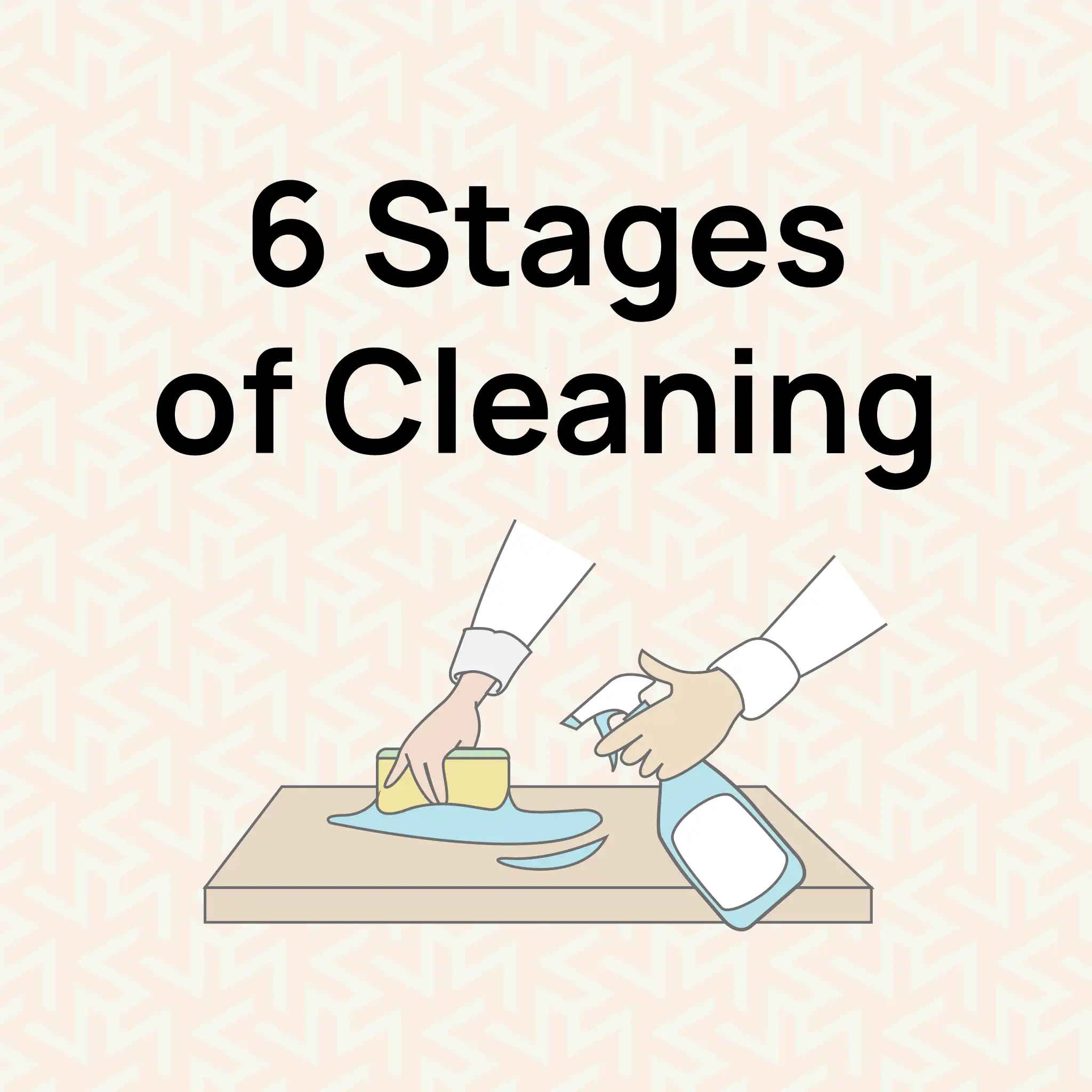
The 6 Stages of Cleaning: A Simple, Step-by-Step Guide to A Cleaner Workplace
Did You Know Germs Can Hide In Plain Sight?We often think of dirt as something we see, like crumbs on a counter or stains on a surface. But the real danger lies in the germs and bacteria we cannot see. These can quietly accumulate on kitchen surfaces, door handles, tools, and even the objects we touch daily.Keeping your kitchen clean is not just about appearance; it is about preventing food contamination, protecting health, and creating a safe environment for everyone. And this applies far beyond kitchens. Whether you work in a restaurant, clinic, office, or factory, a clean workplace is essential for health, safety, and efficiency.That is why it�s essential to understand the 6 stages of cleaning, a simple yet powerful process used across industries to ensure spaces are not only clean but also safe.Before we move on to the 6 stages of cleaning, it�s essential to understand the differences between cleaning, disinfecting, and sanitising. These terms are often used interchangeably; however, they serve distinct purposes.�Understanding the difference helps you choose the correct method according to your requirements, ensuring that you not only clean the surface but also make it safe and hygienic.What Is Cleaning, Disinfecting And Sanitising?Understanding the difference between cleaning, disinfecting, and sanitising is essential for maintaining hygiene, especially in environments where safety matters most.�The visual below explains how each process works and why all three are equally important in achieving a spotless and safe space.To put it simply, clean to remove, disinfect to kill, and sanitise to make it safe. Each one plays a unique role in keeping your environment truly clean.Understanding the difference between cleaning, disinfecting, and sanitising is just the first step. The real challenge lies in applying them effectively in real-world settings, like a busy kitchen, a healthcare facility, or any shared workspace.That�s where the 6 stages of cleaning come in. This structured method ensures that every surface is not only visibly clean but also hygienically safe, helping prevent the spread of germs and keeping people protected.Why Do the 6 Stages of Cleaning Matter?A quick wipe with a cloth might remove visible dirt, but it�s not always enough to kill germs or stop the spread of illness.To truly clean and disinfect a surface, a proper method must be followed. This simple, step-by-step process helps ensure every surface is not only clean but also safe.It removes hidden germs, reduces health risks, and helps meet hygiene standards, especially in places where food is handled or equipment is shared.Understanding these 6 stages is especially important if you work in:Food handling or hospitalityHealthcare or caregivingBeauty, salon, or tattoo industriesCleaning services or facilities managementOr any job where cleanliness affects people�s safetyEnsure You Master Food Hygiene!Stay compliant and protect your workplace by taking our certified Food Hygiene Level 2 course. Practical, accredited, and designed for busy professionals.Level 2 Food Hygiene and Safety for CateringLevel 2 Food Hygiene and Safety for ManufacturingLevel 2 food hygiene and safety for retail�Level 2 Food Hygiene and SafetyThe 6 Stages Of Cleaning � With Real-Life ExamplesWhether you�re in a commercial kitchen, a healthcare setting, or simply maintaining cleanliness at home, following a structured cleaning process ensures you�re doing more than just shifting dirt around.Understand the 6 stages of cleaning with real-life examples and learn how to apply them effectively in everyday situations to keep your environment safe and hygienic.Stage 1. Pre-Clean - Remove Loose Dirt And MessWhat does it mean:Start by clearing away anything you can physically see, like food scraps, dust, hair, or packaging.Example:In a kitchen, this could mean wiping crumbs off a cutting board after making sandwiches.In an office, it might be brushing dust and bits of paper off your desk before cleaning it.Why it matters:If you skip this step, dirt and debris can block your cleaning products from working effectively in the following stages.Stage 2. Main Clean - Wash Off Grease, Grime, Or SpillsWhat does it mean:Now you apply warm water and detergent to scrub away stubborn messes, like sticky � sauces, oil, or dried spills.Example:In a restaurant kitchen, this might be scrubbing greasy residue off a grill or stove.In a clinic, detergent could be used to clean off any visible stains on a treatment bed.Why it matters:This step removes the stuff that soap can lift, but water alone can�t handle. It prepares the surface for disinfection.Stage 3. Rinse - Wash Away Dirt And DetergentWhat does it mean:Rinse the area with clean water to remove the loosened grime and leftover detergent from stage 2.Example:After scrubbing a chopping board with detergent, rinse it under running hot water.In an office pantry, rinse the sink basin after cleaning it with soap and water.Why it matters:Leftover soap or dirt can react with disinfectant and reduce its power, so rinsing is key before moving on.Stage 4. Disinfect - Kill Germs And MicroorganismsWhat does it mean:Now it�s time to kill harmful bacteria and viruses using a disinfectant or sanitiser. Apply and leave it for the right amount of time. To learn more about maintaining hygiene standards in food safety, refer to our comprehensive guide on HACCP principles.Example:Spray an antibacterial solution on kitchen counters after cleaning them, and let it sit for 5�10 minutes as per instructions.In a salon, disinfectant spray on tools like scissors or tweezers.Why it matters:Even if something looks clean, it could still carry dangerous germs. Disinfection removes what you can�t see.Stage 5. Final Rinse - Remove Disinfectant (If Required)What does it mean:Some disinfectants need to be rinsed off with clean water to avoid leaving harmful chemical residues.Example:In a food preparation area, rinse countertops after disinfection to ensure that no chemical residue ends up in the food.In a child care centre, rinse toys after disinfecting to prevent chemicals from getting on children�s hands or mouths.Why it matters:Leftover disinfectant can be toxic if ingested or touched, especially around food, children, or sensitive skin.Stage 6. Dry - Get Rid Of MoistureWhat does it mean:Dry the surface completely�either by letting it air dry or by using a clean, disposable cloth.Example:In a bakery, leave trays to air dry after washing and disinfecting.In an office kitchen, use a paper towel to dry the sink or counter after final rinsing.Why it matters:Germs thrive in damp places. If the surface stays wet, it can become contaminated again quickly.By following all 6 stages - from pre-cleaning to drying - you go beyond surface-level cleaning and ensure a truly hygienic environment.�This methodical approach not only improves safety and hygiene but also helps meet compliance standards in food handling, healthcare, and other high-risk settings. Mastering these stages is a simple and effective way to prevent the spread of harmful germs and protect those around you.Things To Keep In Mind Before You Start CleaningWhile the 6 stages of cleaning provide a structured process, their effectiveness depends on proper preparation. Before you begin the actual cleaning steps, it�s important to prepare appropriately.�The steps below help you set up correctly, ensuring your cleaning process is efficient, compliant, and thorough � even in demanding environments.Follow A Cleaning ScheduleIf you are cleaning as part of your job, you likely have a cleaning rota or a risk assessment in place. Stick to it. These tools make sure:You're cleaning the right areas at the right timeHigh-risk zones (like food prep areas or shared surfaces) are not missed.The whole process runs smoothly and safelyUse The Right Products�Every job needs the right tools, and cleaning is no different.Choose cleaning products that are:Effective against the specific germs in your environment (e.g. food-borne bacteria in kitchens, viruses in healthcare)Safe for the surface you're working on (some products can damage wood, stone, or stainless steel)Never mix chemicals unless the label clearly says it�s safe�it can release dangerous gases.Always Read The LabelCleaning products come with instructions for a reason. Pay attention to:How much to use (too much doesn�t mean better)How long should I leave it on the surfaceWhere and how to store it safelyIf you're using strong chemicals, always check the manufacturer�s guidelines, especially in commercial settings.Wear The Right PPEBefore cleaning, wear proper personal protective equipment (PPE) like:Gloves � to avoid skin reactions from detergents and disinfectantsAprons � to prevent spills from reaching your clothes or skinThis is not just about comfort�it�s about your long-term health.Ventilation Is ImportantAlways ensure the space you�re cleaning is well-ventilated. Some cleaning chemicals release fumes that can cause:HeadachesBreathing issuesLong-term respiratory problemsOpen windows or turn on exhaust fans when needed.Follow A Smart Cleaning PatternTo clean effectively and avoid cross-contamination:Start from the cleanest area and move to the dirtiestClean top to bottom (so dust doesn't fall onto already-cleaned areas)Use an S-shaped motion with your cloth, which helps cover the whole surface without re-contaminating itPractice Good Hand HygieneEven if you wear gloves, wash your hands after cleaning. This prevents any lingering germs from spreading to food, surfaces, or other people.Place hand sanitisers and disinfectant wipes in visible, easy-to-reach areas to promote regular hand hygiene.Stick To A Deep Cleaning RoutineSet a regular schedule for deep cleaning, especially for shared items like:Kitchen appliancesTouchscreens, phones, and printersLight switches and door handlesPromote Cough & Sneeze EtiquetteEncourage everyone in the workspace to:Cover coughs and sneezes with a tissue or their elbowDispose of tissues properlyDisinfect any surface they may have sneezed or coughed onManage Waste ProperlyDon�t let rubbish pile up. Keep waste bins:CoveredCleaned regularlyEmptied frequentlyFollowing these ten steps will not only make your cleaning routine more efficient but also help maintain a healthier, safer environment for everyone around you. Getting these fundamentals right sets the stage for proper disinfection and long-term hygiene.Use this quick checklist as a reminder to keep your cleaning process safe, effective, and fully compliant.ConclusionA clean workplace is crucial for maintaining health, ensuring safety, and promoting productivity.By following the 6 stages of cleaning, you ensure that your environment is not only free from visible dirt but also hygienically safe for everyone.These stages are applicable across a wide range of industries, including food production, hospitality, healthcare, and facilities management, and provide a reliable framework for meeting high hygiene standards and complying with regulations. FAQsWhat is the cleaning process in the food industry?The cleaning process typically follows six key stages: pre-clean, leading clean, rinse, disinfection, final rinse, and drying. This ensures all surfaces are safe and free from contaminants.What are the different types of cleaning?There are several types of cleaning depending on the environment and need:Routine cleaning: Regular, daily cleaning tasks to maintain hygiene.Deep cleaning: More intensive cleaning is performed periodically to remove hidden dirt and contaminants.Reactive cleaning: Immediate response to spills, accidents, or other forms of contamination.Preventive cleaning: Scheduled cleaning to prevent the build-up of germs and maintain standards.Understanding the type of cleaning required helps you choose the right products, tools, and methods.Why is rinsing important in cleaning?Rinsing removes detergent and loosened dirt, preventing residue buildup that could interfere with disinfection or contaminate food.What is the final rinse step in cleaning?The final rinse removes any remaining disinfectant using clean, potable water. This step is critical in food areas to prevent chemical residues.What does pre-cleaning involve?Pre-cleaning involves removing loose dirt, food particles, or debris before using cleaning agents. It improves the efficiency of subsequent cleaning steps.What is the drying stage in the cleaning process?�Drying is the final step where surfaces are allowed to air dry or are dried using clean cloths. This helps prevent microbial growth on damp surfaces.What occurs in the main cleaning stage of the 6 stages of cleaning?�In this stage, detergents are applied to remove grease, grime, and food residues. It's essential for breaking down contaminants before rinsing and disinfecting.What are the cleaning and disinfection steps?The cleaning and disinfection steps involve two critical actions:Cleaning: Physically removing dirt, grease, and residues from surfaces using detergent and water.Disinfection: Applying a disinfectant to kill harmful bacteria, viruses, and other microorganisms after cleaning.Both steps are essential � cleaning removes what you can see, while disinfection tackles what you can�t.What is the final stage of cleaning and disinfection?The last stage is drying. Surfaces must air dry or be dried with clean cloths to avoid moisture buildup, which can harbour bacteria.
Can You Put Warm Food in the Fridge? UK Cooling Safety Guide for Homes and Commercial Kitchens
Can You Put Warm Food in the Fridge?It�s a question that crosses nearly every cook�s mind: Can you put warm food in the fridge, or should you wait until it cools down first?Whether you're cooling leftovers after dinner, managing surplus food in a commercial kitchen, or storing dishes safely in a catering van, this simple decision can have profound implications for food safety.Improper cooling and refrigeration can lead to bacterial growth, food spoilage, and even foodborne illness, such as food poisoning.�Yet, confusion remains - how long should you let food cool before refrigerating?And what really happens if you put hot food straight in the fridge?This guide cuts through the noise. Backed by food safety principles and UK-specific advice, we�ll walk you through:What happens when hot food goes into the fridgeThe best practices for cooling food quicklyHow long to wait before refrigerating safelyWhat UK regulations and professional guidance sayFrom single portions to bulk batches, the core food safety rules apply to all settings.So, can you really put warm food in the fridge?�Let�s look at what science, safety experts, and UK guidance have to say.Is It Safe to Put Hot Food in the Fridge?The short answer: it depends.While it may seem like a quick way to preserve freshness, putting hot food straight into the fridge can actually do more harm than good if done incorrectly, at home or in a commercial kitchen.Let�s explore what happens when hot food is placed in the fridge and why this can compromise food safety.What Happens When You Put Hot Food in the Fridge?Internal Fridge Temperature RisesWhen you put hot food into a cold fridge, the heat from the food doesn�t just disappear; it transfers to the air and surrounding items.Think of your fridge as a climate-controlled box designed to keep food at or below 5�C. But when you place a large container of steaming curry or stew inside, especially if your fridge is already full, that heat warms the air and nearby items.This causes the fridge�s internal temperature to spike temporarily, and it may take hours to return to a safe range.During this time, foods like cooked meats, dairy products, or sauces can enter the temperature danger zone.What Is the Temperature Danger Zone?The temperature danger zone is between 8�C and 63�C. This is the range where bacteria, such as Salmonella, E. coli, and Listeria, grow and multiply most rapidly. According to the Food Standards Agency, food should be kept below 5�C in the fridge or above 63�C if kept hot.When your fridge warms up even slightly, you create an ideal environment for bacterial growth, which is invisible, rapid, and can lead to foodborne illness, especially in vulnerable groups such as children, the elderly, or individuals with weakened immune systems.Keeping your fridge at or below 5�C, as outlined in our Fridge Storage Temperature Guidelines, ensures that food remains safe.Uneven Cooling: A Hidden RiskCooling food in a fridge isn�t just about chilling the outer layer; the core temperature is what truly matters.When hot food is stored in deep containers or kept covered, the outside cools quickly in the fridge air, but the centre can stay warm for hours. This delay allows bacteria, whether leftover from cooking or added later, to grow and multiply.This risk is exceptionally high in commercial kitchens, where large batches of food, such as sauces, rice, or meats, are stored and used over time.Condensation & Contamination: A Moisture ProblemWhen hot food enters a cold space, steam is released, and this steam condenses on the fridge's surfaces, shelves, and containers.This may seem harmless, but excess moisture:Encourages mould growthIncreases the chance of cross-contamination, as water droplets can transfer bacteria across surfacesReduces fridge efficiency, making it harder to maintain a safe temperature throughoutIf your fridge isn�t cleaned regularly or is overcrowded (a common issue in restaurant kitchens), this moisture can quickly turn into a contamination hazard.Putting hot food directly into the fridge isn't just a minor oversight � it can compromise the safety of everything stored inside.�From raising the internal temperature and triggering bacterial growth in high-risk foods to causing hidden condensation risks, understanding these hidden dangers is essential.For best practices on safe fridge storage, don�t miss our guide on How to Organise Your Fridge for Food Safety.The Science Behind Cooling Food SafelyCooling food safely is more than just a storage routine, it�s a science-backed step to stop bacteria like Clostridium perfringens and Bacillus cereus from growing.These pathogens can survive the cooking process and multiply quickly if food cools too slowly, producing toxins that reheating won�t destroy.Let�s explore how to cool food the right way, whether you're at home or running a food business.For Home Kitchens & Small Food BusinessesIf you�re storing leftovers at home or operating a small caf� or food stall, the UK Food Standards Agency (FSA) advises:Let food cool at room temperature for no more than 90 minutes to 2 hoursOnce slightly cooled, refrigerate it below 5�CDiscard food left out at room temperature for 4+ hours, as bacteria may have already multiplied to unsafe levelsTip: To cool food faster, divide it into smaller portions, place it in shallow containers, or stir occasionally to release heat.This simple approach dramatically reduces the time food spends in the temperature danger zone (between 8�C and 63�C), where bacteria grow fastest.Cooling in Commercial Kitchens and Catering SettingsIn professional environments, cooling food rapidly is a critical requirement not just for safety, but for compliance with UK FSA guidance. According to widely accepted HACCP-based practices, cooling must be done using efficient tools and under strict time limits.UK Cooling Standards for Food BusinessesCool hot food to below 8�C within 90 minutes using methods such as blast chillers, ice paddles, or shallow traysNever leave food at room temperature for more than 2 hours after cookingDiscard food left out for over 4 hoursThese standards help remove food from the danger zone as quickly as possible, thereby reducing the risk of contamination from bacteria such as Salmonella, E. coli, and Listeria.Common Cooling Methods in UK KitchensBlast chillers: Rapidly lower the temperature of large batches of foodShallow trays and portioning: Spread food out to ensure even coolingIce baths/paddles: Useful for soups, sauces, or riceBy adhering to the 90-minute cooling rule and utilising proper tools, both home cooks and food handlers in commercial settings can ensure that food remains safe, compliant, and free from harmful bacteria.How Long Should You Let Food Cool Before Refrigerating?If you're still unsure, here's a clear breakdown:�At Home or Small Food BusinessesLet food cool at room temperature for no more than 90 minutes to 2 hoursOnce the steam has reduced, refrigerate below 5�CUse shallow containers, stir occasionally, or place near a fan to help speed up cooling�In Commercial SettingsUse blast chillers, ice baths, or cooling paddles to reduce the temperature to below 8�C within 90 minutesLabel and date cooled food properly, especially in batch-cooked settingsAvoid placing hot food directly into the fridge it disrupts cooling and risks cross-contaminationIn short:? Commercial kitchens: cool food to below 8�C within 90 minutes? At home: cool food for 90 minutes to 2 hours max, then refrigerate below 5�CDelaying this process increases the risk of bacterial growth and can lead to foodborne illness.Take the Next Step in Food SafetyIf you or your team handle food professionally, the right training is essential to avoid critical mistakes like improper cooling, cross-contamination, or unsafe reheating.Here are some courses to strengthen your knowledge and keep your kitchen inspection-ready:? Level 2 Food Hygiene and Safety for Catering: Designed for anyone who prepares or handles food�especially useful for caterers and kitchen staff.??? Level 3 Food Hygiene and Safety for Supervisors: A must-have for managers and supervisors responsible for food safety and training others.? Level 2 HACCP Course: Learn how to implement critical controls, including how to safely cool, store, and handle high-risk foods.? Stay compliant. Stay safe. Start your training today.Busting Common Myths About Refrigerating Hot FoodDespite clear food safety guidance, myths about cooling and refrigeration still confuse many home cooks and food business operators. Here's a quick myth-busting guide to help you separate fact from fiction.Don't let food myths lead to food safety mistakes. Trust science-backed practices to stay safe and compliant.Best Containers for Cooling and Storing Hot FoodStoring hot food safely starts with choosing the proper containers. Here�s how to do it right.Start Smart: The Right Containers Make All the DifferenceUsing appropriate containers can significantly reduce cooling time and ensure your fridge stays safe and hygienic.Shallow Containers (?5cm deep)Encourage even cooling and prevent the centre from staying hot for too long.Glass or Food-Grade Stainless SteelThese materials cool faster than thick plastic and are non-reactive.Ventilated Lids or CoversLeave lids slightly ajar during the initial cooling process; fully seal them before refrigerating.Portion-Sized ContainersDivide large batches into smaller containers to help them cool more quickly.Avoid Deep Plastic Tubs for Hot FoodsThey trap heat and prolong time in the danger zone.? Tip: Always label containers with time and date if storing food commercially.Using the correct container isn�t just a storage choice � it�s a safety measure. Whether you�re meal-prepping or running a kitchen, smart storage keeps bacteria at bayGo Beyond the Basics Hurak�s Level 3 Food Hygiene and Safety Course is ideal for managers and business owners seeking to enhance cooling practices, confidently pass inspections, and ensure full legal compliance.Start your training today � don�t just meet the standards, exceed them.ConclusionFollowing proper food safety guidelines is essential to prevent bacterial growth and keep your food safe to eat. Correctly cooling and storing food reduces the risk of foodborne illness and protects both your health and that of others.Let�s summarise the key points with two practical examples to highlight how safe cooling works at home and in commercial kitchens:At Home:You�ve just cooked a large batch of chicken curry. You divide it into shallow containers and let it cool on the kitchen counter for about 90 minutes. Once the steam has disappeared, you place it in the fridge, storing it below 5�C, and it is ready for tomorrow�s lunch.In a Commercial Kitchen:The same dish is made in bulk for a busy lunch service. The kitchen team spreads it out in shallow trays, then uses blast chillers to quickly bring the temperature down to below 8�C within 90 minutes. Each container is labelled and stored in a walk-in fridge, well away from raw ingredients.In both cases, the principle is clear:Cool food quickly, store it smartly, and keep it below 5�C.Whether you�re cooking at home or working in a professional kitchen, following these safe hot food cooling and storing practices protects everyone at the table.FAQsCan you put warm food in the fridge?Yes, you can put warm food in the fridge, but it�s best to let it cool slightly first. Putting very hot food directly into the refrigerator can raise the temperature inside, affecting other food and increasing the risk of bacterial growth.How long should you let food cool before refrigerating?Ideally, let food cool for no more than 30 minutes before refrigerating. Large portions should be divided into smaller containers to help cool faster and safely.What happens if you put hot food in the fridge?Placing hot food directly into the fridge can cause the internal temperature to rise, potentially spoiling other stored food and encouraging the growth of harmful bacteria.What are the top 3 quick cooling tips?Divide large portions into smaller, shallow containersStir hot liquids occasionally to release heatUse an ice bath or blast chiller if availableDoes fridge loading affect food cooling?Yes, a crowded fridge reduces airflow and cooling efficiency. Avoid overloading your fridge so cold air can circulate freely, helping all food cool safely and quickly.How can I avoid cross-contamination when cooling food?Always use clean containers and cover food adequately before refrigerating. Keep raw and cooked foods separate to prevent cross-contaminationBest Containers for Cooling and Storing Hot FoodStoring hot food safely starts with choosing the proper containers. Here�s how to do it right.Start Smart: The Right Containers Make All the DifferenceUsing appropriate containers can significantly reduce cooling time and ensure your fridge stays safe and hygienic.Shallow Containers (?5cm deep)Encourage even cooling and prevent the centre from staying hot for too long.Glass or Food-Grade Stainless SteelThese materials cool faster than thick plastic and are non-reactive.Ventilated Lids or CoversLeave lids slightly ajar during the initial cooling process; fully seal them before refrigerating.Portion-Sized ContainersDivide large batches into smaller containers to help them cool more quickly.Avoid Deep Plastic Tubs for Hot FoodsThey trap heat and prolong time in the danger zone.? Tip: Always label containers with time and date if storing food commercially.Using the correct container isn�t just a storage choice � it�s a safety measure. Whether you�re meal-prepping or running a kitchen, smart storage keeps bacteria at bay
Understanding The Food Hygiene Rating Scheme (0 to 5 Ratings)
When deciding where to eat or buy food, many people first check the business�s food hygiene rating. But what does that rating mean, and how is it decided?The Food Hygiene Rating Scheme (FHRS) is an initiative by the UK government to check the food safety and hygiene practices of businesses across England. Run by the Food Standards Agency (FSA) in partnership with local authorities, it provides a clear rating, ranging from 0 to 5, based on how well a business complies with food hygiene law.�For food business owners, the rating can influence customer trust, reputation, and even sales. For consumers, it�s a quick way to check that food is being handled safely.In this article, we�ll explain how the scheme works, what inspectors look for, how to improve your score, and why maintaining a good hygiene rating matters more than ever.What Is The Food Hygiene Rating Scheme?The Food Hygiene Rating Scheme (FHRS) is a UK government programme that assesses how well food businesses adhere to hygiene and safety regulations. It applies to places like restaurants, cafes, takeaways, food shops, and even some schools and hospitals. The scheme�s main goal is to help people make safer choices when eating out or buying food. It also encourages businesses to improve their hygiene standards to protect customers.Each business is inspected by local authority food safety officers who give it a rating from 0 to 5, with 5 meaning very good hygiene and 0 meaning urgent improvement is needed.How Does The Food Hygiene Rating System Work?When a food business is inspected, the food safety officer checks how well it follows the law in three key areas:Food handling � how it�s prepared, cooked, cooled, stored, and reheated.Cleanliness and condition of the premises � this covers the layout, lighting, ventilation, handwashing facilities, and overall cleanliness.Management of food safety � whether the business has systems in place to make sure food is safe and whether staff know how to follow them. This includes practices based on HACCP principles.Each area is assessed, and the business is given a rating that ranges from 0 to 5, based on how well it meets the legal standards:Ranges Of The Food Hygiene Rating System:The higher the rating, the better the hygiene practices. If serious problems are identified, the business will receive a lower rating and be required to take immediate action to resolve the issues.To maintain a high food hygiene rating, it�s essential to follow effective hygiene practices for Food Safety and Food Hygiene, and apply proper cleaning methods, such as the 6 Stages of Cleaning.Understanding The Food Hygiene Ratings (0 to 5)The Food Hygiene Rating indicates how well a business adheres to food safety regulations. Here�s what each range means:Food Hygiene Rating �5� Indicates � Very goodThe business is fully compliant with food hygiene law. Clean premises, safe food handling, and strong safety systems are all in place.Food Hygiene Rating �4� Indicates � GoodGenerally high standards. Minor improvements may be needed, but nothing major.Food Hygiene Rating �3� Indicates � Generally satisfactoryThe basics are covered, but there's room for improvement in one or more areas.Food Hygiene Rating �2� Indicates � Improvement necessarySeveral issues need to be addressed to meet the required hygiene standards.Food Hygiene Rating �1� Indicates � Major improvement necessarySerious issues exist. The business must take urgent steps to improve food hygiene.Food Hygiene Rating �0� Indicates � Urgent improvement necessaryThe hygiene conditions are very poor. There�s a serious risk to public health, and immediate action is required.These ratings enable customers to make informed choices and encourage businesses to maintain safe and hygienic practices.FHRS Ratings Breakdown (UK)To give you a clearer picture of how food businesses are performing across the UK, let�s look at the approximate percentage of food businessesthat fall into each category:RatingMeaningApproximate % of Businesses5Hygiene standards are excellent47%4Hygiene standards are good36%3Hygiene standards are generally satisfactory10%2Some improvement is necessary4%1Major improvement is necessary2%0Urgent improvement is required1%Note: These figures are approximate and compiled from publicly available industry sources, such as the Food Standards Agency. Percentages may vary slightly depending on the region and the time of reporting.Who Carries Out The Inspection?Food hygiene ratings are given by a food safety officer from the local authority.Local authority food safety officers are responsible for inspecting premises to assess how well a business is complying with food hygiene laws. Their role is to ensure that food sold or served to the public is safe and that businesses comply with the required standards.Most inspections are unannounced, offering an accurate picture of day-to-day food safety practices. During the visit, the officer checks records, observes practices, and examines the condition of the premises. Their findings are then used to assign a food hygiene rating from 0 to 5.Key Areas InspectedDuring the inspection, officers focus on:Food handling: Preparation, cooking, cooling, storage, and reheating practices.Cleanliness and condition: Premises cleanliness, layout, lighting, ventilation, and hygiene facilities.Management of food safety: Systems like HACCP, staff training, and ongoing safety checks.Each of these areas contributes to the overall hygiene rating.How Often Are Inspections Done?Food hygiene inspections are typically conducted by local authorities at regular intervals, based on the risk level of the business. Higher-risk establishments, such as those handling high-risk food or serving vulnerable populations, are inspected more frequently than lower-risk ones, like small retailers or cafes.High-risk businesses (such as restaurants, takeaways, and catering services) are usually inspected every 6 to 12 months.Medium-risk businesses (like convenience stores) might be inspected every 1 to 2 years.Low-risk businesses (such as food wholesalers or manufacturers) may have inspections every 2 to 3 years or longer.If a business receives a low rating, local authorities often conduct follow-up visits to check whether necessary improvements have been made. Businesses are typically required to address serious hygiene issues within a specified timeframe, depending on the severity of the problems identified during the inspection.Is Displaying The Food Hygiene Rating Certificate Mandatory, And What If You Are Not Happy With The Certificate?Is Displaying The Rating Mandatory?The requirement to display a food hygiene rating varies across the UK:England: Displaying the food hygiene rating is voluntary. While businesses are encouraged to display their rating, there is no legal obligation to do so.Wales: Since November 2013, it�s been a legal requirement for food businesses to display their food hygiene rating sticker in a prominent place, such as at the entrance to their premisesNorthern Ireland: Since October 2016, food businesses have been legally required to display their food hygiene rating sticker in a prominent place, like the front door, entrance, or window of the business.What If You Are Not Happy With The Rating?If you believe your food hygiene rating does not accurately reflect your business's standards:Request a Re-Inspection: You can apply for a re-inspection after making improvements. Note that some local authorities may charge a fee for this service.Appeal the Rating: If you think the rating is unfair, you have the right to appeal. The process varies by local authority, so it's advisable to contact them directly for guidance.Why A High Food Hygiene Rating MattersA high food hygiene rating is important for several reasons:Legal Compliance: A strong rating shows that your business meets food hygiene regulations, helping you avoid fines, closures, or legal action from health authorities.Public Health Protection: Good hygiene reduces the risk of foodborne illnesses and protects customers from contamination or allergic reactions.Customer Trust: A visible high rating reassures customers that your business takes food safety seriously, encouraging loyalty and repeat visits.Competitive Advantage: Many people check hygiene ratings before deciding where to eat or shop. A high score can give you a competitive edge.Business Reputation: Maintaining high standards protects your brand image and reduces the risk of negative reviews or complaints.Staff Morale: A clean, well-managed workplace improves working conditions, motivates staff, and supports better service delivery.Overall, a high rating helps establish a successful and trustworthy food business.How To Improve Your Food Hygiene RatingImproving your rating involves focusing on key areas inspectors assess and acting on feedback from inspections. Here are some practical steps:Keep Premises Clean: Regular cleaning routines, like following the 6 stages of cleaning, help maintain hygiene and reduce contamination risks.Train Staff Thoroughly: Ensure everyone knows proper food handling, handwashing, and cross-contamination prevention techniques.Maintain Records: Keep accurate logs of temperature checks, cleaning schedules, and supplier details to demonstrate control of food safety.Fix Facility Issues Promptly: Address problems with ventilation, lighting, or pest control to keep the environment safe and compliant.Review Food Safety Systems: Regularly update your food safety plan, ideally based on HACCP principles, to stay prepared for inspections and prevent issues.Small, ongoing improvements can boost your rating and help protect your customers and business reputation.ConclusionUnderstanding the Food Hygiene Rating Scheme is vital for both food businesses and customers. A good rating not only helps build trust and protect public health but also supports your business success. By keeping premises clean, training staff, and maintaining strong food safety systems, you can improve and maintain a high hygiene rating.Want to take your food safety knowledge to the next level?�Check out these certified courses to help you stay compliant and confident in your food handling skills:Food Safety Level 2 � Essential training for food handlers to understand hygiene best practices.HACCP Awareness � Learn the principles of hazard analysis and critical control points to manage food safety effectively.�Allergen Awareness � Understand how to manage allergenic risks and keep customers safe.Book Our Certified Courses NowFAQs�What is the Food Hygiene Rating Scheme?The Food Hygiene Rating Scheme (FHRS) is a UK government initiative run by the Food Standards Agency. It scores food businesses from 0 to 5 based on their hygiene practices, enabling customers to make informed choices about where to eat or purchase food.What is the range of food hygiene ratings in the UK?The range of food hygiene ratings goes from 0 to 5:0 � Urgent improvement necessary1 � Major improvement necessary2 � Improvement necessary3 � Generally satisfactory4 � Good5 � Very good (often called a 5 star hygiene rating)What does a food hygiene rating 5 mean?A food hygiene rating 5 means the business has very good hygiene standards and fully complies with UK food safety laws. This is the highest rating and is often referred to as a 5 star hygiene rating.What does a food hygiene rating 4 mean?A food hygiene rating 4 indicates that the business has good hygiene standards with only minor issues. It means the premises are clean and safety systems are mostly effective.What does a food hygiene rating 3 mean?A food hygiene rating 3 means the business is generally satisfactory. It meets basic legal hygiene requirements but may need improvements in one or more areas.What does a food hygiene rating 2 mean?A food hygiene rating 2 shows that improvement is necessary. Several problems were identified during the inspection that must be addressed to meet legal food hygiene standards.What does a food hygiene rating 1 mean?A food hygiene rating 1 means major improvement is necessary. The business may have poor cleaning routines, inadequate food safety management, or other significant hygiene concerns.What does a food hygiene rating 0 mean?A food hygiene rating 0 means urgent improvement is needed. This is the lowest possible rating, indicating serious issues that could pose a risk to public health. The business is often re-inspected quickly after receiving this score.Are food hygiene ratings in the correct order from 0 to 5?Yes, food hygiene ratings are listed in order from 0 (worst) to 5 (best). Each level reflects the business�s level of compliance with food safety and hygiene laws, with 5 being excellent and 0 meaning urgent action is needed.