

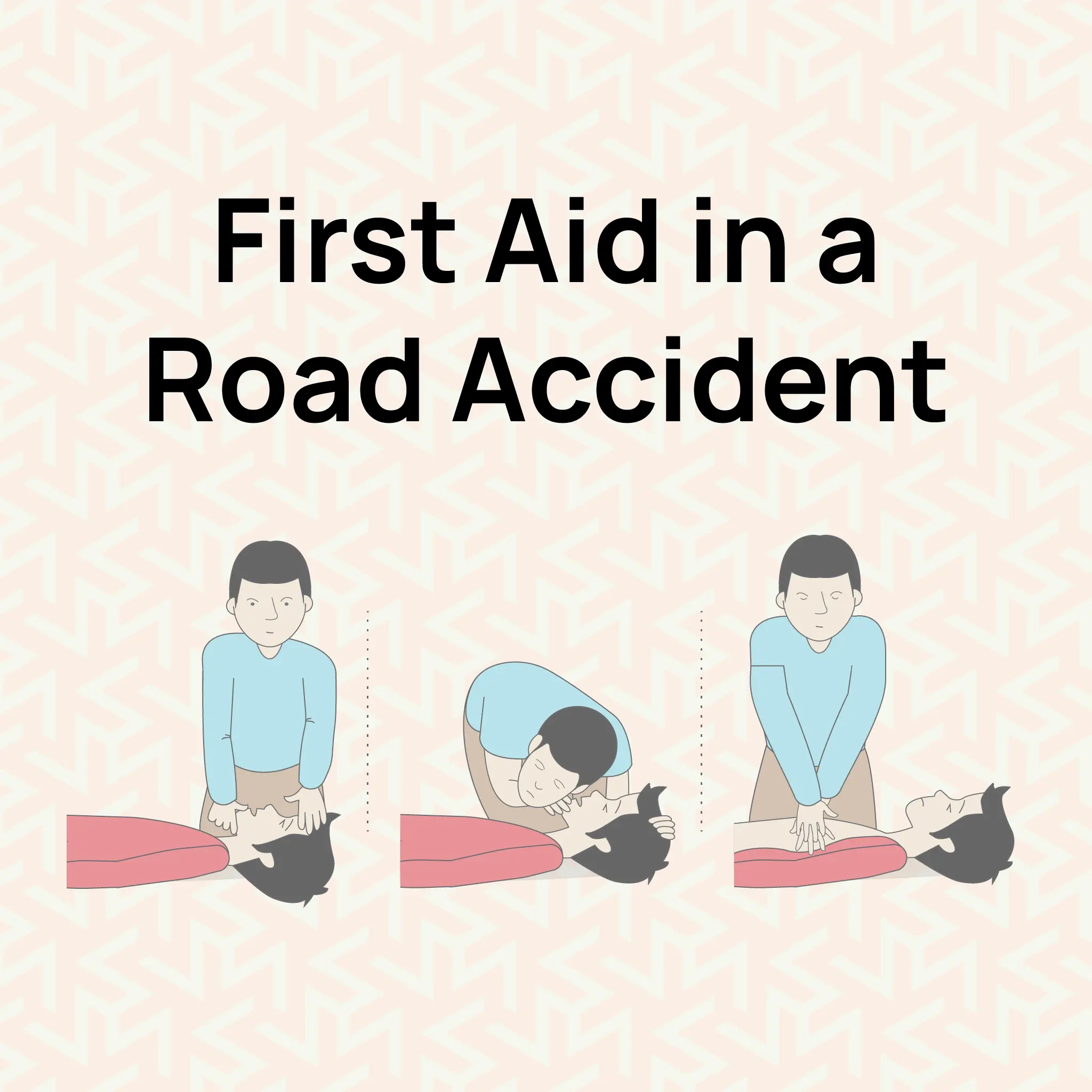
How To Conduct First Aid in a Road Accident
Traffic accidents can be small incidents like bicycle accidents or more severe ones like car crashes. It is important to make sure the area is safe before you help anyone who has been hurt. This will keep you, injured people, and other drivers safe.Once you have confirmed the safety of an area, take a quick look at the people who are hurt. Decide who needs help the most urgently. Always conduct first aid on a casualty who is not breathing before you help anyone else.Call 999 for emergency help. Inform them about what has happened. This includes information such as:The number of people who are hurtThe age of the injured peopleAre the injuries critical or non-critical?What To Do If You Witness a Road AccidentIf you come across a road accident, a step-by-step method should be followed:Scene Safety AssessmentWhen you approach an accident scene, safety comes first. To avoid further injuries, ensure all traffic stops, and everyone knows about the accident.Keep an eye out for any oncoming traffic that could pose a danger. Check for fuel spillage or fire risks, and turn off car ignitions if possible. Use hazard lights and warning triangles if available.If there are other people around, ask them to call emergency services. If alone, assess the situation and help anyone with life-threatening injuries first.Check the Quiet Ones FirstAlways prioritise checking quiet and motionless individuals first. Check if they are responsive and breathing. If they are unresponsive but breathing, position them to keep their airway clear and keep them warm.Administer CPR on Unconscious PeopleIf someone is not breathing, you may need to administer CPR. Call an ambulance immediately if you have not already done so. Only move an unconscious person from a vehicle if there is an immediate danger.Determine the Safety of Conscious PeopleConscious casualties should be moved to a safe area and kept warm and calm. Look out for any severe bleeding or life-threatening injuries and treat them first. Monitor anyone trapped in a vehicle and notify emergency services immediately.Be Careful How and When You Move ThemOnly remove a motorcyclist's helmet if they are unconscious, and it is necessary to assess their breathing. If a casualty is lying on their back unconscious and breathing, roll them into the recovery position with help to avoid twisting their spine.The Recovery Position:To place someone in the recovery position, straighten their legs. Remove any glasses or bulky items from their pockets. Position the nearest arm at a right angle to the body, with the palm facing upward. Bring the other arm across the chest. Place the back of the hand against the nearest cheek. Lift the far knee and gently roll them onto their side by pulling on the far leg.If they are conscious and lying on the road, encourage them to stay still and support their head and neck until help arrives.Following these steps, you can provide crucial assistance at a road accident scene and help keep everyone safe until professional help arrives. .main{ border:3px solid #0f7c90; border-radius:20px; position: relative; font-family:roboto; font-weight: 400; color: #000; } .main-two{ position: absolute; top:-25px; left:45px; background-color:white; } .img-div{ border-radius : 100%; padding:2px 7px; background-color:#0f7c90; margin-right:5px; width: 50px; height: 50px; } .img{ width:30px; object-fit:contain; height:auto; border-radius : 100%; } @media only screen and (max-width: 600px) { .heading{ font-size:20px; } .img{ width:20px; object-fit:contain; height:auto; border-radius : 100%; } .img-div{ width: 40px; height: 40px; } .main-two{ left:25px; } } Ready to Learn More? Knowing how to conduct first aid in a road accident is important, but there's more to it. Our First Aid courses offer complete training to help you handle critical situations. Whether you want to improve your skills or workplace safety, these courses help build confidence and expertise. View our Emergency First Aid at Work (EFAW) and Level 3 First Aid at Work courses. These courses meet the UK legal requirements and help you keep people safe. Assessing an Injured Person after a Road AccidentWhen dealing with someone hurt in a road accident, remember the primary survey DRABC steps: Danger, Response, Airway, Breathing, and Circulation. After assessing the casualty's danger and response, carry out the ABC steps.AirwayResponsiveIf the person is not responsive, ask them loudly if they are okay. Check if they can open their eyes. If they respond, you can leave them as they are until help arrives.While you wait, keep checking if they are:Awake and alertResponding to your voiceNot responding at all (unconscious)UnresponsiveIf there is no response, gently lay them on their back. Place one hand on their forehead and gently tilt their head back. Lift their chin using two fingers to move the tongue away from the throat. Avoid pushing on the mouth floor, as this can block the airway.If you suspect a neck injury, use the jaw thrust technique: place your hands on either side of the head. Gently lift their jaw forward and upwards without moving their head.BreathingTo check if they are breathing:Look for their chest rising and fallingListen for breathing sounds over their mouth and noseFeel their breath against your cheek for 10 secondsIf they are breathing normally, put them in recovery to keep their airway clear. Gasping or irregular breathing is not normal. If they are not breathing normally, call 999 for an ambulance and start CPR.CirculationIf their breathing is not normal, start chest compressions immediately. Gasping and irregular breaths after a sudden cardiac arrest are not expected. In this case, administer CPR right away.If they are not breathing, call 999 for an ambulance and start CPR.Supporting Those with PTSD After Giving CPRPerforming CPR can be a tough experience for everyone involved. The situations in which you need to perform CPR vary greatly.For example, you might see a stranger collapse on the street, and you are the only one there to help. Or maybe you have to do CPR on someone you love, even a child.Even people who have done CPR many times, like paramedics, nurses, and doctors, can find it hard emotionally.PTSD, which stands for post-traumatic stress disorder, is a type of anxiety disorder that can happen after really scary or stressful events. CPR situations often fit into this category.It is good to know the signs of PTSD so you can recognise if you or someone else might be dealing with it. Symptoms can last a long time and affect your daily life.Common PTSD symptoms include:Having nightmares or flashbacks of the event.Feeling alone or isolated.Feeling easily annoyed.Feeling guilty.Having trouble focusing.Having problems sleeping, like not being able to sleep well. .banner { border-radius: 10px; overflow: hidden; border: 2px solid #ccc; box-shadow: 0 4px 8px rgba(0, 0, 0, 0.2); background-color: #fdf9ee; } .book-now { color: white; background-color: #DF3D52; border: none; padding: 15px 60px; border-radius: 5px; cursor: pointer; font-size: 20px; text-decoration: none; } .book-now:hover { /*text-decoration: none;*/ color: white; background-color: #c33f50; } Get Trained in All First-Aid Skills First Aid Courses Book Now Rated Excellent on major review sites Getting the Right Help After a Road AccidentGetting the right help after a traumatic experience such as a road accident is essential. This could mean talking to family, friends, or people you work with. It might also mean getting counselling.There are online groups and places where you can find support from others who have been through similar things. Sharing experiences can help a lot.Many charities and groups help with mental health, such as Mind, SANE, or Anxiety UK.Your doctor (GP) can also give extra help, especially if you feel anxious or restless.If the crash involved a rideshare service such as Uber or Lyft, injured individuals may also need legal guidance to understand insurance coverage and liability, and to pursue a rideshare injury claim.How To Treat Shock After a Road AccidentAccidents, like car crashes, falls, or near-drowning incidents, can often trigger shock. Even if you witnessed the accident, it can still affect you.Symptoms of ShockShock can show up in different ways, like:Feeling pumped up with adrenaline.Shaking or feeling jittery.The feeling of sickness.Having a tight chest.Finding it hard to think clearly.Feeling aggressive or agitatedExperiencing hallucinationsFeeling numbEveryone reacts differently, and there is no right or wrong way to feel after something scary happens.Supporting Someone in ShockIf someone you know is in shock, here are some things you can do to help:Please make sure they are safe and try to keep them calm.Help them take slow, deep breaths.Please do not ask them to make any big decisions right away.Let them know that how they are feeling will pass.Help them find ways to manage any pain they might be feeling.Explain that adrenaline can hide pain so that they might feel it later.Remember, it is important to give yourself time to heal, too. Getting support from friends, family, or professionals can help.Take care of yourself by staying active, eating well and following a routine. Finding ways to relax can make a big difference during tough times.ConclusionTraffic accidents, whether minor or severe, can significantly impact those involved. Confirming safety before offering help at the scene for yourself and others is important. Prioritise first-aid for the most severely injured and call emergency services promptly. Assess the airway, breathing, and circulation of those who are injured. Offer support to those affected by shock or PTSD after the road accident. Taking care of others and yourself after a traumatic event is important for healing and well-being.

Fire Safety at Your Workplace
Managing fire risks and dangers is a constant concern, no matter what field, area, or setting you to work in. To protect employees and keep organisations in compliance with the law, it is essential to have the proper fire safety protocols and training.In this blog post, we�ll examine what fire safety entails, who is in charge of it, and the training required to ensure your company is abiding by the law.Who is responsible for safety at workplaces?Employers are liable for all workplace health and safety issues under British law. Occupational�Health and Safety Act, etc. Act 1974�outlines the essential duties of employers to safeguard their employees and what information they must give workers. This act highlights the following measures:routinely performing and taking action on risk assessmentsselecting qualified individuals to supervise health and safetyputting emergency plans in placegiving employees the training they require for their jobsEmployees must ensure they are working safely out of respect for themselves and their coworkers. This entails adhering to their workplace�s health and safety policies and informing a health and safety representative of any potential problems.Importance of fire safety in the workplaceThe possibility of fire is one of the most significant risks in any workplace. In 2019, there were over 300 fire-related fatalities and numerous significant injuries in the UK alone. The rapidness with which a small fire can spread throughout a building, obstructing exits and reducing sight poses a particular concern in workplaces. For this reason, each company must have a comprehensive fire plan and authorised fire marshals to oversee the process.�Fire Strategy ResponsibilityEmployers, owners, or landlords ensure that everyone who lives or works on their property is safe from fire, as stated in the�Regulatory Reform (Fire Safety) Order 2005. Among their responsibilities to individuals covered by their provision are:conducting frequent inspections of the site�s fire risk assessmentseducating employees on the threats, they�ve discovered and putting in place suitable fire safety measuresmaking emergency plansproviding workers with training, education, and information on fire safetyEmployers frequently designate a staff member in the fire marshal/warden job to supervise all fire strategies, depending on the type and size of the firm in question. This would entail evaluating the fire risk and establishing an evacuation plan. These wardens typically submit direct reports to the employer to ensure that company-wide fire safety procedures are followed.Content of fire safety training at workAll employees must get training on �the appropriate precautions and actions� to save themselves and other relevant persons on the premises,� according to the Fire Safety Act of 2005. Simply defined, it is the employer�s responsibility under the law to see new hires receive fire safety training pertinent to their workplace.Workers will require additional training if they are relocated to a new place of employment, if their duties change, or if they are exposed to new equipment that could be a fire danger. This instruction should teach participants about potential fire dangers, preventative measures, and what to do in the case of a fire.Fire Marshal TrainingAnyone in charge of managing fire safety at a company needs to have the necessary training. The�Fire Marshal (Fire Warden) course, which is Level 2 Award in Fire Safety at Hurak offers professional fire safety training.This online course gives you all the knowledge you need to carry out your duties in line with current legal requirements. Throughout the course, students will receive critical information on subjects like:An overview of how to recognise fire risks and carry out risk analysesThe fundamentals of coordination and evacuation during a fire, including fire drillsSafe and effective use of fire extinguishers�Description of the several fire classifications and each one�s unique characteristicsUsing and maintaining smoke and fire alarmsThe candidates must complete a brief multiple-choice exam after the course. If they are successful, they will receive a certificate and ID card, valid for 3 years, as proof that they are knowledgeable enough to perform the duties of a fire warden.Fire Safety AwarenessOur Fire Safety Awareness course is an excellent place to start if you�d want a more comprehensive introduction to workplace fire safety. Students will get a theoretical understanding of important subjects like:Causes of fire�Prevention of fireWhat to do during a fireUsing fire extinguishers correctlyEvacuation procedures in an emergency�Every employee should take this course since it satisfies the employer�s requirement to provide fire safety training to all new hires. Anyone wishing to improve their studies and become a certified fire warden could find this a valuable introduction to fire safety.Do I need the training to use a fire extinguisher?To prevent making the situation worse, you must have a basic awareness of the many types of flames and the available extinguishers before using one. Fire extinguisher training will provide professional insight and instruction on efficiently utilising this apparatus.�If you are interested in learning more about health and safety, visit�Hurak blogs, where we go into great detail on how learning functions and how it may help you. A�complete list of our online courses�is also available on our website.Call us at 0333 344 1293 if you have any additional questions about our courses or want to talk with a staff member. You can contact Hurak via email at�[email protected]�as well.
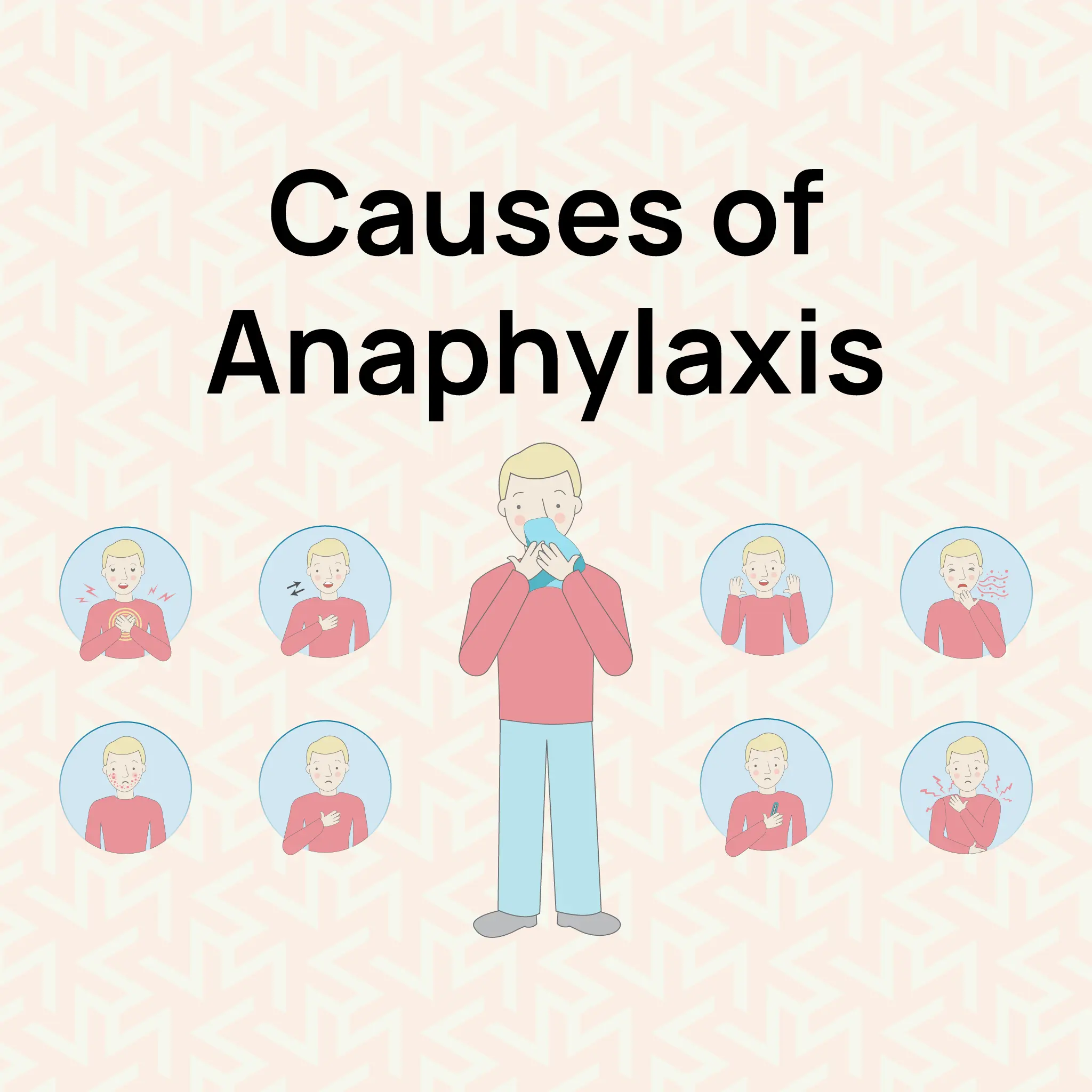
What is Anaphylaxis
Anaphylaxis represents a frequent medical emergency, including a life-threatening acute hypersensitivity response. This condition is marked by a widespread allergic reaction affecting multiple bodily systems. If left untreated, anaphylaxis can quickly lead to respiratory failure and even death.What is Anaphylaxis Anaphylaxis is a severe allergic reaction that leads to a life-threatening condition. It causes systemic shock, leading to impaired respiratory function. Symptoms of an anaphylactic allergic reaction may include angioedema (swelling) affecting the face, neck, tongue, or lips. Respiratory distress can occur, potentially leading to shock, including hypotension and altered consciousness.What are the Causes of AnaphylaxisAnaphylaxis is triggered by various allergens, which are substances that provoke an allergic reaction. Common triggers include:Food: Peanuts, tree nuts (such as almonds and cashews), shellfish, milk, eggs, soy, and wheat.Insect Venom: Bee stings, wasp stings, and other insect bites.Medications: Antibiotics (like penicillin), nonsteroidal anti-inflammatory drugs (NSAIDs), and certain vaccines.Other Substances: Latex, chemicals, and even exercise-induced factors in some individuals.What are the Signs and Symptoms of AnaphylaxisThe signs and symptoms of anaphylaxis can develop rapidly and affect multiple organ systems:Respiratory System: Difficulty breathing, wheezing, throat tightness, and coughing.Cardiovascular System: Drop in blood pressure (hypotension), weak or rapid pulse.Skin: Itching, hives symptoms (urticaria), redness, and swelling (angioedema) of the face, lips, tongue, or throat.Gastrointestinal System: Nausea, vomiting, abdominal pain, and diarrhoea.Neurological System: Dizziness, confusion, and loss of consciousness.What are the Stages of an Allergic Reaction?Allergic reactions generally involve several stages, varying in severity and duration depending on the individual and the allergen involved. Here are the typical stages:Exposure: This is the initial stage where the person comes into contact with the allergen, whether through ingestion, inhalation, skin contact, or injection (as with insect stings).Sensitisation: In this stage, the immune system recognises the allergen as a threat and starts producing specific antibodies against it (IgE). This sensitisation process may occur over time and can involve repeated exposures to the allergen.Activation: Upon exposure to the allergen, the antibodies trigger the release of chemicals such as histamine from mast cells and basophils in the body. This release leads to the onset of allergic symptoms.Occurrence of Symptoms: This stage involves an allergic reaction, which can vary widely depending on the allergen and the individual's immune response. Symptoms can affect various systems, including:Skin (itching, hives)Respiratory system (wheezing, difficulty breathing)Gastrointestinal system (nausea, vomiting)Cardiovascular system (rapid heartbeat, drop in blood pressure).5. Resolution: The symptoms typically disappear after removing or neutralising the allergen (e.g., by medications like antihistamines or epinephrine).The resolution stage may vary in duration, depending on the reaction's severity and the treatment's effectiveness. .banner { border-radius: 10px; overflow: hidden; border: 2px solid #ccc; box-shadow: 0 4px 8px rgba(0, 0, 0, 0.2); background-color: #fdf9ee; } .book-now { color: white; background-color: #DF3D52; border: none; padding: 15px 60px; border-radius: 5px; cursor: pointer; font-size: 20px; text-decoration: none; } .book-now:hover { /*text-decoration: none;*/ color: white; background-color: #c33f50; } Get Trained in All First-Aid Skills First Aid Courses Book Now Rated Excellent on major review sites How is Anaphylaxis PreventedPrevention of Anaphylaxis is important for immuno-compromised people, who are vulnerable to allergens. Preventing anaphylaxis involves:Medical Alert Identification: Wear medical alert jewellery (e.g., bracelets) indicating allergies and carry an epinephrine auto-injector.Education: Educate oneself and others about triggers, symptoms, and emergency response protocols.Allergy Testing: Undergo allergy testing to identify specific triggers and develop a management plan with healthcare providers.Food Allergy Management: Properly managing allergens during food processing and packaging is crucial to prevent cross-contact contamination. Key methods for allergen control include:Clear Allergen LabellingProper RefrigerationStaff and Equipment HygieneColour-Coded UtensilsImplementing the HACCP System: Process and PrinciplesWhat is the Treatment of an Anaphylactic Allergic ReactionImmediate treatment of anaphylaxis involves administering epinephrine (adrenaline) via an auto-injector device (such as an EpiPen) to counteract the allergic response. Additional measures may include:Monitoring: Continuous monitoring of vital signs (blood pressure, pulse, and oxygen saturation).Supportive Care: Medicinal treatment includes oxygen therapy, intravenous fluids to maintain blood pressure, and medications like antihistamines and corticosteroids to reduce inflammation.Emergency Medical Attention: Prompt transfer to a hospital emergency room for further evaluation and management. .main{ border:3px solid #0f7c90; border-radius:20px; position: relative; font-family:roboto; font-weight: 400; color: #000; } .main-two{ position: absolute; top:-25px; left:45px; background-color:white; } .img-div{ border-radius : 100%; padding:2px 7px; background-color:#0f7c90; margin-right:5px; width: 50px; height: 50px; } .img{ width:30px; object-fit:contain; height:auto; border-radius : 100%; } @media only screen and (max-width: 600px) { .heading{ font-size:20px; } .img{ width:20px; object-fit:contain; height:auto; border-radius : 100%; } .img-div{ width: 40px; height: 40px; } .main-two{ left:25px; } } Ready to Learn More? Knowing how to manage anaphylaxis is important in emergencies, but there's more to first aid. Our First Aid courses offer complete training to help you handle critical situations. Whether you want to improve your skills or workplace safety, these courses help build confidence and expertise. View our Emergency First Aid at Work (EFAW) and Level 3 First Aid at Work courses. These courses meet the UK legal requirements and help you keep people safe. What are the Types of Anaphylactic ReactionsAnaphylaxis can be classified into different types based on triggers and clinical presentation:Food-Induced Anaphylaxis: Triggered by ingestion of allergenic foods.Insect Sting Anaphylaxis: Caused by venom from insect stings or bites.Drug-Induced Anaphylaxis: Reaction to medications or vaccines.Exercise-Induced Anaphylaxis: Triggered by physical exertion in conjunction with specific factors.Idiopathic Anaphylaxis: Cases where the trigger is unknown.ConclusionAnaphylaxis is a serious allergic reaction that must be immediately identified and treated to prevent life-threatening complications. Understanding the causes, signs, treatment options, triggers, types, and prevention strategies empowers individuals to effectively manage and reduce the risks associated with anaphylaxis. For those with known allergies, proactive measures are essential to ensuring safety outcomes in an anaphylactic emergency.
Health and Safety Risks on Construction Sites
It is quite difficult to manage health and safety in the construction industry. Anyone who enters a construction site runs the danger of getting hurt, making it one of the riskiest locations to work. That�s why most contractors in the UK ask for the CSCS Labourers Card, which is a physical testament that the workers have the entry-level skills and knowledge to work on the site. To get a Labourers Card, you need to complete the CSCS Green Card (Labourers Card) Course. Hurak offers the CSCS Labourers Card Course online as well as in classroom mode.Health and safety should be a top consideration on any construction site, whether residential or commercial. The potential health and safety risks include working at heights, using large equipment, and moving goods about the building site.In the UK, 80,000 construction workers experience work-related ill health each year, and 64,000 sustain non-fatal injuries, according to HSE. The 2016�2017 year saw 30 fatalities related to construction. This blog lists a few of the major ailments, accidents, and fatalities that occur in construction.Air-Borne Fibres and ToxinsAccording to HSE, 18,000 new cases of breathing issues1 are self-reported yearly, and there are 12,000 deaths from work-related lung diseases. Even though our sector is not entirely to blame for these issues, it is a major one. Many of these disorders take years to manifest, giving people a false sense of security and making it difficult for workers and their managers to enforce PPE properly.The atmosphere of construction has many potential sources of lung harm. These consist of:Stone masonry-related dust, debris removal, and general site cleanupWhen installing carpet, toxic fibres can become air-borne. Isocyanates can also be inhaled as an ingredient in paints, varnishes, glues, flooring, and building insulation materials.A variety of wood dustBreathing in these particles can cause various illnesses, including lung cancer, silicosis, COPD (chronic obstructive pulmonary disease), occupational asthma, and silicosis.AsbestosAsbestos is a significant contributor to deadly respiratory diseases. When annual lung disease deaths are broken down, asbestos-related lung cancer accounts for 20% of the total. In the UK, there are almost 500,000 public buildings that contain asbestos. Older buildings have hazards for the unwary, especially electricians, including ceiling tiles, thermal paper and wall plaster, insulation, cement siding, switchgears and circuit breakers.It is important to emphasise that asbestos poses a unique risk because a worker�s family may be at risk if they bring the dust home. When a family member is exposed to asbestos dust, a condition known as para-occupational or secondary exposure, they are also at risk of respiratory problems.According to legal requirements for duty holders, the occupants of buildings or sites must be adequately protected from asbestos-related risks. Providing asbestos awareness training to those who might come into contact with asbestos is one way to uphold your duty of care.Collapse10 of the 137 workers who died at work in 2016�2017 did so due to an object collapsing. People who labour around or excavate are in danger since there are several potential outcomes. These consist of:entering an excavationthe vicinity of an excavation becoming unstable and collapsing as a result of additional weights (like scaffolding or vehicles)compromising the stability of neighbouring buildings, resulting in their collapseInjury from falling objects when the excavation�s structural integrity failsManual HandlingLifting, carrying, lowering, pushing, and pulling items and material loads are manual handling tasks. Although many other types of injuries are connected to material handling (bruises, punctures, fractured bones), soft tissue damage�damage to muscles, ligaments, tendons, discs, cartilage, and nerves�is the most frequent.Soft tissue injuries typically impact the lower back, hips, legs, knees, ankles, and feet in addition to the neck, shoulders, elbows, arms, wrists, and hands. They may occur instantly or develop over time as a minor ache that gets worse with time. The degree of pain associated with the injury can range from mild to moderate discomfort to severe pain and the possibility of long-term disability. Enrol in a manual handling course to learn the correct way to handle things and prevent further damage. To further prevent manual handling injuries, follow the construction site signage to ensure clear safety signage in high-risk areas.�NoiseIn the UK, there were 1,505 new claims for work-related deafness between 2007 and 2017; according to HSE, 1495 men and 10 women were among them. Potentially dangerous noise levels on construction sites provide challenges. The issue is that workers frequently neglect to use the recommended hearing protection since site noise levels can change. The inappropriate hearing protectors may also be provided, making people less willing to wear them and providing additional risks such as the inability to hear a warning call or an improper fit with other PPE.Slips and TripsAccording to HSE, several thousand people are hurt on the job each year in the construction sector, and about 1,000 of those suffer a dislocated joint or a broken bone. With around 40% of all reported injuries being slips and trips, they are the most prevalent non-fatal workplace injury. Slips and trips are important because, in most cases, dangers may be readily avoided with good work area management.Working From HeightWith approximately 50% of all fatal injuries in the construction profession occurring from working from heights in 2016�2017, this practice remains one of the leading causes of fatalities. Working from heights can present several risks, including:apertures without guards and a lack of guardrailsinsufficient edge protectionUnsecured scaffolding or laddersOn roofs and high pathways, loose tools and/or carelessly stored materialsUpon successfully completing the course, you will instantly receive a digital certificate in spectator safety accredited by CPD and Highfield. You can print the certificate and keep it for future recordExhaustionConstruction work can be very taxing and frequently necessitates long shifts of physically demanding work in occasionally inclement weather. Although it isn�t frequently mentioned as a severe concern, tiredness plays a role in many accidents on construction sites. A worker�s level of attentiveness declines when they are physically or psychologically worn out, leading to careless choices and expensive errors.SuicideSuicide is the leading cause of death, surpassing falling from heights. The UK outnumbers all other nations. The suicide rate for low-skilled male construction workers is over four times greater than the national average, according to the Office for National Statistics, making suicide 63% more likely in the construction sector than in any other reporting group. According to the statistics, 1,047 of the 10,688 �people in-work� suicides documented between 2011 and 2015 involved the construction business, making up a little over 13% of the total. Unexpectedly, mental health is the biggest concern in the construction sector rather than physical health.Why do people commit suicide more frequently than in other industries working in the construction sector? According to some, the job�s precariousness�combined with its low pay, exploitation, and bullying�is to blame.Moving ObjectsConstruction sites are frequently bustling with activity, and without proper workplace management, being struck by a moving object can become dangerous, similar to slips and trips.Several factors can cause a worker to be struck by a moving object. These consist of:crowded and disorganised workspaces that prevent safe manoeuvringlack of beepers or warning lights on moving carsunlit workspacesconcentrating while near moving itemsstumbling into moving objects like machinery, pallets, or boxesthe absence of warning signs at crossroads with trafficHand and Vibration SyndromeA worker will get hand and vibration syndrome (HAVS) if they always utilise handheld power equipment. HAVS is easily avoidable, but once it�s there, the damage is irreversible. Tingling in the hands, fingers, and/or numbness are among the earliest signs of HAVS. If untreated, dexterity deteriorates, and touch receptor function is compromised. This makes it difficult for workers to grasp objects properly, which leads to a variety of issues, such as making it difficult to hold onto a tool or even to pour a drink of water.ElectricityExposure to electrically live parts is dangerous. Direct contact with live parts can cause harm, as can indirectly contact with a conducting object or material. Each year, 1,000 electrical accidents at work are reported, according to HSE. The majority of these mishaps are caused by coming into contact with overhead or underground power cables, as well as electrical apparatus. Ladders, scaffolds, and other work platform falls are frequently brought on by electric shocks. Additionally, there are an increasing number of electrocutions involving people performing electrical work on building sites who are not licenced electricians.
What is Epilepsy?
Millions of individuals worldwide are impacted by epilepsy, including those who support or care for those with the disorder. It is a typical neurological illness that can afflict anyone, regardless of age, sex, or race, and frequently results in seizures.The definition of epilepsy, key distinctions between it and seizures, indications and symptoms of a seizure, ways to support someone with epilepsy, and what to do in the case of a seizure are all covered in this article.What is epilepsy?A frequent disorder that affects the brain and can result in seizures is epilepsy. Brain electrical activity surges, known as seizures, can cause symptoms like losing consciousness, trembling, or falling.Epilepsy typically begins in childhood or after age 60 and lasts a lifetime. Epilepsy symptoms can sometimes be controlled with medicine, and the illness occasionally gets better with time. However, epilepsy is a chronic disorder for many people.Each individual�s case of epilepsy has a unique set of causes, which are numerous and varied. A severe head injury, a stroke, or an infection of the brain are a few typical causes of brain damage.There are various varieties of epilepsy as well as various causes. Four different forms of epilepsy have been identified by the International League Against Epilepsy (ILAE).Focal epilepsy � seizures that start on just one side of the brain.Generalised epilepsy � starts on both sides of the brain.Combined generalised and focused epilepsy � are a part of combined general and focal epilepsy.Unknown � Sometimes, it is difficult to pinpoint the origin of these kinds of seizures.What are the differences between epilepsy and seizures?An electrical surge in the brain, known as a seizure, can result in aberrant muscle tone, movements, behaviours, perceptions, and levels of consciousness. Depending on whatever portion of the brain is affected, seizures have a distinct impact on various people. People frequently fall to the ground during generalised seizures, for instance.Numerous factors, including drug usage, high blood sugar, and fever, can cause seizures. It is typically accepted that someone has epilepsy if they experience two or more seizures separated by at least 24 hours.It is significant to remember that seizures can occur in people who do not have epilepsy. Seizures are necessary for epilepsy, even if they don�t have overt consequences. Seizures, as was previously established, are not always brought on by epilepsy and can be brought on by various factors.Making the distinction between seizure triggers and epilepsy causes is crucial. For instance, a person with epilepsy who is sleep deprived may experience a seizure. The seizure is brought on by insufficient sleep, but brain damage may be the underlying factor in their epilepsy. In this case, the seizure rather than the lack of sleep is what has triggered their epilepsy.Among the causes of epilepsy are:A brain infection.A lack of oxygen during birth.Genetics.Alzheimer�s disease.A brain or head injury.A brain tumour.Drug or alcohol misuse.A stroke.Seizure-inducing factors include:Missing medication.Changes in hormones.A fever is especially common in children.Stress.A lack of sleep.Alcohol and recreational drugs.Skipping or missing meals.Over excitement.Flashing and flickering lights.What are the symptoms and signs of epileptic seizures?Depending on the type of seizure a person is experiencing, their signs and symptoms will change. Not all seizures are accompanied by strange shaking or body movements, and some last only a few seconds.The following are some symptoms and warning indicators that someone may be suffering an epileptic seizure:Rapid blinking.Breathing problems.Appear confused or in a daze.Unconsciousness.Losing muscle tone.Changes in hearing, vision, taste, smell and feel.Difficulty talking.An increased heart rate.Lip-smacking, chewing motions, or rubbing hands and fingers.Uncontrollable body movements, shaking or jerking.People must be aware of a seizure�s warning signs and symptoms to recognise it quickly and render aid if necessary.Particularly if they persist for more than five minutes or the victim stops breathing, seizures can be exceedingly dangerous. Knowing how to assist someone with epilepsy during a seizure is vital since seizures can cause other injuries, such as bruises, scrapes, and head trauma.Our First Aid at Work training course describes the various reactions to various kinds of seizures, how to spot an emergency, and how to assist a person after a seizure. .banner { border-radius: 10px; overflow: hidden; border: 2px solid #ccc; box-shadow: 0 4px 8px rgba(0, 0, 0, 0.2); background-color: #fdf9ee; } .book-now { color: white; background-color: #DF3D52; border: none; padding: 15px 60px; border-radius: 5px; cursor: pointer; font-size: 20px; text-decoration: none; } .book-now:hover { /*text-decoration: none;*/ color: white; background-color: #c33f50; } Get Trained in All First-Aid Skills First Aid Courses Book Now Rated Excellent on major review sites How to help someone with epilepsy?Each person with epilepsy is different; thus, the kind of support they need will differ. You can only provide someone with the most suitable and helpful assistance if you comprehend how their disease affects them.How to respond to seizures?Respond as follows if someone is having a seizure:Do:Remove any dangerous things from the area.Remain composed, reassuring, and by their side until the seizure is done.After the seizure, check in with them to see if they�re alright and give them a seat.Don�t:Do not grab them, restrain them, or make any sudden motions.Presume that they are aware of what is taking place.Try to entice them over or provide them with food or beverages.'Call 112 or 999 if:A person has a series of seizures without gaining awareness between them.It is their first seizure.More than five minutes pass as the seizure continues.The individual is hurt, or you believe they require medical attention.As previously said, the sort of seizure the person is experiencing will determine how you should react. Take a look at one of our first aid training courses if you want to understand how to handle various seizure types and how to spot an emergency.Some people will recover from a seizure immediately, while others may need a few minutes or even hours. People may experience confusion and fatigue during the postictal state, which is the period following a seizure. The best method to provide support is to be there for the person and stick with them till they recover.Learning about it and spreading as much information as possible to increase awareness are two of the most significant things you can do for a friend with epilepsy. The complexity of epilepsy is more than most people realise, and any knowledge gained is beneficial to all those who are affected.
Do's & Don'ts of Construction Safety
One of the most dangerous workplaces in the world is the construction site, but it is also one of the most neglected. In addition to the high number of accidents and injuries that occur there, these situations could endanger the lives of those concerned. For this reason, construction workers should be more cautious than those in any other profession.�We�ll go into the do�s and don�ts in construction to decrease workplace accidents and ensure your safety and, more importantly, the lives of your team to assist you in avoiding the unpleasant risks that might arise on-site. Construction sites will no longer be frightening if these rules are carefully followed.DO's1. Wear Safety Equipment At All TimesNo matter how high or low a worker�s platform is, there will always be a chance of rubble or other things falling on them. Workers could suffer an injury or pass away if anything fell on their heads. To protect your head from any debris that might fall from above, you should, at the very least, wear a hard hat the entire shift. Wearing gloves and high-visibility clothing, like any other safety equipment, protects your hands and improves your ability to see while you are in a potentially dangerous environment. Safety glasses are advised to protect your eyes from dust or sparks, and boots are encouraged owing to their endurance.2. Learn Site SafetyAlthough most of a construction worker�s abilities can be gained on the site, it is preferable to acquire safety knowledge before entering the site. The majority of the contractors in the UK require the labourers to have a CSCS Labourer Card, which is a testament that the worker has qualifications to work on a site. To apply for a CSCS Labourer Card, the workers need to complete the CSCS Green Card (Labourers Card) Course, also known as the CSCS Labourer Card Course, through which they will learn safety regulations and health-related topics like manual handling, hazardous substances, welfare facilities, etc. Experienced personnel should also enrol in the CSCS Labourer Card Course once every five years to increase/refresh their understanding of building standards for safety. These training sessions will cover anything from basic safety precautions to techniques that could save lives, like how to use a ladder safely. The main objective is to ensure that everyone is thoroughly trained. The employees ought to be aware of the safety precautions that must be taken in the event of an occurrence after these training sessions. .second-cta-block .main-heading { font-weight: bold; font-size: 22px; } .second-cta-block .book-now { background: #DF3D52; color: #FFFFFF !important; border-radius: 8px; } .second-cta-block .second-heading { font-size: 17px; } .second-cta-block .card { border: 0 !important; } .second-cta-block .card-body { border: 1px solid #909090; box-shadow: rgba(0, 0, 0, 0.16) 0px 1px 4px; border-top-right-radius: 100px; border-bottom-right-radius: 100px; background: #ECECEC; } .second-cta-block .image-wrapper { height: 134px; position: absolute; right: -100px; top: calc(50% - 67px); /* Center the image vertically */ } .second-cta-block .image-wrapper img { height: 100%; } .second-cta-block .trustpilot-widget { width: 256px; } .cta-heading-section { width: 75%; } @media screen and (max-width:991px) { .second-cta-block { padding-top: 100px; } .second-cta-block .card-body { border: 1px solid #909090; box-shadow: rgba(0, 0, 0, 0.16) 0px 1px 4px; border-radius: 19px; border-radius: 14px; background: #ECECEC; } .cta-heading-section { width: 100%; padding-top: 50px; } .second-cta-block .image-wrapper { height: 134px; right: 0; position: absolute; left: calc(50% - 108px); top: calc(50% - 203px); } } RQF LEVEL 1 COURSE for CSCS GREEN CARD Check the Course Rated Excellent on major review sites 3. Keep An Eye on Your Surroundings At All TimesAnyone entering a building site should always keep an eye out for potential dangers because there are nearly always many activities occurring at once. It would be best if you always kept an eye out for them wherever you travel because doing so will prevent catastrophic injuries. Examples include:Pits.Construction equipment.Beams moving about the region.Other risky parts of an incomplete building.Additionally, you must never talk on the phone or interact with others while operating machinery that needs close attention.4. Stay Close to The ForemanTo work effectively, supervisors should always ensure the safety of their construction crews. The foreman�s responsibility is to direct the personnel performing duties across the site. A foreman�s knowledge of construction safety places them in a leadership position that cannot be disregarded. Even if a safety issue isn�t immediately obvious, always pay attention to what they say about what is safe and what isn�t.5. Inform the Workers About Site HazardsEvery worker must be properly informed and aware of the potential risks before entering any construction job site, regardless of their position or degree of expertise. Unskilled or ignorant workers may pose the greatest risks to any company since they may unintentionally endanger those around them. The best method to avoid injuries or accidents is probably to fully comprehend the dangers around you and to maintain a constant level of attention.Essential safety training is required in workplaces where accidents and fatalities are more likely; doing so will help you avoid terrible events that will harm your reputation and finances. Even though training sessions are held all year long, construction workers would enforce safety regulations more effectively if they applied and practised the skills they learned there. Without the proper training, employees risk severe or even fatal injuries.6. Use Proper EquipmentYou need to provide your employees with the appropriate tools and a suitable workspace for the task at hand if you want to foster a culture that prioritises construction safety. Construction site safety is impossible without the right tools because there is always a danger of getting hurt when using the incorrect ones. With the wrong equipment, construction workers are sure to make serious, even fatal, mistakes. In addition to ensuring that every piece of equipment on the job site is appropriate for the task at hand, construction companies also need to ensure that all equipment is kept in good working order.7. Take a Break When NeededWhile putting in a lot of effort should always be viewed as rewarding, it�s okay to take a break occasionally. Taking a break before returning to work helps employees maintain their vitality. Make sure breaks don�t go any longer than they have to.DON�T1. Wear Anything Unsuitable on a Construction SiteCasual attire won�t keep workers safe while at work; baggy pants or skirts are more likely to cause injury than work pants, and steel-toed boots will always provide more protection against heavy objects than trendy running shoes.2. Wandering Into Unsafe AreasIt�s not always safe to enter a building site just because it�s large and has numerous places. Significant liabilities may result for the contractor and other parties. The dangerous spots should be suitably designated with cones and signage to deter workers or anyone from entering risky areas.3. Use Equipment You Are Not Familiar WithSome employees are better than others at using specific pieces of equipment. Although it could appear simple initially, employees shouldn�t utilise any new tools without supervision. Commercial real estate work is expensive enough as it is, and untrained workers run the risk of harming or destroying site property.
Which First Aid training qualification should you choose
First aid training teaches employers and employees the skills to handle emergencies professionally. Selecting the right course depends on understanding your organisation�s specific needs, including the type of work, the level of risk (high or low), the number of employees, and the workplace size.How many First Aiders are Required for a WorkplaceThe Health and Safety Executive (HSE) provides the following recommendations:Low-risk workplaces (e.g., offices) with 25 to 50 employees: At least one person should be trained in Emergency First Aid at Work (EFAW).Low-risk workplaces with more than 50 employees: One person trained in First Aid at Work (FAW) is required for every 100 staff members.High-risk workplaces (e.g., construction sites or factories): Due to the increased likelihood of serious incidents, additional training and a greater number of first aiders are required.Providing first aid training is not only a legal obligation for employers in the UK but also an ethical one. Having trained staff can save lives, reduce workplace injuries, and create a safer working environmentWho is a First-Aider? A first aider is trained to help sick or injured people until professional medical help arrives. In emergencies, first aiders are often the first to respond, ensuring the safety and calmness of those involved until further help arrives. Anyone can become a first aider by learning these skills, making it a valuable way to contribute to the safety of their workplace or community.What are the Levels of First-Aid TrainingQualified first aiders undergo one of two main types of training; FAW and EFAW training. EFAW stand for Emergency First Aid at Work course and is for lower-risk workplaces like offices or retail shops.This one-day training covers basic CPR, managing bleeding and wounds, treating minor injuries, and handling choking incidents or other emergencies. Upon completion, participants receive a certificate valid for three years.The First Aid at Work qualification, or FAW course, is more detailed for higher-risk workplaces. This three-day training includes everything in EFAW, along with additional topics such as managing seizures, heart attacks, diabetic emergencies, and severe allergic reactions. FAW certification is also valid for three years.Health and safety regulations may not require a trained first aider in smaller businesses. Instead, a responsible person can be appointed to oversee first aid. While formal training isn�t compulsory for these roles, many take a Basic First Aid course to handle minor emergencies confidently. First aiders, regardless of their training level, play an important role in ensuring safety and providing immediate care during emergencies. .main{ border:3px solid #0f7c90; border-radius:20px; position: relative; font-family:roboto; font-weight: 400; color: #000; } .main-two{ position: absolute; top:-25px; left:45px; background-color:white; } .img-div{ border-radius : 100%; padding:2px 7px; background-color:#0f7c90; margin-right:5px; width: 50px; height: 50px; } .img{ width:30px; object-fit:contain; height:auto; border-radius : 100%; } @media only screen and (max-width: 600px) { .heading{ font-size:20px; } .img{ width:20px; object-fit:contain; height:auto; border-radius : 100%; } .img-div{ width: 40px; height: 40px; } .main-two{ left:25px; } } Ready to Learn More? Check which course is right for you by visiting Our First Aid courses offer complete training to help you handle critical situations. Whether you want to improve your skills or workplace safety, these courses help build confidence and expertise. View our Emergency First Aid at Work (EFAW) and Level 3 First Aid at Work courses. These courses meet the UK legal requirements and help you keep people safe. What is the Difference between EFAW and FAWEmergency First Aid at Work (EFAW) and First Aid at Work (FAW) are two levels of first aid training courses required for workplaces in the UK. Both courses provide employees with the skills and knowledge to handle workplace injuries and medical emergencies. However, there are key differences in the content and requirements of each course.FeatureEFAW (Emergency First Aid at Work)FAW (First Aid at Work)Duration1 day�3 days�Suitability�Low-risk workplaces with 25-50 workersHigh-risk workplaces or larger businesses with >50 workersTopics CoveredCPR, wound care, managing unconscious casualties, choking, bleeding, and shockAll EFAW topics plus fractures, burns, medical conditions, and advanced first aidLevel of TrainingLow-level basic first-aid training�High-level advanced first-aid trainingCertificationEmergency First Aider certificationFirst Aider certificationWhat Qualifications Does a First Aider Need in SchoolsIn schools, first aid requirements are specific to the unique needs of children. Schools and early years providers must ensure that staff are trained in first aid, and at least one person must hold a current Paediatric First Aid (PFA) certificate. This qualified individual must be present whenever children are on the premises or participating in school trips.This requirement ensures that schools are prepared to handle emergencies specific to children, such as choking or playground injuries.How Long Does a First Aid Course LastFirst-aiders should complete refresher training every three years to maintain their certification and skills. Regular refresher courses are important for several reasons:Maintaining Skills: First aid techniques can be forgotten over time. Refresher courses help first-aiders stay confident and effective in emergencies.Staying Updated: First aid guidelines and legal requirements can change. Refresher training ensures first aiders are up-to-date with the latest procedures and standards.By keeping training current, first-aiders can continue to perform their roles and meet legal requirements.Who should take up the Mental Health First Aid CourseMental Health First Aid (MHFA) is a level 2 first aid course for anyone who wants to learn how to help people struggling with mental health issues. It�s useful for those who work with others or in environments where mental health challenges might arise.Mental Health First Aid is useful for managers, HR professionals, teachers, healthcare workers, community leaders, and anyone interested in mental health. It helps people recognise mental health problems and provides the right support until professional help can be reached. .main{ border:3px solid #0f7c90; border-radius:20px; position: relative; font-family:roboto; font-weight: 400; color: #000; } .main-two{ position: absolute; top:-25px; left:45px; background-color:white; } .img-div{ border-radius : 100%; padding:2px 7px; background-color:#0f7c90; margin-right:5px; width: 50px; height: 50px; } .img{ width:30px; object-fit:contain; height:auto; border-radius : 100%; } @media only screen and (max-width: 600px) { .heading{ font-size:20px; } .img{ width:20px; object-fit:contain; height:auto; border-radius : 100%; } .img-div{ width: 40px; height: 40px; } .main-two{ left:25px; } } Check which course is right for you by visiting our First Aid courses that offer complete training to help you handle critical situations. Whether you want to improve your skills or workplace safety, these courses help build confidence and expertise. View our Emergency First Aid at Work (EFAW) and Level 3 First Aid at Work courses. These courses meet the UK legal requirements and help you keep people safe. FAQsWhat is the best first aid course for my workplace?The right first aid course depends on the type of work, the level of risk (high or low), the number of employees, and the workplace size. Low-risk workplaces may need an Emergency First Aid at Work (EFAW) course, while high-risk workplaces may require more detailed training like First Aid at Work (FAW).How many first-aiders do I need in my workplace?According to the HSE, workplaces with 25 to 50 employees in low-risk environments should have at least one trained first aider. For workplaces with more than 50 employees, one first aider should be trained for every 100 staff members. High-risk workplaces will need more first-aiders due to the greater potential for serious incidents.What is the role of a first aider?A first aider is trained to help sick or injured individuals until professional medical help arrives. They are often the first to respond in emergencies, ensuring safety and calmness until further help is available.What are the different types of first aid training available?The two main courses are Emergency First Aid at Work (EFAW), a one-day course for low-risk workplaces, and First Aid at Work (FAW), a three-day course for higher-risk environments. Both certifications are valid for three years.What does EFAW stand for?EFAW stands for Emergency First-Aid at Work.What does FAW stand for?FAW stands for First-Aid at Work.What qualifications do first aiders need in schools?Schools must have staff trained in Paediatric First Aid to handle child-specific emergencies, such as choking or injuries on the playground. At least one qualified individual with a Paediatric First Aid certificate must be present when children are at school or on trips.How often do first aiders need refresher training?First-aiders should complete refresher training every three years to maintain their certification and stay updated on new first-aid guidelines and legal requirements.Who should take a Mental Health First Aid course?The Mental Health First Aid (MHFA) course is ideal for anyone who wants to learn how to support individuals experiencing mental health challenges. It's useful for managers, HR professionals, teachers, healthcare workers, community leaders, and anyone working in environments where mental health issues might arise.ConclusionChoosing the right first aid qualification depends on your workplace's needs, risks, and size. Whether a basic Emergency First Aid at Work course is needed for a low-risk environment or a more detailed one for higher-risk settings, having trained staff can save lives and ensure a safer environment. In schools, Paediatric First Aid is necessary to handle emergencies involving children, while Mental Health First Aid courses are ideal for those wanting to support others with mental health issues. Regular refresher training helps keep skills up to date, ensuring first aiders are always ready to act in an emergency. No matter your role, first aid training is an important investment in both safety and well-being, providing skills that can make a difference when it matters most.
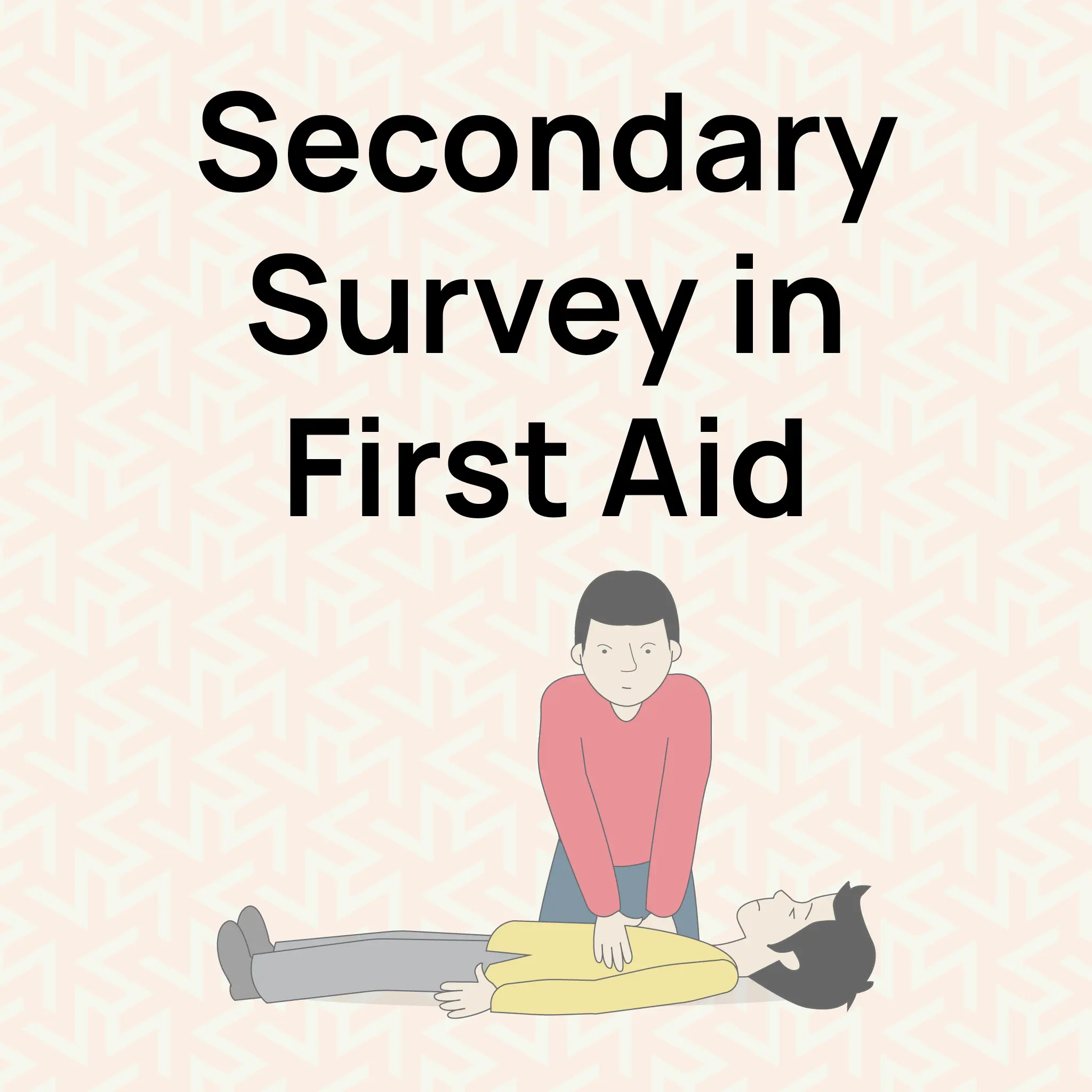
How To Conduct a Secondary Survey in First Aid
The secondary survey assesses the injuries of an awake, responsive person. It involves thoroughly examining the person's health history, assessing the four vital signs and conducting a systematic head-to-toe examination. If we discover any injuries, we administer first aid accordingly. Finally, we document all our actions and findings of the entire process. A secondary survey is performed after completing the primary steps of first aid (remembered as DRABC).What is the Difference Between a Primary and a Secondary Survey First, we always do a primary survey to quickly find and stop any life-threatening injuries. Once the person is more stable, we do a secondary survey. This is where we gather more information about what might have caused the person's injuries or illness. Primary Survey Secondary Survey� First examination Second examination� Assesses and stabilities a person in life threatening conditions� Diagnoses and treats major injuries after stabilisation�� Follows DRABC steps Follow AMPLE steps� Does not involves a head to toe examination� Involves a head to toe examination For responsive or unresponsive patients� Typically for responsive patients� Why Do We Perform the Secondary Survey in First AidIn a secondary survey, we look for injuries. We physically examine every part of the injured person's body from head to toe. We check the front, back, sides, underneath, and top. This survey includes looking at the airway again and checking the lungs again.When To Perform the Secondary Survey in First AidIf the person has more than one injuryIf it will take more than 20 minutes for medical help to arriveIf you're taking the person to get medical help .main{ border:3px solid #0f7c90; border-radius:20px; position: relative; font-family:roboto; font-weight: 400; color: #000; } .main-two{ position: absolute; top:-25px; left:45px; background-color:white; } .img-div{ border-radius : 100%; padding:2px 7px; background-color:#0f7c90; margin-right:5px; width: 50px; height: 50px; } .img{ width:30px; object-fit:contain; height:auto; border-radius : 100%; } @media only screen and (max-width: 600px) { .heading{ font-size:20px; } .img{ width:20px; object-fit:contain; height:auto; border-radius : 100%; } .img-div{ width: 40px; height: 40px; } .main-two{ left:25px; } } Ready to Learn More? Put your knowledge of the secondary survey into practice by enrolling in a course today! Our First Aid courses offer complete training to help you handle critical situations. Whether you want to improve your skills or workplace safety, these courses help build confidence and expertise. View our Emergency First Aid at Work (EFAW) and Level 3 First Aid at Work courses. These courses meet the UK legal requirements and help you keep people safe. How to Perform a Secondary Survey in First AidSAMPLE History TakingAsk questions to learn more about the person's medical background. Remember the word "SAMPLE" to help you remember what to ask:S stands for Symptoms: What the person feels, like pain or weakness.A stands for Allergy: Do they have any allergies? These could be to nuts or medicines like penicillin or aspirin.M is for Medication: Are they taking any medicines?P is for Previous medical history: Do they have any ongoing health conditions like diabetes or epilepsy? Have they had any surgeries or injuries before?L is for Last Meal: When did they last eat or drink?E is for Event history: What happened, and where did it happen? Was it because of an illness or an accident? Talk to anyone nearby to find out more, and look for any clues that could help understand what happened. Also, check if they have any special jewellery that might have medical information on it.Vital SignsCheck four critical things:Level of Consciousness: Are they awake and aware?Breathing: Are they breathing normally?Pulse: What's their heartbeat like?Skin Condition and Temperature: Is their skin normal, and are they warm enough?By conducting this secondary survey, we ensure that we've covered everything and helped the person in the best possible way.Check the Level of ConsciousnessChecking someone's level of consciousness (LOC) helps us understand how aware they are. We often use the letters AVPU to do this:A for Alert: If someone is alert, they're fully awake and can answer questions. They know who they are, where they are, and what time it is.V for Verbal: If they respond only when spoken to but aren't fully alert, they're in the verbal stage. They might seem confused and not know where they are or what's happening.P for Pain: If they only react when you give them a little pain, like pinching them, they're in the pain stage. They might move or make noises, but they cannot communicate appropriately.U for Unresponsive: If they're not reacting, even to pain, they're unresponsive. This is serious, and we need to act quickly to help them.Remember, another quick way to check is to look at their eyes, listen to what they say, and see if they can follow simple commands like squeezing your fingers.BreathingTo check someone's breathing, watch their chest rise and fall for 30 seconds. You can also gently place your hand on their stomach to feel it. Count how many breaths they take in that time, and then double it to know how many breaths they take per minute. Here's what's expected:For babies, breathing below 25 breaths is too slow, 30-50 is normal, and over 60 is too fast.For children: Below 15 is too slow, 20-30 is normal, and over 40 is too fast.For adults: Below 10 is too slow, 10-20 is normal, and over 30 is too fast. Normal Breathing Rated (no. of breaths)Infant30-50Child20-30Adult10-20�PulseYour pulse shows how often your heart beats in a minute. You can check it by feeling the person�s wrist, neck, or upper arm. Use two fingers and press gently until you feel the pulse. Count how many beats you feel in 30 seconds, then double it to get the beats per minute.Normal Pulse Rates:For babies: A normal pulse range is between 120 and 150 beats per minute.For children: It can vary between 80 and 150 beats per minute.For adults: The average pulse rate is usually between 60 and 100 beats per minute.Normal Pulse Rates (beats/min)Infant120-150Child80-50Adult60-100�Skin Condition and TemperatureWhen we check someone's skin, we're looking at a few things:Temperature: Is their skin warm or cold?Colour: Does their skin look normal or pale?Dryness: Is their skin dry or wet/sweaty?To check, gently feel their forehead and cheeks with your hand. If their skin is normal, it should feel warm and dry and be a regular colour. But if it's pale, cold, and sweaty, it could mean they're going into shock.Head-to-Toe ExaminationThis is a thorough check of the person's whole body for any injuries we might have missed earlier. Here's how to do it:Before you start, ask if they feel any pain and explain what you will do.Talk to them throughout, & watch their face for any signs of pain.Keep going, and even if you find something, make a note and continue.Be respectful and only expose areas you need to check.Look for any bumps, bruises, or anything unusual.If they're unconscious, look for any medical alert tags or jewellery.Always look before touching.Let's start at the head:Feel the skull for anything unusual.Check the ears for any fluid.Look at the eyes. Are the pupils the same size?Check the nose for any runny stuff.Look inside the mouth. Are the teeth okay? Are the lips a standard colour?Now, let's move to the neck:Check if the neck veins look big or bulging.See if they're wearing a necklace with medical info.Feel the collarbones.Check both shoulders.Now, onto the arms:Check each arm carefully.Squeeze each fingernail and see if the colour comes back quickly.Ask them to squeeze your fingers. Are they strong enough and equal on both sides?Next, let's look at the chest and underneath:Ask if it hurts when they breathe.Make sure the chest goes up and down as it should with each breath.Reach around to the back as far as you can.Let's check the tummy and underneath:Use your hands flat to feel the tummy gently.Don't press too hard. Just see if there's any pain, tenderness, or stiffness.Put your hand flat on their tummy and ask them to push against it. Does it hurt?Reach around to the back as far as you can.Now, let's look at the hips:Please put your hands on the hip bones and gently squeeze to check they're stable.Moving down to the legs, ankles, and feet:Check each leg one by one.See if one leg is shorter than the other.Check the kneecap and the area underneath carefully.Give a little pinch on the foot and ask if they felt it.Could you put your hands on their feet? Ask them to push and then pull against your hands. Are they equally strong on both sides? Ask them to wiggle their toes and see if they can do it.Check the circulation in their legs.Provide First-Aid for InjuriesOnce you've finished checking everything, it's time to give the right first aid for any injuries or illnesses you find. If the person has more than one injury, start with the most serious one.Pro Tip: Act quickly if you find serious injuries. Administer first aid immediately, even if you have not completed the survey. Keep the person's safety top priority.�DocumentationAfter you've given first aid, write down what you've found and what you've done. This information can help doctors or other medical staff who will care for the person later. It is important to know if the injury happened at work because it might need an investigation. You'll usually fill out forms provided for this purpose, and you should keep them as required by the rules in your area.First-Aid TrainingThe Emergency First Aid training course is designed for low-risk environments such as offices and small retail stores. It gives participants the fundamental knowledge and skills to manage emergencies in these settings effectively.On the other hand, First Aid Training at Work is one of the extensive first aid courses that meets the requirements specified in the Health and Safety Regulations (First Aid) 1981 and goes a step beyond the Emergency First Aid at Work (EFAW) course, qualifying you to work in high-risk workplaces. .banner { border-radius: 10px; overflow: hidden; border: 2px solid #ccc; box-shadow: 0 4px 8px rgba(0, 0, 0, 0.2); background-color: #fdf9ee; } .book-now { color: white; background-color: #DF3D52; border: none; padding: 15px 60px; border-radius: 5px; cursor: pointer; font-size: 20px; text-decoration: none; } .book-now:hover { /*text-decoration: none;*/ color: white; background-color: #c33f50; } Get Trained in All First-Aid Skills First Aid Courses Book Now Rated Excellent on major review sites FAQsWhat are the four vital signs for a secondary survey?The four vital signs of a secondary survey are checking the level of consciousness (LOC), breathing rate, pulse rate, skin condition and temperature.What does SAMPLE stand for in a secondary survey?SAMPLE stands for Symptom, Allergy, Medication, Previous medical record, Last meal and Events leading to the casualty. It is the order in which the history of the injured person is taken.What is the main aim of the secondary survey?The main aim of the secondary survey is to check for major injuries that might have been missed during the primary survey.What are the steps included in Emergency Scene Management?The steps included in ESM include scene survey, primary survey, secondary survey and ongoing casualty care.
6 Benefits of First-Aid Training And its Importance
First aid is the help you give to someone hurt or sick. This help happens before doctors or medical professionals arrive. It is very important because it can save lives and stop injuries from getting worse.Most First-Aid situations are minor, like cuts, burns, or bruises. These often happen in places like hospitals, hotels, and schools. Sometimes, more serious injuries can occur, so it is good to be ready to handle them if needed.What is the Importance of First-Aid Training?In First Aid training, you practise important skills to help in emergencies.CPR (Cardiopulmonary Resuscitation): You learn to perform chest compressions and rescue breaths. This helps restart someone's heart or breathing if they stop.Using a First Aid Kit: You practise using items in a first aid kit, such as bandages, antiseptics, and scissors. This helps you treat minor injuries and keep wounds clean.Primary Survey in First Aid Using DRABC: When helping someone in an emergency, always start with the primary survey. This means you quickly assess what is happening and the person's needs.Secondary Survey in First Aid: The secondary survey assesses the injuries of an awake, responsive person. It involves thoroughly examining the person's health history, assessing the four vital signs, and conducting a systematic head-to-toe examination.Basic Skills: You also learn other useful techniques, such as how to stop bleeding, how to treat burns, and how to handle broken bones.The main goal of first aid training is to provide immediate and effective help in an emergency. This help can make a big difference before doctors or other medical professionals arrive.Why is the Mental Health First Aid course important?The Mental Health First Aid Training course teaches how our mental well-being impacts our decision-making and progress in life. Particularly in the workplace, it is important to be aware of our certain triggers and how to stabilise them using emotional regulation. This is useful for employee productivity and overall job satisfaction.Six Key Benefits of First Aid Training at WorkEmployers must ensure their workplace has adequate and up-to-date first aid measures. The six important benefits of first-aid training for your staff are:Saving LivesFirst aid training can save lives. A British Red Cross study shows that up to 59% of injury-related deaths might have been prevented with immediate first aid. Training gives your staff the skills to act quickly in emergencies like choking, heart attacks, poisoning, or severe allergic reactions.Preventing the Situation from WorseningTrained first aiders can help prevent an injured person�s condition from worsening and stabilise the person until professional help arrives.Relieving PainFirst aid training helps staff relieve pain from injuries. They can use first aid kit items or cool burns with cold water. They also offer emotional support, which can ease anxiety and stress.Helping Communicate with Emergency ServicesTrained staff can provide accurate information to emergency services. This helps them give the right advice and decide on the next steps.Reducing Recovery TimeQuick first aid can save a life and speed up recovery, which means employees can return to work sooner.Helping with Legal ComplianceEmployers must follow health and safety laws, including providing first aid. Training helps meet these legal requirements and ensure a safe workplace. .main{ border:3px solid #0f7c90; border-radius:20px; position: relative; font-family:roboto; font-weight: 400; color: #000; } .main-two{ position: absolute; top:-25px; left:45px; background-color:white; } .img-div{ border-radius : 100%; padding:2px 7px; background-color:#0f7c90; margin-right:5px; width: 50px; height: 50px; } .img{ width:30px; object-fit:contain; height:auto; border-radius : 100%; } @media only screen and (max-width: 600px) { .heading{ font-size:20px; } .img{ width:20px; object-fit:contain; height:auto; border-radius : 100%; } .img-div{ width: 40px; height: 40px; } .main-two{ left:25px; } } Ready to Learn More? Put your knowledge of the benefits of first aid training into practice by enrolling in a course today! Our First Aid courses offer complete training to help you handle critical situations. Whether you want to improve your skills or workplace safety, these courses help build confidence and expertise. View our Emergency First Aid at Work (EFAW) and Level 3 First Aid at Work courses. These courses meet the UK legal requirements and help you keep people safe. Which First Aid Course is Right for Me?First aid training helps both employers and employees learn how to handle emergencies. To choose the right course, your organisation should assess its needs. This includes looking at the type of work, whether high-risk or low-risk, the number of employees, and the workplace size.Here are some guidelines from the HSE:For low-risk workplaces with 25 to 50 employees: At least one person should be trained in Emergency First Aid at Work (EFAW).For low-risk workplaces with more than 50 employees: One person should be trained in First Aid at Work (FAW) for every 100 staff members.In high-risk environments, the requirements are higher.Employers must provide first aid training in the UK to meet legal and ethical obligations. Having trained staff benefits the organisation and could be important in emergencies. .banner { border-radius: 10px; overflow: hidden; border: 2px solid #ccc; box-shadow: 0 4px 8px rgba(0, 0, 0, 0.2); background-color: #fdf9ee; } .book-now { color: white; background-color: #DF3D52; border: none; padding: 15px 60px; border-radius: 5px; cursor: pointer; font-size: 20px; text-decoration: none; } .book-now:hover { /*text-decoration: none;*/ color: white; background-color: #c33f50; } Get Trained in All First-Aid Skills First Aid Courses Book Now Trustpilot What Qualifications Does a First Aider Need at School?First aiders in schools need special qualifications. Schools and early years providers must have staff with first aid training. At least one person must have a current paediatric first aid certificate. This person must be present whenever children are at school or on trips.How often should first-aid training be refreshed?Most first-aiders should take refresher training every three years. This training is important for several reasons:Maintain Skills: Refresher courses help first aiders keep their skills sharp. Regular practice helps them effectively perform first aid when needed.Stay Updated: First aid guidelines and legal requirements can change. Refresher training helps first aiders stay informed about any new procedures or laws.