


A Comprehensive Guide to Top SIA Security Jobs
IntroductionDo you want to work in the security industry but aren't sure where to begin? Don't worry, we've got you covered. In this blog, we will go over a variety of SIA security jobs and opportunities available after obtaining an SIA licence. Undoubtedly, understanding the types of security job roles is important for you because it assists you in making an informed decision and choosing the right career path. After reading this, you can easily decide which path is suitable for you in the security industry. But first, you should understand the significance of an SIA licence.Importance of SIA licenceFirst and foremost, it validates your expertise and competencies. The SIA licence is proof that you're competent enough to carry out the security roles effectively. The significance of getting it also lies in the fact that it is legal compliance for SIA security jobs. You cannot work in the UK if you don�t have this badge. This licence is considered a benchmark and industry standard in the security domain and essential for many SIA security jobs. Whilst holding this licence is essential and holds many perks, you cannot overlook the fact it provides you with better job opportunities. Many employers and HR managers in the security industry prefer applicants who have an SIA licence. Having the licence not only increases your chances of getting a job but also opens up a wider range of SIA security job opportunities, including positions with greater responsibilities and higher pay.Types of SIA LicenceTill now, you must be familiar with the SIA licence and its importance. The Security Industry Authority (SIA) licence is compulsory for anyone who wants to work in the security industry. The SIA Licence is of two types:Front Line LicenceYou will need to get the front-line licence if you�re performing front-line activities as a part of your job. Moreover, if your job roles include directly engaging in security activities that involve interaction with the public or clients, you must have a front-line licence. The most common front line licences are Security Guard, Door Supervisor, Close Protection Operative and CCTV Operative.Non-Front Line LicenceIf you�re responsible for managing employees performing licensable activities, as well as directors and partners, you must hold a non-front-line licence. The most common non-front line licences are Security System Installer, Security Consultant, Key Holders and Security Manager.What Are The Requirements To Obtain An SIA Licence?To get the SIA Licence, you mustbe over 18 years old.complete the valid SIA training qualification.complete the identity checks.submit the SIA application.What Security Jobs I Can Get After Getting An SIA Licence?After getting your SIA Licence, you can get jobs in the following top-notch positions.Security Officer/GuardCCTV OperatorClose Protection OfficerSecurity Manager/SupervisorRetail Security OfficerEvent Security OfficerMobile Patrol OfficerIndustrial Security OfficerTransport Security OfficerSecurity Officer/Guard: Security guards are responsible for ensuring the security and safety of people and property in a variety of settings.CCTV Operator: CCTV operators keep an eye on monitoring and surveillance systems, such as closed-circuit television cameras, and report any unusual activity or security breaches.Close Protection Officer: Close protection officers, also known as bodyguards, provide personal security to groups or individuals that demand high security due to their high-profile status or threat to their lives.Security Manager/Supervisor: Security managers are in charge of managing an organization's security operations, developing security policies, managing security personnel, and coordinating risk assessments.Retail Security Officers: The primary function of a Retail Security Officer is to prevent theft. This is typically accomplished by observing customers and identifying any unusual shoplifting activity.Event Security Officer: During social and entertainment events, and festivals, event security managers help with crowd management, access control, and overall safety.Mobile Patrol Officer: Mobile patrol security guards protect premises and personnel by patrolling on the premises. They control the rapid alarm situations.Industrial Security Officer: Industrial security specialists design, implement, and manage security systems and procedures for a wide range of industries, including manufacturing, information technology, and military operations.Transport Security Officer: Screening airport passengers, cargo, and bags for forbidden and dangerous objects and materials is the Transportation Security Officer's responsibility.Digging Deeper Into the Top SIA Security JobsOut of many, the following are the most renowned and widely opted SIA security jobs. Apply for the latest Sia security jobs on Jooble.Security Officers/ Guards JobRoles and Responsibilities As a Security guard, you're responsible for maintaining the peace and security on the premises and the area. you're also in charge of checking passes and other documents granting access to the facility, permitting the vehicle to enter a specific area, preventing situations where the protected property can be stolen, and inspecting vehicles that are entering or leaving the protected area. Besides this, you also monitor CCTV cameras to spot malicious activities for security risks.Requirements To Get SIA Security Guard JobApplicants must complete a training course approved by the Security Industry Authority (SIA).They must be at least eighteen years old and a resident of the United Kingdom.A criminal record and identity check are also required.They should also be fluent in English.CCTV Operator JobsRoles and ResponsibilitiesThe major roles and responsibilities of CCTV operators include monitoring and controlling almost 15 screens in the central control room. As a CCTV operator, you also have to maintain a secure system for providing data in conformity with established regulations. You must be diligent, maintain integrity and accuracy, and ensure the confidentiality of all information obtained through compliance with standards and rules at all times.Requirements to Get CCTV Operator JobsTo be eligible for the CCTV operator jobs you must have to fulfil the requirement and meet the eligibility criteria:You must have a Public Space Surveillance (CCTV) Licence from the Security Industry Authority (SIA).You must be at least 18 years old. You must also pass an identity check, and a criminal record check, and have completed and gained a SIA level 2 award as a CCTV operator in a private security industry.You must complete three mandatory modules in 32 hours. For more information, go to SIA�s original website.Door Supervisor JobRoles and Responsibilities Venues employ a door supervisor who also serves as a security guard. As a door supervisor, you're in charge of people's safety and for this, you must have a strong sense of responsibility. Your main goal is to provide security, which is accomplished through various tasks such as checking the legal age and drinking age of people entering or refusing entry to drunk or intoxicated people. Moreover, you have to frequently deal with difficult situations in which people are aggressive or disobey the venue rules so you must be prepared for it.Requirements to Get an SIA Door Supervisor JobsTo work as Door Supervisor firstly, you must get a front-line licence issued by Security Industry Authority (SIA).You must have completed an SIA 'licence-linked' qualification before applying for a front-line licence. This is the Level 2 Award for Working as a Door Supervisor in the Private Security Industry at this time.You must also complete an Emergency First Aid at Work or equivalent course before taking your licence-linked qualification.Note: We at Hurak provide both SIA Licence-linked and Emergency first aid at work training.You must be 18 years or above age.Close Protection Officer JobRoles and ResponsibilitiesThe major responsibility of Close Protection Officers (CPOs) is to keep their clients safe from unwanted attention or physical harm. If you get a job as a Close Protection Officer, you're in charge of evaluating security measures and providing discreet surveillance. Also, you're responsible for providing and ensuring the safety of the principal and their family members. Additionally, you're in charge of risk assessment, making plans to minimize threats, manage and look for the security of vehicles and households.Essential Requirements to Get a Close Protection Officer JobsYou must have a valid UK driving licence.You also have an SIA front-line close protection licence as well as a level 3 close protection course training.What Is The Salary Of SIA Security Jobs?Well, one of the most important things you want to know is the salary of the SIA security jobs. Getting any of the above security jobs is worthwhile and several benefits come with them. Without any further delay, let�s have a look at top-notch SIA security jobs and their average salary in the United Kingdom.Security JobsAverage SalarySecurity Officer�23,157Door Supervisor�25,704CCTV Operator�24,053Close Protection Officer�33,325Security Manager/Supervisor�50,102Retail Security Officer�21,899Event Security Officer�23,834Mobile Patrol Officer�21,888Industrial Security Officer�23157�Transport Security Officer�25,075Overall, all the SIA security jobs are considered lucrative but security manager jobs are the highest-paid out of all. However, several reasons also account for higher salaries such as your previous experience, job role, and geographical location.Where Can I Get Complete And Valid Training For The Top SIA Security Jobs?You're in the right place if you�re looking for SIA-approved training resources for top security job roles. We offer complete training qualifications for Security guards, CCTV operators, Door supervisors, and close protection jobs. You can get the training qualification for these jobs at Hurak Learning which is the most valid and authentic resource. Our training courses are cost-effective and cover everything you need to obtain the qualification and get SIA Licence. You can enrol directly from our website for the course that matches your current job role and interest.FAQsWhat is the SIA Licence?A Security Industry Authority (SIA) licence is the legal requirement for anyone who wants to take and get hired for a security job in the United Kingdom. For instance, if you want to work as a door supervisor at events or as a security officer (security guard) at licenced places, you will need one.How much money does an SIA security officer make?In the UK, an SIA security officer makes an average salary of �22,181 annually, or �11.38 per hour. The starting salary for entry-level jobs is �21,350 per year, while the average yearly salary for experienced workers is �26,461.How long is SIA training?The duration of the SIA training usually depends on the specific training course and training provider. Generally, if you're taking training from a valid and reliable training institute you will complete the training qualification in probably less than one week. We at Hurak strive our level best to provide the best SIA training qualification in just a few days.Security Guard and Door Supervisor Training: The SIA-approved training is usually finished in 4 to 5 days for security guards and 2 days for door supervisor roles.Close Protection Training: When compared to other SIA training courses, close protection training is more thorough and intensive. It typically takes longer to complete but we finish this training course in 7 days.CCTV Operator Training: It usually takes 2 days to complete the required training to become a licenced CCTV operator on our platform.How long is the security guard training?The SIA Security Guarding Training offered by Hurak Learning is of 4 days. The qualification is divided into three units and each will be assessed by a multiple-choice exam. How do I become a CCTV operator?To become a CCTV operator, you must have to follow the below steps:Check the requirements issued by SIA to become a CCTV operatorComplete the SIA-approved training at Hurak.Obtain a qualification courseApply for an SIA licence and pay the licence feesAwait for your licence and then find a jobKey TakeawayThis blog has helped you learn about the SIA security jobs. It is worth noting that obtaining an SIA licence will not only give you an opportunity to start working in the security industry but will also open up a variety of career opportunities with high salaries. The blog also assists you in understanding the roles and responsibilities of top-tier job roles in the security industry such as security guard, close protection officer, CCTV operator, and door supervisor. This will help you to make an informed decision and choose the right career. So, get your SIA licence now and start an exciting SIA security career.
A Comprehensive Guide to the SIA Licence Checker
IntroductionWelcome to our comprehensive guide to the SIA Licence Checker. Whether you're an individual or a business in the security industry, verifying licenses is crucial for compliance and peace of mind.Did you know there are over 400,000 licensed security operatives in the UK alone? Ensuring that these individuals hold valid and up-to-date licenses is crucial for maintaining trust, safety, and compliance within the industry.However, it can be a daunting task to manually check the credentials of each individual or business you interact with. In this blog, we'll explore the ins and outs of the SIA Licence Checker, providing you with the knowledge and tools to efficiently navigate this vital processWhat is a SIA Licence?Before moving on to learning about the SIA licence checker, let�s have a look at what is an SIA licence.In the UK, holding an SIA (Security Industry Authority) licence is a legal requirement for individuals engaged in private security roles. For instance, if you aspire to work as a security officer or door supervisor at licensed premises and events, you must obtain this licence. Failure to do so is considered a criminal offence according to the Private Security Industry Act 2001.SIA licences serve as official proof that the license holder is a "fit and proper" person, having received training from a government-approved licence-linked training course that meets the industry's minimum standards. It validates their qualifications to effectively fulfil the responsibilities associated with their security position. .banner-blue { border-radius: 10px; overflow: hidden; border: 2px solid #ccc; box-shadow: 0 4px 8px rgba(0, 0, 0, 0.2); background-color: #fdf9ee; } .book-now { color: white; background-color: #DF3D52; border: none; padding: 15px 60px; border-radius: 5px; cursor: pointer; font-size: 20px; text-decoration: none; } .book-now:hover { /*text-decoration: none;*/ color: white; background-color: #c33f50; } Get your Legal SIA Licence by signing up for our SIA Security courses Security Courses Book Now Rated Excellent on major review sites Overview Of The Security Industry Authority (SIA)The Security Industry Association (SIA) is a leading trade association representing over 1,300 member companies in the global security industry.SIA advocates for favourable policies, establishes industry standards, promotes professionalism through education, and creates market opportunities. They sponsor influential events and conferences, connecting members with buyers and fostering learning.Initiatives like SIA GovSummit and Securing New Ground� engage with government decision-makers and facilitate networking. Member communities like the SIA Women in Security Forum and SIA RISE promote collaboration and industry growth.Now that you�ve learned about the SIA and SIA licence, let�s look at what is SIA licence checker.Understanding The SIA Licence CheckerThe SIA Licence Checker is a vital tool provided by the Security Industry Authority (SIA) for verifying licences and credentials in the security industry. It is an online platform designed to streamline the process of checking the validity and status of SIA licences. With the SIA Licence Checker, employers, clients, and regulatory bodies can easily verify the authenticity and currency of licences held by security personnel. This powerful tool allows users to access real-time information about licences, including their expiry dates and any restrictions or endorsements. The SIA Licence Checker ensures compliance, enhances security practices, and provides confidence in the credibility of licensed security professionals.Why Should I Use The SIA Licence Checker?Using the SIA Licence Checker offers several benefits for you whether you�re an individual working in the security industry, running an organisation, or belonging to a regulatory body. Here are some key advantages:Enhanced Compliance: The SIA Licence Checker ensures adherence to licensing requirements by providing real-time verification of licences. This helps your organisation avoid employing workers with expired or invalid licences, reducing the risk of non-compliance and potential legal consequences.Time and Cost Savings: It streamlines the process of licence verification, eliminating the need for manual checks and paperwork. This saves time and reduces administrative costs associated with manual licence validation.Credibility and Trust: By using this checker, your organisation can demonstrate its commitment to hiring licensed and qualified security personnel. It enhances the credibility and trustworthiness of security providers and gives clients confidence in the workforce deployed.Operational Efficiency: It provides a centralized platform to access licence information, reducing administrative burden and improving operational efficiency.Enhanced Security: With the SIA Licence Checker, you can verify the validity of licences, ensuring that only trained and licensed individuals are employed for security roles in your organisation. This enhances overall security measures and safeguards against unauthorized personnel.Industry Standardization: It promotes industry-wide standardization in licence verification practices. It establishes a consistent approach to validating licences, creating a level playing field, and fostering professionalism within the security industry.How The SIA Licence Checker WorksThe SIA Licence Checker operates as an online platform that leverages a comprehensive database to provide real-time verification of SIA licences. Here's an overview of how it works:Accessing the Platform: You can access the SIA Licence Checker through the official SIA website or a designated portal. You need to log in using their credentials or create a new account if you don't have one.Inputting Licence Information: Once logged in, you can input the relevant licence details of the individual they wish to verify. This typically includes the licence number, name, and other identifying information.Database Query: The SIA Licence Checker initiates a query against the central database, where all valid and current SIA licences are stored. It cross-references the provided information with the database records.Real-Time Results: Within moments, the SIA Licence Checker generates real-time results based on the query. It confirms the licence's authenticity, verifies its validity, and retrieves additional information, such as expiry date, licence category, and any endorsements or restrictions.Displaying Results: The SIA Licence Checker displays the verification results on the user's screen. It provides a clear indication of whether the licence is valid, expired, or has any issues. Users can review the details and take appropriate actions based on the results.Repeat Process: The SIA Licence Checker allows users to repeat the verification process for multiple licences, enabling efficient management of a workforce or conducting thorough checks for security personnel.Step-by-Step Guide to Using the SIA Licence CheckerHere is a step-by-step guide to using the SIA Licence Checker:Step 1: Visit the SIA WebsiteAccess the official website of the Security Industry Authority (SIA) using a web browser.Step 2: Login or Create an AccountIf you have an existing account, log in using your credentials. Otherwise, create a new account by providing the required information.Step 3: Navigate to the SIA Licence CheckerOnce logged in, locate and navigate to the section dedicated to the SIA Licence Checker. It may be found under the "Licence Verification" or a similar category.Step 4: Enter Licence DetailsOn the SIA Licence Checker page, input the relevant licence details of the individual you want to verify. This typically includes the licence number, full name, and any other requested identifying information.Step 5: Initiate Licence CheckClick on the "Check" or "Verify" button to initiate the licence check process. The SIA Licence Checker will now perform a query against its central database.Step 6: Review the ResultsAfter the licence check is completed, the SIA Licence Checker will display the verification results on your screen. Carefully review the information presented, including the licence's validity, expiry date, category, and any endorsements or restrictions.Other StepsTake Appropriate Actions: Based on the results, take the necessary actions. If the licence is valid and up to date, you can proceed with confidence. If there are any issues, such as an expired licence or discrepancies in the information, you may need to follow the appropriate protocols, such as contacting the licence holder or reporting the discrepancy to the relevant authorities.Repeat the Process: If you have multiple licences to check, repeat the above steps for each licence by entering the respective details.Maintain Records: It�s recommended to maintain proper records of the licence checks for future reference and compliance purposes. Keep track of the date, time, and results of each verification.Stay Updated: Regularly visit the SIA Licence Checker or subscribe to notifications to stay informed about any updates, changes, or enhancements to the system.Best Practices / Tips For Utilizing The SIA Licence CheckerWhen utilizing the SIA Licence Checker, it's essential to follow best practices to maximize its benefits and ensure effective license management. Here are some best practices to consider:Regular Verification: Make it a standard practice to verify the licenses of security personnel regularly. Set a schedule for routine checks to ensure that all licenses are valid and up to date.Train Users: Provide training and guidance to users who will be using the SIA Licence Checker. Ensure they understand the platform's features, how to input license details correctly, and how to interpret the verification results accurately.Maintain Proper Records: Keep a record of all license verifications conducted through the SIA Licence Checker. Document the date, time, and results of each check for compliance purposes. This documentation will serve as an audit trail and evidence of due diligence.Stay Updated with Regulations: Stay informed about any changes or updates to licensing regulations and requirements. Regularly review the guidance provided by the SIA to ensure that license checks are conducted in accordance with the latest standards.Communicate with License Holders: If any issues arise during the verification process, communicate directly with the license holders to resolve discrepancies or gather additional information.Seek Support When Needed: If you encounter technical or functional issues with the SIA Licence Checker, don't hesitate to reach out to the support team. They can provide assistance, troubleshoot problems, and address any queries you may have.Integrate with Workforce Management Systems: Consider integrating the SIA Licence Checker with your organization's workforce management systems, if possible. This integration can streamline license verification processes, automate checks, and provide seamless access to license information.Regularly Review License Status: Monitor license expiry dates and proactively address any expiring licenses. Plan ahead for renewals to ensure that licenses remain valid and avoid interruptions in compliance.Stay Compliant: Utilize the SIA Licence Checker as a tool to ensure compliance with licensing requirements. Regularly assess your organization's adherence to licensing regulations and use the SIA Licence Checker to rectify any non-compliant situations promptly.By following these best practices, you can effectively utilize the SIA Licence Checker to streamline license management, ensure compliance, and enhance the credibility of your security workforce.Future Developments And UpdatesHere are some potential future developments and updates that could be considered for the SIA Licence Checker:Improved User Interface: Enhancements to make the user interface of the SIA Licence Checker more intuitive, user-friendly, and responsive across devices.Advanced License Verification Features: Introduction of additional features like QR code scanning or biometric authentication for streamlined and secure license verification.Integration with Mobile Apps: Development of mobile applications that integrate with the SIA Licence Checker, enabling convenient license verification on smartphones or tablets.Real-Time Notifications: Implementation of a notification system to alert users about upcoming license expirations and changes in license statuses for proactive license management.Integration with Compliance Management Systems: Integration of the SIA Licence Checker with compliance management systems to centralize license management and automate compliance processes.API Access: Introduction of Application Programming Interfaces (APIs) to facilitate seamless integration of the SIA Licence Checker with third-party systems for data exchange and automation of license verification processes.Improved Data Security Measures: Strengthening of data security protocols within the SIA Licence Checker to ensure the protection of sensitive license information and compliance with evolving data privacy regulations.Please note that these points are speculative and represent potential future developments and updates. To stay informed about the specific advancements of the SIA Licence Checker, it is advisable to refer to official announcements and communications from the Security Industry Authority (SIA).FAQsHow do I know that my security supplier�s staff are correctly licensed?Visit the SIA Licence Checker, click on the �Go to the register� link at the bottom of the page, and enter their 16-digit licence numbers. Ensure that the people who sign your duty register are those who are working at your premises. The SIA and licensing authorities are very strict with end users who employ those who do not have the correct license.When there are delays in the progress of your application?The actual application process begins from the moment your application has been entered into the system and will end when the decision has been made.However, if during the process your application fails validation, the process stops will come to a stop. The most common reason for this is the submission of an incorrect application form or failure of one of the security checks.What will the SIA Licence Checker tell me?The SIA licence checker will give you an �at-a-glance� indication of your application progress in the licensing process. Where necessary the checker will also give you an exact explanation of what is happening.The SIA licence checker will also be able to tell you whether the SIA has made a decision on your application, and what that decision is. If you have been granted a licence the Checker will be able to tell you what your licence number is and whether your licence has been dispatched.ConclusionThe SIA Licence Checker is a vital resource for the security industry, offering convenience, transparency, and compliance. With hundreds of thousands of licensed security operatives, verifying licenses is essential. By following the guide's instructions and best practices, you can navigate the process with confidence.Embrace this powerful tool to protect your business, foster trust, and contribute to a safer industry. Stay informed, stay compliant, and leverage the SIA Licence Checker for informed decision-making.Thank you for joining us on this journey, now go forth and verify licenses with efficiency and peace of mind.
Essential Skills in a Security Guard
IntroductionSIA Security guards are crucial for protecting people, homes, and other assets from harm. Guards are equipped with many abilities to respond appropriately to emergencies and monitor properties. Guards can respond quickly to several incidents or circumstances and safeguard an area�s integrity. In this article, we will go through the responsibilities of a security guard in maintaining a property�s safety, some of their abilities, and how to improve them.Essential Security Guard SkillsAn SIA security guard needs a variety of skills to adequately secure a space. Some of these skills are innate in security guards, while others are learned through certification courses or training sessions. You can become a more efficient SIA security officer by being conscious of your talents and abilities and purposefully learning new ones. The majority of security guards should have the following essential skills:CommunicationThe ability to communicate is a crucial life skill and can enhance regular security guard operations. You can direct and assist a facility�s operations with verbal and written communication skills. Additionally, this can assist in avoiding challenges or problems brought on by unclear communication. Here are some other talents that can aid in improving your communication abilities:Active listeningReading AbilitiesCondensing informationKnowledge of Security OperationsResearching and implementing security operations can help maintain a consistent presence and enhance a location�s general security. It is possible to ensure that all security employees support everyday tasks to the same standard by staying updated with SIA security operations or standards. This can hasten emergency or crisis reactions as all staff members may react similarly and offer equivalent assistance. The following abilities can aid in the development of your understanding of security operations or procedural skills:Critical thinkingAnalytical skillsResearching abilitiesMulti-TaskingYou might carry out several jobs simultaneously throughout a day. Managing several duties at once is crucial because doing so can increase daily production and the security team�s effectiveness. For instance, to preserve the integrity of a facility�s entry point, you might simultaneously conduct the two vital jobs of screening guests and keeping an eye on the door. The following abilities can assist you in improving your multi-tasking capacity:Organisational skillsTask prioritisingTime managementSurveillanceSurveillance is a significant aspect of an SIA security guard; learning this ability is crucial to enhancing your security capabilities. You can enhance your ability to spot criminal activity or security incidents by honing your surveillance skills. Closed-circuit television (CCTV) feeds for risk assessment and live observation are two frequent surveillance methods. The following abilities can aid in the development of your surveillance skills:Attention to detailSituational awarenessQuick reflexesEmotional ControlBe mindful of your reactions and practise emotional restraint because some security scenarios can be unpleasant or highly emotional. By doing so, you will be better able to support others during similar circumstances. By imagining potential security situations and making predictions about your reactions, you can acquire insight into your reactions. This might assist you in identifying your emotional reactions and strategies for controlling or managing them. The following competencies can aid in the development of your capacity for emotional restraint:Self-awarenessProfessionalismAttention to DetailPaying attention to detail can aid in maintaining a facility�s integrity and surveillance skills. In addition to keeping an eye on a building�s physical operations, security officers may also check paperwork and identification to make sure only the right persons are allowed admission. Maintaining the security of the building and the safety of all the individuals you protect can be facilitated by having the ability to swiftly check and spot discrepancies in documents or identity. The following abilities can assist you in honing your attention to detail:Knowledge of accurate documents or identificationCritical thinkingAlertnessCustomer ServiceOn a regular basis, SIA security guards contact a variety of people, which can call for great customer service abilities in order to uphold an area�s security. De-escalating situations and maintaining a secure and regulated environment can be accomplished by maintaining a positive but authoritative presence. You can build solid client or interpersonal interactions and preserve long-lasting professional partnerships with the aid of effective customer service skills. You can enhance your customer service abilities by developing some of the following skills:Communication skillsConflict resolutionProblem-solving Get your Legal SIA Licence by signing up for our SIA Security courses Security Courses Book Now Rated Excellent on major review sites Develop the Skills of a Security GuardWhile some security guards may already have the expertise, many methods exist to expand your skill set and enhance your surveillance capabilities. Formal courses and certificates are valuable tools to advance and validate your security guard experience and sharpen your security abilities. Some ways to improve your security guard abilities are:Higher EducationWhile merely a general education may be required for some security guard professions, earning a two- or four-year degree will help you become more knowledgeable about security. Your skill set may be expanded by pursuing a degree in criminal justice, law, psychology, or homeland security, among other fields of study. Each of these degrees can help you learn useful skills that will make you a more capable security expert. Once you've built up your skills and experience, it's essential to review your CV and tailor it for the specific roles you're targeting.CertificationsYou might consider getting certificates to hone and establish your security knowledge before finishing your higher schooling. Given that some security certifications may be obtained without a formal education, this course may be more appealing. Among the certifications you might think about obtaining are:First aid certificationBasic life support certificationSecurity guard qualificationFirearm certificationFire safety certificationCPR certificationDoor supervisor qualificationCCTV operator certificationGet an SIA LicenceMost security officers hold a front-line Security Industry Authority (SIA) licence, regardless of higher education or certification. But before you apply for an SIA Licence, you need to complete the training associated with it. Choose from a variety of SIA Security courses that Hurak offers. With the help of an SIA licence, you can improve your abilities in personal safety, conflict resolution, fire safety, patrolling, and fundamental security duties. You might think about keeping your driver�s licence up to date or obtaining these extra licences in addition to your SIA licence:Door supervisorClose protectionCash and valuables in transitPublic space surveillanceVehicle immobiliserKey holderVehicle removal and clampingCCTV operationComplete on-job TrainingAttending on-the-job training with a security company is another excellent option for developing your abilities. This can help you hone the abilities you may have picked up in training or while attending a university. You can become a more effective guard by using the valuable experience and talents you gained throughout this time, and you might also acquire some insight into some skills you might want to develop.
How To Conduct a Secondary Survey in First Aid
The secondary survey assesses the injuries of an awake, responsive person. It involves thoroughly examining the person's health history, assessing the four vital signs and conducting a systematic head-to-toe examination. If we discover any injuries, we administer first aid accordingly. Finally, we document all our actions and findings of the entire process. A secondary survey is performed after completing the primary steps of first aid (remembered as DRABC).What is the Difference Between a Primary and a Secondary Survey First, we always do a primary survey to quickly find and stop any life-threatening injuries. Once the person is more stable, we do a secondary survey. This is where we gather more information about what might have caused the person's injuries or illness. Primary Survey Secondary Survey� First examination Second examination� Assesses and stabilities a person in life threatening conditions� Diagnoses and treats major injuries after stabilisation�� Follows DRABC steps Follow AMPLE steps� Does not involves a head to toe examination� Involves a head to toe examination For responsive or unresponsive patients� Typically for responsive patients� Why Do We Perform the Secondary Survey in First AidIn a secondary survey, we look for injuries. We physically examine every part of the injured person's body from head to toe. We check the front, back, sides, underneath, and top. This survey includes looking at the airway again and checking the lungs again.When To Perform the Secondary Survey in First AidIf the person has more than one injuryIf it will take more than 20 minutes for medical help to arriveIf you're taking the person to get medical help .main{ border:3px solid #0f7c90; border-radius:20px; position: relative; font-family:roboto; font-weight: 400; color: #000; } .main-two{ position: absolute; top:-25px; left:45px; background-color:white; } .img-div{ border-radius : 100%; padding:2px 7px; background-color:#0f7c90; margin-right:5px; width: 50px; height: 50px; } .img{ width:30px; object-fit:contain; height:auto; border-radius : 100%; } @media only screen and (max-width: 600px) { .heading{ font-size:20px; } .img{ width:20px; object-fit:contain; height:auto; border-radius : 100%; } .img-div{ width: 40px; height: 40px; } .main-two{ left:25px; } } Ready to Learn More? Put your knowledge of the secondary survey into practice by enrolling in a course today! Our First Aid courses offer complete training to help you handle critical situations. Whether you want to improve your skills or workplace safety, these courses help build confidence and expertise. View our Emergency First Aid at Work (EFAW) and Level 3 First Aid at Work courses. These courses meet the UK legal requirements and help you keep people safe. How to Perform a Secondary Survey in First AidSAMPLE History TakingAsk questions to learn more about the person's medical background. Remember the word "SAMPLE" to help you remember what to ask:S stands for Symptoms: What the person feels, like pain or weakness.A stands for Allergy: Do they have any allergies? These could be to nuts or medicines like penicillin or aspirin.M is for Medication: Are they taking any medicines?P is for Previous medical history: Do they have any ongoing health conditions like diabetes or epilepsy? Have they had any surgeries or injuries before?L is for Last Meal: When did they last eat or drink?E is for Event history: What happened, and where did it happen? Was it because of an illness or an accident? Talk to anyone nearby to find out more, and look for any clues that could help understand what happened. Also, check if they have any special jewellery that might have medical information on it.Vital SignsCheck four critical things:Level of Consciousness: Are they awake and aware?Breathing: Are they breathing normally?Pulse: What's their heartbeat like?Skin Condition and Temperature: Is their skin normal, and are they warm enough?By conducting this secondary survey, we ensure that we've covered everything and helped the person in the best possible way.Check the Level of ConsciousnessChecking someone's level of consciousness (LOC) helps us understand how aware they are. We often use the letters AVPU to do this:A for Alert: If someone is alert, they're fully awake and can answer questions. They know who they are, where they are, and what time it is.V for Verbal: If they respond only when spoken to but aren't fully alert, they're in the verbal stage. They might seem confused and not know where they are or what's happening.P for Pain: If they only react when you give them a little pain, like pinching them, they're in the pain stage. They might move or make noises, but they cannot communicate appropriately.U for Unresponsive: If they're not reacting, even to pain, they're unresponsive. This is serious, and we need to act quickly to help them.Remember, another quick way to check is to look at their eyes, listen to what they say, and see if they can follow simple commands like squeezing your fingers.BreathingTo check someone's breathing, watch their chest rise and fall for 30 seconds. You can also gently place your hand on their stomach to feel it. Count how many breaths they take in that time, and then double it to know how many breaths they take per minute. Here's what's expected:For babies, breathing below 25 breaths is too slow, 30-50 is normal, and over 60 is too fast.For children: Below 15 is too slow, 20-30 is normal, and over 40 is too fast.For adults: Below 10 is too slow, 10-20 is normal, and over 30 is too fast. Normal Breathing Rated (no. of breaths)Infant30-50Child20-30Adult10-20�PulseYour pulse shows how often your heart beats in a minute. You can check it by feeling the person�s wrist, neck, or upper arm. Use two fingers and press gently until you feel the pulse. Count how many beats you feel in 30 seconds, then double it to get the beats per minute.Normal Pulse Rates:For babies: A normal pulse range is between 120 and 150 beats per minute.For children: It can vary between 80 and 150 beats per minute.For adults: The average pulse rate is usually between 60 and 100 beats per minute.Normal Pulse Rates (beats/min)Infant120-150Child80-50Adult60-100�Skin Condition and TemperatureWhen we check someone's skin, we're looking at a few things:Temperature: Is their skin warm or cold?Colour: Does their skin look normal or pale?Dryness: Is their skin dry or wet/sweaty?To check, gently feel their forehead and cheeks with your hand. If their skin is normal, it should feel warm and dry and be a regular colour. But if it's pale, cold, and sweaty, it could mean they're going into shock.Head-to-Toe ExaminationThis is a thorough check of the person's whole body for any injuries we might have missed earlier. Here's how to do it:Before you start, ask if they feel any pain and explain what you will do.Talk to them throughout, & watch their face for any signs of pain.Keep going, and even if you find something, make a note and continue.Be respectful and only expose areas you need to check.Look for any bumps, bruises, or anything unusual.If they're unconscious, look for any medical alert tags or jewellery.Always look before touching.Let's start at the head:Feel the skull for anything unusual.Check the ears for any fluid.Look at the eyes. Are the pupils the same size?Check the nose for any runny stuff.Look inside the mouth. Are the teeth okay? Are the lips a standard colour?Now, let's move to the neck:Check if the neck veins look big or bulging.See if they're wearing a necklace with medical info.Feel the collarbones.Check both shoulders.Now, onto the arms:Check each arm carefully.Squeeze each fingernail and see if the colour comes back quickly.Ask them to squeeze your fingers. Are they strong enough and equal on both sides?Next, let's look at the chest and underneath:Ask if it hurts when they breathe.Make sure the chest goes up and down as it should with each breath.Reach around to the back as far as you can.Let's check the tummy and underneath:Use your hands flat to feel the tummy gently.Don't press too hard. Just see if there's any pain, tenderness, or stiffness.Put your hand flat on their tummy and ask them to push against it. Does it hurt?Reach around to the back as far as you can.Now, let's look at the hips:Please put your hands on the hip bones and gently squeeze to check they're stable.Moving down to the legs, ankles, and feet:Check each leg one by one.See if one leg is shorter than the other.Check the kneecap and the area underneath carefully.Give a little pinch on the foot and ask if they felt it.Could you put your hands on their feet? Ask them to push and then pull against your hands. Are they equally strong on both sides? Ask them to wiggle their toes and see if they can do it.Check the circulation in their legs.Provide First-Aid for InjuriesOnce you've finished checking everything, it's time to give the right first aid for any injuries or illnesses you find. If the person has more than one injury, start with the most serious one.Pro Tip: Act quickly if you find serious injuries. Administer first aid immediately, even if you have not completed the survey. Keep the person's safety top priority.�DocumentationAfter you've given first aid, write down what you've found and what you've done. This information can help doctors or other medical staff who will care for the person later. It is important to know if the injury happened at work because it might need an investigation. You'll usually fill out forms provided for this purpose, and you should keep them as required by the rules in your area.First-Aid TrainingThe Emergency First Aid training course is designed for low-risk environments such as offices and small retail stores. It gives participants the fundamental knowledge and skills to manage emergencies in these settings effectively.On the other hand, First Aid Training at Work is one of the extensive first aid courses that meets the requirements specified in the Health and Safety Regulations (First Aid) 1981 and goes a step beyond the Emergency First Aid at Work (EFAW) course, qualifying you to work in high-risk workplaces. .banner { border-radius: 10px; overflow: hidden; border: 2px solid #ccc; box-shadow: 0 4px 8px rgba(0, 0, 0, 0.2); background-color: #fdf9ee; } .book-now { color: white; background-color: #DF3D52; border: none; padding: 15px 60px; border-radius: 5px; cursor: pointer; font-size: 20px; text-decoration: none; } .book-now:hover { /*text-decoration: none;*/ color: white; background-color: #c33f50; } Get Trained in All First-Aid Skills First Aid Courses Book Now Rated Excellent on major review sites FAQsWhat are the four vital signs for a secondary survey?The four vital signs of a secondary survey are checking the level of consciousness (LOC), breathing rate, pulse rate, skin condition and temperature.What does SAMPLE stand for in a secondary survey?SAMPLE stands for Symptom, Allergy, Medication, Previous medical record, Last meal and Events leading to the casualty. It is the order in which the history of the injured person is taken.What is the main aim of the secondary survey?The main aim of the secondary survey is to check for major injuries that might have been missed during the primary survey.What are the steps included in Emergency Scene Management?The steps included in ESM include scene survey, primary survey, secondary survey and ongoing casualty care.
The Importance of First Aid in Schools
Accidents and emergencies are bound to happen in a school's active environment, where children constantly learn, play, and grow. Having trained personnel and a structured first aid program can help maintain the safety and well-being of students and staff alike.Why First Aid Matters in SchoolsFirst aid is not just about addressing physical injuries; it includes a range of skills that can save lives. It helps prevent injuries from worsening and provides immediate care until professional help arrives. The importance of first aid in school includes the following:Immediate Response to AccidentsSchools carry out activities where accidents like cuts, falls, or burns can occur. Knowledge of first aid equips teachers and staff to respond promptly and appropriately.Life-Saving PotentialIn critical situations such as cardiac arrests, choking incidents, or severe allergic reactions, quick action through first aid techniques can help save lives.Promoting Safety AwarenessTeaching first aid creates a culture of safety awareness among students, encouraging them to take responsibility for their well-being and that of others.First Aid in School Policy as a Legal RequirementSchools are places where learning happens, but they must also be safe. When accidents or medical emergencies happen, having the right knowledge and tools for first aid can make a difference.Schools are legally required to ensure student safety. In the United Kingdom, laws require schools to have enough first aid supplies, medical staff, and training. But beyond laws, schools have a moral duty to keep students safe by being ready for medical emergencies.Under the Health and Safety (First Aid) Regulations 1981, first aid should always be available at schools and colleges. The availability applies on campus or during off-site activities like field trips. Regulations say employers must provide the right first aid equipment, facilities, and trained staff based on a first aid assessment. The basic first aid requirements for schools and colleges are:A suitable first aid kit is stocked according to the assessment, meeting minimum standards suggested by HSE.An appointed person or designated first aider(s) responsible for first aid.Information for staff about where to find equipment, facilities, and first aid personnel.How To Include First Aid in the School CurriculumTo ensure comprehensive coverage, schools can include first aid education into their curriculum through:Structured Training ProgramsFormal first aid courses are part of physical education or health classes.Simulation ExercisesConduct regular drills and simulations to practice emergency response scenarios.Continuous LearningProviding refresher courses and updates to keep skills current among staff and students. .banner { border-radius: 10px; overflow: hidden; border: 2px solid #ccc; box-shadow: 0 4px 8px rgba(0, 0, 0, 0.2); background-color: #fdf9ee; } .book-now { color: white; background-color: #DF3D52; border: none; padding: 15px 60px; border-radius: 5px; cursor: pointer; font-size: 20px; text-decoration: none; } .book-now:hover { /*text-decoration: none;*/ color: white; background-color: #c33f50; } Get Trained in All First-Aid Skills First Aid Courses Book Now Rated Excellent on major review sites What are the Types of First Aid Needed in SchoolsSchools should prepare for various types of first aid scenarios, including:Emergency First AidDealing with immediate, life-threatening situations such as cardiac arrest, severe bleeding, or unconsciousness.Basic First AidTreating minor injuries like cuts, bruises, sprains, and burns common among children during daily activities.Mental First AidAddressing emotional distress, anxiety, or panic attacks in students is increasingly recognised as essential alongside physical first aid.What Does First Aid Training in School Involve?First aid training in schools teaches students essential skills:calling emergency servicesassessing safetycommunicating with the injuredtreating cuts, bleeding, and burnsapplying bandagesassisting with fractures and CPRhandling head injuries, allergies, and nosebleedspreparing students to respond confidently in medical emergencies.The Department for Education made first aid training compulsory for students in England's state-funded schools in 2020. It is now part of children's health education and varies by age group. .main{ border:3px solid #0f7c90; border-radius:20px; position: relative; font-family:roboto; font-weight: 400; color: #000; } .main-two{ position: absolute; top:-25px; left:45px; background-color:white; } .img-div{ border-radius : 100%; padding:2px 7px; background-color:#0f7c90; margin-right:5px; width: 50px; height: 50px; } .img{ width:30px; object-fit:contain; height:auto; border-radius : 100%; } @media only screen and (max-width: 600px) { .heading{ font-size:20px; } .img{ width:20px; object-fit:contain; height:auto; border-radius : 100%; } .img-div{ width: 40px; height: 40px; } .main-two{ left:25px; } } Ready to Learn More? Put your knowledge of the importance of first aid in schools into practice by enrolling in a course today! Our First Aid courses offer complete training to help you handle critical situations. Whether you want to improve your skills or workplace safety, these courses help build confidence and expertise. View our Emergency First Aid at Work (EFAW) and Level 3 First Aid at Work courses. These courses meet the UK legal requirements and help you keep people safe. First Aid Learning for Primary School StudentsBasic first aid for common injuries, including head injuries.How to call emergency services.First Aid Learning for Secondary School StudentsBasic first aid for injuries and illnesses.Life-saving skills like CPR.How and when to use a defibrillator.What is the Importance of Mental Health First Aid at SchoolMental health first aid is like regular first aid but for mental health. It is often overlooked, but it is very important.Nowadays, young people struggle with mental health issues. School staff should know about mental health first aid and get trained.Studies show that 1 in 6 children aged 5-16 might have a mental health problem. And more than half of young� adults aged 16-25 have talked to their doctor about mental health issues.Mental health first aid teaches school staff how to spot signs that a young person might be having mental health problems. Staff must be able to notice these signs early and know how to help someone in a crisis. This training is especially important for staff in secondary schools.What should a School First Aid Kit Contain?A school first aid kit should contain everything needed for common accidents. It should include the following items:bandagesantiseptic wipesgauze for cuts and scrapessplintsice packsEpiPen for allergiessaline solution for washing wounds or eyesCPR face shieldsburn gelinhaler for anaphylactic shock.Checking and replacing items regularly keeps the kit ready for any emergency.Who can Administer First-Aid Training in Schools?First Aid Training in school is delivered by qualified people. Determining who should be responsible for first aid in schools is critical:Trained Personnel:Designated staff membersTeachersAdministratorsSchool NursesBefore delivering first aid training to pupils, they should undergo regular training and CPR certification.What are the Positive Impacts of First Aid in SchoolsAn effective first aid program in school has several benefits:Increased Safety: Immediate response reduces the severity of injuries and accidents, creating a safer school environment overall.Empowerment: Both staff and students feel empowered and confident in their ability to handle emergencies effectively.Community Engagement: Involving parents and the broader community in first aid workshops or training sessions leads to a collaborative approach to safety.What Qualifications are Required by a First Aider at School?First-aiders need to have specific qualifications:1. They must have a valid certificate in either:First aid at workEmergency first aid at workAny other suitable training based on what the school needs.It is a legal requirement for schools and early years providers that all staff have first-aid training. At least one person must have a current paediatric first-aid certificate. This person must be present whenever children are around and go on trips with them.ConclusionFirst aid is a life-saving practice. By prioritising first aid education and preparedness, schools improve safety and nurture a community where compassion and responsibility thrive. From physical injuries to mental health crises, the ability to respond promptly and effectively ensures that schools provide necessary protection and support. Introducing basic first aid skills into the curriculum empowers students to assist others and potentially save lives in emergencies.�
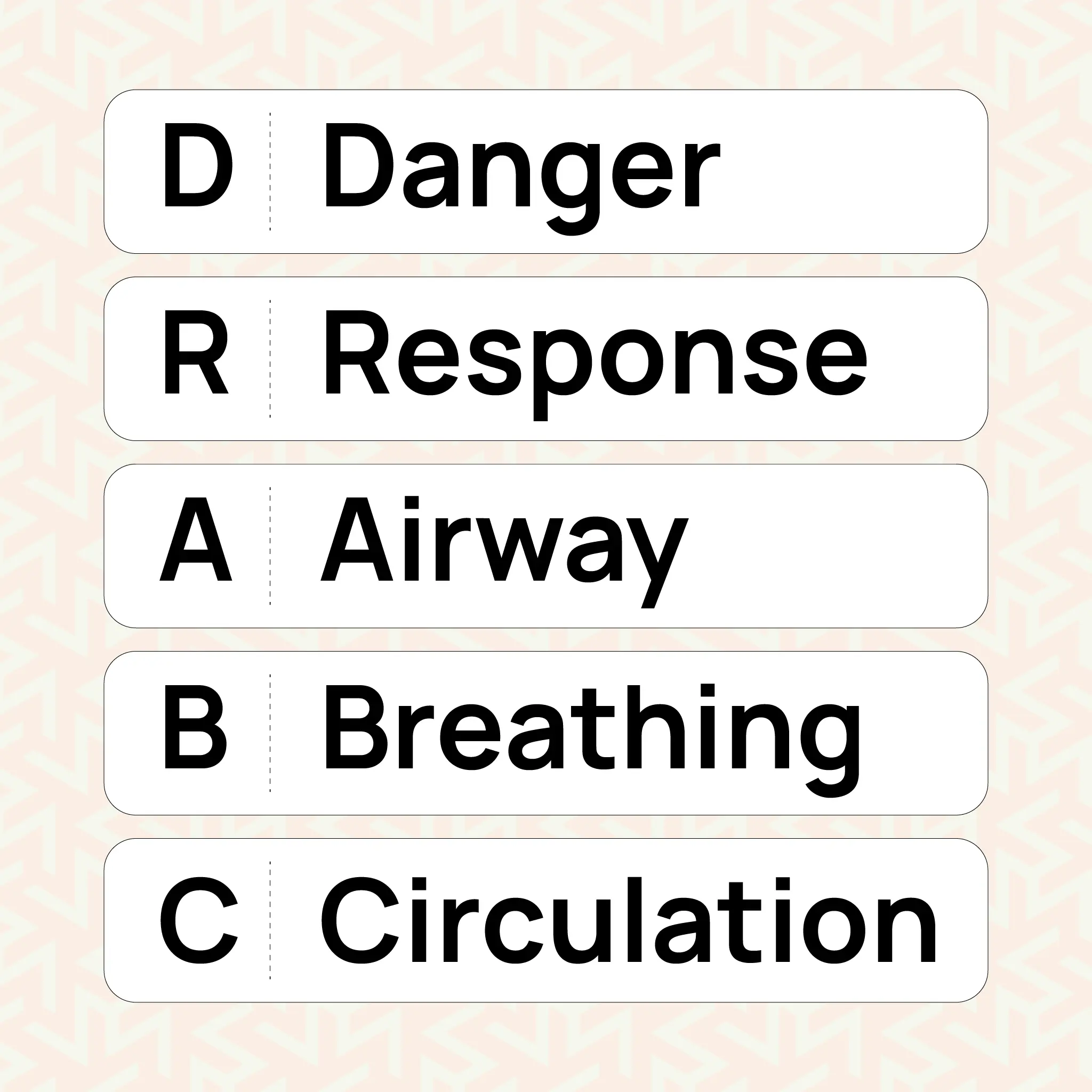
How To Perform the Primary Survey Using the DRABC Steps
When someone is unconscious, their life is in danger. Their airway might be blocked, they may not be breathing, and their blood circulation could have stopped. It is important to follow the primary survey steps to assess casualties in the order of DRABC: Danger, Response, Airway, Breathing, and Circulation. Remember to take quick action because brain damage or even death can happen quickly. A secondary survey is performed after completing the primary steps of first aid.Primary Survey in First Aid Using DRABCWhen helping someone in an emergency, you always start with the primary survey. This means you quickly assess what is happening and the person's needs.The primary survey uses the letters DRABC to help you remember the steps: Danger, Response, Airway, Breathing and Circulation.D - Danger: First, you check for danger around you, such as oncoming traffic or a falling object.R - Response: Next, see if the person responds. Gently shake their shoulders when you talk to them. Are they awake or unconscious?A - Airway: Then, make sure their airway is clear. That means checking if anything is blocking their breathing passage.B - Breathing: After that, check if they're breathing normally. Look, listen, and feel for any signs of breathing.C - Circulation: Finally, check for signs of circulation, like a pulse. This tells you if their heart is beating.Knowing what to do next could help save someone's life, so it's important to follow these steps in the correct order. .main{ border:3px solid #0f7c90; border-radius:20px; position: relative; font-family:roboto; font-weight: 400; color: #000; } .main-two{ position: absolute; top:-25px; left:45px; background-color:white; } .img-div{ border-radius : 100%; padding:2px 7px; background-color:#0f7c90; margin-right:5px; width: 50px; height: 50px; } .img{ width:30px; object-fit:contain; height:auto; border-radius : 100%; } @media only screen and (max-width: 600px) { .heading{ font-size:20px; } .img{ width:20px; object-fit:contain; height:auto; border-radius : 100%; } .img-div{ width: 40px; height: 40px; } .main-two{ left:25px; } } Ready to Learn More? Put your knowledge of the primary survey into practice by enrolling in a course today! Our First Aid courses offer complete training to help you handle critical situations. Whether you want to improve your skills or workplace safety, these courses help build confidence and expertise. View our Emergency First Aid at Work (EFAW) and Level 3 First Aid at Work courses. These courses meet the UK legal requirements and help you keep people safe. DRABC StepsDANGER - 1st Step of the Primary Survey DRABCThe first thing to do in an emergency is to check for dangers. Look around to see if anything could harm you, the person needing help, or anyone nearby. This helps you decide if it's safe to go close to someone who needs help.WHAT TO DOIf you see any hazards, like live electricity, try to make the area safe first. For example, if there's electricity, turn it off. Otherwise, use an insulating object, such as wood or plastic, to move the person away. When there is a risk of electricity, do not touch them directly.When you are sure it is safe, you can approach the person who needs assistance. But if it's still not secure, don't go near them. Instead, get emergency medical helpRESPONSE - 2nd Step of the Primary Survey DRABCA person can lose consciousness when something disrupts the brain's normal functioning. Here are some signs that someone might be unconscious:They can't respond to simple questions or touch.They might not realise when they're in danger and can't protect themselves.They can't clear their airways by coughing or swallowing. This means saliva, blood, vomit, or objects could block their breathing tubes. The tongue, which becomes floppy, might also fall back and block the throat.WHAT TO DOFirst, try to determine whether the person is unconscious by asking simple questions or telling them to do something simple, such as "What's your name?" or "Open your eyes," and gently shake them. If they don't respond, they're probably unconscious. Don't shake them vigorously, especially if they're children or babies.Place the individual in the side position, and examine his airway, breathing and pulse.If the unconscious person is breathing and has a pulse, keep them in the side position. Ensure their airway remains open and clear, and monitor their breathing and pulse regularly until medical assistance arrives.�How to Keep the Unconscious Person in a Side PositionThis is also called the lateral, recovery, or stable side position.Kneel beside the person.Straighten their far arm out, perpendicular to their body. Bend their near arm at the elbow and place it across their chest, with the fingers near the far shoulder.Bend their near leg up to the right angle of their body.Hold the shoulder and hip closest to you, gently rolling them onto their side. Their top leg should rest on the ground with the thigh at a right angle and the calf parallel to the straight leg.Rest their uppermost, bent arm on the elbow of the straight arm.the person is a child older than 1 year, gently tilt their head back. Their face should be slightly downwards so any fluid can drain from their mouth, and their tongue can fall forward, away from the airway.Pro Tip:When someone is unconscious, act fast. Use DRABC: Danger, Response, Airway, Breathing, Circulation. Brain damage or death can happen quickly if you delay.AIRWAY - 3rd Step of the Primary Survey DRABCNow, ensure the person's airway is clear. If they're unconscious:Gently tilt their head back and lift their chin with your hand on their forehead.Peep in their mouth to check whether something is obstructing their passageway.What to Do: If the person is responsiveCheck whether anything is obstructing their airway and causing difficulty breathing.If you see something, encourage them to clear it by coughing or using their hands.For adults and kids, you can help them by giving back slaps or abdominal thrusts. For babies under a year old, you can help them with back blows or chest thrusts.Once the blockage is cleared, move on to the next step.What To Do: If the person is responsiveCheck whether anything is obstructing their airway and causing difficulty breathing.If you see something, encourage them to clear it by coughing or using their hands.For adults and kids, you can help them by giving back slaps or abdominal thrusts. For babies under a year old, you can help them with back blows or chest thrusts.Once the blockage is cleared, move on to the next step.What To Do: If the person is unresponsiveIf you see something, try to remove it carefully. But don't put your fingers in their mouth if you can't see anything, as you might push a blockage deeper.BREATHING - 4th Step of the Primary Survey DRABCBreathing should be regular, quiet, and easy. Tilt the head back, watch the chest for movement, and listen for breathing sounds. Do this for about ten seconds to see if air comes from the mouth or nose.WHAT TO DOIf they're unresponsive and not breathing normally, call emergency services immediately. If you know CPR, start with rescue breaths. If not, do chest compressions. If there's an AED nearby, ask someone to bring it.Giving Rescue BreathsMouth-to-mouth resuscitation is the best way to give rescue breaths. Mouth-to-nose resuscitation is used for a jaw injury or if the person needs to be revived in water. Mouth-to-mask resuscitation is done by trained people to avoid direct contact, especially if the person might have a disease like hepatitis or HIV.Typically, 30 compressions followed by 2 rescue breaths are performed in case of abnormal breathing.Mouth-Mouth ResuscitationKneel beside the person.Lay them on their back.Gently tilt their head back and support their jaw with your fingers. Don't press on their throat. Their mouth should be slightly open.Pinch their nose closed. Take a deep breath and cover their mouth with yours, sealing gaps.Keep their head tilted and give 2 breaths, enough to make their chest rise slightly.Start compressions as recommended.When they start breathing again, please put them in the side position and check their airway, breathing, and pulse regularly.Follow similar steps for mouth-to-nose and mouth-to-mask resuscitation but adjust for the different techniques.CIRCULATION - 5th Step of the Primary Survey DRABCIn this step, check the person for any significant bleeding.What To DoIf they're bleeding heavily, try to stop it by pressing directly on the wound with a clean cloth or dressing. Then, call emergency services for help.Stay with them until help arrives. Try to keep them calm and reassure them that help is coming. If they're not bleeding but still unresponsive, put them in the recovery position. This helps keep their airway clear if they vomit.Cardiopulmonary Resuscitation (CPR)If someone's heart has stopped, CPR is vital to keep them alive until help arrives. CPR is exhausting, so it's best if two people can take turns to keep the rhythm right. Remember, even if you're not trained, attempting CPR is better than doing nothing.What To Remember During an EmergencyPlease don't go near the person unless it's safe. Check for danger to yourself, others, and the injured person first.Stay as calm as possible, even though you might feel upset, and try to reassure the injured person.Time is significant.Don't move the person unless you have to for safety reasons.Please don't leave them alone. Get someone to call for medical help straight away. But if you're alone and help won't come soon, you'll need to go for help yourself. Call 999 or the emergency number in your area.Keep messages to the emergency services short: say where you are, what's happened, how many people are involved, and how badly they're hurt.Please don't give them anything to eat or drink.First-Aid TrainingThe Emergency First Aid training course is designed for low-risk environments such as offices and small retail stores. It gives participants the fundamental knowledge and skills to effectively manage emergencies in these settings. .banner { border-radius: 10px; overflow: hidden; border: 2px solid #ccc; box-shadow: 0 4px 8px rgba(0, 0, 0, 0.2); background-color: #fdf9ee; } .book-now { color: white; background-color: #DF3D52; border: none; padding: 15px 60px; border-radius: 5px; cursor: pointer; font-size: 20px; text-decoration: none; } .book-now:hover { /*text-decoration: none;*/ color: white; background-color: #c33f50; } Get Trained in All First-Aid Skills First Aid Courses Book Now Rated Excellent on major review sites FAQsWhat does DRABC stand for in first aid?DRABC in the first-aid primary survey stands for Danger, Response, Airway, Breathing and Circulation.Should you carry out a primary survey on every casualty?Use a primary survey and apply the DRABC steps whenever you witness a casualty, such as an accident or a fall, provided it is safe to approach the injured person.What is the purpose of the primary survey?The purpose of the primary survey is to treat life-threatening casualties quickly. These accidents could include airway blockage, breathing difficulties, shock or a brain injury.How can you assess the responsiveness of a casualty?First, check if the person is unconscious by asking simple questions and gently shaking them. If they don't respond, they're likely unconscious. Avoid shaking them vigorously, especially if they're children or babies. Next, put the person in the side position and check their airway, breathing, and pulse.How many compressions must be performed in case of abnormal breathing?Typically, 30 compressions followed by 2 rescue breaths are performed in case of abnormal breathing.
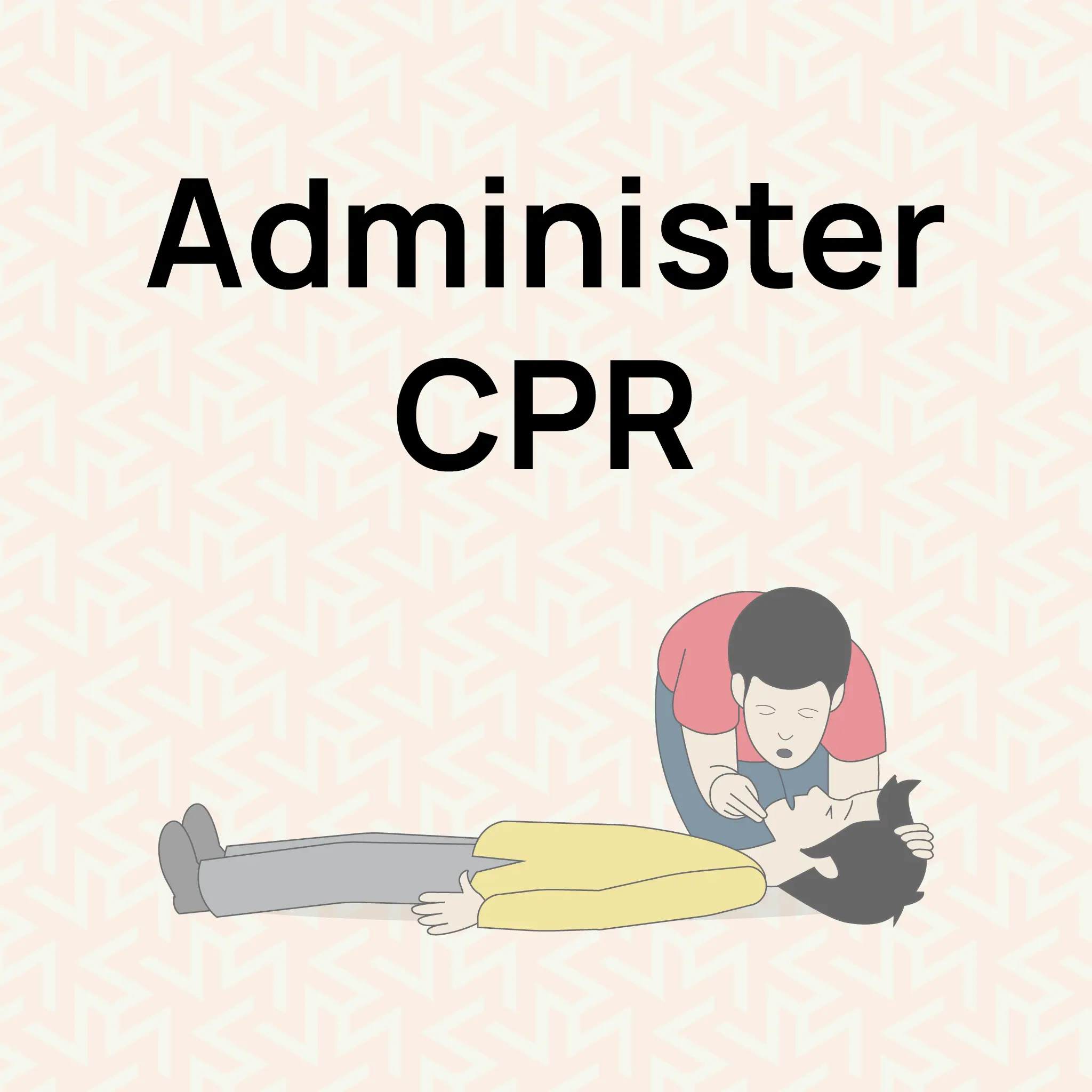
How To Administer CPR
Medical emergencies that require CPR can occur unexpectedly in any location. According to the Resuscitation Council UK, most cardiac arrests (72%) occur in the home or workplace (15%). Everyone needs basic CPR knowledge, as this skill could save someone's life.What is Cardiopulmonary Resuscitation (CPR)?Cardiopulmonary Resuscitation (CPR) is a critical procedure in first aid. It involves artificial respiration, which supplies oxygen to the lungs, and artificial circulation, which maintains blood flow throughout the body.CPR's primary objective is to provide an appropriate supply of oxygenated blood to reach the brain and other organs.This prevents tissue damage until the heart can resume normal function or professional medical assistance arrives. It is important to note that CPR is most effective when chest compressions are performed continuously.Why Perform CPR: Understanding Cardiac ArrestWhen someone experiences cardiac arrest, their heart stops beating properly, blocking blood flow to the brain. The person becomes unresponsive and stops breathing.Although a cardiac arrest marks a state of clinical death, applying CPR on time and a defibrillator presents a chance to restore a regular heartbeat.Common causes of cardiac arrest include:heart attackssevere injurieselectrical shockdrug overdosedrowningsuffocationWhen administering CPR, you are responsible for the casualty's cardiovascular and respiratory function. This procedure slows down the progression of their life-threatening condition till professional medical help arrives to take control of the situation.When to Use CPRCPR is needed when someone is unresponsive and not breathing normally. It is also required when a person is not breathing at all. For instance, if someone is rescued from drowning, they may need CPR to help them start breathing again. Similarly, if someone is severely choking, bleeding heavily, or in shock, CPR may be necessary.If you encounter an unresponsive person who has collapsed, you should perform a primary survey using the DRABC steps. This involves checking if the person is breathing by placing your cheek near their mouth.Observe their chest for any movement for about 10 seconds. If the person is unconscious but breathing normally, you should put them in the recovery position. However, if they are unconscious and not breathing properly, you should be prepared to administer CPR. .main{ border:3px solid #0f7c90; border-radius:20px; position: relative; font-family:roboto; font-weight: 400; color: #000; } .main-two{ position: absolute; top:-25px; left:45px; background-color:white; } .img-div{ border-radius : 100%; padding:2px 7px; background-color:#0f7c90; margin-right:5px; width: 50px; height: 50px; } .img{ width:30px; object-fit:contain; height:auto; border-radius : 100%; } @media only screen and (max-width: 600px) { .heading{ font-size:20px; } .img{ width:20px; object-fit:contain; height:auto; border-radius : 100%; } .img-div{ width: 40px; height: 40px; } .main-two{ left:25px; } } Ready to Learn More? Knowing CPR is important in emergencies, but there's more to first aid. Our First Aid courses offer complete training to help you handle critical situations. Whether you want to improve your skills or workplace safety, these courses help build confidence and expertise. View our Emergency First Aid at Work (EFAW) and Level 3 First Aid at Work courses. These courses meet the UK legal requirements and help you keep people safe. How to Administer CPR on an AdultFirst, assess the safety of the scene. Then, check the person's responsiveness by tapping and asking if they are okay. Conduct a primary survey by gently tilting the head back to make sure the airway is clear.Check for breathing for 5 to 10 seconds by looking, listening, and feeling for breaths.How To Do a CPR Compression on an AdultIf the person is not breathing or their breaths are weak (known as agonal breaths), place your hands in the middle of their chest with your shoulders directly above your hands. Keep your elbows straight.Agonal Breathing:Agonal breathing occurs when someone's breathing is irregular and gasping, often making odd sounds. It can sometimes occur during a cardiac arrest. Bystanders may think the person is breathing normally. Treating someone with agonal breathing as if they are not breathing at all is essential.Give 30 chest compressions - press down firmly and quickly!Use the heels of your hands to push straight down on the breastbone, about 5-6 cm (2-2.4 inches) deep.Release pressure entirely after each compression to let the chest come back up. Keep a steady rhythm, aiming for 100 to 120 compressions per minute. Count out loud to keep track.How To Breathe into an Adult�s Mouth During CPRNext, if you are trained, tilt the person's head back and lift their chin to open the airway. Pinch the soft part of their nose closed. If you have a barrier device, use it. Then, give two breaths into the person's mouth, each lasting about one second, enough to raise the chest.This makes one cycle of 30 compressions followed by 2 breaths.�Keep doing CPR until an AED arrives, the person starts responding, or you are too tired to continue. When the defibrillator arrives, apply it to the person immediately.How to Administer CPR on a ChildLook around the area where the casualty has occurred.Check to see if the child responds. If not, get medical help and an AED if possible.If you are alone and do not have a phone, do CPR for 5 cycles (around 2 minutes), then go for help. If you can, bring the child with you.Next, check the airway and breathing for between 5 and 10 seconds. .banner { border-radius: 10px; overflow: hidden; border: 2px solid #ccc; box-shadow: 0 4px 8px rgba(0, 0, 0, 0.2); background-color: #fdf9ee; } .book-now { color: white; background-color: #DF3D52; border: none; padding: 15px 60px; border-radius: 5px; cursor: pointer; font-size: 20px; text-decoration: none; } .book-now:hover { /*text-decoration: none;*/ color: white; background-color: #c33f50; } Get Trained in All First-Aid Skills First Aid Courses Book Now Rated Excellent on major review sites How To Do a CPR Compression on a ChildIf the child is not breathing or breathing well, place your hands in the middle of their chest and press down firmly. Keep your elbows straight. Depending on the child's size, you can use one or two hands.Give 30 chest compressions: Push firmly and quickly!Use the heels of your hands to press straight down on the breastbone. Each compression should be about a third of the chest depth or 5 cm (2 inches) deep.�After each compression, release pressure completely to let the chest back up. Keep a steady rhythm, aiming for 100 to 120 compressions per minute. Count out loud to keep track.How To Breathe into a Child�s Mouth During CPROnce you have performed compressions, open the airway by tilting the head back and lifting the chin. Use a barrier device if you have one. Then, give two breaths into the child�s mouth, just enough air to raise their chest.This makes one cycle of 30 compressions followed by 2 breaths.Keep doing CPR until an AED arrives, the person starts responding, or someone else takes over. If you get too tired, stop. Apply the AED as soon as it comes.How To Administer CPR for Babies - Infant Casualty Perform a scene survey of where the casualty occurred. Check if the baby responds. Gently tap their feet. If there is no response, get medical help and an AED if possible. If you are alone and do not have a phone, do CPR for 1 minute, then get help. If you can, carry the baby with you. Next, open their airway by touching their forehead and gently tilting their head back. Use the fingertips of your other hand to lift their chin. Put your lips around the infant�s mouth and nose and blow gently for one second until their chest rises. Remove your mouth and wait for your chest to fall back to normal. Repeat this for a total of five rescue breaths.How To Do a CPR Compression on an InfantPlace two fingers just below the nipple line on the baby's chest.Press down on the breastbone about 4 cm (1 1/2 inches), around one-third of the chest depth.Do 30 chest compressions followed by 2 breaths (30:2)Keep doing CPR until an AED is used, someone else takes over, or you are too tired. Use the AED as soon as it arrives.How To Breathe into an Infant�s Mouth During CPRBabies have big heads compared to their bodies, which can cause their airways to close. When babies lie on their backs, their heads tilt forward, closing their airway further.When performing CPR, you might find putting a thin pad under the patient's shoulders useful to help keep the airway open. But do not spend time looking for one.Types of CPRDepending on the circumstances and the number of people involved, CPR can be of different types:Chest compression-only CPRDispatcher-assisted CPRHow to take over CPR from another rescuerTwo-rescuer CPRChest Compression-Only CPRCPR guidelines emphasise recognising emergencies early and the importance of calling 9-1-1 if you find someone collapsed and unresponsive.Compression-only CPR means doing chest compressions without mouth-to-mouth breaths. Give solid and quick compressions at the centre of the chest, aiming for 100 to 120 compressions per minute. Although this does not give the person oxygen, it is an option for people not trained in traditional CPR or those unsure of their ability.Dispatcher-assisted CPRIn some areas, when you call 9-1-1, the dispatcher can guide you through the emergency until medical help arrives. Put your phone on speaker and place it near the person's head. Keep talking to the dispatcher while you help the person.Hand-Over CPR: Taking Over CPR from Another RescuerOffer your assistance and let the rescuer know you are trained in CPR. Make sure medical help has been called.Do 30 chest compressions followed by 2 breaths. Use your barrier device if you have one.Two-Rescuer CPRIf two trained rescuers are available, they can work together to do CPR on someone who needs it. There are three good reasons why it is better for two people to do CPR:Doing CPR can be tiring. As the first aider gets tired, their chest compression quality might worsen. If two people share the job of compressing the chest, they can keep doing good compressions for longer.With two people doing CPR, they can take turns doing chest compressions and giving breaths. This means the compressions do not have to stop as often.When two people work together, they can encourage and help each other during a difficult situation. One person stays by the casualty's head to do CPR with two rescuers. He keeps the airway open and breathes after every 30 compressions. The other person does the chest compressions.To keep the compressions effective, they should switch roles every 5 cycles of compressions and breaths, about every 2 minutes.ConclusionIf someone is not responding and breathing normally, CPR can help them survive until paramedics arrive. So, everyone needs to know how to do CPR, even if you still need to be formally trained in first aid. If you are not qualified, you should do chest compressions only for adults. But for children and babies, it is best to call for help first and then do CPR. Either way, doing CPR increases the chances of the person surviving.
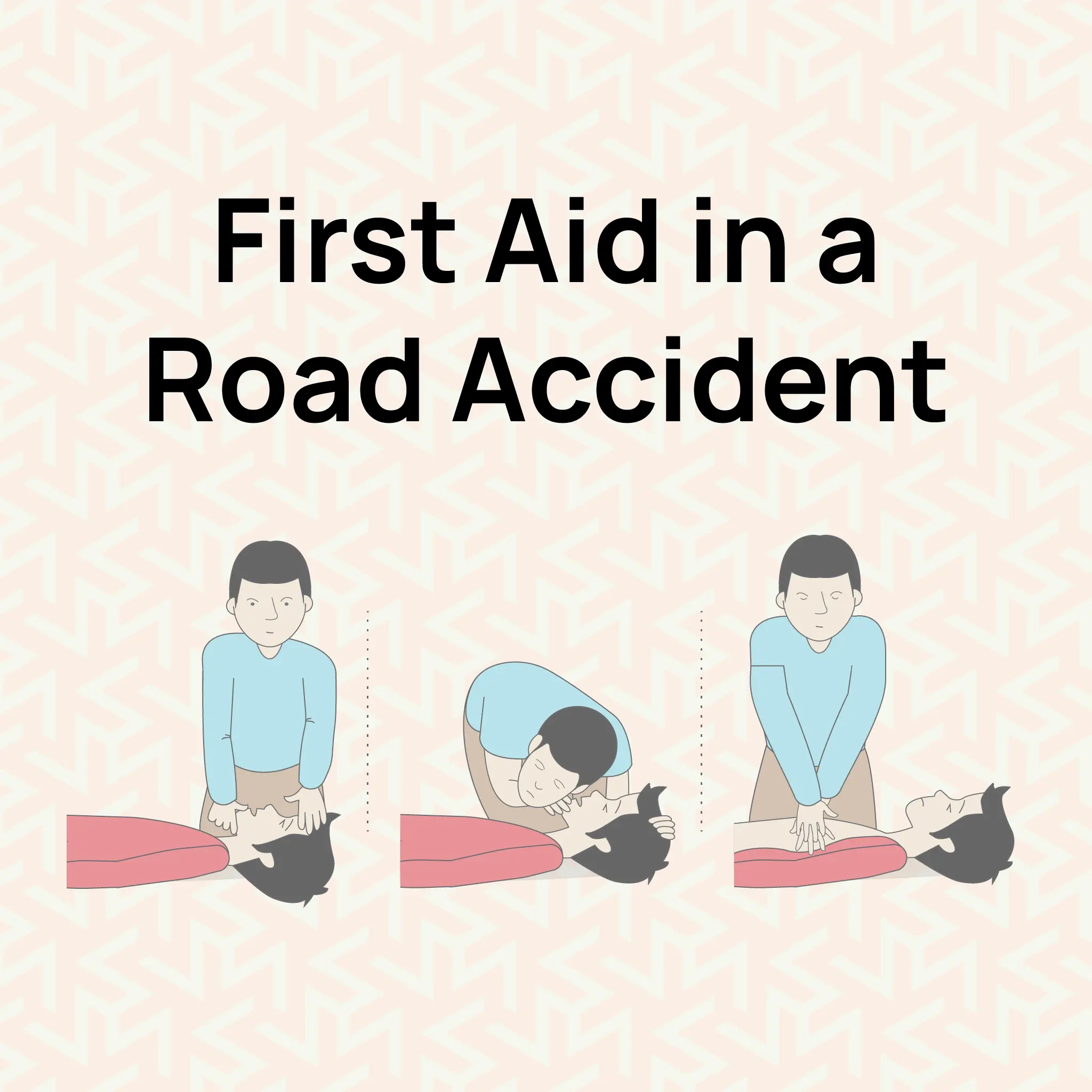
How To Conduct First Aid in a Road Accident
Traffic accidents can be small incidents like bicycle accidents or more severe ones like car crashes. It is important to make sure the area is safe before you help anyone who has been hurt. This will keep you, injured people, and other drivers safe.Once you have confirmed the safety of an area, take a quick look at the people who are hurt. Decide who needs help the most urgently. Always conduct first aid on a casualty who is not breathing before you help anyone else.Call 999 for emergency help. Inform them about what has happened. This includes information such as:The number of people who are hurtThe age of the injured peopleAre the injuries critical or non-critical?What To Do If You Witness a Road AccidentIf you come across a road accident, a step-by-step method should be followed:Scene Safety AssessmentWhen you approach an accident scene, safety comes first. To avoid further injuries, ensure all traffic stops, and everyone knows about the accident.Keep an eye out for any oncoming traffic that could pose a danger. Check for fuel spillage or fire risks, and turn off car ignitions if possible. Use hazard lights and warning triangles if available.If there are other people around, ask them to call emergency services. If alone, assess the situation and help anyone with life-threatening injuries first.Check the Quiet Ones FirstAlways prioritise checking quiet and motionless individuals first. Check if they are responsive and breathing. If they are unresponsive but breathing, position them to keep their airway clear and keep them warm.Administer CPR on Unconscious PeopleIf someone is not breathing, you may need to administer CPR. Call an ambulance immediately if you have not already done so. Only move an unconscious person from a vehicle if there is an immediate danger.Determine the Safety of Conscious PeopleConscious casualties should be moved to a safe area and kept warm and calm. Look out for any severe bleeding or life-threatening injuries and treat them first. Monitor anyone trapped in a vehicle and notify emergency services immediately.Be Careful How and When You Move ThemOnly remove a motorcyclist's helmet if they are unconscious, and it is necessary to assess their breathing. If a casualty is lying on their back unconscious and breathing, roll them into the recovery position with help to avoid twisting their spine.The Recovery Position:To place someone in the recovery position, straighten their legs. Remove any glasses or bulky items from their pockets. Position the nearest arm at a right angle to the body, with the palm facing upward. Bring the other arm across the chest. Place the back of the hand against the nearest cheek. Lift the far knee and gently roll them onto their side by pulling on the far leg.If they are conscious and lying on the road, encourage them to stay still and support their head and neck until help arrives.Following these steps, you can provide crucial assistance at a road accident scene and help keep everyone safe until professional help arrives. .main{ border:3px solid #0f7c90; border-radius:20px; position: relative; font-family:roboto; font-weight: 400; color: #000; } .main-two{ position: absolute; top:-25px; left:45px; background-color:white; } .img-div{ border-radius : 100%; padding:2px 7px; background-color:#0f7c90; margin-right:5px; width: 50px; height: 50px; } .img{ width:30px; object-fit:contain; height:auto; border-radius : 100%; } @media only screen and (max-width: 600px) { .heading{ font-size:20px; } .img{ width:20px; object-fit:contain; height:auto; border-radius : 100%; } .img-div{ width: 40px; height: 40px; } .main-two{ left:25px; } } Ready to Learn More? Knowing how to conduct first aid in a road accident is important, but there's more to it. Our First Aid courses offer complete training to help you handle critical situations. Whether you want to improve your skills or workplace safety, these courses help build confidence and expertise. View our Emergency First Aid at Work (EFAW) and Level 3 First Aid at Work courses. These courses meet the UK legal requirements and help you keep people safe. Assessing an Injured Person after a Road AccidentWhen dealing with someone hurt in a road accident, remember the primary survey DRABC steps: Danger, Response, Airway, Breathing, and Circulation. After assessing the casualty's danger and response, carry out the ABC steps.AirwayResponsiveIf the person is not responsive, ask them loudly if they are okay. Check if they can open their eyes. If they respond, you can leave them as they are until help arrives.While you wait, keep checking if they are:Awake and alertResponding to your voiceNot responding at all (unconscious)UnresponsiveIf there is no response, gently lay them on their back. Place one hand on their forehead and gently tilt their head back. Lift their chin using two fingers to move the tongue away from the throat. Avoid pushing on the mouth floor, as this can block the airway.If you suspect a neck injury, use the jaw thrust technique: place your hands on either side of the head. Gently lift their jaw forward and upwards without moving their head.BreathingTo check if they are breathing:Look for their chest rising and fallingListen for breathing sounds over their mouth and noseFeel their breath against your cheek for 10 secondsIf they are breathing normally, put them in recovery to keep their airway clear. Gasping or irregular breathing is not normal. If they are not breathing normally, call 999 for an ambulance and start CPR.CirculationIf their breathing is not normal, start chest compressions immediately. Gasping and irregular breaths after a sudden cardiac arrest are not expected. In this case, administer CPR right away.If they are not breathing, call 999 for an ambulance and start CPR.Supporting Those with PTSD After Giving CPRPerforming CPR can be a tough experience for everyone involved. The situations in which you need to perform CPR vary greatly.For example, you might see a stranger collapse on the street, and you are the only one there to help. Or maybe you have to do CPR on someone you love, even a child.Even people who have done CPR many times, like paramedics, nurses, and doctors, can find it hard emotionally.PTSD, which stands for post-traumatic stress disorder, is a type of anxiety disorder that can happen after really scary or stressful events. CPR situations often fit into this category.It is good to know the signs of PTSD so you can recognise if you or someone else might be dealing with it. Symptoms can last a long time and affect your daily life.Common PTSD symptoms include:Having nightmares or flashbacks of the event.Feeling alone or isolated.Feeling easily annoyed.Feeling guilty.Having trouble focusing.Having problems sleeping, like not being able to sleep well. .banner { border-radius: 10px; overflow: hidden; border: 2px solid #ccc; box-shadow: 0 4px 8px rgba(0, 0, 0, 0.2); background-color: #fdf9ee; } .book-now { color: white; background-color: #DF3D52; border: none; padding: 15px 60px; border-radius: 5px; cursor: pointer; font-size: 20px; text-decoration: none; } .book-now:hover { /*text-decoration: none;*/ color: white; background-color: #c33f50; } Get Trained in All First-Aid Skills First Aid Courses Book Now Rated Excellent on major review sites Getting the Right Help After a Road AccidentGetting the right help after a traumatic experience such as a road accident is essential. This could mean talking to family, friends, or people you work with. It might also mean getting counselling.There are online groups and places where you can find support from others who have been through similar things. Sharing experiences can help a lot.Many charities and groups help with mental health, such as Mind, SANE, or Anxiety UK.Your doctor (GP) can also give extra help, especially if you feel anxious or restless.If the crash involved a rideshare service such as Uber or Lyft, injured individuals may also need legal guidance to understand insurance coverage and liability, and to pursue a rideshare injury claim.How To Treat Shock After a Road AccidentAccidents, like car crashes, falls, or near-drowning incidents, can often trigger shock. Even if you witnessed the accident, it can still affect you.Symptoms of ShockShock can show up in different ways, like:Feeling pumped up with adrenaline.Shaking or feeling jittery.The feeling of sickness.Having a tight chest.Finding it hard to think clearly.Feeling aggressive or agitatedExperiencing hallucinationsFeeling numbEveryone reacts differently, and there is no right or wrong way to feel after something scary happens.Supporting Someone in ShockIf someone you know is in shock, here are some things you can do to help:Please make sure they are safe and try to keep them calm.Help them take slow, deep breaths.Please do not ask them to make any big decisions right away.Let them know that how they are feeling will pass.Help them find ways to manage any pain they might be feeling.Explain that adrenaline can hide pain so that they might feel it later.Remember, it is important to give yourself time to heal, too. Getting support from friends, family, or professionals can help.Take care of yourself by staying active, eating well and following a routine. Finding ways to relax can make a big difference during tough times.ConclusionTraffic accidents, whether minor or severe, can significantly impact those involved. Confirming safety before offering help at the scene for yourself and others is important. Prioritise first-aid for the most severely injured and call emergency services promptly. Assess the airway, breathing, and circulation of those who are injured. Offer support to those affected by shock or PTSD after the road accident. Taking care of others and yourself after a traumatic event is important for healing and well-being.
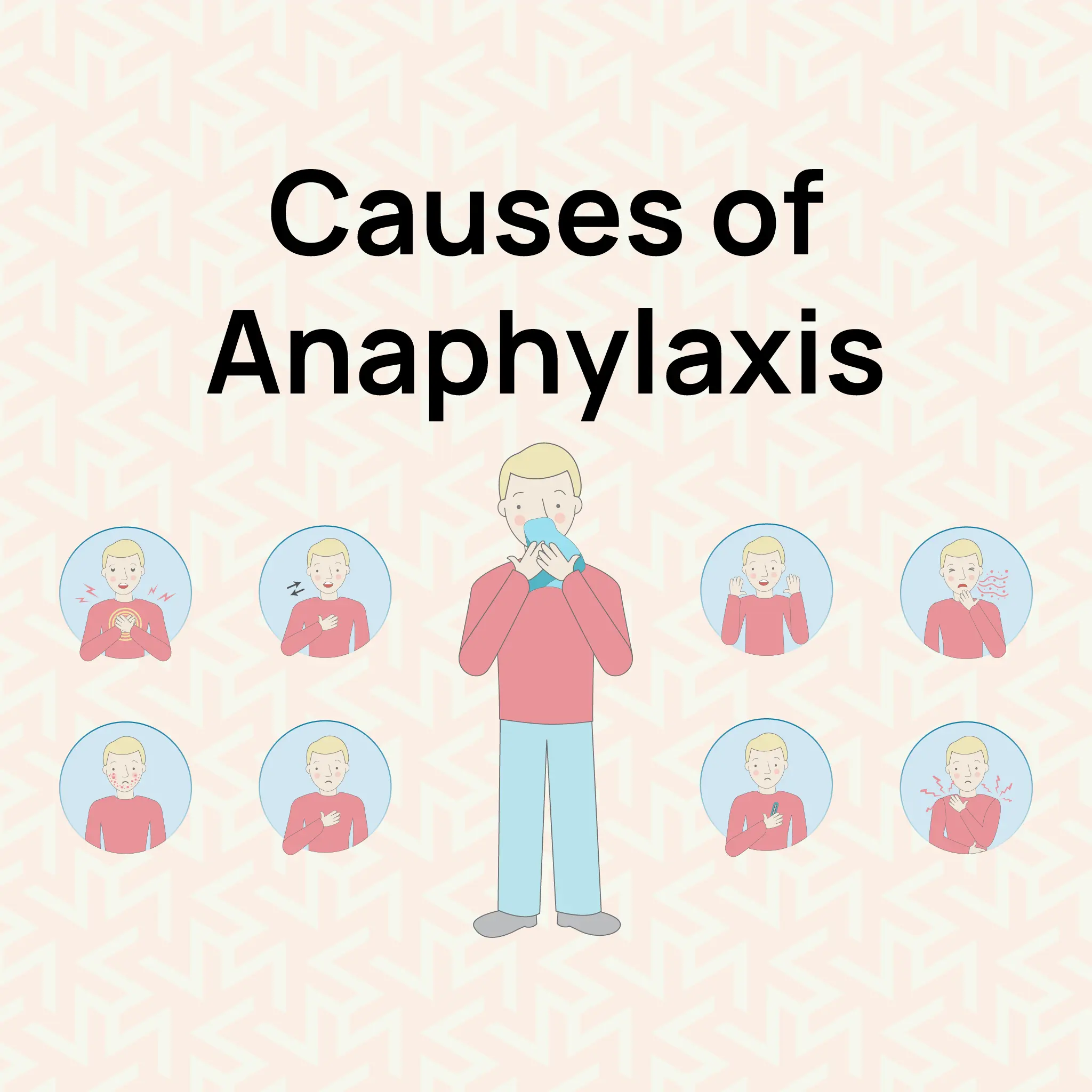
What is Anaphylaxis
Anaphylaxis represents a frequent medical emergency, including a life-threatening acute hypersensitivity response. This condition is marked by a widespread allergic reaction affecting multiple bodily systems. If left untreated, anaphylaxis can quickly lead to respiratory failure and even death.What is Anaphylaxis Anaphylaxis is a severe allergic reaction that leads to a life-threatening condition. It causes systemic shock, leading to impaired respiratory function. Symptoms of an anaphylactic allergic reaction may include angioedema (swelling) affecting the face, neck, tongue, or lips. Respiratory distress can occur, potentially leading to shock, including hypotension and altered consciousness.What are the Causes of AnaphylaxisAnaphylaxis is triggered by various allergens, which are substances that provoke an allergic reaction. Common triggers include:Food: Peanuts, tree nuts (such as almonds and cashews), shellfish, milk, eggs, soy, and wheat.Insect Venom: Bee stings, wasp stings, and other insect bites.Medications: Antibiotics (like penicillin), nonsteroidal anti-inflammatory drugs (NSAIDs), and certain vaccines.Other Substances: Latex, chemicals, and even exercise-induced factors in some individuals.What are the Signs and Symptoms of AnaphylaxisThe signs and symptoms of anaphylaxis can develop rapidly and affect multiple organ systems:Respiratory System: Difficulty breathing, wheezing, throat tightness, and coughing.Cardiovascular System: Drop in blood pressure (hypotension), weak or rapid pulse.Skin: Itching, hives symptoms (urticaria), redness, and swelling (angioedema) of the face, lips, tongue, or throat.Gastrointestinal System: Nausea, vomiting, abdominal pain, and diarrhoea.Neurological System: Dizziness, confusion, and loss of consciousness.What are the Stages of an Allergic Reaction?Allergic reactions generally involve several stages, varying in severity and duration depending on the individual and the allergen involved. Here are the typical stages:Exposure: This is the initial stage where the person comes into contact with the allergen, whether through ingestion, inhalation, skin contact, or injection (as with insect stings).Sensitisation: In this stage, the immune system recognises the allergen as a threat and starts producing specific antibodies against it (IgE). This sensitisation process may occur over time and can involve repeated exposures to the allergen.Activation: Upon exposure to the allergen, the antibodies trigger the release of chemicals such as histamine from mast cells and basophils in the body. This release leads to the onset of allergic symptoms.Occurrence of Symptoms: This stage involves an allergic reaction, which can vary widely depending on the allergen and the individual's immune response. Symptoms can affect various systems, including:Skin (itching, hives)Respiratory system (wheezing, difficulty breathing)Gastrointestinal system (nausea, vomiting)Cardiovascular system (rapid heartbeat, drop in blood pressure).5. Resolution: The symptoms typically disappear after removing or neutralising the allergen (e.g., by medications like antihistamines or epinephrine).The resolution stage may vary in duration, depending on the reaction's severity and the treatment's effectiveness. .banner { border-radius: 10px; overflow: hidden; border: 2px solid #ccc; box-shadow: 0 4px 8px rgba(0, 0, 0, 0.2); background-color: #fdf9ee; } .book-now { color: white; background-color: #DF3D52; border: none; padding: 15px 60px; border-radius: 5px; cursor: pointer; font-size: 20px; text-decoration: none; } .book-now:hover { /*text-decoration: none;*/ color: white; background-color: #c33f50; } Get Trained in All First-Aid Skills First Aid Courses Book Now Rated Excellent on major review sites How is Anaphylaxis PreventedPrevention of Anaphylaxis is important for immuno-compromised people, who are vulnerable to allergens. Preventing anaphylaxis involves:Medical Alert Identification: Wear medical alert jewellery (e.g., bracelets) indicating allergies and carry an epinephrine auto-injector.Education: Educate oneself and others about triggers, symptoms, and emergency response protocols.Allergy Testing: Undergo allergy testing to identify specific triggers and develop a management plan with healthcare providers.Food Allergy Management: Properly managing allergens during food processing and packaging is crucial to prevent cross-contact contamination. Key methods for allergen control include:Clear Allergen LabellingProper RefrigerationStaff and Equipment HygieneColour-Coded UtensilsImplementing the HACCP System: Process and PrinciplesWhat is the Treatment of an Anaphylactic Allergic ReactionImmediate treatment of anaphylaxis involves administering epinephrine (adrenaline) via an auto-injector device (such as an EpiPen) to counteract the allergic response. Additional measures may include:Monitoring: Continuous monitoring of vital signs (blood pressure, pulse, and oxygen saturation).Supportive Care: Medicinal treatment includes oxygen therapy, intravenous fluids to maintain blood pressure, and medications like antihistamines and corticosteroids to reduce inflammation.Emergency Medical Attention: Prompt transfer to a hospital emergency room for further evaluation and management. .main{ border:3px solid #0f7c90; border-radius:20px; position: relative; font-family:roboto; font-weight: 400; color: #000; } .main-two{ position: absolute; top:-25px; left:45px; background-color:white; } .img-div{ border-radius : 100%; padding:2px 7px; background-color:#0f7c90; margin-right:5px; width: 50px; height: 50px; } .img{ width:30px; object-fit:contain; height:auto; border-radius : 100%; } @media only screen and (max-width: 600px) { .heading{ font-size:20px; } .img{ width:20px; object-fit:contain; height:auto; border-radius : 100%; } .img-div{ width: 40px; height: 40px; } .main-two{ left:25px; } } Ready to Learn More? Knowing how to manage anaphylaxis is important in emergencies, but there's more to first aid. Our First Aid courses offer complete training to help you handle critical situations. Whether you want to improve your skills or workplace safety, these courses help build confidence and expertise. View our Emergency First Aid at Work (EFAW) and Level 3 First Aid at Work courses. These courses meet the UK legal requirements and help you keep people safe. What are the Types of Anaphylactic ReactionsAnaphylaxis can be classified into different types based on triggers and clinical presentation:Food-Induced Anaphylaxis: Triggered by ingestion of allergenic foods.Insect Sting Anaphylaxis: Caused by venom from insect stings or bites.Drug-Induced Anaphylaxis: Reaction to medications or vaccines.Exercise-Induced Anaphylaxis: Triggered by physical exertion in conjunction with specific factors.Idiopathic Anaphylaxis: Cases where the trigger is unknown.ConclusionAnaphylaxis is a serious allergic reaction that must be immediately identified and treated to prevent life-threatening complications. Understanding the causes, signs, treatment options, triggers, types, and prevention strategies empowers individuals to effectively manage and reduce the risks associated with anaphylaxis. For those with known allergies, proactive measures are essential to ensuring safety outcomes in an anaphylactic emergency.