CPCS A20 Hoist Operator Training
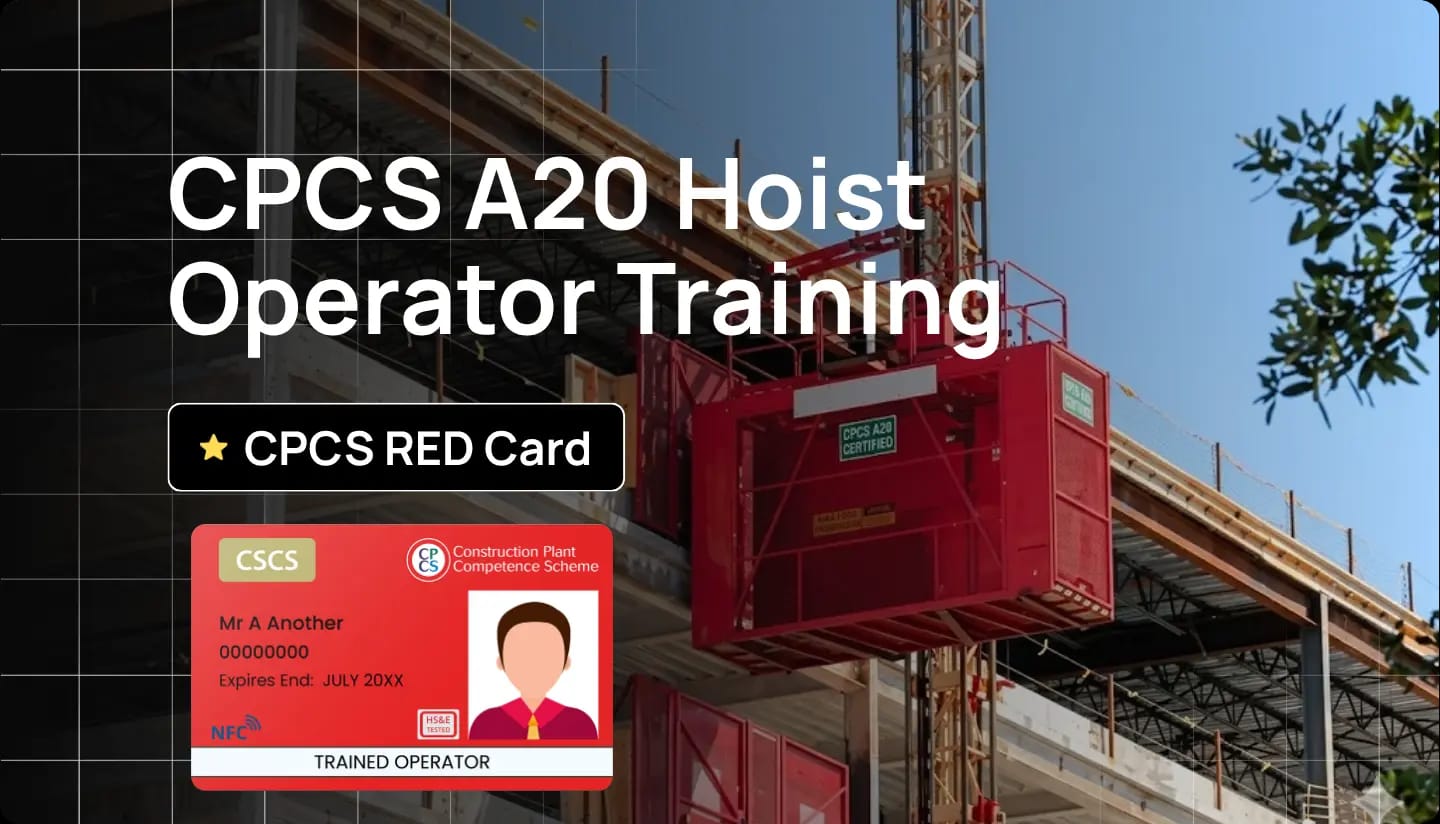
Master safe hoist operations with hands-on Hoist Operator Training. Develop the skills to operate hoists confidently and complete practical assessments with ease. Learn essential hoist functions, hazard awareness, and operational best practices through the structured hoist training course. Earn your CPCS Red Trained Operator Card, showcase your competence to employers, and kickstart your journey as a qualified hoist driver.
Course Features
Learning Options


Hoist Operator Course Overview
A hoist is an essential piece of construction plant used to transport personnel, tools, and heavy materials vertically, ensuring safe and efficient movement across multi-story sites. This hoist training provides hands-on experience, teaches essential health and safety practices, and helps you build the confidence to operate hoists effectively across varying site conditions.
Completing the course prepares you to step into the role of a certified hoist operator, demonstrating your competence to employers and boosting your career opportunities in construction.
Whether you want to expand your plant operating skills, meet site requirements, or increase your employability, this hoist training course provides the solid foundation you need to handle vertical lifting operations with confidence and safety.
Who is the Hoist Operator Training For?
- Construction workers gaining hands-on hoist experience
- Plant operators aiming for an official hoist ticket
- Red Card holders progressing to Blue Card eligibility
- Beginners seeking a recognised construction plant qualification
What You’ll Learn in the A20 Hoist Training
- Understand operator roles, responsibilities, and relevant lifting regulations
- Identify core hoist components, controls, terminology, and operational limitations
- Perform pre-use, running, and stability checks to ensure equipment safety
- Recognise site hazards, including overhead services and structural proximity
- Prepare and configure the hoist correctly for specific types of loads
- Load and unload materials safely following manual handling requirements
- Execute site signalling methods and clear operational instructions
- Master emergency protocols, including emergency lowering functions
- Shut down, isolate, and secure the hoist in an out-of-service condition
Entry Requirements
There are no formal academic qualifications needed to enrol in the hoist operator training. This path is perfectly structured for both complete beginners looking to become a qualified hoist driver and experienced professionals seeking a formal credential. To ensure a smooth path to your assessment, you must meet the following basic criteria:
- ✓ Basic English comprehension to understand instructional material and site communication
- ✓ A valid CITB Health, Safety & Environment test certificate passed within the last 24 months
- ✓ The physical ability to fully take part in the practical machinery operational exercises
How is the CPCS Hoist Training Delivered?
The program blends practical, hands-on hoist operator training with essential theoretical guidance, ensuring learners gain the knowledge and confidence to manage vertical lifting operations safely and efficiently on site.
Practical exercises replicate real construction tasks, including vertical platform control, weight distribution, and safe operation across different hoist variants. Experienced instructors provide guidance throughout this structured hoist training course, helping learners build both technical skill and complete awareness of potential on-site hazards.
Classroom-based sessions take place at accredited training centres, offering individual learners structured lessons, access to required equipment, and supervised practical exercises to fully prepare for the CPCS Red Trained Operator Card technical and practical assessments.
On-site training is ideal for teams or corporate clients looking for competitive CPCS hoist operator training price packages, allowing employees to train directly at their workplace using their own or provided machinery for a realistic, relevant experience.
Course Assessment
The course includes both theoretical and practical assessments to ensure you are fully competent in managing vertical lifting operations safely and effectively.
The theoretical assessment covers essential knowledge such as plant components, machine functions, health and safety regulations, site procedures, and pre-use checks. This ensures you understand the principles behind safe machinery handling before working as a professional hoist operator.
The practical assessment evaluates your ability to complete vital site tasks in real-world scenarios. This includes controlling the vertical platform, managing weight distribution, executing emergency lowering functions, following shutdown procedures, and demonstrating the complete hazard awareness expected of a certified hoist driver. Successful completion of both assessments is required to pass your hoist operator course and gain your CPCS ticket.
What You’ll Receive After the Course
Upon successfully completing your A20 hoist training, your application for the CPCS Red Trained Operator Card will be submitted by your training provider. The Red Card is valid for two years and confirms that you have received accredited training and are fully competent to operate vertical lifting plant safely on construction sites.
The Red Card is typically issued within 5 to 10 working days and serves as official proof of your technical skills and competence. It is an important milestone if you plan to progress further as a qualified hoist driver or work towards upgrading your ticket to the CPCS Blue Competent Operator Card.
📌 Important: You must have passed the CITB Health, Safety & Environment (HSE) Test within the last two years to be eligible for the card, allowing you to legally work as an on-site hoist operator.
Benefits of the CPCS Hoist Operator Training
- ✓ Gain practical hands-on experience managing vertical lifting plant in real site conditions
- ✓ Learn essential pre-use safety alignments, emergency lowering functions, and basic maintenance checks
- ✓ Significantly improve safety awareness regarding overhead hazards and weight load distributions
- ✓ Learn from experienced industry instructors who offer practical, real-world insights for a hoist driver
- ✓ Earn your official CPCS Red Trained Operator Card to prove your technical competence to employers
- ✓ Build a structured career pathway towards a CPCS Blue Competent Operator Card via NVQ specialisation
Common Questions
What is the CPCS Hoist Operator Training Price?
The CPCS Hoist Operator Training Price can vary based on several factors, including the delivery method, group numbers, and your prior experience. On-site corporate training packages for workplace groups often qualify for competitive discounts, whereas classroom-based courses at our accredited training centres are priced for individual learners. Beginners or novice operators may require additional practice time behind the controls, which can adjust the final hoist training price. To secure a personalised, competitive quote tailored to your location and specific operator requirements, please contact us directly.
What is the Duration of the Hoist Operator Course?
The duration of the course depends heavily on your prior experience with plant machinery. Experienced professionals or existing operators seeking a formal hoist driver ticket can often complete a shortened refresher path focused directly on the technical and practical assessments. Conversely, novice operators or complete beginners will typically require extra days of comprehensive training to log sufficient hands-on practice, ensuring they build the skills and safety awareness required to work confidently as an on-site hoist operator.
What Job Roles Can I Pursue After Completing the Training?
After completing your accredited hoist training, you can pursue a variety of specialist roles across construction, infrastructure, and civil engineering sites. Securing this qualification proves your technical competence to employers and opens doors to commercial, industrial, and high-rise residential developments that rely heavily on vertical logistics. Common roles include:
- ✓ Materials Hoist Operator
- ✓ Passenger / Goods Hoist Driver
- ✓ Construction Site Operative with lifting plant responsibilities
- ✓ Logistics Operative / Crane and Hoist Coordinator
- ✓ Plant Operator specialising in high-rise construction logistics
Can the Hoist Operator Training Be Completed Online?
No, the course cannot be completed online. Hands-on, practical experience behind the controls is absolutely essential to learn how to operate vertical lifting plant safely and confidently. All practical exercises, safety checks, and formal assessments must be completed in person, either on-site at your workplace or at an accredited training centre, fully aligning with UK safety standards and lifting regulations.
How Do CPCS and NPORS Qualifications Compare for Site Access?
Both CPCS and NPORS are widely recognised across the UK construction industry as official proof that plant operators can manage machinery safely on site. While each scheme maintains its own training framework, either qualification is generally accepted on the vast majority of construction projects, including those aligned with Build UK standards. Whether you secure your ticket as an NPORS or CPCS hoist operator, holding a valid card demonstrates that you meet essential health and safety requirements and are fully qualified to work as a professional hoist driver.
Other CPCS and NPORS Training Options
To expand your plant operating skills or gain additional qualifications, browse our selection of accredited CPCS and NPORS courses tailored for different machinery categories and site environments. Diversifying your tickets makes you highly versatile as a certified plant operator or specialist hoist driver.
CPCS Course Options
- CPCS A17C Telescopic Handler
- CPCS A59 360 Excavator (Above 10 Tonnes)
- CPCS A61 Appointed Persons – Lifting Operations
- CPCS A09 Forward Tipping Dumper
- CPCS Tower Crane Operator
NPORS Course Options
- NPORS 360 Excavator (N202)
- NPORS Hoist (N111)
- NPORS Tower Crane (N102)
- NPORS Excavator 180 (N201)
- NPORS Lorry Loader (N107)
Not sure which qualification suits your current site? Our helpful support team can guide you to the ideal CPCS or NPORS pathway for your career development goals. Call us on 0333 344 1293 or explore our complete catalogue of industry-approved machinery assessments to find the package that fits your schedule.

No Booking fee
We provide our services without any additional charges.

Approved providers only
All courses on our platform undergo thorough manual screening to ensure the utmost quality.

Buying for your team?
Purchases courses for team, family or colleagues. Add a course, and provide student details at checkout.

Pay by invoice
Choose “Business Customer” at checkout for access to this payment method.
Student Also Bought

session