


How to Enroll in Cheap OSHA Online Training Courses
Safety training is crucial for everyone. Due to the increase in workplace accidents and incidents, it has become a massive demand for employees and employers. Moreover, several states make safety training mandatory to make the workplace secure and healthy. According to the International Labour Organization (ILO), there are almost 340 million accidents at work, and about 160 million cases of work-related illnesses have been recorded. In order to reduce the number of workplace accidents, there are different platforms offering the cheapest OSHA safety training online which becomes the most cost-effective way to train employees on workplace safety. If you wondering about how to enroll in cheap OSHA safety training courses online, then read this blog without further ado!6 Budget-Friendly Ways to Enroll In OSHA Safety ProgramsThe hunt for affordable and cheapest OSHA courses is ongoing. The majority of employees look for courses that strike a balance between cost and quality. You can also get OSHA courses in the USA at the best prices via OSHAOutreachCourses.com To ensure that you receive the best bang for your buck, this comprehensive guide is designed for you. Here you read the best tips to enroll in OSHA safety courses at low pricing without hassle.Research Affordable OSHA Training ProvidersThe very first thing you have to look for is your convenience, which means whether you want to get your training online or consider the traditional way of training. Many organizations are now considering online safety training platforms due to their flexibility and affordability. There are several online training platforms available that offer an easy approach to start their training with minimum investment.One of the best things about the online platforms is; that trainees will get access to different eLearning tools and get safety training on their mobile phones, tablets, and laptops in their comfort zone. According to an IBM study, workers who receive online training save 30 dollars in productivity because they are able to work from home less frequently.Undoubtedly, searching for an affordable OSHA safety training provider online is the cost-effective way to enroll employees to receive qualitative and accredited knowledge.Look For Bundle PackagesIt's critical to find a balance between price and quality content for safety training. So, employers should seek out OSHA classes that are reasonably priced, providing thorough instruction together with accredited certification and a reasonable price. In such cases, you can opt for a bundle package that is also an effective strategy in order to reduce the overall cost of OSHA online training.Many online safety training platforms are offering packages on workplace OSHA safety training at the cheapest pricing. You just look for the courses that meet your specified needs and explore the bundled options that are more economical choices as compared to purchasing individual courses separately.Leverage Free Resources and MaterialsTo get OSHA safety training at a low price, you can also find OSHA safety training platforms that offer free trials or introductory courses. This will help potential learners assess the course content, teaching methods, and overall suitability before committing to a paid program. Yet, this might be the best way to leverage free resources and materials and understand what learning materials are best for you. For those seeking budget-friendly options, exploring platforms that offer OSHA 30 online for $99 can provide a cost-effective yet comprehensive approach to safety education.Additionally, you can also check the official OSHA website to get comprehensive knowledge of safety training modules. However, these materials may not substitute for a complete safety training course, but they can serve as a valuable supplement. Combining these resources with affordable online courses creates an ample and cost-effective training plan.Government Assistance ProgramAnother tip to get OSHA safety training at affordable rates is to investigate government-sponsored initiatives that may provide financial support or discounts for OSHA training. Some regions offered OSHA programs in place to encourage businesses and individuals to prioritize workplace safety.Additionally, you can also look for different government funding and assistance programs that could pay for OSHA safety training. Nowadays, the majority of state and municipal programs are designed to help companies and individuals to enforce workplace safety and develop a sound culture at the workplace by providing appropriate training. No offense, but by utilizing thes e initiatives, you can drastically lower the cost of the OSHA online courses.Group DiscountsEncourage group enrollments within your organizations to take advantage of group discounts. This not only reduces costs but also fosters a collective commitment to workplace safety. Businesses have a chance to enroll multiple employees in OSHA training to get benefits from group discounts. Several online platforms aim to provide safety training at low-cost rates by enrolling in bulks. This makes it economically viable for businesses to ensure the safety and compliance of their entire workforce without incurring excessive costs.Check for user reviews & testimonialsAnother important tip to consider before enrolling in affordable OSHA safety training programs is to check the user reviews and testimonials. You must have to contemplate the testimonials from individuals and businesses that have completed the courses from the online platform you are choosing. This firsthand information gives valuable insights and the effectiveness of the course, it even clarity of instructional materials and the overall satisfaction of participants.To Wrap Up the ThingsAfter reading this whole blog, the final verdict is prioritizing workplace safety training through OSHA online safety training programs doesn�t have to be a financial burden. By strategically exploring the cost-effecting option and comparing pricing, employees, and employers can take advantage of free and available resources. Everyone can access the high-quality OSHA online training courses without breaking the bank. Now, you can embrace the budget-friendly path to OSHA compliance safety training and ensure a safer and more secure work environment for every worker.

How Long Does a Personal Licence Last
A Personal Licence is acceptable and valid throughout England and Wales.Unlike many other licences, a Personal Licence doesn�t expire, so it lasts forever.�As a Personal Licence has no expiry date, it requires no renewal. If you hold a Personal Licence, you�re allowed to authorise alcohol sales indefinitely.�Getting a Personal Licence is a one-time expense requiring no further financial investment.How to Get a Personal LicenceGetting a Personal Licence is a simple process.Step 1: Pass the APLH Personal Licence Training CourseThe first step is to complete the ALPH personal licence course.BOOK NOWTo complete this course, you require only 5 hours of learning in class and some self-study. It�s a 1-day course covering the Highfield APLH Level 2 Award for Personal Licence Holders qualification syllabus. To complete this course, you must pass the multiple-choice APLH exam. .banner-blue { border-radius: 10px; overflow: hidden; border: 2px solid #ccc; box-shadow: 0 4px 8px rgba(0, 0, 0, 0.2); background-color: #fdf9ee; } .book-now { color: white; background-color: #DF3D52; border: none; padding: 15px 60px; border-radius: 5px; cursor: pointer; font-size: 20px; text-decoration: none; } .book-now:hover { /*text-decoration: none;*/ color: white; background-color: #c33f50; } Get your Legal Personal Licence by signing up for our APLH courses Personal Licence Courses Book Now Rated Excellent on major review sites Step 2: Complete the DBS CheckYou must provide a recent Disclosure and Barring Service check to complete your application. You can get a basic check for �25.Step 3: Complete and Submit an ApplicationFinally, complete and submit your personal licence application.Revoked or Suspended Personal LicenceAlthough a Personal Licence lasts forever, it can still be revoked if a licence holder surrenders it. A court can also suspend it in case of violation of rules.If licence holder makes any changes in their name or address during their lifetime, they must notify the Licensing Authority.


The Future of Education and Training in the Digital Age
Technology is rapidly transforming the way of learning. It has changed the traditional educational system, and now, every learning platform is at your fingertips. From online books to courses and classes, everything is going digital.In the digital age, the future of education and training is undergoing a transformative shift, with a significant role played by outdoor virtual run. These outdoor virtual runs not only add an engaging and dynamic element to the learning experience but also align seamlessly with the technological advancements shaping our educational landscape.As we step further in the digital era, the future of education expects a considerable revolution. Traditional educational institutes face tough challenges adapting the latest technological approaches and introducing new educational models according to technological advancements and innovations. Be it a school, university, or tuition agency, and every learning institute has transformed its educational process to the latest digitized models and technological innovations. From personalized learning platforms to virtual classes, everything has changed. In the same way, the digital age has also brought a massive change in skills. These days, there is a growing demand for data analysis, IT, computer programming, artificial intelligence, and machine learning. Educational institutes and academies continuously struggle to adapt their workforce to the latest digital trends by offering workshops, courses, and webinars.The effect of the digital age on education and training is bright but challenging at the same time. However, it has made learning easy and also increased the learning opportunities as well as skills for the new generation. It has offered new learning platforms and more potential to create an equitable and effective educational system.Here are some key trends that are shaping the future of education and training in this revolutionized digital age.Adaptive learning softwareDigitalization has introduced a few beneficial software for the learning process. One of them is Adaptive learning software. These software tailor the study model according to the person's learning ability and progress. It tracks the student's progress and identifies the areas where they need more support. Software like ProProfs LMS and eFront LMS software make this easier by offering personalized learning paths, assessments, and progress tracking to ensure every learner gets the support they need. It then designs its learning process accordingly. It also offers personalized instructions and activities to increase the skills and abilities of the learner. It is helpful for education as well as skill learning. Be it the course material of your chemistry or you want to know the coding, Adaptive learning software will make your learning process fun, engaging, and adaptable.A few popular adaptive software are GeniusTutor, Dreambox, Khan Academy, and IXL. These powerful tools help students learn more efficiently and effectively.Up To-Date InformationGone are the days when a book written in the 70's or 80's with old information was taught in the classrooms. With the digitization of the educational sector, the data is up-to-date and authentic. Google search, Wikipedia, and other educational and surveying websites regularly update information and add new research from time to time. Now, institutes and learning academies have made learning advanced online. There is no need to carry twenty books and search them for a topic. Just open Google and explore the case, and you will get all the necessary information. In the same way, study materials, as well as courses related to the latest skills, are also available on Google and YouTube. You don't have to go anywhere to learn a new skill; You can access everything on your fingerprint. With digital learning enabling students to acquire new skills faster, platforms like Apply IQ make it easy to transition those skills into real career opportunities.�Virtual ClassroomsThe digital era has transformed learning platforms. Now, you don't need to go to school physically. Now, you can learn anytime and from anywhere. It has made education accessible to people with disabilities, busy schedules, living in remote areas, or attending a session far from their location. These classrooms incorporate multimedia channels such as videos, Zoom meetings, online quizzes, and webinars to make the learning interactive and engaging. When deciding where to host live and recorded classes, comparing platforms like Teachable vs Thinkific helps you pick the best mix of delivery features, student analytics, and course management tools. They are accessible through Zoom, Google Meet, and Skype video calls. Some institutes also offer recorded classes, which they upload on their platform, and when students sign up, they get access to these classes. These days, educational institutes, online academies, and training centres are taking advantage of virtual classrooms and making education accessible and efficient. Even a small-level tuition agency is also taking advantage of the virtual classrooms and offering online learning facilities. In countries like Singapore, the 7% educational system has gone online, and parents prefer their kids to learn in their homes. These institutes specially design virtual classrooms according to the age and class of the students and make the study fun and interactive.Open Educational ResourcesThe digital age, like every field in our lives, has a substantial positive impact on training and educational processes, too. These days, every study material is available at your fingertips. If you want an excellent book to read, a course to join in your holidays, or to learn something new, the internet has vast resources. Whether you want to explore international education options like study in�UK, or enroll in a short online program, online academies are offering free as well as paid courses to make it easy and accessible. These open educational resources not only give you access to every kind of study material but also help you learn within the comfort of your home. They are a massive help to humanity. In addition, there are also games and software that are specially designed for educational purposes. Apps such as Duolingo, Google Translate, Khan Academy, and Udemy are good resources for learning.Intelligent Tutoring PlatformsIntelligent tutoring platforms are the same as adaptive learning software. These are AI-supported educational platforms that provide personalized learning experiences according to the learning capability and progress. They use natural learning processes (NLP) and machine learning to understand the student's progress and ability to learn and then design their educational syllabus accordingly with straightforward interpretation and personalized instructions. It also offers feedback to its learners interactively and conversationally. In addition, they also provide immediate feedback and correct any errors on time. My Math Lab, Smart Sparrow, ALEKS, Mathia, and Knewton are famous examples of intelligent learning platforms. Another example of this approach is an AI-powered homework assistant. Such a tool can answer questions, break down complex topics, and provide clear explanations, making it easier for learners to understand difficult material in real time.These intelligent systems highlight how AI can serve as a supportive guide, helping students learn more efficiently while complementing traditional study methods. Be it a tuition agency, an educational institute, or a vocational training centre, every organization now emphasizes using innovative learning platforms to get the most out of their learning process.As educational technology continues to evolve, an AI question solver for students offers an invaluable resource, enabling them to tackle challenging assignments with ease and enhancing their overall learning experience.Interactive Learning ExperiencesThe advancement of technology and the innovation of chatbots and artificial intelligence has wholly transformed the learning process. With the emerging software and tools specially designed to make study interesting and engaging, students now take more interest in their education. Ai has created an interactive and engaging learning experience for students. With instant feedback online, query forums, communities, and personalized tutoring services, interaction has increased globally. Now, a student in one country can interact with others with the same interests in another corner of the World. It has also increased the exposure of the youth, and they learn about other cultures and societies around the World. Moreover, cloud-based apps such as Kahoot, EDApp, NearPod, and H5P are specially designed to create and deliver interactive and engaging lessons to the students. These apps also make the learning process fun and exciting by coordinating games, quizzes, and easy-to-solve queries.Smart Content CreationDigital educational transformation not only aids students but also facilitates teachers. Now, they don't have to read books and prepare lengthy lectures. Many software are specially designed for teachers to prepare their daily lessons and quizzes. Online forms, quizzes, and assignments have made the teaching process easy and efficient. With the Whiteboard, Canva, MS Office, video maker, and other educational tools, teachers not only prepare the study material but can easily design questionnaires, quizzes, and other learning activities. A PowerPoint to SCORM converter further enables them to turn presentations into interactive, trackable e-learning modules. However, for educational institutions looking to build customized digital tools, many prefer to hire React developers who can create responsive, interactive teaching platforms tailored to their needs. Additionally, incorporating a video editor into their toolkit allows teachers to create engaging video content to enhance their lessons and captivate students' attention. A video compressor ensures these videos are optimised for quick uploads and smooth playback, especially when sharing on school platforms or learning management systems. In addition, with AI tools�and chatGPT, such as Jasper AI, WriteSonic, Pika AI, or Canva, you can write or design any written or visual content.�These AI-supported tools help you create a 1000-word assignment within a few minutes and can also be adapted for AI assessment solutions that personalize learning and evaluate student performance more accurately. The OCR tools such as image to text converter and pdf to excel converter allow educators to quickly extract text from scanned books or handwritten notes, saving time and streamlining content creation.Online Discussion PlatformsEvery social media platform has communities and forums for every field of life. The same goes for the education sector. Besides Quora and other online academies, online communities and forums help you discuss any topic with others in your field. You can also get expert guidance or ask about a topic you need assistance with. Be it your scholarship exam or taking a course, and you can discuss anything on these discussion platforms and get helpful information and support. You can also join a Live session in case you need an urgent response or perform a survey for your research paper. Many learning organizations such as academies, vocational training centres, or even small tuition agencies also have their forums online where they offer assistance of any kind to learners. Additionally, you can also book sessions with experts in your field. The Internet World is vast, providing every bit of support for making the learning process efficient and effective.On a Final Note!Digitalization has a profound impact on education and the learning process. Virtual learning platforms and online academies replace traditional educational setups. Educational material is now within your smartphone; with a single click, you are exposed to a vast collection of learning material and platforms. Open educational resources and affordable learning software have made the learning process accessible and engaging. From large organizations to small venues such as a training centre or a tuition agency, they also incorporate digitized techniques to get the most out of their educational process.�To cope with the emerging trends in the educational sector and advanced digitalization, educators and organizations must stay updated with the new technology and learn how to develop new skills accordingly. The future of education and training is like a shining star. Digitalization has the potential to make learning more feasible, accessible, and adaptable for the new generations!
What is an IQA Qualification
The role of an Internal Quality Assurance (IQA) process in educational centres is to provide fair and accurate assessment practices. It is a basic necessity for every Centre, irrespective of size or type.Central to IQA are Internal Quality Assurers or Moderators, who are tasked with supporting assessment practices. They also provide feedback to assessors and maintain proper record-keeping.There is a need for ongoing support for assessors and transparent learner entry requirements for the Level 4 IQA qualification course.Moreover, efforts should be made to prevent malpractice and conflicts of interest. Ultimately, IQA upholds the integrity of assessment processes and delivers quality education.What is an Internal Quality Assurance (IQA)?Internal Quality Assurance (IQA), also known as internal moderation, carries out the following tasks:Make sure that teachers mark students' work accurately and fairly according to the standards set for each topic.Make sure that all teachers grade students' work consistently.Assessors are following important principles like being fair, transparent, and trustworthy.Why is it Important for your Centre to have an IQA System?No matter the size or type of your Centre, having your own IQA system is important. This system is a key part of an overall quality assurance process. It would help if you appointed someone in your Centre to oversee the IQA system. This person acts as a link between your Centre and the external quality assurance process. .main{ border:3px solid #0f7c90; border-radius:20px; position: relative; font-family:roboto; font-weight: 400; color: #000; } .main-two{ position: absolute; top:-25px; left:45px; background-color:white; } .img-div{ border-radius : 100%; padding:2px 7px; background-color:#0f7c90; margin-right:5px; width: 50px; height: 50px; } .img{ width:30px; object-fit:contain; height:auto; border-radius : 100%; } @media only screen and (max-width: 600px) { .heading{ font-size:20px; } .img{ width:20px; object-fit:contain; height:auto; border-radius : 100%; } .img-div{ width: 40px; height: 40px; } .main-two{ left:25px; } } An IQA (Internal Quality Assurance) qualification ensures professionals can maintain the quality of assessments. The Level 4 IQA Award covers key units on principles and practices, while the Lead IQA Course prepares individuals to manage quality assurance teams. These qualifications are important for advancing in quality assurance roles. The Role of Internal Quality Assurers/Internal ModeratorsThe people responsible for IQA in your Centre are Internal Quality Assurers or Internal Moderators. They have the following important tasks:Supporting programme planning: They help teachers plan assessments by ensuring they match what students should learn.Supporting assessors: They regularly check the work of assessors, give them feedback, and help them improve. This allows them to grow professionally and supports their future development.Planning with Assessors: Work with assessors to plan how assessments will be checked. This includes examining different types of assessments, such as practical tasks and written tests.Keeping Records: Keep records of what learners achieve. Make sure these records are up to date.Keeping Things Safe: Keep assessment materials and evidence safe while checking them.Checking Portfolios: Before final certification, check a sample of portfolios to ensure they meet the standards.Meeting Deadlines: Make sure any tasks we ask for are done on time.What is the Difference between an IQA and a Lead IQA?IQA (Internal Quality Assurer)An IQA confirms that assessment practices are consistent and that the standards set by the organisation and the regulatory body are met.Lead IQA (Leading Internal Quality Assurer)A Lead IQA has a more senior role. They are in charge of overseeing the IQA process for the whole organisation or sector. They lead a team of IQAs for the organisation's quality assurance policies and practices.AspectIQA (Internal Quality Assurer)Lead IQA (Leading Internal Quality Assurer)Responsibility�Makes sure that assessment practices meet set standardsOversees the IQA process across the organisation or sectorLeadershipTypically, does not involve leadership rolesTypically, involves leadership roles e.g. team management�ScopeFocuses on quality within a specific area or a teamFocuses on quality assurance (QA) across the entire organisationStrategic planning�May not involve strategic planning�Involves strategic planningDo Internal Quality Assurers/Moderators Need Specific Qualifications?When it comes to those involved in Internal Quality Assurance (IQA), having the right experience and IQA qualifications is important. Here's what we generally look for:Subject Knowledge: They should know about the subject or area they are assessing.Vocational Competence: If needed for a specific qualification, they should be good at the job related to that qualification.Assessment Experience: They should have experience assessing different assessment reports.Understanding of Key Principles: They need to understand important things like being consistent, transparent, fair, and trustworthy.Know the Policies: They should be familiar with their Centre's policies on quality assurance and the requirements for the qualification.It is considered best practice for Internal Quality Assurers/Internal Moderators to have one of the following IQA training qualifications:Level 4 Award in Internal Quality Assurance of Assessment Processes and PracticeLevel 4 Certificate in Leading the Internal Quality Assurance of Assessment Processes and PracticeLearner Entry Requirements for an IQA QualificationIQA Learner Entry RequirementsAge18 years or abovePrior QualificationsNo prior qualifications required�Prior Skills�No skills requiredEnrolment RestrictionsNoneAccess for IQA Learners with DisabilitiesLearners with disabilities should have the same chances to study and succeed. The aim is to prevent discrimination based on age, disability, gender, marriage, race, religion, or sexual orientation. Make sure that the assessments are fair and allow every learner to show what they can do.The IQA Certification Course StructureThe IQA certification course comprises three mandatory units covering topics related to internal quality assurance. During this course, learners will learn how to manage teams, create quality assurance policies, and use effective assessment practices. Below are the units covered in this course:Unit 1: Understanding the Principles and Practices of Internally Assuring the Quality of AssessmentUnit 2: Internally Assure the Quality of AssessmentUnit 3: Plan, Allocate and Monitor Work in Own Area of ResponsibilityIQA Certification Course ObjectivesLearners taking the unit Understanding the Principles and Practices of Internally Assuring the Quality of Assessment do not have to be involved in checking the quality of their work.Learners taking the assessment units called Internally Assure the Quality of Assessment must be involved in checking the quality of their work. They need to collect evidence from at least two assessors as part of a qualification.Recruiting Learners with IntegrityCentres must recruit learners honestly and fairly, especially regarding qualifications. They should make learners understand what qualifications they are signing up for and that those qualifications will meet their needs.During the recruitment process, the Centre should assess each potential learner. At Hurak Learning, we judge fairly and professionally whether the learner can complete the assessment and get the qualification. The assessment should also determine what support the learner might need to access the required qualification.FAQsWhat is the Level 4 IQA Award in Internal Quality Assurance of Assessment Processes and Practise?The Level 4 IQA Award certifies you as a fully qualified Internal Quality Assurance. With this award, you can check assessments from others within your organisation.Why should I become a qualified IQA?Being a qualified IQA helps organisations maintain high assessment standards. It also opens doors to supervisory or managerial roles.What will I be doing as an IQA?As an IQA, you will supervise and give feedback to trainers and assessors. You will review assessment records and decisions and meet with learners. You will also monitor assessors and promote best practices within the organisation.What is an IQA Level 4 Certificate in Leading the Internal Quality Assurance of Assessment Processes and Practice (Units 1-3)?Qualified IQAs can aim for The Level 4 Certificate in Leading the Internal Quality Assurance of Assessment Processes and Practice. It is the most advanced course and qualifies you to lead a team of internal quality assurers.You can also complete The Level 4 Certificate in Leading the Internal Quality Assurance of Assessment Processes and Practise with Hurak Learning.

Choose The Right Teaching Course: CTLLS/CET, PTLLS/AET, DTLLS/DET
IntroductionGet familiar with the different teaching credentials, including what they are, their usage, and, most importantly, which one is the best for you as you complete this blog.Only three of the six acronyms for teaching or training credentials are still in use. This is since AET, CET, and DET have replaced the original three teaching credentials, PTLLS, CTLLS, and DTLLS, respectively.Each of the new credentials resembles the course it replaced in many ways. Changes have only been made to the qualification structure and criteria to freshen and modernise the content.To make the names of each teaching credential more comprehensible, the regulating authorities decided to revise them. Ironically, since many of the original acronyms are still in use today, this has caused a lot of misunderstanding.Any reference to PTLLS, CTLLS, or DTLLS ultimately refers to AET, CET, or DET.Award in Education and Training (AET)Award in Education and Training is now referred to as AET. This level-3 certification is the first step toward a position as a teacher.The AET is a foundation award for students without prior training or teaching experience. It is intended to serve as an introduction to the field of adult education, giving you a basic understanding of what teaching entails.For any beginning, earning an AET is a requirement. If you have previously finished your level-3 award and want to move on to a level-4 course, you can skip the first unit.The level-3 qualification is the starting point for moving on to a more challenging course.RequirementsThe candidate should be 19 years old or older and have a decent command of English to enrol in this course.Certificate in Education and Training (CET)The CTTLS qualification has recently been replaced by the CET (Certificate in Education and Training).The CET is a nationally recognised credential for people who desire to advance their careers in teaching, as well as for people who are not currently working in education (or teacher training) but who can complete the required elective course units.The second step toward becoming a teacher in post-16 education is to earn a CET qualification. It is a nationally recognised credential that improves your knowledge and teaching abilities.Although you can enrol in this course without being on a placement, you must be observed in a classroom to receive your qualification. Most candidates decide to postpone starting the course until they are in placement.Typically, this qualification serves as a stepping stone for the level-5 diploma. To offer instruction/training in various situations, a CET qualification is sufficient if you do not desire to enrol in the level-5 course.RequirementsThe candidate should be 19 years old or older and have a decent command of English to enrol in this course.Diploma in Education and Training (DET)A recognised teaching credential for the post-16 sector is the Diploma in Education and Training (DET). Although it is legally possible to become a post-16 teacher without a diploma, having one will give you a significant edge. It is also one of the requirements for applying for a QTLS, a prestigious badge of professionalism in post-secondary education.You can acquire the skills to work as a teacher in post-secondary education with the Diploma in Education and Training (DET). You can also use it to apply for the Qualified Teacher Learning and Skills (QTLS) designation.RequirementsAge 19 or olderPossess sufficient reading and speaking abilitiesPossessing a criminal record would prohibit them from working with children or vulnerable individuals.A relevant degree at a level higher than that of their students, ideally at least Level 3 in their field of expertiseA fundamental understanding of literacy, language, maths, and ICTWhich Teaching Level Should I Enrol?You must obtain the Certificate in order to work as an Associate Teacher, a person who teaches just certain levels of programmes in a single curriculum area (often closely related to your initial Degree or another equivalent qualification), and uses prepared materials (CET).You must obtain the Diploma if you want to become a Full Teacher, a teacher of a variety of levels, programmes, and subjects (DET). Anyone with Full Teacher status can use the course to have greater control over the course material since they can build resources, assess resources, and evaluate programmes, as well as have more influence over how learners are perceived throughout the learning process.In any scenario, the level 3 Award is an entry-level credential, and you must earn it if your first credentials are not a Certificate or Diploma.Hurak offers the AET online course. Hurak provides online and classroom learning that you can finish at your convenience. Hurak is ideal for those with busy schedules because it lets you learn whenever it�s convenient. To access the 24/7 student portal where you may see course materials and upload assignments at your convenience, enrol in one of our courses.Level 3 PTLLS Course By HurakHurak offers the AET online course. Hurak provides online and classroom learning that you can finish at your convenience. Hurak is ideal for those with busy schedules because it lets you learn whenever it�s convenient. To access the 24/7 student portal where you may see course materials and upload assignments at your convenience, enrol in one of our courses.

What is Physical Intervention Training?
IntroductionPhysical Intervention Training is one of the several courses that make up SIA training. This portion of the training is designed to give professionals and SIA applicants a wide variety of non-violent handling abilities that will enable them to deal with everyday scenarios that may require physical contact inside licenced premises.While the Physical Intervention Training modules don�t concentrate on comprehensive techniques that address every scenario that might arise, they do concentrate on a strong foundation of knowledge and abilities that will enable an SIA operative to significantly lower any risk to staff and customers during any conflict.Modules for physical intervention training include:Recognising the professional and legal ramifications of physical interventions.Understanding how to lower the danger of injury when using physical intervention techniques.Knowing how to defend oneself and others from harm through physical abilities unrelated to painUnderstanding how to employ restrictive and non-restrictive standing, holding, and escorting strategies that are not painful. Without adequate conflict management training, every front-line security operative�s education is lacking. Conflict management is a crucial element of a successful front-line security team. Still, it is typically taught after the legal and theoretical topics have been covered and only when the use and functions of a security management team become pertinent.Physical Intervention in The IndustryDoor Staff, often known as bouncers, are the main representatives of this business and are frequently used as a form of deterrence to subtly persuade patrons to behave. However, there are specific circumstances where it is necessary to act violently against people who disobey the norms of licenced establishments.Force, in its entirety, should only be used as a last resort in conflict resolution. Even in situations where physical involvement is entirely essential, according to SIA training, it must be used with minimal force necessary to prevent further violence.It should be remembered that it is feasible to intervene physically in conflict without force.The SIA emphasises that everyone is subject to the law, including security personnel, and stresses the significance of laws and regulations governing both physical intervention and the concept of conflict management as a whole. When performing their daily security duties within licenced facilities, security officers are guaranteed to follow the law by using only a reasonable level of force and only when necessary.Physical Intervention training aims to provide information for private security personnel to respond appropriately to violent circumstances. The entire instruction, which includes information delivery and practical training, shows that an aggressive situation can be handled just as successfully by taking a step back and taking a non-aggressive stance.Restraining VS ControlSimple restraining measures that can be employed by security personnel when restricting or managing an excessively violent person are necessary to avert an incident may also be included in any physical intervention.It requires the application of some force despite being an utterly non-aggressive task. Still, it also gives violent people the chance to assess their current state of mind and the violent behaviours they were about to commit. In many circumstances, the agitated person realises what they are going to do is wrong and calms down to adopt a more appropriate tone.Each security expert must be able to apply the same standards as and when necessary because these are moral problems.The entire application process must be appropriately scheduled to minimise the possibility of harm and dispute. The secret to intervention training without causing any pain is this in and of itself.Not that ejections are never necessary, but even in dire situations, security personnel should never use force when such action is called. They should be appropriately detained without pain or excessive force, and under no circumstances should any form of violence be used. Applying physical intervention correctly necessitates using little force and causing little discomfort while restrained. Back-up should be requested if someone is not calming down or becomes highly belligerent.Everyone who has chosen security as a career should carefully study and use this principle since failing to follow the necessary standards and rules can result in a case being filed, and those who happen to overstep the bounds may face criminal charges in addition to losing their jobs.The Physical Intervention module aims to equip candidates with the proper knowledge and skills to deal with typical problems more effectively and safely without resorting to violence. Attempting to establish a strong foundation on which the security personnel may successfully cope with hostile visitors.Level 2 Physical Intervention Refresher TrainingHurak Education Services is one of the very few security training providers that are approved by the SIA to deliver the Level 2 Physical Intervention Refresher Training for the Private Security Industry programme.The skills are designed and delivered in line with the home office-approved techniques and aim to use minimum force. By completing this course with us candidates are able to deliver the Level 2 Physical Intervention Skills for the Private Security Industry programme through any approved Awarding Body that offers the SIA suite of qualifications.
How To Administer CPR
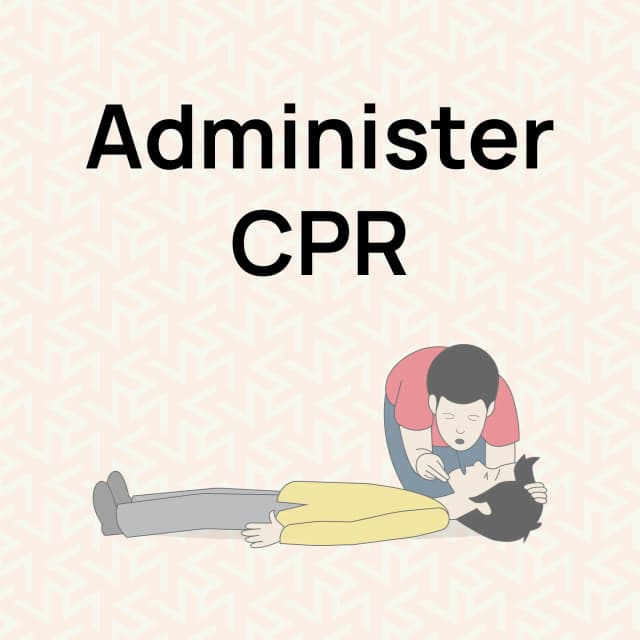
Medical emergencies that require CPR can occur unexpectedly in any location. According to the Resuscitation Council UK, most cardiac arrests (72%) occur in the home or workplace (15%). Everyone needs basic CPR knowledge, as this skill could save someone's life.What is Cardiopulmonary Resuscitation (CPR)?Cardiopulmonary Resuscitation (CPR) is a critical procedure in first aid. It involves artificial respiration, which supplies oxygen to the lungs, and artificial circulation, which maintains blood flow throughout the body.CPR's primary objective is to provide an appropriate supply of oxygenated blood to reach the brain and other organs.This prevents tissue damage until the heart can resume normal function or professional medical assistance arrives. It is important to note that CPR is most effective when chest compressions are performed continuously.Why Perform CPR: Understanding Cardiac ArrestWhen someone experiences cardiac arrest, their heart stops beating properly, blocking blood flow to the brain. The person becomes unresponsive and stops breathing.Although a cardiac arrest marks a state of clinical death, applying CPR on time and a defibrillator presents a chance to restore a regular heartbeat.Common causes of cardiac arrest include:heart attackssevere injurieselectrical shockdrug overdosedrowningsuffocationWhen administering CPR, you are responsible for the casualty's cardiovascular and respiratory function. This procedure slows down the progression of their life-threatening condition till professional medical help arrives to take control of the situation.When to Use CPRCPR is needed when someone is unresponsive and not breathing normally. It is also required when a person is not breathing at all. For instance, if someone is rescued from drowning, they may need CPR to help them start breathing again. Similarly, if someone is severely choking, bleeding heavily, or in shock, CPR may be necessary.If you encounter an unresponsive person who has collapsed, you should perform a primary survey using the DRABC steps. This involves checking if the person is breathing by placing your cheek near their mouth.Observe their chest for any movement for about 10 seconds. If the person is unconscious but breathing normally, you should put them in the recovery position. However, if they are unconscious and not breathing properly, you should be prepared to administer CPR. .main{ border:3px solid #0f7c90; border-radius:20px; position: relative; font-family:roboto; font-weight: 400; color: #000; } .main-two{ position: absolute; top:-25px; left:45px; background-color:white; } .img-div{ border-radius : 100%; padding:2px 7px; background-color:#0f7c90; margin-right:5px; width: 50px; height: 50px; } .img{ width:30px; object-fit:contain; height:auto; border-radius : 100%; } @media only screen and (max-width: 600px) { .heading{ font-size:20px; } .img{ width:20px; object-fit:contain; height:auto; border-radius : 100%; } .img-div{ width: 40px; height: 40px; } .main-two{ left:25px; } } Ready to Learn More? Knowing CPR is important in emergencies, but there's more to first aid. Our First Aid courses offer complete training to help you handle critical situations. Whether you want to improve your skills or workplace safety, these courses help build confidence and expertise. View our Emergency First Aid at Work (EFAW) and Level 3 First Aid at Work courses. These courses meet the UK legal requirements and help you keep people safe. How to Administer CPR on an AdultFirst, assess the safety of the scene. Then, check the person's responsiveness by tapping and asking if they are okay. Conduct a primary survey by gently tilting the head back to make sure the airway is clear.Check for breathing for 5 to 10 seconds by looking, listening, and feeling for breaths.How To Do a CPR Compression on an AdultIf the person is not breathing or their breaths are weak (known as agonal breaths), place your hands in the middle of their chest with your shoulders directly above your hands. Keep your elbows straight.Agonal Breathing:Agonal breathing occurs when someone's breathing is irregular and gasping, often making odd sounds. It can sometimes occur during a cardiac arrest. Bystanders may think the person is breathing normally. Treating someone with agonal breathing as if they are not breathing at all is essential.Give 30 chest compressions - press down firmly and quickly!Use the heels of your hands to push straight down on the breastbone, about 5-6 cm (2-2.4 inches) deep.Release pressure entirely after each compression to let the chest come back up. Keep a steady rhythm, aiming for 100 to 120 compressions per minute. Count out loud to keep track.How To Breathe into an Adult�s Mouth During CPRNext, if you are trained, tilt the person's head back and lift their chin to open the airway. Pinch the soft part of their nose closed. If you have a barrier device, use it. Then, give two breaths into the person's mouth, each lasting about one second, enough to raise the chest.This makes one cycle of 30 compressions followed by 2 breaths.�Keep doing CPR until an AED arrives, the person starts responding, or you are too tired to continue. When the defibrillator arrives, apply it to the person immediately.How to Administer CPR on a ChildLook around the area where the casualty has occurred.Check to see if the child responds. If not, get medical help and an AED if possible.If you are alone and do not have a phone, do CPR for 5 cycles (around 2 minutes), then go for help. If you can, bring the child with you.Next, check the airway and breathing for between 5 and 10 seconds. .banner { border-radius: 10px; overflow: hidden; border: 2px solid #ccc; box-shadow: 0 4px 8px rgba(0, 0, 0, 0.2); background-color: #fdf9ee; } .book-now { color: white; background-color: #DF3D52; border: none; padding: 15px 60px; border-radius: 5px; cursor: pointer; font-size: 20px; text-decoration: none; } .book-now:hover { /*text-decoration: none;*/ color: white; background-color: #c33f50; } Get Trained in All First-Aid Skills First Aid Courses Book Now Rated Excellent on major review sites How To Do a CPR Compression on a ChildIf the child is not breathing or breathing well, place your hands in the middle of their chest and press down firmly. Keep your elbows straight. Depending on the child's size, you can use one or two hands.Give 30 chest compressions: Push firmly and quickly!Use the heels of your hands to press straight down on the breastbone. Each compression should be about a third of the chest depth or 5 cm (2 inches) deep.�After each compression, release pressure completely to let the chest back up. Keep a steady rhythm, aiming for 100 to 120 compressions per minute. Count out loud to keep track.How To Breathe into a Child�s Mouth During CPROnce you have performed compressions, open the airway by tilting the head back and lifting the chin. Use a barrier device if you have one. Then, give two breaths into the child�s mouth, just enough air to raise their chest.This makes one cycle of 30 compressions followed by 2 breaths.Keep doing CPR until an AED arrives, the person starts responding, or someone else takes over. If you get too tired, stop. Apply the AED as soon as it comes.How To Administer CPR for Babies - Infant Casualty Perform a scene survey of where the casualty occurred. Check if the baby responds. Gently tap their feet. If there is no response, get medical help and an AED if possible. If you are alone and do not have a phone, do CPR for 1 minute, then get help. If you can, carry the baby with you. Next, open their airway by touching their forehead and gently tilting their head back. Use the fingertips of your other hand to lift their chin. Put your lips around the infant�s mouth and nose and blow gently for one second until their chest rises. Remove your mouth and wait for your chest to fall back to normal. Repeat this for a total of five rescue breaths.How To Do a CPR Compression on an InfantPlace two fingers just below the nipple line on the baby's chest.Press down on the breastbone about 4 cm (1 1/2 inches), around one-third of the chest depth.Do 30 chest compressions followed by 2 breaths (30:2)Keep doing CPR until an AED is used, someone else takes over, or you are too tired. Use the AED as soon as it arrives.How To Breathe into an Infant�s Mouth During CPRBabies have big heads compared to their bodies, which can cause their airways to close. When babies lie on their backs, their heads tilt forward, closing their airway further.When performing CPR, you might find putting a thin pad under the patient's shoulders useful to help keep the airway open. But do not spend time looking for one.Types of CPRDepending on the circumstances and the number of people involved, CPR can be of different types:Chest compression-only CPRDispatcher-assisted CPRHow to take over CPR from another rescuerTwo-rescuer CPRChest Compression-Only CPRCPR guidelines emphasise recognising emergencies early and the importance of calling 9-1-1 if you find someone collapsed and unresponsive.Compression-only CPR means doing chest compressions without mouth-to-mouth breaths. Give solid and quick compressions at the centre of the chest, aiming for 100 to 120 compressions per minute. Although this does not give the person oxygen, it is an option for people not trained in traditional CPR or those unsure of their ability.Dispatcher-assisted CPRIn some areas, when you call 9-1-1, the dispatcher can guide you through the emergency until medical help arrives. Put your phone on speaker and place it near the person's head. Keep talking to the dispatcher while you help the person.Hand-Over CPR: Taking Over CPR from Another RescuerOffer your assistance and let the rescuer know you are trained in CPR. Make sure medical help has been called.Do 30 chest compressions followed by 2 breaths. Use your barrier device if you have one.Two-Rescuer CPRIf two trained rescuers are available, they can work together to do CPR on someone who needs it. There are three good reasons why it is better for two people to do CPR:Doing CPR can be tiring. As the first aider gets tired, their chest compression quality might worsen. If two people share the job of compressing the chest, they can keep doing good compressions for longer.With two people doing CPR, they can take turns doing chest compressions and giving breaths. This means the compressions do not have to stop as often.When two people work together, they can encourage and help each other during a difficult situation. One person stays by the casualty's head to do CPR with two rescuers. He keeps the airway open and breathes after every 30 compressions. The other person does the chest compressions.To keep the compressions effective, they should switch roles every 5 cycles of compressions and breaths, about every 2 minutes.ConclusionIf someone is not responding and breathing normally, CPR can help them survive until paramedics arrive. So, everyone needs to know how to do CPR, even if you still need to be formally trained in first aid. If you are not qualified, you should do chest compressions only for adults. But for children and babies, it is best to call for help first and then do CPR. Either way, doing CPR increases the chances of the person surviving.
How To Conduct First Aid in a Road Accident
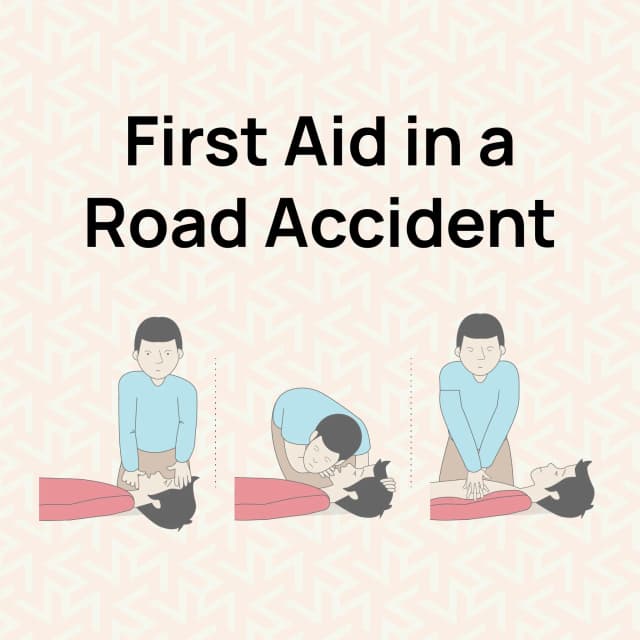
Traffic accidents can be small incidents like bicycle accidents or more severe ones like car crashes. It is important to make sure the area is safe before you help anyone who has been hurt. This will keep you, injured people, and other drivers safe.Once you have confirmed the safety of an area, take a quick look at the people who are hurt. Decide who needs help the most urgently. Always conduct first aid on a casualty who is not breathing before you help anyone else.Call 999 for emergency help. Inform them about what has happened. This includes information such as:The number of people who are hurtThe age of the injured peopleAre the injuries critical or non-critical?What To Do If You Witness a Road AccidentIf you come across a road accident, a step-by-step method should be followed:Scene Safety AssessmentWhen you approach an accident scene, safety comes first. To avoid further injuries, ensure all traffic stops, and everyone knows about the accident.Keep an eye out for any oncoming traffic that could pose a danger. Check for fuel spillage or fire risks, and turn off car ignitions if possible. Use hazard lights and warning triangles if available.If there are other people around, ask them to call emergency services. If alone, assess the situation and help anyone with life-threatening injuries first.Check the Quiet Ones FirstAlways prioritise checking quiet and motionless individuals first. Check if they are responsive and breathing. If they are unresponsive but breathing, position them to keep their airway clear and keep them warm.Administer CPR on Unconscious PeopleIf someone is not breathing, you may need to administer CPR. Call an ambulance immediately if you have not already done so. Only move an unconscious person from a vehicle if there is an immediate danger.Determine the Safety of Conscious PeopleConscious casualties should be moved to a safe area and kept warm and calm. Look out for any severe bleeding or life-threatening injuries and treat them first. Monitor anyone trapped in a vehicle and notify emergency services immediately.Be Careful How and When You Move ThemOnly remove a motorcyclist's helmet if they are unconscious, and it is necessary to assess their breathing. If a casualty is lying on their back unconscious and breathing, roll them into the recovery position with help to avoid twisting their spine.The Recovery Position:To place someone in the recovery position, straighten their legs. Remove any glasses or bulky items from their pockets. Position the nearest arm at a right angle to the body, with the palm facing upward. Bring the other arm across the chest. Place the back of the hand against the nearest cheek. Lift the far knee and gently roll them onto their side by pulling on the far leg.If they are conscious and lying on the road, encourage them to stay still and support their head and neck until help arrives.Following these steps, you can provide crucial assistance at a road accident scene and help keep everyone safe until professional help arrives. .main{ border:3px solid #0f7c90; border-radius:20px; position: relative; font-family:roboto; font-weight: 400; color: #000; } .main-two{ position: absolute; top:-25px; left:45px; background-color:white; } .img-div{ border-radius : 100%; padding:2px 7px; background-color:#0f7c90; margin-right:5px; width: 50px; height: 50px; } .img{ width:30px; object-fit:contain; height:auto; border-radius : 100%; } @media only screen and (max-width: 600px) { .heading{ font-size:20px; } .img{ width:20px; object-fit:contain; height:auto; border-radius : 100%; } .img-div{ width: 40px; height: 40px; } .main-two{ left:25px; } } Ready to Learn More? Knowing how to conduct first aid in a road accident is important, but there's more to it. Our First Aid courses offer complete training to help you handle critical situations. Whether you want to improve your skills or workplace safety, these courses help build confidence and expertise. View our Emergency First Aid at Work (EFAW) and Level 3 First Aid at Work courses. These courses meet the UK legal requirements and help you keep people safe. Assessing an Injured Person after a Road AccidentWhen dealing with someone hurt in a road accident, remember the primary survey DRABC steps: Danger, Response, Airway, Breathing, and Circulation. After assessing the casualty's danger and response, carry out the ABC steps.AirwayResponsiveIf the person is not responsive, ask them loudly if they are okay. Check if they can open their eyes. If they respond, you can leave them as they are until help arrives.While you wait, keep checking if they are:Awake and alertResponding to your voiceNot responding at all (unconscious)UnresponsiveIf there is no response, gently lay them on their back. Place one hand on their forehead and gently tilt their head back. Lift their chin using two fingers to move the tongue away from the throat. Avoid pushing on the mouth floor, as this can block the airway.If you suspect a neck injury, use the jaw thrust technique: place your hands on either side of the head. Gently lift their jaw forward and upwards without moving their head.BreathingTo check if they are breathing:Look for their chest rising and fallingListen for breathing sounds over their mouth and noseFeel their breath against your cheek for 10 secondsIf they are breathing normally, put them in recovery to keep their airway clear. Gasping or irregular breathing is not normal. If they are not breathing normally, call 999 for an ambulance and start CPR.CirculationIf their breathing is not normal, start chest compressions immediately. Gasping and irregular breaths after a sudden cardiac arrest are not expected. In this case, administer CPR right away.If they are not breathing, call 999 for an ambulance and start CPR.Supporting Those with PTSD After Giving CPRPerforming CPR can be a tough experience for everyone involved. The situations in which you need to perform CPR vary greatly.For example, you might see a stranger collapse on the street, and you are the only one there to help. Or maybe you have to do CPR on someone you love, even a child.Even people who have done CPR many times, like paramedics, nurses, and doctors, can find it hard emotionally.PTSD, which stands for post-traumatic stress disorder, is a type of anxiety disorder that can happen after really scary or stressful events. CPR situations often fit into this category.It is good to know the signs of PTSD so you can recognise if you or someone else might be dealing with it. Symptoms can last a long time and affect your daily life.Common PTSD symptoms include:Having nightmares or flashbacks of the event.Feeling alone or isolated.Feeling easily annoyed.Feeling guilty.Having trouble focusing.Having problems sleeping, like not being able to sleep well. .banner { border-radius: 10px; overflow: hidden; border: 2px solid #ccc; box-shadow: 0 4px 8px rgba(0, 0, 0, 0.2); background-color: #fdf9ee; } .book-now { color: white; background-color: #DF3D52; border: none; padding: 15px 60px; border-radius: 5px; cursor: pointer; font-size: 20px; text-decoration: none; } .book-now:hover { /*text-decoration: none;*/ color: white; background-color: #c33f50; } Get Trained in All First-Aid Skills First Aid Courses Book Now Rated Excellent on major review sites Getting the Right Help After a Road AccidentGetting the right help after a traumatic experience such as a road accident is essential. This could mean talking to family, friends, or people you work with. It might also mean getting counselling.There are online groups and places where you can find support from others who have been through similar things. Sharing experiences can help a lot.Many charities and groups help with mental health, such as Mind, SANE, or Anxiety UK.Your doctor (GP) can also give extra help, especially if you feel anxious or restless.If the crash involved a rideshare service such as Uber or Lyft, injured individuals may also need legal guidance to understand insurance coverage and liability, and to pursue a rideshare injury claim.How To Treat Shock After a Road AccidentAccidents, like car crashes, falls, or near-drowning incidents, can often trigger shock. Even if you witnessed the accident, it can still affect you.Symptoms of ShockShock can show up in different ways, like:Feeling pumped up with adrenaline.Shaking or feeling jittery.The feeling of sickness.Having a tight chest.Finding it hard to think clearly.Feeling aggressive or agitatedExperiencing hallucinationsFeeling numbEveryone reacts differently, and there is no right or wrong way to feel after something scary happens.Supporting Someone in ShockIf someone you know is in shock, here are some things you can do to help:Please make sure they are safe and try to keep them calm.Help them take slow, deep breaths.Please do not ask them to make any big decisions right away.Let them know that how they are feeling will pass.Help them find ways to manage any pain they might be feeling.Explain that adrenaline can hide pain so that they might feel it later.Remember, it is important to give yourself time to heal, too. Getting support from friends, family, or professionals can help.Take care of yourself by staying active, eating well and following a routine. Finding ways to relax can make a big difference during tough times.ConclusionTraffic accidents, whether minor or severe, can significantly impact those involved. Confirming safety before offering help at the scene for yourself and others is important. Prioritise first-aid for the most severely injured and call emergency services promptly. Assess the airway, breathing, and circulation of those who are injured. Offer support to those affected by shock or PTSD after the road accident. Taking care of others and yourself after a traumatic event is important for healing and well-being.
What is Anaphylaxis
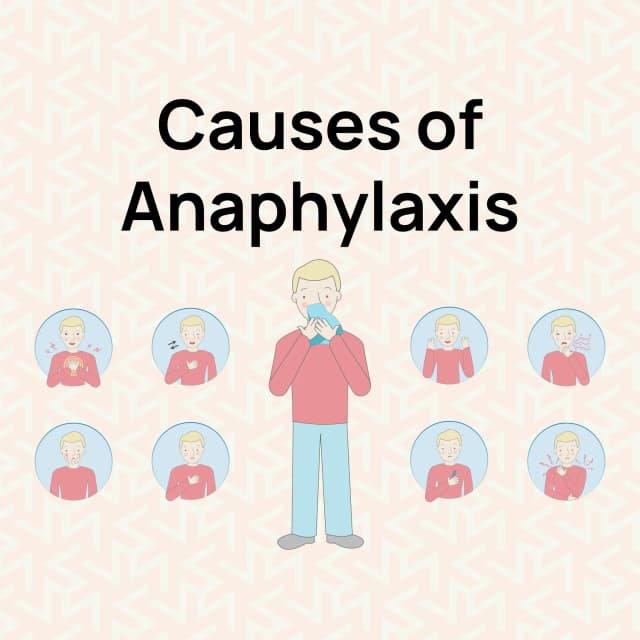
Anaphylaxis represents a frequent medical emergency, including a life-threatening acute hypersensitivity response. This condition is marked by a widespread allergic reaction affecting multiple bodily systems. If left untreated, anaphylaxis can quickly lead to respiratory failure and even death.What is Anaphylaxis Anaphylaxis is a severe allergic reaction that leads to a life-threatening condition. It causes systemic shock, leading to impaired respiratory function. Symptoms of an anaphylactic allergic reaction may include angioedema (swelling) affecting the face, neck, tongue, or lips. Respiratory distress can occur, potentially leading to shock, including hypotension and altered consciousness.What are the Causes of AnaphylaxisAnaphylaxis is triggered by various allergens, which are substances that provoke an allergic reaction. Common triggers include:Food: Peanuts, tree nuts (such as almonds and cashews), shellfish, milk, eggs, soy, and wheat.Insect Venom: Bee stings, wasp stings, and other insect bites.Medications: Antibiotics (like penicillin), nonsteroidal anti-inflammatory drugs (NSAIDs), and certain vaccines.Other Substances: Latex, chemicals, and even exercise-induced factors in some individuals.What are the Signs and Symptoms of AnaphylaxisThe signs and symptoms of anaphylaxis can develop rapidly and affect multiple organ systems:Respiratory System: Difficulty breathing, wheezing, throat tightness, and coughing.Cardiovascular System: Drop in blood pressure (hypotension), weak or rapid pulse.Skin: Itching, hives symptoms (urticaria), redness, and swelling (angioedema) of the face, lips, tongue, or throat.Gastrointestinal System: Nausea, vomiting, abdominal pain, and diarrhoea.Neurological System: Dizziness, confusion, and loss of consciousness.What are the Stages of an Allergic Reaction?Allergic reactions generally involve several stages, varying in severity and duration depending on the individual and the allergen involved. Here are the typical stages:Exposure: This is the initial stage where the person comes into contact with the allergen, whether through ingestion, inhalation, skin contact, or injection (as with insect stings).Sensitisation: In this stage, the immune system recognises the allergen as a threat and starts producing specific antibodies against it (IgE). This sensitisation process may occur over time and can involve repeated exposures to the allergen.Activation: Upon exposure to the allergen, the antibodies trigger the release of chemicals such as histamine from mast cells and basophils in the body. This release leads to the onset of allergic symptoms.Occurrence of Symptoms: This stage involves an allergic reaction, which can vary widely depending on the allergen and the individual's immune response. Symptoms can affect various systems, including:Skin (itching, hives)Respiratory system (wheezing, difficulty breathing)Gastrointestinal system (nausea, vomiting)Cardiovascular system (rapid heartbeat, drop in blood pressure).5. Resolution: The symptoms typically disappear after removing or neutralising the allergen (e.g., by medications like antihistamines or epinephrine).The resolution stage may vary in duration, depending on the reaction's severity and the treatment's effectiveness. .banner { border-radius: 10px; overflow: hidden; border: 2px solid #ccc; box-shadow: 0 4px 8px rgba(0, 0, 0, 0.2); background-color: #fdf9ee; } .book-now { color: white; background-color: #DF3D52; border: none; padding: 15px 60px; border-radius: 5px; cursor: pointer; font-size: 20px; text-decoration: none; } .book-now:hover { /*text-decoration: none;*/ color: white; background-color: #c33f50; } Get Trained in All First-Aid Skills First Aid Courses Book Now Rated Excellent on major review sites How is Anaphylaxis PreventedPrevention of Anaphylaxis is important for immuno-compromised people, who are vulnerable to allergens. Preventing anaphylaxis involves:Medical Alert Identification: Wear medical alert jewellery (e.g., bracelets) indicating allergies and carry an epinephrine auto-injector.Education: Educate oneself and others about triggers, symptoms, and emergency response protocols.Allergy Testing: Undergo allergy testing to identify specific triggers and develop a management plan with healthcare providers.Food Allergy Management: Properly managing allergens during food processing and packaging is crucial to prevent cross-contact contamination. Key methods for allergen control include:Clear Allergen LabellingProper RefrigerationStaff and Equipment HygieneColour-Coded UtensilsImplementing the HACCP System: Process and PrinciplesWhat is the Treatment of an Anaphylactic Allergic ReactionImmediate treatment of anaphylaxis involves administering epinephrine (adrenaline) via an auto-injector device (such as an EpiPen) to counteract the allergic response. Additional measures may include:Monitoring: Continuous monitoring of vital signs (blood pressure, pulse, and oxygen saturation).Supportive Care: Medicinal treatment includes oxygen therapy, intravenous fluids to maintain blood pressure, and medications like antihistamines and corticosteroids to reduce inflammation.Emergency Medical Attention: Prompt transfer to a hospital emergency room for further evaluation and management. .main{ border:3px solid #0f7c90; border-radius:20px; position: relative; font-family:roboto; font-weight: 400; color: #000; } .main-two{ position: absolute; top:-25px; left:45px; background-color:white; } .img-div{ border-radius : 100%; padding:2px 7px; background-color:#0f7c90; margin-right:5px; width: 50px; height: 50px; } .img{ width:30px; object-fit:contain; height:auto; border-radius : 100%; } @media only screen and (max-width: 600px) { .heading{ font-size:20px; } .img{ width:20px; object-fit:contain; height:auto; border-radius : 100%; } .img-div{ width: 40px; height: 40px; } .main-two{ left:25px; } } Ready to Learn More? Knowing how to manage anaphylaxis is important in emergencies, but there's more to first aid. Our First Aid courses offer complete training to help you handle critical situations. Whether you want to improve your skills or workplace safety, these courses help build confidence and expertise. View our Emergency First Aid at Work (EFAW) and Level 3 First Aid at Work courses. These courses meet the UK legal requirements and help you keep people safe. What are the Types of Anaphylactic ReactionsAnaphylaxis can be classified into different types based on triggers and clinical presentation:Food-Induced Anaphylaxis: Triggered by ingestion of allergenic foods.Insect Sting Anaphylaxis: Caused by venom from insect stings or bites.Drug-Induced Anaphylaxis: Reaction to medications or vaccines.Exercise-Induced Anaphylaxis: Triggered by physical exertion in conjunction with specific factors.Idiopathic Anaphylaxis: Cases where the trigger is unknown.ConclusionAnaphylaxis is a serious allergic reaction that must be immediately identified and treated to prevent life-threatening complications. Understanding the causes, signs, treatment options, triggers, types, and prevention strategies empowers individuals to effectively manage and reduce the risks associated with anaphylaxis. For those with known allergies, proactive measures are essential to ensuring safety outcomes in an anaphylactic emergency.