

What is a Scaffold Inspection? All You Need to Know
The UK has a number of regulations regarding working at height and overall construction worker health and safety. One of these regulations is the National Access and Scaffolding Confederation's (NASC) Safety Guidance. This regulation standardises the construction and dismantling of scaffolds and also provides a framework for scaffold inspection.Whether you are a construction worker, supervisor, or manager, you must comply with these health and safety guidelines to ensure a productive and safe construction site.When Should Scaffolding be Inspected?According to the HSE scaffold inspection requirements, scaffold inspection should be carried out by users in the following circumstances:Following the installationBefore first useAt an interval of 7 daysFollowing any circumstances that can compromise the safety of the scaffolding, i.e., high winds, heavy rain, etc.What are the Requirements for Scaffold Inspection?All scaffolding should be inspected by a competent person whose skills and qualifications are appropriate for this job.The Construction Industry Scaffolders Record Scheme (CISRS) assesses the scaffold inspector's competence. The inspector must have received training from a manufacturer in inspecting different types of scaffolding systems.A professional inspector ensures that the scaffolding is safe and well-built to reduce the chances of accidents. A site supervisor who has undergone scaffolding inspection training can also inspect a basic structure.Qualifications Required for Scaffolding InspectionFirst, you must become a scaffolder to carry out scaffolding inspections. To become a scaffolder, you must have at least 2 to 3 GSCEs, including Math and English, or an equivalent certification like a Level 2 NVQ.With these qualifications, you can start an 11-week apprenticeship, which can be completed over a period of two years. After that, you can apply for a CSCS Green Card. .second-cta-block .main-heading { font-weight: bold; font-size: 22px; } .second-cta-block .book-now { background: #DF3D52; color: #FFFFFF !important; border-radius: 8px; } .second-cta-block .second-heading { font-size: 17px; } .second-cta-block .card { border: 0 !important; } .second-cta-block .card-body { border: 1px solid #909090; box-shadow: rgba(0, 0, 0, 0.16) 0px 1px 4px; border-top-right-radius: 100px; border-bottom-right-radius: 100px; background: #ECECEC; } .second-cta-block .image-wrapper { height: 134px; position: absolute; right: -100px; top: calc(50% - 67px); /* Center the image vertically */ } .second-cta-block .image-wrapper img { height: 100%; } .second-cta-block .trustpilot-widget { width: 256px; } .cta-heading-section { width: 75%; } @media screen and (max-width:991px) { .second-cta-block { padding-top: 100px; } .second-cta-block .card-body { border: 1px solid #909090; box-shadow: rgba(0, 0, 0, 0.16) 0px 1px 4px; border-radius: 19px; border-radius: 14px; background: #ECECEC; } .cta-heading-section { width: 100%; padding-top: 50px; } .second-cta-block .image-wrapper { height: 134px; right: 0; position: absolute; left: calc(50% - 108px); top: calc(50% - 203px); } } RQF LEVEL 1 COURSE for CSCS GREEN CARD Check the Course Rated Excellent on major review sites Scaffold Inspection ChecklistCheck PointsYesNoAdequate safeguards to prevent contact with overhead power lines.��Scaffolds are erected on solid foundations with sole boards used where required.��Vehicular protection is in place where required.��Ladder access with edge protection or a hatch provided to the void.��Ties are installed and connected to two standards; tie anchors are suitable.��Adequate face bracing (zigzag).��Installation of handrails, mid-rails, toe boards/brick guards.��Lashed or secured lapboards.��The working deck is clear of materials and debris (minimum safe access 450mm wide).��Complete working decks without missing ledgers, planks, toe boards/kickboards, or hop-ups.��Gaps between scaffold platforms and building edge/face 225mm (horizontal) or less.��Gaps between hop-ups/decks and building floor 300mm (vertical) or less.��Tie bars were installed on each hop-up to prevent movement or plank dislodgment.��Fully planked decks every 2-3 meters (2 meters preferred).��Safe access to each working deck.��Combined loads of materials and persons do not exceed the scaffold's working load.��Containment sheeting/netting was installed, and windloading was considered in the design.��Containment netting with a flammability index of less than 25.��30-day inspection scheduled with a written record obtained.��Address safety issues immediately after inspection, restricting access to unsafe sections.��The written record was obtained for each inspection.��The scaffold is secured from unauthorised access when not in use, or the site is closed.��Mobile Scaffold Safety ChecklistCheck PointYesNoEnsure the work area is clear of floor penetrations, electric leads, and other slip or fall hazards.��Verify that the supporting surface is either hard and flat or that boards/channels are utilised on unstable surfaces, such as dirt, uneven ground, muddy, or sloping surfaces.��Confirm that bracing is set up correctly and a plan brace is included at the base of the scaffold.��Check that castor wheel locks are functional and they are properly engaged when in use.��Inspect if handrails, mid-rails, and kickplates are present on all mobile scaffolds over 2m in height.��Ensure internal ladder access is provided and securely positioned.��Verify that the working deck is intact with no split decks.��What are Scaffold Handover Certificates? Are they a Legal Requirement?Scaffold handover certificates are certificates that a scaffolding contractor hands over to firms and organisations that are going to use them on construction projects and sites. The completion of the handover indicates that the scaffold is safe for use at construction sites.Although scaffold certificates aren�t a legal requirement, it�s common practice among scaffold contractors and construction firms to exchange them for administrative health and safety purposes.Do I Have to Use Scaffold Inspection Tags?Tagging a safe scaffold isn�t a legal requirement but is the best practice nonetheless. However, if a scaffold is unsafe or not fit for use at any construction site, you must tag the scaffold as unsafe per the 1996 Health and Safety Regulations.Frequently Asked Questions (FAQs)What is the UK standard for scaffolding?BS 1139 is the UK standard for scaffolding. Scaffolding installation companies apply the parameters specified by this standard to scaffolds of various sizes and properties.How long can a scaffolding stay up in the UK?Scaffoldings in the UK can be left standing for as long as the project requires. However, concerned individuals should provide a reasonable explanation for leaving scaffolds standing.What is the maximum gap allowed on a scaffold?The gap should be between 150mm and 300mm for maintenance work. However, if you are doing major installation of structures, the gap should be between 150mm and 600mm.Wrap UpScaffold inspection is a huge responsibility that should be carried out by a competent, skilled, and qualified individual in accordance with the HSE scaffold inspection requirements. With a scaffold inspection checklist, a scaffold inspector can keep workers safe.Moreover, organisations need to ask for scaffold handover checklists from scaffold manufacturers and inspect the scaffold to ensure there are no damages. Also, scaffold inspectors must tag faulty and unsafe scaffolds so they aren�t used for construction purposes.
What is a CPCS Red Card?
The CPCS Red Card is for beginners in plant operation and is the first card to begin a career in plant operation.The Red CPCS Trained Operator Card is issued by the Construction Plant Competence Scheme, and it�s also known as the Trained Operator Card.CPCS Red Card shows that the cardholder is competent and qualified to work in plant operation. It also confirms that the holder has gained core skills, knowledge, and a professional understanding relevant to the workplace, which remains valid until they are officially assessed as competent according to national standards.�This card is very helpful for beginners who need time to complete the relevant NVQ or other qualifications and wish to start working in their chosen field under supervision. Before progressing to a Blue CPCS Competent Operator Card, you must get a CPCS Red Card.How Long Does a CPCS Red Card Last?CPCS Red Card expires after 2 years and is non-renewable. The rationale for this non-renewable nature is to provide ample time to complete the relevant NVQ in your chosen category. Once you complete the NVQ qualification, you must apply for the CPCS Blue Competent Operator Card.CPCS Red Card RenewalYour Red CPCS Card cannot be renewed. However, if you find any delays in completing your NVQ qualification, you can apply for a 12-month extension.The CPCS Red Card extension costs �25. For a 12-Month ExtensionTo renew your CPCS Red Card or to get an extension, you must:hold a valid CPCS Red Trained Operator Card, either currently on date or within 12 months of expiration.provide evidence that you�re undertaking a relevant vocational qualification. You can apply for a CPCS Red Card extension by calling the CPCS Helpline on 0844 815 7274.For an Additional 2 Year CardTo renew your CPCS Red Card for an additional 2 years, you must:hold a CPCS Red Trained Operator Card that has expired for over 12 months.hold a valid CITB HS&E test.pass the CPCS theory test within two years of the CITB HS&E Test.pass the CPCS practical test within six months of the CPCS theory test and within two years of the CITB HS&E Test.be registered for the NVQ or SVQ.CPCS Red Card PriceThe CPCS Red Card price depends on various factors, such as:Training fee (depends on the training provider).CPCS Theory Test fee (depends on the category).CPCS Practical Test fee (depends on the category).CPCS smart card fee (�28).CITB HS&E Test fee (�23.50).To get the CPCS Red Card, you must complete relevant training to prepare for the tests. The fee for the training depends on the training provider you choose.The fee for the CPCS Theory Test and CPCS Practical Test will depend on two factors, i.e. the category you want to apply for and the test centre you choose.As of December 2nd, 2019, the CPCS Red Card will be issued as a smart card, and the cost for the smart card is �28.The CITB HS&E Test fee is �23.50How to Get a Red CPCS Trained Operator CardYou can get a CPCS Red Card by following a simple 4-step process.Step 1: Get the CPCS Red Card TrainingTo get a Red CPCS Card, you must pass the CPCS technical tests, and for that, you must complete the relevant training.Step 2: Pass the Relevant CITB HS&E TestThe next step is to pass the CITB health, safety and environment test.Hurak Learning takes care of all the arrangements to ensure a seamless booking process for your CITB test.Reserve your test today! div.wpforms-container-full .wpforms-form label.wpforms-error{ display: none; } /* The Modal (background) */ .ebook-modal { display: none; /* Hidden by default */ position: fixed; /* Stay in place */ z-index: 1; /* Sit on top */ padding-top: 100px; /* Location of the box */ left: 0; top: 0; width: 100%; /* Full width */ height: 100%; /* Full height */ overflow: auto; /* Enable scroll if needed */ background-color: rgb(0,0,0); /* Fallback color */ background-color: rgba(0,0,0,0.4); /* Black w/ opacity */ } div.wpforms-container-full .wpforms-form input[type=submit], div.wpforms-container-full .wpforms-form button[type=submit], div.wpforms-container-full .wpforms-form .wpforms-page-button { border: 1px solid #ddd; font-size: 1em; font-family: inherit; padding: 9px 31px; background: #0f7c90; color: white; /* display: flex; */ /* width: 100%; */ position: absolute; bottom: -418px; right: -150px; /* margin: auto; */ justify-content: center; align-items: center; } /* Modal Content */ .ebook-modal-content { display: flex; flex-direction: column; justify-content: space-between; align-items: baseline; background-color: #fefefe; margin: auto; padding: 31px; border: 1px solid #888; width: 30%; position: relative; } /* The Close Button */ .ebookModal-close { color: #aaaaaa; float: right; font-size: 20px; font-weight: bold; cursor: pointer; position: absolute; right: 21px; top: 10px; } .ebookModal-close:hover, .ebookModal-close:focus { color: #000; text-decoration: none; cursor: pointer; } div.wpforms-container-full { margin: 0px auto 20px;!important } .ebookModal-header{ color:#0f7c90;font-size:30px;margin:0 30px } @media (max-width:576.888px){ .ebook-modal-content { width: 90%; } } @media (max-width:768.888px){ .ebook-modal-content { width: 70%; } .ebookModal-header{ font-size:20px!important; margin:0 } } @media (min-width:768.888px){ .ebook-modal-content { width: 50%; } } @media (max-width:1024.888px){ div.wpforms-container-full .wpforms-form input[type=submit], div.wpforms-container-full .wpforms-form button[type=submit], div.wpforms-container-full .wpforms-form .wpforms-page-button { width: 100%; position: static; } .ebookModal-header{ margin:0; font-size: 25px; } } @media (max-width:1280.888px){ .ebookModal-header{ margin:0; font-size: 30px; } } @media (min-width:992px){ .wpforms-submit-spinner{ max-width: 100%!important; position: absolute!important; top:250px!important; left:150px!important; transform: translate(-50%,-50%)!important; } @media (min-width:1280.888px){ div.wpforms-container-full .wpforms-form input[type=submit], div.wpforms-container-full .wpforms-form button[type=submit], div.wpforms-container-full .wpforms-form .wpforms-page-button { border: 1px solid #ddd; font-size: 1em; font-family: inherit; padding: 9px 31px; background: #0f7c90; color: white; /* display: flex; */ /* width: 100%; */ position: absolute; bottom: -380px; right: -150px; /* margin: auto; */ justify-content: center; align-items: center; } } Download our CITB Operatives and Specialists Test Prep Book for free! × [wpforms id="14869" title="false"] #myImg{ cursor: pointer; } Step 3: Pass the CPCS Theory TestYou must pass the CPCS theory test within two years of the CITB HS&E Test.Step 4: Pass the CPCS Practical TestYou must pass the CPCS practical test within six months of the CPCS theory test and within two years of the CITB health, safety and environment test.Accredited CPCS Test CentreYou must take both CPCS theory and practical tests at an accredited CPCS test centre, which you can find here. Once you pass the CPCS practical test, the centre will Once you pass the CPCS practical test, the CPCS test centre will initiate the request for the Red CPCS Trained Operator Card on your behalf.Difference Between Red and Blue CPCS CardA Red CPCS Card is for the Trained Operator, whereas a Blue CPCS Card is for the Competent Operator. CPCS Red Card is the first CPCS card you can get to start working in plant operations, and it gives you 2 years to complete your NVQ/SVQ qualification. Once you complete your qualification, you can apply for the Blue CPCS Card.CPCS Red Card is a temporary, non-renewable, valid for 2 years. On the other hand, the CPCS Blue Card is valid for 5 years and is renewable. What Is the Next Step?Once you receive the CPCS Red Card, you get ample time to complete your NVQ or SVQ. After that, you should apply for the Blue CPCS Competent Operator Card, which is valid for 5 years.Popular Level 2 NVQ CoursesLevel 2 NVQ Diploma in CarpentryLevel 2 NVQ Diploma in SteelfixingLevel 2 NVQ Diploma in CladdingLevel 2 NVQ Diploma in Fire Stopping

The Future of Education and Training in the Digital Age
Technology is rapidly transforming the way of learning. It has changed the traditional educational system, and now, every learning platform is at your fingertips. From online books to courses and classes, everything is going digital.In the digital age, the future of education and training is undergoing a transformative shift, with a significant role played by outdoor virtual run. These outdoor virtual runs not only add an engaging and dynamic element to the learning experience but also align seamlessly with the technological advancements shaping our educational landscape.As we step further in the digital era, the future of education expects a considerable revolution. Traditional educational institutes face tough challenges adapting the latest technological approaches and introducing new educational models according to technological advancements and innovations. Be it a school, university, or tuition agency, and every learning institute has transformed its educational process to the latest digitized models and technological innovations. From personalized learning platforms to virtual classes, everything has changed. In the same way, the digital age has also brought a massive change in skills. These days, there is a growing demand for data analysis, IT, computer programming, artificial intelligence, and machine learning. Educational institutes and academies continuously struggle to adapt their workforce to the latest digital trends by offering workshops, courses, and webinars.The effect of the digital age on education and training is bright but challenging at the same time. However, it has made learning easy and also increased the learning opportunities as well as skills for the new generation. It has offered new learning platforms and more potential to create an equitable and effective educational system.Here are some key trends that are shaping the future of education and training in this revolutionized digital age.Adaptive learning softwareDigitalization has introduced a few beneficial software for the learning process. One of them is Adaptive learning software. These software tailor the study model according to the person's learning ability and progress. It tracks the student's progress and identifies the areas where they need more support. Software like ProProfs LMS and eFront LMS software make this easier by offering personalized learning paths, assessments, and progress tracking to ensure every learner gets the support they need. It then designs its learning process accordingly. It also offers personalized instructions and activities to increase the skills and abilities of the learner. It is helpful for education as well as skill learning. Be it the course material of your chemistry or you want to know the coding, Adaptive learning software will make your learning process fun, engaging, and adaptable.A few popular adaptive software are GeniusTutor, Dreambox, Khan Academy, and IXL. These powerful tools help students learn more efficiently and effectively.Up To-Date InformationGone are the days when a book written in the 70's or 80's with old information was taught in the classrooms. With the digitization of the educational sector, the data is up-to-date and authentic. Google search, Wikipedia, and other educational and surveying websites regularly update information and add new research from time to time. Now, institutes and learning academies have made learning advanced online. There is no need to carry twenty books and search them for a topic. Just open Google and explore the case, and you will get all the necessary information. In the same way, study materials, as well as courses related to the latest skills, are also available on Google and YouTube. You don't have to go anywhere to learn a new skill; You can access everything on your fingerprint. With digital learning enabling students to acquire new skills faster, platforms like Apply IQ make it easy to transition those skills into real career opportunities.�Virtual ClassroomsThe digital era has transformed learning platforms. Now, you don't need to go to school physically. Now, you can learn anytime and from anywhere. It has made education accessible to people with disabilities, busy schedules, living in remote areas, or attending a session far from their location. These classrooms incorporate multimedia channels such as videos, Zoom meetings, online quizzes, and webinars to make the learning interactive and engaging. When deciding where to host live and recorded classes, comparing platforms like Teachable vs Thinkific helps you pick the best mix of delivery features, student analytics, and course management tools. They are accessible through Zoom, Google Meet, and Skype video calls. Some institutes also offer recorded classes, which they upload on their platform, and when students sign up, they get access to these classes. These days, educational institutes, online academies, and training centres are taking advantage of virtual classrooms and making education accessible and efficient. Even a small-level tuition agency is also taking advantage of the virtual classrooms and offering online learning facilities. In countries like Singapore, the 7% educational system has gone online, and parents prefer their kids to learn in their homes. These institutes specially design virtual classrooms according to the age and class of the students and make the study fun and interactive.Open Educational ResourcesThe digital age, like every field in our lives, has a substantial positive impact on training and educational processes, too. These days, every study material is available at your fingertips. If you want an excellent book to read, a course to join in your holidays, or to learn something new, the internet has vast resources. Whether you want to explore international education options like study in�UK, or enroll in a short online program, online academies are offering free as well as paid courses to make it easy and accessible. These open educational resources not only give you access to every kind of study material but also help you learn within the comfort of your home. They are a massive help to humanity. In addition, there are also games and software that are specially designed for educational purposes. Apps such as Duolingo, Google Translate, Khan Academy, and Udemy are good resources for learning.Intelligent Tutoring PlatformsIntelligent tutoring platforms are the same as adaptive learning software. These are AI-supported educational platforms that provide personalized learning experiences according to the learning capability and progress. They use natural learning processes (NLP) and machine learning to understand the student's progress and ability to learn and then design their educational syllabus accordingly with straightforward interpretation and personalized instructions. It also offers feedback to its learners interactively and conversationally. In addition, they also provide immediate feedback and correct any errors on time. My Math Lab, Smart Sparrow, ALEKS, Mathia, and Knewton are famous examples of intelligent learning platforms. Another example of this approach is an AI-powered homework assistant. Such a tool can answer questions, break down complex topics, and provide clear explanations, making it easier for learners to understand difficult material in real time.These intelligent systems highlight how AI can serve as a supportive guide, helping students learn more efficiently while complementing traditional study methods. Be it a tuition agency, an educational institute, or a vocational training centre, every organization now emphasizes using innovative learning platforms to get the most out of their learning process.As educational technology continues to evolve, an AI question solver for students offers an invaluable resource, enabling them to tackle challenging assignments with ease and enhancing their overall learning experience.Interactive Learning ExperiencesThe advancement of technology and the innovation of chatbots and artificial intelligence has wholly transformed the learning process. With the emerging software and tools specially designed to make study interesting and engaging, students now take more interest in their education. Ai has created an interactive and engaging learning experience for students. With instant feedback online, query forums, communities, and personalized tutoring services, interaction has increased globally. Now, a student in one country can interact with others with the same interests in another corner of the World. It has also increased the exposure of the youth, and they learn about other cultures and societies around the World. Moreover, cloud-based apps such as Kahoot, EDApp, NearPod, and H5P are specially designed to create and deliver interactive and engaging lessons to the students. These apps also make the learning process fun and exciting by coordinating games, quizzes, and easy-to-solve queries.Smart Content CreationDigital educational transformation not only aids students but also facilitates teachers. Now, they don't have to read books and prepare lengthy lectures. Many software are specially designed for teachers to prepare their daily lessons and quizzes. Online forms, quizzes, and assignments have made the teaching process easy and efficient. With the Whiteboard, Canva, MS Office, video maker, and other educational tools, teachers not only prepare the study material but can easily design questionnaires, quizzes, and other learning activities. A PowerPoint to SCORM converter further enables them to turn presentations into interactive, trackable e-learning modules. However, for educational institutions looking to build customized digital tools, many prefer to hire React developers who can create responsive, interactive teaching platforms tailored to their needs. Additionally, incorporating a video editor into their toolkit allows teachers to create engaging video content to enhance their lessons and captivate students' attention. A video compressor ensures these videos are optimised for quick uploads and smooth playback, especially when sharing on school platforms or learning management systems. In addition, with AI tools�and chatGPT, such as Jasper AI, WriteSonic, Pika AI, or Canva, you can write or design any written or visual content.�These AI-supported tools help you create a 1000-word assignment within a few minutes and can also be adapted for AI assessment solutions that personalize learning and evaluate student performance more accurately. The OCR tools such as image to text converter and pdf to excel converter allow educators to quickly extract text from scanned books or handwritten notes, saving time and streamlining content creation.Online Discussion PlatformsEvery social media platform has communities and forums for every field of life. The same goes for the education sector. Besides Quora and other online academies, online communities and forums help you discuss any topic with others in your field. You can also get expert guidance or ask about a topic you need assistance with. Be it your scholarship exam or taking a course, and you can discuss anything on these discussion platforms and get helpful information and support. You can also join a Live session in case you need an urgent response or perform a survey for your research paper. Many learning organizations such as academies, vocational training centres, or even small tuition agencies also have their forums online where they offer assistance of any kind to learners. Additionally, you can also book sessions with experts in your field. The Internet World is vast, providing every bit of support for making the learning process efficient and effective.On a Final Note!Digitalization has a profound impact on education and the learning process. Virtual learning platforms and online academies replace traditional educational setups. Educational material is now within your smartphone; with a single click, you are exposed to a vast collection of learning material and platforms. Open educational resources and affordable learning software have made the learning process accessible and engaging. From large organizations to small venues such as a training centre or a tuition agency, they also incorporate digitized techniques to get the most out of their educational process.�To cope with the emerging trends in the educational sector and advanced digitalization, educators and organizations must stay updated with the new technology and learn how to develop new skills accordingly. The future of education and training is like a shining star. Digitalization has the potential to make learning more feasible, accessible, and adaptable for the new generations!
Temporary CSCS Card � Why Would You Need a Red CSCS Card?
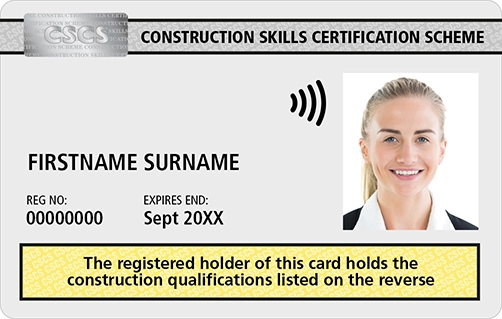
Temporary CSCS Cards enable you to work on construction sites as you work towards the qualifications necessary for your desired CSCS card.Read this blog post to understand temporary CSCS cards, the available types, and what to do in case of card expiration.What is a Temporary CSCS Card?A Red CSCS Card is a temporary card issued if you seek employment in the construction industry. The card is for temporary purposes while you work towards the qualifications necessary for your desired CSCS card.Types of Temporary CSCS CardsThe image below illustrates the five types of temporary CSCS cards, each with its specific set of requirements. For a more thorough understanding of these CSCS Red Cards, please refer to our blog, CSCS Red Card � Application, Types, and Cost (2023).How to Get a Temporary Card?Select a cardBefore you start the application process for a temporary card, you must review the various types of temporary cards and determine your eligibility.The CSCS Card Finder tool can simplify this process. By inputting your qualifications, the tool will guide you in identifying the card for which you meet the eligibility criteria.Provide proof of your registration for the relevant qualificationYou must provide proof of being registered for an apprenticeship. Proof can be provided in any of the following forms:A letter from your apprenticeship training providerAn email or letter from the managing agency of your apprenticeshipYour Apprenticeship AgreementPass the CITB Health, Safety, and Environment (HS&E) TestThe next step is to book and successfully pass your CITB test. To understand the CITB test, its costs, and the booking process, we recommend reading our blog on the various types of CITB tests.If you're still unsure about the steps for booking your CITB test, even after reading our blog, there's no need to worry. Hurak offers a convenient service to book your CITB test on your behalf. To utilise this service, click here.Prepare for your CITB test try out a mock exam or download one of our test prep books. #myImg{ cursor: pointer; } div.wpforms-container-full .wpforms-form label.wpforms-error{ display: none; } /* The Modal (background) */ .ebook-modal { display: none; /* Hidden by default */ position: fixed; /* Stay in place */ z-index: 1; /* Sit on top */ padding-top: 100px; /* Location of the box */ left: 0; top: 0; width: 100%; /* Full width */ height: 100%; /* Full height */ overflow: auto; /* Enable scroll if needed */ background-color: rgb(0,0,0); /* Fallback color */ background-color: rgba(0,0,0,0.4); /* Black w/ opacity */ } div.wpforms-container-full .wpforms-form input[type=submit], div.wpforms-container-full .wpforms-form button[type=submit], div.wpforms-container-full .wpforms-form .wpforms-page-button { border: 1px solid #ddd; font-size: 1em; font-family: inherit; padding: 9px 31px; background: #0f7c90; color: white; /* display: flex; */ /* width: 100%; */ position: absolute; bottom: -418px; right: -150px; /* margin: auto; */ justify-content: center; align-items: center; } /* Modal Content */ .ebook-modal-content { display: flex; flex-direction: column; justify-content: space-between; align-items: baseline; background-color: #fefefe; margin: auto; padding: 31px; border: 1px solid #888; width: 30%; position: relative; } /* The Close Button */ .ebookModal-close { color: #aaaaaa; float: right; font-size: 20px; font-weight: bold; cursor: pointer; position: absolute; right: 21px; top: 10px; } .ebookModal-close:hover, .ebookModal-close:focus { color: #000; text-decoration: none; cursor: pointer; } div.wpforms-container-full { margin: 0px auto 20px;!important } .ebookModal-header{ color:#0f7c90;font-size:30px;margin:0 30px } @media (max-width:576.888px){ .ebook-modal-content { width: 90%; } } @media (max-width:768.888px){ .ebook-modal-content { width: 70%; } .ebookModal-header{ font-size:20px!important; margin:0 } } @media (min-width:768.888px){ .ebook-modal-content { width: 50%; } } @media (max-width:1024.888px){ div.wpforms-container-full .wpforms-form input[type=submit], div.wpforms-container-full .wpforms-form button[type=submit], div.wpforms-container-full .wpforms-form .wpforms-page-button { width: 100%; position: static; } .ebookModal-header{ margin:0; font-size: 25px; } } @media (max-width:1280.888px){ .ebookModal-header{ margin:0; font-size: 30px; } } @media (min-width:992px){ .wpforms-submit-spinner{ max-width: 100%!important; position: absolute!important; top:250px!important; left:150px!important; transform: translate(-50%,-50%)!important; } @media (min-width:1280.888px){ div.wpforms-container-full .wpforms-form input[type=submit], div.wpforms-container-full .wpforms-form button[type=submit], div.wpforms-container-full .wpforms-form .wpforms-page-button { border: 1px solid #ddd; font-size: 1em; font-family: inherit; padding: 9px 31px; background: #0f7c90; color: white; /* display: flex; */ /* width: 100%; */ position: absolute; bottom: -380px; right: -150px; /* margin: auto; */ justify-content: center; align-items: center; } } Download our CITB Operatives and Specialists Test Prep Book for free! × [wpforms id="14869" title="false"] Check out our video tutorials to prepare for the CITB Health, Safety and Environment (HS&E) Test.Apply for the cardYou have two options for submitting your card application. The first is to apply online through the CSCS website by setting up an account, and the second is to contact CSCS at 0344 994 4777, where a CSCS representative will walk you through the application process over the phone. If you're looking for a detailed, step-by-step guide to applying online, check out our blog, How to Get a CSCS Card after Passing the Test.We suggest applying online, as it is generally the fastest way to obtain your CSCS card. By applying online, you can typically receive your card via mail within 3-5 working days.Moreover, our service is available to assist with your CSCS card application. Click the image below to obtain further information or benefit from this service.Cost of Getting a Temporary CSCS Card in 2023The application fee for all CSCS cards, including the temporary one, is �36. Additionally, there's an extra cost of �23.50 for booking the CITB test.For an in-depth comprehension of the various costs associated with acquiring a CSCS card, we recommend reading our blog on CSCS card price.Validity and Expiration of Temporary CSCS CardsRed CSCS Cards are intended to be used as a temporary measure, so they each have different expiration dates based on how quickly you complete your training and get a permanent card.To find out the validity duration for each temporary card, please review the table below.The Trainee Card is valid for 5 years. The Red Card for work placement is valid for 3 years. Supervisor, Manager, and Experienced Technical Card remains valid for 3 years. Moreover, the Apprentice Card is valid for 4 years and 6 months. If you have an Experienced Worker Card, it will remain valid for 1 year. The Provisional Card has a validity span of 6 months only.Temporary CSCS Card Renewal Unlike other CSCS cards, the temporary card cannot be renewed. So, it is important to complete your qualification for your desired occupation before the card expires.What to Do Next if Your Card Expires?When your temporary card reaches its expiration, it's advisable to initiate the process for an upgrade. Below, you'll find a list of available options to consider:Permanent CSCS CardsSuitable ForGreen CardThis card is for site labourers�Blue CardSkilled workers or experienced workers can get this cardGold CardThis card is for supervisors or those with a specialist level skill set.�Black/�White CardThese cards are for management level roles on a construction site.�FAQsWhat colour CSCS card is the best?The card that does the job for you is the best � if you want to become a labourer, the CSCS Green Card should be your first choice. If you�re a manager on a construction site, the CSCS Black Card is what you need.What is a CSCS card for?A CSCS card serves as proof to employers that you possess the necessary skills for a job associated with your CSCS card and a strong understanding of site safety practices.Wrapping UpTemporary CSCS Cards grant you access to construction sites while you pursue the qualifications required for your preferred CSCS card. To obtain a temporary CSCS card, you must successfully pass the relevant CITB test, which has a fee of �23.50, and then apply for your card online, with an application fee of �36. The card typically arrives within 3-5 working days.If you want to know the eligibility requirements for CSCS Red Cards, consider reading this article.
How Can You Become A Plant Operator? A Complete Guide
A vital part of any construction site is a heavy machinery operator or a plant operator. Plant operators are highly-skilled individuals with expertise in operating heavy machinery to dig, lift, and move materials on building sites.As easy as it may sound, becoming a professionally qualified plant operator isn�t a smooth ride at all. You need to gain a lot of work experience and also prove yourself competent in health and safety requirements.Are you interested in becoming a plant operator? Then this blog will chalk out all the education, work experience, and certifications requirements for you. Also, we will discuss how much you can make as a plant operator.So let�s get started!What Does A Plant Operator Do?The job description of a plant operator is simple: they have to be an expert in operating heavy machinery such as forklifts, cranes, bulldozers, excavators etc. Moreover, plant operators need to have decent spatial awareness to effectively operate the machines.Plant operators are required to operate 180 degrees and 360 degrees excavators. Also, plant operators are required to dig the land with excavators and dumper trucks. Plant operators who are proficient in crane operations need to work with slinger signallers via radio to move heavy materials from one place to another.Plant operators can be asked to level areas with compactors or use piling rigs and concrete pumps to build infrastructure. For example, in quarrying or mining, operators may use crushing and screening equipment, to process raw materials efficiently and safely.�Plant operators are also required by managers to carry out machine safety checks and repair any faults with the machines they operate such as changing buckets on cranes or maintaining the boom on an excavator.How To Become A Plant Operator?There are several pathways that you can take to become a plant operator. You can get a college education, an apprenticeship, or on-the-job training to start your career as a plant operator.EducationAlthough not all employers or training providers will ask for proof of formal education, some might ask for GSCEs with grades in English and mathematics. Also, if you are choosing to do a college course, then a GSCE will be a mandatory requirement.ApprenticeshipDoing an apprenticeship with a construction firm or a plant hire company is a good way to get started as a plant operator.If you are over the age of 16 then you are eligible for an apprenticeship. You will be fully employed by your company and you will be expected to work a minimum of 30 hours a week. You will be trained on the job and will also train at a college or by a training provider.You can complete an NVQ/SVQ Level 2 in Plant Operations or a Plant Operator or Lifting Technician intermediate apprenticeship. An intermediate apprenticeship takes almost two years to complete before you are able to work full-time.Work ExperienceIf you have experience operating heavy machinery then you can directly apply for a plant operator job. If you don�t have any experience, then you can work as a general labourer by obtaining a CSCS Green Labourer Card to gain construction site experience. Afterwards, your employer can offer you an on the job heavy machinery training.An experienced plant operator is expected to have many skills alongside the knowledge of operating heavy machinery. These skills include:Knowledge of engineering, science, and technologyDesign skillsAble to work under pressureAttention to detailMaintaining and repairing machines and toolsTypes of Plant Operator CardsTo become a plant operator, you don�t need a CSCS card. CSCS doesn�t issue cards to individuals in the plant sector. However, CSCS is partnered with other card schemes which provide their skill certification cards. These card schemes include:The Trade Association For The Lorry Loader Industry (ALLMI)Construction Plant Competence Scheme (CPCS)International Powered Access Federation (IPAF)The Mineral Products Qualifications Council (MPQC)National Plant Operators Registration Scheme (NPORS)ALLMIThe Trade Association For The Lorry Loader Industry or ALLMI is a plant scheme that is focused on issuing plant operator identity cards in the Lorry Loader industry. ALLMI issues identity cards as well as a certificate of achievement to those who successfully pass their assessment. The plant categories ALLMI is involved in areLorry Loader OperatorSlinger/SignallerCrane SupervisionRequirement: ALLMI issues identity cards to aspiring plant operators after the successful completion of its mandatory theoretical and practical assessment. This process is based on the requirements of BS7121 part 4 and other elements of the 7121 series. This process applies to both novice and experienced plant operators. It is also a mandatory requirement for card renewal.Card Validity: The cards issued by ALLMI are valid for 5 years.CPCSConstruction Plant Competence Scheme or CPCS issues plant operator cards to individuals working in construction and related industries who are responsible for operating heavy machinery. The cards offered by CPCS areTrained Operator CardCompetent Operator CardTester CardRequirement: CPCS issues cards based on their theory and practical tests. These tests are the CITB Health Test, Safety And Environment Test, and NVQ/SVQ tests.Card Validity: CPCS cards are valid for 2 to 5 years depending on the type of the card.IPAFInternational Powered Access Federation or IPAF issues cards to mobile elevator work platform operators who are working on a construction site. The only card issued by the IPAF is the Powered Access License Card.Requirement: Based on the training provided at IPAF centres, the IPAF issues the PAL cards. Applicants must complete a CITB or any other Health, Safety, and Environment test to be eligible for this card.Card Validity: PAL cards are valid for 5 years.MPQCThe Mineral Products Qualification Council or MPQC issues cards to plant operators working in road building, extraction, and construction. The cards offered by MPQC are:Assessed Operator CardCompetent Operator CardAssessor CardRequirements: You have to pass the MPQC theoretical and practical assessments, CITB Health, Safety and Environment Tests, and SVQ/NVQ Tests to be eligible for receiving these cards.Card Validity: These cards are valid for 2 to 5 years, depending upon the type of card.NPORSNational Plant Operator Registration Scheme or NPORS offers cards to plant operators working in various construction and allied sectors. These cards bear the CSCS logo. The cards offered by NPORS areTrained Operator CardCompetent Operator CardInstructor CardRequirements: NPORS issues cards based on passing their theoretical and practical assessment, NVQ/SVQ tests, and the CITB Health, Safety, and Environment Test.Card Validity: NPORS cards are valid for 5 years and can be renewed afterwards.How Much Does A Plant Operator Earn?The average salary of a plant operator in the UK is �23,122. However, some areas offer better pay and employment benefits. Here�s a list of areas where plant operators earn more than the average base pay.Location�Salary (Per Year)Rugby��20,231Selby��22,689St. Austell��22,699Bridgwater��24,060London��25,473Durham��26,290Grangemouth��30,596Chester��32,338Bristol��32,783Frequently Asked Questions (FAQs)How many plant operators are there in the UK?According to the CPA, training providers, and contractors, there are 289,000 plant operators working in the UK.What is the role of a plant operator?Plant operators are responsible for operating heavy machinery at a construction site. Also, they have to maintain and repair their machines and aid other construction teams in completing the project.ConclusionPlant operators are highly-skilled people capable of operating heavy machinery and capable of building awe-inspiring structures. However, to become a plant operator, you need to possess advanced qualifications to prove to your employer that you have the required knowledge of becoming a professional plant operator.Moreover, you have to choose carefully the Plant Operator Card that relates to your expertise, qualifications, and skill. With the appropriate operator card, you can increase your chances of attracting high-paying employers and also improve your career progression options.Well, I hope this guide helps you get the gist of what it takes to become a plant operator in the UK. Best of luck for your endeavours!
Everything You Need to Know about CSCS Qualifications: Their Importance, Types, CSCS Cards, and Cost
To be eligible for a skilled level CSCS card, applicants must hold a nationally recognised construction related qualification. In this blog post, I�ll discuss CSCS qualifications in detail including its types, costs, and more.Different Types of CSCS QualificationsTo obtain a CSCS card, you must acquire the relevant qualification required for that specific card, and there are different types of CSCS qualifications to consider. Let's examine these qualification types closely.National Vocational Qualification (NVQs)In construction, NVQs play a pivotal role, as they are a mandatory requirement for a number of CSCS cards.These qualifications serve as a valuable means to demonstrate your competence in your chosen trade or profession. NVQs have a dual role: not only are they a requirement for several CSCS cards, but they also act as evidence to your employer, confirming your competence for work on construction sites.NVQs hold great importance in your construction career, as it�s one of the major requirement for getting different types of CSCS cards.The specific NVQ level for the required CSCS card varies based on your job role, experience, and qualifications.For example, to get a CSCS Blue Skilled Worker Card, you will need to hold an NVQ Level 2 or higher in your relevant trade. On the other hand, obtaining a CSCS Gold Supervisor Card requires a higher-level NVQ, such as Level 3 or Level 4, depending on the specific supervisory qualifications.For example, to get a CSCS Blue Skilled Worker Card, you will need to hold an NVQ Level 2 or higher in your relevant trade. On the other hand, obtaining a CSCS Gold Supervisor Card requires a higher-level NVQ, such as Level 3 or Level 4, depending on the specific supervisory qualifications.If you�re in Scotland, you�ll need to refer to� Scottish Vocational Qualifications (SVQs) instead of NVQs. However, the fundamentals of the qualifications are the same.ApprenticeshipsApprenticeships are one of the major pathways to obtaining a CSCS card in the UK construction industry. This provides a combination of on-the-job training and classroom learning, allowing you to gain valuable work experience and develop the skills necessary for your job.Registered apprenticeship is considered a gold standard in job training. Employers in the UK construction sector require apprenticeship from the employees. This is because they face complex workforce challenges due to high competition in the global markets. As for everyone, registered apprenticeship is a proof and best solution for retaining excellent, quality jobs.Types of ApprenticeshipsTypes�Intermediate Level 2The equivalent of grade 9-4Advanced Level 3The equivalent of 2-A levelHigher Levels 4, 5, 6, and 7The equivalent of a foundation degreeDegree Levels 6 and 7The higher bachelor's or master's degreeHNCsHNC (Higher National Certificate) is a high-level course for technical skills. This qualification depends on theoretical and practical skills and knowledge. HNC takes one year to complete.Higher National Certification in construction management develops knowledge such as the use of technology on the site or site administration. This certification is equal to SCQF level 7. The same course will be further used for the supervisor or manager level rank in the construction sector.HNDsThe HND or Higher National Diploma in the construction industry is considered a professional qualification because it builds on the knowledge of HNC and covers the fundamentals of construction. This includes planning, health and safety, HR, as well as management. HDN takes two years to complete.Professional QualificationsProfessional qualifications are academic certifications that are required by the employer to assess your knowledge of the construction sector. It often includes your degree in construction or chartered membership in a professional body like CIOB, RICS, ICE, etc.Moreover, the professional qualifications include degrees from certified universities or training courses that require a high level of competency.Historical QualificationsCSCS often requires an old qualification of employees that helps assess their skills and expertise. This includes a city craft or an approved apprenticeship. Other types of historical certifications include employer apprenticeship and guild craft. Generally, most historical qualifications are no longer available. Cost Of Getting CSCS QualificationsThe cost of CSCS qualifications depends on the type of qualification and the level of certification required. The prices can also differ based on the training provider you choose. Cost of NVQsThe cost of an NVQ varies depending on what type of card you want.Check the table below for the estimated cost of NVQ Levels:Cost of ApprenticeshipAs apprenticeship involves training, some companies even pay their employees to learn and gain valuable experiences on the construction site. So there is no cost of apprenticeship.Cost of HNCsThe cost of a Higher National Certificate (HNC) depends on the level and type of the certification. The cost of HNC varies and it usually starts from �4000 and reaches a maximum of �8000. This course is offered by higher education colleges in the UK and it lasts for one year.�Cost of HNDsThe Higher National Diploma(HND) in the United Kingdom is in the category of higher education certificate. If you meet the eligibility criteria, HND will cost you around �1285 per year. This cost is for those who are living in the UK. If you are living outside the UK then you may be charged a higher rate of �3000 per year.Cost of Professional QualificationsTypically, professional CSCS qualifications can include an undergraduate degree in a relevant field. The cost of an undergraduate degree in the UK depends on several factors such as the university, the course's duration, and whether it is for home/EU students or international students.The tuition fees for a full-time undergraduate degree for home/EU students in the UK generally range from approximately �9,000 to �9,250 per year. However, for international students, the fees are typically higher, ranging from around �10,000 to �38,000 per year, depending on the university and the chosen programme.CSCS Cards and Their Relevant QualificationsThere are a number of CSCS cards available. These cards show the level and qualifications of the workers. There are different colours on each card, reflecting the occupation of each labour.Let us talk further about CSCS cards and the CSCS qualifications required for getting these cards:CSCS Green CardThe green CSCS labourer card is for entry-level workers, but it still requires some qualifications for working on a construction site. It is a must for green CSCS card holders to have an awareness of important health and safety considerations.Getting this card requires one of the following qualifications:QCF level 1SCQF level 4 award in health and safetySCWF level 5 REHIS certificateAlternatives to the level 1 award .second-cta-block .main-heading { font-weight: bold; font-size: 22px; } .second-cta-block .book-now { background: #DF3D52; color: #FFFFFF !important; border-radius: 8px; } .second-cta-block .second-heading { font-size: 17px; } .second-cta-block .card { border: 0 !important; } .second-cta-block .card-body { border: 1px solid #909090; box-shadow: rgba(0, 0, 0, 0.16) 0px 1px 4px; border-top-right-radius: 100px; border-bottom-right-radius: 100px; background: #ECECEC; } .second-cta-block .image-wrapper { height: 134px; position: absolute; right: -100px; top: calc(50% - 67px); /* Center the image vertically */ } .second-cta-block .image-wrapper img { height: 100%; } .second-cta-block .trustpilot-widget { width: 256px; } .cta-heading-section { width: 75%; } @media screen and (max-width:991px) { .second-cta-block { padding-top: 100px; } .second-cta-block .card-body { border: 1px solid #909090; box-shadow: rgba(0, 0, 0, 0.16) 0px 1px 4px; border-radius: 19px; border-radius: 14px; background: #ECECEC; } .cta-heading-section { width: 100%; padding-top: 50px; } .second-cta-block .image-wrapper { height: 134px; right: 0; position: absolute; left: calc(50% - 108px); top: calc(50% - 203px); } } RQF LEVEL 1 COURSE for CSCS GREEN CARD Check the Course Rated Excellent on major review sites CSCS Blue CardA blue CSCS card is for the skilled worker. For a blue CSCS card, you need to complete an NVQ or SVQ level 2 in the construction field. Another option to obtain a blue card is to complete an apprenticeship that is approved by CSCS.CSCS Gold CardAs the name shows, the gold CSCS card is for experienced staff. This card is for the labour who are highly skilled in the construction sector and acquire advanced qualifications.Some of the major qualifications that are necessary to obtain a gold CSCS advanced card areNVQ/SVQ Level 3ApprenticeshipEmployer-Sponsored ApprenticeshipCSCS Black CardCSCS black card is a senior-level card that is available to managers. To obtain a CSCS black card, you need to have an NVQ or SVQ level 4, 5, 6, or 7 in construction management. Even if a low-skilled worker completes the required qualification and gets succeeded in achieving this card, they get prioritised by the employer.CSCS White CardCSCS white card is for those who don�t necessarily work on the construction site, rather they visit as an architect or a surveyor. This card shows that you�re certified and professional enough to safely visit the construction site. The White CSCS card is valid for 5 years and can be renewed.There are two types of white CSCS cards available:CSCS White Card (Academically Qualified Person)This CSCS white card requires a college degree in construction-related courses. If you have completed a relevant HND, HNC, or even have CIOB or NEBOSH certificates, you can get this white card which is primarily for academically qualified people. Moreover, getting a white card means you�re capable of managing site operations without any supervision. The AQP card is valid for 5 years.Requirements for this card:1. Qualification certificate2. Passing the CITB HS&E TestCSCS White Card (Professionally Qualified Person)This type of white CSCS card is designed specifically for those who are members of the approved CSCS professional bodies. These bodies include the ICE, CIOB, RICS, etc. The validity of this card is 5 years, but you don�t have the option to renew this card. However, you can reapply for a CSCS white card.Requirements for this card:Must be a member of one of the approved professional bodies.Pass a CITB HS&E TestImportance of CSCS QualificationsConstruction Skills Certification Scheme (CSCS) qualifications are important to ensure workplace safety. As the construction industry often faces hazardous conditions, CSCS qualifications ensure workers have the skills and knowledge to use heavy machinery, equipment, and sharp tools.Let�s read the following points to understand the importance of CSCS qualifications.Promotes Safe Work EnvironmentSafety is the top priority in the construction industry. CSCS qualifications help promote a safer work environment by ensuring that workers are aware of the potential hazards and possess the knowledge to mitigate risks effectively.Acceptance on National LevelCSCS is widely recognised in the construction sector, and having a CSCS card is a prerequisite for employment. Many construction companies and contractors require their workers to hold CSCS qualifications to ensure that they are hiring competent labour.Gives Better Job Opportunities CSCS qualifications can open doors to better job opportunities and career advancement. As workers gain more experience and acquire higher-level qualifications, they become eligible for more challenging and rewarding roles within the industry.Meeting Legal RequirementsIn some cases, CSCS qualifications are a legal requirement for specific construction tasks. For example, certain construction sites and public-sector projects mandate that all workers possess valid CSCS cards. div.wpforms-container-full .wpforms-form label.wpforms-error{ display: none; } /* The Modal (background) */ .ebook-modal { display: none; /* Hidden by default */ position: fixed; /* Stay in place */ z-index: 1; /* Sit on top */ padding-top: 100px; /* Location of the box */ left: 0; top: 0; width: 100%; /* Full width */ height: 100%; /* Full height */ overflow: auto; /* Enable scroll if needed */ background-color: rgb(0,0,0); /* Fallback color */ background-color: rgba(0,0,0,0.4); /* Black w/ opacity */ } div.wpforms-container-full .wpforms-form input[type=submit], div.wpforms-container-full .wpforms-form button[type=submit], div.wpforms-container-full .wpforms-form .wpforms-page-button { border: 1px solid #ddd; font-size: 1em; font-family: inherit; padding: 9px 31px; background: #0f7c90; color: white; /* display: flex; */ /* width: 100%; */ position: absolute; bottom: -418px; right: -150px; /* margin: auto; */ justify-content: center; align-items: center; } /* Modal Content */ .ebook-modal-content { display: flex; flex-direction: column; justify-content: space-between; align-items: baseline; background-color: #fefefe; margin: auto; padding: 31px; border: 1px solid #888; width: 30%; position: relative; } /* The Close Button */ .ebookModal-close { color: #aaaaaa; float: right; font-size: 20px; font-weight: bold; cursor: pointer; position: absolute; right: 21px; top: 10px; } .ebookModal-close:hover, .ebookModal-close:focus { color: #000; text-decoration: none; cursor: pointer; } div.wpforms-container-full { margin: 0px auto 20px;!important } .ebookModal-header{ color:#0f7c90;font-size:30px;margin:0 30px } @media (max-width:576.888px){ .ebook-modal-content { width: 90%; } } @media (max-width:768.888px){ .ebook-modal-content { width: 70%; } .ebookModal-header{ font-size:20px!important; margin:0 } } @media (min-width:768.888px){ .ebook-modal-content { width: 50%; } } @media (max-width:1024.888px){ div.wpforms-container-full .wpforms-form input[type=submit], div.wpforms-container-full .wpforms-form button[type=submit], div.wpforms-container-full .wpforms-form .wpforms-page-button { width: 100%; position: static; } .ebookModal-header{ margin:0; font-size: 25px; } } @media (max-width:1280.888px){ .ebookModal-header{ margin:0; font-size: 30px; } } @media (min-width:992px){ .wpforms-submit-spinner{ max-width: 100%!important; position: absolute!important; top:250px!important; left:150px!important; transform: translate(-50%,-50%)!important; } @media (min-width:1280.888px){ div.wpforms-container-full .wpforms-form input[type=submit], div.wpforms-container-full .wpforms-form button[type=submit], div.wpforms-container-full .wpforms-form .wpforms-page-button { border: 1px solid #ddd; font-size: 1em; font-family: inherit; padding: 9px 31px; background: #0f7c90; color: white; /* display: flex; */ /* width: 100%; */ position: absolute; bottom: -380px; right: -150px; /* margin: auto; */ justify-content: center; align-items: center; } } Download our CITB Operatives and Specialists Test Prep Book for free! × [wpforms id="14869" title="false"] #myImg{ cursor: pointer; } Frequently Asked QuestionsWho should get CSCS qualifications?CSCS qualifications are relevant to anyone working in or aspiring to work in the construction industry, from labourers to project managers.What are the minimum requirements for a CSCS card?You must be 16+ years old, have obtained the required CSCS qualification, and have passed the CITB health, safety, and environment test.Can I apply for a higher-level CSCS card later in my career?Yes, you can apply for a higher-level CSCS card as you gain more experience and advance in your career.Is CSCS a professional qualification?Yes, CSCS is a professional qualification that works as proof that you are a certified professional to work in the UK construction industry.What qualifications do I need for a CSCS card?It depends on the type of CSCS card you want to obtain. For example, for a green CSCS card, you need to get one of the CSCS qualifications from the list below:An RQF Level 1/SCQF Level 4 Award in Health and Safety in a Construction Environment.An SCQF Level 5 REHIS Elementary Health and Safety Certificate.The NOCN/C Skills Awards Construction Health and Safety (F/618/0738) unitAlternatives to the level 1 awardFinal Words!CSCS qualifications are a mandatory requirement for CSCS cards. These qualifications have various types and levels to match different roles within the construction industry, from labourers to skilled professionals. By obtaining the appropriate CSCS qualification, you canThese qualifications ensure that workers have the right skills and knowledge to perform their jobs safely and effectively.
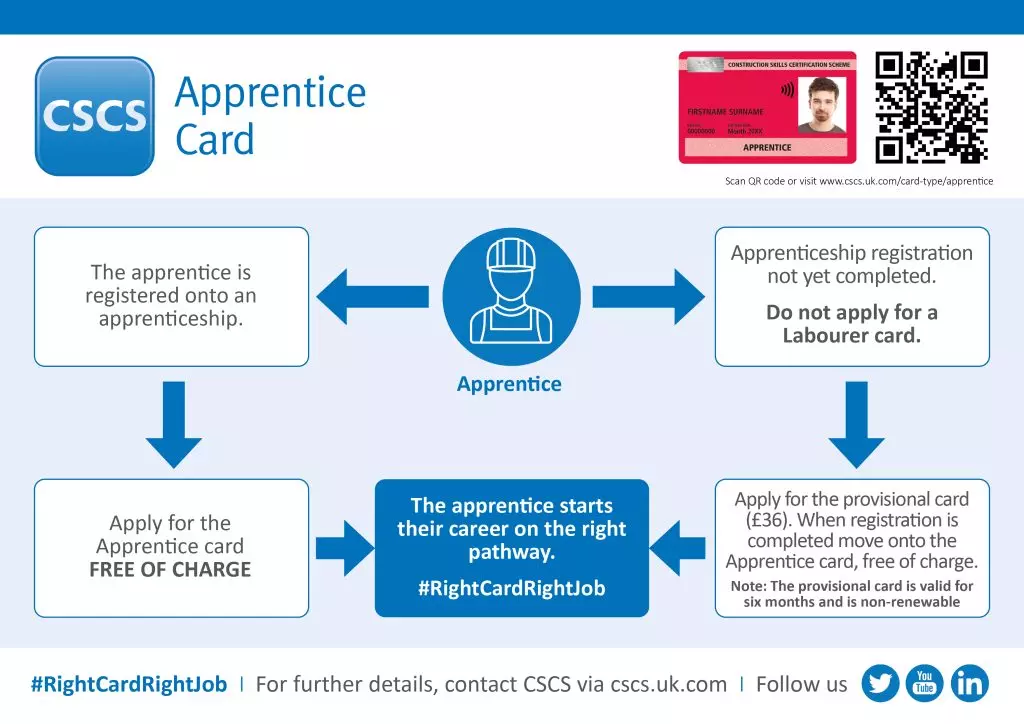
The Importance of the CSCS Apprentice Card?
What is an Apprentice CSCS Card? The CSCS Apprentice Card is one of the five types of CSCS Red Cards, designed for construction workers. It�s specifically aimed at individuals who are registered as an apprentice with a construction company. Remember, the CSCS Red Card is one of the six types of CSCS cards. This card works as proof to an employer that you�re working towards a relevant qualification for your current job. The Apprentice CSCS Card is valid for 4 years and 6 months and cannot be renewed. To get this card, you must pass a CITB test within the last two years. You must also be currently enrolled in an apprenticeship. Do I Need a CSCS Card for an Apprenticeship? Having a CSCS card is not a legal requirement for an apprenticeship on site. However, in the UK�s construction industry, it�s really hard to get a job without one. Over the years, the widespread demand for CSCS cards in the construction industry has made them almost mandatory for every worker, with most employers expecting their employees to have a CSCS card as a prerequisite. Considering this, I�d say you definitely need this card if you�re an apprentice. Eligibility Criteria If you�re an apprentice and looking for a Red Apprentice CSCS Card, there are two major requirements you have to fulfil. Requirement 1: Proof of enrolment in an apprenticeship scheme The first requirement is to be enrolled in an accredited apprenticeship scheme. You must confirm to your employer that you�re associated with an apprenticeship scheme. You can confirm it in the following ways: Show your apprenticeship agreement to your employer. Provide a letter to your employer showing that you�re registered with your training provider in a specific qualification. Request a letter from the Managing Agency showing you�re registered on an apprenticeship scheme from the CSCS Approved Apprenticeship Standards list. Requirement 2: Pass the CITB HS&E Test The second requirement is to pass a CITB Health, Safety and Environment Test. CSCS also offers an exemption from this test if you have any of the below: Proof (letter or email) from your apprenticeship managing agency that assures you successfully meet their health and safety requirements. Submit a one-day CITB Health and Safety Awareness course certificate. If your induction or initial qualification includes a Health and Safety unit. At Hurak Learning, we can help you book your CITB test for you. Make a reservation now! Before you attempt a test, it's recommended to take a CSCS mock test for practice. How to Apply for the CSCS Apprentice Card? The best way to apply for your CSCS Apprentice Card is via the CSCS online application service. The other way is to call CSCS at 0344 994 4777 (8am to 6pm, Monday to Friday) and apply for the card over the phone. To apply online, start by creating an account or logging in if you already have one and start your application anytime. Click here to log in to the CSCS website. If you need detailed guidance on how to apply for a CSCS Apprentice Card, read our blog which offers step-by-step guidance on how to apply. Am I Eligible for an Apprenticeship in the UK? To be eligible for an apprenticeship in the UK, you must meet the following criteria: be aged 16+. be a UK or European Economic Area (EEA) citizen, or have a history of living in the UK/EEA for the past three consecutive years. Not enrolled on any full-time education. Benefits Of Having A Red CSCS Apprentice Card Provides Proof Of Your Enrollment In An Approved Apprenticeship Programme If you hold the red CSCS Apprentice Card, it works as a powerful tool to represent to your employer that you�re enrolled in an approved apprenticeship programme. Increases Your Chances Of Getting Jobs As you may know, getting a job in the construction industry without a CSCS card is very hard. It�s because employers have set CSCS cards as a prerequisite for workers. So while you work towards getting your CSCS card, getting an Apprentice Card will open up work opportunities for you. Gives Access To Construction Sites Without a CSCS card you won�t be able allowed on-site, so getting the Red Apprentice Card will help you with that. Helps In Understanding Health And Safety Practices The CSCS training you undergo to obtain the Red Apprentice Card equips you with essential knowledge of health and safety practices. It�s important to get this knowledge so you develop a safety-conscious mindset early in your construction career. Offers Skill Development Opportunities Although it�s a temporary card, this card serves as your first step into the construction industry, while also providing access to further training and development opportunities. Frequently Asked Questions (FAQs) How long is the Red CSCS Apprentice Card valid for? The CSCS Apprentice Card is valid for four years and six months, and cannot be renewed once expired. How do I apply for an Apprentice licence? You can apply for a Red CSCS Apprentice Card via CSCS official website or over the phone by calling at 0344 994 4777 (8am to 6pm, Monday to Friday). Can you renew a Red CSCS Card? No. The Red CSCS Card cannot be renewed and you�re expected to complete your apprenticeship by the time the card expires. Is apprenticeship free in the UK? Yes, apprenticeships in the UK are generally free. The cost of training and assessment is typically covered by the government and the employer. Do I need a work visa for an apprenticeship in the UK? If you�re a British citizen, you do not need a work visa for an apprenticeship in the UK. If you�re an EU citizen who arrived before December 31, 2020, you�re eligible to apply for the EU Settlement Scheme. For non-EU citizens, you can do an apprenticeship as an international student and must have a visa. Wrapping Up: CSCS Apprentice Card Being an apprentice and getting the CSCS Apprentice Card is a big accomplishment for you. As you take your initial steps in the construction industry, it helps builds a successful career.

What is CITB? Your Guide To The Construction Industry Training Board
CITB stands for Construction Industry Training Board, this board aims to promote adherence to safety standards on construction sites in the UK. Another core objective of CITB is to encourage skill development.CITB has Site Safety Plus (SSP) courses, ranging from a one-day health and safety course for the CSCS Green Card to the 5-day Site Manager�s course intended for construction site managers.Below is a list of a few CITB Site Safety Plus (SSP) courses you can enrol in to enhance your chances of securing a better job in the construction industry.CITB Site Supervisor Safety Training (SSSTS) OnlineCITB Site Manager Safety Training Scheme (SMSTS)CITB Site Supervisor Safety Training Scheme (SSSTS-R) Online RefresherCITB Site Management Safety Training Scheme Online RefresherFor instance, if you�re a site supervisor and your role is to oversee construction workers � you should look into the SSSTS course because it�ll help you communicate to your employers that you�re serious about maintaining safety standards. You'll also have access to a wide range of extra job opportunities, particularly those requiring applicants to hold a SSSTS certificate.If you�re confused about picking the right course, I recommend contacting�our support team for further clarification. .second-cta-block .main-heading { font-weight: bold; font-size: 22px; } .second-cta-block .book-now { background: #DF3D52; color: #FFFFFF !important; border-radius: 8px; } .second-cta-block .second-heading { font-size: 17px; } .second-cta-block .card { border: 0 !important; } .second-cta-block .card-body { border: 1px solid #909090; box-shadow: rgba(0, 0, 0, 0.16) 0px 1px 4px; border-top-right-radius: 100px; border-bottom-right-radius: 100px; background: #ECECEC; } .second-cta-block .image-wrapper { height: 134px; position: absolute; right: -100px; top: calc(50% - 67px); /* Center the image vertically */ } .second-cta-block .image-wrapper img { height: 100%; } .second-cta-block .trustpilot-widget { width: 256px; } .cta-heading-section { width: 75%; } @media screen and (max-width:991px) { .second-cta-block { padding-top: 100px; } .second-cta-block .card-body { border: 1px solid #909090; box-shadow: rgba(0, 0, 0, 0.16) 0px 1px 4px; border-radius: 19px; border-radius: 14px; background: #ECECEC; } .cta-heading-section { width: 100%; padding-top: 50px; } .second-cta-block .image-wrapper { height: 134px; right: 0; position: absolute; left: calc(50% - 108px); top: calc(50% - 203px); } } RQF LEVEL 1 COURSE for CSCS GREEN CARD Check the Course Rated Excellent on major review sites What is the CITB Test?The CITB Health, Safety and Environment (HS&E) test is an exam that CITB conducts to evaluate the candidate�s exposure to safety practices for construction sites in the UK.You must complete the relevant CITB test as a mandatory step before applying for any CSCS card.The types of CITB HS&E Test are as follows:OperativesSpecialistsManagers and Professionals (MAP)These three tests, as indicated above, are the CITB test types available. To qualify for a CSCS card, you must pass one of these tests. The specific CITB test you need to pass is determined by the CSCS card you aim to obtain.The cost of the CITB test is �23.50, and you can take the test at your nearest Pearson VUE test centre. Across the country, there are many Pearson VUE test centres for you to choose from, making it convenient for you to select the one closest to your location.To know more about which CITB (HS&E) test you need to do, please read this dedicated guide on CSCS card types. In this blog, we discuss the different types of CSCS cards, their target audiences, and the corresponding CITB test that is mandatory for each card.It's worth noting that when taking your CITB test, you can request special assistance, which allows you to complete the test with a voiceover audio recording available in both English and Welsh.For the Operatives test, you can choose from 12 languages: English, Welsh, Bulgarian, Czech, French, German, Hungarian, Lithuanian, Polish, Portuguese, Punjabi, Romanian, Russian, and Spanish.How Do I Book the CITB Test?Booking the test is a straightforward process; just visit CITB's website, create an account, and make an online booking.Alternatively, if you're uncertain about booking your test, we're here to assist and can handle the booking on your behalf; click on CITB Health, Safety & Environment (HS&E) Test to find out more. div.wpforms-container-full .wpforms-form label.wpforms-error{ display: none; } /* The Modal (background) */ .ebook-modal { display: none; /* Hidden by default */ position: fixed; /* Stay in place */ z-index: 1; /* Sit on top */ padding-top: 100px; /* Location of the box */ left: 0; top: 0; width: 100%; /* Full width */ height: 100%; /* Full height */ overflow: auto; /* Enable scroll if needed */ background-color: rgb(0,0,0); /* Fallback color */ background-color: rgba(0,0,0,0.4); /* Black w/ opacity */ } div.wpforms-container-full .wpforms-form input[type=submit], div.wpforms-container-full .wpforms-form button[type=submit], div.wpforms-container-full .wpforms-form .wpforms-page-button { border: 1px solid #ddd; font-size: 1em; font-family: inherit; padding: 9px 31px; background: #0f7c90; color: white; /* display: flex; */ /* width: 100%; */ position: absolute; bottom: -418px; right: -150px; /* margin: auto; */ justify-content: center; align-items: center; } /* Modal Content */ .ebook-modal-content { display: flex; flex-direction: column; justify-content: space-between; align-items: baseline; background-color: #fefefe; margin: auto; padding: 31px; border: 1px solid #888; width: 30%; position: relative; } /* The Close Button */ .ebookModal-close { color: #aaaaaa; float: right; font-size: 20px; font-weight: bold; cursor: pointer; position: absolute; right: 21px; top: 10px; } .ebookModal-close:hover, .ebookModal-close:focus { color: #000; text-decoration: none; cursor: pointer; } div.wpforms-container-full { margin: 0px auto 20px;!important } .ebookModal-header{ color:#0f7c90;font-size:30px;margin:0 30px } @media (max-width:576.888px){ .ebook-modal-content { width: 90%; } } @media (max-width:768.888px){ .ebook-modal-content { width: 70%; } .ebookModal-header{ font-size:20px!important; margin:0 } } @media (min-width:768.888px){ .ebook-modal-content { width: 50%; } } @media (max-width:1024.888px){ div.wpforms-container-full .wpforms-form input[type=submit], div.wpforms-container-full .wpforms-form button[type=submit], div.wpforms-container-full .wpforms-form .wpforms-page-button { width: 100%; position: static; } .ebookModal-header{ margin:0; font-size: 25px; } } @media (max-width:1280.888px){ .ebookModal-header{ margin:0; font-size: 30px; } } @media (min-width:992px){ .wpforms-submit-spinner{ max-width: 100%!important; position: absolute!important; top:250px!important; left:150px!important; transform: translate(-50%,-50%)!important; } @media (min-width:1280.888px){ div.wpforms-container-full .wpforms-form input[type=submit], div.wpforms-container-full .wpforms-form button[type=submit], div.wpforms-container-full .wpforms-form .wpforms-page-button { border: 1px solid #ddd; font-size: 1em; font-family: inherit; padding: 9px 31px; background: #0f7c90; color: white; /* display: flex; */ /* width: 100%; */ position: absolute; bottom: -380px; right: -150px; /* margin: auto; */ justify-content: center; align-items: center; } } Download our CITB Operatives and Specialists Test Prep Book for free! × [wpforms id="14869" title="false"] #myImg{ cursor: pointer; } What Do I Need to Bring to the CITB Test?To meet the requirements for taking the CITB test, you need to prove your identity by showing a valid form of ID with your photo and signature. The acceptable forms of ID are:Passport (UK or international)Driving Licence (UK or European)Biometric Residence Permit (BRP)Biometric Residence Card (BRC)The document you provide should be in your own name, in date at the time of the test, and must be original (no photocopies or digital copies). You can check the full list of identification requirements for HS&E tests.Is CITB the Same as CSCS? CITB and CSCS are two different organisations, although both of these non-governmental bodies work towards promoting establishment of safety standards on construction sites in the UK. CITB conducts safety tests to evaluate candidates� skill levels to keep themselves and those around them safe on construction sites. While CSCS cards not only confirm knowledge of health and safety principles but also account for experience and skill level. This being the reason, the CITB test is a mandatory requirement to apply for any CSCS card. Hence, both of these bodies go hand in hand. Their roles differ somewhat, but their primary aim remains consistent: promoting safety on construction sites.How Do I Get a CITB Card?CITB doesn�t give you a card on completion of a course or after passing the CITB (HS&E) test. The CSCS card is often mistaken for the CITB card.In other words, the general consensus is that CITB cards are the same as CSCS cards. However, this is a misconception. The CITB test is a compulsory step for obtaining a CSCS card.Below, you'll find the steps to follow in order to get a CSCS card in the UK:Select the cardGet the required qualificationsPass the health, safety, and environment testApply for the cardVerify your documentsPay the feeGet your cardIf you want to learn more about CITB, including the different CITB tests, and which test is suitable for your role, please read this blog post.Frequently Asked Questions (FAQs)Is it easy to pass the CITB test?That depends on you entirely If you prepare for the CITB test well, you won't have any problems passing it.You can revise the content with our revision material and work on your weak areas. To bridge the language gap, an audio voiceover in 12 languages is available for the CITB Health, Safety and Environment (HS&E) test for Operatives. While the CITB HS&E test for Specialists or Managers and Professionals is only available in either English or Welsh.Can you get a CSCS card without the CITB test?No. To get a CSCS card, it is necessary to complete a CITB health and safety training course and pass a CITB health safety and environment test.Do I need to revise before sitting for my CSCS test?Whether you're about to take your CITB test for the first time or if you're retaking it, it is strongly recommended to prepare in advance.You can download our free CITB Test Prep book, featuring over 400 questions and answers, or access our mock tests through this link.Final Words!As we come to the end of this blog, we hope you now have a clear understanding of what CITB is and its significance within the construction industry.With continuous development, CITB ensures that construction workers are equipped to meet the industry's ever-evolving demands.
What Is The CPCS Scheme? A Guide to Construction Plant Competence
If you're curious about what this CPCS scheme is, how it works, and why it's crucial for the construction industry, you've come to the right place.You might also have heard CSCS scheme which I have covered in another blog, the CPCS is somehow similar to the CSCS but serves a different purpose.Whether you work in construction, want to operate machinery, or just care about safety and efficiency at work, I'll explain why the CPCS scheme is so important. Let's get started!What is CPCS?CPCS is a construction plant competence scheme that is developed by the Construction Industry Training Board (CITB) to reflect and showcase the competence of plant workers on the construction site. Or you can say that CPCS is a standard to show how skilled a plant worker is.The main work of the CPCS is to provide the CPCS cards to the labourers to ensure competency. The CPCS cards work as proof that the labour is skilled enough to work as a plant operator.This CSCS scheme card is widely recognised across the United Kingdom which ensures that the legal rules and standards are followed by the plant workers. And it doesn�t stop here, many employers in the construction industry now require CPCS cards during the recruitment process.What Is CPCS Certification?CITB has designed a number of CPCS certifications that proves the skill and competence of plant workers in the construction sector. Moreover, these certifications also help employers to find the appropriate workforce for the specific plant worker role.The CPCS certifications also help the workers to get better job opportunities within the construction sector and get priority over others.Some of the most popular CPCS certifications are:CPCS A02 - Crawler CraneCPCS A09 - Forward Tipping DumperCPCS A16 - Industrial Forklift TruckCPCS A31 - Ride-on RollerCPCS A40 - Slinger/SignallerCPCS A42 - CrusherCPCS A58 - Excavator 360CPCS A77 - Telescopic HandlerWhat Is The Difference Between CSCS And CPCS?CSCS is a construction skills certification scheme that is developed to provide skilled workers with legal CSCS cards. Those cards help the workers to find suitable jobs in the UK construction site. As CSCS is for construction jobs, CPCS on the other hand is designed for the plant workers on the construction site.CPCS focuses on providing competence and skills certification specifically to plant workers that are responsible for operating machinery such as cranes, lifters, etc. On the other hand, CSCS covers other sectors of construction other than plant operations.How to Get a CPCS Card?To obtain a CPCS card, you have to complete a number of important steps. These steps are somehow similar to the ones we have discussed for the CSCS cards in another blog.Here are the steps to obtain a CPCS card:Step 1: Decide Your CPCS Card FirstFirst of all, decide on your CPCS card according to your qualifications. As we have already discussed CPCS cards, you can check the eligibility requirements of different CPCS cards. For example, if you want a blue CPCS card, you must have a relevant NVQ or SVQ. Otherwise, you will not be able to apply.Step 2: Pass The CITB HS&E TestThe CITB health, safety & awareness test is also known as the CSCS test. You must pass this test in order to qualify for the next phase of getting the CPCS card. CITB HS&E test is related to health, safety, and environmental issues in the construction site. In order to work as a plant operator, it�s mandatory that you have the required safety knowledge. The validity of this test is 2 years and you must pass this before CPCS technical tests.Step 3: Pass The Theory Test After the successful completion of the CITB HS&E test, now you have to pass the theory test that evaluates your basic understanding of the skill and expertise to handle the plant machinery.Step 4: Pass The Practical TestAfter passing the CPCS theory test, there's a practical assessment for your technical expertise. It includes operating heavy equipment or machinery like excavators, cranes, etc. on a construction site under supervision.Step 5: Document SubmissionOnce you have passed all the required tests, then it�s time to submit your documents for the CPCS qualification. There is an option that you can submit your documents to CPCS directly. After submitting the legal documents, CPCS will verify your documents and will issue the CPCS card in 15 days.Step 6: Continue To Achieve Higher Rank CardIf you have got the red CPCS card which is a trained operator card and you want to upgrade it, you will have to go for a blue competent operator card. For that, you will need to achieve SVQ or NVQ qualification. This needs to be done within 2 years of getting a red CPCS card.Different Types Of CPCS Cards and Their SignificanceConstruction Plant Competence Scheme (CPCS) card is proof or evidence for those who work with the plant machinery on the construction site. These CPCS cards show that the workers have completed the necessary qualifications and have passed the required tests.Here we will discuss the three different types of CPCS cards:Red CPCS CardThe red CPCS card, known as the trainer operator card, is the first-level card. This card is ideal for beginners who are just starting their careers in plant operation. If you want to apply for this card, you will need some training in running plant machinery or site equipment.Moreover, this CPCS red card enables you to work in any field of the construction sector, while getting the relevant NVQ or other qualifications.How do I get a red CPCS card?After completing the onsite training, you will need to pass the:relevant CITB HS&E TestCPCS Theory TestCPCS Practical TestBlue CPCS CardThe blue CPCS card comes after the red card and shows further competency in your role. This card is known as a competent operator card and if you own this, you can work independently on plant machinery.As the red card expires after two years, it is essential to get the blue CPCS card to continue working. To get this card, it is necessary to complete the relevant NVQ, as NVQs are competence-based and are achieved in the workplace.How do I get a blue CPCS card?After getting the relevant NVQ, you will need the following:Provide proof of the NVQ Level 2Pass the relevant CITB HS&E testAchieve the CPCS theory testYou can book a Level 2 NVQ diploma in plant operations with us at just �549.99.Tester CardThe CPCS tester card is the most advanced type of card. It assesses the knowledge, understanding, and performance of those employees who are applying for red or blue cards. This card is for the most experienced plant operators who are working in CPCS test centres to supervise, deliver, and provide feedback on assessments.How do I get a CPCS tester card?First of all, it is mandatory for you to achieve a Record of Category Experience (RoE) from NOCN, which is the awarding body of CPCS cards.Further, you will need to:Hold advanced health and safety qualifications such as the CITB Site Managers Safety Training Scheme (SMSTS)Valid first aid certificatePass the MAP CITB testAchieve CPCS advanced theory testAchieved CPCS practical testPassed CPCS tester courseDo I Need a CPCS Card?If you�re currently working or want to work in the UK construction industry as a plant worker, then Yes, you need a CPCS card. This card shows your skills and qualifications to work as a plant operator. Another thing is that you don�t need to complete any CSCS training for a CPCS card. Any type of CPCS card you want to obtain requires specific qualifications related to that CPCS card.FAQsDo all plant workers need a CPCS card?Yes, all plant workers need a CPCS card because it is proof that many UK construction employers demand to recruit plant operators.Do I need a CPCS card if you have a CSCS?If you have a CSCS card but you want to work as a plant worker, then you�ll definitely need a CPCS card.How long is my CPCS card valid?If you have a red CPCS card, it is valid for 2 years. But for blue and tester cards, the validity is 5 years.Final Words!The CPCS (Construction Plant Competence Scheme) is a system that ensures the safety and skillfulness of workers in the plant sector of the construction industry. It requires workers to go through proper training and evaluation before operating construction machinery. This helps protect themselves and improves the efficiency of construction projects.As technology and safety standards progress, the CPCS scheme continues to be essential for professional growth and maintaining high standards in the construction field. By prioritising the CPCS scheme, the construction industry can foster a culture of safety, expertise, and progress, making construction sites safer and more efficient for workers and everyone involved.