

What is an A1 Assessor Course
The A1 assessor course was previously known for training learners wanting to become certified assessors. However, the qualification has been discontinued and is no longer accessible. It has been replaced by updated courses designed to achieve an assessor qualification.If you are considering a career as an assessor and are aiming for the A1 assessor qualification, shift your focus to the various TAQA qualifications. These updated qualifications offer a more comprehensive approach to assessment, making them a better choice for your career.What is the A1 Assessor Qualification ?The A1 Assessor qualification, previously known as the Level 3 Award in Assessing Candidates Using a Range of Methods, was introduced in late 2002. It replaced the D32 and D33 units. It offered a single-unit qualification focused primarily on candidate assessment. However, with the evolving education landscape, TAQA qualifications have become the standard choice for training and evaluation. .main{ border:3px solid #0f7c90; border-radius:20px; position: relative; font-family:roboto; font-weight: 400; color: #000; } .main-two{ position: absolute; top:-25px; left:45px; background-color:white; } .img-div{ border-radius : 100%; padding:2px 7px; background-color:#0f7c90; margin-right:5px; width: 50px; height: 50px; } .img{ width:30px; object-fit:contain; height:auto; border-radius : 100%; } @media only screen and (max-width: 600px) { .heading{ font-size:20px; } .img{ width:20px; object-fit:contain; height:auto; border-radius : 100%; } .img-div{ width: 40px; height: 40px; } .main-two{ left:25px; } } The A1 Assessor Course, now part of the CAVA (Certificate in Assessing Vocational Achievement) qualification, trains individuals to assess learners' skills and knowledge. It includes units like UPPA (Understanding Assessment Principles), AVRA (Assess Vocationally Related Achievement), and the ACWE course for workplace assessments, teaching assessing skills in various contexts. What is TAQA?TAQA stands for Training, Assessing, and Quality Assurance. It has replaced the A1 assessor award but is not a single-unit qualification. Instead, TAQA includes several assessor and quality assurance qualifications:Level 3 Award in Understanding the Principles and Practices of Assessment (Unit 1)Level 3 Award in Assessing Competence in the Work Environment (Units 1 & 2)Level 3 Certificate in Assessing Vocational Achievement (CAVA) (Units 1, 2 & 3)Level 3 Award in Assessing Vocationally Related Achievement (Units 1 & 3)Level 4 Award in the Internal Quality Assurance of Assessment Processes and Practice (Units 1&2) V1/TAQA/D34Level 4 Certificate in the Internal Quality Assurance of Assessment Processes and Practice (Units 1,2 & 3)Which Course is Equivalent to the A1 assessor course? All assessor courses in the TAQA group now replace the A1 assessor course. This means that they are all updated versions. However, the most common alternative to the A1 assessor qualification is the Level 3 Certificate in Assessing Vocational Achievement (CAVA).The CAVA qualification is favoured because it includes all the necessary units for assessing students in different settings. However, it is important to know that it is not the closest match out of all the options available.The closest match to the A1 Assessor qualification is the Level 3 Award in Assessing Competence in the Work Environment. This course closely aligns with the content, syllabus, and goals of the A1 assessor course.It is also shorter and more cost-effective than the CAVA course, covering two units instead of three. So if you need to get your �A1 Assessors,� this course is the best replacement. Which Units are Included in the TAQA QualificationsTo become a certified assessor, you can pursue any of the assessor qualifications offered within the TAQA suite of certifications. However, the specific units covered in your chosen course will determine the scope and context of your assessment abilities.The TAQA suite's assessor qualifications encompass three key units:Understanding the Principles and Practices of Assessment: This unit is important to all assessor qualifications within the TAQA suite. It provides fundamental knowledge necessary for anyone involved in assessment processes.Assessing Occupational Competence in the Work Environment: This practical unit evaluates learners' workplace competency.Assessing Vocational Skills, Knowledge, and Understanding: This practical unit evaluates learners' vocational skills and understanding in classrooms or training courses. .banner-blue { border-radius: 10px; overflow: hidden; border: 2px solid #ccc; box-shadow: 0 4px 8px rgba(0, 0, 0, 0.2); background-color: #fdf9ee; } .book-now { color: white; background-color: #DF3D52; border: none; padding: 15px 60px; border-radius: 5px; cursor: pointer; font-size: 20px; text-decoration: none; } .book-now:hover { /*text-decoration: none;*/ color: white; background-color: #c33f50; } Get Certified with our TQUK Assessor Courses Regulated by OFQUAL Assessor Courses Book Now Trustpilot What Are the Four Different Assessor Qualifications?The TAQA assessor qualifications are quite similar, but they have one big difference: their nature of assessments.The Level 3 Award in Understanding the Principles and Practices of Assessment focuses mainly on learning assessment theory. It is suitable for beginners who need more time to be ready to assess students.The Level 3 Award in Assessing Competence in the Work Environment lets you assess students at their workplace, not in classrooms. You need to gather evidence from two students in this role.The Level 3 Award in Assessing Vocationally Related Achievement lets you assess students in classrooms or workshops rather than at their jobs. Like the previous one, you also need evidence from two students.The Level 3 Certificate in Assessing Vocational Achievement (CAVA) is the most popular. It allows you to assess students in both classrooms and at their jobs. You need evidence from both types of assessments and must actively assess students to get this certification.What are the Requirements for the CAVA Assessor Course?To get your CAVA qualification, you must complete three units. You can do this part-time while still working. The course typically takes around 150 hours, so completing it in about 12 weeks is feasible for most people. Please note that you must be at least 19 years old to enrol.There are no formal prerequisites for the entry criteria. You should have math and English skills at a level 2 standard. You also need to be proficient in the area you want to assess. Moreover, for any assessor qualification, except for the UPPA, you must have two learners to assess.To complete your qualification, you must access learners. Your training provider can help you connect with the required learners.
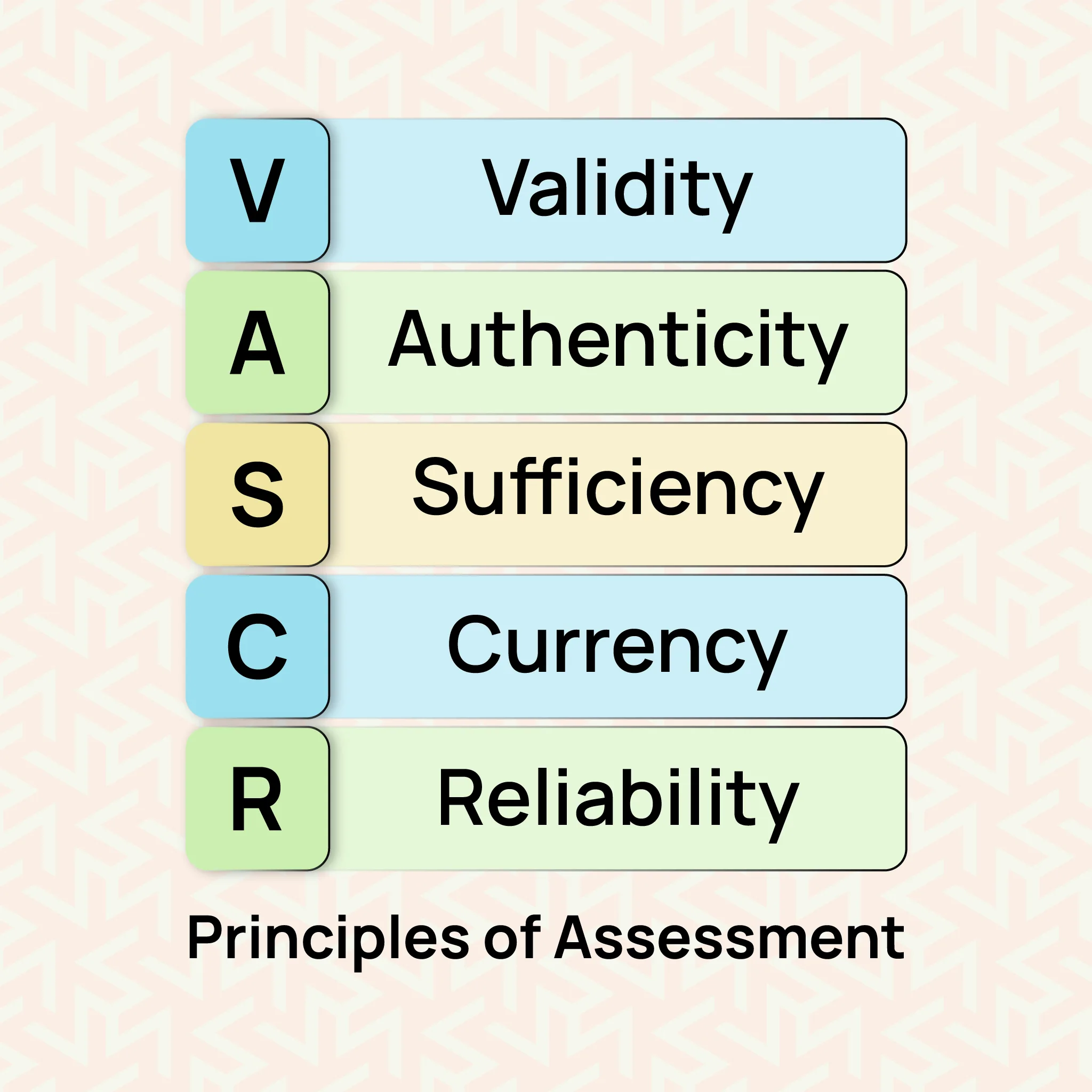
VASCR Principles of Assessment
Studying the concepts and principles of assessment is important. It helps us understand how assessments work and why they are important. This knowledge confirms that assessments are fair, reliable, and valid.Knowledge about the concepts and principles improves the quality of assessments and the accuracy of the outcome. It is also useful for evaluating learning effectively.Importance of Assessment PrinciplesAssessment principles are important for accurate and ethical learning and development practices. They guide how qualified assessors consistently evaluate learners' knowledge, skills, and abilities without bias.Ethical Considerations in AssessmentEthical principles in assessment include conducting assessments responsibly and ethically. This includes respecting learners' rights and well-being and avoiding bias or discrimination based on gender, race, disability, or socioeconomic status.Assessors must promote fairness by designing assessments for diverse learner backgrounds and experiences.Key Ethical PracticesConfidentiality: Keeping assessment information private and secure.Respect for Diversity: Creating inclusive and respectful assessments of different backgrounds.Clear Communication: Providing clear instructions and expectations to learners.Objectivity: Maintaining impartiality and fairness throughout the assessment process.Validity and Reliability: Using assessment methods that accurately measure what they intend to measure.By following ethical guidelines, practitioners create supportive learning environments and uphold integrity in assessments. Transparency is also important. Assessors should openly communicate with learners about assessment purposes, evaluation criteria, potential outcomes, benefits, and available support.Understanding Concepts and Principles of AssessmentThe concepts and principles of assessment are the fundamental ideas and values guiding the assessment process. Key concepts include measuring a learner's knowledge and learning standards using various assessment types. .main{ border:3px solid #0f7c90; border-radius:20px; position: relative; font-family:roboto; font-weight: 400; color: #000; } .main-two{ position: absolute; top:-25px; left:45px; background-color:white; } .img-div{ border-radius : 100%; padding:2px 7px; background-color:#0f7c90; margin-right:5px; width: 50px; height: 50px; } .img{ width:30px; object-fit:contain; height:auto; border-radius : 100%; } @media only screen and (max-width: 600px) { .heading{ font-size:20px; } .img{ width:20px; object-fit:contain; height:auto; border-radius : 100%; } .img-div{ width: 40px; height: 40px; } .main-two{ left:25px; } } The VASCR principles�Validity, Authenticity, Sufficiency, Currency, and Reliability�ensure fair, accurate, and consistent assessments. The Level 3 Certificate in Assessing Vocational Achievement (CAVA) and the Level 3 Award in Understanding the Principles and Practices of Assessment (UPPA Unit 1) allow you to apply these principles effectively in assessment practices. Benefits of Studying Assessment Concepts and PrinciplesStudying assessment concepts and principles helps design assessments that accurately measure learner progress and achievements. It promotes effective feedback to motivate and guide learners, improving their learning journey. .banner-blue { border-radius: 10px; overflow: hidden; border: 2px solid #ccc; box-shadow: 0 4px 8px rgba(0, 0, 0, 0.2); background-color: #fdf9ee; } .book-now { color: white; background-color: #DF3D52; border: none; padding: 15px 60px; border-radius: 5px; cursor: pointer; font-size: 20px; text-decoration: none; } .book-now:hover { /*text-decoration: none;*/ color: white; background-color: #c33f50; } Get Certified with our TQUK Assessor Courses Regulated by OFQUAL Assessor Courses Book Now Trustpilot The VASCR Principles of AssessmentIn assessment, following the VACSR principles�Valid, Authentic, Sufficient, Current, and Reliable�confirms complete fairness and accuracy.These principles make sure that assessments are genuinely produced by learners, remain relevant, cover all learning outcomes, and show consistency over time.Validity Principle in AssessmentThe Validity Principle is about assessments accurately measuring what they intend to assess�knowledge, skills, or abilities. Key aspects of the Validity Principle include:Content ValidityThe assessment's content aligns with the course or program's learning outcomes and objectives.Construct ValidityExamines whether the assessment measures the underlying theoretical construct or concept it purports to measure. This involves demonstrating that the assessment items reflect the intended construct or skill.Criterion-Related ValidityDetermines how well the assessment correlates with an external criterion, such as another established assessment or real-world performance. It includes concurrent validity (how well the assessment compares with a similar assessment simultaneously) and predictive validity (how well the assessment predicts future performance).Face ValidityRefers to whether the assessment appears to measure what it is intended to measure on the surface.Valid assessments provide reliable results reflecting a learner's capabilities, contributing to meaningful and fair evaluations.Authenticity Principle in AssessmentThe authenticity principle confirms that submitted evidence truly belongs to the learners.In the modern digital age and busy schedules, plagiarising or purchasing coursework from online sources is a temptation. However, submitting work that is not one's own undermines the purpose of learning and achieving qualifications.It constitutes plagiarism, cheating, and fraud, which legal authorities and regulatory bodies condemn.Key aspects of the Authenticity Principle include:OriginalityLearners must submit work that is their creation and not copied or plagiarised from others, and should consider performing a plagiarism check to ensure authenticity.GenuinenessThe evidence presented should accurately represent the learner's skills, knowledge, and abilities without falsification or fabrication.RelevanceThe evidence should be directly related to the assessment task and the learning outcomes being assessed.Proper referencing is essential to acknowledge all sources used, and learners must submit only genuine evidence without fabrication.How to Verify the Authenticity of the Learner's WorkProvide a copy of the learner's secure email address to send evidence to the assessor.Use an individual learner's login on their e-portfolio system.Obtain a learner's declaration confirming that all portfolio contents are their own.Record either a video or audio of the learner confirming the authenticity of their work or participating in an assessment like a reflective discussion.Sufficiency Principle in AssessmentThe Sufficiency Principle requires evidence to directly address learning outcomes and assessment criteria. Assessments accurately gauge learner competence. For instance, if asked to discuss CPD and reflective practice, focusing only on CPD would not meet the requirements.In practice, this principle guides the development of assessments based on content breadth and depth. Key aspects of the Sufficiency Principle include:CoverageThe evidence should comprehensively cover all aspects of the assessment criteria and learning outcomes specified for the task.DepthThe evidence should thoroughly understand and apply the assessed knowledge, skills, or abilities.QualityThe evidence should be sufficient for accurate assessment and evaluation.Assessments should include all levels and assessment methods (e.g., written responses and practical demonstrations). Multiple assessment types offer a comprehensive view of learner capabilities. Using the Sufficiency Principle guarantees fair, valid, and reliable assessments. It allows practitioners to gather evidence, aiding accurate evaluations and tailored learning interventions.Current Principle in AssessmentEvidence should be recent and dated close to the assessment date. It must be current andrelevant, reflecting present expectations and standards. Key aspects of the Current Principle include:TimelinessThe evidence should be recent and dated close to the assessment date to reflect current knowledge and practices accurately.RelevanceThe evidence should be pertinent and applicable to evaluating assessment criteria and learning outcomes.ValidityUsing current evidence enhances the validity of assessments by ensuring that they accurately measure current competence and understanding.Outdated qualifications or evidence may not meet current practice guidelines or legislative changes. All evidence should align with expected timelines and represent real-world scenarios.Reliability Principle in AssessmentThe Reliability Principle in assessment refers to the consistency and dependability of assessment results. It confirms that assessments produce consistent outcomes when administered under similar conditions and with similar groups of learners. This consistency allows for reliable judgments about learners' knowledge, skills, or abilities.Key aspects of the Reliability Principle include:ConsistencyAssessments should yield consistent results over time and across different assessors or evaluators.RepeatabilityThe assessment process should be repeatable, meaning that if it were conducted again under the same conditions, it would produce similar results.PrecisionThe assessment method should measure what it intends to measure accurately and reliably.Practitioners improve reliability using standardised procedures, clear assessment criteria, and well-defined scoring rubrics. They also avoid potential sources of error, such as bias or variability in scoring, for fair and consistent evaluation of learners.Structured Approach to AssessmentWhen beginning any assessment process, consider the VASCR principles: Valid, Authentic, Sufficient, Current, and Reliable. These principles confirm that the evidence collected meets standards and accurately reflects the learner's capabilities. You can confidently proceed with the Assessment Cycle if the evidence satisfies these criteria. This cycle involves initial assessment, planning assessments aligned with learning outcomes, engaging learners in relevant activities, etc.Initial AssessmentInitial assessments aim to understand students' motivations for joining the course, their prior subject experience, and any learning difficulties or disabilities. This helps determine their starting level. An Initial Skills Assessment aids in accurately grading students.Methods and Questions: Choose an initial assessment method to uncover relevant information to guide students towards their learning goals.Planning the AssessmentOnce initial information is gathered, plan how to assess session/course activities aligned with learning outcomes. Communicate assessment criteria to students, making sure they understand expectations.Assessment Criteria: Prepare a detailed list of criteria to clarify what students must demonstrate.Assessment Methods: Decide on assessment methods such as observation, questioning, or practical demonstrations.The Learning Activity or OpportunityStudents engage in learning activities where evidence is collected to evaluate progress. This evidence sufficiently demonstrates the application of taught concepts or skills.Evidence Gathering: Determine the most effective methods to gather evidence that validates learning in your subject area.Making a JudgementEvaluate student progress based on shared criteria. Assessments should be fair, transparent, and unbiased. They should involve students in setting learning goals.Judgement Criteria: Use the VASCR (Valid, Authentic, Sufficient, Current, Reliable) principles for comprehensive and accurate assessments.Feedback & Action PlanProvide constructive feedback highlighting strengths and areas for development. To avoid overwhelming students, limit feedback to three strengths and three areas for improvement.Feedback Delivery: Decide on the method of feedback delivery�whether through conversation, written format, or a structured session. You can also provide quick access to feedback forms through QR codes to make it easier for learners to respond, including options like The QR Code Generator (TQRCG).Action Plan: Develop an actionable plan outlining steps for improvement so students know how to progress effectively.This assessment cycle repeats with subsequent assessments or new modules/tasks for continuous improvement and tailored support for each student's learning journey.ConclusionThe VASCR principles produce fair, meaningful, and beneficial assessments for learner development. Following these principles of validity, authenticity, sufficiency, current, and reliability improves the credibility of assessment processes and supports learners in achieving their educational goals.
How to Become a Qualified Assessor
Businesses across diverse sectors actively seek assessors, offering opportunities for career advancement and a rewarding salary. An assessor is responsible for guiding trainees towards achieving their career goals.They evaluate learners' skills and knowledge against set standards. Their duties include planning and conducting assessments to gauge learners' work-related competence.Given their responsibilities, assessors must possess expertise in their respective fields and undergo training. It is important to acquire relevant skills and knowledge before assuming the role of an assessor.What Qualifications do you Need to Become a Qualified Assessor?Obtaining a Relevant Assessor Qualification, such as the Level 3 CAVA Certificate, is important to qualify as an assessor. This credential enables individuals to conduct assessments in educational environments and trains them to evaluate competence in occupational settings.Upon completion of the certification, assessors become eligible to evaluate learners pursuing National Vocational Qualifications (NVQs) and apprenticeships.These are the three levels of courses for assessor qualifications: Level 3 Award in Understanding Assessment Principles and PracticesThe UPPA assessor course focuses on knowledge and is excellent for current assessors who want to improve their skills. It teaches the background knowledge and importance of assessment practicesLevel 3 Award in Assessing Vocationally Related AchievementThe AVRA assessor course allows you to assess students in a training setting, like a workshop or classroom, but not in their workplace. To finish the course, you will complete four assessments on two learners (8). .banner-blue { border-radius: 10px; overflow: hidden; border: 2px solid #ccc; box-shadow: 0 4px 8px rgba(0, 0, 0, 0.2); background-color: #fdf9ee; } .book-now { color: white; background-color: #DF3D52; border: none; padding: 15px 60px; border-radius: 5px; cursor: pointer; font-size: 20px; text-decoration: none; } .book-now:hover { /*text-decoration: none;*/ color: white; background-color: #c33f50; } Get Certified with our TQUK Assessor Courses Regulated by OFQUAL Assessor Courses Book Now Trustpilot Level 3 Award in Assessing Competence in the Work EnvironmentThis ACWE assessor course lets you assess students at their workplace rather than in a classroom. Like the Vocationally Related Achievement award, you will determine the skills of two learners.Level 3 (A1, D32/33) Certificate in Assessing Vocationally Related Achievement (CAVA)The CAVA qualification lets you assess students in training and at their workplace. To finish, you must do 8 assessments with each learner (16 assessments in total).What are the responsibilities of an assessor?The responsibilities of an assessor vary based on the vocation assessed and the employing organisation. Common responsibilities of an assessor are:Observing students' competency in the workplaceOffering feedback and guidance to studentsParticipating in standardisation meetings alongside other assessorsDesigning and conducting training sessions and workshopsApproving awards upon fulfilment of all criteriaMaintaining comprehensive records of students' advancements.How is an Assessor Different from an Internal Quality Assurer?Knowing that an assessor's role differs from an IQA's is important. An IQA checks that assessments in an organisation are done fairly. They review the decisions made by assessors. Assessors are the ones who carry out the evaluations that the IQA checks.Career Opportunities for a Qualified AssessorOnce you finish the TAQA Level 3 qualification (CAVA Level 3), you can assess learners in a classroom or at work. You can determine skills in many qualifications, including:ApprenticeshipsFunctional SkillsTechnical CertificatesNVQsAwardsCertificatesDiplomasOnce you gain some experience, you can move on to something more challenging and rewarding. The next step in this career path is the TAQA Level 4 of internal quality assurance.How Much Do Qualified Assessors Earn?Beginner or apprentice assessors can earn around �23,000 a year. The salary is typically around �25,000 annually for those who are established. Experienced assessors can earn up to �35,000 per year. These figures can vary, and if you work as a freelance assessor, you can choose your working hours and days.FAQsWhat is the TAQA assessor qualification?The TAQA assessor qualification is a nationally recognised certification in the UK. It is designed for individuals who are currently assessing or want to assess the occupational competence of others in the workplace.What is the difference between CAVA and TAQA?CAVA is a qualification part of the TAQA suite. It stands for Certificate in Assessing Vocational Achievement. TAQA is not a qualification for Training, Assessment, and Quality Assurance. As the name suggests, TAQA is a suite of qualifications relevant to training, assessment, and quality assurance.Can anyone become an assessor?Anyone can become an NVQ assessor if qualified and gain relevant industry experience. NVQ assessors evaluate learners� competency in their chosen vocational field.What are the different types of assessors?Assessors evaluate the learner�s skills, knowledge, and competence across various settings. Based on the certification, NVQ assessors are Workplace NVQ Assessors, Off-the-job NVQ Assessors or End-Point Assessors.
Which Quality Assurance Qualification Do I Need
Quality assurance plays an important role in overcoming quality-related concerns within organisations. Quality failures, such as biased assessments, can damage an organisation's reputation. Early detection of issues saves the cost of correcting systematic errors. To become a quality assurer, you must pass relevant qualifications. QA qualifications are of two types: internal and external. A learner must read the course guidelines carefully to choose the right qualification.Internal Quality Assurance IQAQuality assurance is the backbone of maintaining quality standards in products or services. IQA confirms fairness and quality in assessments. Organisations rely on IQAs to oversee assessors' activities. They confirm that all evaluations are impartial and uphold the organisation's reputation for quality.The responsibilities of an Internal Quality Assurer may include:Verifying that assessors meet requisite standardsOrganising monitoring activitiesCollaborating with assessors, trainers, and employers for uniformity in assessment practicesAssessing the performance of trainers and assessors and offering constructive feedbackAssisting trainers and assessorsReviewing samples of assessment records and decisionsEngaging with learnersPlanning the methods and timing of assessor monitoringIdentifying the best practices across the organisationInternal Quality Assurance (IQA) ensures that institutions offering official qualifications regulated by Awarding Organisations maintain high standards.Awarding Organisations, Bodies, or Exam Boards issue certificates and set qualification standards. An IQA oversees compliance with Awarding Organisation requirements, which is especially important for assessing candidates' qualification process. .main{ border:3px solid #0f7c90; border-radius:20px; position: relative; font-family:roboto; font-weight: 400; color: #000; } .main-two{ position: absolute; top:-25px; left:45px; background-color:white; } .img-div{ border-radius : 100%; padding:2px 7px; background-color:#0f7c90; margin-right:5px; width: 50px; height: 50px; } .img{ width:30px; object-fit:contain; height:auto; border-radius : 100%; } @media only screen and (max-width: 600px) { .heading{ font-size:20px; } .img{ width:20px; object-fit:contain; height:auto; border-radius : 100%; } .img-div{ width: 40px; height: 40px; } .main-two{ left:25px; } } The right quality assurance qualification depends on your goals. Start with the IQA Award Unit 1 for foundational knowledge, or progress to IQA Units 1 and 2 for practical and theoretical skills in monitoring assessments. For leadership roles, the Lead IQA Course prepares you to manage quality assurance teams effectively. Which IQA Qualifications Do I Need?For those looking to work in internal quality assurance for an organisation, there are three IQA qualifications to consider.The Level 4 Award in Understanding Internal Quality Assurance (Unit 1) is a theory-based course intended to provide learners with the essentials of internal quality assurance.The Level 4 Award in the Internal Quality Assurance of Assessment Processes and Practice (RQF), comprised of units 1 & 2, is the most popular IQA qualification required. This credential is used for the main IQA roles within organisations and is highly useful for your career in quality assurance.What Follows the IQA Level 4 Award?Upon obtaining the Level 4 Award, individuals may choose the Level 4 Certificate in Leading the Internal Quality Assurance of Assessment Processes and Practice (RQF). This advanced qualification allows individuals to oversee their quality assurance team.Hurak offers Level 4 Awards and Level 4 Certificate programs. Learners gain access to our 24/7 student portal, which facilitates flexible study options. Visit our course offerings or contact our team for further details.External Quality Assurance (EQA)EQAs represent an awarding organisation rather than directly affiliated with an organisation or assessment centre. They offer advice, support, and assistance to the centre's Internal Quality Assurers (IQAs). They also help assessors and other staff involved in qualification processes to ensure the fair treatment of candidates. EQAs verify that qualifications are delivered in compliance with regulatory standards, such as those set by OFQUAL. This may involve preventing cheating or unethical behaviour, such as plagiarism or impersonation during assessments.Which EQA qualification Do I Need?The primary qualification in this field is the Level 4 Award in External Quality Assurance of Assessment Processes and Practice. It covers the theoretical understanding of the EQA role and the practical aspects of conducting visits, checks, and monitoring.It is suitable for individuals who oversee assessment quality externally.The Level 4 Award in Understanding the External Quality Assurance of Assessment Processes and Practice is for EQA beginners who want to understand the principles and methods of external quality assurance without needing practical application.This qualification's goal is to prepare individuals for roles in the workplace where they are responsible for maintaining assessment quality standards.What is the Difference Between Internal and External Quality Assurance QualificationsWhile both IQA and EQA are concerned with upholding the standard of quality, there are differences between their objectives and level of operations.

What Qualifications Do I Need to Be a Teacher?
Multiple routes lead to primary and secondary education in the United Kingdom; it is up to you to determine which one best fits your skills and professional goals. In this blog, you will learn about the qualifications you need to apply for teacher training and familiarise yourself with the requirements for GCSEs, numeracy and literacy tests, and your degree.What Degree Do I Need to Be a Teacher?In England, to work as a teacher in maintained primary, secondary, or special schools (those supported by local authorities), one must hold qualified teacher status (QTS), which can be obtained through training.You do not require QTS to teach in the early years or higher education. Many training pathways offer QTS and the chance to train in various environments. Many pathways also allow you to earn a Postgraduate Certificate of Education (PGCE).Qualifications Required to Begin a Career in TeachingTo become a certified teacher in England, you need to fulfil the following requirements:Initial Teacher Training (ITT)To become a qualified teacher in state-maintained schools across the UK, you must undertake Initial Teacher Training (ITT) or Initial Teacher Education (ITE). Entry is generally competitive, although less so in fields with a shortage, like math, physics, and languages.Qualified Teacher Status (QTS)Completing ITT leads to Qualified Teacher Status (QTS) in England and Wales and Teaching Qualification (TQ) in Scotland. However, there are independent schools, academies, and free schools that may not list QTS or teaching council registration as prerequisites.GCSE Grade 4 (C) or Above in Mathematics and EnglishYou also require GCSE science at grade 4 (C) or above if you want to teach in primary or early childhood education. Some teacher training providers might accept an equivalency test or additional qualifications.A DegreeCertain initial teacher training (ITT) institutions require a degree in a national curriculum subject before they will accept you for primary teaching. If you still need to, you want to speak with the training provider immediately to determine if they'll accept your degree. For secondary teaching, you'll need a degree in (or closely related to) the subject you want to teach.Literacy and Numeracy SkillsITT providers must guarantee that aspiring educators fulfil the literacy and numeracy requirements for teaching. All providers will evaluate applicants' skills either during the selection process or after they start the training program.If necessary, you will receive assistance to strengthen your abilities during the course, and you will be assessed against a predetermined set of literacy and numeracy skills by the end of your program. However, trainees who cannot meet the required level of literacy and numeracy skills will not reach QTS. Subject Knowledge Enhancement (SKE) CoursesYou could enrol on a Subject Knowledge Enhancement (SKE) course if you want to teach a subject but need to learn more beforehand. They can be especially useful if you have an A level in that subject but a degree in something else if you studied a language but need to improve it to a level suitable for teaching in schools, or if you have a degree in something else but professional experience in a related field.You can determine whether you need to finish an SKE with the teacher training course provider; these are usually offered for courses with a teacher shortage. The course, which is typically completed online, can be taken in addition to or instead of your initial teacher training programme.Declaration of Health QuestionnaireBefore starting the ITT course, please fill out a statement of health questionnaire. The Equality Act of 2010 protects any disability-related information you disclose. If you are disabled, you have to get in touch with the training provider.Declaration of Criminal ConvictionsThe teaching profession is exempt from the Rehabilitation of Offenders Act 1974's provisions, which permit convictions for criminal offences to be considered "spent" after a certain amount of time. You must disclose any prior convictions. Before beginning their school-based training, all trainee teachers have their criminal records checked by the Disclosure and Barring Service (DBS).FAQsDo you need a PGCE to teach?PGCE stands for a postgraduate certificate in education, an academic qualification. You must take teaching training to achieve it. Although having this qualification is not a requirement to become a certified teacher in the UK, it can improve your knowledge and abilities.Can I be a teacher with a third-class degree?Even if you have a third-class degree, you might still be considered, especially if you have earned a master's degree or relevant professional experience.Do I need a degree to be a teacher?Since QTS isn't often required by academies, free schools, independent schools, or colleges for further education (FE), it is also possible to teach without a degree. On the other hand, a degree can help you change jobs and advance your professional chances.What skills should teachers have?A teacher should have critical thinking, patience, communication, organisational skills, creative thinking abilities, leadership skills, a capacity for teamwork, and time management skills.How to become a teacher in the UK?A degree, often a Bachelor of Education (B.Ed.) or a degree in a relevant field followed by a postgraduate teaching certification, such as a PGCE (Postgraduate Certificate in Education), is normally required to become a teacher in the UK. In addition, you'll need to obtain experience through teaching placements and pass background checks, including a Disclosure and Barring Service (DBS) check.What qualifications do I need to be a primary school teacher in the UK?In the UK, a degree, GCSEs (or equivalent) at grade C/4 or above in English, Math, and Science, and passing the professional skills examinations in literacy and numeracy are requirements for becoming a primary school teacher. You will also have to finish a teacher training course.

How to Become a Teacher from a Teaching Assistant
If you currently work as a teaching assistant, one of your career goals can be to become a teacher. Although entering the teaching profession is quite usual after being a TA for some time, it is not always necessary. Before switching from teaching assistant to teacher, many TAs decide to advance in their positions to acquire as much knowledge and expertise as possible.Several teacher assistant certifications are available to help you advance your knowledge and expertise as a teaching assistant. This blog will guide you through five ways to transition from a teaching assistant to a teacher.Can a Teaching Assistant Become a Teacher?Yes, a TA can pursue a career in teaching. There are numerous paths to teaching, many of which teaching assistants may choose. Certain pathways call for a specific level of teaching experience and qualifications. The most popular teaching qualifications a TA can obtain to get into teaching are: teaching adults, which has various prerequisites, and teaching in schools, which requires QTS or an equivalent certificate.5 Ways to Become a Teacher from a Teaching AssistantHere are five steps to help you transition from a teaching assistant to a teacher.Complete the Adult Education Teaching QualificationLevel 3 Award in Education and TrainingThere are several types of teaching opportunities, and for TAs who want to work in the field of adult education, the Level 3 Award in Education and Training is a great place to start. This is the most fundamental teaching qualification that will help you understand teaching principles.Although it's not a requirement to become a teacher, earning a Level 3 qualification is an excellent method to determine if teaching is your right career path.Level 4 Certificate in Education and TrainingOf the three teaching and training qualifications, the Level 4 Certificate in Education and Training is the second most advanced one. It is also a recommended qualification for a teaching assistant who wants to work as an adult educator.In addition to helping you assess, refine, and enhance your current talents, the course builds core teaching and training skills. It is also the first of three courses taught in person and online.Complete the Qualification for Classroom TeachingLevel 5 Diploma in Education and TrainingObtaining Qualified Teacher Learning and Skills status (QTLS) is one path to beginning your teaching career in a classroom. To apply for QTLS, you must have the Level 5 Diploma in Education and Training (DET), the most advanced teaching and training qualification. This qualification allows you to develop your teaching and training skills.After completing the qualification, you can apply for QTLS status. This status makes you eligible to work as a teacher in a classroom or other educational settings.A Degree with QTSGenerally, you need to have QTS or an equivalent qualification if you wish to teach learners who are younger than sixteen. While some private or independent schools may not require it, it is generally recommended to have it. However, this is a prerequisite at public schools. A bachelor's degree that offers QTS, such as a bachelor of education, bachelor of arts (BA) with QTS, or bachelor of science (BSc) with QTS, is one route to obtain this professional certification.The degree you choose will probably depend on the subject you intend to teach. For example, a BSc in Physics with QTS is normally required to become a physics teacher, whereas a BA in History with QTS is more suitable for someone who wants to teach history. Teachers in elementary and high schools must have QTS.The Postgraduate Certificate of Education (PGCE)If you need QTS but also have a degree, you can take the PGCE. Graduates who wish to get into teaching can benefit from this year-long programme. Depending on the university, different prerequisites may apply, such as a lower second-class honours degree and A levels in math and English. The PGCE is comparable to a master's degree and normally takes one year to complete.Training for new teachers is part of the Initial Teacher Training (ITT) PGCE programme. Seek out PGCE courses that grant QTS following successful completion. Teachers with QTS may choose to further their education with a PGCE.The Professional Graduate Diploma in Education (PGDE) is the Scottish equivalent of the PGCE, which is the same in England, Wales, and Northern Ireland. The PGDE and PGCE programmes combine academic learning with school-based work to deliver theoretical and practical knowledge to learners.Build Relationships and Networking Networking and building contacts are essential for new entrants in teaching to grow professionally and advance their careers. Going to conferences and events in your field, connecting with mentors and colleagues, and participating in online teacher communities are all good places to start. These options can help you build a support system, exchange knowledge, and obtain insights. To network with and gain knowledge from other educators, your school may also provide professional development activities and courses. To build long-lasting relationships, remember that you should have an optimistic outlook and attitude, be receptive to new ideas, and follow up with contacts. Lastly, to learn more about the hiring process and to receive tips on making an impression as a candidate, speak with the administrators, teachers, and colleagues at your school.FAQsWhat's the difference between a fully qualified teacher and a newly qualified teacher (NQT)?An NQT, or early career teacher, is a person who has obtained QTS but has yet to finish classroom training. For NQTs, the induction phase lasts three to six terms or one to two years. They are certified to teach after passing an examination at the end of each term. This induction phase can be finished either full or part-time.Are there any registration requirements to become a teacher?In Scotland, there are regulations regarding registration. QTS or a similar qualification is the only requirement in England, Wales, and Northern Ireland. Additionally, registration with the General Teaching Council for Scotland is required.Can I become a teacher without a degree?You should consider obtaining Qualified Teacher Learning and Skills (QTLS) status if you want to transition from a teaching assistant to a teacher with no degree. Since 2012, QTLS has been acknowledged as equivalent to Qualified Teacher Status (QTS), which means it confers the same qualifications on teachers as QTS.Can a level 3 TA teach a class?Yes, anyone who has achieved the Level 3 Award in Education and Training can teach a class.Can a teaching assistant teach a class?Higher-level teaching assistants can take some lessons instead of the teacher, cover absences, and teach courses alone. Typically, the purpose of hiring teaching assistants is to assist the teacher and support the classroom environment.

Teaching Assistant Salary in the United Kingdom in 2024
If you plan to become a teaching assistant in the UK, you may wonder about the salary. Undoubtedly, it�s a respectable and rewarding career. However, before you begin your career, you must know how much you will earn as a teaching assistant (TA).This blog will explain the TA pay scale in terms of different levels. It will also discuss other important aspects related to TA salary, such as holiday allowances, TA contracts, and more.What is the Teaching Assistant Salary in the UK?Typically, a Teaching Assistant in the UK earns approximately �14,674 per year. Entry-level TAs begin at �13,984 per year, while TAs with a few years of experience earn up to �16,362 per year. These salary estimates vary depending on different factors.Teaching Assistant Pay ScaleThe TA pay scale in the UK is different because it depends on various factors such as the level, region, and experience of a TA. Generally, most institutes follow the UK�s support staff pay scale, and it�s starting salary is �13,984. Different contract types offer different salaries. For example, a term-time worker will earn less than a full-time, full-year worker, even if they are on the same scale.Let�s look at the salaries for Level 1, 2, 3, and 4 teaching assistants.TA LevelsTA SalariesDescriptionLevel 1 TA Salary�13,984If you want to begin your career as a teaching assistant in the UK, you can expect to earn approximately �13,984. This is based on the local government pay scale in 2024.Level 2 TA Salary�14,329If you have some experience as a TA, you can earn up to �14,329 as a level 2 TA. The salary jump from level 1 TA might not be significant, but you can expect to earn more with higher levels.Level 3 TA Salary�15,138With level 3, you have gained much experience in the field and can expect to earn approximately �15,138 per year. The level 3 teaching assistant salary is much higher than the salaries of levels 1 and 2.Level 4 Teaching Assistant Salary�16,362This is the highest TA salary, up to �16,362 per year. The level 4 TA is called HLTA (Higher Level Teaching Assistants).These salaries are an estimation and may vary depending on the location and several other factors. However, it provides a general idea of how much you can expect to earn as a TA in the United Kingdom.Holiday Allowances for Teaching AssistantsTeaching assistants also get school holidays as paid leave only if they are on a permanent full-time contract. Due to the nature of the job, most teaching assistants are hired on term-time-only contracts. Therefore, they don�t get the benefits of school holidays as paid leave. However, in most institutions, TAs on a permanent full-time contract have annual leave entitlement, which varies from institution to institution.Teaching Assistant ContractsThere are different types of teaching assistant contracts that define TA employment conditions. These contracts adhere to the conditions set by the local authority or the institution. These contracts are:Permanent all yearTemporary all yearPermanent term timeTemporary term timeCasualUnion Membership for Teaching AssistantsTeaching assistants should join any local government union, such as Unite, Unison, or GMB. Although it�s not mandatory, it�s highly beneficial for them.FAQsWhat is the difference in pay between level 2 and level 3 teaching assistants?Level 2 teaching assistants earn approximately �14,329, whereas level 3 TAs earn up to �15,138 annually.How much does a teaching assistant get paid in the UK?The average salary for a teaching assistant in the UK is �14,674. However, the actual compensation may vary based on the roles and levels. TAs with a few years of experience can make up to �16,362 annually, while entry-level TAs start at �13,984 annually.How many hours does a teaching assistant have to work in a week?Typically, a teaching assistant in the UK works for 32-40 hours a week. However, it mainly depends on the institute and the workload.Do teaching assistants get paid in the summer holidays in the UK?Teaching assistants are paid in the summer holidays only if they are on a full-time, permanent contract. However, this is not a rule and depends on factors such as institutes� policy, contract type, location, etcWrap Up: Teaching Assistant SalaryNow that you know about teaching assistant salaries in the UK, you can decide if this is a rewarding career for you. Remember, TA salaries vary from region to region in the UK. In some cities, TAs at a particular level can earn more than others. There are different types of contracts; teaching assistants on a full-time contract can get more benefits, such as paid holidays.
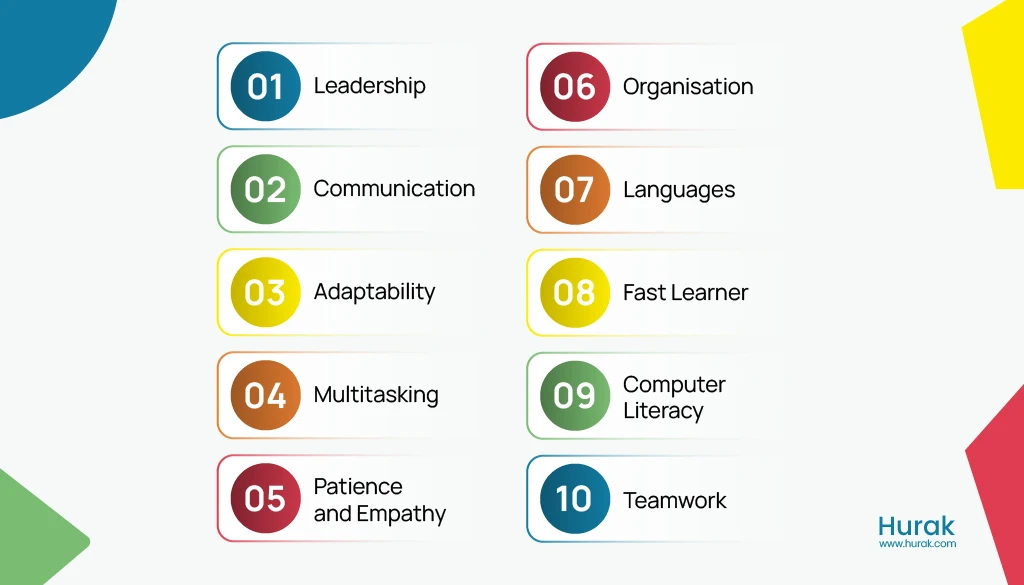
The 10 Most Important Teaching Assistant Skills and Qualities
The most valuable skills on resumes for teaching assistants are soft skills, personal qualities, and practical skills. While soft skills are typically developed over time in both professional and personal contexts, practical skills can be developed through training as a teaching assistant or professional experience in educational roles.This blog will discuss the ten most important skills of a teaching assistant.The 10 Most Important Teaching Assistant Skills and Qualities LeadershipOne of the most important qualities of a teaching assistant is leadership. Teaching assistants are authority figures when working one-on-one with students. Being assertive is even more beneficial when working with groups of students because disobedient students can disrupt the classroom. On your resume, make note of any professional experience you have in a management or leadership role. If you need more professional leadership experience, think back to personal experiences where you had to learn how to lead, like engaging in your interests or hobbies.AdaptabilityThe teaching assistant role requires adaptability. Teaching assistants frequently have to make last-minute adjustments to their regular schedules to cover for staff absences or handle unforeseen difficulties. In your application for a teaching assistant position, be sure to indicate that you are adaptable to sudden changes in work. Describe how you enjoy change and work best in a setting where no two days are the same.MultitaskingTeaching assistants often handle multiple projects simultaneously, so multitasking is one of their most important skills. For instance, they might encounter unforeseen questions or interruptions that call for their quick attention while supervising a group of students, consulting a lesson plan, or marking work. When you include multitasking on your resume, you showcase your ability to manage multiple tasks simultaneously. When you multitask, you can handle problems as they arise and provide the highest calibre of instruction.Patience and EmpathyEvery learner has unique needs and struggles. By practising patience and empathy, you can offer individualised support and handle students' challenges with care. This will establish a nurturing learning environment for all students, specifically those who require more attention. As a teacher assistant, you must create an environment where all students feel respected and understood.OrganisationTeaching assistants usually have hectic schedules and are in charge of helping several students at once. Their ability to be organised facilitates efficient time management and allows them to monitor their students' academic progress. To make organising easier, keep your workspace neat, primarily if you work in shared offices or classrooms. By setting a good example, teaching assistants can motivate their pupils to be organised.LanguagesCommunicating in another language, even on a basic level, can be advantageous when working as a teaching assistant. Teaching assistants usually need to provide additional support to students whose first language is not English. Many schools highly value candidates who can support their students' English language proficiency. A Question AI study assistant can create practice questions in multiple languages, making it easier for students to improve their skills. Including your language skills on your resume may help you stand out as a more desirable candidate for this role.Fast LearnerYour career as a teaching assistant can benefit from having quick learning skills and enthusiasm in many different ways. Your ability to quickly pick up new curriculums or learning materials improves your teaching abilities with students. To support students' success, you're keen to learn about innovative teaching techniques and keep up with industry best practices. Your ability to quickly adapt to new responsibilities and procedures makes you a desirable candidate for a promotion. Additionally, being a motivated and inspired learner, you can encourage and inspire students to take an active interest in their education.Computer LiteracyTo be a good teaching assistant, you must know how to use a computer to manage work-related administrative tasks. You must also create student progress reports or keep track of attendance. Teaching assistants must assist students in using laptops or computers so they can learn using this valuable resource. Moreover, if you already have general computer literacy, you can quickly learn using new software at work. If you do not have it, you must take computer training to be a teaching assistant.TeamworkPractising teamwork is also included in the list of important skills relevant to the teaching assistant role. The purpose of teaching assistants is to support student's education at all times. They have the same objective as the parents, students, teachers, and other teaching assistants. Even working alone with students, teaching assistants must view themselves as team members. Working as a team requires you to ask for help when you need it, support others, and communicate with coworkers effectively. Being team-oriented can help you inspire others and your coworkers when faced with obstacles.Wrap UpTeaching assistants are necessary for the educational process to be improved. They play an essential role in the classroom. To improve students' educational experience, teachers should seek a great teaching assistant by identifying candidates with outstanding communication skills, subject-matter expertise, empathy, proactiveness, and a collaborative mindset. You must look for real-world experience through training programmes, volunteer work, and internships to improve your chances even more. Acknowledging and valuing the positive impact that exceptional teaching assistants (TAs) can have on students' academic performance and personal development is critical.

How to Become a Teaching Assistant With No Experience
If you don't have any experience as a Teaching Assistant, you could find yourself in a never-ending cycle where you think you need experience to get a job, but you can only get experience with a job. On the other hand, you can develop your resume as a potential teaching assistant and obtain relevant experience through various non-traditional job options.How to Become a Teaching Assistant with No ExperienceWithout experience, you can still work as a teaching assistant, but your chances of getting hired as a TA may be less. While candidates with experience are more likely to be called for interviews, you can increase your chances of landing a position as a teaching assistant by taking specific actions. Here's how to get started as a teaching assistant without prior experience:Undertake an Internship or ApprenticeshipYou could assist professional teaching assistants or even participate in lesson planning as an intern teaching assistant. Apprenticeships may provide structured training in addition to employment. Moreover, they guarantee that you will get the required skills and make money at the same time.Sign Up for Volunteer WorkAnother option is to gain experience by volunteering at your child's school or with other kid-focused organisations. If you have previously volunteered to tutor kids, this can be a great experience that applies to the position. You could also volunteer in your neighborhood if this is the first time you have done it.Apply for Teaching Assistant RolesOnce you think you already possess the knowledge and expertise needed to work as a teaching assistant, you can begin applying for relevant jobs. As a teaching assistant, you can apply for a position directly with a company, institution, or educational setting. Direct applications through academy trusts or local authorities are also available. Look for job openings without experience or educational requirements, and show flexibility in the hiring procedure.Entry-Level PositionsSeeking entry-level positions in educational settings, such as a lunchtime supervisor or breakfast/after-school club coordinator, can be a stepping stone to a Teaching Assistant role. These positions offer valuable exposure to the school environment and allow you to build relationships with teachers and administrators.Get Childcare ExperienceEngaging with children beyond the limitation of formal education can be very helpful in getting a teaching assistant job. Taking care of children or helping at after-school programmes can help you better understand their needs and behaviours. This gives you a great starting point for becoming a teaching assistant because you will be skilled at communicating, being patient, and recognising the variety of kids' needs.NetworkingIf you want to become a teaching assistant but have no experience, you must engage with professionals in the field. You can attend workshops, seminars, or relevant events where you can meet experienced professionals in the field. You can show your willingness and interest in the field and your availability for the job. These professionals often look for talented and dedicated individuals for such roles. By attending such events, you will have a better understanding of this field and will gain more knowledge.Get Teaching Assistant Supporting QualificationsEven though qualifications are important, they may not always be sufficient for a teaching assistant. Since many applicants may possess very similar skills and knowledge to yours, it could be helpful to have some additional qualifications to go along with your TA certifications. Pursuing one of the many complementary qualifications available can give you additional knowledge in specialised fields like childcare, mental health awareness, safeguarding, equality and diversity, or even first aid.FAQsCan you be a Teaching Assistant with no experience?Yes, you can become a Teaching Assistant even without prior experience. Schools often look for candidates with a passion for education and a willingness to learn; many offer on-the-job training.Can you be a Teaching Assistant with no qualifications?While some basic qualifications, like GCSEs in English and Maths, are commonly required, many schools are open to candidates who need formal qualifications in education, especially if they demonstrate the right skills and attitudes.