

Early Signs of Pest Infestation and How to Prevent It
Pests and pest control are often overlooked - until it's too late. By the time a full-blown outbreak occurs, pests may have already caused severe damage to your business�s reputation, operations, and public health.If you run a restaurant, caf�, food retail outlet, or manufacturing unit, maintaining high hygiene standards isn't just about cleanliness; it�s also about spotting the signs of pest infestation early.The reality is that many signs of infestation go unnoticed until the situation becomes critical.Neglecting these warning signs can shut down your business overnight. That's why it�s crucial to understand what pest infestations are, how to identify them, the types of pests that pose risks, and most importantly, how to prevent them.In this guide, we�ll break it all down in simple terms so you can take the right action at the right time.What Is Pest Control?Pest control refers to the measures taken to manage and eliminate pests that can cause harm to people, food, or property.In industries such as hospitality, food retail, and manufacturing, pests pose a significant risk to health and safety, as well as a legal concern.Effective pest control includes:Identifying signs of infestationKnowing which types of pests to look out forApplying the correct treatment or actionPutting preventive measures in place to avoid future outbreaksWhether you�re dealing with insect infestations, rodents, or other unwanted visitors, understanding pest control is crucial to keep your environment safe and compliant.Protect Your Business with the Right TrainingStay one step ahead of pest infestations with industry-approved hygiene training. Choose a course that fits your sector:? Level 2 Food Hygiene and Safety for CateringPerfect for chefs, kitchen staff, and food handlers in restaurants, caf�s, or hotels. Learn how to maintain cleanliness, avoid contamination, and comply with food safety laws.? Level 2 Food Hygiene and Safety for ManufacturingDesigned for those working in food processing and production. This course covers hygiene best practices, cross-contamination risks, and safe handling in factory or plant environments.? Level 2 Food Hygiene and Safety for RetailIdeal for supermarket staff, food shop workers, and delis. Understand safe food display, handling, and storage, as well as pest risk prevention.What Is Pest Infestation?A pest infestation occurs when unwanted organisms, commonly known as pests, enter and settle in a space where they shouldn't be, such as a food establishment, manufacturing unit,� retail setting or maybe your own house.�This could involve a group of pests, or even a single one, depending on the risk it poses.Pests such as rodents, flies, and cockroaches can significantly compromise hygiene, food safety, and public health.�When pests come into contact with food or food preparation areas, they can easily become a vehicle for cross-contamination.Because pests are often found near waste, food, or damp environments, they can carry and spread harmful pathogens such as Salmonella, E. coli, Campylobacter,and Listeria.�These bacteria can cause serious foodborne illnesses, including �Food Poisoning, especially in environments that prepare or serve food to the public.Different Types of Pest InfestationIgnoring even minor pest activity can escalate into a full-scale infestation, placing your staff, customers, and business reputation at significant risk.�There are three main categories of pests commonly found in food businesses:RodentsExamples: Rats and MiceRodents are one of the most hazardous pests due to their ability to spread disease through urine, droppings, and hair.They can chew through packaging, electrical wiring, and even structural elements of a building.InsectsExamples: Cockroaches, Flies, Ants, BeetlesCockroachesRecognised by their flat, oval-shaped bodies and long antennae, cockroaches are particularly feared in food environments.They give off a strong odour and may even hiss. Fast-moving and often nocturnal, they contaminate food and surfaces with pathogens that cause foodborne illnesses.FliesFlies are more than just a nuisance. They breed quickly, laying up to 150 eggs at once.As they travel between waste and food, they easily spread dangerous bacteria. Their presence is a strong indicator of hygiene issues in the workplace.AntsAnts are drawn to sugary or greasy food sources. Once they discover a food supply, they travel in large groups and set up trails that are difficult to control.While not all ants pose health threats, their presence in food preparation areas seriously undermines food hygiene standards.BirdsExamples: Pigeons, SeagullsBirds like pigeons may not be the first pest you think of, but they can be highly disruptive.�Their droppings are acidic and can damage property, contaminate food areas, and introduce harmful pathogens. Nesting materials and feathers can block vents, introducing fire risks.From rodents to insects and birds, each pest poses unique threats.Identifying the type of pest is the first step in choosing the proper control measures and maintaining a safe and hygienic environment.Signs of Pest InfestationDetecting a pest infestation early is crucial for maintaining a safe and hygienic environment, especially in food businesses. Insect infestations, rodent activity, or bird presence can escalate quickly if left unchecked.�Recognising the signs of insect and pest infestations enables you to take prompt action and mitigate health and safety risks.Below are some common indicators of pest infestation:Visible Traces and DroppingsDroppings: Small, speckled droppings (insects) or larger, pellet-like faeces (rodents) are a tell-tale sign, often found under appliances, in cupboards, or in corners.Urine Stains: Rodents leave behind urine marks that may fluoresce under UV light.Dead Pests or Moulted Skins: Shedding (especially in cockroach infestations) or finding carcasses is a clear sign of an active insect infestation.Damage to Property or FoodGnaw Marks: Look for chewed wires, packaging, or wooden fixtures - signs of rats or mice.Damaged Fabrics or Furniture: Holes or worn patches may indicate nesting behaviour.Gnawed Packaging or Goods: A strong indicator of a rodent presence.Tracks, Trails and Nesting EvidenceAnimal Footprints or Tracks: Especially in dusty areas or along skirting boards.Grease Marks and Tail Streaks: Rodents often leave smears on walls or surfaces they regularly travel along.Signs of Nesting: Shredded paper, insulation, or fabrics found in corners or behind appliances.Unusual Smells and SoundsMusty or Ammonia-Like Odour: A strong, stale smell can indicate a heavy infestation.Scratching or Hissing Noises: Rodents or cockroaches are typically nocturnal and may be heard behind walls or in ceilings.Unusual ActivitySeeing Live Vermin: Catching sight of pests during the day, especially cockroaches or rodents, often means the infestation is already advanced.Woodpeckers on Your Property: These birds are often drawn to insects within wood and may signal an underlying issue, such as wood-boring beetles.Now that we have covered the warning signs, let�s break it down further - here�s a quick comparison of common pests and how to spot their presence.Common Types of Infestation and Their SignsType of PestCommon Signs of InfestationRodents (Rats, Mice)- Droppings (large pellets)- Gnaw marks on food, cables or packaging- Urine stains- Scratching noises- Grease marks or tail streaks along wallsCockroaches- Small, dark droppings- Presence of egg cases (oothecae)- Unusual odour (musty)- Moulted skins- Sightings at night or in dark cupboardsFlies- Sightings of adult flies- Maggots in food bins- Dead flies around windows- Eggs or larvae in food waste areasAnts- Visible trails of ants- Presence near sugary or greasy food sourcesBirds (e.g. Pigeons)- Bird droppings on surfaces- Nesting materials in vents or ledges- Feathers in food prep areasStored Product Insects (e.g. beetles, weevils)- Holes in packaging- Insects in dry goods (flour, rice, cereals)- Dust-like material (frass) near food storageImpacts and Risks of Pest Infestation to Your BusinessImagine this: A customer spots a rat darting across your caf� floor or finds a cockroach in their meal. Such incidents don't just tarnish your reputation - they can lead to severe health risks and legal consequences.�Let�s understand some of the safety and regulatory risks involved with pest infestation.Health Hazards and Legal ImplicationsPests like rats and cockroaches are carriers of harmful pathogens. For instance, rats can transmit Weil�s disease, a serious illness that can lead to kidney failure and, in severe cases, death.�These pests contaminate food and surfaces with bacteria such as Salmonella, E. coli, and Listeria, posing significant food safety and food hygiene risks.Moreover, rodents are known to chew through electrical wiring, leading to costly repairs and potential fire hazards. Such damages not only disrupt operations but also pose safety threats to both staff and customers.Related Reads:�Fire Safety at Your WorkplaceDifference Between Risk Control and Hazard ControlRegulatory ConsequencesIn the UK, failing to manage pest infestations can result in stringent enforcement actions by the Food Standards Agency (FSA) and local authorities.�Businesses may face Remedial Action Notices (RANs), which can mandate the cessation of operations until issues are resolved.�Persistent non-compliance can lead to prosecution, hefty fines, or even permanent closure of the establishment.Reputational DamageBeyond legal and health implications, pest infestations can severely damage your brand's reputation.Negative reviews, social media backlash, and loss of customer trust can have long-lasting effects, making recovery challenging even after the issue is addressed.By proactively identifying and addressing pest infestations, you not only ensure compliance with health regulations but also protect your business's reputation and customer trust.What to Do If You See Signs of Pest InfestationEarly detection is your best defence against a full-blown pest infestation. That�s why it�s critical to regularly inspect your premises for signs of rodents, insects or birds.If you do spot any signs, swift action is essential to protect public health and maintain your business�s reputation.Here�s what to do:Close affected areas immediately � If you discover mice, rats, or cockroaches in food storage, preparation, or service areas, stop operations until the pests are fully cleared.Call a professional pest control company � Only a qualified, competent person should assess and treat the premises.Thoroughly clean and disinfect � Any surface or piece of equipment that may have been contaminated must be disinfected. Pest droppings, hair, or urine can carry serious food safety hazards.Fix entry points and maintenance issues � Seal holes, cracks, or entryways that pests could use to enter.Dispose of contaminated food � Any food that may have come into contact with pests must be safely discarded.Act quickly to avoid business closure � If an Environmental Health Officer finds signs of pest activity, they have the authority to shut down your business under an Emergency Prohibition Order. This can result in lost revenue, negative publicity, and fines exceeding �1,000.How to Prevent Pest InfestationWhile removing pests is crucial, making small daily efforts for prevention is even better. A proactive approach helps you protect your customers, your brand, and ensures compliance with food safety regulations.Set Up a Pest Control ContractIf you run a food business, one of the most effective preventative steps is to arrange a pest control contract with a reputable pest management company.�However, hiring them isn�t enough, as the owner, manager, or supervisor, you are responsible for maintaining ongoing vigilance through good practices and regular monitoring.Maintain Strong Food Safety SystemsRobust systems like HACCP (Hazard Analysis and Critical Control Points) help you stay organised and minimise the risk of contamination.�Regularly use tools like a food hygiene checklist to ensure standards are consistently met.Train Your StaffWell-trained staff are your first line of defence. Ensure they understand the risks associated with kitchen hazards and food safety hazards.�Reinforce essential practices like the clean-as-you-go principle and the 6 stages of cleaning, which help keep the premises safe and pest-free.Stop Access to PestsFit external doors tightly and install brush strips.Use fly screens on windows and vents.Seal gaps around pipes, cables, drains, and grates using rodent-proof materials like concrete.Fill cracks in walls, floors, and ceilings to remove hiding places.Remember: a mouse can squeeze through a gap as small as a pencil's width - don�t underestimate their persistence!Remove the AttractionInspect food handling and storage areas regularly.Clean hard-to-reach areas, like behind equipment.Wipe up spillages immediately.Store open food in sealed containers and off the floor.Maintain bins with tightly fitted lids and empty them regularly.Keep refuse areas clean and free from clutter, such as cardboard or old equipment.Control vegetation and remove stagnant water sources.Inspect all food deliveries for signs of infestation.By taking these steps, you not only prevent infestations but also create a hygienic and efficient environment that your customers and inspectors can trust. Conclusion: Staying One Step Ahead of PestsPest infestations can strike even the most well-run food businesses, but they are not inevitable. The key to protecting your customers, reputation, and legal standing is early detection and strong preventive action.In this article, we�ve covered:How to spot common signs of pest activityThe serious health and legal consequences of infestationsWhat immediate steps should be taken if pests are found on-siteBest practices for keeping pests out in the first place, like staff training, maintaining food hygiene standards, and implementing HACCP systemsThe cost of ignoring these issues is far greater than the cost of prevention.Risk assessments, hygiene practices, and pest-proofing your premises are not just optional�they are essential for compliance, safety, and survival in the food industry. .main{ border:3px solid #0f7c90; border-radius:20px; position: relative; font-family:roboto; font-weight: 400; color: #000; } .main-two{ position: absolute; top:-25px; left:45px; background-color:white; } .img-div{ border-radius : 100%; padding:2px 7px; background-color:#0f7c90; margin-right:5px; width: 50px; height: 50px; } .img{ width:30px; object-fit:contain; height:auto; border-radius : 100%; } @media only screen and (max-width: 600px) { .heading{ font-size:20px; } .img{ width:20px; object-fit:contain; height:auto; border-radius : 100%; } .img-div{ width: 40px; height: 40px; } .main-two{ left:25px; } } Build Confidence with the Right Food Safety Training. Explore Hurak�s certified Food Hygiene Courses to build your team�s knowledge and stay inspection-ready. FAQsWhat are the early signs of pest infestation?Early signs include droppings, gnaw marks, unusual smells, scratching noises, and sightings of pests such as rodents or cockroaches.How can I tell if there�s an insect infestation in my kitchen?Insect infestations often reveal themselves through moulted skins, egg cases, dead insects near windows, and trails of ants near sugary foods.What types of pests commonly affect food businesses?Common pests include rats, mice, cockroaches, flies, ants, and birds such as pigeons. Stored product insects like beetles and weevils also pose contamination risks.What makes food hazardous in the presence of pests?Pests carry bacteria like Salmonella and E. coli, making food hazardous through contamination of surfaces, packaging, and ingredients.What are the 3 methods of pest control?The main methods include chemical control (e.g., insecticides), physical control (e.g., traps, barriers), and biological control (e.g., introducing natural predators).What should I do if I spot pests in my food business?Immediately isolate the affected area, contact a licensed pest control professional, disinfect thoroughly, and identify how pests entered to prevent recurrence.
Understanding the Different Levels of First Aid Training
Whether you're an employer aiming to meet legal obligations, an HR professional managing workplace safety, or an individual looking to gain vital life-saving skills, understanding the different levels of first aid training is essential. With various course options available, each designed for specific environments and risk levels, it�s important to choose the right training that aligns with your responsibilities.This guide breaks down the most common first aid courses, what they cover, how long they�re valid, and who they�re best suited for, so you can make a confident and informed decision that supports both compliance and preparedness.Legal Requirements for First Aid Training in the WorkplaceFirst aid training is more than just a recommendation, and it�s a legal requirement in many workplaces. Under the Health and Safety (First-Aid) Regulations 1981, employers are required to provide adequate and appropriate first aid equipment, facilities, and trained personnel to ensure employees receive immediate care if injured or taken ill at work. The exact number of trained first aiders needed depends on the size and nature of your business. Beyond compliance, being skilled in first aid helps reduce workplace injuries and can even save lives.Different Levels of First Aid Training ExplainedWhile the Health and Safety Executive (HSE) does not formally assign �levels,� training providers commonly use these informal categories:�Level�CourseBest ForLevel 2Emergency First Aid at WorkLow-risk workplaces (e.g., offices)Level 3First Aid at WorkHigher-risk environments (e.g., factories, construction)RefresherAnnual First Aid RefresherAll workplaces (recommended annually)Let�s now take a closer look at the most common types of first aid training courses, what they cover, who they�re for, and how long the certifications last.Emergency First Aid at Work (EFAW)This entry-level Emergency First Aid at Work course focuses on essential skills like CPR, treating minor injuries, and responding to common incidents until help arrives. It�s ideal for low-risk environments such as offices, retail shops, or community centres. The training usually takes one day and is valid for three years.Upon completion, you�ll receive an Emergency First Aid at Work certificate. This certification meets the Health and Safety Executive (HSE) requirements for workplace first aiders and is fully recognised for compliance purposes.How long is the Emergency First Aid certificate valid?Your certificate remains valid for 3 years from the course completion date, as required by HSE. To stay certified, you�ll need to retake the course before it expires.Topics covered in this course:This course will equip you with practical skills and the confidence to act in emergencies. You�ll learn how to:Understand the responsibilities and duties of a designated first aiderApproach and assess emergency situations safely and effectivelyAdminister aid to an unconscious person (including those not breathing normally)Respond to choking incidents with appropriate techniquesControl bleeding and manage open woundsIdentify signs of shock and provide appropriate supportTreat minor injuries such as small cuts, bruises, or burns First Aid at Work (FAW)For workplaces with higher risks, the First Aid at Work course offers more in-depth training. It covers a wider range of conditions, including fractures, burns, cardiac emergencies, and medical conditions. This course is recommended for larger organisations, factories, or construction sites. It typically takes three days to complete and includes both theory and practical assessments.After finishing, you�ll receive a First Aid at Work certificate, qualifying you as a workplace first aider in medium to high-risk environments. This certification also complies with HSE guidelines.How long is the First Aid at Work certificate valid?Your certificate is valid for 3 years. To maintain your certification, you�ll need to take a requalification course before it expires.Topics covered in this course:Building on the Emergency First Aid content, this course trains you to:Assess the scene and manage complex incidents effectivelyProvide first aid to an unresponsive casualty and perform CPRUse an Automated External Defibrillator (AED) safely and confidentlyManage serious injuries and conditions such as heavy bleeding, burns, fractures, heart attacks, strokes, seizures, choking, and shock First Aid At Work Refresher (FAW Annual Refresher)The First Aid at Work Refresher course is designed for those who already hold a FAW certificate and want to maintain their skills and knowledge. This refresher training is recommended annually to ensure you stay confident and competent in handling workplace emergencies.This course revisits essential first aid techniques and updates you on any changes in procedures. It covers the key elements of the full FAW course but in a shorter format, making it ideal for individuals and organisations looking to refresh their first aid training without repeating the entire initial course.Upon successful completion, you�ll receive a First Aid at Work Refresher certificate, helping you remain compliant with workplace safety requirements.How long is the FAW Refresher certificate valid?While annual renewal is recommended, the refresher certificate supports maintaining your qualification until the full FAW certification expires after 3 years.Topics covered in this course:Review of scene assessment and managing incidentsFirst aid for unresponsive casualties and CPR practiceUsing an Automated External Defibrillator (AED)Managing serious injuries, including bleeding, burns, fractures, cardiac emergencies, strokes, seizures, choking, and shock Advanced and Specialist CoursesIf you need training tailored to specific groups or industries, there are specialised courses such as:Paediatric First Aid � Designed for those working with infants and children, like teachers and childcare professionals. This course covers a broad range of topics, from managing choking and seizures to treating burns, fractures, and allergic reactions. Successful learners receive a Highfield-accredited certificate valid for three years.Mental Health First Aid � Focuses on recognising and supporting individuals experiencing mental distress. You�ll learn to identify common mental health disorders, offer initial aid, and practice empathetic, non-judgmental listening. The certification lasts for three years.Industry-specific courses �Tailored for sectors such as hospitality, sports, and construction to meet the unique demands of those workplaces.How to Choose the Right First Aid Training CourseThe type of first aid training your workplace needs depends on several factors, including:The number of employeesWorkplace hazardsDifferent work environmentsAny special requirementsSmaller, low-risk workplaces may only need Emergency First Aid at Work training. At the same time, larger or higher-risk environments typically require a more comprehensive First Aid at Work course for nominated first aiders. Some workplaces may benefit from a mix of training levels or specialist courses, such as Paediatric First Aid and Mental Health First Aid, depending on their specific needs and risks. Assessing your unique situation helps ensure you have the right first aid provision in place.Consider the following when choosing your training:Low-risk, small workplaces: Emergency First Aid at Work (EFAW) is usually sufficient.Larger or higher-risk workplaces: First Aid at Work (FAW) is recommended for nominated first aiders.Mixed environments: A combination of EFAW and FAW courses may be necessary.Childcare or education settings: Paediatric First Aid is essential.Workplaces prioritising mental wellbeing: Mental Health First Aid helps support colleagues facing mental health challenges.Special environments: Activity-specific courses for outdoor or remote work may also be needed.ConclusionChoosing the right first aid training is a vital step in creating a safe and prepared workplace. Whether you work in a low-risk office or a high-risk industrial environment, there is a course designed to meet your specific needs, from the foundational Emergency First Aid at Work to specialised programs like Paediatric and Mental Health First Aid.Investing in proper first aid training not only ensures legal compliance but also equips you and your team with the confidence and skills to respond effectively during emergencies. Ready to get started? Explore our range of certified first aid courses today, and take the first step toward a safer workplace.Frequently Asked QuestionsWhat are the different levels of first aid training in the UK?First aid training in the UK is commonly divided into three levels: Emergency First Aid at Work (EFAW), First Aid at Work (FAW), and the Annual First Aid Refresher. EFAW is a basic one-day course for low-risk settings, while FAW is a more comprehensive three-day course for higher-risk environments. Though the HSE doesn�t formally assign levels, these classifications are widely recognised among training providers.How long is first aid training valid for?Most first aid qualifications, including both EFAW and FAW, are valid for three years. To maintain certification, you must retake the course before it expires. Taking an annual refresher course is strongly recommended to keep your skills sharp and compliant with workplace standards.Which level of first aid training should I choose?The right level of first aid training depends on your workplace�s size and risk level. EFAW is suitable for small, low-risk environments like offices, while FAW is better for high-risk settings such as factories or construction sites. Workplaces involving children or mental health support may require specialised courses like Paediatric or Mental Health First Aid.What�s the difference between Emergency First Aid at Work and First Aid at Work?The main difference is in depth and duration. Emergency First Aid at Work is a one-day course focused on essential skills, whereas First Aid at Work spans three days and includes more advanced topics like fractures, cardiac events, and serious trauma. Your workplace risk assessment will help determine which is appropriate.Can I take a refresher instead of the full course?�If your current certificate is still valid, you can take an Annual First Aid Refresher to stay updated or a requalification course to extend your certification. However, if your certificate has expired, you�ll need to complete the full training again to remain qualified.
Understanding What to Record and Report in an Accident Form at Work
Accurately reporting workplace accidents is essential, not just to meet legal requirements, but to help maintain a safe working environment. In the UK, under RIDDOR 2013 (Reporting of Injuries, Diseases and Dangerous Occurrences Regulations), employers are required to report certain work-related injuries, illnesses, and dangerous occurrences. Accident forms play a key role in this process, helping to document incidents, identify risks, and prevent future harm.In this article, we�ll cover the key points about accident forms, their purpose, when they�re needed, and how they contribute to overall workplace safety.The Importance of Accident Forms in Workplace SafetyAn accident form is a crucial document used to report incidents that occur in the workplace. It serves as a detailed record of what happened, helping to ensure the event is documented for legal purposes. In cases where injuries or damages are involved, the form can act as evidence in court during legal proceedings.By accurately documenting incidents, employers can identify potential hazards, address risks early, and take proactive steps to reduce accidents in the future. This makes accident forms an integral part of any workplace safety strategy. .main{ border:3px solid #0f7c90; border-radius:20px; position: relative; font-family:roboto; font-weight: 400; color: #000; } .main-two{ position: absolute; top:-25px; left:45px; background-color:white; } .img-div{ border-radius : 100%; padding:2px 7px; background-color:#0f7c90; margin-right:5px; width: 50px; height: 50px; } .img{ width:30px; object-fit:contain; height:auto; border-radius : 100%; } @media only screen and (max-width: 600px) { .heading{ font-size:20px; } .img{ width:20px; object-fit:contain; height:auto; border-radius : 100%; } .img-div{ width: 40px; height: 40px; } .main-two{ left:25px; } } Put Your First Aid Knowledge into Practice by enrolling in a course today! Our First Aid courses equip you to handle critical situations and enhance workplace safety. Build confidence and expertise with Emergency First Aid at Work (EFAW) and Level 3 First Aid at Work meeting UK legal requirements. Key Information to Include on an Accident Report FormThe chart below outlines key information you should include in a workplace accident report form, which aligns with RIDDOR guidelines.SectionDetails to RecordInjured Person�s DetailsName, job title, department, contact informationDate & TimeExact date and time the accident occurredLocation of IncidentSpecific area or site within the workplaceIncident DescriptionClear explanation of what happened and howInjury DetailsType of injury, body part affected, severityImmediate Action TakenFirst aid given, emergency response, by whom and whenWitness InformationNames and contact details of any witnessesReported ByName, job role of the person completing the form, and date completedFollow-Up ActionsPreventive measures taken, referrals, or investigation stepsSignaturesFrom the injured person (if possible), the reporter, and a manager/supervisorTypes of Workplace Incidents That Require an Accident ReportUnder the Reporting of Injuries, Diseases and Dangerous Occurrences Regulations (RIDDOR), employers and those responsible for workspaces are expected to report specific incidents to the Health and Safety Executive (HSE). These include:Fatalities and Major Injuries: In case of serious injuries, such as fractures or amputations, these should be reported as soon as possible, either online or by phone.Over-Seven-Day Injuries: If an employee is unable to work for more than seven days, the incident should be reported within 15 days using the HSE�s online form.Occupational Diseases: If an employee is diagnosed with conditions like asthma or carpal tunnel syndrome related to their work, these should be reported within 10 days using the appropriate RIDDOR form.Dangerous Occurrences: In the event of a near miss or equipment failure that could have caused serious harm, it�s essential to report it promptly through the HSE system.Gas Incidents: If there are any gas-related issues, such as leaks, injuries, or unsafe fittings, these should be reported right away. Gas engineers and employers have designated online forms to use for these incidents. Accident Reporting: A Step-by-Step GuideWhen an accident occurs, responding quickly and correctly is essential. Here are the key steps to follow:Ensure safety: First, ensure that the area is safe to prevent further harm.Administer first aid: Provide immediate care to the injured person.Record first aid: If treatment was given, fill out a first aid report form.Notify management: Inform a supervisor or manager as soon as possible.Complete the accident form: Document the incident with all relevant details.Report under RIDDOR: Visit the HSE's online form to submit details of any work-related injuries or incidents and complete the accident report.Preserve the scene: If necessary, secure the area for investigation.ConclusionAccident reporting isn�t just about meeting legal obligations; it is vital in identifying risks, preventing future incidents, and promoting a safer workplace for everyone. Using accident forms helps capture essential details and supports continuous improvement in workplace safety.Frequently Asked QuestionsWhat must be recorded on an accident report form?Date, time, location, people involved, injury details, and witnesses.What is the accident reporting procedure in the workplace?Notify a supervisor, complete an accident form, and report under RIDDOR if required.In the event of an accident, what should be completed?An accident form or a first aid report form.What is a first aid report form used for?To record the treatment given and who provided it.Explore Our Popular First Aid CoursesLooking to boost your skills? Explore our range of first aid courses to find the right one for you.Here are some of our most popular first aid courses to help you stay prepared:Emergency First Aid at Work (1 Day): A one-day course covering vital skills like CPR, choking, bleeding control, and managing common emergencies. Ideal for low-risk workplaces.First Aid at Work (3 Days): A comprehensive three-day course that prepares you to respond to a wide range of injuries and illnesses. Meets HSE standards for high-risk environments.Paediatric First Aid (2 Days): Designed for those working with infants and children. Covers child-specific emergencies such as seizures, choking, and allergic reactions.Basic First Aid Course: Perfect for low-risk environments like offices, shops, and restaurants. This course is also ideal for those preferring online training. It teaches key first aid skills and builds confidence to handle everyday emergencies safely and effectively.Advanced First Aid Training: For those who need higher-level skills. Covers oxygen use, advanced trauma care, and secondary assessments for more complex situations.First Aid for Mental Health: Focuses on recognising and supporting people with mental health conditions like stress, anxiety, and depression, with an emphasis on early intervention.
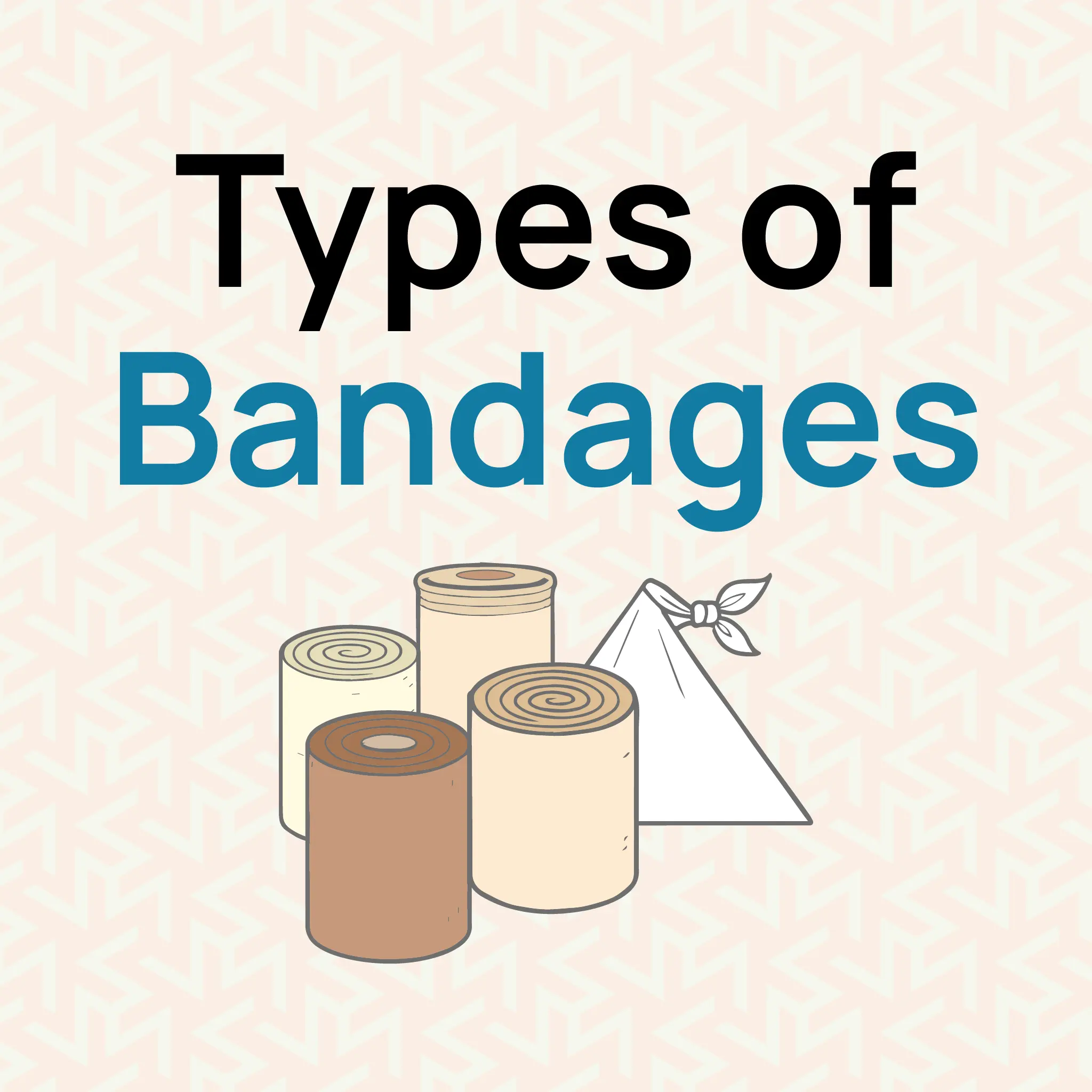
5 Essential Types of Bandages Used in First Aid
Injuries can happen at any moment, and knowing how to treat them effectively is essential. Bandages are a crucial part of any first aid kit, designed to protect wounds, support injured areas, and encourage healing.Whether you're managing a sprain, cut, or other injury, choosing the right bandage is key to providing proper care. With so many different types of bandages available, it�s important to understand their unique purposes.In this article, we�ll explore the five most important types of bandages and how to use them to provide effective first aid.Exploring Different Types of Bandages and Their Practical UsesNot all bandages do the same job. Knowing which one to grab is a crucial step in any first-aid emergency. Here�s a look at the different types and when to use each.Roller bandagesRoller bandages are flexible and commonly used to secure dressings, support joints, or apply pressure. They�re ideal for covering large areas and are easy to wrap around limbs.When to use:To hold a dressing in place.To provide support for a sprain or strain.To apply pressure to control bleeding.To cover large wound areas on arms or legs.Triangular bandagesTriangular bandages are adaptable cloths used to support, cover, or immobilise injuries. Their shape makes them especially useful for upper limb injuries.When to use:To create an arm or shoulder slingTo immobilise a fractured limbTo secure a dressing on the head or scalpAs a temporary wrap for splintingTubular bandagesTubular bandages are slip-on coverings designed for fingers, toes, and limbs. They offer light compression and protect minor injuries.When to use:To cover cuts or abrasions on fingers or toesTo protect dressings on minor woundsTo provide gentle compression for swellingTo secure padding on elbows, knees, or other jointsCrepe bandagesCrepe bandages are elastic wraps that provide compression and support for joint or muscle injuries. They help reduce swelling and stabilise affected areas.When to use:To support sprains or strainsTo reduce swelling in sprained areasTo keep wound dressings in placeFor compression in soft tissue injuriesCohesive bandagesCohesive bandages stick to themselves, not the skin, making them ideal for tricky areas. They offer flexible support and compression without the need for clips or tape.When to use:To support sprains and strainsTo wrap joints like wrists, knees, or fingersTo secure dressings on moving areasFor compression without adhesive on the skinComparison of Bandage Types and Their UsesHere�s a quick comparison of the five bandage types covered above, summarising their typical uses.Types of bandagesUsesRoller BandagesUsed for securing dressings, providing support, and stopping bleeding.Triangular BandagesUsed to create slings, immobilise limbs, or cover wounds.Tubular BandagesUsed to cover fingers, toes, and minor injuries for light compression.Crepe BandagesUsed for compression, support, and reducing swelling in sprains and strains.Cohesive BandagesUsed for compression and support, adheres to itself, ideal for joints. .main{ border:3px solid #0f7c90; border-radius:20px; position: relative; font-family:roboto; font-weight: 400; color: #000; } .main-two{ position: absolute; top:-25px; left:45px; background-color:white; } .img-div{ border-radius : 100%; padding:2px 7px; background-color:#0f7c90; margin-right:5px; width: 50px; height: 50px; } .img{ width:30px; object-fit:contain; height:auto; border-radius : 100%; } @media only screen and (max-width: 600px) { .heading{ font-size:20px; } .img{ width:20px; object-fit:contain; height:auto; border-radius : 100%; } .img-div{ width: 40px; height: 40px; } .main-two{ left:25px; } } Put Your First Aid Knowledge into Practice by enrolling in a course today! Our First Aid courses equip you to handle critical situations and enhance workplace safety. Build confidence and expertise with Emergency First Aid at Work (EFAW) and Level 3 First Aid at Work meeting UK legal requirements. How to Apply Different Types of BandagesEach type of bandage has its own special use, and applying them the right way makes all the difference in providing effective care. Whether you're tending to a small cut or helping someone with a sprain, knowing the best way to use each bandage will help things heal properly. To make sure you're applying each bandage correctly, refer to the guide below.Bandage TypeQuick Application GuideRollerAnchor at the far end; wrap toward the body, overlapping each layer by half its width; secure and check circulation.TriangularFold to the correct width for a sling; place under the limb; tie over the shoulder; tuck or pin ends out of the way.TubularSlide over the injured area (use an applicator if available); smooth out any wrinkles for a snug fit.CrepeWrap in a spiral or figure-eight pattern; overlap each layer by one-third of its width; secure and verify circulation.CohesiveTear to the needed length; wrap so it sticks to itself; press the end down; avoid wrapping too tightly. Quick-Reference: 5 Simple Steps to Apply a BandageThese five steps will help you bandage any minor injury quickly and confidently.Clean and dry the wound: Wash your hands, then gently clean the wound with water or a sterile saline solution. Pat the area dry with a clean gauze or cloth.Place a sterile dressing: Place a sterile dressing or pad over the wound without touching the side that will contact the skin. Smooth it down so it lies flat.Choose the right bandage: Select the appropriate bandage type (roller, crepe, cohesive, etc.) based on the injury location and required support or compression.Wrap from the lower end: Anchor your bandage at the point farthest from the heart, then wrap toward the body with even tension, overlapping each turn by about one-third.Secure and check circulation: Fasten the end of the bandage (with clips, tape, or by self-adhesion) and then check that the fingers or toes beyond the bandage are warm and pink and have a normal sensation.ConclusionUnderstanding how and when to use different bandages is a key part of effective first aid. Recognising their specific uses and applying them correctly can make all the difference in an emergency. To build your confidence and gain hands-on experience, consider enrolling in one of our First Aid Courses, a valuable step towards being fully prepared when it matters most.Frequently Asked QuestionsWhat are the 5 types of bandages in first aid?Roller, triangular, tubular, crepe, and cohesive bandages.When should I use each type of bandage?Use a roller for limbs, a triangular for slings, tubular for fingers, crepe for sprains, and cohesive for secure wrapping.Can I learn bandaging in a first aid course?Yes, first aid courses teach how to use and apply bandages correctly.Explore Popular First Aid Courses at HurakLooking to boost your skills? Explore our range of first aid courses to find the right one for you.Here are some of our most popular first aid courses to help you stay prepared:Emergency First Aid at Work (1 Day): Get equipped with essential life-saving skills in just one day. This course covers CPR, choking, bleeding control, and how to manage various workplace emergencies, ideal for low-risk environments.First Aid at Work (3 Days): A thorough three-day course designed to help you handle a wide range of injuries and illnesses in the workplace. Fully compliant with HSE requirements and perfect for high-risk settings.Paediatric First Aid (2 Days): Tailored for anyone working with babies and young children. Learn how to respond to emergencies like choking, febrile seizures, allergic reactions, and more in a childcare context.Basic First Aid Course: Great for general awareness outside the workplace. Learn how to treat minor injuries, burns, fainting, shock, and other common incidents.Advanced First Aid Training: For those needing a higher level of care. This course covers oxygen therapy, advanced trauma response, and detailed secondary assessments.First Aid for Mental Health: Learn how to identify and support individuals facing mental health challenges. Topics include stress, anxiety, depression, and practical early intervention techniques.
A First Aider�s Guide to Spinal Injuries
Spinal injuries can be life-threatening, so knowing how to act quickly and correctly in an emergency is vital. Whether you�re at home, at work, or outdoors, this guide will walk you through the key first aid steps and how to spot the signs of a spinal injury to help prevent further damage.What is a Spinal Injury?Spinal injuries happen when the spine or spinal cord is damaged, and they may lead to serious issues like paralysis. Because these injuries often happen without warning and can cause lasting disability, it�s vital to act quickly and correctly to prevent further harm. In the event of a spinal injury, understanding the importance of first aid training could mean the difference between recovery and permanent disability, or even life and death.Recognising the Symptoms of a Spinal InjuryUnderstanding what to look for in a potential spinal injury can help you respond more effectively. Below are some of the most common symptoms to be aware of in such situations.Neck or back pain or tenderness (especially in the spinal region).Difficulty moving limbs or inability to move.Numbness or loss of sensation in the arms, legs, or other body parts.Weakness or loss of coordination in the limbs.Paralysis (partial or complete, depending on the severity of the injury).Loss of bowel or bladder control.Breathing difficulties or trouble with respiration.Sharp or stinging pain in the neck or back.Muscle spasms in the back or limbs.Loss of consciousness or altered mental state (due to shock or head injury).Loss of sensation in the limbs.Deformity or abnormal positioning of the head, neck, or back.Unconsciousness or drowsiness.Common Causes of Spinal InjurySpinal injuries often result from sudden, forceful events that impact the spine or the structure surrounding the spine. The most common causes include:Falls: Especially from height, down stairs, or falling awkwardly during everyday activities. Older adults and people working at heights are particularly vulnerable.Road Traffic Accidents: High-speed collisions or sudden deceleration in a vehicle can cause severe spinal trauma.Motorcycle Accidents: Being thrown off or falling from a motorcycle frequently leads to back and spinal injuries, especially without proper protection.Sports Injuries: Contact and high-impact sports like rugby, diving, or horse riding can stress the spine significantly.Falling Objects: A heavy object hitting the back, every day in construction and warehouse settings, can result in spinal fractures or compression injuries. .main{ border:3px solid #0f7c90; border-radius:20px; position: relative; font-family:roboto; font-weight: 400; color: #000; } .main-two{ position: absolute; top:-25px; left:45px; background-color:white; } .img-div{ border-radius : 100%; padding:2px 7px; background-color:#0f7c90; margin-right:5px; width: 50px; height: 50px; } .img{ width:30px; object-fit:contain; height:auto; border-radius : 100%; } @media only screen and (max-width: 600px) { .heading{ font-size:20px; } .img{ width:20px; object-fit:contain; height:auto; border-radius : 100%; } .img-div{ width: 40px; height: 40px; } .main-two{ left:25px; } } Put Your First Aid Knowledge into Practice by enrolling in a course today! Our First Aid courses equip you to handle critical situations, including spinal injury management, and enhance workplace safety. Build confidence and expertise with Emergency First Aid at Work (EFAW) and Level 3 First Aid at Work meeting UK legal requirements. Step-by-Step Guide: How to Give First Aid for a Suspected Spinal InjuryIf you suspect someone has a spinal injury, giving the right first aid can make a big difference. Follow these step-by-step instructions to protect their spine and keep them safe until emergency help arrives.StepsActionDetails1Reassure and keep still.Tell the casualty not to move unless there�s immediate danger. Call 999 or 112, or ask someone else to call.2Support the head and neck.Kneel behind their head. Hold both sides of the head with fingers spread (don�t cover ears). Keep head, neck, and spine aligned.3Use rolled blankets for supportAsk a helper to place rolled blankets/towels on either side of the head to keep it steady in a neutral position.4Monitor breathing and responsivenessKeep checking their breathing and level of response while waiting for emergency services.5Open the airway with the jaw thrustPlace fingertips at the jaw angles and gently lift the jaw to open the airway; do not tilt the neck.6Check breathing for 10 secondsLook, listen, and feel for breathing by placing your ear near their mouth and looking down their body.7If breathingContinue supporting the head and monitor their breathing and response until help arrives.8If not breathingConfirm emergency call, start CPR immediately (if trained), and ask for a defibrillator (AED) if available.Recovery Position: When It�s the Only OptionIn most cases of suspected spinal injury, the casualty should not be moved to avoid worsening the injury. However, if they�re unresponsive and not breathing normally, and you can�t maintain an open airway, you may need to place them in the recovery position. This involves gently rolling the person onto their side, keeping the head, neck, and spine aligned as much as possible, with the head tilted slightly to keep the airway open. In such emergencies, ensuring the casualty is breathing takes priority over spinal stability. Simple Safety Measures to Avoid Spinal InjuryPreventing spinal injuries is about being mindful in everyday activities and making safe choices. Here are some simple steps you can take to protect your spine:Wear your seatbelt: Always buckle up, whether driving or riding in the car. It�s your first line of defence in a crash.Lift smart: When lifting heavy objects, bend your knees instead of your back. Keep the object close to your body and avoid twisting as you stand.Make your home fall-proof: Secure loose rugs, install handrails on stairs, and use non-slip mats in bathrooms to reduce the risk of falls.Stay active: Regular exercise helps strengthen your core muscles, supporting your spine. Even simple activities like walking or swimming will help keep your back healthy.Suit up for sports: Wear protective gear when playing or participating in recreational activities. Helmets and pads are essential in preventing serious injury.Think before you dive: Always check the water depth before diving. Avoid diving into shallow water to prevent spinal injuries.Keep kids safe: Ensure children use the appropriate car seats for their size and age, and always supervise them during rough play or at the playground.Not sure where to start? This infographic summarises the top four ways to protect your spine daily. ConclusionKnowing the signs of a spinal injury and how to respond quickly can help prevent serious harm. First aid training gives you the confidence to act fast in emergencies, and that can save lives. Simple everyday habits like wearing a seatbelt, lifting safely, and staying active all help protect your spine. A little care now can make a big difference later.Frequently Asked QuestionsWhat is the recovery position?The recovery position keeps the airway clear in someone who is unconscious but breathing. It involves gently rolling them onto their side with their head tilted back. If a spinal injury is suspected, only use it if absolutely necessary, such as if they�re vomiting or having trouble breathing. You�ll learn how to respond safely in situations like this in our First Aid at Work course.What should you not do if someone has a spinal injury?Don�t move them unless there�s an immediate danger. Avoid twisting their spine, removing helmets, or allowing them to sit up, stand, or walk, these actions could cause further harm.What are the signs of a spinal injury?Watch for neck or back pain, numbness, tingling, weakness, or difficulty moving limbs. Loss of sensation or control in the arms or legs can also be a sign. Always treat these symptoms seriously.What should you know about spinal injury first aid?Keep the person still, support their head and neck, and call 999. Only move them if they�re in danger or their airway is blocked. Reassure them and monitor their breathing until help arrives.Explore Popular First Aid Courses at HurakLooking to boost your skills? Explore our range of first aid courses to find the right one for you.Here are some of our most popular first aid courses to help you stay prepared:Emergency First Aid at Work (1 Day): A one-day course covering essential life-saving skills, including CPR, choking, bleeding control, and managing emergencies. Ideal for low-risk workplaces.First Aid at Work (3 Days): A comprehensive three-day training that prepares you to respond to a wide range of injuries and illnesses in the workplace. Meets HSE requirements for high-risk environments.Paediatric First Aid (2 Days): Designed for those working with infants and children. Covers child-specific emergencies like choking, febrile seizures, allergic reactions, and more.Basic First Aid Course: Perfect for general awareness. It covers basic skills like dealing with minor wounds, burns, shock, and fainting and is suitable for non-workplace settings.Advanced First Aid Training: Intended for those needing higher-level skills. Includes oxygen administration, advanced trauma management, and secondary assessments.First Aid for Mental Health: Focuses on identifying, understanding, and supporting individuals with mental health conditions. Covers stress, anxiety, depression, and early intervention strategies.
Dealing with animal bites: emergency first aid guide
Animal bites, ranging from minor scratches to severe wounds, are common injuries. Whether caused by pets or wild animals, quick and proper first aid treatment is crucial to prevent infections and complications.Why Immediate First Aid for Animal Bites is ImportantAnimal bites can range from mild to severe, and if not treated promptly, they may lead to infections, particularly in the case of dog or rodent bites. In rare situations, this can result in complications like hydrophobia. Acting quickly with the right first aid response can significantly reduce the risk of infection. Having the appropriate skills through an Emergency First Aid at Work course can make a real difference in managing such incidents until professional help is available.Animal Bite Symptoms You Shouldn�t IgnorePuncture wounds, cuts or scratches.Bleeding that may be heavy or persistent.Swelling, redness, or warmth around the bite.Severe pain at the site.Pus or drainage.Fever or flu-like symptoms.Immediate Steps to Treat an Animal BiteIf you or someone else is bitten, follow the quick steps:Clean the wound: Rinse thoroughly with soap and running water to remove bacteria.Stop the bleeding: Apply gentle pressure with a clean cloth or bandage.Cover the bite: Use a sterile dressing to protect the area.Seek medical help: Get checked, especially if the wound is deep, swollen, or shows signs of infection.Quick Guide: Steps to Take After an Animal BiteExplore our First Aid courses to learn practical, hands-on techniques for treating injuries, including animal bites. Whether you're at work, home, or outdoors, the proper training could make all the difference.Different Types of Animal BitesAnimal bites, whether from pets or wild animals, can vary in severity and pose different risks. It's crucial to understand the type of bite and how to respond appropriately to avoid complications like infections or diseases. In this guide, we�ll explore the different types of animal bites, their associated risks, and the first aid steps needed to treat them effectively. For more on managing bleeding, check out our First Aid for Severe Bleeding - Treatment and Tips, and learn how to dress a wound for effective care appropriately.Types�Key factorsFirst Aid TipsDog bites�Common and often severe due to the strength of a dog�s jaws.Clean the wound, apply pressure, and seek medical attention.Cat bitesMore likely to cause infections.Clean immediately, apply antiseptic and seek and monitor for infection.Rodent bitesUsually small, associated with rabies.Clean thoroughly, and seek medical advice for rabies prevention.Wild animal bitesHigh risk of rabies and other infections.Seek emergency medical help immediately.Simple Ways to Prevent Animal BitesBy following a few practical habits and safety tips, you can significantly reduce the risk of getting bitten, whether you're at home, outdoors, or at work.Stay calm around animals: Sudden moves can scare them and trigger a bite.Don�t pet animals you don�t know: Even cute pets can react unpredictably if they feel threatened.Teach kids to be gentle and respectful with animals: It�s one of the best ways to keep them safe.Keep your pets healthy and vaccinated: A well-cared-for pet is less likely to bite.Wear gloves when handling animals at work: It�s a simple step that can protect you from scratches and bites. ConclusionAnimal bites can pose serious risks, potentially leading to infections or more severe complications. Understanding proper first aid techniques and acting quickly can significantly reduce these risks and help prevent further harm. Whether it's a pet or a wild animal, knowing what to do in the event of a bite can make all the difference. By gaining the right skills through first aid courses, you can be better prepared to handle such emergencies safely and effectively.Frequently Asked QuestionsWhat antibiotics should I take for animal bites?Doctors commonly use antibiotics for animal bites to prevent or treat infection. Always consult a healthcare professional for the correct antibiotic and dosage.Are tetanus and animal bites the same thing?No, tetanus and animal bites are not the same thing. Tetanus is a severe infection caused by a specific bacterium, often entering the body through deep wounds from animal bites. Animal bites are injuries which increase the risk of tetanus if the wound is deep or contaminated.What are the worst animal bites?The most dangerous animal bites include dog bites, cat bites, and wild animal bites, especially from bats, raccoons, and snakes.Explore Our Other First Aid CoursesAt Hurak, we offer a comprehensive range of first aid courses tailored to various needs and environments. Whether you're looking to expand your skills or renew your certification, we have options to suit you:First Aid at Work (3 Days): A comprehensive course for high-risk environments, including construction and healthcare.Paediatric First Aid (2 Days): Focused on emergency situations involving infants and children.Mental Health First Aid: Equips you to support individuals experiencing mental health issues.First Aid at Work Requalification (FAWR): A two-day refresher course for those needing to renew their First Aid at Work certificate.

Qualification levels in the UK, explained: A simple guide to your education and career path
In the UK, qualifications follow a clear level-based framework�from Entry Level (basic skills) to Level 8 (doctorates). But if terms like �Level 2� or �Level 6� sound confusing, you�re not alone.Whether aiming for a promotion, changing careers, or returning to learning, knowing how these levels compare (e.g., to GCSE, A-levels, or degrees) can save you time, money, and effort. This guide breaks it down simply, so you can pick the right course, meet job or compliance requirements, and confidently move forwardIdeal for adult learners, job seekers, or employers planning staff training, this article helps you navigate your next step clearly and quickly.What Are Qualification Levels in the UK?Qualification levels in the UK are designed to show the depth and difficulty of a course, whether academic, vocational, or professional. They range from Entry Level (basic skills) to Level 8 (doctorate-level study), helping learners and employers understand how different qualifications compare.Here's how the levels break down:Entry Level � Focuses on foundational learning and life skills.Levels 1�2 � Covers qualifications like GCSE and equivalent awards.Levels 3�5 � Includes A-Levels, vocational training, apprenticeships, and foundation degrees, common routes into employment or further education.Levels 6�8 � Encompasses higher education qualifications such as bachelor�s, master�s, and doctoral degrees.Understanding this structure helps you choose the right course for your career goals, meet compliance standards, and invest in learning that aligns with your current skills and future ambitions.Why Qualification Levels Matter for Your Career and Education ProgressionUnderstanding qualification levels isn�t just about knowing where you stand, It�s about making informed decisions that impact your future. Here�s how they add real value:Plan with Purpose � Identify the qualifications needed for your chosen career path or industry.Know Where You Stand � Recognise your skill level and map out realistic next steps.Strengthen Job Applications � Match your qualifications to role requirements and stand out to employers.Save Time and Effort � Avoid enrolling in courses that don�t support your goals or meet compliance standards.Take the Next Step with the Right QualificationWhether you're starting or aiming to progress into roles like Teaching, Assessing, Education & Training, or get certified in Health & Safety, Hurak offers accredited online courses aligned with the UK qualification framework.Popular options include:Level 3 Award in Education and Training (AET)Level 3 First Aid at Work Training Course (3 Days)Level 3 NVQ Certificate in Occupational Health and SafetyLevel 2 Health and Safety in the WorkplaceLevel 2 Food Hygiene and Safety at WorkLevel 2 Fire Safety AwarenessCSCS Green Card Course for LabourersStart learning today and unlock your next qualification. Explore All Courses at HurakQualification Levels: A Quick ReferenceLEVELQUALIFICATIONSSKILL LEVELEntryEntry Level Certificate, Functional SkillsBasic knowledgeLevel 1�GCSES (Grades 1�3 / G�D), Level 1 NVQIntroductoryLevel 2GCSES (Grades 4�9 / C�A*), Intermediate Apprenticeship, Level 2 NVQFoundationLevel 3A Levels, T Levels, BTEC Nationals, Advanced Apprenticeship, Level 3 AETComplex applicationLevel 4HNC, Level 4 NVQ, Level 4 Certificate in Education and Training (CET)Specialist knowledgeLevel 5HND, Foundation Degree, Level 5 Diploma in Education and Training (DET)Higher education levelLevel 6Bachelor's Degree (BA, BSc), Level 6 NVQProfessional skillsLevel 7Master�s Degree (MA, MSc), Level 7 NVQAdvanced expertiseLevel 8Doctorate (PhD, DPhil)Research & leadershipEducation Levels in the UK ExplainedIn the UK, education and qualification levels often overlap, but serve different purposes.Education levels refer to the general stages of learning, from primary school to university and beyond.Qualification levels, on the other hand, measure a specific course's difficulty, depth, and academic or vocational focus.Understanding both helps clearly map out your learning journey � whether you're returning to study, retraining in a new sector, or seeking a recognised qualification for career progression.Below is a breakdown of how the primary education stages align with qualification levels:Early & Secondary EducationThis covers the foundational years from ages 5 to 16.It focuses on basic subjects like English, maths, and science.Develops core thinking, literacy, and numeracy skills.Ends with formal school-leaving qualifications (usually GCSE).This stage is compulsory and sets the groundwork for further or vocational learning.Further Education (FE)Begins after secondary school and continues into adulthood.Offers more choice and flexibility, including academic, vocational, and practical training paths.Often delivered in colleges, training centres, or online platforms.Open to both young adults and mature learners.This is for individuals seeking to specialise in particular industries, enhance their career prospects, or pursue further academic qualifications.Higher Education (HE)Focuses on advanced academic or professional study, usually at universities.Involves in-depth learning in a chosen field or profession.Encourages independent research, analysis, and specialisation.Typically leads to recognised degrees or postgraduate credentials.Best suited for learners aiming for leadership roles or expert-level knowledge.Adult & Continuing EducationLifelong learning options are designed around work, family, or career goals.Includes short courses, online certifications, and professional development programmes.Highly flexible � learn part-time, remotely, or alongside a job.Popular with adult learners returning to education after a break.Supports upskilling, compliance training, and personal development at any age.ConclusionUnderstanding qualification levels in the UK is key to making informed decisions about your education and career. These levels define the depth and complexity of qualifications, guiding learners and employers in assessing skills and knowledge.From Entry-Level qualifications, focused on basic skills, to Level 8 qualifications like doctorates, this framework helps you navigate your learning journey. Whether you're pursuing vocational training, academic study, or professional development, knowing the appropriate level ensures you choose the right path.Education stages, from Early & Secondary Education to Further Education (FE) and Higher Education (HE), offer clear progression that helps you reach your career goals. Adult & Continuing Education provides flexible options for adults returning to learning to fit around work and life commitments.By understanding these qualification levels, you can confidently plan your education, meet job requirements, and take the proper steps toward advancing your career.FAQsWhat are the qualification levels in the UK?Qualification levels in the UK are a way to show how advanced a course or learning achievement is. They range from basic skills (Entry Level) to the highest academic and professional awards (Level 8, Doctorate).How many qualification levels are there in the UK?The UK has nine primary qualification levels, starting from Entry Level, then Levels 1 to 8. Each level represents an increase in difficulty, complexity, and depth of knowledge.What is the difference between education levels and qualification levels?Education levels describe stages like school, college, and university. Qualification levels describe the difficulty of a specific course within those stages. For example, A Levels are part of further education at Level 3.Why are qualification levels important?Understanding qualification levels helps learners choose the right course for their career goals, compare qualifications easily, and know what skills or knowledge they will gain.What level is a Bachelor's degree in the UK?A Bachelor's degree (such as a BA or BSc) is classified as a Level 6 qualification under the UK framework.Can I move between levels even if I am an adult?Yes. Adults in the UK can start or continue their education at any qualification level, depending on their current skills, career needs, or personal interests. Many part-time, online, and flexible options are available.Explore our Teaching Qualification CoursesInterested in progressing through the teaching qualification levels in the UK? Here are some of the key courses we offer at Hurak:Level 3 AET � An entry-level course for teaching in adult and further education.Level 4 CET � Builds practical teaching skills for those with some experience.Level 5 DET � A full teaching qualification leading to QTLS status.Explore our full range of Teaching and Academics Courses to find the right course for your next step.
SSSTS vs SMSTS: Which Qualification Is Right for You?
As part of its Site Safety Plus Scheme, the CITB offers both the SSSTS and SMSTS courses to raise health and safety standards across UK construction sites. While the SSSTS course is designed for site supervisors, the SMSTS course is aimed at site managers and those progressing into management roles. In this guide, we�ll break down the key differences between the two and help you decide which qualification best suits your role and career goals.What Is the SSSTS Course?SSSTS stands for Site Supervisors� Safety Training Scheme. It�s a recognised health and safety qualification designed for individuals who have, or are about to take on, supervisory responsibilities within the construction industry. Completing the SSSTS course shows that a supervisor understands their legal duties, can effectively manage health and safety on-site, and can ensure their team follows safe working practices.Want to explore more advantages of the SSSTS course? Read our full guide on the benefits of SSSTS training. div.wpforms-container-full .wpforms-form label.wpforms-error{ display: none; } /* The Modal (background) */ .ebook-modal { display: none; position: fixed; z-index: 9999; left: 0; top: 0; width: 100%; height: 100%; overflow: auto; background-color: rgba(0,0,0,0.6); } /* Modal Content */ .ebook-modal-content { background-color: #fff; margin: 80px auto; padding: 30px; border-radius: 8px; width: 80%; /* Large screen width */ max-width: 800px; position: relative; display: flex; flex-direction: column; align-items: stretch; box-sizing: border-box; } /* Modal Header */ .ebookModal-header{ color: #0f7c90; font-size: 28px; margin-bottom: 20px; text-align: center; } /* Close button */ .ebookModal-close{ color: #aaaaaa; font-size: 24px; font-weight: bold; cursor: pointer; position: absolute; top: 15px; right: 20px; } .ebookModal-close:hover{ color: #000; } /* WPForms Submit Button inside modal */ div.wpforms-container-full .wpforms-form input[type=submit], div.wpforms-container-full .wpforms-form button[type=submit], div.wpforms-container-full .wpforms-form .wpforms-page-button { width: 100% ; border-radius: 8px; border: 1px solid #ddd; font-size: 1em; font-family: inherit; padding: 10px 25px; background: #0f7c90; color: #fff; margin-top: 20px; align-self: center; position: relative; /* inside modal content */ } /* Responsive */ @media (max-width: 768px){ .ebook-modal-content { width: 70%; padding: 20px; } .ebookModal-header { font-size: 22px; } } × Download our SSSTS Test Prep Book for free! [wpforms id="32386" title="false"] #myImgSSSTS{ cursor: pointer; } Who is the SSSTS qualification for?Site supervisorsTeam leadersForemenGangersWorkers preparing to move into a supervisory roleWhat topics are covered in SSSTS?The Health and Safety at Work ActSpecific site issues that challenge supervisors on a daily basisEffective toolbox talksSupervision of occupational healthBehavioural safetySSSTS RefresherThe SSSTS qualification is valid for five years. To maintain your certification and continue supervising on construction sites, you must complete a one-day SSSTS Refresher course before your certificate expires. What Is the SMSTS Course?SMSTS stands for Site Management Safety Training Scheme. It�s a recognised qualification for site managers, project leads, and senior supervisors who are responsible for planning, organising, monitoring, and managing teams on construction sites. The SMSTS course demonstrates that an individual understands their legal responsibilities and is capable of managing site-wide health and safety to industry standards. div.wpforms-container-full .wpforms-form label.wpforms-error{ display: none; } /* The Modal (background) */ .ebook-modal { display: none; position: fixed; z-index: 9999; left: 0; top: 0; width: 100%; height: 100%; overflow: auto; background-color: rgba(0,0,0,0.6); } /* Modal Content */ .ebook-modal-content { background-color: #fff; margin: 80px auto; padding: 30px; border-radius: 8px; width: 80%; /* Large screen width */ max-width: 800px; position: relative; display: flex; flex-direction: column; align-items: stretch; box-sizing: border-box; } /* Modal Header */ .ebookModal-header{ color: #0f7c90; font-size: 28px; margin-bottom: 20px; text-align: center; } /* Close button */ .ebookModal-close{ color: #aaaaaa; font-size: 24px; font-weight: bold; cursor: pointer; position: absolute; top: 15px; right: 20px; } .ebookModal-close:hover{ color: #000; } /* WPForms Submit Button inside modal */ div.wpforms-container-full .wpforms-form input[type=submit], div.wpforms-container-full .wpforms-form button[type=submit], div.wpforms-container-full .wpforms-form .wpforms-page-button { width: 100%; border: 1px solid #ddd; border-radius: 8px; font-size: 1em; font-family: inherit; padding: 10px 25px; background: #0f7c90; color: #fff; margin-top: 20px; align-self: center; position: relative; /* inside modal content */ } /* Responsive */ @media (max-width: 768px){ .ebook-modal-content { width: 70%; padding: 20px; } .ebookModal-header { font-size: 22px; } } × Download our SMSTS Test Prep Book for free! [wpforms id="32373" title="false"] #myImgSMSTS{ cursor: pointer; } Who is the SMSTS qualification for?Site managersAssistant or trainee site managersProject leads and site agentsExperienced supervisors moving into management rolesHealth and safety managers within constructionWhat topics are covered in SMSTS?The Health and Safety at Work ActCDM (Construction Design and Management) RegulationsRisk assessments and method statementsSite set-up, management, and environmental controlsWorking at height and demolition safetyToolbox talks and effective communicationOccupational health and behavioural safetyRoles and legal duties of managersSMSTS RefresherLike the SSSTS, the SMSTS qualification is also valid for five years. You�ll need to complete a two-day SMSTS refresher course before it expires to stay certified. SSSTS vs SMSTS: What Are the Key Differences?Not sure which course is right for your role? The table below breaks down the key differences between SSSTS and SMSTS, so you can quickly compare their purpose, duration, content, assessment, and more.FeatureSSSTSSMSTSTarget AudienceSite supervisors, team leaders, foremenSite managers, project leads, senior supervisorsPurposeTo provide health & safety training for those supervising site activitiesTo equip managers with tools to plan, monitor, and manage site safetyDuration2 days5 days (or spread out over weekends/5 weeks)Content FocusSupervisory responsibilities, site inductions, toolbox talksCDM regulations, site set-up, demolition, risk management, communicationAssessment25-question exam (22 multiple choice, 3 written) � 30 mins, 80% pass mark25-question exam (18 multiple choice, 7 written) � 35 mins, 81% pass markValidity5 years5 yearsRefresher Requirement1-day SSSTS Refresher before expiry2-day SMSTS Refresher before expiryPriceStarts from �249 (1-day refresher: ~�195)Starts from �449 (2-day refresher: ~�289)* Prices are correct at the time of writing and may vary depending on location, delivery method, or promotional offers. Check our course pages for the most up-to-date pricing information.Which Qualification Do I Need - SSSTS or SMSTS?Choosing between SSSTS or SMSTS depends on your current role, the level of responsibility you hold on-site, and where you want to take your career. Below is a quick guide to help you make the right decision based on your day-to-day responsibilities.Choose SSSTS if you�Work as a site supervisor, foreman, team leader, or gang leaderAre responsible for ensuring others follow health and safety rulesDeliver toolbox talks or conduct site inductionsMonitor small teams or sections of the siteNeed a qualification that proves your supervisory-level health and safety knowledgeWant a more affordable, shorter option that won�t require taking five full days off workChoose SMSTS if you�Are a site manager, project lead, site agent, or moving into a management rolePlan and organise work for multiple teams or subcontractorsOversee site-wide safety, documentation, and legal complianceNeed to understand CDM regulations, risk management, and site set-upWant a qualification that�s widely required for managerial roles in constructionIf you�re still unsure which course is the best fit for you, feel free to contact us � our team can help you choose the right option based on your current role and goals.? Get Ready with Free SMSTS and SSSTS Mock TestsPractising before your exam can make a big difference. You can use our free SMSTS & SMSTS Refresher mock test and SSSTS & SSSTS Refresher mock test to get familiar with the format, build confidence, and improve your chances of passing on the first try.Book Your SSSTS or SMSTS Course With HurakWhether you�re ready to take the next step or still deciding, we offer flexible options to suit your role, schedule, and learning style. All of our courses are CITB-approved, taught by qualified tutors, and available both online and in-person.Explore Our CITB SSP Courses:SSSTS Course � For supervisors, team leaders, and foremenSMSTS Course � For site managers and project leadsSSSTS Refresher � 1-day renewal course for supervisorsSMSTS Refresher � 2-day renewal course for managersAll courses come with weekday, weekend, and fast-track options, so you can train on your terms.Frequently Asked Questions (FAQS)What does SMSTS stand for?SMSTS stands for Site Management Safety Training Scheme. It�s a CITB-recognised qualification designed for site managers, project leads, and those responsible for overseeing health and safety on construction sites.What does SSSTS stand for?SSSTS stands for Site Supervisor Safety Training Scheme. It�s aimed at site supervisors and team leaders who are responsibleHow long does SSSTS last?The SSSTS certificate is valid for five years from the date you complete the course. To stay certified, you�ll need to pass the 1-day SSSTS Refresher course before it expires.How long does SMSTS last?Your SMSTS certificate lasts for five years. To renew it, you�ll need to complete the SMSTS Refresher course before it expires.What is better � SSSTS or SMSTS?It depends on your role. SMSTS is considered a higher-level qualification than SSSTS, as it�s designed for site managers and covers broader responsibilities, legal duties, and project-level planning. SSSTS, on the other hand, is aimed at site supervisors who oversee teams day-to-day. If you're wondering what is better � SSSTS or SMSTS � the right choice comes down to your current position and career goals.Can I upgrade from SSSTS to SMSTS?Yes, you can take the SMSTS course even if you�ve previously completed SSSTS. However, they are separate qualifications � SSSTS is not a prerequisite, and SMSTS does not count as a refresher or extension of SSSTS.Can I take SSSTS or SMSTS online?Yes � both SSSTS and SMSTS are available as live online courses via Zoom or similar platforms. These are delivered by approved CITB providers and follow the same structure as classroom sessions.Do I need SSSTS or SMSTS to work on a construction site?It depends on your role. While not legally required for all jobs, many employers now expect supervisors to hold SSSTS and managers to hold SMSTS for compliance and site access.Do I need to take a refresher for SSSTS or SMSTS?Yes � both SSSTS and SMSTS certificates are valid for five years, and you�ll need to complete a refresher course before your certificate expires in order to stay certified.The SSSTS Refresher is a 1-day courseThe SMSTS Refresher is a 2-day courseIf your certificate expires before you take the refresher, you�ll need to complete the full course again.Explore Other Popular Construction CoursesIf you're looking to expand your skills beyond SSSTS and SMSTS, we offer a range of CITB-recognised and industry-approved qualifications. These courses are ideal for construction professionals at various stages of their careers.CSCS Green Card Course (Level 1 Health and Safety in Construction) � For labourers and entry-level site workersNVQ Level 4 in Construction Site Supervision � For site supervisors who want to earn a CSCS Gold CardNVQ Level 6 in Construction Site Management � Ideal for experienced site managers looking to gain a CSCS Black CardTemporary Works Coordinator Course � For those managing or supervising temporary worksFirst Aid at Work � For designated workplace first aiders in constructionFire Marshal (Fire Warden) Training � For those responsible for fire safety on-site
Wasp Sting Treatment
Outdoor celebrations and activities like relaxing on your patio can quickly be disrupted if there are wasps around because these stingers are not only a hassle to deal with and can pose a major threat to someone who has wasp allergies or to people with sensitive skin conditions and weaker immune responses. Our aim is to provide the necessary information alongside practical tools for protecting you from wasps so you can safely use your outdoor spaces for your summer barbeques and picnics.How to Identify Wasps and Understand Their BehaviorPaper WaspsPaper wasps form an umbrella-shaped nest commonly found under eaves, decks, or in sheltered spaces, these wasps tend to be less aggressive as opposed to yellow jackets or hornets. However, if they sense danger they will sting immediately. It's best not to provoke them. These wasps are fascinating to look at, but best left alone if you encounter them.Understanding the behavior of these wasps is key to effective control. They are usually attracted to food sources, especially sweets and proteins, and they have the tendency to become territorial, and aggressive if their nest is threatened.Prevention is Key: Keeping Wasps AwayThe ideal way to deal with wasps is to prevent them from becoming a problem in the first place. Here are some measures you can take to ensure you do not encounter wasps:Food Management: Keep food covered, especially when eating outdoors. Clean up spills and crumbs promptly, and ensure garbage cans are tightly sealed. You don�t want your BBQ to turn into a buffet for wasps!Yard Maintenance: Eliminate potential nesting sites by trimming bushes, filling holes in the ground, and removing fallen fruit. A well-kept yard is less inviting to wasps.Sealing Entry Points: Inspect your home for cracks and openings; seal them to prevent wasps from building nests inside walls or attics. Check your eaves and vents � they can be prime real estate for wasps!Landscaping Tips: While not a foolproof solution, some people believe certain plants like citronella or mint may deter wasps. A bit of trial and error can go a long way in keeping your outdoor spaces enjoyable.When to Call a Professional: Expert Help is EssentialFor larger nests or those nests that are not easy to reach like the ones built in elevated spots, it's crucial to call a professional pest control service. They have the expertise and right equipment needed to handle wasps safely and effectively. If you have allergies or experience repeated infestations, seeking professional help is even more essential to ensure safety.Symptoms of a Wasp StingSharp pain and burningRedness and swellingItching and irritationSmall bump with a white centerSevere allergic reactionFirst Aid for Wasp Stings: Immediate Actions to TakeWasp stings can occur unexpectedly. Here are the recommended immediate actions:Immediate StepsIf the stinger is visible, do not pinch it, pinching it will release more venom try scraping it away with a credit card or other flat object. Wash the area where you were stung with soap and clean water, then apply a cold compress to alleviate swelling.Pain ReliefOver-the-counter pain relievers and antihistamines may help manage pain and itching. Keeping a first aid kit handy is always a good idea for summer activities.Allergic ReactionsSeek immediate medical attention if you experience signs of a severe allergic reaction (anaphylaxis), such as shortness of breath, hives, swollen face, or dizziness. Time is of the essence in these situations. .main{ border:3px solid #0f7c90; border-radius:20px; position: relative; font-family:roboto; font-weight: 400; color: #000; } .main-two{ position: absolute; top:-25px; left:45px; background-color:white; } .img-div{ border-radius : 100%; padding:2px 7px; background-color:#0f7c90; margin-right:5px; width: 50px; height: 50px; } .img{ width:30px; object-fit:contain; height:auto; border-radius : 100%; } @media only screen and (max-width: 600px) { .heading{ font-size:20px; } .img{ width:20px; object-fit:contain; height:auto; border-radius : 100%; } .img-div{ width: 40px; height: 40px; } .main-two{ left:25px; } } Want to learn more about Wasp Sting Treatment? Our First Aid courses offer complete training to help you handle critical situations. Whether you want to improve your skills or workplace safety, these courses help build confidence and expertise. View our Emergency First Aid at Work (EFAW) and Level 3 First Aid at Work courses. These courses meet the UK legal requirements and help you keep people safe. Debunking Myths about Wasps: Separating Fact from FictionMany misconceptions exist regarding wasps. For instance, while they seem attracted to sweet scents, it's usually food that is decaying that draws them in. Additionally, swatting away at a wasp is a recipe for danger. It will provoke a sting. The solution is to calmly move away. It's always best to remain calm when surrounded by wasps.What to Do If Complications OccurIn rare cases, wasp stings can lead to severe complications, including:Multiple organ failureNeurological symptoms, such as seizuresCardiovascular symptoms, including palpitations and arrhythmiasIf any of these symptoms occur right after an encounter with a wasp, seek immediate medical assistance.First Aid Kit that Caters to Insect BitesFor those who enjoy outdoor activities, having a first aid kit that includes items to help and prevent insect bites is imperative. Your first aid kit should include an EpiPen, ointments for pain relief, allergy medication, and a cold pack for swelling.ConclusionUnderstanding wasp behaviour is key along with knowing exactly when to call for professional help, you can effectively manage wasp-related issues and enjoy outdoor spaces without concern. Wasp stings can pose a serious threat, especially if you have allergies or other conditions like autoimmune diseases. It is crucial to keep an eye on symptoms and seek immediate medical help if they don�t dissipate after first aid. Also, it's wise for those with asthma or allergies to always carry an EpiPen. Enjoy the summer sun while staying vigilant!