


How Long Does A CSCS Card Last? A Detailed Guide To Understand The Validity Of Your CSCS Card
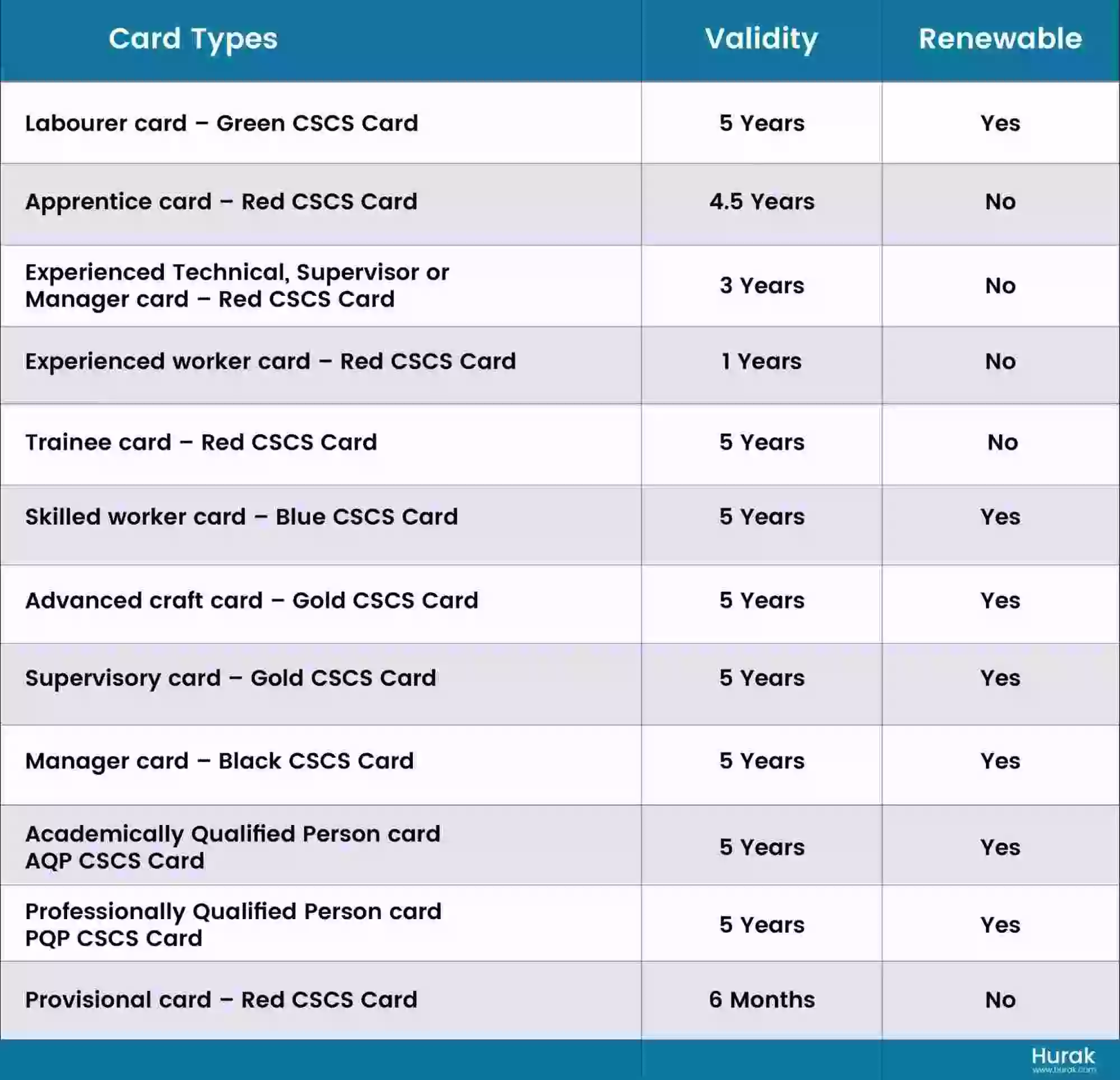
Wondering how long your CSCS card is valid for? It's important to stay on top of this to avoid any legal or safety consequences in the construction environment. An expired CSCS card can be problematic for your career, so you must understand how long it lasts and what to do when it expires.How Long Does a CSCS Card Last?There are different types of CSCS cards, each with its own validity period, reflecting various occupations and qualification levels in the construction industry. The validity period of a CSCS card depends on its type. It's noteworthy that some CSCS can be renewed after expiration, while others cannot. For example, the CSCS Green Labourer Card is valid for five years, whereas the Red CSCS Experienced Technical or Supervisor Card is valid for three years. However, most CSCS cards have a validity period of five years. Let�s have a look at different CSCS card types and their validity. .second-cta-block .main-heading { font-weight: bold; font-size: 22px; } .second-cta-block .book-now { background: #DF3D52; color: #FFFFFF !important; border-radius: 8px; } .second-cta-block .second-heading { font-size: 17px; } .second-cta-block .card { border: 0 !important; } .second-cta-block .card-body { border: 1px solid #909090; box-shadow: rgba(0, 0, 0, 0.16) 0px 1px 4px; border-top-right-radius: 100px; border-bottom-right-radius: 100px; background: #ECECEC; } .second-cta-block .image-wrapper { height: 134px; position: absolute; right: -100px; top: calc(50% - 67px); /* Center the image vertically */ } .second-cta-block .image-wrapper img { height: 100%; } .second-cta-block .trustpilot-widget { width: 256px; } .cta-heading-section { width: 75%; } @media screen and (max-width:991px) { .second-cta-block { padding-top: 100px; } .second-cta-block .card-body { border: 1px solid #909090; box-shadow: rgba(0, 0, 0, 0.16) 0px 1px 4px; border-radius: 19px; border-radius: 14px; background: #ECECEC; } .cta-heading-section { width: 100%; padding-top: 50px; } .second-cta-block .image-wrapper { height: 134px; right: 0; position: absolute; left: calc(50% - 108px); top: calc(50% - 203px); } } RQF LEVEL 1 COURSE for CSCS GREEN CARD Check the Course Rated Excellent on major review sites Why Do CSCS Cards Expire?Your CSCS card doesn�t last forever, as all CSCS cards have an expiration date; most of them expire after 5 years, while others remain valid for less than 5 years. So why do CSCS cards expire? CSCS (Construction Skills Certification Scheme) has set this condition of expiry to ensure that the cardholder has obtained updated training and qualifications and has passed the latest CITB tests.As the UK�s construction industry evolves exponentially, new standards and techniques are introduced. Therefore, construction workers need to stay informed. The end goal of this practice is to enhance safety standards and improve the overall performance of the construction sector.How to Check the Expiry Date of a CSCS Card?It�s important to check the expiry date of your CSCS card before it expires to prevent any unwanted outcomes. To check if your CSCS card is still valid, there are multiple methods you can use.CSCS Smart CheckGo Smart AppCSCS Online accountOnline card checksCSCS Contact CentreI�ve explained these methods in detail in my blog CSCS Card Checker. You can use any of these methods to know when your CSCS card is expiring.Also, keep in mind that you can easily find your CSCS card's expiration date on the front of the card.What Should I Do Once My CSCS Card Expires?Once your CSCS card expires, you should renew it as early as possible to maintain your employment in the construction sector. To renew your CSCS card, you have to follow these steps:Retake the CITB Health, Safety and Environment (HS&E) testProvide evidence of your current qualificationsTo take the CITB test, you need to register yourself first � online or via phone. At Hurak Learning, we offer to secure your CITB test reservation on your behalf. Book Now! Before you take a test, it�s advisable to take the CSCS mock test for practice.Once you have passed this test and provided proof of your cuurent qualifications, you can apply for renewal of your card. This can be done through the CSCS website or by mail.Do I Need to Take My CITB HS&E Exam Again?In most cases, you will need to retake the CITB test to get a new CSCS card. This is because most CSCS cards are valif for approximately 5 years, however, the CITB Health, Safety and Environment test is valid for only two years. So, if your existing CITB test has expired, you will need to retake the test before applying for a new CSCS card. However, if your CITB test is still valid and meets the CSCS requirements, you will not need to attempt a retake.How Much Does a New CSCS Card Cost?The cost of a new CSCS card varies, depending on the card type. Read our blog on How Much Does a CSCS Card Cost? to learn about the CSCS card cost in detail.As of now, the standard price for a new CSCS card ranges from �36 to �70. In addition, the CITB Health safety and environment test � for all CSCS cards � costs �23.50. There may be extra charges for certain variants of cards or expedited processing. To get the latest updates on fee structure and payment options, you must check the official CSCS website.How Do I Get a New CSCS Card After It Expires?To obtain a new CSCS card after it expires, there are some steps to follow. Firstly, you must complete the necessary qualifications for the specific CSCS card you need. Next, complete the CITB Health, Safety and Environment Test. Once you pass the test, gather any required documentation and apply for the new CSCS card. Upon successful verification, your new CSCS card will be issued to you. To understand this process in more detail, read this blog.CSCS Training CoursesUpon finishing the one-day health and safety course or the Green CSCS Card Course, you will be eligible to apply for the CSCS Green Card.This card will qualify you for employment on construction sites in various entry-level roles, such as bricklayer, carpenter, or plumber.CSCS courses are important for anyone in the construction industry, whether you are a labourer, tradesperson, or manager. The card demonstrates that you possess the required training and qualifications for your specific role on-site.Frequently Asked Questions (FAQs)Can I renew my CSCS card before it expires?You can renew your CSCS card in advance to avoid work disruptions. As per CSCS guidelines, cardholders can apply for a new CSCS card 6 months before the expiry of their current card. The additional months will be added to your new CSCS card.What happens if my CSCS card expires?If your card expires, you will need to apply for its renewal. To renew your CSCS card, you need to retake the relevant CITB test and provide evidence of your current, up-to-date qualifications and training. After that, you can apply for your new CSCS card.Can I continue to work on a construction site with an expired CSCS card?No, you cannot work on a construction site with an outdated CSCS card, as it can have legal implications.ConclusionThe duration of the card will depend on the type of card obtained and the qualifications achieved. While some cards may expire after five years, others may be renewed annually. It's crucial to keep track of the expiration date of your card and renew it in time to avoid any interruption in your work. Regularly updating your qualifications and skills is also essential to ensure your CSCS card remains valid and relevant to your role. By doing so, you can continue to demonstrate your competence and commitment to health and safety in the workplace.
What is a CSCS Card and How to Get One?
If you work in construction or related industries in the UK, you've probably heard of the CSCS card. However, it can all seem overwhelming at first with so many different types and application processes. This blog will provide all the information about this highly in-demand card.What is a CSCS Card?A CSCS card is issued by the Construction Skills Certification Scheme (CSCS) and is considered a valuable asset for anyone working within the construction industry. It demonstrates the holder's commitment to safety and professionalism.It proves that the holder has gained the knowledge, qualifications, and training to perform their role on the construction site safely and efficiently.What is CSCS?The Construction Skills Certification Scheme (CSCS) is a widely recognised certification scheme within the UK�s construction industry. It aims to ensure that all workers have the appropriate qualifications, skills, and knowledge to do their jobs safely on construction sites.CSCS also issues different types of CSCS cards, widely acknowledged across the UK construction industry. Contractors or employers commonly require these cards when hiring workers for construction projects.Is a CSCS Card a Legal Requirement?A CSCS card is not a legal requirement for employees to gain access to construction sites. However, major contractors are increasingly making it a common requirement, as it proves their proficiency as construction workers.That�s why it�s often listed as a key requirement in construction-related job advertisements.If you intend to work in the construction industry, having a CSCS card is beneficial, as it will improve your job prospects.Why is a CSCS Card Important?As the construction industry has become more regulated, many contractors and employers require employees to hold a CSCS card. It helps enhance your professional profile, making you more eligible for a job. With this card, you may have unlimited job opportunities available.Furthermore, a CSCS card is designed to promote safety on construction sites. It helps employers ensure that every worker on the site has gained knowledge and training in health and safety.Types of CSCS CardsThere are numerous types of CSCS cards, each designed to certify different skill levels and competence in the construction industry. Each card represents a specific occupation or role within the construction sector. These roles can vary from labourers and apprentices to supervisors and managers.The type of card you should get depends greatly on your job role and level of experience.CSCS Green CardA CSCS green card is specifically for those working in labouring occupations within the construction industry, such as general labourers, bricklayers, cleaners, carpenters, and plumbers. You must complete a CSCS Green Card Course for Labourers to get this card. .second-cta-block .main-heading { font-weight: bold; font-size: 22px; } .second-cta-block .book-now { background: #DF3D52; color: #FFFFFF !important; border-radius: 8px; } .second-cta-block .second-heading { font-size: 17px; } .second-cta-block .card { border: 0 !important; } .second-cta-block .card-body { border: 1px solid #909090; box-shadow: rgba(0, 0, 0, 0.16) 0px 1px 4px; border-top-right-radius: 100px; border-bottom-right-radius: 100px; background: #ECECEC; } .second-cta-block .image-wrapper { height: 134px; position: absolute; right: -100px; top: calc(50% - 67px); /* Center the image vertically */ } .second-cta-block .image-wrapper img { height: 100%; } .second-cta-block .trustpilot-widget { width: 256px; } .cta-heading-section { width: 75%; } @media screen and (max-width:991px) { .second-cta-block { padding-top: 100px; } .second-cta-block .card-body { border: 1px solid #909090; box-shadow: rgba(0, 0, 0, 0.16) 0px 1px 4px; border-radius: 19px; border-radius: 14px; background: #ECECEC; } .cta-heading-section { width: 100%; padding-top: 50px; } .second-cta-block .image-wrapper { height: 134px; right: 0; position: absolute; left: calc(50% - 108px); top: calc(50% - 203px); } } RQF LEVEL 1 COURSE for CSCS GREEN CARD Check the Course Rated Excellent on major review sites CSCS Red CardA CSCS red card is a temporary card assigned to a construction site worker. Each Red Card has a different validity ranging from 6 months to 5 years. With this card, you can start working on-site while working towards getting a skilled CSCS card.CSCS Blue CardThe CSCS blue card is specifically for construction workers who are experts in skilled work such as insulation, roofing, road building, etc.CSCS Gold CardThe CSCS gold card is an advanced-level card intended for Advanced Crafts and supervisors within the construction industry. This CSCS Card is designed for experienced professionals to acknowledge their ability to supervise construction personnel.CSCS Black CardThe CSCS black card is for experienced professionals indicating that the cardholder has gained the knowledge, skills, capability, and experience to manage high-level tasks in a construction environment.CSCS White CardThe CSCS white card is the highest level among all the CSCS Cards. There are two types of white CSCS cards: one for the Academically Qualified Person and the other for the Professionally Qualified Person.How to get a CSCS Card?Getting a CSCS card is a simple process. Check out the following steps.Step 1: Select a Card Relevant to Your RoleSelect a card relevant to your role within the construction industry. Use the card finder to discover the card best suited for your role.Step 2: Complete the Required QualificationComplete the required CSCS qualification corresponding to the chosen card. For example, if you want to get a Labourer Card, you must complete a CSCS green card course.Step 3: Pass the CITB Health, Safety and Environment TestThe next step is to pass the relevant CITB Health, Safety and Environment (HSE) test.Step 4: Apply for the CardApplying for the card is simple. You can apply through an online application, over the phone, or through Hurak.Your card will be sent to you by post. It's important to note that CSCS does not accept postal applications anymore.CSCS Card RequirementsDifferent CSCS cards have different requirements. However, some common requirements are:Getting the required training.Passing the CITB HS&E Test.Relevant experienceSeveral steps are necessary to get a CSCS card. Firstly, it's essential to undergo training to acquire the knowledge and skills required for your desired card, which can be accomplished by taking a suitable course for the desired card.Another requirement is to pass the CITB Health, Safety, and Environment Test. Furthermore, relevant qualifications and experience are necessary to get your desired card. For instance, getting a CSCS blue card requires an apprenticeship and an SVQ/NVQ qualification.Price of CSCS CardThe price of a CSCS card is �36 for all types. However, before applying for the card, you must pay extra for the required qualifications and the CITB test.What CSCS Card Do I Need?There are many CSCS cards, each represented by a different colour, such as green, red, blue, black, gold, and white, making it difficult to find the right one. However, using a tool like a CSCS card finder can be useful.How Long Does It Take To Get a CSCS Card?When your application has been approved, your CSCS card will be posted to you the next working day. Most cards arrive at their requested destination within 3-5 days of application approval. If your card does not arrive within ten days, please contact CSCS.The processing time for a CSCS card depends on the type of card you have applied for and the volume of applications being processed at the time of your application. Make sure you keep track of your application.You can contact CSCS via phone or a website regarding your application status.Free CSCS CardThere are several ways to get a free CSCS Card. You could contact Local Bodies (LEPs), get support from B&CE trust, apply for the Grant, and more.How to Check the Validity of a CSCS CardThere are several ways to check the validity of your CSCS card.CSCS Smart Check AppThe CSCS card checker app aims to improve the card-checking process and combat fraudulent activity related to card ownership in the construction industry.Access Your CSCS Online AccountThe most convenient method for individuals or employers is to use their CSCS Online account.Call the Contact CentreYou can also call CSCS on 0344 994 4777 any weekday (excluding bank holidays) from 8 a.m. to 6 p.m.Virtual CSCS CardsOnce your application is approved and payment has been taken, your virtual card will appear in the �My CSCS� app. The virtual card is similar to your physical card.CSCS Smart Check AppSite managers can use the CSCS Smart Check app on their smartphones or tablets to digitally verify the information stored on the virtual card.CITB Test / CSCS Card TestOnce you have your desired CSCS qualification, you must pass the relevant CITB Health, Safety, and Environment (HSE) test. There are different types of CITB tests, and you must pass the relevant test for the card you are applying for.What is the CITB Health, Safety and Environment Test?The CITB Health, Safety, and Environment Test is a computer-based test with multiple-choice questions that evaluate the candidate�s knowledge of construction health, safety, and environmental concerns.It�s valid for two years and costs �23.50. Its primary objective is to assess a candidate�s understanding of critical safety measures in a construction setting while improving their comprehension of the essential elements contributing to an efficient and successful construction site.Get your CITB test booked with Hurak for a hassle-free experience.How Long Does a CSCS Card Last?Most CSCS cards are only valid for five years. However, some have different validity periods based on their type. It's important to note that while some cards cannot be renewed after expiration, others can.For instance, the CSCS Red Card for experienced technical or supervisor cards is only good for three years, while the Green CSCS Labourer Card is valid for five years.Renewal ProcessHaving an up-to-date CSCS card is important to staying compliant and continuing to work in the construction industry. Therefore, you must apply for renewal before it expires.If you want to apply online, there is a five-step CSCS card renewal process. First, create a CSCS online account and apply for a card.Enter your details and preview your completed application before submission. Finally, pay the application fee to complete the process.Lost CSCS CardIt can be annoying and worrisome to lose your card since it is necessary to be able to work on construction sites. Getting a replacement CSCS card is the solution to this issue.To apply for a replacement card, visit the "Card Application" page on the CSCS website and select the appropriate card type. Enter your details and information about your previous card.Provide a reason for the replacement and upload the necessary documents, including a passport-style photo. Pay the �36 fee and review your application before submitting it.Fake CSCS CardA fake CSCS card is a fraudulent representation of a valid card. This card is made illegally by people willing to work in the construction industry. Recognising a fake card is critical because employing someone with one could have major consequences in the future. I've compiled a list of essential checks, which you need to ensure the cards have.To verify a card, ensure the name matches the ID and check formatting, validate the expiry date, confirm the unique registration number with CITB, check for the smart card microchip symbol, verify the passport-style photo, look for the hologram, and use the CITB card checker for validation.CSCS Card Availability in the UKCSCS Card Availability in the UK varies slightly between regions due to differing regulations and certification bodies.CSCS Card in England & WalesIn England and Wales, the Construction Skills Certification Scheme (CSCS) issues cards to individuals who have demonstrated their competence in the construction industry through training and assessment. These cards are widely recognised across the UK construction sector.CSCS Card in IrelandIn Ireland, the equivalent certification scheme is Safe Pass. While the CSCS card is not directly applicable in Ireland, Safe Pass serves a similar purpose: providing proof of health and safety awareness for construction workers.CSCS Card in ScotlandThe Construction Skills Certification Scheme (CSCS) also operates in Scotland. It offers CSCS cards in Scotland to those who have completed the necessary training and assessment to work safely in the construction industry. These cards align with Scottish regulations and standards.Wrapping Up: All About CSCS CardHopefully, this blog has provided valuable information about CSCS Cards and getting one. Whether you're a construction worker, contractor, or employer, possessing a CSCS Card ensures a safe and productive working environment.If you don�t have a CSCS card yet and are considering working in the construction industry, I encourage you to get one as soon as possible. By doing so, you'll be better equipped to advance your career and contribute to a safer and more efficient construction industry.Thank you for reading, and we wish you all the best in your career in the construction industry.

What is Physical Intervention Training?
IntroductionPhysical Intervention Training is one of the several courses that make up SIA training. This portion of the training is designed to give professionals and SIA applicants a wide variety of non-violent handling abilities that will enable them to deal with everyday scenarios that may require physical contact inside licenced premises.While the Physical Intervention Training modules don�t concentrate on comprehensive techniques that address every scenario that might arise, they do concentrate on a strong foundation of knowledge and abilities that will enable an SIA operative to significantly lower any risk to staff and customers during any conflict.Modules for physical intervention training include:Recognising the professional and legal ramifications of physical interventions.Understanding how to lower the danger of injury when using physical intervention techniques.Knowing how to defend oneself and others from harm through physical abilities unrelated to painUnderstanding how to employ restrictive and non-restrictive standing, holding, and escorting strategies that are not painful. Without adequate conflict management training, every front-line security operative�s education is lacking. Conflict management is a crucial element of a successful front-line security team. Still, it is typically taught after the legal and theoretical topics have been covered and only when the use and functions of a security management team become pertinent.Physical Intervention in The IndustryDoor Staff, often known as bouncers, are the main representatives of this business and are frequently used as a form of deterrence to subtly persuade patrons to behave. However, there are specific circumstances where it is necessary to act violently against people who disobey the norms of licenced establishments.Force, in its entirety, should only be used as a last resort in conflict resolution. Even in situations where physical involvement is entirely essential, according to SIA training, it must be used with minimal force necessary to prevent further violence.It should be remembered that it is feasible to intervene physically in conflict without force.The SIA emphasises that everyone is subject to the law, including security personnel, and stresses the significance of laws and regulations governing both physical intervention and the concept of conflict management as a whole. When performing their daily security duties within licenced facilities, security officers are guaranteed to follow the law by using only a reasonable level of force and only when necessary.Physical Intervention training aims to provide information for private security personnel to respond appropriately to violent circumstances. The entire instruction, which includes information delivery and practical training, shows that an aggressive situation can be handled just as successfully by taking a step back and taking a non-aggressive stance.Restraining VS ControlSimple restraining measures that can be employed by security personnel when restricting or managing an excessively violent person are necessary to avert an incident may also be included in any physical intervention.It requires the application of some force despite being an utterly non-aggressive task. Still, it also gives violent people the chance to assess their current state of mind and the violent behaviours they were about to commit. In many circumstances, the agitated person realises what they are going to do is wrong and calms down to adopt a more appropriate tone.Each security expert must be able to apply the same standards as and when necessary because these are moral problems.The entire application process must be appropriately scheduled to minimise the possibility of harm and dispute. The secret to intervention training without causing any pain is this in and of itself.Not that ejections are never necessary, but even in dire situations, security personnel should never use force when such action is called. They should be appropriately detained without pain or excessive force, and under no circumstances should any form of violence be used. Applying physical intervention correctly necessitates using little force and causing little discomfort while restrained. Back-up should be requested if someone is not calming down or becomes highly belligerent.Everyone who has chosen security as a career should carefully study and use this principle since failing to follow the necessary standards and rules can result in a case being filed, and those who happen to overstep the bounds may face criminal charges in addition to losing their jobs.The Physical Intervention module aims to equip candidates with the proper knowledge and skills to deal with typical problems more effectively and safely without resorting to violence. Attempting to establish a strong foundation on which the security personnel may successfully cope with hostile visitors.Level 2 Physical Intervention Refresher TrainingHurak Education Services is one of the very few security training providers that are approved by the SIA to deliver the Level 2 Physical Intervention Refresher Training for the Private Security Industry programme.The skills are designed and delivered in line with the home office-approved techniques and aim to use minimum force. By completing this course with us candidates are able to deliver the Level 2 Physical Intervention Skills for the Private Security Industry programme through any approved Awarding Body that offers the SIA suite of qualifications.
Choose The Right Teaching Course: CTLLS/CET, PTLLS/AET, DTLLS/DET
IntroductionGet familiar with the different teaching credentials, including what they are, their usage, and, most importantly, which one is the best for you as you complete this blog.Only three of the six acronyms for teaching or training credentials are still in use. This is since AET, CET, and DET have replaced the original three teaching credentials, PTLLS, CTLLS, and DTLLS, respectively.Each of the new credentials resembles the course it replaced in many ways. Changes have only been made to the qualification structure and criteria to freshen and modernise the content.To make the names of each teaching credential more comprehensible, the regulating authorities decided to revise them. Ironically, since many of the original acronyms are still in use today, this has caused a lot of misunderstanding.Any reference to PTLLS, CTLLS, or DTLLS ultimately refers to AET, CET, or DET.Award in Education and Training (AET)Award in Education and Training is now referred to as AET. This level-3 certification is the first step toward a position as a teacher.The AET is a foundation award for students without prior training or teaching experience. It is intended to serve as an introduction to the field of adult education, giving you a basic understanding of what teaching entails.For any beginning, earning an AET is a requirement. If you have previously finished your level-3 award and want to move on to a level-4 course, you can skip the first unit.The level-3 qualification is the starting point for moving on to a more challenging course.RequirementsThe candidate should be 19 years old or older and have a decent command of English to enrol in this course.Certificate in Education and Training (CET)The CTTLS qualification has recently been replaced by the CET (Certificate in Education and Training).The CET is a nationally recognised credential for people who desire to advance their careers in teaching, as well as for people who are not currently working in education (or teacher training) but who can complete the required elective course units.The second step toward becoming a teacher in post-16 education is to earn a CET qualification. It is a nationally recognised credential that improves your knowledge and teaching abilities.Although you can enrol in this course without being on a placement, you must be observed in a classroom to receive your qualification. Most candidates decide to postpone starting the course until they are in placement.Typically, this qualification serves as a stepping stone for the level-5 diploma. To offer instruction/training in various situations, a CET qualification is sufficient if you do not desire to enrol in the level-5 course.RequirementsThe candidate should be 19 years old or older and have a decent command of English to enrol in this course.Diploma in Education and Training (DET)A recognised teaching credential for the post-16 sector is the Diploma in Education and Training (DET). Although it is legally possible to become a post-16 teacher without a diploma, having one will give you a significant edge. It is also one of the requirements for applying for a QTLS, a prestigious badge of professionalism in post-secondary education.You can acquire the skills to work as a teacher in post-secondary education with the Diploma in Education and Training (DET). You can also use it to apply for the Qualified Teacher Learning and Skills (QTLS) designation.RequirementsAge 19 or olderPossess sufficient reading and speaking abilitiesPossessing a criminal record would prohibit them from working with children or vulnerable individuals.A relevant degree at a level higher than that of their students, ideally at least Level 3 in their field of expertiseA fundamental understanding of literacy, language, maths, and ICTWhich Teaching Level Should I Enrol?You must obtain the Certificate in order to work as an Associate Teacher, a person who teaches just certain levels of programmes in a single curriculum area (often closely related to your initial Degree or another equivalent qualification), and uses prepared materials (CET).You must obtain the Diploma if you want to become a Full Teacher, a teacher of a variety of levels, programmes, and subjects (DET). Anyone with Full Teacher status can use the course to have greater control over the course material since they can build resources, assess resources, and evaluate programmes, as well as have more influence over how learners are perceived throughout the learning process.In any scenario, the level 3 Award is an entry-level credential, and you must earn it if your first credentials are not a Certificate or Diploma.Hurak offers the AET online course. Hurak provides online and classroom learning that you can finish at your convenience. Hurak is ideal for those with busy schedules because it lets you learn whenever it�s convenient. To access the 24/7 student portal where you may see course materials and upload assignments at your convenience, enrol in one of our courses.Level 3 PTLLS Course By HurakHurak offers the AET online course. Hurak provides online and classroom learning that you can finish at your convenience. Hurak is ideal for those with busy schedules because it lets you learn whenever it�s convenient. To access the 24/7 student portal where you may see course materials and upload assignments at your convenience, enrol in one of our courses.
CSCS Card Types: Figure Out Which One Is Right For You
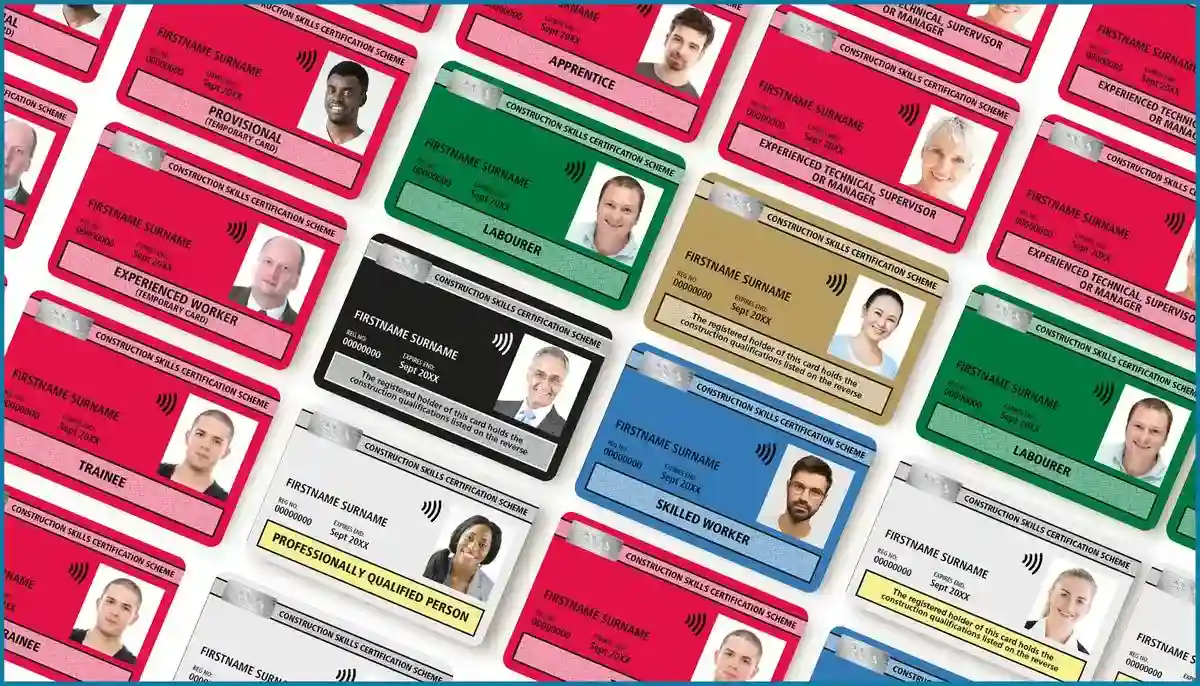
If you're looking to work in the construction industry in the UK, you may have heard of a CSCS card. There are many types of CSCS cards and it might be daunting at first to understand which one is right for you.In this blog post, we'll take a closer look at the different types of CSCS cards available. So whether you're just starting out in the industry or looking to progress your career, keep reading to find out more about this essential certification.Before moving on to discussing the CSCS card types, let�s first learn about CSCS.What is CSCS? CSCS stands for�Construction Skills Certification Scheme. It�s a recognised certification body in the UK, that approves its holders for their occupational competence in the construction sector. CSCS has made it easier for employers to employ construction workers, who have undergone appropriate training and relevant qualifications to work on a site.To learn more about CSCS, check out our blog or visit their official site.What is a CSCS Card?A CSCS (Construction Skills Certification Scheme) card is a type of certification that confirms an individual's qualifications and training required to work in the UK�s construction industry. The card acts as evidence that the holder has obtained the required knowledge, skills, and understanding to carry out their job safely and competently on a construction site.Despite the fact that holding a CSCS card is not a legal requirement, the demand for CSCS cards is very high in the UK�s construction industry. In fact, many construction and building sites won�t even hire workers without a CSCS card. This fosters a safety culture in a construction site, minimising the chances of accidents and injuries.CSCS Card Types: All You Need to Know About the Different CSCS CardsThere are different CSCS cards, each reflecting the different levels of skill and competence in the construction industry. Each card represents a different occupation or role within the sector, ranging from labourers and apprentices to supervisors and managers.These cards are categorised based on their colours (Green, Blue, Gold, White, Black, and Red). Some cards have been withdrawn by CSCS, they can still be used as long as they are valid, but cannot be renewed.Deciding on which card specifically aligns with your career objectives might be tough for you. Hopefully, the table below can help you to decide which card to go for.CSCS Green CardA CSCS Green Card is designed for individuals working in labouring occupations within the construction industry, such as general labourers, cleaners, plumbers, carpenters and bricklayers. Having this card shows that the individual has a basic level of knowledge and understanding of health and safety in the workplace. It�s one of the most popular cards amongst the list of CSCS Card types.It is not a legal requirement, but many construction employers require it as proof of a worker�s competence and commitment to health and safety in the workplace. So, if you hold a Green Card, you have an advantage over others and you�re more likely to get employed.Eligibility Criteria to Get a CSCS Green CardTo be eligible for a CSCS Green Card, you must:Achieve an RQF Level 1 Award in Health and Safety in a Construction Environment (or recognised alternative)Pass the CITB Operatives HS&E TestApply for a CSCS Green CardThe first step to getting a CSCS Green Card is to enrol on a relevant qualification. At Hurak Learning, we offer the CSCS Green Card (Labourers Card) Course that prepares you well for the next step, the CITB Operatives HS&E Test. It�s a multiple-choice test, valid for two years. After having completed the relevant qualification and having passed your CITB Operatives HS&E test, you can then apply for a CSCS Green Card on the official website with proof of your qualification and a CITB test ID number.Taking a free CSCS mock test is recommended before you attempt a real CITB HS&E test. It will help you test your knowledge and evaluate if you�re fully prepared to attempt the real test.Validity of a CSCS Green CardThe CSCS Green Card is valid for five years and must be renewed before it expires. To renew the card, the individual must retake the CITB Operatives HS&E Test and provide evidence of any additional qualifications they have obtained since their last application.Note, some qualifications, like the Level 1 Award in Health and Safety in a Construction Environment do not expire. So to renew your CSCS card if you have completed the Level 1 H&S course in the past you just need to pass the CITB Operatives HS&E Test and apply for the card. .second-cta-block .main-heading { font-weight: bold; font-size: 22px; } .second-cta-block .book-now { background: #DF3D52; color: #FFFFFF !important; border-radius: 8px; } .second-cta-block .second-heading { font-size: 17px; } .second-cta-block .card { border: 0 !important; } .second-cta-block .card-body { border: 1px solid #909090; box-shadow: rgba(0, 0, 0, 0.16) 0px 1px 4px; border-top-right-radius: 100px; border-bottom-right-radius: 100px; background: #ECECEC; } .second-cta-block .image-wrapper { height: 134px; position: absolute; right: -100px; top: calc(50% - 67px); /* Center the image vertically */ } .second-cta-block .image-wrapper img { height: 100%; } .second-cta-block .trustpilot-widget { width: 256px; } .cta-heading-section { width: 75%; } @media screen and (max-width:991px) { .second-cta-block { padding-top: 100px; } .second-cta-block .card-body { border: 1px solid #909090; box-shadow: rgba(0, 0, 0, 0.16) 0px 1px 4px; border-radius: 19px; border-radius: 14px; background: #ECECEC; } .cta-heading-section { width: 100%; padding-top: 50px; } .second-cta-block .image-wrapper { height: 134px; right: 0; position: absolute; left: calc(50% - 108px); top: calc(50% - 203px); } } RQF LEVEL 1 COURSE for CSCS GREEN CARD Check the Course Rated Excellent on major review sites CSCS Blue Card The CSCS Blue Card is designed specifically for skilled construction workers who have experience in services such as roofing, insulation, road-building, etc. Eligibility Criteria to Get a CSCS Blue Card To be eligible for a CSCS Blue Card, you must: Achieve an NVQ Level 2 or equivalent qualification Pass the CITB Operatives or Specialists HS&E Test Apply for a CSCS Blue Card The first step to getting a CSCS Blue Card is to obtain NVQ Level 2 or equivalent qualification relevant to the job you aim to do at a construction site. Next, you must pass the CITB Operatives or Specialists HS&E Test, which is valid for two years. Validity of a CSCS Blue Card The CSCS Blue Card is valid for five years and must be renewed before it expires. An individual must retake the CITB Operatives or Specialists HS&E Test before applying for the card.CSCS Gold CardThe CSCS Gold Card is for experienced professionals. It�s an advanced-level card intended for Advanced Crafts and supervisors within the construction industry. This card is proof that the holder of this card has the capability to supervise personnel in a construction environment.Eligibility Criteria to Get a CSCS Gold CardTo be eligible for a CSCS Gold Card, you must:Achieve an NVQ Level 3 or 4 qualificationPass the CITB Health Safety & Environment TestApply for a CSCS Gold CardThe first step to getting a CSCS Gold Card is to obtain an NVQ Level 3 or 4 qualification. After that, you must pass the relevant CITB Health, Safety & Environment Test. This test is valid for two years so you must apply for CSCS Gold Card before the test expires, or you will have to pass the exam again.Validity of a CSCS Gold CardThe CSCS Gold Card is valid for five years. To renew the card, you will have to pass the CITB Health Safety & Environment Test again before applying for it.CSCS Black CardThe CSCS Black Card is for experienced professionals. It indicates that the holder of this card has the knowledge, skills, capability, and experience to manage high-level tasks in a construction environment. It�s given to individuals who have achieved an advanced level qualification in the field of construction and also have managerial experience.Eligibility Criteria to Get a CSCS BlackTo be eligible for a CSCS Black Card, you must:Achieve a minimum of an NVQ Level 4 qualificationPass the CITB Managers and Professionals HS&E testApply for a CSCS Black CardTo obtain the CSCS Black Card, it is mandatory to pass the CITB Managers and Professionals HS&E test. This particular test requires a higher level of knowledge compared to others, as it�s meant for people who intend to lead others on a site. Therefore, a more comprehensive understanding of health and safety regulations and procedures is required.Validity of a CSCS Black CardThe validity of a CSCS Black Card is five years, after which it will need to be renewed. It is important to keep the Black Card valid, as it�s often a requirement by employers, and failure to renew the card can result in loss of work opportunities.CSCS White CardThe CSCS White Card is the highest level among all the CSCS Card types. There are two types of white CSCS cards: one for the Academically Qualified Person and the other for the Professionally Qualified Person.An Academically Qualified Person is someone who has obtained a higher level qualification in their area of expertise, such as HNDs, HNCs, CIOB Certificates, a NEBOSH diploma, or a degree. Examples of professionals who fall under this category are electrical and civil engineers.The second type is a Professionally Qualified Person, whose job role may require occasional visits to a construction site, but they are not restricted to a particular construction site. Professionals who fall under this category include architects, surveyors, and structural engineers.Eligibility Criteria to Get a CSCS White Card (Academically Qualified Person & Professionally Qualified Person)To be eligible for both types of CSCS White Cards, you must:Achieve a minimum of an NVQ Level 7 qualificationPass the CITB Managers and Professionals HS&E Test or an approved alternativeApply for a CSCS White CardApplicants of a Professionally Qualified Person White CSCS Card must also provide evidence of their current membership with a professional organisation at a level that CSCS accepts. They can submit any of the following documents:A membership cardA receipt of payment for membershipA membership certificateAn up-to-date letter or email from the professional bodyA clearly dated screenshot showing your current membershipValidity of a CSCS White CardThe White CSCS Card expires after five years. However, the Professionally Qualified Person card cannot be renewed and when expires, you have to apply for a new card just like you applied for the first time.CSCS Red CardsThere are a few different types of Red CSCS Cards. The following table will help you understand the different typesTypes of CSCS Red Card�Suitable ForValidityTraineeTrainees registered to complete a construction-related qualification.5 yearsApprenticeIndividuals who have started a CSCS-recognised apprenticeship framework4 years and 6 monthsProvisionalWorkers serving their probationary period.6 monthsExperienced WorkerWorkers enrolled on a Level 2 NVQ or higher qualification and have on-the-job experience.1 yearExperienced Technical, supervisor or ManagerExperienced technical, supervisor or managers enrolled on a Level 3 NVQ or higher qualification and have on-the-job experience.3 yearsTypes of CSCS Red CardsA CSCS Red Card is a temporary card assigned to a construction site worker. Each Red Card has a different validity ranging from 6 months to 5 years. One of the benefits of having this card is that you can still start working on site while working towards getting a skilled CSCS card.�The CSCS Red Cards cannot be renewed. Once you complete the required qualification, you can progress to a skilled Blue Card or Black Card.There are 5 types of Red Cards, and you can check out each type in detail below and figure out which one is best suited to you.Trainee CardThe CSCS Trainee Card allows you to temporarily join a construction site and continue your academic qualification in parallel. It�s valid for 5 years, and you must complete the course during this time period and progress to a CSCS skilled card.�To apply for this card, you must enrol in a recognised qualification and pass the CITB HS&E test.�Apprentice CardThe CSCS Apprentice Card is for workers who have started a CSCS-recognised apprenticeship framework. It�s valid for 4 years and 6 months.To apply for this card, you must complete an apprenticeship in a construction setting and pass a CITB test within the last two years.Provisional CardThe CSCS Provisional Card is for individuals who are new on a job and serving their probationary period. For this reason, this card is valid only for 6 months and you cannot renew it once it expires.To apply for this card, you must not have obtained any other CSCS card.Experienced Technical, Manager or Supervisor CardAs the name suggests, this card approves your skill level to be employed as an experienced technical, manager, or supervisor on the construction site. It�s valid for 3 years.To apply for this card, you must have an NVQ Level 3 or higher qualification and at least one year of on-job experience in the last three years.�Experienced Worker CardThis card is for experienced workers with at least a year of experience at the construction site. The Red Experienced Worker Card is often confused with the Experienced Technical, Manager or Supervisor Card. However, there�s a difference between the two as this card is only valid for a year and requires an NVQ Level 2 or higher qualification.To apply for this card, you must have an NVQ Level 2 or higher qualification and at least a year of experience at the construction site.How Much Does a CSCS Card Cost?The cost of getting a CSCS card is �36, which is the same for all the CSCS cards. This fee is paid to CSCS (Construction Skills Certification Scheme). The CITB health, safety, and environment test is a mandatory requirement for getting a CSCS card and it costs �23.50. Together, the total cost of your CSCS card application and CITB test is �58.50.Checkout our blog on CSCS card price to learn more about cost breakdown.Frequently Asked QuestionsHow long does it take for a CSCS card to be approved?The time it takes for a CSCS card to be approved can vary depending on the type of card being applied for and the application method used. Typically, once your application is approved, your CSCS card will be dispatched to you on the following working day. Most cards are delivered to their specified location within 3-5 working days after the approval of the application.How do I apply for a CSCS card?You can apply for a CSCS card in different ways, such as online, by post, or over the phone. The application process for a CSCS card involves providing evidence of your qualifications and passing a required health and safety test. We recommend applying online, as this is the quickest way.Is it mandatory to have a CSCS card to work in a construction company?While having a CSCS card to work on-site is not legally required, many construction companies and sites require their workers to obtain a valid CSCS card as a measure of competence and safety.Can I get a CSCS card without any qualifications?You cannot obtain a CSCS card without any qualifications, as the application process for all the cards requires evidence of your skills, qualifications, and health and safety knowledge.Are there any exemptions or discounts available for CSCS card fees?To know about the exemptions or discounts on the CSCS card fee, check the CSCS website.Can I use my valid CSCS card in other countries?CSCS cards are only recognized in the UK construction industry. However, some international construction companies may accept CSCS cards as evidence of knowledge, competence, and experience.What happens if I lose my CSCS card?In that case, you can apply for a replacement card online or by post. There is a fee for replacement cards, and it may take several days to get a new CSCS card.

Importance of Hard Hat Colour Codes on Construction Sites
Hard helmets must be worn on construction sites at all times to ensure worker safety since the risk of head injury can still be very high, even with all the safety precautions in place. Therefore, it is critical that everyone is aware of the rules governing them, including the use of colour coding.The Personal Protective Equipment Regulations of 1992 address PPE regulations. These rules now also apply to hard helmets on building sites. The most recent colour coding scheme, nevertheless, was unveiled by Build UK in 2016.The purpose of the hard hat colour codes for construction will be covered in this article.Hard Hats on Construction Sites: Compulsory or NotThe Health and Safety Executive (HSE) asserts that even though it isn�t explicitly stated in the regulations, all construction sites must have hard hats:�Does the law require head protection on construction sites? For the vast majority of cases yes � on almost all construction sites the risk of head injury are such that the law requires head protection.�Health and Safety Executive: Construction PPEEmployers are required under the Personal Protective Equipment Regulations of 1992 to give hard helmets to workers who may be in danger of head injuries. Even with safety precautions, this risk is typically considerable on construction sites; hence hard hats are always required.Construction site employees are the most apparent group at risk, but visitors and anyone else who could be vulnerable should also be taken into account. Employers are required to supply hard helmets that adhere to PPE safety standards to these groups of persons once they have determined who might be hurt and how during a risk assessment.Hard helmets are frequently colour-coded so that everyone on the job site can recognise those around them.Hard Hat Colour Codes and Their MeaningsBuild UK introduced a new colour-coding scheme for hard helmets in 2016. The construction industry and its member sites adhere to their colour scheme because they are the major representative organisation for the UK construction sector. The colours denote a specific position or rank, ensuring uniformity and comprehension across all building sites.The following are the hard hat colour codes:White: site managers, operatives, and traffic marshals.Black: site supervisors.Orange: slingers and signallers.Blue: everyone else on site who does not fall into the above categories, including visitors.A red fire marshal sticker will be on the hard hats of fire marshals, while a green first aider sticker will be on the hard hats of first responders. Furthermore, variously coloured high visibility vests can help identify particular roles.Significance of Hard Hat ColoursBuild UK introduced the new colour coding scheme to provide uniformity throughout the sector. It deals with consistency problems that frequently cause misunderstandings and even safety dangers. Everyone will be identified based on their function or status if they wear colour-coded hard hats.For instance, a site manager can be quickly recognised by their white hat in an emergency. Similar to this, visitors who may be particularly vulnerable to site risks will be identified by blue caps.There will be less uncertainty, a clearer definition of the hierarchy of workers on site, and a reduction in possible hazards if people can identify their level of responsibility and position on construction sites.Despite the fact that these colour codes are accepted as industry best practices and standards, many construction sites continue to utilise their colour coding scheme. For instance, you might still find yellow hard hats in use. Although using a colour scheme creates consistency, it is crucial that the hard hats adhere to safety rules.
Tips for Reversing Safely
Many individuals do not consider reversing to be a big risk because of the relatively slow impact speed; however, over 60% of all commercial vehicle accident claims include reversing, with heavy goods vehicles (HGVs) leading the pack with 19% of these claims, vans coming in at 15%, and corporate cars coming in at 10%.However, people can also get hurt in addition to risking damage to their cars and other property. Surprisingly, reversing accounts for nearly a quarter of all vehicle-related workplace fatalities.Poor rearward view and the driver�s failure to account for the vehicle�s size and obstruction are two factors contributing to many collisions. Most reversing collisions happen at modest speeds and might be avoided with basic safety measures and altered driving habits.Even experienced drivers occasionally require assistance while trying to reverse their cars in tricky situations. Attending a driving school that offers specialized courses on reversing and maneuvering in tight spaces can be incredibly beneficial. We can all contribute to lowering these statistics by taking extra care and attention. Here are some of our top suggestions for safer reversing.Safety Tips Before ReversingWalk around the car to check for dangers and ensure the path is clear of obstacles. If it�s blocked, is there another way to get there?Is the area where you need to be clear of other workers and/or pedestrians?Check for impediments from the overhead and ground levels. Think about whether your car will fit in this space.Before reversing, get out of your vehicle and verify if you can see behind you.Put on your hazard warning lights or use your horn to warn nearby workers and/or pedestrians.What is the distance that you intend to go backwards? If possible, steer clear of reverse-driving long distances.Keep an eye out for other people, pedestrians, and kids. Children are unpredictable and have no idea why you�re relocating the car.Safety Tips After ReversingUtilise the assistance of a trained banksman (enrol in a traffic marshal course to become a trained banksman) whose responsibility it is to direct traffic and maintain the reversing area clear of pedestrians. Always ask for assistance if needed rather than taking a chance of getting hurt.Make sure you comprehend the banksman�s signs before beginning the reversing manoeuvre when using one. Stop right away if you lose sight of him or her.Reversing into space is significantly simpler than doing so to enter moving traffic. When you deliver, start your reversing manoeuvre as soon as you get there.Use any floor-mounted recommendations that are there to precisely position your car.Reverse gently and cautiously, keeping the distance to a minimum. Be ready to cease right away.If the area you can see in your mirrors becomes blocked or you�re unsure of the distances, stop, exit your car, and inspect the area�s accessibility before attempting the manoeuvre again.Tips for Reversing SafelyTo lessen the risk involved with reversing automobiles, consider the following advice:Is reversing both prudent and required?Ensure the car�s rear-view mirrors are clean and correctly set to maximise rear vision.Consider installing blind spot mirrors or �fish eye� mirrors to improve side and rear vision.A long reverse should not be performed. Driving around the block or turning around may be safer and simpler.Visually scan the environment as you approach a reverse parking spot for obstructions.Any road should always be approached and exited from in a forward orientation.Never go backwards onto a major road from a minor road.Use the horn on the car to alert pedestrians before reversing over a path that is obscured or another area where there may be pedestrians, or add an audible reverse alarm.Whenever entering a roadway from a driveway, give way to pedestrians.Use the mirrors to examine both sides as you carefully reverse. Look back and keep looking back while you are travelling backwards.Vehicles in reverse do not have the right of way. If a car comes up behind you, stop and GIVE WAY until it passes.Someone might be able to direct the driver if there is any doubt about whether the path is clear due to blind spots. If not, the driver should exit the vehicle and look for obstructions.Don�t be embarrassed to ask someone to advise you when you reverse. Using a guide is less awkward than crashing a car.Before reversing from a parking space with a limited rear view, walk around the car and look for any hazards.When operating an unknown vehicle, practise backing up to become familiar with the vehicle�s turning radius, blind spots, and rear view.Use smaller automobiles for the greatest fit and simpler parking in confined parking spaces.Vehicle Safety DevicesExternal rear-view and side-mounted mirrorsRefractive lenses are installed in rear-view mirrors or CCTV systems to improve rear-view visibility for drivers.Fitted reversing alarms, either audible or with flashing lights�Sensing� or �trip� systems that alert the driver or cause the vehicle to stop when they detect an impediment close to or in touch with the vehicle
How To Administer CPR
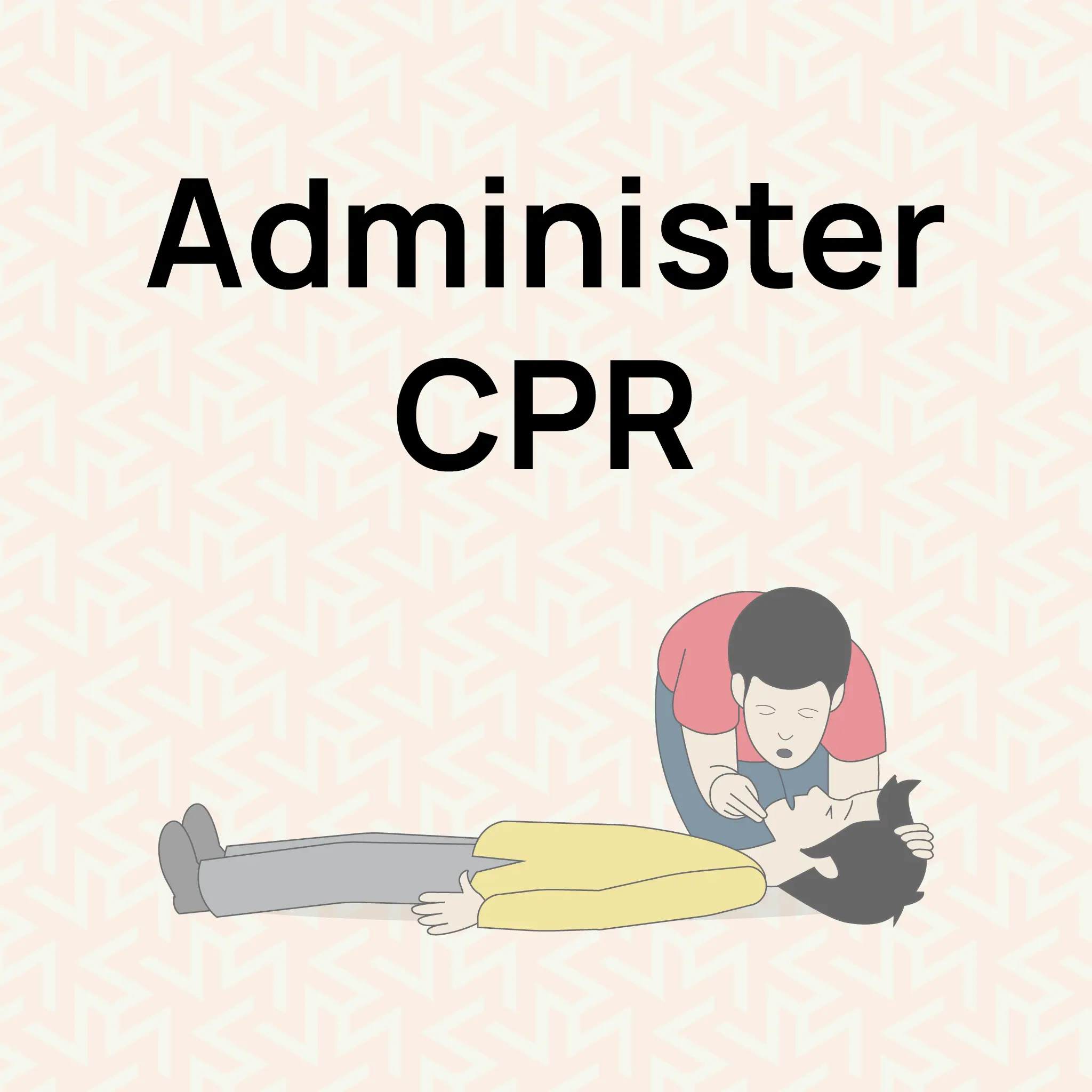
Medical emergencies that require CPR can occur unexpectedly in any location. According to the Resuscitation Council UK, most cardiac arrests (72%) occur in the home or workplace (15%). Everyone needs basic CPR knowledge, as this skill could save someone's life.What is Cardiopulmonary Resuscitation (CPR)?Cardiopulmonary Resuscitation (CPR) is a critical procedure in first aid. It involves artificial respiration, which supplies oxygen to the lungs, and artificial circulation, which maintains blood flow throughout the body.CPR's primary objective is to provide an appropriate supply of oxygenated blood to reach the brain and other organs.This prevents tissue damage until the heart can resume normal function or professional medical assistance arrives. It is important to note that CPR is most effective when chest compressions are performed continuously.Why Perform CPR: Understanding Cardiac ArrestWhen someone experiences cardiac arrest, their heart stops beating properly, blocking blood flow to the brain. The person becomes unresponsive and stops breathing.Although a cardiac arrest marks a state of clinical death, applying CPR on time and a defibrillator presents a chance to restore a regular heartbeat.Common causes of cardiac arrest include:heart attackssevere injurieselectrical shockdrug overdosedrowningsuffocationWhen administering CPR, you are responsible for the casualty's cardiovascular and respiratory function. This procedure slows down the progression of their life-threatening condition till professional medical help arrives to take control of the situation.When to Use CPRCPR is needed when someone is unresponsive and not breathing normally. It is also required when a person is not breathing at all. For instance, if someone is rescued from drowning, they may need CPR to help them start breathing again. Similarly, if someone is severely choking, bleeding heavily, or in shock, CPR may be necessary.If you encounter an unresponsive person who has collapsed, you should perform a primary survey using the DRABC steps. This involves checking if the person is breathing by placing your cheek near their mouth.Observe their chest for any movement for about 10 seconds. If the person is unconscious but breathing normally, you should put them in the recovery position. However, if they are unconscious and not breathing properly, you should be prepared to administer CPR. .main{ border:3px solid #0f7c90; border-radius:20px; position: relative; font-family:roboto; font-weight: 400; color: #000; } .main-two{ position: absolute; top:-25px; left:45px; background-color:white; } .img-div{ border-radius : 100%; padding:2px 7px; background-color:#0f7c90; margin-right:5px; width: 50px; height: 50px; } .img{ width:30px; object-fit:contain; height:auto; border-radius : 100%; } @media only screen and (max-width: 600px) { .heading{ font-size:20px; } .img{ width:20px; object-fit:contain; height:auto; border-radius : 100%; } .img-div{ width: 40px; height: 40px; } .main-two{ left:25px; } } Ready to Learn More? Knowing CPR is important in emergencies, but there's more to first aid. Our First Aid courses offer complete training to help you handle critical situations. Whether you want to improve your skills or workplace safety, these courses help build confidence and expertise. View our Emergency First Aid at Work (EFAW) and Level 3 First Aid at Work courses. These courses meet the UK legal requirements and help you keep people safe. How to Administer CPR on an AdultFirst, assess the safety of the scene. Then, check the person's responsiveness by tapping and asking if they are okay. Conduct a primary survey by gently tilting the head back to make sure the airway is clear.Check for breathing for 5 to 10 seconds by looking, listening, and feeling for breaths.How To Do a CPR Compression on an AdultIf the person is not breathing or their breaths are weak (known as agonal breaths), place your hands in the middle of their chest with your shoulders directly above your hands. Keep your elbows straight.Agonal Breathing:Agonal breathing occurs when someone's breathing is irregular and gasping, often making odd sounds. It can sometimes occur during a cardiac arrest. Bystanders may think the person is breathing normally. Treating someone with agonal breathing as if they are not breathing at all is essential.Give 30 chest compressions - press down firmly and quickly!Use the heels of your hands to push straight down on the breastbone, about 5-6 cm (2-2.4 inches) deep.Release pressure entirely after each compression to let the chest come back up. Keep a steady rhythm, aiming for 100 to 120 compressions per minute. Count out loud to keep track.How To Breathe into an Adult�s Mouth During CPRNext, if you are trained, tilt the person's head back and lift their chin to open the airway. Pinch the soft part of their nose closed. If you have a barrier device, use it. Then, give two breaths into the person's mouth, each lasting about one second, enough to raise the chest.This makes one cycle of 30 compressions followed by 2 breaths.�Keep doing CPR until an AED arrives, the person starts responding, or you are too tired to continue. When the defibrillator arrives, apply it to the person immediately.How to Administer CPR on a ChildLook around the area where the casualty has occurred.Check to see if the child responds. If not, get medical help and an AED if possible.If you are alone and do not have a phone, do CPR for 5 cycles (around 2 minutes), then go for help. If you can, bring the child with you.Next, check the airway and breathing for between 5 and 10 seconds. .banner { border-radius: 10px; overflow: hidden; border: 2px solid #ccc; box-shadow: 0 4px 8px rgba(0, 0, 0, 0.2); background-color: #fdf9ee; } .book-now { color: white; background-color: #DF3D52; border: none; padding: 15px 60px; border-radius: 5px; cursor: pointer; font-size: 20px; text-decoration: none; } .book-now:hover { /*text-decoration: none;*/ color: white; background-color: #c33f50; } Get Trained in All First-Aid Skills First Aid Courses Book Now Rated Excellent on major review sites How To Do a CPR Compression on a ChildIf the child is not breathing or breathing well, place your hands in the middle of their chest and press down firmly. Keep your elbows straight. Depending on the child's size, you can use one or two hands.Give 30 chest compressions: Push firmly and quickly!Use the heels of your hands to press straight down on the breastbone. Each compression should be about a third of the chest depth or 5 cm (2 inches) deep.�After each compression, release pressure completely to let the chest back up. Keep a steady rhythm, aiming for 100 to 120 compressions per minute. Count out loud to keep track.How To Breathe into a Child�s Mouth During CPROnce you have performed compressions, open the airway by tilting the head back and lifting the chin. Use a barrier device if you have one. Then, give two breaths into the child�s mouth, just enough air to raise their chest.This makes one cycle of 30 compressions followed by 2 breaths.Keep doing CPR until an AED arrives, the person starts responding, or someone else takes over. If you get too tired, stop. Apply the AED as soon as it comes.How To Administer CPR for Babies - Infant Casualty Perform a scene survey of where the casualty occurred. Check if the baby responds. Gently tap their feet. If there is no response, get medical help and an AED if possible. If you are alone and do not have a phone, do CPR for 1 minute, then get help. If you can, carry the baby with you. Next, open their airway by touching their forehead and gently tilting their head back. Use the fingertips of your other hand to lift their chin. Put your lips around the infant�s mouth and nose and blow gently for one second until their chest rises. Remove your mouth and wait for your chest to fall back to normal. Repeat this for a total of five rescue breaths.How To Do a CPR Compression on an InfantPlace two fingers just below the nipple line on the baby's chest.Press down on the breastbone about 4 cm (1 1/2 inches), around one-third of the chest depth.Do 30 chest compressions followed by 2 breaths (30:2)Keep doing CPR until an AED is used, someone else takes over, or you are too tired. Use the AED as soon as it arrives.How To Breathe into an Infant�s Mouth During CPRBabies have big heads compared to their bodies, which can cause their airways to close. When babies lie on their backs, their heads tilt forward, closing their airway further.When performing CPR, you might find putting a thin pad under the patient's shoulders useful to help keep the airway open. But do not spend time looking for one.Types of CPRDepending on the circumstances and the number of people involved, CPR can be of different types:Chest compression-only CPRDispatcher-assisted CPRHow to take over CPR from another rescuerTwo-rescuer CPRChest Compression-Only CPRCPR guidelines emphasise recognising emergencies early and the importance of calling 9-1-1 if you find someone collapsed and unresponsive.Compression-only CPR means doing chest compressions without mouth-to-mouth breaths. Give solid and quick compressions at the centre of the chest, aiming for 100 to 120 compressions per minute. Although this does not give the person oxygen, it is an option for people not trained in traditional CPR or those unsure of their ability.Dispatcher-assisted CPRIn some areas, when you call 9-1-1, the dispatcher can guide you through the emergency until medical help arrives. Put your phone on speaker and place it near the person's head. Keep talking to the dispatcher while you help the person.Hand-Over CPR: Taking Over CPR from Another RescuerOffer your assistance and let the rescuer know you are trained in CPR. Make sure medical help has been called.Do 30 chest compressions followed by 2 breaths. Use your barrier device if you have one.Two-Rescuer CPRIf two trained rescuers are available, they can work together to do CPR on someone who needs it. There are three good reasons why it is better for two people to do CPR:Doing CPR can be tiring. As the first aider gets tired, their chest compression quality might worsen. If two people share the job of compressing the chest, they can keep doing good compressions for longer.With two people doing CPR, they can take turns doing chest compressions and giving breaths. This means the compressions do not have to stop as often.When two people work together, they can encourage and help each other during a difficult situation. One person stays by the casualty's head to do CPR with two rescuers. He keeps the airway open and breathes after every 30 compressions. The other person does the chest compressions.To keep the compressions effective, they should switch roles every 5 cycles of compressions and breaths, about every 2 minutes.ConclusionIf someone is not responding and breathing normally, CPR can help them survive until paramedics arrive. So, everyone needs to know how to do CPR, even if you still need to be formally trained in first aid. If you are not qualified, you should do chest compressions only for adults. But for children and babies, it is best to call for help first and then do CPR. Either way, doing CPR increases the chances of the person surviving.
Protecting Construction Workers From Asbestos Dust
What is asbestos?Asbestos is a naturally found fibrous rock. Up until 1999, it was frequently utilised in residences and other constructions. The 3 main categories of asbestos are:Crocidolite (also known as blue asbestos)Amosite (also known as brown asbestos)Chrysotile (also known as white asbestos)Asbestos provides high fire protection qualities, inhibits corrosion, and functions as an insulator (to keep heat in and cold out). It was widely utilised from the 1950s to the middle of the 1980s. As a result, it can be found in various building fixtures and construction materials, including ceiling tiles, pipe insulation, boilers, and sprayed coatings. However, it can still be found in structures constructed before 2000.When asbestos fibres become airborne, the materials threaten your health. This occurs when asbestos-containing materials are cut, drilled, or otherwise damaged while being used in construction. High levels of asbestos fibres may be inhaled while working on or near damaged asbestos. The total amount of these fibres you breathe is a major risk factor for asbestos-related disease. Regularly completing simple tasks can put you at risk. The Control of Asbestos Regulations 2012 established guidelines for safeguarding workers and others from the dangers of asbestos exposure.What is the risk to construction workers?The most significant occupational illness risk for construction workers is asbestos. According to data the HSE commissioned, the industry�s cancer mortality accounted for more than two-thirds of the over 2,500 deaths of construction workers in 2005. There are two types of cancers that asbestos can cause:Mesothelioma � a lining-related lung cancer. It almost usually results in death and is brought on by asbestos exposure.Asbestos-related lung cancer � Almost always, this is lethal.The other diseases caused by asbestos are:Asbestosis Diffuse Pleural ThickeningThe cumulative effect of asbestos exposure makes you more likely to develop diseases linked to asbestos in the future. However, these illnesses won�t harm you right away because it might take anywhere between 15 and 60 years for symptoms to appear. It is also significant to keep in mind that smoking greatly increases your risk of lung cancer caused by asbestos.How to Prevent this risk?You can take several actions, starting with always keeping in mind the chance that the building you are working on might contain asbestos.Employers are required to do a risk assessment before beginning any maintenance, renovation, demolition, or other construction work to determine the presence of asbestos.It is the responsibility of non-domestic property owners or managers to manage asbestos. This entails locating and documenting any asbestos location and state. Anyone working must access this information to help them manage exposure risks to themselves, their employees, and others.�5 Ways for Construction Workers to Avoid Asbestos ExposureTake an Asbestos Safety CourseAll personnel working on job sites with asbestos are expected to receive asbestos awareness training. These training sessions cover the following topics and instruct participants on how to prevent asbestos exposure:How to spot asbestos-containing itemsContributing factors to asbestos exposureUse of respiratorsWorkplace asbestos prevention measures Potential health implications of asbestos exposureRequirements for medical surveillance programmesasbestos exposure increases the risk of lung cancer in smokersInformation about how to reach smoking cessation programmesWhen it comes to asbestos exposure, knowledge is power. To safeguard yourself and your family from exposure, learn everything you can about prevention.Use a HEPA-Filter Mask and VacuumThe best defence against asbestos fibre inhalation is a HEPA-filter mask. High-efficiency particulate air (HEPA) filters can capture 99.97% fibres with a diameter of 0.3 micrometres or less. Most asbestos fibres are captured by these filters when they are utilised appropriately. Employees who work around asbestos must have access to these masks from their employers.Local exhaust ventilation with HEPA-filter dust collection devices is required to collect as many asbestos fibres as feasible during certain asbestos jobs. To remove asbestos dust and debris, vacuums with HEPA filters are necessary.Avoid Practices That Disturb DustOn projects involving asbestos, specific work techniques that cause the emission of asbestos fibres are forbidden.Some examples of these practices are:Use of saws lacking a HEPA-filtered exhaust or a point-of-cut ventilatorCompressed air is used to get rid of asbestos-containing materialsAny method of dry sweeping or shovelling that involves removing asbestos-related dust or debrisRequiring workers to put in extra time at asbestos construction sitesWet MethodApply water frequently while you work with asbestos-containing materials (ACM) and moisten it first to avoid the release of asbestos fibres. It�s crucial to keep dust and debris moist to keep asbestos material contained in one place.Know if the Workplace Contains AsbestosThese days, demolition and restoration projects account for most construction work that poses a risk of asbestos exposure. Besides roofing items, older construction materials are more likely to contain asbestos than new ones.When there is asbestos in a building, the only people to contact are the owners and homeowners. Owners shall identify ACM and provide notice to anyone who will perform work on the building. No databases keep track of which structures house asbestos. Make inquiries regarding ACM with the building owner to safeguard yourself against exposure.