

CSCS Card Types: Figure Out Which One Is Right For You
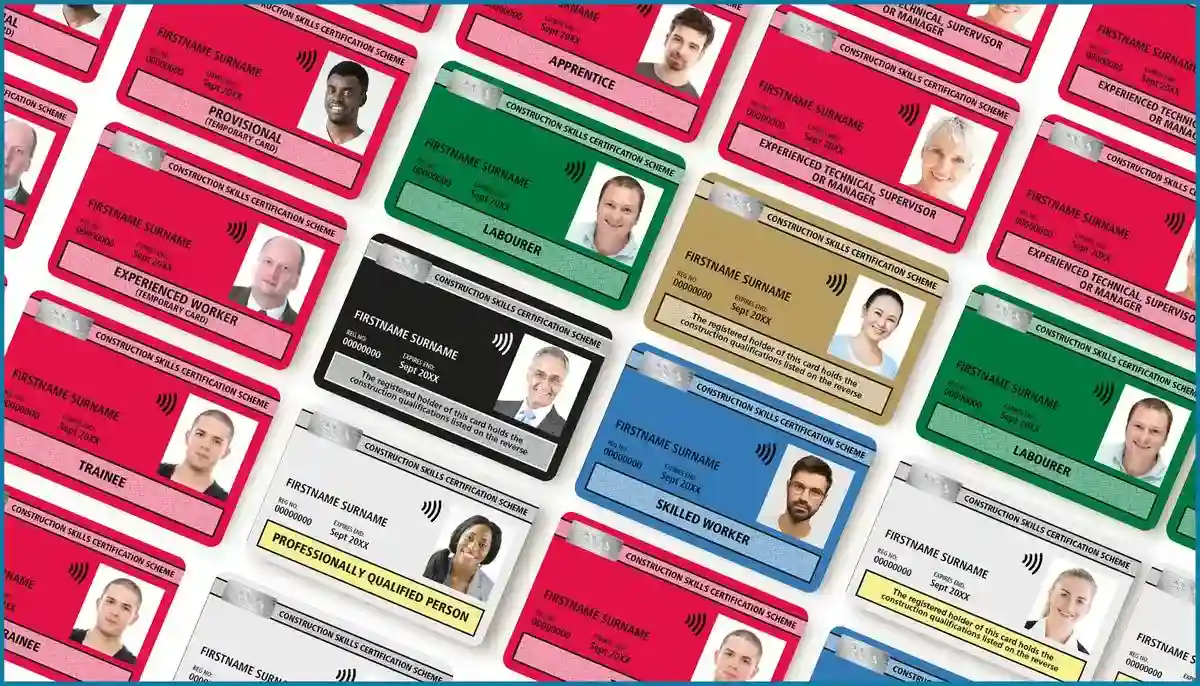
If you're looking to work in the construction industry in the UK, you may have heard of a CSCS card. There are many types of CSCS cards and it might be daunting at first to understand which one is right for you.In this blog post, we'll take a closer look at the different types of CSCS cards available. So whether you're just starting out in the industry or looking to progress your career, keep reading to find out more about this essential certification.Before moving on to discussing the CSCS card types, let�s first learn about CSCS.What is CSCS? CSCS stands for�Construction Skills Certification Scheme. It�s a recognised certification body in the UK, that approves its holders for their occupational competence in the construction sector. CSCS has made it easier for employers to employ construction workers, who have undergone appropriate training and relevant qualifications to work on a site.To learn more about CSCS, check out our blog or visit their official site.What is a CSCS Card?A CSCS (Construction Skills Certification Scheme) card is a type of certification that confirms an individual's qualifications and training required to work in the UK�s construction industry. The card acts as evidence that the holder has obtained the required knowledge, skills, and understanding to carry out their job safely and competently on a construction site.Despite the fact that holding a CSCS card is not a legal requirement, the demand for CSCS cards is very high in the UK�s construction industry. In fact, many construction and building sites won�t even hire workers without a CSCS card. This fosters a safety culture in a construction site, minimising the chances of accidents and injuries.CSCS Card Types: All You Need to Know About the Different CSCS CardsThere are different CSCS cards, each reflecting the different levels of skill and competence in the construction industry. Each card represents a different occupation or role within the sector, ranging from labourers and apprentices to supervisors and managers.These cards are categorised based on their colours (Green, Blue, Gold, White, Black, and Red). Some cards have been withdrawn by CSCS, they can still be used as long as they are valid, but cannot be renewed.Deciding on which card specifically aligns with your career objectives might be tough for you. Hopefully, the table below can help you to decide which card to go for.CSCS Green CardA CSCS Green Card is designed for individuals working in labouring occupations within the construction industry, such as general labourers, cleaners, plumbers, carpenters and bricklayers. Having this card shows that the individual has a basic level of knowledge and understanding of health and safety in the workplace. It�s one of the most popular cards amongst the list of CSCS Card types.It is not a legal requirement, but many construction employers require it as proof of a worker�s competence and commitment to health and safety in the workplace. So, if you hold a Green Card, you have an advantage over others and you�re more likely to get employed.Eligibility Criteria to Get a CSCS Green CardTo be eligible for a CSCS Green Card, you must:Achieve an RQF Level 1 Award in Health and Safety in a Construction Environment (or recognised alternative)Pass the CITB Operatives HS&E TestApply for a CSCS Green CardThe first step to getting a CSCS Green Card is to enrol on a relevant qualification. At Hurak Learning, we offer the CSCS Green Card (Labourers Card) Course that prepares you well for the next step, the CITB Operatives HS&E Test. It�s a multiple-choice test, valid for two years. After having completed the relevant qualification and having passed your CITB Operatives HS&E test, you can then apply for a CSCS Green Card on the official website with proof of your qualification and a CITB test ID number.Taking a free CSCS mock test is recommended before you attempt a real CITB HS&E test. It will help you test your knowledge and evaluate if you�re fully prepared to attempt the real test.Validity of a CSCS Green CardThe CSCS Green Card is valid for five years and must be renewed before it expires. To renew the card, the individual must retake the CITB Operatives HS&E Test and provide evidence of any additional qualifications they have obtained since their last application.Note, some qualifications, like the Level 1 Award in Health and Safety in a Construction Environment do not expire. So to renew your CSCS card if you have completed the Level 1 H&S course in the past you just need to pass the CITB Operatives HS&E Test and apply for the card. .second-cta-block .main-heading { font-weight: bold; font-size: 22px; } .second-cta-block .book-now { background: #DF3D52; color: #FFFFFF !important; border-radius: 8px; } .second-cta-block .second-heading { font-size: 17px; } .second-cta-block .card { border: 0 !important; } .second-cta-block .card-body { border: 1px solid #909090; box-shadow: rgba(0, 0, 0, 0.16) 0px 1px 4px; border-top-right-radius: 100px; border-bottom-right-radius: 100px; background: #ECECEC; } .second-cta-block .image-wrapper { height: 134px; position: absolute; right: -100px; top: calc(50% - 67px); /* Center the image vertically */ } .second-cta-block .image-wrapper img { height: 100%; } .second-cta-block .trustpilot-widget { width: 256px; } .cta-heading-section { width: 75%; } @media screen and (max-width:991px) { .second-cta-block { padding-top: 100px; } .second-cta-block .card-body { border: 1px solid #909090; box-shadow: rgba(0, 0, 0, 0.16) 0px 1px 4px; border-radius: 19px; border-radius: 14px; background: #ECECEC; } .cta-heading-section { width: 100%; padding-top: 50px; } .second-cta-block .image-wrapper { height: 134px; right: 0; position: absolute; left: calc(50% - 108px); top: calc(50% - 203px); } } RQF LEVEL 1 COURSE for CSCS GREEN CARD Check the Course Rated Excellent on major review sites CSCS Blue Card The CSCS Blue Card is designed specifically for skilled construction workers who have experience in services such as roofing, insulation, road-building, etc. Eligibility Criteria to Get a CSCS Blue Card To be eligible for a CSCS Blue Card, you must: Achieve an NVQ Level 2 or equivalent qualification Pass the CITB Operatives or Specialists HS&E Test Apply for a CSCS Blue Card The first step to getting a CSCS Blue Card is to obtain NVQ Level 2 or equivalent qualification relevant to the job you aim to do at a construction site. Next, you must pass the CITB Operatives or Specialists HS&E Test, which is valid for two years. Validity of a CSCS Blue Card The CSCS Blue Card is valid for five years and must be renewed before it expires. An individual must retake the CITB Operatives or Specialists HS&E Test before applying for the card.CSCS Gold CardThe CSCS Gold Card is for experienced professionals. It�s an advanced-level card intended for Advanced Crafts and supervisors within the construction industry. This card is proof that the holder of this card has the capability to supervise personnel in a construction environment.Eligibility Criteria to Get a CSCS Gold CardTo be eligible for a CSCS Gold Card, you must:Achieve an NVQ Level 3 or 4 qualificationPass the CITB Health Safety & Environment TestApply for a CSCS Gold CardThe first step to getting a CSCS Gold Card is to obtain an NVQ Level 3 or 4 qualification. After that, you must pass the relevant CITB Health, Safety & Environment Test. This test is valid for two years so you must apply for CSCS Gold Card before the test expires, or you will have to pass the exam again.Validity of a CSCS Gold CardThe CSCS Gold Card is valid for five years. To renew the card, you will have to pass the CITB Health Safety & Environment Test again before applying for it.CSCS Black CardThe CSCS Black Card is for experienced professionals. It indicates that the holder of this card has the knowledge, skills, capability, and experience to manage high-level tasks in a construction environment. It�s given to individuals who have achieved an advanced level qualification in the field of construction and also have managerial experience.Eligibility Criteria to Get a CSCS BlackTo be eligible for a CSCS Black Card, you must:Achieve a minimum of an NVQ Level 4 qualificationPass the CITB Managers and Professionals HS&E testApply for a CSCS Black CardTo obtain the CSCS Black Card, it is mandatory to pass the CITB Managers and Professionals HS&E test. This particular test requires a higher level of knowledge compared to others, as it�s meant for people who intend to lead others on a site. Therefore, a more comprehensive understanding of health and safety regulations and procedures is required.Validity of a CSCS Black CardThe validity of a CSCS Black Card is five years, after which it will need to be renewed. It is important to keep the Black Card valid, as it�s often a requirement by employers, and failure to renew the card can result in loss of work opportunities.CSCS White CardThe CSCS White Card is the highest level among all the CSCS Card types. There are two types of white CSCS cards: one for the Academically Qualified Person and the other for the Professionally Qualified Person.An Academically Qualified Person is someone who has obtained a higher level qualification in their area of expertise, such as HNDs, HNCs, CIOB Certificates, a NEBOSH diploma, or a degree. Examples of professionals who fall under this category are electrical and civil engineers.The second type is a Professionally Qualified Person, whose job role may require occasional visits to a construction site, but they are not restricted to a particular construction site. Professionals who fall under this category include architects, surveyors, and structural engineers.Eligibility Criteria to Get a CSCS White Card (Academically Qualified Person & Professionally Qualified Person)To be eligible for both types of CSCS White Cards, you must:Achieve a minimum of an NVQ Level 7 qualificationPass the CITB Managers and Professionals HS&E Test or an approved alternativeApply for a CSCS White CardApplicants of a Professionally Qualified Person White CSCS Card must also provide evidence of their current membership with a professional organisation at a level that CSCS accepts. They can submit any of the following documents:A membership cardA receipt of payment for membershipA membership certificateAn up-to-date letter or email from the professional bodyA clearly dated screenshot showing your current membershipValidity of a CSCS White CardThe White CSCS Card expires after five years. However, the Professionally Qualified Person card cannot be renewed and when expires, you have to apply for a new card just like you applied for the first time.CSCS Red CardsThere are a few different types of Red CSCS Cards. The following table will help you understand the different typesTypes of CSCS Red Card�Suitable ForValidityTraineeTrainees registered to complete a construction-related qualification.5 yearsApprenticeIndividuals who have started a CSCS-recognised apprenticeship framework4 years and 6 monthsProvisionalWorkers serving their probationary period.6 monthsExperienced WorkerWorkers enrolled on a Level 2 NVQ or higher qualification and have on-the-job experience.1 yearExperienced Technical, supervisor or ManagerExperienced technical, supervisor or managers enrolled on a Level 3 NVQ or higher qualification and have on-the-job experience.3 yearsTypes of CSCS Red CardsA CSCS Red Card is a temporary card assigned to a construction site worker. Each Red Card has a different validity ranging from 6 months to 5 years. One of the benefits of having this card is that you can still start working on site while working towards getting a skilled CSCS card.�The CSCS Red Cards cannot be renewed. Once you complete the required qualification, you can progress to a skilled Blue Card or Black Card.There are 5 types of Red Cards, and you can check out each type in detail below and figure out which one is best suited to you.Trainee CardThe CSCS Trainee Card allows you to temporarily join a construction site and continue your academic qualification in parallel. It�s valid for 5 years, and you must complete the course during this time period and progress to a CSCS skilled card.�To apply for this card, you must enrol in a recognised qualification and pass the CITB HS&E test.�Apprentice CardThe CSCS Apprentice Card is for workers who have started a CSCS-recognised apprenticeship framework. It�s valid for 4 years and 6 months.To apply for this card, you must complete an apprenticeship in a construction setting and pass a CITB test within the last two years.Provisional CardThe CSCS Provisional Card is for individuals who are new on a job and serving their probationary period. For this reason, this card is valid only for 6 months and you cannot renew it once it expires.To apply for this card, you must not have obtained any other CSCS card.Experienced Technical, Manager or Supervisor CardAs the name suggests, this card approves your skill level to be employed as an experienced technical, manager, or supervisor on the construction site. It�s valid for 3 years.To apply for this card, you must have an NVQ Level 3 or higher qualification and at least one year of on-job experience in the last three years.�Experienced Worker CardThis card is for experienced workers with at least a year of experience at the construction site. The Red Experienced Worker Card is often confused with the Experienced Technical, Manager or Supervisor Card. However, there�s a difference between the two as this card is only valid for a year and requires an NVQ Level 2 or higher qualification.To apply for this card, you must have an NVQ Level 2 or higher qualification and at least a year of experience at the construction site.How Much Does a CSCS Card Cost?The cost of getting a CSCS card is �36, which is the same for all the CSCS cards. This fee is paid to CSCS (Construction Skills Certification Scheme). The CITB health, safety, and environment test is a mandatory requirement for getting a CSCS card and it costs �23.50. Together, the total cost of your CSCS card application and CITB test is �58.50.Checkout our blog on CSCS card price to learn more about cost breakdown.Frequently Asked QuestionsHow long does it take for a CSCS card to be approved?The time it takes for a CSCS card to be approved can vary depending on the type of card being applied for and the application method used. Typically, once your application is approved, your CSCS card will be dispatched to you on the following working day. Most cards are delivered to their specified location within 3-5 working days after the approval of the application.How do I apply for a CSCS card?You can apply for a CSCS card in different ways, such as online, by post, or over the phone. The application process for a CSCS card involves providing evidence of your qualifications and passing a required health and safety test. We recommend applying online, as this is the quickest way.Is it mandatory to have a CSCS card to work in a construction company?While having a CSCS card to work on-site is not legally required, many construction companies and sites require their workers to obtain a valid CSCS card as a measure of competence and safety.Can I get a CSCS card without any qualifications?You cannot obtain a CSCS card without any qualifications, as the application process for all the cards requires evidence of your skills, qualifications, and health and safety knowledge.Are there any exemptions or discounts available for CSCS card fees?To know about the exemptions or discounts on the CSCS card fee, check the CSCS website.Can I use my valid CSCS card in other countries?CSCS cards are only recognized in the UK construction industry. However, some international construction companies may accept CSCS cards as evidence of knowledge, competence, and experience.What happens if I lose my CSCS card?In that case, you can apply for a replacement card online or by post. There is a fee for replacement cards, and it may take several days to get a new CSCS card.

Creativity and Innovation In Business Education: Why it Matters
World Creativity and Innovation Day.On April 21st, we celebrate World Creativity and Innovation Day. This is a day to reflect on the importance of creativity and innovation in our lives and business. Even Steve Jobs once said, "Innovation distinguishes between a leader and a follower.", and he was right. World Creativity and Innovation Day were established to encourage people all over the globe to think outside the box, be proactive, and take risks. All of which are qualities that online educators need to have.Creativity and Innovation: IndividualMany people think innovation is all about technology and gadgets, but that's not true; any individual can innovate by putting in an effort to be better today than they were yesterday. In simple terms, innovation is finding a new way to do something, whether big or small. It doesn't matter how small it is. It could be as simple as coming up with a new way to organize your bookshelves or reinventing how you make your bed in the morning. If it makes your life easier, it is innovation, and creativity is the path you choose to accomplish your innovation. Innovation also influences how people think and make decisions across different fields, including finance, where certain assets are favored by institutional buyers for their stability and long-term value.Individuals can be creative in so many ways; it could be through art, music, writing, or even coming up with a new way to do something. However, not everyone is creative, and that's okay because innovation does not require creativity. It only requires an open mind and the willingness to try new things.Creativity and Innovation: BusinessIn business, innovation is key to success. It's what sets businesses apart from their competitors. A constantly innovating business is always ahead of the curve and can adapt to change quickly. Innovation can take many forms in business; it could be a new product, a new service, or a new way of doing things. It doesn't matter what it is, as long as it is something that adds value to the customer. Being creative is equally essential because it allows us to grow your businesses. It makes a business unique and allows it to stand out from its competitors.Creativity and Innovation: Online EducationIn online education, creativity and innovation set us apart from traditional brick-and-mortar schools. Online education allows us to reach more students in different parts of the world and provide them with a flexible and tailored education. We can also use technology to create a more engaging and interactive learning experience for our students.Why are creativity and innovation essential in online education? Here are three reasons:It helps us stand out from the competition - With so many online institutes to choose from, we must offer something unique that sets us apart from the rest. By being creative and innovative in our approach to online education, we can attract more students and build a successful business.It helps us better serve our students - Online education is all about providing students with a flexible and convenient way to learn. By being creative and innovative, we can develop new ways to deliver content and make learning more fun and engaging for our students.It helps us stay ahead of the curve - Technology is constantly changing and evolving, and online education needs to change. By being creative and innovative, we can keep up with the latest trends and ensure our students get the best possible education.Importance of fostering a culture of creativity and innovation in today's online education industry. Here are just a few reasons why:Creative thinkers can develop new ideas and solve problems in innovative ways.Innovation leads to progress, and progress leads to better products and services for students.A creative environment encourages risk-taking, which is essential for growth and learning.Creativity and innovation help us stay competitive in an ever-changing world economy.So, on this World Creativity and Innovation Day, let's take a moment to reflect on how vital creativity and innovation are in our lives and businesses. And let's pledge to be more creative and innovative today than yesterday. Let's get started! What are you waiting for?
Benefits of an SSSTS Training
Who is SSSTS training for?The SSSTS training is delivered online over two days and includes case studies and assessment activities. It is intended for all supervisors, team leaders, and anybody else in a supervisory capacity on a construction site.Delegates will learn about the most recent and current health and safety measures to protect personnel on construction and civil engineering sites, regardless of whether they have just started in a supervisory role or have a basic level of awareness.By the end of the course, students will have a thorough understanding of the difficulties in managing construction sites, as well as practical knowledge about safeguarding workers there, the most recent health and safety regulations, recognising hazards and how to reduce risk, and putting welfare and safety best practises into practice.What will I learn in the SSSTS course?To receive an SSSTS certificate, participants must attend both days of the course and pass a test that consists of multiple-choice and written questions. The following topics will be covered in the course:A supervisor's job description and dutiesThe UK's judicial systemmethods for risk assessment1974's Health and Safety at Work ActOccupational health, including developing a stronger health programme.Work at heights: evaluation and safety precautionsRegulations for Construction (Design and Management) from 2015Presentation abilitiesThe Reporting of Injuries, Diseases Regulations 2013SSSTS Refresher CourseAn SSSTS certificate will be given upon completion of the course and is valid for 5 years, provided a pass rate of 80% has been attained on the exam. To ensure that participants stay current with the most recent rules and legislation, you must take a one-day SSSTS refresher course every 5 years to renew your certificate. You must do this before your current certificate expires.Please visit our website to reserve a spot or for more information about this course.Why Should I Enrol in an SSSTS Course?You could benefit greatly from a Site Safety Supervisors Training Scheme (SSSTS) training. You will have the chance to obtain health and safety knowledge essential for a supervisor role by taking a course like this.1.� Short and Flexible CoursesThis type, of course, can be finished quite fast, making it the perfect choice for those with busy schedules. Additionally, flexible date options enable you to enrol in your course at the appropriate time. If an evening or weekend course makes more sense for you, you can choose that.Because they believe they don't have enough time, people frequently postpone this training. If you have previously engaged in this behaviour, you should consider when you would be able to enrol in an SSSTS course and how long it might take.2. Take a Class Anywhere, AnytimeYou have the option of enrolling in an online SSSTS course. You should be able to choose a course that suits you because these are provided all around the country. Additionally, there is a lot of flexibility regarding class timings because so many possibilities are available.It can be difficult to attend a course like this if you have to travel far. However, obstacles like these won't be there if you enrol in an SSSTS course. You'll be able to choose the ideal location close to you for your class and will be able to complete the course.3. Specialised CoursesThe SSSTS course is extremely specialised and created to give you the crucial knowledge you will need. The risks that may be present on the job site, toolbox lectures, and several health issues will all be covered.These courses are tailored exclusively for supervisors. You will be able to take a simplified course and pick up essential knowledge. Not only may finishing a course like this open up new employment prospects for you, but it can also offer you the information you need to perform better at work.4. Accredited CourseYou could be apprehensive about the calibre of the course you plan to enrol in. If you're concerned about this, you should know that the SSSTS training offered by Hurak is CITB-accredited. Since the courses are regulated, you can be sure they will all meet a particular level of quality.What are the benefits of the SSSTS course?In addition to learning new skills and advancing their current ones, participants will complete an industry-recognised qualification in the construction and civil engineering industries, ensuring they have the knowledge and skills necessary to manage a site safely and successfully. The advantages of enrolling in an online SSSTS course include:Industry-recognised qualification: Individuals who have earned their SSSTS certification may attest that they possess the necessary knowledge and abilities to promote health, safety, and welfare best practices on any construction or civil engineering site.Career Advancement - acquiring and advancing to a career in a supervisory function and upgrading to a more senior management role is made much easier with an SSSTS qualification. Indeed, certain employers may need an SSSTS certificate for managerial or higher positions.Builds knowledge and skills - ideal for those advancing into supervisory roles because an SSSTS course will increase their knowledge and range of abilities.Develops a better understanding - improves knowledge of the environmental, health, welfare, and safety regulations for operating a construction or civil engineering site in the UK.The CITB SSSTS training courses offered by Hurak can be taken online. As an alternative, we may design an SSSTS training programme that is unique to the needs of your business.
How To Conduct a Secondary Survey in First Aid
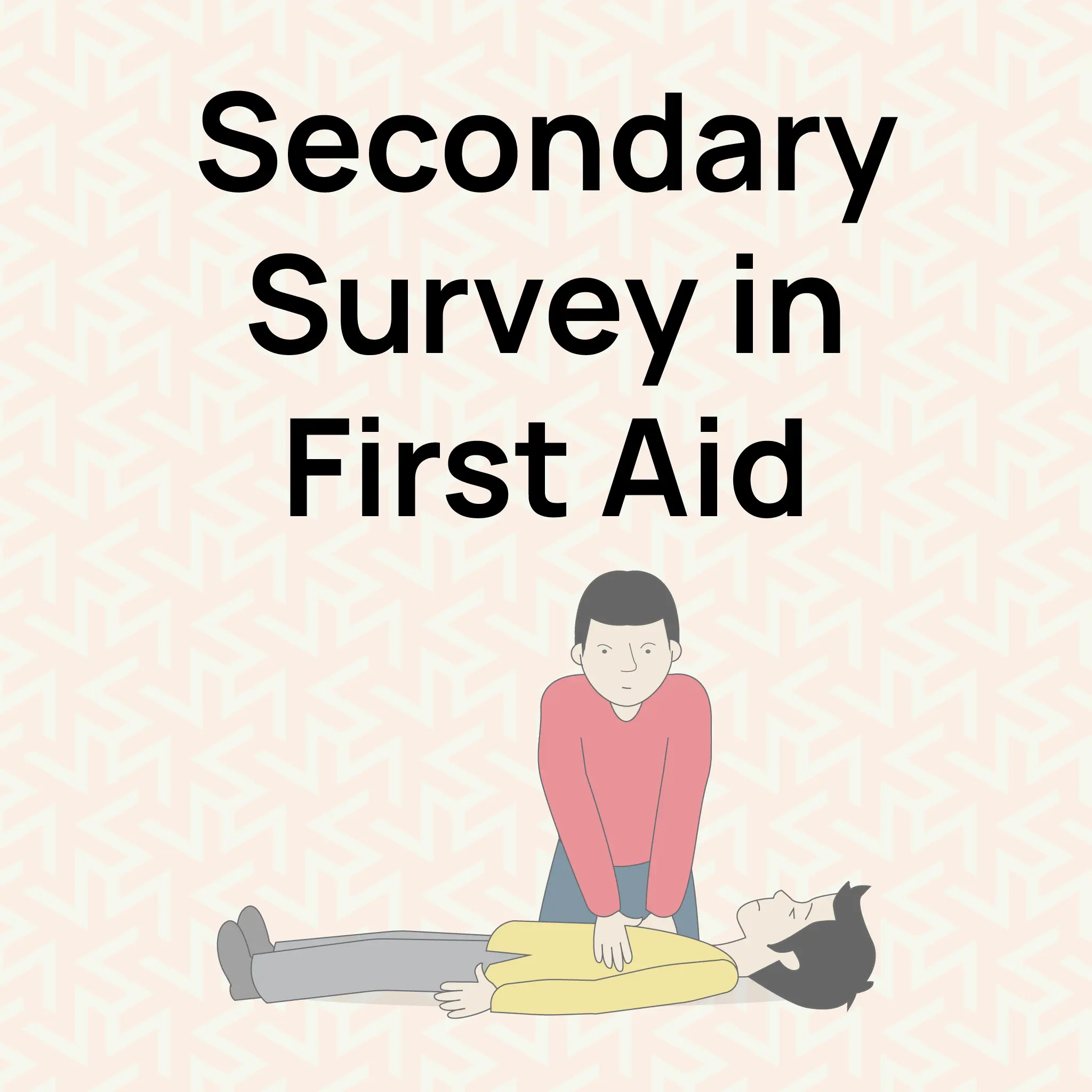
The secondary survey assesses the injuries of an awake, responsive person. It involves thoroughly examining the person's health history, assessing the four vital signs and conducting a systematic head-to-toe examination. If we discover any injuries, we administer first aid accordingly. Finally, we document all our actions and findings of the entire process. A secondary survey is performed after completing the primary steps of first aid (remembered as DRABC).What is the Difference Between a Primary and a Secondary Survey First, we always do a primary survey to quickly find and stop any life-threatening injuries. Once the person is more stable, we do a secondary survey. This is where we gather more information about what might have caused the person's injuries or illness. Primary Survey Secondary Survey� First examination Second examination� Assesses and stabilities a person in life threatening conditions� Diagnoses and treats major injuries after stabilisation�� Follows DRABC steps Follow AMPLE steps� Does not involves a head to toe examination� Involves a head to toe examination For responsive or unresponsive patients� Typically for responsive patients� Why Do We Perform the Secondary Survey in First AidIn a secondary survey, we look for injuries. We physically examine every part of the injured person's body from head to toe. We check the front, back, sides, underneath, and top. This survey includes looking at the airway again and checking the lungs again.When To Perform the Secondary Survey in First AidIf the person has more than one injuryIf it will take more than 20 minutes for medical help to arriveIf you're taking the person to get medical help .main{ border:3px solid #0f7c90; border-radius:20px; position: relative; font-family:roboto; font-weight: 400; color: #000; } .main-two{ position: absolute; top:-25px; left:45px; background-color:white; } .img-div{ border-radius : 100%; padding:2px 7px; background-color:#0f7c90; margin-right:5px; width: 50px; height: 50px; } .img{ width:30px; object-fit:contain; height:auto; border-radius : 100%; } @media only screen and (max-width: 600px) { .heading{ font-size:20px; } .img{ width:20px; object-fit:contain; height:auto; border-radius : 100%; } .img-div{ width: 40px; height: 40px; } .main-two{ left:25px; } } Ready to Learn More? Put your knowledge of the secondary survey into practice by enrolling in a course today! Our First Aid courses offer complete training to help you handle critical situations. Whether you want to improve your skills or workplace safety, these courses help build confidence and expertise. View our Emergency First Aid at Work (EFAW) and Level 3 First Aid at Work courses. These courses meet the UK legal requirements and help you keep people safe. How to Perform a Secondary Survey in First AidSAMPLE History TakingAsk questions to learn more about the person's medical background. Remember the word "SAMPLE" to help you remember what to ask:S stands for Symptoms: What the person feels, like pain or weakness.A stands for Allergy: Do they have any allergies? These could be to nuts or medicines like penicillin or aspirin.M is for Medication: Are they taking any medicines?P is for Previous medical history: Do they have any ongoing health conditions like diabetes or epilepsy? Have they had any surgeries or injuries before?L is for Last Meal: When did they last eat or drink?E is for Event history: What happened, and where did it happen? Was it because of an illness or an accident? Talk to anyone nearby to find out more, and look for any clues that could help understand what happened. Also, check if they have any special jewellery that might have medical information on it.Vital SignsCheck four critical things:Level of Consciousness: Are they awake and aware?Breathing: Are they breathing normally?Pulse: What's their heartbeat like?Skin Condition and Temperature: Is their skin normal, and are they warm enough?By conducting this secondary survey, we ensure that we've covered everything and helped the person in the best possible way.Check the Level of ConsciousnessChecking someone's level of consciousness (LOC) helps us understand how aware they are. We often use the letters AVPU to do this:A for Alert: If someone is alert, they're fully awake and can answer questions. They know who they are, where they are, and what time it is.V for Verbal: If they respond only when spoken to but aren't fully alert, they're in the verbal stage. They might seem confused and not know where they are or what's happening.P for Pain: If they only react when you give them a little pain, like pinching them, they're in the pain stage. They might move or make noises, but they cannot communicate appropriately.U for Unresponsive: If they're not reacting, even to pain, they're unresponsive. This is serious, and we need to act quickly to help them.Remember, another quick way to check is to look at their eyes, listen to what they say, and see if they can follow simple commands like squeezing your fingers.BreathingTo check someone's breathing, watch their chest rise and fall for 30 seconds. You can also gently place your hand on their stomach to feel it. Count how many breaths they take in that time, and then double it to know how many breaths they take per minute. Here's what's expected:For babies, breathing below 25 breaths is too slow, 30-50 is normal, and over 60 is too fast.For children: Below 15 is too slow, 20-30 is normal, and over 40 is too fast.For adults: Below 10 is too slow, 10-20 is normal, and over 30 is too fast. Normal Breathing Rated (no. of breaths)Infant30-50Child20-30Adult10-20�PulseYour pulse shows how often your heart beats in a minute. You can check it by feeling the person�s wrist, neck, or upper arm. Use two fingers and press gently until you feel the pulse. Count how many beats you feel in 30 seconds, then double it to get the beats per minute.Normal Pulse Rates:For babies: A normal pulse range is between 120 and 150 beats per minute.For children: It can vary between 80 and 150 beats per minute.For adults: The average pulse rate is usually between 60 and 100 beats per minute.Normal Pulse Rates (beats/min)Infant120-150Child80-50Adult60-100�Skin Condition and TemperatureWhen we check someone's skin, we're looking at a few things:Temperature: Is their skin warm or cold?Colour: Does their skin look normal or pale?Dryness: Is their skin dry or wet/sweaty?To check, gently feel their forehead and cheeks with your hand. If their skin is normal, it should feel warm and dry and be a regular colour. But if it's pale, cold, and sweaty, it could mean they're going into shock.Head-to-Toe ExaminationThis is a thorough check of the person's whole body for any injuries we might have missed earlier. Here's how to do it:Before you start, ask if they feel any pain and explain what you will do.Talk to them throughout, & watch their face for any signs of pain.Keep going, and even if you find something, make a note and continue.Be respectful and only expose areas you need to check.Look for any bumps, bruises, or anything unusual.If they're unconscious, look for any medical alert tags or jewellery.Always look before touching.Let's start at the head:Feel the skull for anything unusual.Check the ears for any fluid.Look at the eyes. Are the pupils the same size?Check the nose for any runny stuff.Look inside the mouth. Are the teeth okay? Are the lips a standard colour?Now, let's move to the neck:Check if the neck veins look big or bulging.See if they're wearing a necklace with medical info.Feel the collarbones.Check both shoulders.Now, onto the arms:Check each arm carefully.Squeeze each fingernail and see if the colour comes back quickly.Ask them to squeeze your fingers. Are they strong enough and equal on both sides?Next, let's look at the chest and underneath:Ask if it hurts when they breathe.Make sure the chest goes up and down as it should with each breath.Reach around to the back as far as you can.Let's check the tummy and underneath:Use your hands flat to feel the tummy gently.Don't press too hard. Just see if there's any pain, tenderness, or stiffness.Put your hand flat on their tummy and ask them to push against it. Does it hurt?Reach around to the back as far as you can.Now, let's look at the hips:Please put your hands on the hip bones and gently squeeze to check they're stable.Moving down to the legs, ankles, and feet:Check each leg one by one.See if one leg is shorter than the other.Check the kneecap and the area underneath carefully.Give a little pinch on the foot and ask if they felt it.Could you put your hands on their feet? Ask them to push and then pull against your hands. Are they equally strong on both sides? Ask them to wiggle their toes and see if they can do it.Check the circulation in their legs.Provide First-Aid for InjuriesOnce you've finished checking everything, it's time to give the right first aid for any injuries or illnesses you find. If the person has more than one injury, start with the most serious one.Pro Tip: Act quickly if you find serious injuries. Administer first aid immediately, even if you have not completed the survey. Keep the person's safety top priority.�DocumentationAfter you've given first aid, write down what you've found and what you've done. This information can help doctors or other medical staff who will care for the person later. It is important to know if the injury happened at work because it might need an investigation. You'll usually fill out forms provided for this purpose, and you should keep them as required by the rules in your area.First-Aid TrainingThe Emergency First Aid training course is designed for low-risk environments such as offices and small retail stores. It gives participants the fundamental knowledge and skills to manage emergencies in these settings effectively.On the other hand, First Aid Training at Work is one of the extensive first aid courses that meets the requirements specified in the Health and Safety Regulations (First Aid) 1981 and goes a step beyond the Emergency First Aid at Work (EFAW) course, qualifying you to work in high-risk workplaces. .banner { border-radius: 10px; overflow: hidden; border: 2px solid #ccc; box-shadow: 0 4px 8px rgba(0, 0, 0, 0.2); background-color: #fdf9ee; } .book-now { color: white; background-color: #DF3D52; border: none; padding: 15px 60px; border-radius: 5px; cursor: pointer; font-size: 20px; text-decoration: none; } .book-now:hover { /*text-decoration: none;*/ color: white; background-color: #c33f50; } Get Trained in All First-Aid Skills First Aid Courses Book Now Rated Excellent on major review sites FAQsWhat are the four vital signs for a secondary survey?The four vital signs of a secondary survey are checking the level of consciousness (LOC), breathing rate, pulse rate, skin condition and temperature.What does SAMPLE stand for in a secondary survey?SAMPLE stands for Symptom, Allergy, Medication, Previous medical record, Last meal and Events leading to the casualty. It is the order in which the history of the injured person is taken.What is the main aim of the secondary survey?The main aim of the secondary survey is to check for major injuries that might have been missed during the primary survey.What are the steps included in Emergency Scene Management?The steps included in ESM include scene survey, primary survey, secondary survey and ongoing casualty care.
The Importance of First Aid in Schools
Accidents and emergencies are bound to happen in a school's active environment, where children constantly learn, play, and grow. Having trained personnel and a structured first aid program can help maintain the safety and well-being of students and staff alike.Why First Aid Matters in SchoolsFirst aid is not just about addressing physical injuries; it includes a range of skills that can save lives. It helps prevent injuries from worsening and provides immediate care until professional help arrives. The importance of first aid in school includes the following:Immediate Response to AccidentsSchools carry out activities where accidents like cuts, falls, or burns can occur. Knowledge of first aid equips teachers and staff to respond promptly and appropriately.Life-Saving PotentialIn critical situations such as cardiac arrests, choking incidents, or severe allergic reactions, quick action through first aid techniques can help save lives.Promoting Safety AwarenessTeaching first aid creates a culture of safety awareness among students, encouraging them to take responsibility for their well-being and that of others.First Aid in School Policy as a Legal RequirementSchools are places where learning happens, but they must also be safe. When accidents or medical emergencies happen, having the right knowledge and tools for first aid can make a difference.Schools are legally required to ensure student safety. In the United Kingdom, laws require schools to have enough first aid supplies, medical staff, and training. But beyond laws, schools have a moral duty to keep students safe by being ready for medical emergencies.Under the Health and Safety (First Aid) Regulations 1981, first aid should always be available at schools and colleges. The availability applies on campus or during off-site activities like field trips. Regulations say employers must provide the right first aid equipment, facilities, and trained staff based on a first aid assessment. The basic first aid requirements for schools and colleges are:A suitable first aid kit is stocked according to the assessment, meeting minimum standards suggested by HSE.An appointed person or designated first aider(s) responsible for first aid.Information for staff about where to find equipment, facilities, and first aid personnel.How To Include First Aid in the School CurriculumTo ensure comprehensive coverage, schools can include first aid education into their curriculum through:Structured Training ProgramsFormal first aid courses are part of physical education or health classes.Simulation ExercisesConduct regular drills and simulations to practice emergency response scenarios.Continuous LearningProviding refresher courses and updates to keep skills current among staff and students. .banner { border-radius: 10px; overflow: hidden; border: 2px solid #ccc; box-shadow: 0 4px 8px rgba(0, 0, 0, 0.2); background-color: #fdf9ee; } .book-now { color: white; background-color: #DF3D52; border: none; padding: 15px 60px; border-radius: 5px; cursor: pointer; font-size: 20px; text-decoration: none; } .book-now:hover { /*text-decoration: none;*/ color: white; background-color: #c33f50; } Get Trained in All First-Aid Skills First Aid Courses Book Now Rated Excellent on major review sites What are the Types of First Aid Needed in SchoolsSchools should prepare for various types of first aid scenarios, including:Emergency First AidDealing with immediate, life-threatening situations such as cardiac arrest, severe bleeding, or unconsciousness.Basic First AidTreating minor injuries like cuts, bruises, sprains, and burns common among children during daily activities.Mental First AidAddressing emotional distress, anxiety, or panic attacks in students is increasingly recognised as essential alongside physical first aid.What Does First Aid Training in School Involve?First aid training in schools teaches students essential skills:calling emergency servicesassessing safetycommunicating with the injuredtreating cuts, bleeding, and burnsapplying bandagesassisting with fractures and CPRhandling head injuries, allergies, and nosebleedspreparing students to respond confidently in medical emergencies.The Department for Education made first aid training compulsory for students in England's state-funded schools in 2020. It is now part of children's health education and varies by age group. .main{ border:3px solid #0f7c90; border-radius:20px; position: relative; font-family:roboto; font-weight: 400; color: #000; } .main-two{ position: absolute; top:-25px; left:45px; background-color:white; } .img-div{ border-radius : 100%; padding:2px 7px; background-color:#0f7c90; margin-right:5px; width: 50px; height: 50px; } .img{ width:30px; object-fit:contain; height:auto; border-radius : 100%; } @media only screen and (max-width: 600px) { .heading{ font-size:20px; } .img{ width:20px; object-fit:contain; height:auto; border-radius : 100%; } .img-div{ width: 40px; height: 40px; } .main-two{ left:25px; } } Ready to Learn More? Put your knowledge of the importance of first aid in schools into practice by enrolling in a course today! Our First Aid courses offer complete training to help you handle critical situations. Whether you want to improve your skills or workplace safety, these courses help build confidence and expertise. View our Emergency First Aid at Work (EFAW) and Level 3 First Aid at Work courses. These courses meet the UK legal requirements and help you keep people safe. First Aid Learning for Primary School StudentsBasic first aid for common injuries, including head injuries.How to call emergency services.First Aid Learning for Secondary School StudentsBasic first aid for injuries and illnesses.Life-saving skills like CPR.How and when to use a defibrillator.What is the Importance of Mental Health First Aid at SchoolMental health first aid is like regular first aid but for mental health. It is often overlooked, but it is very important.Nowadays, young people struggle with mental health issues. School staff should know about mental health first aid and get trained.Studies show that 1 in 6 children aged 5-16 might have a mental health problem. And more than half of young� adults aged 16-25 have talked to their doctor about mental health issues.Mental health first aid teaches school staff how to spot signs that a young person might be having mental health problems. Staff must be able to notice these signs early and know how to help someone in a crisis. This training is especially important for staff in secondary schools.What should a School First Aid Kit Contain?A school first aid kit should contain everything needed for common accidents. It should include the following items:bandagesantiseptic wipesgauze for cuts and scrapessplintsice packsEpiPen for allergiessaline solution for washing wounds or eyesCPR face shieldsburn gelinhaler for anaphylactic shock.Checking and replacing items regularly keeps the kit ready for any emergency.Who can Administer First-Aid Training in Schools?First Aid Training in school is delivered by qualified people. Determining who should be responsible for first aid in schools is critical:Trained Personnel:Designated staff membersTeachersAdministratorsSchool NursesBefore delivering first aid training to pupils, they should undergo regular training and CPR certification.What are the Positive Impacts of First Aid in SchoolsAn effective first aid program in school has several benefits:Increased Safety: Immediate response reduces the severity of injuries and accidents, creating a safer school environment overall.Empowerment: Both staff and students feel empowered and confident in their ability to handle emergencies effectively.Community Engagement: Involving parents and the broader community in first aid workshops or training sessions leads to a collaborative approach to safety.What Qualifications are Required by a First Aider at School?First-aiders need to have specific qualifications:1. They must have a valid certificate in either:First aid at workEmergency first aid at workAny other suitable training based on what the school needs.It is a legal requirement for schools and early years providers that all staff have first-aid training. At least one person must have a current paediatric first-aid certificate. This person must be present whenever children are around and go on trips with them.ConclusionFirst aid is a life-saving practice. By prioritising first aid education and preparedness, schools improve safety and nurture a community where compassion and responsibility thrive. From physical injuries to mental health crises, the ability to respond promptly and effectively ensures that schools provide necessary protection and support. Introducing basic first aid skills into the curriculum empowers students to assist others and potentially save lives in emergencies.�

Roles and Responsibilities of a Safety Officer in Construction
Few other sectors have a variety of risk factors that are present in the construction industry. Workers must operate heavy machinery and vehicles, work at heights, conduct routine manual labour tasks, and deal with several hazards at work.While all businesses in the UK are required by law to ensure their workers� health and safety, managers, head contractors, and supervisors must take extra care. Employers can ensure that there is always a qualified person on-site with the knowledge, experience, and abilities required to manage health and safety issues by designating a health and safety officer.Safety officers are essential to maintaining the security of construction sites for workers and visitors. They seek to identify, manage, and reduce hazards that may arise on-site and ensure that all health and safety guidelines are being adhered to.The functions and responsibilities of health and safety officers will be discussed in more detail in this article. Additionally, we�ll examine current health and safety challenges and trends in the building sector and offer connections and other helpful resources for anyone interested in learning how to work as a health and safety officer in the construction industry.Roles of a Safety Officer in ConstructionEven though each workplace is unique, all construction sites have several functions and responsibilities for health and safety officers.These responsibilities include:Risk Assessments and Site InspectionsOn a construction site, the health and safety officer should conduct routine inspections and assessments to recognise and assess potential dangers. Then, they must seek to reduce these hazards and implement health and safety policies and practices that safeguard employees.Compliance MonitoringAccording to health and safety authorities, supervisors and employees must follow all applicable health and safety laws, rules, and procedures. Additionally, a health and safety officer needs to ensure that any supplies or equipment providers are according to the law.Accidents & Incident InvestigationThe health and safety officer must carry out a comprehensive investigation after every accident or near-miss incident. The inquiry aims to determine what caused the incident or accident and find evidence of equipment malfunctions, legal violations, or procedural mistakes. The health and safety officer may need to speak with witnesses and, if feasible, the victim or victims throughout the interview process.The officer should write a report after the investigation is finished and, if necessary, submit it to the appropriate authorities. Health and safety practices should be improved using the report�s data to prevent future mishaps or accidents.Record Keeping and ReportingKeeping thorough records of all risk assessments, site inspections, investigations, and compliance infractions is one of a safety officer�s key responsibilities on a construction site. The health and safety officer must generate and submit reports as necessary to authorities, including the recently established Building Safety Regulator (BSR).Organising Health & Safety TrainingThe health and safety officer should make arrangements for staff at all levels to acquire the necessary, approved health and safety training to safeguard workers� health and safety and maintain compliance with rules.Health and safety officers must ensure they keep up with all relevant standards and governmental laws due to the wide variety of jobs that are constantly done on any construction site. Health and safety officers should frequently take refresher training courses and ensure they are aware of any changes to pertinent legislation to maintain their expertise.Growing Concerns for Safety in ConstructionOne of the largest industries in the UK economy is construction. According to recent official statistics, 3.1 million workers, or 9% of the entire UK workforce, are employed in construction-related jobs. With a 6%+ contribution to the UK�s gross domestic product (GDP), the building sector is another important economic driver.The construction business is one of the most hazardous to work in and one of the largest. According to the most recent data from the Health and Safety Executive (HSE), there were just under 40 fatal injuries to construction employees, 61,000 non-fatal injuries, and 74,00 health issues related to their jobs.Common Hazards in ConstructionThe majority of fatal injuries occurred were as a result of height falls. Slips, trips, and falls were the main contributors to non-fatal injuries. Health and safety officials in the construction sector continue to prioritise ensuring that every worker has a solid and secure platform on which to carry out their tasks.The following are the most typical risks construction workers encounter:Falling from a great heightStumbling and slippingBeing hit by or pinned beneath moving itemsSyndrome of hand-arm vibrationAccidents involving materials and manual labourTunnelling trenchesDiseases caused by asbestosElectricity risksMaterials and fibres in the airSafety Trends in ConstructionHealth and safety officials increasingly rely on modern technology to reduce dangers in the construction sector and make job sites safer for employees. Wearable devices that track a worker�s blood pressure, pulse rate, and oxygen levels to prevent weariness or warn managers of mishaps are among the upcoming safety trends in the construction sector.Additionally, sensors built into wearable technology can alert employees when they are too close to machinery or in danger of falling. Geo-location tracking can give managers access to real-time information about specific employees� whereabouts and quicker accident response times.Artificial intelligence (AI) software can now give video-based real-time object recognition to identify potential threats on-site. Drones and automated robots can monitor construction sites and inform health and safety officials of any emerging dangers or incidents.On websites, e-Checklists are also growing in popularity. These make record-keeping easier, guarantee best practices are followed, and enable on-the-job training.Construction Safety Officer TrainingA degree is not required to work as a health and safety officer. To ensure you can do the work well, you will need experience, knowledge, and training. There are several methods to advance your skill set if you are a health and safety officer or are thinking about becoming one.Many climb the ladder to the position over time, developing the necessary abilities while working in the field. Training programmes like IOSH Safety, Health & Environment for Construction Site Managers or some of the more in-depth courses provided by the National Examination Board in Occupational Safety and Health (NEBOSH) can help to assist this further.There are also shorter courses available to aid in developing your understanding of the systematic risks and duties you will need to do as a health and safety course.Anyone working in construction should take the following online health and safety training courses that Hurak provides:Health and Safety Training for ManagersManual Handling Training CourseAsbestos Awareness TrainingFire Marshal Training
How To Perform the Primary Survey Using the DRABC Steps
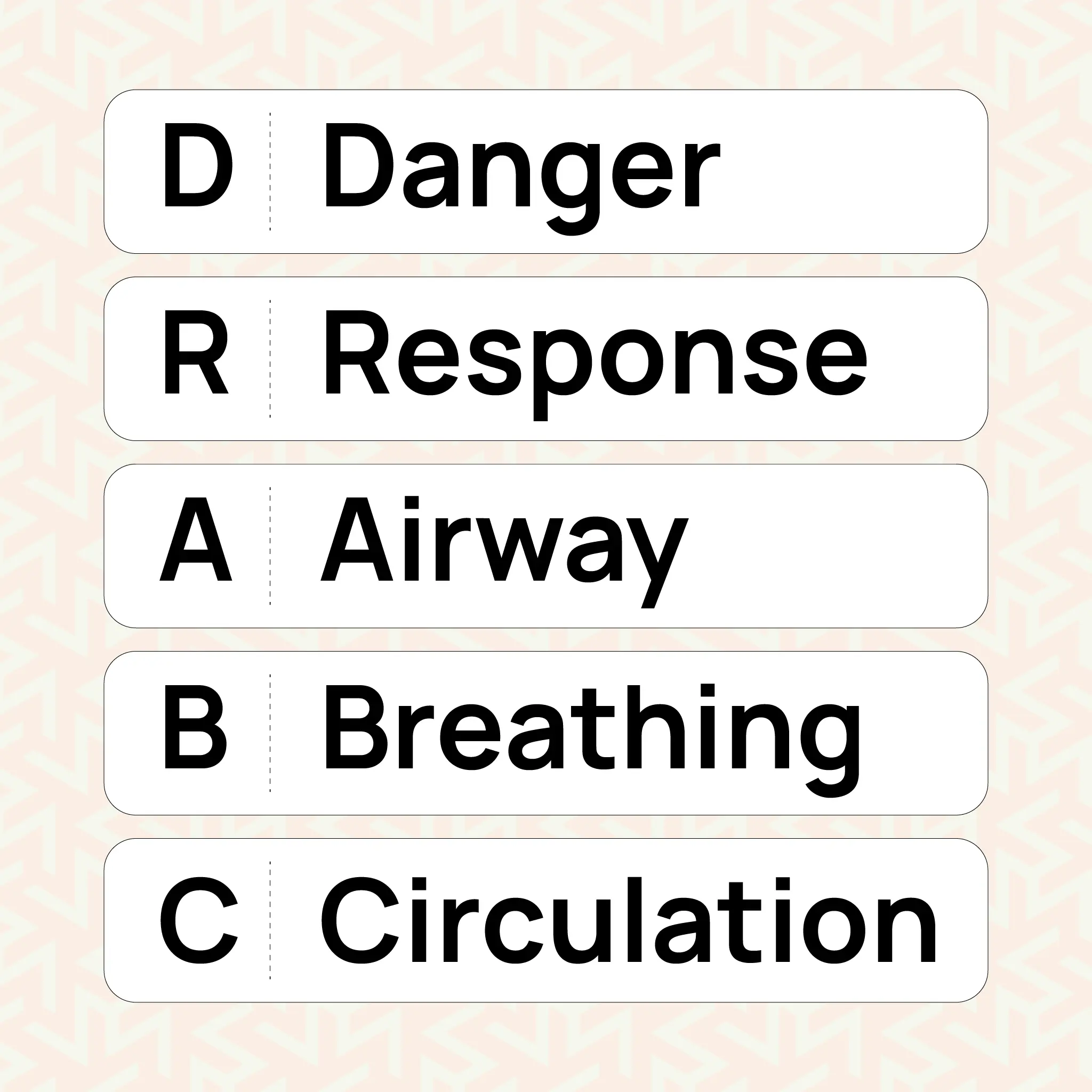
When someone is unconscious, their life is in danger. Their airway might be blocked, they may not be breathing, and their blood circulation could have stopped. It is important to follow the primary survey steps to assess casualties in the order of DRABC: Danger, Response, Airway, Breathing, and Circulation. Remember to take quick action because brain damage or even death can happen quickly. A secondary survey is performed after completing the primary steps of first aid.Primary Survey in First Aid Using DRABCWhen helping someone in an emergency, you always start with the primary survey. This means you quickly assess what is happening and the person's needs.The primary survey uses the letters DRABC to help you remember the steps: Danger, Response, Airway, Breathing and Circulation.D - Danger: First, you check for danger around you, such as oncoming traffic or a falling object.R - Response: Next, see if the person responds. Gently shake their shoulders when you talk to them. Are they awake or unconscious?A - Airway: Then, make sure their airway is clear. That means checking if anything is blocking their breathing passage.B - Breathing: After that, check if they're breathing normally. Look, listen, and feel for any signs of breathing.C - Circulation: Finally, check for signs of circulation, like a pulse. This tells you if their heart is beating.Knowing what to do next could help save someone's life, so it's important to follow these steps in the correct order. .main{ border:3px solid #0f7c90; border-radius:20px; position: relative; font-family:roboto; font-weight: 400; color: #000; } .main-two{ position: absolute; top:-25px; left:45px; background-color:white; } .img-div{ border-radius : 100%; padding:2px 7px; background-color:#0f7c90; margin-right:5px; width: 50px; height: 50px; } .img{ width:30px; object-fit:contain; height:auto; border-radius : 100%; } @media only screen and (max-width: 600px) { .heading{ font-size:20px; } .img{ width:20px; object-fit:contain; height:auto; border-radius : 100%; } .img-div{ width: 40px; height: 40px; } .main-two{ left:25px; } } Ready to Learn More? Put your knowledge of the primary survey into practice by enrolling in a course today! Our First Aid courses offer complete training to help you handle critical situations. Whether you want to improve your skills or workplace safety, these courses help build confidence and expertise. View our Emergency First Aid at Work (EFAW) and Level 3 First Aid at Work courses. These courses meet the UK legal requirements and help you keep people safe. DRABC StepsDANGER - 1st Step of the Primary Survey DRABCThe first thing to do in an emergency is to check for dangers. Look around to see if anything could harm you, the person needing help, or anyone nearby. This helps you decide if it's safe to go close to someone who needs help.WHAT TO DOIf you see any hazards, like live electricity, try to make the area safe first. For example, if there's electricity, turn it off. Otherwise, use an insulating object, such as wood or plastic, to move the person away. When there is a risk of electricity, do not touch them directly.When you are sure it is safe, you can approach the person who needs assistance. But if it's still not secure, don't go near them. Instead, get emergency medical helpRESPONSE - 2nd Step of the Primary Survey DRABCA person can lose consciousness when something disrupts the brain's normal functioning. Here are some signs that someone might be unconscious:They can't respond to simple questions or touch.They might not realise when they're in danger and can't protect themselves.They can't clear their airways by coughing or swallowing. This means saliva, blood, vomit, or objects could block their breathing tubes. The tongue, which becomes floppy, might also fall back and block the throat.WHAT TO DOFirst, try to determine whether the person is unconscious by asking simple questions or telling them to do something simple, such as "What's your name?" or "Open your eyes," and gently shake them. If they don't respond, they're probably unconscious. Don't shake them vigorously, especially if they're children or babies.Place the individual in the side position, and examine his airway, breathing and pulse.If the unconscious person is breathing and has a pulse, keep them in the side position. Ensure their airway remains open and clear, and monitor their breathing and pulse regularly until medical assistance arrives.�How to Keep the Unconscious Person in a Side PositionThis is also called the lateral, recovery, or stable side position.Kneel beside the person.Straighten their far arm out, perpendicular to their body. Bend their near arm at the elbow and place it across their chest, with the fingers near the far shoulder.Bend their near leg up to the right angle of their body.Hold the shoulder and hip closest to you, gently rolling them onto their side. Their top leg should rest on the ground with the thigh at a right angle and the calf parallel to the straight leg.Rest their uppermost, bent arm on the elbow of the straight arm.the person is a child older than 1 year, gently tilt their head back. Their face should be slightly downwards so any fluid can drain from their mouth, and their tongue can fall forward, away from the airway.Pro Tip:When someone is unconscious, act fast. Use DRABC: Danger, Response, Airway, Breathing, Circulation. Brain damage or death can happen quickly if you delay.AIRWAY - 3rd Step of the Primary Survey DRABCNow, ensure the person's airway is clear. If they're unconscious:Gently tilt their head back and lift their chin with your hand on their forehead.Peep in their mouth to check whether something is obstructing their passageway.What to Do: If the person is responsiveCheck whether anything is obstructing their airway and causing difficulty breathing.If you see something, encourage them to clear it by coughing or using their hands.For adults and kids, you can help them by giving back slaps or abdominal thrusts. For babies under a year old, you can help them with back blows or chest thrusts.Once the blockage is cleared, move on to the next step.What To Do: If the person is responsiveCheck whether anything is obstructing their airway and causing difficulty breathing.If you see something, encourage them to clear it by coughing or using their hands.For adults and kids, you can help them by giving back slaps or abdominal thrusts. For babies under a year old, you can help them with back blows or chest thrusts.Once the blockage is cleared, move on to the next step.What To Do: If the person is unresponsiveIf you see something, try to remove it carefully. But don't put your fingers in their mouth if you can't see anything, as you might push a blockage deeper.BREATHING - 4th Step of the Primary Survey DRABCBreathing should be regular, quiet, and easy. Tilt the head back, watch the chest for movement, and listen for breathing sounds. Do this for about ten seconds to see if air comes from the mouth or nose.WHAT TO DOIf they're unresponsive and not breathing normally, call emergency services immediately. If you know CPR, start with rescue breaths. If not, do chest compressions. If there's an AED nearby, ask someone to bring it.Giving Rescue BreathsMouth-to-mouth resuscitation is the best way to give rescue breaths. Mouth-to-nose resuscitation is used for a jaw injury or if the person needs to be revived in water. Mouth-to-mask resuscitation is done by trained people to avoid direct contact, especially if the person might have a disease like hepatitis or HIV.Typically, 30 compressions followed by 2 rescue breaths are performed in case of abnormal breathing.Mouth-Mouth ResuscitationKneel beside the person.Lay them on their back.Gently tilt their head back and support their jaw with your fingers. Don't press on their throat. Their mouth should be slightly open.Pinch their nose closed. Take a deep breath and cover their mouth with yours, sealing gaps.Keep their head tilted and give 2 breaths, enough to make their chest rise slightly.Start compressions as recommended.When they start breathing again, please put them in the side position and check their airway, breathing, and pulse regularly.Follow similar steps for mouth-to-nose and mouth-to-mask resuscitation but adjust for the different techniques.CIRCULATION - 5th Step of the Primary Survey DRABCIn this step, check the person for any significant bleeding.What To DoIf they're bleeding heavily, try to stop it by pressing directly on the wound with a clean cloth or dressing. Then, call emergency services for help.Stay with them until help arrives. Try to keep them calm and reassure them that help is coming. If they're not bleeding but still unresponsive, put them in the recovery position. This helps keep their airway clear if they vomit.Cardiopulmonary Resuscitation (CPR)If someone's heart has stopped, CPR is vital to keep them alive until help arrives. CPR is exhausting, so it's best if two people can take turns to keep the rhythm right. Remember, even if you're not trained, attempting CPR is better than doing nothing.What To Remember During an EmergencyPlease don't go near the person unless it's safe. Check for danger to yourself, others, and the injured person first.Stay as calm as possible, even though you might feel upset, and try to reassure the injured person.Time is significant.Don't move the person unless you have to for safety reasons.Please don't leave them alone. Get someone to call for medical help straight away. But if you're alone and help won't come soon, you'll need to go for help yourself. Call 999 or the emergency number in your area.Keep messages to the emergency services short: say where you are, what's happened, how many people are involved, and how badly they're hurt.Please don't give them anything to eat or drink.First-Aid TrainingThe Emergency First Aid training course is designed for low-risk environments such as offices and small retail stores. It gives participants the fundamental knowledge and skills to effectively manage emergencies in these settings. .banner { border-radius: 10px; overflow: hidden; border: 2px solid #ccc; box-shadow: 0 4px 8px rgba(0, 0, 0, 0.2); background-color: #fdf9ee; } .book-now { color: white; background-color: #DF3D52; border: none; padding: 15px 60px; border-radius: 5px; cursor: pointer; font-size: 20px; text-decoration: none; } .book-now:hover { /*text-decoration: none;*/ color: white; background-color: #c33f50; } Get Trained in All First-Aid Skills First Aid Courses Book Now Rated Excellent on major review sites FAQsWhat does DRABC stand for in first aid?DRABC in the first-aid primary survey stands for Danger, Response, Airway, Breathing and Circulation.Should you carry out a primary survey on every casualty?Use a primary survey and apply the DRABC steps whenever you witness a casualty, such as an accident or a fall, provided it is safe to approach the injured person.What is the purpose of the primary survey?The purpose of the primary survey is to treat life-threatening casualties quickly. These accidents could include airway blockage, breathing difficulties, shock or a brain injury.How can you assess the responsiveness of a casualty?First, check if the person is unconscious by asking simple questions and gently shaking them. If they don't respond, they're likely unconscious. Avoid shaking them vigorously, especially if they're children or babies. Next, put the person in the side position and check their airway, breathing, and pulse.How many compressions must be performed in case of abnormal breathing?Typically, 30 compressions followed by 2 rescue breaths are performed in case of abnormal breathing.
Importance of Hard Hat Colour Codes on Construction Sites
Hard helmets must be worn on construction sites at all times to ensure worker safety since the risk of head injury can still be very high, even with all the safety precautions in place. Therefore, it is critical that everyone is aware of the rules governing them, including the use of colour coding.The Personal Protective Equipment Regulations of 1992 address PPE regulations. These rules now also apply to hard helmets on building sites. The most recent colour coding scheme, nevertheless, was unveiled by Build UK in 2016.The purpose of the hard hat colour codes for construction will be covered in this article.Hard Hats on Construction Sites: Compulsory or NotThe Health and Safety Executive (HSE) asserts that even though it isn�t explicitly stated in the regulations, all construction sites must have hard hats:�Does the law require head protection on construction sites? For the vast majority of cases yes � on almost all construction sites the risk of head injury are such that the law requires head protection.�Health and Safety Executive: Construction PPEEmployers are required under the Personal Protective Equipment Regulations of 1992 to give hard helmets to workers who may be in danger of head injuries. Even with safety precautions, this risk is typically considerable on construction sites; hence hard hats are always required.Construction site employees are the most apparent group at risk, but visitors and anyone else who could be vulnerable should also be taken into account. Employers are required to supply hard helmets that adhere to PPE safety standards to these groups of persons once they have determined who might be hurt and how during a risk assessment.Hard helmets are frequently colour-coded so that everyone on the job site can recognise those around them.Hard Hat Colour Codes and Their MeaningsBuild UK introduced a new colour-coding scheme for hard helmets in 2016. The construction industry and its member sites adhere to their colour scheme because they are the major representative organisation for the UK construction sector. The colours denote a specific position or rank, ensuring uniformity and comprehension across all building sites.The following are the hard hat colour codes:White: site managers, operatives, and traffic marshals.Black: site supervisors.Orange: slingers and signallers.Blue: everyone else on site who does not fall into the above categories, including visitors.A red fire marshal sticker will be on the hard hats of fire marshals, while a green first aider sticker will be on the hard hats of first responders. Furthermore, variously coloured high visibility vests can help identify particular roles.Significance of Hard Hat ColoursBuild UK introduced the new colour coding scheme to provide uniformity throughout the sector. It deals with consistency problems that frequently cause misunderstandings and even safety dangers. Everyone will be identified based on their function or status if they wear colour-coded hard hats.For instance, a site manager can be quickly recognised by their white hat in an emergency. Similar to this, visitors who may be particularly vulnerable to site risks will be identified by blue caps.There will be less uncertainty, a clearer definition of the hierarchy of workers on site, and a reduction in possible hazards if people can identify their level of responsibility and position on construction sites.Despite the fact that these colour codes are accepted as industry best practices and standards, many construction sites continue to utilise their colour coding scheme. For instance, you might still find yellow hard hats in use. Although using a colour scheme creates consistency, it is crucial that the hard hats adhere to safety rules.
Tips for Reversing Safely
Many individuals do not consider reversing to be a big risk because of the relatively slow impact speed; however, over 60% of all commercial vehicle accident claims include reversing, with heavy goods vehicles (HGVs) leading the pack with 19% of these claims, vans coming in at 15%, and corporate cars coming in at 10%.However, people can also get hurt in addition to risking damage to their cars and other property. Surprisingly, reversing accounts for nearly a quarter of all vehicle-related workplace fatalities.Poor rearward view and the driver�s failure to account for the vehicle�s size and obstruction are two factors contributing to many collisions. Most reversing collisions happen at modest speeds and might be avoided with basic safety measures and altered driving habits.Even experienced drivers occasionally require assistance while trying to reverse their cars in tricky situations. Attending a driving school that offers specialized courses on reversing and maneuvering in tight spaces can be incredibly beneficial. We can all contribute to lowering these statistics by taking extra care and attention. Here are some of our top suggestions for safer reversing.Safety Tips Before ReversingWalk around the car to check for dangers and ensure the path is clear of obstacles. If it�s blocked, is there another way to get there?Is the area where you need to be clear of other workers and/or pedestrians?Check for impediments from the overhead and ground levels. Think about whether your car will fit in this space.Before reversing, get out of your vehicle and verify if you can see behind you.Put on your hazard warning lights or use your horn to warn nearby workers and/or pedestrians.What is the distance that you intend to go backwards? If possible, steer clear of reverse-driving long distances.Keep an eye out for other people, pedestrians, and kids. Children are unpredictable and have no idea why you�re relocating the car.Safety Tips After ReversingUtilise the assistance of a trained banksman (enrol in a traffic marshal course to become a trained banksman) whose responsibility it is to direct traffic and maintain the reversing area clear of pedestrians. Always ask for assistance if needed rather than taking a chance of getting hurt.Make sure you comprehend the banksman�s signs before beginning the reversing manoeuvre when using one. Stop right away if you lose sight of him or her.Reversing into space is significantly simpler than doing so to enter moving traffic. When you deliver, start your reversing manoeuvre as soon as you get there.Use any floor-mounted recommendations that are there to precisely position your car.Reverse gently and cautiously, keeping the distance to a minimum. Be ready to cease right away.If the area you can see in your mirrors becomes blocked or you�re unsure of the distances, stop, exit your car, and inspect the area�s accessibility before attempting the manoeuvre again.Tips for Reversing SafelyTo lessen the risk involved with reversing automobiles, consider the following advice:Is reversing both prudent and required?Ensure the car�s rear-view mirrors are clean and correctly set to maximise rear vision.Consider installing blind spot mirrors or �fish eye� mirrors to improve side and rear vision.A long reverse should not be performed. Driving around the block or turning around may be safer and simpler.Visually scan the environment as you approach a reverse parking spot for obstructions.Any road should always be approached and exited from in a forward orientation.Never go backwards onto a major road from a minor road.Use the horn on the car to alert pedestrians before reversing over a path that is obscured or another area where there may be pedestrians, or add an audible reverse alarm.Whenever entering a roadway from a driveway, give way to pedestrians.Use the mirrors to examine both sides as you carefully reverse. Look back and keep looking back while you are travelling backwards.Vehicles in reverse do not have the right of way. If a car comes up behind you, stop and GIVE WAY until it passes.Someone might be able to direct the driver if there is any doubt about whether the path is clear due to blind spots. If not, the driver should exit the vehicle and look for obstructions.Don�t be embarrassed to ask someone to advise you when you reverse. Using a guide is less awkward than crashing a car.Before reversing from a parking space with a limited rear view, walk around the car and look for any hazards.When operating an unknown vehicle, practise backing up to become familiar with the vehicle�s turning radius, blind spots, and rear view.Use smaller automobiles for the greatest fit and simpler parking in confined parking spaces.Vehicle Safety DevicesExternal rear-view and side-mounted mirrorsRefractive lenses are installed in rear-view mirrors or CCTV systems to improve rear-view visibility for drivers.Fitted reversing alarms, either audible or with flashing lights�Sensing� or �trip� systems that alert the driver or cause the vehicle to stop when they detect an impediment close to or in touch with the vehicle