
Fire Extinguisher Types and Their Uses (With Colour Codes Explained)
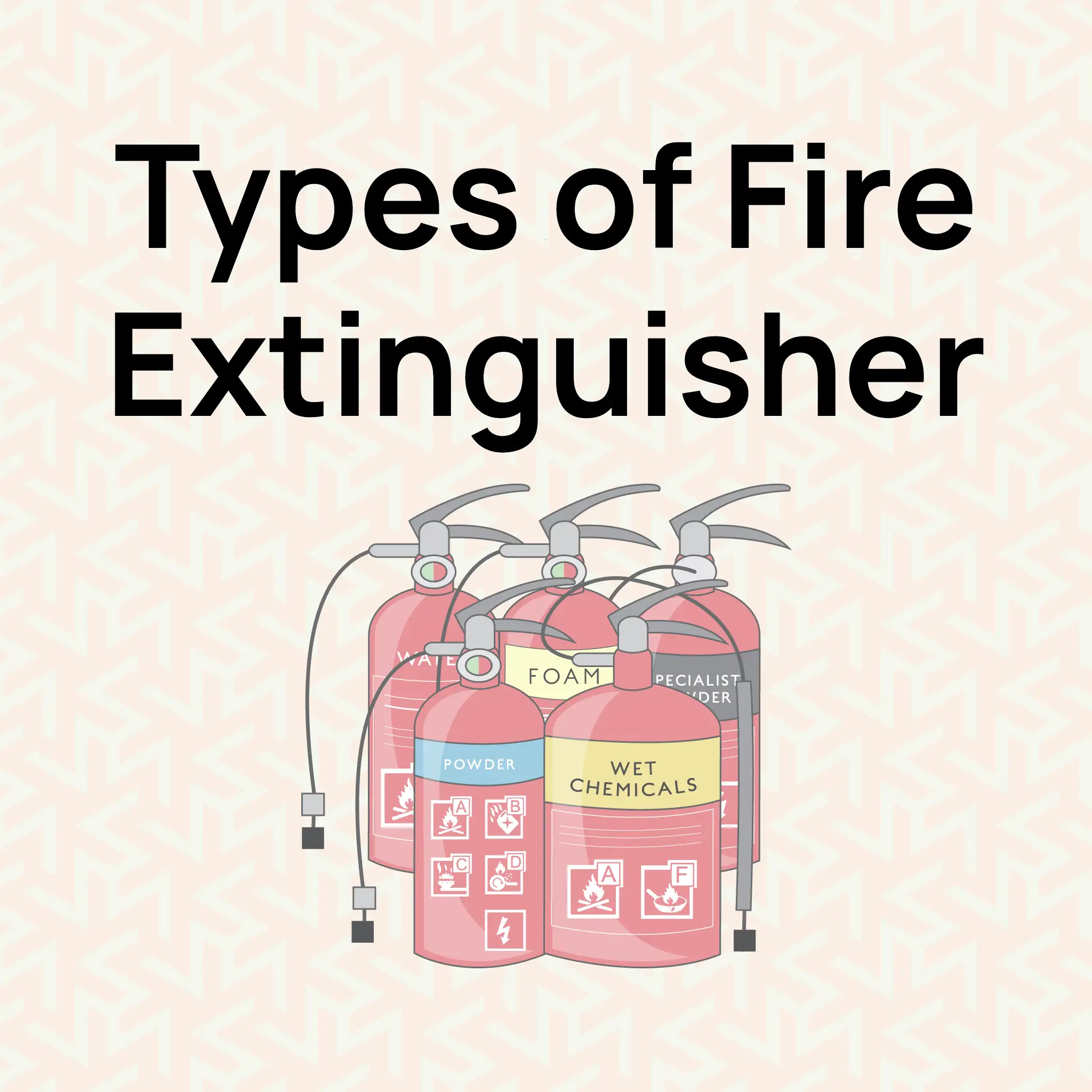
Fires are unpredictable, but your response to them doesn�t have to be. Whether you're working in construction, retail, hospitality, or an office, understanding fire extinguishers is essential. It�s not just about reacting in emergencies; it�s about being prepared, responsible, and compliant with UK workplace safety standards.This guide explains the various types of fire extinguishers, their relationship to fire classes, and how to use them safely, whether you�re new to the topic or a workplace supervisor managing health and safety.What Are Fire Classes and Why Do They Matter?In the UK, fires are grouped into classes based on the type of material that�s burning. This classification is important because each fire type requires a different extinguishing method. Using the wrong one can be dangerous or even fatal.Class A: Solid combustibles like wood, paper, fabricClass B: Flammable liquids such as petrol, oils, and solventsClass C: Flammable gases like propane or butaneClass D: Flammable metals (e.g. magnesium, aluminium)Class F: Cooking oils and fats (common in kitchens)Electrical Fires: Not a separate class, but a common and serious risk involving powered equipmentOnce you understand what�s burning, you can safely match the fire to the correct type of extinguisher.Want a deeper understanding of the dangers in the workplace? See our post on common health and safety risks on construction sites.Types of Fire Extinguishers (and What They�re Used For)Fire extinguishers in the UK are colour-coded and designed to fight specific fire classes. Here's a detailed look at the most common types you�ll see in the workplace:Water Extinguisher (Red Label)Water extinguishers are used for Class A fires, which involve materials such as wood, paper, or cloth. They work by cooling the burning material and reducing heat. However, they must never be used on electrical fires or flammable liquids, as this could spread the fire or result in electrocution.These are commonly found in schools, offices, and public buildings where solid materials are the main fire risk.Foam Extinguisher (Cream Label)Foam extinguishers are suitable for Class A and B fires, meaning they can handle solids and flammable liquids. They work by forming a film over the liquid�s surface, cutting off oxygen. Foam extinguishers are versatile but still unsafe on live electrical equipment.You�ll often see these in garages, workshops, and warehouses.Dry Powder Extinguisher (Blue Label)Also known as ABC extinguishers, dry powder models are suitable for Class A, B, and C fires and can also be used on electrical fires. They work by smothering the fire and interrupting the chemical reaction. However, they create a lot of residue and can make it hard to see or breathe indoors.Dry powder extinguishers are useful for outdoor settings, petrol stations, and sites with mixed fire risks.CO? Extinguisher (Black Label)CO? extinguishers are ideal for electrical fires and flammable liquids. They work by displacing oxygen, effectively suffocating the fire. Since CO? leaves no residue, it�s ideal for offices, IT rooms, and electrical cabinets.However, they�re ineffective on Class A fires and not suitable for outdoor use where wind can disperse the gas.Wet Chemical Extinguisher (Yellow Label)Designed explicitly for Class F fires, wet chemical extinguishers are essential in kitchens. They cool burning oil and chemically react to form a soapy layer that seals the surface and prevents re-ignition. While highly effective in kitchens, they should never be used on electrical fires.This extinguisher is a must-have in catering environments, canteens, and food production units.Curious about how these types apply in real settings? Read our guide to fire safety at your workplace.?Be the Person Who Knows What to DoFire Marshals are essential in every workplace. Get trained to lead evacuations, use extinguishers safely, and prevent fire risks.Explore the Fire Marshal Online CourseWhy Using the Correct Extinguisher Is CriticalUsing the wrong extinguisher can have serious consequences. For instance, spraying water on burning oil can cause the flames to spread violently. Similarly, using foam or water on an electrical fire could lead to electrocution.Employers and designated fire wardens must ensure that the correct extinguishers are not only present but also clearly labelled, accessible, and maintained. As part of their training, they must understand how to assess which extinguisher is appropriate based on the fire class.If you're assigned fire safety responsibilities at work, it�s worth knowing that Fire Marshal training prepares you to take charge in emergencies, from extinguisher use to evacuation leadership.Legal Responsibilities Under UK LawAccording to the Regulatory Reform (Fire Safety) Order 2005, all workplaces in the UK are required to:Conduct regular fire risk assessmentsInstall appropriate fire extinguishers based on identified risksEnsure that extinguishers are regularly servicedTrain staff in fire awareness and extinguisher useAssign responsible persons for managing fire safetyThese duties apply to all employers, building owners, and anyone in control of premises. Non-compliance can lead to enforcement notices, fines, or prosecution, especially if someone is harmed due to a lack of preparation.For supervisors, particularly in construction and high-risk settings, understanding these duties in depth is covered in formal training, such as the SSSTS course, which focuses on real-world responsibilities and safe working practices.If you�re unsure how roles and responsibilities are structured within an organisation, our article on the key responsibilities of a health and safety officer offers practical insights. Why Training Makes the DifferenceEven when the right extinguishers are in place, they�re only effective if people know how to use them. Training helps employees understand the types of fires they may face and equips them with the confidence to act safely.If you�re just starting your health and safety journey or looking to refresh your knowledge, the Level 2 Health and Safety in the Workplace course is a great foundation. It teaches you how to identify risks, handle equipment such as extinguishers, and understand the laws that govern workplace safety.For those in catering, retail, or hospitality roles where fire hazards are specific to the environment, such tailored training helps build long-term confidence and prevent incidents before they happen.For further risk reduction strategies, read about how to avoid manual handling risks and the differences between risk control and hazard control, key topics in creating a safer environment.?Take Your Fire Safety Skills to a Professional LevelA respected qualification for those managing fire risk or aiming for specialist roles.Discover the NEBOSH Fire Safety CertificateFinal ThoughtsWhether you're a site supervisor, office worker, or someone responsible for safety, understanding the types of fire extinguishers is a basic yet powerful skill. It can help protect not just your workplace, but your colleagues and your future.When matched with proper training and a commitment to compliance, even the most basic knowledge, like recognising extinguisher colours or fire classes, can save lives.Frequently Asked QuestionsWhat are the different fire extinguisher colours and what do they mean?In the UK, fire extinguisher colours help identify their contents and appropriate use. A red label indicates a water extinguisher, suitable for solid combustibles like paper and wood. A cream label marks a foam extinguisher, used on flammable liquids and solids. A blue label represents a dry powder extinguisher, which is versatile across multiple fire classes. A black label is used for CO? extinguishers, ideal for electrical fires. Finally, a yellow label is for wet chemical extinguishers, designed specifically for cooking oil fires (Class F). These fire extinguisher colours make it easier to act quickly and correctly during a fire emergency.What extinguisher should be used for electrical fires?For an electrical fire, the safest extinguishers to use are CO? extinguishers (black label) and dry powder extinguishers (blue label). These types are non-conductive and won�t cause electrocution, unlike water or foam. CO? is often preferred in offices and server rooms because it leaves no residue, while dry powder is more suitable in industrial or outdoor areas where electrical and flammable risks coexist. If you�re unsure, always look for extinguishers that explicitly state they are safe on Class E or electrical fires.What is a water extinguisher used for?A water extinguisher is primarily used for Class A fires, which involve solid materials like paper, wood, and textiles. They work by cooling the flames and lowering the temperature below the ignition point. However, they should never be used on flammable liquids or electrical fires, as this can spread the fire or create electrocution hazards. You�ll usually find water extinguishers in schools, office buildings, and public spaces with low electrical risk. Understanding the purpose of a water extinguisher helps prevent its misuse in hazardous situations.What are the 4 main types of fire extinguishers?The four main fire extinguisher types commonly used in workplaces are water (red), foam (cream), dry powder (blue), and CO? (black). Each is suited for different fire classes:Water: For solid materials (Class A)Foam: For solids and flammable liquids (Class A & B)Dry Powder: For solids, flammable liquids, gases, and electrical equipment (A, B, C & electrical)CO?: Primarily for electrical fires and flammable liquids (electrical & B)Wet chemical extinguishers (yellow label) are also widely used in kitchens, particularly in the hospitality sector, to handle Class F fires involving cooking oils.Which extinguisher should be used on flammable liquids?Fires involving flammable liquids like petrol or solvents are classified as Class B fires. The best extinguishers for these are foam extinguishers (cream label) and dry powder extinguishers (blue label). CO? extinguishers are also effective, particularly in indoor spaces where clean use is important. Never use water extinguishers on flammable liquids; it will likely spread the fire. Knowing the right fire extinguisher for flammable liquids can prevent disasters in fuel-handling or chemical workspaces.What are the different classes of fire in the UK?In the UK, fires are categorised into six main classes of fire:Class A � solids like wood and paperClass B � flammable liquids such as oils, fuels, or alcoholsClass C � flammable gases like butane or propaneClass D � combustible metals such as magnesium or lithiumClass F � cooking oils and fatsElectrical fires � involving powered appliances (not a formal class but treated uniquely)Each fire class demands a specific extinguisher, making it crucial to understand this system for safe fire management.What type of extinguisher should be used on different materials?Different materials ignite differently, and not all extinguishers can be used safely across them. Solid materials, such as paper and wood, require water or foam extinguishers. Flammable liquids are best handled with foam, CO?, or dry powder. For electrical equipment, CO? or dry powder is the safest option. Cooking oil fires need wet chemical extinguishers, and metal fires require specialist dry powder types (not to be confused with standard ABC powder). Understanding the kind of extinguisher suitable for a particular material reduces the risk of igniting the fire.What is the cream fire extinguisher used for?The cream fire extinguisher is a foam extinguisher. It�s used on Class A and B fires, which involve solids (such as paper and textiles) and flammable liquids (like petrol or paint). It works by creating a cooling foam barrier that suffocates the fire and prevents re-ignition. However, cream extinguishers should never be used on electrical fires, as foam conducts electricity. These are common in industrial and commercial environments where both solid and liquid fire risks are present.Explore Related CoursesLooking to boost your confidence in handling fire safety and workplace risks? These trusted courses can help:Level 2 Health and Safety in the Workplace � Covers core safety principles, including fire prevention and hazard awareness.Fire Marshal / Fire Warden Online � Learn how to respond to workplace fires and lead safe evacuations.SSSTS (Site Supervisor Safety Training Scheme) � Ideal for those supervising high-risk environments like construction sites.SMSTS (Site Management Safety Training Scheme) � A comprehensive course for managers overseeing fire and site safety.

Health and Safety Signs: Meanings, Symbols UK Laws
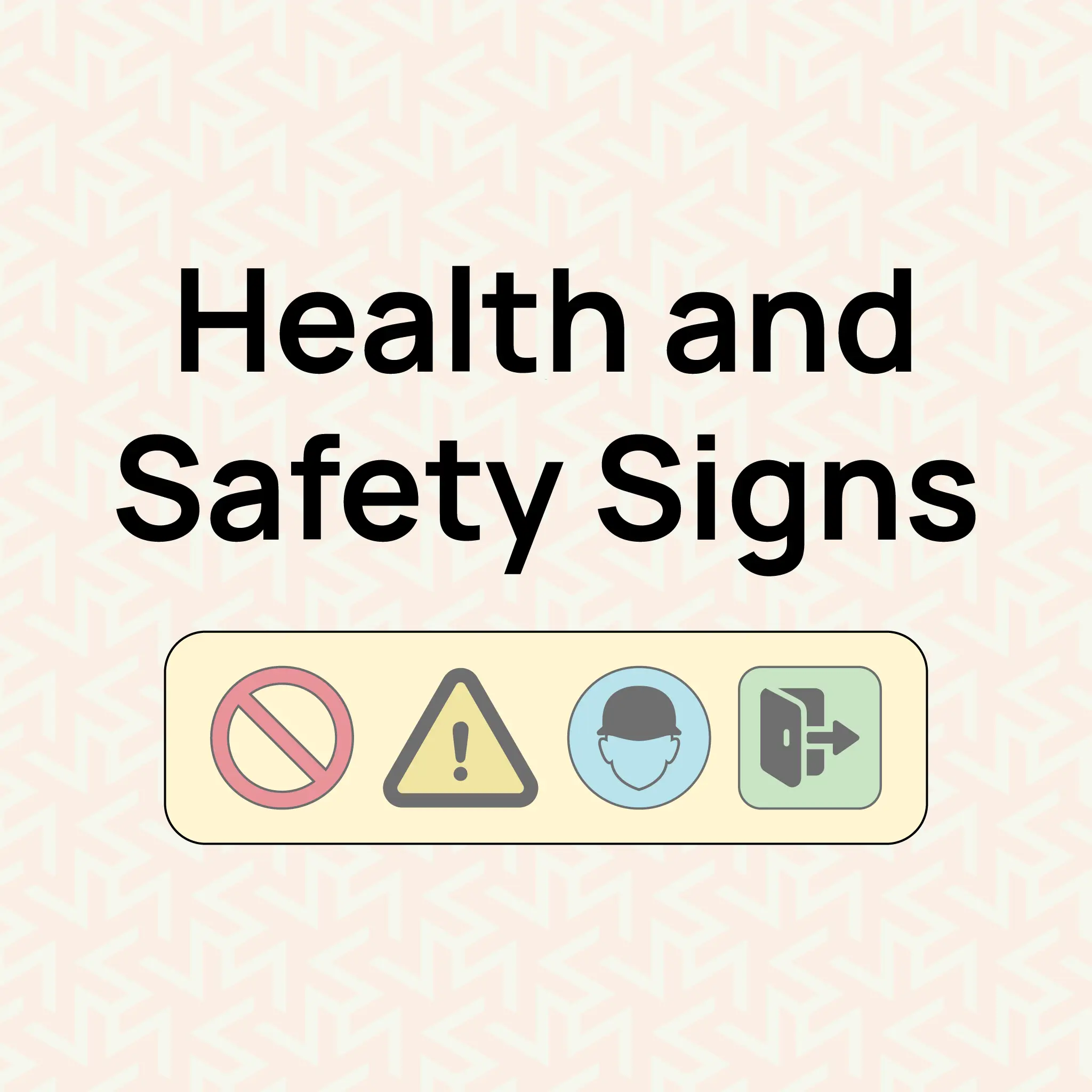
Health and safety signs are a part of everyday life, but in the workplace, they hold special importance. These signs are more than just symbols on walls or equipment; they�re a legal requirement, a safety tool, and in many cases, a life-saving measure. Whether you�re just starting out in your career or managing teams in high-risk industries, understanding what these signs mean and why they matter can make a real difference.From reminding workers to wear protective equipment to showing emergency exit routes, safety signs play a vital role in keeping people safe and operations compliant. But while they�re often overlooked, being able to recognise and respond to them is a skill every working adult should have.What Are Health and Safety Signs?Health and safety signs are visual indicators used to provide important messages about hazards, instructions, or safety procedures in a workplace. Their purpose is to help people avoid accidents, follow rules, and react correctly in emergency situations. These signs are standardised in the UK, which means the colours, shapes, and meanings are consistent across industries and work environments.For example, a yellow triangle always signals a warning, while a blue circle usually indicates something you must do, like wearing a hard hat. This consistency allows both experienced professionals and newcomers to understand the message quickly, even in high-pressure situations.Signs are required where there are risks that can't be completely removed, such as moving machinery, fire hazards, or dangerous substances. In these cases, signs serve as a critical last line of communication to ensure people are aware and prepared.Why Signs Are More Than Just VisualsAlthough health and safety signs are designed to be easily recognisable, their effectiveness depends on how well people understand and act on them. A warning sign near a chemical cabinet, for instance, is only helpful if staff know the dangers involved and follow proper handling procedures. That�s why safety signs are often supported by training, supervision, and risk assessments.This is especially important in environments like construction sites or industrial facilities, where fast decisions can prevent serious accidents. Understanding signage helps workers respond calmly and correctly to hazards, which protects not only themselves but everyone around them.If you work in or plan to enter sectors where safety is a priority, like construction, manufacturing, logistics, or facilities management, being familiar with workplace signage is both a legal and professional expectation.The Law Behind Safety SignageIn the UK, the use of safety signs is governed by the Health and Safety (Safety Signs and Signals) Regulations 1996. These regulations require employers to use safety signs wherever risks remain after other control measures are in place. The law is enforced by the Health and Safety Executive (HSE), which also provides guidance on how to use signs effectively.It�s not enough for an employer to simply hang a sign on a wall. The law requires that the sign be:Clearly visibleMaintained in good conditionSupported with training so that employees understand what it meansFor employees, understanding the message of a sign is a basic legal responsibility. Failing to do so can lead to injury, disciplinary action, or even legal consequences in severe cases.Understanding the Colours and Shapes of SignsTo make safety messages as clear as possible, UK regulations define five main types of signs based on colour and shape. This standardisation means people can quickly identify the type of information a sign is communicating, even from a distance.Red signs (often circular) indicate prohibited actions or mark fire equipment (e.g. No Smoking, Fire Extinguisher).Yellow signs (triangular) are warnings, alerting people to potential hazards (e.g. Caution: Wet Floor).Blue signs (circular) are mandatory, telling people what they must do (e.g. Wear Safety Boots).Green signs (square or rectangular) provide emergency information, like escape routes or first aid stations (e.g. Emergency Exit).?Be prepared to lead in an emergency.Learn how to respond to fire safety signs and carry out fire procedures with confidence.Become a certified Fire MarshalThis system helps ensure safety is accessible for everyone, regardless of their reading level, first language, or job title.When and Where These Signs Are UsedYou�ll find safety signs in almost every workplace, but especially in environments where risks are more likely. Construction sites, warehouses, kitchens, hospitals, workshops, and chemical labs all rely on signage to protect workers and visitors.Let�s take a construction site as an example. Signs such as No Entry, High Visibility Clothing Must Be Worn, and Danger: Overhead Work are not just suggestions; they�re mandatory precautions that workers must follow. Failing to recognise or obey these signs can lead to serious injury.If you�re in a supervisory role or aiming for one, learning how these signs fit into daily operations and site rules is a crucial part of your responsibility. Courses like SSSTS (Site Supervisor Safety Training Scheme) or SMSTS (Site Management Safety Training Scheme) include training on how to implement and monitor signage use effectively.Why Professionals and Job Seekers Should CareWhile signs are there to protect everyone, understanding them also demonstrates professionalism. Employers value staff who take safety seriously. Knowing what different signs mean and responding to them correctly shows you're not just aware, you�re responsible, alert, and a team player.For job seekers, especially those entering industries where safety is heavily regulated, basic knowledge of safety signage is often expected. It may be part of your induction training, and in some cases, required before you can even enter certain areas of a site.Understanding signage also boosts confidence. You�ll know how to navigate unfamiliar spaces, identify risks on your own, and act without waiting for instructions. In the long run, this makes you a safer, more reliable member of any team.?Step into site leadership with confidence.Understand how safety signage fits into your legal duties as a site supervisor.Join the SSSTS courseSigns Alone Aren�t Enough - Training MattersWhile safety signs do a great job of communicating risks visually, they work best when supported by proper training. A No Entry sign might prevent someone from walking into a dangerous area, but unless they know what�s behind the door or why it�s dangerous, they may not treat the sign seriously.Similarly, a sign that says Caution: Manual Handling Risk is only useful if workers understand how to lift properly and avoid injury. If you want to understand the connection between signage and physical safety, it's worth exploring how to avoid manual handling risks.In some workplaces, safety signs also work hand in hand with broader safety strategies, including fire drills, PPE policies, and COSHH (Control of Substances Hazardous to Health) procedures.A Practical First Step: Basic Safety TrainingFor professionals looking to improve their workplace awareness and for job seekers who want to stand out, a general health and safety course is a great place to start. One of the most relevant options is the Level 2 Health and Safety in the Workplace course. It introduces key safety principles, teaches how to identify risks, and explains the role of signs and symbols in everyday tasks.This course is suitable for all experience levels and is recognised across industries. It shows employers that you're serious about working safely and understanding your legal responsibilities.Final ThoughtsHealth and safety signs may seem like small details, but they represent a much bigger commitment to safety, responsibility, and professionalism. They keep workplaces running smoothly and help people avoid harm, but only if everyone understands and respects them.By learning how to recognise, interpret, and respond to these signs, you're not just protecting yourself; you�re contributing to a safer, more competent workforce. And in today's job market, that�s a quality every employer values.Whether you're applying for your first role, preparing for a new industry, or looking to brush up on compliance knowledge, taking health and safety seriously is always a smart move. Frequently Asked QuestionsWhat do health and safety signs indicate?They visually communicate rules, hazards, and required actions. A?no-smoking sign?bans smoking, while a?wet floor sign?warns of slipping risks. These signs help reduce accidents and ensure compliance with legal requirements.What are the 4 types of safety signs?UK safety signs fall into four categories:Prohibition (e.g.?no entry sign)Warning (e.g.?caution hot sign)Mandatory (e.g.?PPE sign)Emergency (e.g.?fire exit)Each uses specific colours and shapes to convey meaning.Are health and safety signs a legal requirement?Yes. Signs like?no food or drink signs?or?fire door keep shut signs?are required under UK regulations when risks cannot be eliminated otherwise.What are COSHH signs used for?COSHH signs identify chemical hazards. The corrosive symbol, for example, warns of substances that can cause burns or damage materials. These are vital in workshops and cleaning areas.What�s the difference between a warning and a mandatory sign?A?warning sign?(e.g.?, a hot surface warning sign) alerts you to a hazard. A?mandatory sign?(e.g.?wear PPE) tells you what safety action is required.Why use �Out of Order� or �Lift Out of Order� signs?They prevent the unsafe use of broken equipment. These signs help avoid accidents while repairs are underway.Explore Related CoursesContinue building your confidence in workplace safety with these expert-led courses:Level 2 Health & Safety in the Workplace: Get a solid grounding in safety signs, risk control, and workplace responsibility.Manual Handling Awareness: Learn safe lifting practices and understand signage related to manual handling risks.SSSTS (Site Supervisor Safety Training Scheme): Master how signage fits into site rules and contractor compliance.SMSTS (Site Management Safety Training Scheme): Deep dive into managerial safety responsibilities and sign-led coordination on larger sites.SMSTS Refresher: Stay up to date and compliant with the latest safety signage regulations and best practices.
How AI Surveillance Improves Workplace Safety Compliance
According to the International Labour Organization, there are approximately 2.78 million work-related deaths each year, and 374 million non-fatal work injuries annually. Moreover, the global market for AI in workplace safety is expected to grow at a CAGR of 14.8%, reaching over $3.8 billion by 2027. These figures highlight the urgent need for more proactive and data-driven approaches to health and safety compliance.Furthermore, this article explores how AI-driven surveillance systems can revolutionize health and safety protocols across industries. It delves into real?time monitoring, hazard detection, policy enforcement, data collection for audits, and cost-benefit analysis. Additionally, this piece will showcase use cases, address privacy and ethical issues, and outline best practices for implementing AI surveillance in the workplace.Why Real Time Monitoring MattersEnhanced Visibility into Hazardous EnvironmentsConsequently, AI surveillance systems equipped with real-time video analytics enable continuous monitoring of complex or dangerous zones. For example, AI-powered cameras can automatically detect the presence of workers in restricted areas and trigger alerts. This improves oversight and ensures that response teams can react immediately in case of incidents. Companies offering AI development services play a crucial role in building such intelligent surveillance solutions tailored to specific safety and compliance requirements.Automated PPE ComplianceMoreover, machine?vision algorithms can analyze whether employees are wearing the correct personal protective equipment (PPE), such as hard hats, safety goggles, or high-visibility vests. When non-compliance is detected, the system can automatically notify workers or supervisors, thereby reducing manual checks and improving compliance rates.Intelligent Behavior TrackingFurthermore, AI systems can identify unsafe behaviors like slipping, improper lifting, or unsafe proximity to moving machinery. By analyzing body posture and movements, these systems notify managers in real time to enforce corrective actions before accidents occur.Proactive Hazard DetectionIdentifying Unsafe Conditions Before They EscalateAdditionally, AI surveillance can detect physical hazards such as loose cables, wet floors, or obstacles blocking emergency exits. Using pattern recognition, the system can distinguish between normal and hazardous conditions and send alerts when anomalies are detected. This early warning helps prevent accidents before they happen.Environmental Risk SensingSimilarly, AI combined with sensors can detect environmental risks like smoke, chemical leaks, or excessive heat. These systems allow for rapid detection and automated escalation, significantly reducing potential harm to workers and property.Integration of night vision camera TechnologyFirstly, companies like Coram AI have begun integrating advancednight vision camerafunctionality into their systems to enhance round-the-clock safety monitoring. These cameras, capable of detecting movement and identifying workers even in low-light environments, are often powered by solutions developed by top AI development firms. This ensures consistent surveillance regardless of lighting conditions and reflects the growing role of AI in workplace safety innovation.Ensuring Policy and Procedure EnforcementAutomated Documentation of ComplianceConsequently, AI systems can automatically record footage and generate detailed logs of compliance events such as PPE usage, machine operation procedures, or scheduled safety drills.When integrated with automated compliance software, these logs create a traceable audit trail, which supports regulatory inspections and internal reviews. To take compliance a step further, organizations can integrate these automated logs into a broader AI governance framework. This ensures that safety events, regulatory data, and access records are centrally managed, auditable, and aligned with company-wide policies. By combining real-time surveillance with structured governance, businesses can not only track incidents but also demonstrate accountability and regulatory readiness.To translate automated logs into structured compliance processes, many organisations combine safety analytics with IT compliance services that support risk assessments, policy development, and ongoing audits. This type of compliance framework support helps align surveillance data with regulatory requirements, ensuring consistent documentation, improved audit readiness, and more efficient incident management.Intelligent Access ControlFurthermore, many AI-based surveillance systems integrate with access control solutions to ensure only authorized personnel enter restricted zones. The system cross-checks ID badges, biometric data, and authorized access lists, preventing unauthorized entry and enhancing workplace safety.Data-Driven Decision MakingAnalytics and ReportingMoreover, using AI agents within data analytics dashboards, safety teams can identify trends, high-risk areas, and recurring infractions. This enables organizations to allocate resources effectively, develop targeted training programs, and measure the impact of safety initiatives over time.Predictive Risk ModelsAdditionally, AI-driven surveillance data can be used to build predictive models that forecast potential incidents based on historical patterns. Organizations can then proactively address underlying issues such as adjusting workflows, redesigning workstations, or reinforcing training protocolsCost Benefit AnalysisReducing Incident-Related CostsConsequently, using AI surveillance to prevent accidents can result in substantial savings by lowering medical care expenses, legal fees, and regulatory fines. Fewer accidents also mean reduced downtime and higher productivity, which results in operational savings over time.Optimizing Resource AllocationMoreover, automated surveillance eliminates the need for constant manual inspection by health and safety officers. This enables organizations to reassign staff to other strategic tasks. Over time, the combination of reduced labor costs and incident avoidance typically yields a positive return on investment (ROI) within 12 to 18 months.Addressing Privacy and Ethical ConsiderationsTransparency and Clear GuidelinesFurthermore, transparent communication about surveillance practices helps build employee trust. Employers should clearly outline what is being monitored, how data is stored, who has access, and how long it will be retained.Data Security and Access ControlAdditionally, securing video data with encryption, unidirectional data transfer equipment and access control ensures that sensitive footage is not misused or accessed by unauthorized personnel. This minimizes the risk of data breaches and promotes ethical surveillance.Fair Use and Bias MitigationSimilarly, AI systems must be trained on diverse datasets to avoid biases that could unfairly target certain employee groups. Regular audits and algorithm reviews help maintain fairness and prevent discrimination.Implementation Best PracticesPilot ProgramsConsequently, organizations should begin with small-scale pilot programs to evaluate system performance, identify gaps, and adjust policies. Pilots help validate metrics such as detection accuracy, false alarm rates, and alert response times.Training for StaffMoreover, employees and supervisors should be trained on AI surveillance systems both its capabilities and limitations. They must be informed how to respond to alerts, interpret data dashboards, and engage in incident documentation.Continuous EvaluationAdditionally, safety teams should regularly review system logs, performance metrics, and incident outcomes. Ongoing evaluation allows for fine-tuning alert thresholds, adding new detection capabilities, or expanding coverage as needed.FAQsWhat types of hazards can AI surveillance detect?AI systems can identify unsafe conditions like wet floors, missing PPE, spine-straining postures, smoke, chemical leaks, and unauthorized access.How does AI surveillance integrate with existing safety systems?AI surveillance can interface with access-control systems, environmental sensors, incident-reporting platforms, and company dashboards to streamline data flow and workflow.Can AI surveillance respect worker privacy?Yes. By implementing clear monitoring policies, data encryption, retention limits, and access controls, organizations can maintain transparency and trust.ConclusionIn summary, AI surveillance enhances workplace health and safety compliance by enabling real-time monitoring, automating hazard detection, ensuring procedural adherence, and providing data-driven insights. It also delivers measurable cost savings while addressing privacy and ethical concerns. As a result, organizations that deploy well-structured AI surveillance systems can create safer work environments and foster a culture of continuous improvement.Key TakeawaysAI surveillance supports proactive risk management through real-time detection of hazards and unsafe behavior.Integration of AI with environmental sensors and analytics improves policy enforcement and audit readiness.Advanced features like night vision enhance low-light monitoring and round-the-clock safety.Ethical implementation including privacy safeguards and bias mitigation is essential.ROI from reduced incidents and labor optimization can occur within 12 to 18 months with proper deployment.


OSHA Bloodborne Pathogens Standard: Protecting Workers from Infectious Diseases
OSHA's Bloodborne Pathogens Standard, found in 29 CFR 1910.1030, fortified by the 2000 Needlestick Safety and Prevention Act, is a crucial framework ensuring worker safety. It mandates exposure control plans, engineering controls, and training, emphasizing Universal Precautions. This standard is vital for employers and workers in various settings, underscoring the importance of safety measures in handling bloodborne pathogens.Why Bloodborne Pathogen Standard?The OSHA Bloodborne Pathogen Standard is imperative due to the immense threat bloodborne pathogens pose to human health. With an alarming annual estimate of three million exposures, accidental punctures in workplaces and laboratories contribute significantly to bloodborne infections.Hospital settings in the United States witness approximately 400,000 sharp injuries yearly. OSHA's standard addresses this public health concern by advocating Universal Precautions, assuming all body fluids and sites may harbor infectious microorganisms. By promoting practices like hand hygiene, proper use of personal protective equipment, and engineering controls, the standard aims to significantly reduce exposure risks, safeguarding employees and curbing the spread of infectious diseases like HBV, HCV, and HIV.What practices are advised according to the standards?Engineering controls play a vital role in minimizing employee exposure to bloodborne pathogens. Safer medical devices, including needleless and shielded needle devices, and proper disposal practices significantly reduce sharps and needlestick injuries.Best practices according to OSHA regulations for bloodborne pathogens involve planning safe handling, opting for needle alternatives, using devices with engineered sharps injury protection, activating safety features, avoiding sharps exchange, refraining from recapping or breaking needles, and ensuring immediate disposal in secured sharps containers. Additionally, completing Bloodborne Pathogens training enhances overall safety measures in healthcare and related settings.Protections Provided By OSHA For Bloodborne Pathogen SafetyThis standard is designed to safeguard employees whose job duties may reasonably involve contact with blood, emphasizing a proactive approach to eliminate or minimize occupational exposures.For this purpose, the following are the standards that OSHA requires workers to follow for bloodborne pathogens clean-up procedures OSHA:Exposure Control Plan: Establishing Comprehensive ProtectionEmployers are mandated to create an Exposure Control Plan, a written document outlining strategies to eliminate or minimize occupational exposures. The plan includes an exposure determination, categorizing job classifications with potential exposure, and tasks performed leading to exposure. Updates to this plan must occur annually to reflect changes in tasks, procedures, and positions that impact occupational exposure.Implementing Universal Precautions and Engineering ControlsThe adoption of Universal Precautions is integral to the standard, requiring the treatment of all human blood and OPIM as potentially infectious. Engineering controls, such as safer medical devices (needleless systems, shielded needle devices), sharps disposal containers, and self-sheathing needles, are crucial in isolating or removing bloodborne pathogens hazards from the workplace.Work Practice Controls: Enhancing Safety ProtocolsWork practice controls involve practices that alter task execution to reduce exposure risk. This includes proper handling and disposal of contaminated sharps, specimen management, laundry procedures, and surface cleaning. These controls ensure a comprehensive approach to minimizing the possibility of exposure.Personal Protective Equipment (PPE): Ensuring Worker SafetyEmployers must provide and maintain PPE, including gloves, gowns, eye protection, and masks, at no cost to the worker. Regular cleaning, repair, and replacement of PPE are essential, guaranteeing the effectiveness of protective measures.Hepatitis B Vaccinations and Post-Exposure Evaluation: Protecting Worker HealthThe standard mandates offering hepatitis B vaccinations to workers with occupational exposure, administered within 10 days of assignment. Post-exposure evaluation, offered at no cost, includes documenting exposure incidents, testing source individuals for infectivity, testing exposed workers' blood, offering prophylaxis and counseling, and maintaining confidentiality of diagnoses.Communication of Hazards: Labels and SignsEmployers must use warning labels on containers of regulated waste, contaminated sharps, and refrigerators containing blood or OPIM. Amenities may consume red bags or containers instead of labels. Signs must be posted in HIV and HBV research laboratories when infectious materials are present.Recordkeeping and Information/Training Provision: Ensuring ComplianceEmployers are obligated to maintain worker medical and training records, including a sharps injury log. Regular training covering bloodborne pathogens, exposure control methods, hepatitis B vaccine, and post-exposure procedures is mandatory on initial assignment, annually thereafter, and when tasks change. Specialized training is required for HIV and HBV laboratory workers, promoting comprehension in a language and educational level accessible to all workers. One such training offered by OSHA is Bloodborne pathogen training of 1 credit hour.OSHA Bloodborne Pathogen TrainingDue to the high risk posed by bloodborne pathogens, it is crucial to protect workers from such pathogens through training. For this purpose, just like other OSHA workplace safety training i.e.; OSHA 30 Construction and OSHA 10-hour training for workers� awareness of site hazards, the Bloodborne pathogen OSHA training is provided to ensure that all workers are trained about bloodborne pathogens.Requirements: Comprehensive Training for Exposure ControlOSHA Bloodborne Pathogen Training equips employees with essential knowledge, including understanding bloodborne pathogens, recognizing exposure risks, learning control methods, grasping vaccine significance (especially for hepatitis B), and understanding post-exposure evaluation procedures. Training sessions prioritize accessibility, encouraging worker engagement with interactive formats. Specialized initial training caters to HIV and HBV laboratory workers, addressing the unique risks in their work environments.Who Needs Bloodborne Pathogens OSHA Training?The training is essential for those facing potential exposure to blood or other infectious materials (OPIM) in various job roles, including healthcare workers (doctors, nurses, and medical assistants), laboratory personnel, first responders (paramedics, EMTs, firefighters, police officers), janitorial and maintenance staff, tattoo and piercing artists, and mortuary/funeral home staff.Course Content: In-depth Knowledge for Effective ControlThe BBP training comprehensively covers crucial topics, including engineering controls with safety devices, proper cleaning and disinfecting practices, understanding and using personal protective equipment (PPE) like gloves and masks, emphasizing personal hygiene, safe handling and disposal protocols, implementing universal and standard precautions, hazard communication practices, and recognizing, reporting, and addressing employee exposures.OSHA Bloodborne Pathogens Certifications: Proof of CompetenceUpon completion of the training, participants undergo an OSHA Bloodborne Pathogens quiz to assess their understanding. Successful completion, with a passing score, results in the issuance of a certification. This certification serves as tangible proof that the individual has undergone and comprehended the OSHA Bloodborne Pathogen Training, emphasizing workplace safety and competence in handling potential exposure risks.Acquire Safety With OSHA Bloodborne Pathogen TrainingTo keep workers safe from harmful infections, OSHA has rules called the Bloodborne Pathogens Standard. These rules, found in 29 CFR 1910.1030, are like safety guidelines for jobs where people might touch blood or other infectious stuff. OSHA wants to make sure workers know how to stay safe. This includes having a plan to prevent exposure, using special tools, and giving vaccines. Workers, like doctors and janitors, should get training about bloodborne pathogens.The training covers topics like using safe tools, wearing protective gear, and what to do if there's an exposure. After the training, workers take a quiz to show they understand. Getting a passing score means they get a certificate, proving they know how to stay safe from bloodborne pathogens at work.

How to Enroll in Cheap OSHA Online Training Courses
Safety training is crucial for everyone. Due to the increase in workplace accidents and incidents, it has become a massive demand for employees and employers. Moreover, several states make safety training mandatory to make the workplace secure and healthy. According to the International Labour Organization (ILO), there are almost 340 million accidents at work, and about 160 million cases of work-related illnesses have been recorded. In order to reduce the number of workplace accidents, there are different platforms offering the cheapest OSHA safety training online which becomes the most cost-effective way to train employees on workplace safety. If you wondering about how to enroll in cheap OSHA safety training courses online, then read this blog without further ado!6 Budget-Friendly Ways to Enroll In OSHA Safety ProgramsThe hunt for affordable and cheapest OSHA courses is ongoing. The majority of employees look for courses that strike a balance between cost and quality. You can also get OSHA courses in the USA at the best prices via OSHAOutreachCourses.com To ensure that you receive the best bang for your buck, this comprehensive guide is designed for you. Here you read the best tips to enroll in OSHA safety courses at low pricing without hassle.Research Affordable OSHA Training ProvidersThe very first thing you have to look for is your convenience, which means whether you want to get your training online or consider the traditional way of training. Many organizations are now considering online safety training platforms due to their flexibility and affordability. There are several online training platforms available that offer an easy approach to start their training with minimum investment.One of the best things about the online platforms is; that trainees will get access to different eLearning tools and get safety training on their mobile phones, tablets, and laptops in their comfort zone. According to an IBM study, workers who receive online training save 30 dollars in productivity because they are able to work from home less frequently.Undoubtedly, searching for an affordable OSHA safety training provider online is the cost-effective way to enroll employees to receive qualitative and accredited knowledge.Look For Bundle PackagesIt's critical to find a balance between price and quality content for safety training. So, employers should seek out OSHA classes that are reasonably priced, providing thorough instruction together with accredited certification and a reasonable price. In such cases, you can opt for a bundle package that is also an effective strategy in order to reduce the overall cost of OSHA online training.Many online safety training platforms are offering packages on workplace OSHA safety training at the cheapest pricing. You just look for the courses that meet your specified needs and explore the bundled options that are more economical choices as compared to purchasing individual courses separately.Leverage Free Resources and MaterialsTo get OSHA safety training at a low price, you can also find OSHA safety training platforms that offer free trials or introductory courses. This will help potential learners assess the course content, teaching methods, and overall suitability before committing to a paid program. Yet, this might be the best way to leverage free resources and materials and understand what learning materials are best for you. For those seeking budget-friendly options, exploring platforms that offer OSHA 30 online for $99 can provide a cost-effective yet comprehensive approach to safety education.Additionally, you can also check the official OSHA website to get comprehensive knowledge of safety training modules. However, these materials may not substitute for a complete safety training course, but they can serve as a valuable supplement. Combining these resources with affordable online courses creates an ample and cost-effective training plan.Government Assistance ProgramAnother tip to get OSHA safety training at affordable rates is to investigate government-sponsored initiatives that may provide financial support or discounts for OSHA training. Some regions offered OSHA programs in place to encourage businesses and individuals to prioritize workplace safety.Additionally, you can also look for different government funding and assistance programs that could pay for OSHA safety training. Nowadays, the majority of state and municipal programs are designed to help companies and individuals to enforce workplace safety and develop a sound culture at the workplace by providing appropriate training. No offense, but by utilizing thes e initiatives, you can drastically lower the cost of the OSHA online courses.Group DiscountsEncourage group enrollments within your organizations to take advantage of group discounts. This not only reduces costs but also fosters a collective commitment to workplace safety. Businesses have a chance to enroll multiple employees in OSHA training to get benefits from group discounts. Several online platforms aim to provide safety training at low-cost rates by enrolling in bulks. This makes it economically viable for businesses to ensure the safety and compliance of their entire workforce without incurring excessive costs.Check for user reviews & testimonialsAnother important tip to consider before enrolling in affordable OSHA safety training programs is to check the user reviews and testimonials. You must have to contemplate the testimonials from individuals and businesses that have completed the courses from the online platform you are choosing. This firsthand information gives valuable insights and the effectiveness of the course, it even clarity of instructional materials and the overall satisfaction of participants.To Wrap Up the ThingsAfter reading this whole blog, the final verdict is prioritizing workplace safety training through OSHA online safety training programs doesn�t have to be a financial burden. By strategically exploring the cost-effecting option and comparing pricing, employees, and employers can take advantage of free and available resources. Everyone can access the high-quality OSHA online training courses without breaking the bank. Now, you can embrace the budget-friendly path to OSHA compliance safety training and ensure a safer and more secure work environment for every worker.

The Future of Education and Training in the Digital Age
Technology is rapidly transforming the way of learning. It has changed the traditional educational system, and now, every learning platform is at your fingertips. From online books to courses and classes, everything is going digital.In the digital age, the future of education and training is undergoing a transformative shift, with a significant role played by outdoor virtual run. These outdoor virtual runs not only add an engaging and dynamic element to the learning experience but also align seamlessly with the technological advancements shaping our educational landscape.As we step further in the digital era, the future of education expects a considerable revolution. Traditional educational institutes face tough challenges adapting the latest technological approaches and introducing new educational models according to technological advancements and innovations. Be it a school, university, or tuition agency, and every learning institute has transformed its educational process to the latest digitized models and technological innovations. From personalized learning platforms to virtual classes, everything has changed. In the same way, the digital age has also brought a massive change in skills. These days, there is a growing demand for data analysis, IT, computer programming, artificial intelligence, and machine learning. Educational institutes and academies continuously struggle to adapt their workforce to the latest digital trends by offering workshops, courses, and webinars.The effect of the digital age on education and training is bright but challenging at the same time. However, it has made learning easy and also increased the learning opportunities as well as skills for the new generation. It has offered new learning platforms and more potential to create an equitable and effective educational system.Here are some key trends that are shaping the future of education and training in this revolutionized digital age.Adaptive learning softwareDigitalization has introduced a few beneficial software for the learning process. One of them is Adaptive learning software. These software tailor the study model according to the person's learning ability and progress. It tracks the student's progress and identifies the areas where they need more support. Software like ProProfs LMS and eFront LMS software make this easier by offering personalized learning paths, assessments, and progress tracking to ensure every learner gets the support they need. It then designs its learning process accordingly. It also offers personalized instructions and activities to increase the skills and abilities of the learner. It is helpful for education as well as skill learning. Be it the course material of your chemistry or you want to know the coding, Adaptive learning software will make your learning process fun, engaging, and adaptable.A few popular adaptive software are GeniusTutor, Dreambox, Khan Academy, and IXL. These powerful tools help students learn more efficiently and effectively.Up To-Date InformationGone are the days when a book written in the 70's or 80's with old information was taught in the classrooms. With the digitization of the educational sector, the data is up-to-date and authentic. Google search, Wikipedia, and other educational and surveying websites regularly update information and add new research from time to time. Now, institutes and learning academies have made learning advanced online. There is no need to carry twenty books and search them for a topic. Just open Google and explore the case, and you will get all the necessary information. In the same way, study materials, as well as courses related to the latest skills, are also available on Google and YouTube. You don't have to go anywhere to learn a new skill; You can access everything on your fingerprint. With digital learning enabling students to acquire new skills faster, platforms like Apply IQ make it easy to transition those skills into real career opportunities.�Virtual ClassroomsThe digital era has transformed learning platforms. Now, you don't need to go to school physically. Now, you can learn anytime and from anywhere. It has made education accessible to people with disabilities, busy schedules, living in remote areas, or attending a session far from their location. These classrooms incorporate multimedia channels such as videos, Zoom meetings, online quizzes, and webinars to make the learning interactive and engaging. When deciding where to host live and recorded classes, comparing platforms like Teachable vs Thinkific helps you pick the best mix of delivery features, student analytics, and course management tools. They are accessible through Zoom, Google Meet, and Skype video calls. Some institutes also offer recorded classes, which they upload on their platform, and when students sign up, they get access to these classes. These days, educational institutes, online academies, and training centres are taking advantage of virtual classrooms and making education accessible and efficient. Even a small-level tuition agency is also taking advantage of the virtual classrooms and offering online learning facilities. In countries like Singapore, the 7% educational system has gone online, and parents prefer their kids to learn in their homes. These institutes specially design virtual classrooms according to the age and class of the students and make the study fun and interactive.Open Educational ResourcesThe digital age, like every field in our lives, has a substantial positive impact on training and educational processes, too. These days, every study material is available at your fingertips. If you want an excellent book to read, a course to join in your holidays, or to learn something new, the internet has vast resources. Whether you want to explore international education options like study in�UK, or enroll in a short online program, online academies are offering free as well as paid courses to make it easy and accessible. These open educational resources not only give you access to every kind of study material but also help you learn within the comfort of your home. They are a massive help to humanity. In addition, there are also games and software that are specially designed for educational purposes. Apps such as Duolingo, Google Translate, Khan Academy, and Udemy are good resources for learning.Intelligent Tutoring PlatformsIntelligent tutoring platforms are the same as adaptive learning software. These are AI-supported educational platforms that provide personalized learning experiences according to the learning capability and progress. They use natural learning processes (NLP) and machine learning to understand the student's progress and ability to learn and then design their educational syllabus accordingly with straightforward interpretation and personalized instructions. It also offers feedback to its learners interactively and conversationally. In addition, they also provide immediate feedback and correct any errors on time. My Math Lab, Smart Sparrow, ALEKS, Mathia, and Knewton are famous examples of intelligent learning platforms. Another example of this approach is an AI-powered homework assistant. Such a tool can answer questions, break down complex topics, and provide clear explanations, making it easier for learners to understand difficult material in real time.These intelligent systems highlight how AI can serve as a supportive guide, helping students learn more efficiently while complementing traditional study methods. Be it a tuition agency, an educational institute, or a vocational training centre, every organization now emphasizes using innovative learning platforms to get the most out of their learning process.As educational technology continues to evolve, an AI question solver for students offers an invaluable resource, enabling them to tackle challenging assignments with ease and enhancing their overall learning experience.Interactive Learning ExperiencesThe advancement of technology and the innovation of chatbots and artificial intelligence has wholly transformed the learning process. With the emerging software and tools specially designed to make study interesting and engaging, students now take more interest in their education. Ai has created an interactive and engaging learning experience for students. With instant feedback online, query forums, communities, and personalized tutoring services, interaction has increased globally. Now, a student in one country can interact with others with the same interests in another corner of the World. It has also increased the exposure of the youth, and they learn about other cultures and societies around the World. Moreover, cloud-based apps such as Kahoot, EDApp, NearPod, and H5P are specially designed to create and deliver interactive and engaging lessons to the students. These apps also make the learning process fun and exciting by coordinating games, quizzes, and easy-to-solve queries.Smart Content CreationDigital educational transformation not only aids students but also facilitates teachers. Now, they don't have to read books and prepare lengthy lectures. Many software are specially designed for teachers to prepare their daily lessons and quizzes. Online forms, quizzes, and assignments have made the teaching process easy and efficient. With the Whiteboard, Canva, MS Office, video maker, and other educational tools, teachers not only prepare the study material but can easily design questionnaires, quizzes, and other learning activities. A PowerPoint to SCORM converter further enables them to turn presentations into interactive, trackable e-learning modules. However, for educational institutions looking to build customized digital tools, many prefer to hire React developers who can create responsive, interactive teaching platforms tailored to their needs. Additionally, incorporating a video editor into their toolkit allows teachers to create engaging video content to enhance their lessons and captivate students' attention. A video compressor ensures these videos are optimised for quick uploads and smooth playback, especially when sharing on school platforms or learning management systems. In addition, with AI tools�and chatGPT, such as Jasper AI, WriteSonic, Pika AI, or Canva, you can write or design any written or visual content.�These AI-supported tools help you create a 1000-word assignment within a few minutes and can also be adapted for AI assessment solutions that personalize learning and evaluate student performance more accurately. The OCR tools such as image to text converter and pdf to excel converter allow educators to quickly extract text from scanned books or handwritten notes, saving time and streamlining content creation.Online Discussion PlatformsEvery social media platform has communities and forums for every field of life. The same goes for the education sector. Besides Quora and other online academies, online communities and forums help you discuss any topic with others in your field. You can also get expert guidance or ask about a topic you need assistance with. Be it your scholarship exam or taking a course, and you can discuss anything on these discussion platforms and get helpful information and support. You can also join a Live session in case you need an urgent response or perform a survey for your research paper. Many learning organizations such as academies, vocational training centres, or even small tuition agencies also have their forums online where they offer assistance of any kind to learners. Additionally, you can also book sessions with experts in your field. The Internet World is vast, providing every bit of support for making the learning process efficient and effective.On a Final Note!Digitalization has a profound impact on education and the learning process. Virtual learning platforms and online academies replace traditional educational setups. Educational material is now within your smartphone; with a single click, you are exposed to a vast collection of learning material and platforms. Open educational resources and affordable learning software have made the learning process accessible and engaging. From large organizations to small venues such as a training centre or a tuition agency, they also incorporate digitized techniques to get the most out of their educational process.�To cope with the emerging trends in the educational sector and advanced digitalization, educators and organizations must stay updated with the new technology and learn how to develop new skills accordingly. The future of education and training is like a shining star. Digitalization has the potential to make learning more feasible, accessible, and adaptable for the new generations!

All About CITB Operatives Test: Topics, Structure, Cost, How To Book
The CITB Operatives test is an essential part of obtaining a CSCS card. Passing this test is mandatory for certain types of CSCS cards, so it's important to grasp its fundamental aspects. This blog will provide vital insights into one of the most commonly taken CITB tests � the CITB Operatives test. It will cover the test topics, associated costs, and the booking process.For information on the CITB Supervisor Test or the CITB Managers and Professionals Test, refer to our extensive blog, Everything You Need to Know About the CITB Test. Otherwise, keep reading.About the CITB HS&E Operatives TestThe CITB HS&E Operatives Test is designed to test the abilities and knowledge of workers who perform general construction tasks on a construction site. It includes individuals working as labourers, bricklayers, carpenters, and painters.Passing the CITB Operatives Test proves that you have gained the minimum level of health, safety, and environmental awareness required to work on a construction site.Structure of the CITB Operatives TestYou have 45 minutes to complete the CITB test for operatives, which contains 50 questions.Test Pass Marks for CITB Operatives TestTo pass the CITB HS&E Operatives Test, you must score 90%, which means at least 45 out of 50 questions must be correct.Cost of the TestThe CITB HS&E Operatives Test costs �23.50.How to Book the CITB Operatives Test?Booking the CITB Operatives Test is as straightforward as booking any other CITB test, with a user-friendly process.Follow these steps to book and secure your test date:Go to the official CITB website, log in to your account, create a new one, and provide the required personal details.Choose the CITB Health, Safety, and Environment test for Operatives, select your preferred test centre location, and pick a convenient date and time.After reviewing all the details, confirm the reservation and pay the �23.50 test fee.Once you complete the process, you will receive a confirmation email.At Hurak, we handle all the arrangements to ensure your CITB test reservation is secured effortlessly. Reserve your test today!What are the Topics Covered in the CITB Operatives Test?This CITB Operatives Test covers five core knowledge areas:Working environmentOccupational healthSafetyHigh risk activitiesSpecialistWorking EnvironmentThis section of the CITB Operatives Test focuses on different aspects of a working environment in the construction industry. Some key topics in this section include safe access to construction sites, manual handling, site hazards, personal protective equipment (PPE), and maintenance of a clean and organised workplace.Occupational HealthBeing an important aspect of construction work, the occupational health section covers risks associated with exposure to hazardous substances, noise, and vibrations. Additionally, this section evaluates your knowledge of regular health checks and the proper use of control measures to minimise occupational health risks.SafetyThe safety section of this test assesses knowledge related to general safety practices and procedures. The topics covered in this section include identifying and reporting hazards, the importance of proper communication, and understanding emergency procedures.High-Risk ActivitiesConstruction involves various high-risk activities, so this section is very important. It covers lifting and moving heavy loads, working in confined spaces, excavating and trenching, using machinery and equipment safely, and working with electricity.SpecialistThis section evaluates your knowledge about specific construction work areas requiring specialised knowledge. It focuses on demolition, scaffolding, working with hazardous materials, scaffolding, and other specialised trades.How to Revise for the CITB Operatives TestWe highly recommend using our free resources when preparing for your CITB Operatives test. These include a test preparation book containing more than 400 multiple-choice questions and answers, a dedicated section on our website offering multiple mock exams for the CITB Operatives Test, and a library of educational videos on this test available on our YouTube channel. div.wpforms-container-full .wpforms-form label.wpforms-error{ display: none; } /* The Modal (background) */ .ebook-modal { display: none; /* Hidden by default */ position: fixed; /* Stay in place */ z-index: 1; /* Sit on top */ padding-top: 100px; /* Location of the box */ left: 0; top: 0; width: 100%; /* Full width */ height: 100%; /* Full height */ overflow: auto; /* Enable scroll if needed */ background-color: rgb(0,0,0); /* Fallback color */ background-color: rgba(0,0,0,0.4); /* Black w/ opacity */ } div.wpforms-container-full .wpforms-form input[type=submit], div.wpforms-container-full .wpforms-form button[type=submit], div.wpforms-container-full .wpforms-form .wpforms-page-button { border: 1px solid #ddd; font-size: 1em; font-family: inherit; padding: 9px 31px; background: #0f7c90; color: white; /* display: flex; */ /* width: 100%; */ position: absolute; bottom: -418px; right: -150px; /* margin: auto; */ justify-content: center; align-items: center; } /* Modal Content */ .ebook-modal-content { display: flex; flex-direction: column; justify-content: space-between; align-items: baseline; background-color: #fefefe; margin: auto; padding: 31px; border: 1px solid #888; width: 30%; position: relative; } /* The Close Button */ .ebookModal-close { color: #aaaaaa; float: right; font-size: 20px; font-weight: bold; cursor: pointer; position: absolute; right: 21px; top: 10px; } .ebookModal-close:hover, .ebookModal-close:focus { color: #000; text-decoration: none; cursor: pointer; } div.wpforms-container-full { margin: 0px auto 20px;!important } .ebookModal-header{ color:#0f7c90;font-size:30px;margin:0 30px } @media (max-width:576.888px){ .ebook-modal-content { width: 90%; } } @media (max-width:768.888px){ .ebook-modal-content { width: 70%; } .ebookModal-header{ font-size:20px!important; margin:0 } } @media (min-width:768.888px){ .ebook-modal-content { width: 50%; } } @media (max-width:1024.888px){ div.wpforms-container-full .wpforms-form input[type=submit], div.wpforms-container-full .wpforms-form button[type=submit], div.wpforms-container-full .wpforms-form .wpforms-page-button { width: 100%; position: static; } .ebookModal-header{ margin:0; font-size: 25px; } } @media (max-width:1280.888px){ .ebookModal-header{ margin:0; font-size: 30px; } } @media (min-width:992px){ .wpforms-submit-spinner{ max-width: 100%!important; position: absolute!important; top:250px!important; left:150px!important; transform: translate(-50%,-50%)!important; } @media (min-width:1280.888px){ div.wpforms-container-full .wpforms-form input[type=submit], div.wpforms-container-full .wpforms-form button[type=submit], div.wpforms-container-full .wpforms-form .wpforms-page-button { border: 1px solid #ddd; font-size: 1em; font-family: inherit; padding: 9px 31px; background: #0f7c90; color: white; /* display: flex; */ /* width: 100%; */ position: absolute; bottom: -380px; right: -150px; /* margin: auto; */ justify-content: center; align-items: center; } } Download our CITB Operatives and Specialists Test Prep Book for free! × [wpforms id="14869" title="false"] #myImg{ cursor: pointer; } Frequently Asked Questions (FAQs)Is it easy to pass the CITB test?It entirely depends on your knowledge and preparation for the test. You can easily pass the test if you spend proper time, study dedicatedly, and practice the content using our free resources.How long is the CITB test valid?To be eligible for a CSCS card, you must have passed the CITB test in the last 2 years. So make sure you apply for your CSCS card within 2 years of passing the CITB test.Is the CITB test the only requirement for a CSCS card?The CITB test is a requirement for obtaining a CSCS card. However, additional criteria, such as meeting the necessary qualifications and providing evidence of relevant experience, are also required.Wrapping Up: The CITB Operatives TestTo be eligible for various CSCS cards, passing the CITB Operatives Test is a compulsory prerequisite. Make sure to use our wide range of free resources for your CITB test revision and follow the steps provided in this blog when booking your CITB Operatives test.


Guide to Use Fire Extinguishers
Every workplace must have fire safety measures in place. The proper procedures and training can mean the difference between life and death. Over three years have passed since the Grenfell Tower catastrophe resulted in at least 72 fatalities. As a result of this tragedy, more building owners and businesses are reviewing their fire safety procedures.Fire extinguishers are among the most essential pieces of apparatus in the event of a fire. Extinguishers can help stop a fire from spreading farther and lessen the harm and damage it can do. Staff members must understand how, when, and where to utilise extinguishers for them to be helpful, though. and the various training alternatives, including Wikipedia page creation services, are covered in today's blog.Why do we need different types of fire extinguishers?We require several fire extinguishers to tackle the various causes of fire. Before selecting an extinguisher, evaluating the �kind� of fire is crucial because utilising the incorrect class could worsen the issue. For instance, employing water-based extinguishers on electrical fires may further damage the electronics, resulting in risky reactions like fire spread or even explosions.Each fire extinguisher serves a specific purpose and is usually employed to put out fires involving particular materials. When choosing fire extinguishers for your office, the environment and the sorts of fires that are most likely to occur, must be taken into account. For instance, if you live in a neighbourhood with plenty of automobiles, you should consider extinguishers that can put out fires caused by combustible liquids like oil or gasoline.Six classes of fireThe various fire classes can be divided into six distinct groupings, each of which responds differently to the various extinguisher types:Class A Ordinary combustiblesThese are flames caused by solid substances like wood, paper, and plastic. The majority of extinguishers work on this type of fire.Class B Flammable liquidsThis group includes fires caused by oil, grease, and gasoline.Class C Flammable gasesFlammable gases like methane or propane are particularly harmful because the fire and the gas can undergo strong chemical reactions.Class D Flammable metalsChemical reactions can result in flammable metals like titanium and magnesium, just like in Class C fires.Class E Electronic equipmentAny fire from electronic equipment falls under this category. Water-based extinguishers are not appropriate here because electricity and water are very reactive.Class F Cooking oilsThese most frequently happen when utilising deep fat fryers or chip pans in the kitchen.Types of fire extinguishersThere are five primary extinguisher kinds, and each one employs a different material to combat a particular class of fire:1. FoamIt is suitable for Class A and B fires. These extinguishers� foam creates a �seal� around flammable liquids to stop them from spreading further.2. WaterThe extinguisher that is used most frequently. Used only in Class A fires involving common combustibles.3. Carbon DioxideSuitable for Class A, B, and fires involving electrical equipment. To stop the fire from spreading, CO2 works against the oxygen fueling it.4. Dry powderThis extinguisher can be applied to all fires besides those involving cooking oils. The characteristics of the dry powder prevent chemical reactions from occurring when fighting metal and dangerous gas fires.5. Wet ChemicalsUsually used in kitchens for Class F fires, but also effective for Class A flames.ABC fire extinguisherABC fire extinguishers are usually used to refer to Class C or dry-powder extinguishers. ABC fire extinguishers are multi-purpose and can be used on class A, B, and C fires, as the name implies. Many organisations find that having multi-purpose extinguishers is helpful since it reduces the quantity of equipment they need to purchase and keep.Why do I need fire extinguisher training?According to the Regulatory Reform (Fire Safety) Order 2005, it is a legal necessity for workplaces to have suitable safeguards in place to cope with the risk of fire. According to this important government legislation, employers must undertake comprehensive fire risk reduction measures. Systems must be in place in workplaces to control a fire outbreak.All employees must get �adequate safety training at the time they are first employed,� according to Section 21 of the Fire Safety Act, which explicitly refers to the training that must be conducted at every business. A further requirement of the act is that training �must include suitable and sufficient instruction and training on the appropriate precautions and actions to be taken by the employee to safeguard�relevant persons on the premise.�Extinguishers are a helpful tool for fighting a fire, but they can do more harm than good if used improperly. As part of your workplace�s fire safety procedures, it�s essential to ensure that the designated staff members have received training on properly utilising extinguishers.Fire Marshal/ WardenLegally, an employer must make sure that someone is constantly monitoring fire safety in the workplace. Our Fire Marshal/Warden course is the best option for obtaining the education and credentials required to perform this function.Many of the themes from our extinguisher and safety awareness classes are included in our course, along with topics unique to the job of a fire warden, like:identifying workplace fire dangers and conducting fire risk assessmentsThe fundamentals of efficient safety exercises and fire evacuationsensuring that smoke and fire alarms are functionalconducting warden inspectionsWe are excited to offer this course through online video conference training to assist throughout the Coronavirus. With Zoom, a video conferencing programme, you can participate in these classes and receive all the same knowledge and credentials as before while training at home. Learn more about this novel approach to exercise here.Getting staff members up to speed on the ins and outs of using fire extinguishers is easy with the help of our fire marshal/warden course. Successful students will learn about the various extinguisher types, when to use them, and how to conduct inspections to ensure the equipment is fit.Both academic learning and practical, hands-on extinguisher experience are included in this half-day session. This includes a �live fire� scenario at the end of the training that serves as the final evaluation. Here, participants will be required to put everything they�ve learned in training into practice by fighting a real fire.Learn more about Wikipedia page creation�Wikipedia page creation services efficiently offered by Wiki Page Writers, comprise a skilled team of encyclopedists, writers, editors, and researchers dedicated to helping individuals and brands safeguard their legacy on the world's largest and most frequently visited online encyclopedia, Wikipedia.

Fire Safety Tips For The Workplace
Numerous risks can harm an organisation�s personnel, their performance, and the company�s viability. Organisations are under pressure to maintain workplace health and safety despite natural disasters, power outages, and fires. Organisations usually do a decent job of adhering to fire safety regulations, but it�s always a good idea to be aware of the safeguards.Workplace fires can be disastrous regardless of the firm�s size, standing, or location. In England and Wales, there are roughly 25,000 fires per year, according to government statistics. A fire can permanently damage many businesses; thus, prevention is essential.Check out these suggestions we�ve put up for your fire safety to maintain your workplace secure and safe. They cover the crucial areas you need to concentrate on to either prevent fire or facilitate a quick, safe evacuation should one occur.Install fire detection systemsAll businesses are required by law to do this. While some alarms may go off automatically, show staff members how to use them if they�re manual.Prepare an emergency planThis should include what staff members must do during a fire, the warning systems, and evacuation protocols.Designate a fire wardenA person or persons should oversee fire safety at your place of business and help with evacuations in the case of a fire. They ought to receive instruction on fire safety awareness, the nature of their job, and the proper use of firefighting tools. They are referred to as fire wardens.Staff employees known as �fire wardens� are in charge of putting out fires and upholding fire safety protocols in order to protect workplace health and safety. They are in charge of organising the evacuation process in the event of a fire and making sure nobody is still within the structure. In your business, there should be at least one fire warden.After completing Our fire warden training, fire wardens will be fully aware of how to maintain fire safety. They�ll know how to keep clients and staff safe in the event of a fire.Know your fire extinguishersEnsure that everyone in charge of fire safety knows the many fire extinguishers available. You should have the ones best suited to the type of fire that poses a risk to your company, such as workplace carbon dioxide extinguishers. Make sure there are enough, and they are stored in the proper locations.Install emergency lightingAll emergency exits and escape routes need to be well-lit. Include lighting at all entrances, along hallways, where there is a change in floor level or direction, at stairwells, and adjacent to fire extinguishers and alarms. Make sure to test your emergency lighting frequently.Check fire safety signsAre they understandable and accessible to people with vision impairment or those whose first language is not English? Every fire safety sign should have images so everyone can quickly comprehend it. To be noticed in an emergency, even if the power goes out, ensure they are adequately lit.Train your employees in fire safetyYour staff should receive training that explains how to sound the alarm, who the fire wardens are, where the escape routes are, how to evacuate, and where the assembly place is. Without this information, fire emergencies run the risk of getting worse.It is useless if your team is unaware of your comprehensive fire safety plan and current equipment. Your staff must be aware of the emergency procedures for fire safety measures to be successful. They need instruction on how to sound the alarm and leave a building in case of fire. In order to know more about workplace fire safety, read Our blog, �Fire Safety at Your Workplace�.Fire wardens have a significant role. They are in charge of coordinating evacuations, so they must be capable of carrying out their duties as required. Everyone can learn what to do with regular fire drills.Hold regular fire drillsAt the very least once a year, run through your fire evacuation plans with your staff to ensure everyone knows where to go and what to do. Conduct a fire exercise sooner if any significant changes are made to the evacuation routes.Promote good housekeepingTo minimise damage:Avoid overloading plug outlets and store electrical equipment safely.Never keep flammable items, such as cardboard cartons, for longer than is required.Regularly take them out and recycle them.Thorough Risk AssessmentBefore implementing any safety measures, you must be aware of all the risks in your building and the hazards. A detailed risk analysis is required. Risk assessments are legally required for companies with more than five employees, but they are essential for any company to understand the fire dangers in your structure and how to manage them.Risk analyses should identify potential fire dangers, evaluate the level of risk, and then determine how to reduce that risk. It�s crucial to regularly analyse and adjust your risk assessments to guarantee long-term fire safety.Fire Safety EquipmentsThe fire risk can be decreased by having the necessary fire safety equipment. Safety gear can warn individuals about the threat, assist them in escaping, and even put out the fire before it spreads.Aside from smoke vents, fire extinguishers, and sprinkler systems, your business should have smoke alarms, emergency lighting, and all the items mentioned above.Once the appropriate fire safety equipment is installed, it is crucial to maintain it to function in an emergency routinely. Any fire prevention system must include fire extinguishers, which must be checked at least once a year to ensure that they are in excellent working order. Smoke vents must be routinely cleaned and serviced in accordance with British Standard if you have them. Sprinkler systems are reliable for preventing fires but must also undergo routine testing to remain in top condition.