
What is Anaphylaxis
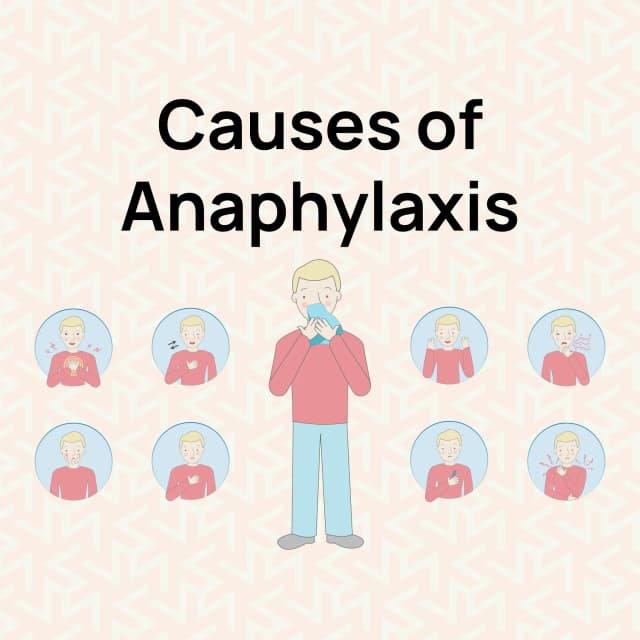
Anaphylaxis represents a frequent medical emergency, including a life-threatening acute hypersensitivity response. This condition is marked by a widespread allergic reaction affecting multiple bodily systems. If left untreated, anaphylaxis can quickly lead to respiratory failure and even death.What is Anaphylaxis Anaphylaxis is a severe allergic reaction that leads to a life-threatening condition. It causes systemic shock, leading to impaired respiratory function. Symptoms of an anaphylactic allergic reaction may include angioedema (swelling) affecting the face, neck, tongue, or lips. Respiratory distress can occur, potentially leading to shock, including hypotension and altered consciousness.What are the Causes of AnaphylaxisAnaphylaxis is triggered by various allergens, which are substances that provoke an allergic reaction. Common triggers include:Food: Peanuts, tree nuts (such as almonds and cashews), shellfish, milk, eggs, soy, and wheat.Insect Venom: Bee stings, wasp stings, and other insect bites.Medications: Antibiotics (like penicillin), nonsteroidal anti-inflammatory drugs (NSAIDs), and certain vaccines.Other Substances: Latex, chemicals, and even exercise-induced factors in some individuals.What are the Signs and Symptoms of AnaphylaxisThe signs and symptoms of anaphylaxis can develop rapidly and affect multiple organ systems:Respiratory System: Difficulty breathing, wheezing, throat tightness, and coughing.Cardiovascular System: Drop in blood pressure (hypotension), weak or rapid pulse.Skin: Itching, hives symptoms (urticaria), redness, and swelling (angioedema) of the face, lips, tongue, or throat.Gastrointestinal System: Nausea, vomiting, abdominal pain, and diarrhoea.Neurological System: Dizziness, confusion, and loss of consciousness.What are the Stages of an Allergic Reaction?Allergic reactions generally involve several stages, varying in severity and duration depending on the individual and the allergen involved. Here are the typical stages:Exposure: This is the initial stage where the person comes into contact with the allergen, whether through ingestion, inhalation, skin contact, or injection (as with insect stings).Sensitisation: In this stage, the immune system recognises the allergen as a threat and starts producing specific antibodies against it (IgE). This sensitisation process may occur over time and can involve repeated exposures to the allergen.Activation: Upon exposure to the allergen, the antibodies trigger the release of chemicals such as histamine from mast cells and basophils in the body. This release leads to the onset of allergic symptoms.Occurrence of Symptoms: This stage involves an allergic reaction, which can vary widely depending on the allergen and the individual's immune response. Symptoms can affect various systems, including:Skin (itching, hives)Respiratory system (wheezing, difficulty breathing)Gastrointestinal system (nausea, vomiting)Cardiovascular system (rapid heartbeat, drop in blood pressure).5. Resolution: The symptoms typically disappear after removing or neutralising the allergen (e.g., by medications like antihistamines or epinephrine).The resolution stage may vary in duration, depending on the reaction's severity and the treatment's effectiveness. .banner { border-radius: 10px; overflow: hidden; border: 2px solid #ccc; box-shadow: 0 4px 8px rgba(0, 0, 0, 0.2); background-color: #fdf9ee; } .book-now { color: white; background-color: #DF3D52; border: none; padding: 15px 60px; border-radius: 5px; cursor: pointer; font-size: 20px; text-decoration: none; } .book-now:hover { /*text-decoration: none;*/ color: white; background-color: #c33f50; } Get Trained in All First-Aid Skills First Aid Courses Book Now Rated Excellent on major review sites How is Anaphylaxis PreventedPrevention of Anaphylaxis is important for immuno-compromised people, who are vulnerable to allergens. Preventing anaphylaxis involves:Medical Alert Identification: Wear medical alert jewellery (e.g., bracelets) indicating allergies and carry an epinephrine auto-injector.Education: Educate oneself and others about triggers, symptoms, and emergency response protocols.Allergy Testing: Undergo allergy testing to identify specific triggers and develop a management plan with healthcare providers.Food Allergy Management: Properly managing allergens during food processing and packaging is crucial to prevent cross-contact contamination. Key methods for allergen control include:Clear Allergen LabellingProper RefrigerationStaff and Equipment HygieneColour-Coded UtensilsImplementing the HACCP System: Process and PrinciplesWhat is the Treatment of an Anaphylactic Allergic ReactionImmediate treatment of anaphylaxis involves administering epinephrine (adrenaline) via an auto-injector device (such as an EpiPen) to counteract the allergic response. Additional measures may include:Monitoring: Continuous monitoring of vital signs (blood pressure, pulse, and oxygen saturation).Supportive Care: Medicinal treatment includes oxygen therapy, intravenous fluids to maintain blood pressure, and medications like antihistamines and corticosteroids to reduce inflammation.Emergency Medical Attention: Prompt transfer to a hospital emergency room for further evaluation and management. .main{ border:3px solid #0f7c90; border-radius:20px; position: relative; font-family:roboto; font-weight: 400; color: #000; } .main-two{ position: absolute; top:-25px; left:45px; background-color:white; } .img-div{ border-radius : 100%; padding:2px 7px; background-color:#0f7c90; margin-right:5px; width: 50px; height: 50px; } .img{ width:30px; object-fit:contain; height:auto; border-radius : 100%; } @media only screen and (max-width: 600px) { .heading{ font-size:20px; } .img{ width:20px; object-fit:contain; height:auto; border-radius : 100%; } .img-div{ width: 40px; height: 40px; } .main-two{ left:25px; } } Ready to Learn More? Knowing how to manage anaphylaxis is important in emergencies, but there's more to first aid. Our First Aid courses offer complete training to help you handle critical situations. Whether you want to improve your skills or workplace safety, these courses help build confidence and expertise. View our Emergency First Aid at Work (EFAW) and Level 3 First Aid at Work courses. These courses meet the UK legal requirements and help you keep people safe. What are the Types of Anaphylactic ReactionsAnaphylaxis can be classified into different types based on triggers and clinical presentation:Food-Induced Anaphylaxis: Triggered by ingestion of allergenic foods.Insect Sting Anaphylaxis: Caused by venom from insect stings or bites.Drug-Induced Anaphylaxis: Reaction to medications or vaccines.Exercise-Induced Anaphylaxis: Triggered by physical exertion in conjunction with specific factors.Idiopathic Anaphylaxis: Cases where the trigger is unknown.ConclusionAnaphylaxis is a serious allergic reaction that must be immediately identified and treated to prevent life-threatening complications. Understanding the causes, signs, treatment options, triggers, types, and prevention strategies empowers individuals to effectively manage and reduce the risks associated with anaphylaxis. For those with known allergies, proactive measures are essential to ensuring safety outcomes in an anaphylactic emergency.

What is Epilepsy?
Millions of individuals worldwide are impacted by epilepsy, including those who support or care for those with the disorder. It is a typical neurological illness that can afflict anyone, regardless of age, sex, or race, and frequently results in seizures.The definition of epilepsy, key distinctions between it and seizures, indications and symptoms of a seizure, ways to support someone with epilepsy, and what to do in the case of a seizure are all covered in this article.What is epilepsy?A frequent disorder that affects the brain and can result in seizures is epilepsy. Brain electrical activity surges, known as seizures, can cause symptoms like losing consciousness, trembling, or falling.Epilepsy typically begins in childhood or after age 60 and lasts a lifetime. Epilepsy symptoms can sometimes be controlled with medicine, and the illness occasionally gets better with time. However, epilepsy is a chronic disorder for many people.Each individual�s case of epilepsy has a unique set of causes, which are numerous and varied. A severe head injury, a stroke, or an infection of the brain are a few typical causes of brain damage.There are various varieties of epilepsy as well as various causes. Four different forms of epilepsy have been identified by the International League Against Epilepsy (ILAE).Focal epilepsy � seizures that start on just one side of the brain.Generalised epilepsy � starts on both sides of the brain.Combined generalised and focused epilepsy � are a part of combined general and focal epilepsy.Unknown � Sometimes, it is difficult to pinpoint the origin of these kinds of seizures.What are the differences between epilepsy and seizures?An electrical surge in the brain, known as a seizure, can result in aberrant muscle tone, movements, behaviours, perceptions, and levels of consciousness. Depending on whatever portion of the brain is affected, seizures have a distinct impact on various people. People frequently fall to the ground during generalised seizures, for instance.Numerous factors, including drug usage, high blood sugar, and fever, can cause seizures. It is typically accepted that someone has epilepsy if they experience two or more seizures separated by at least 24 hours.It is significant to remember that seizures can occur in people who do not have epilepsy. Seizures are necessary for epilepsy, even if they don�t have overt consequences. Seizures, as was previously established, are not always brought on by epilepsy and can be brought on by various factors.Making the distinction between seizure triggers and epilepsy causes is crucial. For instance, a person with epilepsy who is sleep deprived may experience a seizure. The seizure is brought on by insufficient sleep, but brain damage may be the underlying factor in their epilepsy. In this case, the seizure rather than the lack of sleep is what has triggered their epilepsy.Among the causes of epilepsy are:A brain infection.A lack of oxygen during birth.Genetics.Alzheimer�s disease.A brain or head injury.A brain tumour.Drug or alcohol misuse.A stroke.Seizure-inducing factors include:Missing medication.Changes in hormones.A fever is especially common in children.Stress.A lack of sleep.Alcohol and recreational drugs.Skipping or missing meals.Over excitement.Flashing and flickering lights.What are the symptoms and signs of epileptic seizures?Depending on the type of seizure a person is experiencing, their signs and symptoms will change. Not all seizures are accompanied by strange shaking or body movements, and some last only a few seconds.The following are some symptoms and warning indicators that someone may be suffering an epileptic seizure:Rapid blinking.Breathing problems.Appear confused or in a daze.Unconsciousness.Losing muscle tone.Changes in hearing, vision, taste, smell and feel.Difficulty talking.An increased heart rate.Lip-smacking, chewing motions, or rubbing hands and fingers.Uncontrollable body movements, shaking or jerking.People must be aware of a seizure�s warning signs and symptoms to recognise it quickly and render aid if necessary.Particularly if they persist for more than five minutes or the victim stops breathing, seizures can be exceedingly dangerous. Knowing how to assist someone with epilepsy during a seizure is vital since seizures can cause other injuries, such as bruises, scrapes, and head trauma.Our First Aid at Work training course describes the various reactions to various kinds of seizures, how to spot an emergency, and how to assist a person after a seizure. .banner { border-radius: 10px; overflow: hidden; border: 2px solid #ccc; box-shadow: 0 4px 8px rgba(0, 0, 0, 0.2); background-color: #fdf9ee; } .book-now { color: white; background-color: #DF3D52; border: none; padding: 15px 60px; border-radius: 5px; cursor: pointer; font-size: 20px; text-decoration: none; } .book-now:hover { /*text-decoration: none;*/ color: white; background-color: #c33f50; } Get Trained in All First-Aid Skills First Aid Courses Book Now Rated Excellent on major review sites How to help someone with epilepsy?Each person with epilepsy is different; thus, the kind of support they need will differ. You can only provide someone with the most suitable and helpful assistance if you comprehend how their disease affects them.How to respond to seizures?Respond as follows if someone is having a seizure:Do:Remove any dangerous things from the area.Remain composed, reassuring, and by their side until the seizure is done.After the seizure, check in with them to see if they�re alright and give them a seat.Don�t:Do not grab them, restrain them, or make any sudden motions.Presume that they are aware of what is taking place.Try to entice them over or provide them with food or beverages.'Call 112 or 999 if:A person has a series of seizures without gaining awareness between them.It is their first seizure.More than five minutes pass as the seizure continues.The individual is hurt, or you believe they require medical attention.As previously said, the sort of seizure the person is experiencing will determine how you should react. Take a look at one of our first aid training courses if you want to understand how to handle various seizure types and how to spot an emergency.Some people will recover from a seizure immediately, while others may need a few minutes or even hours. People may experience confusion and fatigue during the postictal state, which is the period following a seizure. The best method to provide support is to be there for the person and stick with them till they recover.Learning about it and spreading as much information as possible to increase awareness are two of the most significant things you can do for a friend with epilepsy. The complexity of epilepsy is more than most people realise, and any knowledge gained is beneficial to all those who are affected.

Tips to Write First CV
Your CV is an effective job-search tool regardless of where you are in your career, but as a recent graduate or school dropout, your initial CV must be well-planned and written. Ensuring your CV is meticulously crafted and structured is paramount, making a CV maker indispensable.An employer can get a quick overview of your abilities, traits, relevant work experience, and hobbies from your CV.In this post, we�ll give you practical advice on organising your CV, what information it should contain, and how to make sure it�s relevant to the required position.Importance of CVThe Latin curriculum vitae, or �course of life,� is shortened to �CV� in English. Your CV will serve as a map for your professional path as your career develops.�When crafting your first CV, consider seeking professional book writing services or professional ghostwriting services effectively showcase your qualifications and stand out from the competition,�Similarly, tools that humanize AI can help personalise content, making your application more engaging and tailored.Your resume will highlight the pertinent abilities and experiences you may apply to the new position. In today's competitive job market, leveraging advanced recruiting software can significantly amplify the impact of your resume.This is why resumes are crucial when applying for jobs and should always be included. Even when completing an online application form, you will typically have the option to attach your resume as a supporting document; you should always take advantage of this opportunity. With the introduction of AI recruitment tools such as cover letter checkers, recruiters now exhibit a preference for resumes that are meticulously completed and adhering to a structured format.Elements of a CVYour CV must provide a good first impression because recruiting experts estimate that recruiters examine a CV for five to ten seconds on average. It should demonstrate why you are a strong candidate for the position in question and, ideally, lead to your being chosen for an interview.Including the necessary information is crucial because a CV should only take up one or two pages of A4 paper.Personal InformationIt is a good idea to use the header feature to include your name, address, and contact information (email and phone number), since it saves space and makes the information simple to discover for the recruiter.Including additional personal information like age, marital status, or even a picture was once in vogue, but it is unnecessary. It is a waste of valuable space and could encourage prejudice.Personal StatementYou can quickly introduce yourself by including a personal statement or profile at the start of your CV.This should summarise your qualifications for the position, including a few sentences about you. While providing as much information as feasible, it must be concise.Every time you send your CV to a prospective employer, be sure to take the time to rewrite it. You can mention their business in the statement by customising it once more for their application. Consider this a chance to promote yourself.SkillsFor your first CV, adding a skills section is very helpful because it enables you to highlight your abilities, which might not necessarily be related to work experience.You will be able to identify the essential qualifications that the hiring managers are searching for by carefully reading the position�s job description and person specification.As you concentrate on three crucial areas: foundations, principles, and practice, effective coaching and mentoring can help you improve your communication abilities. In the same way, when preparing written applications like cover letters or CVs, using tools that shorten my essay can be valuable for condensing information while maintaining clarity and impact. Using a grammarly ai checker can further refine your CV by correcting tone and grammar, ensuring clarity and professionalism before submission to employers.The following are some examples of general skills that could be highlighted and discussed:Communication skills.IT skills.Leadership skills.Problem-solving skills.Organisational skills.Interpersonal skills.Collaborative skills.Limiting the number of skills you highlight to four or five is wise. This can take the shape of a brief list with bullet points. For each, compose a brief sentence demonstrating your proficiency in that area, like �I have substantial IT skills, which I further enhanced by building and maintaining my website�.Keep in mind that your hobbies and voluntary work will demonstrate specific skills. Despite not being related to former employment, these transferable talents may be helpful in the open position.Consider your transferable abilities carefully. Participating in organised sports might have acquired teamwork abilities, punctuality skills, or resilience. Alternatively, making YouTube videos in your free time could demonstrate your proficiency in IT, public speaking, or communication.If you are drafting a CV after taking a career sabbatical, taking transferrable talents into account is equally crucial. Consider your activities since leaving your previous position and the skills you have learned and routinely used. For instance, if you were providing child care during this time, you likely used a variety of abilities that may be listed on your resume.Education and Training DetailsInclude a section outlining any certifications you have obtained, listed in reverse chronological order, with the most recent first.Mention the high school, college, or university you attended, your educational background, and the grade you earned. If you are still awaiting the results, you might indicate �grade pending� or, if appropriate, offer expected grades.You might include any relevant academic courses you have taken if you are a recent graduate.You could also list any other courses you have taken in this section. Taking proactive steps to acquire some industry-relevant training might demonstrate drive and dedication if you are seeking a job in a competitive market.For instance, you might think about finishing a paediatric first aid course if you�re searching for work in a nursery.Work ExperienceYour employment history is usually listed in reverse order in the work experience section. The following information for each entry:The name of the company/institution you were employed.Your position title.Your employment dates there.A brief rundown of the tasks you completed.This section will probably be brief if you�re looking for your first job, but you should nonetheless list any examples of paid weekend or holiday work, work experience, or volunteer work.Hobbies and InterestsIf your passions and hobbies are applicable to the position and strengthen your application, you should include a section on them.Remember that you want to find things that will support your abilities. These might consist of the following:Sports.Art.Blogging or vlogging.Volunteering.Music.Drama.Travelling.Avoid using general terms that don�t truly convey anything about you to the employer. �Socialising with friends� is too general, but �completing escape rooms� could be a sign of initiative, teamwork, and problem-solving skills (as well as giving employers valuable insight into your personality).Finally, review your CV thoroughly (a few times, then once more!). Verify the grammar and spelling. You must proofread for clarity, catch mistakes, and ensure formatting uniformity.A second set of eyes is often helpful, so you may ask someone else to review it.�
Importance of Digital Skills in the Workplace
AnalysisThe need for digital abilities in the workplace has never been higher, and learning these skills can significantly improve your life in a world that is becoming increasingly digital. Being proficient in a wide range of these abilities is essential for your career since an increasing number of individuals are working remotely, and 82% of all jobs in the UK identify digital skills as a criterion.While it�s simple to assume that digital literacy is sufficient for the workplace, a recent study found that 52% of workers lack critical digital skills. In this post, we�ll define digital skills, give examples, discuss why they�re essential in the workplace today, and advise on developing them.Digital Skills for the WorkplaceThe phrase �digital skills� might be challenging to define because it covers a wide range of competencies and skills according to corporate input. In a nutshell, it refers to any abilities required to function successfully in a world that is becoming more digital.According to UNESCO, having digital skills is being able to access and manage information using digital tools, communication programmes, and networks. Although they can be data and IT-focused, it�s crucial to remember that these talents span a wide range and include fundamental problem-solving and communication abilities. They make it possible for us to instantly and worldwide interact, communicate, and create content.While they might range from basic functions to more complex capabilities, all digital skills are highly transferable and are now considered essential to employability. Transferable skills, especially those in the digital sector, are rising in demand as digital technology and automation transform the jobs market.The Digital Skills GapDespite increasing technology use, there remains a sizable digital skills gap leading to many problems. Lack of digital skills prevents people from getting employment and advancing in their careers and has a detrimental effect on the UK economy�s general development and productivity.Furthermore, and maybe unexpectedly, this impacts people of all ages. Only 1 in 5 teenagers believe they possess the advanced digital abilities that employers demand.We must do more to ensure more people acquire the digital skills necessary for the workplace. When you consider that employers� expectations for digital abilities are continually evolving to keep up with technological breakthroughs, it becomes evident that more needs to be done.Essential Digital SkillsThe digital abilities you require will vary depending on the career path you choose, but a few fundamentals are becoming increasingly important in practically every position. Everyone should work to improve these abilities.Social mediaEmail and instantmessagingWord processingWeb-based researchData entry and handlingAdvanced Digital SkillsFurthermore, mastering more complex digital abilities could help you stand out in technological fields like marketing, design, programming, and data science. Employers will continue to require these more advanced technological abilities as 85 million jobs are anticipated to be eliminated and another 97 million created by 2025, many of which will be technical employment.User experience designCodingProgramming, web, and appWebsite Design and Website developmentSEO, SEM and content writingcreationData analysisImportance of Digital Skills for WorkTechnology today has a significant impact on both the economy and society as a whole. In order for businesses to remain competitive, they must keep up with the rapidly evolving digital landscape. As a result, there is a great need for abilities that weren�t even possible a few years ago. In order to remain employed, people must continually improve their skills.The benefit of Digital Skills for EmployersHaving a workforce with various digital skills has many advantages for your business. Adopting new technology in the workplace helps streamline working processes and frees up staff to concentrate on higher-value work that helps you and your employees achieve your goals by reducing time spent on repetitive tasks.Overall, the increase in productivity brought about by digital technology makes room for organisations to be more innovative and collaborative. As a result, a fun and an effective work atmosphere is created, which improves worker retention and recruitment. In addition, businesses can leverage the talents of�UGC creators�to further enhance their digital presence. These creators generate authentic and engaging content that resonates with audiences, driving innovation and fostering deeper brand collaboration.Given these multiple advantages, it should come as no surprise that businesses demand that the bulk of their staff possess the digital competencies necessary to embrace the usage of cutting-edge technology.The benefit of Digital Skills for EmployeesWhile digital skills are crucial for businesses, they also have significant advantages for employees. It may be immensely empowering to have the essential digital skills to move a firm forward. It also makes people feel more assured and safe in their jobs. Organizations can use digital marketing assessment to upskill their employees. Understanding the different types of digital marketing can further enhance this process, helping teams adopt strategies that align with current trends and leverage digital tools to drive business growth and employee development.�However, research suggests that having the correct digital skills can help workers lower the danger of their employment becoming automated by 59%. In the modern world, people who have historically performed professions are progressively being replaced by automation software and robotic process automation tools.Additionally, having a wide range of digital talents translates into a higher wage, with occupations needing digital skills typically paying 29% more than roles that do not. Therefore, acquiring digital skills for the workplace generally boosts one�s financial situation in addition to helping one�s employability, job security, and professional advancement.Furthermore, employees with digital skills can use various tools to simplify their tasks and boost efficiency. For example, using OCR based tools like picturetotext.io that extract text from image or or perform pdf data extraction, helps convert scanned documents into editable text quickly. Alongside this, file converters and cloud-based platforms are also widely used to streamline daily workflows and collaboration.The benefit of Digital Skills for StudentsDigital abilities could be the difference-maker for job seekers trying to stand out from the crowd of other qualified applicants. One of the best methods to improve your chances of getting hired for your preferred profession is to learn various digital skills required for the vast majority of job openings.Today, a lot of jobs are exclusively listed online. Job applications show your level of digital proficiency even before the interview stage, and companies are on the lookout for this. To assess your talents before an interview, many applications now include a range of online tests and forms. Gaining the necessary digital skills could help pass these entrance exams and continue to the next stage of the application process.Improve Essential Digital SkillsIt is obvious that possessing various digital abilities is necessary to succeed in today�s workplace, but how do you acquire and enhance these vital talents?Fortunately, several affordable and quick ways to broaden your knowledge of digital technologies exist. There are many chances to learn new digital skills and upskill oneself, whether online, through face-to-face training, or while learning on the job. To get started, employ these techniques:Digital Skills in the Modern CoworkplaceIn today�s professional landscape, many teams collaborate across hybrid setups that blend remote and shared offices. A modern�coworkplace�relies heavily on digital tools such as cloud storage,�visitor management software, and virtual communication platforms. Coworking management software and virtual communication platforms help organizations streamline bookings, manage memberships, track occupancy, and boost workplace efficiency. Developing strong digital skills ensures professionals can work efficiently, stay connected, and contribute effectively regardless of location.Improve your Digital PresenceSpending more time online and becoming familiar with the most often used features of the internet is one of the best methods to develop your digital abilities.Creating a social media profile can help you keep up with the most recent online trends, and email or instant messaging services can help you communicate better and work more effectively online.You can also strengthen your professional presence by learning the basics of email design, which allows you to create clean, visually appealing emails that improve engagement�especially useful for marketing, outreach, or personal branding.Additionally, exploring tools like Android video editor or a free video converter can enhance your multimedia skills, allowing you to easily convert and edit videos for various digital platforms. Using an online logo maker can also boost your creative skills, helping you design logos for personal projects, social media branding, or small businesses.Your digital skills will develop naturally the more time you spend in the digital world and the more at ease you�ll feel navigating it.Online Training CoursesOnline learning is a quick and convenient approach to acquiring and retaining information if you�re trying to pick up a new skill to help you advance in your career.Online training is becoming increasingly popular since it is thought to be a more efficient learning method than conventional face-to-face instruction. It�s not difficult to understand why 79% of learning and development professionals expect to spend more on e-learning than 3 years ago.With e-learning, you may learn more quickly and flexibly from any place using any device. According to a recent study, those who completed courses on their smartphones did so 45% faster than they would have otherwise without sacrificing the quality of their learning. The estimated additional productivity is 4,270 hours as a result. PT training has seen a surge in popularity with the rise of online learning, offering flexible options for advancing your career.Access Free Guides and ResourcesWhile it�s common to assume that gaining new knowledge and skills will cost money, many excellent free online resources can assist you in learning various digital skills without spending any money.Your employment prospects, employability, and ability to use contemporary technology can all be improved by acquiring digital skills. It�s crucial to have various fundamental digital skills in an increasingly digital environment, and it�s a good idea to expand your knowledge to more advanced ones to upskill yourself and close the digital skills gap.
Meeting Management Tips
AnalysisMeetings exist primarily to accomplish one goal: to complete a task. The personnel can be organised, plans can be made, and tasks can be planned effectively through meetings. However, meetings can occasionally be a waste of time, resources, and energy, especially if they are poorly planned and conducted.To make a meeting productive, make sure you follow the management tips:Have a Specific AimMeetings should only be scheduled if it has a specific goal. If not, you run the danger of making everyone�s time indecisive. You�ll probably emerge from the meeting in the same state you entered.If you frequently have meetings planned but have nothing concrete to talk about, call a halt to the meeting. Although staff meetings help foster effective communication, you need to strike a balance between this goal and time spent doing beneficial things.ParticipantsThis is not to say that you should be particular about who you invite. Instead, you should ask yourself, �Does the meeting need all of these people there?�People might be spending their time more effectively elsewhere if they weren�t attending meetings just for its sake.Set ObjectivesBefore the meeting, you should decide what results you hope to get from it. You should then designate these items as meeting objectives once the meeting has been scheduled.The specific topics you wish to cover at the meeting should emphasise your objectives, such as �Decide how we�re going to sell our new product.�Share an AgendaWriting and distributing an agenda before the meeting is crucial to efficient meeting management. This should contain the goals, so everyone attending the meeting knows what to expect.Having an agenda helps focus clearly and stay on topic. Additionally, you can inform attendees of any necessary preparation by providing an agenda.Realistic goals should be on your agenda; it makes no sense to have a long list of objectives if you only have 20 minutes to complete them.The appointment of a facilitator for the meeting may also be advantageous. This way, if the discussion veers off subject, they can remind everyone of the agenda and bring it back up.Be PreparedThis step comes after setting up and adhering to an agenda. Meetings should always be scheduled in advance, and all essential duties should be finished. This will not only help the meeting stay on schedule, but it will also demonstrate that you are responsible enough to prepare for it.Make sure everyone else has ample time to plan and prepare as well. To allow workers enough time to prepare, try to distribute the agenda two days before the meeting. Make careful to include in employee schedules when planning so that you can still give them enough time to prepare, such as if an employee has off the day before the meeting.Be CreativeAlthough having an agenda is crucial for keeping your meeting on schedule, it shouldn�t be so rigid that it prevents people from being creative or expressing their thoughts and opinions. Creativity should be present in a productive meeting.Be PunctualEffective meeting management includes being on time for meetings. If you arrive late, you can feel rushed and miss a crucial moment, which could impact the entire meeting. Being late also conveys a certain level of disrespect for everyone early.This step also includes wrapping up the meeting on schedule. Avoid rambling by talking about off-topic topics that aren�t on your agenda. It is a waste of time and resources, and it might make you think the meeting wasn�t very fruitful. Next time, offer yourself a more reasonable time frame if the meeting goes over because you didn�t have enough time to discuss your goals and agenda. To plan more effectively, you can also calculate meeting duration in advance, ensuring your meeting stays within the allocated time.Have a Question and Answer SessionEven though it frequently comes at the end of the meeting and doesn�t have much time to itself, this is just as crucial as the meeting itself.All meetings should include Q&A sessions, but it�s crucial if you�re dealing with outside clients or individuals who aren�t part of your team. By holding these sessions, you actively involve attendees in the discussion and force them to consider what was stated and whether they got it completely.People should be urged to ask inquiries. If you don�t mention asking questions, many people will frequently be reluctant to do so out of obligation.Asking participants questions in advance is a helpful suggestion. You should explain the situation and then inquire about any questions they may have. This not only guarantees that you cover the pertinent subject and issues at the meeting, but you can also check at the conclusion to see if you were able to address everyone�s questions and concerns.It�s crucial that you effectively and to the appropriate persons explain any following steps that are decided upon at the conclusion of the meeting. Everyone should be aware of what is expected of them after the meeting.You should also follow up with the people who attended your meetings. Since everyone has a unique perspective on events, it�s possible that two participants in the same meeting could have completely different views of what transpired. To ensure that everyone is on the same page, you should ask whether they understand, then send a follow-up document outlining everything discussed.
7 Skills to Become an Effective Coach Mentor
IntroductionBefore you can be a successful coach and mentor, you must develop a variety of abilities. They may not have occurred to you, even if some are obvious (like active listening). Learning and practising the required abilities can help you advance personally and enhance your practice.Each ability will be covered in this essay, focusing on effective listening. After that, we�ll discuss how to assess the effectiveness of your coaching or mentoring sessions and provide you with some sample assessment questions.Skills Needed to Be an Effective Mentor or CoachIt is becoming more and more common for people to get assistance through coaching and mentoring to advance their goals or objectives or gain new skills, information, and experience. The main distinction between the two is that while coaching is non-directive (i.e. the coach gives the coachee the space to come up with their conclusions and next steps, using techniques like questioning), mentoring is directive (i.e., the mentor does most of the talking during meetings and may instruct the mentee what to do).Despite the distinctions, both mentoring and coaching require a similar set of abilities to be successful. These abilities are listed below.Active ListeningIn order to comprehend the mentee�s perspective, beliefs, and values, as well as the challenges they confront and their goals, coaches and mentors must actively listen to their charges. Making eye contact and asking pertinent questions while putting your thoughts and worries aside are all part of effective listening. It also requires showing the speaker that you are paying full attention to what they are saying.Empathy and UnderstandingBeing less judgmental due to empathy and understanding is essential for developing relationships as a coach and mentor. It is crucial for coaches and mentors to be able to �place themselves in that person�s shoes,� or to detect an individual�s mental condition. This will assist you in developing appropriate solutions or recognising limiting beliefs or other impediments to their growth, some of which they may not be aware of. With time and effort, the capacity for empathy can be enhanced.CommunicationIn order to gently share the individual�s private ideas, feelings, or problems and to express intended meanings rather than being unclear or coming across incorrectly, coaches and mentors must be skilled communicators. This requires being able to foresee how the other person would understand your words and, if required, adapting what you were about to say.If you are a coach, you should constantly keep in mind to speak with people politely, offering ideas while also allowing them the chance to object or move the conversation elsewhere.Setting GoalsThis is especially important for coaches, who must work with the mentee to create specific, measurable, attainable, relevant, and time-based (SMART) goals and then analyse how their activities are in accordance with achieving those goals. You should assist the mentee in remaining goal-oriented at all times and in viewing challenges as opportunities for growth rather than setbacks. Utilizing company retreat venues uk can provide an ideal setting to focus on these goals and encourage team bonding.QuestioningBy asking the right questions, you can elicit someone�s thoughts and opinions, focus their attention on developing a fresh concept or solution, and give them the confidence to feel like a changemaker. In order to guide or facilitate the mentee�s problem-solving and thought processes rather than providing them with solutions, coaches often use the questioning technique.Giving FeedbackYou must be able to provide your mentee with accurate, detailed, and sincere feedback without being unduly critical or judgmental. Negative thoughts might demoralise the people you work with. Never blame the person; in these cases, the conversation will improve if you encourage them to talk about what happened and what they think they could do differently in the future as a lesson learned. Additionally, you should frequently provide constructive criticism by praising their efforts when they are successful, recognising their accomplishments, and highlighting their qualities.EnthusiasmEnthusiasm is a discipline that requires effort and purpose to maintain, but it eventually pays dividends. Being passionate about something makes others more likely to trust you, which makes it easier to get the best performance out of them.Skills of a ManagerManagers share many traits and abilities with coaches and mentors. Managers frequently serve as mentors or coaches for the team members they oversee. They help people navigate daily tasks and enhance their performance or professional development. Additionally, they might draw attention to people�s assets, encourage self-reflection, and give them more control over their jobs.Therefore, managers must practise the abilities we�ve covered. Since managers have a power relationship with the people they deal with and lack the same objectivity as external coaches and mentors, some areas of development may be more challenging for them.They have a stake in the person�s performance, which may cause them to provide suggestions before giving the person a chance to come up with their own, or it may cause them to have preconceived notions about the person and their performance. They should concentrate on being non-judgmental and asking open-ended questions to combat this.
Which First Aid training qualification should you choose
First aid training teaches employers and employees the skills to handle emergencies professionally. Selecting the right course depends on understanding your organisation�s specific needs, including the type of work, the level of risk (high or low), the number of employees, and the workplace size.How many First Aiders are Required for a WorkplaceThe Health and Safety Executive (HSE) provides the following recommendations:Low-risk workplaces (e.g., offices) with 25 to 50 employees: At least one person should be trained in Emergency First Aid at Work (EFAW).Low-risk workplaces with more than 50 employees: One person trained in First Aid at Work (FAW) is required for every 100 staff members.High-risk workplaces (e.g., construction sites or factories): Due to the increased likelihood of serious incidents, additional training and a greater number of first aiders are required.Providing first aid training is not only a legal obligation for employers in the UK but also an ethical one. Having trained staff can save lives, reduce workplace injuries, and create a safer working environmentWho is a First-Aider? A first aider is trained to help sick or injured people until professional medical help arrives. In emergencies, first aiders are often the first to respond, ensuring the safety and calmness of those involved until further help arrives. Anyone can become a first aider by learning these skills, making it a valuable way to contribute to the safety of their workplace or community.What are the Levels of First-Aid TrainingQualified first aiders undergo one of two main types of training; FAW and EFAW training. EFAW stand for Emergency First Aid at Work course and is for lower-risk workplaces like offices or retail shops.This one-day training covers basic CPR, managing bleeding and wounds, treating minor injuries, and handling choking incidents or other emergencies. Upon completion, participants receive a certificate valid for three years.The First Aid at Work qualification, or FAW course, is more detailed for higher-risk workplaces. This three-day training includes everything in EFAW, along with additional topics such as managing seizures, heart attacks, diabetic emergencies, and severe allergic reactions. FAW certification is also valid for three years.Health and safety regulations may not require a trained first aider in smaller businesses. Instead, a responsible person can be appointed to oversee first aid. While formal training isn�t compulsory for these roles, many take a Basic First Aid course to handle minor emergencies confidently. First aiders, regardless of their training level, play an important role in ensuring safety and providing immediate care during emergencies. .main{ border:3px solid #0f7c90; border-radius:20px; position: relative; font-family:roboto; font-weight: 400; color: #000; } .main-two{ position: absolute; top:-25px; left:45px; background-color:white; } .img-div{ border-radius : 100%; padding:2px 7px; background-color:#0f7c90; margin-right:5px; width: 50px; height: 50px; } .img{ width:30px; object-fit:contain; height:auto; border-radius : 100%; } @media only screen and (max-width: 600px) { .heading{ font-size:20px; } .img{ width:20px; object-fit:contain; height:auto; border-radius : 100%; } .img-div{ width: 40px; height: 40px; } .main-two{ left:25px; } } Ready to Learn More? Check which course is right for you by visiting Our First Aid courses offer complete training to help you handle critical situations. Whether you want to improve your skills or workplace safety, these courses help build confidence and expertise. View our Emergency First Aid at Work (EFAW) and Level 3 First Aid at Work courses. These courses meet the UK legal requirements and help you keep people safe. What is the Difference between EFAW and FAWEmergency First Aid at Work (EFAW) and First Aid at Work (FAW) are two levels of first aid training courses required for workplaces in the UK. Both courses provide employees with the skills and knowledge to handle workplace injuries and medical emergencies. However, there are key differences in the content and requirements of each course.FeatureEFAW (Emergency First Aid at Work)FAW (First Aid at Work)Duration1 day�3 days�Suitability�Low-risk workplaces with 25-50 workersHigh-risk workplaces or larger businesses with >50 workersTopics CoveredCPR, wound care, managing unconscious casualties, choking, bleeding, and shockAll EFAW topics plus fractures, burns, medical conditions, and advanced first aidLevel of TrainingLow-level basic first-aid training�High-level advanced first-aid trainingCertificationEmergency First Aider certificationFirst Aider certificationWhat Qualifications Does a First Aider Need in SchoolsIn schools, first aid requirements are specific to the unique needs of children. Schools and early years providers must ensure that staff are trained in first aid, and at least one person must hold a current Paediatric First Aid (PFA) certificate. This qualified individual must be present whenever children are on the premises or participating in school trips.This requirement ensures that schools are prepared to handle emergencies specific to children, such as choking or playground injuries.How Long Does a First Aid Course LastFirst-aiders should complete refresher training every three years to maintain their certification and skills. Regular refresher courses are important for several reasons:Maintaining Skills: First aid techniques can be forgotten over time. Refresher courses help first-aiders stay confident and effective in emergencies.Staying Updated: First aid guidelines and legal requirements can change. Refresher training ensures first aiders are up-to-date with the latest procedures and standards.By keeping training current, first-aiders can continue to perform their roles and meet legal requirements.Who should take up the Mental Health First Aid CourseMental Health First Aid (MHFA) is a level 2 first aid course for anyone who wants to learn how to help people struggling with mental health issues. It�s useful for those who work with others or in environments where mental health challenges might arise.Mental Health First Aid is useful for managers, HR professionals, teachers, healthcare workers, community leaders, and anyone interested in mental health. It helps people recognise mental health problems and provides the right support until professional help can be reached. .main{ border:3px solid #0f7c90; border-radius:20px; position: relative; font-family:roboto; font-weight: 400; color: #000; } .main-two{ position: absolute; top:-25px; left:45px; background-color:white; } .img-div{ border-radius : 100%; padding:2px 7px; background-color:#0f7c90; margin-right:5px; width: 50px; height: 50px; } .img{ width:30px; object-fit:contain; height:auto; border-radius : 100%; } @media only screen and (max-width: 600px) { .heading{ font-size:20px; } .img{ width:20px; object-fit:contain; height:auto; border-radius : 100%; } .img-div{ width: 40px; height: 40px; } .main-two{ left:25px; } } Check which course is right for you by visiting our First Aid courses that offer complete training to help you handle critical situations. Whether you want to improve your skills or workplace safety, these courses help build confidence and expertise. View our Emergency First Aid at Work (EFAW) and Level 3 First Aid at Work courses. These courses meet the UK legal requirements and help you keep people safe. FAQsWhat is the best first aid course for my workplace?The right first aid course depends on the type of work, the level of risk (high or low), the number of employees, and the workplace size. Low-risk workplaces may need an Emergency First Aid at Work (EFAW) course, while high-risk workplaces may require more detailed training like First Aid at Work (FAW).How many first-aiders do I need in my workplace?According to the HSE, workplaces with 25 to 50 employees in low-risk environments should have at least one trained first aider. For workplaces with more than 50 employees, one first aider should be trained for every 100 staff members. High-risk workplaces will need more first-aiders due to the greater potential for serious incidents.What is the role of a first aider?A first aider is trained to help sick or injured individuals until professional medical help arrives. They are often the first to respond in emergencies, ensuring safety and calmness until further help is available.What are the different types of first aid training available?The two main courses are Emergency First Aid at Work (EFAW), a one-day course for low-risk workplaces, and First Aid at Work (FAW), a three-day course for higher-risk environments. Both certifications are valid for three years.What does EFAW stand for?EFAW stands for Emergency First-Aid at Work.What does FAW stand for?FAW stands for First-Aid at Work.What qualifications do first aiders need in schools?Schools must have staff trained in Paediatric First Aid to handle child-specific emergencies, such as choking or injuries on the playground. At least one qualified individual with a Paediatric First Aid certificate must be present when children are at school or on trips.How often do first aiders need refresher training?First-aiders should complete refresher training every three years to maintain their certification and stay updated on new first-aid guidelines and legal requirements.Who should take a Mental Health First Aid course?The Mental Health First Aid (MHFA) course is ideal for anyone who wants to learn how to support individuals experiencing mental health challenges. It's useful for managers, HR professionals, teachers, healthcare workers, community leaders, and anyone working in environments where mental health issues might arise.ConclusionChoosing the right first aid qualification depends on your workplace's needs, risks, and size. Whether a basic Emergency First Aid at Work course is needed for a low-risk environment or a more detailed one for higher-risk settings, having trained staff can save lives and ensure a safer environment. In schools, Paediatric First Aid is necessary to handle emergencies involving children, while Mental Health First Aid courses are ideal for those wanting to support others with mental health issues. Regular refresher training helps keep skills up to date, ensuring first aiders are always ready to act in an emergency. No matter your role, first aid training is an important investment in both safety and well-being, providing skills that can make a difference when it matters most.
6 Benefits of First-Aid Training And its Importance
First aid is the help you give to someone hurt or sick. This help happens before doctors or medical professionals arrive. It is very important because it can save lives and stop injuries from getting worse.Most First-Aid situations are minor, like cuts, burns, or bruises. These often happen in places like hospitals, hotels, and schools. Sometimes, more serious injuries can occur, so it is good to be ready to handle them if needed.What is the Importance of First-Aid Training?In First Aid training, you practise important skills to help in emergencies.CPR (Cardiopulmonary Resuscitation): You learn to perform chest compressions and rescue breaths. This helps restart someone's heart or breathing if they stop.Using a First Aid Kit: You practise using items in a first aid kit, such as bandages, antiseptics, and scissors. This helps you treat minor injuries and keep wounds clean.Primary Survey in First Aid Using DRABC: When helping someone in an emergency, always start with the primary survey. This means you quickly assess what is happening and the person's needs.Secondary Survey in First Aid: The secondary survey assesses the injuries of an awake, responsive person. It involves thoroughly examining the person's health history, assessing the four vital signs, and conducting a systematic head-to-toe examination.Basic Skills: You also learn other useful techniques, such as how to stop bleeding, how to treat burns, and how to handle broken bones.The main goal of first aid training is to provide immediate and effective help in an emergency. This help can make a big difference before doctors or other medical professionals arrive.Why is the Mental Health First Aid course important?The Mental Health First Aid Training course teaches how our mental well-being impacts our decision-making and progress in life. Particularly in the workplace, it is important to be aware of our certain triggers and how to stabilise them using emotional regulation. This is useful for employee productivity and overall job satisfaction.Six Key Benefits of First Aid Training at WorkEmployers must ensure their workplace has adequate and up-to-date first aid measures. The six important benefits of first-aid training for your staff are:Saving LivesFirst aid training can save lives. A British Red Cross study shows that up to 59% of injury-related deaths might have been prevented with immediate first aid. Training gives your staff the skills to act quickly in emergencies like choking, heart attacks, poisoning, or severe allergic reactions.Preventing the Situation from WorseningTrained first aiders can help prevent an injured person�s condition from worsening and stabilise the person until professional help arrives.Relieving PainFirst aid training helps staff relieve pain from injuries. They can use first aid kit items or cool burns with cold water. They also offer emotional support, which can ease anxiety and stress.Helping Communicate with Emergency ServicesTrained staff can provide accurate information to emergency services. This helps them give the right advice and decide on the next steps.Reducing Recovery TimeQuick first aid can save a life and speed up recovery, which means employees can return to work sooner.Helping with Legal ComplianceEmployers must follow health and safety laws, including providing first aid. Training helps meet these legal requirements and ensure a safe workplace. .main{ border:3px solid #0f7c90; border-radius:20px; position: relative; font-family:roboto; font-weight: 400; color: #000; } .main-two{ position: absolute; top:-25px; left:45px; background-color:white; } .img-div{ border-radius : 100%; padding:2px 7px; background-color:#0f7c90; margin-right:5px; width: 50px; height: 50px; } .img{ width:30px; object-fit:contain; height:auto; border-radius : 100%; } @media only screen and (max-width: 600px) { .heading{ font-size:20px; } .img{ width:20px; object-fit:contain; height:auto; border-radius : 100%; } .img-div{ width: 40px; height: 40px; } .main-two{ left:25px; } } Ready to Learn More? Put your knowledge of the benefits of first aid training into practice by enrolling in a course today! Our First Aid courses offer complete training to help you handle critical situations. Whether you want to improve your skills or workplace safety, these courses help build confidence and expertise. View our Emergency First Aid at Work (EFAW) and Level 3 First Aid at Work courses. These courses meet the UK legal requirements and help you keep people safe. Which First Aid Course is Right for Me?First aid training helps both employers and employees learn how to handle emergencies. To choose the right course, your organisation should assess its needs. This includes looking at the type of work, whether high-risk or low-risk, the number of employees, and the workplace size.Here are some guidelines from the HSE:For low-risk workplaces with 25 to 50 employees: At least one person should be trained in Emergency First Aid at Work (EFAW).For low-risk workplaces with more than 50 employees: One person should be trained in First Aid at Work (FAW) for every 100 staff members.In high-risk environments, the requirements are higher.Employers must provide first aid training in the UK to meet legal and ethical obligations. Having trained staff benefits the organisation and could be important in emergencies. .banner { border-radius: 10px; overflow: hidden; border: 2px solid #ccc; box-shadow: 0 4px 8px rgba(0, 0, 0, 0.2); background-color: #fdf9ee; } .book-now { color: white; background-color: #DF3D52; border: none; padding: 15px 60px; border-radius: 5px; cursor: pointer; font-size: 20px; text-decoration: none; } .book-now:hover { /*text-decoration: none;*/ color: white; background-color: #c33f50; } Get Trained in All First-Aid Skills First Aid Courses Book Now Trustpilot What Qualifications Does a First Aider Need at School?First aiders in schools need special qualifications. Schools and early years providers must have staff with first aid training. At least one person must have a current paediatric first aid certificate. This person must be present whenever children are at school or on trips.How often should first-aid training be refreshed?Most first-aiders should take refresher training every three years. This training is important for several reasons:Maintain Skills: Refresher courses help first aiders keep their skills sharp. Regular practice helps them effectively perform first aid when needed.Stay Updated: First aid guidelines and legal requirements can change. Refresher training helps first aiders stay informed about any new procedures or laws.