

Food Hygiene Inspection Checklist UK: What Every Kitchen Needs
High food hygiene standards are crucial for every food business, from home caterers to busy restaurant chains.� To stay compliant and achieve a 5-star food hygiene rating, every food business should follow a well-structured food hygiene rating checklist. This checklist keeps everything in check, starting from kitchen cleanliness to food storage, pest control and staff hygiene. Helping you run smooth daily operations while staying inspection-ready at all times. An Environmental Health Officer (EHO) is a government official responsible for inspecting food businesses to ensure compliance with health and safety laws. Their job is to ensure that your kitchen operates safely and that the food you serve is safe for consumption. EHO inspections are conducted regularly to ensure that food businesses comply with food hygiene and food safety standards. These officers visit your premises to conduct a formal food hygiene inspection, and based on their findings, your business receives a rating under the Food Hygiene Rating Scheme (FHRS). Their reports can directly impact your business�s reputation and ability to trade. If they find hygiene practices falling short, it could result in anything from a poor rating to closure in extreme cases.� These inspections often happen without any prior notice. As these inspections often occur unexpectedly, it�s essential to implement and maintain a food hygiene checklist that�s followed consistently, not just before an inspection, but every single day. What do EHOs look for during a food hygiene inspection? When an EHO visits your food premises, they assess your operation based on three key criteria under the FHRS. These areas help determine your final hygiene rating, so it�s crucial to understand them thoroughly.1. How hygienically food is handled EHOs will observe how food is prepared, cooked, cooled, stored, and reheated. Their goal is to ensure that every stage of food handling is safe and hygienic. They�ll assess: Cleanliness of work surfaces and utensils Safe handling of raw and cooked foods (avoiding cross-contamination) Food temperature control during storage and reheating Proper food labelling and shelf-life monitoring 2. Condition and structure of the premisesThe physical condition of your kitchen or workspace is also evaluated. First impression matters!EHOs will check:General cleanliness and organisationStructural condition � walls, floors, ceilings, sinks, etc.Proper lighting and ventilationFunctioning hand-washing facilitiesSigns of pest infestation and proof of pest controlOverall maintenance and repair3. Food safety management systems This area focuses on how well your business manages food safety. EHOs want to see that you�ve implemented proper systems and that your staff are trained and confident in following them. They�ll look for: A written food safety management system, such as HACCP principles Records of temperature checks and cleaning schedules Staff food safety training (e.g. Level 2 Food Hygiene Course) Safe use and storage of cleaning chemicals Take Charge of Food Safety in Your Business If you're responsible for overseeing food safety standards, managing teams, and ensuring all systems are in place, the Level 3 Food Hygiene and Safety Course is ideal for you. This advanced course covers: Legal responsibilities of managers Implementing and monitoring food safety systems (like HACCP) Handling inspections with confidence Supervising and training staff effectively Equip yourself with the tools to lead a food-safe workplace. Other areas are often inspected In addition to the core three, EHOs may also check: Pest control measures and monitoring Equipment condition and cleanliness Waste management processes Labelling accuracy and allergen information Availability of hand-washing facilities Supplier delivery checks Keeping all the above elements in check is crucial for passing an unannounced EHO visit and maintaining a food hygiene rating that builds trust with your customers. Boost Your Food Safety Game with Specialist Training Environmental Health Officers don�t just check surfaces - they assess everything from allergen handling to your overall food safety system. Make sure your team is inspection-ready with targeted training: Food Allergy Awareness Online Course Learn how to identify, manage, and effectively communicate food allergens - especially vital for high-risk customers and ensuring legal compliance. Level 2 HACCP Online Training Gain confidence with Hazard Analysis and Critical Control Points (HACCP), a vital system for protecting against contamination and meeting EHO expectations. Both courses are CPD-accredited, online, and ideal for businesses of all sizes. Kitchen inspection checklist to pass EHO visits While we�ve summarised the key EHO focus areas above in brief, in order to stay at the top of your game, download our detailed, ready-to-use EHO inspection checklist covering inspection pointers in greater detail. *Note: This checklist is based on official guidance from the Food Standards Agency and best practices for UK food businesses. It�s designed to help you stay prepared for EHO inspections and maintain a 5-star hygiene rating.Daily kitchen management: How to use the EHO inspection checklist effectivelyA checklist is essential, but what�s even more important is putting that checklist to good use every single day.�A checklist only works if your team knows how to use it effectively every day. Here�s how to turn your EHO inspection checklist into a practical tool that drives daily food safety.1.�Assign clear roles:�Allocate specific tasks � such as cleaning, stock rotation, and monitoring fridge temperatures � to individual team members and display responsibilities visibly.2.Monitor progress:Conduct quick daily or weekly self-inspections and review your records regularly to catch issues early.3.Train your team:�Ensure that everyone understands HACCP principles and knows the significance of each task on the checklist.Want to implement HACCP effectively? Explore our Level 2 HACCP Online Course to train your team and streamline operations.4. Combine tools:�Link your checklist with cleaning rotas, stock control, and training records to create a seamless workflow.Let�s understand how you can utilise the checklist in your daily kitchen operations and how maintaining it consistently can make inspections more manageable and smoother, with a real-life example.Case: A busy takeaway kitchen in London Maria runs a fast-paced takeaway kitchen with three chefs and two helpers. During a surprise visit, the Environmental Health Officer (EHO) requested to review records on fridge temperatures, cleaning schedules, and allergen management. Maria had: A printed environmental health inspection checklist filled out daily, Digital logs of fridge temperatures updated every 4 hours, A whiteboard displaying the cleaning rota and the names of the responsible staff. The EHO was impressed, not just with the records, but also with how the team could explain their duties. Maria�s kitchen earned a good hygiene rating. Why it worked: Maria didn�t just have a checklist - she built it into the team's routine. Every member knew their role, and the documentation was always up to date. This is why using a food hygiene inspection checklist on a day-to-day basis is crucial - it not only helps you stay compliant with the Food Safety Act 1990 and avoid costly penalties, but also boosts your Food Hygiene Rating, builds customer trust, and protects your business reputation.EHO inspection checklist: What to expectWhen an Environmental Health Officer (EHO) visits your premises, there are clear standards they must follow. They�re expected to be professional, respectful, and transparent throughout the process.Here are a few things that the EHO inspector must follow during their visit:1. Identification First:� �����������The EHO will always present official identification before commencing the inspection.2.Professional Conduct:������������They must maintain courtesy, respect, and transparency at all times.3.Hazard Identification:�������������EHOs will highlight hygiene or safety risks and suggest practical corrective actions.4. Clear Distinctions:������������They will clarify what is legally required versus what is recommended as best practice.5. Legal Breaches:������������If a breach of the law occurs, the officer must clearly state which�law has been violated.6. Written Explanation:������������All required actions must be explained in writing for your understanding�and records.7. Reasonable Timeframes:������������You�ll typically be given time to address any issues, unless there�s�an immediate public health risk.8. Right to Appeal:������������You�re entitled to information on how to appeal any decisions or enforcement�actions.Conclusion Using a structured food hygiene rating checklist isn�t just about passing inspections�it�s about building a safe, efficient, and trusted kitchen environment. By following proper procedures and knowing what to expect from an EHO visit, you're actively protecting your customers, your team, and your business reputation.FAQs What is a food hygiene rating checklist used for? A food hygiene rating checklist helps businesses prepare for inspections by ensuring hygiene standards meet the criteria set by local authorities. Are kitchen inspection checklists and EHO inspection checklists the same? Yes, both a kitchen inspection checklist and an EHO inspection checklist UK cover areas like food safety, cleanliness, and legal compliance during routine checks. What should be included in a food hygiene inspection checklist UK? A food hygiene inspection checklist UK typically includes checks for food storage, staff hygiene, temperature control, and pest prevention. What is an environmental health inspection checklist? An environmental health inspection checklist focuses on broader safety measures, including waste disposal, cleanliness, and food safety documentation. How does a workplace inspection checklist differ in the UK? A workplace inspection checklist in the UK covers general health and safety aspects beyond the kitchen, including fire exits, PPE, and equipment checks. Why is a kitchen health and safety checklist important? A kitchen health and safety checklist helps prevent accidents and injuries by ensuring safe working conditions in food prep areas. What types of restaurant checklists should be used daily? Restaurant checklists can include opening/closing procedures, cleaning tasks, stock checks, and hygiene control to maintain consistent standards.
Shoplifting in the UK: Laws, Consequences the Role of Security Guards
Imagine walking into your local store and seeing someone slip items into their coat. This scene has become far too common across the UK.Police recorded 516,971 shoplifting offences in England and Wales in 2024 � a 20% jump from the previous year, and the highest number ever recorded. But that�s just the surface.�A recent investigation by Parliament�s Justice Committee reveals an estimated 17 million incidents annually, causing retail losses to soar to nearly �2 billion and triggering a sharp rise in threats, abuse, and physical aggression against staff.These figures highlight a rapid rise in shoplifting in the UK, making it clear that businesses can no longer afford to overlook retail security. Investing in retail security measures, such as hiring SIA-licensed security professionals, is now essential not only to protect stock but also to ensure staff and customer safety.What Is Shoplifting and Why Is It Becoming More Common?Shoplifting refers to the act of deliberately taking goods from a retail store without paying for them.�In the UK, it is recognised as a criminal offence under the Theft Act 1968, and the police are responsible for investigating such incidents. Depending on the circumstances and seriousness of the offence, offenders can face fines, court appearances, or even prison.Recent years have seen a sharp increase in shoplifting in the UK, and it has now become a much bigger problem.�But what�s driving this steady rise in cases?Organised Criminal Networks�Some criminals aren�t working alone; they steal on order, often as part of larger criminal groups.Low Risk, Low Penalties�In many cases, especially lower-value thefts, offenders don�t face serious consequences, so they try again.Economic Struggles�Struggling households and individuals may see shoplifting as a last resort. Meanwhile, gangs take advantage of that desperation.Limited Police Response�When stores feel their reports aren�t followed up, fewer cases get reported, and the cycle continues.This signals the urgent need for enhanced retail protection. In recent times, the retail sector has been placing a greater focus on security, which includes hiring licensed security personnel.If you�re considering a career in the security industry, read our beginner-friendly guides to What is SIA and Free SIA training to get started. Impact of Shoplifting on a RetailerShoplifting may seem like a small act, but for retailers, it adds up fast. Especially for smaller businesses, a steady increase in theft can push operations to the breaking point.From rising operational costs to reputational damage, the impact can be long-lasting. As theft cases rise across the UK, so do the hidden consequences for retailers.Key Effects of Shoplifting on Businesses:Revenue Disruption�Even small, frequent thefts add up. For independent stores, it could mean the difference between profit and loss.Escalating Security SpendMore theft leads to increased investment in guards, cameras, and tagging technology.Strained Policing ResourcesMany shoplifting reports don�t receive a timely response, which encourages repeat incidents.Community Confidence DropsVisible crime in shops impacts foot traffic, brand trust, and customer satisfaction.Retail crime is evolving, and so must retail protection. Retailers today must go beyond traditional approaches and seek innovative security solutions that incorporate trained professionals and cutting-edge technologies.�Explore: How Modern Technology Has Affected Security in the UK.��How to Spot a ShoplifterRecognising suspicious behaviour is the first step in tackling shoplifting. Security personnel and store staff who can identify red flags early can intervene before losses occur.Shoplifters often give off subtle signs, and recognising the behaviour patterns of potential shoplifters gives your team an advantage.�Signs to Look Out For:Watching people, not productsA clear sign they�re studying the environment, not shopping.Engaging you unnecessarilyIt may be a distraction tactic.Handling stock with no intentPicking up items without looking at price, size or value.Anxious behaviourNervous fidgeting, sweating, or checking exits.Repeated visits with no purchaseIt could be a sign of pre-theft planning.Interest in locked items with no follow-upOften used to test staff responses.Observing these signs can help identify potential shoplifters, but it�s important to remember that these behaviours don�t always indicate criminal intent. That�s why it�s vital to approach each situation with patience, caution, and professionalism.Having a well-trained Security Guard on-site can make all the difference. Trained officers know how to assess behaviour calmly, handle tense situations confidently, and take appropriate action without escalating the issue.For a security guard, it is essential to be observant and professional at all times. There are specific standards of behaviour, along with a set of essential skills in a security guard, that are expected to handle situations like suspected shoplifting effectively.�It�s also crucial to understand the limits of authority; knowing what security guards can and cannot do helps ensure that any intervention remains legal, safe, and appropriate.Take Control with Professional Security TrainingIt�s essential to prevent shoplifting before it becomes a problem � and that means having trained, alert personnel in place.Explore Hurak�s comprehensive SIA training courses to become a confident security professional:SIA Door Supervisor TrainingSIA Security Guard TrainingSIA CCTV Operator TrainingJoin our Security Training Courses today and be ready for any situation.Shoplifting Law UK � Is Shoplifting a Crime?As stated above, shoplifting is undeniably a crime in the UK, governed by the Theft Act 1968. Anyone caught shoplifting can be investigated, charged, and punished under UK law.Whether it's stealing a low-cost item from a supermarket or removing high-value goods from a department store, the police do investigate shoplifting in the UK, and offenders can face serious consequences based on the value of the stolen items and their criminalWhat Happens If You�re Caught Shoplifting in the UK?Here�s a breakdown of how shoplifting offences are handled under current UK law:Legal CriteriaDetailsDo police investigate shoplifting in the UK?Yes � police can search and charge individuals caught shopliftingValue ThresholdUnder �200 is treated as a summary-only offence (less serious)Court ProcessUsually handled in a Magistrates� CourtEscalation to the Crown CourtIf over �200, or if it's a repeat offence, violent, or complex.How long after shoplifting can you be charged in the UK?There�s no strict time limit; charges can be made later, based on the investigation.Can you get arrested for shoplifting?Yes � even for low-value goods. Arrests and police records can follow.Sentencing Overview: Magistrates' Court vs Crown CourtNow, let�s understand the maximum sentence for shoplifting under the Magistrate and Crown Courts in the UK.Court TypeMaximum SentenceOffence RangeMagistrates� CourtUp to 6 months' custody for low-value theft (under �200)Fine � 6 months� custodyCrown CourtUp to 7 years' custody for higher-value theft or serious casesDischarge � 3 years� custodyNote:Fine � 6 months� custody means the court can issue anything from a minor financial penalty (fine) to a short prison sentence of up to 6 months, depending on the seriousness.Discharge � 3 years� custody means the court might let the person off with no immediate punishment (discharge), or go as far as 3 years in prison, especially in serious or repeated offences.These ranges help Magistrates or Judges choose the right punishment based on the seriousness of the theft and whether the person has a prior offence record.How Magistrates Decide the SentenceWhen someone is caught shoplifting in the UK, Magistrates decide the punishment based on:The value of the goods stolenWhether the offence was planned or opportunisticThe impact on staff or the communityCriminal history and repeat offendingThey follow set guidelines, which help ensure fairness and consistency.Common Sentencing Starting PointsThe UK court system uses sentencing guidelines to ensure fair and consistent outcomes in shoplifting cases.�Magistrates or judges assess the harm caused and the intent behind the theft, then choose a starting point for sentencing.�From there, they adjust the punishment based on specific factors, such as repeat offending, remorse, or violence.Here�s a simplified look at how sentencing is typically approached:Type of CaseExamplesStarting SentenceLow harm, low culpabilityFirst-time offence, low-value item, no planningFine or conditional dischargeMedium harmSome planning, moderate value, minor impact on staffCommunity order or financial penaltyHigh harm, high culpabilityOrganised theft, repeated offences, threats or aggressionUp to 6 months (Magistrates) or up to 7 years (Crown CourtSource:Sentencing CouncilSection 176 of the Anti-social Behaviour, Crime and Policing Act 2014: Low-value shoplifting guidanceIn SummaryShoplifting is treated as a criminal offence under the Theft Act 1968, and whether the item taken is worth �10 or �1,000, the consequences can be serious. The police do investigate these incidents, and offenders can face anything from a warning to a custodial sentence, especially if they�re repeat offenders or involved in organised crime.Cases involving goods valued at �200 or less are usually handled in the Magistrates� Court, where the maximum penalty is up to 6 months in custody. More serious or high-value cases can escalate to the Crown Court, with a maximum sentence of 7 years. Sentencing is based on the offender�s intent, impact on the store or staff, and their previous record. Even a minor case, if ignored, can lead to a criminal record, which may impact future employment and licensing eligibility.Further ReadingAs there are laws for shoplifting, there are also strict laws in place to ensure that only trustworthy individuals become licensed security officers.�Criminal checks, licence verification, and identity vetting are all part of the process to make sure the public is protected.Read our articles to learn more:Can I Get an SIA Licence with a Criminal Record?Fake SIA Licence: What You Need to KnowWhat Are the SIA Criminal Checks?Role of a Security Guard in Case of ShopliftingA trained security guard isn�t just someone watching CCTV � they�re a critical part of the retail safety team, and play a frontline role in stopping theft before it even begins.�Their visible presence alone deters crime, but their real value lies in how they respond when incidents do occur. Trained security professionals can handle shoplifters calmly, quickly, and in a legally compliant manner.They know exactly how to assess the risk, handle difficult situations, and ensure both the public and store property are protected until the police arrive.Key Responsibilities of a Security Guard During a Shoplifting Incident:Assess the situation calmly and avoid jumping to conclusions.�Patrol the premises to deter suspicious behaviour.�Monitor and review CCTV footage for evidence.�Detain the suspect only if there are reasonable grounds.�Use minimal force where necessary � never excessive or aggressive.�Escort the individual off the premises, if needed�Call the police immediately and provide full incident details.�Complete a detailed security report outlining what occurred.�Security guards are trained to act professionally and in accordance with the law. In many cases, they may need to detain a shoplifter on-site until the police arrive, especially if there's a risk the person may flee.Shoplifting doesn�t just hurt profits � it puts staff and shoppers at risk. That�s why it�s vital to have professionally trained security officers on-site.��These professionals are not only equipped to respond when theft occurs, but they�re also trained to observe customer behaviour patterns and prevent incidents before they even happen. From reading body language to recognising suspicious movement, a skilled guard can spot trouble early, manage risks calmly, and ensure everyone stays safe.From handling offenders legally to filing proper reports, a security guard brings control, calm, and confidence to challenging situations.�ConclusionWith a constant rise in the number of shoplifting cases across the UK, this is no longer a petty crime � it�s become a nationwide crisis.The UK Parliament is currently discussing a new bill that would treat shoplifting offences under �200 as serious crimes, potentially escalating repeat or complex cases to the Crown Court. Although the bill hasn�t been passed yet, it's a strong indication that the government is finally recognising the accurate scale and severity of retail theft.But today�s threat isn�t limited to physical stores. The digital side of shoplifting is growing rapidly, with online fraud, return scams, and identity theft now costing businesses just as much as traditional shoplifting. While physical security guards help deter in-store theft, modern security challenges demand modern training. Tools like AI-powered detection systems, e-commerce fraud monitoring, and integrated strategies are becoming essential.Retail security today must be multi-dimensional, blending on-the-ground presence with digital awareness and rapid response capabilities. Only professionally trained security officers, who can read customer behaviour and detect digital risks, can truly safeguard businesses in this evolving landscape.That�s why Hurak�s SIA-approved security training courses are essential � whether you're entering the industry or upskilling to meet today�s challenges.�We train officers to read body language, assess threats, manage incidents lawfully, and stay ahead of both physical and digital shoplifting trends in the UK.From CCTV monitoring to conflict resolution, Hurak's courses equip guards with the modern skills needed to address contemporary risks.Explore All Security Courses at HurakFAQsWhat is shoplifting?Shoplifting is the act of deliberately taking items from a retail store without paying for them. It is considered a form of theft and is a criminal offence under the Theft Act 1968. Shoplifting can include hiding products, swapping price tags, or walking out without paying.What are the shoplifting laws in the UK?Shoplifting laws in the UK fall under the Theft Act 1968. Anyone caught stealing from a shop can be prosecuted, and depending on the value and circumstances, the case may be handled in either a Magistrates� Court or the Crown Court. Punishments range from fines to up to 7 years in custody for serious offences.What does the shoplifting UK law say about theft under �200?The shoplifting UK law allows police to deal with cases under �200 as summary-only offences � meaning they�re usually handled in a Magistrates� Court. However, recent proposals aim to treat even low-value shoplifting as more serious if it involves repeat offenders or organised crime, potentially leading to tougher sentencing.How long after shoplifting can you be charged in the UK?There is no strict time limit for being charged with shoplifting in the UK. A person can be charged weeks or even months after the incident, especially if evidence such as CCTV footage or witness statements becomes available later. It�s important to remember that shoplifting creates a permanent police record once charged.What happens if you�re caught shoplifting in the UK?If you're caught shoplifting in the UK, security may detain you and contact the police. You could face questioning, a fine, a court appearance, or even a custodial sentence depending on the value of the stolen goods and whether you�ve offended before.What is the punishment for shoplifting in the UK?The punishment for shoplifting in the UK depends on factors like the value of the goods, your previous history, and whether violence or intimidation was involved. For minor offences (under �200), penalties can include fines, community orders, or up to 6 months in prison. For more serious cases, the maximum penalty can go up to 7 years in custody.
How Reading Reduces Stress: Proven Mental Health Benefits
If you�ve ever found peace in the pages of a book, you already know that reading can be more than a hobby; it can be a lifeline. In moments of stress or anxiety, a good story has the power to transport us, calm us, and help us feel grounded again.Reading is a silent form of healing. It slows our thoughts, softens our stress, and gives our minds a much-needed place to rest. And as it turns out, science backs up what many of us already feel to be true.In this article, we�ll uncover how reading helps reduce stress, improve brain function, and nurture your mental health all through the simple act of turning a page.What Happens to the Brain When You Read?Reading may appear quiet on the outside, but it sparks intense activity in the brain. From the moment your eyes scan a page, a complex web of neural activity begins, engaging regions responsible for language, memory, imagination, and even emotion.Let�s find out some references for better understanding:Brain EffectWhat it MeansWhy it mattersMultiple Brain Regions ActivatedEngages visual, language, and reasoning areasEnhances comprehension, imagination, and thinkingStronger Neural ConnectionsBoosts connectivity in the somatosensory cortex and beyondImproves mental processing and sensory involvementImproved Memory & FocusBuilds memory retention and trains attention.Helps reduce mental fatigue and strengthens learningEmotional & Empathetic EngagementActivates regions tied to empathy and emotional awarenessEnhances emotional regulation and lowers stressMental Escape from StressImmerses the brain in a narrative, shifting attention away from stressorsPromotes calmness and relaxationLong-Term Brain Health SupportKeeps the brain mentally active and engaged over timeMay reduce cognitive decline and improve mental resilience How Reading Reduces Stress :Reading lowers physiological signs of stressStudies from the University of Sussex found that reading can reduce stress levels by up to 68%, lowering heart rate and easing muscle tension, often more effectively than listening to music, drinking tea, or going for a walk.It redirects your mind away from anxiety triggersWhen you're absorbed in a book, your brain shifts focus away from everyday stressors, offering a mental escape. This shift helps break the cycle of rumination (overthinking), which is common in people experiencing anxiety or emotional overload.or sit amet, consectetur adipiscing elit. Ut elit tellus, luctus nec ullamcorper mattis, pulvinar dapibus leo.Promotes deep mental relaxation through immersionOne of the most powerful ways reading reduces stress is by creating a deep sense of mental immersion. When you're fully engaged in a story, your brain enters what's known as a �flow state�- a condition of complete focus where time seems to slow down, and distractions fade into the backgroundReading mimics the calming effects of meditation�When you read, your breathing naturally begins to slow, your muscles relax, and your mind shifts into a more focused, restful state. This is because reading activates the parasympathetic nervous system, the part of the body responsible for calming you down after a stressful event. As you become absorbed in the words on the page, the brain reduces production of stress hormones like cortisol, helping you feel more balanced and centredBuilds emotional resilienceOne of the most subtle yet powerful ways reading reduces stress is through emotional connection. When we read about characters facing hardship, loss, growth, or transformation, we don�t just follow the plot; we feel it. This emotional engagement helps readers develop empathy, allowing us to understand perspectives different from our own.Encourages healthy screen-free downtimeReading offers a much-needed alternative. It gives your brain a chance to slow down and disconnect from the constant stimulation of digital media. Whether it�s a paperback novel, a magazine, or a printed poem, reading encourages intentional, screen-free relaxation that�s gentler on your eyes and more nourishing for your mind.Establishes routine and controlUnlike many other habits, reading is low-pressure and flexible. You don�t need an hour or a special location; even ten minutes in a quiet corner can bring the benefits. Over time, these moments of consistency help establish a greater sense of control over your time and mental space, which is especially important during stressful periods when everything else feels out of your hands.This horizontal bar chart, "Why Reading Is Good for the Brain," visually highlights the key cognitive benefits of reading, along with their relative impact. This can work well as a visual aid in your blog to make the section more engaging and easier to understand for readers.ConclusionIn a world that often feels chaotic and overwhelming, reading offers a rare kind of refuge, a calming space where your mind can slow down, your thoughts can settle, and your emotions can reset. It�s more than just a leisure activity. Reading is a science-backed tool for reducing stress, enhancing brain function, and supporting emotional well-being.From enhancing memory and focus to promoting empathy and emotional resilience, the benefits of reading are far-reaching and long-lasting. It engages your brain in powerful ways, mimicking the calming effects of meditation and providing much-needed mental stillness. By establishing a reading routine, even for just a few minutes a day, you�re actively taking care of your mindFrequently Asked Questions (FAQs):Can reading help reduce stress, or is that just a myth?Yes, it can, and it�s backed by science. Studies (including one by the University of Sussex) have shown that reading can lower stress levels by up to 68%. Just six minutes of quiet reading can reduce heart rate and ease muscle tension, making it more effective than many other common relaxation methods like music or walking.What kind of books are best for stress relief?It depends on what you enjoy! Fiction, especially uplifting or immersive stories, can be very effective because it help you mentally escape. But non-fiction that inspires or soothes, like self-help, poetry, or even nature writing, can also promote calm. The key is to read what relaxes and engages you.How long should I read each day to feel the benefits?Even 10�15 minutes a day can make a noticeable difference. The benefits build over time, especially if reading becomes part of a daily routine (like before bed or during lunch breaks). Consistency matters more than how long you read.Is reading better than screen-based relaxation, like watching TV?In many ways, yes. Reading is less stimulating and more immersive, helping your brain relax rather than stay hyper-alert. It also doesn�t emit blue light, so it�s much better for your eyes and sleep, especially in the evening.Can reading improve my mental health long-term?Absolutely. Regular reading is linked to lower levels of anxiety and depression, better emotional regulation, and improved cognitive function. It helps build resilience, empathy, and emotional clarity, all of which support your mental well-being over time.Explore Hurak�s more courses:�Emergency First Aid at Work (1?Day) A fully HSE?compliant, Level 3 course designed as a one?day practical training session. Ideal for those in low?risk workplace environments, this course covers essential life?saving skills such as CPR, choking response, and managing minor injuries, earning a valid certificate the same day.Emergency First Aid at Work (Online Refresher)This annual refresher keeps your Level 3 Emergency First Aid at Work skills sharp. Featuring updated techniques and a 25?question online assessment, it ensures continued competence for first?aiders, especially beneficial for security staff (e.g., SIA licence holders).First Aid at Work (3?Day)A comprehensive, three?day Level 3 course designed for workplace first?aiders, this program provides in-depth training on a wide range of emergencies, including major injuries and illnesses, equipping learners with practical skills and confidence to handle serious workplace incidents.Level 2 Basic First Aid (Online) A foundational online course that teaches you to confidently manage minor injuries like cuts, burns, scrapes, and bruises. Includes a 10?question assessment (70% pass mark) with unlimited retakes, perfect for those seeking a solid, self?paced introduction to first aid.Advanced Level 3 First Aid at Work (Online)An advanced, self-paced online qualification that covers lifesaving techniques and immediate emergency response. This course takes first aid to the next level, offering advanced skills for those responsible for safety in higher-risk environments.Mental Health First Aid (MHFA) An internationally recognised live tutor?led course available online or in-person, designed to help participants identify, understand, and offer initial support for mental health concerns, including substance use. Perfect for managers, HR professionals, and anyone wanting to support mental wellbeing in the workplace.Level 3 Paediatric First Aid (2?Day) A specialised two?day course focusing on infants and very young children. Aimed at parents, nannies, teachers, and childcare providers, it teaches essential first?aid techniques for emergencies involving babies (0�1 years), covering both theoretical and practical skills.
The 6 Stages of Cleaning: A Simple, Step-by-Step Guide to A Cleaner Workplace
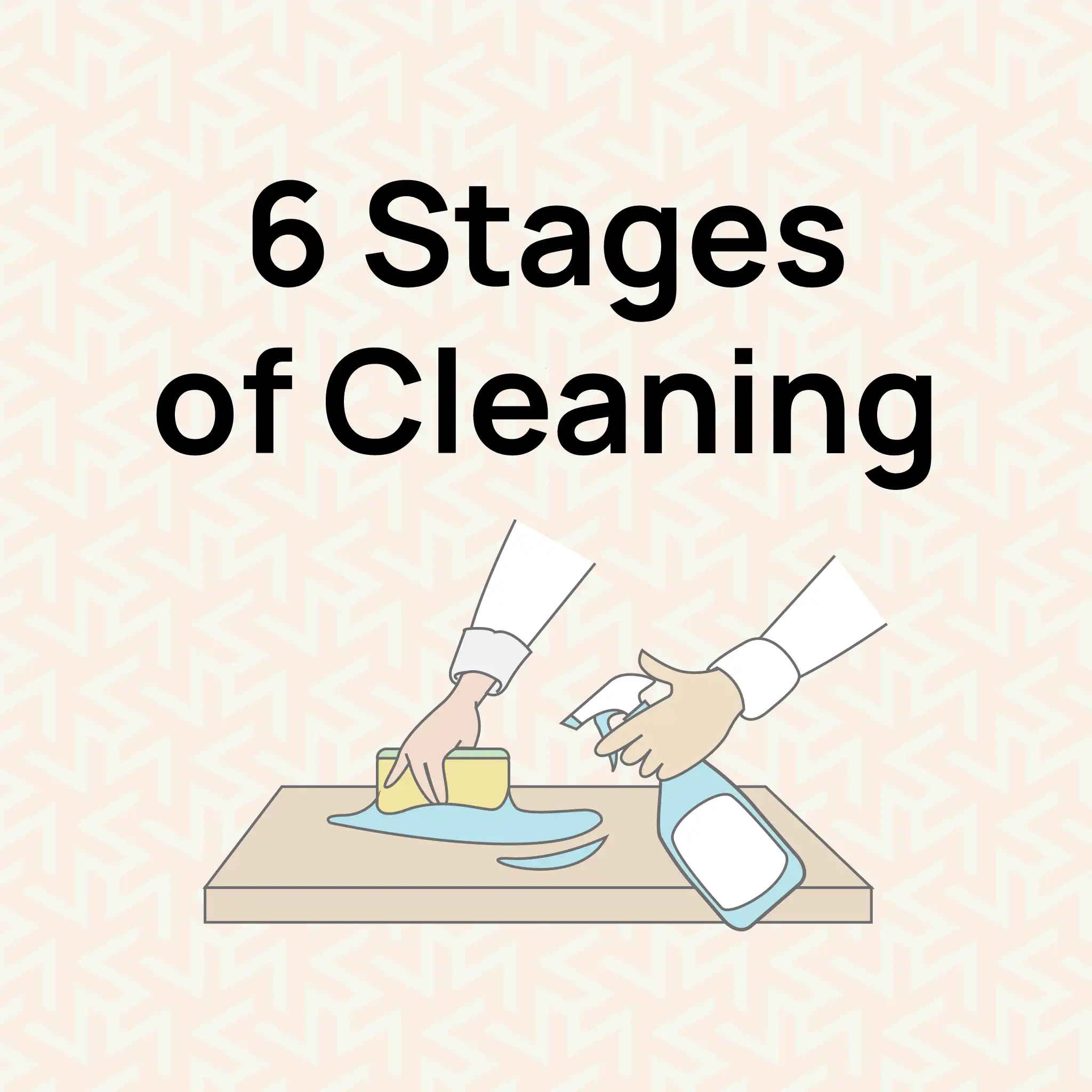
Did You Know Germs Can Hide In Plain Sight?We often think of dirt as something we see, like crumbs on a counter or stains on a surface. But the real danger lies in the germs and bacteria we cannot see. These can quietly accumulate on kitchen surfaces, door handles, tools, and even the objects we touch daily.Keeping your kitchen clean is not just about appearance; it is about preventing food contamination, protecting health, and creating a safe environment for everyone. And this applies far beyond kitchens. Whether you work in a restaurant, clinic, office, or factory, a clean workplace is essential for health, safety, and efficiency.That is why it�s essential to understand the 6 stages of cleaning, a simple yet powerful process used across industries to ensure spaces are not only clean but also safe.Before we move on to the 6 stages of cleaning, it�s essential to understand the differences between cleaning, disinfecting, and sanitising. These terms are often used interchangeably; however, they serve distinct purposes.�Understanding the difference helps you choose the correct method according to your requirements, ensuring that you not only clean the surface but also make it safe and hygienic.What Is Cleaning, Disinfecting And Sanitising?Understanding the difference between cleaning, disinfecting, and sanitising is essential for maintaining hygiene, especially in environments where safety matters most.�The visual below explains how each process works and why all three are equally important in achieving a spotless and safe space.To put it simply, clean to remove, disinfect to kill, and sanitise to make it safe. Each one plays a unique role in keeping your environment truly clean.Understanding the difference between cleaning, disinfecting, and sanitising is just the first step. The real challenge lies in applying them effectively in real-world settings, like a busy kitchen, a healthcare facility, or any shared workspace.That�s where the 6 stages of cleaning come in. This structured method ensures that every surface is not only visibly clean but also hygienically safe, helping prevent the spread of germs and keeping people protected.Why Do the 6 Stages of Cleaning Matter?A quick wipe with a cloth might remove visible dirt, but it�s not always enough to kill germs or stop the spread of illness.To truly clean and disinfect a surface, a proper method must be followed. This simple, step-by-step process helps ensure every surface is not only clean but also safe.It removes hidden germs, reduces health risks, and helps meet hygiene standards, especially in places where food is handled or equipment is shared.Understanding these 6 stages is especially important if you work in:Food handling or hospitalityHealthcare or caregivingBeauty, salon, or tattoo industriesCleaning services or facilities managementOr any job where cleanliness affects people�s safetyEnsure You Master Food Hygiene!Stay compliant and protect your workplace by taking our certified Food Hygiene Level 2 course. Practical, accredited, and designed for busy professionals.Level 2 Food Hygiene and Safety for CateringLevel 2 Food Hygiene and Safety for ManufacturingLevel 2 food hygiene and safety for retail�Level 2 Food Hygiene and SafetyThe 6 Stages Of Cleaning � With Real-Life ExamplesWhether you�re in a commercial kitchen, a healthcare setting, or simply maintaining cleanliness at home, following a structured cleaning process ensures you�re doing more than just shifting dirt around.Understand the 6 stages of cleaning with real-life examples and learn how to apply them effectively in everyday situations to keep your environment safe and hygienic.Stage 1. Pre-Clean - Remove Loose Dirt And MessWhat does it mean:Start by clearing away anything you can physically see, like food scraps, dust, hair, or packaging.Example:In a kitchen, this could mean wiping crumbs off a cutting board after making sandwiches.In an office, it might be brushing dust and bits of paper off your desk before cleaning it.Why it matters:If you skip this step, dirt and debris can block your cleaning products from working effectively in the following stages.Stage 2. Main Clean - Wash Off Grease, Grime, Or SpillsWhat does it mean:Now you apply warm water and detergent to scrub away stubborn messes, like sticky � sauces, oil, or dried spills.Example:In a restaurant kitchen, this might be scrubbing greasy residue off a grill or stove.In a clinic, detergent could be used to clean off any visible stains on a treatment bed.Why it matters:This step removes the stuff that soap can lift, but water alone can�t handle. It prepares the surface for disinfection.Stage 3. Rinse - Wash Away Dirt And DetergentWhat does it mean:Rinse the area with clean water to remove the loosened grime and leftover detergent from stage 2.Example:After scrubbing a chopping board with detergent, rinse it under running hot water.In an office pantry, rinse the sink basin after cleaning it with soap and water.Why it matters:Leftover soap or dirt can react with disinfectant and reduce its power, so rinsing is key before moving on.Stage 4. Disinfect - Kill Germs And MicroorganismsWhat does it mean:Now it�s time to kill harmful bacteria and viruses using a disinfectant or sanitiser. Apply and leave it for the right amount of time. To learn more about maintaining hygiene standards in food safety, refer to our comprehensive guide on HACCP principles.Example:Spray an antibacterial solution on kitchen counters after cleaning them, and let it sit for 5�10 minutes as per instructions.In a salon, disinfectant spray on tools like scissors or tweezers.Why it matters:Even if something looks clean, it could still carry dangerous germs. Disinfection removes what you can�t see.Stage 5. Final Rinse - Remove Disinfectant (If Required)What does it mean:Some disinfectants need to be rinsed off with clean water to avoid leaving harmful chemical residues.Example:In a food preparation area, rinse countertops after disinfection to ensure that no chemical residue ends up in the food.In a child care centre, rinse toys after disinfecting to prevent chemicals from getting on children�s hands or mouths.Why it matters:Leftover disinfectant can be toxic if ingested or touched, especially around food, children, or sensitive skin.Stage 6. Dry - Get Rid Of MoistureWhat does it mean:Dry the surface completely�either by letting it air dry or by using a clean, disposable cloth.Example:In a bakery, leave trays to air dry after washing and disinfecting.In an office kitchen, use a paper towel to dry the sink or counter after final rinsing.Why it matters:Germs thrive in damp places. If the surface stays wet, it can become contaminated again quickly.By following all 6 stages - from pre-cleaning to drying - you go beyond surface-level cleaning and ensure a truly hygienic environment.�This methodical approach not only improves safety and hygiene but also helps meet compliance standards in food handling, healthcare, and other high-risk settings. Mastering these stages is a simple and effective way to prevent the spread of harmful germs and protect those around you.Things To Keep In Mind Before You Start CleaningWhile the 6 stages of cleaning provide a structured process, their effectiveness depends on proper preparation. Before you begin the actual cleaning steps, it�s important to prepare appropriately.�The steps below help you set up correctly, ensuring your cleaning process is efficient, compliant, and thorough � even in demanding environments.Follow A Cleaning ScheduleIf you are cleaning as part of your job, you likely have a cleaning rota or a risk assessment in place. Stick to it. These tools make sure:You're cleaning the right areas at the right timeHigh-risk zones (like food prep areas or shared surfaces) are not missed.The whole process runs smoothly and safelyUse The Right Products�Every job needs the right tools, and cleaning is no different.Choose cleaning products that are:Effective against the specific germs in your environment (e.g. food-borne bacteria in kitchens, viruses in healthcare)Safe for the surface you're working on (some products can damage wood, stone, or stainless steel)Never mix chemicals unless the label clearly says it�s safe�it can release dangerous gases.Always Read The LabelCleaning products come with instructions for a reason. Pay attention to:How much to use (too much doesn�t mean better)How long should I leave it on the surfaceWhere and how to store it safelyIf you're using strong chemicals, always check the manufacturer�s guidelines, especially in commercial settings.Wear The Right PPEBefore cleaning, wear proper personal protective equipment (PPE) like:Gloves � to avoid skin reactions from detergents and disinfectantsAprons � to prevent spills from reaching your clothes or skinThis is not just about comfort�it�s about your long-term health.Ventilation Is ImportantAlways ensure the space you�re cleaning is well-ventilated. Some cleaning chemicals release fumes that can cause:HeadachesBreathing issuesLong-term respiratory problemsOpen windows or turn on exhaust fans when needed.Follow A Smart Cleaning PatternTo clean effectively and avoid cross-contamination:Start from the cleanest area and move to the dirtiestClean top to bottom (so dust doesn't fall onto already-cleaned areas)Use an S-shaped motion with your cloth, which helps cover the whole surface without re-contaminating itPractice Good Hand HygieneEven if you wear gloves, wash your hands after cleaning. This prevents any lingering germs from spreading to food, surfaces, or other people.Place hand sanitisers and disinfectant wipes in visible, easy-to-reach areas to promote regular hand hygiene.Stick To A Deep Cleaning RoutineSet a regular schedule for deep cleaning, especially for shared items like:Kitchen appliancesTouchscreens, phones, and printersLight switches and door handlesPromote Cough & Sneeze EtiquetteEncourage everyone in the workspace to:Cover coughs and sneezes with a tissue or their elbowDispose of tissues properlyDisinfect any surface they may have sneezed or coughed onManage Waste ProperlyDon�t let rubbish pile up. Keep waste bins:CoveredCleaned regularlyEmptied frequentlyFollowing these ten steps will not only make your cleaning routine more efficient but also help maintain a healthier, safer environment for everyone around you. Getting these fundamentals right sets the stage for proper disinfection and long-term hygiene.Use this quick checklist as a reminder to keep your cleaning process safe, effective, and fully compliant.ConclusionA clean workplace is crucial for maintaining health, ensuring safety, and promoting productivity.By following the 6 stages of cleaning, you ensure that your environment is not only free from visible dirt but also hygienically safe for everyone.These stages are applicable across a wide range of industries, including food production, hospitality, healthcare, and facilities management, and provide a reliable framework for meeting high hygiene standards and complying with regulations. FAQsWhat is the cleaning process in the food industry?The cleaning process typically follows six key stages: pre-clean, leading clean, rinse, disinfection, final rinse, and drying. This ensures all surfaces are safe and free from contaminants.What are the different types of cleaning?There are several types of cleaning depending on the environment and need:Routine cleaning: Regular, daily cleaning tasks to maintain hygiene.Deep cleaning: More intensive cleaning is performed periodically to remove hidden dirt and contaminants.Reactive cleaning: Immediate response to spills, accidents, or other forms of contamination.Preventive cleaning: Scheduled cleaning to prevent the build-up of germs and maintain standards.Understanding the type of cleaning required helps you choose the right products, tools, and methods.Why is rinsing important in cleaning?Rinsing removes detergent and loosened dirt, preventing residue buildup that could interfere with disinfection or contaminate food.What is the final rinse step in cleaning?The final rinse removes any remaining disinfectant using clean, potable water. This step is critical in food areas to prevent chemical residues.What does pre-cleaning involve?Pre-cleaning involves removing loose dirt, food particles, or debris before using cleaning agents. It improves the efficiency of subsequent cleaning steps.What is the drying stage in the cleaning process?�Drying is the final step where surfaces are allowed to air dry or are dried using clean cloths. This helps prevent microbial growth on damp surfaces.What occurs in the main cleaning stage of the 6 stages of cleaning?�In this stage, detergents are applied to remove grease, grime, and food residues. It's essential for breaking down contaminants before rinsing and disinfecting.What are the cleaning and disinfection steps?The cleaning and disinfection steps involve two critical actions:Cleaning: Physically removing dirt, grease, and residues from surfaces using detergent and water.Disinfection: Applying a disinfectant to kill harmful bacteria, viruses, and other microorganisms after cleaning.Both steps are essential � cleaning removes what you can see, while disinfection tackles what you can�t.What is the final stage of cleaning and disinfection?The last stage is drying. Surfaces must air dry or be dried with clean cloths to avoid moisture buildup, which can harbour bacteria.
Living with BPD: A Look at Borderline Personality Disorder
Borderline Personality Disorder (BPD) affects thousands of people across the UK. Yet, it remains surrounded by stigma and confusion. Many struggle for years before receiving a diagnosis or the support they need, often misunderstood by both professionals and loved ones.This article aims to clarify Borderline Personality Disorder (BPD) by providing a clear and compassionate overview of its symptoms, causes, and the treatment pathways available through the NHS (National Health Service) and other support networks. With the right understanding and care, recovery is not only possible, it�s within reach.What is BPD?Borderline Personality Disorder (BPD) is a deeply challenging mental health condition that influences how a person experiences emotions, views themselves, and connects with others. It's often associated with overwhelming emotional shifts, unstable relationships, impulsive actions, and confusion about self-identity.Many individuals with BPD live with an intense fear of being abandoned, frequent mood swings, and difficulty regulating emotions. These struggles can make everyday situations feel unpredictable and relationships emotionally draining.The good news is that BPD is highly treatable. With the right therapeutic support, structure, and self-understanding, people with BPD can find balance and lead meaningful, fulfilling lives.What Are the Signs and Symptoms of BPD?Borderline Personality Disorder (BPD) affects how individuals experience emotions, relationships, and self-identity. While symptoms can vary from person to person, there are several common signs that mental health professionals look for when diagnosing BPD.Below are the key symptoms associated with BPD:Signs and SymptomsDescriptionIntense Fear of AbandonmentPeople with BPD often go to great lengths to avoid real or perceived abandonment. Even minor changes in plans or tone of voice can trigger anxiety or distress.Unstable RelationshipsRelationships tend to be intense and short-lived. Individuals may quickly shift between idealising someone and suddenly devaluing them.Distorted Self-ImageA person with BPD may struggle with a fragile or shifting sense of identity, unsure of who they are, what they believe, or how they see themselvesImpulsive BehavioursA person with BPD may struggle with a fragile or shifting sense of identity, unsure of who they are, what they believe, or how they see themselvesEmotional InstabilityMood swings are intense and unpredictable, shifting rapidly from joy to anger, anxiety, or despair, lasting hours to days.Chronic Feelings of EmptinessMany with BPD feel persistently �empty� inside and may seek stimulation or relationships to fill the void.Inappropriate or Intense AngerSudden outbursts of anger, sarcasm, or aggression often occur, especially when feeling rejected or misunderstood.Stress-Related ParanoiaShort episodes of mistrust, suspicion, or distorted thinking are triggered by emotional stress, especially in sensitive situations.What Causes BPD?There�s no single cause of Borderline Personality Disorder. Instead, it�s believed to develop from a combination of genetic, environmental, and social factors. Understanding the possible causes can help reduce stigma and promote a more compassionate view of the condition.Here are some of the key contributing factors:Childhood Trauma or NeglectMany people with BPD report experiencing early trauma, such as abuse (emotional, physical, or sexual), neglect, abandonment, or prolonged separation from a caregiver. These early disruptions in emotional development may make it harder to form stable relationships or regulate emotions later in life.Genetics and Family HistoryBPD tends to run in families. If a close family member, such as a parent or sibling, has BPD or another mental health condition, the risk may be higher. This suggests a possible genetic link, although no specific "BPD gene" has been identified.Brain Function and StructureResearch using brain imaging suggests that people with BPD may have differences in the areas of the brain that control emotion, decision-making, and impulse regulation, particularly the amygdala, hippocampus, and prefrontal cortex. These differences might contribute to emotional sensitivity and impulsivity.Problems with AttachmentDifficulties forming healthy emotional bonds in early childhood, especially inconsistent or invalidating caregiving, may lead to attachment issues, a key feature in the development of BPD. Individuals may struggle with trust, self-worth, and emotional safety in relationships.Environmental and Social FactorsStressful life events such as bullying, domestic violence, long-term instability, or growing up in a chaotic or invalidating environment can all increase the risk of developing BPD. These experiences may interfere with emotional development and coping skills.The infographic below illustrates the key points:Borderline Personality Disorder TreatmentsLiving with Borderline Personality Disorder can be difficult, but there is hope. With access to the right therapy, emotional support, and self-care tools, many people with BPD go on to live rewarding, stable lives. Treatment is focused on emotional regulation, relationship skills, and reducing distressing behaviours, and is widely available in the UK through the NHS or private mental health services.Dialectical Behaviour Therapy (DBT)DBT is one of the most effective and commonly recommended treatments for BPD. It focuses on four key areas:Emotional regulationDistress toleranceMindfulnessInterpersonal effectivenessIt helps people manage intense emotions and develop healthier coping skills.Mentalisation-Based Therapy (MBT)MBT helps individuals understand their thoughts and feelings and those of others more clearly. It�s especially helpful for improving relationships and emotional stability.Cognitive Behavioural Therapy (CBT)CBT is not a primary treatment for BPD, but may help with related issues like anxiety, depression, or impulsive behaviours.Schema TherapyThis therapy focuses on identifying and changing deep-rooted patterns and beliefs formed in childhood that may be contributing to BPD symptoms.Important Note:There is no specific medication approved for treating BPD itself. However, doctors may prescribe medication to manage associated symptoms, such as:Mood swingsAnxietyDepressionSleep disturbances Frequently Asked Questions (FAQs):What is Borderline Personality Disorder (BPD)?BPD is a mental health condition that affects how a person manages emotions, relates to others, and sees themselves. It often involves emotional instability, impulsive behaviour, and difficulties in relationships.Is BPD treatable?Yes, BPD is treatable. With the right support � such as talking therapies like DBT or MBT, and ongoing care through the NHS or private services � many people see real improvements in how they cope and connect with others.What causes BPD?There isn�t one single cause. BPD is usually linked to a mix of factors, including childhood trauma, genetics, brain chemistry, and early attachment issues. Everyone�s experience is different.How is BPD diagnosed in the UK?A diagnosis is usually made by a GP or mental health professional based on your symptoms and history. You may be referred to a community mental health team (CMHT) for a full assessment.Can people with BPD live normal lives?Absolutely. With the right treatment, self-care, and support, many people with BPD build strong relationships, manage their emotions effectively, and live fulfilling, stable livesExplore more about our courses:�Emergency First Aid at Work is described as a short, practical training course designed to prepare individuals to respond to medical emergencies in low-risk workplace settings.First Aid at Work is a comprehensive, Ofqual-regulated Level 3 qualification delivered over three days in a classroom setting. It is ideal for first aiders working in high-risk or diverse environments such as construction sites, manufacturing units, or warehouses.Paediatric First Aid is a two-day, Ofqual-regulated classroom-based training that specifically focuses on first aid for infants (0�1?year) and children up to puberty. It�s ideal for anyone working with or caring for young children.Basic First Aid Course is a compact, self-paced program ideal for individuals seeking an introduction to first aid or a quick annual refresh.�Advanced First Aid Course is a fully online, self-paced Level 3 training designed for individuals seeking more comprehensive knowledge beyond basic first aid.