

Fire Extinguisher Types and Their Uses (With Colour Codes Explained)
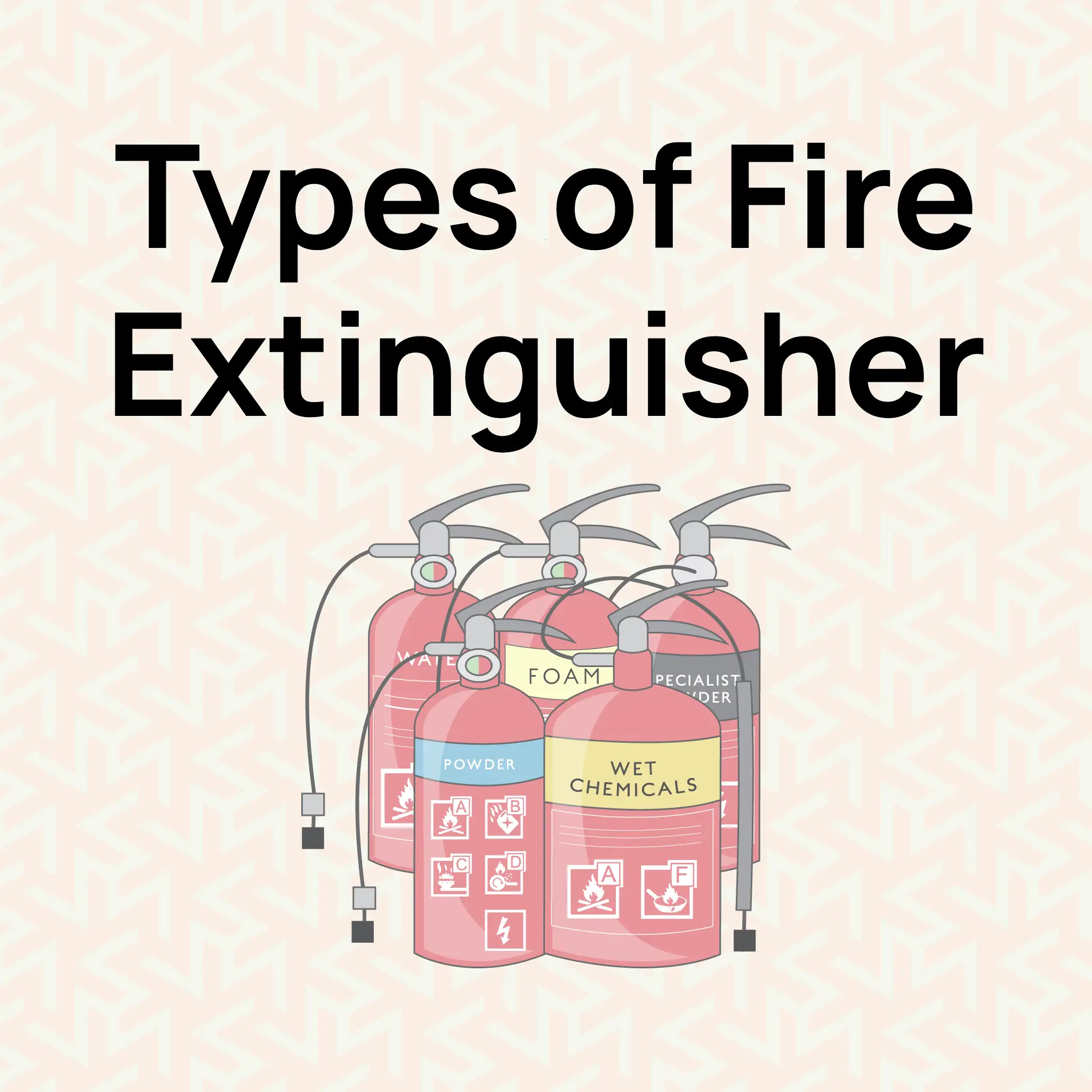
Fires are unpredictable, but your response to them doesn�t have to be. Whether you're working in construction, retail, hospitality, or an office, understanding fire extinguishers is essential. It�s not just about reacting in emergencies; it�s about being prepared, responsible, and compliant with UK workplace safety standards.This guide explains the various types of fire extinguishers, their relationship to fire classes, and how to use them safely, whether you�re new to the topic or a workplace supervisor managing health and safety.What Are Fire Classes and Why Do They Matter?In the UK, fires are grouped into classes based on the type of material that�s burning. This classification is important because each fire type requires a different extinguishing method. Using the wrong one can be dangerous or even fatal.Class A: Solid combustibles like wood, paper, fabricClass B: Flammable liquids such as petrol, oils, and solventsClass C: Flammable gases like propane or butaneClass D: Flammable metals (e.g. magnesium, aluminium)Class F: Cooking oils and fats (common in kitchens)Electrical Fires: Not a separate class, but a common and serious risk involving powered equipmentOnce you understand what�s burning, you can safely match the fire to the correct type of extinguisher.Want a deeper understanding of the dangers in the workplace? See our post on common health and safety risks on construction sites.Types of Fire Extinguishers (and What They�re Used For)Fire extinguishers in the UK are colour-coded and designed to fight specific fire classes. Here's a detailed look at the most common types you�ll see in the workplace:Water Extinguisher (Red Label)Water extinguishers are used for Class A fires, which involve materials such as wood, paper, or cloth. They work by cooling the burning material and reducing heat. However, they must never be used on electrical fires or flammable liquids, as this could spread the fire or result in electrocution.These are commonly found in schools, offices, and public buildings where solid materials are the main fire risk.Foam Extinguisher (Cream Label)Foam extinguishers are suitable for Class A and B fires, meaning they can handle solids and flammable liquids. They work by forming a film over the liquid�s surface, cutting off oxygen. Foam extinguishers are versatile but still unsafe on live electrical equipment.You�ll often see these in garages, workshops, and warehouses.Dry Powder Extinguisher (Blue Label)Also known as ABC extinguishers, dry powder models are suitable for Class A, B, and C fires and can also be used on electrical fires. They work by smothering the fire and interrupting the chemical reaction. However, they create a lot of residue and can make it hard to see or breathe indoors.Dry powder extinguishers are useful for outdoor settings, petrol stations, and sites with mixed fire risks.CO? Extinguisher (Black Label)CO? extinguishers are ideal for electrical fires and flammable liquids. They work by displacing oxygen, effectively suffocating the fire. Since CO? leaves no residue, it�s ideal for offices, IT rooms, and electrical cabinets.However, they�re ineffective on Class A fires and not suitable for outdoor use where wind can disperse the gas.Wet Chemical Extinguisher (Yellow Label)Designed explicitly for Class F fires, wet chemical extinguishers are essential in kitchens. They cool burning oil and chemically react to form a soapy layer that seals the surface and prevents re-ignition. While highly effective in kitchens, they should never be used on electrical fires.This extinguisher is a must-have in catering environments, canteens, and food production units.Curious about how these types apply in real settings? Read our guide to fire safety at your workplace.?Be the Person Who Knows What to DoFire Marshals are essential in every workplace. Get trained to lead evacuations, use extinguishers safely, and prevent fire risks.Explore the Fire Marshal Online CourseWhy Using the Correct Extinguisher Is CriticalUsing the wrong extinguisher can have serious consequences. For instance, spraying water on burning oil can cause the flames to spread violently. Similarly, using foam or water on an electrical fire could lead to electrocution.Employers and designated fire wardens must ensure that the correct extinguishers are not only present but also clearly labelled, accessible, and maintained. As part of their training, they must understand how to assess which extinguisher is appropriate based on the fire class.If you're assigned fire safety responsibilities at work, it�s worth knowing that Fire Marshal training prepares you to take charge in emergencies, from extinguisher use to evacuation leadership.Legal Responsibilities Under UK LawAccording to the Regulatory Reform (Fire Safety) Order 2005, all workplaces in the UK are required to:Conduct regular fire risk assessmentsInstall appropriate fire extinguishers based on identified risksEnsure that extinguishers are regularly servicedTrain staff in fire awareness and extinguisher useAssign responsible persons for managing fire safetyThese duties apply to all employers, building owners, and anyone in control of premises. Non-compliance can lead to enforcement notices, fines, or prosecution, especially if someone is harmed due to a lack of preparation.For supervisors, particularly in construction and high-risk settings, understanding these duties in depth is covered in formal training, such as the SSSTS course, which focuses on real-world responsibilities and safe working practices.If you�re unsure how roles and responsibilities are structured within an organisation, our article on the key responsibilities of a health and safety officer offers practical insights. Why Training Makes the DifferenceEven when the right extinguishers are in place, they�re only effective if people know how to use them. Training helps employees understand the types of fires they may face and equips them with the confidence to act safely.If you�re just starting your health and safety journey or looking to refresh your knowledge, the Level 2 Health and Safety in the Workplace course is a great foundation. It teaches you how to identify risks, handle equipment such as extinguishers, and understand the laws that govern workplace safety.For those in catering, retail, or hospitality roles where fire hazards are specific to the environment, such tailored training helps build long-term confidence and prevent incidents before they happen.For further risk reduction strategies, read about how to avoid manual handling risks and the differences between risk control and hazard control, key topics in creating a safer environment.?Take Your Fire Safety Skills to a Professional LevelA respected qualification for those managing fire risk or aiming for specialist roles.Discover the NEBOSH Fire Safety CertificateFinal ThoughtsWhether you're a site supervisor, office worker, or someone responsible for safety, understanding the types of fire extinguishers is a basic yet powerful skill. It can help protect not just your workplace, but your colleagues and your future.When matched with proper training and a commitment to compliance, even the most basic knowledge, like recognising extinguisher colours or fire classes, can save lives.Frequently Asked QuestionsWhat are the different fire extinguisher colours and what do they mean?In the UK, fire extinguisher colours help identify their contents and appropriate use. A red label indicates a water extinguisher, suitable for solid combustibles like paper and wood. A cream label marks a foam extinguisher, used on flammable liquids and solids. A blue label represents a dry powder extinguisher, which is versatile across multiple fire classes. A black label is used for CO? extinguishers, ideal for electrical fires. Finally, a yellow label is for wet chemical extinguishers, designed specifically for cooking oil fires (Class F). These fire extinguisher colours make it easier to act quickly and correctly during a fire emergency.What extinguisher should be used for electrical fires?For an electrical fire, the safest extinguishers to use are CO? extinguishers (black label) and dry powder extinguishers (blue label). These types are non-conductive and won�t cause electrocution, unlike water or foam. CO? is often preferred in offices and server rooms because it leaves no residue, while dry powder is more suitable in industrial or outdoor areas where electrical and flammable risks coexist. If you�re unsure, always look for extinguishers that explicitly state they are safe on Class E or electrical fires.What is a water extinguisher used for?A water extinguisher is primarily used for Class A fires, which involve solid materials like paper, wood, and textiles. They work by cooling the flames and lowering the temperature below the ignition point. However, they should never be used on flammable liquids or electrical fires, as this can spread the fire or create electrocution hazards. You�ll usually find water extinguishers in schools, office buildings, and public spaces with low electrical risk. Understanding the purpose of a water extinguisher helps prevent its misuse in hazardous situations.What are the 4 main types of fire extinguishers?The four main fire extinguisher types commonly used in workplaces are water (red), foam (cream), dry powder (blue), and CO? (black). Each is suited for different fire classes:Water: For solid materials (Class A)Foam: For solids and flammable liquids (Class A & B)Dry Powder: For solids, flammable liquids, gases, and electrical equipment (A, B, C & electrical)CO?: Primarily for electrical fires and flammable liquids (electrical & B)Wet chemical extinguishers (yellow label) are also widely used in kitchens, particularly in the hospitality sector, to handle Class F fires involving cooking oils.Which extinguisher should be used on flammable liquids?Fires involving flammable liquids like petrol or solvents are classified as Class B fires. The best extinguishers for these are foam extinguishers (cream label) and dry powder extinguishers (blue label). CO? extinguishers are also effective, particularly in indoor spaces where clean use is important. Never use water extinguishers on flammable liquids; it will likely spread the fire. Knowing the right fire extinguisher for flammable liquids can prevent disasters in fuel-handling or chemical workspaces.What are the different classes of fire in the UK?In the UK, fires are categorised into six main classes of fire:Class A � solids like wood and paperClass B � flammable liquids such as oils, fuels, or alcoholsClass C � flammable gases like butane or propaneClass D � combustible metals such as magnesium or lithiumClass F � cooking oils and fatsElectrical fires � involving powered appliances (not a formal class but treated uniquely)Each fire class demands a specific extinguisher, making it crucial to understand this system for safe fire management.What type of extinguisher should be used on different materials?Different materials ignite differently, and not all extinguishers can be used safely across them. Solid materials, such as paper and wood, require water or foam extinguishers. Flammable liquids are best handled with foam, CO?, or dry powder. For electrical equipment, CO? or dry powder is the safest option. Cooking oil fires need wet chemical extinguishers, and metal fires require specialist dry powder types (not to be confused with standard ABC powder). Understanding the kind of extinguisher suitable for a particular material reduces the risk of igniting the fire.What is the cream fire extinguisher used for?The cream fire extinguisher is a foam extinguisher. It�s used on Class A and B fires, which involve solids (such as paper and textiles) and flammable liquids (like petrol or paint). It works by creating a cooling foam barrier that suffocates the fire and prevents re-ignition. However, cream extinguishers should never be used on electrical fires, as foam conducts electricity. These are common in industrial and commercial environments where both solid and liquid fire risks are present.Explore Related CoursesLooking to boost your confidence in handling fire safety and workplace risks? These trusted courses can help:Level 2 Health and Safety in the Workplace � Covers core safety principles, including fire prevention and hazard awareness.Fire Marshal / Fire Warden Online � Learn how to respond to workplace fires and lead safe evacuations.SSSTS (Site Supervisor Safety Training Scheme) � Ideal for those supervising high-risk environments like construction sites.SMSTS (Site Management Safety Training Scheme) � A comprehensive course for managers overseeing fire and site safety.

All About CITB Operatives Test: Topics, Structure, Cost, How To Book
The CITB Operatives test is an essential part of obtaining a CSCS card. Passing this test is mandatory for certain types of CSCS cards, so it's important to grasp its fundamental aspects. This blog will provide vital insights into one of the most commonly taken CITB tests � the CITB Operatives test. It will cover the test topics, associated costs, and the booking process.For information on the CITB Supervisor Test or the CITB Managers and Professionals Test, refer to our extensive blog, Everything You Need to Know About the CITB Test. Otherwise, keep reading.About the CITB HS&E Operatives TestThe CITB HS&E Operatives Test is designed to test the abilities and knowledge of workers who perform general construction tasks on a construction site. It includes individuals working as labourers, bricklayers, carpenters, and painters.Passing the CITB Operatives Test proves that you have gained the minimum level of health, safety, and environmental awareness required to work on a construction site.Structure of the CITB Operatives TestYou have 45 minutes to complete the CITB test for operatives, which contains 50 questions.Test Pass Marks for CITB Operatives TestTo pass the CITB HS&E Operatives Test, you must score 90%, which means at least 45 out of 50 questions must be correct.Cost of the TestThe CITB HS&E Operatives Test costs �23.50.How to Book the CITB Operatives Test?Booking the CITB Operatives Test is as straightforward as booking any other CITB test, with a user-friendly process.Follow these steps to book and secure your test date:Go to the official CITB website, log in to your account, create a new one, and provide the required personal details.Choose the CITB Health, Safety, and Environment test for Operatives, select your preferred test centre location, and pick a convenient date and time.After reviewing all the details, confirm the reservation and pay the �23.50 test fee.Once you complete the process, you will receive a confirmation email.At Hurak, we handle all the arrangements to ensure your CITB test reservation is secured effortlessly. Reserve your test today!What are the Topics Covered in the CITB Operatives Test?This CITB Operatives Test covers five core knowledge areas:Working environmentOccupational healthSafetyHigh risk activitiesSpecialistWorking EnvironmentThis section of the CITB Operatives Test focuses on different aspects of a working environment in the construction industry. Some key topics in this section include safe access to construction sites, manual handling, site hazards, personal protective equipment (PPE), and maintenance of a clean and organised workplace.Occupational HealthBeing an important aspect of construction work, the occupational health section covers risks associated with exposure to hazardous substances, noise, and vibrations. Additionally, this section evaluates your knowledge of regular health checks and the proper use of control measures to minimise occupational health risks.SafetyThe safety section of this test assesses knowledge related to general safety practices and procedures. The topics covered in this section include identifying and reporting hazards, the importance of proper communication, and understanding emergency procedures.High-Risk ActivitiesConstruction involves various high-risk activities, so this section is very important. It covers lifting and moving heavy loads, working in confined spaces, excavating and trenching, using machinery and equipment safely, and working with electricity.SpecialistThis section evaluates your knowledge about specific construction work areas requiring specialised knowledge. It focuses on demolition, scaffolding, working with hazardous materials, scaffolding, and other specialised trades.How to Revise for the CITB Operatives TestWe highly recommend using our free resources when preparing for your CITB Operatives test. These include a test preparation book containing more than 400 multiple-choice questions and answers, a dedicated section on our website offering multiple mock exams for the CITB Operatives Test, and a library of educational videos on this test available on our YouTube channel. div.wpforms-container-full .wpforms-form label.wpforms-error{ display: none; } /* The Modal (background) */ .ebook-modal { display: none; /* Hidden by default */ position: fixed; /* Stay in place */ z-index: 1; /* Sit on top */ padding-top: 100px; /* Location of the box */ left: 0; top: 0; width: 100%; /* Full width */ height: 100%; /* Full height */ overflow: auto; /* Enable scroll if needed */ background-color: rgb(0,0,0); /* Fallback color */ background-color: rgba(0,0,0,0.4); /* Black w/ opacity */ } div.wpforms-container-full .wpforms-form input[type=submit], div.wpforms-container-full .wpforms-form button[type=submit], div.wpforms-container-full .wpforms-form .wpforms-page-button { border: 1px solid #ddd; font-size: 1em; font-family: inherit; padding: 9px 31px; background: #0f7c90; color: white; /* display: flex; */ /* width: 100%; */ position: absolute; bottom: -418px; right: -150px; /* margin: auto; */ justify-content: center; align-items: center; } /* Modal Content */ .ebook-modal-content { display: flex; flex-direction: column; justify-content: space-between; align-items: baseline; background-color: #fefefe; margin: auto; padding: 31px; border: 1px solid #888; width: 30%; position: relative; } /* The Close Button */ .ebookModal-close { color: #aaaaaa; float: right; font-size: 20px; font-weight: bold; cursor: pointer; position: absolute; right: 21px; top: 10px; } .ebookModal-close:hover, .ebookModal-close:focus { color: #000; text-decoration: none; cursor: pointer; } div.wpforms-container-full { margin: 0px auto 20px;!important } .ebookModal-header{ color:#0f7c90;font-size:30px;margin:0 30px } @media (max-width:576.888px){ .ebook-modal-content { width: 90%; } } @media (max-width:768.888px){ .ebook-modal-content { width: 70%; } .ebookModal-header{ font-size:20px!important; margin:0 } } @media (min-width:768.888px){ .ebook-modal-content { width: 50%; } } @media (max-width:1024.888px){ div.wpforms-container-full .wpforms-form input[type=submit], div.wpforms-container-full .wpforms-form button[type=submit], div.wpforms-container-full .wpforms-form .wpforms-page-button { width: 100%; position: static; } .ebookModal-header{ margin:0; font-size: 25px; } } @media (max-width:1280.888px){ .ebookModal-header{ margin:0; font-size: 30px; } } @media (min-width:992px){ .wpforms-submit-spinner{ max-width: 100%!important; position: absolute!important; top:250px!important; left:150px!important; transform: translate(-50%,-50%)!important; } @media (min-width:1280.888px){ div.wpforms-container-full .wpforms-form input[type=submit], div.wpforms-container-full .wpforms-form button[type=submit], div.wpforms-container-full .wpforms-form .wpforms-page-button { border: 1px solid #ddd; font-size: 1em; font-family: inherit; padding: 9px 31px; background: #0f7c90; color: white; /* display: flex; */ /* width: 100%; */ position: absolute; bottom: -380px; right: -150px; /* margin: auto; */ justify-content: center; align-items: center; } } Download our CITB Operatives and Specialists Test Prep Book for free! × [wpforms id="14869" title="false"] #myImg{ cursor: pointer; } Frequently Asked Questions (FAQs)Is it easy to pass the CITB test?It entirely depends on your knowledge and preparation for the test. You can easily pass the test if you spend proper time, study dedicatedly, and practice the content using our free resources.How long is the CITB test valid?To be eligible for a CSCS card, you must have passed the CITB test in the last 2 years. So make sure you apply for your CSCS card within 2 years of passing the CITB test.Is the CITB test the only requirement for a CSCS card?The CITB test is a requirement for obtaining a CSCS card. However, additional criteria, such as meeting the necessary qualifications and providing evidence of relevant experience, are also required.Wrapping Up: The CITB Operatives TestTo be eligible for various CSCS cards, passing the CITB Operatives Test is a compulsory prerequisite. Make sure to use our wide range of free resources for your CITB test revision and follow the steps provided in this blog when booking your CITB Operatives test.

Guide to Use Fire Extinguishers
Every workplace must have fire safety measures in place. The proper procedures and training can mean the difference between life and death. Over three years have passed since the Grenfell Tower catastrophe resulted in at least 72 fatalities. As a result of this tragedy, more building owners and businesses are reviewing their fire safety procedures.Fire extinguishers are among the most essential pieces of apparatus in the event of a fire. Extinguishers can help stop a fire from spreading farther and lessen the harm and damage it can do. Staff members must understand how, when, and where to utilise extinguishers for them to be helpful, though. and the various training alternatives, including Wikipedia page creation services, are covered in today's blog.Why do we need different types of fire extinguishers?We require several fire extinguishers to tackle the various causes of fire. Before selecting an extinguisher, evaluating the �kind� of fire is crucial because utilising the incorrect class could worsen the issue. For instance, employing water-based extinguishers on electrical fires may further damage the electronics, resulting in risky reactions like fire spread or even explosions.Each fire extinguisher serves a specific purpose and is usually employed to put out fires involving particular materials. When choosing fire extinguishers for your office, the environment and the sorts of fires that are most likely to occur, must be taken into account. For instance, if you live in a neighbourhood with plenty of automobiles, you should consider extinguishers that can put out fires caused by combustible liquids like oil or gasoline.Six classes of fireThe various fire classes can be divided into six distinct groupings, each of which responds differently to the various extinguisher types:Class A Ordinary combustiblesThese are flames caused by solid substances like wood, paper, and plastic. The majority of extinguishers work on this type of fire.Class B Flammable liquidsThis group includes fires caused by oil, grease, and gasoline.Class C Flammable gasesFlammable gases like methane or propane are particularly harmful because the fire and the gas can undergo strong chemical reactions.Class D Flammable metalsChemical reactions can result in flammable metals like titanium and magnesium, just like in Class C fires.Class E Electronic equipmentAny fire from electronic equipment falls under this category. Water-based extinguishers are not appropriate here because electricity and water are very reactive.Class F Cooking oilsThese most frequently happen when utilising deep fat fryers or chip pans in the kitchen.Types of fire extinguishersThere are five primary extinguisher kinds, and each one employs a different material to combat a particular class of fire:1. FoamIt is suitable for Class A and B fires. These extinguishers� foam creates a �seal� around flammable liquids to stop them from spreading further.2. WaterThe extinguisher that is used most frequently. Used only in Class A fires involving common combustibles.3. Carbon DioxideSuitable for Class A, B, and fires involving electrical equipment. To stop the fire from spreading, CO2 works against the oxygen fueling it.4. Dry powderThis extinguisher can be applied to all fires besides those involving cooking oils. The characteristics of the dry powder prevent chemical reactions from occurring when fighting metal and dangerous gas fires.5. Wet ChemicalsUsually used in kitchens for Class F fires, but also effective for Class A flames.ABC fire extinguisherABC fire extinguishers are usually used to refer to Class C or dry-powder extinguishers. ABC fire extinguishers are multi-purpose and can be used on class A, B, and C fires, as the name implies. Many organisations find that having multi-purpose extinguishers is helpful since it reduces the quantity of equipment they need to purchase and keep.Why do I need fire extinguisher training?According to the Regulatory Reform (Fire Safety) Order 2005, it is a legal necessity for workplaces to have suitable safeguards in place to cope with the risk of fire. According to this important government legislation, employers must undertake comprehensive fire risk reduction measures. Systems must be in place in workplaces to control a fire outbreak.All employees must get �adequate safety training at the time they are first employed,� according to Section 21 of the Fire Safety Act, which explicitly refers to the training that must be conducted at every business. A further requirement of the act is that training �must include suitable and sufficient instruction and training on the appropriate precautions and actions to be taken by the employee to safeguard�relevant persons on the premise.�Extinguishers are a helpful tool for fighting a fire, but they can do more harm than good if used improperly. As part of your workplace�s fire safety procedures, it�s essential to ensure that the designated staff members have received training on properly utilising extinguishers.Fire Marshal/ WardenLegally, an employer must make sure that someone is constantly monitoring fire safety in the workplace. Our Fire Marshal/Warden course is the best option for obtaining the education and credentials required to perform this function.Many of the themes from our extinguisher and safety awareness classes are included in our course, along with topics unique to the job of a fire warden, like:identifying workplace fire dangers and conducting fire risk assessmentsThe fundamentals of efficient safety exercises and fire evacuationsensuring that smoke and fire alarms are functionalconducting warden inspectionsWe are excited to offer this course through online video conference training to assist throughout the Coronavirus. With Zoom, a video conferencing programme, you can participate in these classes and receive all the same knowledge and credentials as before while training at home. Learn more about this novel approach to exercise here.Getting staff members up to speed on the ins and outs of using fire extinguishers is easy with the help of our fire marshal/warden course. Successful students will learn about the various extinguisher types, when to use them, and how to conduct inspections to ensure the equipment is fit.Both academic learning and practical, hands-on extinguisher experience are included in this half-day session. This includes a �live fire� scenario at the end of the training that serves as the final evaluation. Here, participants will be required to put everything they�ve learned in training into practice by fighting a real fire.Learn more about Wikipedia page creation�Wikipedia page creation services efficiently offered by Wiki Page Writers, comprise a skilled team of encyclopedists, writers, editors, and researchers dedicated to helping individuals and brands safeguard their legacy on the world's largest and most frequently visited online encyclopedia, Wikipedia.
Everything to Know About CITB
AnalysisWhat is CITB?The Construction Industry Training Board is known by its initials �CITB�. They are responsible for enhancing industry training and assisting skill development to boost the UK�s construction sector. Despite its strong collaboration with the government and the education department, they remain an independent organisation.To achieve this goal, CITB has developed some essential courses for various jobs in the construction sector. The majority of construction employees benefit greatly from�CITB courses, particularly when it comes to workplace health and safety.Is CITB the same as CSCS?Construction Skills Certification Scheme, or CSCS, is the organisation that grants employees the certification they need to demonstrate their employment readiness. The most popular way to accomplish this is by giving employees CSCS cards. Although it is not required by law, most construction employees must possess the appropriate CSCS card for their job function to enter the site.CITB and CSCS are two distinct organisations, sharing several well-known names in construction health and safety training. However, the two organisations are connected; for instance, candidates for a Labourer�s Green Card must have successfully completed the CITB Health and Safety Awareness course and the CITB Health, Safety & Environment (HS&E) test within the previous two years. Any CSCS card application must include the HS&E test. Later, we shall discuss this test in further depth.Check out last week�s blog, �What is CSCS?� for a detailed explanation of the various card kinds and the eligibility requirements.�How do I get a CITB card?Due to the affiliation between the two organisations, CSCS cards may occasionally be referred to as �CITB cards.� Do not be concerned; they are the same.Applicants must have fulfilled the appropriate requirements to obtain a CSCS card. These often include the individual finishing an applicable NVQ. This is not true for CSCS red cards, which are given to learners who have experience but have not finished their certifications. As a temporary remedy, red cards are given out to staff on-site so they can finish their training.Workers must have passed the�CITB Health, Safety & Environment test�within the last two years to receive a CSCS card of any colour. Later, we shall discuss this test in further depth.�Visit the CSCS page�on our website for a more thorough overview of the requirements accepted for CSCS cards.�How long does a CITB card last?The length of time a red card is valid varies based on the issued type. Most CSCS cards have a 5-year expiration date. The card must be renewed when this period has ended.Please remember that it cannot be renewed after a red card has expired. Once their training is complete, employees must apply for a change of colour card.What is the CITB test?Any construction worker�s training must include the CITB Health, Safety & Environment (HS&E) test to guarantee their safety while working on the job site. When applying for any CSCS card, it is a requirement that you have passed this test within the last two years.A series of questions about their fundamental construction health and safety standards make up the test. Each exam allows applicants 45 minutes to respond to 50 questions that gauge their knowledge of environmental, health, and safety issues.Operatives, Specialists, and Managers & Professionals tests are the three categories of CITB assessments. All three examinations cover much of the same material; however, the tougher tests will have more challenging questions pertinent to the position. Candidates may request questions on specialised tests relevant to the position they are applying for. For instance, questions tailored specifically to the field of demolition workers are possible.By going to the CITB website, you can register for your test online. The tests are $21 each.What to bring for a CITB test?Before taking the test, candidates must present a legitimate form of identification with their photo and signature. Passports and licences that are no older than six months will be accepted.The student will need to present two kinds of alternative identification if they don�t have either of these forms of identity. There are two categories of acceptable forms of identification: A and B.�ABNon-UK Driving LicenceMarkWork ID CardDebit CardStudent ID CardPaper Driving LicencePassport without signatureNational Insurance Card / HMRC LetterCitizen�s CardCheque Guarantee CardEU Country ID CardBank StatementCITB Scheme CardInland Revenue CardTrade Union CardUK Travel DocumentBritish Armed Forces CardB79 Notification of Discharge LetterYoung Scots CardBuilding Society PassbookProof of Age Card�The candidate must present both category A and B forms of identification if they cannot present a current passport or photo driver�s licence. They won�t be able to take their exam and get a refund if they don�t comply. For a complete explanation of their ID requirements, visit the CITB website. div.wpforms-container-full .wpforms-form label.wpforms-error{ display: none; } /* The Modal (background) */ .ebook-modal { display: none; /* Hidden by default */ position: fixed; /* Stay in place */ z-index: 1; /* Sit on top */ padding-top: 100px; /* Location of the box */ left: 0; top: 0; width: 100%; /* Full width */ height: 100%; /* Full height */ overflow: auto; /* Enable scroll if needed */ background-color: rgb(0,0,0); /* Fallback color */ background-color: rgba(0,0,0,0.4); /* Black w/ opacity */ } div.wpforms-container-full .wpforms-form input[type=submit], div.wpforms-container-full .wpforms-form button[type=submit], div.wpforms-container-full .wpforms-form .wpforms-page-button { border: 1px solid #ddd; font-size: 1em; font-family: inherit; padding: 9px 31px; background: #0f7c90; color: white; /* display: flex; */ /* width: 100%; */ position: absolute; bottom: -418px; right: -150px; /* margin: auto; */ justify-content: center; align-items: center; } /* Modal Content */ .ebook-modal-content { display: flex; flex-direction: column; justify-content: space-between; align-items: baseline; background-color: #fefefe; margin: auto; padding: 31px; border: 1px solid #888; width: 30%; position: relative; } /* The Close Button */ .ebookModal-close { color: #aaaaaa; float: right; font-size: 20px; font-weight: bold; cursor: pointer; position: absolute; right: 21px; top: 10px; } .ebookModal-close:hover, .ebookModal-close:focus { color: #000; text-decoration: none; cursor: pointer; } div.wpforms-container-full { margin: 0px auto 20px;!important } .ebookModal-header{ color:#0f7c90;font-size:30px;margin:0 30px } @media (max-width:576.888px){ .ebook-modal-content { width: 90%; } } @media (max-width:768.888px){ .ebook-modal-content { width: 70%; } .ebookModal-header{ font-size:20px!important; margin:0 } } @media (min-width:768.888px){ .ebook-modal-content { width: 50%; } } @media (max-width:1024.888px){ div.wpforms-container-full .wpforms-form input[type=submit], div.wpforms-container-full .wpforms-form button[type=submit], div.wpforms-container-full .wpforms-form .wpforms-page-button { width: 100%; position: static; } .ebookModal-header{ margin:0; font-size: 25px; } } @media (max-width:1280.888px){ .ebookModal-header{ margin:0; font-size: 30px; } } @media (min-width:992px){ .wpforms-submit-spinner{ max-width: 100%!important; position: absolute!important; top:250px!important; left:150px!important; transform: translate(-50%,-50%)!important; } @media (min-width:1280.888px){ div.wpforms-container-full .wpforms-form input[type=submit], div.wpforms-container-full .wpforms-form button[type=submit], div.wpforms-container-full .wpforms-form .wpforms-page-button { border: 1px solid #ddd; font-size: 1em; font-family: inherit; padding: 9px 31px; background: #0f7c90; color: white; /* display: flex; */ /* width: 100%; */ position: absolute; bottom: -380px; right: -150px; /* margin: auto; */ justify-content: center; align-items: center; } } Download our CITB Operatives and Specialists Test Prep Book for free! × [wpforms id="14869" title="false"] #myImg{ cursor: pointer; } Site Safety Plus CoursesHurak offers a variety of CITB courses from the Site Safety Plus catalogue. Specifically for the building, civil engineering, and related industries, Site Safety Plus courses have been developed. The construction industry�s training programmes are offered in a variety of disciplines and career levels:Site Supervision Safety Training Scheme (SSSTS)�� This course examines health and safety, employee welfare, and expanding environmental concerns within the construction industry in addition to covering the legal obligations that all supervisors need to be aware of when it comes to managing a construction site.Site Management Safety Training Scheme (SMSTS)���The CITB SMSTS course is designed for managers working in the construction industry and takes a comprehensive look at health and safety regulations and documentation. Participants will leave this 5-day training with a practical understanding of how to correctly document health and safety requirements.Site Management Safety Training Scheme � Refresher (SMSTS-R)�� The CITB SMSTS Refresher Course enables delegates to renew their initial qualification when it is about to expire by going over all of the material that was covered in the initial course. To make sure that all delegates are completely aware of their responsibilities, any recently enacted amendments to health and safety regulations will be covered.Site Supervision Safety Training Scheme � Refresher (SSSTS-R)���This course will update your knowledge of health and safety issues and provide you with insight into recent legislative developments and how they may affect the day-to-day operations of your company.
How to Avoid Manual Handling Risks?
Manual handling refers to moving or supporting a burden with the hands or using physical force. It entails moving, carrying, pushing, tugging, and lifting a load. An object that can be moved, such as a box or package, a person or an animal, or something that is being pushed or dragged, such as a roll cage or pallet truck, is referred to as a load.What are manual handling injuries?Injuries caused by manual handling are a subset of musculoskeletal illnesses (MSDs). Musculoskeletal disorders are illnesses and injuries that can hurt the back, joints, and limbs.Where can manual handling risks be found?There are risks associated with manual handling in all workplaces, including farms, construction sites, offices, warehouses, hospitals, and when making deliveries. Risk factors for developing MSDs include strenuous physical labour, repetitive handling, uncomfortable postures, and previous or current injuries or conditions. Additionally, a non-job-related injury, such as one sustained during sports, may worsen due to employment.While you can prevent some MSDs by taking the steps outlined here, you cannot prevent all of them. Encourage employees to notify you or their worker representative of any symptoms as soon as possible, before they worsen, so you can take precautions to lower the risk.Consider seeking guidance from an occupational health practitioner regarding a worker�s fitness for work and any limits or changes to their employment that may be necessary if your employees have manifested symptoms, especially if they work in a fitness studio.What are manual handling regulations?You must evaluate your employees� health and safety risks under the Management of Health and Safety at Work Regulations.You should also abide by the Manual Handling Operations Regulations, which identify dangerous manual handling of loads (the Manual Handling Regulations).According to the Manual Handling Regulations, there is a clear hierarchy of steps you must take to reduce the hazards associated with hazardous manual handling.Avoid dangerous manual handling tasks �as far as reasonably feasible�;Evaluate the risk of worker injury from any dangerous manual handling that cannot be avoided;Lower the risk of worker injury from hazardous manual handling to the least reasonably practical level.Workers also have duties. They shouldEnsure that their activities do not endanger others by adhering to the systems of work established for their health and safety,Use any equipment provided for that purpose properly,Cooperate with the employer on health and safety issues, inform them about changes, and identify hazardous handling activities.Consult with and involve the staff. Your employees and their representatives are familiar with the dangers associated with the workplace and frequently provide helpful suggestions for reducing them.How to access manual handling?When performing potentially dangerous manual handling tasks that cannot be avoided, evaluate the risk of injury.You should take into account the assignment, the workload, the setting, and each person�s capacity, for instance:the frequency of the taskhow far the load is lifted, lowered or carriedthe frequency of the taskpoor floor surfacespoor lighting, extremes of temperatureworkers� strength, fitness and underlying medical conditionsthe nature of the loadthe weight of the loadthe postures adoptedHow to avoid hazardous manual handling?You can stay away from risky manual handling tasks by:Automating or mechanising the process, restructuring the operation to prevent transferring the loadDesigning a plant or work system is the optimal moment to decide about mechanisation or automation.Design a process� arrangement to minimise the mobility of materials.To lessen the risk of damage, think about adding things like a conveyor, chute, pallet truck, electric or manual hoist, or lift truck. Manual handling dangers can also be decreased or eliminated with mechanical aids.Manual Handling TrainingSafety in manual handling can be achieved through information and training. The handling activities should always be designed with safety as the primary consideration. However, it cannot defeat a problem by itself. If the activity cannot be avoided and you have already taken precautions to lessen the risk, manual handling training is crucial to further manage the risk of damage.inadequate mechanical assistance,poorly designed activities,inappropriate weights, andan unsatisfactory working environment.Hurak�s manual handling training encompasses information relevant to the position, such as:Factors that increase the risk of injury from manual labour;Systems of work that is appropriate for the individual�s tasks and environment;Usage of tools and machineryHow to handle objects safely, including appropriate handling practices;Practical task that is appropriate for the position to enable the trainer to spot and correct anything the trainee is performing unsafely;Ways to report symptoms and injuries.
Health and Safety Risks on Construction Sites
It is quite difficult to manage health and safety in the construction industry. Anyone who enters a construction site runs the danger of getting hurt, making it one of the riskiest locations to work. That�s why most contractors in the UK ask for the CSCS Labourers Card, which is a physical testament that the workers have the entry-level skills and knowledge to work on the site. To get a Labourers Card, you need to complete the CSCS Green Card (Labourers Card) Course. Hurak offers the CSCS Labourers Card Course online as well as in classroom mode.Health and safety should be a top consideration on any construction site, whether residential or commercial. The potential health and safety risks include working at heights, using large equipment, and moving goods about the building site.In the UK, 80,000 construction workers experience work-related ill health each year, and 64,000 sustain non-fatal injuries, according to HSE. The 2016�2017 year saw 30 fatalities related to construction. This blog lists a few of the major ailments, accidents, and fatalities that occur in construction.Air-Borne Fibres and ToxinsAccording to HSE, 18,000 new cases of breathing issues1 are self-reported yearly, and there are 12,000 deaths from work-related lung diseases. Even though our sector is not entirely to blame for these issues, it is a major one. Many of these disorders take years to manifest, giving people a false sense of security and making it difficult for workers and their managers to enforce PPE properly.The atmosphere of construction has many potential sources of lung harm. These consist of:Stone masonry-related dust, debris removal, and general site cleanupWhen installing carpet, toxic fibres can become air-borne. Isocyanates can also be inhaled as an ingredient in paints, varnishes, glues, flooring, and building insulation materials.A variety of wood dustBreathing in these particles can cause various illnesses, including lung cancer, silicosis, COPD (chronic obstructive pulmonary disease), occupational asthma, and silicosis.AsbestosAsbestos is a significant contributor to deadly respiratory diseases. When annual lung disease deaths are broken down, asbestos-related lung cancer accounts for 20% of the total. In the UK, there are almost 500,000 public buildings that contain asbestos. Older buildings have hazards for the unwary, especially electricians, including ceiling tiles, thermal paper and wall plaster, insulation, cement siding, switchgears and circuit breakers.It is important to emphasise that asbestos poses a unique risk because a worker�s family may be at risk if they bring the dust home. When a family member is exposed to asbestos dust, a condition known as para-occupational or secondary exposure, they are also at risk of respiratory problems.According to legal requirements for duty holders, the occupants of buildings or sites must be adequately protected from asbestos-related risks. Providing asbestos awareness training to those who might come into contact with asbestos is one way to uphold your duty of care.Collapse10 of the 137 workers who died at work in 2016�2017 did so due to an object collapsing. People who labour around or excavate are in danger since there are several potential outcomes. These consist of:entering an excavationthe vicinity of an excavation becoming unstable and collapsing as a result of additional weights (like scaffolding or vehicles)compromising the stability of neighbouring buildings, resulting in their collapseInjury from falling objects when the excavation�s structural integrity failsManual HandlingLifting, carrying, lowering, pushing, and pulling items and material loads are manual handling tasks. Although many other types of injuries are connected to material handling (bruises, punctures, fractured bones), soft tissue damage�damage to muscles, ligaments, tendons, discs, cartilage, and nerves�is the most frequent.Soft tissue injuries typically impact the lower back, hips, legs, knees, ankles, and feet in addition to the neck, shoulders, elbows, arms, wrists, and hands. They may occur instantly or develop over time as a minor ache that gets worse with time. The degree of pain associated with the injury can range from mild to moderate discomfort to severe pain and the possibility of long-term disability. Enrol in a manual handling course to learn the correct way to handle things and prevent further damage. To further prevent manual handling injuries, follow the construction site signage to ensure clear safety signage in high-risk areas.�NoiseIn the UK, there were 1,505 new claims for work-related deafness between 2007 and 2017; according to HSE, 1495 men and 10 women were among them. Potentially dangerous noise levels on construction sites provide challenges. The issue is that workers frequently neglect to use the recommended hearing protection since site noise levels can change. The inappropriate hearing protectors may also be provided, making people less willing to wear them and providing additional risks such as the inability to hear a warning call or an improper fit with other PPE.Slips and TripsAccording to HSE, several thousand people are hurt on the job each year in the construction sector, and about 1,000 of those suffer a dislocated joint or a broken bone. With around 40% of all reported injuries being slips and trips, they are the most prevalent non-fatal workplace injury. Slips and trips are important because, in most cases, dangers may be readily avoided with good work area management.Working From HeightWith approximately 50% of all fatal injuries in the construction profession occurring from working from heights in 2016�2017, this practice remains one of the leading causes of fatalities. Working from heights can present several risks, including:apertures without guards and a lack of guardrailsinsufficient edge protectionUnsecured scaffolding or laddersOn roofs and high pathways, loose tools and/or carelessly stored materialsUpon successfully completing the course, you will instantly receive a digital certificate in spectator safety accredited by CPD and Highfield. You can print the certificate and keep it for future recordExhaustionConstruction work can be very taxing and frequently necessitates long shifts of physically demanding work in occasionally inclement weather. Although it isn�t frequently mentioned as a severe concern, tiredness plays a role in many accidents on construction sites. A worker�s level of attentiveness declines when they are physically or psychologically worn out, leading to careless choices and expensive errors.SuicideSuicide is the leading cause of death, surpassing falling from heights. The UK outnumbers all other nations. The suicide rate for low-skilled male construction workers is over four times greater than the national average, according to the Office for National Statistics, making suicide 63% more likely in the construction sector than in any other reporting group. According to the statistics, 1,047 of the 10,688 �people in-work� suicides documented between 2011 and 2015 involved the construction business, making up a little over 13% of the total. Unexpectedly, mental health is the biggest concern in the construction sector rather than physical health.Why do people commit suicide more frequently than in other industries working in the construction sector? According to some, the job�s precariousness�combined with its low pay, exploitation, and bullying�is to blame.Moving ObjectsConstruction sites are frequently bustling with activity, and without proper workplace management, being struck by a moving object can become dangerous, similar to slips and trips.Several factors can cause a worker to be struck by a moving object. These consist of:crowded and disorganised workspaces that prevent safe manoeuvringlack of beepers or warning lights on moving carsunlit workspacesconcentrating while near moving itemsstumbling into moving objects like machinery, pallets, or boxesthe absence of warning signs at crossroads with trafficHand and Vibration SyndromeA worker will get hand and vibration syndrome (HAVS) if they always utilise handheld power equipment. HAVS is easily avoidable, but once it�s there, the damage is irreversible. Tingling in the hands, fingers, and/or numbness are among the earliest signs of HAVS. If untreated, dexterity deteriorates, and touch receptor function is compromised. This makes it difficult for workers to grasp objects properly, which leads to a variety of issues, such as making it difficult to hold onto a tool or even to pour a drink of water.ElectricityExposure to electrically live parts is dangerous. Direct contact with live parts can cause harm, as can indirectly contact with a conducting object or material. Each year, 1,000 electrical accidents at work are reported, according to HSE. The majority of these mishaps are caused by coming into contact with overhead or underground power cables, as well as electrical apparatus. Ladders, scaffolds, and other work platform falls are frequently brought on by electric shocks. Additionally, there are an increasing number of electrocutions involving people performing electrical work on building sites who are not licenced electricians.
Safe Lifting Guidelines and Techniques
Manual handling is one of the main factors contributing to occupational accidents and illness in the UK. It was the second-leading cause of work-related ill health, accounting for 30% of instances, and caused 8.9 million lost working days. There were 480,000 total cases, including long-standing ones, of work-related musculoskeletal illnesses in 2019�20, including 152,000 new cases (one of the most frequent repercussions of improper manual handling techniques).Understanding what influences a person�s capacity for safe task performance is essential. These figures show that the effects of inadequate manual handling are too widespread and can seriously impact people�s health. Therefore, you must comprehend proper manual handling, weight restrictions, and handling practices to guard against bodily harm.Businesses in the UK are required by law to safeguard the health and safety of their employees. Therefore, employing safe manual handling practices and abiding by weight restrictions will guarantee that your company complies with the requirements of the pertinent UK legislation and guidance guidelines.Your training in the principles and techniques of safe manual handling will be sufficient thanks to our manual handling training. A variety of our health and safety courses are also available here.This article will comprehensively review the manual handling weight restrictions and recommendations provided by the Health and Safety Executive and outlined in the law (HSE).Manual Handling Weight Limits for LiftingThere are no set restrictions on how much manual handling and lifting can be done at work because it relies on many variables, including the nature of the task and the worker�s unique skills.Employers are required to take adequate action to minimise the risk of injury caused to employees by manual handling activities to the lowest level reasonably possible under the Manual Handling Operations Regulations (MHOR) 1992. Different weight restrictions and techniques will be needed to achieve this depending on the sort of manual handling activity.The hierarchy of measures outlined by the MHOR states that production lines and other forms of automation should always be used before manual handling procedures are avoided. If this is not feasible, the responsibility holder must evaluate the hazards presented by manual handling activities at work and decide how to control them. Perform a risk analysis of the manual handling operations as part of this. Then, to lessen the dangers to people�s health and safety, they must implement the required safety measures.During the risk assessment for manual handling, duty holders must take into account the following 4 important factors:Task � For instance, how much time it will take, how often it will be performed, whether it is repetitive, whether it offers enough time for rest or recovery, and whether it requires twisting, stooping, or reaching upwards. All of these factors may influence how demanding the work is.Individual � Everyone has different physical abilities and limitations depending on various factors, such as age or physical make-up. New or pregnant mothers, persons with impairments, and people returning to work after an injury may all be particularly at risk. Since no two persons are similar, employers must tailor the work and safety procedures to each employee�s talents to ensure that everyone is equally protected from health and safety concerns.Load � It can be challenging for a person to secure a firm grip and maintain control of the weight if it is too large or bulky, challenging to hold, and has a fluctuating centre of gravity (for example, if it contains liquid). The body might be put under extra stress as a result of this.Environment � The task will be more challenging and consequently more physically demanding to do, for instance, if there isn�t enough room in the area for the person managing the weight to move comfortably, if the floor is uneven or has different levels, or if the person can�t see clearly. High workloads, short deadlines, and a lack of control over the task and working methods can all cause psychological reactions that increase the risk for people.TILE, or occasionally LITE, is the name of these four elements. They are crucial when determining safe lifting techniques and weight restrictions for particular manual handling activities. The MHOR and related HSE manual handling advice publications recommend weight restrictions for lifting, carrying, pushing, pulling, and team actions in light of these variables and other guidance.This information must be considered in the context of the particular manual handling activities at your place of employment because there is no one size fits all solution. However, the guidelines are helpful resources for the individual in charge of establishing the essential manual handling restrictions.Safe Lifting WeightsAlthough the MHOR does not specify weight restrictions, the HSE provides some lifting and lowering best practices. Although the HSE claims they employ �broad assumptions or generalisations where, if met, the risk of injury is deemed to be low,� they should not be referred to as �safe limits� because this depends on all the elements involved, as was noted above. Work performed outside these advised ranges is probably more likely to result in an injury.Based on information from the general population, the HSE�s lifting and lowering risk filter specifies overall safe lifting capacities for men and women as follows:This demonstrates that the average man�s safe upper limit for manually handling a load is 25 kg, and the average woman�s is 16 kg.It�s important to remember that this only applies if the person carrying the load can hold it close to their body and at knuckle height. It is no longer safe to manage a 25 kg burden if the load moves across the zones, such as when you lift a box from knuckle height to a shelf at shoulder height. The lower weight must be used if the load is anticipated to move across zones while the task is being completed.The fact that these risk filters only apply to manual handling operations where the load:Simple to hold in both hands.Is working under appropriate conditions.Can be supported using secure lifting and handling techniques with the worker�s body in a stable position.Enables holding against the body.It is not carried more than 10 metres without stopping.Does not impede the person�s ability to walk normally.Does not interfere with the carrier�s vision.Requires neither much below knuckle height nor much over elbow height for the carrier�s hands.without having to be hoisted first, it can be safely put upon the shoulder The filter values can be used up to 20 metres in this circumstance.Certain elements will necessitate a complete evaluation of manual handling activities and possibly differing weight limitations and handling techniques.For instance, if the weights are greater than those in the risk mentioned above, filter if the handling requires twisting, if there is more than one lift every two minutes, if a team is involved, if the weights vary significantly, if the load is challenging to grasp, and if the person is at an elevated risk (e.g. those with disabilities or a recent injury).Safe Lifting Weights and TechniquesDuty holders can assess the most frequent risk elements in lifting and lowering, carrying, and team handling tasks using the HSE Manual Handling Assessment Charts (the MAC tool). It uses a number of visuals and infographics to help illustrate how different elements enhance the amount of risk and how each risk range will demand careful thought on how to preserve people�s health.For instance, determining the weight and frequency of the loads involved in lifting is the first topic covered in this tutorial. It demonstrates how the level of risk rises as lift rate and weight increase.As opposed to lower bands, the risk has increased as tasks move into a new colour band, and more safety controls are likely to be needed.The MAC tool addresses the following manual handling risk areas:Lifting Operations:Load weight/frequency.Vertical lift zones.Postural constraints.Hand distance from the lower back.Floor surface.Torso twisting and sideways bending.Grip on the load.Environmental factors.Carrying Operations:Load weight/frequency.Asymmetrical torso or load.Floor surface.Hand distance from the lower back.Obstacles on the route.Carry distance.Postural constraints.Grip on the load.Environmental factors.Team Handling Operations:�Load weight.Vertical lift zones.Hand distance from the lower back.Grip on the load.Torso twisting and sideways bending.Carry distance.Postural constraints.Communication, coordination, and control.Floor surface.Obstacles on the route.Environmental factors.It will be crucial for your employer to take into account the advice in the MAC tool and the risk zones specified for each location if any of these relate to your line of work
Health and Safety Officer: Key Roles and Responsibilities
Promoting health and safety in the workplace is crucial, given the predicted 38.8 million working days lost due to work-related illness in 2019�20.Health and safety officers assist their business in ensuring the workplace is safe and secure for their employees by working to prevent accidents, injuries, and any illnesses related to the workplace. This position is focused on controlling risks in addition to the obligation of the business and employees to protect health and safety at work.In this post, we look at how to become a health and safety officer and offer advice on the duties and obligations required, as well as suggestions to get you started. We also consider which laws should be followed while implementing policies and procedures so that you may make judgments that will ensure everyone�s safety.With our approved Health and Safety training courses, you can learn about common workplace dangers and find out how to keep everyone safe. These programmes are meant to provide you the knowledge you need to identify potential risks in your company.Health and Safety OfficerAs a health and safety officer, a qualified individual oversees and controls the organisation�s adherence to health and safety regulations. By ensuring that accident prevention and the proper health and safety procedures are followed at all times, you continuously promote safety awareness as a health and safety officer.Any organisation that wants to avoid avoidable accidents or injuries must maintain constant monitoring. Health and safety officers must be knowledgeable about the Health & Safety at Work Act of 1974 and other pertinent health and safety laws. They should know their general responsibilities, applicable laws and codes of conduct, enforcement methods, ways to access and disclose information, and requirements.A Health and Safety Officer plays a crucial role in mitigating construction claims by implementing proactive safety measures and ensuring strict adherence to regulatory guidelines. Their responsibilities include conducting thorough site inspections, identifying potential hazards, and fostering a culture of safety to minimize the risk of incidents that could lead to construction claims.They will be responsible for maintaining safety data, developing new practices, and bolstering current regulations in this capacity. Health and safety officers are crucial to keep workers safe and promote a more effective and productive workplace.Becoming familiar with current legislation may ensure a consistently safe workplace environment. Being a health and safety officer is a fulfilling career, whether you work in an office, school or even on a construction site.As a health and safety officer, you can focus on a particular subject, like first aid or fire safety, or you might decide to offer advice on all safety-related matters. Regardless of your path, you will be accountable for helping your business uphold a high health and safety standard and ensure that employees� welfare and well-being are always protected.Health and Safety Officer: Roles and ResponsibilitiesThe primary duty of a health and safety officer is to ensure everyone�s safety at all times. To do this, they will be responsible for a variety of tasks. Regarding safeguarding employees employed by the company and anybody else its operations might impact, there are specific obligations that the organisation must respect (e.g. members of the public). To assist their employer in maintaining the continued efficacy of the control measures put in place by the competent person, officers should be aware of their tasks and obligations (who may be the employer, the health and safety officer, or someone else).Health and safety officers frequently concentrate on examining workplace locations to guarantee adherence to pertinent legislation. It is part of their responsibility to get familiar with typical workplace dangers and to know how to deal with them if they become risks. In complex healthcare environments, this operational safety function is often overseen at a strategic level by a�Medical Directorship, which holds ultimate responsibility for clinical governance and patient safety protocols. Making decisions on creating and promoting successful policies can be aided by this foundational knowledge.Generally speaking, health and safety officers may be in charge of:Monitoring and evaluating dangerous or harmful situations.Drafting health and safety regulations that are specific to the tasks at hand.Putting health and safety measures into action.Doing risk analyses.Checking the electrical apparatus.Examining previous mishaps to determine what went wrong and how to avoid it.Keeping in touch with employees who cannot work due to illness or injury.Distributing pertinent information about preventing accidents.Assisting staff and setting up training as required.Communicating about provisions, such as first aid supplies, with the first aider and/or designated person.Taking current health and safety training to stay knowledgeable.Officers in charge of health and safety are in charge of implementing plans that follow the plan, do, check, and act method.PlanDoCheckActNo matter where you work, by following these four measures, you can guarantee that health and safety are always maintained efficiently.Your primary duty as a health and safety officer is to maintain everyone�s health and safety. However, keep in mind that it is the employer�s responsibility to establish this work environment, and it is your responsibility to assist them.Every employee has a right to work in a setting where risks to their health and safety are appropriately managed, and they will be in good physical and mental health. Workers have a responsibility to protect their health and safety as well as the health and safety of others, even though it is the health and safety officer�s role to assist in maintaining these measures. They must always follow all directions and their training and collaborate with everyone they work with, including their employers. They must speak with their health and safety officer immediately if they have any specific questions or concerns about health and safety at work. By taking these steps, you can guarantee that the workplace is always safe and healthy.Your health and safety officer duties may change depending on the setting you choose to work in. For instance, compared to individuals who work in education, healthcare, or an office, a health and safety officer on a construction site will have different duties.Health and Safety as a CareerAccidents do occur, regardless of the field you choose to work in or the workplace environment. As a health and safety officer, you will have the chance to collaborate with staff members to reduce risks and foster a pleasant work environment. In light of this, if you enjoy helping people, working as a health and safety officer could be immensely rewarding.Not only do you have the opportunity to save lives, but you also have the freedom to work in various industries for organisations of all shapes and sizes and travel the globe. You may benefit while fostering a strong culture of health and safety in your company if you have the necessary knowledge and abilities. If so, you must be familiar with the pertinent rules and regulations of the nation where the business is located.For instance, encouraging good health and safety in a school is significant to many individuals, including students, instructors, governors, and parents. A health and safety officer�s responsibility is to serve as the centre of the school�s health and safety management plans.A health and safety officer has a lot of duties to do. All environments can become safer, more productive places to work by promoting employee well-being and controlling workplace risks. Whether you want to work as an internal team member, on your own, or for a more prominent organisation, a health and safety officer is vital. Anyone with the necessary skills and skill set can work effectively as a health and safety officer.
Fire Safety at Your Workplace
Managing fire risks and dangers is a constant concern, no matter what field, area, or setting you to work in. To protect employees and keep organisations in compliance with the law, it is essential to have the proper fire safety protocols and training.In this blog post, we�ll examine what fire safety entails, who is in charge of it, and the training required to ensure your company is abiding by the law.Who is responsible for safety at workplaces?Employers are liable for all workplace health and safety issues under British law. Occupational�Health and Safety Act, etc. Act 1974�outlines the essential duties of employers to safeguard their employees and what information they must give workers. This act highlights the following measures:routinely performing and taking action on risk assessmentsselecting qualified individuals to supervise health and safetyputting emergency plans in placegiving employees the training they require for their jobsEmployees must ensure they are working safely out of respect for themselves and their coworkers. This entails adhering to their workplace�s health and safety policies and informing a health and safety representative of any potential problems.Importance of fire safety in the workplaceThe possibility of fire is one of the most significant risks in any workplace. In 2019, there were over 300 fire-related fatalities and numerous significant injuries in the UK alone. The rapidness with which a small fire can spread throughout a building, obstructing exits and reducing sight poses a particular concern in workplaces. For this reason, each company must have a comprehensive fire plan and authorised fire marshals to oversee the process.�Fire Strategy ResponsibilityEmployers, owners, or landlords ensure that everyone who lives or works on their property is safe from fire, as stated in the�Regulatory Reform (Fire Safety) Order 2005. Among their responsibilities to individuals covered by their provision are:conducting frequent inspections of the site�s fire risk assessmentseducating employees on the threats, they�ve discovered and putting in place suitable fire safety measuresmaking emergency plansproviding workers with training, education, and information on fire safetyEmployers frequently designate a staff member in the fire marshal/warden job to supervise all fire strategies, depending on the type and size of the firm in question. This would entail evaluating the fire risk and establishing an evacuation plan. These wardens typically submit direct reports to the employer to ensure that company-wide fire safety procedures are followed.Content of fire safety training at workAll employees must get training on �the appropriate precautions and actions� to save themselves and other relevant persons on the premises,� according to the Fire Safety Act of 2005. Simply defined, it is the employer�s responsibility under the law to see new hires receive fire safety training pertinent to their workplace.Workers will require additional training if they are relocated to a new place of employment, if their duties change, or if they are exposed to new equipment that could be a fire danger. This instruction should teach participants about potential fire dangers, preventative measures, and what to do in the case of a fire.Fire Marshal TrainingAnyone in charge of managing fire safety at a company needs to have the necessary training. The�Fire Marshal (Fire Warden) course, which is Level 2 Award in Fire Safety at Hurak offers professional fire safety training.This online course gives you all the knowledge you need to carry out your duties in line with current legal requirements. Throughout the course, students will receive critical information on subjects like:An overview of how to recognise fire risks and carry out risk analysesThe fundamentals of coordination and evacuation during a fire, including fire drillsSafe and effective use of fire extinguishers�Description of the several fire classifications and each one�s unique characteristicsUsing and maintaining smoke and fire alarmsThe candidates must complete a brief multiple-choice exam after the course. If they are successful, they will receive a certificate and ID card, valid for 3 years, as proof that they are knowledgeable enough to perform the duties of a fire warden.Fire Safety AwarenessOur Fire Safety Awareness course is an excellent place to start if you�d want a more comprehensive introduction to workplace fire safety. Students will get a theoretical understanding of important subjects like:Causes of fire�Prevention of fireWhat to do during a fireUsing fire extinguishers correctlyEvacuation procedures in an emergency�Every employee should take this course since it satisfies the employer�s requirement to provide fire safety training to all new hires. Anyone wishing to improve their studies and become a certified fire warden could find this a valuable introduction to fire safety.Do I need the training to use a fire extinguisher?To prevent making the situation worse, you must have a basic awareness of the many types of flames and the available extinguishers before using one. Fire extinguisher training will provide professional insight and instruction on efficiently utilising this apparatus.�If you are interested in learning more about health and safety, visit�Hurak blogs, where we go into great detail on how learning functions and how it may help you. A�complete list of our online courses�is also available on our website.Call us at 0333 344 1293 if you have any additional questions about our courses or want to talk with a staff member. You can contact Hurak via email at�[email protected]�as well.