

How to Become a Qualified Assessor
Businesses across diverse sectors actively seek assessors, offering opportunities for career advancement and a rewarding salary. An assessor is responsible for guiding trainees towards achieving their career goals.They evaluate learners' skills and knowledge against set standards. Their duties include planning and conducting assessments to gauge learners' work-related competence.Given their responsibilities, assessors must possess expertise in their respective fields and undergo training. It is important to acquire relevant skills and knowledge before assuming the role of an assessor.What Qualifications do you Need to Become a Qualified Assessor?Obtaining a Relevant Assessor Qualification, such as the Level 3 CAVA Certificate, is important to qualify as an assessor. This credential enables individuals to conduct assessments in educational environments and trains them to evaluate competence in occupational settings.Upon completion of the certification, assessors become eligible to evaluate learners pursuing National Vocational Qualifications (NVQs) and apprenticeships.These are the three levels of courses for assessor qualifications: Level 3 Award in Understanding Assessment Principles and PracticesThe UPPA assessor course focuses on knowledge and is excellent for current assessors who want to improve their skills. It teaches the background knowledge and importance of assessment practicesLevel 3 Award in Assessing Vocationally Related AchievementThe AVRA assessor course allows you to assess students in a training setting, like a workshop or classroom, but not in their workplace. To finish the course, you will complete four assessments on two learners (8). .banner-blue { border-radius: 10px; overflow: hidden; border: 2px solid #ccc; box-shadow: 0 4px 8px rgba(0, 0, 0, 0.2); background-color: #fdf9ee; } .book-now { color: white; background-color: #DF3D52; border: none; padding: 15px 60px; border-radius: 5px; cursor: pointer; font-size: 20px; text-decoration: none; } .book-now:hover { /*text-decoration: none;*/ color: white; background-color: #c33f50; } Get Certified with our TQUK Assessor Courses Regulated by OFQUAL Assessor Courses Book Now Trustpilot Level 3 Award in Assessing Competence in the Work EnvironmentThis ACWE assessor course lets you assess students at their workplace rather than in a classroom. Like the Vocationally Related Achievement award, you will determine the skills of two learners.Level 3 (A1, D32/33) Certificate in Assessing Vocationally Related Achievement (CAVA)The CAVA qualification lets you assess students in training and at their workplace. To finish, you must do 8 assessments with each learner (16 assessments in total).What are the responsibilities of an assessor?The responsibilities of an assessor vary based on the vocation assessed and the employing organisation. Common responsibilities of an assessor are:Observing students' competency in the workplaceOffering feedback and guidance to studentsParticipating in standardisation meetings alongside other assessorsDesigning and conducting training sessions and workshopsApproving awards upon fulfilment of all criteriaMaintaining comprehensive records of students' advancements.How is an Assessor Different from an Internal Quality Assurer?Knowing that an assessor's role differs from an IQA's is important. An IQA checks that assessments in an organisation are done fairly. They review the decisions made by assessors. Assessors are the ones who carry out the evaluations that the IQA checks.Career Opportunities for a Qualified AssessorOnce you finish the TAQA Level 3 qualification (CAVA Level 3), you can assess learners in a classroom or at work. You can determine skills in many qualifications, including:ApprenticeshipsFunctional SkillsTechnical CertificatesNVQsAwardsCertificatesDiplomasOnce you gain some experience, you can move on to something more challenging and rewarding. The next step in this career path is the TAQA Level 4 of internal quality assurance.How Much Do Qualified Assessors Earn?Beginner or apprentice assessors can earn around �23,000 a year. The salary is typically around �25,000 annually for those who are established. Experienced assessors can earn up to �35,000 per year. These figures can vary, and if you work as a freelance assessor, you can choose your working hours and days.FAQsWhat is the TAQA assessor qualification?The TAQA assessor qualification is a nationally recognised certification in the UK. It is designed for individuals who are currently assessing or want to assess the occupational competence of others in the workplace.What is the difference between CAVA and TAQA?CAVA is a qualification part of the TAQA suite. It stands for Certificate in Assessing Vocational Achievement. TAQA is not a qualification for Training, Assessment, and Quality Assurance. As the name suggests, TAQA is a suite of qualifications relevant to training, assessment, and quality assurance.Can anyone become an assessor?Anyone can become an NVQ assessor if qualified and gain relevant industry experience. NVQ assessors evaluate learners� competency in their chosen vocational field.What are the different types of assessors?Assessors evaluate the learner�s skills, knowledge, and competence across various settings. Based on the certification, NVQ assessors are Workplace NVQ Assessors, Off-the-job NVQ Assessors or End-Point Assessors.

More About CSCS Blue Card
In this blog post, we'll explore the CSCS Blue Card, why it's important, and what you need to get it. Whether you're new to construction or have been in the industry for a while, understanding the CSCS Blue Card can help you in your job. So, let's explore everything you need about this key certification for construction workers.What is a Blue CSCS Card?A Blue CSCS Card validates a construction worker's expertise and competence in their specific trade within the construction industry. It proves they have undergone training and demonstrated proficiency in plumbing, bricklaying, or other specialised tasks. This card holds significant importance as it assures employers that the holder possesses the necessary skills and knowledge to perform their job effectively and safely.Getting a Blue CSCS Card typically involves completing relevant training programmes and passing assessments tailored to the specific trade. Overall, the Blue CSCS Card is a valuable asset, enhancing employability and credibility within the construction sector.What does a Blue Card mean in construction?In construction, a Blue Card means the person holding it is skilled in a specific trade. It's a sign that they have the right training and knowledge to do their job properly. For example, someone with a Blue Card for carpentry is good at building and fixing things with wood.Employers look for workers with Blue Cards because they know they can rely on them to do quality work. So, having a Blue Card can open up more job opportunities in the construction industry.What is the benefit of a Blue CSCS Card?Holding a Blue CSCS Card in construction validates a worker's skills and knowledge in a specific trade, such as plumbing, carpentry, or bricklaying. This certification enhances employability by demonstrating to employers that the cardholder has met industry standards and can perform tasks safely and effectively.With a Blue CSCS Card, workers can access more job opportunities and earn higher wages due to their recognised expertise. Additionally, having this card may be required by employers or site managers to ensure compliance with health and safety regulations on construction sites.What qualifications do I need for a Blue CSCS Card?To get a Blue CSCS Card, you must demonstrate that you have the necessary qualifications and skills in a specific trade within the construction industry. The qualifications required can vary depending on the trade but generally include completing a recognised apprenticeship programme, vocational qualification, or a construction-related Level 2 NVQ/SVQ or SVQ at SCQF Level 5 specific to your trade.To understand essential safety practices on construction sites, you must also pass the CITB Health, Safety & Environment Test for Operatives. Once you have met these requirements, you can apply for the card through the Construction Skills Certification Scheme (CSCS) or an affiliated certification provider.How much does a Blue CSCS Card cost?The application fee for a CSCS card remains consistent across types of CSCS cards, standing at �36.However, getting a CSCS Blue Card involves additional expenses. These include the fee for obtaining a Level 2 NVQ/SVQ or SVQ at SCQF Level 5 qualification, which ranges from �300 to �1,000. Another cost is the CITB test, which costs �23.50. Combined with the CSCS Blue Card application fee (�36), these expenses estimate the overall cost of getting a CSCS card.What is the difference between a Red and Blue CSCS Card?The main difference between a Red and Blue CSCS Card lies in the level of qualification and expertise they represent. A Red CSCS Card is typically issued to individuals still undergoing training or working towards achieving a recognised construction-related qualification, such as an apprenticeship. It indicates that the holder is gaining the necessary skills and knowledge to work safely on construction sites but may still need to complete all the required training.On the other hand, a Blue CSCS Card is granted to individuals who have attained a certain level of competence in a specific trade within the construction industry. This card signifies that the holder has completed the necessary training, achieved relevant qualifications (such as a Level 2 NVQ/SVQ or equivalent), and demonstrated proficiency in their chosen trade.While a Red CSCS Card is more temporary and indicative of a learner or trainee status, a Blue CSCS Card represents a higher level of skill and readiness to work independently in construction.Is a Blue CSCS Card good?Yes, having a Blue CSCS Card is generally considered beneficial in the construction industry. Employers often prefer workers with a Blue CSCS Card because it assures them that the individual has undergone the necessary training and assessments to perform their job safely and effectively.With a Blue CSCS Card, workers can access more job opportunities, earn higher wages, and demonstrate their credibility within the construction sector. Overall, getting a Blue CSCS Card is a positive achievement and can enhance one's employability and prospects for career advancement in the construction industry.Can I get a Blue CSCS Card without an NVQ?The commonly preferred method to get a Blue CSCS Card without an NVQ is initially applying for a CSCS Red Card. Alongside this option, there are three alternative routes available:Obtaining a City & Guilds of London Institute Craft Certificate.Completing a Trailblazer Apprenticeship with CSCS Approval.Undertaking the Experienced Worker Practical Assessment (EWPA) or the On-Site Assessment (OSAT) route.How to obtain a CSCS Blue Card?There are three steps to obtain a CSCS Blue Card. However, you must have a valid CSCS Labourer Card before you apply for it.Step 1: Complete Level 2 NVQ/SVQYou must complete a construction-related Level 2 NVQ/SVQ or SVQ at SCQF Level 5. Alternatively, you can undergo an apprenticeship sponsored by an employer.Step 2: Pass a CITB HS&E Test for OperativesYou must also pass the CITB Health, Safety & Environment Test for Operatives. At Hurak Learning, we help you reserve your CITB test. It�s recommended to take a CSCS Blue Card mock test for practice before attempting a CITB test. div.wpforms-container-full .wpforms-form label.wpforms-error{ display: none; } /* The Modal (background) */ .ebook-modal { display: none; /* Hidden by default */ position: fixed; /* Stay in place */ z-index: 1; /* Sit on top */ padding-top: 100px; /* Location of the box */ left: 0; top: 0; width: 100%; /* Full width */ height: 100%; /* Full height */ overflow: auto; /* Enable scroll if needed */ background-color: rgb(0,0,0); /* Fallback color */ background-color: rgba(0,0,0,0.4); /* Black w/ opacity */ } div.wpforms-container-full .wpforms-form input[type=submit], div.wpforms-container-full .wpforms-form button[type=submit], div.wpforms-container-full .wpforms-form .wpforms-page-button { border: 1px solid #ddd; font-size: 1em; font-family: inherit; padding: 9px 31px; background: #0f7c90; color: white; /* display: flex; */ /* width: 100%; */ position: absolute; bottom: -418px; right: -150px; /* margin: auto; */ justify-content: center; align-items: center; } /* Modal Content */ .ebook-modal-content { display: flex; flex-direction: column; justify-content: space-between; align-items: baseline; background-color: #fefefe; margin: auto; padding: 31px; border: 1px solid #888; width: 30%; position: relative; } /* The Close Button */ .ebookModal-close { color: #aaaaaa; float: right; font-size: 20px; font-weight: bold; cursor: pointer; position: absolute; right: 21px; top: 10px; } .ebookModal-close:hover, .ebookModal-close:focus { color: #000; text-decoration: none; cursor: pointer; } div.wpforms-container-full { margin: 0px auto 20px;!important } .ebookModal-header{ color:#0f7c90;font-size:30px;margin:0 30px } @media (max-width:576.888px){ .ebook-modal-content { width: 90%; } } @media (max-width:768.888px){ .ebook-modal-content { width: 70%; } .ebookModal-header{ font-size:20px!important; margin:0 } } @media (min-width:768.888px){ .ebook-modal-content { width: 50%; } } @media (max-width:1024.888px){ div.wpforms-container-full .wpforms-form input[type=submit], div.wpforms-container-full .wpforms-form button[type=submit], div.wpforms-container-full .wpforms-form .wpforms-page-button { width: 100%; position: static; } .ebookModal-header{ margin:0; font-size: 25px; } } @media (max-width:1280.888px){ .ebookModal-header{ margin:0; font-size: 30px; } } @media (min-width:992px){ .wpforms-submit-spinner{ max-width: 100%!important; position: absolute!important; top:250px!important; left:150px!important; transform: translate(-50%,-50%)!important; } @media (min-width:1280.888px){ div.wpforms-container-full .wpforms-form input[type=submit], div.wpforms-container-full .wpforms-form button[type=submit], div.wpforms-container-full .wpforms-form .wpforms-page-button { border: 1px solid #ddd; font-size: 1em; font-family: inherit; padding: 9px 31px; background: #0f7c90; color: white; /* display: flex; */ /* width: 100%; */ position: absolute; bottom: -380px; right: -150px; /* margin: auto; */ justify-content: center; align-items: center; } } Download our CITB Operatives and Specialists Test Prep Book for free! × [wpforms id="14869" title="false"] #myImg{ cursor: pointer; } Step 3: Apply for a CSCS Blue CardThe final step is to apply for the card. You can do this by going to the CSCS online portal or by calling CSCS on 0344 994 4777 (8 am to 6 pm, Monday to Friday).How do I change my Green CSCS Card to Blue?To upgrade your CSCS Green Card to a Blue one, you typically need to meet the requirements for the Blue card and provide the necessary documentation. The main requirements include completing a construction-related Level 2 NVQ/SVQ or SVQ at SCQF Level 5 and passing a CITB Test for Operatives. After that, you can apply for a Blue CSCS Card. Remember, you must have a valid CSCS Green Card while applying for the Blue Card.How long does the CSCS Blue Card last?This CSCS card is valid for five years and costs �36. It requires renewal after that. To renew your CSCS Blue Card, you must have a valid CITB HS&E Test for Operatives.How to get a CPCS Blue Card?Getting a CPCS Blue card is simple. Simply follow these steps.Step 1: Already Have a Red CPCS Trained Operator CardIf you want to get a Blue CPCS Card, you must already have a CPCS Red card.Step 2: Pass the Relevant SVQ or NVQ for the Desired CategoryYou must pass the SVQ or NVQ for the category you want to apply for your Blue CPCS Card. You can choose either of the following two qualifications:Level 2 NVQ Diploma in Plant Operations (Construction)Level 2 NVQ Certificate in Plant Operations (Construction)Step 3: Pass the CITB HS&E TestPass the relevant CITB HS&E test.Step 4: Pass the CPCS Theory TestYou must pass the CPCS theory test within two years of the CITB HS&E Test.Step 5: Pass the CPCS Practical TestPass the CPCS practical test within six months of the CPCS theory test and within two years of the CITB Test.
Know More About CSCS Black Card: What it Means and How to Get it
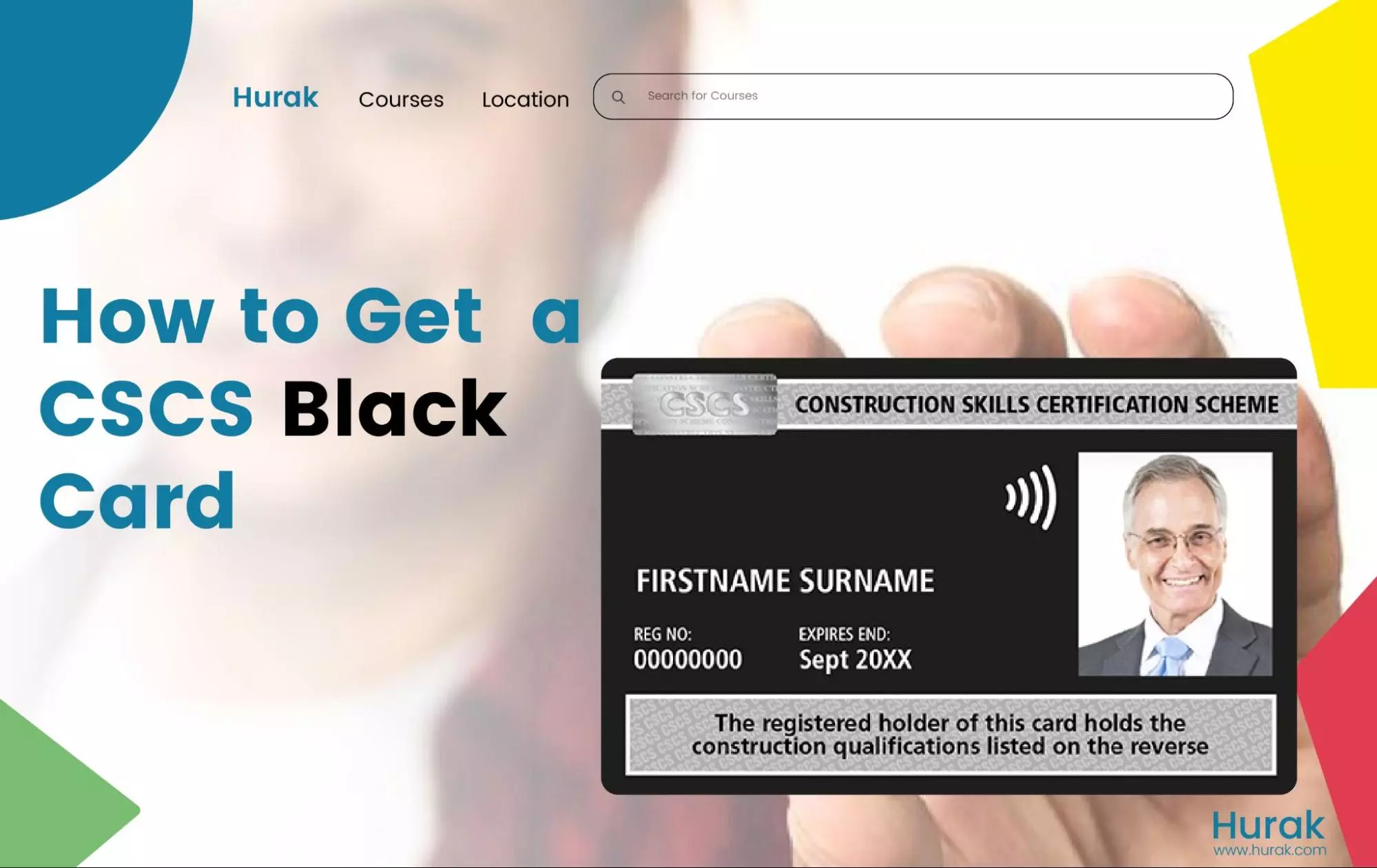
This blog will discuss the most common questions about the CSCS Black Card in construction. If you've ever wondered what it takes to get this prestigious card, how it compares to the White CSCS Card, or if it's worth the investment, you're in the right place.I'll explain the key details and help you understand why the CSCS Black Card is important in the construction industry.What qualification is a Black CSCS Card?The Black CSCS Card is not just another card in the Construction Skills Certification Scheme (CSCS) in the UK. It is a symbol of the highest level of qualification and competence within the construction industry. The path to obtaining a Black CSCS Card may differ based on the role and specialization, but the prestige it brings remains the same.To earn a Black CSCS Card, it's not just about ticking off a checklist. It's about proving your advanced skills, showcasing your extensive experience, and possibly presenting additional qualifications that are relevant to your specific role in the construction sector. This could mean achieving NVQ/SVQ qualifications of level 5 or above, completing advanced training courses, obtaining professional memberships or certifications, or demonstrating significant managerial or technical expertise in your field.What is better a White or Black CSCS CardWhether a White or Black CSCS Card is better depends on your career stage, qualifications, and the level of responsibility you hold within the construction industry.White CSCS Card: Typically associated with entry-level positions or individuals still in training. It signifies that the holder has basic construction skills and knowledge, often acquired through completing a relevant training course or apprenticeship program.Black CSCS Card: This card represents the highest level of qualification and competence within the CSCS scheme. It's usually associated with managerial or professional roles within the construction industry. Holders of a Black CSCS Card have demonstrated advanced skills, extensive experience, and possibly higher-level qualifications relevant to their specific role.If you're just starting in the industry or working in a position that doesn't require advanced qualifications or managerial responsibilities, a White CSCS Card may be sufficient. However, if you aspire to progress in your career, take on more senior roles, or work in specialised construction areas, obtaining a Black CSCS Card could be beneficial as it reflects a higher level of expertise and competence.Choosing between a White and Black CSCS Card depends on your career goals, qualifications, and the level of responsibility you hold or aspire to within the construction sector.How do I get a Gold or Black CSCS Card?Step 1: Complete NVQ/SVQ Level 4, 5, 6, or 7Complete a relevant Construction Management/Technical related NVQ/SVQ Level 4, 5, 6, or 7 or an SVQ at SCQF Level 10 or 11 in a Construction Management/Technical related qualificationStep 2: Pass the CITB (MAP) TestPass a CITB Health Safety and Environment Test for Managers and Professionals (MAP). This assessment evaluates your ability to respond to situations involving the chance of loss or injury as a manager on the site.At Hurak, we handle all the arrangements to ensure your CITB test reservation is secured effortlessly. Reserve your test today!Before you attempt the CITB test, you should take a free mock test exam.Step 3: Apply for the CSCS Black CardCreate an account on the CSCS online portal, enter the required details, and apply for the card.How much does a Black CSCS Card cost?The application fee for a CSCS card remains consistent across all card types at �36. Obtaining a CSCS Black Card covers the relevant NVQ or SVQ qualification expenses, the CITB test, and the CSCS Gold Card application.Enrolling on Levels 4, 5, 6, or 7 of the relevant NVQ/SVQ could cost between � 300 and �1,000. Booking a CITB HS&E Test costs �23.50. Considering all these expenses provides an estimate of the total cost of obtaining a CSCS card.Can I get a Black CSCS Card without NVQ?Obtaining a CSCS Black Card without a relevant NVQ/SVQ is not possible. Even extensive managerial experience in the industry does not suffice. CSCS has enforced a mandatory requirement for individuals seeking the CSCS Black Card to have completed a construction management/technical-related NVQ level 4 or higher.One option for meeting the criteria for a CSCS Black Card is enrolling in the Level 6 NVQ in Construction Site Management. This qualification involves on-site assessment, allowing individuals to continue working without interruption. Typically completed within 4 to 6 months, this course enhances job prospects for those holding the card.Can I get a Black CSCS Card with an NVQ level 4?You can obtain a Black CSCS Card with an NVQ level 4 qualification. While a higher-level NVQ/SVQ qualification (such as level 5 or above) is typically required for the Black CSCS Card, an NVQ level 4 can still meet the eligibility criteria in certain circumstances. Alongside the NVQ level 4, you would need to demonstrate additional qualifications, extensive experience, and competence relevant to your specific role within the construction industry. Meeting these requirements would qualify you for the prestigious Black CSCS Card, signifying your advanced skills and expertise in the field.Is a White CSCS Card better than a Black Card?A Black CSCS Card generally indicates a higher qualification, expertise, and responsibility level within the construction industry than a White CSCS Card. While a White CSCS Card is often associated with entry-level positions or basic skills, a Black CSCS Card is typically held by individuals in managerial or professional roles who have demonstrated advanced skills, extensive experience, and possibly higher-level qualifications relevant to their specific job roles. Therefore, regarding career progression and opportunities within the construction sector, a Black CSCS Card is generally considered more advantageous than a White CSCS Card.What do you need for a Black CSCS Card?To obtain a Black CSCS Card, you must demonstrate advanced qualifications, extensive experience, and competence relevant to your specific role within the construction industry. This may include achieving higher-level NVQ/SVQ qualifications (such as level 5 or above), completing advanced training courses, obtaining professional memberships or certifications, or demonstrating significant managerial or technical expertise.Is a White CSCS Card higher than a Black Card?No, a White CSCS Card is not higher than a Black CSCS Card. It's the opposite. A Black CSCS Card typically signifies a higher qualification, expertise, and responsibility within the construction industry than a White CSCS Card. While a White CSCS Card is often associated with entry-level positions or basic skills, a Black CSCS Card is held by individuals in managerial or professional roles who have demonstrated advanced skills, extensive experience, and possibly higher-level qualifications relevant to their specific job roles.ConclusionTo sum up, the CSCS Black Card is a big deal in construction. It shows you're good at what you do. While the White CSCS Card is for beginners, the Black Card is for pros. Getting it can open up lots of doors for you in your career.

More About CSCS Gold Card
If you wish to get a CSCS Gold Card, you must have some questions. In this blog post, I�ll answer your most-asked questions related to this card. I hope this will help you learn more about it.Who is eligible for a Gold CSCS Card?The Gold CSCS Card is typically reserved for those working in managerial or supervisory roles within the construction industry. Eligibility for the Gold CSCS card usually requires possessing relevant qualifications and experience and passing the relevant CITB HS&E Test.Once an individual meets these criteria, they can apply for the card through the CSCS official website or by contacting CSCS directly. All necessary documentation and evidence of qualifications and experience must be provided to support the application. Meeting these requirements demonstrates high competence and readiness for managerial or supervisory roles within the construction industry.What is the easiest way to get a Gold CSCS Card?The easiest way to obtain a Gold CSCS Card is by meeting the eligibility criteria, including the necessary qualifications and experience. Once you meet the requirements, you can apply for the card through the CSCS website or by contacting them directly. It's important to ensure you have all the required documentation and certifications before applying.CSCS Blue vs Gold?CSCS Blue and Gold cards represent different skill levels and responsibilities within the construction industry. The Blue CSCS Card is typically for skilled workers who have completed their apprenticeships or equivalent training.On the other hand, the Gold CSCS Card is for individuals in managerial or supervisory roles with higher-level qualifications and more experience. The Gold Card signifies higher competence and responsibility than the Blue Card.Can I renew my Gold CSCS Card?Yes, you can renew your Gold CSCS card. Renewal typically involves demonstrating that you still meet the eligibility criteria for the Gold card, including having relevant qualifications and experience and passing the required CITB Test.The renewal process is similar to the initial application process, where you must provide updated documentation and evidence of your qualifications and experience. You can renew your Gold CSCS card through the CSCS website or by contacting CSCS directly.How do you qualify for Gold CSCS?There are two main requirements to qualify for the CSCS Gold Course.Requirement 1: Complete the Relevant Level 3 NVQThe first step is to complete a relevant CSCS Gold Card Course, a level 3 NVQ qualification. The following are the popular NVQs for this card.Level 4 NVQ Diploma in Construction Site Supervision (Building and Civil Engineering)Level 3 NVQ Certificate in Wall and Floor TilingNVQ Level 3 Diploma in Roofing OccupationsLevel 3 NVQ Diploma in PlasteringNVQ Level 3 Diploma in Decorative Finishing - Painting & Decorating (Construction)Requirement 2: Pass the CITB HS&E Test (Operatives & Specialists)After completing the relevant NVQ, you pass the CITB Health, Safety, and Environment test (Operatives & Specialists). Before you take the test, it�s recommended that you take a free CSCS Gold Card mock test to test your knowledge. You can take unlimited free attempts until you�re fully prepared for the real test.Please go to the CSCS online portal and apply for the card. You can also apply for the card over the phone by calling the CSCS (Construction Skills Certification Scheme) on 0344 994 4777 (8 am to 6 pm, Monday to Friday).How long does it take to get a Gold CSCS Card?Once you've applied for your Gold CSCS Card, you'll usually receive it within 3 to 5 working days. However, there's an additional step now�a Level 3 NVQ qualification, proving your construction management or supervision skills. This qualification can take longer, even if you undergo an on-site assessment. Planning for this extra time when applying for your Gold CSCS card is good.Can you get a Gold Card without an NVQ Level 3?You cannot get a Gold CSCS Card without an NVQ Level 3 or equivalent. A Gold CSCS Card typically necessitates holding an NVQ Level 3 qualification or equivalent in the relevant construction field.NVQ Level 3 certifications validate a person's competence in practical skills acquired through on-the-job experience and training. This qualification demonstrates proficiency and readiness for managerial or supervisory roles within the construction industryHow much does the Gold Card cost?The application fee for a CSCS card remains consistent across all card types at �36. Obtaining a CSCS Gold Card entails covering the expenses for the relevant NVQ or SVQ qualification, the CITB test, and the CSCS Gold Card application.Typically, enrolling on a Level 3 or 4 NVQ in construction could range from �300 to �1,000. Booking a CITB test incurs a cost of �23.50. Considering all these expenses provides an estimate of the total cost of obtaining a CSCS card.Is the Gold Card free?As mentioned above, obtaining the card typically involves a fee. However, some organisations or employers may cover the cost of obtaining or renewing CSCS cards for their employees as part of their commitment to health and safety standards within the construction industry.It's best to check with your employer or relevant authority to see if they provide assistance with CSCS card fees.Are Gold Cards hard to get?The difficulty of getting a Gold CSCS card can vary depending on individual circumstances, such as experience level, qualifications, and the availability of required training or assessments.Generally, meeting the eligibility criteria, including having the necessary qualifications and passing relevant health and safety tests, is essential for obtaining the Gold card. The process may be relatively easy for individuals with the required experience and qualifications, but it does require diligence and preparation.Is the Gold Card worth having?Whether the Gold Card is worth having depends on your specific career goals and industry requirements. The Gold CSCS card typically signifies a higher level of competency and responsibility within the construction sector, which can open up opportunities for higher-paying jobs and advancement into managerial or supervisory roles.Additionally, a Gold card demonstrates a commitment to health and safety standards, which employers and clients value. However, it may be optional if you're content with your current role and don't anticipate needing the additional privileges and responsibilities associated with the Gold card.Ultimately, it's essential to weigh the potential benefits against the time, effort, and cost involved in obtaining the Gold CSCS card to determine if it's worth pursuing for your career objectives.�ConclusionGetting a CSCS Gold Card is a significant achievement in the construction industry, indicating high competence and readiness for managerial or supervisory roles. While the process may involve expenses for the relevant NVQ or SVQ qualification and CITB test, the benefits of holding a Gold Card, such as increased job opportunities and higher pay grades, make it a worthwhile investment in one's career.
Which Quality Assurance Qualification Do I Need
Quality assurance plays an important role in overcoming quality-related concerns within organisations. Quality failures, such as biased assessments, can damage an organisation's reputation. Early detection of issues saves the cost of correcting systematic errors. To become a quality assurer, you must pass relevant qualifications. QA qualifications are of two types: internal and external. A learner must read the course guidelines carefully to choose the right qualification.Internal Quality Assurance IQAQuality assurance is the backbone of maintaining quality standards in products or services. IQA confirms fairness and quality in assessments. Organisations rely on IQAs to oversee assessors' activities. They confirm that all evaluations are impartial and uphold the organisation's reputation for quality.The responsibilities of an Internal Quality Assurer may include:Verifying that assessors meet requisite standardsOrganising monitoring activitiesCollaborating with assessors, trainers, and employers for uniformity in assessment practicesAssessing the performance of trainers and assessors and offering constructive feedbackAssisting trainers and assessorsReviewing samples of assessment records and decisionsEngaging with learnersPlanning the methods and timing of assessor monitoringIdentifying the best practices across the organisationInternal Quality Assurance (IQA) ensures that institutions offering official qualifications regulated by Awarding Organisations maintain high standards.Awarding Organisations, Bodies, or Exam Boards issue certificates and set qualification standards. An IQA oversees compliance with Awarding Organisation requirements, which is especially important for assessing candidates' qualification process. .main{ border:3px solid #0f7c90; border-radius:20px; position: relative; font-family:roboto; font-weight: 400; color: #000; } .main-two{ position: absolute; top:-25px; left:45px; background-color:white; } .img-div{ border-radius : 100%; padding:2px 7px; background-color:#0f7c90; margin-right:5px; width: 50px; height: 50px; } .img{ width:30px; object-fit:contain; height:auto; border-radius : 100%; } @media only screen and (max-width: 600px) { .heading{ font-size:20px; } .img{ width:20px; object-fit:contain; height:auto; border-radius : 100%; } .img-div{ width: 40px; height: 40px; } .main-two{ left:25px; } } The right quality assurance qualification depends on your goals. Start with the IQA Award Unit 1 for foundational knowledge, or progress to IQA Units 1 and 2 for practical and theoretical skills in monitoring assessments. For leadership roles, the Lead IQA Course prepares you to manage quality assurance teams effectively. Which IQA Qualifications Do I Need?For those looking to work in internal quality assurance for an organisation, there are three IQA qualifications to consider.The Level 4 Award in Understanding Internal Quality Assurance (Unit 1) is a theory-based course intended to provide learners with the essentials of internal quality assurance.The Level 4 Award in the Internal Quality Assurance of Assessment Processes and Practice (RQF), comprised of units 1 & 2, is the most popular IQA qualification required. This credential is used for the main IQA roles within organisations and is highly useful for your career in quality assurance.What Follows the IQA Level 4 Award?Upon obtaining the Level 4 Award, individuals may choose the Level 4 Certificate in Leading the Internal Quality Assurance of Assessment Processes and Practice (RQF). This advanced qualification allows individuals to oversee their quality assurance team.Hurak offers Level 4 Awards and Level 4 Certificate programs. Learners gain access to our 24/7 student portal, which facilitates flexible study options. Visit our course offerings or contact our team for further details.External Quality Assurance (EQA)EQAs represent an awarding organisation rather than directly affiliated with an organisation or assessment centre. They offer advice, support, and assistance to the centre's Internal Quality Assurers (IQAs). They also help assessors and other staff involved in qualification processes to ensure the fair treatment of candidates. EQAs verify that qualifications are delivered in compliance with regulatory standards, such as those set by OFQUAL. This may involve preventing cheating or unethical behaviour, such as plagiarism or impersonation during assessments.Which EQA qualification Do I Need?The primary qualification in this field is the Level 4 Award in External Quality Assurance of Assessment Processes and Practice. It covers the theoretical understanding of the EQA role and the practical aspects of conducting visits, checks, and monitoring.It is suitable for individuals who oversee assessment quality externally.The Level 4 Award in Understanding the External Quality Assurance of Assessment Processes and Practice is for EQA beginners who want to understand the principles and methods of external quality assurance without needing practical application.This qualification's goal is to prepare individuals for roles in the workplace where they are responsible for maintaining assessment quality standards.What is the Difference Between Internal and External Quality Assurance QualificationsWhile both IQA and EQA are concerned with upholding the standard of quality, there are differences between their objectives and level of operations.

What Qualifications Do I Need to Be a Teacher?
Multiple routes lead to primary and secondary education in the United Kingdom; it is up to you to determine which one best fits your skills and professional goals. In this blog, you will learn about the qualifications you need to apply for teacher training and familiarise yourself with the requirements for GCSEs, numeracy and literacy tests, and your degree.What Degree Do I Need to Be a Teacher?In England, to work as a teacher in maintained primary, secondary, or special schools (those supported by local authorities), one must hold qualified teacher status (QTS), which can be obtained through training.You do not require QTS to teach in the early years or higher education. Many training pathways offer QTS and the chance to train in various environments. Many pathways also allow you to earn a Postgraduate Certificate of Education (PGCE).Qualifications Required to Begin a Career in TeachingTo become a certified teacher in England, you need to fulfil the following requirements:Initial Teacher Training (ITT)To become a qualified teacher in state-maintained schools across the UK, you must undertake Initial Teacher Training (ITT) or Initial Teacher Education (ITE). Entry is generally competitive, although less so in fields with a shortage, like math, physics, and languages.Qualified Teacher Status (QTS)Completing ITT leads to Qualified Teacher Status (QTS) in England and Wales and Teaching Qualification (TQ) in Scotland. However, there are independent schools, academies, and free schools that may not list QTS or teaching council registration as prerequisites.GCSE Grade 4 (C) or Above in Mathematics and EnglishYou also require GCSE science at grade 4 (C) or above if you want to teach in primary or early childhood education. Some teacher training providers might accept an equivalency test or additional qualifications.A DegreeCertain initial teacher training (ITT) institutions require a degree in a national curriculum subject before they will accept you for primary teaching. If you still need to, you want to speak with the training provider immediately to determine if they'll accept your degree. For secondary teaching, you'll need a degree in (or closely related to) the subject you want to teach.Literacy and Numeracy SkillsITT providers must guarantee that aspiring educators fulfil the literacy and numeracy requirements for teaching. All providers will evaluate applicants' skills either during the selection process or after they start the training program.If necessary, you will receive assistance to strengthen your abilities during the course, and you will be assessed against a predetermined set of literacy and numeracy skills by the end of your program. However, trainees who cannot meet the required level of literacy and numeracy skills will not reach QTS. Subject Knowledge Enhancement (SKE) CoursesYou could enrol on a Subject Knowledge Enhancement (SKE) course if you want to teach a subject but need to learn more beforehand. They can be especially useful if you have an A level in that subject but a degree in something else if you studied a language but need to improve it to a level suitable for teaching in schools, or if you have a degree in something else but professional experience in a related field.You can determine whether you need to finish an SKE with the teacher training course provider; these are usually offered for courses with a teacher shortage. The course, which is typically completed online, can be taken in addition to or instead of your initial teacher training programme.Declaration of Health QuestionnaireBefore starting the ITT course, please fill out a statement of health questionnaire. The Equality Act of 2010 protects any disability-related information you disclose. If you are disabled, you have to get in touch with the training provider.Declaration of Criminal ConvictionsThe teaching profession is exempt from the Rehabilitation of Offenders Act 1974's provisions, which permit convictions for criminal offences to be considered "spent" after a certain amount of time. You must disclose any prior convictions. Before beginning their school-based training, all trainee teachers have their criminal records checked by the Disclosure and Barring Service (DBS).FAQsDo you need a PGCE to teach?PGCE stands for a postgraduate certificate in education, an academic qualification. You must take teaching training to achieve it. Although having this qualification is not a requirement to become a certified teacher in the UK, it can improve your knowledge and abilities.Can I be a teacher with a third-class degree?Even if you have a third-class degree, you might still be considered, especially if you have earned a master's degree or relevant professional experience.Do I need a degree to be a teacher?Since QTS isn't often required by academies, free schools, independent schools, or colleges for further education (FE), it is also possible to teach without a degree. On the other hand, a degree can help you change jobs and advance your professional chances.What skills should teachers have?A teacher should have critical thinking, patience, communication, organisational skills, creative thinking abilities, leadership skills, a capacity for teamwork, and time management skills.How to become a teacher in the UK?A degree, often a Bachelor of Education (B.Ed.) or a degree in a relevant field followed by a postgraduate teaching certification, such as a PGCE (Postgraduate Certificate in Education), is normally required to become a teacher in the UK. In addition, you'll need to obtain experience through teaching placements and pass background checks, including a Disclosure and Barring Service (DBS) check.What qualifications do I need to be a primary school teacher in the UK?In the UK, a degree, GCSEs (or equivalent) at grade C/4 or above in English, Math, and Science, and passing the professional skills examinations in literacy and numeracy are requirements for becoming a primary school teacher. You will also have to finish a teacher training course.

How to Become a Teacher from a Teaching Assistant
If you currently work as a teaching assistant, one of your career goals can be to become a teacher. Although entering the teaching profession is quite usual after being a TA for some time, it is not always necessary. Before switching from teaching assistant to teacher, many TAs decide to advance in their positions to acquire as much knowledge and expertise as possible.Several teacher assistant certifications are available to help you advance your knowledge and expertise as a teaching assistant. This blog will guide you through five ways to transition from a teaching assistant to a teacher.Can a Teaching Assistant Become a Teacher?Yes, a TA can pursue a career in teaching. There are numerous paths to teaching, many of which teaching assistants may choose. Certain pathways call for a specific level of teaching experience and qualifications. The most popular teaching qualifications a TA can obtain to get into teaching are: teaching adults, which has various prerequisites, and teaching in schools, which requires QTS or an equivalent certificate.5 Ways to Become a Teacher from a Teaching AssistantHere are five steps to help you transition from a teaching assistant to a teacher.Complete the Adult Education Teaching QualificationLevel 3 Award in Education and TrainingThere are several types of teaching opportunities, and for TAs who want to work in the field of adult education, the Level 3 Award in Education and Training is a great place to start. This is the most fundamental teaching qualification that will help you understand teaching principles.Although it's not a requirement to become a teacher, earning a Level 3 qualification is an excellent method to determine if teaching is your right career path.Level 4 Certificate in Education and TrainingOf the three teaching and training qualifications, the Level 4 Certificate in Education and Training is the second most advanced one. It is also a recommended qualification for a teaching assistant who wants to work as an adult educator.In addition to helping you assess, refine, and enhance your current talents, the course builds core teaching and training skills. It is also the first of three courses taught in person and online.Complete the Qualification for Classroom TeachingLevel 5 Diploma in Education and TrainingObtaining Qualified Teacher Learning and Skills status (QTLS) is one path to beginning your teaching career in a classroom. To apply for QTLS, you must have the Level 5 Diploma in Education and Training (DET), the most advanced teaching and training qualification. This qualification allows you to develop your teaching and training skills.After completing the qualification, you can apply for QTLS status. This status makes you eligible to work as a teacher in a classroom or other educational settings.A Degree with QTSGenerally, you need to have QTS or an equivalent qualification if you wish to teach learners who are younger than sixteen. While some private or independent schools may not require it, it is generally recommended to have it. However, this is a prerequisite at public schools. A bachelor's degree that offers QTS, such as a bachelor of education, bachelor of arts (BA) with QTS, or bachelor of science (BSc) with QTS, is one route to obtain this professional certification.The degree you choose will probably depend on the subject you intend to teach. For example, a BSc in Physics with QTS is normally required to become a physics teacher, whereas a BA in History with QTS is more suitable for someone who wants to teach history. Teachers in elementary and high schools must have QTS.The Postgraduate Certificate of Education (PGCE)If you need QTS but also have a degree, you can take the PGCE. Graduates who wish to get into teaching can benefit from this year-long programme. Depending on the university, different prerequisites may apply, such as a lower second-class honours degree and A levels in math and English. The PGCE is comparable to a master's degree and normally takes one year to complete.Training for new teachers is part of the Initial Teacher Training (ITT) PGCE programme. Seek out PGCE courses that grant QTS following successful completion. Teachers with QTS may choose to further their education with a PGCE.The Professional Graduate Diploma in Education (PGDE) is the Scottish equivalent of the PGCE, which is the same in England, Wales, and Northern Ireland. The PGDE and PGCE programmes combine academic learning with school-based work to deliver theoretical and practical knowledge to learners.Build Relationships and Networking Networking and building contacts are essential for new entrants in teaching to grow professionally and advance their careers. Going to conferences and events in your field, connecting with mentors and colleagues, and participating in online teacher communities are all good places to start. These options can help you build a support system, exchange knowledge, and obtain insights. To network with and gain knowledge from other educators, your school may also provide professional development activities and courses. To build long-lasting relationships, remember that you should have an optimistic outlook and attitude, be receptive to new ideas, and follow up with contacts. Lastly, to learn more about the hiring process and to receive tips on making an impression as a candidate, speak with the administrators, teachers, and colleagues at your school.FAQsWhat's the difference between a fully qualified teacher and a newly qualified teacher (NQT)?An NQT, or early career teacher, is a person who has obtained QTS but has yet to finish classroom training. For NQTs, the induction phase lasts three to six terms or one to two years. They are certified to teach after passing an examination at the end of each term. This induction phase can be finished either full or part-time.Are there any registration requirements to become a teacher?In Scotland, there are regulations regarding registration. QTS or a similar qualification is the only requirement in England, Wales, and Northern Ireland. Additionally, registration with the General Teaching Council for Scotland is required.Can I become a teacher without a degree?You should consider obtaining Qualified Teacher Learning and Skills (QTLS) status if you want to transition from a teaching assistant to a teacher with no degree. Since 2012, QTLS has been acknowledged as equivalent to Qualified Teacher Status (QTS), which means it confers the same qualifications on teachers as QTS.Can a level 3 TA teach a class?Yes, anyone who has achieved the Level 3 Award in Education and Training can teach a class.Can a teaching assistant teach a class?Higher-level teaching assistants can take some lessons instead of the teacher, cover absences, and teach courses alone. Typically, the purpose of hiring teaching assistants is to assist the teacher and support the classroom environment.

Teaching Assistant Salary in the United Kingdom in 2024
If you plan to become a teaching assistant in the UK, you may wonder about the salary. Undoubtedly, it�s a respectable and rewarding career. However, before you begin your career, you must know how much you will earn as a teaching assistant (TA).This blog will explain the TA pay scale in terms of different levels. It will also discuss other important aspects related to TA salary, such as holiday allowances, TA contracts, and more.What is the Teaching Assistant Salary in the UK?Typically, a Teaching Assistant in the UK earns approximately �14,674 per year. Entry-level TAs begin at �13,984 per year, while TAs with a few years of experience earn up to �16,362 per year. These salary estimates vary depending on different factors.Teaching Assistant Pay ScaleThe TA pay scale in the UK is different because it depends on various factors such as the level, region, and experience of a TA. Generally, most institutes follow the UK�s support staff pay scale, and it�s starting salary is �13,984. Different contract types offer different salaries. For example, a term-time worker will earn less than a full-time, full-year worker, even if they are on the same scale.Let�s look at the salaries for Level 1, 2, 3, and 4 teaching assistants.TA LevelsTA SalariesDescriptionLevel 1 TA Salary�13,984If you want to begin your career as a teaching assistant in the UK, you can expect to earn approximately �13,984. This is based on the local government pay scale in 2024.Level 2 TA Salary�14,329If you have some experience as a TA, you can earn up to �14,329 as a level 2 TA. The salary jump from level 1 TA might not be significant, but you can expect to earn more with higher levels.Level 3 TA Salary�15,138With level 3, you have gained much experience in the field and can expect to earn approximately �15,138 per year. The level 3 teaching assistant salary is much higher than the salaries of levels 1 and 2.Level 4 Teaching Assistant Salary�16,362This is the highest TA salary, up to �16,362 per year. The level 4 TA is called HLTA (Higher Level Teaching Assistants).These salaries are an estimation and may vary depending on the location and several other factors. However, it provides a general idea of how much you can expect to earn as a TA in the United Kingdom.Holiday Allowances for Teaching AssistantsTeaching assistants also get school holidays as paid leave only if they are on a permanent full-time contract. Due to the nature of the job, most teaching assistants are hired on term-time-only contracts. Therefore, they don�t get the benefits of school holidays as paid leave. However, in most institutions, TAs on a permanent full-time contract have annual leave entitlement, which varies from institution to institution.Teaching Assistant ContractsThere are different types of teaching assistant contracts that define TA employment conditions. These contracts adhere to the conditions set by the local authority or the institution. These contracts are:Permanent all yearTemporary all yearPermanent term timeTemporary term timeCasualUnion Membership for Teaching AssistantsTeaching assistants should join any local government union, such as Unite, Unison, or GMB. Although it�s not mandatory, it�s highly beneficial for them.FAQsWhat is the difference in pay between level 2 and level 3 teaching assistants?Level 2 teaching assistants earn approximately �14,329, whereas level 3 TAs earn up to �15,138 annually.How much does a teaching assistant get paid in the UK?The average salary for a teaching assistant in the UK is �14,674. However, the actual compensation may vary based on the roles and levels. TAs with a few years of experience can make up to �16,362 annually, while entry-level TAs start at �13,984 annually.How many hours does a teaching assistant have to work in a week?Typically, a teaching assistant in the UK works for 32-40 hours a week. However, it mainly depends on the institute and the workload.Do teaching assistants get paid in the summer holidays in the UK?Teaching assistants are paid in the summer holidays only if they are on a full-time, permanent contract. However, this is not a rule and depends on factors such as institutes� policy, contract type, location, etcWrap Up: Teaching Assistant SalaryNow that you know about teaching assistant salaries in the UK, you can decide if this is a rewarding career for you. Remember, TA salaries vary from region to region in the UK. In some cities, TAs at a particular level can earn more than others. There are different types of contracts; teaching assistants on a full-time contract can get more benefits, such as paid holidays.
The 10 Most Important Teaching Assistant Skills and Qualities
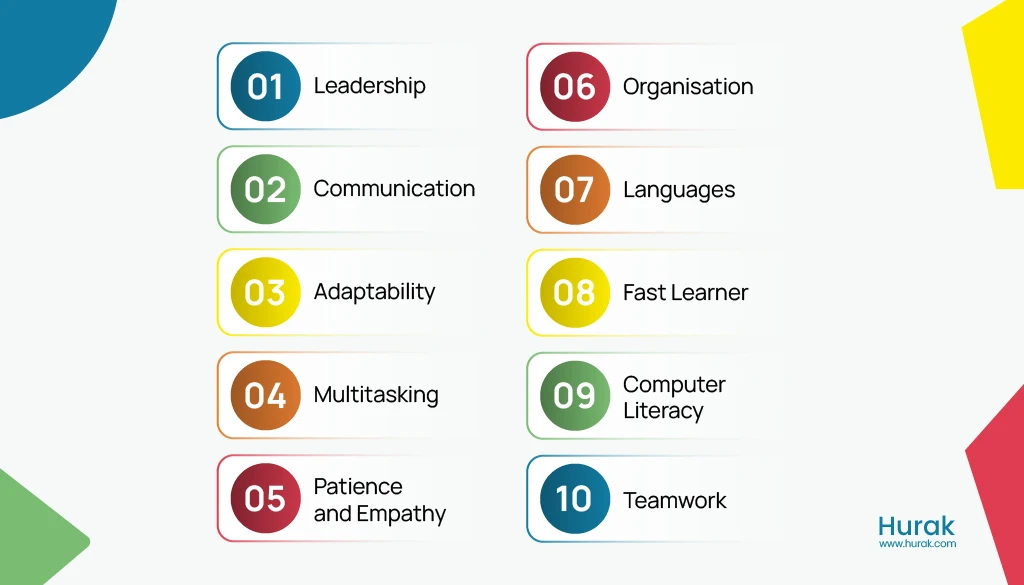
The most valuable skills on resumes for teaching assistants are soft skills, personal qualities, and practical skills. While soft skills are typically developed over time in both professional and personal contexts, practical skills can be developed through training as a teaching assistant or professional experience in educational roles.This blog will discuss the ten most important skills of a teaching assistant.The 10 Most Important Teaching Assistant Skills and Qualities LeadershipOne of the most important qualities of a teaching assistant is leadership. Teaching assistants are authority figures when working one-on-one with students. Being assertive is even more beneficial when working with groups of students because disobedient students can disrupt the classroom. On your resume, make note of any professional experience you have in a management or leadership role. If you need more professional leadership experience, think back to personal experiences where you had to learn how to lead, like engaging in your interests or hobbies.AdaptabilityThe teaching assistant role requires adaptability. Teaching assistants frequently have to make last-minute adjustments to their regular schedules to cover for staff absences or handle unforeseen difficulties. In your application for a teaching assistant position, be sure to indicate that you are adaptable to sudden changes in work. Describe how you enjoy change and work best in a setting where no two days are the same.MultitaskingTeaching assistants often handle multiple projects simultaneously, so multitasking is one of their most important skills. For instance, they might encounter unforeseen questions or interruptions that call for their quick attention while supervising a group of students, consulting a lesson plan, or marking work. When you include multitasking on your resume, you showcase your ability to manage multiple tasks simultaneously. When you multitask, you can handle problems as they arise and provide the highest calibre of instruction.Patience and EmpathyEvery learner has unique needs and struggles. By practising patience and empathy, you can offer individualised support and handle students' challenges with care. This will establish a nurturing learning environment for all students, specifically those who require more attention. As a teacher assistant, you must create an environment where all students feel respected and understood.OrganisationTeaching assistants usually have hectic schedules and are in charge of helping several students at once. Their ability to be organised facilitates efficient time management and allows them to monitor their students' academic progress. To make organising easier, keep your workspace neat, primarily if you work in shared offices or classrooms. By setting a good example, teaching assistants can motivate their pupils to be organised.LanguagesCommunicating in another language, even on a basic level, can be advantageous when working as a teaching assistant. Teaching assistants usually need to provide additional support to students whose first language is not English. Many schools highly value candidates who can support their students' English language proficiency. A Question AI study assistant can create practice questions in multiple languages, making it easier for students to improve their skills. Including your language skills on your resume may help you stand out as a more desirable candidate for this role.Fast LearnerYour career as a teaching assistant can benefit from having quick learning skills and enthusiasm in many different ways. Your ability to quickly pick up new curriculums or learning materials improves your teaching abilities with students. To support students' success, you're keen to learn about innovative teaching techniques and keep up with industry best practices. Your ability to quickly adapt to new responsibilities and procedures makes you a desirable candidate for a promotion. Additionally, being a motivated and inspired learner, you can encourage and inspire students to take an active interest in their education.Computer LiteracyTo be a good teaching assistant, you must know how to use a computer to manage work-related administrative tasks. You must also create student progress reports or keep track of attendance. Teaching assistants must assist students in using laptops or computers so they can learn using this valuable resource. Moreover, if you already have general computer literacy, you can quickly learn using new software at work. If you do not have it, you must take computer training to be a teaching assistant.TeamworkPractising teamwork is also included in the list of important skills relevant to the teaching assistant role. The purpose of teaching assistants is to support student's education at all times. They have the same objective as the parents, students, teachers, and other teaching assistants. Even working alone with students, teaching assistants must view themselves as team members. Working as a team requires you to ask for help when you need it, support others, and communicate with coworkers effectively. Being team-oriented can help you inspire others and your coworkers when faced with obstacles.Wrap UpTeaching assistants are necessary for the educational process to be improved. They play an essential role in the classroom. To improve students' educational experience, teachers should seek a great teaching assistant by identifying candidates with outstanding communication skills, subject-matter expertise, empathy, proactiveness, and a collaborative mindset. You must look for real-world experience through training programmes, volunteer work, and internships to improve your chances even more. Acknowledging and valuing the positive impact that exceptional teaching assistants (TAs) can have on students' academic performance and personal development is critical.