

The "Danger Zone" Temperature for Food
The quality of food depends on its proper storage and handling at the right temperature. If food is kept in the "Danger Zone" for too long, microbial growth can lead to sickness.What is the Temperature "Danger Zone" for Food?The temperature danger zone is the range of temperature between 40 �F and 140 �F (8 �C and 60 �C) that can increase the spread of food bacteria, making it unfit for human consumption.�Food exposed for more than 20 minutes to the "Danger Zone" temperature range can cause food poisoning and other food borne illnesses.Best Way to Keep Food out of the Temperature "Danger Zone"Keeping food safe at appropriate temperatures is the best way to keep food out of the danger zone temperature range.�Food Safety TemperaturesReheating: 74�C or 165�F (Microwaves and Stove tops)The safe reheating temperature for home-cooked meals and leftover takeaways is 74 �C or 165�F, for at least 2 minutes in microwaves and stove tops. For oven baking, reheating at higher temperatures for approximately 15 minutes is recommended. This confirms that bacteria does not multiply in the danger zone temperature range between 40 �F and 140 �F (8 �C and 60 �C). At the safe reheating temperature, bacteria is destroyed and food becomes safe to eat.�Safe Reheating EquipmentFood can be properly reheated at the ideal temperature on stovetops, microwave and ovens. It is important to note that slow heating devices are not recommended for reheating leftovers. This is because food can remain over exposed to temperatures in the "Danger Zone," between 40 �F and 140 �F that can increase the growth of food bacteria and lead to food poisoning.Defrosting: 0 �C - 4�CIt is preferable to completely defrost frozen food before reheating. Place food from the freezer to the fridge, kept at a temperature range of 0�C - 4�C. Food must never be defrosted at room temperature or in a microwave. This correct defrosting method prevents microbial activity and food poisoning.For more information, visit our blog article: �The Safety of� Reheating Food Leftovers�Cold Fridge Storage: Below 5 �CFood requires storage below 5 �C at which spoilage of food due to bacterial growth is minimised. Therefore, food must be refrigerated and kept frozen at appropriate temperatures.Use a Probe Thermometer to Check Food TemperatureTo check whether food is stored or handled at suitable temperatures, use a metal stem probe thermometer. The probe must be placed in the middle of the dish or in the thickest part of the meat, without touching the base. The reading on the thermometer will indicate whether the food has undergone any contamination or spoilage due to bacterial growth in the danger zone temperature range.Practise the FIFO Storage SystemThe �First-In First-Out� food stock rotation is another important method of food storage. The FIFO system continuously rotates and replaces food items in the warehouse or selling outlets. Food that goes in first comes out first. This prevents unnecessary exposure to inappropriate storage conditions including the temperature �Danger Zone.�Food Safety Importance for the "Danger Zone"� TemperatureDanger Zone temperature is of great importance in the food industry business who have a legal responsibility to serve food. Food should be stored and handled under safe and hygienic conditions, outside of this temperature range.Microbiological contamination of food at the danger zone temperature range may occur invisibly without showing signs of food contamination. Recording the temperature at which food has been kept is important for detecting pathogenic activity.�The "Danger Zone"� Temperature is a food related hazard that should be proactively indicated and controlled, as suggested by the HACCP�of contamination control.� Get Online Food Safety Courses Food Hygiene And Safety Check the Course Rated Excellent on major review sites Risks of Eating Food Stored at the "Danger Zone" TemperatureBacterial multiplication is fastest between 40 �F and 140 �F "Danger Zone" temperature range. Food kept in the temperature "Danger Zone" can serve as a breeding ground for microbes and pathogenic diseases.Common food bacteria active at the "Danger Zone" Temperature include:SalmonellaListeriaE. coliPeople eating food stored or handled at the danger zone temperature can experience symptoms of food poisoning such as:severe stomach painbloody diarrhoeavomitingmild feverConclusionFood bacteria grow twice as fast in the danger zone temperature range, between 40 �F and 140 �F or 8 �C and 60 �C. This makes it unfit for human consumption. Exposure of food to the "Danger Zone'' temperature range for more than 20 minutes can cause food poisoning and other foodborne illnesses. Certain ways to inhibit temperature-related complications in food include reheating and defrosting at appropriate temperatures. Monitoring the temperatures of cooked and reheated food is another way to keep food safe from the "Danger Zone'' temperature.

How to Organise Your Fridge
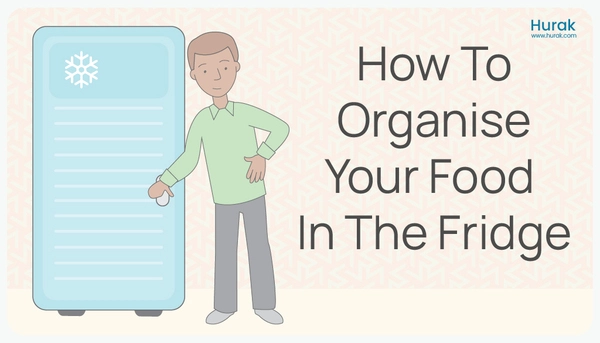
Food that does not require reheating or cooking and can be readily eaten is placed on the top shelf of a refrigerator. Cooked food that requires reheating should be arranged on the middle shelf. The bottom shelves are suitable for raw meat that is yet to be cooked and served. It is important to follow FIFO and HACCP guidelines when refrigerating food.Food Storage on the First Top Shelf: Non-Cooked/Non-ReheatedPackaged or ready-to-eat foods are not subjected to high temperatures and remain fresh in cold storage. They do not require reheating before serving nor do they need to be cooked at high heat. They are appropriate choices for the top shelf of a refrigerator.Since such foods do not get exposed to heat to kill bacteria, they must be stored in the fridge where cross-contamination from other raw meat or cooked food is minimal. It is important to arrange �low temperature� food in sealed containers on the highest shelf to avoid contact with drippings or leakage from other food sources.Examples of food stored on the first shelf of a fridge include:CheeseYoghurtDessertsSaladFood Storage on the Second Middle Shelf: Cooked/Reheated/Hot-HeldThe second shelf is suitable for storing leftover cooked food that requires reheating for future servings. They are also known as hot-held foods that have been prepared and will undergo reheating for a hot serving.Examples of food stored on the second shelf of a fridge include:Dine-in takeawaysCooked lentilsCooked meatCooked riceHot-held milkFood Storage on the Third Bottom Shelf: Raw MeatThe bottom shelf of the refrigerator should be reserved for foods that are cooked at high temperatures. Unlike food stored on the upper shelves, the bottom shelf food has to undergo cooking and is subjected to high intensities of heat.The bottom shelves are the coldest part of the refrigerator due to the phenomenon of�convection.�Cold air collects at the bottom of the fridge as it sinks every time the fridge is opened. Since raw meat is high in bacterial activity, cooler temperatures at the bottom shelves are ideal to keep microbes in a dormant state.Store these food items in sealed containers to prevent their contact with other food items in the fridge. If placed on a higher shelf, they can discharge liquid onto other food ingredients placed below them. Therefore, their ideal position in a refrigerator is at the bottom shelf to minimise the risk of cross-contamination.Examples of food stored on the third shelf of a fridge include:Raw poultryRaw fishRaw beefFood Storage in the Drawer: Fruits and VegetablesThe drawer is also considered to be the fourth shelf of the refrigerator. It is an enclosed box like a separate compartment below the shelves. It is appropriate for storing fresh fruits and vegetables wrapped in perforated paper or plastic to keep away from contamination and drying out.�Commercial kitchens with bigger refrigerators use drawers to store raw meat. However, this placement is not suitable for domestic fridges.��Examples of food stored in the drawer of a fridge include:�CarrotsLettuce�ApplesOrangesFood Storage on Door ShelvesFood products that do not require proper refrigeration or contain antimicrobial ingredients called preservatives should be placed in the fridge door. It is the warmest part of a refrigerator as it gets exposed to room temperature more frequently when the fridge is opened.�Liquid or solid foods which do not carry a high risk of becoming spoiled due to changes in temperature are the right choice for door shelves.�Examples of food stored on door shelves of a fridge include:Jams�Juices�Ketchup�Pickle�Mustard�Mayonnaise�Drinking waterFood Safety Importance of Fridge StorageA refrigerator is the backbone of a kitchen, whether in a restaurant or food factory. It serves the purpose of storage, protection and preservation of food. Cold storage is one of the most important practices of food safety regulations, complying with FIFO and HACCP guidelines.Keeping food stored at an appropriate temperature prevents exposure to the Temperature �Danger Zone� and slows down bacterial growth. A refrigerator is a safe haven for most food types, provided that it maintains the correct temperature required for proper food storage. While dealing with food refrigeration, it is recommended that:Stored food must be kept refrigerated at or below 40 �FMost cooked food can be safely refrigerated for up to 3 to 4 days.Leftover food must be stored in the refrigerator within 2 hours.Hot foods are preferred to be chilled in an ice bath to bring them to room temperature before placing them in the refrigerator.Wrap food in paper, plastic or sealed containers to prevent moisture loss and contamination.Large amounts of food, such as soups or meat pieces, are preferred to be divided into smaller portions before refrigeration.Place a thermometer in the warmest part of the fridge to check for temperature deviations. Get Online Food Safety Courses Food Hygiene And Safety Check the Course Rated Excellent on major review sites FAQsWhat is the correct temperature for food refrigeration?The ideal temperature for storing food in a refrigerator is between 0�and 4 degrees Celsius.Where should raw meat be stored in a fridge?Raw meat should be stored on the bottom shelf of a refrigerator and kept separated from other food ingredients to prevent contamination from seepage.What is the safe storage temperature for food leftovers?Leftover cooked food can be stored safely for up to 3 to 4 days, with some exceptions.� Any unconsumed portions of food must be stored within 2 hours. Stored food must be kept refrigerated at below 5�C.�What is the best way to store eggs?Eggs can be stored on the middle shelf of a refrigerator slightly towards the back to prevent exposure to changes in temperature.What is the best way to refrigerate dairy food?Readily available dairy food should be stored on the top shelf of the refrigerator to prevent contamination from other raw food items.ConclusionRefrigerating food in the correct order promotes food safety and hygiene. Food that is readily available to eat and does not require cooking or reheating should be placed on the top shelf. This is followed by leftover food that requires reheating. Raw poultry and fish must be placed on the coldest bottom shelf of the fridge to prevent cross-contamination and seepage onto other food ingredients. Drawers are suitable for fresh vegetables and fruits. Fridge doors should be reserved for foods with artificial preservatives. The ideal temperature for storing food in a refrigerator is between 0 and 4 degrees Celsius. It is recommended to refrigerate food in sealed containers or plastic wrappings to keep food safe and hygienic.�

OSHA Bloodborne Pathogens Standard: Protecting Workers from Infectious Diseases
OSHA's Bloodborne Pathogens Standard, found in 29 CFR 1910.1030, fortified by the 2000 Needlestick Safety and Prevention Act, is a crucial framework ensuring worker safety. It mandates exposure control plans, engineering controls, and training, emphasizing Universal Precautions. This standard is vital for employers and workers in various settings, underscoring the importance of safety measures in handling bloodborne pathogens.Why Bloodborne Pathogen Standard?The OSHA Bloodborne Pathogen Standard is imperative due to the immense threat bloodborne pathogens pose to human health. With an alarming annual estimate of three million exposures, accidental punctures in workplaces and laboratories contribute significantly to bloodborne infections.Hospital settings in the United States witness approximately 400,000 sharp injuries yearly. OSHA's standard addresses this public health concern by advocating Universal Precautions, assuming all body fluids and sites may harbor infectious microorganisms. By promoting practices like hand hygiene, proper use of personal protective equipment, and engineering controls, the standard aims to significantly reduce exposure risks, safeguarding employees and curbing the spread of infectious diseases like HBV, HCV, and HIV.What practices are advised according to the standards?Engineering controls play a vital role in minimizing employee exposure to bloodborne pathogens. Safer medical devices, including needleless and shielded needle devices, and proper disposal practices significantly reduce sharps and needlestick injuries.Best practices according to OSHA regulations for bloodborne pathogens involve planning safe handling, opting for needle alternatives, using devices with engineered sharps injury protection, activating safety features, avoiding sharps exchange, refraining from recapping or breaking needles, and ensuring immediate disposal in secured sharps containers. Additionally, completing Bloodborne Pathogens training enhances overall safety measures in healthcare and related settings.Protections Provided By OSHA For Bloodborne Pathogen SafetyThis standard is designed to safeguard employees whose job duties may reasonably involve contact with blood, emphasizing a proactive approach to eliminate or minimize occupational exposures.For this purpose, the following are the standards that OSHA requires workers to follow for bloodborne pathogens clean-up procedures OSHA:Exposure Control Plan: Establishing Comprehensive ProtectionEmployers are mandated to create an Exposure Control Plan, a written document outlining strategies to eliminate or minimize occupational exposures. The plan includes an exposure determination, categorizing job classifications with potential exposure, and tasks performed leading to exposure. Updates to this plan must occur annually to reflect changes in tasks, procedures, and positions that impact occupational exposure.Implementing Universal Precautions and Engineering ControlsThe adoption of Universal Precautions is integral to the standard, requiring the treatment of all human blood and OPIM as potentially infectious. Engineering controls, such as safer medical devices (needleless systems, shielded needle devices), sharps disposal containers, and self-sheathing needles, are crucial in isolating or removing bloodborne pathogens hazards from the workplace.Work Practice Controls: Enhancing Safety ProtocolsWork practice controls involve practices that alter task execution to reduce exposure risk. This includes proper handling and disposal of contaminated sharps, specimen management, laundry procedures, and surface cleaning. These controls ensure a comprehensive approach to minimizing the possibility of exposure.Personal Protective Equipment (PPE): Ensuring Worker SafetyEmployers must provide and maintain PPE, including gloves, gowns, eye protection, and masks, at no cost to the worker. Regular cleaning, repair, and replacement of PPE are essential, guaranteeing the effectiveness of protective measures.Hepatitis B Vaccinations and Post-Exposure Evaluation: Protecting Worker HealthThe standard mandates offering hepatitis B vaccinations to workers with occupational exposure, administered within 10 days of assignment. Post-exposure evaluation, offered at no cost, includes documenting exposure incidents, testing source individuals for infectivity, testing exposed workers' blood, offering prophylaxis and counseling, and maintaining confidentiality of diagnoses.Communication of Hazards: Labels and SignsEmployers must use warning labels on containers of regulated waste, contaminated sharps, and refrigerators containing blood or OPIM. Amenities may consume red bags or containers instead of labels. Signs must be posted in HIV and HBV research laboratories when infectious materials are present.Recordkeeping and Information/Training Provision: Ensuring ComplianceEmployers are obligated to maintain worker medical and training records, including a sharps injury log. Regular training covering bloodborne pathogens, exposure control methods, hepatitis B vaccine, and post-exposure procedures is mandatory on initial assignment, annually thereafter, and when tasks change. Specialized training is required for HIV and HBV laboratory workers, promoting comprehension in a language and educational level accessible to all workers. One such training offered by OSHA is Bloodborne pathogen training of 1 credit hour.OSHA Bloodborne Pathogen TrainingDue to the high risk posed by bloodborne pathogens, it is crucial to protect workers from such pathogens through training. For this purpose, just like other OSHA workplace safety training i.e.; OSHA 30 Construction and OSHA 10-hour training for workers� awareness of site hazards, the Bloodborne pathogen OSHA training is provided to ensure that all workers are trained about bloodborne pathogens.Requirements: Comprehensive Training for Exposure ControlOSHA Bloodborne Pathogen Training equips employees with essential knowledge, including understanding bloodborne pathogens, recognizing exposure risks, learning control methods, grasping vaccine significance (especially for hepatitis B), and understanding post-exposure evaluation procedures. Training sessions prioritize accessibility, encouraging worker engagement with interactive formats. Specialized initial training caters to HIV and HBV laboratory workers, addressing the unique risks in their work environments.Who Needs Bloodborne Pathogens OSHA Training?The training is essential for those facing potential exposure to blood or other infectious materials (OPIM) in various job roles, including healthcare workers (doctors, nurses, and medical assistants), laboratory personnel, first responders (paramedics, EMTs, firefighters, police officers), janitorial and maintenance staff, tattoo and piercing artists, and mortuary/funeral home staff.Course Content: In-depth Knowledge for Effective ControlThe BBP training comprehensively covers crucial topics, including engineering controls with safety devices, proper cleaning and disinfecting practices, understanding and using personal protective equipment (PPE) like gloves and masks, emphasizing personal hygiene, safe handling and disposal protocols, implementing universal and standard precautions, hazard communication practices, and recognizing, reporting, and addressing employee exposures.OSHA Bloodborne Pathogens Certifications: Proof of CompetenceUpon completion of the training, participants undergo an OSHA Bloodborne Pathogens quiz to assess their understanding. Successful completion, with a passing score, results in the issuance of a certification. This certification serves as tangible proof that the individual has undergone and comprehended the OSHA Bloodborne Pathogen Training, emphasizing workplace safety and competence in handling potential exposure risks.Acquire Safety With OSHA Bloodborne Pathogen TrainingTo keep workers safe from harmful infections, OSHA has rules called the Bloodborne Pathogens Standard. These rules, found in 29 CFR 1910.1030, are like safety guidelines for jobs where people might touch blood or other infectious stuff. OSHA wants to make sure workers know how to stay safe. This includes having a plan to prevent exposure, using special tools, and giving vaccines. Workers, like doctors and janitors, should get training about bloodborne pathogens.The training covers topics like using safe tools, wearing protective gear, and what to do if there's an exposure. After the training, workers take a quiz to show they understand. Getting a passing score means they get a certificate, proving they know how to stay safe from bloodborne pathogens at work.

How to Enroll in Cheap OSHA Online Training Courses
Safety training is crucial for everyone. Due to the increase in workplace accidents and incidents, it has become a massive demand for employees and employers. Moreover, several states make safety training mandatory to make the workplace secure and healthy. According to the International Labour Organization (ILO), there are almost 340 million accidents at work, and about 160 million cases of work-related illnesses have been recorded. In order to reduce the number of workplace accidents, there are different platforms offering the cheapest OSHA safety training online which becomes the most cost-effective way to train employees on workplace safety. If you wondering about how to enroll in cheap OSHA safety training courses online, then read this blog without further ado!6 Budget-Friendly Ways to Enroll In OSHA Safety ProgramsThe hunt for affordable and cheapest OSHA courses is ongoing. The majority of employees look for courses that strike a balance between cost and quality. You can also get OSHA courses in the USA at the best prices via OSHAOutreachCourses.com To ensure that you receive the best bang for your buck, this comprehensive guide is designed for you. Here you read the best tips to enroll in OSHA safety courses at low pricing without hassle.Research Affordable OSHA Training ProvidersThe very first thing you have to look for is your convenience, which means whether you want to get your training online or consider the traditional way of training. Many organizations are now considering online safety training platforms due to their flexibility and affordability. There are several online training platforms available that offer an easy approach to start their training with minimum investment.One of the best things about the online platforms is; that trainees will get access to different eLearning tools and get safety training on their mobile phones, tablets, and laptops in their comfort zone. According to an IBM study, workers who receive online training save 30 dollars in productivity because they are able to work from home less frequently.Undoubtedly, searching for an affordable OSHA safety training provider online is the cost-effective way to enroll employees to receive qualitative and accredited knowledge.Look For Bundle PackagesIt's critical to find a balance between price and quality content for safety training. So, employers should seek out OSHA classes that are reasonably priced, providing thorough instruction together with accredited certification and a reasonable price. In such cases, you can opt for a bundle package that is also an effective strategy in order to reduce the overall cost of OSHA online training.Many online safety training platforms are offering packages on workplace OSHA safety training at the cheapest pricing. You just look for the courses that meet your specified needs and explore the bundled options that are more economical choices as compared to purchasing individual courses separately.Leverage Free Resources and MaterialsTo get OSHA safety training at a low price, you can also find OSHA safety training platforms that offer free trials or introductory courses. This will help potential learners assess the course content, teaching methods, and overall suitability before committing to a paid program. Yet, this might be the best way to leverage free resources and materials and understand what learning materials are best for you. For those seeking budget-friendly options, exploring platforms that offer OSHA 30 online for $99 can provide a cost-effective yet comprehensive approach to safety education.Additionally, you can also check the official OSHA website to get comprehensive knowledge of safety training modules. However, these materials may not substitute for a complete safety training course, but they can serve as a valuable supplement. Combining these resources with affordable online courses creates an ample and cost-effective training plan.Government Assistance ProgramAnother tip to get OSHA safety training at affordable rates is to investigate government-sponsored initiatives that may provide financial support or discounts for OSHA training. Some regions offered OSHA programs in place to encourage businesses and individuals to prioritize workplace safety.Additionally, you can also look for different government funding and assistance programs that could pay for OSHA safety training. Nowadays, the majority of state and municipal programs are designed to help companies and individuals to enforce workplace safety and develop a sound culture at the workplace by providing appropriate training. No offense, but by utilizing thes e initiatives, you can drastically lower the cost of the OSHA online courses.Group DiscountsEncourage group enrollments within your organizations to take advantage of group discounts. This not only reduces costs but also fosters a collective commitment to workplace safety. Businesses have a chance to enroll multiple employees in OSHA training to get benefits from group discounts. Several online platforms aim to provide safety training at low-cost rates by enrolling in bulks. This makes it economically viable for businesses to ensure the safety and compliance of their entire workforce without incurring excessive costs.Check for user reviews & testimonialsAnother important tip to consider before enrolling in affordable OSHA safety training programs is to check the user reviews and testimonials. You must have to contemplate the testimonials from individuals and businesses that have completed the courses from the online platform you are choosing. This firsthand information gives valuable insights and the effectiveness of the course, it even clarity of instructional materials and the overall satisfaction of participants.To Wrap Up the ThingsAfter reading this whole blog, the final verdict is prioritizing workplace safety training through OSHA online safety training programs doesn�t have to be a financial burden. By strategically exploring the cost-effecting option and comparing pricing, employees, and employers can take advantage of free and available resources. Everyone can access the high-quality OSHA online training courses without breaking the bank. Now, you can embrace the budget-friendly path to OSHA compliance safety training and ensure a safer and more secure work environment for every worker.
How Long Does a Personal Licence Last
A Personal Licence is acceptable and valid throughout England and Wales.Unlike many other licences, a Personal Licence doesn�t expire, so it lasts forever.�As a Personal Licence has no expiry date, it requires no renewal. If you hold a Personal Licence, you�re allowed to authorise alcohol sales indefinitely.�Getting a Personal Licence is a one-time expense requiring no further financial investment.How to Get a Personal LicenceGetting a Personal Licence is a simple process.Step 1: Pass the APLH Personal Licence Training CourseThe first step is to complete the ALPH personal licence course.BOOK NOWTo complete this course, you require only 5 hours of learning in class and some self-study. It�s a 1-day course covering the Highfield APLH Level 2 Award for Personal Licence Holders qualification syllabus. To complete this course, you must pass the multiple-choice APLH exam. Get your Legal Personal Licence by signing up for our APLH courses Personal Licence Courses Book Now Rated Excellent on major review sites Step 2: Complete the DBS CheckYou must provide a recent Disclosure and Barring Service check to complete your application. You can get a basic check for �25.Step 3: Complete and Submit an ApplicationFinally, complete and submit your personal licence application.Revoked or Suspended Personal LicenceAlthough a Personal Licence lasts forever, it can still be revoked if a licence holder surrenders it. A court can also suspend it in case of violation of rules.If licence holder makes any changes in their name or address during their lifetime, they must notify the Licensing Authority.


The Future of Education and Training in the Digital Age
Technology is rapidly transforming the way of learning. It has changed the traditional educational system, and now, every learning platform is at your fingertips. From online books to courses and classes, everything is going digital.In the digital age, the future of education and training is undergoing a transformative shift, with a significant role played by outdoor virtual run. These outdoor virtual runs not only add an engaging and dynamic element to the learning experience but also align seamlessly with the technological advancements shaping our educational landscape.As we step further in the digital era, the future of education expects a considerable revolution. Traditional educational institutes face tough challenges adapting the latest technological approaches and introducing new educational models according to technological advancements and innovations. Be it a school, university, or tuition agency, and every learning institute has transformed its educational process to the latest digitized models and technological innovations. From personalized learning platforms to virtual classes, everything has changed. In the same way, the digital age has also brought a massive change in skills. These days, there is a growing demand for data analysis, IT, computer programming, artificial intelligence, and machine learning. Educational institutes and academies continuously struggle to adapt their workforce to the latest digital trends by offering workshops, courses, and webinars.The effect of the digital age on education and training is bright but challenging at the same time. However, it has made learning easy and also increased the learning opportunities as well as skills for the new generation. It has offered new learning platforms and more potential to create an equitable and effective educational system.Here are some key trends that are shaping the future of education and training in this revolutionized digital age.Adaptive learning softwareDigitalization has introduced a few beneficial software for the learning process. One of them is Adaptive learning software. These software tailor the study model according to the person's learning ability and progress. It tracks the student's progress and identifies the areas where they need more support. Software like ProProfs LMS and eFront LMS software make this easier by offering personalized learning paths, assessments, and progress tracking to ensure every learner gets the support they need. It then designs its learning process accordingly. It also offers personalized instructions and activities to increase the skills and abilities of the learner. It is helpful for education as well as skill learning. Be it the course material of your chemistry or you want to know the coding, Adaptive learning software will make your learning process fun, engaging, and adaptable.A few popular adaptive software are GeniusTutor, Dreambox, Khan Academy, and IXL. These powerful tools help students learn more efficiently and effectively.Up To-Date InformationGone are the days when a book written in the 70's or 80's with old information was taught in the classrooms. With the digitization of the educational sector, the data is up-to-date and authentic. Google search, Wikipedia, and other educational and surveying websites regularly update information and add new research from time to time. Now, institutes and learning academies have made learning advanced online. There is no need to carry twenty books and search them for a topic. Just open Google and explore the case, and you will get all the necessary information. In the same way, study materials, as well as courses related to the latest skills, are also available on Google and YouTube. You don't have to go anywhere to learn a new skill; You can access everything on your fingerprint. With digital learning enabling students to acquire new skills faster, platforms like Apply IQ make it easy to transition those skills into real career opportunities.�Virtual ClassroomsThe digital era has transformed learning platforms. Now, you don't need to go to school physically. Now, you can learn anytime and from anywhere. It has made education accessible to people with disabilities, busy schedules, living in remote areas, or attending a session far from their location. These classrooms incorporate multimedia channels such as videos, Zoom meetings, online quizzes, and webinars to make the learning interactive and engaging. When deciding where to host live and recorded classes, comparing platforms like Teachable vs Thinkific helps you pick the best mix of delivery features, student analytics, and course management tools. They are accessible through Zoom, Google Meet, and Skype video calls. Some institutes also offer recorded classes, which they upload on their platform, and when students sign up, they get access to these classes. These days, educational institutes, online academies, and training centres are taking advantage of virtual classrooms and making education accessible and efficient. Even a small-level tuition agency is also taking advantage of the virtual classrooms and offering online learning facilities. In countries like Singapore, the 7% educational system has gone online, and parents prefer their kids to learn in their homes. These institutes specially design virtual classrooms according to the age and class of the students and make the study fun and interactive.Open Educational ResourcesThe digital age, like every field in our lives, has a substantial positive impact on training and educational processes, too. These days, every study material is available at your fingertips. If you want an excellent book to read, a course to join in your holidays, or to learn something new, the internet has vast resources. Whether you want to explore international education options like study in�UK, or enroll in a short online program, online academies are offering free as well as paid courses to make it easy and accessible. These open educational resources not only give you access to every kind of study material but also help you learn within the comfort of your home. They are a massive help to humanity. In addition, there are also games and software that are specially designed for educational purposes. Apps such as Duolingo, Google Translate, Khan Academy, and Udemy are good resources for learning.Intelligent Tutoring PlatformsIntelligent tutoring platforms are the same as adaptive learning software. These are AI-supported educational platforms that provide personalized learning experiences according to the learning capability and progress. They use natural learning processes (NLP) and machine learning to understand the student's progress and ability to learn and then design their educational syllabus accordingly with straightforward interpretation and personalized instructions. It also offers feedback to its learners interactively and conversationally. In addition, they also provide immediate feedback and correct any errors on time. My Math Lab, Smart Sparrow, ALEKS, Mathia, and Knewton are famous examples of intelligent learning platforms. Another example of this approach is an AI-powered homework assistant. Such a tool can answer questions, break down complex topics, and provide clear explanations, making it easier for learners to understand difficult material in real time.These intelligent systems highlight how AI can serve as a supportive guide, helping students learn more efficiently while complementing traditional study methods. Be it a tuition agency, an educational institute, or a vocational training centre, every organization now emphasizes using innovative learning platforms to get the most out of their learning process.As educational technology continues to evolve, an AI question solver for students offers an invaluable resource, enabling them to tackle challenging assignments with ease and enhancing their overall learning experience.Interactive Learning ExperiencesThe advancement of technology and the innovation of chatbots and artificial intelligence has wholly transformed the learning process. With the emerging software and tools specially designed to make study interesting and engaging, students now take more interest in their education. Ai has created an interactive and engaging learning experience for students. With instant feedback online, query forums, communities, and personalized tutoring services, interaction has increased globally. Now, a student in one country can interact with others with the same interests in another corner of the World. It has also increased the exposure of the youth, and they learn about other cultures and societies around the World. Moreover, cloud-based apps such as Kahoot, EDApp, NearPod, and H5P are specially designed to create and deliver interactive and engaging lessons to the students. These apps also make the learning process fun and exciting by coordinating games, quizzes, and easy-to-solve queries.Smart Content CreationDigital educational transformation not only aids students but also facilitates teachers. Now, they don't have to read books and prepare lengthy lectures. Many software are specially designed for teachers to prepare their daily lessons and quizzes. Online forms, quizzes, and assignments have made the teaching process easy and efficient. With the Whiteboard, Canva, MS Office, video maker, and other educational tools, teachers not only prepare the study material but can easily design questionnaires, quizzes, and other learning activities. A PowerPoint to SCORM converter further enables them to turn presentations into interactive, trackable e-learning modules. However, for educational institutions looking to build customized digital tools, many prefer to hire React developers who can create responsive, interactive teaching platforms tailored to their needs. Additionally, incorporating a video editor into their toolkit allows teachers to create engaging video content to enhance their lessons and captivate students' attention. A video compressor ensures these videos are optimised for quick uploads and smooth playback, especially when sharing on school platforms or learning management systems. In addition, with AI tools�and chatGPT, such as Jasper AI, WriteSonic, Pika AI, or Canva, you can write or design any written or visual content.�These AI-supported tools help you create a 1000-word assignment within a few minutes and can also be adapted for AI assessment solutions that personalize learning and evaluate student performance more accurately. The OCR tools such as image to text converter and pdf to excel converter allow educators to quickly extract text from scanned books or handwritten notes, saving time and streamlining content creation.Online Discussion PlatformsEvery social media platform has communities and forums for every field of life. The same goes for the education sector. Besides Quora and other online academies, online communities and forums help you discuss any topic with others in your field. You can also get expert guidance or ask about a topic you need assistance with. Be it your scholarship exam or taking a course, and you can discuss anything on these discussion platforms and get helpful information and support. You can also join a Live session in case you need an urgent response or perform a survey for your research paper. Many learning organizations such as academies, vocational training centres, or even small tuition agencies also have their forums online where they offer assistance of any kind to learners. Additionally, you can also book sessions with experts in your field. The Internet World is vast, providing every bit of support for making the learning process efficient and effective.On a Final Note!Digitalization has a profound impact on education and the learning process. Virtual learning platforms and online academies replace traditional educational setups. Educational material is now within your smartphone; with a single click, you are exposed to a vast collection of learning material and platforms. Open educational resources and affordable learning software have made the learning process accessible and engaging. From large organizations to small venues such as a training centre or a tuition agency, they also incorporate digitized techniques to get the most out of their educational process.�To cope with the emerging trends in the educational sector and advanced digitalization, educators and organizations must stay updated with the new technology and learn how to develop new skills accordingly. The future of education and training is like a shining star. Digitalization has the potential to make learning more feasible, accessible, and adaptable for the new generations!
Creativity and Innovation In Business Education: Why it Matters
World Creativity and Innovation Day.On April 21st, we celebrate World Creativity and Innovation Day. This is a day to reflect on the importance of creativity and innovation in our lives and business. Even Steve Jobs once said, "Innovation distinguishes between a leader and a follower.", and he was right. World Creativity and Innovation Day were established to encourage people all over the globe to think outside the box, be proactive, and take risks. All of which are qualities that online educators need to have.Creativity and Innovation: IndividualMany people think innovation is all about technology and gadgets, but that's not true; any individual can innovate by putting in an effort to be better today than they were yesterday. In simple terms, innovation is finding a new way to do something, whether big or small. It doesn't matter how small it is. It could be as simple as coming up with a new way to organize your bookshelves or reinventing how you make your bed in the morning. If it makes your life easier, it is innovation, and creativity is the path you choose to accomplish your innovation. Innovation also influences how people think and make decisions across different fields, including finance, where certain assets are favored by institutional buyers for their stability and long-term value.Individuals can be creative in so many ways; it could be through art, music, writing, or even coming up with a new way to do something. However, not everyone is creative, and that's okay because innovation does not require creativity. It only requires an open mind and the willingness to try new things.Creativity and Innovation: BusinessIn business, innovation is key to success. It's what sets businesses apart from their competitors. A constantly innovating business is always ahead of the curve and can adapt to change quickly. Innovation can take many forms in business; it could be a new product, a new service, or a new way of doing things. It doesn't matter what it is, as long as it is something that adds value to the customer. Being creative is equally essential because it allows us to grow your businesses. It makes a business unique and allows it to stand out from its competitors.Creativity and Innovation: Online EducationIn online education, creativity and innovation set us apart from traditional brick-and-mortar schools. Online education allows us to reach more students in different parts of the world and provide them with a flexible and tailored education. We can also use technology to create a more engaging and interactive learning experience for our students.Why are creativity and innovation essential in online education? Here are three reasons:It helps us stand out from the competition - With so many online institutes to choose from, we must offer something unique that sets us apart from the rest. By being creative and innovative in our approach to online education, we can attract more students and build a successful business.It helps us better serve our students - Online education is all about providing students with a flexible and convenient way to learn. By being creative and innovative, we can develop new ways to deliver content and make learning more fun and engaging for our students.It helps us stay ahead of the curve - Technology is constantly changing and evolving, and online education needs to change. By being creative and innovative, we can keep up with the latest trends and ensure our students get the best possible education.Importance of fostering a culture of creativity and innovation in today's online education industry. Here are just a few reasons why:Creative thinkers can develop new ideas and solve problems in innovative ways.Innovation leads to progress, and progress leads to better products and services for students.A creative environment encourages risk-taking, which is essential for growth and learning.Creativity and innovation help us stay competitive in an ever-changing world economy.So, on this World Creativity and Innovation Day, let's take a moment to reflect on how vital creativity and innovation are in our lives and businesses. And let's pledge to be more creative and innovative today than yesterday. Let's get started! What are you waiting for?

Bartending Licence Requirements In The UK
Introduction�For hundreds of years, pub culture has played a significant role in the U.K. society, with cities teeming with everything from independent gastropubs and trendy bar chains to little towns with pubs that can barely hold fifteen patrons. The laws governing the consumption and sale of alcohol have been altered over time, most notably in 2005, to fight perceived �binge drinking� to take into account changes in how society regards alcohol, or �booze,� as the Brits call it. Many restaurants now stay open until the wee hours, with some not even closing, replacing the traditional �eleven p.m. last orders� with the striking of the bell behind the bar and subsequent �closing time�.Premises LicenceUnder the previous Licencing Act of 1964, pubs and clubs in the United Kingdom had to possess a Justice Licence in order to serve alcohol to patrons inside the establishment. Everything was changed by the Licencing Act of 2003, which went into effect in 2005. Now, to serve alcohol or conduct �licensable activities�, such as selling food between eleven p.m. and five a.m., you need a �Premises Licence.� A premises licence is also required for many entertainment activities, such as staging a play, hosting a wrestling match, or hosting a dance or live music event, even if they are being done for charitable reasons.A Designated Premises Supervisor (DPS) must be appointed, or the applicant must have completed the necessary training to have a Personal Licence (described below). The Premises Licence, which must be prominently displayed inside the institution in question, shall list this DPS by name. There is no time limit on these premises licences. But renewal is frequently subject to an annual price, ranging from �100 to �2,000 every year, depending on what the local council determines to be the �fee band� (i.e., the worth) of the property where alcohol is being sold.You may be asked to grant the police, including members of their licencing department or council members, access to your premises at any time to inspect your licence and related documents. The penalties for violating licencing laws can be severe: not producing your licence when asked for will result in a maximum fine of �1,000; engaging in activities on your property that are not permitted by your licence will result in a substantial fine, a jail sentence of up to six months, or both.Personal LicenceA personal licence permits the owner to sell alcoholic beverages from designated locations. Once it gets its premises licence, it is required to have at least one employee who is licenced personally working. This indicates that the personal licence holder (PLH) authorises sale or supply of alcohol. No matter how many employees are under them, the PLH is entirely in charge of selling alcohol in a location (most, if not all, of whom will have no qualifications or licence). You can work and sell booze anywhere with a licence, including casinos, supermarkets, sports facilities, and amusement parks, if you have a PLH qualification. For one of these licences, you must be eighteen or older.You must take the APLH (Award for Personal Licence Holders) course, a multiple-choice exam with a pass level of 70% administered by local authorities. If you pass, thorough background checks are done to investigate criminal offences. You will receive the licence once this is finished and it is evident you have no unfinished convictions (for instance, you are no longer performing community service or are not out on bail for an offence). The local police force will receive notification of your application from the licencing body and will have the opportunity to object to you receiving a Personal Licence if it turns out that you have any convictions left on your record. If this happens, you can present your argument with the licencing authorities at a hearing.A Personal Licence is valid for ten years in England and Wales. To maintain the licence, the licence holder must succeed in a refresher course after five years.The authorities treat anyone who doesn�t follow the law quite harshly. For instance, you need to submit an application to the licencing body for the region where you typically live. It is illegal to fail to notify them of any change in your personal information, such as moving out of the area. Additionally, you must inform the court that you have a personal licence at your first court appearance if you are accused of any other crime while designated as a PLH; failing to do so is, once again, a crime. A conviction could result in suspension or possibly the loss of your personal licence.SupervisorsAccording to the U.K. Licencing Act 2003, every licenced location must have a Designated Premises Supervisor (DPS) who is listed on the premises licence and who owns a current Personal Licence. It�s possible that this isn�t the owner of the company or property but rather a manager or supervisor that the owner has hired to handle the day-to-day management of the pub, bar, club, etc. The sale and service of alcohol is prohibited at a licenced business if it lacks a DPS or a personal licence that is still in effect. It�s crucial to remember that when a fully licenced establishment has a designated premises supervisor (DPS) who owns a Personal Licence, the DPS is not obliged to be present when alcohol is served.The Designated Premises Supervisors (DPS) of licenced properties are also periodically reviewed by the licencing authority, who can revoke the DPS�s licence at any time. Every candidate for a DPS position must pass a rigorous screening process. The police have the right to oppose if they have any concerns about a candidate�s behaviour in the past or present or their criminal history. The licencing authority considers these issues to decide whether to approve or deny the DPS application.ConclusionA premises must have a current premises licence to identify the designated premises supervisor (DPS) (not necessarily the owner), who must also hold a personal licence to sell or serve alcohol or host events like live music. However, the DPS does not need to be constantly present as long as one employee on duty has a Personal Licence.
Reason Why Your Personal Licence Can be Suspended
Yes, a Personal Licence can be suspended or revoked if any of the offences are committed by the licence holder. The Licensing Act 2003 has a complete list of these offences that can lead to suspension of your licence. It guarantees that the licence holder is an accountable, law-abiding citizen.A Personal Licence ensures that its holder is competent enough to operate or oversee a company that provides or sells alcohol in a professional way. If licence holders don�t follow the rules or expectations, their licence can be suspended or revoked.Personal Licence holders risk having their licences cancelled for up to six months if it�s found that they are not adhering to the requirements.What Happens If a Personal Licence Gets Suspended or Revoked?A Personal Licence can get suspended or revoked for up to six months, which means the business will face a loss of 6 months. Moreover, the staff won�t be employeed or get paid during this time period. This will lead to damage to the owner�s reputation for customers and staff. Once the Personal Licence gets suspended or revoked, the holder will have to re-apply for it, which means paying additional costs.How Can You Lose Your Alcohol Licence in the UKYou can lose your Alcohol Licence in the UK if you:fail to meet the requirements you stated you met on your application.used false documentation or an alias.allowed another person to use your licence to engage in licensable behaviour and receive a sentence or disposal for a relevant offence.the date your sentence restrictions end puts you in the �Automatic Refusal� category of the licence criteria.are not authorised to work in the United Kingdom (unless you are a director of a UK-registered company).violate the licensing requirements.are not considered a fit and proper person to hold a licence if you violate any of the licence conditions, including any additional conditions imposed on your licence.fail to complete the required training.receive a sentence or disposition for a relevant offence, and the date your sentence restrictions end puts you in the �Consider Additional Factors� category of our licence criteria.are not qualified to have a licence.Lost, Stolen or Damaged Personal Alcohol LicenceUnder section 126 of the Licensing Act 2003, if you lose your Personal Alcohol Licence or it gets stolen, you must inform the Licensing Authority. You must complete the application form and send it to the Licensing Authority. With the application, you must pay a fee of �10.50 in the form of a cash, cheque, or postal order. You can also make credit/debit card payments over the telephone.If your Personal Licence gets damaged, you can send the old licence with the ID card and paper copy to the Licensing Authority. Then you will receive new licence documents from the authority.Surrender a Personal Alcohol LicenceA Personal Licence doesn�t expire and has a lifetime validity, but the holder can surrender it whenever they want. If a Personal Licence holder decides to surrender the licence, they must inform the Licensing Authority in a proper way.To surrender your Personal Licence, you must:Complete the application form.Send your Personal Licence with the ID card and paper copy.Reasons for Getting Your Licence SuspendedThe UK Government may suspend your licence for either one or all of the following reasons.If they think that you are a danger to everyone�s safety.If they think that doing so is for the general welfare.How Can a Pub Lose Its Licence in the UKThere could be a number of reasons why a pub can lose its Alcohol Licence in the UK.Serving Alcohol to Individuals Under the Legal Drinking AgeServing Alcohol to visitors of the pub who are under the legal drinking age is one of the serious reasons a pub can lose its licence. In the UK, this age is 18.Breach of Licensing HoursIf a pub is caught selling alcohol outside the licensing hours, they can lose their licence.Violation of Noise RegulationsAlthough pub are supposed to be a lively place with musicand alcohol, there are still some regulations. Violating noise regulations can result in losing a licence.Breach of Fire Safety RegulationsA pub in the UK risks losing its license if found in breach of Fire Safety Regulations. It shows that a pub is compromising the safety and well-being of patrons and staff.Selling Alcohol without a Valid LicenceIn the UK, if a pub is selling alcohol without a valid licence can lead to the revocation of its licence, as it�s violating one of the major regulatory requirements.Violating Health and Safety RegulationsViolating Health and Safety Regulations shows a failure to maintain a safe and secure environment for customers and employees. It can lead to losing a licence.How to Get an Alcohol Personal Licence?Getting an Alcohol Personal Licence is a 3-step process. First, you must first pass an APLH Personal Licence Course. Then, get your DBS check and finally, complete and submit your application.Learn more about this in our detailed blog, �How to Get a Personal Licence�.Get your Legal Personal Licence by signing up for our APLH coursesPersonal Licence CoursesBook NowRated Excellenton major review sites