

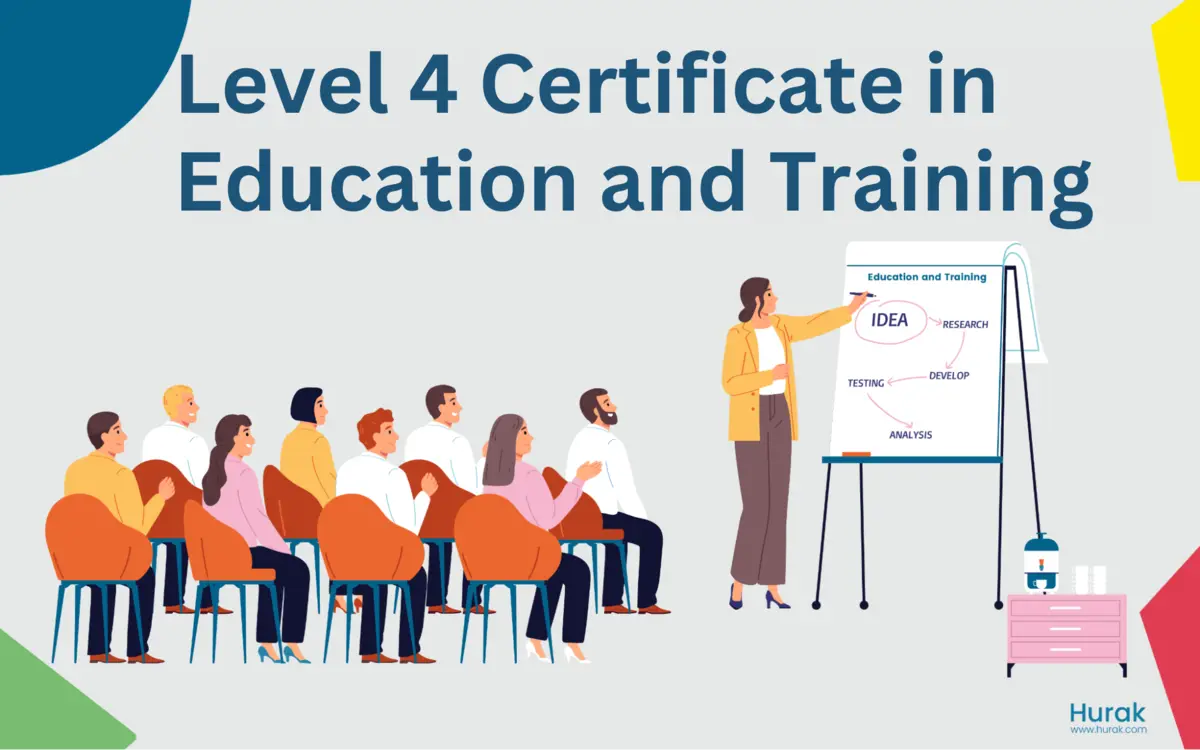
Education Training Qualifications: AET, CET DET
What Are Education and Training Qualifications?Education and Training Qualifications refer to certifications designed to provide individuals with the necessary skills and knowledge to become effective educators and trainers. These qualifications are commonly sought after by those aspiring to work in the teaching, training, and education sectors. These qualifications are commonly recognised in the UK, particularly in further education and training. They provide individuals with the necessary skills and knowledge to excel in teaching and training roles and can lead to various career opportunities in education.The 3 Education and Training qualifications are:Level 3 Award in Education and Training (AET)Level 4 Certificate in Education and Training (CET)Level 5 Diploma in Education and Training (DET)Overview of AET, CET, and DET QualificationsThe Level 3 AET or PTLLS QualificationThe Level 3 Award in Education and Training (AET) / Preparing to Teach in the Lifelong Learning Sector (PTLLS) Qualification suits individuals new to teaching or training roles. It introduces teaching and learning and covers topics such as planning and delivering inclusive teaching sessions, assessing learners, and understanding roles and responsibilities in education and training. Level 3 AET / PTLLS is typically the entry-level qualification for teaching and training positions in the UK.The Level 4 CET or CTLLS QualificationThe Level 4 Certificate in Education and Training (CET) / Certificate in Teaching in the Lifelong Learning Sector (CTLLS) Qualification is suitable for individuals with some teaching or training experience and wanting to develop their skills and knowledge further. It covers topics such as understanding the principles of assessment, using resources for education and training, and understanding the relationships between teachers and other professionals in education and training settings.The Level 5 DET or DTLLS QualificationThe Level 5 Diploma in Education and Training (DET) / Diploma in Teaching in the Lifelong Learning Sector (DTLLS) Qualification is suitable for individuals with significant teaching or training experience and wanting to enhance their expertise further. It covers advanced topics such as researching, planning, and delivering complex teaching sessions, assessing and supporting learners in education and training, and evaluating their practice in education and training.CTLLS, PTLLS, DTLLS, AET, CET, or DET � Which Ones Are Still Active?Currently, the active qualifications areAET (Level 3 Award in Education and Training)CET (Level 4 Certificate in Education and Training)DET (Level 5 Diploma in Education and Training)These qualifications (AET, CET, DET) remain active because they are designed to meet the evolving needs of the UK education and training sectors. They provide individuals with essential skills and knowledge to excel in teaching and training roles. Additionally, they align with current educational policies and frameworks, ensuring that educators and trainers are equipped to meet the demands of contemporary learning environments.Why CTLLS, PTLLS, and DTLLS Are Not Active Anymore?CTLLS, PTLLS, and DTLLS are no longer active because they have been replaced by updated qualifications that better align with current educational standards and frameworks. The newer qualifications, AET (replacing PTLLS), CET (replacing CTLLS), and DET (replacing DTLLS), reflect changes in educational practices, policies, and the evolving needs of the education and training sectors. By phasing out the older qualifications and introducing updated ones, regulatory bodies ensure that educators and trainers receive training that is relevant, up-to-date, and aligned with industry standards.PTLLS (Preparing to Teach in the Lifelong Learning Sector): PTLLS was replaced by the Level 3 Award in Education and Training (AET). AET serves as the new entry-level qualification for teaching and training roles. PTLLS is no longer available.CTLLS (Certificate in Teaching in the Lifelong Learning Sector): CTLLS has been replaced by the Level 4 Certificate in Education and Training (CET). CET is the updated qualification for individuals with some teaching or training experience who want to develop their skills further. CTLLS is no longer available.DTLLS (Diploma in Teaching in the Lifelong Learning Sector): DTLLS has been replaced by the Level 5 Diploma in Education and Training (DET). DET is the advanced qualification for individuals with significant teaching or training experience who want to enhance their expertise. DTLLS is no longer available.Understanding AET (Award in Education and Training)The Award in Education and Training (AET) is a foundational qualification for individuals aiming to enter or enhance their teaching skills. It provides a comprehensive understanding of teaching roles, responsibilities, and boundaries, along with effective lesson planning, delivery, and assessment techniques.For a more detailed guide on the Level 3 AET (formerly known as PTLLS) qualification and its significance, read our blog "The Level 3 AET / PTLLS Qualification Guide: All You Need to Know"Understanding CET (Certificate in Education and Training)The Certificate in Education and Training (CET) is an advanced qualification designed to deepen their knowledge and expertise in education and training. CET builds upon the foundational concepts covered in the AET and offers a more comprehensive understanding of teaching methodologies, curriculum design, assessment strategies, and educational theories.For further insights into the CET qualification and its benefits, read my blog, "The Level 4 CET / CTLLS Qualification Guide: All You Need to Know"Understanding DET (Diploma in Education and Training)The Diploma in Education and Training (DET) is a higher-level qualification aimed at experienced educators seeking to enhance their teaching practice further and advance their careers in education and training. DET provides a comprehensive understanding of advanced teaching theories, pedagogical approaches, curriculum development, and assessment strategies.For more information on DET qualification and its significance, read my blog, "The Level 5 DET / DTLLS Qualification Guide: All You Need to Know"Comparing AET, CET, and DET�ScopeDepthCareer ProspectsOpportunitiesAETAET is an entry-level qualification that provides an introduction to teaching and training.It covers fundamental topics such as planning and delivering inclusive teaching sessions, assessing learners, and understanding roles and responsibilities in education and training.AET can open doors to entry-level teaching or training positions in various sectors, such as further education, adult education, workplace training, and community education.Opportunities may include roles like teaching assistant, trainer in vocational settings, or community education instructor.CETCET is suitable for individuals with some teaching or training experience who want to develop their skills and knowledge further.It covers more advanced topics than AET, such as understanding the principles of assessment, using resources for education and training, and understanding relationships between teachers and other professionals.CET can lead to more advanced teaching or training positions and opportunities for career progression.Individuals with CET may pursue roles such as qualified teachers in further education colleges, training provider coordinators, or instructional designers.DETDET is designed for individuals with significant teaching or training experience who seek to enhance their expertise.It offers the most comprehensive coverage among the three qualifications, including researching, planning, and delivering complex teaching sessions, assessing and supporting learners, and evaluating one's own practice in education and training.DET offers the highest level of qualification and can lead to advanced leadership and management roles in education and training.Career opportunities may include roles like head of department in further education, curriculum developer, educational consultant, or senior trainer in corporate settings.Choosing the Right Education & Training Qualification: AET, CET, or DET? Choosing the right education and training qualification among AET, CET, or DET depends on several factors, including your career goals, experience level, and desired level of responsibility. Here's a guide to help you decide:AET (Level 3 Award in Education and Training)Ideal for: Individuals new to teaching or training roles and need a foundational understanding of educational principles.Consider if: You're looking to start a career in teaching or training and need an entry-level qualification to qualify for basic teaching positions.Advantages: Provides essential knowledge and skills for entry-level teaching or training roles. It's a good starting point for those with little to no experience in education.Limitations: Scope is limited compared to higher-level qualifications, which may restrict career advancement without further study.CET (Level 4 Certificate in Education and Training)Ideal for: Individuals with some teaching or training experience who want to develop their skills further and potentially take on more responsibility in educational settings.Consider if: You have some experience in teaching or training and want to deepen your understanding of educational principles and practices.Advantages: Offers a more in-depth exploration of teaching and training topics compared to AET. Can qualify you for more advanced teaching or training positions.Limitations: May not be sufficient for certain leadership or management roles in education, which may require higher qualifications like DET.DET (Level 5 Diploma in Education and Training)Ideal for: Individuals with significant teaching or training experience who aspire to leadership and management roles in education or training.Consider if: You have substantial experience in teaching or training and seek advanced knowledge and skills for leadership positions.Advantages: Provides extensive training in educational leadership, management, and advanced teaching techniques. Qualifies you for senior roles in education and training.Limitations: Requires significant teaching or training experience as a prerequisite and involves a higher level of study, which may be challenging for some individuals.Consider your long-term career goals, your current level of experience, and the responsibility you aspire to in the education and training sector. Additionally, research specific job requirements and industry standards to ensure your chosen qualification aligns with your career aspirations. If unsure, seeking guidance from educational institutions or career counsellors is advisable to make an informed decision.

Everything You Need to Know About the CSCS Test: Your Guide to CSCS Health and Safety Certification
The CITB test, commonly referred to as the CSCS Health and Safety Test, is mandatory for aspiring construction workers. The test evaluates the candidate�s understanding of health and safety practices to ensure they are capable of working in the construction industry.CITB is the industry training board that is responsible for handling CITB tests. This board deals with the construction sector in England, Scotland, and Wales.Different Types of CITB TestsThere are three types of CITB Health, Safety and Environment tests you can choose from:CITB Health, Safety and Environment Test for Operatives: This test is designed for workers who perform general construction tasks on-site, such as labourers, bricklayers, carpenters, and painters. It is applicable to a wide range of trades in the UK, thus is the most popular of these CITB safety tests.CITB Health, Safety and Environment Test for Specialists: This type of CITB test is for individuals holding supervisory roles and overseeing the work of others.CITB Health, Safety and Environment Test for Managers and Professionals (MAP): This test is specifically targeted at individuals in managerial and professional positions within the construction industry, including project managers, site managers, and surveyors.CITB Test Format and DurationThe CITB Health and Safety test is a multiple-choice test. The duration of the test varies depending on the specific test you are taking. Generally, the test duration is 45 minutes. The pass mark for this test is 90%.How to Book Your CITB TestStep-by-Step Guide to Booking the CITB TestBooking the CITB test is a straightforward process. Follow these steps to book your test and secure your test date:Visit the official CITB website.Create an account or log in to your existing account.Provide the necessary personal details.Select the type of CITB test you wish to book (e.g. CITB Operative Test, CITB Supervisor Test, CITB Managers and Professionals Test).Choose your preferred test centre location.Select a convenient date and time for your test from the available options.Review your booking details and confirm your reservation.Pay the applicable test fee using the provided payment methods.Upon successful payment, you will receive a confirmation email with the details of your test booking.�Still unsure on how to book the CITB test? At Hurak, we can book your test on your behalf.Choosing the Preferred Test CenterDuring the booking process, you have the flexibility to select a test centre that is most convenient for you. Consider factors such as location, accessibility, and availability of test dates.Paying the Applicable FeesEach type of CITB test has an associated fee that must be paid during the booking process. The fee varies depending on the test you are taking, but generally, booking your test directly with CITB costs �23.50. Before booking your test, ensure you have the necessary payment information and methods when booking. Keep in mind that test fees are non-refundable, so it's crucial to be confident in your preparedness before finalising the booking.How to Prepare for the CITB Test1. Explore CSCS Health and Safety Revision MaterialBefore taking the CITB test, it's essential to familiarise yourself with the CSCS revision material.2. Get Hurak�s Online Resources for CITB Test PreparationThere are many online resources including CSCS mock tests and videos that are available to help you prepare for the CITB test. Our mock tests closely resemble the actual test format. Utilise these online resources to supplement your revision and gain confidence in your understanding of health and safety principles.3. Enrol on CITB Training CoursesFor a more structured approach to CITB test preparation, consider enrolling on CITB training courses. By opting for these courses, you can develop knowledge required to work safely on a site. .second-cta-block .main-heading { font-weight: bold; font-size: 22px; } .second-cta-block .book-now { background: #DF3D52; color: #FFFFFF !important; border-radius: 8px; } .second-cta-block .second-heading { font-size: 17px; } .second-cta-block .card { border: 0 !important; } .second-cta-block .card-body { border: 1px solid #909090; box-shadow: rgba(0, 0, 0, 0.16) 0px 1px 4px; border-top-right-radius: 100px; border-bottom-right-radius: 100px; background: #ECECEC; } .second-cta-block .image-wrapper { height: 134px; position: absolute; right: -100px; top: calc(50% - 67px); /* Center the image vertically */ } .second-cta-block .image-wrapper img { height: 100%; } .second-cta-block .trustpilot-widget { width: 256px; } .cta-heading-section { width: 75%; } @media screen and (max-width:991px) { .second-cta-block { padding-top: 100px; } .second-cta-block .card-body { border: 1px solid #909090; box-shadow: rgba(0, 0, 0, 0.16) 0px 1px 4px; border-radius: 19px; border-radius: 14px; background: #ECECEC; } .cta-heading-section { width: 100%; padding-top: 50px; } .second-cta-block .image-wrapper { height: 134px; right: 0; position: absolute; left: calc(50% - 108px); top: calc(50% - 203px); } } RQF LEVEL 1 COURSE for CSCS GREEN CARD Check the Course Rated Excellent on major review sites 4. Develop Effective Time Management StrategiesEffective time management is crucial when preparing for anytest. Allocate dedicated study time in your schedule, ensuring you have sufficient opportunity to review the material thoroughly.Is The CSCS Test and CITB Test The Same?The CSCS test and CITB test are often used interchangeably to refer to the same examination. However, CSCS (Construction Skills Certification Scheme) and CITB (Construction Industry Training Board) are different entities within the construction industry in the UK.CSCS is a certification scheme that provides proof of an individual's skills, qualifications, and health and safety competence as a construction operative. It issues different types of CSCS cards, which serve as evidence of an individual's eligibility to work on construction sites. On the other hand, CITB is an industry training board that focuses on the training and development of the construction workforce. div.wpforms-container-full .wpforms-form label.wpforms-error{ display: none; } /* The Modal (background) */ .ebook-modal { display: none; /* Hidden by default */ position: fixed; /* Stay in place */ z-index: 1; /* Sit on top */ padding-top: 100px; /* Location of the box */ left: 0; top: 0; width: 100%; /* Full width */ height: 100%; /* Full height */ overflow: auto; /* Enable scroll if needed */ background-color: rgb(0,0,0); /* Fallback color */ background-color: rgba(0,0,0,0.4); /* Black w/ opacity */ } div.wpforms-container-full .wpforms-form input[type=submit], div.wpforms-container-full .wpforms-form button[type=submit], div.wpforms-container-full .wpforms-form .wpforms-page-button { border: 1px solid #ddd; font-size: 1em; font-family: inherit; padding: 9px 31px; background: #0f7c90; color: white; /* display: flex; */ /* width: 100%; */ position: absolute; bottom: -418px; right: -150px; /* margin: auto; */ justify-content: center; align-items: center; } /* Modal Content */ .ebook-modal-content { display: flex; flex-direction: column; justify-content: space-between; align-items: baseline; background-color: #fefefe; margin: auto; padding: 31px; border: 1px solid #888; width: 30%; position: relative; } /* The Close Button */ .ebookModal-close { color: #aaaaaa; float: right; font-size: 20px; font-weight: bold; cursor: pointer; position: absolute; right: 21px; top: 10px; } .ebookModal-close:hover, .ebookModal-close:focus { color: #000; text-decoration: none; cursor: pointer; } div.wpforms-container-full { margin: 0px auto 20px;!important } .ebookModal-header{ color:#0f7c90;font-size:30px;margin:0 30px } @media (max-width:576.888px){ .ebook-modal-content { width: 90%; } } @media (max-width:768.888px){ .ebook-modal-content { width: 70%; } .ebookModal-header{ font-size:20px!important; margin:0 } } @media (min-width:768.888px){ .ebook-modal-content { width: 50%; } } @media (max-width:1024.888px){ div.wpforms-container-full .wpforms-form input[type=submit], div.wpforms-container-full .wpforms-form button[type=submit], div.wpforms-container-full .wpforms-form .wpforms-page-button { width: 100%; position: static; } .ebookModal-header{ margin:0; font-size: 25px; } } @media (max-width:1280.888px){ .ebookModal-header{ margin:0; font-size: 30px; } } @media (min-width:992px){ .wpforms-submit-spinner{ max-width: 100%!important; position: absolute!important; top:250px!important; left:150px!important; transform: translate(-50%,-50%)!important; } @media (min-width:1280.888px){ div.wpforms-container-full .wpforms-form input[type=submit], div.wpforms-container-full .wpforms-form button[type=submit], div.wpforms-container-full .wpforms-form .wpforms-page-button { border: 1px solid #ddd; font-size: 1em; font-family: inherit; padding: 9px 31px; background: #0f7c90; color: white; /* display: flex; */ /* width: 100%; */ position: absolute; bottom: -380px; right: -150px; /* margin: auto; */ justify-content: center; align-items: center; } } Download our CITB Operatives and Specialists Test Prep Book for free! × [wpforms id="14869" title="false"] #myImg{ cursor: pointer; } CSCS Training CoursesUpon finishing the Green CSCS Card Course or the Level 1 Health and Safety in a Construction Environment, you can apply for the CSCS Green Card.This card will qualify you for employment on construction sites in various entry-level roles, such as bricklayer, carpenter, or plumber.CSCS courses are important for anyone in the construction industry, whether you are a labourer, tradesperson, or manager. The card demonstrates that you possess the required training and qualifications for your specific role on-siteFrequently Asked Questions (FAQs)How many questions are in the CSCS supervisor test?All CSCS tests including CSCS supervisor test consist of 50 multiple-choice questions. To pass the tests it's typically required to answer at least 45 out of the 50 questions correctly, achieving a pass mark of 90%.Can I book the CITB test online?Yes, the CITB test can be booked online through the official CITB website or you can have us book the test for you. The online booking process is convenient and allows you to choose your preferred test centre, date, and time according to your availability.Are there any exemptions from taking the CITB test?Exemptions from the CITB test may be granted in certain cases. For example, individuals who hold certain recognised qualifications, such as a construction-related degree, may be exempt from taking the test. Exemptions are subject to specific criteria, and it's advisable to contact CITB at 0344 994 4777, lines are open from 8am to 6pm Monday to Friday, excluding Bank Holidays. Refer to their website for the most up-to-date information on eligibility and exemption requirements.What happens if I fail the CITB test?If you fail the CITB test, you can retake the test. However, it's essential to thoroughly review the relevant study material and identify areas that require further improvement before attempting the test again. Take advantage of additional revision resources, practice tests, and training courses to enhance your knowledge and increase your chances of success in subsequent attempts, each will cost you �23.50. You can sit the CITB test again 24 hours after receiving your results.Can I retake the CITB test if I don't pass on my first attempt?If you do not pass the CITB test on your first attempt, you�re eligible to retake the test. However, there may be a waiting period before you can rebook the test, depending on the test centre's availability.How to apply for a CSCS card after passing the test?After passing your CSCS test, you can apply for a CSCS card by visiting the official CSCS website and completing the online application, or by calling the CSCS contact centre. Ensure you have your test results and necessary qualifications ready. Pay the required fee; more details are available on our CSCS card cost page. For a comprehensive guide, check out our article on how to get a CSCS card.ConclusionFrom understanding the test format and content, to exploring study resources and preparation strategies, you are now equipped with the knowledge and tools to excel in your exam. Remember, the CITB test serves as a crucial step in demonstrating your competence in health and safety within the construction industry.

CSCS Card Renewal: How To Renew Your CSCS Card!
With CSCS cards gaining a lot of popularity in the UK�s construction industry,�it�s important to have an up-to-date CSCS card. Whether you already have a�CSCS card�or are just starting out in the industry, it�s important to understand the CSCS card renewal process.In this comprehensive guide, I�ll cover the different aspects you need to know about renewing your CSCS card. Whether you�re approaching your renewal date or simply want to stay informed, read on to learn everything you need to know about the CSCS card renewal.Why Renewing Your CSCS Card is Important?Renewing your CSCS card is important for several reasons:To avoid restrictions on accessing the site or facing prohibitions on commencing new employment.To get up-to-date knowledge of the construction industry�s latest techniques, regulations, and health and safety procedures.To demonstrate a commitment to professional development and ongoing learning for enhanced career prospects.CSCS Card Renewal ProcessThere are three ways to apply for your card renewal. Let�s explore them in detail.Online Renewal ProcessThe first and most convenient option to renew your CSCS card is via the online application process. This process is divided into five steps.Step 1: Creating a CSCS Online AccountIf you don�t have an account on the CSCS website yet, go to�CSCS official website�and select the option �Individual� to create one.Fill out your personal details including name, email ID, etc. and accept the CSCS terms and conditions.Click the �Register� button to complete your account setup.You will receive a verification email from CSCS Online. Click the link in the email to verify your email address.*Note: If you already have an account, you can skip step 1 and proceed to step 2.Step 2: Applying for a CSCS CardLogin to your CSCS online account and click on the �Apply for a card� button to start your application.Indicate whether you�ve taken the�CITB HS&E test, and that 24 hours have passed since you completed it.From the drop-down menu, select the option to update, renew or replace your current card.Enter your occupation and qualification details, and upload a copy of your qualification certificate.Please verify that you have taken the Health, Safety and Environment test in the past two years.You will need to indicate which type of CITB HS&E test you passed.Provide your testing ID and postcode for validation purposes. If�your test does not validate, you may still continue with your application, and CSCS will verify it manually.Step 3: Adding Your Personal DetailsEnter your personal details. You have to input data only the fields that will not autocomplete.You can also enter your National Insurance Number.Add the address where you want to receive your card.Step 4: Preview Your ApplicationIn the preview, double-check the details you�ve entered to avoid any delays in your application.Accept the Terms & Conditions.Step 5: Pay for Your ApplicationAdd in your debit/credit card detailsThe CSCS card renewal cost of all CSCS card types is �36Postal Renewal ProcessConstruction Skills Certification Scheme (CSCS) no longer accepts postal applications for the CSCS card renewal. This means workers cannot renew their CSCS card by completing a paper application form and sending it to CSCS through the mail.Workers can renew their CSCS cards through the CSCS online service or by attending a card renewal event in person. This change is part of CSCS's ongoing efforts to modernise and streamline its services.In-Person Renewal ProcessThe in-person renewal process of the CSCS card is a convenient option for workers who prefer to renew their cards face-to-face. It involves attending a card renewal event at a designated location and completing the necessary paperwork in person.What Documents Do I Need to Submit for the In-Person Card Renewal Process?To renew your CSCS card in person, you must submit:an expired CSCS carda recent passport-sized photographa valid form of identification, such as a passport or driver's licence.the application fee using a credit/debit card or casha renewal application form, which includes personal and professional details, such as name, address, occupation, and previous CSCS card details.a signed declaration of your current health and safety status.Once the renewal application is completed and payment is made, the new CSCS card will be issued on the spot.Where Are the In-person Renewal Events Held?In-person card renewal events are held at various locations across the UK. This option makes it easier for workers to attend and renew their cards without having to travel far. The events are usually scheduled in advance. Workers can find information related to the dates and locations of upcoming events on the CSCS website.CSCS Card Types and Renewal RequirementsAs there are different types of CSCS cards, each have their own requirements for renewal. Let�s look at the requirements of each one of them.CSCS Green CardTo renew your CSCS Green Card, you must obtain a Level 1 Award in Health and Safety in a Construction Environment (L1HSCE) qualification. Also, you must pass the CITB Health, Safety and Environment test for Operatives. The Level 1 HSCE is valid for life, so you won�t have to do this course again. While the CITB test expires after 2 years, and you will have to retake it before renewing your card.At Hurak Learning, we simplify the process of reserving your CITB test by handling the booking on your behalf, Book Now! Before you attempt a CITB test, it�s advisable to take the CSCS mock test for practice.Once your certificate and health and safety test are sorted, you can create an account following the guidelines mentioned above, or you can submit an online renewal application form, or call CSCS on 0344 994 4777 (8 am to 6 pm, Monday to Friday) to proceed. .second-cta-block .main-heading { font-weight: bold; font-size: 22px; } .second-cta-block .book-now { background: #DF3D52; color: #FFFFFF !important; border-radius: 8px; } .second-cta-block .second-heading { font-size: 17px; } .second-cta-block .card { border: 0 !important; } .second-cta-block .card-body { border: 1px solid #909090; box-shadow: rgba(0, 0, 0, 0.16) 0px 1px 4px; border-top-right-radius: 100px; border-bottom-right-radius: 100px; background: #ECECEC; } .second-cta-block .image-wrapper { height: 134px; position: absolute; right: -100px; top: calc(50% - 67px); /* Center the image vertically */ } .second-cta-block .image-wrapper img { height: 100%; } .second-cta-block .trustpilot-widget { width: 256px; } .cta-heading-section { width: 75%; } @media screen and (max-width:991px) { .second-cta-block { padding-top: 100px; } .second-cta-block .card-body { border: 1px solid #909090; box-shadow: rgba(0, 0, 0, 0.16) 0px 1px 4px; border-radius: 19px; border-radius: 14px; background: #ECECEC; } .cta-heading-section { width: 100%; padding-top: 50px; } .second-cta-block .image-wrapper { height: 134px; right: 0; position: absolute; left: calc(50% - 108px); top: calc(50% - 203px); } } RQF LEVEL 1 COURSE for CSCS GREEN CARD Check the Course Rated Excellent on major review sites CSCS Red CardYour CSCS Red Card cannot be renewed if you have been working as an experienced worker or trainee while completing your qualification or apprenticeship. This is because the expiry date of the card coincides with the end of your training period. As you have acquired new skills, you can now apply for the relevant card that matches your level of expertise.CSCS Blue CardTo renew your CSCS Blue Card, you need to submit evidence of your NVQ/ SVQ Level 2. Alternatively, you can show a completed, recognised apprenticeship in the industry. You will need to renew your CSCS Blue Card every five years.While holding a CSCS Blue Card instead of renewing it, you can apply for a Gold Card. For that, you must have an NVQ Level 3 certificate and a valid CITB test for operatives or specialists.CSCS Gold CardThe CSCS Gold Card is for supervisors and those with advanced craft skills. It requires a Level 3, 4, or 5 NVQ or higher qualification. CSCS Gold Card renewals will require evidence of ongoing professional development and up-to-date knowledge and skills in your field. Your CSCS Gold Card needs to be renewed every 5 years.CSCS Black CardThe CSCS Black Card has its own requirements. You must have an NVQ Level 5, 6 or 7 and pass a CITB test for managers. You must renew the CSCS Black Card every five years.Required Documents for Renewing your CSCS CardYou�re required to provide several documents to renew your CSCS card. As there are different CSCS cards, they have their specific requirements. But generally, the following documents are required:Completed CSCS Card Renewal Application Form: First, you must fill out the online application form provide all the necessary details.Current CSCS Card: You must provide a scanned copy of your existing CSCS card that you�re applying for its renewal.Proof of Identity: You must provide a scanned copy of any proof of your identity such as a national identity card, passport, or driving licence.Proof of Qualifications: You must submit evidence of your completed qualifications that are required for the specific CSCS card type you�re applying for. Evidence can be in the form of a scanned copy of your qualification certificate.CITB Health and Safety Test: You must show evidence of your passed CITB Health and Safety Test relevant to the CSCS card you�re applying for. Forverification you will need to provide your CITB test ID number.Present Employment/Workplace Details: You must submit your current employment details including business and contact details for your company.A Passport-Size Photo: You must provide a passport-size photo. You may also be required to provide a signature on the reverse side, in some cases.Payment: You�re required to pay the CSCS card renewal fee of �36.00It�s important to note that the specific requirements for a CSCS card renewal may differ depending on the type of card you hold and your circumstances. It�s recommended to check the CSCS website for the most up-to-date information and requirements.How Much is a CSCS Card Renewal?The renewal fee of your Green, Blue, Gold, or Black CSCS card depends on the time you�re applying for it.Applying for a CSCS card renewal�within 6 months of the expiry date�will cost you �58.50 (�36 for the card & �23.50 for the test).Applying for a CSCS card renewal�after 6 months (max.) of the expiry date�will cost you��58.50 (�36 for the card and �23.50 for the test).Tips for a Smooth Renewal of your CSCS CardHere are some tips for a smooth CSCS card renewal process:Plan AheadDon�t go down to the wire to renew your CSCS card to avoid any consequences. It�s advisable to begin your CSCS card renewal process at least 2-3 months before the card expires. Doing so will give you enough time to complete any certification requirements or necessary training.Review Renewal RequirementsAnother important tip is to carefully review the specific renewal requirements for your�CSCS card type. Before submitting your renewal application, you must ensure you have met all of the necessary criteria.Prepare Well for the CITB TestAs the CITB HS&E test expires after two years, you must retake it before renewing your CSCS card. Prepare well to pass this test in the first attempt to avoid paying again for it. To prepare, you must take our free CSCS mock test and make unlimited attempts until you succeed.Keep Records Up-to-DateYour renewal application requires your qualification and training records, so it�s recommended to always keep all your records up-to-date, even before your card expires. Doing so will make it easier to provide the necessary documentation during the renewal process. Otherwise, if you miss out on any of the requirements, it will take a lot of time to get things in order or to complete any missing training.Complete Required TrainingIf your training qualification has expired before your card does, you should not delay updating it. You must complete your training qualification before the CSCS card renewal deadline.Stay Up-to-Date on Health and Safety TrainingMake sure that your health and safety training is up-to-date and that you are aware of any changes to regulations or requirements in your industry.Submit Your Application on TimeSubmit your renewal application as early as possible and make sure that all the required documentation is included. Late or incomplete applications may result in a delay in renewing your CSCS card and that could put you in trouble.By following these tips, you can ensure a smooth and hassle-free CSCS card renewal process. div.wpforms-container-full .wpforms-form label.wpforms-error{ display: none; } /* The Modal (background) */ .ebook-modal { display: none; /* Hidden by default */ position: fixed; /* Stay in place */ z-index: 1; /* Sit on top */ padding-top: 100px; /* Location of the box */ left: 0; top: 0; width: 100%; /* Full width */ height: 100%; /* Full height */ overflow: auto; /* Enable scroll if needed */ background-color: rgb(0,0,0); /* Fallback color */ background-color: rgba(0,0,0,0.4); /* Black w/ opacity */ } div.wpforms-container-full .wpforms-form input[type=submit], div.wpforms-container-full .wpforms-form button[type=submit], div.wpforms-container-full .wpforms-form .wpforms-page-button { border: 1px solid #ddd; font-size: 1em; font-family: inherit; padding: 9px 31px; background: #0f7c90; color: white; /* display: flex; */ /* width: 100%; */ position: absolute; bottom: -418px; right: -150px; /* margin: auto; */ justify-content: center; align-items: center; } /* Modal Content */ .ebook-modal-content { display: flex; flex-direction: column; justify-content: space-between; align-items: baseline; background-color: #fefefe; margin: auto; padding: 31px; border: 1px solid #888; width: 30%; position: relative; } /* The Close Button */ .ebookModal-close { color: #aaaaaa; float: right; font-size: 20px; font-weight: bold; cursor: pointer; position: absolute; right: 21px; top: 10px; } .ebookModal-close:hover, .ebookModal-close:focus { color: #000; text-decoration: none; cursor: pointer; } div.wpforms-container-full { margin: 0px auto 20px;!important } .ebookModal-header{ color:#0f7c90;font-size:30px;margin:0 30px } @media (max-width:576.888px){ .ebook-modal-content { width: 90%; } } @media (max-width:768.888px){ .ebook-modal-content { width: 70%; } .ebookModal-header{ font-size:20px!important; margin:0 } } @media (min-width:768.888px){ .ebook-modal-content { width: 50%; } } @media (max-width:1024.888px){ div.wpforms-container-full .wpforms-form input[type=submit], div.wpforms-container-full .wpforms-form button[type=submit], div.wpforms-container-full .wpforms-form .wpforms-page-button { width: 100%; position: static; } .ebookModal-header{ margin:0; font-size: 25px; } } @media (max-width:1280.888px){ .ebookModal-header{ margin:0; font-size: 30px; } } @media (min-width:992px){ .wpforms-submit-spinner{ max-width: 100%!important; position: absolute!important; top:250px!important; left:150px!important; transform: translate(-50%,-50%)!important; } @media (min-width:1280.888px){ div.wpforms-container-full .wpforms-form input[type=submit], div.wpforms-container-full .wpforms-form button[type=submit], div.wpforms-container-full .wpforms-form .wpforms-page-button { border: 1px solid #ddd; font-size: 1em; font-family: inherit; padding: 9px 31px; background: #0f7c90; color: white; /* display: flex; */ /* width: 100%; */ position: absolute; bottom: -380px; right: -150px; /* margin: auto; */ justify-content: center; align-items: center; } } Download our Managers and Professionals Test Prep Book for free! × [wpforms id="15262" title="false"] #myImg{ cursor: pointer; } Frequently Asked Questions (FAQs)When should I start the CSCS card renewal process?It�s recommended to begin the CSCS card renewal process at least 2-3 months before your CSCS card expires. During that time, you can complete any necessary training or certification requirements and successfully submit your card renewal application before its expiration date.How long does it take to renew a CSCS card?It depends on the type of CSCS card you�re renewing and the processing time you choose. Standard processing time is usually 20 working days, but expedited options are also available for an additional fee.Can I continue to work while my CSCS card renewal application is being processed?Yes, you can continue to work while your CSCS card renewal application is being processed but your current CSCS card must be valid. However, you may need to temporarily stop working if you have an expired card until your renewal application is approved and you have received your new card.What happens if my CSCS card renewal application is rejected?In that case, you will be informed why it was rejected. You can then take the necessary steps to address any issues and resubmit your CSCS card renewal application.Can I appeal a decision if my CSCS card renewal application is rejected?Yes, you can do that. You will need to follow the appeals process outlined by CSCS and provide any additional information or documentation that supports your case.What should I do if my CSCS card has already expired?If your CSCS card has already expired, you must immediately apply for a renewal as soon as possible. You may need to complete additional training or certification requirements before your renewal application can be approved.How often do I need to renew my CSCS card?The renewal period for CSCS cards varies depending on the type of card you hold. Most�CSCS card types are valid for 5 years�and require renewal. Some specialist cards may have different renewal periods. It is important to check the expiry date on your card and plan for its renewal accordingly.SummaryRenewing your CSCS card is a straightforward process, but it's essential to get it right to avoid any delays or issues.The first step is to identify the type of card you need and gather all the necessary documents, such as proof of qualifications and ID.Next, you can either apply online or by post, depending on your preference. The renewal fee varies depending on the type of card, so make sure to check the latest pricing information.Finally, ensure that you allow enough time for your application to be processed and your new card to be issued before your old one expires.By following these simple steps, you can renew your CSCS card with ease and continue working on-site without any interruptions.
The Level 5 DET / DTLLS Qualification Guide: All You Need to Know
What is the Diploma in Education and Training (DET)?The Level 5 Diploma in Education and Training (DET), previously called DTLLS, is a nationally recognised advanced-level teaching qualification for the post-16 education sector. The DET qualification will make you eligible to apply for QTLS (Qualified Teacher Learning and Skills) status.It is the most advanced Education and Training qualification, suitable for those wishing to take the next step in their teaching careers in the UK�s lifelong education and skills sector. The DET training course will equip you with advanced knowledge and skills to successfully plan schemes of work, deliver learning sessions, and develop learning and teaching strategies.After completing the Level 5 DET, you can teach in various contexts, especially in adult education, community, work-based or skills sector.What is a DTLLS qualification?DTLLS stands for 'Diploma in Teaching in the Lifelong Learning Sector'. The DTLLS qualification has been replaced by the Level 5 'Diploma in Education and Training (DET). DTLLS was previously the teacher training qualification for teaching in Further Education (FE).DTLLS was the highest of the teaching qualifications and phased out with the Diploma in Education and Training (DET) qualification at QCF Level 5.Is It Mandatory To Complete the Level 3 AET And the Level 4 CET Before Enrolling On the Level 5 DET Course?While it is commonly perceived that getting the Level 3 and Level 4 education and training awards is necessary before enrolling on the Level 5 DET course, it's important to note that these qualifications are not mandatory.You can still enrol on the Level 5 DET course without completing Levels 3 and 4 with the relevant academic skills. You must:have the relevant academic skills to write assignments at degree levelhave experience in a teaching rolecommit to the 100 hours of teaching practiceWhat Can I Teach with the Level 5 DET Qualification?With the DTLLS or Level 5 Diploma in Education and Training (DET) qualification, you can teach in post-16 education and training. The DET qualification allows you to teach courses in various contexts and disciplines.With the Level 5 DET qualification, you can teach in various settings, including private training providers, voluntary sector organisations, colleges, adult and community education, and more.Getting Qualified Teacher Learning and Skills (QTLS) StatusYou must complete the Level 5 Diploma in Education and Training (DET) qualification to achieve Qualified Teacher Learning and Skills (QTLS) Status.If you�re new to this sector and have no prior qualification and experience, it�s recommended to take the Level 3 Award in Education and Training and Level 4 Certificate in Education and Training. However, taking these qualifications is optional and not mandatory for QTLS status.The Level 5 DET course requires approximately 1,200 hours of study time and can typically be completed in 8-12 months. You can take this course online and complete it at your own pace. However, you must demonstrate a minimum of 100 hours of teaching practice.What is a Level 5 Diploma in Education and Training Equivalent to?The Level 5 DET qualification is equivalent to the Certificate of Education (CertEd). It is also considered an alternative to the Postgraduate Certificate in Education. After completing the Level 5 Diploma in Education and Training (DET), you can apply for QTLS status.What Can I Do with a Level 5 Diploma in Education and Training?You can pursue several career paths in the education industry with a Level 5 DET qualification, including:Positions as teachers at adult education facilities, postsecondary institutions, or private training providers.Providing workshops and courses and training and development positions in corporate environments.Roles in programmes coordination or curriculum development, among other leadership and management roles in education.Advancement into higher education, like getting a master's or bachelor's degree in education or a similar discipline.Opportunities in educational settings for consulting or freelancing work.Additional specialisation obtained by way of training courses or certifications.What�s Next?Once you complete the Level 5 Diploma in Education and Training (DET) course, you can apply for Qualified Teacher Learning and Skills (QTLS) status.Take Your Education and Training Course with HurakHurak offers the Level 3, 4, and 5 Education and Training Awards that make you eligible to start a rewarding career in the lifelong learning sector. Check out our education and training courses below.Level 3 Award in Education and Training (AET or PTLLS)Level 4 Certificate in Education and Training (CET or CTLLS)Benefits of the DET / DTLLS CourseQualified Teacher Learning and Skills (QTLS) StatusAfter completing the Diploma in Education and Training (DET), you become eligible for the Qualified Teacher Learning and Skills (QTLS) status.Career AdvancementWith the Level 5 DET/DTLLS qualification, you can take your teaching career to an advanced level.Enhanced Teaching SkillsAs the Level 5 DET is an advanced level teaching qualification, it equips learners with advanced teaching techniques and strategies. It helps you become a more qualified and effective educator.Better Job OpportunitiesWith DET, you can explore a wider range of teaching positions that pay well. You can teach in schools, colleges, vocational training institutions, adult education centres, and more.Contribution to SocietyTeaching is one of the most respected professions and plays a crucial role in shaping the future. With DET, you become a part of this profession and make a positive impact on society as a whole.�

The Level 3 AET and PTLLS Qualification Guide: All You Need to Know
What is the Award in Education and Training (AET)/PTLLS?The Level 3 Award in Education and Training (AET), previously called PTLLS, is a foundation level qualification suitable for those wishing to begin their careers in teaching roles in the UK�s lifelong education and skills sector.With this qualification, learners with no prior experience can teach courses up to Level 3 anywhere in the UK. AET is recognised by public and private sectors in the United Kingdom and is the first step towards a rewarding teaching career.With the Level 3 AET, you can teach in various contexts, especially in adult education, community, work-based or skills sector.What is a PTLLS qualification?PTLLS stands for 'Preparing to Teach in the Lifelong Learning Sector'. The PTLLS teaching qualification has been replaced by the Level 3 Award in Education and Training (AET). The PTLLS and AET are quite similar, but AET has some updates in its structure and criteriaPTLLS qualification was suitable for anyone regardless of any specific subject and level. It was designed for anyone who wanted to begin a career in teaching or already had experience but looking for a formal qualification.What Happened to the PTLLS?Due to the regular updates in the education and training sector, fresh content needed to be added to the PTLLS qualification. With the additions, the PTLLS is now transformed into the Level 3 Award in Education and Training (AET).Although AET is still called PTLLS by some people, it�s no longer offered.The Level 3 AET/PTLLS Qualification Training CourseThe Level 3 AET Training is a foundation level course suitable for those wishing to undertake teaching roles in the lifelong education and skills sector. It covers teaching fundamentals in the UK�s 16+ post-compulsory adult education. Learners will gain the foundational knowledge for planning, delivering, and assessing learning.�RequirementsThere are no strict requirements for the Level 3 AET training course. Learner must:Be aged 19 and above.have a good understanding of the English language.Who is it for?The Level 3 AET course is for individuals wishing to begin their career in a teaching role in the United Kingdom. The Level 3 AET training course is suitable for individuals planning to teach within the private training industry and educational institutes.DurationThe Level 3 Award in Education and Training (AET) offers online and in-person training that requires approximately 48 guided learning hours (GLH), including independent and classroom training. Typically, learners can cover this course in 3 to 6 months.AET Course FeeAt Hurak, the Level 3 Award in Education and Training (AET) is offered at �189.99.Course ContentThe Level 3 AET/PTLLS course has six units.Unit 1: Understand the roles, relationships, and responsibilities in the Education and Training sectorUnit 2: Understand the use of inclusive learning and teaching approaches in education and trainingUnit 3: Understand the practices and principles of assessmentWhat Can I Teach with the Level 3 AET Qualification?With the PTLLS or Level 3 Award in Education and Training (AET), you can start teaching in post-16 education and training. With this qualification, you become eligible to teach in a wide range of settings, including adult and community education, voluntary sector organisations, colleges, private training providers, and more.The Level 3 Award in Education and Training (AET) qualification allows you to teach courses in various contexts and disciplines. Hurak has been successfully delivering the Level 3 AET course to candidates from the following sectors:ConstructionPublic healthTraffic managementMedicine and medical devicesSecurityLocal governmentHealth and social careHair and beautyChemical engineeringRailwaysCateringElectrical installationSocial workMetalworkForestryCare homesEmergency ServicesGrounds maintenanceWhich Qualifications Do I Need for Teacher Training?If you want a career in teaching in the UK�s lifelong learning sector, you can opt for the following courses based on your knowledge and experience.Foundation Level Qualification The Level 3 Award in Education and Training (AET) is a foundation level qualification suitable for learners with no work experience in teaching.Advance Level Qualification The Level 4 Certificate in Education and Training (CET) is an advanced qualification suitable for experienced instructors.Qualification for Qualified Teacher Learning and Skills (QTLS) StatusThe Level 5 Diploma in Education and Training (DET) is required to achieve Qualified Teacher Learning and Skills (QTLS) Status.What�s Next?After completing the aet Level 3 Award in Education and Training or PTLLS qualification, you must go for the Level 4 CET. The AET and CET qualifications will make you eligible to progress to the Level 5 DET qualification. Once you complete the Level 5 DET, you can apply for QTLS to become a fully qualified teacher.Take Your Education and Training Course with HurakYou can begin your teaching career in the lifelong learning sector by enrolling on the following courses Hurak offers.Check out our education and training courses below.Level 3 Award in Education and Training (AET or PTLLS)Level 4 Certificate in Education and Training (CET or CTLLS)Level 5 Diploma in Education and Training (DET)Benefits of the AET or PTLLS CourseStart a Career in the Lifelong Learning SectorWith the AET course, you can begin your career in the lifelong learning sector. This course will make you eligible to start working as a trainer in diverse educational settings.Versatile Options for TeachingYou can teach in various educational contexts with the AET qualification. You can teach in colleges, schools, vocational training institutions, adult education centres, and more.Practical TrainingThe Level 3 AET course provides learners with hands-on practical training to help them plan, deliver, and assess lessons.Sets Foundation for the Education OpportunitiesThe AET course sets the foundation and empowers learners to pursue advanced teaching qualifications and widen their career prospects in the education field.FAQsWhat job can I get with a level 3 award in education and training?With a level 3 award in education and training, you can work as a teacher/trainer/tutor in the further education and skills sector, teaching vocational or academic subjects in various industries and settings.What can I teach with a PTLLS qualification?With the PTLLS or AET, you can teach in post-16 education and training. PTLLS makes you eligible to teach in a wide range of settings. You may teach in colleges, private training providers, adult and community education, voluntary sector organisations, and more.What does PTLLS stand for?PTLLS stands for 'Preparing to Teach in the Lifelong Learning Sector'. The PTLLS teaching qualification is now replaced by the Level 3 Award in Education and Training (AET).What is PTLLS level 3 equivalent to?The PTLLS qualification is equivalent to Level 3 on the Regulated Qualifications Framework (RQF) in the United Kingdom.What has replaced PTLLS?After the PTLLS qualification was updated with new content, the Level 3 Award in Education and Training (AET) took the place of PTLLS. It�s because of the industry's constant updates in education and training.How long does PTLLS qualification last?You must complete 48 hours of guided learning. However, we anticipate you will work on this award for 120 hours, including research and writing assignments. You can choose how you want to spend these hours. You can finish the course in a few weeks or over a full year.�Wrapping UpIn this AET / PTLLS qualification guide, I�ve discussed the Level 3 Award in Education and Training (AET) qualification, previously called PTLLS. This qualification will help you enhance your knowledge and skills to start your career in the lifelong learning sector.
The Level 4 CET / CTLLS Qualification Guide: All You Need to Know
.breadcrumb .breadcrumb-link{ color: #0f7c90 !important } ul.breadcrumb { padding: 0; list-style: none; background: white; } ul.breadcrumb li { display: inline; font-size: 15px; font-weight: bold; } ul.breadcrumb li+li:before { padding: 8px; color: black; content: "/0a0"; } ul.breadcrumb li a { color: #0275d8; text-decoration: none; } ul.breadcrumb li a:hover { color: #01447e; text-decoration: underline; } Home Teaching The Level 4 CET or CTLLS Qualification Guide: All You Need to Know What is the Certificate in Education and Training (CET)/CTLLS?Formally called CTLLS, the Level 4 Certificate in Education and Training (CET) is a nationally recognised qualification designed for aspiring instructors or teachers. It is suitable for new instructors and those already in a teaching role looking to enhance their teaching skills and knowledge. It�s a first-stage teaching qualification with a teaching and training practice requirement.The Level 4 CET qualification is suitable for delivery in England, Wales and Northern Ireland. CET qualification aims to equip learners to advance to a higher-level qualification within the same subject area.With the Level 4 CET, you can teach in various contexts, especially in FE Colleges, Private Training Providers, HE institutions, Local Authorities, etc.What is a CTLLS Qualification?CTLLS stands for Certificate in Teaching in the Lifelong Learning Sector. CTLLS was under the old QCF framework and has now been replaced by The Certificate in Education and Training (CET). The content of both the courses is similar, with a few upgradations in CET. CTLLS was also a nationally recognised, first-stage qualification designed for instructors to enhance their teaching skills and knowledge.What Happened to the PTLLS, CTLLS and DTLLS?With the need for new qualifications in the education and training sector with up-to-date curriculums and teaching methods, PTLLS, CTLLS and DTLLS have been updated to new qualifications.Formally called the CTLLS qualification, it is now known as the Level 4 Certificate in Education and Training (CET). DTLLS is now transformed into Level 5 DET qualification, and the Level 3 AET has replaced the PTLLS.Some people still call these new qualifications with old names, but they are no longer active.What Can I Do with the Level 4 Certificate in Education and Training?With CET, you can begin or continue your role as an instructor, teacher, or trainer in various educational and training settings, such as HE institutions, schools, private training providers, vocational training institutions, local authorities, colleges, adult education centres, corporate training departments, and more.After completing the Level 4 CET training, you can work in any industry, including construction, hospitality, health and social care, or beauty. With this qualification, you gain knowledge and skills to teach courses up to Level 4.The Level 4 CET/CTLLS Qualification Training CourseThe Level 4 CET Training Course equips learners with the knowledge and skills to advance to a higher-level qualification within the same subject area. Learners will gain the foundational knowledge, understanding, and skills necessary to validate occupational competence.RequirementsThere are no strict requirements for enrolling on the Level 4 CET training course. Learner must:Be aged 19 and above.have a good understanding of the English language.Who is it for?The Level 4 CET course is designed for anyone wishing to begin or advance their career in a teaching role in an associate position. The Level 4 CET training course suits those teaching within the educational institutes and private training industry.Course DurationThe Level 4 Certificate in Education and Training (CET) offers online and in-person training that takes 360 hours. Learners have the flexibility to complete the course at their own pace. They must also demonstrate 30 hours of teaching practice.AssessmentsTo pass the CET training course, learners must pass online assignments, take a practical assessment, and show a portfolio of teaching evidence.The online assignments will include essay-type theoretical assignments.The practical assessment will involve an observation and evaluation from the tutor/assessor for at least 3 hours out of the 30 hours of teaching practice.CET Course FeeAt Hurak, the Level 4 Certificate in Education and Training (CET) is offered at �480.Course ContentThe Level 4 CET/CTLLS course has six units.Unit 1: Understanding Roles, Responsibilities and Relationships in Education and TrainingUnit 2: Planning to Meet the Needs of Learners in Education and TrainingUnit 3: Delivering Education and TrainingUnit 4: Assessing Learners in Education and TrainingUnit 5: Using Resources for Education and TrainingUnit 6: Developing, Using and Organising Resources in a Specialist AreaWhat Can I Teach with the Level 4 CET Qualification?With the Level 4 Certificate in Education and Training (CET), you can start teaching in post-16 education and training. This qualification allows you to teach different subjects and courses in various contexts and disciplines. Common areas include:Professional development coursesVocational or technical subjectsSpecialised skills or tradesWork-based learning or apprenticeship programsAdult education or lifelong learning coursesPersonal development and soft skills trainingBasic literacy and numeracy skillsPreparing learners for specific qualifications or examsWhich Qualifications Do I Need For Teacher Training?Three qualifications exist to begin a career or progress working as a trainer.Introductory Qualification To begin your career in education and training as a teacher, you can take the Level 3 Award in Education and Training (AET). It�s an introductory qualification for learners having no work experience in teaching.Advance Qualification To advance your career as a teacher and obtain better job opportunities, you must choose the Level 4 Certificate in Education and Training.Qualification for Qualified Teacher Learning and Skills (QTLS) StatusTo achieve Qualified Teacher Learning and Skills (QTLS) Status, you must take the Level 5 Diploma in Education and Training.What is Level 4 CET Equivalent to?The Level 4 Certificate in Education and Training (CET) is equivalent to the first year of a bachelor's degree. It equips people with the abilities and know-how needed to start a career in instruction or training.What�s Next?To become a fully qualified teacher, you must achieve QTLS. The Level 4 Certificate in Education and Training (CET) or CTLLS qualification makes you eligible to progress to the Level 5 Diploma in Education and Training (DET) or DTLLS. Once you complete the Level 5 DET, you can apply for QTLS.Take Your Education and Training Course with Hurak With the right training provider like Hurak, you can start a rewarding career in the lifelong learning sector. Over the years, Hurak has helped thousands of trainers to achieve the required qualifications and begin their teaching careers. Check out our education and training courses below.Level 3 Award in Education and Training (AET or PTLLS)Level 4 Certificate in Education and Training (CET or CTLLS)Wrapping UpIn this blog, I've thoroughly discussed the Level 4 Certificate in Education and Training (CET) qualification, which was previously called CTLLS. Obtaining this qualification will help you enhance your knowledge and skills to become a better instructor and get better jobs.

OSHA Bloodborne Pathogens Standard: Protecting Workers from Infectious Diseases
OSHA's Bloodborne Pathogens Standard, found in 29 CFR 1910.1030, fortified by the 2000 Needlestick Safety and Prevention Act, is a crucial framework ensuring worker safety. It mandates exposure control plans, engineering controls, and training, emphasizing Universal Precautions. This standard is vital for employers and workers in various settings, underscoring the importance of safety measures in handling bloodborne pathogens.Why Bloodborne Pathogen Standard?The OSHA Bloodborne Pathogen Standard is imperative due to the immense threat bloodborne pathogens pose to human health. With an alarming annual estimate of three million exposures, accidental punctures in workplaces and laboratories contribute significantly to bloodborne infections.Hospital settings in the United States witness approximately 400,000 sharp injuries yearly. OSHA's standard addresses this public health concern by advocating Universal Precautions, assuming all body fluids and sites may harbor infectious microorganisms. By promoting practices like hand hygiene, proper use of personal protective equipment, and engineering controls, the standard aims to significantly reduce exposure risks, safeguarding employees and curbing the spread of infectious diseases like HBV, HCV, and HIV.What practices are advised according to the standards?Engineering controls play a vital role in minimizing employee exposure to bloodborne pathogens. Safer medical devices, including needleless and shielded needle devices, and proper disposal practices significantly reduce sharps and needlestick injuries.Best practices according to OSHA regulations for bloodborne pathogens involve planning safe handling, opting for needle alternatives, using devices with engineered sharps injury protection, activating safety features, avoiding sharps exchange, refraining from recapping or breaking needles, and ensuring immediate disposal in secured sharps containers. Additionally, completing Bloodborne Pathogens training enhances overall safety measures in healthcare and related settings.Protections Provided By OSHA For Bloodborne Pathogen SafetyThis standard is designed to safeguard employees whose job duties may reasonably involve contact with blood, emphasizing a proactive approach to eliminate or minimize occupational exposures.For this purpose, the following are the standards that OSHA requires workers to follow for bloodborne pathogens clean-up procedures OSHA:Exposure Control Plan: Establishing Comprehensive ProtectionEmployers are mandated to create an Exposure Control Plan, a written document outlining strategies to eliminate or minimize occupational exposures. The plan includes an exposure determination, categorizing job classifications with potential exposure, and tasks performed leading to exposure. Updates to this plan must occur annually to reflect changes in tasks, procedures, and positions that impact occupational exposure.Implementing Universal Precautions and Engineering ControlsThe adoption of Universal Precautions is integral to the standard, requiring the treatment of all human blood and OPIM as potentially infectious. Engineering controls, such as safer medical devices (needleless systems, shielded needle devices), sharps disposal containers, and self-sheathing needles, are crucial in isolating or removing bloodborne pathogens hazards from the workplace.Work Practice Controls: Enhancing Safety ProtocolsWork practice controls involve practices that alter task execution to reduce exposure risk. This includes proper handling and disposal of contaminated sharps, specimen management, laundry procedures, and surface cleaning. These controls ensure a comprehensive approach to minimizing the possibility of exposure.Personal Protective Equipment (PPE): Ensuring Worker SafetyEmployers must provide and maintain PPE, including gloves, gowns, eye protection, and masks, at no cost to the worker. Regular cleaning, repair, and replacement of PPE are essential, guaranteeing the effectiveness of protective measures.Hepatitis B Vaccinations and Post-Exposure Evaluation: Protecting Worker HealthThe standard mandates offering hepatitis B vaccinations to workers with occupational exposure, administered within 10 days of assignment. Post-exposure evaluation, offered at no cost, includes documenting exposure incidents, testing source individuals for infectivity, testing exposed workers' blood, offering prophylaxis and counseling, and maintaining confidentiality of diagnoses.Communication of Hazards: Labels and SignsEmployers must use warning labels on containers of regulated waste, contaminated sharps, and refrigerators containing blood or OPIM. Amenities may consume red bags or containers instead of labels. Signs must be posted in HIV and HBV research laboratories when infectious materials are present.Recordkeeping and Information/Training Provision: Ensuring ComplianceEmployers are obligated to maintain worker medical and training records, including a sharps injury log. Regular training covering bloodborne pathogens, exposure control methods, hepatitis B vaccine, and post-exposure procedures is mandatory on initial assignment, annually thereafter, and when tasks change. Specialized training is required for HIV and HBV laboratory workers, promoting comprehension in a language and educational level accessible to all workers. One such training offered by OSHA is Bloodborne pathogen training of 1 credit hour.OSHA Bloodborne Pathogen TrainingDue to the high risk posed by bloodborne pathogens, it is crucial to protect workers from such pathogens through training. For this purpose, just like other OSHA workplace safety training i.e.; OSHA 30 Construction and OSHA 10-hour training for workers� awareness of site hazards, the Bloodborne pathogen OSHA training is provided to ensure that all workers are trained about bloodborne pathogens.Requirements: Comprehensive Training for Exposure ControlOSHA Bloodborne Pathogen Training equips employees with essential knowledge, including understanding bloodborne pathogens, recognizing exposure risks, learning control methods, grasping vaccine significance (especially for hepatitis B), and understanding post-exposure evaluation procedures. Training sessions prioritize accessibility, encouraging worker engagement with interactive formats. Specialized initial training caters to HIV and HBV laboratory workers, addressing the unique risks in their work environments.Who Needs Bloodborne Pathogens OSHA Training?The training is essential for those facing potential exposure to blood or other infectious materials (OPIM) in various job roles, including healthcare workers (doctors, nurses, and medical assistants), laboratory personnel, first responders (paramedics, EMTs, firefighters, police officers), janitorial and maintenance staff, tattoo and piercing artists, and mortuary/funeral home staff.Course Content: In-depth Knowledge for Effective ControlThe BBP training comprehensively covers crucial topics, including engineering controls with safety devices, proper cleaning and disinfecting practices, understanding and using personal protective equipment (PPE) like gloves and masks, emphasizing personal hygiene, safe handling and disposal protocols, implementing universal and standard precautions, hazard communication practices, and recognizing, reporting, and addressing employee exposures.OSHA Bloodborne Pathogens Certifications: Proof of CompetenceUpon completion of the training, participants undergo an OSHA Bloodborne Pathogens quiz to assess their understanding. Successful completion, with a passing score, results in the issuance of a certification. This certification serves as tangible proof that the individual has undergone and comprehended the OSHA Bloodborne Pathogen Training, emphasizing workplace safety and competence in handling potential exposure risks.Acquire Safety With OSHA Bloodborne Pathogen TrainingTo keep workers safe from harmful infections, OSHA has rules called the Bloodborne Pathogens Standard. These rules, found in 29 CFR 1910.1030, are like safety guidelines for jobs where people might touch blood or other infectious stuff. OSHA wants to make sure workers know how to stay safe. This includes having a plan to prevent exposure, using special tools, and giving vaccines. Workers, like doctors and janitors, should get training about bloodborne pathogens.The training covers topics like using safe tools, wearing protective gear, and what to do if there's an exposure. After the training, workers take a quiz to show they understand. Getting a passing score means they get a certificate, proving they know how to stay safe from bloodborne pathogens at work.

How to Enroll in Cheap OSHA Online Training Courses
Safety training is crucial for everyone. Due to the increase in workplace accidents and incidents, it has become a massive demand for employees and employers. Moreover, several states make safety training mandatory to make the workplace secure and healthy. According to the International Labour Organization (ILO), there are almost 340 million accidents at work, and about 160 million cases of work-related illnesses have been recorded. In order to reduce the number of workplace accidents, there are different platforms offering the cheapest OSHA safety training online which becomes the most cost-effective way to train employees on workplace safety. If you wondering about how to enroll in cheap OSHA safety training courses online, then read this blog without further ado!6 Budget-Friendly Ways to Enroll In OSHA Safety ProgramsThe hunt for affordable and cheapest OSHA courses is ongoing. The majority of employees look for courses that strike a balance between cost and quality. You can also get OSHA courses in the USA at the best prices via OSHAOutreachCourses.com To ensure that you receive the best bang for your buck, this comprehensive guide is designed for you. Here you read the best tips to enroll in OSHA safety courses at low pricing without hassle.Research Affordable OSHA Training ProvidersThe very first thing you have to look for is your convenience, which means whether you want to get your training online or consider the traditional way of training. Many organizations are now considering online safety training platforms due to their flexibility and affordability. There are several online training platforms available that offer an easy approach to start their training with minimum investment.One of the best things about the online platforms is; that trainees will get access to different eLearning tools and get safety training on their mobile phones, tablets, and laptops in their comfort zone. According to an IBM study, workers who receive online training save 30 dollars in productivity because they are able to work from home less frequently.Undoubtedly, searching for an affordable OSHA safety training provider online is the cost-effective way to enroll employees to receive qualitative and accredited knowledge.Look For Bundle PackagesIt's critical to find a balance between price and quality content for safety training. So, employers should seek out OSHA classes that are reasonably priced, providing thorough instruction together with accredited certification and a reasonable price. In such cases, you can opt for a bundle package that is also an effective strategy in order to reduce the overall cost of OSHA online training.Many online safety training platforms are offering packages on workplace OSHA safety training at the cheapest pricing. You just look for the courses that meet your specified needs and explore the bundled options that are more economical choices as compared to purchasing individual courses separately.Leverage Free Resources and MaterialsTo get OSHA safety training at a low price, you can also find OSHA safety training platforms that offer free trials or introductory courses. This will help potential learners assess the course content, teaching methods, and overall suitability before committing to a paid program. Yet, this might be the best way to leverage free resources and materials and understand what learning materials are best for you. For those seeking budget-friendly options, exploring platforms that offer OSHA 30 online for $99 can provide a cost-effective yet comprehensive approach to safety education.Additionally, you can also check the official OSHA website to get comprehensive knowledge of safety training modules. However, these materials may not substitute for a complete safety training course, but they can serve as a valuable supplement. Combining these resources with affordable online courses creates an ample and cost-effective training plan.Government Assistance ProgramAnother tip to get OSHA safety training at affordable rates is to investigate government-sponsored initiatives that may provide financial support or discounts for OSHA training. Some regions offered OSHA programs in place to encourage businesses and individuals to prioritize workplace safety.Additionally, you can also look for different government funding and assistance programs that could pay for OSHA safety training. Nowadays, the majority of state and municipal programs are designed to help companies and individuals to enforce workplace safety and develop a sound culture at the workplace by providing appropriate training. No offense, but by utilizing thes e initiatives, you can drastically lower the cost of the OSHA online courses.Group DiscountsEncourage group enrollments within your organizations to take advantage of group discounts. This not only reduces costs but also fosters a collective commitment to workplace safety. Businesses have a chance to enroll multiple employees in OSHA training to get benefits from group discounts. Several online platforms aim to provide safety training at low-cost rates by enrolling in bulks. This makes it economically viable for businesses to ensure the safety and compliance of their entire workforce without incurring excessive costs.Check for user reviews & testimonialsAnother important tip to consider before enrolling in affordable OSHA safety training programs is to check the user reviews and testimonials. You must have to contemplate the testimonials from individuals and businesses that have completed the courses from the online platform you are choosing. This firsthand information gives valuable insights and the effectiveness of the course, it even clarity of instructional materials and the overall satisfaction of participants.To Wrap Up the ThingsAfter reading this whole blog, the final verdict is prioritizing workplace safety training through OSHA online safety training programs doesn�t have to be a financial burden. By strategically exploring the cost-effecting option and comparing pricing, employees, and employers can take advantage of free and available resources. Everyone can access the high-quality OSHA online training courses without breaking the bank. Now, you can embrace the budget-friendly path to OSHA compliance safety training and ensure a safer and more secure work environment for every worker.
What Is A Construction NVQ? Types, Benefits, and Earnings
With the construction sector becoming exceedingly competitive every year, it�s becoming highly imperative that individuals seeking a career in the sector should be upskilling themselves. For this purpose, the construction NVQ qualification is now becoming a must-have requirement.Employers are always looking for talented individuals to join them, and help them in building amazing buildings and structures. Thus, a construction NVQ qualification opens a lot of opportunities for career growth as well as a variety of training.But construction NVQ has a lot of different types that require different skill sets to achieve. So, if you are an individual looking to acquire a construction NVQ qualification but are confused about where to get started, then this guide is surely for you.What is Construction NVQ?Construction NVQ is a national qualification for construction workers that allows them to demonstrate to their current and future employers their occupational competence.NVQs allow construction firms to build and retain a skilled and trained workforce.Moreover, some construction NVQs lead to membership in professional organisations such as Charted Association of Building Engineers (CABE) and the Chartered Institute of Building (CIOB) as well as Black and Gold CSCS Cards.Types of Construction NVQsWhether you are a novice or an experienced construction worker, you should be aware of all the types of construction NVQs that you are eligible for. Here�s a breakdown of all the construction NVQs:1. Level 1 Construction NVQThe Level 1 Construction NVQ is aimed at inexperienced individuals wishing to join the construction industry. It provides them with a basic understanding of health and safety requirements, responsibilities, and how they can reduce the risks and hazards around them. Also, they understand the line of reporting on a construction site.The Level 1 Construction NVQ is appropriate for individuals wishing to apply for the Construction Skill Certificate Scheme (CSCS) Green Labourer Card. The age limit for applying for this certification is 16 years and above.If you want to acquire this certification, then you have to pass the CITB Health, Safety and Environment test (this is required for all types of NVQs). You have to demonstrate that you have acquired sufficient knowledge to be able to work as a non-skilled worker at a construction site.2. Level 2 Construction NVQThe Level 2 Construction NVQ is for those individuals who are working as experienced construction workers and want to progress in their construction careers.Moreover, workers who are aspiring to apply for a CSCS Red Experienced Worker Card or a Blue Skilled Worker Card need to have NVQ level 2 qualifications.You can become a skilled construction NVQ qualifier in any of the following categories:NVQ Level 2 in PlasteringNVQ Level 2 in Wood OccupationsNVQ Level 2 in Decorative Finishing and PaintingNVQ Level 2 in Trowel OccupationsRemember, this is not an exhaustive list of NVQ Level qualifications.3. Level 3 Construction NVQThis qualification is for those individuals who have worked as skilled construction workers for some time and have also acquired supervisory experience. With a level 3 construction NVQ, you can apply for a CSCS Gold Supervisory Card or an Advanced Craft Card.4. Level 4 Construction NVQThe level 4 construction NVQ can help individuals with supervisory experience to achieve a diploma in construction site supervision. Also, with a pre-existing diploma in construction management, individuals with a level 4 construction NVQ can apply for a CSCS Black Manager Card.5. Level 5 Construction NVQA level 5 construction NVQ is for individuals looking to become construction site managers. You can do this NVQ via an On-site Assessment (OSAT) or an Experienced Worker Practical Assessment (EWPA). Both of these assessments will help you in the achievement of a full NVQ and are also quicker and cheaper than a traditional NVQ.6. Level 6 Construction NVQIf you hold a level 6 construction NVQ and also have construction site management experience, then you can apply for a CSCS Black Manager Card. Moreover, with a level 6 NVQ, you can work as a construction contracts manager.7. Level 7 Construction NVQA level 7 construction NVQ can help you with acquiring a Black CSCS Manager�s Card and a White CSCS Card, so you can join the ranks of the senior management of a construction site.What Is A Construction NVQ Level Equivalent To?Most of the construction NVQs are national certificates, while higher-level NVQs are equivalent to a Higher National Diploma (HND) or a bachelor�s degree. This means that if you acquire an NVQ, then you are considered to be on equal footing with those who have alternative certificates.Construction NVQsQualification CategoryLevel 1National CertificateLevel 2,3,4National CertificateLevel 5National DiplomaLevel 6Higher National DiplomaLevel 7Bachelor�s DegreeBenefits Of A Construction NVQConstruction NVQs have a number of benefits that can help you in creating a progressive career in the construction industry. Nationally Recognised QualificationThe National Vocational Qualification (NVQ) is a nationally recognised qualification. It indicates that you have the required knowledge of industry standards and best practices, and therefore you can work on any construction site. This qualification is highly popular, which helps you in advancing your career.Career ProgressionA construction NVQ can unlock a lot of career opportunities. It can help you in becoming more proficient in the skill of your choosing. Moreover, a construction NVQ can familiarise you with both the theory and the functional aspects of your role, allowing you to increase your job prospects.For example, if you are a site supervisor and have just completed your level 6 or 7 construction NVQ, then you can showcase to your employer that you are well-equipped and ready for a managerial role.Improved Employee Benefits By obtaining higher-level construction NVQs, you can improve your career prospects and get jobs with higher salaries. Moreover, you can have many employee benefits such as medical insurance, bonuses, and increased Paid Time Off (PTO)..Benefits for EmployersEmployers who allow their employees to pursue construction NVQs can reap several benefits. Firstly, they can build a highly-skilled and qualified workforce that is well-versed in all the safety and health requirements. This will make their construction sites more safe and secure.Secondly, the new skills acquired by their employees will help them to become more productive, efficient, and motivated.Variety of TrainingConstruction NVQs are available for a number of different functions, such as dry lifting, forklifts, cranes, plastering, and other specialised functions.Also, with the choice of NVQs available, employees can get qualified in one that is tailored to their job role or gain expertise in new areas.How Much Can I Make With A Construction NVQ?Construction NVQs can open a lot of new job prospects, thus, allowing you to earn higher salaries. Here�s a list of what each level of construction NVQ pays.Construction NVQ LevelsAverage Salary�Level 1 Construction NVQ�23,000Level 2 Construction NVQ��26,000Level 3 Construction NVQ�30,000Level 4 Construction NVQ�32,000Level 5 Construction NVQ�45,000Level 6 Construction NVQ�50,000Level 7 Construction NVQ�55,000Frequently Asked Questions (FAQs)What is an NVQ in construction?An NVQ in construction serves as a recognised qualification, demonstrating your occupational proficiency to both present and prospective employers. Moreover, employers find value in NVQs as they aid in cultivating and retaining a capable and well-trained workforce.What is the highest construction NVQ qualification?The level 7 construction NVQ is the highest qualification that you can achieve in the National Vocational Qualification scheme.What NVQ level is construction management?Construction management typically falls under NVQ Level 6, indicating a higher level of expertise and responsibility within the construction industry.Conclusion Construction NVQs are a great way to give your career a steady trajectory. With a qualification that is recognised nationally, better employment benefits, and a variety of career pathways available, NVQ should be the right choice for you to pursue.With a high-level construction NVQ, you can join the senior management of construction sites and play an important part in building the finest wonders of engineering and construction.