On This Page

July 16, 20267 min read
Dissociative disorders are complex mental health conditions that affect how a person experiences their memory, identity, consciousness, and sense of reality. These disorders often develop as a way for the mind to cope with overwhelming trauma or stress, helping a person "disconnect" from painful emotions or memories.
The symptoms can vary, ranging from memory gaps or feeling detached from oneself to experiencing multiple identities. It's essential to understand the different types of dissociative disorders, recognise the signs, and be aware of the treatment options available. Taking these steps can help manage the condition and support overall mental well-being.
Dissociative disorders are mental health conditions in which a person experiences a disconnection or disruption in their thoughts, memories, identity, or sense of reality. This detachment often serves as a coping mechanism in response to trauma or extreme stress, allowing individuals to disconnect from painful memories or emotions. People with dissociative disorders may feel detached from their own thoughts, bodies, or surroundings, which can make it difficult to function in daily life. While the exact cause of dissociative disorders is not fully understood, they are commonly associated with severe trauma, such as childhood abuse, neglect, or witnessing or experiencing life-threatening events. This disconnection helps the mind protect itself from overwhelming emotions or memories. In the UK, dissociative disorders affect a significant number of people. Research suggests that approximately 1 in 10 individuals will experience some form of dissociation at some point in their lives. Dissociative Identity Disorder (DID), which is often underdiagnosed, affects an estimated 0.5% of the population. Dissociative Amnesia, a common form of the disorder, is particularly linked to trauma, with studies indicating that around 10% of individuals who experience severe trauma may develop memory-related dissociative symptoms. These statistics shed light on how common and impactful dissociative disorders can be, yet many individuals may not understand what they are going through. With the right treatment, such as therapy and coping strategies, people can manage dissociative disorders and work towards improving their mental well-being

Dissociative disorders involve disruptions in memory, identity, or perception. Key types include:
Dissociative Identity Disorder (DID)
Formerly called multiple personality disorder, DID involves two or more distinct identities within one person, each with its own memories and behaviours. Memory gaps and feelings of detachment from actions are common.
Dissociative Amnesia
Characterised by an inability to recall important personal information after trauma or extreme stress. A subtype, dissociative fugue, involves travelling or wandering with no memory of the journey.
Depersonalization/Derealization Disorder
Causes persistent feelings of detachment from oneself (depersonalization) or the surroundings (derealization), though memory usually remains intact.
Other/Unspecified Dissociative Disorders (OSDD)
Includes dissociative symptoms that don't fit the above types, such as brief amnesia, identity confusion, or stress-triggered dissociation.
Dissociative disorders can deeply impact a person's sense of self and their connection to the world around them. The symptoms vary, but they commonly include:
Memory gaps or amnesia Forgetting crucial personal details or losing track of time, often linked to past trauma.
Identity confusion or fragmentation Feeling uncertain about who you are, or experiencing multiple distinct identities.
Depersonalization or derealization Feeling detached from your body or emotions, or perceiving the world as distorted or unreal.
Emotional detachment Struggling to connect with your own feelings or those of others, leaving you feeling disconnected.
Disruptions in consciousness Frequently zoning out, entering trance-like states, or experiencing altered perceptions of time.
Vivid or unsettling dreams Stress or trauma-related dreams that may reflect emotional tension during sleep.
Behavioural and psychological changes Sudden shifts in personality, heightened anxiety, depression, or difficulty managing stress.
Physical symptoms Headaches, dizziness, nausea, fatigue, or sleep disturbances during dissociative episodes.
If any of these symptoms resonate with you, understanding them is an important step in recognising how your mind processes emotional stress

For many with dissociative disorders, there's a constant sense of being disconnected from themselves and the world around them. Dissociation can feel like:
Floating outside your body, watching life happen without truly participating.
Losing track of time or feeling as though it's slipping away.
Feeling emotionally distant, like you're watching events unfold without being fully present.
These episodes are often triggered by stress, trauma, or overwhelming emotions, making everyday life feel confusing and disorienting.
Unfortunately, individuals with dissociative disorders often face stigma and misunderstanding, which can make it even harder to navigate their experiences. Labels and negative perceptions can profoundly affect one's mental health and self-worth, making it even more challenging to seek understanding and support.
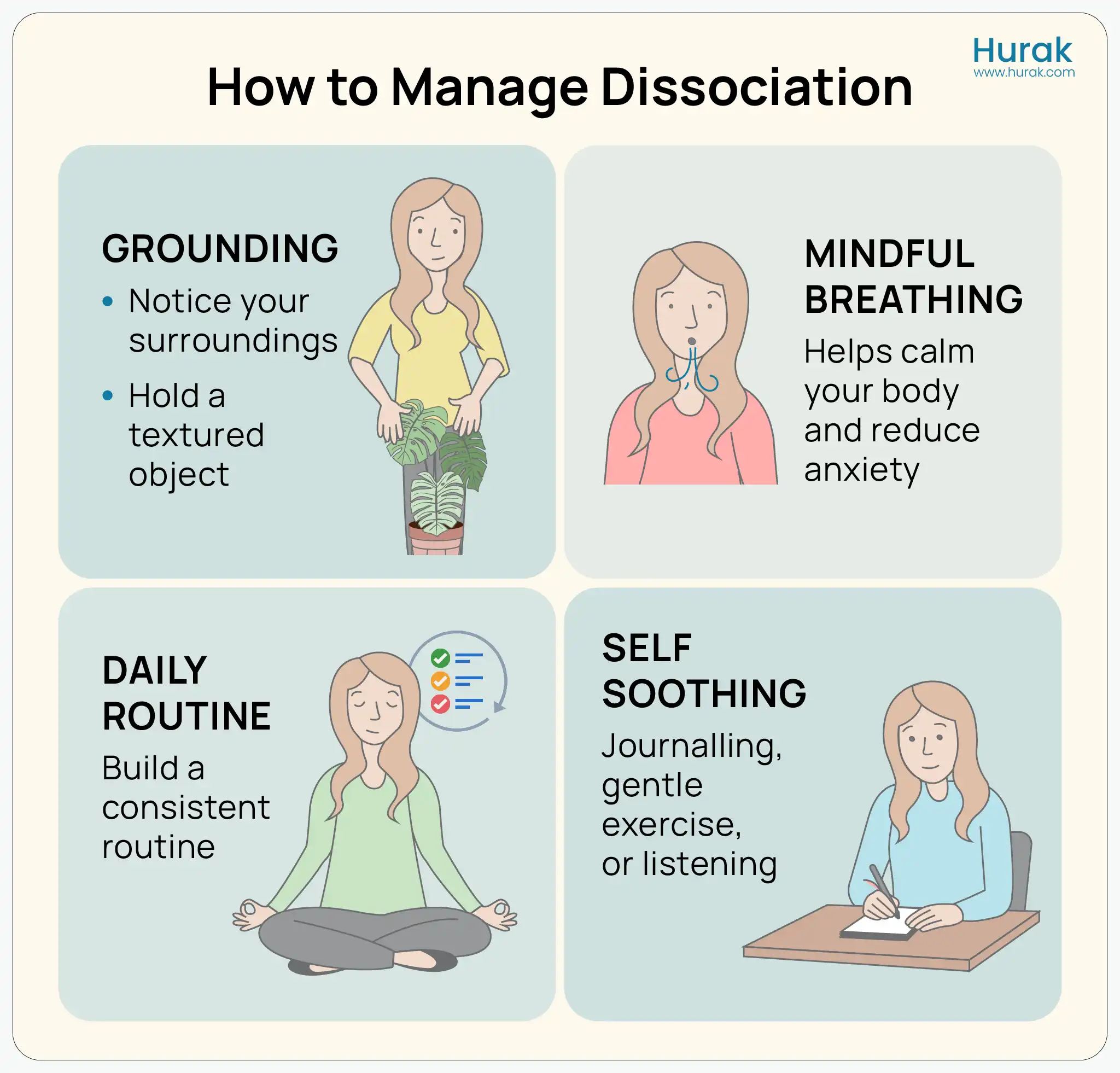
If you're looking for ways to stop dissociating, there are practical strategies that can help manage and reduce these episodes effectively. These techniques can bring you back to the present moment, helping you regain control and stability when you need it most:
Grounding: This technique helps you reconnect with the world around you. You can try noticing your surroundings by focusing on specific details, such as a tree, the feel of a textured object in your hand, or the sounds around you. Grounding exercises help reduce the sense of detachment and anchor you to the present.
Mindful Breathing: Taking slow, deep breaths can have a profound calming effect on your body and mind. By focusing on your breath and being aware of the rhythm, you can reduce anxiety and promote relaxation, which may help prevent or shorten dissociative episodes.
Daily Routine: Establishing a consistent daily routine can offer structure and predictability, which can reduce the uncertainty and stress that often trigger dissociative episodes. Knowing what to expect from your day can help create a sense of security and normalcy.
Self-Soothing: Finding activities that bring comfort to your mind and body is essential. This can include journaling to process your thoughts, engaging in gentle exercise like yoga or stretching, or listening to music that relaxes you. These actions can help calm your emotions and ease the overwhelming feelings that often accompany dissociation.
By incorporating these strategies into your life, you can gradually reduce the frequency and intensity of dissociative episodes, helping you feel more grounded and connected.
Dissociative disorders can profoundly impact how a person experiences themselves and the world around them, but recovery is possible with the proper understanding and support. Recognising symptoms early and seeking professional help for dissociative disorders can make a significant difference in improving emotional stability and daily functioning
With consistent therapy, grounding techniques, and a supportive environment, individuals can gradually reconnect with their sense of identity and a more realistic understanding of their surroundings. Remember, dissociation is a response to overwhelming experiences, not a permanent state, and healing begins with awareness, compassion, and the courage to seek help.
Stressful or traumatic experiences, such as abuse, accidents, or emotional distress, often trigger dissociation. It can also occur during overwhelming situations where the mind tries to protect itself from pain or fear.
While theres no single cure, dissociation can be effectively managed with therapy, grounding techniques, and self-care. Over time, many people experience fewer episodes and a stronger sense of control through consistent treatment.
If someone is dissociating, stay calm and help them ground themselves by speaking gently, encouraging deep breaths, or asking them to focus on their surroundings. Avoid sudden movements or questions about their memories until they feel safe and present.
No. Dissociative disorders and schizophrenia are different conditions. Dissociation involves disconnection from reality or identity, while schizophrenia includes delusions, hallucinations, and disorganised thinking.
You should seek help if dissociation interferes with daily life, causes distress, or is linked to past trauma. A qualified mental health professional can diagnose the disorder and create a treatment plan tailored to your needs.
Courses
Upskill with job-ready training.
Mock Tests
Measure your learning progress.
Create an online video course, reach students across the globe and earn money