


The Importance of Safeguarding in Education
IntroductionMaking sure those in your charge are safe inside and outside your institution should always be your first responsibility if you work in education. You have a moral and legal obligation to respond to any indications that someone may be experiencing abuse at home or in their society.Everyone in the organisation must design and follow rigorous safeguarding policies to guarantee everything is being done to protect individuals at risk. Today�s column explores the significance of safeguarding, particularly in education.What is safeguarding?Even though everyone involved in the education industry should know the word, you might not know what safeguarding entails. Simply expressed, safeguarding refers to the actions taken to protect the health, happiness, and human rights of those entrusted to your care. Safeguarding is typically used in environments with a duty of care for children, adolescents, or vulnerable adults, such as in the education, health, and social care sectors.Why is safeguarding important?Safeguarding is crucial for defending vulnerable people from injury, abuse, and neglect. Failure to uphold your safeguarding obligations may cause someone�s suffering to continue. Effective safeguarding is essential to identify the warning signs of abuse and notify the appropriate authorities in time to assist victims.Safeguarding is essential in schools because the teaching staff has unique access to information about how kids grow, act, and interact with others. So, they are more likely to detect physical or psychological abuse. They can also use their special position to inform kids about the risks they face inside and outside the classroom and how to receive help.What is safeguarding policy?A company�s safeguarding strategy outlines how it intends to safeguard individuals� welfare in its care. It should outline the organisation�s plans for safeguarding children, adolescents, and vulnerable adults against danger and abuse inside and outside its facilities.Education organisations must have a written safeguarding policy statement as part of their duties. The organisation�s safeguarding policy should be outlined in this statement and its commitment to safeguarding and strategies for keeping persons under its care safe.You might want to refer to the official Ofsted safeguarding policy and inspectors� instructions as a resource. These materials set forth the criteria for evaluating safeguarding in early childhood education and skill-building settings across the nation.Safeguarding is essential in schools because the teaching staff has unique access to information about how kids grow, act, and interact with others. So, they are more likely to detect physical or psychological abuse. They can also use their special position to inform kids about the risks they face inside and outside the classroom and how to receive help.What are the six principles of safeguarding?Six safeguarding principles are outlined in The Care Act 2014, the primary safeguarding law that applies to NHS bodies. Although this statute solely pertains to NHS institutions, these concepts are applicable everywhere, especially in the field of education.PersonalisationThe assumption of person-led decisions and informed consent are all aspects of empowerment.PreventionIt is preferable to act now before harm is done.ProportionalityIs the ability to respond in a way that is both reasonable and least invasive, given the risk at hand.Protectionaid and advocacy for those who are most in need.PartnershipServices that work with their communities to find local solutions. Communities can help prevent, identify, and report neglect and abuse.AccountabilityAccountability and openness in providing safety measuresWhat is safeguarding children?Any educational organisation in charge of children must have a defined safeguarding procedure. A key component of the overall safeguarding process is child protection, which aims to protect children in your care from danger, abuse, or exploitation.These four categories describe child safety:Defending kids from maltreatment and cruelty.Avoiding harm to children�s growth or health.Ensuring that children receive safe and efficient care as they grow.Taking measures to ensure the best outcomes for all children and young people.Who is responsible for safeguarding children?Everyone who interacts with children has a duty to keep them safe. To do this, they must be aware of the warning signs of abuse and follow the procedures for reporting their concerns. Working Together to Safeguard Children, government guidance outlines how everyone must be responsible, communicative, and alert to safeguard children from harm.Local governments and social care teams are responsible for conducting investigations once concerns have been raised. The criteria for a wide range of authorities, organisations, and people who have a duty of care for children are outlined in Sections 10 and 11 of the Children Act of 2004.What is contextual safeguarding?Understanding and responding to children�s or young people�s experiences of damage outside their families is a key component of the contextual safeguarding method. It acknowledges young people�s connections with their neighbourhoods, educational institutions, and online networks that can result in abuse, injury, or exploitation.Individuals with safeguarding obligations, such as those working in the education sector, must recognise the need to act when appropriate because many parents have little to no influence on these connections outside the family home.What is the safeguarding of vulnerable adults?At times, it may be vital to protect adults and children. These people are referred to as �vulnerable adults.�A vulnerable adult is a person who is over 18 and who is either unable to care for oneself or who, due to their circumstances, is very susceptible to exploitation or damage. Some elements that may contribute to the classification of people as vulnerable include:physical or mental impairmentsAdvantage of povertyexperiencing traumaRacial, religious, or political exclusionrejection from their families or communitiesBut everything is covered in this list. No, employees must be aware of any person in their care who may be vulnerable to exploitation or abuse. They must make sure that any warning indications put forward by these people are seen and taken seriously.Safeguard trainingThis blog cannot cover every aspect of safeguarding because it is a vast subject. You must receive formal training to gain a solid understanding of safeguarding practice. When it comes to training, ESS offers a few different choices for individuals who are interested in learning more about protecting adults.The three-month Level 2 course, NCFE CACHE Understanding Safeguarding and Prevent, focuses on the fundamentals of Prevent Duty and safeguarding, particularly internet safety. This course offers the theoretical understanding required for protecting adults. This might involve employment in hospitals, adult education programmes, community centres, and jails.We heartily suggest the free online courses offered by the Education & Training Foundation for individuals seeking yearly updates to maintain their safeguarding knowledge and credentials. Depending on your job situation, we recommend their Safeguarding in FE and Training and Safeguarding & Safer Recruitment in FE courses.
Bartending Licence Requirements In The UK
Introduction�For hundreds of years, pub culture has played a significant role in the U.K. society, with cities teeming with everything from independent gastropubs and trendy bar chains to little towns with pubs that can barely hold fifteen patrons. The laws governing the consumption and sale of alcohol have been altered over time, most notably in 2005, to fight perceived �binge drinking� to take into account changes in how society regards alcohol, or �booze,� as the Brits call it. Many restaurants now stay open until the wee hours, with some not even closing, replacing the traditional �eleven p.m. last orders� with the striking of the bell behind the bar and subsequent �closing time�.Premises LicenceUnder the previous Licencing Act of 1964, pubs and clubs in the United Kingdom had to possess a Justice Licence in order to serve alcohol to patrons inside the establishment. Everything was changed by the Licencing Act of 2003, which went into effect in 2005. Now, to serve alcohol or conduct �licensable activities�, such as selling food between eleven p.m. and five a.m., you need a �Premises Licence.� A premises licence is also required for many entertainment activities, such as staging a play, hosting a wrestling match, or hosting a dance or live music event, even if they are being done for charitable reasons.A Designated Premises Supervisor (DPS) must be appointed, or the applicant must have completed the necessary training to have a Personal Licence (described below). The Premises Licence, which must be prominently displayed inside the institution in question, shall list this DPS by name. There is no time limit on these premises licences. But renewal is frequently subject to an annual price, ranging from �100 to �2,000 every year, depending on what the local council determines to be the �fee band� (i.e., the worth) of the property where alcohol is being sold.You may be asked to grant the police, including members of their licencing department or council members, access to your premises at any time to inspect your licence and related documents. The penalties for violating licencing laws can be severe: not producing your licence when asked for will result in a maximum fine of �1,000; engaging in activities on your property that are not permitted by your licence will result in a substantial fine, a jail sentence of up to six months, or both. .banner-blue { border-radius: 10px; overflow: hidden; border: 2px solid #ccc; box-shadow: 0 4px 8px rgba(0, 0, 0, 0.2); background-color: #fdf9ee; } .book-now { color: white; background-color: #DF3D52; border: none; padding: 15px 60px; border-radius: 5px; cursor: pointer; font-size: 20px; text-decoration: none; } .book-now:hover { /*text-decoration: none;*/ color: white; background-color: #c33f50; } Get your Legal Personal Licence by signing up for our APLH courses Personal Licence Courses Book Now Rated Excellent on major review sites Personal LicenceA personal licence permits the owner to sell alcoholic beverages from designated locations. Once it gets its premises licence, it is required to have at least one employee who is licenced personally working. This indicates that the personal licence holder (PLH) authorises sale or supply of alcohol. No matter how many employees are under them, the PLH is entirely in charge of selling alcohol in a location (most, if not all, of whom will have no qualifications or licence). You can work and sell booze anywhere with a licence, including casinos, supermarkets, sports facilities, and amusement parks, if you have a PLH qualification. For one of these licences, you must be eighteen or older.You must take the APLH (Award for Personal Licence Holders) course, a multiple-choice exam with a pass level of 70% administered by local authorities. If you pass, thorough background checks are done to investigate criminal offences. You will receive the licence once this is finished and it is evident you have no unfinished convictions (for instance, you are no longer performing community service or are not out on bail for an offence). The local police force will receive notification of your application from the licencing body and will have the opportunity to object to you receiving a Personal Licence if it turns out that you have any convictions left on your record. If this happens, you can present your argument with the licencing authorities at a hearing.A Personal Licence is valid for ten years in England and Wales. To maintain the licence, the licence holder must succeed in a refresher course after five years.The authorities treat anyone who doesn�t follow the law quite harshly. For instance, you need to submit an application to the licencing body for the region where you typically live. It is illegal to fail to notify them of any change in your personal information, such as moving out of the area. Additionally, you must inform the court that you have a personal licence at your first court appearance if you are accused of any other crime while designated as a PLH; failing to do so is, once again, a crime. A conviction could result in suspension or possibly the loss of your personal licence.SupervisorsAccording to the U.K. Licencing Act 2003, every licenced location must have a Designated Premises Supervisor (DPS) who is listed on the premises licence and who owns a current Personal Licence. It�s possible that this isn�t the owner of the company or property but rather a manager or supervisor that the owner has hired to handle the day-to-day management of the pub, bar, club, etc. The sale and service of alcohol is prohibited at a licenced business if it lacks a DPS or a personal licence that is still in effect. It�s crucial to remember that when a fully licenced establishment has a designated premises supervisor (DPS) who owns a Personal Licence, the DPS is not obliged to be present when alcohol is served.The Designated Premises Supervisors (DPS) of licenced properties are also periodically reviewed by the licencing authority, who can revoke the DPS�s licence at any time. Every candidate for a DPS position must pass a rigorous screening process. The police have the right to oppose if they have any concerns about a candidate�s behaviour in the past or present or their criminal history. The licencing authority considers these issues to decide whether to approve or deny the DPS application.ConclusionA premises must have a current premises licence to identify the designated premises supervisor (DPS) (not necessarily the owner), who must also hold a personal licence to sell or serve alcohol or host events like live music. However, the DPS does not need to be constantly present as long as one employee on duty has a Personal Licence.
Differences Between Personal Licence and Premises Licence
Knowing the distinction between a personal licence and a premises licence is crucial for anyone who holds a personal licence. You can sell alcohol if you have a personal licence, but only a business owner can do so if they have a premises licence.We will go over the distinctions between a personal licence and a premises licence and what each covers in this blog post. The advantages of holding each sort of licence will also be discussed.An individual is given a personal licence, also known as an alcohol personal licence, that enables them to approve the sale of alcoholic beverages from licenced locations. Alcohol sales are among the activities that can be conducted on premises with a licence.An individual who owns the property, occupies it, or has been given permission to do so, such as a tenant, is given a premises licence. People over 18 must apply, and the space must be used for commercial purposes. While premises licences are specific to one location, personal licence holders can work in any licenced establishment in England and Wales.What is a Personal Licence?A personal licence is a licence which permits you to sell alcohol on licensed premises. It is renewed once every ten years. It will be revoked if you do something that puts your licence in danger. Each licenced premises must have one personal licence holder.What are the benefits of an Alcohol Personal Licence?The benefits of having a Personal Licence are:You can work in licensed premises for the supply of alcohol in the UK, except in Scotland. To sell alcohol in Scotland, you need to get a Scottish Personal Licence.It conveys that you are a responsible person who is knowledgeable about the sale of alcohol.It also demonstrates your commitment to working in the hospitality industry, giving you a career boost.You can authorise the sale of alcohol from licensed premises, which can benefit businesses.What is the cost of a Personal Licence?A Personal Licence costs �37 and must be paid to your local municipality. When getting your standard DBS (Disclosure and Barring Services) check, you could additionally have to pay additional fees (around �25). Your licence is valid indefinitely.To learn more about the Personal Licensing Act and the relevant agencies, Visit Gov.UK.Who Should Hold a Personal Licence?One personal licence holder in charge of selling alcohol must be present in every establishment. There must be a designated premises supervisor if there is only one person. However, more than one person with a personal licence may work at a single location. For instance, it is crucial to consider the benefit of putting assistant managers through the personal licence requirement if the business has many of them. This will make it possible to divide up the responsibility of selling alcohol. Additionally, it will look favourably upon any licence applications or reviews. However, you are not required to engage other personal licence holders other than the appointed premises supervisor.How to apply for a Personal Licence?When requesting a Personal Licence, you must:Be over the age of 18,Possess a legal form of identification, andEarn a credential in APLH Personal Licence Course (e.g. the Level 2 Award for Personal Licence Holders)Possess a fundamental Designated Premises Supervisor DBS check or local licencing authority check (obtained within the last three months)Fill out a personal licence application form, pay the required price, and deliver it to your local council.Here is further information on how to apply for a personal licence. .banner-blue { border-radius: 10px; overflow: hidden; border: 2px solid #ccc; box-shadow: 0 4px 8px rgba(0, 0, 0, 0.2); background-color: #fdf9ee; } .book-now { color: white; background-color: #DF3D52; border: none; padding: 15px 60px; border-radius: 5px; cursor: pointer; font-size: 20px; text-decoration: none; } .book-now:hover { /*text-decoration: none;*/ color: white; background-color: #c33f50; } Get your Legal Personal Licence by signing up for our APLH courses Personal Licence Courses Book Now Rated Excellent on major review sites What is a Premises Licence?Premises where entertainment and other activities, such as the sale of alcohol, take place according to the Licensing Act of 2003 must possess a licence. The premises licence is valid for the existence of the company that provides regulated entertainment and/or alcohol.What are the benefits of a Premises Licence?Possessing a premises licence has numerous advantages, including:A club premises certificate provided by a premises licence enables companies to sell alcohol and host activities that require a licence.It shows that the location is managed by trustworthy people who are informed about the sale of alcohol.Club premises certificates can help businesses stand out from the competition by demonstrating their dedication to following the law.A premises licence holder can also increase a company�s appeal to customers by demonstrating that they take their obligations seriously.What are the licenceable activities covered by a premises licence?Licensable activities that fall under the scope of a premises licence areThe retail sale of alcohol,The provision of supervised entertainmentThe serving of late-night refreshmentsWhat is the cost of a Premises Licence?Depending on the kind of premises and the activities conducted there, a Premises Licence can range in price. For instance, venues for music and dancing will generally cost more than venues for the exclusive sale of alcoholic beverages. The rateable value of the premises also affects the price of a premises licence.Who can apply for a premises licence?The following can apply for a premises licence:Any person or individuals who are 18 years of age or older who intend to operate a business involving the use of the premises for licensable activities,businesses or partnerships,Organisations like hospitals, charities, schools, and village hall committees.What is a Complete Premises Licence Application?The following documents have been submitted with the completed application for a premises licence:the licence fee based on the rateable business value of the property (www.voa.gov.uk);the operating schedule;a plan of the property; and,If alcohol sales are intended, a form of consent signed by the person the applicant proposes as the designated premises supervisor (DPS).How to apply for a Premises Licence?For a Premises Licence, you must:Be over 18 years old,Possess a legitimate kind of identification, disclose your operational timetable, and comprehend your licencing goalsPossess a location used for business reasonsFill out a premises licence application form, attach the requisite fee, and deliver it to your local government or approved premises supervisor.We hope this explanation of the distinctions between a Personal Licence and a Premises Licence, as well as the requirements and fees related to each, has been helpful. Please get in touch with us if you have any more inquiries.
How to Get a Personal Licence
Getting a Person Licence is mandatory for you if you want to sell alcohol on behalf of any licensed premises in the UK. The license allows you to become a Designated Premises Supervisor for a business that supplies alcohol.If you�re caught selling alcohol without a Personal Licence in the UK, you can be sentenced to imprisonment for up to 6 months or a fine of up to �20,000, or both.�It�s an easy 3-step process that involves getting the right qualification, completing a DBS check, and submitting an application. In this blog, I�m going to discuss these steps in detail on how to get a Personal Licence, and other relevant information that you must know.What is a Personal Licence?In the United Kingdom, local councils issue a Personal Licence to individuals whose job involves selling alcohol on behalf of any licensed premises. A Personal Licence doesn�t have an expiry date, and the personal licence application fee is �37.A Personal Licence is often referred to as APLH and Personal Alcohol Licence.The purpose of issuing this licence is to ensure that individuals who are responsible for selling Alcohol for the licensed premises they are working in must do it responsibly and professionally.Having a Personal Licence proves that personal licence holders are well equipped with the knowledge and skills to sell alcohol legally. Moreover, it shows that these licence holders are well aware of maintaining a safe environment for everyone on the premises.How to Get a Personal LicenceGetting a Personal Licence involves three simple steps.Step 1: Pass the APLH Personal Licence Training CourseThe first to get a Personal Licence is to complete the ALPH Personal Licence Course successfully.BOOK NOWYou can complete this course in one day with only 5 hours of classroom learning and some self-study. You will be assessed by a multiple-choice APLH exam.This Personal Alcohol Licence Course follows the syllabus of the Highfield APLH Level 2 Award for Personal Licence Holders qualification.Personal Licence Mock ExamTo complete this course, you must pass an MCQ-based assessment. Before you attempt the real ALPH course test, taking this mock test will help you.Take The Mock Test NowStep 2: Complete the DBS CheckGetting a DBS check is an integral part of your Personal Licence application. You must carry out a recent Disclosure and Barring Service check, which will cost you a �25 fee.Step 3: Complete & Submit ApplicationAfter completing your APLH Personal Licence Course and getting a DBS check, the final step is to complete and submit your Personal Licence application.Personal Licence Application Check out our video on how to get a Personal Licence. Eligibility Criteria for Getting a Personal LicenceBefore you apply for a Personal Licence, make sure you meet the following eligibility criteria:Must have the legal authorisation to work in the UK,Must be 18 years old,Completed the APLH Course.Also�Must not be found guilty of any relevant crimesMust not lose a Personal Licence in the last 5 years. .banner-blue { border-radius: 10px; overflow: hidden; border: 2px solid #ccc; box-shadow: 0 4px 8px rgba(0, 0, 0, 0.2); background-color: #fdf9ee; } .book-now { color: white; background-color: #DF3D52; border: none; padding: 15px 60px; border-radius: 5px; cursor: pointer; font-size: 20px; text-decoration: none; } .book-now:hover { /*text-decoration: none;*/ color: white; background-color: #c33f50; } Get your Legal Personal Licence by signing up for our APLH courses Personal Licence Courses Book Now Rated Excellent on major review sites Requirements For Personal Licence ApplicationRecent DBS check2 countersigned photographs Original certificate of your qualification Pay �37 feeDisclosure of convictions form (if applicable)How Long Does a Personal Licence Last?A Personal Licence does not expire and lasts forever. In the past, it used to expire after 10 years.Read our blog, �How Long Does a Personal Licence Last,� to get more information about the validity of a Personal Licence.How Much Does a Personal Alcohol Licence Cost in the UK?The application cost for your Personal Licence is �37. This is an application fee, which should be paid to your local council. Apart from the application fee, you must pay �25 for getting your basic DBS Check.Personal Licence RenewalA Personal Licence lasts indefinitely, so you don�t need to go for its renewal.Do I Need a Personal Licence (APLH)?You need a Personal Licence if you plan to get a job that involves selling alcohol, such as in pubs.According to the Licensing Act 2003, licensed premises (premises that serve alcohol) must employ a Designated Premises Supervisor holding a Personal Licence.Personal Licence ScotlandYou need a Personal Licence Scotland if you�re living in Scotland and intend to work in licensed premises that serve alcohol.Apply for your SCPLH Scottish Certificate for Personal Licence Holders now.APPLY NOWChange of DetailsHolders of Personal Licences must maintain their information current. If you don�t, you risk being prosecuted.You must inform your licencing authorities of changes, such as those to your name or address. The organisation that issued your licence is always your licencing authority. This service costs �10.50. div.wpforms-container-full .wpforms-form label.wpforms-error{ display: none; } /* The Modal (background) */ .ebook-modal { display: none; /* Hidden by default */ position: fixed; /* Stay in place */ z-index: 1; /* Sit on top */ padding-top: 100px; /* Location of the box */ left: 0; top: 0; width: 100%; /* Full width */ height: 100%; /* Full height */ overflow: auto; /* Enable scroll if needed */ background-color: rgb(0,0,0); /* Fallback color */ background-color: rgba(0,0,0,0.4); /* Black w/ opacity */ } div.wpforms-container-full .wpforms-form input[type=submit], div.wpforms-container-full .wpforms-form button[type=submit], div.wpforms-container-full .wpforms-form .wpforms-page-button { border: 1px solid #ddd; font-size: 1em; font-family: inherit; padding: 9px 31px; background: #0f7c90; color: white; /* display: flex; */ /* width: 100%; */ position: absolute; bottom: -418px; right: -150px; /* margin: auto; */ justify-content: center; align-items: center; } /* Modal Content */ .ebook-modal-content { display: flex; flex-direction: column; justify-content: space-between; align-items: baseline; background-color: #fefefe; margin: auto; padding: 31px; border: 1px solid #888; width: 30%; position: relative; } /* The Close Button */ .ebookModal-close { color: #aaaaaa; float: right; font-size: 20px; font-weight: bold; cursor: pointer; position: absolute; right: 21px; top: 10px; } .ebookModal-close:hover, .ebookModal-close:focus { color: #000; text-decoration: none; cursor: pointer; } div.wpforms-container-full { margin: 0px auto 20px;!important } .ebookModal-header{ color:#0f7c90;font-size:30px;margin:0 30px } @media (max-width:576.888px){ .ebook-modal-content { width: 90%; } } @media (max-width:768.888px){ .ebook-modal-content { width: 70%; } .ebookModal-header{ font-size:20px!important; margin:0 } } @media (min-width:768.888px){ .ebook-modal-content { width: 50%; } } @media (max-width:1024.888px){ div.wpforms-container-full .wpforms-form input[type=submit], div.wpforms-container-full .wpforms-form button[type=submit], div.wpforms-container-full .wpforms-form .wpforms-page-button { width: 100%; position: static; } .ebookModal-header{ margin:0; font-size: 25px; } } @media (max-width:1280.888px){ .ebookModal-header{ margin:0; font-size: 30px; } } @media (min-width:992px){ .wpforms-submit-spinner{ max-width: 100%!important; position: absolute!important; top:250px!important; left:150px!important; transform: translate(-50%,-50%)!important; } @media (min-width:1280.888px){ div.wpforms-container-full .wpforms-form input[type=submit], div.wpforms-container-full .wpforms-form button[type=submit], div.wpforms-container-full .wpforms-form .wpforms-page-button { border: 1px solid #ddd; font-size: 1em; font-family: inherit; padding: 9px 31px; background: #0f7c90; color: white; /* display: flex; */ /* width: 100%; */ position: absolute; bottom: -380px; right: -150px; /* margin: auto; */ justify-content: center; align-items: center; } } Download our Personal Licence (APLH) Test Prep Book for free! × [wpforms id="20453" title="false"] #myImg{ cursor: pointer; } Frequently Asked Questions (FAQs)What does forfeiting a Personal Licence mean?A court may order the cancellation of a Personal Licence if convicted of a relevant offence. It�s also known as being forfeited. Courts can also impose a suspension of up to six months on a Personal Licence.Can I apply for a licence with a criminal record?If you have a criminal record, it does not automatically disqualify you from applying for a Personal Licence. The licensing authority will assess whether your conviction is relevant to your licence application before making a decision.What identity checks are required for my licence application?You can do it online in most cases. Just ensure someone important, like a lawyer or a respected person (solicitor or notary), signs your passport photos.
Reason Why Your Personal Licence Can be Suspended
Yes, a Personal Licence can be suspended or revoked if any of the offences are committed by the licence holder. The Licensing Act 2003 has a complete list of these offences that can lead to suspension of your licence. It guarantees that the licence holder is an accountable, law-abiding citizen.A Personal Licence ensures that its holder is competent enough to operate or oversee a company that provides or sells alcohol in a professional way. If licence holders don�t follow the rules or expectations, their licence can be suspended or revoked.Personal Licence holders risk having their licences cancelled for up to six months if it�s found that they are not adhering to the requirements.What Happens If a Personal Licence Gets Suspended or Revoked?A Personal Licence can get suspended or revoked for up to six months, which means the business will face a loss of 6 months. Moreover, the staff won�t be employeed or get paid during this time period. This will lead to damage to the owner�s reputation for customers and staff. Once the Personal Licence gets suspended or revoked, the holder will have to re-apply for it, which means paying additional costs.How Can You Lose Your Alcohol Licence in the UKYou can lose your Alcohol Licence in the UK if you:fail to meet the requirements you stated you met on your application.used false documentation or an alias.allowed another person to use your licence to engage in licensable behaviour and receive a sentence or disposal for a relevant offence.the date your sentence restrictions end puts you in the �Automatic Refusal� category of the licence criteria.are not authorised to work in the United Kingdom (unless you are a director of a UK-registered company).violate the licensing requirements.are not considered a fit and proper person to hold a licence if you violate any of the licence conditions, including any additional conditions imposed on your licence.fail to complete the required training.receive a sentence or disposition for a relevant offence, and the date your sentence restrictions end puts you in the �Consider Additional Factors� category of our licence criteria.are not qualified to have a licence.Lost, Stolen or Damaged Personal Alcohol LicenceUnder section 126 of the Licensing Act 2003, if you lose your Personal Alcohol Licence or it gets stolen, you must inform the Licensing Authority. You must complete the application form and send it to the Licensing Authority. With the application, you must pay a fee of �10.50 in the form of a cash, cheque, or postal order. You can also make credit/debit card payments over the telephone.If your Personal Licence gets damaged, you can send the old licence with the ID card and paper copy to the Licensing Authority. Then you will receive new licence documents from the authority.Surrender a Personal Alcohol LicenceA Personal Licence doesn�t expire and has a lifetime validity, but the holder can surrender it whenever they want. If a Personal Licence holder decides to surrender the licence, they must inform the Licensing Authority in a proper way.To surrender your Personal Licence, you must:Complete the application form.Send your Personal Licence with the ID card and paper copy. Reasons for Getting Your Licence SuspendedThe UK Government may suspend your licence for either one or all of the following reasons.If they think that you are a danger to everyone�s safety.If they think that doing so is for the general welfare.How Can a Pub Lose Its Licence in the UKThere could be a number of reasons why a pub can lose its Alcohol Licence in the UK.Serving Alcohol to Individuals Under the Legal Drinking AgeServing Alcohol to visitors of the pub who are under the legal drinking age is one of the serious reasons a pub can lose its licence. In the UK, this age is 18.Breach of Licensing HoursIf a pub is caught selling alcohol outside the licensing hours, they can lose their licence.Violation of Noise RegulationsAlthough pub are supposed to be a lively place with musicand alcohol, there are still some regulations. Violating noise regulations can result in losing a licence.Breach of Fire Safety RegulationsA pub in the UK risks losing its license if found in breach of Fire Safety Regulations. It shows that a pub is compromising the safety and well-being of patrons and staff.Selling Alcohol without a Valid LicenceIn the UK, if a pub is selling alcohol without a valid licence can lead to the revocation of its licence, as it�s violating one of the major regulatory requirements.Violating Health and Safety RegulationsViolating Health and Safety Regulations shows a failure to maintain a safe and secure environment for customers and employees. It can lead to losing a licence.How to Get an Alcohol Personal Licence?Getting an Alcohol Personal Licence is a 3-step process. First, you must first pass an APLH Personal Licence Course. Then, get your DBS check and finally, complete and submit your application.Learn more about this in our detailed blog, �How to Get a Personal Licence�. .banner-blue { border-radius: 10px; overflow: hidden; border: 2px solid #ccc; box-shadow: 0 4px 8px rgba(0, 0, 0, 0.2); background-color: #fdf9ee; } .book-now { color: white; background-color: #DF3D52; border: none; padding: 15px 60px; border-radius: 5px; cursor: pointer; font-size: 20px; text-decoration: none; } .book-now:hover { /*text-decoration: none;*/ color: white; background-color: #c33f50; } Get your Legal Personal Licence by signing up for our APLH courses Personal Licence Courses Book Now Rated Excellent on major review sites
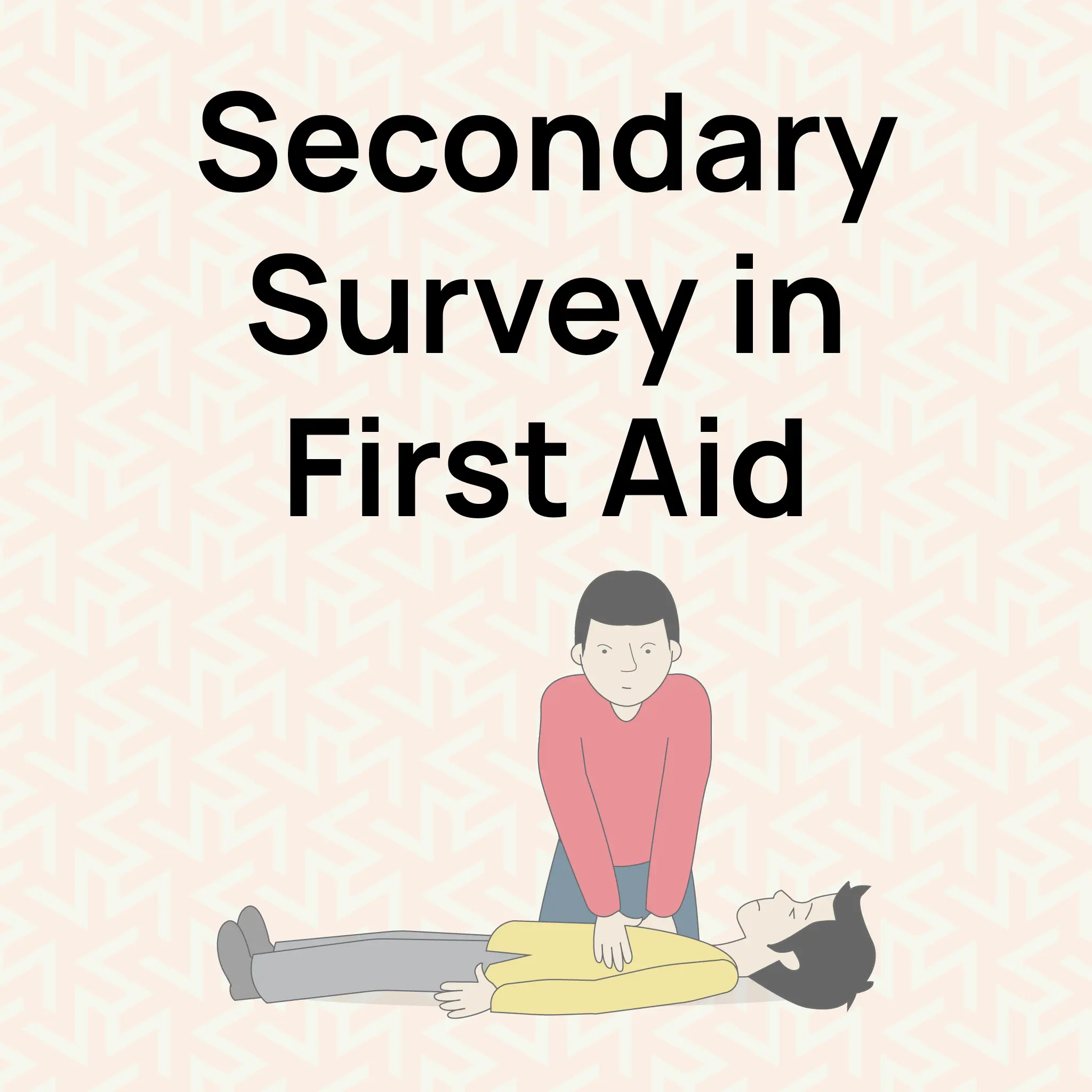
How To Conduct a Secondary Survey in First Aid
The secondary survey assesses the injuries of an awake, responsive person. It involves thoroughly examining the person's health history, assessing the four vital signs and conducting a systematic head-to-toe examination. If we discover any injuries, we administer first aid accordingly. Finally, we document all our actions and findings of the entire process. A secondary survey is performed after completing the primary steps of first aid (remembered as DRABC).What is the Difference Between a Primary and a Secondary Survey First, we always do a primary survey to quickly find and stop any life-threatening injuries. Once the person is more stable, we do a secondary survey. This is where we gather more information about what might have caused the person's injuries or illness. Primary Survey Secondary Survey� First examination Second examination� Assesses and stabilities a person in life threatening conditions� Diagnoses and treats major injuries after stabilisation�� Follows DRABC steps Follow AMPLE steps� Does not involves a head to toe examination� Involves a head to toe examination For responsive or unresponsive patients� Typically for responsive patients� Why Do We Perform the Secondary Survey in First AidIn a secondary survey, we look for injuries. We physically examine every part of the injured person's body from head to toe. We check the front, back, sides, underneath, and top. This survey includes looking at the airway again and checking the lungs again.When To Perform the Secondary Survey in First AidIf the person has more than one injuryIf it will take more than 20 minutes for medical help to arriveIf you're taking the person to get medical help .main{ border:3px solid #0f7c90; border-radius:20px; position: relative; font-family:roboto; font-weight: 400; color: #000; } .main-two{ position: absolute; top:-25px; left:45px; background-color:white; } .img-div{ border-radius : 100%; padding:2px 7px; background-color:#0f7c90; margin-right:5px; width: 50px; height: 50px; } .img{ width:30px; object-fit:contain; height:auto; border-radius : 100%; } @media only screen and (max-width: 600px) { .heading{ font-size:20px; } .img{ width:20px; object-fit:contain; height:auto; border-radius : 100%; } .img-div{ width: 40px; height: 40px; } .main-two{ left:25px; } } Ready to Learn More? Put your knowledge of the secondary survey into practice by enrolling in a course today! Our First Aid courses offer complete training to help you handle critical situations. Whether you want to improve your skills or workplace safety, these courses help build confidence and expertise. View our Emergency First Aid at Work (EFAW) and Level 3 First Aid at Work courses. These courses meet the UK legal requirements and help you keep people safe. How to Perform a Secondary Survey in First AidSAMPLE History TakingAsk questions to learn more about the person's medical background. Remember the word "SAMPLE" to help you remember what to ask:S stands for Symptoms: What the person feels, like pain or weakness.A stands for Allergy: Do they have any allergies? These could be to nuts or medicines like penicillin or aspirin.M is for Medication: Are they taking any medicines?P is for Previous medical history: Do they have any ongoing health conditions like diabetes or epilepsy? Have they had any surgeries or injuries before?L is for Last Meal: When did they last eat or drink?E is for Event history: What happened, and where did it happen? Was it because of an illness or an accident? Talk to anyone nearby to find out more, and look for any clues that could help understand what happened. Also, check if they have any special jewellery that might have medical information on it.Vital SignsCheck four critical things:Level of Consciousness: Are they awake and aware?Breathing: Are they breathing normally?Pulse: What's their heartbeat like?Skin Condition and Temperature: Is their skin normal, and are they warm enough?By conducting this secondary survey, we ensure that we've covered everything and helped the person in the best possible way.Check the Level of ConsciousnessChecking someone's level of consciousness (LOC) helps us understand how aware they are. We often use the letters AVPU to do this:A for Alert: If someone is alert, they're fully awake and can answer questions. They know who they are, where they are, and what time it is.V for Verbal: If they respond only when spoken to but aren't fully alert, they're in the verbal stage. They might seem confused and not know where they are or what's happening.P for Pain: If they only react when you give them a little pain, like pinching them, they're in the pain stage. They might move or make noises, but they cannot communicate appropriately.U for Unresponsive: If they're not reacting, even to pain, they're unresponsive. This is serious, and we need to act quickly to help them.Remember, another quick way to check is to look at their eyes, listen to what they say, and see if they can follow simple commands like squeezing your fingers.BreathingTo check someone's breathing, watch their chest rise and fall for 30 seconds. You can also gently place your hand on their stomach to feel it. Count how many breaths they take in that time, and then double it to know how many breaths they take per minute. Here's what's expected:For babies, breathing below 25 breaths is too slow, 30-50 is normal, and over 60 is too fast.For children: Below 15 is too slow, 20-30 is normal, and over 40 is too fast.For adults: Below 10 is too slow, 10-20 is normal, and over 30 is too fast. Normal Breathing Rated (no. of breaths)Infant30-50Child20-30Adult10-20�PulseYour pulse shows how often your heart beats in a minute. You can check it by feeling the person�s wrist, neck, or upper arm. Use two fingers and press gently until you feel the pulse. Count how many beats you feel in 30 seconds, then double it to get the beats per minute.Normal Pulse Rates:For babies: A normal pulse range is between 120 and 150 beats per minute.For children: It can vary between 80 and 150 beats per minute.For adults: The average pulse rate is usually between 60 and 100 beats per minute.Normal Pulse Rates (beats/min)Infant120-150Child80-50Adult60-100�Skin Condition and TemperatureWhen we check someone's skin, we're looking at a few things:Temperature: Is their skin warm or cold?Colour: Does their skin look normal or pale?Dryness: Is their skin dry or wet/sweaty?To check, gently feel their forehead and cheeks with your hand. If their skin is normal, it should feel warm and dry and be a regular colour. But if it's pale, cold, and sweaty, it could mean they're going into shock.Head-to-Toe ExaminationThis is a thorough check of the person's whole body for any injuries we might have missed earlier. Here's how to do it:Before you start, ask if they feel any pain and explain what you will do.Talk to them throughout, & watch their face for any signs of pain.Keep going, and even if you find something, make a note and continue.Be respectful and only expose areas you need to check.Look for any bumps, bruises, or anything unusual.If they're unconscious, look for any medical alert tags or jewellery.Always look before touching.Let's start at the head:Feel the skull for anything unusual.Check the ears for any fluid.Look at the eyes. Are the pupils the same size?Check the nose for any runny stuff.Look inside the mouth. Are the teeth okay? Are the lips a standard colour?Now, let's move to the neck:Check if the neck veins look big or bulging.See if they're wearing a necklace with medical info.Feel the collarbones.Check both shoulders.Now, onto the arms:Check each arm carefully.Squeeze each fingernail and see if the colour comes back quickly.Ask them to squeeze your fingers. Are they strong enough and equal on both sides?Next, let's look at the chest and underneath:Ask if it hurts when they breathe.Make sure the chest goes up and down as it should with each breath.Reach around to the back as far as you can.Let's check the tummy and underneath:Use your hands flat to feel the tummy gently.Don't press too hard. Just see if there's any pain, tenderness, or stiffness.Put your hand flat on their tummy and ask them to push against it. Does it hurt?Reach around to the back as far as you can.Now, let's look at the hips:Please put your hands on the hip bones and gently squeeze to check they're stable.Moving down to the legs, ankles, and feet:Check each leg one by one.See if one leg is shorter than the other.Check the kneecap and the area underneath carefully.Give a little pinch on the foot and ask if they felt it.Could you put your hands on their feet? Ask them to push and then pull against your hands. Are they equally strong on both sides? Ask them to wiggle their toes and see if they can do it.Check the circulation in their legs.Provide First-Aid for InjuriesOnce you've finished checking everything, it's time to give the right first aid for any injuries or illnesses you find. If the person has more than one injury, start with the most serious one.Pro Tip: Act quickly if you find serious injuries. Administer first aid immediately, even if you have not completed the survey. Keep the person's safety top priority.�DocumentationAfter you've given first aid, write down what you've found and what you've done. This information can help doctors or other medical staff who will care for the person later. It is important to know if the injury happened at work because it might need an investigation. You'll usually fill out forms provided for this purpose, and you should keep them as required by the rules in your area.First-Aid TrainingThe Emergency First Aid training course is designed for low-risk environments such as offices and small retail stores. It gives participants the fundamental knowledge and skills to manage emergencies in these settings effectively.On the other hand, First Aid Training at Work is one of the extensive first aid courses that meets the requirements specified in the Health and Safety Regulations (First Aid) 1981 and goes a step beyond the Emergency First Aid at Work (EFAW) course, qualifying you to work in high-risk workplaces. .banner { border-radius: 10px; overflow: hidden; border: 2px solid #ccc; box-shadow: 0 4px 8px rgba(0, 0, 0, 0.2); background-color: #fdf9ee; } .book-now { color: white; background-color: #DF3D52; border: none; padding: 15px 60px; border-radius: 5px; cursor: pointer; font-size: 20px; text-decoration: none; } .book-now:hover { /*text-decoration: none;*/ color: white; background-color: #c33f50; } Get Trained in All First-Aid Skills First Aid Courses Book Now Rated Excellent on major review sites FAQsWhat are the four vital signs for a secondary survey?The four vital signs of a secondary survey are checking the level of consciousness (LOC), breathing rate, pulse rate, skin condition and temperature.What does SAMPLE stand for in a secondary survey?SAMPLE stands for Symptom, Allergy, Medication, Previous medical record, Last meal and Events leading to the casualty. It is the order in which the history of the injured person is taken.What is the main aim of the secondary survey?The main aim of the secondary survey is to check for major injuries that might have been missed during the primary survey.What are the steps included in Emergency Scene Management?The steps included in ESM include scene survey, primary survey, secondary survey and ongoing casualty care.
The Importance of First Aid in Schools
Accidents and emergencies are bound to happen in a school's active environment, where children constantly learn, play, and grow. Having trained personnel and a structured first aid program can help maintain the safety and well-being of students and staff alike.Why First Aid Matters in SchoolsFirst aid is not just about addressing physical injuries; it includes a range of skills that can save lives. It helps prevent injuries from worsening and provides immediate care until professional help arrives. The importance of first aid in school includes the following:Immediate Response to AccidentsSchools carry out activities where accidents like cuts, falls, or burns can occur. Knowledge of first aid equips teachers and staff to respond promptly and appropriately.Life-Saving PotentialIn critical situations such as cardiac arrests, choking incidents, or severe allergic reactions, quick action through first aid techniques can help save lives.Promoting Safety AwarenessTeaching first aid creates a culture of safety awareness among students, encouraging them to take responsibility for their well-being and that of others.First Aid in School Policy as a Legal RequirementSchools are places where learning happens, but they must also be safe. When accidents or medical emergencies happen, having the right knowledge and tools for first aid can make a difference.Schools are legally required to ensure student safety. In the United Kingdom, laws require schools to have enough first aid supplies, medical staff, and training. But beyond laws, schools have a moral duty to keep students safe by being ready for medical emergencies.Under the Health and Safety (First Aid) Regulations 1981, first aid should always be available at schools and colleges. The availability applies on campus or during off-site activities like field trips. Regulations say employers must provide the right first aid equipment, facilities, and trained staff based on a first aid assessment. The basic first aid requirements for schools and colleges are:A suitable first aid kit is stocked according to the assessment, meeting minimum standards suggested by HSE.An appointed person or designated first aider(s) responsible for first aid.Information for staff about where to find equipment, facilities, and first aid personnel.How To Include First Aid in the School CurriculumTo ensure comprehensive coverage, schools can include first aid education into their curriculum through:Structured Training ProgramsFormal first aid courses are part of physical education or health classes.Simulation ExercisesConduct regular drills and simulations to practice emergency response scenarios.Continuous LearningProviding refresher courses and updates to keep skills current among staff and students. .banner { border-radius: 10px; overflow: hidden; border: 2px solid #ccc; box-shadow: 0 4px 8px rgba(0, 0, 0, 0.2); background-color: #fdf9ee; } .book-now { color: white; background-color: #DF3D52; border: none; padding: 15px 60px; border-radius: 5px; cursor: pointer; font-size: 20px; text-decoration: none; } .book-now:hover { /*text-decoration: none;*/ color: white; background-color: #c33f50; } Get Trained in All First-Aid Skills First Aid Courses Book Now Rated Excellent on major review sites What are the Types of First Aid Needed in SchoolsSchools should prepare for various types of first aid scenarios, including:Emergency First AidDealing with immediate, life-threatening situations such as cardiac arrest, severe bleeding, or unconsciousness.Basic First AidTreating minor injuries like cuts, bruises, sprains, and burns common among children during daily activities.Mental First AidAddressing emotional distress, anxiety, or panic attacks in students is increasingly recognised as essential alongside physical first aid.What Does First Aid Training in School Involve?First aid training in schools teaches students essential skills:calling emergency servicesassessing safetycommunicating with the injuredtreating cuts, bleeding, and burnsapplying bandagesassisting with fractures and CPRhandling head injuries, allergies, and nosebleedspreparing students to respond confidently in medical emergencies.The Department for Education made first aid training compulsory for students in England's state-funded schools in 2020. It is now part of children's health education and varies by age group. .main{ border:3px solid #0f7c90; border-radius:20px; position: relative; font-family:roboto; font-weight: 400; color: #000; } .main-two{ position: absolute; top:-25px; left:45px; background-color:white; } .img-div{ border-radius : 100%; padding:2px 7px; background-color:#0f7c90; margin-right:5px; width: 50px; height: 50px; } .img{ width:30px; object-fit:contain; height:auto; border-radius : 100%; } @media only screen and (max-width: 600px) { .heading{ font-size:20px; } .img{ width:20px; object-fit:contain; height:auto; border-radius : 100%; } .img-div{ width: 40px; height: 40px; } .main-two{ left:25px; } } Ready to Learn More? Put your knowledge of the importance of first aid in schools into practice by enrolling in a course today! Our First Aid courses offer complete training to help you handle critical situations. Whether you want to improve your skills or workplace safety, these courses help build confidence and expertise. View our Emergency First Aid at Work (EFAW) and Level 3 First Aid at Work courses. These courses meet the UK legal requirements and help you keep people safe. First Aid Learning for Primary School StudentsBasic first aid for common injuries, including head injuries.How to call emergency services.First Aid Learning for Secondary School StudentsBasic first aid for injuries and illnesses.Life-saving skills like CPR.How and when to use a defibrillator.What is the Importance of Mental Health First Aid at SchoolMental health first aid is like regular first aid but for mental health. It is often overlooked, but it is very important.Nowadays, young people struggle with mental health issues. School staff should know about mental health first aid and get trained.Studies show that 1 in 6 children aged 5-16 might have a mental health problem. And more than half of young� adults aged 16-25 have talked to their doctor about mental health issues.Mental health first aid teaches school staff how to spot signs that a young person might be having mental health problems. Staff must be able to notice these signs early and know how to help someone in a crisis. This training is especially important for staff in secondary schools.What should a School First Aid Kit Contain?A school first aid kit should contain everything needed for common accidents. It should include the following items:bandagesantiseptic wipesgauze for cuts and scrapessplintsice packsEpiPen for allergiessaline solution for washing wounds or eyesCPR face shieldsburn gelinhaler for anaphylactic shock.Checking and replacing items regularly keeps the kit ready for any emergency.Who can Administer First-Aid Training in Schools?First Aid Training in school is delivered by qualified people. Determining who should be responsible for first aid in schools is critical:Trained Personnel:Designated staff membersTeachersAdministratorsSchool NursesBefore delivering first aid training to pupils, they should undergo regular training and CPR certification.What are the Positive Impacts of First Aid in SchoolsAn effective first aid program in school has several benefits:Increased Safety: Immediate response reduces the severity of injuries and accidents, creating a safer school environment overall.Empowerment: Both staff and students feel empowered and confident in their ability to handle emergencies effectively.Community Engagement: Involving parents and the broader community in first aid workshops or training sessions leads to a collaborative approach to safety.What Qualifications are Required by a First Aider at School?First-aiders need to have specific qualifications:1. They must have a valid certificate in either:First aid at workEmergency first aid at workAny other suitable training based on what the school needs.It is a legal requirement for schools and early years providers that all staff have first-aid training. At least one person must have a current paediatric first-aid certificate. This person must be present whenever children are around and go on trips with them.ConclusionFirst aid is a life-saving practice. By prioritising first aid education and preparedness, schools improve safety and nurture a community where compassion and responsibility thrive. From physical injuries to mental health crises, the ability to respond promptly and effectively ensures that schools provide necessary protection and support. Introducing basic first aid skills into the curriculum empowers students to assist others and potentially save lives in emergencies.�
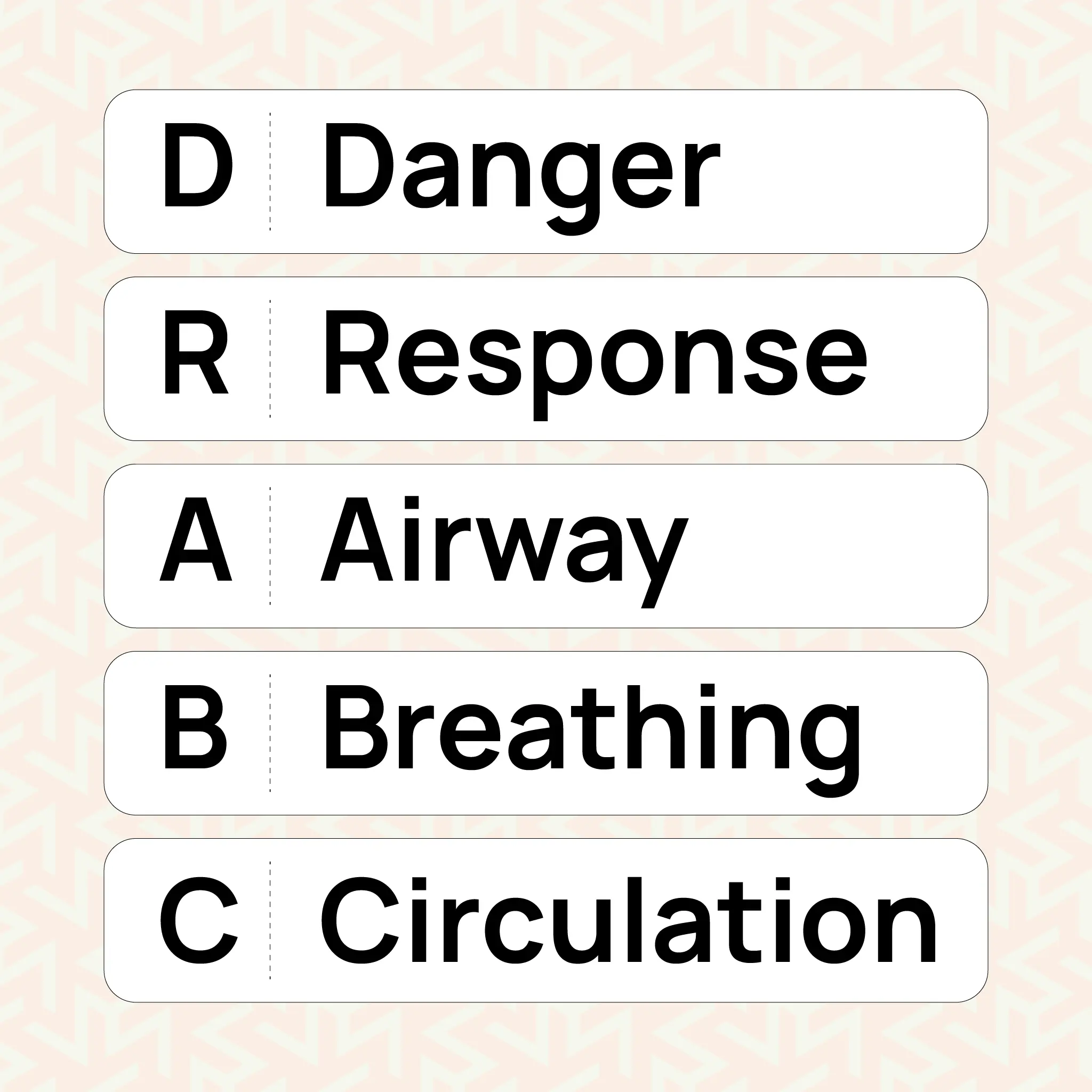
How To Perform the Primary Survey Using the DRABC Steps
When someone is unconscious, their life is in danger. Their airway might be blocked, they may not be breathing, and their blood circulation could have stopped. It is important to follow the primary survey steps to assess casualties in the order of DRABC: Danger, Response, Airway, Breathing, and Circulation. Remember to take quick action because brain damage or even death can happen quickly. A secondary survey is performed after completing the primary steps of first aid.Primary Survey in First Aid Using DRABCWhen helping someone in an emergency, you always start with the primary survey. This means you quickly assess what is happening and the person's needs.The primary survey uses the letters DRABC to help you remember the steps: Danger, Response, Airway, Breathing and Circulation.D - Danger: First, you check for danger around you, such as oncoming traffic or a falling object.R - Response: Next, see if the person responds. Gently shake their shoulders when you talk to them. Are they awake or unconscious?A - Airway: Then, make sure their airway is clear. That means checking if anything is blocking their breathing passage.B - Breathing: After that, check if they're breathing normally. Look, listen, and feel for any signs of breathing.C - Circulation: Finally, check for signs of circulation, like a pulse. This tells you if their heart is beating.Knowing what to do next could help save someone's life, so it's important to follow these steps in the correct order. .main{ border:3px solid #0f7c90; border-radius:20px; position: relative; font-family:roboto; font-weight: 400; color: #000; } .main-two{ position: absolute; top:-25px; left:45px; background-color:white; } .img-div{ border-radius : 100%; padding:2px 7px; background-color:#0f7c90; margin-right:5px; width: 50px; height: 50px; } .img{ width:30px; object-fit:contain; height:auto; border-radius : 100%; } @media only screen and (max-width: 600px) { .heading{ font-size:20px; } .img{ width:20px; object-fit:contain; height:auto; border-radius : 100%; } .img-div{ width: 40px; height: 40px; } .main-two{ left:25px; } } Ready to Learn More? Put your knowledge of the primary survey into practice by enrolling in a course today! Our First Aid courses offer complete training to help you handle critical situations. Whether you want to improve your skills or workplace safety, these courses help build confidence and expertise. View our Emergency First Aid at Work (EFAW) and Level 3 First Aid at Work courses. These courses meet the UK legal requirements and help you keep people safe. DRABC StepsDANGER - 1st Step of the Primary Survey DRABCThe first thing to do in an emergency is to check for dangers. Look around to see if anything could harm you, the person needing help, or anyone nearby. This helps you decide if it's safe to go close to someone who needs help.WHAT TO DOIf you see any hazards, like live electricity, try to make the area safe first. For example, if there's electricity, turn it off. Otherwise, use an insulating object, such as wood or plastic, to move the person away. When there is a risk of electricity, do not touch them directly.When you are sure it is safe, you can approach the person who needs assistance. But if it's still not secure, don't go near them. Instead, get emergency medical helpRESPONSE - 2nd Step of the Primary Survey DRABCA person can lose consciousness when something disrupts the brain's normal functioning. Here are some signs that someone might be unconscious:They can't respond to simple questions or touch.They might not realise when they're in danger and can't protect themselves.They can't clear their airways by coughing or swallowing. This means saliva, blood, vomit, or objects could block their breathing tubes. The tongue, which becomes floppy, might also fall back and block the throat.WHAT TO DOFirst, try to determine whether the person is unconscious by asking simple questions or telling them to do something simple, such as "What's your name?" or "Open your eyes," and gently shake them. If they don't respond, they're probably unconscious. Don't shake them vigorously, especially if they're children or babies.Place the individual in the side position, and examine his airway, breathing and pulse.If the unconscious person is breathing and has a pulse, keep them in the side position. Ensure their airway remains open and clear, and monitor their breathing and pulse regularly until medical assistance arrives.�How to Keep the Unconscious Person in a Side PositionThis is also called the lateral, recovery, or stable side position.Kneel beside the person.Straighten their far arm out, perpendicular to their body. Bend their near arm at the elbow and place it across their chest, with the fingers near the far shoulder.Bend their near leg up to the right angle of their body.Hold the shoulder and hip closest to you, gently rolling them onto their side. Their top leg should rest on the ground with the thigh at a right angle and the calf parallel to the straight leg.Rest their uppermost, bent arm on the elbow of the straight arm.the person is a child older than 1 year, gently tilt their head back. Their face should be slightly downwards so any fluid can drain from their mouth, and their tongue can fall forward, away from the airway.Pro Tip:When someone is unconscious, act fast. Use DRABC: Danger, Response, Airway, Breathing, Circulation. Brain damage or death can happen quickly if you delay.AIRWAY - 3rd Step of the Primary Survey DRABCNow, ensure the person's airway is clear. If they're unconscious:Gently tilt their head back and lift their chin with your hand on their forehead.Peep in their mouth to check whether something is obstructing their passageway.What to Do: If the person is responsiveCheck whether anything is obstructing their airway and causing difficulty breathing.If you see something, encourage them to clear it by coughing or using their hands.For adults and kids, you can help them by giving back slaps or abdominal thrusts. For babies under a year old, you can help them with back blows or chest thrusts.Once the blockage is cleared, move on to the next step.What To Do: If the person is responsiveCheck whether anything is obstructing their airway and causing difficulty breathing.If you see something, encourage them to clear it by coughing or using their hands.For adults and kids, you can help them by giving back slaps or abdominal thrusts. For babies under a year old, you can help them with back blows or chest thrusts.Once the blockage is cleared, move on to the next step.What To Do: If the person is unresponsiveIf you see something, try to remove it carefully. But don't put your fingers in their mouth if you can't see anything, as you might push a blockage deeper.BREATHING - 4th Step of the Primary Survey DRABCBreathing should be regular, quiet, and easy. Tilt the head back, watch the chest for movement, and listen for breathing sounds. Do this for about ten seconds to see if air comes from the mouth or nose.WHAT TO DOIf they're unresponsive and not breathing normally, call emergency services immediately. If you know CPR, start with rescue breaths. If not, do chest compressions. If there's an AED nearby, ask someone to bring it.Giving Rescue BreathsMouth-to-mouth resuscitation is the best way to give rescue breaths. Mouth-to-nose resuscitation is used for a jaw injury or if the person needs to be revived in water. Mouth-to-mask resuscitation is done by trained people to avoid direct contact, especially if the person might have a disease like hepatitis or HIV.Typically, 30 compressions followed by 2 rescue breaths are performed in case of abnormal breathing.Mouth-Mouth ResuscitationKneel beside the person.Lay them on their back.Gently tilt their head back and support their jaw with your fingers. Don't press on their throat. Their mouth should be slightly open.Pinch their nose closed. Take a deep breath and cover their mouth with yours, sealing gaps.Keep their head tilted and give 2 breaths, enough to make their chest rise slightly.Start compressions as recommended.When they start breathing again, please put them in the side position and check their airway, breathing, and pulse regularly.Follow similar steps for mouth-to-nose and mouth-to-mask resuscitation but adjust for the different techniques.CIRCULATION - 5th Step of the Primary Survey DRABCIn this step, check the person for any significant bleeding.What To DoIf they're bleeding heavily, try to stop it by pressing directly on the wound with a clean cloth or dressing. Then, call emergency services for help.Stay with them until help arrives. Try to keep them calm and reassure them that help is coming. If they're not bleeding but still unresponsive, put them in the recovery position. This helps keep their airway clear if they vomit.Cardiopulmonary Resuscitation (CPR)If someone's heart has stopped, CPR is vital to keep them alive until help arrives. CPR is exhausting, so it's best if two people can take turns to keep the rhythm right. Remember, even if you're not trained, attempting CPR is better than doing nothing.What To Remember During an EmergencyPlease don't go near the person unless it's safe. Check for danger to yourself, others, and the injured person first.Stay as calm as possible, even though you might feel upset, and try to reassure the injured person.Time is significant.Don't move the person unless you have to for safety reasons.Please don't leave them alone. Get someone to call for medical help straight away. But if you're alone and help won't come soon, you'll need to go for help yourself. Call 999 or the emergency number in your area.Keep messages to the emergency services short: say where you are, what's happened, how many people are involved, and how badly they're hurt.Please don't give them anything to eat or drink.First-Aid TrainingThe Emergency First Aid training course is designed for low-risk environments such as offices and small retail stores. It gives participants the fundamental knowledge and skills to effectively manage emergencies in these settings. .banner { border-radius: 10px; overflow: hidden; border: 2px solid #ccc; box-shadow: 0 4px 8px rgba(0, 0, 0, 0.2); background-color: #fdf9ee; } .book-now { color: white; background-color: #DF3D52; border: none; padding: 15px 60px; border-radius: 5px; cursor: pointer; font-size: 20px; text-decoration: none; } .book-now:hover { /*text-decoration: none;*/ color: white; background-color: #c33f50; } Get Trained in All First-Aid Skills First Aid Courses Book Now Rated Excellent on major review sites FAQsWhat does DRABC stand for in first aid?DRABC in the first-aid primary survey stands for Danger, Response, Airway, Breathing and Circulation.Should you carry out a primary survey on every casualty?Use a primary survey and apply the DRABC steps whenever you witness a casualty, such as an accident or a fall, provided it is safe to approach the injured person.What is the purpose of the primary survey?The purpose of the primary survey is to treat life-threatening casualties quickly. These accidents could include airway blockage, breathing difficulties, shock or a brain injury.How can you assess the responsiveness of a casualty?First, check if the person is unconscious by asking simple questions and gently shaking them. If they don't respond, they're likely unconscious. Avoid shaking them vigorously, especially if they're children or babies. Next, put the person in the side position and check their airway, breathing, and pulse.How many compressions must be performed in case of abnormal breathing?Typically, 30 compressions followed by 2 rescue breaths are performed in case of abnormal breathing.
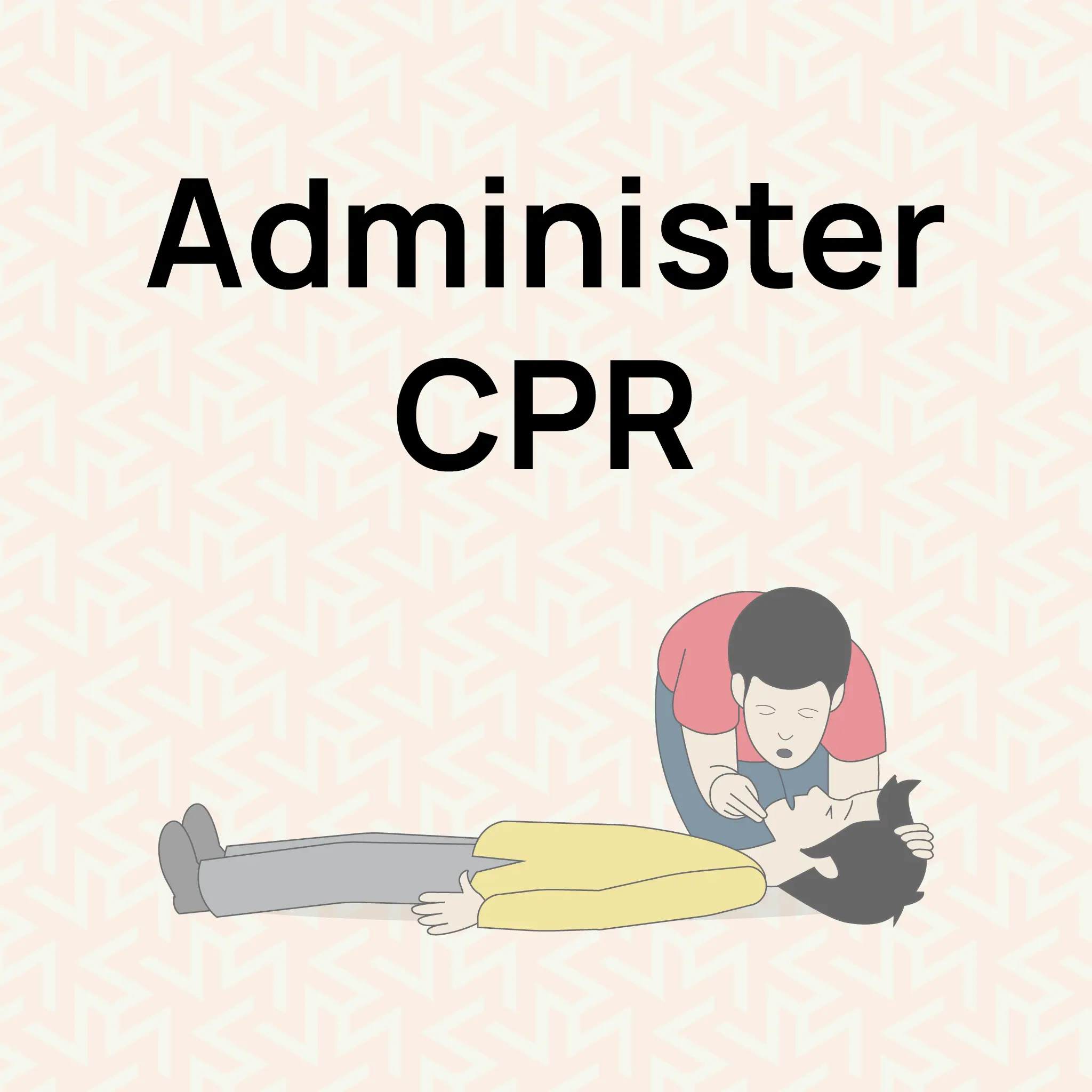
How To Administer CPR
Medical emergencies that require CPR can occur unexpectedly in any location. According to the Resuscitation Council UK, most cardiac arrests (72%) occur in the home or workplace (15%). Everyone needs basic CPR knowledge, as this skill could save someone's life.What is Cardiopulmonary Resuscitation (CPR)?Cardiopulmonary Resuscitation (CPR) is a critical procedure in first aid. It involves artificial respiration, which supplies oxygen to the lungs, and artificial circulation, which maintains blood flow throughout the body.CPR's primary objective is to provide an appropriate supply of oxygenated blood to reach the brain and other organs.This prevents tissue damage until the heart can resume normal function or professional medical assistance arrives. It is important to note that CPR is most effective when chest compressions are performed continuously.Why Perform CPR: Understanding Cardiac ArrestWhen someone experiences cardiac arrest, their heart stops beating properly, blocking blood flow to the brain. The person becomes unresponsive and stops breathing.Although a cardiac arrest marks a state of clinical death, applying CPR on time and a defibrillator presents a chance to restore a regular heartbeat.Common causes of cardiac arrest include:heart attackssevere injurieselectrical shockdrug overdosedrowningsuffocationWhen administering CPR, you are responsible for the casualty's cardiovascular and respiratory function. This procedure slows down the progression of their life-threatening condition till professional medical help arrives to take control of the situation.When to Use CPRCPR is needed when someone is unresponsive and not breathing normally. It is also required when a person is not breathing at all. For instance, if someone is rescued from drowning, they may need CPR to help them start breathing again. Similarly, if someone is severely choking, bleeding heavily, or in shock, CPR may be necessary.If you encounter an unresponsive person who has collapsed, you should perform a primary survey using the DRABC steps. This involves checking if the person is breathing by placing your cheek near their mouth.Observe their chest for any movement for about 10 seconds. If the person is unconscious but breathing normally, you should put them in the recovery position. However, if they are unconscious and not breathing properly, you should be prepared to administer CPR. .main{ border:3px solid #0f7c90; border-radius:20px; position: relative; font-family:roboto; font-weight: 400; color: #000; } .main-two{ position: absolute; top:-25px; left:45px; background-color:white; } .img-div{ border-radius : 100%; padding:2px 7px; background-color:#0f7c90; margin-right:5px; width: 50px; height: 50px; } .img{ width:30px; object-fit:contain; height:auto; border-radius : 100%; } @media only screen and (max-width: 600px) { .heading{ font-size:20px; } .img{ width:20px; object-fit:contain; height:auto; border-radius : 100%; } .img-div{ width: 40px; height: 40px; } .main-two{ left:25px; } } Ready to Learn More? Knowing CPR is important in emergencies, but there's more to first aid. Our First Aid courses offer complete training to help you handle critical situations. Whether you want to improve your skills or workplace safety, these courses help build confidence and expertise. View our Emergency First Aid at Work (EFAW) and Level 3 First Aid at Work courses. These courses meet the UK legal requirements and help you keep people safe. How to Administer CPR on an AdultFirst, assess the safety of the scene. Then, check the person's responsiveness by tapping and asking if they are okay. Conduct a primary survey by gently tilting the head back to make sure the airway is clear.Check for breathing for 5 to 10 seconds by looking, listening, and feeling for breaths.How To Do a CPR Compression on an AdultIf the person is not breathing or their breaths are weak (known as agonal breaths), place your hands in the middle of their chest with your shoulders directly above your hands. Keep your elbows straight.Agonal Breathing:Agonal breathing occurs when someone's breathing is irregular and gasping, often making odd sounds. It can sometimes occur during a cardiac arrest. Bystanders may think the person is breathing normally. Treating someone with agonal breathing as if they are not breathing at all is essential.Give 30 chest compressions - press down firmly and quickly!Use the heels of your hands to push straight down on the breastbone, about 5-6 cm (2-2.4 inches) deep.Release pressure entirely after each compression to let the chest come back up. Keep a steady rhythm, aiming for 100 to 120 compressions per minute. Count out loud to keep track.How To Breathe into an Adult�s Mouth During CPRNext, if you are trained, tilt the person's head back and lift their chin to open the airway. Pinch the soft part of their nose closed. If you have a barrier device, use it. Then, give two breaths into the person's mouth, each lasting about one second, enough to raise the chest.This makes one cycle of 30 compressions followed by 2 breaths.�Keep doing CPR until an AED arrives, the person starts responding, or you are too tired to continue. When the defibrillator arrives, apply it to the person immediately.How to Administer CPR on a ChildLook around the area where the casualty has occurred.Check to see if the child responds. If not, get medical help and an AED if possible.If you are alone and do not have a phone, do CPR for 5 cycles (around 2 minutes), then go for help. If you can, bring the child with you.Next, check the airway and breathing for between 5 and 10 seconds. .banner { border-radius: 10px; overflow: hidden; border: 2px solid #ccc; box-shadow: 0 4px 8px rgba(0, 0, 0, 0.2); background-color: #fdf9ee; } .book-now { color: white; background-color: #DF3D52; border: none; padding: 15px 60px; border-radius: 5px; cursor: pointer; font-size: 20px; text-decoration: none; } .book-now:hover { /*text-decoration: none;*/ color: white; background-color: #c33f50; } Get Trained in All First-Aid Skills First Aid Courses Book Now Rated Excellent on major review sites How To Do a CPR Compression on a ChildIf the child is not breathing or breathing well, place your hands in the middle of their chest and press down firmly. Keep your elbows straight. Depending on the child's size, you can use one or two hands.Give 30 chest compressions: Push firmly and quickly!Use the heels of your hands to press straight down on the breastbone. Each compression should be about a third of the chest depth or 5 cm (2 inches) deep.�After each compression, release pressure completely to let the chest back up. Keep a steady rhythm, aiming for 100 to 120 compressions per minute. Count out loud to keep track.How To Breathe into a Child�s Mouth During CPROnce you have performed compressions, open the airway by tilting the head back and lifting the chin. Use a barrier device if you have one. Then, give two breaths into the child�s mouth, just enough air to raise their chest.This makes one cycle of 30 compressions followed by 2 breaths.Keep doing CPR until an AED arrives, the person starts responding, or someone else takes over. If you get too tired, stop. Apply the AED as soon as it comes.How To Administer CPR for Babies - Infant Casualty Perform a scene survey of where the casualty occurred. Check if the baby responds. Gently tap their feet. If there is no response, get medical help and an AED if possible. If you are alone and do not have a phone, do CPR for 1 minute, then get help. If you can, carry the baby with you. Next, open their airway by touching their forehead and gently tilting their head back. Use the fingertips of your other hand to lift their chin. Put your lips around the infant�s mouth and nose and blow gently for one second until their chest rises. Remove your mouth and wait for your chest to fall back to normal. Repeat this for a total of five rescue breaths.How To Do a CPR Compression on an InfantPlace two fingers just below the nipple line on the baby's chest.Press down on the breastbone about 4 cm (1 1/2 inches), around one-third of the chest depth.Do 30 chest compressions followed by 2 breaths (30:2)Keep doing CPR until an AED is used, someone else takes over, or you are too tired. Use the AED as soon as it arrives.How To Breathe into an Infant�s Mouth During CPRBabies have big heads compared to their bodies, which can cause their airways to close. When babies lie on their backs, their heads tilt forward, closing their airway further.When performing CPR, you might find putting a thin pad under the patient's shoulders useful to help keep the airway open. But do not spend time looking for one.Types of CPRDepending on the circumstances and the number of people involved, CPR can be of different types:Chest compression-only CPRDispatcher-assisted CPRHow to take over CPR from another rescuerTwo-rescuer CPRChest Compression-Only CPRCPR guidelines emphasise recognising emergencies early and the importance of calling 9-1-1 if you find someone collapsed and unresponsive.Compression-only CPR means doing chest compressions without mouth-to-mouth breaths. Give solid and quick compressions at the centre of the chest, aiming for 100 to 120 compressions per minute. Although this does not give the person oxygen, it is an option for people not trained in traditional CPR or those unsure of their ability.Dispatcher-assisted CPRIn some areas, when you call 9-1-1, the dispatcher can guide you through the emergency until medical help arrives. Put your phone on speaker and place it near the person's head. Keep talking to the dispatcher while you help the person.Hand-Over CPR: Taking Over CPR from Another RescuerOffer your assistance and let the rescuer know you are trained in CPR. Make sure medical help has been called.Do 30 chest compressions followed by 2 breaths. Use your barrier device if you have one.Two-Rescuer CPRIf two trained rescuers are available, they can work together to do CPR on someone who needs it. There are three good reasons why it is better for two people to do CPR:Doing CPR can be tiring. As the first aider gets tired, their chest compression quality might worsen. If two people share the job of compressing the chest, they can keep doing good compressions for longer.With two people doing CPR, they can take turns doing chest compressions and giving breaths. This means the compressions do not have to stop as often.When two people work together, they can encourage and help each other during a difficult situation. One person stays by the casualty's head to do CPR with two rescuers. He keeps the airway open and breathes after every 30 compressions. The other person does the chest compressions.To keep the compressions effective, they should switch roles every 5 cycles of compressions and breaths, about every 2 minutes.ConclusionIf someone is not responding and breathing normally, CPR can help them survive until paramedics arrive. So, everyone needs to know how to do CPR, even if you still need to be formally trained in first aid. If you are not qualified, you should do chest compressions only for adults. But for children and babies, it is best to call for help first and then do CPR. Either way, doing CPR increases the chances of the person surviving.