

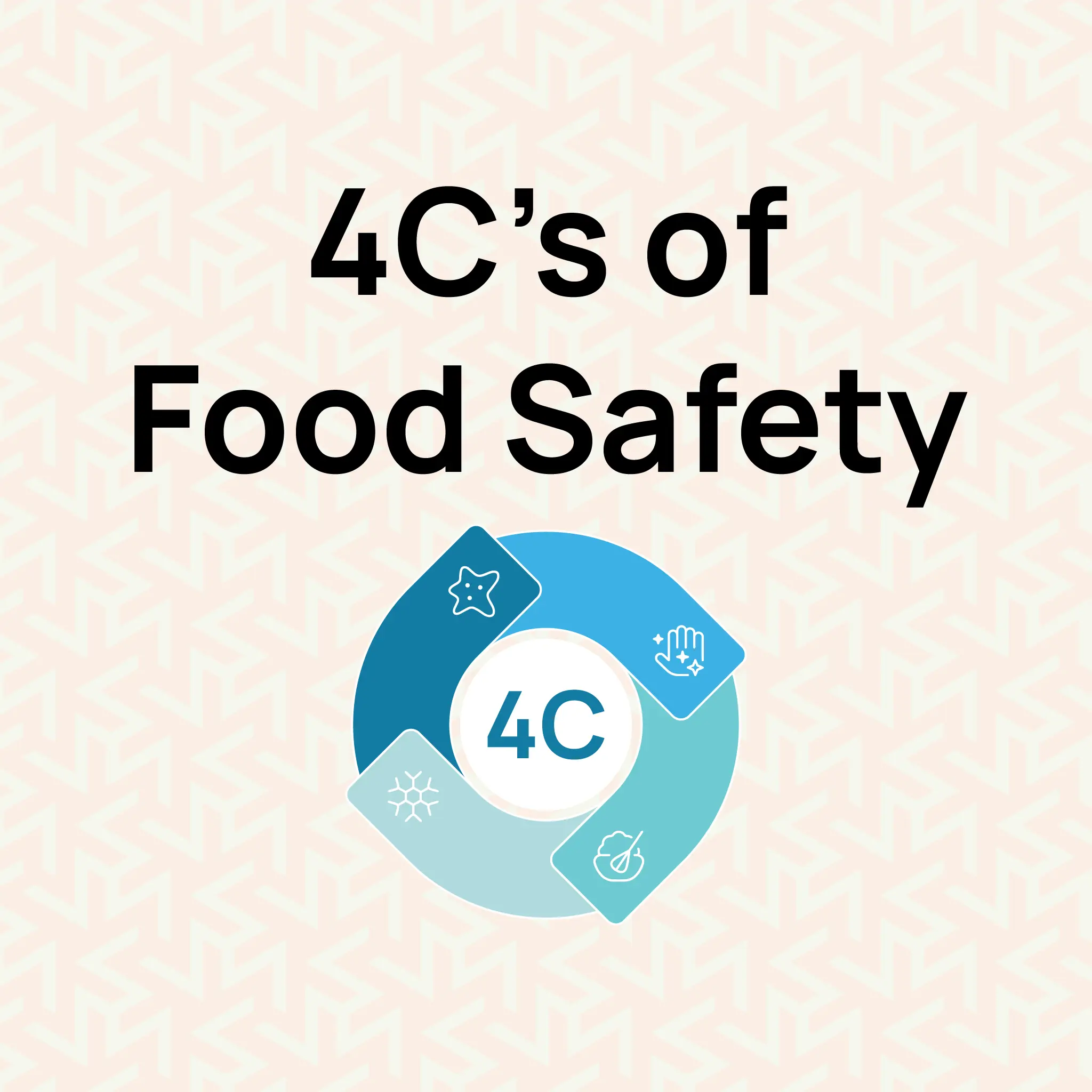
The Complete Guide to the 4?Cs of Food Safety for UK Food Businesses
Running a food business in the UK requires adhering to strict food safety standards to protect your customers and fulfil your legal obligations. From restaurants and caf�s to catering services and takeaways, maintaining high levels of hygiene and safe food handling is essential to avoid health risks and regulatory consequences.The 4Cs of food safety � Cleaning, Cooking, Chilling, and avoiding Cross-contamination � are key principles promoted by the Food Standards Agency (FSA). They provide a clear and practical framework for managing food safety throughout every stage of food preparation and service.Although the 4Cs themselves aren�t explicitly outlined in legislation, the practices they support are fundamental to complying with UK food laws, including the Food Safety Act 1990 and the Food Hygiene Regulations 2006. Failing to implement these practices can lead to foodborne illnesses, poor hygiene ratings, and legal action.In this article, we�ll break down each of the 4Cs, explore why they�re so important for food businesses, and offer practical tips to help you apply them in day-to-day operations.But first, let�s look at why these four principles are considered essential across the UK food industry.Why Is Following the 4Cs Important for Food Businesses?What are the 4Cs of food safety, and why are they important?Simply put, they are Cleaning, Cooking, Chilling, and avoiding Cross-contamination, four essential principles that safeguard food safety and help UK businesses comply with legal and hygiene standards.The 4Cs aren�t just a checklist; they form the foundation of safe food handling by reducing health risks, supporting legal compliance, and ensuring you�re prepared for inspections.Here�s how each of these principles reinforces why the 4Cs should be at the heart of every UK food business.They Reflect FSA Guidelines and ExpectationsThe Food Standards Agency (FSA) strongly promotes the 4Cs because they provide a clear foundation for safe food handling and hygiene. While not explicitly mentioned in the law, the FSA considers the 4Cs to be essential to good food safety practices, and inspectors will expect to see them applied in kitchens, storage areas, and front-of-house environments.Following the 4Cs can also help businesses achieve a better food hygiene rating, which in turn influences customer trust and reputationIgnoring the 4Cs Increases Health RisksWhen businesses don�t follow the 4Cs, they increase the risk of foodborne illnesses caused by harmful bacteria like Salmonella, Listeria, or E. coli. Cross-contamination, incorrect cooking temperatures, or inadequate chilling can all contribute to the growth and spread of these pathogens, posing a serious risk to your customers' health.There Are Serious Legal Consequences Although the 4Cs themselves aren't written into legislation, the practices they represent are enforceable under UK food law. The Food Safety Act 1990 requires all food businesses to produce and serve food that is safe to eat. Failure to control food safety hazards could result in prosecution, fines, business closure, or even imprisonment in serious cases.Helps You Stay Inspection-ReadyFood safety inspections don�t happen on your schedule; they can occur at any time. Following the 4Cs ensures you're prepared, with strong cleaning routines, proper temperature control, labelled storage, and clear procedures in place. This makes risk assessments easier and helps maintain compliance across your team.For detailed guidance on how to be prepared for a Food Safety Inspection, read our article on the food hygiene rating checklist.Incorporating the 4Cs into your daily operations isn�t just about passing inspections; it�s about building a food safety culture that protects people, supports your brand, and reduces long-term risks.Now let�s look more closely at each of the 4Cs in action.? Ready to upskill your staff or meet legal training requirements?�Start with a certified course: ? Level 2 Food Hygiene and Safety for Catering ? Level 2 Food Hygiene and Safety for RetailThe 4Cs of Food Safety Now that we�ve explored why the 4Cs matter, let�s look at each one in practice. Together, they create a strong framework that protects food from common hazards, but each one plays a unique role in keeping your premises inspection-ready and legally compliant CleaningCleaning is the first and arguably the most continuous step in food safety. It�s about creating and maintaining a hygienic environment, not just at the start or end of the day, but throughout the entire day.A clean-as-you-go approach ensures that spills, food scraps, and splashes are addressed promptly. Why wait until the end of a shift to wipe down a counter that�s been touched dozens of times? By cleaning as you work, you prevent harmful bacteria from building up and spreading to food or equipment. It�s proactive, not reactive.Go beyond a simple wipe-down. The six stages of cleaning are key: pre-clean, main clean, rinse, disinfect, final rinse, and drying. These aren�t just steps, they�re safeguards. Miss one, and you risk leaving behind dangerous residues or ineffective sanitisation.Use colour-coded chopping boards to separate raw meat, cooked food, dairy, and vegetables. It�s a small thing that goes a long way in reducing cross-contamination, especially when multiple people are prepping in a busy kitchen.And don�t overlook the basics: hand hygiene. Hands can transfer thousands of bacteria in a single touch. Follow the 7 steps of hygienic hand washing, especially after handling raw foods, using the toilet, or taking out the bins.Lastly, wash fruits and vegetables under running water before cooking or serving. This removes dirt and pesticide residues, but do not wash raw meat; it can splash bacteria across your sink and counters, increasing the risk of contamination.CookingCooking is more than getting food hot, it�s your defence against harmful microorganisms like Salmonella or E. coli. If meat isn�t cooked properly, these bacteria can survive and cause serious illness.Every food type has its specific requirements. The core cooking temperature generally recommended is 75�C; however, checking with a food probe is the most reliable way to ensure the food is safe. You should always be aware of the Temperature Danger Zone while cooking.If you're cooking something with packaging (like a frozen pie or pre-made meal), follow the manufacturer's guidelines. But if there are no instructions, stick with FSA advice, especially for:Poultry (chicken, duck, turkey)PorkMinced meats (like sausages, kebabs, burgers)Offal (liver, kidneys)Rolled joints, where bacteria can be pushed from the surface into the centre during preparationThese foods are considered high-risk because they�re more likely to carry harmful bacteria. That�s why undercooking them isn�t just a mistake, it�s a danger.Poor cooking practices can also breach the Food Safety Act 1990. If your food harms someone, even unintentionally, the consequences are legal.ChillingChilling slows down the growth of bacteria, but only if it�s done right.It is essential to understand the ideal fridge storage temperature and make sure your fridge is set to 5�C or below. Also, never overload your fridge. Cold air needs space to circulate; otherwise, certain spots warm up, creating the perfect breeding ground for bacteria.Always store raw meats on the bottom shelf of the fridge to prevent their juices from dripping onto ready-to-eat foods, which can lead to cross-contamination and serious foodborne illnesses. For tips on safe fridge storage, see our full guide on how to organise a fridge.Understand the food dates. A �use-by� date is about safety; eat it after that and you�re taking a risk. A �best-before� date, on the other hand, is about quality. It is crucial to be aware of the difference between use-by and best-before date.When it comes to leftovers, many wonder: Can you put warm food in the fridge? The answer is yes, but let it cool slightly first � ideally for no more than 1�2 hours. Placing steaming food directly into the fridge can raise its internal temperature and potentially affect other items stored nearby.Understand your freezing limits, too. Beef and other meats can only last a certain amount of time, even when stored in the freezer. Learn how long you can safely freeze food, the best methods for cooking it from frozen, and how to defrost it properly.Cross-ContaminationCross-contamination is silent and quick. A knife used for raw chicken, then reused for salad without washing, that�s all it takes.To protect food from cross-contamination:Always use separate equipment and colour-coded boards for raw and cooked food.Store raw food below cooked food in the fridge to prevent drips.Wash your hands every time you switch tasks.Clean and disinfect surfaces between jobs.Be aware of cross-contact, especially when it comes to allergens, as even a trace can trigger a serious reaction.Understand the different types of contamination:Physical (e.g. hair, glass)Microbial (bacteria, viruses)Chemical (cleaning agents)This is where habits matter most � a well-trained team that�s alert, organised, and consistent makes all the difference.Advance Your Food Safety Skills With Professional TrainingUnderstanding the 4Cs is essential, but it�s only the beginning. To truly lead safe, compliant food operations, especially in supervisory roles, formal training is a must.? Level 3 Food Hygiene and Safety Course Ideal for managers and supervisors, this course dives deeper into food law, risk assessments, and hygiene practices, helping you implement the 4Cs across your team and stay compliant with UK regulations.? Food Allergy Awareness Course Allergen cross-contact is a serious risk. This short course trains you to identify, label, and control allergens in food preparation � a vital extension of your cross-contamination strategy.Take charge of food safety today!Going Beyond the 4Cs: Best Practices to Prevent Food Safety FailuresNow that we�ve seen how each of the 4Cs plays a role in preventing foodborne risks, let�s shift focus to the broader strategies businesses can adopt to keep those risks at bay�before they even start.�Here are three proven ways to stay proactive about food safety compliance:Implement a HACCP PlanHazard Analysis and Critical Control Points (HACCP) is more than just a checklist�it's a structured system designed to identify, assess, and control food safety risks at every stage of your operation. From storage to service, every potential hazard is identified and managed effectively.Stay Inspection-Ready at All TimesWaiting until an EHO visit is announced is a recipe for panic. By maintaining your premises, documentation, and adhering to food safety protocols on a daily basis, you ensure that you're always prepared for a spot check. This includes having updated cleaning logs, temperature records, and allergen labelling processes in place.Invest in Regular Staff TrainingEven the best systems fall apart without well-trained staff. Ongoing training ensures that your team is confident in consistently applying the 4Cs. Refresher sessions are especially crucial in high-turnover environments, such as the hospitality industry. A simple misunderstanding of cross-contact, for example, could put a customer with allergies at serious risk.HACCP Training for Safer PremisesLearn how to assess food safety risks, apply adequate controls, and keep your kitchen inspection-ready with Hurak�s Level 2 HACCP Course.��Start TodayIncorporating these measures won�t just help you avoid food safety issues; they�ll help you build a culture of accountability across your team.�Let�s now understand how things can quickly go wrong when even one of the 4Cs of food safety is ignored, with an example.This example shows how one small lapse in chilling can escalate into a serious breach, reinforcing why every C counts.How a Small Oversight Can Lead to a Major Food Safety BreachLet�s examine a scenario that could occur at any food outlet, where a minor lapse in judgment puts customer health at risk.�Note: This example is provided for educational purposes only.Scenario: A Busy Caf� and a Chilling OversightIn a small high-street caf�, the kitchen staff cooked large batches of minced beef chilli during morning prep. Due to time pressure and limited fridge space, hot food was placed directly into the fridge to cool faster. Later that evening, several customers reported symptoms of food poisoning. An investigation by local authorities revealed that the food had spent too long in the temperature danger zone�between 8�C and 63�C. Allowing bacteria like Clostridium perfringens to multiply. No chilling logs were maintained, and the team was unaware of proper cooling procedures.What went wrong? A failure to follow safe chilling practices, one of the 4Cs, triggered a chain reaction, demonstrating how a single oversight can impact public health, damage your brand reputation, and result in legal action.The story also illustrates why understanding guidelines isn�t enough; you must apply them, monitor their implementation, and train your staff to do the same.Conclusion: Food Safety is a Constant CommitmentMastering the 4Cs �Cleaning, Cooking, Chilling, and Cross-Contamination �forms the backbone of any safe food environment. But food safety doesn�t end there.�To truly protect your customers and reputation, you must go the extra mile.Consider TACCP and VACCP strategies to protect against intentional food threats, or implement regular risk assessments to identify vulnerabilities before they cause harm. Leveraging smart kitchen technology for temperature logs and hygiene audits can also add precision and confidence to your operations.Whether you run a food truck or manage a full-service kitchen, your safety systems must evolve with the industry. When done right, these steps not only reduce risk but also boost customer trust and business resilience.Go Beyond the 4Cs � Train SmarterMaster legal compliance, inspections, allergen safety and more with Hurak�s CPD-certified Food Hygiene and Safety Courses.? Find Your Course NowFAQsWhat are the 4Cs of food safety, and why are they important?The 4Cs of food safety are Cleaning, Cooking, Chilling, and avoiding Cross-contamination.�They are important because they form the foundation of safe food handling practices, helping to prevent foodborne illnesses, protect public health, and ensure compliance with UK food safety laws. By following the 4Cs, food businesses can reduce health risks, maintain hygiene standards, and pass inspections with confidence.How can I train my staff on the 4Cs?Enrol them in a certified Food Hygiene Course, such as Hurak�s Level 2 or Level 3 programmes, which cover the 4Cs in depth.Is it mandatory to follow the 4Cs in a home kitchen?While not legally required for home use, following the 4Cs helps protect your family from harmful bacteria and ensures safer food practices.Are there practices beyond the 4Cs that I should know?Yes, advanced methods such as TACCP, VACCP, digital temperature monitoring, and regular risk assessments extend beyond the 4Cs to address intentional food threats and complex safety risks.

How Long Does Beef Last in the Fridge?
Ever stood in front of your fridge wondering, �Is this beef still safe to eat?�Whether it�s leftovers from Sunday roast or raw mince from yesterday�s shop, knowing how long beef lasts in the fridge (or freezer) can be confusing and potentially risky if you get it wrong. In this guide, we�ll walk you through how to store beef correctly, how long it lasts depending on the type and condition, safe defrosting practices, how to spot signs of spoilage, and even UK food safety laws you need to know, especially if you're running a food business. Let�s make food safety simple � and your fridge, safer. How to Store Beef in the Fridge or FreezerStoring beef properly is crucial for maintaining its freshness, preventing foodborne illness, and minimising waste. Whether it�s raw, cooked, minced, or sliced, how you pack and store beef (in your fridge or freezer) plays a crucial role in determining how long it will last.Choose the Right Packaging: Airtight is EssentialStore beef in airtight containers or sealed freezer-safe bags to prevent contamination and moisture loss.Wrap raw cuts in cling film and foil, or better yet, vacuum seal them if possible.Avoid leaving beef in supermarket packaging for long-term storage. Transfer to proper containers once you're home.Set the Right TemperatureYour fridge should always be kept at 5�C or below, and your freezer at -18�C or colder, to stop bacteria from multiplying.Keeping your appliances within these limits helps you avoid entering the Temperature Danger Zone where harmful microbes can grow quickly, as explained in our food safety fridge storage temperature guideline.�Store in the Right Place: Raw Below, Cooked AboveRaw beef should always be stored on the bottom shelf, in a leak-proof container, to prevent drips from contaminating other foods.Cooked beef can be placed on upper shelves but must be kept away from raw items at all times to prevent cross-contamination.An organised fridge, with clearly defined zones for raw and cooked foods, is not only safer but also more efficient. If you�re unsure how to set it up, our guide on how to organise your fridge offers practical tips for arranging shelves properly and maximising space.Label Before You StoreMark each item with the storage date and note whether it�s raw or cooked.This helps track freshness and reduces the risk of consuming spoiled beef or discarding safe food too soon.Portion Before FreezingDivide large packs of beef into smaller portions before freezing to avoid repeatedly defrosting and refreezing.Lay bags flat for faster freezing and to save space.Remove as much air as possible from the packaging to prevent freezer burn.Safe storage starts with small habits, using the proper packaging, setting the correct temperature, and placing beef where it won�t contaminate other foods. These steps not only help your food last longer but also reduce waste and protect your health.Want to build a stronger foundation in food hygiene?? Start the Level 1 Food Hygiene and Safety Course Perfect for home cooks, kitchen staff, and anyone handling food, this concise online course teaches you how to store, prepare, and serve food safely, including tips for preventing cross-contamination and maintaining a well-organised fridge.How Long Does Beef Last in the Fridge or Freezer?Storing beef safely isn�t just about keeping it cold; it�s about knowing how long each type can stay fresh without putting your health at risk. From steaks and mince to cooked leftovers, each has its own shelf life in the fridge and freezer.�Let�s look at how long you can store different types of beef in the fridge and freezer based on UK food safety standards.Beef Storage Chart (UK Guidelines)Type of BeefStorage StyleFridge (? 5�C)Freezer (? -18�C)Raw steak or roasting jointUncooked cut3�5 days6�12 monthsRaw minced/ground beefUncooked mince1�2 days3-4 monthsCooked beef (any type)Leftovers3�4 days2�3 monthsStews and beef-based mealsMixed dishes3�4 days2�3 monthsRaw beef sausagesFresh packed1�2 days1�2 monthsCold cuts/sliced beefDeli-style3�5 days (opened)1�2 monthsBeef gravy or stockCooked liquids1�2 days2�3 monthsNow that you�ve seen the chart, let�s understand what it means in practical terms. Not all beef is created equal, mince spoils quicker than steaks, and leftovers have different timelines than raw cuts.�Each category also requires different handling to keep it safe in the fridge or freezer.Here�s a quick breakdown of why:Whole cuts like steaks and joints have a longer shelf life because they�re exposed to less air and bacteria.Minced beef should be treated with urgency. The grinding process increases bacterial exposure, so it�s best used within 1�2 days.Cooked beef dishes, such as roast beef or bolognese, can be stored in the refrigerator for 3�4 days. If you're not sure you�ll eat it in that time, freeze it to extend its life.Gravy, stock, or cold cuts may look harmless, but they can spoil quickly. Store them in airtight containers and clearly label the date on each container.Pro Tip: No matter the type, always label and date what you freeze; it�s easy to forget when that container was put in.Let�s understand how long beef lasts in the fridge with an example for better understanding:Example:Anna, a busy parent, buys beef mince and steaks every Saturday. She keeps the mince in the fridge and uses it for Sunday lasagne. She freezes the steak for next weekend. Leftover cooked beef is placed in labelled containers and eaten for lunch within 3 days, or frozen if not.Meanwhile, James, who runs a catering business, logs every beef delivery and moves anything unused into the deep freeze within 48 hours. This process helps him stay compliant, organised, and waste-free.Whether you are storing food at your home or at a restaurant, understanding the timelines is key to avoiding spoilage and keeping your kitchen safe.Want to dive deeper into food safety?�Explore related articles:�high-risk foods | food preservation methods | how to cook frozen foodDoes the Type of Beef Cut Affect Fridge Life?Absolutely � and more than you might expect.As discussed earlier, whole cuts stay fresh longer thanks to their minimal surface exposure.Here�s a quick breakdown:Whole Cuts (e.g. steak, joint): Last longer; fewer exposed surfaces mean slower spoilage.Minced or Ground Beef: Spoils faster due to increased exposure to air and bacteria during processing.Cooked Beef: Shorter life once cooked, even if it started fresh.Sliced Cold Cuts: High risk, especially once opened; they spoil quickly.Tip: When in doubt, opt for vacuum-sealed cuts and store them in the coldest part of your refrigerator.While storage rules apply broadly to all beef, understanding the type of cut can help you fine-tune how long you keep it in your fridge or freezer. Whole cuts last longer than ground or sliced beef, and cooked beef has a much shorter shelf life regardless of the cut.Being aware of these nuances helps you avoid food waste and reduce the risk of spoilageTake charge of food safety in your kitchen.The Level 3 Food Hygiene and Safety Course is designed for supervisors, managers, and owners to build a strong foundation in food hygiene systems and solve day-to-day safety challenges.How to Defrost Beef SafelyWe�ve just seen how different cuts affect how long beef lasts, but that's not all. Once you�re ready to use it, how you defrost your beef is just as crucial for maintaining safety, flavour, and texture. Defrosting incorrectly can undo all the careful storage you�ve done so far.Here�s how to do it right:? Safe Defrosting MethodsIn the fridge (best method): Place your beef on a tray at the bottom of the refrigerator to prevent drips from contaminating other food. This slow, controlled method keeps the meat below 5�C, which helps prevent the growth of harmful bacteria.In cold water: Submerge the beef in a leak-proof plastic bag in a bowl of cold water. Change the water every 30 minutes to maintain its freezing temperature. Cook immediately after thawing.In the microwave: Use the defrost setting and cook the beef straight away. Be aware that microwave defrosting may partially cook the outer layers, so timing matters. Our guide on how to defrost food in the microwave explains how to do it safely and avoid uneven cooking.Proper defrosting keeps your beef safe to eat, preserves quality, and supports good kitchen hygiene. And if you�re handling food in a business setting, knowing the correct methods is essential for staying compliant with UK food safety law.How to Tell if Beef Has Gone BadAfter defrosting, it�s essential to check whether the beef is still safe to use, especially if it has been in storage for an extended period. Even when stored or defrosted correctly, beef can still spoil due to improper handling, inadequate packaging, or prolonged storage.Knowing the signs of spoilage helps you avoid food waste, but more importantly, it protects against foodborne illness, whether you�re cooking at home or running a kitchen.Look out for these common indicators that your beef is no longer safe to eat:Strange or sour smell: Fresh beef should have a neutral scent. A sour, ammonia-like, or rotten smell means it�s spoiled and should be discarded immediately.Slimy or sticky surface: Spoiled beef often develops a slippery film on the surface. This is caused by bacterial growth and is a clear sign that the meat should not be used.Discolouration: Beef naturally darkens slightly with age, especially when exposed to air. But if it turns green, grey, or has unusual patches, it�s a red flag.Off taste (in cooked beef): If the flavour is bitter, metallic, or �off�, it�s better to be safe than sorry � don�t eat it.Note: Microbial contamination isn�t always visible. Even if beef looks and smells okay, if it�s been stored improperly or past its use-by and best-before dates, it can still be unsafe.Spotting spoiled beef isn�t always about what you can see; it's also about how it�s been stored, handled, and defrosted. When in doubt, throw it out -- safety comes first.Regular fridge checks and proper labelling go a long way in keeping your kitchen safe. Beef Storage in the UK: Essential GuidelinesNow that you know how to identify spoiled beef, let�s talk about prevention. Taking a few simple steps when storing, preparing, and handling beef can significantly extend its shelf life and reduce waste.Label and Date Everything ClearlyWhether you�re storing raw steaks or cooked mince, always label with the storage date. Not only does this support FIFO (First In, First Out) rotation, but it�s essential for traceability under UK food law, particularly in commercial kitchens.Keep Beef at Safe TemperaturesStore beef in the fridge at 5�C or below, and freeze it at -18�C or lower. UK regulations set a legal maximum of 8�C for chilled foods, but best practice recommends a lower temperature to ensure safety.Use Airtight or Vacuum-Sealed ContainersPackaging beef in sealed, air-tight containers or vacuum bags prevents exposure to air and slows bacterial growth. This protects quality and meets hygiene standards that help prevent contamination.Store Raw Beef on the Bottom ShelfIn both home and professional settings, placing raw meat at the bottom of the fridge stops juices from dripping onto ready-to-eat foods, a key step in avoiding food contamination, which is strictly regulated under UK food safety law.Avoid Overpacking the Fridge or FreezerProper airflow ensures the entire unit maintains safe temperatures. Overcrowding can lead to uneven cooling and breach legal storage limits.Follow Use-By Dates � They�re Legally BindingUnlike best-before dates, use-by dates are enforceable. Selling, serving, or even consuming beef past this point is illegal under the Food Safety and Hygiene (England) Regulations 2013..Ensure Staff Are Trained in Food Storage PracticesFor food businesses, having trained staff is not just good sense, it�s a requirement under Regulation (EC) No. 852/2004. Even basic storage mishandling can lead to legal action if safety is compromised.For a deeper dive into your responsibilities as a food business, visit our guide to the Food Safety Act 1990.Combining good habits with legal knowledge is the key to safe beef storage. Whether you�re labelling meat at home or running a catering operation, the rules are there to protect health and ensure accountability. Doing things properly means reducing risk and doing right by your customersConclusion:Proper beef storage is about more than just keeping your food fresh; it�s a vital step in protecting yourself, your family, or your customers from foodborne illness. Understanding the differences in shelf life between cuts, following safe defrosting practices, recognising spoilage signs, and complying with UK food safety laws all contribute to safer kitchens at home and in business.�By combining simple storage habits with clear labelling and correct temperatures, you can significantly reduce waste and keep your food safe to enjoy. Whether you're cooking dinner or running a busy catering business, these practical steps build a foundation of food safety everyone can rely on.So, how long does beef last in the fridge? Now you know, and with the right approach, you can store your beef safely and confidently every time.Boost your food safety skills with expert training.Explore a wide range of accredited food hygiene and safety courses designed for every level, from home cooks to food business professionals.Find the right course for you at Hurak!!FAQHow long does beef last in the fridge?Beef can last between 1 to 5 days in the fridge, depending on the cut and whether it�s raw or cooked. For example, raw steaks and roasting joints usually stay fresh for 3 to 5 days, while minced beef should be used within 1 to 2 days. Cooked beef leftovers typically last 3 to 4 days in the fridge. Always store beef at or below 5�C and label it with the date to keep track of freshness.How long can you keep chicken in the freezer?Chicken can be safely stored in the freezer for varying lengths depending on the cut and whether it�s cooked or raw. Raw whole chicken can last up to 12 months in the freezer, while raw chicken pieces are best used within 9 months. Cooked chicken typically lasts 2 to 6 months in the refrigerator. Always freeze chicken at -18�C or below and use airtight packaging to maintain quality.What�s the best way to store beef and chicken to maximise their shelf life?Use airtight containers or vacuum-sealed bags to store both beef and chicken. Label your packages with the storage date. Keep raw meat on the bottom shelf of your refrigerator to prevent drips, and ensure the temperature stays at 5�C or lower. For freezing, wrap meat tightly to avoid freezer burn and portion it for easy thawing.Can you refreeze beef or chicken after thawing?It�s safe to refreeze beef or chicken only if it has been thawed in the fridge and hasn�t been left out at room temperature. Refreezing may affect texture and flavour, so it�s best to freeze in smaller portions to avoid the need for multiple thawing cycles.

UK Gun Crime Explained: Stats, Deaths Public Impact
Crime is changing: not just in scale, but in the way it spreads. With each passing year, the world sees more stories of crime, whether it�s theft, drug abuse, knife attacks or gun violence.�The UK is a part of it too; while we�re not dealing with the same volume of firearm incidents as other countries, there�s a clear shift happening. Guns are no longer just rare finds; they are appearing more often in gang activity, street-level threats, and cases linked to youth and county lines networks. However, they are often not fired, but used to intimidate, threaten, and control.�According to the National Crime Agency (NCA), firearms remain a �significant threat� in the UK despite law enforcement efforts to keep numbers low. While gun deaths in the UK are still rare, the presence of weapons in everyday crimes is growing and has become a concern for the local communities.Gun Crime Statistics UK � What Do the Numbers Say?Despite the UK having some of the world�s strictest firearm laws, gun violence continues to appear in police reports year after year. Whether used in street-level disputes, gang intimidation or armed robberies, the use of firearms, legal or not, remains a pressing issue for law enforcement.In 2022�23, the UK recorded over 24,000 firearm-related offences. By 2023�24, this figure had fallen slightly, suggesting improved control in certain areas.Firearm Offences Over the YearsYearRecorded Firearm OffencesChange from the Previous Year2021-2222,170-2022-2324,094? 8.7% increase2023-2422,893? 5% decreaseSource: Office for National Statistics (ONS)These shifts are pretty interesting to observe. Let�s understand them below:Gun crime in the UK rose sharply in 2022�23, likely linked to post-lockdown gang movements and county lines activity.The drop in 2023�24 could be attributed to increased intelligence operations by the NCA and local police; however, the threat remains.Many of these crimes involve weapons that are not fired but still used to terrorise.While overall UK gun crime is currently down by 5%, the methods of gun use are shifting. There has been a noticeable rise in firearms being used to threaten rather than discharge.�These threats are often just as traumatic for victims and can still cause physical or psychological harm.In high-risk environments such as concerts, football stadiums, or busy transport hubs, crowd safety becomes an integral part of prevention, making it essential to have trained professionals on site. That�s why places like these often rely on SIA-licensed security guards who are trained to respond to escalating threats with control and authority.Gun Use in Crimes � Fired or Just Threatened?Not every gun is fired. In fact, the overwhelming majority involve firearms being used just to intimidate or threaten.�But this doesn�t make them any less dangerous. The presence of a gun, real or fake, can at any time escalate and lead to a life-threatening situation.This is where the real danger of gun violence lies in the UK today. Criminals often use guns not to kill but to frighten the victims, enforce control over rivals, or rob with fear as leverage. Unfortunately, this aggressive display of dominance can often lead to fatal injuries, panic-driven crowd reactions, and long-term mental trauma for victims.How Guns Were Used in Crimes (2023�24)Method of UsePercentage of CasesUsed as a Threat: Gun was brandished or pointed~68%Fired: Gun was actually discharged~29%Used as a Blunt Weapon: Gun was used to strike the victim physically~3.5%Source: Office for National Statistics (ONS)In Summary:Nearly 7 out of 10 gun crimes in the UK involve threats rather than discharges.The act of threatening someone with a firearm is a deliberate intimidation tactic commonly used by gangs, especially during disputes over drugs or territory.Even non-firing incidents can result in gun deaths indirectly, through retaliation, panic or police response.While it�s encouraging to see a reduction in the number of actual shootings, the growing normalisation of using guns to scare people is alarming. It suggests a shift in criminal behaviour�from concealment to visible shows of force.Whether it�s shoplifting or a nightclub bouncer dealing with a heated confrontation, the risk of it escalating is real.�In such environments, it�s crucial that security guards, tasked with retail safety and public protection, are well trained to handle such situations and understand what they can and cannot do legally.What Types of Guns Are Being Used?It's worrying to see the kinds of firearms being used in crimes, even after having strict gun laws in the UK. Gangs and criminals are using these weapons, often illegally, either by importing or modifying them. Types of Firearms Used (2023�24)Weapon TypeNumber of OffencesChange from Last Year (2023-24)Shotguns52? 42%Handguns226? 8%Other firearms1126? 9%Air weapons348? 23%Total firearms1752? 8.2%Source: Office for National Statistics (ONS)In Summary:Shotguns are declining in use due to stringent regulations and increased monitoring.Handguns have been increasingly common in gang-related shootings and territorial displays.Other firearms, including converted weapons, are often smuggled into urban hotspots.Air Weapons are easy to obtain and frequently used to threaten or shut down areas.The rise in handguns, other firearms, and air weapons is pointing towards a troubling trend. An increase in urban gang violence and easily accessible weapons is driving the spike in the highest gun crime in the UK.�This raises a key question: Where are all these guns coming from?How SIA-Licensed Guards Help Tackle Difficult SituationsIn such an alarming situation, it is crucial for public places to have well-trained SIA-licensed security guards who can calmly and professionally handle difficult situations while upholding the behavioural standards expected in the security industry.Hurak offers a number of SIA-approved security courses:Physical Intervention Refresher and Crossover Training: Ideal for those seeking to maintain their skills up to date.SIA Door Supervisor Training: Teaches conflict management and public safety.SIA CCTV Operator Training: Enhances surveillance and response to threats.SIA Security Guard Training Course: A broad foundation in security industry standards.Close Protection: Focused on personal security for high-risk environments.With well-trained, legally licensed staff, public spaces, such as pubs, events, and transportation hubs, can create safer environments and help minimise the risk of gun-related incidents.Where Are Illegal Guns Coming From in the UK?Despite strict firearm laws, gun-related crimes are escalating, and here�s what�s most important to understand: most of these weapons aren�t even legally registered.�That raises a serious question: where exactly are these guns coming from?From gang disputes to intimidation in drug-related violence, the weapons used in gun crime cases are rarely linked to law-abiding firearm owners. Instead, they often come through illegal channels�smuggled, converted, or reactivated weapons that bypass regulatory checks entirely.How Are Illegal Guns Entering the UK?The National Crime Agency (NCA) has identified several key sources for these firearms:Smuggling from Europe: Many firearms are trafficked through Eastern Europe, hidden in vehicles, parcels, or concealed luggage via ferry ports and the postal system.Converted Blank-Firing Guns: Easily purchased online or at markets, these guns are modified illegally to function like live weapons.3D-Printed Firearms: Criminals are starting to use tech to produce working parts that can be assembled into deadly weapons, becoming a growing concern.Reactivated Historical Guns: Antique or deactivated guns, once considered harmless, are being reworked and sold through criminal channels.Dark Web Purchases: Firearms can also be bought using cryptocurrency and delivered through complex, untraceable shipping routes.These weapons are increasingly being used in both urban gang violence and rural criminal activity. As a result, the highest gun crime in the UK isn't just limited to major cities: it�s spreading into previously considered low-risk areas as well.This paints a worrying picture. Criminals are finding ways to evade laws, and in doing so, are putting communities at increasing risk. Whether it�s through intimidation or actual shootings, these illegally sourced firearms pose a danger that�s difficult to predict or contain.What the Law Says About Guns in the UKGun laws in the UK are among the strictest in the world. While ownership of certain types of firearms is permitted under strict licensing conditions, the possession, purchase, or use of most guns, especially �handguns�, is tightly controlled.Despite this, gun crime still persists, mainly due to illegally sourced or converted firearms. But it is essential to note that when caught, offenders face serious legal consequences under UK law.Key UK Gun Laws at a GlanceFirearms Act 1968 � It is the core legislation covering the possession and use of firearms and ammunition in the UK.Mandatory Licensing � Anyone wishing to own or use a firearm must hold a valid firearms certificate (FAC) or shotgun certificate (SGC).Ban on Handguns � Private handgun ownership is largely illegal in the UK since the Firearms (Amendment) Act of 1997.Possession without a Licence � Being caught with a firearm without a certificate can result in up to 5 years imprisonment.Use with Intent to Injure or Threaten � It carries a maximum sentence of life imprisonment.�Real Case ExampleLet�s understand what happens if someone is caught having an illegal firearm through a real-life case.In February 2025, five men were jailed for converting 42 blank-firing pistols into lethal weapons.�These firearms, often bought legally and then modified, were linked to potential gang use.�The individuals: Connor Millington, Jordan Behan, John Riddiough, Colin Berry, and Sammy Hill, were part of an organised crime network operating across the West Midlands and North West.The gang used 3D printers and modified tools to transform blank-firing pistols into live firearms, which were then sold to criminal groups.�They were caught and sentenced to a combined 68 years in prison, with individual sentences ranging from 8 to 18 years.�The case was led by the National Crime Agency (NCA) and the North West Regional Organised Crime Unit.Complete Case Source � ROCU Police NewsThis case sets an explicit example that gun crime in the UK is handled with extreme seriousness by the law, even if the weapon has not been used to shoot.�Whether it's possession, supply, or conversion, the legal consequences are severe. Advice for Legal Gun HoldersWhile most gun crimes in the UK involve illegally sourced weapons, licensed firearm holders must still follow strict rules to avoid legal trouble.Key Tips for Legal Gun Owners:Always store guns in a locked cabinet, separate from ammunition.Never lend your firearm to anyone, even temporarily.Report lost, stolen, or damaged firearms immediately to the police.Renew your Firearm/Shotgun Certificate on time; expired licences are treated as illegal possession.Avoid transporting weapons without notifying local authorities.Even a single careless mistake can lead to serious legal consequences. That is why it is crucial to exercise extreme caution when holding a legal firearm.Conclusion: A Nation Wakes Up to Gun CrimeOne case that captured the nation�s attention and heartbreak was the tragic death of 9-year-old Olivia Pratt-Korbel in Liverpool.In August 2022, Olivia was at home with her mother when a man being chased by a gunman forced his way into their house to hide. The gunman fired blindly through the door, hitting Olivia�s mother in the wrist and fatally shooting Olivia in the chest. She died shortly after in the hospital.Both men involved in this case had criminal records, but the victim of this fatal incident was an innocent child who had merely just begun her life. She wasn�t outside or in a dangerous area; she was in the safety of her own home. And yet, she became another tragic victim of gun violence in the UK.The man responsible, Thomas Cashman, was sentenced to life imprisonment in 2023, with a minimum term of 42 years. The judge described the killing as �truly shocking� and warned of the growing threat illegal firearms pose in the UK.This single case paints a terrifying picture: no one is truly safe from gun crime when it spills out of gang rivalries and onto everyday streets.UK Gun Crime at a Glance � Infographic RecapAs a recap of the statistics we've discussed earlier, here�s a combined visual summary that shows the shift in weapon use, gun-related threats, and offence trends.Even though there has been a slight drop in total gun offences from 2022�23 to 2023�24, we shouldn�t get comfortable. Air weapons and handguns have increased in use, especially in gang and youth-related crimes.In over 17,000 incidents, guns were not fired, but were used to threaten, intimidate, or gain control, which is extremely dangerous to the public�s sense of safety. Weapons, like converted blank-firing pistols or 3D-printed parts, are increasingly being used, especially by gangs operating across cities and rural counties.Though statistics may fluctuate, what�s evident is that the nature of gun crime in the UK is changing. It's no longer just happening in dark alleys � it�s creeping into homes, schools, and everyday places.That�s why we must do more to protect public spaces, especially where large crowds gather, such as shopping centres, events, stations, and nightlife venues.�One key step is to ensure that such locations are monitored by SIA-licensed professionals who are trained not only in security but also in calmly managing violent and high-pressure situations.Hurak offers SIA-approved training for security professionals, enabling them to de-escalate threats, protect lives, and serve as the first line of defence against rising crime in the UK.Explore our certified Security Training Courses and strengthen your frontline defence team.FAQs�What is the current gun crime rate in the UK?According to the Office for National Statistics (ONS), there were 22,893 recorded firearm offences in the UK during 2023�24. This marks a 5% decrease from the previous year, showing some improvement in control measures, but concerns still remain due to changes in how firearms are being used, mostly for intimidation.Which area has the highest gun crime in the UK?West Midlands currently records the highest rate of gun crime per 100,000 people. However, in terms of total volume, London (Metropolitan Police area) still reports the most firearm-related offences overall. Other cities such as Manchester, Birmingham, and Liverpool are also experiencing notable increases.How are illegal guns entering the UK?Illegal firearms often enter the UK through:Smuggling from Eastern Europe.Modifying blank-firing or deactivated guns.Use of 3D-printed components.Dark web purchases and postal shipments.These sources are challenging to track and pose a significant concern for UK law enforcement.What are the penalties for illegal firearm possession in the UK?Being caught with an illegal firearm can lead to:Up to 5 years in prison for possession without a licence.Life imprisonment for using a gun with the intent to injure or threaten.Recent cases, like the 2025 West Midlands conversion gang, show courts are issuing lengthy sentences (8�18 years) even for weapon conversion and supply.How common are gun deaths in the UK?Gun deaths in the UK are relatively rare compared to other firearm offences. While there were over 22,000 firearm-related offences in 2023�24, only a small portion involved actual shootings. In fact, around 68% of cases involved firearms being used to threaten rather than being fired. Despite low fatality rates, the threat of gun violence remains serious, especially in gang-related crimes.

Top 10 Worst Places to Live in West Midlands (Crime Data)
Is the West Midlands becoming more dangerous?The West Midlands may be home to some of the UK�s most vibrant towns and cities, but for many locals, concerns around rising crime are hard to ignore.According to CrimeRate.co.uk, the West Midlands recorded 96 crimes per 1,000 people in the past year, placing it among the top 20 most dangerous regions in England and Wales.�In densely populated urban zones, that number spikes dramatically. Wolverhampton alone reports a rate of 129 crimes per 1,000 people, while Telford sees 118 crimes per 1,000 people.Crime types vary across the region, but violent offences, drug-related incidents, and antisocial behaviour dominate.�A deep dive into 2024 data reveals that certain towns consistently exhibit higher crime clusters, which negatively impact residents� quality of life.Below is a snapshot of key locations based on the official crime rate per 1,000 residents:Town/CityCrime Rate/1,000Most Reported CrimeWolverhampton129Violence and sexual offencesTelford118Antisocial behaviourBirmingham114Theft and robberyCoventry98Vehicle crime & burglaryAs crime continues to affect public spaces, transport hubs, housing estates and commercial areas, the need for manned security has seen a rapid increase.In this guide, we will talk about the top 10 worst places to live in the West Midlands, highlight the most dangerous towns, and offer insights into areas to avoid if you're living or working locally.Top 10 Worst Places to Live in the West MidlandsRising crime levels are shaping how people live, work, and feel across the region.With crime rates rising across the region, many residents are asking: Which are the most dangerous towns in the West Midlands?�Based on recent data from CrimeRate.co.uk and local reports, we�ve ranked the top 10 worst places to live, providing crime figures and a breakdown of what makes each location a concern.BirminghamCrime Rate: 136 crimes per 1,000 peopleMost Common Crimes: Violence and sexual offences, burglary, vehicle crime, public orderAs the UK�s second-largest city, Birmingham faces a complex crime landscape. High population density, economic disparity, and gang-related issues contribute to its safety challenges.�Inner-city areas like Newtown, Lozells, and Small Heath experience persistent violence and theft, while suburbs such as Northfield and Erdington also struggle with burglary and antisocial behaviour.�Despite ongoing regeneration efforts, Birmingham remains at the top of the list due to the sheer volume and severity of offences.WolverhamptonCrime Rate: 129 crimes per 1,000 peopleMost Common Crimes: Violence and sexual offences, drug offences, antisocial behaviourWolverhampton has become a hotspot for violence and drug activity, with locals reporting frequent incidents across several neighbourhoods.�Youth violence, gang tensions, and public disorder remain major issues in many districts.? Areas to Avoid in WolverhamptonSome parts of the city see significantly higher crime levels, such as:Whitmore Reans � Known for antisocial behaviour and theft.All Saints � Repeated violent incidents.Heath Town � Gang activity and knife crime.Blakenhall � Property crime and drug-related offences.Despite ongoing investments in CCTV and community safety initiatives, these neighbourhoods require vigilance.TelfordCrime Rate: 118 crimes per 1,000 peopleMost Common Crimes: Antisocial behaviour, violence and sexual offences, criminal damageTelford, located in Shropshire, is a growing urban town that faces safety issues often underestimated by outsiders.�Public disorder, particularly among young people, is a recurring theme.�Violence, criminal damage, and theft are concentrated in specific areas.? No-Go Areas in TelfordTelford�s crime is highly localised to:Brookside � Notorious for vandalism and drug dealing.Woodside � Reported gang presence.Sutton Hill � Frequent reports of youth crime and assaults.Leegomery � Known for public order offences.These areas contribute heavily to Telford�s rising crime figures, especially during late evenings and weekends.OldburyEstimated Crime Rate: 143 crimes per 1,000 peopleMost Common Crimes: Violent crime, burglary, criminal damageOldbury is a small but densely populated town in Sandwell. It�s regularly flagged for high volumes of assaults and antisocial behaviour.�Reports suggest that youth violence and knife crime have become increasingly common in the last two years, especially near shopping precincts and housing estates.BedworthEstimated Crime Rate: 143 crimes per 1,000 peopleMost Common Crimes: Theft, public order, vehicle crimeLocated in Warwickshire, Bedworth faces many of the same issues as its neighbouring town of Nuneaton.�Drug misuse, property crime, and repeated police callouts for violence are common.�Despite its small size, it consistently ranks high on the region�s crime charts.TiptonCrime Rate: 131 crimes per 1,000 peopleMost Common Crimes: Violence, public disorder, drugsTipton is another hotspot for violence and substance abuse in the Sandwell area.�Community reports often mention issues with organised street fights and nighttime disturbances.Schools and youth centres in the area have called for more targeted interventions.WednesburyEstimated Crime Rate: 136 crimes per 1,000 people (Express & Star)Most Common Crimes: Criminal damage, burglary, robberyWednesbury, while quieter during the day, experiences a sharp increase in criminal activity after dark.�Car thefts, home invasions, and even armed robbery cases have been reported in the town centre and surrounding estates.SmethwickEstimated Crime Rate: 138.6 crimes per 1,000 people (Express & Star)Most Common Crimes: Gang-related violence, arson, assaultSmethwick has made headlines multiple times in recent years for gang-linked shootings and knife crime.�Community policing remains stretched, with areas like Cape Hill requiring targeted surveillance and patrols.West BromwichEstimated Crime Rate: ~111 crimes per 1,000 peopleMost Common Crimes: Drug offences, theft, weapons possessionAs part of the Sandwell borough, West Bromwich is a bustling retail and transit hub�but it's also known for street crime and drug-related violence.�Transport interchanges and shopping zones are frequent targets for theft and antisocial incidents.CoventryCrime Rate: ~100 crimes per 1,000 peopleMost Common Crimes: Vehicle theft, burglary, violenceCoventry's urban centre and districts like Foleshill and Hill fields are known for repeat offences.�Although it performs slightly better statistically than others on this list, Coventry remains one of the most dangerous towns in the West Midlands in terms of volume and severity of crimes.Note: Rates are per 1,000 residents over a 12-month period (latest available: 2023�2024).While some areas in the West Midlands continue to flourish economically and culturally, these towns struggle under the weight of persistent crime.�From gang violence in Smethwick to antisocial behaviour in Telford, the reality is that certain parts of the region are becoming increasingly dangerous, not just for residents but for visitors and businesses too.While this list highlights the worst places to live in the West Midlands, it also opens the door for awareness and action. Whether it�s policing, urban planning, or security training.Knowing which places are most dangerous allows residents and businesses to take informed safety steps, including investing in professional security training to better handle and respond to local risks.Worried about safety in your area?�Explore SIA training to become part of the solution.The rise in crime across parts of the West Midlands underlines the importance of trained security professionals.If you're considering hiring licensed guards or becoming one yourself, understanding the SIA licence process, costs, and job opportunities is the first step.Explore our helpful guides:What is SIA?Guide to Getting an SIA LicenceSIA Badge Cost BreakdownSIA Licence Types ExplainedGuide to SIA Licence RenewalFree SIA Training OptionsSIA Security Jobs: What to ExpectWhy Proper Security Is Crucial in High-Crime AreasIn towns where crime rates are high, residents often feel the impact in the form of vandalism, theft, or even personal harm. Security guards are usually the first line of defence in crime-prone areas. Their presence alone can prevent incidents from occurring.�As crime becomes more complex, from gang activity to organised retail theft, the demand for properly trained professionals with up-to-date skills and licensing has never been higher.In high-risk towns across the West Midlands, having qualified, visible, and responsive security personnel helps reduce incidents and restore community confidence.�Here's how:Acts as a Visible DeterrentThe presence of uniformed security guards in public or private spaces immediately discourages criminal behaviour. Offenders are less likely to target a site when they know they�re being watched or challenged.�This is particularly effective in areas with high foot traffic, such as shopping centres, housing estates, and transit stations.Enables Rapid Response to IncidentsTrained security professionals can respond quickly to emergencies, be it a fight breaking out, shoplifting, or vandalism.�Their ability to de-escalate situations before police arrive reduces the likelihood of serious harm and improves outcomes for victims and bystanders.Supports CCTV and Surveillance OperationsSecurity teams are often responsible for monitoring camera feeds in real time. With proper training, they can identify suspicious behaviour early, track movements, and coordinate with emergency services.�This makes surveillance systems much more effective in preventing and solving crimes.Builds Trust Within the CommunityVisible and approachable guards help create a safer environment where residents feel protected.�In neighbourhoods plagued by antisocial behaviour, regular patrols help rebuild public trust, encouraging people to report concerns or cooperate with authorities more freely.Helps Prevent Repeat OffencesSecurity staff maintain records of incidents and identify patterns, such as repeat offenders or vulnerable entry points.�This intelligence can be used to enhance security protocols and inform local policing strategies, thereby reducing the risk of similar crimes recurring.From deterring crime to supporting emergency response, trained security professionals play a critical role in protecting high-risk areas. For towns struggling with safety, proper security isn�t just about guards on the ground�it�s about creating safer spaces, rebuilding trust, and contributing to long-term crime reduction.ConclusionThere�s still a long way to go, but recent numbers hint at slow improvements.�With improved policing and trained professionals on the ground, some towns are beginning to feel safer and have seen a 3% reduction in overall crime over the past year.Incidents related to public order and violent offences have declined, suggesting that proactive measures, such as improved policing and professional security, may already be making a difference. But this progress must continue.�Addressing high-crime areas requires more than statistics�it necessitates community involvement, responsible urban planning, and, most importantly, trained security professionals who can actively deter, de-escalate, and respond to risks on the ground.FAQsWhat are the top 10 worst places to live in the West Midlands?The top 10 worst places based on crime data include Birmingham, Wolverhampton, Telford, Oldbury, Bedworth, Tipton, Wednesbury, Smethwick, West Bromwich, and Coventry. These areas report high rates of violent offences, drug-related crime, and antisocial behaviour.Which are the most dangerous towns in the West Midlands?According to recent crime statistics, Wolverhampton, Birmingham, Telford, and Smethwick rank among the most dangerous towns in the West Midlands, with crime rates well above the national average.What is the most dangerous place to live in the West Midlands?Birmingham is considered the most dangerous place to live in the West Midlands due to its high crime volume, including violence, theft, and drug offences, particularly in inner-city areas like Lozells and Newtown.What are the areas to avoid in Wolverhampton?High-crime areas in Wolverhampton include:Whitmore Reans (antisocial behaviour and theft)All Saints (violent crime)Heath Town (gang activity)Blakenhall (property and drug offences)What are the no-go areas in Telford?Some areas in Telford with persistent safety concerns include:Brookside (vandalism and drugs)Woodside (gang presence)Sutton Hill (youth crime and assaults)Leegomery (public disorder)Are crime rates in the West Midlands improving?Yes, overall crime in the West Midlands has declined by around 3% over the past year. However, violent crime and antisocial behaviour remain high in certain towns, showing the need for continued intervention and security.

Key Strengths of a Teaching Assistant: Essential Qualities for Success
Whether you're considering a role as a teaching assistant or looking to improve in your current position, understanding the key strengths schools value can set you apart. Teaching assistants(TA) play a vital role in supporting both teachers and students, but success in the role goes beyond just following instructions.In this article, we�ll explore the most important strengths and qualities that make a teaching assistant truly effective in the classroom. It highlights the core strengths that schools value most, qualities that help you succeed, support students effectively, and grow within your role.Why Teaching Assistants Matter: The Qualities That Make a DifferenceTeaching assistants are central to supporting both teachers and pupils, often bridging the gap between individual needs and classroom expectations. In classrooms, teaching assistants are the quiet driving force behind successful learning. They provide essential support that allows pupils to flourish and teachers to focus on delivering high-quality lessons. Whether you're exploring a career in education or seeking to hire support staff, it's important to recognise the unique contribution these professionals make.Their responsibilities reach far beyond helping with reading or setting up activities. Teaching assistants play a key role in pupils� academic development, emotional health, and behaviour. They are instrumental in building inclusive classrooms where every learner feels seen, supported, and valued.�Whether working individually with a child or supporting the whole class, the most effective teaching assistants bring a thoughtful balance of academic understanding and emotional intelligence, making them invaluable to teachers and pupils alike.Top 10 Core Strengths of an Outstanding TACommunication skills�Clear, respectful communication is at the heart of teaching. A TA must:Explain ideas in simple terms.Communicate confidently with children, teachers, and parents.Use active listening to understand student needs.Patience and empathyWorking with young learners can be unpredictable. Effective TAs:Stay calm under pressure.Show understanding and care for diverse learning needs.Support students with emotional or behavioural challengesAdaptability and flexibility�Every school day is different. Strong TAs:Quickly adjust to new tasks or last-minute changes.Work across multiple age groups or subject areas.Embrace new teaching tools and methods.Organisational skillsA tidy, well-prepared classroom is a productive one. TAs often:Help set up and tidy learning spaces.Track students' progress and record observations.Assist with lesson planning and materials.Behaviour managementCreating a positive learning environment is key. TAs should:Reinforce classroom rules and routines.Handle disruptions calmly and fairly.Support positive behaviour through praise and encouragement.TeamworkTeaching is collaborative. Great TAs:Work closely with class teachers and SEN coordinators.Support team-wide goals and initiatives.Share ideas and strategies openly.Commitment to learningA genuine interest in helping pupils grow makes a real difference. Look for TAs who:Inspire confidence and curiosity.Celebrate students� achievements.Stay motivated and committed to the role.Professionalism and confidentialityTrust is crucial in educational settings. A TA must:Handle sensitive information discreetly.Maintain professional boundaries with pupils and parents.Follow safeguarding and school policies closely.InitiativeA proactive TA is a valuable asset. They:Step in to assist without always being told.Identify pupils who may need extra help.Suggest ideas for improving lessons or classroom dynamics.Subject knowledge and learning supportWhile not always subject specialists, effective TAs:Understand the basics of core subjects like English and maths.Provide targeted support for pupils falling behind.Use learning aids and differentiation techniques confidently.Advance Your Career as a Teaching AssistantExplore our accredited Teaching Assistant courses at Hurak that fit your goals. Whether you're just starting out or aiming for a school-based role, Hurak offers flexible, employer-recognised training to help you get classroom-ready.Popular Teaching Assistant courses at Hurak:HLTA Level 4 Certificate for Higher Level Teaching Assistants (RQF)Level 2 Certificate in Supporting Teaching and Learning in Schools (STALIS/STLS)Level 3 Certificate in Supporting Teaching and Learning in Schools (STALIS/STLS)�Level 2 Award in Support Work in Schools (RQF)�Level 3 Diploma in Specialist Support for Teaching and Learning in Schools (RQF) How to Develop These Teaching Assistant StrengthsStageDescriptionHow to ProgressEntry-Level TAStart in a classroom setting with basic responsibilities. Often requires no formal qualification.Gain experience through volunteering or support roles.�Level 2/3 Qualified TANationally recognised qualifications that build key classroom and pupil support skills.Level 2 Certificate in Supporting Teaching and Learning or a Level 3 TA course.Higher Level Teaching Assistant (HLTA)Take on more responsibility, including leading activities or delivering lessons under supervision.�Enrol in HLTA training and gain teaching experience.�Specialist TA RolesFocus on� Special Educational Needs (SEN), mental health or behaviour support.Take targeted CPD courses. Speak to your school about in-house training.Teacher Training or Education LeadershipTransition into full-time teaching or move into leadership and support services.Apply for a PGCE, SCITT, or education-related degree. Use TA experience as a strong foundationExcelling in a Role That Supports LearningTo succeed in this role, start by strengthening the core skills covered above. You can also:Get Qualified: Take a recognised TA course, such as a Level 2 or 3 Certificate, to build essential knowledge and meet school expectations.Seek Feedback: Regular input from teachers can help you grow and refine your approach.Reflect Often: Consider what�s working in your practice and adjust where needed.Stay Informed: Keep up with changes in safeguarding, SEN, and classroom strategies.�With consistent effort and development, you can become a valued and effective member of any school team.FAQsQ. What qualifications do I need to become a TA?Most schools prefer a Level 2 Certificate in Supporting Teaching and Learning or a Level 3 Certificate in Supporting Teaching and Learning, but some entry roles accept experience alone.�Q. Is experience required?Not always, but volunteering or school placements can strengthen your application.Q. What's the difference between Level 2 and Level 3 courses?Level 2 is for beginners; Level 3 allows more responsibility and progression to roles like HLTA.�Q. Can I work as a TA without qualifications?Yes, in some cases, especially if you have relevant experience or are training on the job.Q. How much do TAs earn?According to National Career Service, the typical salary is between �21,000��25,000, depending on qualifications, experience, and region.�Q. What is National Teaching Assistants Day?�National Teaching Assistants Day is a day of recognition for TAs, usually held in the last week of September, celebrating the work and impact of support staff. This year, the National Teaching Assistant Day falls on the 26th of September.ConclusionBeing a teaching assistant is more than just a role, it�s a chance to make a real difference in a child�s life. From building confidence in shy learners to creating calmer, more inclusive classrooms, your strengths help shape the way pupils grow and thrive. Whether you're just starting out or looking to enhance your impact, focusing on personal development and continuous learning is key.Strong TAs don�t just support the lesson, they help transform it. And by refining your skills, you�re not only investing in your career but also in the future of every pupil you support.Take Your Next Step in EducationUnlock your full potential with a recognised Teaching Assistant course.Build confidence, boost your classroom skills, and take your career further.Explore Teaching Assistant Courses�

Bristol Areas to Avoid: Crime Rates How to Stay Safe
When you think of Bristol, you might picture colourful houses, bustling harbours, and a lively cultural scene, but behind these, the crime numbers tell a different story.�In 2023, the crime rate in Bristol stood at 118 crimes per 1,000 people, higher than the UK average, with a total of 54,901 reported crimes. This makes Bristol the ninth-most crime-centred city in the UK.But not all parts of the city have the same risk level: some neighbourhoods stay pretty safe, while others have gotten a bad name for violence, theft, shoplifting, and bad behaviour.Now, you must be wondering which areas of Bristol are rough or which are the worst to live in. This guide will help you identify the worst areas to avoid in Bristol and provide guidance on how to stay one step ahead.Bristol Crime Rate: Is Bristol Dangerous?Bristol crime data reveals an increase in crime volume in Bristol.�The city experienced a noticeable spike in anti-social behaviour and burglary in January 2024, making it one of the most challenging months for the locals in Bristol.In comparison to other cities in the UK, Bristol�s crime rate is approximately 36% higher than the national average and 80% higher than the regional average for the South West.These numbers are alarming and emphasise the need for urgent safety and security protocols. Although the entire city is not considered dangerous to live in, there are certain areas in Bristol that carry significantly higher risk scores, and crime in these areas has increased noticeably over the past year, highlighting ongoing safety challenges.Crime Data: Most & Least Common Crimes in BristolHere�s an overview of the most and least reported crimes in Bristol, along with how these figures compare to the UK national averages.�This table is based on police data reported by the Crime Rate UK (latest data: September 2024), providing a clear picture of the types of crimes most prevalent in the city.Crime TypeCrime Rate (per 1,000)Compared to the UK AverageViolence & Sexual Offences43 (annually)~45% higherRobbery2.74 (annually)4.6� higherShoplifting14 (annually)4.1� higherPublic Order Offences15 (annually)3.4� higherWeapons Possession~403 cases total (annually)~24% higherAnti-Social Behaviour1.5 (Jan 2024 only)Higher than averageNotes:�Annual� refers to the 12?month period ending ~September 2023, the latest full?year data available at the time of writing.Anti?social behaviour data: only the monthly figure for January 2024 (1.5 per 1,000) was cited in CrimeRate; the full?year rate was not published.Weapons possession: CrimeRate reports the total number of incidents (~403 per year) rather than a rate per 1,000; the approximate rate is estimated at approximately 1.7 per 1,000.Crime rates are calculated per 1,000 daytime population.National average comparisons are based on data from England and Wales for the same reporting period.What does �~45% higher� vs �4.6� higher� mean?PhraseWhat it means~45% higherThis means Bristol�s rate is about 45% more than the UK average. For example, if the UK average is 30 per 1,000 and Bristol is 43 per 1,000, then 43 is ~45% higher than 30.4.6� higherThis means Bristol�s rate is about 4.6 times the UK average � or around 360% higher. Example: if UK average is 0.6 per 1,000 and Bristol is 2.74 per 1,000 ? 2.74 � 0.6 ? 4.6.In simple terms:Percentages (like 45% higher) are often used when the difference is noticeable but not extreme.�Multiples (like 4.6� higher) are clearer when the difference is huge, showing Bristol�s rate is many times worse than the national figure.Based on the table above, violence and sexual offences remain the most common crimes in Bristol. Shoplifting, robbery, and public order offences come next, with high crime rates too.January 2024 saw a big jump in anti-social behaviour in the city. People reported 687 incidents, which means 1.5 cases per 1,000 people that month. The official data, however, did not mention the full-year crime numbers for anti-social behaviour.Looking at Bristol next to the rest of the country, we see the city has more personal and theft-related crimes. These offences often occur in specific areas and tend to increase at certain times of the yearBristol Areas to Avoid: Roughest Neighbourhoods & Worst Areas to LiveIf you're thinking about living, working, or visiting Bristol, you should know which neighbourhoods have high crime rates and which areas to avoid.�We have highlighted the rough areas of Bristol that consistently appear in crime reports and are often considered the worst places to live in Bristol.�These areas, in comparison to the rest of the city, deal with way more violence, theft, and anti-social behaviour.�Here's a list of the top 10 Bristol areas you should stay away from based on police data.Central Bristol? Crime rate: 325.4 per 1,000? Violence & sexual offences: 126.1 per 1,000Central Bristol is the city�s busiest area and is also the home to nightlife, shopping, and tourism. With a crime rate more than triple the UK average, this area remains the most challenging spot in Bristol for safety.Hotwells & Harbourside? Crime rate: 336.7 per 1,000? Violence & sexual offences: 60.1 per 1,000Hotwells & Harbourside, with its scenic waterfront and event spaces, attracts large crowds year-round. But the lively atmosphere often leads to disorder, public drunkenness, and vandalism, making it a hotspot for crime, especially at weekends.Lawrence Hill? Crime rate: 198.4 per 1,000? Violence & sexual offences: 80.4 per 1,000Lawrence Hill is one of the more deprived areas of Bristol, with a history of drug-related offences and high rates of violence. Though it�s home to a diverse community, its crime figures remain among the highest in the city.Southville? Crime rate: 125.4 per 1,000? Violence & sexual offences: 38.7 per 1,000Southville is popular among young professionals due to its trendy caf�s and pubs, but its busy nightlife also presents challenges. Anti-social behaviour and theft are common here, particularly around the local bars and shops.Ashley? Crime rate: 120.1 per 1,000? Violence & sexual offences: 43.1 per 1,000Ashley, which includes the well-known St Paul�s area, has a vibrant cultural scene but also struggles with crime. It has a higher-than-average level of violence and frequent reports of drug offences, keeping it among Bristol�s rougher neighbourhoods.Hartcliffe? Crime rate: 115.4 per 1,000? Violence & sexual offences: 40.7 per 1,000Hartcliffe is a large residential area with longstanding social challenges. It experiences persistent vandalism, burglary, and assaults, making it one of the city�s least desirable spots from a crime perspective.Easton? Crime rate: 112.6 per 1,000? Violence & sexual offences: 37.3 per 1,000Easton, located close to the city centre, is a diverse and lively area, but it also experiences higher-than-average crime rates, particularly theft and violence. It remains a key area to approach with caution, especially at night.St George Central? Crime rate: 110.8 per 1,000? Violence & sexual offences: 39.7 per 1,000St George Central is a largely residential neighbourhood that still records significant levels of violence, theft, and anti-social behaviour, putting it among the city�s rougher areas despite its quieter appearance.Lockleaze? Crime rate: 108.8 per 1,000? Violence & sexual offences: 42.3 per 1,000Lockleaze is another residential part of Bristol with a noticeable crime problem. Reports of violence, nuisance behaviour, and public disorder keep it high on the list of areas to avoid, particularly in the evenings.Bishopsworth? Crime rate: 105.7 per 1,000? Violence & sexual offences: 42.3 per 1,000Although Bishopsworth has a strong community feel, it continues to experience elevated levels of personal crime and anti-social behaviour compared to the rest of the city.While each of these areas has its own unique character and community spirit, the figures above clearly show why they are often considered the rough areas of Bristol and the worst areas to live in Bristol.�If you live in or visit these neighbourhoods, it�s wise to remain cautious, especially after dark and in busy public spaces.Crime Rates in Bristol�s Roughest Areas: Summary TableAreaOverall Crime Rate (per 1,000)Violence & Sexual Offences (per 1,000)Central Bristol325.4126.1Hotwells & Harbourside336.760.1Lawrence Hill198.480.4Southville125.438.7Ashley120.143.1Hartcliffe115.440.7Easton112.637.3St George Central110.842.3Lockleaze108.842.3Bishopsworth105.742.3While these neighbourhoods face challenges, it�s also important to recognise that many residents and local groups are actively working to improve safety and build stronger communities across Bristol.�To create a safer environment, it is essential to increase public and retail security throughout the city. The focus should be on developing more SIA?trained security guards in key, high?footfall areas.�Maintaining proper manned security in busy locations such as shopping malls, bars, and parks is crucial, as trained security officers know how to handle situations calmly and can often identify potential issues before they escalate.Want to Make Bristol Safer? Start With the Right SkillsIf you work in security or plan to, you can be part of the solution by helping to protect people and businesses across the city.�Hurak offers SIA-approved Security Training to prepare you for real?world situations.Whether you�re aiming to manage doors, patrol busy streets, monitor CCTV, or even take on high?risk protection work, there�s a course for you:SIA Door Supervisor Training � handle nightlife, venues & events professionallySIA Security Guard Training � keep businesses & public spaces safeClose Protection Training � for those protecting VIPs & high?profile clientsSIA CCTV Operator Training � watch over spaces and spot trouble earlyTake the first step toward a safer Bristol � and a rewarding career � by enrolling today.How to Stay Safe & Prevent Crime in BristolEven in Bristol�s rougher areas, there�s plenty that you can do to protect yourself and those around you. Awareness is key: know which areas to avoid late at night, stay in well?lit and busy places, and keep your belongings secure.For businesses and venues, installing good?quality CCTV, hiring trained security staff, and maintaining clear procedures for incidents can make a huge difference. Residents can also work with neighbourhood groups or police to address local problems.It doesn�t take drastic measures � just sensible steps and community effort � to make Bristol a safer place for everyone.ConclusionBristol is a vibrant and diverse city, but like many large urban areas, it faces challenges when it comes to crime and safety.�We explored the overall crime rate in Bristol, which is mostly higher than the national average, with violence, sexual offences, robbery, and anti?social behaviour being the most common issues.�We also identified the roughest areas of Bristol, such as Central Bristol, Lawrence Hill, and Hotwells & Harbourside, where crime rates are particularly high per 1,000 people.While these statistics highlight the risks, they also underline the importance of being prepared and taking the necessary steps to stay safe. Whether you�re a resident, visitor, or business owner, you must take proper measures, such as installing CCTV, employing trained security personnel, and promoting community awareness to stay safe.�If you�re looking to play your part in making Bristol � and the UK � safer, consider becoming a trained security professional. With the right skills and certifications, you can effectively help protect people, property, and public spaces. FAQs�Is Bristol dangerous?Bristol is not the most dangerous city in the UK, but it does have higher crime rates than the national average. Certain neighbourhoods report more incidents of violence, theft, and anti?social behaviour, so it�s important to stay cautious in the rougher areas of Bristol, especially at night.What is the Bristol crime rate compared to the UK average?Bristol�s overall crime rate is higher than both the regional average for the South West and the UK average. Violence, sexual offences, and robbery are particularly common, especially in the city centre and other busy districts.Which are the worst areas to live in Bristol?Some of the worst areas to live in Bristol, based on crime rates, include Central Bristol, Lawrence Hill, Hotwells & Harbourside, and Ashley. These areas have significantly higher crime rates per 1,000 people compared to quieter, residential neighbourhoods further out.What are the rough areas of Bristol to avoid?The rough areas of Bristol you should avoid include Central Bristol, Hartcliffe, Easton, and St George Central. These neighbourhoods report higher levels of violence, theft, and anti?social behaviour, making them less desirable for residents and visitors alike.How can I stay safe in the rough areas of Bristol?To stay safe in the rough areas of Bristol, stick to well?lit, busy streets, avoid walking alone late at night, and keep your valuables secure. Businesses and venues can improve safety by hiring trained security guards, installing CCTV, and working with the local community to address crime.

Worst Places To Live In Scotland
�Scotland is on the bucket list of almost every traveller � a vibrant, beautiful country with mesmerising landscapes, rich art and culture, and breathtaking views around every corner. From its historic cities to its wild highlands, Scotland has much to offer.But, like any other country in the world, Scotland is no stranger to crime.�According to the Recorded Crime in Scotland, Scotland recorded 298,308 crimes in the year ending December 2024.�While this number was 1% lower than the 302,076 crimes recorded in 2023, it was, however, 1% higher than the 296,263 crimes recorded in the year ending December 2020.Although a beautiful country, Scotland is also dealing with crime-related issues, and some places record a higher number of crimes compared to the rest of the country.�In this article, we will explore the most dangerous places in Scotland that one should avoid or at least be aware of, look at the crime rates in these areas, and share some practical safety tips to help you stay safe wherever you are.Scotland�s Crime Peak in 2004/05: Black Year in Scottish crime historyScotland�s highest-ever recorded crime figures came in the year 2004/05, a period often referred to as the country�s �black year� of crime.�That year, police recorded a staggering 511,834 crimes, including 1,007 homicides, marking the peak of crime in modern Scottish history.Since then, there has been significant progress in reducing these numbers. By the end of December 2023, the number of recorded crimes had fallen to 302,076, and then dropped slightly to 298,308 by the end of December 2024.�In general, crime has decreased significantly in Scotland compared to the grim figures of 2004/05.However, while this downward trend is encouraging, there is still much to be done.�From December 2023 to December 2024, there was only a 1% decrease in crime, which, although a positive sign, still leaves much room for improvement.�Reducing crime further is essential for building a genuinely safe and carefree society.In areas with large crowd gatherings, it�s advisable to have a well-trained, SIA-approved security guard on site.�Licensed guards who adhere to the standards of behaviour expected from a security officer can make a real difference, not just by deterring crime, but by responding to a situation effectively before it escalates.Stand Out Where Safety Matters MostIn places where safety is at risk, skilled and trained individuals are valued more than ever. Whether you�re starting a career or just want to be prepared, proper qualifications help you stand out � and step up.Join Hurak�s Security Training Program and be ready for any situation.�SIA Security Guard Training Course��Physical Intervention Refresher/Crossover Training�Be someone people can rely on � get trained and make a difference.Crime Rate in Scotland: Latest Official StatisticsWhen we talk about the highest crime rate in Scotland, it�s important to understand the different types of crimes and offences that contribute to the figures.�Scotland�s recorded crime includes categories such as non-sexual crimes of violence, sexual crimes, crimes of dishonesty, fire-raising and vandalism, and other crimes.�There are also offences like antisocial behaviour, road traffic offences, and other minor public order violations.Below is a breakdown of the main types of crimes and offences, along with the recorded figures for the year ending December 2024 for reference:CategoryNumber of Recorded Incidents (2024)Non-Sexual Crimes of Violence70637Sexual Crimes14539Crimes of Dishonesty111265Danage & Recklessness39249Crime Against Society62618Anti-Social Offence48322Road Traffic Offences13821Miscellaneous Offences115029These figures, drawn from the official Scottish Government crime report, paint a clear picture of the scale and nature of crime in Scotland today.Although we can see a visible drop in the crime rates from 2004/05, there are some crimes that have been continuously recording a higher crime rate and need to be looked at.We need to pay attention to crimes like dishonesty, non-sexual crimes of violence, and antisocial offences, whose crime rates remain high in comparison to others.Worst Places to Live in Scotland: Top 10 Dangerous AreasWhile Scotland is a beautiful and welcoming country overall, some towns and cities stand out for having the highest crime rates in Scotland.�Certain areas of Scotland may seem less safe than others and are often seen as the worst places to live in Scotland, especially for those seeking peace of mind and security.�In this section, we�ll look at the top 10 worst places to live in Scotland, based on the official crime rates per 10,000 people for the year ending December 2024.�Whether you�re moving, visiting, or just curious, it�s helpful to know which areas have a reputation as the roughest places in Scotland, or even the worst towns in Scotland, so that you can plan accordingly.Glasgow�Glasgow, Scotland's biggest city, tops the list as Scotland's most dangerous place. Its crime rate stands at 1,215 crimes per 10,000 people. The city's densely populated urban areas and social issues contribute to these high numbers. Glasgow has ongoing projects to improve and a bustling arts scene. Yet, some areas still face lasting problems. This makes it one of the main spots to steer clear of in Scotland after dark.DundeeNext comes Dundee, which, despite a significant number of growth and development projects in recent years, continues to struggle with crime. With a rate of 1,152 crimes per 10,000 people, Dundee consistently ranks among the worst towns in Scotland for safety, despite its ongoing investment in its waterfront and arts.West DunbartonshireWest Dunbartonshire also appears high on the list, with 1,100 crimes per 10,000 people. Known for its scenic surroundings and proximity to Loch Lomond, this area unfortunately faces socio-economic challenges that contribute to its high crime rates.Dumfries & GallowayDumfries & Galloway has a similar story. This otherwise picturesque and rural area reports 1,093 crimes per 10,000 people, making it another place to avoid in Scotland if safety is your top priority.Aberdeen CityAberdeen City, often celebrated for its oil industry and granite buildings, records a crime rate of 945 per 10,000 people. Though safer than Glasgow or Dundee, it still ranks high compared to other Scottish areas.North LanarkshireNorth Lanarkshire stands out with 898 crimes per 10,000 people. While the area is home to thriving communities and green spaces, certain parts of it experience social deprivation, which is reflected in its crime statistics.EdinburghEdinburgh, Scotland�s capital and one of its most visited cities, might come as a surprise here. Known for its history and festivals, it still sees 877 crimes per 10,000 people, keeping it on the list of the worst places to live in Scotland in terms of crime.FifeFife, with 835 crimes per 10,000 people, is a region known for its coastal villages, golf courses, and historic sites. Yet, behind the scenic views, it faces ongoing problems with crime, enough to earn it a place on the list of the worst towns in Scotland, particularly for dishonesty and antisocial offences.North AyrshireNorth Ayrshire, with 833 crimes per 10,000 people, is another area that combines beautiful coastal views with ongoing crime concerns.East AyrshireFinally, East Ayrshire rounds off the list at 816 crimes per 10,000 people. Despite being less urban than others on the list, it still struggles with higher crime rates than much of the country.These figures highlight that even in a country as stunning as Scotland, some areas � whether bustling cities or smaller towns � continue to face significant safety challenges.�Knowing where the worst towns in Scotland are helps locals and visitors to make informed choices and take precautions.How to Stay Safe: Practical TipsWith cities bustling with crime, it becomes essential to know how you can keep yourself, your home, and your business safe.�If you live or work in one of Scotland's roughest areas, implementing some safety measures can go a long way toward protecting yourself from potential trouble.Here are some proven measures you can take:Install CCTV camerasHaving a visible CCTV system can help against crimes like theft and vandalism.� CCTV�s are affordable and easy to monitor remotely, offering peace of mind whether you�re at home or away.Hire a Door Supervisor or a Security GuardFor businesses, especially pubs, clubs, or events in busy areas, employing an SIA-licensed Door Supervisor or a security guard ensures that only suitable individuals enter the premises.Use manned security for vulnerable sites.Construction sites, warehouses, and even car parks can benefit from trained manned security guards who can patrol, monitor and respond instantly to any suspicious activity.Improve lighting and visibilityWell-lit streets, entryways, and back gardens reduce opportunities for crime and make it easier to spot anything unusual. Motion?activated lights are a simple but effective solution.Get to know your communityBeing part of a neighbourhood watch or simply introducing yourself to neighbours helps build trust and encourages people to look out for each other.Secure doors, windows, and valuablesSounds obvious, but it�s often overlooked. Use robust locks, don�t leave valuables in plain sight, and consider installing alarm systems for added protection.By taking these precautions, you can feel more confident about your personal safety and protect your property, even in areas with higher crime rates.�Staying alert and investing in the right security � whether through technology like CCTV or professionals like Door Supervisors and manned guards � can make all the difference.Level Up Your KnowledgeWhether you�re taking your first step into the security industry or building on the skills you already have, the proper training makes all the difference.Join Hurak�s Security Training and Top Up Courses listed below:SIA CCTV Operator Training � learn to monitor, prevent, and respond using cutting-edge surveillance.SIA Door Supervisor Training � qualify to manage access and safety at venues across the UK.SIA Top-Up Refresher Training for Door Supervisors � update your licence and sharpen your skills.SIA Top-Up Refresher Training for Security Guards � stay compliant and practical in your role.Whatever stage you�re at, update your knowledge and skills and advance in your career.ConclusionScotland has made significant progress since its peak crime years, and the downward trend is encouraging.� The steady decline in crime rates shows that progress is possible and already underway.Change doesn�t happen overnight; there are active efforts and policies in place to support it.�The declining crime rates reflect the power of strong policing, active communities, and professional security working hand in hand.�But Scotland still has a long way to go, and we all have a role to play � whether it�s making wise choices at home, supporting safety initiatives, or hiring trained professionals when needed. Together, we can continue building a safer and more welcoming Scotland for everyone. FAQsWhat are the worst places to live in Scotland?�The worst places to live in Scotland are areas with consistently high crime rates and social challenges. Cities like Glasgow, Dundee, and parts of West Dunbartonshire often rank among the worst due to crime and safety concerns.Which are the top 10 worst places to live in Scotland?The top 10 worst places to live in Scotland, based on recorded crime rates, include Glasgow, Dundee, Edinburgh, West Dunbartonshire, Aberdeen, Fife, North Ayrshire, North Lanarkshire, East Ayrshire, and Dumfries & Galloway.What is the most dangerous place in Scotland?According to official crime statistics, Glasgow has the highest crime rate per 10,000 people, making it the most dangerous place in Scotland.Are there specific places to avoid in Scotland?Visitors and residents should exercise caution in areas with higher crime rates, such as parts of Dundee, North Lanarkshire, and West Dunbartonshire. These are often seen as places to avoid, especially at night or in poorly lit areas.Which towns have the highest crime rate in Scotland?Some of the towns with the highest crime rate in Scotland include Glasgow, Dundee, and West Dunbartonshire. These areas regularly report higher-than-average incidents compared to the national average.What are the roughest places in Scotland to live?The roughest places in Scotland are typically urban areas with concentrated poverty, higher crime, and social challenges � for example, certain neighbourhoods in Glasgow and Dundee.Which are considered the worst towns in Scotland?Worst towns in Scotland are often identified by crime rate and local deprivation. Towns like Dundee, parts of Fife, and West Dunbartonshire are frequently cited in reports on Scotland�s least safe or desirable places to live.

Best Nights Out UK 2025: Top Cities, Clubs Safe Party Places
Which UK city truly offers the best night out?�It�s a question that is debated, as the UK offers some of the most amazing places for a night out. Whether you're planning a wild stag do or a casual weekend bar crawl with your friends, the UK has the best nightlife with several clubs, bars, and party places.Most well-reputed and famous clubs and bars not only offer the best nightlife in the UK but also prioritise the safety and security of their patrons by hiring SIA-licensed security guards who possess the essential skills needed to perform their duties correctly and handle uncertain situations with ease and composure.From buzzing club scenes in Manchester to budget-friendly nights in York, let�s have a look at the best places for a night out in the UK in 2025.Best Cities for Nightlife UKWhat makes a city truly stand out for the best nightlife in 2025?�It�s not just about the number of bars or how late the clubs stay open; it�s about the whole experience.�These cities rank highly not only for their buzzing club scenes, affordability, and variety but also for how well they prioritise safety, atmosphere, and accessibility.�Using the latest data, we've shortlisted the best cities where nightlife thrives, catering to both partygoers and the professionals who keep it running smoothly.ManchesterManchester has long been recognised as the best nightlife destination in the UK, renowned for its legendary music venues, diverse club culture, and vibrant late-night energy. Whether you're heading to the Northern Quarter for a craft pint or dancing the night away at The Warehouse Project, Manchester offers a mix of indie, electronic, and underground scenes.Nightlife Snapshot � ManchesterMetricValueClubs per 10,000 people1.0Pubs per 10,000 people7.5Average Nightlife Rating4.3/5Average Pint Cost�4.10Top VenueThe Warehouse ProjectLeedsLeeds blends student energy with big-city club culture, making it one of the UK's most electric party spots. Its compact city centre means everything is within walking distance, and places like Home and Mint Warehouse are favourites for dance and techno lovers.Nightlife Snapshot � LeedsMetricValueClubs per 10,000 people1.4Pubs per 10,000 people6.8Average Nightlife Rating4.4/5Average Pint Cost�4.05Top VenueMint WarehouseGlasgowGlasgow's nightlife is bold, inclusive, and full of character. The city champions independent venues like Sub Club and Ponybo. Glasgow is one of the most exciting places for queer and underground nights in the UK.Nightlife Snapshot � GlasgowMetricValueClubs per 10,000 people1.2Pubs per 10,000 people8.1Average Nightlife Rating4.4/5Average Pint Cost�3.95Top VenueSub ClubBristolKnown for its vibrant street art and alternative music scene, Bristol is a hotspot for underground and bass-heavy nights. Venues like Motion and The Full Moon & Attic Bar draw in both locals and international visitors.Nightlife Snapshot � BristolMetricValueClubs per 10,000 people1.0Pubs per 10,000 people6.9Average Nightlife Rating4.4/5Average Pint Cost�4.20Top VenueMotionYorkWhile not always the first city that comes to mind for nightlife, York ranks high for its safety, affordability, and well-preserved pub culture. It's ideal for relaxed nights out with friends or exploring quirky, historic venues.Nightlife Snapshot � YorkMetricValueClubs per 10,000 people1.3Pubs per 10,000 people9.5Average Nightlife Rating4.2/5Average Pint Cost�4.00Top VenueKuda NightclubLondonLondon isn�t just the capital of UK, it�s the epicentre of nightlife. With world-renowned clubs like Fabric, Ministry of Sound, and FOLD, the city offers everything from underground raves to rooftop cocktail bars. While nights out here are pricier than elsewhere, the experience is unmatched in diversity, music genres, and crowd energy.MetricValueClubs per 10,000 people1.2Pubs per 10,000 people6.7Average Nightlife Rating4.5/5Average Pint Cost�5.90 � �6.50Top VenueFabric / FOLD / Ministry of SoundWhy These Cities Stand OutThese cities not only offer a night full of fun and memories, but they also provide safe and well-managed nightlife experiences.Many of these cities hire efficient, manned security guards for the venues who are SIA-licensed security professionals and know what they can and cannot do during emergencies and while managing difficult situations, such as crowd safety.Their presence ensures everyone has a safe night out.Want to build a Career in Nightlife Security: Which Role is Right for You?Do you know the difference between a door supervisor and a security guard?�Understanding the responsibilities, legal powers, and working environments of each role is crucial, especially in busy nightlife settings where public safety is a top priority.Train with Hurak to gain the qualifications you need for your specific role and build a rewarding career in the UK�s growing nightlife security sector.Physical Intervention Refresher / Crossover TrainingSIA Door Supervisor TrainingSIA Security Guard Training CourseStart your training today and become part of the team that keeps the UK�s best nights out safe.Best Nightlife in the UKUK nightlife extends far beyond just its cities, it�s about the extravagant clubs, buzzing bars, and iconic party venues that offer the perfect escape for anyone looking to unwind.�Whether it's a birthday celebration or a fun night out with friends, there�s a spot for everyone. What Makes a Place Stand Out?A unique crowd and an inclusive atmosphereRegular themed nights or world-class DJsSafety protocols and well-trained security staffAffordable entry or drinks relative to the overall experienceLet�s have a look at some of the best places for a night out in the UK.London � Fabric? Farringdon? Known for: Drum & bass, techno, house? Entry: �15��25 (event-dependent)? Avg pint cost nearby: �6.20�A globally renowned venue with three soundproofed rooms and a stacked calendar of top DJs.Manchester � Soup Kitchen? Northern Quarter? Known for: Alternative, indie-electronic, warehouse vibes? Entry: �8��12? Avg pint cost nearby: �4.20Combining live music upstairs and a dark, intimate basement club below�Manchester cool at its best.Bristol � Motion? Avon Street? Known for: Bass-heavy, house, jungle? Entry: �10��20? Avg pint cost nearby: �4.30Located in a former skate park, Motion hosts high-energy nights and large-scale music events.Glasgow � Ponyboy? Merchant City? Known for: Inclusive, queer-friendly disco & funk nights? Entry: �10��15? Avg pint cost nearby: �4.00One of Time Out�s highest-rated club nights in 2025 for its open vibe and forward-thinking music.Cardiff � The New Moon? City Centre? Known for: Hip hop, R&B, crossover beats? Entry: Around �10? Avg pint cost nearby: �3.90� � � � � A rising favourite with locals, known for its diverse music policy and intimate setting.Liverpool � CHOP.LIFE? Baltic Triangle? Known for: Afrobeat, Amapiano, global dance rhythms? Entry: ~�8��12? Avg pint cost: �4.10� � � � � �A vibrant, multicultural night with immersive sound and high-energy dancing.Newcastle � World Headquarters? Carliol Square? Known for: Socially conscious, anti-racist clubbing with soul, funk, house? Entry: �6��10? Avg pint cost: �3.80An institution in Newcastle�s nightlife scene with inclusive values and unforgettable energy.Birmingham � LAB11? Digbeth? Known for: Warehouse raves, DnB, techno? Entry: �10��18? Avg pint cost: �4.50�Located under railway arches, LAB11 brings industrial vibes and big beats to the Midlands.Edinburgh � Cabaret Voltaire? Cowgate? Known for: Eclectic programming, student nights, live sets? Entry: �5��10? Avg pint cost: �4.00�A hidden gem carved into the Old Town�s stone vaults, popular with students and music lovers.Each of these venues offers something distinct, from genre-specific lineups to unique atmospheres and high-quality crowds.�What unites them all is a commitment to the guest experience, responsible crowd control, and a licensed security presence. Whether you're planning your next big night out or exploring opportunities in nightlife security, these are the venues setting the standard in 2025.Typical Crowd Sizes and Peak Nights at UK Nightlife VenuesSome venues among the most active and high-traffic clubs in the UK could make it into our Top 10 best places for a night out in the UK list.Let�s take a look at those, along with others, and understand when they peak and how many guests they attract.�Understanding crowd sizes and the busiest nights helps both partygoers and security personnel prepare for a safe and enjoyable night.�The numbers shown below represent approximate attendance ranges based on venue capacities, popular event nights, and available data from ticket platforms, venue websites, and local reviews.VenueBusiest NightAvg Crowd SizeFabric, LondonFriday & Saturday1,500-2,000Motion, BristolSaturday1,000-1,500The Warehouse Project, ManchesterFriday & Saturday2,000+Hope Works, SheffieldSaturday500-700Ponyboy, GlasgowFriday400-600Soup Kitchen, ManchesterSaturday300-500Wigflex, NottinghamVaries (pop-ups)300-800Mint Warehouse, LeedsFriday & Saturday800-1,200The Carpet Shop, LondonThursday & Saturday600-900The New Moon, CardiffSaturday300-400Note: These attendance figures are approximate estimates reflecting typical peak nights and venue capacities. Actual crowd sizes vary depending on the event, date, and season.Knowing the crowd size and peak times at each venue is crucial for both safety planning and guest experience, particularly in roles that involve door supervision, event security, and emergency response. ConclusionThe Best Nights Out in the UK Start with SafetyFrom the underground beats of Manchester to the eclectic energy of London and the budget-friendly buzz of York, the UK offers some of the most unforgettable nightlife experiences in the world. We�ve explored top cities, iconic clubs, and the peak times when the party truly comes alive.But while music, drinks, and vibes matter, a great night out only happens when people feel safe.Cities like Bristol, Newcastle, Edinburgh and York consistently rank as some of the safest places to party in the UK, thanks to their investment in:Licensed and trained security personnelDoor supervisors at every major venueMarked emergency exits and crowd protocolsResponsible venue management that puts safety firstBecause no one wants to dance with their eyes fixed on their shoulder, a place becomes memorable not just for how loud the music is, but because people know they can relax, enjoy, and return.If you want to be part of the team that makes this possible and help shape the UK�s vibrant nightlife scene, start your journey in nightlife security today.? Explore Security Training Courses at Hurak �We offer a wide range of courses, from Door Supervisor to Event Stewarding to Spectator Safety, so you can choose the right one based on your career goals and job role requirements.FAQsWhat are the best nights out in the UK for 2025?The best nights out in the UK for 2025 include vibrant experiences in cities like Manchester, London, Leeds, and Bristol. These cities offer a mix of clubbing, bars, and live music, all supported by strong safety measures and trained security personnel.Which cities have the best nightlife in the UK?Top cities for the best nightlife in the UK include Manchester, Glasgow, London, Leeds, and Bristol. These destinations are renowned for their vibrant atmospheres, iconic venues, and well-managed nighttime economies.What are the best places for a night out in the UK?Some of the best places for a night out in the UK include Fabric in London, The Warehouse Project in Manchester, Motion in Bristol, and Home in Leeds. These clubs offer high-quality music, inclusive vibes, and top-tier security.Is UK nightlife safe for partygoers?Yes, most major nightlife destinations in the UK prioritise safety. Cities like York, Newcastle, and Edinburgh rank high for safe nightlife thanks to their use of SIA-licensed door supervisors, trained crowd managers, and venue security standards.How much does a typical night out cost in the UK?A typical night out in the UK can cost between �30��70 depending on the city, including entry, drinks, and travel. London is the most expensive, while cities like York and Cardiff are more budget-friendly.How can I start a career in UK nightlife security?You can begin by enrolling in accredited courses like the SIA Door Supervisor Training or Security Guard Training. These courses equip you to work in venues offering the best nights out in the UK.

Shoplifting in the UK: Laws, Consequences the Role of Security Guards
Imagine walking into your local store and seeing someone slip items into their coat. This scene has become far too common across the UK.Police recorded 516,971 shoplifting offences in England and Wales in 2024 � a 20% jump from the previous year, and the highest number ever recorded. But that�s just the surface.�A recent investigation by Parliament�s Justice Committee reveals an estimated 17 million incidents annually, causing retail losses to soar to nearly �2 billion and triggering a sharp rise in threats, abuse, and physical aggression against staff.These figures highlight a rapid rise in shoplifting in the UK, making it clear that businesses can no longer afford to overlook retail security. Investing in retail security measures, such as hiring SIA-licensed security professionals, is now essential not only to protect stock but also to ensure staff and customer safety.What Is Shoplifting and Why Is It Becoming More Common?Shoplifting refers to the act of deliberately taking goods from a retail store without paying for them.�In the UK, it is recognised as a criminal offence under the Theft Act 1968, and the police are responsible for investigating such incidents. Depending on the circumstances and seriousness of the offence, offenders can face fines, court appearances, or even prison.Recent years have seen a sharp increase in shoplifting in the UK, and it has now become a much bigger problem.�But what�s driving this steady rise in cases?Organised Criminal Networks�Some criminals aren�t working alone; they steal on order, often as part of larger criminal groups.Low Risk, Low Penalties�In many cases, especially lower-value thefts, offenders don�t face serious consequences, so they try again.Economic Struggles�Struggling households and individuals may see shoplifting as a last resort. Meanwhile, gangs take advantage of that desperation.Limited Police Response�When stores feel their reports aren�t followed up, fewer cases get reported, and the cycle continues.This signals the urgent need for enhanced retail protection. In recent times, the retail sector has been placing a greater focus on security, which includes hiring licensed security personnel.If you�re considering a career in the security industry, read our beginner-friendly guides to What is SIA and Free SIA training to get started. Impact of Shoplifting on a RetailerShoplifting may seem like a small act, but for retailers, it adds up fast. Especially for smaller businesses, a steady increase in theft can push operations to the breaking point.From rising operational costs to reputational damage, the impact can be long-lasting. As theft cases rise across the UK, so do the hidden consequences for retailers.Key Effects of Shoplifting on Businesses:Revenue Disruption�Even small, frequent thefts add up. For independent stores, it could mean the difference between profit and loss.Escalating Security SpendMore theft leads to increased investment in guards, cameras, and tagging technology.Strained Policing ResourcesMany shoplifting reports don�t receive a timely response, which encourages repeat incidents.Community Confidence DropsVisible crime in shops impacts foot traffic, brand trust, and customer satisfaction.Retail crime is evolving, and so must retail protection. Retailers today must go beyond traditional approaches and seek innovative security solutions that incorporate trained professionals and cutting-edge technologies.�Explore: How Modern Technology Has Affected Security in the UK.��How to Spot a ShoplifterRecognising suspicious behaviour is the first step in tackling shoplifting. Security personnel and store staff who can identify red flags early can intervene before losses occur.Shoplifters often give off subtle signs, and recognising the behaviour patterns of potential shoplifters gives your team an advantage.�Signs to Look Out For:Watching people, not productsA clear sign they�re studying the environment, not shopping.Engaging you unnecessarilyIt may be a distraction tactic.Handling stock with no intentPicking up items without looking at price, size or value.Anxious behaviourNervous fidgeting, sweating, or checking exits.Repeated visits with no purchaseIt could be a sign of pre-theft planning.Interest in locked items with no follow-upOften used to test staff responses.Observing these signs can help identify potential shoplifters, but it�s important to remember that these behaviours don�t always indicate criminal intent. That�s why it�s vital to approach each situation with patience, caution, and professionalism.Having a well-trained Security Guard on-site can make all the difference. Trained officers know how to assess behaviour calmly, handle tense situations confidently, and take appropriate action without escalating the issue.For a security guard, it is essential to be observant and professional at all times. There are specific standards of behaviour, along with a set of essential skills in a security guard, that are expected to handle situations like suspected shoplifting effectively.�It�s also crucial to understand the limits of authority; knowing what security guards can and cannot do helps ensure that any intervention remains legal, safe, and appropriate.Take Control with Professional Security TrainingIt�s essential to prevent shoplifting before it becomes a problem � and that means having trained, alert personnel in place.Explore Hurak�s comprehensive SIA training courses to become a confident security professional:SIA Door Supervisor TrainingSIA Security Guard TrainingSIA CCTV Operator TrainingJoin our Security Training Courses today and be ready for any situation.Shoplifting Law UK � Is Shoplifting a Crime?As stated above, shoplifting is undeniably a crime in the UK, governed by the Theft Act 1968. Anyone caught shoplifting can be investigated, charged, and punished under UK law.Whether it's stealing a low-cost item from a supermarket or removing high-value goods from a department store, the police do investigate shoplifting in the UK, and offenders can face serious consequences based on the value of the stolen items and their criminalWhat Happens If You�re Caught Shoplifting in the UK?Here�s a breakdown of how shoplifting offences are handled under current UK law:Legal CriteriaDetailsDo police investigate shoplifting in the UK?Yes � police can search and charge individuals caught shopliftingValue ThresholdUnder �200 is treated as a summary-only offence (less serious)Court ProcessUsually handled in a Magistrates� CourtEscalation to the Crown CourtIf over �200, or if it's a repeat offence, violent, or complex.How long after shoplifting can you be charged in the UK?There�s no strict time limit; charges can be made later, based on the investigation.Can you get arrested for shoplifting?Yes � even for low-value goods. Arrests and police records can follow.Sentencing Overview: Magistrates' Court vs Crown CourtNow, let�s understand the maximum sentence for shoplifting under the Magistrate and Crown Courts in the UK.Court TypeMaximum SentenceOffence RangeMagistrates� CourtUp to 6 months' custody for low-value theft (under �200)Fine � 6 months� custodyCrown CourtUp to 7 years' custody for higher-value theft or serious casesDischarge � 3 years� custodyNote:Fine � 6 months� custody means the court can issue anything from a minor financial penalty (fine) to a short prison sentence of up to 6 months, depending on the seriousness.Discharge � 3 years� custody means the court might let the person off with no immediate punishment (discharge), or go as far as 3 years in prison, especially in serious or repeated offences.These ranges help Magistrates or Judges choose the right punishment based on the seriousness of the theft and whether the person has a prior offence record.How Magistrates Decide the SentenceWhen someone is caught shoplifting in the UK, Magistrates decide the punishment based on:The value of the goods stolenWhether the offence was planned or opportunisticThe impact on staff or the communityCriminal history and repeat offendingThey follow set guidelines, which help ensure fairness and consistency.Common Sentencing Starting PointsThe UK court system uses sentencing guidelines to ensure fair and consistent outcomes in shoplifting cases.�Magistrates or judges assess the harm caused and the intent behind the theft, then choose a starting point for sentencing.�From there, they adjust the punishment based on specific factors, such as repeat offending, remorse, or violence.Here�s a simplified look at how sentencing is typically approached:Type of CaseExamplesStarting SentenceLow harm, low culpabilityFirst-time offence, low-value item, no planningFine or conditional dischargeMedium harmSome planning, moderate value, minor impact on staffCommunity order or financial penaltyHigh harm, high culpabilityOrganised theft, repeated offences, threats or aggressionUp to 6 months (Magistrates) or up to 7 years (Crown CourtSource:Sentencing CouncilSection 176 of the Anti-social Behaviour, Crime and Policing Act 2014: Low-value shoplifting guidanceIn SummaryShoplifting is treated as a criminal offence under the Theft Act 1968, and whether the item taken is worth �10 or �1,000, the consequences can be serious. The police do investigate these incidents, and offenders can face anything from a warning to a custodial sentence, especially if they�re repeat offenders or involved in organised crime.Cases involving goods valued at �200 or less are usually handled in the Magistrates� Court, where the maximum penalty is up to 6 months in custody. More serious or high-value cases can escalate to the Crown Court, with a maximum sentence of 7 years. Sentencing is based on the offender�s intent, impact on the store or staff, and their previous record. Even a minor case, if ignored, can lead to a criminal record, which may impact future employment and licensing eligibility.Further ReadingAs there are laws for shoplifting, there are also strict laws in place to ensure that only trustworthy individuals become licensed security officers.�Criminal checks, licence verification, and identity vetting are all part of the process to make sure the public is protected.Read our articles to learn more:Can I Get an SIA Licence with a Criminal Record?Fake SIA Licence: What You Need to KnowWhat Are the SIA Criminal Checks?Role of a Security Guard in Case of ShopliftingA trained security guard isn�t just someone watching CCTV � they�re a critical part of the retail safety team, and play a frontline role in stopping theft before it even begins.�Their visible presence alone deters crime, but their real value lies in how they respond when incidents do occur. Trained security professionals can handle shoplifters calmly, quickly, and in a legally compliant manner.They know exactly how to assess the risk, handle difficult situations, and ensure both the public and store property are protected until the police arrive.Key Responsibilities of a Security Guard During a Shoplifting Incident:Assess the situation calmly and avoid jumping to conclusions.�Patrol the premises to deter suspicious behaviour.�Monitor and review CCTV footage for evidence.�Detain the suspect only if there are reasonable grounds.�Use minimal force where necessary � never excessive or aggressive.�Escort the individual off the premises, if needed�Call the police immediately and provide full incident details.�Complete a detailed security report outlining what occurred.�Security guards are trained to act professionally and in accordance with the law. In many cases, they may need to detain a shoplifter on-site until the police arrive, especially if there's a risk the person may flee.Shoplifting doesn�t just hurt profits � it puts staff and shoppers at risk. That�s why it�s vital to have professionally trained security officers on-site.��These professionals are not only equipped to respond when theft occurs, but they�re also trained to observe customer behaviour patterns and prevent incidents before they even happen. From reading body language to recognising suspicious movement, a skilled guard can spot trouble early, manage risks calmly, and ensure everyone stays safe.From handling offenders legally to filing proper reports, a security guard brings control, calm, and confidence to challenging situations.�ConclusionWith a constant rise in the number of shoplifting cases across the UK, this is no longer a petty crime � it�s become a nationwide crisis.The UK Parliament is currently discussing a new bill that would treat shoplifting offences under �200 as serious crimes, potentially escalating repeat or complex cases to the Crown Court. Although the bill hasn�t been passed yet, it's a strong indication that the government is finally recognising the accurate scale and severity of retail theft.But today�s threat isn�t limited to physical stores. The digital side of shoplifting is growing rapidly, with online fraud, return scams, and identity theft now costing businesses just as much as traditional shoplifting. While physical security guards help deter in-store theft, modern security challenges demand modern training. Tools like AI-powered detection systems, e-commerce fraud monitoring, and integrated strategies are becoming essential.Retail security today must be multi-dimensional, blending on-the-ground presence with digital awareness and rapid response capabilities. Only professionally trained security officers, who can read customer behaviour and detect digital risks, can truly safeguard businesses in this evolving landscape.That�s why Hurak�s SIA-approved security training courses are essential � whether you're entering the industry or upskilling to meet today�s challenges.�We train officers to read body language, assess threats, manage incidents lawfully, and stay ahead of both physical and digital shoplifting trends in the UK.From CCTV monitoring to conflict resolution, Hurak's courses equip guards with the modern skills needed to address contemporary risks.Explore All Security Courses at HurakFAQsWhat is shoplifting?Shoplifting is the act of deliberately taking items from a retail store without paying for them. It is considered a form of theft and is a criminal offence under the Theft Act 1968. Shoplifting can include hiding products, swapping price tags, or walking out without paying.What are the shoplifting laws in the UK?Shoplifting laws in the UK fall under the Theft Act 1968. Anyone caught stealing from a shop can be prosecuted, and depending on the value and circumstances, the case may be handled in either a Magistrates� Court or the Crown Court. Punishments range from fines to up to 7 years in custody for serious offences.What does the shoplifting UK law say about theft under �200?The shoplifting UK law allows police to deal with cases under �200 as summary-only offences � meaning they�re usually handled in a Magistrates� Court. However, recent proposals aim to treat even low-value shoplifting as more serious if it involves repeat offenders or organised crime, potentially leading to tougher sentencing.How long after shoplifting can you be charged in the UK?There is no strict time limit for being charged with shoplifting in the UK. A person can be charged weeks or even months after the incident, especially if evidence such as CCTV footage or witness statements becomes available later. It�s important to remember that shoplifting creates a permanent police record once charged.What happens if you�re caught shoplifting in the UK?If you're caught shoplifting in the UK, security may detain you and contact the police. You could face questioning, a fine, a court appearance, or even a custodial sentence depending on the value of the stolen goods and whether you�ve offended before.What is the punishment for shoplifting in the UK?The punishment for shoplifting in the UK depends on factors like the value of the goods, your previous history, and whether violence or intimidation was involved. For minor offences (under �200), penalties can include fines, community orders, or up to 6 months in prison. For more serious cases, the maximum penalty can go up to 7 years in custody.