

About Banksman: Skills, Signals, Training, and Role Explained
Who is a Banksman?A banksman, also known as a vehicle banksman, is trained and authorised personnel who directs heavy vehicles like trucks, bulldozers, JCBs, etc. and their drivers in workplaces and roads. Driving large and heavy vehicles obstructs the surrounding view of the drivers. So, a vehicle banksman ensures that any manoeuvres they perform are safe and don�t endanger the driver or anybody else.The banksman uses a radio link or pre-arranged hand gestures to communicate with the driver. Since the driver may not have a complete vision or clear visibility, the banksman can advise the driver of what is going on around the vehicle in this manner. A Vehicle Banksman can also be called upon to do various other tasks, such as traffic control in and around the construction site. As a result, they are often also known as traffic marshals.What does a Banksman do?The primary duty of a banksman is to supervise and manoeuvre the movement of humans and vehicles within proximity of a workplace. But they also have various secondary duties that include:Providing plant operators with clear, accurate, and safe instructions.Ensuring the safety of employees and other equipment.Maintaining vehicular traffic in and around the workplace.Separating automobiles and humans.Managing traffic to avoid the queuing of people.Verbal and radio communication with drivers, plant operators, and industry-standard hand signals.Keeping workers and equipment safe.Maintaining a calm and active demeanour at all times.Types of BanksmanBanksmen can be classified based on where they work. Some of them includeSignallers � A banksman who assists in lifting cranes and directs them using signals are called signallers.Vehicle Banksman � A vehicle banksman is trained to control and direct the movements of vehicles in workplaces. They ensure the seamless movement of vehicles to reduce traffic.Railway Banksman � The responsibilities of a railway banksman are to supervise train schedules and inform the authorities of any delays. Also checks trains� movements on various routes.Personal Protective EquipmentA Banksman must be in a particular type of clothing during the duty to be recognisable to others, especially the driver, hence protecting himself from hazards. It includes:Work VestHelmetSafety ShoesGlovesSafety GlassesStandard Signals of a BanksmanInstructionHand SignalStartBoth hands are spread sideways with palms facing forward.StopRight hand raised upwards with palm facing forward.End of operationBoth hands are clasped at the height of the chest.Move towards BanksmanBoth hands are bent with the palm facing towards the body, making slow movements towards the body.Move away from BanksmanBoth hands are bent with the palm facing away from the body, making slow movements away from the body.To Banksman�s rightThe right arm is extended at a right angle.To Banksman�s leftThe left arm is extended at a right angle.Horizontal distanceThe hands indicate the appropriate distance.Vertical distanceThe hands indicate the appropriate distance.Horizontal distanceThe hands indicate the appropriate distance.RaiseThe right arm faces upward and revolves slowly.LowerThe right arm faces downward and revolves slowly.DangerBoth hands are raised above, with the palm facing forward.The Necessity of a BanksmanOn average, 1 out of every 5 workplace fatalities is caused by people being struck by moving automobiles. In the most recent RIDDOR reporting period, there were 20 workplace fatalities in the UK due to vehicle incidents. Furthermore, moving cars on construction sites causes one out of 50 non-fatal injuries.Moving cars should be regarded as a significant hazard by all health and safety managers in charge of workplaces with moving vehicles. A suitable amount of time and resources has to be allocated to minimise the likelihood of an event occurring.In many businesses, where limited space or resources increases the risks from moving vehicles, the banksman presence is vital.Banksman LegislationEmployers and employees are responsible for the manoeuvring of vehicles in a workplace. Numerous regulations in the UK place duties on them:Workplace (Health, Safety and Welfare) Regulations, 1992 � Ensures the employees� health, safety and welfare at work.RIDDOR 2013 Regulations � It is compulsory to report workplace accidents and dangerous occurrences in a workplace to employers.Managing Health and Safety Regulations, 1999 � Employers must arrange for emerging risks and hazardous circumstances and employ people to handle them.Health and Safety (Signs and Signals) Regulations, 1996 � This act provides information about communication using hand signals, signs, acoustic signals and signboards.Steps to get a Banksman Course certificateConstruction Skills Certification Scheme (CSCS) is the skills certification scheme in the UK construction industry. It certifies and provides a card to people with specialised skills who can find employment in a particular environment.Enrol for a 1-day training for Banksman course and obtain the Level1 Health and Safety qualification construction environment certificate. Collect your certificate on completion of the course. You can choose to study from specified Hurak study centres or from the comfort of your workplace/home through our online course, where the trainers will arrive at your behest.Qualify and pass the Health, safety and environment test, an objective test with multiple-choice questions. It takes place in an official exam centre.Banksman Course ContentHurak�s Banksman course covers a wide range of topics, including:Mobile Plant and VehiclesHazards and Potential RisksReversingControl MeasuresUsing Method StatementsEmployee and EmployeeResponsibilitiesCommunication BetweenOperators and OthersBanksaman and SignalersBanksman SafetyBanksman SignalsWarning Signs and Symbols on SiteAdvantages of the Banksman CourseIt saves your time and moneyIncreases your chances of getting employedEnhances your credentialsSkills in a BanksmanOther than the knowledge gained by the course, a banksman should also have the following skills:Attentive to detail � A banksman must be detail-oriented to help drivers steer within a work site. They have to signal the driver according to the size and structure of the vehicle.Communication Skills � The job of a banksman entails communicating with different kinds of drivers who understand the practical and clear instructions of the banksman.Deft with hand movements � Expert in hand signals is the most critical prerequisite skill in a banksman.Basic knowledge of safety procedures � Awareness of basic on-site safety and making the drivers and workers adhere to it is also a significant skill. You may need to educate/train others on health and safety guidelines.Patient and capable of handling stressful situations � If stuck in a tricky situation, you must retain your composure and think clearly.Salary of a BanksmanThe salary of a banksman varies according to the experience they have:Recruit � �20,000 to �25,000 per annumExperienced � �25,000 to �50,000 per annumSalaries are subject to change concerning employers, location and the duration of the work.Career ProgressionGaining experience as a specific type of banksman will improve your skills and enhance your career prospects by becoming an aircraft Marshall or a rail signaller. You can also become the lead supervisor for a workplace or a site manager.The Banksman Training Course or the Traffic Marshal Training shows how to use standard hand signals used by banksmen (or traffic marshals) across the UK and Europe. It also explains how to follow laws like the Health and Safety (Safety Signs and Signals) Regulations 1996 and the Health and Safety at Work Act 1974.

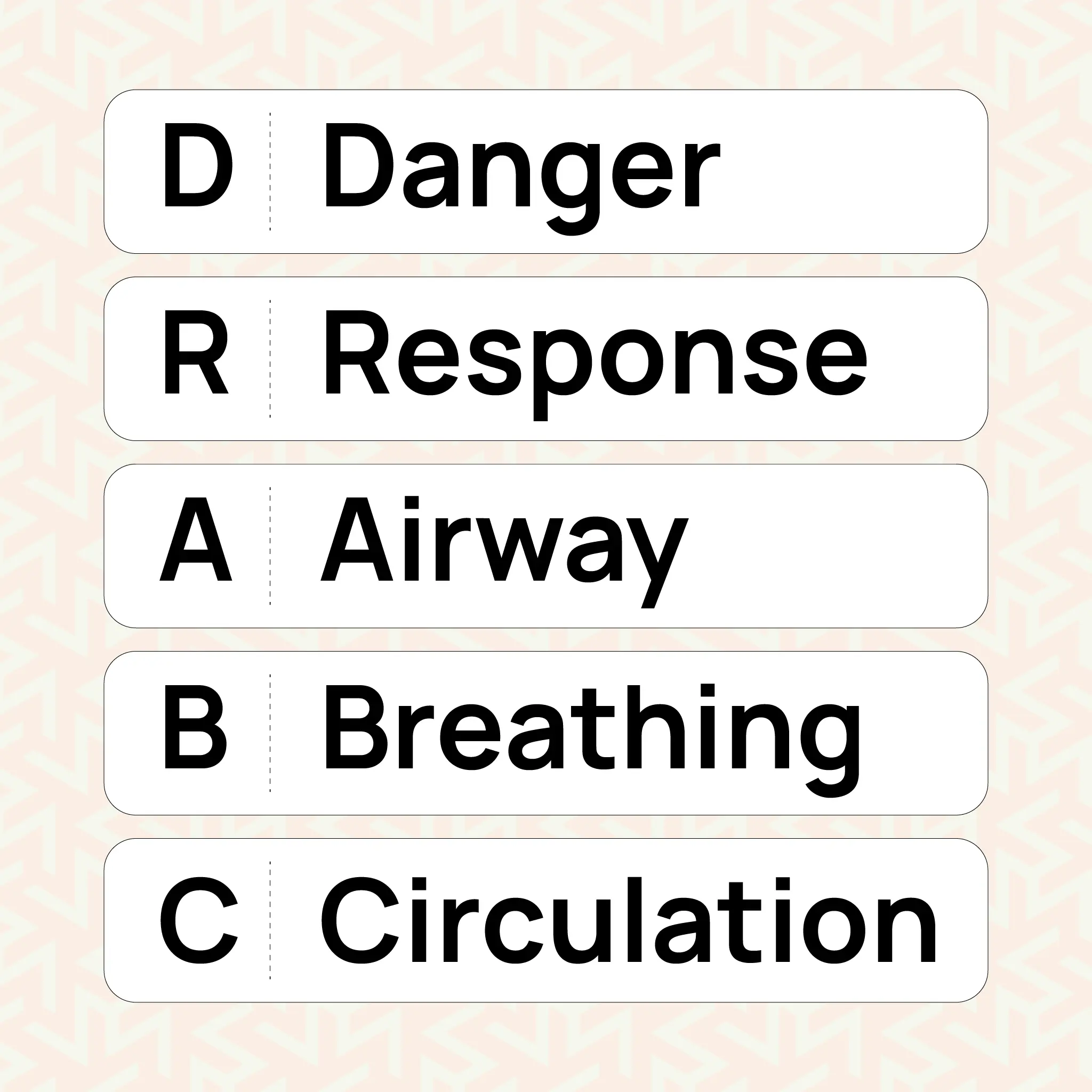
How To Perform the Primary Survey Using the DRABC Steps
When someone is unconscious, their life is in danger. Their airway might be blocked, they may not be breathing, and their blood circulation could have stopped. It is important to follow the primary survey steps to assess casualties in the order of DRABC: Danger, Response, Airway, Breathing, and Circulation. Remember to take quick action because brain damage or even death can happen quickly. A secondary survey is performed after completing the primary steps of first aid.Primary Survey in First Aid Using DRABCWhen helping someone in an emergency, you always start with the primary survey. This means you quickly assess what is happening and the person's needs.The primary survey uses the letters DRABC to help you remember the steps: Danger, Response, Airway, Breathing and Circulation.D - Danger: First, you check for danger around you, such as oncoming traffic or a falling object.R - Response: Next, see if the person responds. Gently shake their shoulders when you talk to them. Are they awake or unconscious?A - Airway: Then, make sure their airway is clear. That means checking if anything is blocking their breathing passage.B - Breathing: After that, check if they're breathing normally. Look, listen, and feel for any signs of breathing.C - Circulation: Finally, check for signs of circulation, like a pulse. This tells you if their heart is beating.Knowing what to do next could help save someone's life, so it's important to follow these steps in the correct order.DRABC StepsDANGER - 1st Step of the Primary Survey DRABCThe first thing to do in an emergency is to check for dangers. Look around to see if anything could harm you, the person needing help, or anyone nearby. This helps you decide if it's safe to go close to someone who needs help.WHAT TO DOIf you see any hazards, like live electricity, try to make the area safe first. For example, if there's electricity, turn it off. Otherwise, use an insulating object, such as wood or plastic, to move the person away. When there is a risk of electricity, do not touch them directly.When you are sure it is safe, you can approach the person who needs assistance. But if it's still not secure, don't go near them. Instead, get emergency medical helpRESPONSE - 2nd Step of the Primary Survey DRABCA person can lose consciousness when something disrupts the brain's normal functioning. Here are some signs that someone might be unconscious:They can't respond to simple questions or touch.They might not realise when they're in danger and can't protect themselves.They can't clear their airways by coughing or swallowing. This means saliva, blood, vomit, or objects could block their breathing tubes. The tongue, which becomes floppy, might also fall back and block the throat.WHAT TO DOFirst, try to determine whether the person is unconscious by asking simple questions or telling them to do something simple, such as "What's your name?" or "Open your eyes," and gently shake them. If they don't respond, they're probably unconscious. Don't shake them vigorously, especially if they're children or babies.Place the individual in the side position, and examine his airway, breathing and pulse.If the unconscious person is breathing and has a pulse, keep them in the side position. Ensure their airway remains open and clear, and monitor their breathing and pulse regularly until medical assistance arrives.�How to Keep the Unconscious Person in a Side PositionThis is also called the lateral, recovery, or stable side position.Kneel beside the person.Straighten their far arm out, perpendicular to their body. Bend their near arm at the elbow and place it across their chest, with the fingers near the far shoulder.Bend their near leg up to the right angle of their body.Hold the shoulder and hip closest to you, gently rolling them onto their side. Their top leg should rest on the ground with the thigh at a right angle and the calf parallel to the straight leg.Rest their uppermost, bent arm on the elbow of the straight arm.the person is a child older than 1 year, gently tilt their head back. Their face should be slightly downwards so any fluid can drain from their mouth, and their tongue can fall forward, away from the airway.Pro Tip:When someone is unconscious, act fast. Use DRABC: Danger, Response, Airway, Breathing, Circulation. Brain damage or death can happen quickly if you delay.AIRWAY - 3rd Step of the Primary Survey DRABCNow, ensure the person's airway is clear. If they're unconscious:Gently tilt their head back and lift their chin with your hand on their forehead.Peep in their mouth to check whether something is obstructing their passageway.What to Do: If the person is responsiveCheck whether anything is obstructing their airway and causing difficulty breathing.If you see something, encourage them to clear it by coughing or using their hands.For adults and kids, you can help them by giving back slaps or abdominal thrusts. For babies under a year old, you can help them with back blows or chest thrusts.Once the blockage is cleared, move on to the next step.What To Do: If the person is responsiveCheck whether anything is obstructing their airway and causing difficulty breathing.If you see something, encourage them to clear it by coughing or using their hands.For adults and kids, you can help them by giving back slaps or abdominal thrusts. For babies under a year old, you can help them with back blows or chest thrusts.Once the blockage is cleared, move on to the next step.What To Do: If the person is unresponsiveIf you see something, try to remove it carefully. But don't put your fingers in their mouth if you can't see anything, as you might push a blockage deeper.BREATHING - 4th Step of the Primary Survey DRABCBreathing should be regular, quiet, and easy. Tilt the head back, watch the chest for movement, and listen for breathing sounds. Do this for about ten seconds to see if air comes from the mouth or nose.WHAT TO DOIf they're unresponsive and not breathing normally, call emergency services immediately. If you know CPR, start with rescue breaths. If not, do chest compressions. If there's an AED nearby, ask someone to bring it.Giving Rescue BreathsMouth-to-mouth resuscitation is the best way to give rescue breaths. Mouth-to-nose resuscitation is used for a jaw injury or if the person needs to be revived in water. Mouth-to-mask resuscitation is done by trained people to avoid direct contact, especially if the person might have a disease like hepatitis or HIV.Typically, 30 compressions followed by 2 rescue breaths are performed in case of abnormal breathing.Mouth-Mouth ResuscitationKneel beside the person.Lay them on their back.Gently tilt their head back and support their jaw with your fingers. Don't press on their throat. Their mouth should be slightly open.Pinch their nose closed. Take a deep breath and cover their mouth with yours, sealing gaps.Keep their head tilted and give 2 breaths, enough to make their chest rise slightly.Start compressions as recommended.When they start breathing again, please put them in the side position and check their airway, breathing, and pulse regularly.Follow similar steps for mouth-to-nose and mouth-to-mask resuscitation but adjust for the different techniques.CIRCULATION - 5th Step of the Primary Survey DRABCIn this step, check the person for any significant bleeding.What To DoIf they're bleeding heavily, try to stop it by pressing directly on the wound with a clean cloth or dressing. Then, call emergency services for help.Stay with them until help arrives. Try to keep them calm and reassure them that help is coming. If they're not bleeding but still unresponsive, put them in the recovery position. This helps keep their airway clear if they vomit.Cardiopulmonary Resuscitation (CPR)If someone's heart has stopped, CPR is vital to keep them alive until help arrives. CPR is exhausting, so it's best if two people can take turns to keep the rhythm right. Remember, even if you're not trained, attempting CPR is better than doing nothing.What To Remember During an EmergencyPlease don't go near the person unless it's safe. Check for danger to yourself, others, and the injured person first.Stay as calm as possible, even though you might feel upset, and try to reassure the injured person.Time is significant.Don't move the person unless you have to for safety reasons.Please don't leave them alone. Get someone to call for medical help straight away. But if you're alone and help won't come soon, you'll need to go for help yourself. Call 999 or the emergency number in your area.Keep messages to the emergency services short: say where you are, what's happened, how many people are involved, and how badly they're hurt.Please don't give them anything to eat or drink.First-Aid TrainingThe Emergency First Aid training course is designed for low-risk environments such as offices and small retail stores. It gives participants the fundamental knowledge and skills to effectively manage emergencies in these settings.Get Trained in All First-Aid SkillsFirst Aid CoursesBook NowRated Excellenton major review sitesFAQsWhat does DRABC stand for in first aid?DRABC in the first-aid primary survey stands for Danger, Response, Airway, Breathing and Circulation.Should you carry out a primary survey on every casualty?Use a primary survey and apply the DRABC steps whenever you witness a casualty, such as an accident or a fall, provided it is safe to approach the injured person.What is the purpose of the primary survey?The purpose of the primary survey is to treat life-threatening casualties quickly. These accidents could include airway blockage, breathing difficulties, shock or a brain injury.How can you assess the responsiveness of a casualty?First, check if the person is unconscious by asking simple questions and gently shaking them. If they don't respond, they're likely unconscious. Avoid shaking them vigorously, especially if they're children or babies. Next, put the person in the side position and check their airway, breathing, and pulse.How many compressions must be performed in case of abnormal breathing?Typically, 30 compressions followed by 2 rescue breaths are performed in case of abnormal breathing.


What is CSCS: Understanding the Construction Skills Certification Scheme
What is CSCS?The Construction Skills Certification Scheme (CSCS) is a widely recognised certification scheme within the UK�s construction industry. CSCS intends to ensure that workers are appropriately qualified and competent for their respective roles.CSCS was established as a limited company on 21 February 1995 in response to the need for a standardised system. Its main objective is to assess and certify the competence of construction workers within the UK. The CSCS collaborated with another well-known construction industry body, the Construction Industry Training Board (CITB). CITB is the industry training board for the construction sector in England, Scotland, and Wales. They have been working together to promote safety and competence in the construction industry.What are the Eligibility Requirements for CSCS Certification?Relevant Qualifications: Candidates must possess the appropriate qualifications and training relevant to their specific construction occupation.For example, if you want to qualify for a CSCS Blue Card, you need a Level 2 NVQ Diploma in the relevant construction occupation. Once you achieve this qualification, you become eligible for a skilled worker CSCS Blue Card.Health, Safety, and Environment Test: In addition to the relevant qualification, you�re required to pass the CITB Health, Safety, and Environment Test. It assesses your knowledge of health and safety practices within the construction industry. The type of CITB test you need to take will depend on the type of card you are applying for. To check out which CITB test is suitable for you depending on your CSCS card type, read our blog, �How to Use the CSCS Card Finder? A Comprehensive Guide.�Industry Experience: There are some levels of certifications, such as the CSCS Black Card, that require you to have a certain amount of experience working in the respective construction rolesDifferent Types of CSCS CardsDifferent types of CSCS cards represent different skill sets, levels of qualification, and job roles within the construction industry.CSCS Green CardThe CSCS Green Card is designed for individuals working in labouring occupations within the construction industry. Green cardholders are capable of working as general labourers, bricklayers, plumbers, and more.To get a CSCS Green Card, you must complete the relevant one-day health and safety training and pass the CITB Health, Safety and Environment (HS&E) Test for Operatives. .second-cta-block .main-heading { font-weight: bold; font-size: 22px; } .second-cta-block .book-now { background: #DF3D52; color: #FFFFFF !important; border-radius: 8px; } .second-cta-block .second-heading { font-size: 17px; } .second-cta-block .card { border: 0 !important; } .second-cta-block .card-body { border: 1px solid #909090; box-shadow: rgba(0, 0, 0, 0.16) 0px 1px 4px; border-top-right-radius: 100px; border-bottom-right-radius: 100px; background: #ECECEC; } .second-cta-block .image-wrapper { height: 134px; position: absolute; right: -100px; top: calc(50% - 67px); /* Center the image vertically */ } .second-cta-block .image-wrapper img { height: 100%; } .second-cta-block .trustpilot-widget { width: 256px; } .cta-heading-section { width: 75%; } @media screen and (max-width:991px) { .second-cta-block { padding-top: 100px; } .second-cta-block .card-body { border: 1px solid #909090; box-shadow: rgba(0, 0, 0, 0.16) 0px 1px 4px; border-radius: 19px; border-radius: 14px; background: #ECECEC; } .cta-heading-section { width: 100%; padding-top: 50px; } .second-cta-block .image-wrapper { height: 134px; right: 0; position: absolute; left: calc(50% - 108px); top: calc(50% - 203px); } } RQF LEVEL 1 COURSE for CSCS GREEN CARD Check the Course Rated Excellent on major review sites CSCS Blue CardThe CSCS Blue Card�is suitable for skilled workers in the construction industry. One thing to note here is that while it indicates that the cardholder is a skilled worker, it does not qualify them for supervisory roles.This CSCS card requires individuals to achieve an NVQ Level 2 or equivalent qualification and pass the CITB Operatives or Specialists HS&E Test.This CSCS card requires individuals to achieve an NVQ Level 2 or equivalent qualification and pass the CITB Operatives or Specialists HS&E Test.CSCS Red CardRed CSCS Cards are designed for apprentices, workers and managers. These cards are temporary and meant to be used while you�re in the process of obtaining the qualifications or training necessary for non-temporary cards.For instance, if you're pursuing a CSCS Blue Card and are currently enrolled on a construction-related NVQ/SVQ Level 2, SVQ at SCQF Level 5 or higher, you can apply for the temporary Experienced Worker Red CSCS Card while you work towards completing your qualification.CSCS Gold CardThe CSCS Gold Card is recommended for skilled workers with supervisory responsibilities. It�s specifically designed for Advanced Crafts and Supervisors. To get this card, candidates must achieve an NVQ Level 3 or 4 qualifications and pass the CITB Health, Safety & Environment Test.CSCS Black CardThe CSCS Black Card is regarded as an advanced card and is typically issued to managers, supervisors, and other senior roles in the construction industry.To obtain a Black Card, individuals must achieve a minimum of NVQ Level 4 qualification, pass the CITB Managers and Professionals HS&E Test, and demonstrate managerial experience.CSCS White CardThe CSCS White Card is the highest level among all CSCS card types. It has two types, i.e. the first type is for Academically Qualified Persons, and the second type is for Professionally Qualified Persons.Academically Qualified Persons hold higher-level qualifications such as HNDs, HNCs, NEBOSH diplomas, or degrees, while Professionally Qualified Persons are professionals like architects, surveyors, and structural engineers.To obtain a White Card, individuals must achieve a minimum of NVQ Level 7 qualification and pass the CITB Managers and Professionals HS&E Test. Moreover, providing evidence of current membership in a professional organisation is obligatory.How to Obtain CSCS CertificationThere are some steps involved in getting CSCS (Construction Skills Certification Scheme) certification. We can explore them below:�1Choose the right CSCS cardDetermine which card is appropriate for your job role and level of experience. The available cards include skilled workers, supervisors, managers, and professionals.�2Pass the relevant CITB� testBook and take the required CITB Health, Safety and Environment Test.��3Complete the appropriate qualificationDepending on the card you're applying for, you may need to complete a relevant construction qualification, such as an NVQ/SVQ or an approved alternative qualification.�4Apply for the CSCS cardApply online, give documents, pay the fee, wait for approval, and receive your CSCS card by mail.Frequently Asked Questions (FAQs)What does CSCS stand for?CSCS stands for Construction Skills Certification Scheme.How long does CSCS certification last?The duration of CSCS certification depends on the type of card obtained. Typically, CSCS cards are valid for five years. However, some specialised or temporary cards may have shorter validity periods. Learn more about How Long Does A CSCS Card Last?What are the costs associated with CSCS certification?The costs associated with CSCS certification include the application fee for the CSCS card and the fee for taking the Health, Safety, and Environment Test. The specific fees vary depending on the level of certification and the type of card required. Additionally, there may be additional costs for any training or courses needed to meet the qualification requirements for the desired CSCS card. Learn more about the CSCS Card Price.How long does it take to receive the CSCS card once certified?Once certified, application approval typically takes around 3 to 5 working days. However, the exact processing time may vary depending on the volume of applications and other factors. In case of any delays or issues, contacting the CSCS helpline or checking the application status online can provide further assistance and updates.Are there any exemptions or alternatives to CSCS certification?While CSCS certification is not a legal requirement, it holds high regard in the construction industry, making candidates with CSCS certifications the preferred choice for employers. As a result, there are no exemptions or substitutes for CSCS certification.Can CSCS certification be revoked or suspended?Yes, CSCS certification can be revoked or suspended under certain circumstances. If a certified individual is found to have violated the CSCS code of conduct, engaged in fraudulent behaviour, or failed to meet the ongoing requirements or obligations associated with the certification, their CSCS card can be revoked or suspended.Wrapping Up: What is CSCS?We hope this blog has helped you understand essential aspects of CSCS (Construction Skills Certification Scheme). This blog has everything from understanding what CSCS is and its significance to exploring the different levels of CSCS cards!


Roles and Responsibilities of a Safety Officer in Construction
Few other sectors have a variety of risk factors that are present in the construction industry. Workers must operate heavy machinery and vehicles, work at heights, conduct routine manual labour tasks, and deal with several hazards at work.While all businesses in the UK are required by law to ensure their workers� health and safety, managers, head contractors, and supervisors must take extra care. Employers can ensure that there is always a qualified person on-site with the knowledge, experience, and abilities required to manage health and safety issues by designating a health and safety officer.Safety officers are essential to maintaining the security of construction sites for workers and visitors. They seek to identify, manage, and reduce hazards that may arise on-site and ensure that all health and safety guidelines are being adhered to.The functions and responsibilities of health and safety officers will be discussed in more detail in this article. Additionally, we�ll examine current health and safety challenges and trends in the building sector and offer connections and other helpful resources for anyone interested in learning how to work as a health and safety officer in the construction industry.Roles of a Safety Officer in ConstructionEven though each workplace is unique, all construction sites have several functions and responsibilities for health and safety officers.These responsibilities include:Risk Assessments and Site InspectionsOn a construction site, the health and safety officer should conduct routine inspections and assessments to recognise and assess potential dangers. Then, they must seek to reduce these hazards and implement health and safety policies and practices that safeguard employees.Compliance MonitoringAccording to health and safety authorities, supervisors and employees must follow all applicable health and safety laws, rules, and procedures. Additionally, a health and safety officer needs to ensure that any supplies or equipment providers are according to the law.Accidents & Incident InvestigationThe health and safety officer must carry out a comprehensive investigation after every accident or near-miss incident. The inquiry aims to determine what caused the incident or accident and find evidence of equipment malfunctions, legal violations, or procedural mistakes. The health and safety officer may need to speak with witnesses and, if feasible, the victim or victims throughout the interview process.The officer should write a report after the investigation is finished and, if necessary, submit it to the appropriate authorities. Health and safety practices should be improved using the report�s data to prevent future mishaps or accidents.Record Keeping and ReportingKeeping thorough records of all risk assessments, site inspections, investigations, and compliance infractions is one of a safety officer�s key responsibilities on a construction site. The health and safety officer must generate and submit reports as necessary to authorities, including the recently established Building Safety Regulator (BSR).Organising Health & Safety TrainingThe health and safety officer should make arrangements for staff at all levels to acquire the necessary, approved health and safety training to safeguard workers� health and safety and maintain compliance with rules.Health and safety officers must ensure they keep up with all relevant standards and governmental laws due to the wide variety of jobs that are constantly done on any construction site. Health and safety officers should frequently take refresher training courses and ensure they are aware of any changes to pertinent legislation to maintain their expertise.Growing Concerns for Safety in ConstructionOne of the largest industries in the UK economy is construction. According to recent official statistics, 3.1 million workers, or 9% of the entire UK workforce, are employed in construction-related jobs. With a 6%+ contribution to the UK�s gross domestic product (GDP), the building sector is another important economic driver.The construction business is one of the most hazardous to work in and one of the largest. According to the most recent data from the Health and Safety Executive (HSE), there were just under 40 fatal injuries to construction employees, 61,000 non-fatal injuries, and 74,00 health issues related to their jobs.Common Hazards in ConstructionThe majority of fatal injuries occurred were as a result of height falls. Slips, trips, and falls were the main contributors to non-fatal injuries. Health and safety officials in the construction sector continue to prioritise ensuring that every worker has a solid and secure platform on which to carry out their tasks.The following are the most typical risks construction workers encounter:Falling from a great heightStumbling and slippingBeing hit by or pinned beneath moving itemsSyndrome of hand-arm vibrationAccidents involving materials and manual labourTunnelling trenchesDiseases caused by asbestosElectricity risksMaterials and fibres in the airSafety Trends in ConstructionHealth and safety officials increasingly rely on modern technology to reduce dangers in the construction sector and make job sites safer for employees. Wearable devices that track a worker�s blood pressure, pulse rate, and oxygen levels to prevent weariness or warn managers of mishaps are among the upcoming safety trends in the construction sector.Additionally, sensors built into wearable technology can alert employees when they are too close to machinery or in danger of falling. Geo-location tracking can give managers access to real-time information about specific employees� whereabouts and quicker accident response times.Artificial intelligence (AI) software can now give video-based real-time object recognition to identify potential threats on-site. Drones and automated robots can monitor construction sites and inform health and safety officials of any emerging dangers or incidents.On websites, e-Checklists are also growing in popularity. These make record-keeping easier, guarantee best practices are followed, and enable on-the-job training.Construction Safety Officer TrainingA degree is not required to work as a health and safety officer. To ensure you can do the work well, you will need experience, knowledge, and training. There are several methods to advance your skill set if you are a health and safety officer or are thinking about becoming one.Many climb the ladder to the position over time, developing the necessary abilities while working in the field. Training programmes like IOSH Safety, Health & Environment for Construction Site Managers or some of the more in-depth courses provided by the National Examination Board in Occupational Safety and Health (NEBOSH) can help to assist this further.There are also shorter courses available to aid in developing your understanding of the systematic risks and duties you will need to do as a health and safety course.Anyone working in construction should take the following online health and safety training courses that Hurak provides:Health and Safety Training for ManagersManual Handling Training CourseAsbestos Awareness TrainingFire Marshal Training
How To Become A Construction Labourer?
The most important place to start is as a labourer if you want to pursue a career in construction. You can enhance your skill set, get experience on a building site, and advance to more senior roles by working as a labourer. However, how can you become a labourer, what is the job�s responsibility, and what employment documents are required? Let�s look at this�What is a Site Labourer?Workers who are beginning their careers on a building site are referred to as labourers. Most construction workers start entry-level jobs like this, giving them their first taste of the business.Although becoming a site labourer still requires specific qualifications (which we will explain later in the blog), these occupations are far more accessible for people wishing to start their first job or change careers. These jobs on a construction site don�t require the same amount of education, training, or expertise as others that call for a greater experience.What does a construction labourer do?Depending on the type of company they work for and the project they are working on, labourers may be assigned various responsibilities to complete on the job site. These jobs could consist of, but not be limited to:Building wallsLaying foundationsOrdering equipmentExcavating pitsMaintaining recordsUsing devices and toolsLabourers are expected to have a reasonable degree of fitness and be in good physical shape due to the practical nature of the job. The work in this position can be challenging but rewarding, and there are many chances to progress your career and switch to other areas that interest you.Which card do you need to be a labourer?You must have a current CSCS card for your position to enter the majority of UK construction sites. These cards are the industry standard for demonstrating your suitability to carry out your duties safely on the job site. Although CSCS cards are not legally required, most businesses will insist that their employees have them to ensure site safety.A CSCS labourer card, often known as the CSCS green card or simply the CSCS green card, is required for a labourer�s position. These documents serve as proof to managers, supervisors, and employers that you have the skills and training required to execute your work safely.Visit our blog, �CSCS Green Labourers Card and How to Apply�, for a detailed explanation of the CSCS card and its application. .second-cta-block .main-heading { font-weight: bold; font-size: 22px; } .second-cta-block .book-now { background: #DF3D52; color: #FFFFFF !important; border-radius: 8px; } .second-cta-block .second-heading { font-size: 17px; } .second-cta-block .card { border: 0 !important; } .second-cta-block .card-body { border: 1px solid #909090; box-shadow: rgba(0, 0, 0, 0.16) 0px 1px 4px; border-top-right-radius: 100px; border-bottom-right-radius: 100px; background: #ECECEC; } .second-cta-block .image-wrapper { height: 134px; position: absolute; right: -100px; top: calc(50% - 67px); /* Center the image vertically */ } .second-cta-block .image-wrapper img { height: 100%; } .second-cta-block .trustpilot-widget { width: 256px; } .cta-heading-section { width: 75%; } @media screen and (max-width:991px) { .second-cta-block { padding-top: 100px; } .second-cta-block .card-body { border: 1px solid #909090; box-shadow: rgba(0, 0, 0, 0.16) 0px 1px 4px; border-radius: 19px; border-radius: 14px; background: #ECECEC; } .cta-heading-section { width: 100%; padding-top: 50px; } .second-cta-block .image-wrapper { height: 134px; right: 0; position: absolute; left: calc(50% - 108px); top: calc(50% - 203px); } } RQF LEVEL 1 COURSE for CSCS GREEN CARD Check the Course Rated Excellent on major review sites div.wpforms-container-full .wpforms-form label.wpforms-error{ display: none; } /* The Modal (background) */ .ebook-modal { display: none; /* Hidden by default */ position: fixed; /* Stay in place */ z-index: 1; /* Sit on top */ padding-top: 100px; /* Location of the box */ left: 0; top: 0; width: 100%; /* Full width */ height: 100%; /* Full height */ overflow: auto; /* Enable scroll if needed */ background-color: rgb(0,0,0); /* Fallback color */ background-color: rgba(0,0,0,0.4); /* Black w/ opacity */ } div.wpforms-container-full .wpforms-form input[type=submit], div.wpforms-container-full .wpforms-form button[type=submit], div.wpforms-container-full .wpforms-form .wpforms-page-button { border: 1px solid #ddd; font-size: 1em; font-family: inherit; padding: 9px 31px; background: #0f7c90; color: white; /* display: flex; */ /* width: 100%; */ position: absolute; bottom: -418px; right: -150px; /* margin: auto; */ justify-content: center; align-items: center; } /* Modal Content */ .ebook-modal-content { display: flex; flex-direction: column; justify-content: space-between; align-items: baseline; background-color: #fefefe; margin: auto; padding: 31px; border: 1px solid #888; width: 30%; position: relative; } /* The Close Button */ .ebookModal-close { color: #aaaaaa; float: right; font-size: 20px; font-weight: bold; cursor: pointer; position: absolute; right: 21px; top: 10px; } .ebookModal-close:hover, .ebookModal-close:focus { color: #000; text-decoration: none; cursor: pointer; } div.wpforms-container-full { margin: 0px auto 20px;!important } .ebookModal-header{ color:#0f7c90;font-size:30px;margin:0 30px } @media (max-width:576.888px){ .ebook-modal-content { width: 90%; } } @media (max-width:768.888px){ .ebook-modal-content { width: 70%; } .ebookModal-header{ font-size:20px!important; margin:0 } } @media (min-width:768.888px){ .ebook-modal-content { width: 50%; } } @media (max-width:1024.888px){ div.wpforms-container-full .wpforms-form input[type=submit], div.wpforms-container-full .wpforms-form button[type=submit], div.wpforms-container-full .wpforms-form .wpforms-page-button { width: 100%; position: static; } .ebookModal-header{ margin:0; font-size: 25px; } } @media (max-width:1280.888px){ .ebookModal-header{ margin:0; font-size: 30px; } } @media (min-width:992px){ .wpforms-submit-spinner{ max-width: 100%!important; position: absolute!important; top:250px!important; left:150px!important; transform: translate(-50%,-50%)!important; } @media (min-width:1280.888px){ div.wpforms-container-full .wpforms-form input[type=submit], div.wpforms-container-full .wpforms-form button[type=submit], div.wpforms-container-full .wpforms-form .wpforms-page-button { border: 1px solid #ddd; font-size: 1em; font-family: inherit; padding: 9px 31px; background: #0f7c90; color: white; /* display: flex; */ /* width: 100%; */ position: absolute; bottom: -380px; right: -150px; /* margin: auto; */ justify-content: center; align-items: center; } } Download our CITB Operatives and Specialists Test Prep Book for free! × [wpforms id="14869" title="false"] #myImg{ cursor: pointer; } How to get a Green Labourers CSCS card?You must fulfil several requirements to be granted a green card.Throughout this brief multiple-choice exam, you will be evaluated on your understanding of the fundamental concepts of working safely in a building environment. Before continuing, you must have passed the Operatives CITB Health, Safety, and Environment (HS&E) test. This must have been finished within two years before your card application.Additionally, you need a more comprehensive qualification demonstrating your suitability for site work. These consist of:CITB Health and Safety Awareness CourseRQF Level 1/SCQF Level 4 Award in Health and Safety in a Construction EnvironmentSCQF Level 5 REHIS Elementary Health and Safety CertificateNOCN/CSkills Awards Construction Health and SafetyIOSH Safety, Health and Environment for Construction WorkersNPORS Site Safety Awareness CourseAt Hurak, we offer Level 1 Health & Safety in a Construction Environment as an additional e-learning option (Leading to CSCS Green Card). This is an online e-learning course, as the name would imply, that will give you the credentials you need to apply for a CSCS green card. You can complete this online course at your speed and leisure from the comfort of your home.Whatever qualification you pursue will determine how quickly you can obtain your CSCS green card.Although the CITB Health & Safety Awareness, IOSH, and NPORS courses are only valid for five years, they often take less time to complete. This indicates that you will need to do a refresher course every five years. Although it will take longer, the RQF Level 1 qualification is valid for life and does not need to be renewed.You must apply to CSCS once you have met the requirements for your card. Any of the following choices are available to you:Phone: 0333 344 1293Online: CSCS Card Application (the online service is advised because it is convenient, quick, and always available).Your CSCS card will be mailed to you the following business day after your application is approved, and most cards arrive between 3-5 days after the approval. Please contact CSCS if your card does not come within 10 days. You don�t have to wait for your physical card to activate. Once your application is complete, the CSCS card checker immediately uploads learner information, allowing your employers to verify your credentials without needing to see your actual card.
Benefits of an SSSTS Training
Who is SSSTS training for?The SSSTS training is delivered online over two days and includes case studies and assessment activities. It is intended for all supervisors, team leaders, and anybody else in a supervisory capacity on a construction site.Delegates will learn about the most recent and current health and safety measures to protect personnel on construction and civil engineering sites, regardless of whether they have just started in a supervisory role or have a basic level of awareness.By the end of the course, students will have a thorough understanding of the difficulties in managing construction sites, as well as practical knowledge about safeguarding workers there, the most recent health and safety regulations, recognising hazards and how to reduce risk, and putting welfare and safety best practises into practice.What will I learn in the SSSTS course?To receive an SSSTS certificate, participants must attend both days of the course and pass a test that consists of multiple-choice and written questions. The following topics will be covered in the course:A supervisor's job description and dutiesThe UK's judicial systemmethods for risk assessment1974's Health and Safety at Work ActOccupational health, including developing a stronger health programme.Work at heights: evaluation and safety precautionsRegulations for Construction (Design and Management) from 2015Presentation abilitiesThe Reporting of Injuries, Diseases Regulations 2013SSSTS Refresher CourseAn SSSTS certificate will be given upon completion of the course and is valid for 5 years, provided a pass rate of 80% has been attained on the exam. To ensure that participants stay current with the most recent rules and legislation, you must take a one-day SSSTS refresher course every 5 years to renew your certificate. You must do this before your current certificate expires.Please visit our website to reserve a spot or for more information about this course.Why Should I Enrol in an SSSTS Course?You could benefit greatly from a Site Safety Supervisors Training Scheme (SSSTS) training. You will have the chance to obtain health and safety knowledge essential for a supervisor role by taking a course like this.1.� Short and Flexible CoursesThis type, of course, can be finished quite fast, making it the perfect choice for those with busy schedules. Additionally, flexible date options enable you to enrol in your course at the appropriate time. If an evening or weekend course makes more sense for you, you can choose that.Because they believe they don't have enough time, people frequently postpone this training. If you have previously engaged in this behaviour, you should consider when you would be able to enrol in an SSSTS course and how long it might take.2. Take a Class Anywhere, AnytimeYou have the option of enrolling in an online SSSTS course. You should be able to choose a course that suits you because these are provided all around the country. Additionally, there is a lot of flexibility regarding class timings because so many possibilities are available.It can be difficult to attend a course like this if you have to travel far. However, obstacles like these won't be there if you enrol in an SSSTS course. You'll be able to choose the ideal location close to you for your class and will be able to complete the course.3. Specialised CoursesThe SSSTS course is extremely specialised and created to give you the crucial knowledge you will need. The risks that may be present on the job site, toolbox lectures, and several health issues will all be covered.These courses are tailored exclusively for supervisors. You will be able to take a simplified course and pick up essential knowledge. Not only may finishing a course like this open up new employment prospects for you, but it can also offer you the information you need to perform better at work.4. Accredited CourseYou could be apprehensive about the calibre of the course you plan to enrol in. If you're concerned about this, you should know that the SSSTS training offered by Hurak is CITB-accredited. Since the courses are regulated, you can be sure they will all meet a particular level of quality.What are the benefits of the SSSTS course?In addition to learning new skills and advancing their current ones, participants will complete an industry-recognised qualification in the construction and civil engineering industries, ensuring they have the knowledge and skills necessary to manage a site safely and successfully. The advantages of enrolling in an online SSSTS course include:Industry-recognised qualification: Individuals who have earned their SSSTS certification may attest that they possess the necessary knowledge and abilities to promote health, safety, and welfare best practices on any construction or civil engineering site.Career Advancement - acquiring and advancing to a career in a supervisory function and upgrading to a more senior management role is made much easier with an SSSTS qualification. Indeed, certain employers may need an SSSTS certificate for managerial or higher positions.Builds knowledge and skills - ideal for those advancing into supervisory roles because an SSSTS course will increase their knowledge and range of abilities.Develops a better understanding - improves knowledge of the environmental, health, welfare, and safety regulations for operating a construction or civil engineering site in the UK.The CITB SSSTS training courses offered by Hurak can be taken online. As an alternative, we may design an SSSTS training programme that is unique to the needs of your business.
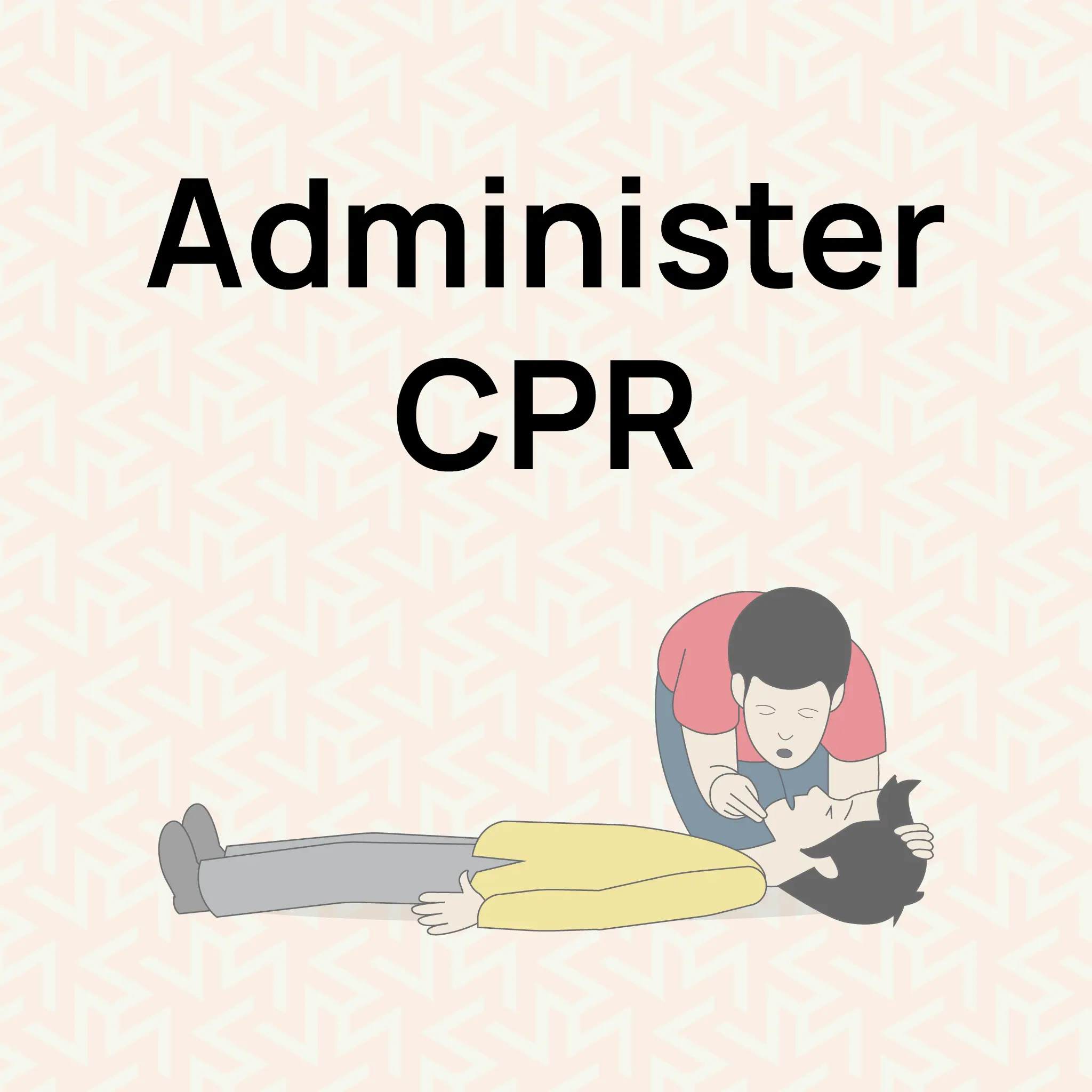
How To Administer CPR
Medical emergencies that require CPR can occur unexpectedly in any location. According to the Resuscitation Council UK, most cardiac arrests (72%) occur in the home or workplace (15%). Everyone needs basic CPR knowledge, as this skill could save someone's life.What is Cardiopulmonary Resuscitation (CPR)?Cardiopulmonary Resuscitation (CPR) is a critical procedure in first aid. It involves artificial respiration, which supplies oxygen to the lungs, and artificial circulation, which maintains blood flow throughout the body.CPR's primary objective is to provide an appropriate supply of oxygenated blood to reach the brain and other organs.This prevents tissue damage until the heart can resume normal function or professional medical assistance arrives. It is important to note that CPR is most effective when chest compressions are performed continuously.Why Perform CPR: Understanding Cardiac ArrestWhen someone experiences cardiac arrest, their heart stops beating properly, blocking blood flow to the brain. The person becomes unresponsive and stops breathing.Although a cardiac arrest marks a state of clinical death, applying CPR on time and a defibrillator presents a chance to restore a regular heartbeat.Common causes of cardiac arrest include:heart attackssevere injurieselectrical shockdrug overdosedrowningsuffocationWhen administering CPR, you are responsible for the casualty's cardiovascular and respiratory function. This procedure slows down the progression of their life-threatening condition till professional medical help arrives to take control of the situation.When to Use CPRCPR is needed when someone is unresponsive and not breathing normally. It is also required when a person is not breathing at all. For instance, if someone is rescued from drowning, they may need CPR to help them start breathing again. Similarly, if someone is severely choking, bleeding heavily, or in shock, CPR may be necessary.If you encounter an unresponsive person who has collapsed, you should perform a primary survey using the DRABC steps. This involves checking if the person is breathing by placing your cheek near their mouth.Observe their chest for any movement for about 10 seconds. If the person is unconscious but breathing normally, you should put them in the recovery position. However, if they are unconscious and not breathing properly, you should be prepared to administer CPR.How to Administer CPR on an AdultFirst, assess the safety of the scene. Then, check the person's responsiveness by tapping and asking if they are okay. Conduct a primary survey by gently tilting the head back to make sure the airway is clear.Check for breathing for 5 to 10 seconds by looking, listening, and feeling for breaths.How To Do a CPR Compression on an AdultIf the person is not breathing or their breaths are weak (known as agonal breaths), place your hands in the middle of their chest with your shoulders directly above your hands. Keep your elbows straight.Agonal Breathing:Agonal breathing occurs when someone's breathing is irregular and gasping, often making odd sounds. It can sometimes occur during a cardiac arrest. Bystanders may think the person is breathing normally. Treating someone with agonal breathing as if they are not breathing at all is essential.Give 30 chest compressions - press down firmly and quickly!Use the heels of your hands to push straight down on the breastbone, about 5-6 cm (2-2.4 inches) deep.Release pressure entirely after each compression to let the chest come back up. Keep a steady rhythm, aiming for 100 to 120 compressions per minute. Count out loud to keep track.How To Breathe into an Adult�s Mouth During CPRNext, if you are trained, tilt the person's head back and lift their chin to open the airway. Pinch the soft part of their nose closed. If you have a barrier device, use it. Then, give two breaths into the person's mouth, each lasting about one second, enough to raise the chest.This makes one cycle of 30 compressions followed by 2 breaths.�Keep doing CPR until an AED arrives, the person starts responding, or you are too tired to continue. When the defibrillator arrives, apply it to the person immediately.How to Administer CPR on a ChildLook around the area where the casualty has occurred.Check to see if the child responds. If not, get medical help and an AED if possible.If you are alone and do not have a phone, do CPR for 5 cycles (around 2 minutes), then go for help. If you can, bring the child with you.Next, check the airway and breathing for between 5 and 10 seconds.Get Trained in All First-Aid SkillsFirst Aid CoursesBook NowRated Excellenton major review sitesHow To Do a CPR Compression on a ChildIf the child is not breathing or breathing well, place your hands in the middle of their chest and press down firmly. Keep your elbows straight. Depending on the child's size, you can use one or two hands.Give 30 chest compressions: Push firmly and quickly!Use the heels of your hands to press straight down on the breastbone. Each compression should be about a third of the chest depth or 5 cm (2 inches) deep.�After each compression, release pressure completely to let the chest back up. Keep a steady rhythm, aiming for 100 to 120 compressions per minute. Count out loud to keep track.How To Breathe into a Child�s Mouth During CPROnce you have performed compressions, open the airway by tilting the head back and lifting the chin. Use a barrier device if you have one. Then, give two breaths into the child�s mouth, just enough air to raise their chest.This makes one cycle of 30 compressions followed by 2 breaths.Keep doing CPR until an AED arrives, the person starts responding, or someone else takes over. If you get too tired, stop. Apply the AED as soon as it comes.How To Administer CPR for Babies - Infant CasualtyPerform a scene survey of where the casualty occurred. Check if the baby responds. Gently tap their feet. If there is no response, get medical help and an AED if possible.If you are alone and do not have a phone, do CPR for 1 minute, then get help. If you can, carry the baby with you.Next, open their airway by touching their forehead and gently tilting their head back. Use the fingertips of your other hand to lift their chin.Put your lips around the infant�s mouth and nose and blow gently for one second until their chest rises. Remove your mouth and wait for your chest to fall back to normal.Repeat this for a total of five rescue breaths.How To Do a CPR Compression on an InfantPlace two fingers just below the nipple line on the baby's chest.Press down on the breastbone about 4 cm (1 1/2 inches), around one-third of the chest depth.Do 30 chest compressions followed by 2 breaths (30:2)Keep doing CPR until an AED is used, someone else takes over, or you are too tired. Use the AED as soon as it arrives.How To Breathe into an Infant�s Mouth During CPRBabies have big heads compared to their bodies, which can cause their airways to close. When babies lie on their backs, their heads tilt forward, closing their airway further.When performing CPR, you might find putting a thin pad under the patient's shoulders useful to help keep the airway open. But do not spend time looking for one.Types of CPRDepending on the circumstances and the number of people involved, CPR can be of different types:Chest compression-only CPRDispatcher-assisted CPRHow to take over CPR from another rescuerTwo-rescuer CPRChest Compression-Only CPRCPR guidelines emphasise recognising emergencies early and the importance of calling 9-1-1 if you find someone collapsed and unresponsive.Compression-only CPR means doing chest compressions without mouth-to-mouth breaths. Give solid and quick compressions at the centre of the chest, aiming for 100 to 120 compressions per minute. Although this does not give the person oxygen, it is an option for people not trained in traditional CPR or those unsure of their ability.Dispatcher-assisted CPRIn some areas, when you call 9-1-1, the dispatcher can guide you through the emergency until medical help arrives. Put your phone on speaker and place it near the person's head. Keep talking to the dispatcher while you help the person.Hand-Over CPR: Taking Over CPR from Another RescuerOffer your assistance and let the rescuer know you are trained in CPR. Make sure medical help has been called.Do 30 chest compressions followed by 2 breaths. Use your barrier device if you have one.Two-Rescuer CPRIf two trained rescuers are available, they can work together to do CPR on someone who needs it. There are three good reasons why it is better for two people to do CPR:Doing CPR can be tiring. As the first aider gets tired, their chest compression quality might worsen. If two people share the job of compressing the chest, they can keep doing good compressions for longer.With two people doing CPR, they can take turns doing chest compressions and giving breaths. This means the compressions do not have to stop as often.When two people work together, they can encourage and help each other during a difficult situation. One person stays by the casualty's head to do CPR with two rescuers. He keeps the airway open and breathes after every 30 compressions. The other person does the chest compressions.To keep the compressions effective, they should switch roles every 5 cycles of compressions and breaths, about every 2 minutes.ConclusionIf someone is not responding and breathing normally, CPR can help them survive until paramedics arrive. So, everyone needs to know how to do CPR, even if you still need to be formally trained in first aid. If you are not qualified, you should do chest compressions only for adults. But for children and babies, it is best to call for help first and then do CPR. Either way, doing CPR increases the chances of the person surviving.
Differences between a Banksman and Slinger Signaller
Who is a Banksman?A banksman, also known as a traffic marshal, directs and supervises vehicles like excavators, bulldozers, cranes, and dump trucks used on construction sites to carry personnel and building materials. Modern sites may use software for dump trucks to help banksmen monitor movement and improve efficiency. Marshals ensure the safe guidance of the vehicles and the people as it drives around the building site.On a construction site, a banksman works with plant operators and vehicle drivers to design safe traffic arrangements, communicate correctly to guide vehicle movement and manage traffic flow. The banksman should be aware of the hazards and risks associated with on-site cars and conduct their tasks to minimise risk.To get a comprehensive overview of banksman, read our blog.Who is a Slinger Signaller?A slinger signaller is a specific type of banksman. A slinger signaller�s main job is supervising and directing crane operators� instructions during lifting operations. Their job entails working with the lifting team and crane operators.A crane operator has a limited view of what is happening on the ground when seated in the cab. The slinger signaller provides clear instructions in the form of prescribed hand signals to assist them in safely lifting, moving, and setting down the crane�s load.SimilaritiesBoth banksman and slinger signaller must be aware of the risks and hazards in lifting operations.They tend to the people and equipment and make the site safer by minimising risks.They communicate using hand signals and radio equipment as instructed in Health and Safety (Signs and Signals) Regulations 1996.Both of them direct crane operations.The uniforms they wear are the same.DifferencesA banksman directs traffic and vehicles around a workplace.A signaller works in the lifting department only.Production of modular buildings is also a part of a slinger�s job description.How to become a Signaller?Enrol and complete Hurak�s Traffic Banksman course.Pass the multiple-choice question exam at the end of the course.Receive a 3-year valid certificate and ID card after passing the exam..How to become a Signaller?1. Must have accomplished the Health, Safety and Environment (HSE) exam for Operators within two years of enrolling for an accredited Slinger Signaller course.2. Enrol and complete an accredited training course on Slinger Signaller. The two most popular and demanded courses are:Construction Plant Competence Scheme (CPCS)National Plant Operator Registration Scheme (NPORS)Offers accredited training courseOffers accredited training courseWidely recognisedBecoming an alternative to CPCSExpensiveCost EffectiveIt takes a longer duration to completeCompletes within ten daysCertified centresFlexible learning3. Apply for a Red Trained Operator Card.
Shortage of Labour in the UK Construction Industry
Nowadays, it is nearly difficult to read the news without learning about a shortage of products and workers. According to recent statistics, the number of open positions in the UK has surpassed 1 million for the first time in history, illustrating how difficult it is for some industries to fill such positions with competent candidates.Construction is a sector where labour shortages are causing significant project delays. It has never been easier to get work if you want to start a career in construction. This blog examines how to find the training for this profession.Why is there a labour shortage in the construction industry?The Office for National Statistics reports over 33,000 open positions in the construction industry, which is a 20-year high. Several reasons, including Brexit, the Covid-19 pandemic, and an ageing workforce, have been cited as the causes.Nearly every business and every nation have been influenced by Covid-19. Even though it continued for the bulk of the pandemic in the UK, construction work has suffered significantly over the past 18 months. Due to the virus and national restrictions, many projects have been difficult to finish, and workers have had trouble getting the training they need to work legally on sites. The so-called �pingdemic� and COVID-related illnesses have raised absenteeism rates, leaving businesses understaffed.Brexit has significantly impacted the industry. EU nationals working in the UK construction business have decreased by 42% since 2017. This is partly related to tougher immigration regulations that hinder workers from remaining in the nation and from immigrating. This has caused a considerable imbalance in the number of workers and industry knowledge.Half a million construction employees are anticipated to retire in the following 10 to 15 years, contributing to the industry�s ageing workforce. This results in fewer personnel and the loss of a great deal of expertise and knowledge. To help the business deal with the loss of experienced personnel when they retire, it is crucial for both new and existing employees to receive on-the-job upskilling.What are the effects of the skill shortage in the construction industry?Cost is the main impact of the skills gap in construction. Recruitment costs increase when it is challenging to locate employees because construction companies must put more money and effort into the search. Using Free Recruiting Software can help streamline this process, but in its absence, businesses may be forced to pay over market rates to acquire scarce skills, which may increase inflated compensation.Another problem with temporary staffing is paying excessive salaries to employees. While waiting for a long-term solution, corporations frequently have little alternative but to pay a substantially higher fee for temporary personnel as a stop-gap. Organisations in the UK paid an additional �2.2 billion in 2020 compared to 2019 due to short-term deficits. There is also the added expense of retraining employees with lower qualifications to the appropriate level.For construction companies, declining employment has serious ramifications, but accepting contracts is later unable to fulfil an impact on their standing in the sector. Both projects and construction businesses are impacted by the skills gap in the industry, which can lead to projects running over schedule and budget.How do I acquire a job in construction?There has not been a better moment to start a career in construction, so if you are interested in the field, these worker shortages may work to your benefit. The ideal place to start is an entry-level position, such as a construction labourer.On building sites, construction labourers perform a variety of fundamental tasks. These might involve bricklaying, excavation work, laying foundations, etc.You must possess a CSCS Green Card to enter the job site and perform the duties of a construction labourer. .second-cta-block .main-heading { font-weight: bold; font-size: 22px; } .second-cta-block .book-now { background: #DF3D52; color: #FFFFFF !important; border-radius: 8px; } .second-cta-block .second-heading { font-size: 17px; } .second-cta-block .card { border: 0 !important; } .second-cta-block .card-body { border: 1px solid #909090; box-shadow: rgba(0, 0, 0, 0.16) 0px 1px 4px; border-top-right-radius: 100px; border-bottom-right-radius: 100px; background: #ECECEC; } .second-cta-block .image-wrapper { height: 134px; position: absolute; right: -100px; top: calc(50% - 67px); /* Center the image vertically */ } .second-cta-block .image-wrapper img { height: 100%; } .second-cta-block .trustpilot-widget { width: 256px; } .cta-heading-section { width: 75%; } @media screen and (max-width:991px) { .second-cta-block { padding-top: 100px; } .second-cta-block .card-body { border: 1px solid #909090; box-shadow: rgba(0, 0, 0, 0.16) 0px 1px 4px; border-radius: 19px; border-radius: 14px; background: #ECECEC; } .cta-heading-section { width: 100%; padding-top: 50px; } .second-cta-block .image-wrapper { height: 134px; right: 0; position: absolute; left: calc(50% - 108px); top: calc(50% - 203px); } } RQF LEVEL 1 COURSE for CSCS GREEN CARD Check the Course Rated Excellent on major review sites What is a Green CSCS card?Workers must present the CSCS Green Card, also known as the CSCS Labourer Card, to enter the worksite and carry out their responsibilities. It demonstrates that the bearer possesses the necessary health and safety knowledge to work safely in a construction setting. Even though it�s not strictly necessary, most construction companies will insist employees have this card to enter the site and perform their duties. Read our guide on the Labourer Card for more information.Do I need an NVQ to obtain a CSCS Green Card?No, an NVQ is not necessary to get a CSCS Green Card. But you need to complete our Level 1 Award in Health and Safety in a construction environment course, to obtain the CSCS green card in the most straightforward possible manner. This one-day session will give participants all the essential information they need to keep safe on the job site. After completing the course, apply for the CSCS Green Card.