

What is a CSCS Card and How to Get One?
If you work in construction or related industries in the UK, you've probably heard of the CSCS card. However, it can all seem overwhelming at first with so many different types and application processes. This blog will provide all the information about this highly in-demand card.What is a CSCS Card?A CSCS card is issued by the Construction Skills Certification Scheme (CSCS) and is considered a valuable asset for anyone working within the construction industry. It demonstrates the holder's commitment to safety and professionalism.It proves that the holder has gained the knowledge, qualifications, and training to perform their role on the construction site safely and efficiently.What is CSCS?The Construction Skills Certification Scheme (CSCS) is a widely recognised certification scheme within the UK�s construction industry. It aims to ensure that all workers have the appropriate qualifications, skills, and knowledge to do their jobs safely on construction sites.CSCS also issues different types of CSCS cards, widely acknowledged across the UK construction industry. Contractors or employers commonly require these cards when hiring workers for construction projects.Is a CSCS Card a Legal Requirement?A CSCS card is not a legal requirement for employees to gain access to construction sites. However, major contractors are increasingly making it a common requirement, as it proves their proficiency as construction workers.That�s why it�s often listed as a key requirement in construction-related job advertisements.If you intend to work in the construction industry, having a CSCS card is beneficial, as it will improve your job prospects.Why is a CSCS Card Important?As the construction industry has become more regulated, many contractors and employers require employees to hold a CSCS card. It helps enhance your professional profile, making you more eligible for a job. With this card, you may have unlimited job opportunities available.Furthermore, a CSCS card is designed to promote safety on construction sites. It helps employers ensure that every worker on the site has gained knowledge and training in health and safety.Types of CSCS CardsThere are numerous types of CSCS cards, each designed to certify different skill levels and competence in the construction industry. Each card represents a specific occupation or role within the construction sector. These roles can vary from labourers and apprentices to supervisors and managers.The type of card you should get depends greatly on your job role and level of experience.CSCS Green CardA CSCS green card is specifically for those working in labouring occupations within the construction industry, such as general labourers, bricklayers, cleaners, carpenters, and plumbers. You must complete a CSCS Green Card Course for Labourers to get this card. .second-cta-block .main-heading { font-weight: bold; font-size: 22px; } .second-cta-block .book-now { background: #DF3D52; color: #FFFFFF !important; border-radius: 8px; } .second-cta-block .second-heading { font-size: 17px; } .second-cta-block .card { border: 0 !important; } .second-cta-block .card-body { border: 1px solid #909090; box-shadow: rgba(0, 0, 0, 0.16) 0px 1px 4px; border-top-right-radius: 100px; border-bottom-right-radius: 100px; background: #ECECEC; } .second-cta-block .image-wrapper { height: 134px; position: absolute; right: -100px; top: calc(50% - 67px); /* Center the image vertically */ } .second-cta-block .image-wrapper img { height: 100%; } .second-cta-block .trustpilot-widget { width: 256px; } .cta-heading-section { width: 75%; } @media screen and (max-width:991px) { .second-cta-block { padding-top: 100px; } .second-cta-block .card-body { border: 1px solid #909090; box-shadow: rgba(0, 0, 0, 0.16) 0px 1px 4px; border-radius: 19px; border-radius: 14px; background: #ECECEC; } .cta-heading-section { width: 100%; padding-top: 50px; } .second-cta-block .image-wrapper { height: 134px; right: 0; position: absolute; left: calc(50% - 108px); top: calc(50% - 203px); } } RQF LEVEL 1 COURSE for CSCS GREEN CARD Check the Course Rated Excellent on major review sites CSCS Red CardA CSCS red card is a temporary card assigned to a construction site worker. Each Red Card has a different validity ranging from 6 months to 5 years. With this card, you can start working on-site while working towards getting a skilled CSCS card.CSCS Blue CardThe CSCS blue card is specifically for construction workers who are experts in skilled work such as insulation, roofing, road building, etc.CSCS Gold CardThe CSCS gold card is an advanced-level card intended for Advanced Crafts and supervisors within the construction industry. This CSCS Card is designed for experienced professionals to acknowledge their ability to supervise construction personnel.CSCS Black CardThe CSCS black card is for experienced professionals indicating that the cardholder has gained the knowledge, skills, capability, and experience to manage high-level tasks in a construction environment.CSCS White CardThe CSCS white card is the highest level among all the CSCS Cards. There are two types of white CSCS cards: one for the Academically Qualified Person and the other for the Professionally Qualified Person.How to get a CSCS Card?Getting a CSCS card is a simple process. Check out the following steps.Step 1: Select a Card Relevant to Your RoleSelect a card relevant to your role within the construction industry. Use the card finder to discover the card best suited for your role.Step 2: Complete the Required QualificationComplete the required CSCS qualification corresponding to the chosen card. For example, if you want to get a Labourer Card, you must complete a CSCS green card course.Step 3: Pass the CITB Health, Safety and Environment TestThe next step is to pass the relevant CITB Health, Safety and Environment (HSE) test.Step 4: Apply for the CardApplying for the card is simple. You can apply through an online application, over the phone, or through Hurak.Your card will be sent to you by post. It's important to note that CSCS does not accept postal applications anymore.CSCS Card RequirementsDifferent CSCS cards have different requirements. However, some common requirements are:Getting the required training.Passing the CITB HS&E Test.Relevant experienceSeveral steps are necessary to get a CSCS card. Firstly, it's essential to undergo training to acquire the knowledge and skills required for your desired card, which can be accomplished by taking a suitable course for the desired card.Another requirement is to pass the CITB Health, Safety, and Environment Test. Furthermore, relevant qualifications and experience are necessary to get your desired card. For instance, getting a CSCS blue card requires an apprenticeship and an SVQ/NVQ qualification.Price of CSCS CardThe price of a CSCS card is �36 for all types. However, before applying for the card, you must pay extra for the required qualifications and the CITB test.What CSCS Card Do I Need?There are many CSCS cards, each represented by a different colour, such as green, red, blue, black, gold, and white, making it difficult to find the right one. However, using a tool like a CSCS card finder can be useful.How Long Does It Take To Get a CSCS Card?When your application has been approved, your CSCS card will be posted to you the next working day. Most cards arrive at their requested destination within 3-5 days of application approval. If your card does not arrive within ten days, please contact CSCS.The processing time for a CSCS card depends on the type of card you have applied for and the volume of applications being processed at the time of your application. Make sure you keep track of your application.You can contact CSCS via phone or a website regarding your application status.Free CSCS CardThere are several ways to get a free CSCS Card. You could contact Local Bodies (LEPs), get support from B&CE trust, apply for the Grant, and more.How to Check the Validity of a CSCS CardThere are several ways to check the validity of your CSCS card.CSCS Smart Check AppThe CSCS card checker app aims to improve the card-checking process and combat fraudulent activity related to card ownership in the construction industry.Access Your CSCS Online AccountThe most convenient method for individuals or employers is to use their CSCS Online account.Call the Contact CentreYou can also call CSCS on 0344 994 4777 any weekday (excluding bank holidays) from 8 a.m. to 6 p.m.Virtual CSCS CardsOnce your application is approved and payment has been taken, your virtual card will appear in the �My CSCS� app. The virtual card is similar to your physical card.CSCS Smart Check AppSite managers can use the CSCS Smart Check app on their smartphones or tablets to digitally verify the information stored on the virtual card.CITB Test / CSCS Card TestOnce you have your desired CSCS qualification, you must pass the relevant CITB Health, Safety, and Environment (HSE) test. There are different types of CITB tests, and you must pass the relevant test for the card you are applying for.What is the CITB Health, Safety and Environment Test?The CITB Health, Safety, and Environment Test is a computer-based test with multiple-choice questions that evaluate the candidate�s knowledge of construction health, safety, and environmental concerns.It�s valid for two years and costs �23.50. Its primary objective is to assess a candidate�s understanding of critical safety measures in a construction setting while improving their comprehension of the essential elements contributing to an efficient and successful construction site.Get your CITB test booked with Hurak for a hassle-free experience.How Long Does a CSCS Card Last?Most CSCS cards are only valid for five years. However, some have different validity periods based on their type. It's important to note that while some cards cannot be renewed after expiration, others can.For instance, the CSCS Red Card for experienced technical or supervisor cards is only good for three years, while the Green CSCS Labourer Card is valid for five years.Renewal ProcessHaving an up-to-date CSCS card is important to staying compliant and continuing to work in the construction industry. Therefore, you must apply for renewal before it expires.If you want to apply online, there is a five-step CSCS card renewal process. First, create a CSCS online account and apply for a card.Enter your details and preview your completed application before submission. Finally, pay the application fee to complete the process.Lost CSCS CardIt can be annoying and worrisome to lose your card since it is necessary to be able to work on construction sites. Getting a replacement CSCS card is the solution to this issue.To apply for a replacement card, visit the "Card Application" page on the CSCS website and select the appropriate card type. Enter your details and information about your previous card.Provide a reason for the replacement and upload the necessary documents, including a passport-style photo. Pay the �36 fee and review your application before submitting it.Fake CSCS CardA fake CSCS card is a fraudulent representation of a valid card. This card is made illegally by people willing to work in the construction industry. Recognising a fake card is critical because employing someone with one could have major consequences in the future. I've compiled a list of essential checks, which you need to ensure the cards have.To verify a card, ensure the name matches the ID and check formatting, validate the expiry date, confirm the unique registration number with CITB, check for the smart card microchip symbol, verify the passport-style photo, look for the hologram, and use the CITB card checker for validation.CSCS Card Availability in the UKCSCS Card Availability in the UK varies slightly between regions due to differing regulations and certification bodies.CSCS Card in England & WalesIn England and Wales, the Construction Skills Certification Scheme (CSCS) issues cards to individuals who have demonstrated their competence in the construction industry through training and assessment. These cards are widely recognised across the UK construction sector.CSCS Card in IrelandIn Ireland, the equivalent certification scheme is Safe Pass. While the CSCS card is not directly applicable in Ireland, Safe Pass serves a similar purpose: providing proof of health and safety awareness for construction workers.CSCS Card in ScotlandThe Construction Skills Certification Scheme (CSCS) also operates in Scotland. It offers CSCS cards in Scotland to those who have completed the necessary training and assessment to work safely in the construction industry. These cards align with Scottish regulations and standards.Wrapping Up: All About CSCS CardHopefully, this blog has provided valuable information about CSCS Cards and getting one. Whether you're a construction worker, contractor, or employer, possessing a CSCS Card ensures a safe and productive working environment.If you don�t have a CSCS card yet and are considering working in the construction industry, I encourage you to get one as soon as possible. By doing so, you'll be better equipped to advance your career and contribute to a safer and more efficient construction industry.Thank you for reading, and we wish you all the best in your career in the construction industry.

Essential Skills in a Security Guard
IntroductionSIA Security guards are crucial for protecting people, homes, and other assets from harm. Guards are equipped with many abilities to respond appropriately to emergencies and monitor properties. Guards can respond quickly to several incidents or circumstances and safeguard an area�s integrity. In this article, we will go through the responsibilities of a security guard in maintaining a property�s safety, some of their abilities, and how to improve them.Essential Security Guard SkillsAn SIA security guard needs a variety of skills to adequately secure a space. Some of these skills are innate in security guards, while others are learned through certification courses or training sessions. You can become a more efficient SIA security officer by being conscious of your talents and abilities and purposefully learning new ones. The majority of security guards should have the following essential skills:CommunicationThe ability to communicate is a crucial life skill and can enhance regular security guard operations. You can direct and assist a facility�s operations with verbal and written communication skills. Additionally, this can assist in avoiding challenges or problems brought on by unclear communication. Here are some other talents that can aid in improving your communication abilities:Active listeningReading AbilitiesCondensing informationKnowledge of Security OperationsResearching and implementing security operations can help maintain a consistent presence and enhance a location�s general security. It is possible to ensure that all security employees support everyday tasks to the same standard by staying updated with SIA security operations or standards. This can hasten emergency or crisis reactions as all staff members may react similarly and offer equivalent assistance. The following abilities can aid in the development of your understanding of security operations or procedural skills:Critical thinkingAnalytical skillsResearching abilitiesMulti-TaskingYou might carry out several jobs simultaneously throughout a day. Managing several duties at once is crucial because doing so can increase daily production and the security team�s effectiveness. For instance, to preserve the integrity of a facility�s entry point, you might simultaneously conduct the two vital jobs of screening guests and keeping an eye on the door. The following abilities can assist you in improving your multi-tasking capacity:Organisational skillsTask prioritisingTime managementSurveillanceSurveillance is a significant aspect of an SIA security guard; learning this ability is crucial to enhancing your security capabilities. You can enhance your ability to spot criminal activity or security incidents by honing your surveillance skills. Closed-circuit television (CCTV) feeds for risk assessment and live observation are two frequent surveillance methods. The following abilities can aid in the development of your surveillance skills:Attention to detailSituational awarenessQuick reflexesEmotional ControlBe mindful of your reactions and practise emotional restraint because some security scenarios can be unpleasant or highly emotional. By doing so, you will be better able to support others during similar circumstances. By imagining potential security situations and making predictions about your reactions, you can acquire insight into your reactions. This might assist you in identifying your emotional reactions and strategies for controlling or managing them. The following competencies can aid in the development of your capacity for emotional restraint:Self-awarenessProfessionalismAttention to DetailPaying attention to detail can aid in maintaining a facility�s integrity and surveillance skills. In addition to keeping an eye on a building�s physical operations, security officers may also check paperwork and identification to make sure only the right persons are allowed admission. Maintaining the security of the building and the safety of all the individuals you protect can be facilitated by having the ability to swiftly check and spot discrepancies in documents or identity. The following abilities can assist you in honing your attention to detail:Knowledge of accurate documents or identificationCritical thinkingAlertnessCustomer ServiceOn a regular basis, SIA security guards contact a variety of people, which can call for great customer service abilities in order to uphold an area�s security. De-escalating situations and maintaining a secure and regulated environment can be accomplished by maintaining a positive but authoritative presence. You can build solid client or interpersonal interactions and preserve long-lasting professional partnerships with the aid of effective customer service skills. You can enhance your customer service abilities by developing some of the following skills:Communication skillsConflict resolutionProblem-solving Get your Legal SIA Licence by signing up for our SIA Security courses Security Courses Book Now Rated Excellent on major review sites Develop the Skills of a Security GuardWhile some security guards may already have the expertise, many methods exist to expand your skill set and enhance your surveillance capabilities. Formal courses and certificates are valuable tools to advance and validate your security guard experience and sharpen your security abilities. Some ways to improve your security guard abilities are:Higher EducationWhile merely a general education may be required for some security guard professions, earning a two- or four-year degree will help you become more knowledgeable about security. Your skill set may be expanded by pursuing a degree in criminal justice, law, psychology, or homeland security, among other fields of study. Each of these degrees can help you learn useful skills that will make you a more capable security expert. Once you've built up your skills and experience, it's essential to review your CV and tailor it for the specific roles you're targeting.CertificationsYou might consider getting certificates to hone and establish your security knowledge before finishing your higher schooling. Given that some security certifications may be obtained without a formal education, this course may be more appealing. Among the certifications you might think about obtaining are:First aid certificationBasic life support certificationSecurity guard qualificationFirearm certificationFire safety certificationCPR certificationDoor supervisor qualificationCCTV operator certificationGet an SIA LicenceMost security officers hold a front-line Security Industry Authority (SIA) licence, regardless of higher education or certification. But before you apply for an SIA Licence, you need to complete the training associated with it. Choose from a variety of SIA Security courses that Hurak offers. With the help of an SIA licence, you can improve your abilities in personal safety, conflict resolution, fire safety, patrolling, and fundamental security duties. You might think about keeping your driver�s licence up to date or obtaining these extra licences in addition to your SIA licence:Door supervisorClose protectionCash and valuables in transitPublic space surveillanceVehicle immobiliserKey holderVehicle removal and clampingCCTV operationComplete on-job TrainingAttending on-the-job training with a security company is another excellent option for developing your abilities. This can help you hone the abilities you may have picked up in training or while attending a university. You can become a more effective guard by using the valuable experience and talents you gained throughout this time, and you might also acquire some insight into some skills you might want to develop.
CSCS Card Types: Figure Out Which One Is Right For You
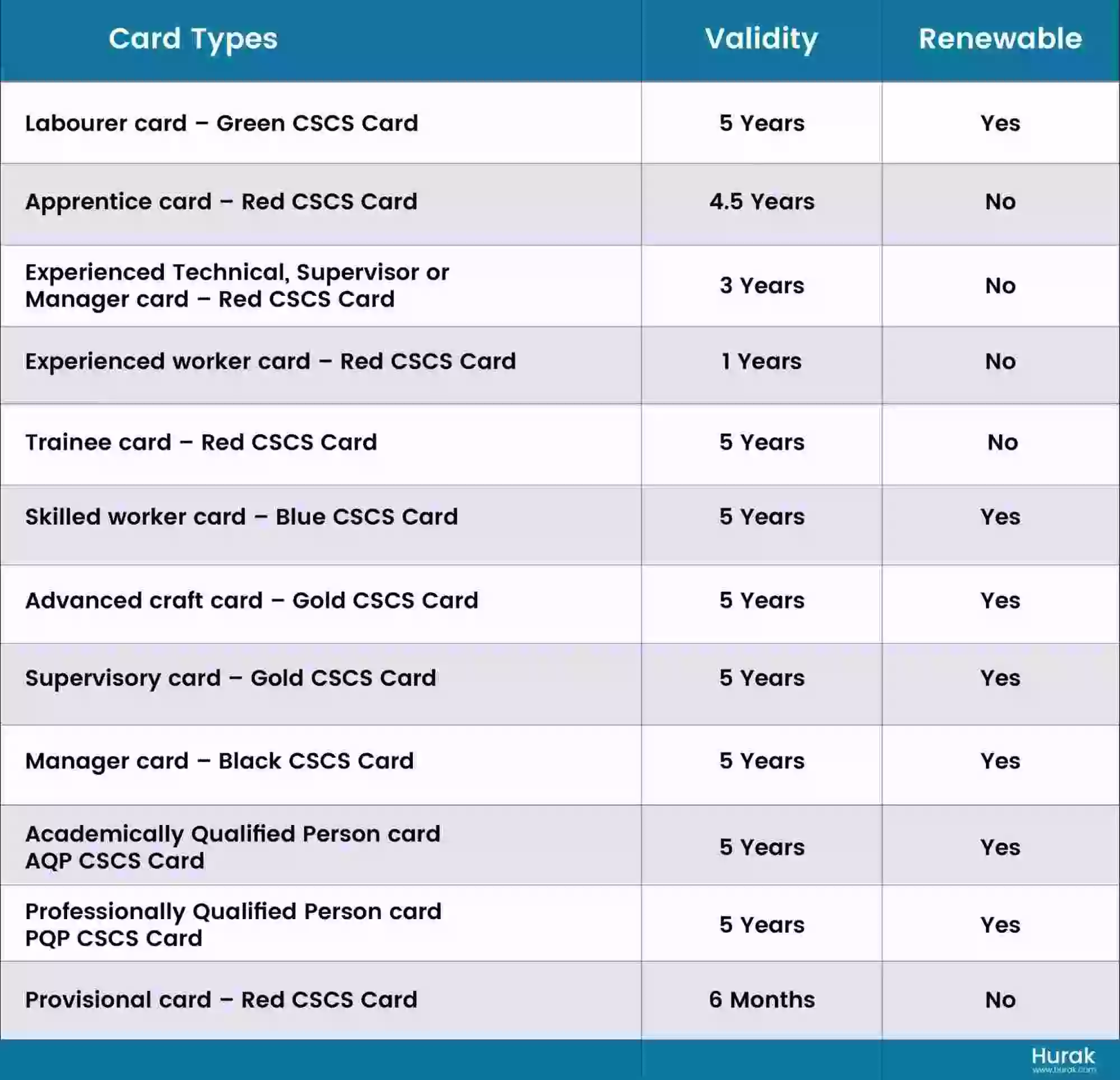
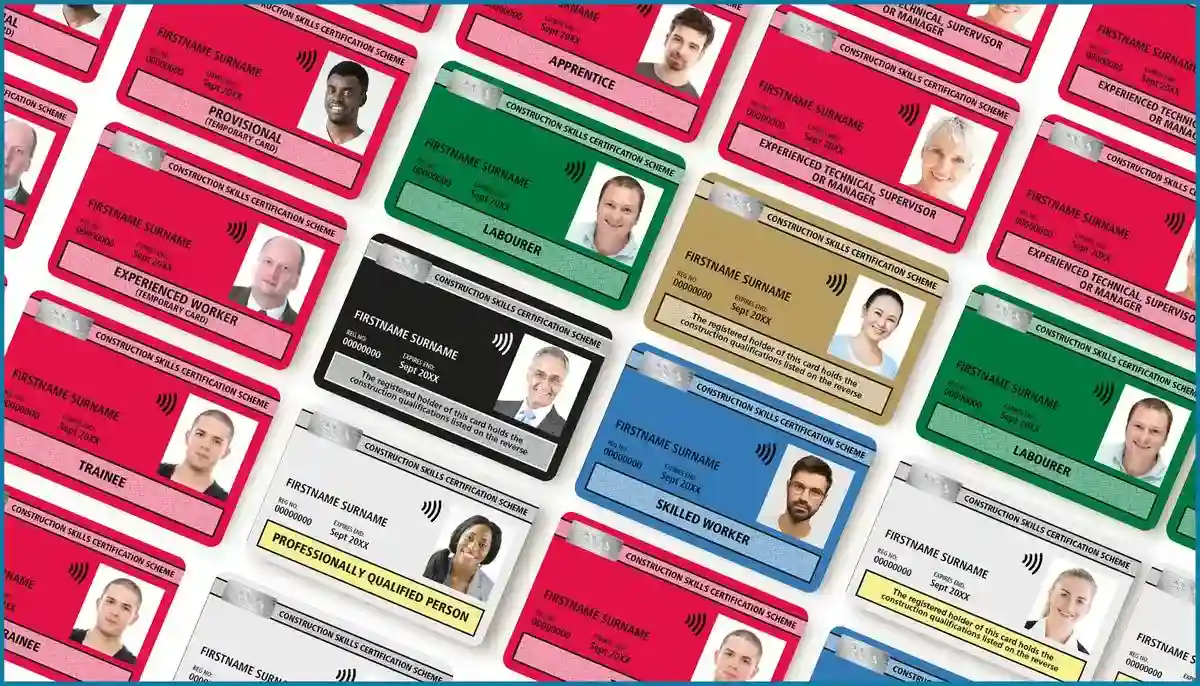
If you're looking to work in the construction industry in the UK, you may have heard of a CSCS card. There are many types of CSCS cards and it might be daunting at first to understand which one is right for you.In this blog post, we'll take a closer look at the different types of CSCS cards available. So whether you're just starting out in the industry or looking to progress your career, keep reading to find out more about this essential certification.Before moving on to discussing the CSCS card types, let�s first learn about CSCS.What is CSCS? CSCS stands for�Construction Skills Certification Scheme. It�s a recognised certification body in the UK, that approves its holders for their occupational competence in the construction sector. CSCS has made it easier for employers to employ construction workers, who have undergone appropriate training and relevant qualifications to work on a site.To learn more about CSCS, check out our blog or visit their official site.What is a CSCS Card?A CSCS (Construction Skills Certification Scheme) card is a type of certification that confirms an individual's qualifications and training required to work in the UK�s construction industry. The card acts as evidence that the holder has obtained the required knowledge, skills, and understanding to carry out their job safely and competently on a construction site.Despite the fact that holding a CSCS card is not a legal requirement, the demand for CSCS cards is very high in the UK�s construction industry. In fact, many construction and building sites won�t even hire workers without a CSCS card. This fosters a safety culture in a construction site, minimising the chances of accidents and injuries.CSCS Card Types: All You Need to Know About the Different CSCS CardsThere are different CSCS cards, each reflecting the different levels of skill and competence in the construction industry. Each card represents a different occupation or role within the sector, ranging from labourers and apprentices to supervisors and managers.These cards are categorised based on their colours (Green, Blue, Gold, White, Black, and Red). Some cards have been withdrawn by CSCS, they can still be used as long as they are valid, but cannot be renewed.Deciding on which card specifically aligns with your career objectives might be tough for you. Hopefully, the table below can help you to decide which card to go for.CSCS Green CardA CSCS Green Card is designed for individuals working in labouring occupations within the construction industry, such as general labourers, cleaners, plumbers, carpenters and bricklayers. Having this card shows that the individual has a basic level of knowledge and understanding of health and safety in the workplace. It�s one of the most popular cards amongst the list of CSCS Card types.It is not a legal requirement, but many construction employers require it as proof of a worker�s competence and commitment to health and safety in the workplace. So, if you hold a Green Card, you have an advantage over others and you�re more likely to get employed.Eligibility Criteria to Get a CSCS Green CardTo be eligible for a CSCS Green Card, you must:Achieve an RQF Level 1 Award in Health and Safety in a Construction Environment (or recognised alternative)Pass the CITB Operatives HS&E TestApply for a CSCS Green CardThe first step to getting a CSCS Green Card is to enrol on a relevant qualification. At Hurak Learning, we offer the CSCS Green Card (Labourers Card) Course that prepares you well for the next step, the CITB Operatives HS&E Test. It�s a multiple-choice test, valid for two years. After having completed the relevant qualification and having passed your CITB Operatives HS&E test, you can then apply for a CSCS Green Card on the official website with proof of your qualification and a CITB test ID number.Taking a free CSCS mock test is recommended before you attempt a real CITB HS&E test. It will help you test your knowledge and evaluate if you�re fully prepared to attempt the real test.Validity of a CSCS Green CardThe CSCS Green Card is valid for five years and must be renewed before it expires. To renew the card, the individual must retake the CITB Operatives HS&E Test and provide evidence of any additional qualifications they have obtained since their last application.Note, some qualifications, like the Level 1 Award in Health and Safety in a Construction Environment do not expire. So to renew your CSCS card if you have completed the Level 1 H&S course in the past you just need to pass the CITB Operatives HS&E Test and apply for the card. .second-cta-block .main-heading { font-weight: bold; font-size: 22px; } .second-cta-block .book-now { background: #DF3D52; color: #FFFFFF !important; border-radius: 8px; } .second-cta-block .second-heading { font-size: 17px; } .second-cta-block .card { border: 0 !important; } .second-cta-block .card-body { border: 1px solid #909090; box-shadow: rgba(0, 0, 0, 0.16) 0px 1px 4px; border-top-right-radius: 100px; border-bottom-right-radius: 100px; background: #ECECEC; } .second-cta-block .image-wrapper { height: 134px; position: absolute; right: -100px; top: calc(50% - 67px); /* Center the image vertically */ } .second-cta-block .image-wrapper img { height: 100%; } .second-cta-block .trustpilot-widget { width: 256px; } .cta-heading-section { width: 75%; } @media screen and (max-width:991px) { .second-cta-block { padding-top: 100px; } .second-cta-block .card-body { border: 1px solid #909090; box-shadow: rgba(0, 0, 0, 0.16) 0px 1px 4px; border-radius: 19px; border-radius: 14px; background: #ECECEC; } .cta-heading-section { width: 100%; padding-top: 50px; } .second-cta-block .image-wrapper { height: 134px; right: 0; position: absolute; left: calc(50% - 108px); top: calc(50% - 203px); } } RQF LEVEL 1 COURSE for CSCS GREEN CARD Check the Course Rated Excellent on major review sites CSCS Blue Card The CSCS Blue Card is designed specifically for skilled construction workers who have experience in services such as roofing, insulation, road-building, etc. Eligibility Criteria to Get a CSCS Blue Card To be eligible for a CSCS Blue Card, you must: Achieve an NVQ Level 2 or equivalent qualification Pass the CITB Operatives or Specialists HS&E Test Apply for a CSCS Blue Card The first step to getting a CSCS Blue Card is to obtain NVQ Level 2 or equivalent qualification relevant to the job you aim to do at a construction site. Next, you must pass the CITB Operatives or Specialists HS&E Test, which is valid for two years. Validity of a CSCS Blue Card The CSCS Blue Card is valid for five years and must be renewed before it expires. An individual must retake the CITB Operatives or Specialists HS&E Test before applying for the card.CSCS Gold CardThe CSCS Gold Card is for experienced professionals. It�s an advanced-level card intended for Advanced Crafts and supervisors within the construction industry. This card is proof that the holder of this card has the capability to supervise personnel in a construction environment.Eligibility Criteria to Get a CSCS Gold CardTo be eligible for a CSCS Gold Card, you must:Achieve an NVQ Level 3 or 4 qualificationPass the CITB Health Safety & Environment TestApply for a CSCS Gold CardThe first step to getting a CSCS Gold Card is to obtain an NVQ Level 3 or 4 qualification. After that, you must pass the relevant CITB Health, Safety & Environment Test. This test is valid for two years so you must apply for CSCS Gold Card before the test expires, or you will have to pass the exam again.Validity of a CSCS Gold CardThe CSCS Gold Card is valid for five years. To renew the card, you will have to pass the CITB Health Safety & Environment Test again before applying for it.CSCS Black CardThe CSCS Black Card is for experienced professionals. It indicates that the holder of this card has the knowledge, skills, capability, and experience to manage high-level tasks in a construction environment. It�s given to individuals who have achieved an advanced level qualification in the field of construction and also have managerial experience.Eligibility Criteria to Get a CSCS BlackTo be eligible for a CSCS Black Card, you must:Achieve a minimum of an NVQ Level 4 qualificationPass the CITB Managers and Professionals HS&E testApply for a CSCS Black CardTo obtain the CSCS Black Card, it is mandatory to pass the CITB Managers and Professionals HS&E test. This particular test requires a higher level of knowledge compared to others, as it�s meant for people who intend to lead others on a site. Therefore, a more comprehensive understanding of health and safety regulations and procedures is required.Validity of a CSCS Black CardThe validity of a CSCS Black Card is five years, after which it will need to be renewed. It is important to keep the Black Card valid, as it�s often a requirement by employers, and failure to renew the card can result in loss of work opportunities.CSCS White CardThe CSCS White Card is the highest level among all the CSCS Card types. There are two types of white CSCS cards: one for the Academically Qualified Person and the other for the Professionally Qualified Person.An Academically Qualified Person is someone who has obtained a higher level qualification in their area of expertise, such as HNDs, HNCs, CIOB Certificates, a NEBOSH diploma, or a degree. Examples of professionals who fall under this category are electrical and civil engineers.The second type is a Professionally Qualified Person, whose job role may require occasional visits to a construction site, but they are not restricted to a particular construction site. Professionals who fall under this category include architects, surveyors, and structural engineers.Eligibility Criteria to Get a CSCS White Card (Academically Qualified Person & Professionally Qualified Person)To be eligible for both types of CSCS White Cards, you must:Achieve a minimum of an NVQ Level 7 qualificationPass the CITB Managers and Professionals HS&E Test or an approved alternativeApply for a CSCS White CardApplicants of a Professionally Qualified Person White CSCS Card must also provide evidence of their current membership with a professional organisation at a level that CSCS accepts. They can submit any of the following documents:A membership cardA receipt of payment for membershipA membership certificateAn up-to-date letter or email from the professional bodyA clearly dated screenshot showing your current membershipValidity of a CSCS White CardThe White CSCS Card expires after five years. However, the Professionally Qualified Person card cannot be renewed and when expires, you have to apply for a new card just like you applied for the first time.CSCS Red CardsThere are a few different types of Red CSCS Cards. The following table will help you understand the different typesTypes of CSCS Red Card�Suitable ForValidityTraineeTrainees registered to complete a construction-related qualification.5 yearsApprenticeIndividuals who have started a CSCS-recognised apprenticeship framework4 years and 6 monthsProvisionalWorkers serving their probationary period.6 monthsExperienced WorkerWorkers enrolled on a Level 2 NVQ or higher qualification and have on-the-job experience.1 yearExperienced Technical, supervisor or ManagerExperienced technical, supervisor or managers enrolled on a Level 3 NVQ or higher qualification and have on-the-job experience.3 yearsTypes of CSCS Red CardsA CSCS Red Card is a temporary card assigned to a construction site worker. Each Red Card has a different validity ranging from 6 months to 5 years. One of the benefits of having this card is that you can still start working on site while working towards getting a skilled CSCS card.�The CSCS Red Cards cannot be renewed. Once you complete the required qualification, you can progress to a skilled Blue Card or Black Card.There are 5 types of Red Cards, and you can check out each type in detail below and figure out which one is best suited to you.Trainee CardThe CSCS Trainee Card allows you to temporarily join a construction site and continue your academic qualification in parallel. It�s valid for 5 years, and you must complete the course during this time period and progress to a CSCS skilled card.�To apply for this card, you must enrol in a recognised qualification and pass the CITB HS&E test.�Apprentice CardThe CSCS Apprentice Card is for workers who have started a CSCS-recognised apprenticeship framework. It�s valid for 4 years and 6 months.To apply for this card, you must complete an apprenticeship in a construction setting and pass a CITB test within the last two years.Provisional CardThe CSCS Provisional Card is for individuals who are new on a job and serving their probationary period. For this reason, this card is valid only for 6 months and you cannot renew it once it expires.To apply for this card, you must not have obtained any other CSCS card.Experienced Technical, Manager or Supervisor CardAs the name suggests, this card approves your skill level to be employed as an experienced technical, manager, or supervisor on the construction site. It�s valid for 3 years.To apply for this card, you must have an NVQ Level 3 or higher qualification and at least one year of on-job experience in the last three years.�Experienced Worker CardThis card is for experienced workers with at least a year of experience at the construction site. The Red Experienced Worker Card is often confused with the Experienced Technical, Manager or Supervisor Card. However, there�s a difference between the two as this card is only valid for a year and requires an NVQ Level 2 or higher qualification.To apply for this card, you must have an NVQ Level 2 or higher qualification and at least a year of experience at the construction site.How Much Does a CSCS Card Cost?The cost of getting a CSCS card is �36, which is the same for all the CSCS cards. This fee is paid to CSCS (Construction Skills Certification Scheme). The CITB health, safety, and environment test is a mandatory requirement for getting a CSCS card and it costs �23.50. Together, the total cost of your CSCS card application and CITB test is �58.50.Checkout our blog on CSCS card price to learn more about cost breakdown.Frequently Asked QuestionsHow long does it take for a CSCS card to be approved?The time it takes for a CSCS card to be approved can vary depending on the type of card being applied for and the application method used. Typically, once your application is approved, your CSCS card will be dispatched to you on the following working day. Most cards are delivered to their specified location within 3-5 working days after the approval of the application.How do I apply for a CSCS card?You can apply for a CSCS card in different ways, such as online, by post, or over the phone. The application process for a CSCS card involves providing evidence of your qualifications and passing a required health and safety test. We recommend applying online, as this is the quickest way.Is it mandatory to have a CSCS card to work in a construction company?While having a CSCS card to work on-site is not legally required, many construction companies and sites require their workers to obtain a valid CSCS card as a measure of competence and safety.Can I get a CSCS card without any qualifications?You cannot obtain a CSCS card without any qualifications, as the application process for all the cards requires evidence of your skills, qualifications, and health and safety knowledge.Are there any exemptions or discounts available for CSCS card fees?To know about the exemptions or discounts on the CSCS card fee, check the CSCS website.Can I use my valid CSCS card in other countries?CSCS cards are only recognized in the UK construction industry. However, some international construction companies may accept CSCS cards as evidence of knowledge, competence, and experience.What happens if I lose my CSCS card?In that case, you can apply for a replacement card online or by post. There is a fee for replacement cards, and it may take several days to get a new CSCS card.
Guide to Use Fire Extinguishers
Every workplace must have fire safety measures in place. The proper procedures and training can mean the difference between life and death. Over three years have passed since the Grenfell Tower catastrophe resulted in at least 72 fatalities. As a result of this tragedy, more building owners and businesses are reviewing their fire safety procedures.Fire extinguishers are among the most essential pieces of apparatus in the event of a fire. Extinguishers can help stop a fire from spreading farther and lessen the harm and damage it can do. Staff members must understand how, when, and where to utilise extinguishers for them to be helpful, though. and the various training alternatives, including Wikipedia page creation services, are covered in today's blog.Why do we need different types of fire extinguishers?We require several fire extinguishers to tackle the various causes of fire. Before selecting an extinguisher, evaluating the �kind� of fire is crucial because utilising the incorrect class could worsen the issue. For instance, employing water-based extinguishers on electrical fires may further damage the electronics, resulting in risky reactions like fire spread or even explosions.Each fire extinguisher serves a specific purpose and is usually employed to put out fires involving particular materials. When choosing fire extinguishers for your office, the environment and the sorts of fires that are most likely to occur, must be taken into account. For instance, if you live in a neighbourhood with plenty of automobiles, you should consider extinguishers that can put out fires caused by combustible liquids like oil or gasoline.Six classes of fireThe various fire classes can be divided into six distinct groupings, each of which responds differently to the various extinguisher types:Class A Ordinary combustiblesThese are flames caused by solid substances like wood, paper, and plastic. The majority of extinguishers work on this type of fire.Class B Flammable liquidsThis group includes fires caused by oil, grease, and gasoline.Class C Flammable gasesFlammable gases like methane or propane are particularly harmful because the fire and the gas can undergo strong chemical reactions.Class D Flammable metalsChemical reactions can result in flammable metals like titanium and magnesium, just like in Class C fires.Class E Electronic equipmentAny fire from electronic equipment falls under this category. Water-based extinguishers are not appropriate here because electricity and water are very reactive.Class F Cooking oilsThese most frequently happen when utilising deep fat fryers or chip pans in the kitchen.Types of fire extinguishersThere are five primary extinguisher kinds, and each one employs a different material to combat a particular class of fire:1. FoamIt is suitable for Class A and B fires. These extinguishers� foam creates a �seal� around flammable liquids to stop them from spreading further.2. WaterThe extinguisher that is used most frequently. Used only in Class A fires involving common combustibles.3. Carbon DioxideSuitable for Class A, B, and fires involving electrical equipment. To stop the fire from spreading, CO2 works against the oxygen fueling it.4. Dry powderThis extinguisher can be applied to all fires besides those involving cooking oils. The characteristics of the dry powder prevent chemical reactions from occurring when fighting metal and dangerous gas fires.5. Wet ChemicalsUsually used in kitchens for Class F fires, but also effective for Class A flames.ABC fire extinguisherABC fire extinguishers are usually used to refer to Class C or dry-powder extinguishers. ABC fire extinguishers are multi-purpose and can be used on class A, B, and C fires, as the name implies. Many organisations find that having multi-purpose extinguishers is helpful since it reduces the quantity of equipment they need to purchase and keep.Why do I need fire extinguisher training?According to the Regulatory Reform (Fire Safety) Order 2005, it is a legal necessity for workplaces to have suitable safeguards in place to cope with the risk of fire. According to this important government legislation, employers must undertake comprehensive fire risk reduction measures. Systems must be in place in workplaces to control a fire outbreak.All employees must get �adequate safety training at the time they are first employed,� according to Section 21 of the Fire Safety Act, which explicitly refers to the training that must be conducted at every business. A further requirement of the act is that training �must include suitable and sufficient instruction and training on the appropriate precautions and actions to be taken by the employee to safeguard�relevant persons on the premise.�Extinguishers are a helpful tool for fighting a fire, but they can do more harm than good if used improperly. As part of your workplace�s fire safety procedures, it�s essential to ensure that the designated staff members have received training on properly utilising extinguishers.Fire Marshal/ WardenLegally, an employer must make sure that someone is constantly monitoring fire safety in the workplace. Our Fire Marshal/Warden course is the best option for obtaining the education and credentials required to perform this function.Many of the themes from our extinguisher and safety awareness classes are included in our course, along with topics unique to the job of a fire warden, like:identifying workplace fire dangers and conducting fire risk assessmentsThe fundamentals of efficient safety exercises and fire evacuationsensuring that smoke and fire alarms are functionalconducting warden inspectionsWe are excited to offer this course through online video conference training to assist throughout the Coronavirus. With Zoom, a video conferencing programme, you can participate in these classes and receive all the same knowledge and credentials as before while training at home. Learn more about this novel approach to exercise here.Getting staff members up to speed on the ins and outs of using fire extinguishers is easy with the help of our fire marshal/warden course. Successful students will learn about the various extinguisher types, when to use them, and how to conduct inspections to ensure the equipment is fit.Both academic learning and practical, hands-on extinguisher experience are included in this half-day session. This includes a �live fire� scenario at the end of the training that serves as the final evaluation. Here, participants will be required to put everything they�ve learned in training into practice by fighting a real fire.Learn more about Wikipedia page creation�Wikipedia page creation services efficiently offered by Wiki Page Writers, comprise a skilled team of encyclopedists, writers, editors, and researchers dedicated to helping individuals and brands safeguard their legacy on the world's largest and most frequently visited online encyclopedia, Wikipedia.
About Banksman: Skills, Signals, Training, and Role Explained
Who is a Banksman?A banksman, also known as a vehicle banksman, is trained and authorised personnel who directs heavy vehicles like trucks, bulldozers, JCBs, etc. and their drivers in workplaces and roads. Driving large and heavy vehicles obstructs the surrounding view of the drivers. So, a vehicle banksman ensures that any manoeuvres they perform are safe and don�t endanger the driver or anybody else.The banksman uses a radio link or pre-arranged hand gestures to communicate with the driver. Since the driver may not have a complete vision or clear visibility, the banksman can advise the driver of what is going on around the vehicle in this manner. A Vehicle Banksman can also be called upon to do various other tasks, such as traffic control in and around the construction site. As a result, they are often also known as traffic marshals.What does a Banksman do?The primary duty of a banksman is to supervise and manoeuvre the movement of humans and vehicles within proximity of a workplace. But they also have various secondary duties that include:Providing plant operators with clear, accurate, and safe instructions.Ensuring the safety of employees and other equipment.Maintaining vehicular traffic in and around the workplace.Separating automobiles and humans.Managing traffic to avoid the queuing of people.Verbal and radio communication with drivers, plant operators, and industry-standard hand signals.Keeping workers and equipment safe.Maintaining a calm and active demeanour at all times.Types of BanksmanBanksmen can be classified based on where they work. Some of them includeSignallers � A banksman who assists in lifting cranes and directs them using signals are called signallers.Vehicle Banksman � A vehicle banksman is trained to control and direct the movements of vehicles in workplaces. They ensure the seamless movement of vehicles to reduce traffic.Railway Banksman � The responsibilities of a railway banksman are to supervise train schedules and inform the authorities of any delays. Also checks trains� movements on various routes.Personal Protective EquipmentA Banksman must be in a particular type of clothing during the duty to be recognisable to others, especially the driver, hence protecting himself from hazards. It includes:Work VestHelmetSafety ShoesGlovesSafety GlassesStandard Signals of a BanksmanInstructionHand SignalStartBoth hands are spread sideways with palms facing forward.StopRight hand raised upwards with palm facing forward.End of operationBoth hands are clasped at the height of the chest.Move towards BanksmanBoth hands are bent with the palm facing towards the body, making slow movements towards the body.Move away from BanksmanBoth hands are bent with the palm facing away from the body, making slow movements away from the body.To Banksman�s rightThe right arm is extended at a right angle.To Banksman�s leftThe left arm is extended at a right angle.Horizontal distanceThe hands indicate the appropriate distance.Vertical distanceThe hands indicate the appropriate distance.Horizontal distanceThe hands indicate the appropriate distance.RaiseThe right arm faces upward and revolves slowly.LowerThe right arm faces downward and revolves slowly.DangerBoth hands are raised above, with the palm facing forward.The Necessity of a BanksmanOn average, 1 out of every 5 workplace fatalities is caused by people being struck by moving automobiles. In the most recent RIDDOR reporting period, there were 20 workplace fatalities in the UK due to vehicle incidents. Furthermore, moving cars on construction sites causes one out of 50 non-fatal injuries.Moving cars should be regarded as a significant hazard by all health and safety managers in charge of workplaces with moving vehicles. A suitable amount of time and resources has to be allocated to minimise the likelihood of an event occurring.In many businesses, where limited space or resources increases the risks from moving vehicles, the banksman presence is vital.Banksman LegislationEmployers and employees are responsible for the manoeuvring of vehicles in a workplace. Numerous regulations in the UK place duties on them:Workplace (Health, Safety and Welfare) Regulations, 1992 � Ensures the employees� health, safety and welfare at work.RIDDOR 2013 Regulations � It is compulsory to report workplace accidents and dangerous occurrences in a workplace to employers.Managing Health and Safety Regulations, 1999 � Employers must arrange for emerging risks and hazardous circumstances and employ people to handle them.Health and Safety (Signs and Signals) Regulations, 1996 � This act provides information about communication using hand signals, signs, acoustic signals and signboards.Steps to get a Banksman Course certificateConstruction Skills Certification Scheme (CSCS) is the skills certification scheme in the UK construction industry. It certifies and provides a card to people with specialised skills who can find employment in a particular environment.Enrol for a 1-day training for Banksman course and obtain the Level1 Health and Safety qualification construction environment certificate. Collect your certificate on completion of the course. You can choose to study from specified Hurak study centres or from the comfort of your workplace/home through our online course, where the trainers will arrive at your behest.Qualify and pass the Health, safety and environment test, an objective test with multiple-choice questions. It takes place in an official exam centre.Banksman Course ContentHurak�s Banksman course covers a wide range of topics, including:Mobile Plant and VehiclesHazards and Potential RisksReversingControl MeasuresUsing Method StatementsEmployee and EmployeeResponsibilitiesCommunication BetweenOperators and OthersBanksaman and SignalersBanksman SafetyBanksman SignalsWarning Signs and Symbols on SiteAdvantages of the Banksman CourseIt saves your time and moneyIncreases your chances of getting employedEnhances your credentialsSkills in a BanksmanOther than the knowledge gained by the course, a banksman should also have the following skills:Attentive to detail � A banksman must be detail-oriented to help drivers steer within a work site. They have to signal the driver according to the size and structure of the vehicle.Communication Skills � The job of a banksman entails communicating with different kinds of drivers who understand the practical and clear instructions of the banksman.Deft with hand movements � Expert in hand signals is the most critical prerequisite skill in a banksman.Basic knowledge of safety procedures � Awareness of basic on-site safety and making the drivers and workers adhere to it is also a significant skill. You may need to educate/train others on health and safety guidelines.Patient and capable of handling stressful situations � If stuck in a tricky situation, you must retain your composure and think clearly.Salary of a BanksmanThe salary of a banksman varies according to the experience they have:Recruit � �20,000 to �25,000 per annumExperienced � �25,000 to �50,000 per annumSalaries are subject to change concerning employers, location and the duration of the work.Career ProgressionGaining experience as a specific type of banksman will improve your skills and enhance your career prospects by becoming an aircraft Marshall or a rail signaller. You can also become the lead supervisor for a workplace or a site manager.The Banksman Training Course or the Traffic Marshal Training shows how to use standard hand signals used by banksmen (or traffic marshals) across the UK and Europe. It also explains how to follow laws like the Health and Safety (Safety Signs and Signals) Regulations 1996 and the Health and Safety at Work Act 1974.
Fire Safety Tips For The Workplace
Numerous risks can harm an organisation�s personnel, their performance, and the company�s viability. Organisations are under pressure to maintain workplace health and safety despite natural disasters, power outages, and fires. Organisations usually do a decent job of adhering to fire safety regulations, but it�s always a good idea to be aware of the safeguards.Workplace fires can be disastrous regardless of the firm�s size, standing, or location. In England and Wales, there are roughly 25,000 fires per year, according to government statistics. A fire can permanently damage many businesses; thus, prevention is essential.Check out these suggestions we�ve put up for your fire safety to maintain your workplace secure and safe. They cover the crucial areas you need to concentrate on to either prevent fire or facilitate a quick, safe evacuation should one occur.Install fire detection systemsAll businesses are required by law to do this. While some alarms may go off automatically, show staff members how to use them if they�re manual.Prepare an emergency planThis should include what staff members must do during a fire, the warning systems, and evacuation protocols.Designate a fire wardenA person or persons should oversee fire safety at your place of business and help with evacuations in the case of a fire. They ought to receive instruction on fire safety awareness, the nature of their job, and the proper use of firefighting tools. They are referred to as fire wardens.Staff employees known as �fire wardens� are in charge of putting out fires and upholding fire safety protocols in order to protect workplace health and safety. They are in charge of organising the evacuation process in the event of a fire and making sure nobody is still within the structure. In your business, there should be at least one fire warden.After completing Our fire warden training, fire wardens will be fully aware of how to maintain fire safety. They�ll know how to keep clients and staff safe in the event of a fire.Know your fire extinguishersEnsure that everyone in charge of fire safety knows the many fire extinguishers available. You should have the ones best suited to the type of fire that poses a risk to your company, such as workplace carbon dioxide extinguishers. Make sure there are enough, and they are stored in the proper locations.Install emergency lightingAll emergency exits and escape routes need to be well-lit. Include lighting at all entrances, along hallways, where there is a change in floor level or direction, at stairwells, and adjacent to fire extinguishers and alarms. Make sure to test your emergency lighting frequently.Check fire safety signsAre they understandable and accessible to people with vision impairment or those whose first language is not English? Every fire safety sign should have images so everyone can quickly comprehend it. To be noticed in an emergency, even if the power goes out, ensure they are adequately lit.Train your employees in fire safetyYour staff should receive training that explains how to sound the alarm, who the fire wardens are, where the escape routes are, how to evacuate, and where the assembly place is. Without this information, fire emergencies run the risk of getting worse.It is useless if your team is unaware of your comprehensive fire safety plan and current equipment. Your staff must be aware of the emergency procedures for fire safety measures to be successful. They need instruction on how to sound the alarm and leave a building in case of fire. In order to know more about workplace fire safety, read Our blog, �Fire Safety at Your Workplace�.Fire wardens have a significant role. They are in charge of coordinating evacuations, so they must be capable of carrying out their duties as required. Everyone can learn what to do with regular fire drills.Hold regular fire drillsAt the very least once a year, run through your fire evacuation plans with your staff to ensure everyone knows where to go and what to do. Conduct a fire exercise sooner if any significant changes are made to the evacuation routes.Promote good housekeepingTo minimise damage:Avoid overloading plug outlets and store electrical equipment safely.Never keep flammable items, such as cardboard cartons, for longer than is required.Regularly take them out and recycle them.Thorough Risk AssessmentBefore implementing any safety measures, you must be aware of all the risks in your building and the hazards. A detailed risk analysis is required. Risk assessments are legally required for companies with more than five employees, but they are essential for any company to understand the fire dangers in your structure and how to manage them.Risk analyses should identify potential fire dangers, evaluate the level of risk, and then determine how to reduce that risk. It�s crucial to regularly analyse and adjust your risk assessments to guarantee long-term fire safety.Fire Safety EquipmentsThe fire risk can be decreased by having the necessary fire safety equipment. Safety gear can warn individuals about the threat, assist them in escaping, and even put out the fire before it spreads.Aside from smoke vents, fire extinguishers, and sprinkler systems, your business should have smoke alarms, emergency lighting, and all the items mentioned above.Once the appropriate fire safety equipment is installed, it is crucial to maintain it to function in an emergency routinely. Any fire prevention system must include fire extinguishers, which must be checked at least once a year to ensure that they are in excellent working order. Smoke vents must be routinely cleaned and serviced in accordance with British Standard if you have them. Sprinkler systems are reliable for preventing fires but must also undergo routine testing to remain in top condition.
Fire Safety at Your Workplace
Managing fire risks and dangers is a constant concern, no matter what field, area, or setting you to work in. To protect employees and keep organisations in compliance with the law, it is essential to have the proper fire safety protocols and training.In this blog post, we�ll examine what fire safety entails, who is in charge of it, and the training required to ensure your company is abiding by the law.Who is responsible for safety at workplaces?Employers are liable for all workplace health and safety issues under British law. Occupational�Health and Safety Act, etc. Act 1974�outlines the essential duties of employers to safeguard their employees and what information they must give workers. This act highlights the following measures:routinely performing and taking action on risk assessmentsselecting qualified individuals to supervise health and safetyputting emergency plans in placegiving employees the training they require for their jobsEmployees must ensure they are working safely out of respect for themselves and their coworkers. This entails adhering to their workplace�s health and safety policies and informing a health and safety representative of any potential problems.Importance of fire safety in the workplaceThe possibility of fire is one of the most significant risks in any workplace. In 2019, there were over 300 fire-related fatalities and numerous significant injuries in the UK alone. The rapidness with which a small fire can spread throughout a building, obstructing exits and reducing sight poses a particular concern in workplaces. For this reason, each company must have a comprehensive fire plan and authorised fire marshals to oversee the process.�Fire Strategy ResponsibilityEmployers, owners, or landlords ensure that everyone who lives or works on their property is safe from fire, as stated in the�Regulatory Reform (Fire Safety) Order 2005. Among their responsibilities to individuals covered by their provision are:conducting frequent inspections of the site�s fire risk assessmentseducating employees on the threats, they�ve discovered and putting in place suitable fire safety measuresmaking emergency plansproviding workers with training, education, and information on fire safetyEmployers frequently designate a staff member in the fire marshal/warden job to supervise all fire strategies, depending on the type and size of the firm in question. This would entail evaluating the fire risk and establishing an evacuation plan. These wardens typically submit direct reports to the employer to ensure that company-wide fire safety procedures are followed.Content of fire safety training at workAll employees must get training on �the appropriate precautions and actions� to save themselves and other relevant persons on the premises,� according to the Fire Safety Act of 2005. Simply defined, it is the employer�s responsibility under the law to see new hires receive fire safety training pertinent to their workplace.Workers will require additional training if they are relocated to a new place of employment, if their duties change, or if they are exposed to new equipment that could be a fire danger. This instruction should teach participants about potential fire dangers, preventative measures, and what to do in the case of a fire.Fire Marshal TrainingAnyone in charge of managing fire safety at a company needs to have the necessary training. The�Fire Marshal (Fire Warden) course, which is Level 2 Award in Fire Safety at Hurak offers professional fire safety training.This online course gives you all the knowledge you need to carry out your duties in line with current legal requirements. Throughout the course, students will receive critical information on subjects like:An overview of how to recognise fire risks and carry out risk analysesThe fundamentals of coordination and evacuation during a fire, including fire drillsSafe and effective use of fire extinguishers�Description of the several fire classifications and each one�s unique characteristicsUsing and maintaining smoke and fire alarmsThe candidates must complete a brief multiple-choice exam after the course. If they are successful, they will receive a certificate and ID card, valid for 3 years, as proof that they are knowledgeable enough to perform the duties of a fire warden.Fire Safety AwarenessOur Fire Safety Awareness course is an excellent place to start if you�d want a more comprehensive introduction to workplace fire safety. Students will get a theoretical understanding of important subjects like:Causes of fire�Prevention of fireWhat to do during a fireUsing fire extinguishers correctlyEvacuation procedures in an emergency�Every employee should take this course since it satisfies the employer�s requirement to provide fire safety training to all new hires. Anyone wishing to improve their studies and become a certified fire warden could find this a valuable introduction to fire safety.Do I need the training to use a fire extinguisher?To prevent making the situation worse, you must have a basic awareness of the many types of flames and the available extinguishers before using one. Fire extinguisher training will provide professional insight and instruction on efficiently utilising this apparatus.�If you are interested in learning more about health and safety, visit�Hurak blogs, where we go into great detail on how learning functions and how it may help you. A�complete list of our online courses�is also available on our website.Call us at 0333 344 1293 if you have any additional questions about our courses or want to talk with a staff member. You can contact Hurak via email at�[email protected]�as well.

What is CSCS: Understanding the Construction Skills Certification Scheme
What is CSCS?The Construction Skills Certification Scheme (CSCS) is a widely recognised certification scheme within the UK�s construction industry. CSCS intends to ensure that workers are appropriately qualified and competent for their respective roles.CSCS was established as a limited company on 21 February 1995 in response to the need for a standardised system. Its main objective is to assess and certify the competence of construction workers within the UK. The CSCS collaborated with another well-known construction industry body, the Construction Industry Training Board (CITB). CITB is the industry training board for the construction sector in England, Scotland, and Wales. They have been working together to promote safety and competence in the construction industry.What are the Eligibility Requirements for CSCS Certification?Relevant Qualifications: Candidates must possess the appropriate qualifications and training relevant to their specific construction occupation.For example, if you want to qualify for a CSCS Blue Card, you need a Level 2 NVQ Diploma in the relevant construction occupation. Once you achieve this qualification, you become eligible for a skilled worker CSCS Blue Card.Health, Safety, and Environment Test: In addition to the relevant qualification, you�re required to pass the CITB Health, Safety, and Environment Test. It assesses your knowledge of health and safety practices within the construction industry. The type of CITB test you need to take will depend on the type of card you are applying for. To check out which CITB test is suitable for you depending on your CSCS card type, read our blog, �How to Use the CSCS Card Finder? A Comprehensive Guide.�Industry Experience: There are some levels of certifications, such as the CSCS Black Card, that require you to have a certain amount of experience working in the respective construction rolesDifferent Types of CSCS CardsDifferent types of CSCS cards represent different skill sets, levels of qualification, and job roles within the construction industry.CSCS Green CardThe CSCS Green Card is designed for individuals working in labouring occupations within the construction industry. Green cardholders are capable of working as general labourers, bricklayers, plumbers, and more.To get a CSCS Green Card, you must complete the relevant one-day health and safety training and pass the CITB Health, Safety and Environment (HS&E) Test for Operatives. .second-cta-block .main-heading { font-weight: bold; font-size: 22px; } .second-cta-block .book-now { background: #DF3D52; color: #FFFFFF !important; border-radius: 8px; } .second-cta-block .second-heading { font-size: 17px; } .second-cta-block .card { border: 0 !important; } .second-cta-block .card-body { border: 1px solid #909090; box-shadow: rgba(0, 0, 0, 0.16) 0px 1px 4px; border-top-right-radius: 100px; border-bottom-right-radius: 100px; background: #ECECEC; } .second-cta-block .image-wrapper { height: 134px; position: absolute; right: -100px; top: calc(50% - 67px); /* Center the image vertically */ } .second-cta-block .image-wrapper img { height: 100%; } .second-cta-block .trustpilot-widget { width: 256px; } .cta-heading-section { width: 75%; } @media screen and (max-width:991px) { .second-cta-block { padding-top: 100px; } .second-cta-block .card-body { border: 1px solid #909090; box-shadow: rgba(0, 0, 0, 0.16) 0px 1px 4px; border-radius: 19px; border-radius: 14px; background: #ECECEC; } .cta-heading-section { width: 100%; padding-top: 50px; } .second-cta-block .image-wrapper { height: 134px; right: 0; position: absolute; left: calc(50% - 108px); top: calc(50% - 203px); } } RQF LEVEL 1 COURSE for CSCS GREEN CARD Check the Course Rated Excellent on major review sites CSCS Blue CardThe CSCS Blue Card�is suitable for skilled workers in the construction industry. One thing to note here is that while it indicates that the cardholder is a skilled worker, it does not qualify them for supervisory roles.This CSCS card requires individuals to achieve an NVQ Level 2 or equivalent qualification and pass the CITB Operatives or Specialists HS&E Test.This CSCS card requires individuals to achieve an NVQ Level 2 or equivalent qualification and pass the CITB Operatives or Specialists HS&E Test.CSCS Red CardRed CSCS Cards are designed for apprentices, workers and managers. These cards are temporary and meant to be used while you�re in the process of obtaining the qualifications or training necessary for non-temporary cards.For instance, if you're pursuing a CSCS Blue Card and are currently enrolled on a construction-related NVQ/SVQ Level 2, SVQ at SCQF Level 5 or higher, you can apply for the temporary Experienced Worker Red CSCS Card while you work towards completing your qualification.CSCS Gold CardThe CSCS Gold Card is recommended for skilled workers with supervisory responsibilities. It�s specifically designed for Advanced Crafts and Supervisors. To get this card, candidates must achieve an NVQ Level 3 or 4 qualifications and pass the CITB Health, Safety & Environment Test.CSCS Black CardThe CSCS Black Card is regarded as an advanced card and is typically issued to managers, supervisors, and other senior roles in the construction industry.To obtain a Black Card, individuals must achieve a minimum of NVQ Level 4 qualification, pass the CITB Managers and Professionals HS&E Test, and demonstrate managerial experience.CSCS White CardThe CSCS White Card is the highest level among all CSCS card types. It has two types, i.e. the first type is for Academically Qualified Persons, and the second type is for Professionally Qualified Persons.Academically Qualified Persons hold higher-level qualifications such as HNDs, HNCs, NEBOSH diplomas, or degrees, while Professionally Qualified Persons are professionals like architects, surveyors, and structural engineers.To obtain a White Card, individuals must achieve a minimum of NVQ Level 7 qualification and pass the CITB Managers and Professionals HS&E Test. Moreover, providing evidence of current membership in a professional organisation is obligatory.How to Obtain CSCS CertificationThere are some steps involved in getting CSCS (Construction Skills Certification Scheme) certification. We can explore them below:�1Choose the right CSCS cardDetermine which card is appropriate for your job role and level of experience. The available cards include skilled workers, supervisors, managers, and professionals.�2Pass the relevant CITB� testBook and take the required CITB Health, Safety and Environment Test.��3Complete the appropriate qualificationDepending on the card you're applying for, you may need to complete a relevant construction qualification, such as an NVQ/SVQ or an approved alternative qualification.�4Apply for the CSCS cardApply online, give documents, pay the fee, wait for approval, and receive your CSCS card by mail.Frequently Asked Questions (FAQs)What does CSCS stand for?CSCS stands for Construction Skills Certification Scheme.How long does CSCS certification last?The duration of CSCS certification depends on the type of card obtained. Typically, CSCS cards are valid for five years. However, some specialised or temporary cards may have shorter validity periods. Learn more about How Long Does A CSCS Card Last?What are the costs associated with CSCS certification?The costs associated with CSCS certification include the application fee for the CSCS card and the fee for taking the Health, Safety, and Environment Test. The specific fees vary depending on the level of certification and the type of card required. Additionally, there may be additional costs for any training or courses needed to meet the qualification requirements for the desired CSCS card. Learn more about the CSCS Card Price.How long does it take to receive the CSCS card once certified?Once certified, application approval typically takes around 3 to 5 working days. However, the exact processing time may vary depending on the volume of applications and other factors. In case of any delays or issues, contacting the CSCS helpline or checking the application status online can provide further assistance and updates.Are there any exemptions or alternatives to CSCS certification?While CSCS certification is not a legal requirement, it holds high regard in the construction industry, making candidates with CSCS certifications the preferred choice for employers. As a result, there are no exemptions or substitutes for CSCS certification.Can CSCS certification be revoked or suspended?Yes, CSCS certification can be revoked or suspended under certain circumstances. If a certified individual is found to have violated the CSCS code of conduct, engaged in fraudulent behaviour, or failed to meet the ongoing requirements or obligations associated with the certification, their CSCS card can be revoked or suspended.Wrapping Up: What is CSCS?We hope this blog has helped you understand essential aspects of CSCS (Construction Skills Certification Scheme). This blog has everything from understanding what CSCS is and its significance to exploring the different levels of CSCS cards!
How To Become A Construction Labourer?
The most important place to start is as a labourer if you want to pursue a career in construction. You can enhance your skill set, get experience on a building site, and advance to more senior roles by working as a labourer. However, how can you become a labourer, what is the job�s responsibility, and what employment documents are required? Let�s look at this�What is a Site Labourer?Workers who are beginning their careers on a building site are referred to as labourers. Most construction workers start entry-level jobs like this, giving them their first taste of the business.Although becoming a site labourer still requires specific qualifications (which we will explain later in the blog), these occupations are far more accessible for people wishing to start their first job or change careers. These jobs on a construction site don�t require the same amount of education, training, or expertise as others that call for a greater experience.What does a construction labourer do?Depending on the type of company they work for and the project they are working on, labourers may be assigned various responsibilities to complete on the job site. These jobs could consist of, but not be limited to:Building wallsLaying foundationsOrdering equipmentExcavating pitsMaintaining recordsUsing devices and toolsLabourers are expected to have a reasonable degree of fitness and be in good physical shape due to the practical nature of the job. The work in this position can be challenging but rewarding, and there are many chances to progress your career and switch to other areas that interest you.Which card do you need to be a labourer?You must have a current CSCS card for your position to enter the majority of UK construction sites. These cards are the industry standard for demonstrating your suitability to carry out your duties safely on the job site. Although CSCS cards are not legally required, most businesses will insist that their employees have them to ensure site safety.A CSCS labourer card, often known as the CSCS green card or simply the CSCS green card, is required for a labourer�s position. These documents serve as proof to managers, supervisors, and employers that you have the skills and training required to execute your work safely.Visit our blog, �CSCS Green Labourers Card and How to Apply�, for a detailed explanation of the CSCS card and its application. .second-cta-block .main-heading { font-weight: bold; font-size: 22px; } .second-cta-block .book-now { background: #DF3D52; color: #FFFFFF !important; border-radius: 8px; } .second-cta-block .second-heading { font-size: 17px; } .second-cta-block .card { border: 0 !important; } .second-cta-block .card-body { border: 1px solid #909090; box-shadow: rgba(0, 0, 0, 0.16) 0px 1px 4px; border-top-right-radius: 100px; border-bottom-right-radius: 100px; background: #ECECEC; } .second-cta-block .image-wrapper { height: 134px; position: absolute; right: -100px; top: calc(50% - 67px); /* Center the image vertically */ } .second-cta-block .image-wrapper img { height: 100%; } .second-cta-block .trustpilot-widget { width: 256px; } .cta-heading-section { width: 75%; } @media screen and (max-width:991px) { .second-cta-block { padding-top: 100px; } .second-cta-block .card-body { border: 1px solid #909090; box-shadow: rgba(0, 0, 0, 0.16) 0px 1px 4px; border-radius: 19px; border-radius: 14px; background: #ECECEC; } .cta-heading-section { width: 100%; padding-top: 50px; } .second-cta-block .image-wrapper { height: 134px; right: 0; position: absolute; left: calc(50% - 108px); top: calc(50% - 203px); } } RQF LEVEL 1 COURSE for CSCS GREEN CARD Check the Course Rated Excellent on major review sites div.wpforms-container-full .wpforms-form label.wpforms-error{ display: none; } /* The Modal (background) */ .ebook-modal { display: none; /* Hidden by default */ position: fixed; /* Stay in place */ z-index: 1; /* Sit on top */ padding-top: 100px; /* Location of the box */ left: 0; top: 0; width: 100%; /* Full width */ height: 100%; /* Full height */ overflow: auto; /* Enable scroll if needed */ background-color: rgb(0,0,0); /* Fallback color */ background-color: rgba(0,0,0,0.4); /* Black w/ opacity */ } div.wpforms-container-full .wpforms-form input[type=submit], div.wpforms-container-full .wpforms-form button[type=submit], div.wpforms-container-full .wpforms-form .wpforms-page-button { border: 1px solid #ddd; font-size: 1em; font-family: inherit; padding: 9px 31px; background: #0f7c90; color: white; /* display: flex; */ /* width: 100%; */ position: absolute; bottom: -418px; right: -150px; /* margin: auto; */ justify-content: center; align-items: center; } /* Modal Content */ .ebook-modal-content { display: flex; flex-direction: column; justify-content: space-between; align-items: baseline; background-color: #fefefe; margin: auto; padding: 31px; border: 1px solid #888; width: 30%; position: relative; } /* The Close Button */ .ebookModal-close { color: #aaaaaa; float: right; font-size: 20px; font-weight: bold; cursor: pointer; position: absolute; right: 21px; top: 10px; } .ebookModal-close:hover, .ebookModal-close:focus { color: #000; text-decoration: none; cursor: pointer; } div.wpforms-container-full { margin: 0px auto 20px;!important } .ebookModal-header{ color:#0f7c90;font-size:30px;margin:0 30px } @media (max-width:576.888px){ .ebook-modal-content { width: 90%; } } @media (max-width:768.888px){ .ebook-modal-content { width: 70%; } .ebookModal-header{ font-size:20px!important; margin:0 } } @media (min-width:768.888px){ .ebook-modal-content { width: 50%; } } @media (max-width:1024.888px){ div.wpforms-container-full .wpforms-form input[type=submit], div.wpforms-container-full .wpforms-form button[type=submit], div.wpforms-container-full .wpforms-form .wpforms-page-button { width: 100%; position: static; } .ebookModal-header{ margin:0; font-size: 25px; } } @media (max-width:1280.888px){ .ebookModal-header{ margin:0; font-size: 30px; } } @media (min-width:992px){ .wpforms-submit-spinner{ max-width: 100%!important; position: absolute!important; top:250px!important; left:150px!important; transform: translate(-50%,-50%)!important; } @media (min-width:1280.888px){ div.wpforms-container-full .wpforms-form input[type=submit], div.wpforms-container-full .wpforms-form button[type=submit], div.wpforms-container-full .wpforms-form .wpforms-page-button { border: 1px solid #ddd; font-size: 1em; font-family: inherit; padding: 9px 31px; background: #0f7c90; color: white; /* display: flex; */ /* width: 100%; */ position: absolute; bottom: -380px; right: -150px; /* margin: auto; */ justify-content: center; align-items: center; } } Download our CITB Operatives and Specialists Test Prep Book for free! × [wpforms id="14869" title="false"] #myImg{ cursor: pointer; } How to get a Green Labourers CSCS card?You must fulfil several requirements to be granted a green card.Throughout this brief multiple-choice exam, you will be evaluated on your understanding of the fundamental concepts of working safely in a building environment. Before continuing, you must have passed the Operatives CITB Health, Safety, and Environment (HS&E) test. This must have been finished within two years before your card application.Additionally, you need a more comprehensive qualification demonstrating your suitability for site work. These consist of:CITB Health and Safety Awareness CourseRQF Level 1/SCQF Level 4 Award in Health and Safety in a Construction EnvironmentSCQF Level 5 REHIS Elementary Health and Safety CertificateNOCN/CSkills Awards Construction Health and SafetyIOSH Safety, Health and Environment for Construction WorkersNPORS Site Safety Awareness CourseAt Hurak, we offer Level 1 Health & Safety in a Construction Environment as an additional e-learning option (Leading to CSCS Green Card). This is an online e-learning course, as the name would imply, that will give you the credentials you need to apply for a CSCS green card. You can complete this online course at your speed and leisure from the comfort of your home.Whatever qualification you pursue will determine how quickly you can obtain your CSCS green card.Although the CITB Health & Safety Awareness, IOSH, and NPORS courses are only valid for five years, they often take less time to complete. This indicates that you will need to do a refresher course every five years. Although it will take longer, the RQF Level 1 qualification is valid for life and does not need to be renewed.You must apply to CSCS once you have met the requirements for your card. Any of the following choices are available to you:Phone: 0333 344 1293Online: CSCS Card Application (the online service is advised because it is convenient, quick, and always available).Your CSCS card will be mailed to you the following business day after your application is approved, and most cards arrive between 3-5 days after the approval. Please contact CSCS if your card does not come within 10 days. You don�t have to wait for your physical card to activate. Once your application is complete, the CSCS card checker immediately uploads learner information, allowing your employers to verify your credentials without needing to see your actual card.