On This Page

July 17, 20269 min read
Do you always imagine the worst-case scenario, even in everyday situations? This pattern, known as catastrophising or catastrophic thinking, can turn minor problems into overwhelming fears, intensifying stress and anxiety. In this guide, we'll explore what triggers these thoughts, look at real-life examples, and share proven strategies to help you think more clearly and live with greater peace of mind.

Catastrophising happens when your mind jumps straight to the worst-case scenario, even when there's little reason to expect it. Imagine you have a headache, and your first thought is, What if it's a brain tumour? Or you send a message and get no reply, and you convince yourself you've upset someone beyond repair.
This mental habit can feel automatic and overwhelming. It magnifies problems and fuels anxiety, making you believe that disaster is inevitable. In reality, catastrophising is just one way your brain tries (and fails) to protect you from uncertainty. Understanding how it works can help you break the cycle and respond to challenges more calmly.
Catastrophic thinking can creep into nearly every part of life, often without you even realising it. This pattern involves imagining the worst possible outcomes, no matter how unlikely they are. Here are some of the most common ways it shows up:
Health Fears: You notice a minor symptom, like a headache or dizziness, and immediately assume it's something life-threatening. Even after reassurance from a doctor, you can't shake the feeling that something is seriously wrong.
Work Anxiety: You make a small mistake or receive constructive feedback, and start believing it means you're incompetent. You might convince yourself it's only a matter of time before you're fired or your career is ruined.
Relationship Worries: A friend or partner doesn't reply to a message, and you instantly think you've upset them or that they no longer care about you. Neutral comments or minor disagreements can feel like signs of a relationship ending.
Financial Concerns: An unexpected bill arrives, and your mind races to visions of losing all your savings, going into debt, or becoming homeless.
Social Situations: You replay a conversation in your head, certain you said something embarrassing or offensive. You worry that others are judging you harshly and that your reputation will never recover.
Future Planning: Any upcoming change, starting a new job, moving to a new place, or taking on a challenge, feels destined to fail. You imagine every possible problem and tell yourself you won't be able to handle it.
Parenting Doubts: You worry that a single mistake or decision will permanently harm your child's well-being or happiness.
Afraid of having troublesome mental health issues like Catastrophising?
Hurak's Mental Health First Aid Courses will help you fight mental health diseases.
Enrol in our Mental Health First Aid Course today.
Understanding what sparks catastrophic thinking can help you feel more prepared and less overwhelmed when it happens. While everyone has unique triggers, many common patterns tend to fuel these thoughts. The chart below highlights the most frequent triggers that can lead your mind to imagine the worst-case scenario.
Trigger | Description |
Stress and Overload | Constant pressure and too many demands make it easier for the mind to expect the worst. |
Uncertainty and Lack of Control | Not knowing what will happen fuels anxiety and imagined disasters. |
Past Negative Experiences or Trauma | Difficult events like loss, failure, or betrayal can create fear of similar outcomes. |
Major Life Changes | Transitions (moving, job changes, relationship endings) heighten feelings of vulnerability. |
Personality Traits | Being anxious, perfectionistic, or highly self-critical increases susceptibility to catastrophising. |
Low Self-Esteem | Doubting your ability to cope makes challenges feel overwhelming and dangerous. |
Fatigue and Burnout | Exhaustion weakens resilience, allowing negative thoughts to take over. |
External Triggers | News, social media, or other people's fears can reinforce catastrophic thinking. |
Ever feel like your mind instantly spirals to the worst possible scenario? You're not alone. Catastrophic thinking often comes with clear signs that can impact your emotions, decisions, and even your body. Here are some common symptoms:
You Always Imagine the Worst: Even small problems feel like they could turn into life-altering disasters.
Endless What If Worries: You keep asking yourself, What if something bad happens? What if I can't handle it?
Reassurance Doesn't Help: No matter how much evidence you have that things are okay, you still feel something awful is around the corner.
Physical Reactions: Catastrophic thoughts can trigger anxiety symptoms like a racing heart, a tight chest, or stomach upset.
Avoidance: You might avoid people, places, or decisions because you're scared of a negative outcome.
Mental Exhaustion: All the worrying leaves you drained, tense, and unable to focus.
Indecisiveness: You find it hard to make even simple choices because you fear making a mistake you can't fix.
Feeling Powerless: It seems like you have no control and no ability to cope if things go wrong.
Catastrophic thinking can feel like a constant barrage of worst-case scenarios, draining your energy and making everyday challenges seem unmanageable. To overcome it, it helps to address both the thoughts themselves and the feelings they create. Below, you'll find strategies grouped into three areas: awareness, reframing, and regaining control.
Before you can change catastrophic thoughts, you need to recognise when they're happening.
Before you can stop catastrophising, you need to spot it when it starts. Many people aren't even aware they're doing it until the fear has already taken over.
Technique: Name It to Tame It
The moment you notice your thoughts jumping to disaster, say to yourself, This is catastrophic thinking.
This small act of labelling helps create distance between you and the emotion. It gives your rational brain a chance to step in.
Tip: Track What Sets You Off
Keep a small journal or use a notes app to record what situations trigger your catastrophic thoughts.
Ask yourself:
Do these thoughts pop up when I’m stressed or tired?
Are they worse when I feel out of control or unsure about the future?
Once you've built awareness, the next step is to challenge and reshape your thinking. Instead of accepting the worst-case scenario as truth, get curious about what else could be possible.
Question Your Thoughts
Ask yourself:
What evidence do I have that this will happen?
What evidence do I have that it won't?
For any situation you're worried about, list:
The worst possible outcome
A neutral outcome
A positive or even mildly good outcome
This breaks the brain's habit of only imagining disaster and opens space for more realistic thinking.
Picture yourself one month from now. Will this issue still matter?
Zooming out in time helps put things into perspective and reduces the intensity of the current worry.
Catastrophising often feeds on helplessness. The more powerless you feel, the bigger the fear grows. But even tiny actions can help you feel more in charge.
Ask yourself:
What part of this situation is within my control even if it's small?
Taking action, even on one tiny detail, helps quiet the noise and build your confidence.
Bring yourself back to the present with simple tools like:
Deep, slow breathing
Naming five things you can see, hear, or touch
Tensing and relaxing each muscle group slowly
These strategies calm your nervous system, making it easier to think clearly.
Instead of trying to shut down your fears entirely, give them space. Set aside 15 minutes each day to worry freely.
Outside of that time, if your mind starts spiralling, gently remind yourself:
I've set time aside for this I'll come back to it later.
By learning how to stop catastrophic thinking, you're not just reducing anxiety, you're building mental habits that help you respond to life's challenges with more clarity, resilience, and calm.
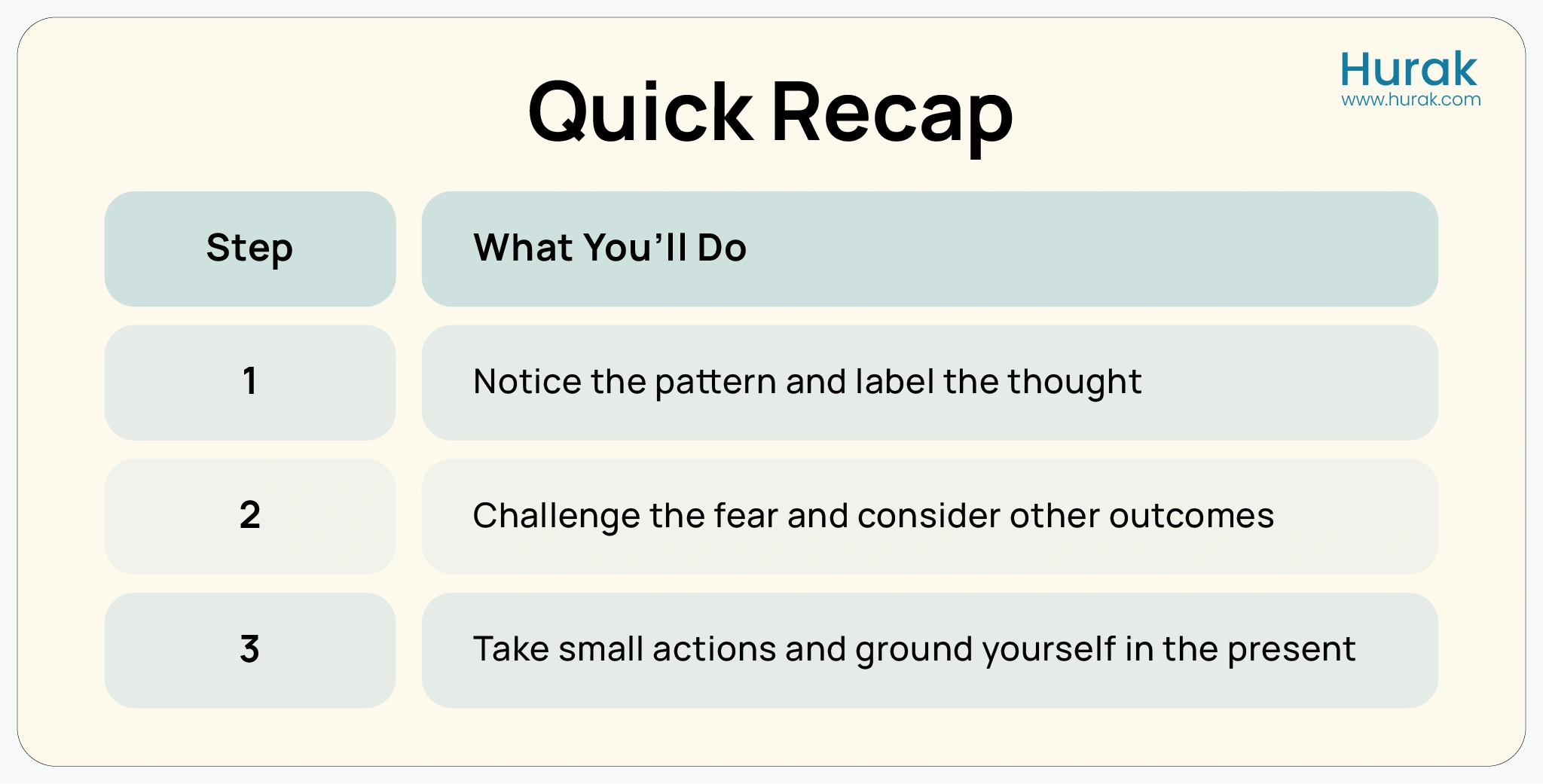
Catastrophising can make everyday challenges feel overwhelming, but these thoughts are not facts. By recognising your triggers and practising new ways to respond, you can break the cycle of fear and regain perspective.
Be patient with yourself; changing how you think takes time. Whether you start by pausing to breathe, questioning your assumptions, or seeking professional help, remember: you have the power to choose a calmer, more balanced way forward.
Catastrophising can be caused by a mix of factors, including chronic stress, anxiety disorders, past trauma, perfectionism, and low self-esteem. It often develops as a learned pattern of thinking meant to prepare you for danger, but it can become automatic and unhelpful over time.
Not exactly. Catastrophising is a thinking pattern where you imagine the worst-case scenario, while anxiety is the emotional and physical response to perceived threats. However, catastrophic thinking often fuels anxiety and makes it worse.
While it takes practice to change this habit, you can interrupt it in the moment by:
Name it (This is catastrophising.)
Take a few deep breaths to calm your body.
Ask yourself what evidence supports your fear and what evidence contradicts it.
Consider more realistic outcomes.
Yes. Constantly expecting disaster increases stress hormones like cortisol, which can contribute to headaches, fatigue, digestive problems, and trouble sleeping. It can also make anxiety disorders worse if left unaddressed.
If catastrophising interferes with your work, relationships, or daily functioning, or if it feels impossible to manage on your own, consider speaking with a mental health professional. Cognitive Behavioural Therapy (CBT) is especially effective for breaking this thinking pattern.
Courses
Upskill with job-ready training.
Mock Tests
Measure your learning progress.
Create an online video course, reach students across the globe and earn money