

A Workplace Guide for Traffic Banksmen
�Crane lifts, traffic management, traffic flow, and directing vehicular operations are just a few of the operations that a traffic banksman, also known as traffic marshal, is crucial in making sure happen safely on the job site. The functions and responsibilities of the banksmen, their role in safeguarding the health and safety of people present, and the various duties and work environment they employ will all be covered in as a workplace guide for Traffic Banksman.Job Description of a Traffic BanksmanDirecting Vehicle MovementA traffic banksman is responsible for controlling traffic and ensuring accidents don�t occur at the work sites. They aid operators and drivers in their manoeuvres with hand gestures and communication tools. For instance, they can signal a vehicle to stop and move just in time when they reverse or make a turn. By monitoring their movements on the main road, banksmen direct cranes and trucks onto the site and ensure that heavy vehicles leave the area safely.Managing TrafficTraffic marshals manage the flow of traffic within a workspace as a banksman. They direct the drivers to the truck parking areas on the site. The traffic control system should ensure no other trucks are blocking the entries or exits. Additionally, large vehicles should have enough room to leave the site or travel to the loading zones. The roadways must be designed and laid out for particular vehicles to ensure efficient operation.Identifying Unsafe AreasA banksman should be aware of potential accident-causing difficulty spots in construction zones. To prevent damage to cars or equipment during manoeuvres, they also clear away impediments and clutter from the routes.Taking Care of Signalling EquipmentA traffic banksman should frequently examine the radio gear and other communication tools as a banksman to ensure they are operating as intended. A driver cannot hear them in a busy workplace, and giving directions is challenging without a communication line.Teaching Hand Signals to DriversTo prevent misunderstandings, it�s crucial to ensure drivers can comprehend the hand gestures of a banksman. They should meet with novice drivers to discuss traffic signals and communication techniques.Assisting in Loading and UnloadingA banksman typically works alongside other employees to do loading and unloading tasks. They may occasionally use the loading equipment to reduce traffic jams brought on by delayed loading.Work Environment of a Traffic BanksmanA traffic banksman works on building sites, loading and unloading ports, and factories. Trucks, cranes, lorries, cement mixers, bulldozers, and trucks are frequently seen in these situations. They spend most of their time working outside in all types of weather, so they must dress appropriately and have the necessary safety gear. Most banksmen dress in high-visibility clothing so that cars can see them both during the day and at night. The noise level at work is quite high on construction sites. For this reason, they require radio communication equipment to direct the drivers and alert the loading team when a truck arrives. Additionally, their responsibility is to maintain the office spotless and ensure efficient operation.Coworkers of a BanksmanDepending on the industry, a traffic banksman coworkers may include signallers, riggers, and warehousing workers. Workers in the warehouse help load and unload as riggers secure items to cranes. Additionally, banksmen might collaborate with project managers, civil engineers, ground labourers, truck drivers, and other specialists.Work Schedule of a BanksmanThe work schedule of a banksman differs depending on the employer and the conditions of their employment. For instance, delivery to building sites typically occurs in the early morning or late evening when there aren�t many people present. They will therefore start early and end late. On the other hand, warehouses are active during the day, when they finish most of their duties. A bankman typically puts in 35 to 40 hours a week, including weekends and evenings as needed when they work a full-time schedule. A traffic banksman can also work on temporary or part-time contracts.Traffic Marshal CourseWhen properly completed, a traffic banksman training course, also known as a traffic marshal course, entitles participants to serve as traffic marshals. By planning and setting out the roads that vehicles will use to pass through a location, they are able to safely govern the movement of vehicles there. To maintain safe segregation, a traffic marshal will make an effort to construct a one-way traffic system that will facilitate the flow of a vehicle at work through the site. They will also aim to avoid pedestrian crossings.When traffic is high, they may personally direct cars to prevent excessive queuing.

Reason Why Your Personal Licence Can be Suspended
Yes, a Personal Licence can be suspended or revoked if any of the offences are committed by the licence holder. The Licensing Act 2003 has a complete list of these offences that can lead to suspension of your licence. It guarantees that the licence holder is an accountable, law-abiding citizen.A Personal Licence ensures that its holder is competent enough to operate or oversee a company that provides or sells alcohol in a professional way. If licence holders don�t follow the rules or expectations, their licence can be suspended or revoked.Personal Licence holders risk having their licences cancelled for up to six months if it�s found that they are not adhering to the requirements.What Happens If a Personal Licence Gets Suspended or Revoked?A Personal Licence can get suspended or revoked for up to six months, which means the business will face a loss of 6 months. Moreover, the staff won�t be employeed or get paid during this time period. This will lead to damage to the owner�s reputation for customers and staff. Once the Personal Licence gets suspended or revoked, the holder will have to re-apply for it, which means paying additional costs.How Can You Lose Your Alcohol Licence in the UKYou can lose your Alcohol Licence in the UK if you:fail to meet the requirements you stated you met on your application.used false documentation or an alias.allowed another person to use your licence to engage in licensable behaviour and receive a sentence or disposal for a relevant offence.the date your sentence restrictions end puts you in the �Automatic Refusal� category of the licence criteria.are not authorised to work in the United Kingdom (unless you are a director of a UK-registered company).violate the licensing requirements.are not considered a fit and proper person to hold a licence if you violate any of the licence conditions, including any additional conditions imposed on your licence.fail to complete the required training.receive a sentence or disposition for a relevant offence, and the date your sentence restrictions end puts you in the �Consider Additional Factors� category of our licence criteria.are not qualified to have a licence.Lost, Stolen or Damaged Personal Alcohol LicenceUnder section 126 of the Licensing Act 2003, if you lose your Personal Alcohol Licence or it gets stolen, you must inform the Licensing Authority. You must complete the application form and send it to the Licensing Authority. With the application, you must pay a fee of �10.50 in the form of a cash, cheque, or postal order. You can also make credit/debit card payments over the telephone.If your Personal Licence gets damaged, you can send the old licence with the ID card and paper copy to the Licensing Authority. Then you will receive new licence documents from the authority.Surrender a Personal Alcohol LicenceA Personal Licence doesn�t expire and has a lifetime validity, but the holder can surrender it whenever they want. If a Personal Licence holder decides to surrender the licence, they must inform the Licensing Authority in a proper way.To surrender your Personal Licence, you must:Complete the application form.Send your Personal Licence with the ID card and paper copy.Reasons for Getting Your Licence SuspendedThe UK Government may suspend your licence for either one or all of the following reasons.If they think that you are a danger to everyone�s safety.If they think that doing so is for the general welfare.How Can a Pub Lose Its Licence in the UKThere could be a number of reasons why a pub can lose its Alcohol Licence in the UK.Serving Alcohol to Individuals Under the Legal Drinking AgeServing Alcohol to visitors of the pub who are under the legal drinking age is one of the serious reasons a pub can lose its licence. In the UK, this age is 18.Breach of Licensing HoursIf a pub is caught selling alcohol outside the licensing hours, they can lose their licence.Violation of Noise RegulationsAlthough pub are supposed to be a lively place with musicand alcohol, there are still some regulations. Violating noise regulations can result in losing a licence.Breach of Fire Safety RegulationsA pub in the UK risks losing its license if found in breach of Fire Safety Regulations. It shows that a pub is compromising the safety and well-being of patrons and staff.Selling Alcohol without a Valid LicenceIn the UK, if a pub is selling alcohol without a valid licence can lead to the revocation of its licence, as it�s violating one of the major regulatory requirements.Violating Health and Safety RegulationsViolating Health and Safety Regulations shows a failure to maintain a safe and secure environment for customers and employees. It can lead to losing a licence.How to Get an Alcohol Personal Licence?Getting an Alcohol Personal Licence is a 3-step process. First, you must first pass an APLH Personal Licence Course. Then, get your DBS check and finally, complete and submit your application.Learn more about this in our detailed blog, �How to Get a Personal Licence�.Get your Legal Personal Licence by signing up for our APLH coursesPersonal Licence CoursesBook NowRated Excellenton major review sites

How to Get a Personal Licence
Getting a Person Licence is mandatory for you if you want to sell alcohol on behalf of any licensed premises in the UK. The license allows you to become a Designated Premises Supervisor for a business that supplies alcohol.If you�re caught selling alcohol without a Personal Licence in the UK, you can be sentenced to imprisonment for up to 6 months or a fine of up to �20,000, or both.�It�s an easy 3-step process that involves getting the right qualification, completing a DBS check, and submitting an application. In this blog, I�m going to discuss these steps in detail on how to get a Personal Licence, and other relevant information that you must know.What is a Personal Licence?In the United Kingdom, local councils issue a Personal Licence to individuals whose job involves selling alcohol on behalf of any licensed premises. A Personal Licence doesn�t have an expiry date, and the personal licence application fee is �37.A Personal Licence is often referred to as APLH and Personal Alcohol Licence.The purpose of issuing this licence is to ensure that individuals who are responsible for selling Alcohol for the licensed premises they are working in must do it responsibly and professionally.Having a Personal Licence proves that personal licence holders are well equipped with the knowledge and skills to sell alcohol legally. Moreover, it shows that these licence holders are well aware of maintaining a safe environment for everyone on the premises.How to Get a Personal LicenceGetting a Personal Licence involves three simple steps.Step 1: Pass the APLH Personal Licence Training CourseThe first to get a Personal Licence is to complete the ALPH Personal Licence Course successfully.BOOK NOWYou can complete this course in one day with only 5 hours of classroom learning and some self-study. You will be assessed by a multiple-choice APLH exam.This Personal Alcohol Licence Course follows the syllabus of the Highfield APLH Level 2 Award for Personal Licence Holders qualification.Personal Licence Mock ExamTo complete this course, you must pass an MCQ-based assessment. Before you attempt the real ALPH course test, taking this mock test will help you.Take The Mock Test NowStep 2: Complete the DBS CheckGetting a DBS check is an integral part of your Personal Licence application. You must carry out a recent Disclosure and Barring Service check, which will cost you a �25 fee.Step 3: Complete & Submit ApplicationAfter completing your APLH Personal Licence Course and getting a DBS check, the final step is to complete and submit your Personal Licence application.Personal Licence Application Check out our video on how to get a Personal Licence.Eligibility Criteria for Getting a Personal LicenceBefore you apply for a Personal Licence, make sure you meet the following eligibility criteria:Must have the legal authorisation to work in the UK,Must be 18 years old,Completed the APLH Course.Also�Must not be found guilty of any relevant crimesMust not lose a Personal Licence in the last 5 years.Requirements For Personal Licence ApplicationRecent DBS check2 countersigned photographsOriginal certificate of your qualificationPay �37 feeDisclosure of convictions form (if applicable)How Long Does a Personal Licence Last?A Personal Licence does not expire and lasts forever. In the past, it used to expire after 10 years.Read our blog, �How Long Does a Personal Licence Last,� to get more information about the validity of a Personal Licence.How Much Does a Personal Alcohol Licence Cost in the UK?The application cost for your Personal Licence is �37. This is an application fee, which should be paid to your local council. Apart from the application fee, you must pay �25 for getting your basic DBS Check.Personal Licence RenewalA Personal Licence lasts indefinitely, so you don�t need to go for its renewal.Do I Need a Personal Licence (APLH)?You need a Personal Licence if you plan to get a job that involves selling alcohol, such as in pubs.According to the Licensing Act 2003, licensed premises (premises that serve alcohol) must employ a Designated Premises Supervisor holding a Personal Licence.Personal Licence ScotlandYou need a Personal Licence Scotland if you�re living in Scotland and intend to work in licensed premises that serve alcohol.Apply for your SCPLH Scottish Certificate for Personal Licence Holders now.APPLY NOWChange of DetailsHolders of Personal Licences must maintain their information current. If you don�t, you risk being prosecuted.You must inform your licencing authorities of changes, such as those to your name or address. The organisation that issued your licence is always your licencing authority. This service costs �10.50.Download our Personal Licence (APLH) Test Prep Book for free! × [wpforms id="20453" title="false"]Frequently Asked Questions (FAQs)What does forfeiting a Personal Licence mean?A court may order the cancellation of a Personal Licence if convicted of a relevant offence. It�s also known as being forfeited. Courts can also impose a suspension of up to six months on a Personal Licence.Can I apply for a licence with a criminal record?If you have a criminal record, it does not automatically disqualify you from applying for a Personal Licence. The licensing authority will assess whether your conviction is relevant to your licence application before making a decision.What identity checks are required for my licence application?You can do it online in most cases. Just ensure someone important, like a lawyer or a respected person (solicitor or notary), signs your passport photos.
Differences Between Personal Licence and Premises Licence
Knowing the distinction between a personal licence and a premises licence is crucial for anyone who holds a personal licence. You can sell alcohol if you have a personal licence, but only a business owner can do so if they have a premises licence.We will go over the distinctions between a personal licence and a premises licence and what each covers in this blog post. The advantages of holding each sort of licence will also be discussed.An individual is given a personal licence, also known as an alcohol personal licence, that enables them to approve the sale of alcoholic beverages from licenced locations. Alcohol sales are among the activities that can be conducted on premises with a licence.An individual who owns the property, occupies it, or has been given permission to do so, such as a tenant, is given a premises licence. People over 18 must apply, and the space must be used for commercial purposes. While premises licences are specific to one location, personal licence holders can work in any licenced establishment in England and Wales.What is a Personal Licence?A personal licence is a licence which permits you to sell alcohol on licensed premises. It is renewed once every ten years. It will be revoked if you do something that puts your licence in danger. Each licenced premises must have one personal licence holder.What are the benefits of an Alcohol Personal Licence?The benefits of having a Personal Licence are:You can work in licensed premises for the supply of alcohol in the UK, except in Scotland. To sell alcohol in Scotland, you need to get a Scottish Personal Licence.It conveys that you are a responsible person who is knowledgeable about the sale of alcohol.It also demonstrates your commitment to working in the hospitality industry, giving you a career boost.You can authorise the sale of alcohol from licensed premises, which can benefit businesses.What is the cost of a Personal Licence?A Personal Licence costs �37 and must be paid to your local municipality. When getting your standard DBS (Disclosure and Barring Services) check, you could additionally have to pay additional fees (around �25). Your licence is valid indefinitely.To learn more about the Personal Licensing Act and the relevant agencies, Visit Gov.UK.Who Should Hold a Personal Licence?One personal licence holder in charge of selling alcohol must be present in every establishment. There must be a designated premises supervisor if there is only one person. However, more than one person with a personal licence may work at a single location. For instance, it is crucial to consider the benefit of putting assistant managers through the personal licence requirement if the business has many of them. This will make it possible to divide up the responsibility of selling alcohol. Additionally, it will look favourably upon any licence applications or reviews. However, you are not required to engage other personal licence holders other than the appointed premises supervisor.How to apply for a Personal Licence?When requesting a Personal Licence, you must:Be over the age of 18,Possess a legal form of identification, andEarn a credential in APLH Personal Licence Course (e.g. the Level 2 Award for Personal Licence Holders)Possess a fundamental Designated Premises Supervisor DBS check or local licencing authority check (obtained within the last three months)Fill out a personal licence application form, pay the required price, and deliver it to your local council.Here is further information on how to apply for a personal licence.What is a Premises Licence?Premises where entertainment and other activities, such as the sale of alcohol, take place according to the Licensing Act of 2003 must possess a licence. The premises licence is valid for the existence of the company that provides regulated entertainment and/or alcohol.What are the benefits of a Premises Licence?Possessing a premises licence has numerous advantages, including:A club premises certificate provided by a premises licence enables companies to sell alcohol and host activities that require a licence.It shows that the location is managed by trustworthy people who are informed about the sale of alcohol.Club premises certificates can help businesses stand out from the competition by demonstrating their dedication to following the law.A premises licence holder can also increase a company�s appeal to customers by demonstrating that they take their obligations seriously.What are the licenceable activities covered by a premises licence?Licensable activities that fall under the scope of a premises licence areThe retail sale of alcohol,The provision of supervised entertainmentThe serving of late-night refreshmentsWhat is the cost of a Premises Licence?Depending on the kind of premises and the activities conducted there, a Premises Licence can range in price. For instance, venues for music and dancing will generally cost more than venues for the exclusive sale of alcoholic beverages. The rateable value of the premises also affects the price of a premises licence.Who can apply for a premises licence?The following can apply for a premises licence:Any person or individuals who are 18 years of age or older who intend to operate a business involving the use of the premises for licensable activities,businesses or partnerships,Organisations like hospitals, charities, schools, and village hall committees.What is a Complete Premises Licence Application?The following documents have been submitted with the completed application for a premises licence:the licence fee based on the rateable business value of the property (www.voa.gov.uk);the operating schedule;a plan of the property; and,If alcohol sales are intended, a form of consent signed by the person the applicant proposes as the designated premises supervisor (DPS).How to apply for a Premises Licence?For a Premises Licence, you must:Be over 18 years old,Possess a legitimate kind of identification, disclose your operational timetable, and comprehend your licencing goalsPossess a location used for business reasonsFill out a premises licence application form, attach the requisite fee, and deliver it to your local government or approved premises supervisor.We hope this explanation of the distinctions between a Personal Licence and a Premises Licence, as well as the requirements and fees related to each, has been helpful. Please get in touch with us if you have any more inquiries.
The Importance of First Aid in Schools
Accidents and emergencies are bound to happen in a school's active environment, where children constantly learn, play, and grow. Having trained personnel and a structured first aid program can help maintain the safety and well-being of students and staff alike.Why First Aid Matters in SchoolsFirst aid is not just about addressing physical injuries; it includes a range of skills that can save lives. It helps prevent injuries from worsening and provides immediate care until professional help arrives. The importance of first aid in school includes the following:Immediate Response to AccidentsSchools carry out activities where accidents like cuts, falls, or burns can occur. Knowledge of first aid equips teachers and staff to respond promptly and appropriately.Life-Saving PotentialIn critical situations such as cardiac arrests, choking incidents, or severe allergic reactions, quick action through first aid techniques can help save lives.Promoting Safety AwarenessTeaching first aid creates a culture of safety awareness among students, encouraging them to take responsibility for their well-being and that of others.First Aid in School Policy as a Legal RequirementSchools are places where learning happens, but they must also be safe. When accidents or medical emergencies happen, having the right knowledge and tools for first aid can make a difference.Schools are legally required to ensure student safety. In the United Kingdom, laws require schools to have enough first aid supplies, medical staff, and training. But beyond laws, schools have a moral duty to keep students safe by being ready for medical emergencies.Under the Health and Safety (First Aid) Regulations 1981, first aid should always be available at schools and colleges. The availability applies on campus or during off-site activities like field trips. Regulations say employers must provide the right first aid equipment, facilities, and trained staff based on a first aid assessment. The basic first aid requirements for schools and colleges are:A suitable first aid kit is stocked according to the assessment, meeting minimum standards suggested by HSE.An appointed person or designated first aider(s) responsible for first aid.Information for staff about where to find equipment, facilities, and first aid personnel.How To Include First Aid in the School CurriculumTo ensure comprehensive coverage, schools can include first aid education into their curriculum through:Structured Training ProgramsFormal first aid courses are part of physical education or health classes.Simulation ExercisesConduct regular drills and simulations to practice emergency response scenarios.Continuous LearningProviding refresher courses and updates to keep skills current among staff and students.What are the Types of First Aid Needed in SchoolsSchools should prepare for various types of first aid scenarios, including:Emergency First AidDealing with immediate, life-threatening situations such as cardiac arrest, severe bleeding, or unconsciousness.Basic First AidTreating minor injuries like cuts, bruises, sprains, and burns common among children during daily activities.Mental First AidAddressing emotional distress, anxiety, or panic attacks in students is increasingly recognised as essential alongside physical first aid.What Does First Aid Training in School Involve?First aid training in schools teaches students essential skills:calling emergency servicesassessing safetycommunicating with the injuredtreating cuts, bleeding, and burnsapplying bandagesassisting with fractures and CPRhandling head injuries, allergies, and nosebleedspreparing students to respond confidently in medical emergencies.The Department for Education made first aid training compulsory for students in England's state-funded schools in 2020. It is now part of children's health education and varies by age group.Ready to Learn More?Put your knowledge of the importance of first aid in schools into practice by enrolling in a course today! Our First Aid courses offer complete training to help you handle critical situations. Whether you want to improve your skills or workplace safety, these courses help build confidence and expertise. View our Emergency First Aid at Work (EFAW) and Level 3 First Aid at Work courses. These courses meet the UK legal requirements and help you keep people safe.First Aid Learning for Primary School StudentsBasic first aid for common injuries, including head injuries.How to call emergency services.First Aid Learning for Secondary School StudentsBasic first aid for injuries and illnesses.Life-saving skills like CPR.How and when to use a defibrillator.What is the Importance of Mental Health First Aid at SchoolMental health first aid is like regular first aid but for mental health. It is often overlooked, but it is very important.Nowadays, young people struggle with mental health issues. School staff should know about mental health first aid and get trained.Studies show that 1 in 6 children aged 5-16 might have a mental health problem. And more than half of young� adults aged 16-25 have talked to their doctor about mental health issues.Mental health first aid teaches school staff how to spot signs that a young person might be having mental health problems. Staff must be able to notice these signs early and know how to help someone in a crisis. This training is especially important for staff in secondary schools.What should a School First Aid Kit Contain?A school first aid kit should contain everything needed for common accidents. It should include the following items:bandagesantiseptic wipesgauze for cuts and scrapessplintsice packsEpiPen for allergiessaline solution for washing wounds or eyesCPR face shieldsburn gelinhaler for anaphylactic shock.Checking and replacing items regularly keeps the kit ready for any emergency.Who can Administer First-Aid Training in Schools?First Aid Training in school is delivered by qualified people. Determining who should be responsible for first aid in schools is critical:Trained Personnel:Designated staff membersTeachersAdministratorsSchool NursesBefore delivering first aid training to pupils, they should undergo regular training and CPR certification.What are the Positive Impacts of First Aid in SchoolsAn effective first aid program in school has several benefits:Increased Safety: Immediate response reduces the severity of injuries and accidents, creating a safer school environment overall.Empowerment: Both staff and students feel empowered and confident in their ability to handle emergencies effectively.Community Engagement: Involving parents and the broader community in first aid workshops or training sessions leads to a collaborative approach to safety.What Qualifications are Required by a First Aider at School?First-aiders need to have specific qualifications:1. They must have a valid certificate in either:First aid at workEmergency first aid at workAny other suitable training based on what the school needs.It is a legal requirement for schools and early years providers that all staff have first-aid training. At least one person must have a current paediatric first-aid certificate. This person must be present whenever children are around and go on trips with them.ConclusionFirst aid is a life-saving practice. By prioritising first aid education and preparedness, schools improve safety and nurture a community where compassion and responsibility thrive. From physical injuries to mental health crises, the ability to respond promptly and effectively ensures that schools provide necessary protection and support. Introducing basic first aid skills into the curriculum empowers students to assist others and potentially save lives in emergencies.�

Bartending Licence Requirements In The UK
Introduction�For hundreds of years, pub culture has played a significant role in the U.K. society, with cities teeming with everything from independent gastropubs and trendy bar chains to little towns with pubs that can barely hold fifteen patrons. The laws governing the consumption and sale of alcohol have been altered over time, most notably in 2005, to fight perceived �binge drinking� to take into account changes in how society regards alcohol, or �booze,� as the Brits call it. Many restaurants now stay open until the wee hours, with some not even closing, replacing the traditional �eleven p.m. last orders� with the striking of the bell behind the bar and subsequent �closing time�.Premises LicenceUnder the previous Licencing Act of 1964, pubs and clubs in the United Kingdom had to possess a Justice Licence in order to serve alcohol to patrons inside the establishment. Everything was changed by the Licencing Act of 2003, which went into effect in 2005. Now, to serve alcohol or conduct �licensable activities�, such as selling food between eleven p.m. and five a.m., you need a �Premises Licence.� A premises licence is also required for many entertainment activities, such as staging a play, hosting a wrestling match, or hosting a dance or live music event, even if they are being done for charitable reasons.A Designated Premises Supervisor (DPS) must be appointed, or the applicant must have completed the necessary training to have a Personal Licence (described below). The Premises Licence, which must be prominently displayed inside the institution in question, shall list this DPS by name. There is no time limit on these premises licences. But renewal is frequently subject to an annual price, ranging from �100 to �2,000 every year, depending on what the local council determines to be the �fee band� (i.e., the worth) of the property where alcohol is being sold.You may be asked to grant the police, including members of their licencing department or council members, access to your premises at any time to inspect your licence and related documents. The penalties for violating licencing laws can be severe: not producing your licence when asked for will result in a maximum fine of �1,000; engaging in activities on your property that are not permitted by your licence will result in a substantial fine, a jail sentence of up to six months, or both.Personal LicenceA personal licence permits the owner to sell alcoholic beverages from designated locations. Once it gets its premises licence, it is required to have at least one employee who is licenced personally working. This indicates that the personal licence holder (PLH) authorises sale or supply of alcohol. No matter how many employees are under them, the PLH is entirely in charge of selling alcohol in a location (most, if not all, of whom will have no qualifications or licence). You can work and sell booze anywhere with a licence, including casinos, supermarkets, sports facilities, and amusement parks, if you have a PLH qualification. For one of these licences, you must be eighteen or older.You must take the APLH (Award for Personal Licence Holders) course, a multiple-choice exam with a pass level of 70% administered by local authorities. If you pass, thorough background checks are done to investigate criminal offences. You will receive the licence once this is finished and it is evident you have no unfinished convictions (for instance, you are no longer performing community service or are not out on bail for an offence). The local police force will receive notification of your application from the licencing body and will have the opportunity to object to you receiving a Personal Licence if it turns out that you have any convictions left on your record. If this happens, you can present your argument with the licencing authorities at a hearing.A Personal Licence is valid for ten years in England and Wales. To maintain the licence, the licence holder must succeed in a refresher course after five years.The authorities treat anyone who doesn�t follow the law quite harshly. For instance, you need to submit an application to the licencing body for the region where you typically live. It is illegal to fail to notify them of any change in your personal information, such as moving out of the area. Additionally, you must inform the court that you have a personal licence at your first court appearance if you are accused of any other crime while designated as a PLH; failing to do so is, once again, a crime. A conviction could result in suspension or possibly the loss of your personal licence.SupervisorsAccording to the U.K. Licencing Act 2003, every licenced location must have a Designated Premises Supervisor (DPS) who is listed on the premises licence and who owns a current Personal Licence. It�s possible that this isn�t the owner of the company or property but rather a manager or supervisor that the owner has hired to handle the day-to-day management of the pub, bar, club, etc. The sale and service of alcohol is prohibited at a licenced business if it lacks a DPS or a personal licence that is still in effect. It�s crucial to remember that when a fully licenced establishment has a designated premises supervisor (DPS) who owns a Personal Licence, the DPS is not obliged to be present when alcohol is served.The Designated Premises Supervisors (DPS) of licenced properties are also periodically reviewed by the licencing authority, who can revoke the DPS�s licence at any time. Every candidate for a DPS position must pass a rigorous screening process. The police have the right to oppose if they have any concerns about a candidate�s behaviour in the past or present or their criminal history. The licencing authority considers these issues to decide whether to approve or deny the DPS application.ConclusionA premises must have a current premises licence to identify the designated premises supervisor (DPS) (not necessarily the owner), who must also hold a personal licence to sell or serve alcohol or host events like live music. However, the DPS does not need to be constantly present as long as one employee on duty has a Personal Licence.
What is Epilepsy?
Millions of individuals worldwide are impacted by epilepsy, including those who support or care for those with the disorder. It is a typical neurological illness that can afflict anyone, regardless of age, sex, or race, and frequently results in seizures.The definition of epilepsy, key distinctions between it and seizures, indications and symptoms of a seizure, ways to support someone with epilepsy, and what to do in the case of a seizure are all covered in this article.What is epilepsy?A frequent disorder that affects the brain and can result in seizures is epilepsy. Brain electrical activity surges, known as seizures, can cause symptoms like losing consciousness, trembling, or falling.Epilepsy typically begins in childhood or after age 60 and lasts a lifetime. Epilepsy symptoms can sometimes be controlled with medicine, and the illness occasionally gets better with time. However, epilepsy is a chronic disorder for many people.Each individual�s case of epilepsy has a unique set of causes, which are numerous and varied. A severe head injury, a stroke, or an infection of the brain are a few typical causes of brain damage.There are various varieties of epilepsy as well as various causes. Four different forms of epilepsy have been identified by the International League Against Epilepsy (ILAE).Focal epilepsy � seizures that start on just one side of the brain.Generalised epilepsy � starts on both sides of the brain.Combined generalised and focused epilepsy � are a part of combined general and focal epilepsy.Unknown � Sometimes, it is difficult to pinpoint the origin of these kinds of seizures.What are the differences between epilepsy and seizures?An electrical surge in the brain, known as a seizure, can result in aberrant muscle tone, movements, behaviours, perceptions, and levels of consciousness. Depending on whatever portion of the brain is affected, seizures have a distinct impact on various people. People frequently fall to the ground during generalised seizures, for instance.Numerous factors, including drug usage, high blood sugar, and fever, can cause seizures. It is typically accepted that someone has epilepsy if they experience two or more seizures separated by at least 24 hours.It is significant to remember that seizures can occur in people who do not have epilepsy. Seizures are necessary for epilepsy, even if they don�t have overt consequences. Seizures, as was previously established, are not always brought on by epilepsy and can be brought on by various factors.Making the distinction between seizure triggers and epilepsy causes is crucial. For instance, a person with epilepsy who is sleep deprived may experience a seizure. The seizure is brought on by insufficient sleep, but brain damage may be the underlying factor in their epilepsy. In this case, the seizure rather than the lack of sleep is what has triggered their epilepsy.Among the causes of epilepsy are:A brain infection.A lack of oxygen during birth.Genetics.Alzheimer�s disease.A brain or head injury.A brain tumour.Drug or alcohol misuse.A stroke.Seizure-inducing factors include:Missing medication.Changes in hormones.A fever is especially common in children.Stress.A lack of sleep.Alcohol and recreational drugs.Skipping or missing meals.Over excitement.Flashing and flickering lights.What are the symptoms and signs of epileptic seizures?Depending on the type of seizure a person is experiencing, their signs and symptoms will change. Not all seizures are accompanied by strange shaking or body movements, and some last only a few seconds.The following are some symptoms and warning indicators that someone may be suffering an epileptic seizure:Rapid blinking.Breathing problems.Appear confused or in a daze.Unconsciousness.Losing muscle tone.Changes in hearing, vision, taste, smell and feel.Difficulty talking.An increased heart rate.Lip-smacking, chewing motions, or rubbing hands and fingers.Uncontrollable body movements, shaking or jerking.People must be aware of a seizure�s warning signs and symptoms to recognise it quickly and render aid if necessary.Particularly if they persist for more than five minutes or the victim stops breathing, seizures can be exceedingly dangerous. Knowing how to assist someone with epilepsy during a seizure is vital since seizures can cause other injuries, such as bruises, scrapes, and head trauma.Our First Aid at Work training course describes the various reactions to various kinds of seizures, how to spot an emergency, and how to assist a person after a seizure.How to help someone with epilepsy?Each person with epilepsy is different; thus, the kind of support they need will differ. You can only provide someone with the most suitable and helpful assistance if you comprehend how their disease affects them.How to respond to seizures?Respond as follows if someone is having a seizure:Do:Remove any dangerous things from the area.Remain composed, reassuring, and by their side until the seizure is done.After the seizure, check in with them to see if they�re alright and give them a seat.Don�t:Do not grab them, restrain them, or make any sudden motions.Presume that they are aware of what is taking place.Try to entice them over or provide them with food or beverages.'Call 112 or 999 if:A person has a series of seizures without gaining awareness between them.It is their first seizure.More than five minutes pass as the seizure continues.The individual is hurt, or you believe they require medical attention.As previously said, the sort of seizure the person is experiencing will determine how you should react. Take a look at one of our first aid training courses if you want to understand how to handle various seizure types and how to spot an emergency.Some people will recover from a seizure immediately, while others may need a few minutes or even hours. People may experience confusion and fatigue during the postictal state, which is the period following a seizure. The best method to provide support is to be there for the person and stick with them till they recover.Learning about it and spreading as much information as possible to increase awareness are two of the most significant things you can do for a friend with epilepsy. The complexity of epilepsy is more than most people realise, and any knowledge gained is beneficial to all those who are affected.
About Banksman: Skills, Signals, Training, and Role Explained
Who is a Banksman?A banksman, also known as a vehicle banksman, is trained and authorised personnel who directs heavy vehicles like trucks, bulldozers, JCBs, etc. and their drivers in workplaces and roads. Driving large and heavy vehicles obstructs the surrounding view of the drivers. So, a vehicle banksman ensures that any manoeuvres they perform are safe and don�t endanger the driver or anybody else.The banksman uses a radio link or pre-arranged hand gestures to communicate with the driver. Since the driver may not have a complete vision or clear visibility, the banksman can advise the driver of what is going on around the vehicle in this manner. A Vehicle Banksman can also be called upon to do various other tasks, such as traffic control in and around the construction site. As a result, they are often also known as traffic marshals.What does a Banksman do?The primary duty of a banksman is to supervise and manoeuvre the movement of humans and vehicles within proximity of a workplace. But they also have various secondary duties that include:Providing plant operators with clear, accurate, and safe instructions.Ensuring the safety of employees and other equipment.Maintaining vehicular traffic in and around the workplace.Separating automobiles and humans.Managing traffic to avoid the queuing of people.Verbal and radio communication with drivers, plant operators, and industry-standard hand signals.Keeping workers and equipment safe.Maintaining a calm and active demeanour at all times.Types of BanksmanBanksmen can be classified based on where they work. Some of them includeSignallers � A banksman who assists in lifting cranes and directs them using signals are called signallers.Vehicle Banksman � A vehicle banksman is trained to control and direct the movements of vehicles in workplaces. They ensure the seamless movement of vehicles to reduce traffic.Railway Banksman � The responsibilities of a railway banksman are to supervise train schedules and inform the authorities of any delays. Also checks trains� movements on various routes.Personal Protective EquipmentA Banksman must be in a particular type of clothing during the duty to be recognisable to others, especially the driver, hence protecting himself from hazards. It includes:Work VestHelmetSafety ShoesGlovesSafety GlassesStandard Signals of a BanksmanInstructionHand SignalStartBoth hands are spread sideways with palms facing forward.StopRight hand raised upwards with palm facing forward.End of operationBoth hands are clasped at the height of the chest.Move towards BanksmanBoth hands are bent with the palm facing towards the body, making slow movements towards the body.Move away from BanksmanBoth hands are bent with the palm facing away from the body, making slow movements away from the body.To Banksman�s rightThe right arm is extended at a right angle.To Banksman�s leftThe left arm is extended at a right angle.Horizontal distanceThe hands indicate the appropriate distance.Vertical distanceThe hands indicate the appropriate distance.Horizontal distanceThe hands indicate the appropriate distance.RaiseThe right arm faces upward and revolves slowly.LowerThe right arm faces downward and revolves slowly.DangerBoth hands are raised above, with the palm facing forward.The Necessity of a BanksmanOn average, 1 out of every 5 workplace fatalities is caused by people being struck by moving automobiles. In the most recent RIDDOR reporting period, there were 20 workplace fatalities in the UK due to vehicle incidents. Furthermore, moving cars on construction sites causes one out of 50 non-fatal injuries.Moving cars should be regarded as a significant hazard by all health and safety managers in charge of workplaces with moving vehicles. A suitable amount of time and resources has to be allocated to minimise the likelihood of an event occurring.In many businesses, where limited space or resources increases the risks from moving vehicles, the banksman presence is vital.Banksman LegislationEmployers and employees are responsible for the manoeuvring of vehicles in a workplace. Numerous regulations in the UK place duties on them:Workplace (Health, Safety and Welfare) Regulations, 1992 � Ensures the employees� health, safety and welfare at work.RIDDOR 2013 Regulations � It is compulsory to report workplace accidents and dangerous occurrences in a workplace to employers.Managing Health and Safety Regulations, 1999 � Employers must arrange for emerging risks and hazardous circumstances and employ people to handle them.Health and Safety (Signs and Signals) Regulations, 1996 � This act provides information about communication using hand signals, signs, acoustic signals and signboards.Steps to get a Banksman Course certificateConstruction Skills Certification Scheme (CSCS) is the skills certification scheme in the UK construction industry. It certifies and provides a card to people with specialised skills who can find employment in a particular environment.Enrol for a 1-day training for Banksman course and obtain the Level1 Health and Safety qualification construction environment certificate. Collect your certificate on completion of the course. You can choose to study from specified Hurak study centres or from the comfort of your workplace/home through our online course, where the trainers will arrive at your behest.Qualify and pass the Health, safety and environment test, an objective test with multiple-choice questions. It takes place in an official exam centre.Banksman Course ContentHurak�s Banksman course covers a wide range of topics, including:Mobile Plant and VehiclesHazards and Potential RisksReversingControl MeasuresUsing Method StatementsEmployee and EmployeeResponsibilitiesCommunication BetweenOperators and OthersBanksaman and SignalersBanksman SafetyBanksman SignalsWarning Signs and Symbols on SiteAdvantages of the Banksman CourseIt saves your time and moneyIncreases your chances of getting employedEnhances your credentialsSkills in a BanksmanOther than the knowledge gained by the course, a banksman should also have the following skills:Attentive to detail � A banksman must be detail-oriented to help drivers steer within a work site. They have to signal the driver according to the size and structure of the vehicle.Communication Skills � The job of a banksman entails communicating with different kinds of drivers who understand the practical and clear instructions of the banksman.Deft with hand movements � Expert in hand signals is the most critical prerequisite skill in a banksman.Basic knowledge of safety procedures � Awareness of basic on-site safety and making the drivers and workers adhere to it is also a significant skill. You may need to educate/train others on health and safety guidelines.Patient and capable of handling stressful situations � If stuck in a tricky situation, you must retain your composure and think clearly.Salary of a BanksmanThe salary of a banksman varies according to the experience they have:Recruit � �20,000 to �25,000 per annumExperienced � �25,000 to �50,000 per annumSalaries are subject to change concerning employers, location and the duration of the work.Career ProgressionGaining experience as a specific type of banksman will improve your skills and enhance your career prospects by becoming an aircraft Marshall or a rail signaller. You can also become the lead supervisor for a workplace or a site manager.The Banksman Training Course or the Traffic Marshal Training shows how to use standard hand signals used by banksmen (or traffic marshals) across the UK and Europe. It also explains how to follow laws like the Health and Safety (Safety Signs and Signals) Regulations 1996 and the Health and Safety at Work Act 1974.
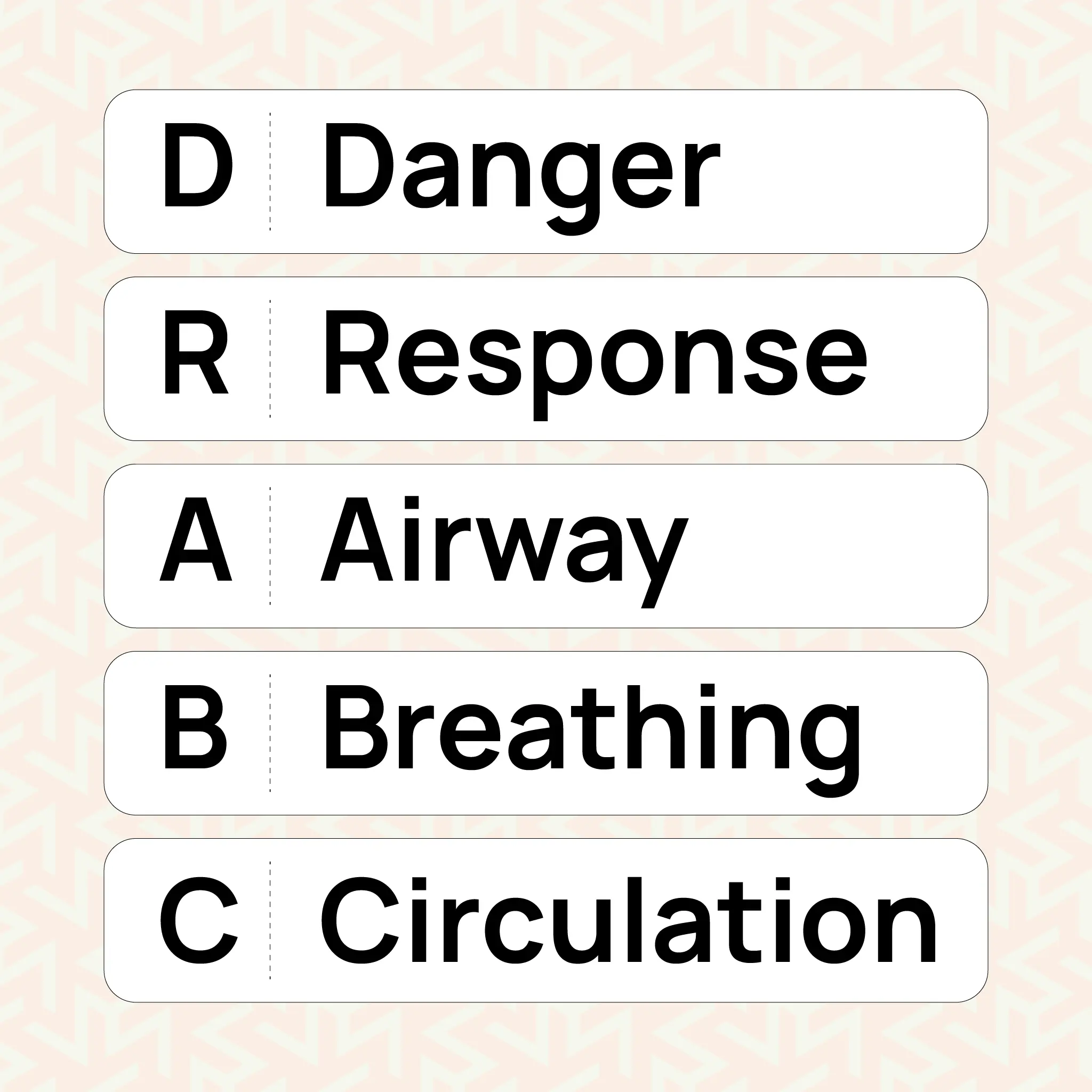
How To Perform the Primary Survey Using the DRABC Steps
When someone is unconscious, their life is in danger. Their airway might be blocked, they may not be breathing, and their blood circulation could have stopped. It is important to follow the primary survey steps to assess casualties in the order of DRABC: Danger, Response, Airway, Breathing, and Circulation. Remember to take quick action because brain damage or even death can happen quickly. A secondary survey is performed after completing the primary steps of first aid.Primary Survey in First Aid Using DRABCWhen helping someone in an emergency, you always start with the primary survey. This means you quickly assess what is happening and the person's needs.The primary survey uses the letters DRABC to help you remember the steps: Danger, Response, Airway, Breathing and Circulation.D - Danger: First, you check for danger around you, such as oncoming traffic or a falling object.R - Response: Next, see if the person responds. Gently shake their shoulders when you talk to them. Are they awake or unconscious?A - Airway: Then, make sure their airway is clear. That means checking if anything is blocking their breathing passage.B - Breathing: After that, check if they're breathing normally. Look, listen, and feel for any signs of breathing.C - Circulation: Finally, check for signs of circulation, like a pulse. This tells you if their heart is beating.Knowing what to do next could help save someone's life, so it's important to follow these steps in the correct order.DRABC StepsDANGER - 1st Step of the Primary Survey DRABCThe first thing to do in an emergency is to check for dangers. Look around to see if anything could harm you, the person needing help, or anyone nearby. This helps you decide if it's safe to go close to someone who needs help.WHAT TO DOIf you see any hazards, like live electricity, try to make the area safe first. For example, if there's electricity, turn it off. Otherwise, use an insulating object, such as wood or plastic, to move the person away. When there is a risk of electricity, do not touch them directly.When you are sure it is safe, you can approach the person who needs assistance. But if it's still not secure, don't go near them. Instead, get emergency medical helpRESPONSE - 2nd Step of the Primary Survey DRABCA person can lose consciousness when something disrupts the brain's normal functioning. Here are some signs that someone might be unconscious:They can't respond to simple questions or touch.They might not realise when they're in danger and can't protect themselves.They can't clear their airways by coughing or swallowing. This means saliva, blood, vomit, or objects could block their breathing tubes. The tongue, which becomes floppy, might also fall back and block the throat.WHAT TO DOFirst, try to determine whether the person is unconscious by asking simple questions or telling them to do something simple, such as "What's your name?" or "Open your eyes," and gently shake them. If they don't respond, they're probably unconscious. Don't shake them vigorously, especially if they're children or babies.Place the individual in the side position, and examine his airway, breathing and pulse.If the unconscious person is breathing and has a pulse, keep them in the side position. Ensure their airway remains open and clear, and monitor their breathing and pulse regularly until medical assistance arrives.�How to Keep the Unconscious Person in a Side PositionThis is also called the lateral, recovery, or stable side position.Kneel beside the person.Straighten their far arm out, perpendicular to their body. Bend their near arm at the elbow and place it across their chest, with the fingers near the far shoulder.Bend their near leg up to the right angle of their body.Hold the shoulder and hip closest to you, gently rolling them onto their side. Their top leg should rest on the ground with the thigh at a right angle and the calf parallel to the straight leg.Rest their uppermost, bent arm on the elbow of the straight arm.the person is a child older than 1 year, gently tilt their head back. Their face should be slightly downwards so any fluid can drain from their mouth, and their tongue can fall forward, away from the airway.Pro Tip:When someone is unconscious, act fast. Use DRABC: Danger, Response, Airway, Breathing, Circulation. Brain damage or death can happen quickly if you delay.AIRWAY - 3rd Step of the Primary Survey DRABCNow, ensure the person's airway is clear. If they're unconscious:Gently tilt their head back and lift their chin with your hand on their forehead.Peep in their mouth to check whether something is obstructing their passageway.What to Do: If the person is responsiveCheck whether anything is obstructing their airway and causing difficulty breathing.If you see something, encourage them to clear it by coughing or using their hands.For adults and kids, you can help them by giving back slaps or abdominal thrusts. For babies under a year old, you can help them with back blows or chest thrusts.Once the blockage is cleared, move on to the next step.What To Do: If the person is responsiveCheck whether anything is obstructing their airway and causing difficulty breathing.If you see something, encourage them to clear it by coughing or using their hands.For adults and kids, you can help them by giving back slaps or abdominal thrusts. For babies under a year old, you can help them with back blows or chest thrusts.Once the blockage is cleared, move on to the next step.What To Do: If the person is unresponsiveIf you see something, try to remove it carefully. But don't put your fingers in their mouth if you can't see anything, as you might push a blockage deeper.BREATHING - 4th Step of the Primary Survey DRABCBreathing should be regular, quiet, and easy. Tilt the head back, watch the chest for movement, and listen for breathing sounds. Do this for about ten seconds to see if air comes from the mouth or nose.WHAT TO DOIf they're unresponsive and not breathing normally, call emergency services immediately. If you know CPR, start with rescue breaths. If not, do chest compressions. If there's an AED nearby, ask someone to bring it.Giving Rescue BreathsMouth-to-mouth resuscitation is the best way to give rescue breaths. Mouth-to-nose resuscitation is used for a jaw injury or if the person needs to be revived in water. Mouth-to-mask resuscitation is done by trained people to avoid direct contact, especially if the person might have a disease like hepatitis or HIV.Typically, 30 compressions followed by 2 rescue breaths are performed in case of abnormal breathing.Mouth-Mouth ResuscitationKneel beside the person.Lay them on their back.Gently tilt their head back and support their jaw with your fingers. Don't press on their throat. Their mouth should be slightly open.Pinch their nose closed. Take a deep breath and cover their mouth with yours, sealing gaps.Keep their head tilted and give 2 breaths, enough to make their chest rise slightly.Start compressions as recommended.When they start breathing again, please put them in the side position and check their airway, breathing, and pulse regularly.Follow similar steps for mouth-to-nose and mouth-to-mask resuscitation but adjust for the different techniques.CIRCULATION - 5th Step of the Primary Survey DRABCIn this step, check the person for any significant bleeding.What To DoIf they're bleeding heavily, try to stop it by pressing directly on the wound with a clean cloth or dressing. Then, call emergency services for help.Stay with them until help arrives. Try to keep them calm and reassure them that help is coming. If they're not bleeding but still unresponsive, put them in the recovery position. This helps keep their airway clear if they vomit.Cardiopulmonary Resuscitation (CPR)If someone's heart has stopped, CPR is vital to keep them alive until help arrives. CPR is exhausting, so it's best if two people can take turns to keep the rhythm right. Remember, even if you're not trained, attempting CPR is better than doing nothing.What To Remember During an EmergencyPlease don't go near the person unless it's safe. Check for danger to yourself, others, and the injured person first.Stay as calm as possible, even though you might feel upset, and try to reassure the injured person.Time is significant.Don't move the person unless you have to for safety reasons.Please don't leave them alone. Get someone to call for medical help straight away. But if you're alone and help won't come soon, you'll need to go for help yourself. Call 999 or the emergency number in your area.Keep messages to the emergency services short: say where you are, what's happened, how many people are involved, and how badly they're hurt.Please don't give them anything to eat or drink.First-Aid TrainingThe Emergency First Aid training course is designed for low-risk environments such as offices and small retail stores. It gives participants the fundamental knowledge and skills to effectively manage emergencies in these settings.Get Trained in All First-Aid SkillsFirst Aid CoursesBook NowRated Excellenton major review sitesFAQsWhat does DRABC stand for in first aid?DRABC in the first-aid primary survey stands for Danger, Response, Airway, Breathing and Circulation.Should you carry out a primary survey on every casualty?Use a primary survey and apply the DRABC steps whenever you witness a casualty, such as an accident or a fall, provided it is safe to approach the injured person.What is the purpose of the primary survey?The purpose of the primary survey is to treat life-threatening casualties quickly. These accidents could include airway blockage, breathing difficulties, shock or a brain injury.How can you assess the responsiveness of a casualty?First, check if the person is unconscious by asking simple questions and gently shaking them. If they don't respond, they're likely unconscious. Avoid shaking them vigorously, especially if they're children or babies. Next, put the person in the side position and check their airway, breathing, and pulse.How many compressions must be performed in case of abnormal breathing?Typically, 30 compressions followed by 2 rescue breaths are performed in case of abnormal breathing.