


How to Become a Teacher from a Teaching Assistant
If you currently work as a teaching assistant, one of your career goals can be to become a teacher. Although entering the teaching profession is quite usual after being a TA for some time, it is not always necessary. Before switching from teaching assistant to teacher, many TAs decide to advance in their positions to acquire as much knowledge and expertise as possible.Several teacher assistant certifications are available to help you advance your knowledge and expertise as a teaching assistant. This blog will guide you through five ways to transition from a teaching assistant to a teacher.Can a Teaching Assistant Become a Teacher?Yes, a TA can pursue a career in teaching. There are numerous paths to teaching, many of which teaching assistants may choose. Certain pathways call for a specific level of teaching experience and qualifications. The most popular teaching qualifications a TA can obtain to get into teaching are: teaching adults, which has various prerequisites, and teaching in schools, which requires QTS or an equivalent certificate.5 Ways to Become a Teacher from a Teaching AssistantHere are five steps to help you transition from a teaching assistant to a teacher.Complete the Adult Education Teaching QualificationLevel 3 Award in Education and TrainingThere are several types of teaching opportunities, and for TAs who want to work in the field of adult education, the Level 3 Award in Education and Training is a great place to start. This is the most fundamental teaching qualification that will help you understand teaching principles.Although it's not a requirement to become a teacher, earning a Level 3 qualification is an excellent method to determine if teaching is your right career path.Level 4 Certificate in Education and TrainingOf the three teaching and training qualifications, the Level 4 Certificate in Education and Training is the second most advanced one. It is also a recommended qualification for a teaching assistant who wants to work as an adult educator.In addition to helping you assess, refine, and enhance your current talents, the course builds core teaching and training skills. It is also the first of three courses taught in person and online.Complete the Qualification for Classroom TeachingLevel 5 Diploma in Education and TrainingObtaining Qualified Teacher Learning and Skills status (QTLS) is one path to beginning your teaching career in a classroom. To apply for QTLS, you must have the Level 5 Diploma in Education and Training (DET), the most advanced teaching and training qualification. This qualification allows you to develop your teaching and training skills.After completing the qualification, you can apply for QTLS status. This status makes you eligible to work as a teacher in a classroom or other educational settings.A Degree with QTSGenerally, you need to have QTS or an equivalent qualification if you wish to teach learners who are younger than sixteen. While some private or independent schools may not require it, it is generally recommended to have it. However, this is a prerequisite at public schools. A bachelor's degree that offers QTS, such as a bachelor of education, bachelor of arts (BA) with QTS, or bachelor of science (BSc) with QTS, is one route to obtain this professional certification.The degree you choose will probably depend on the subject you intend to teach. For example, a BSc in Physics with QTS is normally required to become a physics teacher, whereas a BA in History with QTS is more suitable for someone who wants to teach history. Teachers in elementary and high schools must have QTS.The Postgraduate Certificate of Education (PGCE)If you need QTS but also have a degree, you can take the PGCE. Graduates who wish to get into teaching can benefit from this year-long programme. Depending on the university, different prerequisites may apply, such as a lower second-class honours degree and A levels in math and English. The PGCE is comparable to a master's degree and normally takes one year to complete.Training for new teachers is part of the Initial Teacher Training (ITT) PGCE programme. Seek out PGCE courses that grant QTS following successful completion. Teachers with QTS may choose to further their education with a PGCE.The Professional Graduate Diploma in Education (PGDE) is the Scottish equivalent of the PGCE, which is the same in England, Wales, and Northern Ireland. The PGDE and PGCE programmes combine academic learning with school-based work to deliver theoretical and practical knowledge to learners.Build Relationships and Networking Networking and building contacts are essential for new entrants in teaching to grow professionally and advance their careers. Going to conferences and events in your field, connecting with mentors and colleagues, and participating in online teacher communities are all good places to start. These options can help you build a support system, exchange knowledge, and obtain insights. To network with and gain knowledge from other educators, your school may also provide professional development activities and courses. To build long-lasting relationships, remember that you should have an optimistic outlook and attitude, be receptive to new ideas, and follow up with contacts. Lastly, to learn more about the hiring process and to receive tips on making an impression as a candidate, speak with the administrators, teachers, and colleagues at your school.FAQsWhat's the difference between a fully qualified teacher and a newly qualified teacher (NQT)?An NQT, or early career teacher, is a person who has obtained QTS but has yet to finish classroom training. For NQTs, the induction phase lasts three to six terms or one to two years. They are certified to teach after passing an examination at the end of each term. This induction phase can be finished either full or part-time.Are there any registration requirements to become a teacher?In Scotland, there are regulations regarding registration. QTS or a similar qualification is the only requirement in England, Wales, and Northern Ireland. Additionally, registration with the General Teaching Council for Scotland is required.Can I become a teacher without a degree?You should consider obtaining Qualified Teacher Learning and Skills (QTLS) status if you want to transition from a teaching assistant to a teacher with no degree. Since 2012, QTLS has been acknowledged as equivalent to Qualified Teacher Status (QTS), which means it confers the same qualifications on teachers as QTS.Can a level 3 TA teach a class?Yes, anyone who has achieved the Level 3 Award in Education and Training can teach a class.Can a teaching assistant teach a class?Higher-level teaching assistants can take some lessons instead of the teacher, cover absences, and teach courses alone. Typically, the purpose of hiring teaching assistants is to assist the teacher and support the classroom environment.

Teaching Assistant Salary in the United Kingdom in 2024
If you plan to become a teaching assistant in the UK, you may wonder about the salary. Undoubtedly, it�s a respectable and rewarding career. However, before you begin your career, you must know how much you will earn as a teaching assistant (TA).This blog will explain the TA pay scale in terms of different levels. It will also discuss other important aspects related to TA salary, such as holiday allowances, TA contracts, and more.What is the Teaching Assistant Salary in the UK?Typically, a Teaching Assistant in the UK earns approximately �14,674 per year. Entry-level TAs begin at �13,984 per year, while TAs with a few years of experience earn up to �16,362 per year. These salary estimates vary depending on different factors.Teaching Assistant Pay ScaleThe TA pay scale in the UK is different because it depends on various factors such as the level, region, and experience of a TA. Generally, most institutes follow the UK�s support staff pay scale, and it�s starting salary is �13,984. Different contract types offer different salaries. For example, a term-time worker will earn less than a full-time, full-year worker, even if they are on the same scale.Let�s look at the salaries for Level 1, 2, 3, and 4 teaching assistants.TA LevelsTA SalariesDescriptionLevel 1 TA Salary�13,984If you want to begin your career as a teaching assistant in the UK, you can expect to earn approximately �13,984. This is based on the local government pay scale in 2024.Level 2 TA Salary�14,329If you have some experience as a TA, you can earn up to �14,329 as a level 2 TA. The salary jump from level 1 TA might not be significant, but you can expect to earn more with higher levels.Level 3 TA Salary�15,138With level 3, you have gained much experience in the field and can expect to earn approximately �15,138 per year. The level 3 teaching assistant salary is much higher than the salaries of levels 1 and 2.Level 4 Teaching Assistant Salary�16,362This is the highest TA salary, up to �16,362 per year. The level 4 TA is called HLTA (Higher Level Teaching Assistants).These salaries are an estimation and may vary depending on the location and several other factors. However, it provides a general idea of how much you can expect to earn as a TA in the United Kingdom.Holiday Allowances for Teaching AssistantsTeaching assistants also get school holidays as paid leave only if they are on a permanent full-time contract. Due to the nature of the job, most teaching assistants are hired on term-time-only contracts. Therefore, they don�t get the benefits of school holidays as paid leave. However, in most institutions, TAs on a permanent full-time contract have annual leave entitlement, which varies from institution to institution.Teaching Assistant ContractsThere are different types of teaching assistant contracts that define TA employment conditions. These contracts adhere to the conditions set by the local authority or the institution. These contracts are:Permanent all yearTemporary all yearPermanent term timeTemporary term timeCasualUnion Membership for Teaching AssistantsTeaching assistants should join any local government union, such as Unite, Unison, or GMB. Although it�s not mandatory, it�s highly beneficial for them.FAQsWhat is the difference in pay between level 2 and level 3 teaching assistants?Level 2 teaching assistants earn approximately �14,329, whereas level 3 TAs earn up to �15,138 annually.How much does a teaching assistant get paid in the UK?The average salary for a teaching assistant in the UK is �14,674. However, the actual compensation may vary based on the roles and levels. TAs with a few years of experience can make up to �16,362 annually, while entry-level TAs start at �13,984 annually.How many hours does a teaching assistant have to work in a week?Typically, a teaching assistant in the UK works for 32-40 hours a week. However, it mainly depends on the institute and the workload.Do teaching assistants get paid in the summer holidays in the UK?Teaching assistants are paid in the summer holidays only if they are on a full-time, permanent contract. However, this is not a rule and depends on factors such as institutes� policy, contract type, location, etcWrap Up: Teaching Assistant SalaryNow that you know about teaching assistant salaries in the UK, you can decide if this is a rewarding career for you. Remember, TA salaries vary from region to region in the UK. In some cities, TAs at a particular level can earn more than others. There are different types of contracts; teaching assistants on a full-time contract can get more benefits, such as paid holidays.
The 10 Most Important Teaching Assistant Skills and Qualities
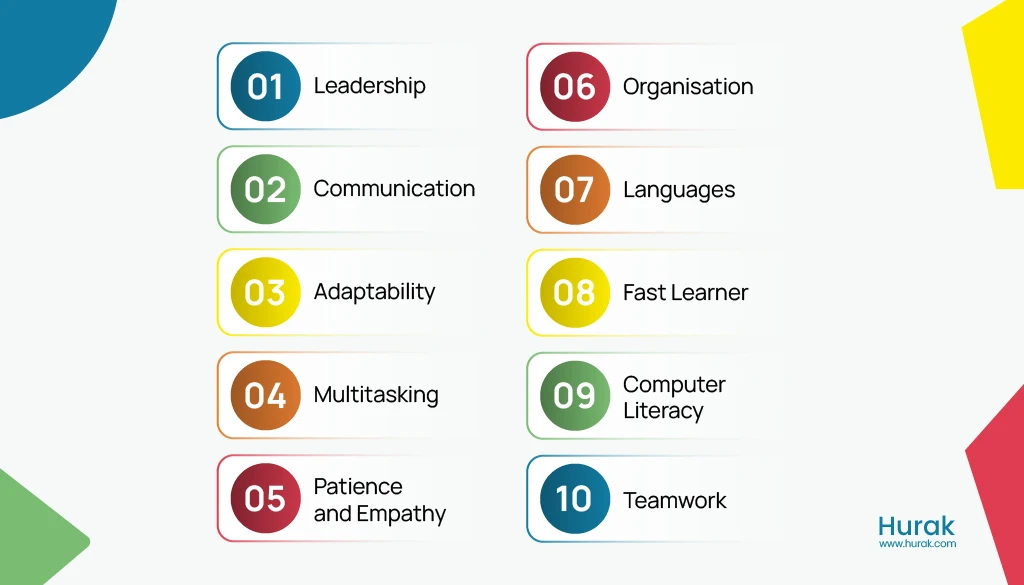
The most valuable skills on resumes for teaching assistants are soft skills, personal qualities, and practical skills. While soft skills are typically developed over time in both professional and personal contexts, practical skills can be developed through training as a teaching assistant or professional experience in educational roles.This blog will discuss the ten most important skills of a teaching assistant.The 10 Most Important Teaching Assistant Skills and Qualities LeadershipOne of the most important qualities of a teaching assistant is leadership. Teaching assistants are authority figures when working one-on-one with students. Being assertive is even more beneficial when working with groups of students because disobedient students can disrupt the classroom. On your resume, make note of any professional experience you have in a management or leadership role. If you need more professional leadership experience, think back to personal experiences where you had to learn how to lead, like engaging in your interests or hobbies.AdaptabilityThe teaching assistant role requires adaptability. Teaching assistants frequently have to make last-minute adjustments to their regular schedules to cover for staff absences or handle unforeseen difficulties. In your application for a teaching assistant position, be sure to indicate that you are adaptable to sudden changes in work. Describe how you enjoy change and work best in a setting where no two days are the same.MultitaskingTeaching assistants often handle multiple projects simultaneously, so multitasking is one of their most important skills. For instance, they might encounter unforeseen questions or interruptions that call for their quick attention while supervising a group of students, consulting a lesson plan, or marking work. When you include multitasking on your resume, you showcase your ability to manage multiple tasks simultaneously. When you multitask, you can handle problems as they arise and provide the highest calibre of instruction.Patience and EmpathyEvery learner has unique needs and struggles. By practising patience and empathy, you can offer individualised support and handle students' challenges with care. This will establish a nurturing learning environment for all students, specifically those who require more attention. As a teacher assistant, you must create an environment where all students feel respected and understood.OrganisationTeaching assistants usually have hectic schedules and are in charge of helping several students at once. Their ability to be organised facilitates efficient time management and allows them to monitor their students' academic progress. To make organising easier, keep your workspace neat, primarily if you work in shared offices or classrooms. By setting a good example, teaching assistants can motivate their pupils to be organised.LanguagesCommunicating in another language, even on a basic level, can be advantageous when working as a teaching assistant. Teaching assistants usually need to provide additional support to students whose first language is not English. Many schools highly value candidates who can support their students' English language proficiency. A Question AI study assistant can create practice questions in multiple languages, making it easier for students to improve their skills. Including your language skills on your resume may help you stand out as a more desirable candidate for this role.Fast LearnerYour career as a teaching assistant can benefit from having quick learning skills and enthusiasm in many different ways. Your ability to quickly pick up new curriculums or learning materials improves your teaching abilities with students. To support students' success, you're keen to learn about innovative teaching techniques and keep up with industry best practices. Your ability to quickly adapt to new responsibilities and procedures makes you a desirable candidate for a promotion. Additionally, being a motivated and inspired learner, you can encourage and inspire students to take an active interest in their education.Computer LiteracyTo be a good teaching assistant, you must know how to use a computer to manage work-related administrative tasks. You must also create student progress reports or keep track of attendance. Teaching assistants must assist students in using laptops or computers so they can learn using this valuable resource. Moreover, if you already have general computer literacy, you can quickly learn using new software at work. If you do not have it, you must take computer training to be a teaching assistant.TeamworkPractising teamwork is also included in the list of important skills relevant to the teaching assistant role. The purpose of teaching assistants is to support student's education at all times. They have the same objective as the parents, students, teachers, and other teaching assistants. Even working alone with students, teaching assistants must view themselves as team members. Working as a team requires you to ask for help when you need it, support others, and communicate with coworkers effectively. Being team-oriented can help you inspire others and your coworkers when faced with obstacles.Wrap UpTeaching assistants are necessary for the educational process to be improved. They play an essential role in the classroom. To improve students' educational experience, teachers should seek a great teaching assistant by identifying candidates with outstanding communication skills, subject-matter expertise, empathy, proactiveness, and a collaborative mindset. You must look for real-world experience through training programmes, volunteer work, and internships to improve your chances even more. Acknowledging and valuing the positive impact that exceptional teaching assistants (TAs) can have on students' academic performance and personal development is critical.

How to Become a Teaching Assistant With No Experience
If you don't have any experience as a Teaching Assistant, you could find yourself in a never-ending cycle where you think you need experience to get a job, but you can only get experience with a job. On the other hand, you can develop your resume as a potential teaching assistant and obtain relevant experience through various non-traditional job options.How to Become a Teaching Assistant with No ExperienceWithout experience, you can still work as a teaching assistant, but your chances of getting hired as a TA may be less. While candidates with experience are more likely to be called for interviews, you can increase your chances of landing a position as a teaching assistant by taking specific actions. Here's how to get started as a teaching assistant without prior experience:Undertake an Internship or ApprenticeshipYou could assist professional teaching assistants or even participate in lesson planning as an intern teaching assistant. Apprenticeships may provide structured training in addition to employment. Moreover, they guarantee that you will get the required skills and make money at the same time.Sign Up for Volunteer WorkAnother option is to gain experience by volunteering at your child's school or with other kid-focused organisations. If you have previously volunteered to tutor kids, this can be a great experience that applies to the position. You could also volunteer in your neighborhood if this is the first time you have done it.Apply for Teaching Assistant RolesOnce you think you already possess the knowledge and expertise needed to work as a teaching assistant, you can begin applying for relevant jobs. As a teaching assistant, you can apply for a position directly with a company, institution, or educational setting. Direct applications through academy trusts or local authorities are also available. Look for job openings without experience or educational requirements, and show flexibility in the hiring procedure.Entry-Level PositionsSeeking entry-level positions in educational settings, such as a lunchtime supervisor or breakfast/after-school club coordinator, can be a stepping stone to a Teaching Assistant role. These positions offer valuable exposure to the school environment and allow you to build relationships with teachers and administrators.Get Childcare ExperienceEngaging with children beyond the limitation of formal education can be very helpful in getting a teaching assistant job. Taking care of children or helping at after-school programmes can help you better understand their needs and behaviours. This gives you a great starting point for becoming a teaching assistant because you will be skilled at communicating, being patient, and recognising the variety of kids' needs.NetworkingIf you want to become a teaching assistant but have no experience, you must engage with professionals in the field. You can attend workshops, seminars, or relevant events where you can meet experienced professionals in the field. You can show your willingness and interest in the field and your availability for the job. These professionals often look for talented and dedicated individuals for such roles. By attending such events, you will have a better understanding of this field and will gain more knowledge.Get Teaching Assistant Supporting QualificationsEven though qualifications are important, they may not always be sufficient for a teaching assistant. Since many applicants may possess very similar skills and knowledge to yours, it could be helpful to have some additional qualifications to go along with your TA certifications. Pursuing one of the many complementary qualifications available can give you additional knowledge in specialised fields like childcare, mental health awareness, safeguarding, equality and diversity, or even first aid.FAQsCan you be a Teaching Assistant with no experience?Yes, you can become a Teaching Assistant even without prior experience. Schools often look for candidates with a passion for education and a willingness to learn; many offer on-the-job training.Can you be a Teaching Assistant with no qualifications?While some basic qualifications, like GCSEs in English and Maths, are commonly required, many schools are open to candidates who need formal qualifications in education, especially if they demonstrate the right skills and attitudes.

Teaching Assistant Qualifications: What You Need to Know
Being a teaching assistant is a challenging yet rewarding role. It doesn�t necessarily require any specific qualifications but increases one's chances of getting a job. Obtaining teaching assistant qualifications will help one learn more, develop one's skill set, and get better opportunities.This blog gives you an overview of various teaching assistant qualifications.Which Qualifications Do I Need to Become a Teaching Assistant?There is no standard requirement in the UK to become a TA, as each institute decides these requirements on its own. Some institutions can accept your job application without relevant qualifications. However, the teaching assistant role is very competitive, and candidates with nationally recognised teaching assistant qualifications are more likely to get the job.Who are Teaching Assistant Qualifications Aimed at?Teaching assistant qualifications are designed for individuals looking to begin their careers as teaching assistants or already serving in this role. These qualifications help them refresh their knowledge and develop their careers further.Most Popular Teaching Assistant QualificationsIf you want to begin a career as a teaching assistant, you will only require fundamental literacy skills, usually GCSE or equivalent (National 4 or 5 qualifications in Scotland) in maths or English. You must also have experience working with kids.Even though having a degree isn't mandatory to be a teaching assistant, it can significantly impact your resume. It shows that a candidate is competent and has gained the skills to get this role.The following qualifications help learners to understand the knowledge and skills required to work in this role. However, obtaining these qualifications is optional.Level 2 and Level 3 QualificationsThe Level 2 and Level 3 teaching assistant qualifications are suitable for individuals wishing to begin their career as a teaching assistant or new to this field. However, it requires you to either be already working in this role or have a practical placement in a school environment.Level 2 and Level 3 ApprenticeshipHere�s another pathway to getting training to be a teaching assistant: opt for a Levels 2 or 3 intermediate or advanced apprenticeship. During this training, you will work in an institute and will receive a salary.The Level 2 Award in Support Work in SchoolsThe Level 2 Award in Support Work in Schools is an entry-level teaching assistant qualification that you can enrol in with no prior experience. It covers the fundamental topics related to supporting children in a school.Level 3 Award in Supporting Teaching and Learning in SchoolsThe Level 3 Award in Supporting Teaching and Learning in Schools can also be completed without a school placement. It is a more advanced qualification than the Level 2 award. This higher-level teaching assistant qualification will give you more recognition by employers. However, it takes longer to complete.Level 4 Certificate in Higher Level Teaching AssistantThe Level 4 Certificate in Higher Level Teaching Assistant is one of the advanced level teaching assistant qualifications. To enrol on this qualification, you must demonstrate your experience in a teaching assistant role. If you wish to get appointed to more advanced roles, this qualification helps you to develop certain skills and knowledge to make you eligible for those roles.Skills Required to be a Teaching AssistantYou must have:a positive approach to working with childrenstrong regard for children's well-beingrespect for diversitycommunication and interpersonal skillsreading, writing and numeracy skillsexcellent teamwork skills for working with otherscreative abilitypatiencea flexible approach to workorganisational skillsa professional attitude to workSpeaking the local language fluently may be advantageous when working with students who are learning English as a second language (EAL). First aid, Makaton, and British Sign Language proficiency are a few other useful skills.Work ExperiencePrior experience will be helpful when trying to get a job as a teaching assistant. Work experience could include positions in:childcare and educational environmentsnurseriessports-related activitiessummer programmesworking as a youth tutorEven though few formal programmes are available for job experience, many schools accept inquiries for volunteer work. Make direct contact with them and tell them about your professional goals and the causes you would like to support, such as after-school clubs, IT, or literacy.If you're unsure, check with employers. Degrees in education, youth work, and childhood studies that include practical placements should be considered experience. Participating in your university's student ambassador role might provide additional beneficial experiences.Career Prospects After Completing Teaching Assistant QualificationsYou can advance through the grades as a teaching assistant, starting at entry level and ending at HLTA. Gaining experience, obtaining the necessary certifications, and receiving training will help you advance.You'll assume more responsibilities as you go. You will be responsible for lesson preparation, creating support materials, and giving unsupervised instruction at the HLTA level. It's possible that you'll also have to help out other TAs.You can also coordinate activities in specialised curricular learning or assistance areas, such as SEN, literacy, or IT.
What Can I Do with an AET Qualification?
The Level 3 AET qualification is the first step to begin a teaching career. It�s an introductory course that will help you develop industry basics. After completing this qualification, you can move on to more advanced qualifications. In this blog, I�ll discuss what you can do with an AET qualification and how it will help you in your career in education.What Can I Do with an AET Qualification?An AET qualification is helpful in the following ways.Start Working as a Teacher or TrainerOnce you complete the Level 3 AET qualification, you may start teaching right away because it is a nationally recognised teaching certification. With an AET certificate, you may work as a teacher in many different industries without having to pursue further education.Boost Your Employer's Training Programme to the MaximumIt's likely that your organisation offers some kind of training, even if it's limited to staff updates and inductions only. As people responsible for teaching in these areas are typically busy managers with tough tasks, teaching tends to be a bit neglected.Teach in Adult Education SettingsThe Level 3 AET makes you eligible to work in an adult education section. You can teach in adult education institutions, colleges, corporate training institutions, vocational training centres, and more.Facilitate Workshops and Training ProgrammesWith the AET qualification, you deliver training programmes, workshops, or seminars. These activities require preparing training materials, delivering presentations during workshops, and other similar activities.Become a Freelance Trainer or ConsultantThe AET makes you eligible to become an independent trainer or consultant. This position offers more flexibility than a regular job. Many companies prefer trainers on a contractual basis to train their employees. You can gain more experience by working with clients from different industries.Train Employees in Corporate SettingsThese days many organisations understand the value of regular training of their employees. With the AET qualification, you can begin working as a corporate trainer. Once you complete the AET, you become equipped with the skills required for delivering training sessions. This will help in offering effective training to corporate employees.Progress to Further Education and Training QualificationsOnce you complete your AET qualification, you can progress to higher-level qualifications like CET and DET. These qualifications will make you eligible for more advanced teaching roles.What Job Can I Get with a Level 3 AET (Award in Education and Training)?After completing the Level 3 AET (Award in Education and Training), you become eligible for many jobs in the education sector. Some of the most common roles include:Adult Education Teacher/InstructorTraining CoordinatorCorporate TrainerCommunity Education OfficerFreelance Trainer/ConsultantAssessor/Tutor for Vocational QualificationsEducation AdministratorOther Courses to Take After Completing an AET QualificationAs the Level 3 Award in Education and Training is the first qualification in the education and training sector, you can proceed with further high-level qualifications.The Level 4 CET / CTLLS QualificationThe Level 4 Certificate in Education and Training (CET) is appropriate for those with some teaching or training experience and who wish to expand their knowledge and skill set. It�s an advanced qualification that provides in-depth knowledge related to education and training. You will learn teaching methodologies, curriculum design, assessment strategies, and educational theories.The Level 5 DET / DTLLS QualificationThe Level 5 Diploma in Education and Training (DET) or formerly called DTLLS is a higher-level qualification suitable for experienced educators who are looking to enhance their teaching practice further. It�s for educators with significant teaching or training experience. You will learn advanced teaching theories, pedagogical approaches, curriculum development, and assessment strategies.What Sectors Can I Work in with a Level 3 Award in Education and Training?With an AET qualification, you can teach in various sectors, includingSecondary EducationSpecial Needs EducationPrimary and Nursery EducationHm ForcesCare HomesLaboratory TechniciansSecurity IndustryHealth IndustryBeauty IndustryLibrarians

All You Need to Know About a Teaching Assistant
What is a Teaching Assistant?As the name suggests, a teaching assistant provides assistance to teachers. A teaching assistant works closely with a teacher in planning lessons, setting up classrooms for lessons, and assisting students with their learning. Being a teaching assistant is a challenging but rewarding role. This role is ideal for individuals with a passion for helping children.The Roles and Responsibilities of Teaching AssistantsTeaching assistants play diversified roles, and their responsibilities depend on the schools they are working at. The roles and responsibilities of a teaching assistant may include:Preparing the classroom before lessonsHelping teachers manage the classAssisting teachers in planning activities for learningCarrying out administrative tasksTaking care of learning equipment before or after lessonsHelping students in listening and readingProviding help to students requiring additional supportMonitoring group activitiesHelping with co curricular activitiesSome teaching assistants work directly with students, while others work in small groups to support students. Teaching assistants. Many schools prefer skills-based hiring teaching assistants with specific areas of expertise, such as music, creative arts, special educational needs (SEN), etc.When a teacher is absent due to illness or undergoing training, classes are typically supervised by knowledgeable and highly skilled teaching assistants. Higher level teaching assistants (HLTAs) can also occasionally lead a lesson in the presence of a qualified teacher,Day-to-Day TasksA teaching assistant helps in:preparing lesson materialssetting up classrooms for learningensuring students have understood lessonsoverviewing the overall progress of the studentslooking after childrenleading classes in the presence of a teacherQualities & Skills Required to Be a Teaching AssistantIn today�s classrooms, technology plays a central role, with many schools relying on Macs and other devices for learning and administration. A teaching assistant should therefore be comfortable handling basic digital tasks, including installing or uninstalling programs, to keep devices running smoothly and ready for student use. If you want to become a teacher assistant, you must have:Ability to develop good relationships with children.Good communication skillsActive listening skillsPatience and skills to stay calm in every situationFlexibility to adapt to working on different activitiesPolite behaviourSkills to provide the best conditions for learningAbility to use a computer, laptop, or tablet.The above mentioned skills are not technical skills to become a teaching assistant. However, anybody wishing to become a teaching assistant must possess these qualities and skills to carry out day-to-day tasks effectively.How to Become a Teaching AssistantBecoming a teaching assistant does not require any specific qualifications. However, acquiring the right teaching qualifications will add value to your resume and position you as a stronger applicant. They will also provide the fundamental knowledge and skills to help you in the work.Following are the ways to become a teaching assistant:a college coursean apprenticeshipvolunteeringapplying directly�Qualifications�Entry requirementsA College Course-� Level 2 or 3 Certificate in Supporting Teaching and Learning in Schools- Level 3 Diploma in Childcare and Education- T Level in Education and Early Years- 2 or more GCSEs at grades 9 to 3 (A* to D), or equivalent, for a level 2 course- 4 or 5 GCSEs at grades 9 to 4 (A* to C), or equivalent, for a level 3 course- 4 or 5 GCSEs at grades 9 to 4 (A* to C), or equivalent, including English and maths for a T levelAn Apprenticeship- Teaching Assistant Level 3 Advanced Apprenticeship- 5 GCSEs at Grades 9 to 4 (A* to C), or equivalent, including English and mathsVolunteering- One possible way to gain experience is volunteering at a nearby school or community organisation. Sometimes, volunteering results in paid employment or the opportunity to achieve a certification.- No entry requirementsApplying Directly- Schools, local authorities, and academy trusts all accept direct applications for jobs.�- You will have an advantage if you have training in youth work, playwork, childcare, or nurseries.- The entry requirements for each school vary but generally speaking you'll need GCSEs in math and English from grades 9 to 4 (A* to C).�- You�ll also need to demonstrate your ability to collaborate effectively with parents, teachers and kids.�What Qualifications Do You Need for a Teaching Assistant in the UK?GCSEs (or equivalent)Typically, schools will require candidates to have a minimum of Grade C/4 or above in English and Mathematics, although some may also require qualifications in other subjects.Level 2 or Level 3 Teaching Assistant QualificationMany schools prefer candidates to have completed a relevant qualification such as a Level 2 or Level 3 Certificate or Diploma in Supporting Teaching and Learning in Schools. These qualifications provide training and knowledge in areas such as child development, safeguarding, and supporting learning activities.ExperienceWhile not always essential, having relevant experience working with children or in an educational setting can strengthen your application. This could include volunteering, placements, or previous employment in schools or childcare settings.Career Path and ProgressionOnce you begin working as a teaching assistant, it's crucial to keep improving your skills. For that, you must take advanced qualifications, which enhance your knowledge and skills at work and help your career grow.Advanced QualificationsLevel 3 Diploma in Specialist Support for Teaching and Learning in Schools (RQF)Level 3 Certificate in Supporting Teaching and Learning in Schools (RQF)Level 3 Award in Supporting Teaching and Learning in Schools (RQF)Continued LearningYou must continue learning if you want to progress in your career. Completing new courses will help you learn the latest teaching practices and methodologies. When choosing a new course for enhanced learning, you should consider courses in specialised areas, such as special needs education.Workshops and SeminarsYou must also participate in seminars and workshops related to education and teaching. These seminars are often led by highly recognised and experienced professional who share their experiences. You get an opportunity to learn about the latest trends and research in the field. Apart from learning, you also interact with them and develop good public relations.What is the Difference Between a Teacher and a Teaching Assistant?Teachers and teaching assistants play important roles in the education system but have distinct responsibilities and qualifications. Here are the key differences between the two roles:�TeacherTeaching AssistantResponsibilitiesPlanning and delivering lessonsAssessing student progressCreating a positive learning environmentManaging the overall classroom dynamics.�Instructing students in specific subjects or areas of study.Supporting teachers in the classroom�Providing additional assistance to studentsHelping with administrative tasks and preparing materialsOffering one-on-one or small-group support.�Assist with behaviour management and classroom organisation.QualificationsTypically a bachelor's degree in education or a related subject.Teacher training programs such as a Postgraduate Certificate in Education (PGCE).Qualified Teacher Status (QTS).Holding degrees is not a requirement.Qualifications such as a Level 2 or Level 3 Certificate or Diploma in Supporting Teaching and Learning in Schools.Scope of WorkTeachers have primary responsibility for:planning and delivering lessons,assessing student progress,managing the classroomensuring that curriculum objectives are met,�and making decisions related to teaching methods.Teaching assistants have primary responsibility for:working under the guidance and direction of teachers,providing support in various aspects of classroom activities and student learning,�providing additional explanations,helping students with assignments,and reinforcing learning concepts introduced by the teacher.How Much Does a Teaching Assistant EarnThe salaries of teaching assistants in the UK depend on the levels, duties, roles, and where you work. Salaries for different levels are as follows:The Level 1 Teaching Assistant earns around �18,300 per year.The Level 2 Teaching Assistant earns around �18,880 to �19,000 per year.The Level 3 Teaching Assistant earns around �19,260 to �25,000.These salaries are for full-time, permanent Teaching Assistants. If TAs are working part-time, term-time only, or casual contracts, their salaries can be a lot less.A teaching assistant's salary in the UK varies widely, as there's no national pay scale. Most schools adhere to local government pay scale for support staff, but this differs based on school type. Local authority guidelines don't bind Independent institutions.Educational recruitment agencies might offer higher rates, especially for graduates, but job security isn't guaranteed.Teaching Assistant CoursesHere are some very popular qualifications for becoming a teaching assistant:Level 2 Certificate in Supporting Teaching and Learning in Schools (RQF)Level 2 Award in Support Work in Schools (RQF)Level 3 Diploma in Specialist Support for Teaching and Learning in Schools (RQF)Level 3 Certificate in Supporting Teaching and Learning in Schools (RQF)Level 3 Award in Supporting Teaching and Learning in Schools (RQF)Level 4 Certificate in Higher Level Teaching Assistant (HLTA) (RQF)FAQsCan I be a teaching assistant with no experience?Yes, you can be a teaching assistant without any experience. Many faculties and institutions hire candidates who are open to learning and show dedication. Some institutions also offer on-the-job training to fresh candidates so they can learn while working. You can also work as a volunteer to get some experience.How long does it take to become a teaching assistant?Typically, you can become a teaching assistant by achieving relevant qualifications, which can take several months to a year. After that, it depends on the availability of jobs in your area. Getting experience through part-time work or volunteering can improve your chances of finding employment more quickly.What is another name for a teaching assistant?There are several other names for a teaching assistant such as teacher's aide (TA), education assistant (EA), or team teacher (TT).What is a SEN teaching assistant?A SEN (Special Educational Needs) teaching assistant is a professional who provides support to students with special educational needs or disabilities in the classroom. Their role involves assisting these students with their learning, providing additional support and guidance as needed, and helping them to access the curriculum.
Benefits of Level 3 AET Qualification
Getting the Level 3 Award in Education and Training (AET) can help educators grow and improve their professional capacities in several ways. Those who obtain this certification will thoroughly understand teaching methodologies, efficient instructional strategies, and assessment techniques. In this blog, I�ll discuss the top 7 benefits of getting the Level 3 Award in Education and Training qualification.Benefits of the Level 3 AET QualificationHere are the top seven benefits of the Level 3 AET qualification.Enhanced Teaching SkillsObtaining the Level 3 AET certification aids educators in developing their teaching skills. With this certificate, teachers can impact their students' learning results and deliver effective instruction.Teachers with a Level 3 AET qualification will thoroughly understand instructional strategies, teaching methodologies, and assessment techniques. This certification can enhance educators' lesson design, delivery, and evaluation skills, enabling them to provide their students with exciting and productive learning opportunities.They also learn about various learning capacities, styles, and requirements to better adapt their teaching strategies to various students' demands.Career Advancement OpportunitiesA Level 3 AET certification provides access to training and educational options for job progression. Teachers can apply for jobs as adult education tutors, lecturers in higher education, teaching assistants, and vocational trainers. In addition to providing chances for professional growth and advancement in teaching, this qualification enhances teachers' credibility.The Level 3 AET qualification can help obtain higher-level teaching positions or specialised certifications in specific subject areas. As they gain experience and expertise, teachers might move into leadership positions such as department heads, curriculum coordinators, or educational consultants.Increased Confidence and ProfessionalismTeachers who complete the Level 3 AET certificate are equipped with the professionalism and self-assurance needed to succeed in their teaching professions. With this certification, educators gain a better grasp of teaching theories, strategies, and best practices, which boosts their confidence in their abilities to organise and present lessons that engage students.Furthermore, professionalism in relationships with stakeholders, colleagues, and students in the educational context is emphasised by the Level 3 AET qualification. The emphasis on professionalism includes reflective practice, ethical behaviour, and communication skills, all supporting teachers' self-assurance in their professional skills and overall efficacy in the classroom.Flexibility and AdaptabilityThe Level 3 AET prepares educators to meet students' diverse needs in today�s learning environment. With this qualification, they learn practical teaching techniques, methodologies, and styles that help them accommodate various learning environments.The qualification also equips learners with teaching skills in different environments, including traditional classrooms, online settings, or vocational training programs.In this qualification, educators learn to be more flexible in teaching methods to meet the evolving educational trends and curriculum. With flexibility and adaptability, educators can deliver content more effectively during their lessons in the classroom.Recognition and AccreditationEducators are recognized and accredited with Level 3 AET. This demonstrates that the educator has completed the training programme and is capable of meeting educational institution standards.This qualification proves the educators� skills and expertise to potential employers. It shows they are proficient in their field, which increases their professional credibility and leads to better career opportunities.Improved Classroom ManagementAfter completing this qualification, educators become eligible to manage classrooms effectively. They learn skills and strategies that help them maintain discipline in the class and make learning more effective for their students.Moreover, they learn to manage student behaviour and adverse situations calmly. This helps them minimise disruptions during class and make the most of their teaching sessions. Educators who have achieved Level 3 AET successfully develop a healthy learning environment for students who feel motivated to learn.Increased Versatility as an EducatorThe Level 3 AET qualification trains educators in various teaching methodologies and approaches. With this qualification, educators become more prepared to meet the diverse needs of students. Educators become eligible to deal with students from different backgrounds, capabilities and learning preferences. As a result, these educators show more versatility while teaching, which makes students comfortable in the learning environment.Wrapping Up:In this blog, I�ve shared the 7 benefits educators can get by achieving the Level 3 AET qualification. Undoubtedly, AET is a rewarding qualification that is the stepping stone in the teaching career. Getting this qualification is suitable for you if you want to begin your career in education.
Education Training Qualifications: AET, CET DET
What Are Education and Training Qualifications?Education and Training Qualifications refer to certifications designed to provide individuals with the necessary skills and knowledge to become effective educators and trainers. These qualifications are commonly sought after by those aspiring to work in the teaching, training, and education sectors. These qualifications are commonly recognised in the UK, particularly in further education and training. They provide individuals with the necessary skills and knowledge to excel in teaching and training roles and can lead to various career opportunities in education.The 3 Education and Training qualifications are:Level 3 Award in Education and Training (AET)Level 4 Certificate in Education and Training (CET)Level 5 Diploma in Education and Training (DET)Overview of AET, CET, and DET QualificationsThe Level 3 AET or PTLLS QualificationThe Level 3 Award in Education and Training (AET) / Preparing to Teach in the Lifelong Learning Sector (PTLLS) Qualification suits individuals new to teaching or training roles. It introduces teaching and learning and covers topics such as planning and delivering inclusive teaching sessions, assessing learners, and understanding roles and responsibilities in education and training. Level 3 AET / PTLLS is typically the entry-level qualification for teaching and training positions in the UK.The Level 4 CET or CTLLS QualificationThe Level 4 Certificate in Education and Training (CET) / Certificate in Teaching in the Lifelong Learning Sector (CTLLS) Qualification is suitable for individuals with some teaching or training experience and wanting to develop their skills and knowledge further. It covers topics such as understanding the principles of assessment, using resources for education and training, and understanding the relationships between teachers and other professionals in education and training settings.The Level 5 DET or DTLLS QualificationThe Level 5 Diploma in Education and Training (DET) / Diploma in Teaching in the Lifelong Learning Sector (DTLLS) Qualification is suitable for individuals with significant teaching or training experience and wanting to enhance their expertise further. It covers advanced topics such as researching, planning, and delivering complex teaching sessions, assessing and supporting learners in education and training, and evaluating their practice in education and training.CTLLS, PTLLS, DTLLS, AET, CET, or DET � Which Ones Are Still Active?Currently, the active qualifications areAET (Level 3 Award in Education and Training)CET (Level 4 Certificate in Education and Training)DET (Level 5 Diploma in Education and Training)These qualifications (AET, CET, DET) remain active because they are designed to meet the evolving needs of the UK education and training sectors. They provide individuals with essential skills and knowledge to excel in teaching and training roles. Additionally, they align with current educational policies and frameworks, ensuring that educators and trainers are equipped to meet the demands of contemporary learning environments.Why CTLLS, PTLLS, and DTLLS Are Not Active Anymore?CTLLS, PTLLS, and DTLLS are no longer active because they have been replaced by updated qualifications that better align with current educational standards and frameworks. The newer qualifications, AET (replacing PTLLS), CET (replacing CTLLS), and DET (replacing DTLLS), reflect changes in educational practices, policies, and the evolving needs of the education and training sectors. By phasing out the older qualifications and introducing updated ones, regulatory bodies ensure that educators and trainers receive training that is relevant, up-to-date, and aligned with industry standards.PTLLS (Preparing to Teach in the Lifelong Learning Sector): PTLLS was replaced by the Level 3 Award in Education and Training (AET). AET serves as the new entry-level qualification for teaching and training roles. PTLLS is no longer available.CTLLS (Certificate in Teaching in the Lifelong Learning Sector): CTLLS has been replaced by the Level 4 Certificate in Education and Training (CET). CET is the updated qualification for individuals with some teaching or training experience who want to develop their skills further. CTLLS is no longer available.DTLLS (Diploma in Teaching in the Lifelong Learning Sector): DTLLS has been replaced by the Level 5 Diploma in Education and Training (DET). DET is the advanced qualification for individuals with significant teaching or training experience who want to enhance their expertise. DTLLS is no longer available.Understanding AET (Award in Education and Training)The Award in Education and Training (AET) is a foundational qualification for individuals aiming to enter or enhance their teaching skills. It provides a comprehensive understanding of teaching roles, responsibilities, and boundaries, along with effective lesson planning, delivery, and assessment techniques.For a more detailed guide on the Level 3 AET (formerly known as PTLLS) qualification and its significance, read our blog "The Level 3 AET / PTLLS Qualification Guide: All You Need to Know"Understanding CET (Certificate in Education and Training)The Certificate in Education and Training (CET) is an advanced qualification designed to deepen their knowledge and expertise in education and training. CET builds upon the foundational concepts covered in the AET and offers a more comprehensive understanding of teaching methodologies, curriculum design, assessment strategies, and educational theories.For further insights into the CET qualification and its benefits, read my blog, "The Level 4 CET / CTLLS Qualification Guide: All You Need to Know"Understanding DET (Diploma in Education and Training)The Diploma in Education and Training (DET) is a higher-level qualification aimed at experienced educators seeking to enhance their teaching practice further and advance their careers in education and training. DET provides a comprehensive understanding of advanced teaching theories, pedagogical approaches, curriculum development, and assessment strategies.For more information on DET qualification and its significance, read my blog, "The Level 5 DET / DTLLS Qualification Guide: All You Need to Know"Comparing AET, CET, and DET�ScopeDepthCareer ProspectsOpportunitiesAETAET is an entry-level qualification that provides an introduction to teaching and training.It covers fundamental topics such as planning and delivering inclusive teaching sessions, assessing learners, and understanding roles and responsibilities in education and training.AET can open doors to entry-level teaching or training positions in various sectors, such as further education, adult education, workplace training, and community education.Opportunities may include roles like teaching assistant, trainer in vocational settings, or community education instructor.CETCET is suitable for individuals with some teaching or training experience who want to develop their skills and knowledge further.It covers more advanced topics than AET, such as understanding the principles of assessment, using resources for education and training, and understanding relationships between teachers and other professionals.CET can lead to more advanced teaching or training positions and opportunities for career progression.Individuals with CET may pursue roles such as qualified teachers in further education colleges, training provider coordinators, or instructional designers.DETDET is designed for individuals with significant teaching or training experience who seek to enhance their expertise.It offers the most comprehensive coverage among the three qualifications, including researching, planning, and delivering complex teaching sessions, assessing and supporting learners, and evaluating one's own practice in education and training.DET offers the highest level of qualification and can lead to advanced leadership and management roles in education and training.Career opportunities may include roles like head of department in further education, curriculum developer, educational consultant, or senior trainer in corporate settings.Choosing the Right Education & Training Qualification: AET, CET, or DET? Choosing the right education and training qualification among AET, CET, or DET depends on several factors, including your career goals, experience level, and desired level of responsibility. Here's a guide to help you decide:AET (Level 3 Award in Education and Training)Ideal for: Individuals new to teaching or training roles and need a foundational understanding of educational principles.Consider if: You're looking to start a career in teaching or training and need an entry-level qualification to qualify for basic teaching positions.Advantages: Provides essential knowledge and skills for entry-level teaching or training roles. It's a good starting point for those with little to no experience in education.Limitations: Scope is limited compared to higher-level qualifications, which may restrict career advancement without further study.CET (Level 4 Certificate in Education and Training)Ideal for: Individuals with some teaching or training experience who want to develop their skills further and potentially take on more responsibility in educational settings.Consider if: You have some experience in teaching or training and want to deepen your understanding of educational principles and practices.Advantages: Offers a more in-depth exploration of teaching and training topics compared to AET. Can qualify you for more advanced teaching or training positions.Limitations: May not be sufficient for certain leadership or management roles in education, which may require higher qualifications like DET.DET (Level 5 Diploma in Education and Training)Ideal for: Individuals with significant teaching or training experience who aspire to leadership and management roles in education or training.Consider if: You have substantial experience in teaching or training and seek advanced knowledge and skills for leadership positions.Advantages: Provides extensive training in educational leadership, management, and advanced teaching techniques. Qualifies you for senior roles in education and training.Limitations: Requires significant teaching or training experience as a prerequisite and involves a higher level of study, which may be challenging for some individuals.Consider your long-term career goals, your current level of experience, and the responsibility you aspire to in the education and training sector. Additionally, research specific job requirements and industry standards to ensure your chosen qualification aligns with your career aspirations. If unsure, seeking guidance from educational institutions or career counsellors is advisable to make an informed decision.