

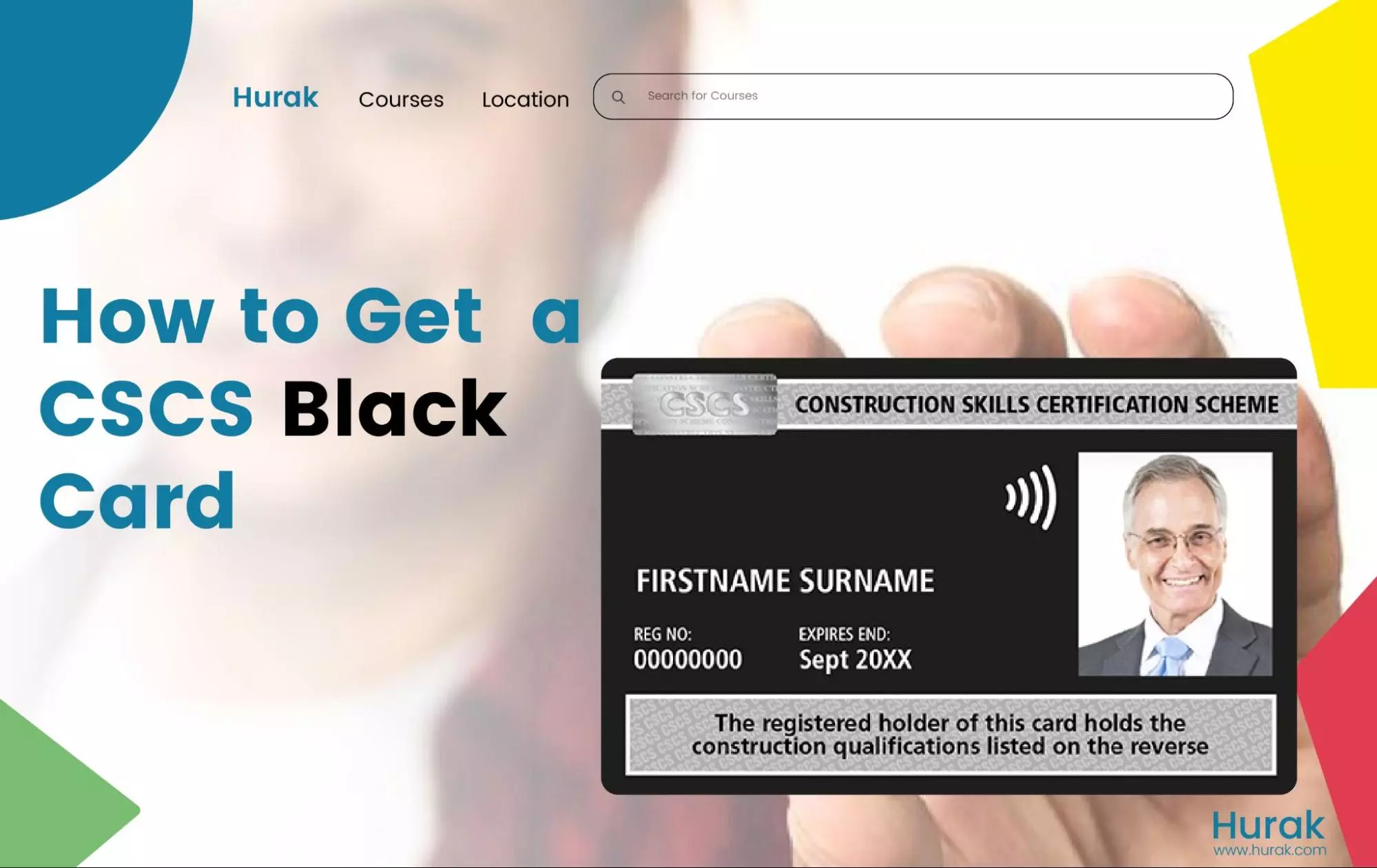
Know More About CSCS Black Card: What it Means and How to Get it
This blog will discuss the most common questions about the CSCS Black Card in construction. If you've ever wondered what it takes to get this prestigious card, how it compares to the White CSCS Card, or if it's worth the investment, you're in the right place.I'll explain the key details and help you understand why the CSCS Black Card is important in the construction industry.What qualification is a Black CSCS Card?The Black CSCS Card is not just another card in the Construction Skills Certification Scheme (CSCS) in the UK. It is a symbol of the highest level of qualification and competence within the construction industry. The path to obtaining a Black CSCS Card may differ based on the role and specialization, but the prestige it brings remains the same.To earn a Black CSCS Card, it's not just about ticking off a checklist. It's about proving your advanced skills, showcasing your extensive experience, and possibly presenting additional qualifications that are relevant to your specific role in the construction sector. This could mean achieving NVQ/SVQ qualifications of level 5 or above, completing advanced training courses, obtaining professional memberships or certifications, or demonstrating significant managerial or technical expertise in your field.What is better a White or Black CSCS CardWhether a White or Black CSCS Card is better depends on your career stage, qualifications, and the level of responsibility you hold within the construction industry.White CSCS Card: Typically associated with entry-level positions or individuals still in training. It signifies that the holder has basic construction skills and knowledge, often acquired through completing a relevant training course or apprenticeship program.Black CSCS Card: This card represents the highest level of qualification and competence within the CSCS scheme. It's usually associated with managerial or professional roles within the construction industry. Holders of a Black CSCS Card have demonstrated advanced skills, extensive experience, and possibly higher-level qualifications relevant to their specific role.If you're just starting in the industry or working in a position that doesn't require advanced qualifications or managerial responsibilities, a White CSCS Card may be sufficient. However, if you aspire to progress in your career, take on more senior roles, or work in specialised construction areas, obtaining a Black CSCS Card could be beneficial as it reflects a higher level of expertise and competence.Choosing between a White and Black CSCS Card depends on your career goals, qualifications, and the level of responsibility you hold or aspire to within the construction sector.How do I get a Gold or Black CSCS Card?Step 1: Complete NVQ/SVQ Level 4, 5, 6, or 7Complete a relevant Construction Management/Technical related NVQ/SVQ Level 4, 5, 6, or 7 or an SVQ at SCQF Level 10 or 11 in a Construction Management/Technical related qualificationStep 2: Pass the CITB (MAP) TestPass a CITB Health Safety and Environment Test for Managers and Professionals (MAP). This assessment evaluates your ability to respond to situations involving the chance of loss or injury as a manager on the site.At Hurak, we handle all the arrangements to ensure your CITB test reservation is secured effortlessly. Reserve your test today!Before you attempt the CITB test, you should take a free mock test exam.Step 3: Apply for the CSCS Black CardCreate an account on the CSCS online portal, enter the required details, and apply for the card.How much does a Black CSCS Card cost?The application fee for a CSCS card remains consistent across all card types at �36. Obtaining a CSCS Black Card covers the relevant NVQ or SVQ qualification expenses, the CITB test, and the CSCS Gold Card application.Enrolling on Levels 4, 5, 6, or 7 of the relevant NVQ/SVQ could cost between � 300 and �1,000. Booking a CITB HS&E Test costs �23.50. Considering all these expenses provides an estimate of the total cost of obtaining a CSCS card.Can I get a Black CSCS Card without NVQ?Obtaining a CSCS Black Card without a relevant NVQ/SVQ is not possible. Even extensive managerial experience in the industry does not suffice. CSCS has enforced a mandatory requirement for individuals seeking the CSCS Black Card to have completed a construction management/technical-related NVQ level 4 or higher.One option for meeting the criteria for a CSCS Black Card is enrolling in the Level 6 NVQ in Construction Site Management. This qualification involves on-site assessment, allowing individuals to continue working without interruption. Typically completed within 4 to 6 months, this course enhances job prospects for those holding the card.Can I get a Black CSCS Card with an NVQ level 4?You can obtain a Black CSCS Card with an NVQ level 4 qualification. While a higher-level NVQ/SVQ qualification (such as level 5 or above) is typically required for the Black CSCS Card, an NVQ level 4 can still meet the eligibility criteria in certain circumstances. Alongside the NVQ level 4, you would need to demonstrate additional qualifications, extensive experience, and competence relevant to your specific role within the construction industry. Meeting these requirements would qualify you for the prestigious Black CSCS Card, signifying your advanced skills and expertise in the field.Is a White CSCS Card better than a Black Card?A Black CSCS Card generally indicates a higher qualification, expertise, and responsibility level within the construction industry than a White CSCS Card. While a White CSCS Card is often associated with entry-level positions or basic skills, a Black CSCS Card is typically held by individuals in managerial or professional roles who have demonstrated advanced skills, extensive experience, and possibly higher-level qualifications relevant to their specific job roles. Therefore, regarding career progression and opportunities within the construction sector, a Black CSCS Card is generally considered more advantageous than a White CSCS Card.What do you need for a Black CSCS Card?To obtain a Black CSCS Card, you must demonstrate advanced qualifications, extensive experience, and competence relevant to your specific role within the construction industry. This may include achieving higher-level NVQ/SVQ qualifications (such as level 5 or above), completing advanced training courses, obtaining professional memberships or certifications, or demonstrating significant managerial or technical expertise.Is a White CSCS Card higher than a Black Card?No, a White CSCS Card is not higher than a Black CSCS Card. It's the opposite. A Black CSCS Card typically signifies a higher qualification, expertise, and responsibility within the construction industry than a White CSCS Card. While a White CSCS Card is often associated with entry-level positions or basic skills, a Black CSCS Card is held by individuals in managerial or professional roles who have demonstrated advanced skills, extensive experience, and possibly higher-level qualifications relevant to their specific job roles.ConclusionTo sum up, the CSCS Black Card is a big deal in construction. It shows you're good at what you do. While the White CSCS Card is for beginners, the Black Card is for pros. Getting it can open up lots of doors for you in your career.

More About CSCS Gold Card
If you wish to get a CSCS Gold Card, you must have some questions. In this blog post, I�ll answer your most-asked questions related to this card. I hope this will help you learn more about it.Who is eligible for a Gold CSCS Card?The Gold CSCS Card is typically reserved for those working in managerial or supervisory roles within the construction industry. Eligibility for the Gold CSCS card usually requires possessing relevant qualifications and experience and passing the relevant CITB HS&E Test.Once an individual meets these criteria, they can apply for the card through the CSCS official website or by contacting CSCS directly. All necessary documentation and evidence of qualifications and experience must be provided to support the application. Meeting these requirements demonstrates high competence and readiness for managerial or supervisory roles within the construction industry.What is the easiest way to get a Gold CSCS Card?The easiest way to obtain a Gold CSCS Card is by meeting the eligibility criteria, including the necessary qualifications and experience. Once you meet the requirements, you can apply for the card through the CSCS website or by contacting them directly. It's important to ensure you have all the required documentation and certifications before applying.CSCS Blue vs Gold?CSCS Blue and Gold cards represent different skill levels and responsibilities within the construction industry. The Blue CSCS Card is typically for skilled workers who have completed their apprenticeships or equivalent training.On the other hand, the Gold CSCS Card is for individuals in managerial or supervisory roles with higher-level qualifications and more experience. The Gold Card signifies higher competence and responsibility than the Blue Card.Can I renew my Gold CSCS Card?Yes, you can renew your Gold CSCS card. Renewal typically involves demonstrating that you still meet the eligibility criteria for the Gold card, including having relevant qualifications and experience and passing the required CITB Test.The renewal process is similar to the initial application process, where you must provide updated documentation and evidence of your qualifications and experience. You can renew your Gold CSCS card through the CSCS website or by contacting CSCS directly.How do you qualify for Gold CSCS?There are two main requirements to qualify for the CSCS Gold Course.Requirement 1: Complete the Relevant Level 3 NVQThe first step is to complete a relevant CSCS Gold Card Course, a level 3 NVQ qualification. The following are the popular NVQs for this card.Level 4 NVQ Diploma in Construction Site Supervision (Building and Civil Engineering)Level 3 NVQ Certificate in Wall and Floor TilingNVQ Level 3 Diploma in Roofing OccupationsLevel 3 NVQ Diploma in PlasteringNVQ Level 3 Diploma in Decorative Finishing - Painting & Decorating (Construction)Requirement 2: Pass the CITB HS&E Test (Operatives & Specialists)After completing the relevant NVQ, you pass the CITB Health, Safety, and Environment test (Operatives & Specialists). Before you take the test, it�s recommended that you take a free CSCS Gold Card mock test to test your knowledge. You can take unlimited free attempts until you�re fully prepared for the real test.Please go to the CSCS online portal and apply for the card. You can also apply for the card over the phone by calling the CSCS (Construction Skills Certification Scheme) on 0344 994 4777 (8 am to 6 pm, Monday to Friday).How long does it take to get a Gold CSCS Card?Once you've applied for your Gold CSCS Card, you'll usually receive it within 3 to 5 working days. However, there's an additional step now�a Level 3 NVQ qualification, proving your construction management or supervision skills. This qualification can take longer, even if you undergo an on-site assessment. Planning for this extra time when applying for your Gold CSCS card is good.Can you get a Gold Card without an NVQ Level 3?You cannot get a Gold CSCS Card without an NVQ Level 3 or equivalent. A Gold CSCS Card typically necessitates holding an NVQ Level 3 qualification or equivalent in the relevant construction field.NVQ Level 3 certifications validate a person's competence in practical skills acquired through on-the-job experience and training. This qualification demonstrates proficiency and readiness for managerial or supervisory roles within the construction industryHow much does the Gold Card cost?The application fee for a CSCS card remains consistent across all card types at �36. Obtaining a CSCS Gold Card entails covering the expenses for the relevant NVQ or SVQ qualification, the CITB test, and the CSCS Gold Card application.Typically, enrolling on a Level 3 or 4 NVQ in construction could range from �300 to �1,000. Booking a CITB test incurs a cost of �23.50. Considering all these expenses provides an estimate of the total cost of obtaining a CSCS card.Is the Gold Card free?As mentioned above, obtaining the card typically involves a fee. However, some organisations or employers may cover the cost of obtaining or renewing CSCS cards for their employees as part of their commitment to health and safety standards within the construction industry.It's best to check with your employer or relevant authority to see if they provide assistance with CSCS card fees.Are Gold Cards hard to get?The difficulty of getting a Gold CSCS card can vary depending on individual circumstances, such as experience level, qualifications, and the availability of required training or assessments.Generally, meeting the eligibility criteria, including having the necessary qualifications and passing relevant health and safety tests, is essential for obtaining the Gold card. The process may be relatively easy for individuals with the required experience and qualifications, but it does require diligence and preparation.Is the Gold Card worth having?Whether the Gold Card is worth having depends on your specific career goals and industry requirements. The Gold CSCS card typically signifies a higher level of competency and responsibility within the construction sector, which can open up opportunities for higher-paying jobs and advancement into managerial or supervisory roles.Additionally, a Gold card demonstrates a commitment to health and safety standards, which employers and clients value. However, it may be optional if you're content with your current role and don't anticipate needing the additional privileges and responsibilities associated with the Gold card.Ultimately, it's essential to weigh the potential benefits against the time, effort, and cost involved in obtaining the Gold CSCS card to determine if it's worth pursuing for your career objectives.�ConclusionGetting a CSCS Gold Card is a significant achievement in the construction industry, indicating high competence and readiness for managerial or supervisory roles. While the process may involve expenses for the relevant NVQ or SVQ qualification and CITB test, the benefits of holding a Gold Card, such as increased job opportunities and higher pay grades, make it a worthwhile investment in one's career.
Which Quality Assurance Qualification Do I Need
Quality assurance plays an important role in overcoming quality-related concerns within organisations. Quality failures, such as biased assessments, can damage an organisation's reputation. Early detection of issues saves the cost of correcting systematic errors. To become a quality assurer, you must pass relevant qualifications. QA qualifications are of two types: internal and external. A learner must read the course guidelines carefully to choose the right qualification.Internal Quality Assurance IQAQuality assurance is the backbone of maintaining quality standards in products or services. IQA confirms fairness and quality in assessments. Organisations rely on IQAs to oversee assessors' activities. They confirm that all evaluations are impartial and uphold the organisation's reputation for quality.The responsibilities of an Internal Quality Assurer may include:Verifying that assessors meet requisite standardsOrganising monitoring activitiesCollaborating with assessors, trainers, and employers for uniformity in assessment practicesAssessing the performance of trainers and assessors and offering constructive feedbackAssisting trainers and assessorsReviewing samples of assessment records and decisionsEngaging with learnersPlanning the methods and timing of assessor monitoringIdentifying the best practices across the organisationInternal Quality Assurance (IQA) ensures that institutions offering official qualifications regulated by Awarding Organisations maintain high standards.Awarding Organisations, Bodies, or Exam Boards issue certificates and set qualification standards. An IQA oversees compliance with Awarding Organisation requirements, which is especially important for assessing candidates' qualification process. .main{ border:3px solid #0f7c90; border-radius:20px; position: relative; font-family:roboto; font-weight: 400; color: #000; } .main-two{ position: absolute; top:-25px; left:45px; background-color:white; } .img-div{ border-radius : 100%; padding:2px 7px; background-color:#0f7c90; margin-right:5px; width: 50px; height: 50px; } .img{ width:30px; object-fit:contain; height:auto; border-radius : 100%; } @media only screen and (max-width: 600px) { .heading{ font-size:20px; } .img{ width:20px; object-fit:contain; height:auto; border-radius : 100%; } .img-div{ width: 40px; height: 40px; } .main-two{ left:25px; } } The right quality assurance qualification depends on your goals. Start with the IQA Award Unit 1 for foundational knowledge, or progress to IQA Units 1 and 2 for practical and theoretical skills in monitoring assessments. For leadership roles, the Lead IQA Course prepares you to manage quality assurance teams effectively. Which IQA Qualifications Do I Need?For those looking to work in internal quality assurance for an organisation, there are three IQA qualifications to consider.The Level 4 Award in Understanding Internal Quality Assurance (Unit 1) is a theory-based course intended to provide learners with the essentials of internal quality assurance.The Level 4 Award in the Internal Quality Assurance of Assessment Processes and Practice (RQF), comprised of units 1 & 2, is the most popular IQA qualification required. This credential is used for the main IQA roles within organisations and is highly useful for your career in quality assurance.What Follows the IQA Level 4 Award?Upon obtaining the Level 4 Award, individuals may choose the Level 4 Certificate in Leading the Internal Quality Assurance of Assessment Processes and Practice (RQF). This advanced qualification allows individuals to oversee their quality assurance team.Hurak offers Level 4 Awards and Level 4 Certificate programs. Learners gain access to our 24/7 student portal, which facilitates flexible study options. Visit our course offerings or contact our team for further details.External Quality Assurance (EQA)EQAs represent an awarding organisation rather than directly affiliated with an organisation or assessment centre. They offer advice, support, and assistance to the centre's Internal Quality Assurers (IQAs). They also help assessors and other staff involved in qualification processes to ensure the fair treatment of candidates. EQAs verify that qualifications are delivered in compliance with regulatory standards, such as those set by OFQUAL. This may involve preventing cheating or unethical behaviour, such as plagiarism or impersonation during assessments.Which EQA qualification Do I Need?The primary qualification in this field is the Level 4 Award in External Quality Assurance of Assessment Processes and Practice. It covers the theoretical understanding of the EQA role and the practical aspects of conducting visits, checks, and monitoring.It is suitable for individuals who oversee assessment quality externally.The Level 4 Award in Understanding the External Quality Assurance of Assessment Processes and Practice is for EQA beginners who want to understand the principles and methods of external quality assurance without needing practical application.This qualification's goal is to prepare individuals for roles in the workplace where they are responsible for maintaining assessment quality standards.What is the Difference Between Internal and External Quality Assurance QualificationsWhile both IQA and EQA are concerned with upholding the standard of quality, there are differences between their objectives and level of operations.