


How to Become a Teacher from a Teaching Assistant
If you currently work as a teaching assistant, one of your career goals can be to become a teacher. Although entering the teaching profession is quite usual after being a TA for some time, it is not always necessary. Before switching from teaching assistant to teacher, many TAs decide to advance in their positions to acquire as much knowledge and expertise as possible.Several teacher assistant certifications are available to help you advance your knowledge and expertise as a teaching assistant. This blog will guide you through five ways to transition from a teaching assistant to a teacher.Can a Teaching Assistant Become a Teacher?Yes, a TA can pursue a career in teaching. There are numerous paths to teaching, many of which teaching assistants may choose. Certain pathways call for a specific level of teaching experience and qualifications. The most popular teaching qualifications a TA can obtain to get into teaching are: teaching adults, which has various prerequisites, and teaching in schools, which requires QTS or an equivalent certificate.5 Ways to Become a Teacher from a Teaching AssistantHere are five steps to help you transition from a teaching assistant to a teacher.Complete the Adult Education Teaching QualificationLevel 3 Award in Education and TrainingThere are several types of teaching opportunities, and for TAs who want to work in the field of adult education, the Level 3 Award in Education and Training is a great place to start. This is the most fundamental teaching qualification that will help you understand teaching principles.Although it's not a requirement to become a teacher, earning a Level 3 qualification is an excellent method to determine if teaching is your right career path.Level 4 Certificate in Education and TrainingOf the three teaching and training qualifications, the Level 4 Certificate in Education and Training is the second most advanced one. It is also a recommended qualification for a teaching assistant who wants to work as an adult educator.In addition to helping you assess, refine, and enhance your current talents, the course builds core teaching and training skills. It is also the first of three courses taught in person and online.Complete the Qualification for Classroom TeachingLevel 5 Diploma in Education and TrainingObtaining Qualified Teacher Learning and Skills status (QTLS) is one path to beginning your teaching career in a classroom. To apply for QTLS, you must have the Level 5 Diploma in Education and Training (DET), the most advanced teaching and training qualification. This qualification allows you to develop your teaching and training skills.After completing the qualification, you can apply for QTLS status. This status makes you eligible to work as a teacher in a classroom or other educational settings.A Degree with QTSGenerally, you need to have QTS or an equivalent qualification if you wish to teach learners who are younger than sixteen. While some private or independent schools may not require it, it is generally recommended to have it. However, this is a prerequisite at public schools. A bachelor's degree that offers QTS, such as a bachelor of education, bachelor of arts (BA) with QTS, or bachelor of science (BSc) with QTS, is one route to obtain this professional certification.The degree you choose will probably depend on the subject you intend to teach. For example, a BSc in Physics with QTS is normally required to become a physics teacher, whereas a BA in History with QTS is more suitable for someone who wants to teach history. Teachers in elementary and high schools must have QTS.The Postgraduate Certificate of Education (PGCE)If you need QTS but also have a degree, you can take the PGCE. Graduates who wish to get into teaching can benefit from this year-long programme. Depending on the university, different prerequisites may apply, such as a lower second-class honours degree and A levels in math and English. The PGCE is comparable to a master's degree and normally takes one year to complete.Training for new teachers is part of the Initial Teacher Training (ITT) PGCE programme. Seek out PGCE courses that grant QTS following successful completion. Teachers with QTS may choose to further their education with a PGCE.The Professional Graduate Diploma in Education (PGDE) is the Scottish equivalent of the PGCE, which is the same in England, Wales, and Northern Ireland. The PGDE and PGCE programmes combine academic learning with school-based work to deliver theoretical and practical knowledge to learners.Build Relationships and Networking Networking and building contacts are essential for new entrants in teaching to grow professionally and advance their careers. Going to conferences and events in your field, connecting with mentors and colleagues, and participating in online teacher communities are all good places to start. These options can help you build a support system, exchange knowledge, and obtain insights. To network with and gain knowledge from other educators, your school may also provide professional development activities and courses. To build long-lasting relationships, remember that you should have an optimistic outlook and attitude, be receptive to new ideas, and follow up with contacts. Lastly, to learn more about the hiring process and to receive tips on making an impression as a candidate, speak with the administrators, teachers, and colleagues at your school.FAQsWhat's the difference between a fully qualified teacher and a newly qualified teacher (NQT)?An NQT, or early career teacher, is a person who has obtained QTS but has yet to finish classroom training. For NQTs, the induction phase lasts three to six terms or one to two years. They are certified to teach after passing an examination at the end of each term. This induction phase can be finished either full or part-time.Are there any registration requirements to become a teacher?In Scotland, there are regulations regarding registration. QTS or a similar qualification is the only requirement in England, Wales, and Northern Ireland. Additionally, registration with the General Teaching Council for Scotland is required.Can I become a teacher without a degree?You should consider obtaining Qualified Teacher Learning and Skills (QTLS) status if you want to transition from a teaching assistant to a teacher with no degree. Since 2012, QTLS has been acknowledged as equivalent to Qualified Teacher Status (QTS), which means it confers the same qualifications on teachers as QTS.Can a level 3 TA teach a class?Yes, anyone who has achieved the Level 3 Award in Education and Training can teach a class.Can a teaching assistant teach a class?Higher-level teaching assistants can take some lessons instead of the teacher, cover absences, and teach courses alone. Typically, the purpose of hiring teaching assistants is to assist the teacher and support the classroom environment.

Teaching Assistant Salary in the United Kingdom in 2024
If you plan to become a teaching assistant in the UK, you may wonder about the salary. Undoubtedly, it�s a respectable and rewarding career. However, before you begin your career, you must know how much you will earn as a teaching assistant (TA).This blog will explain the TA pay scale in terms of different levels. It will also discuss other important aspects related to TA salary, such as holiday allowances, TA contracts, and more.What is the Teaching Assistant Salary in the UK?Typically, a Teaching Assistant in the UK earns approximately �14,674 per year. Entry-level TAs begin at �13,984 per year, while TAs with a few years of experience earn up to �16,362 per year. These salary estimates vary depending on different factors.Teaching Assistant Pay ScaleThe TA pay scale in the UK is different because it depends on various factors such as the level, region, and experience of a TA. Generally, most institutes follow the UK�s support staff pay scale, and it�s starting salary is �13,984. Different contract types offer different salaries. For example, a term-time worker will earn less than a full-time, full-year worker, even if they are on the same scale.Let�s look at the salaries for Level 1, 2, 3, and 4 teaching assistants.TA LevelsTA SalariesDescriptionLevel 1 TA Salary�13,984If you want to begin your career as a teaching assistant in the UK, you can expect to earn approximately �13,984. This is based on the local government pay scale in 2024.Level 2 TA Salary�14,329If you have some experience as a TA, you can earn up to �14,329 as a level 2 TA. The salary jump from level 1 TA might not be significant, but you can expect to earn more with higher levels.Level 3 TA Salary�15,138With level 3, you have gained much experience in the field and can expect to earn approximately �15,138 per year. The level 3 teaching assistant salary is much higher than the salaries of levels 1 and 2.Level 4 Teaching Assistant Salary�16,362This is the highest TA salary, up to �16,362 per year. The level 4 TA is called HLTA (Higher Level Teaching Assistants).These salaries are an estimation and may vary depending on the location and several other factors. However, it provides a general idea of how much you can expect to earn as a TA in the United Kingdom.Holiday Allowances for Teaching AssistantsTeaching assistants also get school holidays as paid leave only if they are on a permanent full-time contract. Due to the nature of the job, most teaching assistants are hired on term-time-only contracts. Therefore, they don�t get the benefits of school holidays as paid leave. However, in most institutions, TAs on a permanent full-time contract have annual leave entitlement, which varies from institution to institution.Teaching Assistant ContractsThere are different types of teaching assistant contracts that define TA employment conditions. These contracts adhere to the conditions set by the local authority or the institution. These contracts are:Permanent all yearTemporary all yearPermanent term timeTemporary term timeCasualUnion Membership for Teaching AssistantsTeaching assistants should join any local government union, such as Unite, Unison, or GMB. Although it�s not mandatory, it�s highly beneficial for them.FAQsWhat is the difference in pay between level 2 and level 3 teaching assistants?Level 2 teaching assistants earn approximately �14,329, whereas level 3 TAs earn up to �15,138 annually.How much does a teaching assistant get paid in the UK?The average salary for a teaching assistant in the UK is �14,674. However, the actual compensation may vary based on the roles and levels. TAs with a few years of experience can make up to �16,362 annually, while entry-level TAs start at �13,984 annually.How many hours does a teaching assistant have to work in a week?Typically, a teaching assistant in the UK works for 32-40 hours a week. However, it mainly depends on the institute and the workload.Do teaching assistants get paid in the summer holidays in the UK?Teaching assistants are paid in the summer holidays only if they are on a full-time, permanent contract. However, this is not a rule and depends on factors such as institutes� policy, contract type, location, etcWrap Up: Teaching Assistant SalaryNow that you know about teaching assistant salaries in the UK, you can decide if this is a rewarding career for you. Remember, TA salaries vary from region to region in the UK. In some cities, TAs at a particular level can earn more than others. There are different types of contracts; teaching assistants on a full-time contract can get more benefits, such as paid holidays.
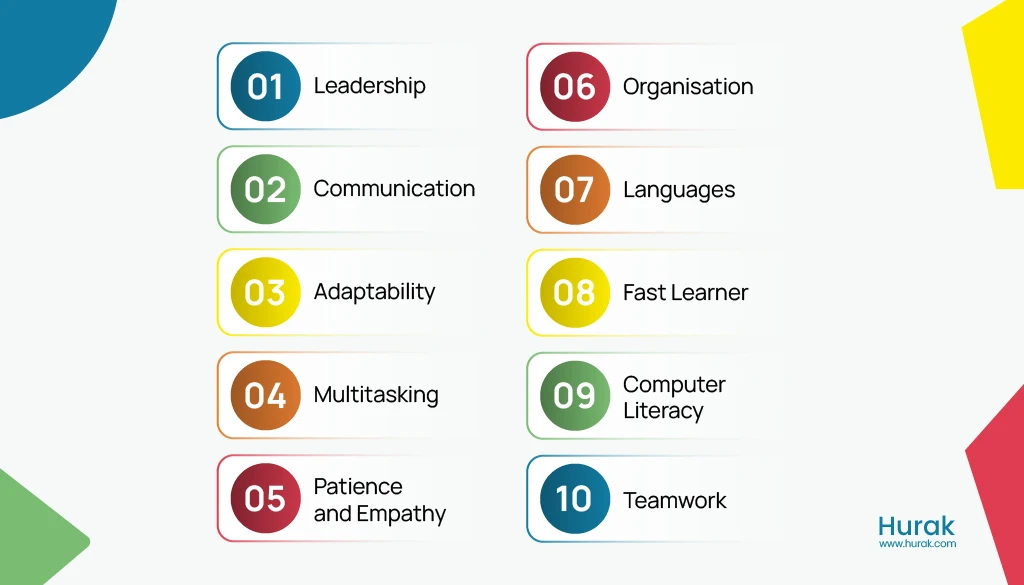
The 10 Most Important Teaching Assistant Skills and Qualities
The most valuable skills on resumes for teaching assistants are soft skills, personal qualities, and practical skills. While soft skills are typically developed over time in both professional and personal contexts, practical skills can be developed through training as a teaching assistant or professional experience in educational roles.This blog will discuss the ten most important skills of a teaching assistant.The 10 Most Important Teaching Assistant Skills and Qualities LeadershipOne of the most important qualities of a teaching assistant is leadership. Teaching assistants are authority figures when working one-on-one with students. Being assertive is even more beneficial when working with groups of students because disobedient students can disrupt the classroom. On your resume, make note of any professional experience you have in a management or leadership role. If you need more professional leadership experience, think back to personal experiences where you had to learn how to lead, like engaging in your interests or hobbies.AdaptabilityThe teaching assistant role requires adaptability. Teaching assistants frequently have to make last-minute adjustments to their regular schedules to cover for staff absences or handle unforeseen difficulties. In your application for a teaching assistant position, be sure to indicate that you are adaptable to sudden changes in work. Describe how you enjoy change and work best in a setting where no two days are the same.MultitaskingTeaching assistants often handle multiple projects simultaneously, so multitasking is one of their most important skills. For instance, they might encounter unforeseen questions or interruptions that call for their quick attention while supervising a group of students, consulting a lesson plan, or marking work. When you include multitasking on your resume, you showcase your ability to manage multiple tasks simultaneously. When you multitask, you can handle problems as they arise and provide the highest calibre of instruction.Patience and EmpathyEvery learner has unique needs and struggles. By practising patience and empathy, you can offer individualised support and handle students' challenges with care. This will establish a nurturing learning environment for all students, specifically those who require more attention. As a teacher assistant, you must create an environment where all students feel respected and understood.OrganisationTeaching assistants usually have hectic schedules and are in charge of helping several students at once. Their ability to be organised facilitates efficient time management and allows them to monitor their students' academic progress. To make organising easier, keep your workspace neat, primarily if you work in shared offices or classrooms. By setting a good example, teaching assistants can motivate their pupils to be organised.LanguagesCommunicating in another language, even on a basic level, can be advantageous when working as a teaching assistant. Teaching assistants usually need to provide additional support to students whose first language is not English. Many schools highly value candidates who can support their students' English language proficiency. A Question AI study assistant can create practice questions in multiple languages, making it easier for students to improve their skills. Including your language skills on your resume may help you stand out as a more desirable candidate for this role.Fast LearnerYour career as a teaching assistant can benefit from having quick learning skills and enthusiasm in many different ways. Your ability to quickly pick up new curriculums or learning materials improves your teaching abilities with students. To support students' success, you're keen to learn about innovative teaching techniques and keep up with industry best practices. Your ability to quickly adapt to new responsibilities and procedures makes you a desirable candidate for a promotion. Additionally, being a motivated and inspired learner, you can encourage and inspire students to take an active interest in their education.Computer LiteracyTo be a good teaching assistant, you must know how to use a computer to manage work-related administrative tasks. You must also create student progress reports or keep track of attendance. Teaching assistants must assist students in using laptops or computers so they can learn using this valuable resource. Moreover, if you already have general computer literacy, you can quickly learn using new software at work. If you do not have it, you must take computer training to be a teaching assistant.TeamworkPractising teamwork is also included in the list of important skills relevant to the teaching assistant role. The purpose of teaching assistants is to support student's education at all times. They have the same objective as the parents, students, teachers, and other teaching assistants. Even working alone with students, teaching assistants must view themselves as team members. Working as a team requires you to ask for help when you need it, support others, and communicate with coworkers effectively. Being team-oriented can help you inspire others and your coworkers when faced with obstacles.Wrap UpTeaching assistants are necessary for the educational process to be improved. They play an essential role in the classroom. To improve students' educational experience, teachers should seek a great teaching assistant by identifying candidates with outstanding communication skills, subject-matter expertise, empathy, proactiveness, and a collaborative mindset. You must look for real-world experience through training programmes, volunteer work, and internships to improve your chances even more. Acknowledging and valuing the positive impact that exceptional teaching assistants (TAs) can have on students' academic performance and personal development is critical.

How to Become a Teaching Assistant With No Experience
If you don't have any experience as a Teaching Assistant, you could find yourself in a never-ending cycle where you think you need experience to get a job, but you can only get experience with a job. On the other hand, you can develop your resume as a potential teaching assistant and obtain relevant experience through various non-traditional job options.How to Become a Teaching Assistant with No ExperienceWithout experience, you can still work as a teaching assistant, but your chances of getting hired as a TA may be less. While candidates with experience are more likely to be called for interviews, you can increase your chances of landing a position as a teaching assistant by taking specific actions. Here's how to get started as a teaching assistant without prior experience:Undertake an Internship or ApprenticeshipYou could assist professional teaching assistants or even participate in lesson planning as an intern teaching assistant. Apprenticeships may provide structured training in addition to employment. Moreover, they guarantee that you will get the required skills and make money at the same time.Sign Up for Volunteer WorkAnother option is to gain experience by volunteering at your child's school or with other kid-focused organisations. If you have previously volunteered to tutor kids, this can be a great experience that applies to the position. You could also volunteer in your neighborhood if this is the first time you have done it.Apply for Teaching Assistant RolesOnce you think you already possess the knowledge and expertise needed to work as a teaching assistant, you can begin applying for relevant jobs. As a teaching assistant, you can apply for a position directly with a company, institution, or educational setting. Direct applications through academy trusts or local authorities are also available. Look for job openings without experience or educational requirements, and show flexibility in the hiring procedure.Entry-Level PositionsSeeking entry-level positions in educational settings, such as a lunchtime supervisor or breakfast/after-school club coordinator, can be a stepping stone to a Teaching Assistant role. These positions offer valuable exposure to the school environment and allow you to build relationships with teachers and administrators.Get Childcare ExperienceEngaging with children beyond the limitation of formal education can be very helpful in getting a teaching assistant job. Taking care of children or helping at after-school programmes can help you better understand their needs and behaviours. This gives you a great starting point for becoming a teaching assistant because you will be skilled at communicating, being patient, and recognising the variety of kids' needs.NetworkingIf you want to become a teaching assistant but have no experience, you must engage with professionals in the field. You can attend workshops, seminars, or relevant events where you can meet experienced professionals in the field. You can show your willingness and interest in the field and your availability for the job. These professionals often look for talented and dedicated individuals for such roles. By attending such events, you will have a better understanding of this field and will gain more knowledge.Get Teaching Assistant Supporting QualificationsEven though qualifications are important, they may not always be sufficient for a teaching assistant. Since many applicants may possess very similar skills and knowledge to yours, it could be helpful to have some additional qualifications to go along with your TA certifications. Pursuing one of the many complementary qualifications available can give you additional knowledge in specialised fields like childcare, mental health awareness, safeguarding, equality and diversity, or even first aid.FAQsCan you be a Teaching Assistant with no experience?Yes, you can become a Teaching Assistant even without prior experience. Schools often look for candidates with a passion for education and a willingness to learn; many offer on-the-job training.Can you be a Teaching Assistant with no qualifications?While some basic qualifications, like GCSEs in English and Maths, are commonly required, many schools are open to candidates who need formal qualifications in education, especially if they demonstrate the right skills and attitudes.