

What is Holistic Assessment?
Holistic assessment means looking at the learner as a whole instead of focusing on individual parts. The word "holistic" comes from treating everything together, much like a doctor treats the whole patient, not just one symptom.As an assessor, this approach means evaluating all aspects of a learner, including their daily activities, work routine, course participation, and how they meet various learning outcomes and assessment criteria.You can often combine different assessment elements by considering everything, making the process more integrated and efficient. It�s about seeing the bigger picture of the learner�s progress and achievements.Holistic Assessment in Education and TrainingIn education, holistic assessment evaluates students' overall learning and development. It considers academic knowledge and skills like creativity, critical thinking, collaboration, and emotional growth. This approach helps educators ensure students are prepared for real-world challenges and lifelong learning rather than simply excelling in tests.Examples of Holistic Assessments in TeachingProject-Based Assessments: A project that requires students to research, design, and present a solution to a real-world problem. This assesses teamwork, critical thinking, communication, and subject knowledge.Workplace Observations: For apprentices or employees, assessors observe how learners perform their job roles in real time. This integrates technical skills, problem-solving, and interpersonal interactions.Portfolios: Learners create portfolios that showcase their work over time, demonstrating their progress and achievements in various areas.Integrated Assessments: Combining multiple criteria into one task. For instance, assessing a learner�s ability to plan, execute, and review a project, covering several learning outcomes simultaneously.Role-Playing or Simulations: Assessing learners in simulated environments, like acting out a customer service scenario, to test their practical skills, adaptability, and communication. .main{ border:3px solid #0f7c90; border-radius:20px; position: relative; font-family:roboto; font-weight: 400; color: #000; } .main-two{ position: absolute; top:-25px; left:45px; background-color:white; } .img-div{ border-radius : 100%; padding:2px 7px; background-color:#0f7c90; margin-right:5px; width: 50px; height: 50px; } .img{ width:30px; object-fit:contain; height:auto; border-radius : 100%; } @media only screen and (max-width: 600px) { .heading{ font-size:20px; } .img{ width:20px; object-fit:contain; height:auto; border-radius : 100%; } .img-div{ width: 40px; height: 40px; } .main-two{ left:25px; } } Want to learn more about holistic assessment in the UK Teaching Industry? Our assessor courses, including the Level 3 CAVA Certificate, offer a range of learning modules to help you become a holistic assessor for renowned organisations. Characteristics of Holistic AssessmentHolistic assessment is a comprehensive approach to evaluation. It considers learners' and trainees' cognitive, emotional, and communication skills. Its primary purpose is to understand the learner�s strengths, weaknesses, and interests.Characteristics of holistic assessment include:Recognition of individual talents and learning stylesIntegration of knowledge from various subject areas or domainsIdentification of unique needs and areas for growthIn summary, holistic assessment is person-centred rather than score-centred. When used alongside holistic education and training, it leads to the formation of well-rounded individuals who can accurately leverage their abilities in different contexts to reach specific goals and outcomes.Benefits of Holistic AssessmentThe holistic assessment offers several benefits:Comprehensive Understanding: It provides a complete picture of a learner�s abilities, including their strengths and areas for improvement.Real-World Relevance: Focusing on practical applications ensures learners are prepared for real-life challenges and tasks.Encourages Development: This approach supports learners� growth, fostering critical thinking, creativity, and other essential skills.Integrated Learning: It helps learners connect different skills and knowledge areas, making learning more meaningful and cohesive.Pros and Cons of Holistic Assessment in EducationProsConsProvides a complete picture of the learner�s abilitiesIt can be time-consuming for educatorsEncourages real-world application of skillsRequires extensive planning and coordinationSupports overall development, not just academicsIt may be subjective without clear criteriaPromotes integration of knowledge and skillsDifficult to standardise across learnersFosters critical thinking and creativityIt may require additional training for teachersConclusionA holistic approach to assessment means thinking beyond individual tasks and considering the learner�s overall progress. By evaluating how they apply their skills and knowledge in various contexts, assessors can create a fair, meaningful, and integrated assessment process that reflects the learner�s capabilities.
What is an End Point Assessor and How to Become One
The end-point assessor works with the apprentice only at the end of their apprenticeship to assess their skills. The assessor has no previous contact with the training provider, employer, or apprentice to ensure they remain fair and unbiased when judging the apprentice's abilities.What is an End-Point Assessor?An End-Point Assessor is an independent professional who evaluates apprentices at the end of their training. They are not connected to the learning institution and do not participate in the apprentice's training. Also known as Independent End-Point Assessors (IEPAs), they carry out final assessments using different methods.End-Point Assessors are employed by End-Point Assessment Organisations (EPAOs), which operate independently from training institutions. Many EPAOs nationwide, including Awarding Bodies, Training Providers, and specialist EPAOs. To proceed, you must find a suitable EPAO approved to conduct assessments in your sector.How to Become an End-Point AssessorTo become an End-Point Assessor (IEPA), you need to complete a recognised assessor qualification and meet certain requirements. While there isn�t one specific qualification for becoming an IEPA, here�s what you�ll need:Assessor Qualification: You�ll need an accredited qualification, such as the Level 3 Certificate in Assessing Vocational Achievement also known as the CAVA qualification. This qualification is the best option for becoming a fully qualified assessor and covers key skills needed for End-Point Assessments.Industry Experience: You must have hands-on experience in the industry you wish to assess, not just experience in evaluating. .main{ border:3px solid #0f7c90; border-radius:20px; position: relative; font-family:roboto; font-weight: 400; color: #000; } .main-two{ position: absolute; top:-25px; left:45px; background-color:white; } .img-div{ border-radius : 100%; padding:2px 7px; background-color:#0f7c90; margin-right:5px; width: 50px; height: 50px; } .img{ width:30px; object-fit:contain; height:auto; border-radius : 100%; } @media only screen and (max-width: 600px) { .heading{ font-size:20px; } .img{ width:20px; object-fit:contain; height:auto; border-radius : 100%; } .img-div{ width: 40px; height: 40px; } .main-two{ left:25px; } } Interested in Becoming an End Point Assessor in the UK Teaching Industry? Our assessor courses including the Level 3 CAVA Certificate offer a range of learning modules to help you become an endpoint apprenticeship assessor for any renowned organisation. What is End-Point Assessment (EPA)?End-Point Assessment (EPA) is the final stage of an apprenticeship. It evaluates whether an apprentice has gained the skills, knowledge, and behaviours required to perform their role effectively in the workplace. Unlike ongoing assessments during the apprenticeship, the EPA is conducted by an independent organisation to ensure fairness and objectivity.The EPA involves several methods, which may include:Practical assessmentsProfessional discussionsWritten testsPresentations or project workEach apprenticeship standard includes an Assessment Plan that outlines the specific requirements and methods used by the EPA. Passing the EPA confirms the apprentice�s competence and leads to the completion of their apprenticeship.What is the Difference between an NVQ Assessor and End Point Assessor?An NVQ assessor evaluates learners working towards accredited qualifications. They work like on-programme assessors by guiding and supporting learners throughout their course. NVQ assessors usually work for colleges or independent training organizations.AspectNVQ AssessorEnd-Point Assessor (EPA)RoleGuides and supports learners throughout their qualificationAssesses the apprentice�s skills and knowledge at the end of the apprenticeshipAssessment TimingOngoing assessments during the course or qualificationFinal assessment conducted after the apprenticeship is completedContact with LearnerWorks closely with the learner, providing guidance and feedback.Has no prior contact with the learner, employer, or training provider to ensure objectivityEmployer/Provider LinkWorks directly with the training provider or employerIndependent from the employer and training providerWork EnvironmentTypically works in colleges, training providers, or workplacesWorks for End-Point Assessment Organizations (EPAOs)FocusEnsures the learner progresses through the qualification successfullyEvaluates whether the apprentice meets the required industry standardsQualification TypesAssesses a wide range of accredited qualifications, including NVQsAssesses apprenticeship standards as outlined by Assessment PlansAssessment MethodsIncludes portfolios, observations, and assignmentsIncludes professional discussions, practical tests, and written exams (as per the apprenticeship standard)This table highlights their different roles and responsibilities in assessing learners.What is an End-Point Assessor Job?An End-Point Assessor (EPA) is a professional responsible for conducting the final assessment of apprentices during their EPA. Their role is to ensure apprentices meet the required industry standards and are ready to perform their job roles effectively.Responsibilities of an End-Point AssessorConducting Assessments: Using observations, professional discussions, or reviewing projects to evaluate apprentices' skills and knowledge.Providing Feedback: Offering fair and constructive feedback to apprentices based on the assessment.Ensuring Fairness: Maintaining objectivity and working independently from the training provider or employer.Compliance: Following the rules and guidelines set by the End-Point Assessment Organization (EPAO) and apprenticeship standards.Where Do End-Point Assessors Work?End-Point Assessors usually work for End-Point Assessment Organizations (EPAOs), which include awarding bodies, training providers, or specialised EPA agencies. They may work as employees or freelancers, depending on the demand in their sector.End-point assessor jobs are critical in ensuring apprenticeships maintain high-quality standards, contributing to workforce readiness and development.
Know All About Government-Funded Assessor Courses in the UK
Government-funded assessor courses benefit individuals in different sectors, including childcare, early years education, construction, beauty, and health & social care.Who is Eligible for Government-Funded Assessor Courses?Assessor courses funded by the government can be taken by people who fulfil certain requirements, which may include:Being aged 19 or overResiding in England, Scotland, Wales, or Northern IrelandCurrently working in or having significant experience in a relevant sectorLooking to support apprenticeships, vocational training, or NVQsThere could be funding opportunities based on apprenticeship levy schemes, local government grants and employer-sponsored training schemes. The most commonly funded assessor course by the government is the Level 3 TAQA Assessor course.What is the Government Funded Level 3 TAQA Assessor Course?The Level 3 TAQA Assessor Course (Training, Assessment, and Quality Assurance)is significant to those interested in assessing people who work towards NVQs and other vocational qualifications.�This course, previously called the A1 Assessor Award, equips individuals with the knowledge to evaluate candidates in work-based and classroom settings.The course consists of the following key units:Understanding the Principles and Practices of Assessment (Unit 1)Assessing Competence in the Work Environment (Unit 2)Assessing Vocationally Related Achievement (Unit 3)Once qualified, assessors play a�crucial role in ensuring that learners achieve occupational standards, improving workforce quality across different industries. .main{ border:3px solid #0f7c90; border-radius:20px; position: relative; font-family:roboto; font-weight: 400; color: #000; } .main-two{ position: absolute; top:-25px; left:45px; background-color:white; } .img-div{ border-radius : 100%; padding:2px 7px; background-color:#0f7c90; margin-right:5px; width: 50px; height: 50px; } .img{ width:30px; object-fit:contain; height:auto; border-radius : 100%; } @media only screen and (max-width: 600px) { .heading{ font-size:20px; } .img{ width:20px; object-fit:contain; height:auto; border-radius : 100%; } .img-div{ width: 40px; height: 40px; } .main-two{ left:25px; } } Take the next step today and explore how you can become a certified assessor with the support of a government-funded program! Government-funded assessor courses can provide the necessary skills and qualifications to support learners in vocational and workplace training. The Level 3 CAVA Certificate offers various learning modules to help you become an assessor for renowned organisations. Special Focus: Childcare and Early Years Assessor CoursesThe UK government also offers Early Years assessor courses. These are for childcare and early years education professionals; the assessor qualification is highly valuable. These courses enable assessors to evaluate learners pursuing qualifications such as:Apprenticeships in Early Years and ChildcareWith the growing demand for trained professionals in childcare, obtaining an assessor qualification allows you to support the next generation of childcare workers while advancing your career.Flexible Online Learning OptionsIt is important to understand that many professionals have busy schedules, training providers such as Hurak Learning provide online/distance learning options. This allows you to:Study at your own pace while balancing work and family commitments.Gain qualifications without taking time off workGet access to all learning materials and tutor support remotelyCareer Progression OpportunitiesUpon completing the Level 3 TAQA Assessor Course, learners are able to advance their careers through further qualifications such as:Level 3 Award in Education & Training (AET)Level 4 Internal Quality Assurance (IQA) CourseThese certifications enable professionals to expand their roles, becoming teachers, trainers, and quality assurers in their respective industries.How to Enrol in a Government-Funded Assessor CourseIt is easy to enter into a government-funded assessor course. Training providers provide various methods of enrolment:Online booking (CAVA, ACWE, AVRA, UPPA)Phone registrationIn-person consultationConclusionBecoming a qualified assessor is a rewarding career that offers professional growth and the chance to shape the future workforce. Whether you�re in childcare, construction, or healthcare, a Level 3 TAQA Assessor Course can open doors to exciting opportunities. With flexible learning opportunities and potential government funding, there has never been a better time to invest in your career.
What is an NVQ Assessor?
NVQ assessors work closely with learners, observing their performance, reviewing evidence, and providing guidance to help them achieve their qualifications. They evaluate the skills, knowledge, and competencies of individuals undertaking NVQs or similar work-based qualifications. They are crucial in ensuring that candidates meet industry standards or job roles.How to Become an NVQ AssessorIf you�re interested in becoming an assessor and want to assess vocational competence in your sector, then the Level 3 Certificate in Assessing Vocational Achievement is the qualification you need. This course is designed to train NVQ, On-Programme or End-Point Assessors in any industry. You can use this qualification to assess any area you deem occupationally competent.Good communication, organisation, and people skills are essential for giving helpful feedback, managing your time, and supporting learners. Once qualified, look for jobs with training providers or colleges and highlight your experience and qualifications. Keep learning and improving to stay effective and credible in your role.What Qualifications Do You Need to Be an NVQ Assessor?To become an NVQ assessor, you need:Industry-Specific Qualification: A qualification in the field you intend to assess, typically at the same or higher level than the NVQs you�ll determine.Assessor Qualification: The Level 3 Certificate in Assessing Vocational Achievement (CAVA) or equivalent. This qualification teaches you the skills to evaluate learners effectively.With the right qualifications, experience, and dedication, you can become qualified as an NVQ assessor, helping others achieve their professional goals. .main{ border:3px solid #0f7c90; border-radius:20px; position: relative; font-family:roboto; font-weight: 400; color: #000; } .main-two{ position: absolute; top:-25px; left:45px; background-color:white; } .img-div{ border-radius : 100%; padding:2px 7px; background-color:#0f7c90; margin-right:5px; width: 50px; height: 50px; } .img{ width:30px; object-fit:contain; height:auto; border-radius : 100%; } @media only screen and (max-width: 600px) { .heading{ font-size:20px; } .img{ width:20px; object-fit:contain; height:auto; border-radius : 100%; } .img-div{ width: 40px; height: 40px; } .main-two{ left:25px; } } Want to become an NVQ assessor in the UK Teaching Industry? Our assessor courses, including the Level 3 CAVA Certificate, offer a range of learning modules to help you become an assessor for renowned organisations. How Much Do NVQ Assessors Get Paid?The salary of an NVQ assessor can vary depending on factors such as experience, location, and the industry they specialise in. On average, NVQ assessors in the UK earn between �25,000 and �35,000 per year. More experienced assessors or those working in high-demand sectors may earn upwards of �40,000 annually. Some assessors also work freelance, charging hourly or per-assessment fees.
A Simple Guide to Becoming an Early Years Assessor
Early childhood education is crucial for a child�s development. Early years assessors are important in ensuring educators meet the correct standards.What is an Early Years Assessor?An early years assessor evaluates and checks the skills and knowledge of people working towards early childhood education qualifications. Assessors ensure learners have the skills needed to work in nurseries, preschools, or childcare settings. They observe students, give feedback, and help them meet the required standards in their work and studies.Early Years Assessor QualificationTo become an early years assessor, you need specific qualifications that show you have the knowledge and skills needed to assess early childhood education and care effectively. These qualifications ensure you can help learners grow in their understanding of child development.Levels and Types of Qualifications NeededThe qualifications you need depend on the type of assessor role you want. To start, you�ll need a Level 3 Certificate in childcare, education, or a related field. This provides the foundation for your career. However, to move forward and become a qualified assessor, you should also complete additional training in assessment.Level 3 Award in Assessing Competence in the Work EnvironmentThis qualification assesses learners in a real work environment, such as nurseries or childcare centres.Level 3 Award in Assessing Vocationally Related AchievementThis is for assessing learners in a classroom or workshop setting, where practical skills are taught.These two qualifications can also be combined into the Level 3 Certificate in Assessing Vocational Achievement (CAVA), which is widely recognised and preferred for many assessor roles. .main{ border:3px solid #0f7c90; border-radius:20px; position: relative; font-family:roboto; font-weight: 400; color: #000; } .main-two{ position: absolute; top:-25px; left:45px; background-color:white; } .img-div{ border-radius : 100%; padding:2px 7px; background-color:#0f7c90; margin-right:5px; width: 50px; height: 50px; } .img{ width:30px; object-fit:contain; height:auto; border-radius : 100%; } @media only screen and (max-width: 600px) { .heading{ font-size:20px; } .img{ width:20px; object-fit:contain; height:auto; border-radius : 100%; } .img-div{ width: 40px; height: 40px; } .main-two{ left:25px; } } Interested in becoming an Early Years Assessor? First, gain the right qualifications, hands-on experience, and assessor training. Check our CAVA, ACWE and AVRA courses to help you become an assessor and play an essential part in developing future educator. How to Become an Early Years AssessorBecoming an early years assessor involves a few key steps:Get a Qualification in Early Years Education:Start with a qualification like the Level 3 Early Years Educator to build your knowledge of child development and education.Gain Experience in Early Years Settings:It�s important to have hands-on experience in nurseries, preschools, or similar places where you�ll understand the challenges of working with young children.Complete the Assessor Training (TAQA):After getting your qualifications and experience, you�ll need to complete the TAQA qualification to become an official assessor. This training teaches you how to assess learners and give them constructive feedback.Apply for Assessor Jobs:Once you have the qualifications and experience, you can apply for assessor roles in training centres, colleges, or workplaces offering early years qualifications.Keep Learning and Improving:As with any job, it's important to continue learning. Take part in professional development opportunities to stay updated on the latest trends in early years education.ConclusionBecoming an early years assessor is a rewarding role that allows you to help shape the future of early childhood education. By assessing learners, you help ensure they have the skills and knowledge needed to support young children effectively.
What is an Assessor and How to Become a Qualified Assessor
To become qualified, one needs industry experience and an accredited qualification, such as the Level 3 Certificate in Assessing Vocational Achievement, which ensures they can assess effectively and ethically.Businesses across sectors actively seek assessors, offering opportunities for career advancement and a rewarding salary. Given their responsibilities, assessors must possess expertise in their respective fields and undergo training. It is important to learn relevant skills and knowledge before assuming the role of an assessor.What is an Assessor?An assessor is a qualified professional in the vocational and educational industry who guides trainees towards achieving their career goals. They evaluate learners' skills and knowledge against set standards. Their duties include planning and conducting assessments to gauge learners' work-related competence.NVQ AssessorAn NVQ assessor evaluates a student's skills and knowledge to ensure they meet the standards to achieve their National Vocational Qualification (NVQ). NVQ assessors work in many industries and settings, including schools, colleges, and workplaces.What Qualifications do you Need to Become a Qualified Assessor?Obtaining a Relevant Assessor Qualification, such as the Level 3 CAVA Certificate, is important to qualify as an assessor. This credential allows individuals to conduct assessments in educational environments and trains them to evaluate competence in occupational settings.Upon completion of the certification, assessors become eligible to evaluate learners pursuing National Vocational Qualifications (NVQs) and apprenticeships.These are the Four levels of courses for assessor qualifications:Level 3 Award in Understanding Assessment Principles and PracticesThe UPPA assessor course focuses on knowledge and is excellent for current assessors who want to improve their skills. It teaches the background knowledge and importance of assessment practices.Level 3 Award in Assessing Vocationally Related AchievementThe AVRA assessor course allows you to assess students in a training setting, like a workshop or classroom, but not in their workplace. To finish the course, you will complete four assessments on two learners (8).Level 3 Award in Assessing Competence in the Work EnvironmentThis ACWE assessor course lets you assess students at their workplace rather than in a classroom. Like the Vocationally Related Achievement award, you will determine the skills of two learners.Level 3 (A1, D32/33) Certificate in Assessing Vocationally Related Achievement (CAVA)The CAVA qualification lets you assess students in training and at their workplace. To finish, you must do 8 assessments with each learner (16 assessments in total). .main{ border:3px solid #0f7c90; border-radius:20px; position: relative; font-family:roboto; font-weight: 400; color: #000; } .main-two{ position: absolute; top:-25px; left:45px; background-color:white; } .img-div{ border-radius : 100%; padding:2px 7px; background-color:#0f7c90; margin-right:5px; width: 50px; height: 50px; } .img{ width:30px; object-fit:contain; height:auto; border-radius : 100%; } @media only screen and (max-width: 600px) { .heading{ font-size:20px; } .img{ width:20px; object-fit:contain; height:auto; border-radius : 100%; } .img-div{ width: 40px; height: 40px; } .main-two{ left:25px; } } Want to become a qualified assessor in the UK Teaching Industry? Our assessor courses, including the Level 3 CAVA Certificate, offer a range of learning modules to help you become an assessor for renowned organisations. What are the responsibilities of an assessor?The responsibilities of an assessor vary based on the vocation assessed and the employing organisation. Common responsibilities are:Observing students' competency in the workplaceOffering feedback and guidance to studentsParticipating in standardisation meetings alongside other assessorsDesigning and conducting training sessions and workshopsApproving awards upon fulfilment of all criteriaMaintaining comprehensive records of students' advancements.How is an Assessor Different from an Internal Quality Assurer?AssessorInternal Quality AssurerSpecific range of responsibilitiesBroad range of responsibilitiesAssesses learnersSupervises assessors�Direct evaluation of learner�s performance�Maintains the quality of training and assessments within an organisationMust qualify TAQA Level 3 CertificationsMust qualify TAQA Level 4 CertificationsCareer Opportunities for a Qualified AssessorOnce you finish the TAQA Level 3 qualification (CAVA Level 3), you can assess learners in a classroom or at work. You can determine skills in many qualifications, including:ApprenticeshipsFunctional SkillsTechnical CertificatesNVQsAwardsCertificatesDiplomasOnce you gain some experience, you can move on to something more challenging and rewarding. The next step in this career path is the TAQA Level 4 of internal quality assurance training.How Much Do Qualified Assessors Earn?Beginner or apprentice assessors can earn around �23,000 a year. The salary is typically around �25,000 annually for those who are established. Experienced ones can earn up to �35,000 per year. These figures can vary, and if you work as a freelance assessor, you can choose your working hours and days.FAQsWhat is the TAQA assessor qualification?The TAQA assessor qualification is a nationally recognised certification in the UK. It is designed for individuals who are currently assessing or want to assess the occupational competence of others in the workplace.What is the difference between CAVA and TAQA?CAVA is a qualification part of the TAQA suite. It stands for Certificate in Assessing Vocational Achievement. TAQA is not a qualification for Training, Assessment, and Quality Assurance. As the name suggests, TAQA is a suite of qualifications relevant to training, assessment, and quality assurance.Can anyone become an assessor?Anyone can become an NVQ assessor if qualified and gain relevant industry experience. NVQ assessors evaluate learners� competency in their chosen vocational field.What are the different types of assessors?Based on the certification, assessors can be Workplace, Off the Job or End-Point Assessors.
What is The Difference Between an Internal Quality Assurer (IQA) and an Assessor in the UK
An Assessor works directly with learners, evaluating their progress and ensuring they meet the required standards for their qualifications. An Internal Quality Assurer (IQA) oversees the assessment process, ensuring consistency, fairness, and compliance with established standards.In professional development and training, knowing the roles of an Assessor and an Internal Quality Assurer (IQA) is important. These roles are key in maintaining high training standards in different organisations across the UK.What Is an Assessor?An Assessor�s primary role is to support and assess learners as they work towards vocational qualifications. Whether in a workplace, training centre, or college, Assessors are directly involved with the learners. They are responsible for:Assessing Competency: Ensuring that learners meet the required occupational standards.Providing Feedback: Offering constructive guidance to help learners improve and succeed.Tracking Progress: Keeping detailed records of learners� achievements and goals.Being a Point of Contact: Building strong, supportive relationships with learners to motivate and guide them.Individuals usually complete the Level 3 Certificate in Assessing Vocational Achievement (CAVA) to become an Assessor. This qualification enables them to assess learners in both workplace and educational environments. .main{ border:3px solid #0f7c90; border-radius:20px; position: relative; font-family:roboto; font-weight: 400; color: #000; } .main-two{ position: absolute; top:-25px; left:45px; background-color:white; } .img-div{ border-radius : 100%; padding:2px 7px; background-color:#0f7c90; margin-right:5px; width: 50px; height: 50px; } .img{ width:30px; object-fit:contain; height:auto; border-radius : 100%; } @media only screen and (max-width: 600px) { .heading{ font-size:20px; } .img{ width:20px; object-fit:contain; height:auto; border-radius : 100%; } .img-div{ width: 40px; height: 40px; } .main-two{ left:25px; } } Want to become a qualified assessor or IQA in the UK Teaching Industry? Our assessor and IQA training courses, including the Level 3 CAVA Certificate, offer a range of learning modules to help you become an assessor for renowned organisations. What Is an IQA?An Internal Quality Assurer (IQA) oversees the assessment process to ensure consistency, fairness, and adherence to standards. IQAs focus on maintaining the quality of assessments and are often in a supervisory or managerial role. Their responsibilities include:Monitoring Assessment Processes: Ensuring that Assessors apply standards correctly and consistently.Standardisation: Promoting uniformity in assessment practices across different Assessors.Supporting Assessors: Providing guidance and feedback to help Assessors improve their practices.Quality Assurance: Review records, evidence, and decisions to confirm assessments meet regulatory requirements.To become an IQA, individuals need advanced qualifications such as the Level 4 Award in the Internal Quality Assurance of Assessment Processes and Practice or the Level 4 Certificate in Leading the Internal Quality Assurance of Assessment Processes and Practice.Key Differences Between Assessors and IQAsThe table below highlights the primary differences between Assessors and IQAs:AspectAssessorInternal Quality Assurer (IQA)Role FocusSupporting and assessing learners directlyOverseeing and ensuring the quality of assessmentsResponsibilitiesEvaluating learners, setting goals, and tracking progressMonitoring Assessors, standardising practices, and ensuring compliance with standardsInteractionDirectly engages with learners.Works with Assessors rather than learners.Qualifications NeededLevel 3 Certificate in Assessing Vocational Achievement (CAVA)Level 4 IQA Award or Certificate in Internal Quality AssurancePosition in HierarchyDirectly supports learnersSupervises and supports AssessorsKnowing that an assessor's role differs from an IQA's is important. An IQA checks that assessments in an organisation are done fairly. They review the decisions made by assessors. Assessors are the ones who carry out the evaluations that the IQA checks.ConclusionWhile Assessors and IQAs play distinct roles, they work together to ensure learners achieve their vocational qualifications through a fair and effective process. Assessors focus on the learners, guiding them through their qualifications, while IQAs ensure that the assessment process is consistent, high-quality, and compliant with standards.Whether you�re considering becoming an Assessor or an IQA, understanding the responsibilities and qualifications required for each role is the first step toward making an informed career choice. Both roles are critical in shaping the UK's reliable vocational education system.
The SIA Approved Contractor in the UK
Having the proper credentials can make a significant difference in the security industry. The SIA Approved Contractor Scheme (ACS) is one such credential that sets companies apart, ensuring they adhere to the highest standards.What is an SIA Approved Contractor?The Security Industry Authority (SIA) is the organisation responsible for regulating the private security industry in the UK. The Approved Contractor Scheme (ACS) is a voluntary program that improves standards in private security services. Being an SIA Approved Contractor means a company meets high customer service, operations, and employee development criteria. This builds client trust and helps the company stand out from competitors.What are the Benefits of Being an SIA-Approved ContractorGetting ACS accreditation shows that your business meets high standards, builds trust, and improves its reputation. It helps your company stand out in a competitive market, attracting more clients who value good service. Having ACS status can also give you access to contracts and opportunities that require this certification. Plus, it encourages your business to keep improving and staying efficient over time.How to Become an SIA Approved ContractorStep 1: Meet the Eligibility CriteriaTo apply, your organisation must:Be based in the UKProvide services in the private security sectorHold a valid SIA license for relevant activitiesStep 2: Complete the Self-Assessment Workbook (SAW)The SAW helps you identify areas where your business complies with ACS requirements and where improvements are needed.Step 3: External AssessmentAn independent assessor reviews your organisation to verify compliance with ACS standards.Step 4: Approval and MaintenanceOnce approved, you must maintain the standards to keep your accreditation.What is the Key Criteria for SIA Approved Contractor StatusCriteriaDescriptionFit and ProperEnsuring business owners and managers are suitable for running a security firmService DeliveryShowing efficient, high-quality services to clientsLeadershipShowing strong, ethical leadership within the organisationPeople ManagementSupporting employee growth and ensuring welfareCorporate Social ResponsibilityAdopting practices that benefit the community and environmentCommon Challenges in Achieving ACS StatusMeeting ACS requirements can be challenging for businesses, as it takes a lot of effort to meet the high standards. Assessments and improvements can be costly but valuable investments in long-term success. The accreditation also needs ongoing effort and regular reviews to maintain the standards.Comparing Approved Contractors Made SimpleMost SIA-approved contractors measure their performance against the ACS standard annually, with scores verified by independent assessors. However, businesses approved through accredited passport schemes are not required to submit scores.What Do the Scores Mean?A company�s score can give a general idea of its quality but doesn�t provide the whole picture. A low overall score might still mean the company excels in certain areas, while a high score might hide weaknesses in specific aspects. That�s why it�s also essential to consider the company�s reputation and the quality of its proposals and, if possible, review its assessment report (available with the contractor�s permission).How Are Scores Calculated?Contractors are assessed on 78 indicators, covering staff training, financial management, and health and safety. A score above zero shows the company is exceeding minimum requirements. Companies scoring below the standard must improve or risk losing their approval. The maximum score a company can achieve is 145.What Scores Are Common?Average scores vary based on the organisation's size, measured by the number of licensable staff. Comparing scores alongside other factors can help you make a more informed choice.� .main{ border:3px solid #0f7c90; border-radius:20px; position: relative; font-family:roboto; font-weight: 400; color: #000; } .main-two{ position: absolute; top:-25px; left:45px; background-color:white; } .img-div{ border-radius : 100%; padding:2px 7px; background-color:#0f7c90; margin-right:5px; width: 50px; height: 50px; } .img{ width:30px; object-fit:contain; height:auto; border-radius : 100%; } @media only screen and (max-width: 600px) { .heading{ font-size:20px; } .img{ width:20px; object-fit:contain; height:auto; border-radius : 100%; } .img-div{ width: 40px; height: 40px; } .main-two{ left:25px; } } Choosing an SIA Approved Contractor ensures you work with a trusted security provider that meets industry standards. Whether you�re hiring for door supervision, close protection, security guarding, or CCTV operations, approved contractors deliver reliable and professional services. SIA courses are important for obtaining an SIA license and opening doors to opportunities in the security industry. Why Clients Prefer SIA Approved ContractorsClients feel reassured knowing that their security provider adheres to the highest industry standards, offering them confidence in the quality of service. SIA Approved Contractors are also less likely to encounter legal or regulatory issues, providing clients with added peace of mind. Furthermore, the rigorous assessments in the approval process ensure that all operations are transparent and trustworthy, reinforcing the provider's reliability and professionalism.When hiring a private security company, you can choose between an SIA-approved contractor and a company that has not been approved. Here are some key reasons why selecting an approved contractor is a better choice.Quality Assured by the Industry RegulatorThe Approved Contractor Scheme (ACS) is a trusted mark of quality in the private security industry. Approved contractors are assessed across 78 business areas, including staff training, financial management, and health and safety policies. Choosing an approved contractor ensures you work with a business that has undergone a thorough quality assurance process.A Commitment to QualityThe ACS is a voluntary scheme, meaning that companies join because they are committed to maintaining high standards. It is also a progressive standard, with continually updated requirements to raise the level of quality businesses must achieve.Quality Assurance Throughout the ProcessIn the private security industry, sub-contracting is common. Approved contractors can only sub-contract to other approved contractors unless special permission is granted. This ensures that the high quality of service you expect is consistently maintained.Customer-Focused ServicesThe ACS encourages approved contractors to tailor their services to meet your needs, ensuring a personalised and customer-focused approach.FAQsWhat is an SIA Approved Contractor?An SIA Approved Contractor is a security business that has voluntarily met the high standards of the Security Industry Authority (SIA). These companies are recognised for their excellence in customer service, operational performance, and employee development.What are the benefits of hiring an SIA Approved Contractor?Hiring an approved contractor ensures you work with a reliable provider that meets strict industry standards. These contractors offer professional services, are less likely to face legal issues and provide tailored solutions to meet your needs.What is the ACS scoring system?Contractors are assessed across 78 performance indicators, including staff training, financial management, and health and safety. A positive score shows the company exceeds minimum standards, while ongoing compliance ensures quality service.Why do clients prefer SIA Approved Contractors?Clients choose approved contractors for their adherence to high industry standards, commitment to legal compliance, and transparent operations. These factors provide peace of mind and ensure reliable, professional service.ConclusionThe SIA Approved Contractor Scheme (ACS) benchmarks excellence in the UK security industry. It helps businesses improve their services, gain client trust, and access exclusive opportunities. Choosing an approved contractor guarantees clients high-quality, customer-focused, and legally compliant services. Whether you�re hiring for door supervision, close protection, security guarding, or CCTV operations, SIA-approved contractors offer top-level professionalism.
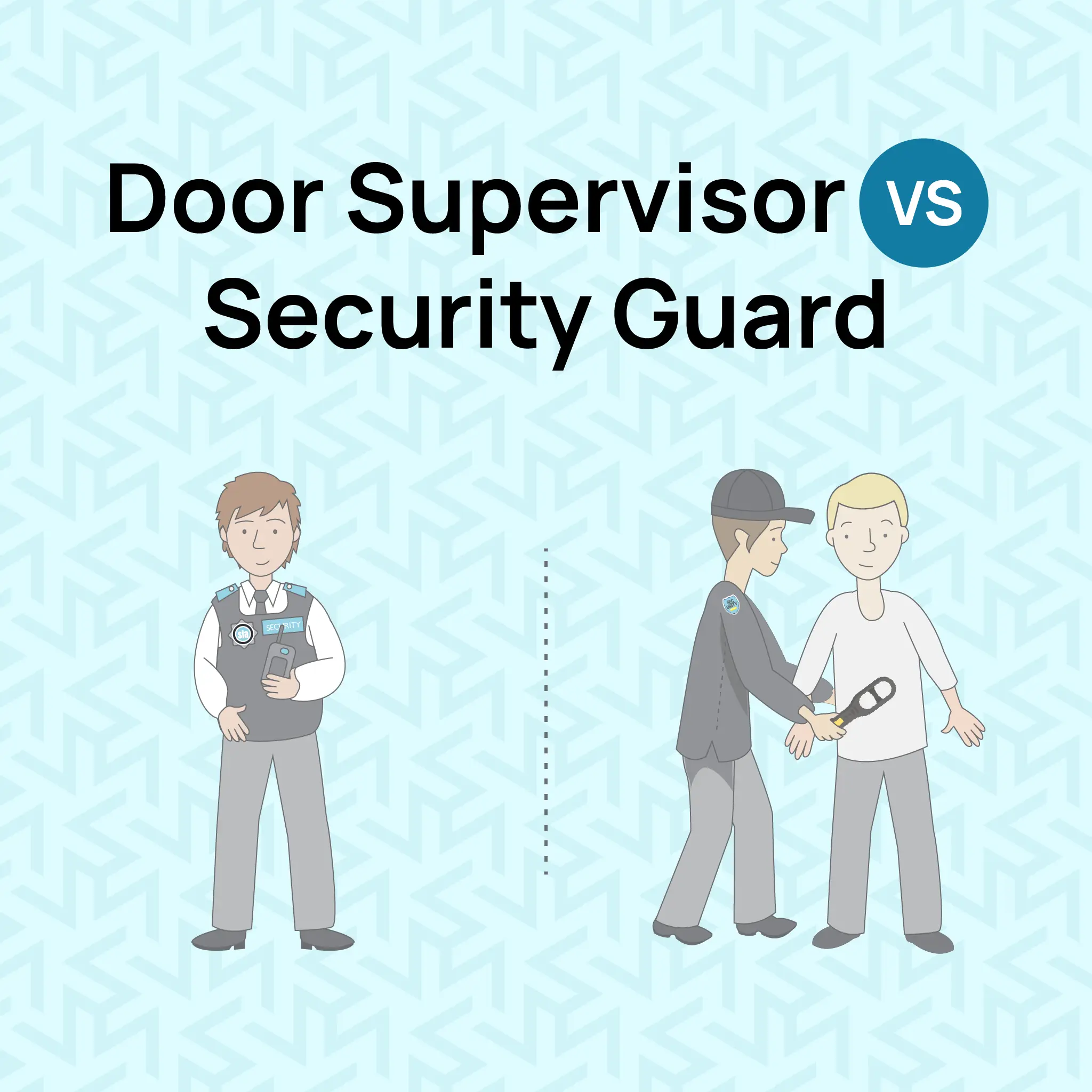
What is the Difference Between a Door Supervisor and a Security Guard in the UK
When it comes to maintaining safety and order, both door supervisors and security guards play important roles. While their responsibilities often overlap, these professions are distinct in several ways. Understanding the differences can help individuals choose the right career path or hire the appropriate personnel for specific needs. Roles and ResponsibilitiesDoor SupervisorA door supervisor is usually employed in licensed premises such as pubs, clubs, and events where alcohol is served. Their primary role is to ensure the safety of patrons, staff, and the premises. This includes managing entry, checking identification, maintaining crowd control, and preventing or addressing conflicts. Door supervisors also enforce licensing laws, such as preventing underage drinking or drug use.Security GuardOn the other hand, security guards provide a broader range of services. They are employed in various settings, such as retail stores, office buildings, hospitals, and construction sites. Their responsibilities include monitoring CCTV systems, patrolling premises, preventing theft, and responding to emergencies. Unlike door supervisors, they may only sometimes work in environments where alcohol is served.A licensed door supervisor can work as a security guard, but a security guard, even with the right license, cannot perform the duties of a door supervisor. Keep reading to know more!TrainingDoor Supervisor TrainingDoor supervisors require specific training related to managing licensed premises. This includes conflict resolution, physical intervention techniques, drug awareness, and understanding licensing laws. The training also covers the core competencies of a security guard.Security Guard TrainingSecurity guard training focuses on basic security practices, including patrolling, customer service, and emergency procedures. While the training is less specialised than door supervisors, it teaches guards the skills to ensure general safety and security.UniformDoor SupervisorDoor supervisors often wear formal or semi-formal attire, such as suits or branded uniforms, to maintain a professional appearance. Their clothing may also feature high-visibility elements for safety and identification.Security GuardSecurity guards usually wear uniforms designed for functionality and visibility. This may include high-visibility jackets, badges, and other items identifying their role. The uniform often varies depending on the employer and the nature of the venue.� .main{ border:3px solid #0f7c90; border-radius:20px; position: relative; font-family:roboto; font-weight: 400; color: #000; } .main-two{ position: absolute; top:-25px; left:45px; background-color:white; } .img-div{ border-radius : 100%; padding:2px 7px; background-color:#0f7c90; margin-right:5px; width: 50px; height: 50px; } .img{ width:30px; object-fit:contain; height:auto; border-radius : 100%; } @media only screen and (max-width: 600px) { .heading{ font-size:20px; } .img{ width:20px; object-fit:contain; height:auto; border-radius : 100%; } .img-div{ width: 40px; height: 40px; } .main-two{ left:25px; } } Did you know? A Door Supervisor is specifically trained to manage licensed premises, such as bars and clubs, often dealing with challenging situations like crowd control and intoxicated individuals. In contrast, Security Guards focus on safeguarding various environments, from corporate offices to retail spaces, ensuring general site safety and preventing unauthorised access. Check our SIA security courses that offer ? Flexible schedules | ? Expert Trainers | ? SIA Approval! Venue of WorkDoor SupervisorDoor supervisors predominantly work at night and in environments where alcohol consumption is a factor. These venues include nightclubs, bars, and large-scale events.Security GuardSecurity guards work in various environments, including retail outlets, schools, hospitals, and corporate offices. Their work may involve day or night shifts, depending on the location and requirements.Qualifications and Work RequirementsDoor SupervisorTo become a door supervisor, complete an SIA-approved training course and obtain a Door Supervisor licence. They should possess good communication and conflict management skills, physical fitness, and the ability to work under pressure.Security GuardSecurity guards must also complete an SIA-approved training course but can obtain a Security Guard licence, which has fewer requirements than a Door Supervisor licence. Strong observational skills, attention to detail, and a professional demeanour are essential.Job OpportunitiesDoor SupervisorThe demand for door supervisors is high in urban areas with a thriving nightlife. Job opportunities are common in cities with licensed premises and events.Security GuardSecurity guards have broader job opportunities, as their roles are required in various industries, including retail, healthcare, construction, and corporate sectors.Door Supervisor vs Security GuardFeatureDoor SupervisorSecurity GuardPrimary RoleMaintains order and safety at licensed premises (e.g., bars, clubs)Provides security for various settings, such as offices, malls, or eventsLegal RequirementsMust hold a Door Supervisor license issued by the SIA (UK)Requires a Security Guard license or equivalent certificationWork EnvironmentPrimarily works at venues where alcohol is served or large crowds gatherWorks in diverse environments, including retail, corporate, and industrial sitesConflict ManagementTrained to handle intoxicated individuals and de-escalate fights or disturbancesFocuses on general security threats and unauthorised accessDress CodeOften wears formal attire or branded uniforms specific to the venueUsually wears standard security uniformsKey ResponsibilitiesConducting bag checks, ensuring proper ID verification, and managing entryPatrolling premises, monitoring CCTV, and responding to alarmsInteraction with PublicHigh level of interaction, including managing crowds and handling complaintsModerate interaction, mostly with employees or visitorsPhysical TrainingMay require additional physical training for handling aggressive individualsBasic physical fitness to handle emergencies and long shiftsLegal ResponsibilitiesDoor SupervisorDoor supervisors have additional legal responsibilities due to their work in licensed premises. They must comply with the Licensing Act 2003, ensuring that establishments comply with the law. They also have the authority to refuse entry and remove individuals from the premises if necessary.Security GuardSecurity guards focus on protecting property and ensuring people's safety. While they do not enforce licensing laws, they must operate within the boundaries of the law, particularly when detaining individuals or using reasonable force.Door Supervisor vs Security Guard: Key Differences in SIA LicencesThe SIA (Security Industry Authority) issues licences for both roles, but the requirements and permissions differ. A Door Supervisor licence allows individuals to work as both a door supervisor and a security guard, providing greater flexibility. In contrast, a Security Guard licence only permits work in non-licensed premises, limiting job opportunities. Moreover, if you have a Close Protection Licence, the SIA allows you to use your licence to work as a Door Supervisor.ConclusionWhile door supervisors and security guards share common goals of ensuring safety and security, their roles, responsibilities, and work environments are distinct. Door supervisors specialise in managing licensed premises, requiring advanced training and legal knowledge, whereas security guards operate in a broader range of settings. Understanding these differences is important for pursuing a career in the security industry or hiring security personnel for specific needs.