

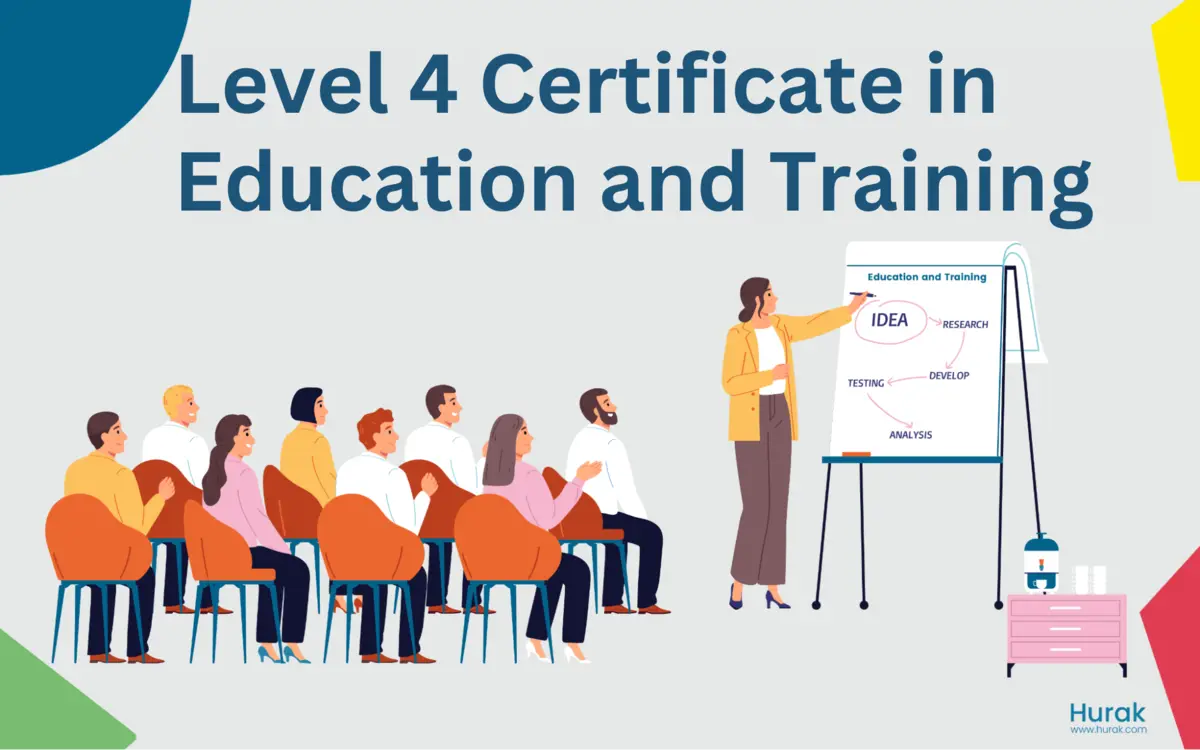
The Level 4 CET / CTLLS Qualification Guide: All You Need to Know
.breadcrumb .breadcrumb-link{ color: #0f7c90 !important } ul.breadcrumb { padding: 0; list-style: none; background: white; } ul.breadcrumb li { display: inline; font-size: 15px; font-weight: bold; } ul.breadcrumb li+li:before { padding: 8px; color: black; content: "/0a0"; } ul.breadcrumb li a { color: #0275d8; text-decoration: none; } ul.breadcrumb li a:hover { color: #01447e; text-decoration: underline; } Home Teaching The Level 4 CET or CTLLS Qualification Guide: All You Need to Know What is the Certificate in Education and Training (CET)/CTLLS?Formally called CTLLS, the Level 4 Certificate in Education and Training (CET) is a nationally recognised qualification designed for aspiring instructors or teachers. It is suitable for new instructors and those already in a teaching role looking to enhance their teaching skills and knowledge. It�s a first-stage teaching qualification with a teaching and training practice requirement.The Level 4 CET qualification is suitable for delivery in England, Wales and Northern Ireland. CET qualification aims to equip learners to advance to a higher-level qualification within the same subject area.With the Level 4 CET, you can teach in various contexts, especially in FE Colleges, Private Training Providers, HE institutions, Local Authorities, etc.What is a CTLLS Qualification?CTLLS stands for Certificate in Teaching in the Lifelong Learning Sector. CTLLS was under the old QCF framework and has now been replaced by The Certificate in Education and Training (CET). The content of both the courses is similar, with a few upgradations in CET. CTLLS was also a nationally recognised, first-stage qualification designed for instructors to enhance their teaching skills and knowledge.What Happened to the PTLLS, CTLLS and DTLLS?With the need for new qualifications in the education and training sector with up-to-date curriculums and teaching methods, PTLLS, CTLLS and DTLLS have been updated to new qualifications.Formally called the CTLLS qualification, it is now known as the Level 4 Certificate in Education and Training (CET). DTLLS is now transformed into Level 5 DET qualification, and the Level 3 AET has replaced the PTLLS.Some people still call these new qualifications with old names, but they are no longer active.What Can I Do with the Level 4 Certificate in Education and Training?With CET, you can begin or continue your role as an instructor, teacher, or trainer in various educational and training settings, such as HE institutions, schools, private training providers, vocational training institutions, local authorities, colleges, adult education centres, corporate training departments, and more.After completing the Level 4 CET training, you can work in any industry, including construction, hospitality, health and social care, or beauty. With this qualification, you gain knowledge and skills to teach courses up to Level 4.The Level 4 CET/CTLLS Qualification Training CourseThe Level 4 CET Training Course equips learners with the knowledge and skills to advance to a higher-level qualification within the same subject area. Learners will gain the foundational knowledge, understanding, and skills necessary to validate occupational competence.RequirementsThere are no strict requirements for enrolling on the Level 4 CET training course. Learner must:Be aged 19 and above.have a good understanding of the English language.Who is it for?The Level 4 CET course is designed for anyone wishing to begin or advance their career in a teaching role in an associate position. The Level 4 CET training course suits those teaching within the educational institutes and private training industry.Course DurationThe Level 4 Certificate in Education and Training (CET) offers online and in-person training that takes 360 hours. Learners have the flexibility to complete the course at their own pace. They must also demonstrate 30 hours of teaching practice.AssessmentsTo pass the CET training course, learners must pass online assignments, take a practical assessment, and show a portfolio of teaching evidence.The online assignments will include essay-type theoretical assignments.The practical assessment will involve an observation and evaluation from the tutor/assessor for at least 3 hours out of the 30 hours of teaching practice.CET Course FeeAt Hurak, the Level 4 Certificate in Education and Training (CET) is offered at �480.Course ContentThe Level 4 CET/CTLLS course has six units.Unit 1: Understanding Roles, Responsibilities and Relationships in Education and TrainingUnit 2: Planning to Meet the Needs of Learners in Education and TrainingUnit 3: Delivering Education and TrainingUnit 4: Assessing Learners in Education and TrainingUnit 5: Using Resources for Education and TrainingUnit 6: Developing, Using and Organising Resources in a Specialist AreaWhat Can I Teach with the Level 4 CET Qualification?With the Level 4 Certificate in Education and Training (CET), you can start teaching in post-16 education and training. This qualification allows you to teach different subjects and courses in various contexts and disciplines. Common areas include:Professional development coursesVocational or technical subjectsSpecialised skills or tradesWork-based learning or apprenticeship programsAdult education or lifelong learning coursesPersonal development and soft skills trainingBasic literacy and numeracy skillsPreparing learners for specific qualifications or examsWhich Qualifications Do I Need For Teacher Training?Three qualifications exist to begin a career or progress working as a trainer.Introductory Qualification To begin your career in education and training as a teacher, you can take the Level 3 Award in Education and Training (AET). It�s an introductory qualification for learners having no work experience in teaching.Advance Qualification To advance your career as a teacher and obtain better job opportunities, you must choose the Level 4 Certificate in Education and Training.Qualification for Qualified Teacher Learning and Skills (QTLS) StatusTo achieve Qualified Teacher Learning and Skills (QTLS) Status, you must take the Level 5 Diploma in Education and Training.What is Level 4 CET Equivalent to?The Level 4 Certificate in Education and Training (CET) is equivalent to the first year of a bachelor's degree. It equips people with the abilities and know-how needed to start a career in instruction or training.What�s Next?To become a fully qualified teacher, you must achieve QTLS. The Level 4 Certificate in Education and Training (CET) or CTLLS qualification makes you eligible to progress to the Level 5 Diploma in Education and Training (DET) or DTLLS. Once you complete the Level 5 DET, you can apply for QTLS.Take Your Education and Training Course with Hurak With the right training provider like Hurak, you can start a rewarding career in the lifelong learning sector. Over the years, Hurak has helped thousands of trainers to achieve the required qualifications and begin their teaching careers. Check out our education and training courses below.Level 3 Award in Education and Training (AET or PTLLS)Level 4 Certificate in Education and Training (CET or CTLLS)Wrapping UpIn this blog, I've thoroughly discussed the Level 4 Certificate in Education and Training (CET) qualification, which was previously called CTLLS. Obtaining this qualification will help you enhance your knowledge and skills to become a better instructor and get better jobs.

How Long Does a Personal Licence Last
A Personal Licence is acceptable and valid throughout England and Wales.Unlike many other licences, a Personal Licence doesn�t expire, so it lasts forever.�As a Personal Licence has no expiry date, it requires no renewal. If you hold a Personal Licence, you�re allowed to authorise alcohol sales indefinitely.�Getting a Personal Licence is a one-time expense requiring no further financial investment.How to Get a Personal LicenceGetting a Personal Licence is a simple process.Step 1: Pass the APLH Personal Licence Training CourseThe first step is to complete the ALPH personal licence course.BOOK NOWTo complete this course, you require only 5 hours of learning in class and some self-study. It�s a 1-day course covering the Highfield APLH Level 2 Award for Personal Licence Holders qualification syllabus. To complete this course, you must pass the multiple-choice APLH exam. .banner-blue { border-radius: 10px; overflow: hidden; border: 2px solid #ccc; box-shadow: 0 4px 8px rgba(0, 0, 0, 0.2); background-color: #fdf9ee; } .book-now { color: white; background-color: #DF3D52; border: none; padding: 15px 60px; border-radius: 5px; cursor: pointer; font-size: 20px; text-decoration: none; } .book-now:hover { /*text-decoration: none;*/ color: white; background-color: #c33f50; } Get your Legal Personal Licence by signing up for our APLH courses Personal Licence Courses Book Now Rated Excellent on major review sites Step 2: Complete the DBS CheckYou must provide a recent Disclosure and Barring Service check to complete your application. You can get a basic check for �25.Step 3: Complete and Submit an ApplicationFinally, complete and submit your personal licence application.Revoked or Suspended Personal LicenceAlthough a Personal Licence lasts forever, it can still be revoked if a licence holder surrenders it. A court can also suspend it in case of violation of rules.If licence holder makes any changes in their name or address during their lifetime, they must notify the Licensing Authority.
What is an IQA Qualification
The role of an Internal Quality Assurance (IQA) process in educational centres is to provide fair and accurate assessment practices. It is a basic necessity for every Centre, irrespective of size or type.Central to IQA are Internal Quality Assurers or Moderators, who are tasked with supporting assessment practices. They also provide feedback to assessors and maintain proper record-keeping.There is a need for ongoing support for assessors and transparent learner entry requirements for the Level 4 IQA qualification course.Moreover, efforts should be made to prevent malpractice and conflicts of interest. Ultimately, IQA upholds the integrity of assessment processes and delivers quality education.What is an Internal Quality Assurance (IQA)?Internal Quality Assurance (IQA), also known as internal moderation, carries out the following tasks:Make sure that teachers mark students' work accurately and fairly according to the standards set for each topic.Make sure that all teachers grade students' work consistently.Assessors are following important principles like being fair, transparent, and trustworthy.Why is it Important for your Centre to have an IQA System?No matter the size or type of your Centre, having your own IQA system is important. This system is a key part of an overall quality assurance process. It would help if you appointed someone in your Centre to oversee the IQA system. This person acts as a link between your Centre and the external quality assurance process. .main{ border:3px solid #0f7c90; border-radius:20px; position: relative; font-family:roboto; font-weight: 400; color: #000; } .main-two{ position: absolute; top:-25px; left:45px; background-color:white; } .img-div{ border-radius : 100%; padding:2px 7px; background-color:#0f7c90; margin-right:5px; width: 50px; height: 50px; } .img{ width:30px; object-fit:contain; height:auto; border-radius : 100%; } @media only screen and (max-width: 600px) { .heading{ font-size:20px; } .img{ width:20px; object-fit:contain; height:auto; border-radius : 100%; } .img-div{ width: 40px; height: 40px; } .main-two{ left:25px; } } An IQA (Internal Quality Assurance) qualification ensures professionals can maintain the quality of assessments. The Level 4 IQA Award covers key units on principles and practices, while the Lead IQA Course prepares individuals to manage quality assurance teams. These qualifications are important for advancing in quality assurance roles. The Role of Internal Quality Assurers/Internal ModeratorsThe people responsible for IQA in your Centre are Internal Quality Assurers or Internal Moderators. They have the following important tasks:Supporting programme planning: They help teachers plan assessments by ensuring they match what students should learn.Supporting assessors: They regularly check the work of assessors, give them feedback, and help them improve. This allows them to grow professionally and supports their future development.Planning with Assessors: Work with assessors to plan how assessments will be checked. This includes examining different types of assessments, such as practical tasks and written tests.Keeping Records: Keep records of what learners achieve. Make sure these records are up to date.Keeping Things Safe: Keep assessment materials and evidence safe while checking them.Checking Portfolios: Before final certification, check a sample of portfolios to ensure they meet the standards.Meeting Deadlines: Make sure any tasks we ask for are done on time.What is the Difference between an IQA and a Lead IQA?IQA (Internal Quality Assurer)An IQA confirms that assessment practices are consistent and that the standards set by the organisation and the regulatory body are met.Lead IQA (Leading Internal Quality Assurer)A Lead IQA has a more senior role. They are in charge of overseeing the IQA process for the whole organisation or sector. They lead a team of IQAs for the organisation's quality assurance policies and practices.AspectIQA (Internal Quality Assurer)Lead IQA (Leading Internal Quality Assurer)Responsibility�Makes sure that assessment practices meet set standardsOversees the IQA process across the organisation or sectorLeadershipTypically, does not involve leadership rolesTypically, involves leadership roles e.g. team management�ScopeFocuses on quality within a specific area or a teamFocuses on quality assurance (QA) across the entire organisationStrategic planning�May not involve strategic planning�Involves strategic planningDo Internal Quality Assurers/Moderators Need Specific Qualifications?When it comes to those involved in Internal Quality Assurance (IQA), having the right experience and IQA qualifications is important. Here's what we generally look for:Subject Knowledge: They should know about the subject or area they are assessing.Vocational Competence: If needed for a specific qualification, they should be good at the job related to that qualification.Assessment Experience: They should have experience assessing different assessment reports.Understanding of Key Principles: They need to understand important things like being consistent, transparent, fair, and trustworthy.Know the Policies: They should be familiar with their Centre's policies on quality assurance and the requirements for the qualification.It is considered best practice for Internal Quality Assurers/Internal Moderators to have one of the following IQA training qualifications:Level 4 Award in Internal Quality Assurance of Assessment Processes and PracticeLevel 4 Certificate in Leading the Internal Quality Assurance of Assessment Processes and PracticeLearner Entry Requirements for an IQA QualificationIQA Learner Entry RequirementsAge18 years or abovePrior QualificationsNo prior qualifications required�Prior Skills�No skills requiredEnrolment RestrictionsNoneAccess for IQA Learners with DisabilitiesLearners with disabilities should have the same chances to study and succeed. The aim is to prevent discrimination based on age, disability, gender, marriage, race, religion, or sexual orientation. Make sure that the assessments are fair and allow every learner to show what they can do.The IQA Certification Course StructureThe IQA certification course comprises three mandatory units covering topics related to internal quality assurance. During this course, learners will learn how to manage teams, create quality assurance policies, and use effective assessment practices. Below are the units covered in this course:Unit 1: Understanding the Principles and Practices of Internally Assuring the Quality of AssessmentUnit 2: Internally Assure the Quality of AssessmentUnit 3: Plan, Allocate and Monitor Work in Own Area of ResponsibilityIQA Certification Course ObjectivesLearners taking the unit Understanding the Principles and Practices of Internally Assuring the Quality of Assessment do not have to be involved in checking the quality of their work.Learners taking the assessment units called Internally Assure the Quality of Assessment must be involved in checking the quality of their work. They need to collect evidence from at least two assessors as part of a qualification.Recruiting Learners with IntegrityCentres must recruit learners honestly and fairly, especially regarding qualifications. They should make learners understand what qualifications they are signing up for and that those qualifications will meet their needs.During the recruitment process, the Centre should assess each potential learner. At Hurak Learning, we judge fairly and professionally whether the learner can complete the assessment and get the qualification. The assessment should also determine what support the learner might need to access the required qualification.FAQsWhat is the Level 4 IQA Award in Internal Quality Assurance of Assessment Processes and Practise?The Level 4 IQA Award certifies you as a fully qualified Internal Quality Assurance. With this award, you can check assessments from others within your organisation.Why should I become a qualified IQA?Being a qualified IQA helps organisations maintain high assessment standards. It also opens doors to supervisory or managerial roles.What will I be doing as an IQA?As an IQA, you will supervise and give feedback to trainers and assessors. You will review assessment records and decisions and meet with learners. You will also monitor assessors and promote best practices within the organisation.What is an IQA Level 4 Certificate in Leading the Internal Quality Assurance of Assessment Processes and Practice (Units 1-3)?Qualified IQAs can aim for The Level 4 Certificate in Leading the Internal Quality Assurance of Assessment Processes and Practice. It is the most advanced course and qualifies you to lead a team of internal quality assurers.You can also complete The Level 4 Certificate in Leading the Internal Quality Assurance of Assessment Processes and Practise with Hurak Learning.
What is Physical Intervention Training?
IntroductionPhysical Intervention Training is one of the several courses that make up SIA training. This portion of the training is designed to give professionals and SIA applicants a wide variety of non-violent handling abilities that will enable them to deal with everyday scenarios that may require physical contact inside licenced premises.While the Physical Intervention Training modules don�t concentrate on comprehensive techniques that address every scenario that might arise, they do concentrate on a strong foundation of knowledge and abilities that will enable an SIA operative to significantly lower any risk to staff and customers during any conflict.Modules for physical intervention training include:Recognising the professional and legal ramifications of physical interventions.Understanding how to lower the danger of injury when using physical intervention techniques.Knowing how to defend oneself and others from harm through physical abilities unrelated to painUnderstanding how to employ restrictive and non-restrictive standing, holding, and escorting strategies that are not painful. Without adequate conflict management training, every front-line security operative�s education is lacking. Conflict management is a crucial element of a successful front-line security team. Still, it is typically taught after the legal and theoretical topics have been covered and only when the use and functions of a security management team become pertinent.Physical Intervention in The IndustryDoor Staff, often known as bouncers, are the main representatives of this business and are frequently used as a form of deterrence to subtly persuade patrons to behave. However, there are specific circumstances where it is necessary to act violently against people who disobey the norms of licenced establishments.Force, in its entirety, should only be used as a last resort in conflict resolution. Even in situations where physical involvement is entirely essential, according to SIA training, it must be used with minimal force necessary to prevent further violence.It should be remembered that it is feasible to intervene physically in conflict without force.The SIA emphasises that everyone is subject to the law, including security personnel, and stresses the significance of laws and regulations governing both physical intervention and the concept of conflict management as a whole. When performing their daily security duties within licenced facilities, security officers are guaranteed to follow the law by using only a reasonable level of force and only when necessary.Physical Intervention training aims to provide information for private security personnel to respond appropriately to violent circumstances. The entire instruction, which includes information delivery and practical training, shows that an aggressive situation can be handled just as successfully by taking a step back and taking a non-aggressive stance.Restraining VS ControlSimple restraining measures that can be employed by security personnel when restricting or managing an excessively violent person are necessary to avert an incident may also be included in any physical intervention.It requires the application of some force despite being an utterly non-aggressive task. Still, it also gives violent people the chance to assess their current state of mind and the violent behaviours they were about to commit. In many circumstances, the agitated person realises what they are going to do is wrong and calms down to adopt a more appropriate tone.Each security expert must be able to apply the same standards as and when necessary because these are moral problems.The entire application process must be appropriately scheduled to minimise the possibility of harm and dispute. The secret to intervention training without causing any pain is this in and of itself.Not that ejections are never necessary, but even in dire situations, security personnel should never use force when such action is called. They should be appropriately detained without pain or excessive force, and under no circumstances should any form of violence be used. Applying physical intervention correctly necessitates using little force and causing little discomfort while restrained. Back-up should be requested if someone is not calming down or becomes highly belligerent.Everyone who has chosen security as a career should carefully study and use this principle since failing to follow the necessary standards and rules can result in a case being filed, and those who happen to overstep the bounds may face criminal charges in addition to losing their jobs.The Physical Intervention module aims to equip candidates with the proper knowledge and skills to deal with typical problems more effectively and safely without resorting to violence. Attempting to establish a strong foundation on which the security personnel may successfully cope with hostile visitors.Level 2 Physical Intervention Refresher TrainingHurak Education Services is one of the very few security training providers that are approved by the SIA to deliver the Level 2 Physical Intervention Refresher Training for the Private Security Industry programme.The skills are designed and delivered in line with the home office-approved techniques and aim to use minimum force. By completing this course with us candidates are able to deliver the Level 2 Physical Intervention Skills for the Private Security Industry programme through any approved Awarding Body that offers the SIA suite of qualifications.
Choose The Right Teaching Course: CTLLS/CET, PTLLS/AET, DTLLS/DET
IntroductionGet familiar with the different teaching credentials, including what they are, their usage, and, most importantly, which one is the best for you as you complete this blog.Only three of the six acronyms for teaching or training credentials are still in use. This is since AET, CET, and DET have replaced the original three teaching credentials, PTLLS, CTLLS, and DTLLS, respectively.Each of the new credentials resembles the course it replaced in many ways. Changes have only been made to the qualification structure and criteria to freshen and modernise the content.To make the names of each teaching credential more comprehensible, the regulating authorities decided to revise them. Ironically, since many of the original acronyms are still in use today, this has caused a lot of misunderstanding.Any reference to PTLLS, CTLLS, or DTLLS ultimately refers to AET, CET, or DET.Award in Education and Training (AET)Award in Education and Training is now referred to as AET. This level-3 certification is the first step toward a position as a teacher.The AET is a foundation award for students without prior training or teaching experience. It is intended to serve as an introduction to the field of adult education, giving you a basic understanding of what teaching entails.For any beginning, earning an AET is a requirement. If you have previously finished your level-3 award and want to move on to a level-4 course, you can skip the first unit.The level-3 qualification is the starting point for moving on to a more challenging course.RequirementsThe candidate should be 19 years old or older and have a decent command of English to enrol in this course.Certificate in Education and Training (CET)The CTTLS qualification has recently been replaced by the CET (Certificate in Education and Training).The CET is a nationally recognised credential for people who desire to advance their careers in teaching, as well as for people who are not currently working in education (or teacher training) but who can complete the required elective course units.The second step toward becoming a teacher in post-16 education is to earn a CET qualification. It is a nationally recognised credential that improves your knowledge and teaching abilities.Although you can enrol in this course without being on a placement, you must be observed in a classroom to receive your qualification. Most candidates decide to postpone starting the course until they are in placement.Typically, this qualification serves as a stepping stone for the level-5 diploma. To offer instruction/training in various situations, a CET qualification is sufficient if you do not desire to enrol in the level-5 course.RequirementsThe candidate should be 19 years old or older and have a decent command of English to enrol in this course.Diploma in Education and Training (DET)A recognised teaching credential for the post-16 sector is the Diploma in Education and Training (DET). Although it is legally possible to become a post-16 teacher without a diploma, having one will give you a significant edge. It is also one of the requirements for applying for a QTLS, a prestigious badge of professionalism in post-secondary education.You can acquire the skills to work as a teacher in post-secondary education with the Diploma in Education and Training (DET). You can also use it to apply for the Qualified Teacher Learning and Skills (QTLS) designation.RequirementsAge 19 or olderPossess sufficient reading and speaking abilitiesPossessing a criminal record would prohibit them from working with children or vulnerable individuals.A relevant degree at a level higher than that of their students, ideally at least Level 3 in their field of expertiseA fundamental understanding of literacy, language, maths, and ICTWhich Teaching Level Should I Enrol?You must obtain the Certificate in order to work as an Associate Teacher, a person who teaches just certain levels of programmes in a single curriculum area (often closely related to your initial Degree or another equivalent qualification), and uses prepared materials (CET).You must obtain the Diploma if you want to become a Full Teacher, a teacher of a variety of levels, programmes, and subjects (DET). Anyone with Full Teacher status can use the course to have greater control over the course material since they can build resources, assess resources, and evaluate programmes, as well as have more influence over how learners are perceived throughout the learning process.In any scenario, the level 3 Award is an entry-level credential, and you must earn it if your first credentials are not a Certificate or Diploma.Hurak offers the AET online course. Hurak provides online and classroom learning that you can finish at your convenience. Hurak is ideal for those with busy schedules because it lets you learn whenever it�s convenient. To access the 24/7 student portal where you may see course materials and upload assignments at your convenience, enrol in one of our courses.Level 3 PTLLS Course By HurakHurak offers the AET online course. Hurak provides online and classroom learning that you can finish at your convenience. Hurak is ideal for those with busy schedules because it lets you learn whenever it�s convenient. To access the 24/7 student portal where you may see course materials and upload assignments at your convenience, enrol in one of our courses.
How to Get a Personal Licence
Getting a Person Licence is mandatory for you if you want to sell alcohol on behalf of any licensed premises in the UK. The license allows you to become a Designated Premises Supervisor for a business that supplies alcohol.If you�re caught selling alcohol without a Personal Licence in the UK, you can be sentenced to imprisonment for up to 6 months or a fine of up to �20,000, or both.�It�s an easy 3-step process that involves getting the right qualification, completing a DBS check, and submitting an application. In this blog, I�m going to discuss these steps in detail on how to get a Personal Licence, and other relevant information that you must know.What is a Personal Licence?In the United Kingdom, local councils issue a Personal Licence to individuals whose job involves selling alcohol on behalf of any licensed premises. A Personal Licence doesn�t have an expiry date, and the personal licence application fee is �37.A Personal Licence is often referred to as APLH and Personal Alcohol Licence.The purpose of issuing this licence is to ensure that individuals who are responsible for selling Alcohol for the licensed premises they are working in must do it responsibly and professionally.Having a Personal Licence proves that personal licence holders are well equipped with the knowledge and skills to sell alcohol legally. Moreover, it shows that these licence holders are well aware of maintaining a safe environment for everyone on the premises.How to Get a Personal LicenceGetting a Personal Licence involves three simple steps.Step 1: Pass the APLH Personal Licence Training CourseThe first to get a Personal Licence is to complete the ALPH Personal Licence Course successfully.BOOK NOWYou can complete this course in one day with only 5 hours of classroom learning and some self-study. You will be assessed by a multiple-choice APLH exam.This Personal Alcohol Licence Course follows the syllabus of the Highfield APLH Level 2 Award for Personal Licence Holders qualification.Personal Licence Mock ExamTo complete this course, you must pass an MCQ-based assessment. Before you attempt the real ALPH course test, taking this mock test will help you.Take The Mock Test NowStep 2: Complete the DBS CheckGetting a DBS check is an integral part of your Personal Licence application. You must carry out a recent Disclosure and Barring Service check, which will cost you a �25 fee.Step 3: Complete & Submit ApplicationAfter completing your APLH Personal Licence Course and getting a DBS check, the final step is to complete and submit your Personal Licence application.Personal Licence Application Check out our video on how to get a Personal Licence. Eligibility Criteria for Getting a Personal LicenceBefore you apply for a Personal Licence, make sure you meet the following eligibility criteria:Must have the legal authorisation to work in the UK,Must be 18 years old,Completed the APLH Course.Also�Must not be found guilty of any relevant crimesMust not lose a Personal Licence in the last 5 years. .banner-blue { border-radius: 10px; overflow: hidden; border: 2px solid #ccc; box-shadow: 0 4px 8px rgba(0, 0, 0, 0.2); background-color: #fdf9ee; } .book-now { color: white; background-color: #DF3D52; border: none; padding: 15px 60px; border-radius: 5px; cursor: pointer; font-size: 20px; text-decoration: none; } .book-now:hover { /*text-decoration: none;*/ color: white; background-color: #c33f50; } Get your Legal Personal Licence by signing up for our APLH courses Personal Licence Courses Book Now Rated Excellent on major review sites Requirements For Personal Licence ApplicationRecent DBS check2 countersigned photographs Original certificate of your qualification Pay �37 feeDisclosure of convictions form (if applicable)How Long Does a Personal Licence Last?A Personal Licence does not expire and lasts forever. In the past, it used to expire after 10 years.Read our blog, �How Long Does a Personal Licence Last,� to get more information about the validity of a Personal Licence.How Much Does a Personal Alcohol Licence Cost in the UK?The application cost for your Personal Licence is �37. This is an application fee, which should be paid to your local council. Apart from the application fee, you must pay �25 for getting your basic DBS Check.Personal Licence RenewalA Personal Licence lasts indefinitely, so you don�t need to go for its renewal.Do I Need a Personal Licence (APLH)?You need a Personal Licence if you plan to get a job that involves selling alcohol, such as in pubs.According to the Licensing Act 2003, licensed premises (premises that serve alcohol) must employ a Designated Premises Supervisor holding a Personal Licence.Personal Licence ScotlandYou need a Personal Licence Scotland if you�re living in Scotland and intend to work in licensed premises that serve alcohol.Apply for your SCPLH Scottish Certificate for Personal Licence Holders now.APPLY NOWChange of DetailsHolders of Personal Licences must maintain their information current. If you don�t, you risk being prosecuted.You must inform your licencing authorities of changes, such as those to your name or address. The organisation that issued your licence is always your licencing authority. This service costs �10.50. div.wpforms-container-full .wpforms-form label.wpforms-error{ display: none; } /* The Modal (background) */ .ebook-modal { display: none; /* Hidden by default */ position: fixed; /* Stay in place */ z-index: 1; /* Sit on top */ padding-top: 100px; /* Location of the box */ left: 0; top: 0; width: 100%; /* Full width */ height: 100%; /* Full height */ overflow: auto; /* Enable scroll if needed */ background-color: rgb(0,0,0); /* Fallback color */ background-color: rgba(0,0,0,0.4); /* Black w/ opacity */ } div.wpforms-container-full .wpforms-form input[type=submit], div.wpforms-container-full .wpforms-form button[type=submit], div.wpforms-container-full .wpforms-form .wpforms-page-button { border: 1px solid #ddd; font-size: 1em; font-family: inherit; padding: 9px 31px; background: #0f7c90; color: white; /* display: flex; */ /* width: 100%; */ position: absolute; bottom: -418px; right: -150px; /* margin: auto; */ justify-content: center; align-items: center; } /* Modal Content */ .ebook-modal-content { display: flex; flex-direction: column; justify-content: space-between; align-items: baseline; background-color: #fefefe; margin: auto; padding: 31px; border: 1px solid #888; width: 30%; position: relative; } /* The Close Button */ .ebookModal-close { color: #aaaaaa; float: right; font-size: 20px; font-weight: bold; cursor: pointer; position: absolute; right: 21px; top: 10px; } .ebookModal-close:hover, .ebookModal-close:focus { color: #000; text-decoration: none; cursor: pointer; } div.wpforms-container-full { margin: 0px auto 20px;!important } .ebookModal-header{ color:#0f7c90;font-size:30px;margin:0 30px } @media (max-width:576.888px){ .ebook-modal-content { width: 90%; } } @media (max-width:768.888px){ .ebook-modal-content { width: 70%; } .ebookModal-header{ font-size:20px!important; margin:0 } } @media (min-width:768.888px){ .ebook-modal-content { width: 50%; } } @media (max-width:1024.888px){ div.wpforms-container-full .wpforms-form input[type=submit], div.wpforms-container-full .wpforms-form button[type=submit], div.wpforms-container-full .wpforms-form .wpforms-page-button { width: 100%; position: static; } .ebookModal-header{ margin:0; font-size: 25px; } } @media (max-width:1280.888px){ .ebookModal-header{ margin:0; font-size: 30px; } } @media (min-width:992px){ .wpforms-submit-spinner{ max-width: 100%!important; position: absolute!important; top:250px!important; left:150px!important; transform: translate(-50%,-50%)!important; } @media (min-width:1280.888px){ div.wpforms-container-full .wpforms-form input[type=submit], div.wpforms-container-full .wpforms-form button[type=submit], div.wpforms-container-full .wpforms-form .wpforms-page-button { border: 1px solid #ddd; font-size: 1em; font-family: inherit; padding: 9px 31px; background: #0f7c90; color: white; /* display: flex; */ /* width: 100%; */ position: absolute; bottom: -380px; right: -150px; /* margin: auto; */ justify-content: center; align-items: center; } } Download our Personal Licence (APLH) Test Prep Book for free! × [wpforms id="20453" title="false"] #myImg{ cursor: pointer; } Frequently Asked Questions (FAQs)What does forfeiting a Personal Licence mean?A court may order the cancellation of a Personal Licence if convicted of a relevant offence. It�s also known as being forfeited. Courts can also impose a suspension of up to six months on a Personal Licence.Can I apply for a licence with a criminal record?If you have a criminal record, it does not automatically disqualify you from applying for a Personal Licence. The licensing authority will assess whether your conviction is relevant to your licence application before making a decision.What identity checks are required for my licence application?You can do it online in most cases. Just ensure someone important, like a lawyer or a respected person (solicitor or notary), signs your passport photos.
Bartending Licence Requirements In The UK
Introduction�For hundreds of years, pub culture has played a significant role in the U.K. society, with cities teeming with everything from independent gastropubs and trendy bar chains to little towns with pubs that can barely hold fifteen patrons. The laws governing the consumption and sale of alcohol have been altered over time, most notably in 2005, to fight perceived �binge drinking� to take into account changes in how society regards alcohol, or �booze,� as the Brits call it. Many restaurants now stay open until the wee hours, with some not even closing, replacing the traditional �eleven p.m. last orders� with the striking of the bell behind the bar and subsequent �closing time�.Premises LicenceUnder the previous Licencing Act of 1964, pubs and clubs in the United Kingdom had to possess a Justice Licence in order to serve alcohol to patrons inside the establishment. Everything was changed by the Licencing Act of 2003, which went into effect in 2005. Now, to serve alcohol or conduct �licensable activities�, such as selling food between eleven p.m. and five a.m., you need a �Premises Licence.� A premises licence is also required for many entertainment activities, such as staging a play, hosting a wrestling match, or hosting a dance or live music event, even if they are being done for charitable reasons.A Designated Premises Supervisor (DPS) must be appointed, or the applicant must have completed the necessary training to have a Personal Licence (described below). The Premises Licence, which must be prominently displayed inside the institution in question, shall list this DPS by name. There is no time limit on these premises licences. But renewal is frequently subject to an annual price, ranging from �100 to �2,000 every year, depending on what the local council determines to be the �fee band� (i.e., the worth) of the property where alcohol is being sold.You may be asked to grant the police, including members of their licencing department or council members, access to your premises at any time to inspect your licence and related documents. The penalties for violating licencing laws can be severe: not producing your licence when asked for will result in a maximum fine of �1,000; engaging in activities on your property that are not permitted by your licence will result in a substantial fine, a jail sentence of up to six months, or both. .banner-blue { border-radius: 10px; overflow: hidden; border: 2px solid #ccc; box-shadow: 0 4px 8px rgba(0, 0, 0, 0.2); background-color: #fdf9ee; } .book-now { color: white; background-color: #DF3D52; border: none; padding: 15px 60px; border-radius: 5px; cursor: pointer; font-size: 20px; text-decoration: none; } .book-now:hover { /*text-decoration: none;*/ color: white; background-color: #c33f50; } Get your Legal Personal Licence by signing up for our APLH courses Personal Licence Courses Book Now Rated Excellent on major review sites Personal LicenceA personal licence permits the owner to sell alcoholic beverages from designated locations. Once it gets its premises licence, it is required to have at least one employee who is licenced personally working. This indicates that the personal licence holder (PLH) authorises sale or supply of alcohol. No matter how many employees are under them, the PLH is entirely in charge of selling alcohol in a location (most, if not all, of whom will have no qualifications or licence). You can work and sell booze anywhere with a licence, including casinos, supermarkets, sports facilities, and amusement parks, if you have a PLH qualification. For one of these licences, you must be eighteen or older.You must take the APLH (Award for Personal Licence Holders) course, a multiple-choice exam with a pass level of 70% administered by local authorities. If you pass, thorough background checks are done to investigate criminal offences. You will receive the licence once this is finished and it is evident you have no unfinished convictions (for instance, you are no longer performing community service or are not out on bail for an offence). The local police force will receive notification of your application from the licencing body and will have the opportunity to object to you receiving a Personal Licence if it turns out that you have any convictions left on your record. If this happens, you can present your argument with the licencing authorities at a hearing.A Personal Licence is valid for ten years in England and Wales. To maintain the licence, the licence holder must succeed in a refresher course after five years.The authorities treat anyone who doesn�t follow the law quite harshly. For instance, you need to submit an application to the licencing body for the region where you typically live. It is illegal to fail to notify them of any change in your personal information, such as moving out of the area. Additionally, you must inform the court that you have a personal licence at your first court appearance if you are accused of any other crime while designated as a PLH; failing to do so is, once again, a crime. A conviction could result in suspension or possibly the loss of your personal licence.SupervisorsAccording to the U.K. Licencing Act 2003, every licenced location must have a Designated Premises Supervisor (DPS) who is listed on the premises licence and who owns a current Personal Licence. It�s possible that this isn�t the owner of the company or property but rather a manager or supervisor that the owner has hired to handle the day-to-day management of the pub, bar, club, etc. The sale and service of alcohol is prohibited at a licenced business if it lacks a DPS or a personal licence that is still in effect. It�s crucial to remember that when a fully licenced establishment has a designated premises supervisor (DPS) who owns a Personal Licence, the DPS is not obliged to be present when alcohol is served.The Designated Premises Supervisors (DPS) of licenced properties are also periodically reviewed by the licencing authority, who can revoke the DPS�s licence at any time. Every candidate for a DPS position must pass a rigorous screening process. The police have the right to oppose if they have any concerns about a candidate�s behaviour in the past or present or their criminal history. The licencing authority considers these issues to decide whether to approve or deny the DPS application.ConclusionA premises must have a current premises licence to identify the designated premises supervisor (DPS) (not necessarily the owner), who must also hold a personal licence to sell or serve alcohol or host events like live music. However, the DPS does not need to be constantly present as long as one employee on duty has a Personal Licence.
Differences Between Personal Licence and Premises Licence
Knowing the distinction between a personal licence and a premises licence is crucial for anyone who holds a personal licence. You can sell alcohol if you have a personal licence, but only a business owner can do so if they have a premises licence.We will go over the distinctions between a personal licence and a premises licence and what each covers in this blog post. The advantages of holding each sort of licence will also be discussed.An individual is given a personal licence, also known as an alcohol personal licence, that enables them to approve the sale of alcoholic beverages from licenced locations. Alcohol sales are among the activities that can be conducted on premises with a licence.An individual who owns the property, occupies it, or has been given permission to do so, such as a tenant, is given a premises licence. People over 18 must apply, and the space must be used for commercial purposes. While premises licences are specific to one location, personal licence holders can work in any licenced establishment in England and Wales.What is a Personal Licence?A personal licence is a licence which permits you to sell alcohol on licensed premises. It is renewed once every ten years. It will be revoked if you do something that puts your licence in danger. Each licenced premises must have one personal licence holder.What are the benefits of an Alcohol Personal Licence?The benefits of having a Personal Licence are:You can work in licensed premises for the supply of alcohol in the UK, except in Scotland. To sell alcohol in Scotland, you need to get a Scottish Personal Licence.It conveys that you are a responsible person who is knowledgeable about the sale of alcohol.It also demonstrates your commitment to working in the hospitality industry, giving you a career boost.You can authorise the sale of alcohol from licensed premises, which can benefit businesses.What is the cost of a Personal Licence?A Personal Licence costs �37 and must be paid to your local municipality. When getting your standard DBS (Disclosure and Barring Services) check, you could additionally have to pay additional fees (around �25). Your licence is valid indefinitely.To learn more about the Personal Licensing Act and the relevant agencies, Visit Gov.UK.Who Should Hold a Personal Licence?One personal licence holder in charge of selling alcohol must be present in every establishment. There must be a designated premises supervisor if there is only one person. However, more than one person with a personal licence may work at a single location. For instance, it is crucial to consider the benefit of putting assistant managers through the personal licence requirement if the business has many of them. This will make it possible to divide up the responsibility of selling alcohol. Additionally, it will look favourably upon any licence applications or reviews. However, you are not required to engage other personal licence holders other than the appointed premises supervisor.How to apply for a Personal Licence?When requesting a Personal Licence, you must:Be over the age of 18,Possess a legal form of identification, andEarn a credential in APLH Personal Licence Course (e.g. the Level 2 Award for Personal Licence Holders)Possess a fundamental Designated Premises Supervisor DBS check or local licencing authority check (obtained within the last three months)Fill out a personal licence application form, pay the required price, and deliver it to your local council.Here is further information on how to apply for a personal licence. .banner-blue { border-radius: 10px; overflow: hidden; border: 2px solid #ccc; box-shadow: 0 4px 8px rgba(0, 0, 0, 0.2); background-color: #fdf9ee; } .book-now { color: white; background-color: #DF3D52; border: none; padding: 15px 60px; border-radius: 5px; cursor: pointer; font-size: 20px; text-decoration: none; } .book-now:hover { /*text-decoration: none;*/ color: white; background-color: #c33f50; } Get your Legal Personal Licence by signing up for our APLH courses Personal Licence Courses Book Now Rated Excellent on major review sites What is a Premises Licence?Premises where entertainment and other activities, such as the sale of alcohol, take place according to the Licensing Act of 2003 must possess a licence. The premises licence is valid for the existence of the company that provides regulated entertainment and/or alcohol.What are the benefits of a Premises Licence?Possessing a premises licence has numerous advantages, including:A club premises certificate provided by a premises licence enables companies to sell alcohol and host activities that require a licence.It shows that the location is managed by trustworthy people who are informed about the sale of alcohol.Club premises certificates can help businesses stand out from the competition by demonstrating their dedication to following the law.A premises licence holder can also increase a company�s appeal to customers by demonstrating that they take their obligations seriously.What are the licenceable activities covered by a premises licence?Licensable activities that fall under the scope of a premises licence areThe retail sale of alcohol,The provision of supervised entertainmentThe serving of late-night refreshmentsWhat is the cost of a Premises Licence?Depending on the kind of premises and the activities conducted there, a Premises Licence can range in price. For instance, venues for music and dancing will generally cost more than venues for the exclusive sale of alcoholic beverages. The rateable value of the premises also affects the price of a premises licence.Who can apply for a premises licence?The following can apply for a premises licence:Any person or individuals who are 18 years of age or older who intend to operate a business involving the use of the premises for licensable activities,businesses or partnerships,Organisations like hospitals, charities, schools, and village hall committees.What is a Complete Premises Licence Application?The following documents have been submitted with the completed application for a premises licence:the licence fee based on the rateable business value of the property (www.voa.gov.uk);the operating schedule;a plan of the property; and,If alcohol sales are intended, a form of consent signed by the person the applicant proposes as the designated premises supervisor (DPS).How to apply for a Premises Licence?For a Premises Licence, you must:Be over 18 years old,Possess a legitimate kind of identification, disclose your operational timetable, and comprehend your licencing goalsPossess a location used for business reasonsFill out a premises licence application form, attach the requisite fee, and deliver it to your local government or approved premises supervisor.We hope this explanation of the distinctions between a Personal Licence and a Premises Licence, as well as the requirements and fees related to each, has been helpful. Please get in touch with us if you have any more inquiries.
Reason Why Your Personal Licence Can be Suspended
Yes, a Personal Licence can be suspended or revoked if any of the offences are committed by the licence holder. The Licensing Act 2003 has a complete list of these offences that can lead to suspension of your licence. It guarantees that the licence holder is an accountable, law-abiding citizen.A Personal Licence ensures that its holder is competent enough to operate or oversee a company that provides or sells alcohol in a professional way. If licence holders don�t follow the rules or expectations, their licence can be suspended or revoked.Personal Licence holders risk having their licences cancelled for up to six months if it�s found that they are not adhering to the requirements.What Happens If a Personal Licence Gets Suspended or Revoked?A Personal Licence can get suspended or revoked for up to six months, which means the business will face a loss of 6 months. Moreover, the staff won�t be employeed or get paid during this time period. This will lead to damage to the owner�s reputation for customers and staff. Once the Personal Licence gets suspended or revoked, the holder will have to re-apply for it, which means paying additional costs.How Can You Lose Your Alcohol Licence in the UKYou can lose your Alcohol Licence in the UK if you:fail to meet the requirements you stated you met on your application.used false documentation or an alias.allowed another person to use your licence to engage in licensable behaviour and receive a sentence or disposal for a relevant offence.the date your sentence restrictions end puts you in the �Automatic Refusal� category of the licence criteria.are not authorised to work in the United Kingdom (unless you are a director of a UK-registered company).violate the licensing requirements.are not considered a fit and proper person to hold a licence if you violate any of the licence conditions, including any additional conditions imposed on your licence.fail to complete the required training.receive a sentence or disposition for a relevant offence, and the date your sentence restrictions end puts you in the �Consider Additional Factors� category of our licence criteria.are not qualified to have a licence.Lost, Stolen or Damaged Personal Alcohol LicenceUnder section 126 of the Licensing Act 2003, if you lose your Personal Alcohol Licence or it gets stolen, you must inform the Licensing Authority. You must complete the application form and send it to the Licensing Authority. With the application, you must pay a fee of �10.50 in the form of a cash, cheque, or postal order. You can also make credit/debit card payments over the telephone.If your Personal Licence gets damaged, you can send the old licence with the ID card and paper copy to the Licensing Authority. Then you will receive new licence documents from the authority.Surrender a Personal Alcohol LicenceA Personal Licence doesn�t expire and has a lifetime validity, but the holder can surrender it whenever they want. If a Personal Licence holder decides to surrender the licence, they must inform the Licensing Authority in a proper way.To surrender your Personal Licence, you must:Complete the application form.Send your Personal Licence with the ID card and paper copy. Reasons for Getting Your Licence SuspendedThe UK Government may suspend your licence for either one or all of the following reasons.If they think that you are a danger to everyone�s safety.If they think that doing so is for the general welfare.How Can a Pub Lose Its Licence in the UKThere could be a number of reasons why a pub can lose its Alcohol Licence in the UK.Serving Alcohol to Individuals Under the Legal Drinking AgeServing Alcohol to visitors of the pub who are under the legal drinking age is one of the serious reasons a pub can lose its licence. In the UK, this age is 18.Breach of Licensing HoursIf a pub is caught selling alcohol outside the licensing hours, they can lose their licence.Violation of Noise RegulationsAlthough pub are supposed to be a lively place with musicand alcohol, there are still some regulations. Violating noise regulations can result in losing a licence.Breach of Fire Safety RegulationsA pub in the UK risks losing its license if found in breach of Fire Safety Regulations. It shows that a pub is compromising the safety and well-being of patrons and staff.Selling Alcohol without a Valid LicenceIn the UK, if a pub is selling alcohol without a valid licence can lead to the revocation of its licence, as it�s violating one of the major regulatory requirements.Violating Health and Safety RegulationsViolating Health and Safety Regulations shows a failure to maintain a safe and secure environment for customers and employees. It can lead to losing a licence.How to Get an Alcohol Personal Licence?Getting an Alcohol Personal Licence is a 3-step process. First, you must first pass an APLH Personal Licence Course. Then, get your DBS check and finally, complete and submit your application.Learn more about this in our detailed blog, �How to Get a Personal Licence�. .banner-blue { border-radius: 10px; overflow: hidden; border: 2px solid #ccc; box-shadow: 0 4px 8px rgba(0, 0, 0, 0.2); background-color: #fdf9ee; } .book-now { color: white; background-color: #DF3D52; border: none; padding: 15px 60px; border-radius: 5px; cursor: pointer; font-size: 20px; text-decoration: none; } .book-now:hover { /*text-decoration: none;*/ color: white; background-color: #c33f50; } Get your Legal Personal Licence by signing up for our APLH courses Personal Licence Courses Book Now Rated Excellent on major review sites