
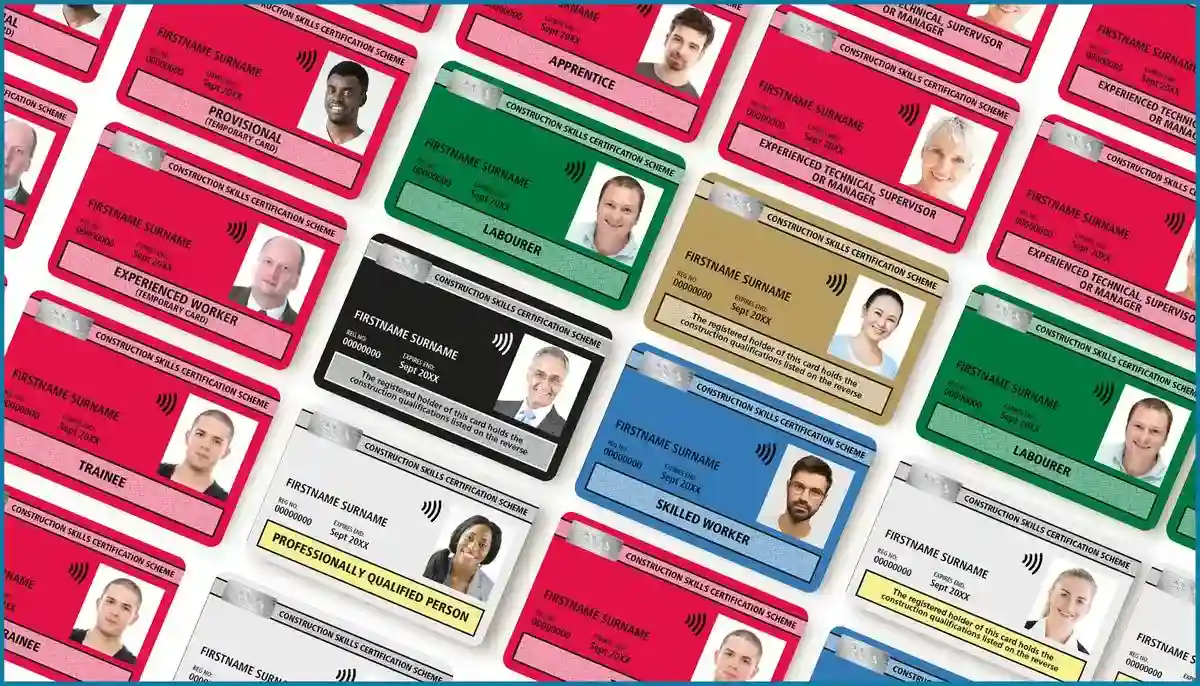
CSCS Card Types: Figure Out Which One Is Right For You
If you're looking to work in the construction industry in the UK, you may have heard of a CSCS card. There are many types of CSCS cards and it might be daunting at first to understand which one is right for you.In this blog post, we'll take a closer look at the different types of CSCS cards available. So whether you're just starting out in the industry or looking to progress your career, keep reading to find out more about this essential certification.Before moving on to discussing the CSCS card types, let�s first learn about CSCS.What is CSCS? CSCS stands for�Construction Skills Certification Scheme. It�s a recognised certification body in the UK, that approves its holders for their occupational competence in the construction sector. CSCS has made it easier for employers to employ construction workers, who have undergone appropriate training and relevant qualifications to work on a site.To learn more about CSCS, check out our blog or visit their official site.What is a CSCS Card?A CSCS (Construction Skills Certification Scheme) card is a type of certification that confirms an individual's qualifications and training required to work in the UK�s construction industry. The card acts as evidence that the holder has obtained the required knowledge, skills, and understanding to carry out their job safely and competently on a construction site.Despite the fact that holding a CSCS card is not a legal requirement, the demand for CSCS cards is very high in the UK�s construction industry. In fact, many construction and building sites won�t even hire workers without a CSCS card. This fosters a safety culture in a construction site, minimising the chances of accidents and injuries.CSCS Card Types: All You Need to Know About the Different CSCS CardsThere are different CSCS cards, each reflecting the different levels of skill and competence in the construction industry. Each card represents a different occupation or role within the sector, ranging from labourers and apprentices to supervisors and managers.These cards are categorised based on their colours (Green, Blue, Gold, White, Black, and Red). Some cards have been withdrawn by CSCS, they can still be used as long as they are valid, but cannot be renewed.Deciding on which card specifically aligns with your career objectives might be tough for you. Hopefully, the table below can help you to decide which card to go for.CSCS Green CardA CSCS Green Card is designed for individuals working in labouring occupations within the construction industry, such as general labourers, cleaners, plumbers, carpenters and bricklayers. Having this card shows that the individual has a basic level of knowledge and understanding of health and safety in the workplace. It�s one of the most popular cards amongst the list of CSCS Card types.It is not a legal requirement, but many construction employers require it as proof of a worker�s competence and commitment to health and safety in the workplace. So, if you hold a Green Card, you have an advantage over others and you�re more likely to get employed.Eligibility Criteria to Get a CSCS Green CardTo be eligible for a CSCS Green Card, you must:Achieve an RQF Level 1 Award in Health and Safety in a Construction Environment (or recognised alternative)Pass the CITB Operatives HS&E TestApply for a CSCS Green CardThe first step to getting a CSCS Green Card is to enrol on a relevant qualification. At Hurak Learning, we offer the CSCS Green Card (Labourers Card) Course that prepares you well for the next step, the CITB Operatives HS&E Test. It�s a multiple-choice test, valid for two years. After having completed the relevant qualification and having passed your CITB Operatives HS&E test, you can then apply for a CSCS Green Card on the official website with proof of your qualification and a CITB test ID number.Taking a free CSCS mock test is recommended before you attempt a real CITB HS&E test. It will help you test your knowledge and evaluate if you�re fully prepared to attempt the real test.Validity of a CSCS Green CardThe CSCS Green Card is valid for five years and must be renewed before it expires. To renew the card, the individual must retake the CITB Operatives HS&E Test and provide evidence of any additional qualifications they have obtained since their last application.Note, some qualifications, like the Level 1 Award in Health and Safety in a Construction Environment do not expire. So to renew your CSCS card if you have completed the Level 1 H&S course in the past you just need to pass the CITB Operatives HS&E Test and apply for the card. .second-cta-block .main-heading { font-weight: bold; font-size: 22px; } .second-cta-block .book-now { background: #DF3D52; color: #FFFFFF !important; border-radius: 8px; } .second-cta-block .second-heading { font-size: 17px; } .second-cta-block .card { border: 0 !important; } .second-cta-block .card-body { border: 1px solid #909090; box-shadow: rgba(0, 0, 0, 0.16) 0px 1px 4px; border-top-right-radius: 100px; border-bottom-right-radius: 100px; background: #ECECEC; } .second-cta-block .image-wrapper { height: 134px; position: absolute; right: -100px; top: calc(50% - 67px); /* Center the image vertically */ } .second-cta-block .image-wrapper img { height: 100%; } .second-cta-block .trustpilot-widget { width: 256px; } .cta-heading-section { width: 75%; } @media screen and (max-width:991px) { .second-cta-block { padding-top: 100px; } .second-cta-block .card-body { border: 1px solid #909090; box-shadow: rgba(0, 0, 0, 0.16) 0px 1px 4px; border-radius: 19px; border-radius: 14px; background: #ECECEC; } .cta-heading-section { width: 100%; padding-top: 50px; } .second-cta-block .image-wrapper { height: 134px; right: 0; position: absolute; left: calc(50% - 108px); top: calc(50% - 203px); } } RQF LEVEL 1 COURSE for CSCS GREEN CARD Check the Course Rated Excellent on major review sites CSCS Blue Card The CSCS Blue Card is designed specifically for skilled construction workers who have experience in services such as roofing, insulation, road-building, etc. Eligibility Criteria to Get a CSCS Blue Card To be eligible for a CSCS Blue Card, you must: Achieve an NVQ Level 2 or equivalent qualification Pass the CITB Operatives or Specialists HS&E Test Apply for a CSCS Blue Card The first step to getting a CSCS Blue Card is to obtain NVQ Level 2 or equivalent qualification relevant to the job you aim to do at a construction site. Next, you must pass the CITB Operatives or Specialists HS&E Test, which is valid for two years. Validity of a CSCS Blue Card The CSCS Blue Card is valid for five years and must be renewed before it expires. An individual must retake the CITB Operatives or Specialists HS&E Test before applying for the card.CSCS Gold CardThe CSCS Gold Card is for experienced professionals. It�s an advanced-level card intended for Advanced Crafts and supervisors within the construction industry. This card is proof that the holder of this card has the capability to supervise personnel in a construction environment.Eligibility Criteria to Get a CSCS Gold CardTo be eligible for a CSCS Gold Card, you must:Achieve an NVQ Level 3 or 4 qualificationPass the CITB Health Safety & Environment TestApply for a CSCS Gold CardThe first step to getting a CSCS Gold Card is to obtain an NVQ Level 3 or 4 qualification. After that, you must pass the relevant CITB Health, Safety & Environment Test. This test is valid for two years so you must apply for CSCS Gold Card before the test expires, or you will have to pass the exam again.Validity of a CSCS Gold CardThe CSCS Gold Card is valid for five years. To renew the card, you will have to pass the CITB Health Safety & Environment Test again before applying for it.CSCS Black CardThe CSCS Black Card is for experienced professionals. It indicates that the holder of this card has the knowledge, skills, capability, and experience to manage high-level tasks in a construction environment. It�s given to individuals who have achieved an advanced level qualification in the field of construction and also have managerial experience.Eligibility Criteria to Get a CSCS BlackTo be eligible for a CSCS Black Card, you must:Achieve a minimum of an NVQ Level 4 qualificationPass the CITB Managers and Professionals HS&E testApply for a CSCS Black CardTo obtain the CSCS Black Card, it is mandatory to pass the CITB Managers and Professionals HS&E test. This particular test requires a higher level of knowledge compared to others, as it�s meant for people who intend to lead others on a site. Therefore, a more comprehensive understanding of health and safety regulations and procedures is required.Validity of a CSCS Black CardThe validity of a CSCS Black Card is five years, after which it will need to be renewed. It is important to keep the Black Card valid, as it�s often a requirement by employers, and failure to renew the card can result in loss of work opportunities.CSCS White CardThe CSCS White Card is the highest level among all the CSCS Card types. There are two types of white CSCS cards: one for the Academically Qualified Person and the other for the Professionally Qualified Person.An Academically Qualified Person is someone who has obtained a higher level qualification in their area of expertise, such as HNDs, HNCs, CIOB Certificates, a NEBOSH diploma, or a degree. Examples of professionals who fall under this category are electrical and civil engineers.The second type is a Professionally Qualified Person, whose job role may require occasional visits to a construction site, but they are not restricted to a particular construction site. Professionals who fall under this category include architects, surveyors, and structural engineers.Eligibility Criteria to Get a CSCS White Card (Academically Qualified Person & Professionally Qualified Person)To be eligible for both types of CSCS White Cards, you must:Achieve a minimum of an NVQ Level 7 qualificationPass the CITB Managers and Professionals HS&E Test or an approved alternativeApply for a CSCS White CardApplicants of a Professionally Qualified Person White CSCS Card must also provide evidence of their current membership with a professional organisation at a level that CSCS accepts. They can submit any of the following documents:A membership cardA receipt of payment for membershipA membership certificateAn up-to-date letter or email from the professional bodyA clearly dated screenshot showing your current membershipValidity of a CSCS White CardThe White CSCS Card expires after five years. However, the Professionally Qualified Person card cannot be renewed and when expires, you have to apply for a new card just like you applied for the first time.CSCS Red CardsThere are a few different types of Red CSCS Cards. The following table will help you understand the different typesTypes of CSCS Red Card�Suitable ForValidityTraineeTrainees registered to complete a construction-related qualification.5 yearsApprenticeIndividuals who have started a CSCS-recognised apprenticeship framework4 years and 6 monthsProvisionalWorkers serving their probationary period.6 monthsExperienced WorkerWorkers enrolled on a Level 2 NVQ or higher qualification and have on-the-job experience.1 yearExperienced Technical, supervisor or ManagerExperienced technical, supervisor or managers enrolled on a Level 3 NVQ or higher qualification and have on-the-job experience.3 yearsTypes of CSCS Red CardsA CSCS Red Card is a temporary card assigned to a construction site worker. Each Red Card has a different validity ranging from 6 months to 5 years. One of the benefits of having this card is that you can still start working on site while working towards getting a skilled CSCS card.�The CSCS Red Cards cannot be renewed. Once you complete the required qualification, you can progress to a skilled Blue Card or Black Card.There are 5 types of Red Cards, and you can check out each type in detail below and figure out which one is best suited to you.Trainee CardThe CSCS Trainee Card allows you to temporarily join a construction site and continue your academic qualification in parallel. It�s valid for 5 years, and you must complete the course during this time period and progress to a CSCS skilled card.�To apply for this card, you must enrol in a recognised qualification and pass the CITB HS&E test.�Apprentice CardThe CSCS Apprentice Card is for workers who have started a CSCS-recognised apprenticeship framework. It�s valid for 4 years and 6 months.To apply for this card, you must complete an apprenticeship in a construction setting and pass a CITB test within the last two years.Provisional CardThe CSCS Provisional Card is for individuals who are new on a job and serving their probationary period. For this reason, this card is valid only for 6 months and you cannot renew it once it expires.To apply for this card, you must not have obtained any other CSCS card.Experienced Technical, Manager or Supervisor CardAs the name suggests, this card approves your skill level to be employed as an experienced technical, manager, or supervisor on the construction site. It�s valid for 3 years.To apply for this card, you must have an NVQ Level 3 or higher qualification and at least one year of on-job experience in the last three years.�Experienced Worker CardThis card is for experienced workers with at least a year of experience at the construction site. The Red Experienced Worker Card is often confused with the Experienced Technical, Manager or Supervisor Card. However, there�s a difference between the two as this card is only valid for a year and requires an NVQ Level 2 or higher qualification.To apply for this card, you must have an NVQ Level 2 or higher qualification and at least a year of experience at the construction site.How Much Does a CSCS Card Cost?The cost of getting a CSCS card is �36, which is the same for all the CSCS cards. This fee is paid to CSCS (Construction Skills Certification Scheme). The CITB health, safety, and environment test is a mandatory requirement for getting a CSCS card and it costs �23.50. Together, the total cost of your CSCS card application and CITB test is �58.50.Checkout our blog on CSCS card price to learn more about cost breakdown.Frequently Asked QuestionsHow long does it take for a CSCS card to be approved?The time it takes for a CSCS card to be approved can vary depending on the type of card being applied for and the application method used. Typically, once your application is approved, your CSCS card will be dispatched to you on the following working day. Most cards are delivered to their specified location within 3-5 working days after the approval of the application.How do I apply for a CSCS card?You can apply for a CSCS card in different ways, such as online, by post, or over the phone. The application process for a CSCS card involves providing evidence of your qualifications and passing a required health and safety test. We recommend applying online, as this is the quickest way.Is it mandatory to have a CSCS card to work in a construction company?While having a CSCS card to work on-site is not legally required, many construction companies and sites require their workers to obtain a valid CSCS card as a measure of competence and safety.Can I get a CSCS card without any qualifications?You cannot obtain a CSCS card without any qualifications, as the application process for all the cards requires evidence of your skills, qualifications, and health and safety knowledge.Are there any exemptions or discounts available for CSCS card fees?To know about the exemptions or discounts on the CSCS card fee, check the CSCS website.Can I use my valid CSCS card in other countries?CSCS cards are only recognized in the UK construction industry. However, some international construction companies may accept CSCS cards as evidence of knowledge, competence, and experience.What happens if I lose my CSCS card?In that case, you can apply for a replacement card online or by post. There is a fee for replacement cards, and it may take several days to get a new CSCS card.


Challenges Faced by Managers on Construction Sites
AnalysisTaking charge of a building project is no easy task. A construction project might run into a lot of difficulties. Project managers face numerous difficulties because of the project�s broad scope, many participants, and inherent hazards. It is the responsibility of project managers to maintain a site�s efficiency, safety, timeliness, and budget. This request can be very challenging at times. Here are a few challenges project managers regularly deal with in the building industry.One survey claims that 77% of construction projects have severe delays and that 98% of projects come in over budget.Shortage of Skilled LabourDespite advancements in technology, manual labour still dominates the construction sector. However, several factors are exerting pressure on construction firms as they try to recruit competent labour. These are most frequently:As workers retire, the ageing workforce depletes the sector�s present skills.Younger generations don�t find the construction industry to be particularly appealing. Brexit is making it more difficult for construction companies to hire people from the EU.City & Guilds reported in 2018 to Open Access Government that 87% of firms in the UK construction sector were having trouble obtaining skilled workers for construction employment.The shortage of skilled labour can be resolved if labourers enrol in CSCS Green Card (Labourers Card) Course, which is the first step towards getting your CSCS Labourers Card. It serves as evidence that the worker in possession of it is aware of the health and safety risks and hazards prevalent at a construction site.Lack of Well-Defined GoalsPoorly stated project objectives are one of the first difficulties that project managers encounter in the construction industry. Project managers� primary objective is to see a project through to completion; however, fulfilling this goal can be challenging. Every project has inherent constraints that make it distinct when creating goals for the timetable, work distribution, and final delivery. Multiple people may be involved in a single construction project, and their lack of coordination will result from a lack of a defined purpose.This problem is simple to solve. To ensure everyone is on the same page, project managers should exercise due diligence and ask the customers and contractors the necessary questions.Budget LimitationsThe management of funds is a challenge for projects in the construction industry, just like it is for any other project. It can be simple to go over the authorised budget due to the size of building projects and the time it takes to accomplish them.You can overcome this project management difficulty by lowering stakeholder expectations. Project managers should ensure that deliverables are correctly recognised to have accurate cost estimates. The budget should also account for circumstances beyond the project manager�s control, such as issues with the supply chain, labour shortages, and, more recently, the possibility that the COVID-19 epidemic will have an adverse effect on the operations of numerous project partners. The budget should constantly be reviewed, but more so if there are change orders or scope creep because those things might cause costs to spiral out of hand.Minimising DelaysDealing with time restrictions is one of the major difficulties project managers in the construction industry encounter. Delays brought on by incomplete work, scheduling difficulties, and workplace accidents can snowball into additional delays and costs.Unfortunately, construction projects include a lot of risk and uncertainty, making delays unavoidable. Project managers should set up processes for project scheduling and tracking to ensure everything is moving forward. Project managers can also spot flaws, errors, and workflow problems that could cause delays by watching the job through construction cameras.Unreasonable RequestsSpeaking about managing expectations, many project managers in the construction industry occasionally have to deal with unreasonable timelines and demands from clients and stakeholders. Even though this is not as serious of an issue as project delays and cost overruns, it nevertheless impacts a construction team�s productivity and morale. Construction is a highly competitive market; thus, it is a sense that stakeholders would defend their commercial interests.However, project managers should use their communication abilities to control their superiors� expectations and provide feedback when they believe a client�s request is unreasonable. They ought to be able to adequately justify why and offer more logical options that everyone can accept.Time ManagementMany stakeholders believe that one of the major problems that contribute to poor designs, high accident rates, and income loss is time restrictions. Contractors may cut corners to make up for missed deadlines and scheduling issues. This might further snowball into greater delays and higher costs as they try to uncover and remedy flaws or risk contractual penalties.Due to these factors, building project managers must address various delay-causing factors and create procedures that guarantee that requirements are always satisfied. Tracking suppliers and subcontractors allow you to account for lead times, labour, and paperwork, and using an effective time tracking system can help ensure every task stays on schedule. Additionally, unforeseen events like weather changes should be taken into account. Project scheduling and tracking techniques can address all of these time management challenges.Project managers� difficulties differ depending on the type of building project. They do; however, they all share a characteristic. To achieve successful delivery, all of these tasks necessitate tactical knowledge, strategic insight, and effective communication on the side of project managers.

Differences between a Banksman and Slinger Signaller
Who is a Banksman?A banksman, also known as a traffic marshal, directs and supervises vehicles like excavators, bulldozers, cranes, and dump trucks used on construction sites to carry personnel and building materials. Modern sites may use software for dump trucks to help banksmen monitor movement and improve efficiency. Marshals ensure the safe guidance of the vehicles and the people as it drives around the building site.On a construction site, a banksman works with plant operators and vehicle drivers to design safe traffic arrangements, communicate correctly to guide vehicle movement and manage traffic flow. The banksman should be aware of the hazards and risks associated with on-site cars and conduct their tasks to minimise risk.To get a comprehensive overview of banksman, read our blog.Who is a Slinger Signaller?A slinger signaller is a specific type of banksman. A slinger signaller�s main job is supervising and directing crane operators� instructions during lifting operations. Their job entails working with the lifting team and crane operators.A crane operator has a limited view of what is happening on the ground when seated in the cab. The slinger signaller provides clear instructions in the form of prescribed hand signals to assist them in safely lifting, moving, and setting down the crane�s load.SimilaritiesBoth banksman and slinger signaller must be aware of the risks and hazards in lifting operations.They tend to the people and equipment and make the site safer by minimising risks.They communicate using hand signals and radio equipment as instructed in Health and Safety (Signs and Signals) Regulations 1996.Both of them direct crane operations.The uniforms they wear are the same.DifferencesA banksman directs traffic and vehicles around a workplace.A signaller works in the lifting department only.Production of modular buildings is also a part of a slinger�s job description.How to become a Signaller?Enrol and complete Hurak�s Traffic Banksman course.Pass the multiple-choice question exam at the end of the course.Receive a 3-year valid certificate and ID card after passing the exam..How to become a Signaller?1. Must have accomplished the Health, Safety and Environment (HSE) exam for Operators within two years of enrolling for an accredited Slinger Signaller course.2. Enrol and complete an accredited training course on Slinger Signaller. The two most popular and demanded courses are:Construction Plant Competence Scheme (CPCS)National Plant Operator Registration Scheme (NPORS)Offers accredited training courseOffers accredited training courseWidely recognisedBecoming an alternative to CPCSExpensiveCost EffectiveIt takes a longer duration to completeCompletes within ten daysCertified centresFlexible learning3. Apply for a Red Trained Operator Card.

CSCS Card Price - How much is a CSCS card?
Are you planning on getting a CSCS card but are confused about its cost? Well, you�re not alone! With the different costs associated with applying for the different types of CSCS cards, CITB tests, and training and certifications, it can be puzzling to figure out the exact amount of the card.In this blog post, I�ll walk you through the CSCS card cost in the United Kingdom with a complete breakdown of the costs associated with obtaining a CSCS card. Moreover, you will also learn about the CSCS card renewal process and the replacement fees.How much is a CSCS card?The cost of a CSCS card is only �36. The price is the same for all card types. However, you need to pass the CITB Health and Safety test, which costs �23.50, and hold a relevant qualification to get the card.We can divide the cost of the CSCS card into three parts:Part 1 - The Cost of a CSCS Card:The cost of getting a CSCS card is currently �36, paid to CSCS, which issues the card under the Construction Skills Certification Scheme. This cost is the same for all CSCS card types.Part 2 - The Cost of a CITB Test:The cost of taking the CITB Health, Safety and Environment test is currently �23.50. As it�s mandatory for you to take the relevant CITB test before you can apply for your CSCS card, you will have to bear this cost.At Hurak Learning, our focus is on delivering a booking process that's smooth and stress-free. We manage everything to secure your CITB test reservation on your behalf. Book Now!Part 3 - The Cost of a Qualification:You will also need to pay the cost of any additional qualifications you may require for your specific CSCS card. For example, if you want a Green CSCS Labourer Card, you must complete the Level 1 Award in Health and Safety in a Construction Environment course. .second-cta-block .main-heading { font-weight: bold; font-size: 22px; } .second-cta-block .book-now { background: #DF3D52; color: #FFFFFF !important; border-radius: 8px; } .second-cta-block .second-heading { font-size: 17px; } .second-cta-block .card { border: 0 !important; } .second-cta-block .card-body { border: 1px solid #909090; box-shadow: rgba(0, 0, 0, 0.16) 0px 1px 4px; border-top-right-radius: 100px; border-bottom-right-radius: 100px; background: #ECECEC; } .second-cta-block .image-wrapper { height: 134px; position: absolute; right: -100px; top: calc(50% - 67px); /* Center the image vertically */ } .second-cta-block .image-wrapper img { height: 100%; } .second-cta-block .trustpilot-widget { width: 256px; } .cta-heading-section { width: 75%; } @media screen and (max-width:991px) { .second-cta-block { padding-top: 100px; } .second-cta-block .card-body { border: 1px solid #909090; box-shadow: rgba(0, 0, 0, 0.16) 0px 1px 4px; border-radius: 19px; border-radius: 14px; background: #ECECEC; } .cta-heading-section { width: 100%; padding-top: 50px; } .second-cta-block .image-wrapper { height: 134px; right: 0; position: absolute; left: calc(50% - 108px); top: calc(50% - 203px); } } RQF LEVEL 1 COURSE for CSCS GREEN CARD Check the Course Rated Excellent on major review sites Total Cost of Getting a CSCS Card in the United KingdomThe total cost of getting your CSCS card, including the cost of your card and the CITB test, is �58.50. Additionally, you must pay for the required qualification.Before you attempt the real CITB HS&E test, you must practise by taking this free CSCS mock test. It will help you understand what the real test would look like. You can also test your knowledge and evaluate whether you need more preparation.The Cost of a Replacement CSCS CardJust like any other object, you may damage or lose your CSCS card, and in some cases, it may even get stolen. This can be frustrating because you need your CSCS card to gain access to a construction site.But don�t worry, you can apply for a replacement card quite easily. However, you will be required to again pay the CSCS card fee of �36 for your replacement card. The new card will be an exact copy of your previous CSCS card and be acceptable on-site, just like your old card.Learn more about a replacement CSCS card with our blog, �Lost Your CSCS Card? Tips for Getting a Quick Replacement.�Process of Getting a CSCS Replacement CardCall the CSCS Contact Centre at 0344 994 4777 from 8 am to 6 pm, Monday to Friday, to order a replacement card. You will be asked for your CSCS registration number or National Insurance number.How Much Does a CSCS Card Renewal Cost?The cost of renewing your CSCS card is �36. Your CSCS card requires renewal after a certain time. Most CSCS cards expire after 5 years.Remember, to see when your card expires, you can always check the expiry date on the front of your CSCS card.There are two ways to renew your CSCS card, i.e., the online renewal process and the postal renewal process.Our blog on All You Need to Know About the Renewal of Your CSCS Card is a detailed guide on the CSCS card renewal process, including everything from the CSCS Card renewal process and requirements to tips for a hassle-free experience.CSCS Card Verification and ValidationYou can verify your CSCS card and check its validity by using a CSCS Card Checker. This tool helps to check if your CSCS card is valid and when it requires renewal.Learn more about this tool by reading our blog, �Why is a CSCS Card Checker Important? A Complete Guide.�Let Us Apply for Your CSCS CardThere are many companies online that can help with the processing of your CSCS card application. However, these organisations have different rates, charging additional fees for their services. So you must review their charges before you apply for a card on their website. Alternatively, you can apply for it directly through the CSCS website, as the application process is quite simple.If you still need help applying for your CSCS card, we can apply on your behalf, just click on this page for more information. Also, check what is required for a CSCS card to ensure you meet all the necessary requirements to get a desired CSCS card. div.wpforms-container-full .wpforms-form label.wpforms-error{ display: none; } /* The Modal (background) */ .ebook-modal { display: none; /* Hidden by default */ position: fixed; /* Stay in place */ z-index: 1; /* Sit on top */ padding-top: 100px; /* Location of the box */ left: 0; top: 0; width: 100%; /* Full width */ height: 100%; /* Full height */ overflow: auto; /* Enable scroll if needed */ background-color: rgb(0,0,0); /* Fallback color */ background-color: rgba(0,0,0,0.4); /* Black w/ opacity */ } div.wpforms-container-full .wpforms-form input[type=submit], div.wpforms-container-full .wpforms-form button[type=submit], div.wpforms-container-full .wpforms-form .wpforms-page-button { border: 1px solid #ddd; font-size: 1em; font-family: inherit; padding: 9px 31px; background: #0f7c90; color: white; /* display: flex; */ /* width: 100%; */ position: absolute; bottom: -418px; right: -150px; /* margin: auto; */ justify-content: center; align-items: center; } /* Modal Content */ .ebook-modal-content { display: flex; flex-direction: column; justify-content: space-between; align-items: baseline; background-color: #fefefe; margin: auto; padding: 31px; border: 1px solid #888; width: 30%; position: relative; } /* The Close Button */ .ebookModal-close { color: #aaaaaa; float: right; font-size: 20px; font-weight: bold; cursor: pointer; position: absolute; right: 21px; top: 10px; } .ebookModal-close:hover, .ebookModal-close:focus { color: #000; text-decoration: none; cursor: pointer; } div.wpforms-container-full { margin: 0px auto 20px;!important } .ebookModal-header{ color:#0f7c90;font-size:30px;margin:0 30px } @media (max-width:576.888px){ .ebook-modal-content { width: 90%; } } @media (max-width:768.888px){ .ebook-modal-content { width: 70%; } .ebookModal-header{ font-size:20px!important; margin:0 } } @media (min-width:768.888px){ .ebook-modal-content { width: 50%; } } @media (max-width:1024.888px){ div.wpforms-container-full .wpforms-form input[type=submit], div.wpforms-container-full .wpforms-form button[type=submit], div.wpforms-container-full .wpforms-form .wpforms-page-button { width: 100%; position: static; } .ebookModal-header{ margin:0; font-size: 25px; } } @media (max-width:1280.888px){ .ebookModal-header{ margin:0; font-size: 30px; } } @media (min-width:992px){ .wpforms-submit-spinner{ max-width: 100%!important; position: absolute!important; top:250px!important; left:150px!important; transform: translate(-50%,-50%)!important; } @media (min-width:1280.888px){ div.wpforms-container-full .wpforms-form input[type=submit], div.wpforms-container-full .wpforms-form button[type=submit], div.wpforms-container-full .wpforms-form .wpforms-page-button { border: 1px solid #ddd; font-size: 1em; font-family: inherit; padding: 9px 31px; background: #0f7c90; color: white; /* display: flex; */ /* width: 100%; */ position: absolute; bottom: -380px; right: -150px; /* margin: auto; */ justify-content: center; align-items: center; } } Download our CITB Operatives and Specialists Test Prep Book for free! × [wpforms id="14869" title="false"] #myImg{ cursor: pointer; } What are the Different Factors that Can Affect the Cost of a CSCS Card?Various factors can affect the cost of getting a CSCS card.The Level of Certification Higher levels of certification require additional training and assessment fees, which also changes the cost of your CSCS card. For example, an applicant seeking an NVQ (National Vocational Qualification) may need to complete a training course, which can add to the overall cost.Method of Applying Another factor to consider is how you apply for your CSCS card. Applying online can be cheaper than applying by post, as there are often additional fees for processing and handling paper applications.Employment StatusSome employers prefer applying for their employees� CSCS cards themselves. And for that, they often opt for group applications. When these applications are submitted in bulk, they are eligible for discounts.Tips for Reducing the Cost of Getting a CSCS CardIf you plan to get a CSCS card, you may wonder how to keep costs down. Check out some tips below:Choosing the Right Type of CardThe first and foremost thing you must consider is choosing the right type of CSCS card. Doing so can prevent you from wasting money on the application for the wrong card.Applying OnlineAs there are several ways to apply for your CSCS card, applying online is a cost-saving option. Applying online is a relatively faster and cheaper process compared to other ways.Getting a Group DiscountCSCS (Construction Skills Certification Scheme) offers discounts if you apply as a group. In some organisations, CSCS cards for employees are applied together as a group, which can also reduce the cost of getting a CSCS card.Taking Advantage of Government Funding SchemesYou can also look for government funding schemes, as these schemes can help cover your CSCS card price, at least partially, if not fully.Frequently Asked Questions (FAQs)Is there a different fee for different CSCS cards?The fee for applying for all the CSCS cards is the same, regardless of the type of card you apply for. Currently, the fee for a CSCS card is �36. However, the training and qualifications required for different CSCS cards have different fees. Considering that, the total cost for different CSCS cards can vary.Is the cost of the CITB test included in the CSCS card price?No, the fee paid for the CITB (Construction Industry Training Board) test is separate from the CSCS card fee. The fee for the CITB test is currently �23.50.Can I save money by applying for a CSCS card online?Yes, applying online for a CSCS card is the cheapest option, it�s also the fastest method of applying. Applying online can also cut additional costs, such as postage and printing fees.ConclusionWith the CSCS card becoming an important requirement for individuals working in the construction industry, it�s important to understand the overall cost of getting a CSCS card. Please note that the cost of the CSCS card varies depending on the type of card, qualifications required, and associated costs such as CITB tests and training.However, by choosing the right type of CSCS card, applying online, and taking advantage of in the United Kingdom�s government funding schemes, you can reduce the cost of obtaining a CSCS card. By understanding the costs involved and taking steps to reduce them, you can get a CSCS card without breaking the bank.
A Workplace Guide for Traffic Banksmen
�Crane lifts, traffic management, traffic flow, and directing vehicular operations are just a few of the operations that a traffic banksman, also known as traffic marshal, is crucial in making sure happen safely on the job site. The functions and responsibilities of the banksmen, their role in safeguarding the health and safety of people present, and the various duties and work environment they employ will all be covered in as a workplace guide for Traffic Banksman.Job Description of a Traffic BanksmanDirecting Vehicle MovementA traffic banksman is responsible for controlling traffic and ensuring accidents don�t occur at the work sites. They aid operators and drivers in their manoeuvres with hand gestures and communication tools. For instance, they can signal a vehicle to stop and move just in time when they reverse or make a turn. By monitoring their movements on the main road, banksmen direct cranes and trucks onto the site and ensure that heavy vehicles leave the area safely.Managing TrafficTraffic marshals manage the flow of traffic within a workspace as a banksman. They direct the drivers to the truck parking areas on the site. The traffic control system should ensure no other trucks are blocking the entries or exits. Additionally, large vehicles should have enough room to leave the site or travel to the loading zones. The roadways must be designed and laid out for particular vehicles to ensure efficient operation.Identifying Unsafe AreasA banksman should be aware of potential accident-causing difficulty spots in construction zones. To prevent damage to cars or equipment during manoeuvres, they also clear away impediments and clutter from the routes.Taking Care of Signalling EquipmentA traffic banksman should frequently examine the radio gear and other communication tools as a banksman to ensure they are operating as intended. A driver cannot hear them in a busy workplace, and giving directions is challenging without a communication line.Teaching Hand Signals to DriversTo prevent misunderstandings, it�s crucial to ensure drivers can comprehend the hand gestures of a banksman. They should meet with novice drivers to discuss traffic signals and communication techniques.Assisting in Loading and UnloadingA banksman typically works alongside other employees to do loading and unloading tasks. They may occasionally use the loading equipment to reduce traffic jams brought on by delayed loading.Work Environment of a Traffic BanksmanA traffic banksman works on building sites, loading and unloading ports, and factories. Trucks, cranes, lorries, cement mixers, bulldozers, and trucks are frequently seen in these situations. They spend most of their time working outside in all types of weather, so they must dress appropriately and have the necessary safety gear. Most banksmen dress in high-visibility clothing so that cars can see them both during the day and at night. The noise level at work is quite high on construction sites. For this reason, they require radio communication equipment to direct the drivers and alert the loading team when a truck arrives. Additionally, their responsibility is to maintain the office spotless and ensure efficient operation.Coworkers of a BanksmanDepending on the industry, a traffic banksman coworkers may include signallers, riggers, and warehousing workers. Workers in the warehouse help load and unload as riggers secure items to cranes. Additionally, banksmen might collaborate with project managers, civil engineers, ground labourers, truck drivers, and other specialists.Work Schedule of a BanksmanThe work schedule of a banksman differs depending on the employer and the conditions of their employment. For instance, delivery to building sites typically occurs in the early morning or late evening when there aren�t many people present. They will therefore start early and end late. On the other hand, warehouses are active during the day, when they finish most of their duties. A bankman typically puts in 35 to 40 hours a week, including weekends and evenings as needed when they work a full-time schedule. A traffic banksman can also work on temporary or part-time contracts.Traffic Marshal CourseWhen properly completed, a traffic banksman training course, also known as a traffic marshal course, entitles participants to serve as traffic marshals. By planning and setting out the roads that vehicles will use to pass through a location, they are able to safely govern the movement of vehicles there. To maintain safe segregation, a traffic marshal will make an effort to construct a one-way traffic system that will facilitate the flow of a vehicle at work through the site. They will also aim to avoid pedestrian crossings.When traffic is high, they may personally direct cars to prevent excessive queuing.
Benefits of an SSSTS Training
Who is SSSTS training for?The SSSTS training is delivered online over two days and includes case studies and assessment activities. It is intended for all supervisors, team leaders, and anybody else in a supervisory capacity on a construction site.Delegates will learn about the most recent and current health and safety measures to protect personnel on construction and civil engineering sites, regardless of whether they have just started in a supervisory role or have a basic level of awareness.By the end of the course, students will have a thorough understanding of the difficulties in managing construction sites, as well as practical knowledge about safeguarding workers there, the most recent health and safety regulations, recognising hazards and how to reduce risk, and putting welfare and safety best practises into practice.What will I learn in the SSSTS course?To receive an SSSTS certificate, participants must attend both days of the course and pass a test that consists of multiple-choice and written questions. The following topics will be covered in the course:A supervisor's job description and dutiesThe UK's judicial systemmethods for risk assessment1974's Health and Safety at Work ActOccupational health, including developing a stronger health programme.Work at heights: evaluation and safety precautionsRegulations for Construction (Design and Management) from 2015Presentation abilitiesThe Reporting of Injuries, Diseases Regulations 2013SSSTS Refresher CourseAn SSSTS certificate will be given upon completion of the course and is valid for 5 years, provided a pass rate of 80% has been attained on the exam. To ensure that participants stay current with the most recent rules and legislation, you must take a one-day SSSTS refresher course every 5 years to renew your certificate. You must do this before your current certificate expires.Please visit our website to reserve a spot or for more information about this course.Why Should I Enrol in an SSSTS Course?You could benefit greatly from a Site Safety Supervisors Training Scheme (SSSTS) training. You will have the chance to obtain health and safety knowledge essential for a supervisor role by taking a course like this.1.� Short and Flexible CoursesThis type, of course, can be finished quite fast, making it the perfect choice for those with busy schedules. Additionally, flexible date options enable you to enrol in your course at the appropriate time. If an evening or weekend course makes more sense for you, you can choose that.Because they believe they don't have enough time, people frequently postpone this training. If you have previously engaged in this behaviour, you should consider when you would be able to enrol in an SSSTS course and how long it might take.2. Take a Class Anywhere, AnytimeYou have the option of enrolling in an online SSSTS course. You should be able to choose a course that suits you because these are provided all around the country. Additionally, there is a lot of flexibility regarding class timings because so many possibilities are available.It can be difficult to attend a course like this if you have to travel far. However, obstacles like these won't be there if you enrol in an SSSTS course. You'll be able to choose the ideal location close to you for your class and will be able to complete the course.3. Specialised CoursesThe SSSTS course is extremely specialised and created to give you the crucial knowledge you will need. The risks that may be present on the job site, toolbox lectures, and several health issues will all be covered.These courses are tailored exclusively for supervisors. You will be able to take a simplified course and pick up essential knowledge. Not only may finishing a course like this open up new employment prospects for you, but it can also offer you the information you need to perform better at work.4. Accredited CourseYou could be apprehensive about the calibre of the course you plan to enrol in. If you're concerned about this, you should know that the SSSTS training offered by Hurak is CITB-accredited. Since the courses are regulated, you can be sure they will all meet a particular level of quality.What are the benefits of the SSSTS course?In addition to learning new skills and advancing their current ones, participants will complete an industry-recognised qualification in the construction and civil engineering industries, ensuring they have the knowledge and skills necessary to manage a site safely and successfully. The advantages of enrolling in an online SSSTS course include:Industry-recognised qualification: Individuals who have earned their SSSTS certification may attest that they possess the necessary knowledge and abilities to promote health, safety, and welfare best practices on any construction or civil engineering site.Career Advancement - acquiring and advancing to a career in a supervisory function and upgrading to a more senior management role is made much easier with an SSSTS qualification. Indeed, certain employers may need an SSSTS certificate for managerial or higher positions.Builds knowledge and skills - ideal for those advancing into supervisory roles because an SSSTS course will increase their knowledge and range of abilities.Develops a better understanding - improves knowledge of the environmental, health, welfare, and safety regulations for operating a construction or civil engineering site in the UK.The CITB SSSTS training courses offered by Hurak can be taken online. As an alternative, we may design an SSSTS training programme that is unique to the needs of your business.

Roles and Responsibilities of a Safety Officer in Construction
Few other sectors have a variety of risk factors that are present in the construction industry. Workers must operate heavy machinery and vehicles, work at heights, conduct routine manual labour tasks, and deal with several hazards at work.While all businesses in the UK are required by law to ensure their workers� health and safety, managers, head contractors, and supervisors must take extra care. Employers can ensure that there is always a qualified person on-site with the knowledge, experience, and abilities required to manage health and safety issues by designating a health and safety officer.Safety officers are essential to maintaining the security of construction sites for workers and visitors. They seek to identify, manage, and reduce hazards that may arise on-site and ensure that all health and safety guidelines are being adhered to.The functions and responsibilities of health and safety officers will be discussed in more detail in this article. Additionally, we�ll examine current health and safety challenges and trends in the building sector and offer connections and other helpful resources for anyone interested in learning how to work as a health and safety officer in the construction industry.Roles of a Safety Officer in ConstructionEven though each workplace is unique, all construction sites have several functions and responsibilities for health and safety officers.These responsibilities include:Risk Assessments and Site InspectionsOn a construction site, the health and safety officer should conduct routine inspections and assessments to recognise and assess potential dangers. Then, they must seek to reduce these hazards and implement health and safety policies and practices that safeguard employees.Compliance MonitoringAccording to health and safety authorities, supervisors and employees must follow all applicable health and safety laws, rules, and procedures. Additionally, a health and safety officer needs to ensure that any supplies or equipment providers are according to the law.Accidents & Incident InvestigationThe health and safety officer must carry out a comprehensive investigation after every accident or near-miss incident. The inquiry aims to determine what caused the incident or accident and find evidence of equipment malfunctions, legal violations, or procedural mistakes. The health and safety officer may need to speak with witnesses and, if feasible, the victim or victims throughout the interview process.The officer should write a report after the investigation is finished and, if necessary, submit it to the appropriate authorities. Health and safety practices should be improved using the report�s data to prevent future mishaps or accidents.Record Keeping and ReportingKeeping thorough records of all risk assessments, site inspections, investigations, and compliance infractions is one of a safety officer�s key responsibilities on a construction site. The health and safety officer must generate and submit reports as necessary to authorities, including the recently established Building Safety Regulator (BSR).Organising Health & Safety TrainingThe health and safety officer should make arrangements for staff at all levels to acquire the necessary, approved health and safety training to safeguard workers� health and safety and maintain compliance with rules.Health and safety officers must ensure they keep up with all relevant standards and governmental laws due to the wide variety of jobs that are constantly done on any construction site. Health and safety officers should frequently take refresher training courses and ensure they are aware of any changes to pertinent legislation to maintain their expertise.Growing Concerns for Safety in ConstructionOne of the largest industries in the UK economy is construction. According to recent official statistics, 3.1 million workers, or 9% of the entire UK workforce, are employed in construction-related jobs. With a 6%+ contribution to the UK�s gross domestic product (GDP), the building sector is another important economic driver.The construction business is one of the most hazardous to work in and one of the largest. According to the most recent data from the Health and Safety Executive (HSE), there were just under 40 fatal injuries to construction employees, 61,000 non-fatal injuries, and 74,00 health issues related to their jobs.Common Hazards in ConstructionThe majority of fatal injuries occurred were as a result of height falls. Slips, trips, and falls were the main contributors to non-fatal injuries. Health and safety officials in the construction sector continue to prioritise ensuring that every worker has a solid and secure platform on which to carry out their tasks.The following are the most typical risks construction workers encounter:Falling from a great heightStumbling and slippingBeing hit by or pinned beneath moving itemsSyndrome of hand-arm vibrationAccidents involving materials and manual labourTunnelling trenchesDiseases caused by asbestosElectricity risksMaterials and fibres in the airSafety Trends in ConstructionHealth and safety officials increasingly rely on modern technology to reduce dangers in the construction sector and make job sites safer for employees. Wearable devices that track a worker�s blood pressure, pulse rate, and oxygen levels to prevent weariness or warn managers of mishaps are among the upcoming safety trends in the construction sector.Additionally, sensors built into wearable technology can alert employees when they are too close to machinery or in danger of falling. Geo-location tracking can give managers access to real-time information about specific employees� whereabouts and quicker accident response times.Artificial intelligence (AI) software can now give video-based real-time object recognition to identify potential threats on-site. Drones and automated robots can monitor construction sites and inform health and safety officials of any emerging dangers or incidents.On websites, e-Checklists are also growing in popularity. These make record-keeping easier, guarantee best practices are followed, and enable on-the-job training.Construction Safety Officer TrainingA degree is not required to work as a health and safety officer. To ensure you can do the work well, you will need experience, knowledge, and training. There are several methods to advance your skill set if you are a health and safety officer or are thinking about becoming one.Many climb the ladder to the position over time, developing the necessary abilities while working in the field. Training programmes like IOSH Safety, Health & Environment for Construction Site Managers or some of the more in-depth courses provided by the National Examination Board in Occupational Safety and Health (NEBOSH) can help to assist this further.There are also shorter courses available to aid in developing your understanding of the systematic risks and duties you will need to do as a health and safety course.Anyone working in construction should take the following online health and safety training courses that Hurak provides:Health and Safety Training for ManagersManual Handling Training CourseAsbestos Awareness TrainingFire Marshal Training
Importance of Hard Hat Colour Codes on Construction Sites
Hard helmets must be worn on construction sites at all times to ensure worker safety since the risk of head injury can still be very high, even with all the safety precautions in place. Therefore, it is critical that everyone is aware of the rules governing them, including the use of colour coding.The Personal Protective Equipment Regulations of 1992 address PPE regulations. These rules now also apply to hard helmets on building sites. The most recent colour coding scheme, nevertheless, was unveiled by Build UK in 2016.The purpose of the hard hat colour codes for construction will be covered in this article.Hard Hats on Construction Sites: Compulsory or NotThe Health and Safety Executive (HSE) asserts that even though it isn�t explicitly stated in the regulations, all construction sites must have hard hats:�Does the law require head protection on construction sites? For the vast majority of cases yes � on almost all construction sites the risk of head injury are such that the law requires head protection.�Health and Safety Executive: Construction PPEEmployers are required under the Personal Protective Equipment Regulations of 1992 to give hard helmets to workers who may be in danger of head injuries. Even with safety precautions, this risk is typically considerable on construction sites; hence hard hats are always required.Construction site employees are the most apparent group at risk, but visitors and anyone else who could be vulnerable should also be taken into account. Employers are required to supply hard helmets that adhere to PPE safety standards to these groups of persons once they have determined who might be hurt and how during a risk assessment.Hard helmets are frequently colour-coded so that everyone on the job site can recognise those around them.Hard Hat Colour Codes and Their MeaningsBuild UK introduced a new colour-coding scheme for hard helmets in 2016. The construction industry and its member sites adhere to their colour scheme because they are the major representative organisation for the UK construction sector. The colours denote a specific position or rank, ensuring uniformity and comprehension across all building sites.The following are the hard hat colour codes:White: site managers, operatives, and traffic marshals.Black: site supervisors.Orange: slingers and signallers.Blue: everyone else on site who does not fall into the above categories, including visitors.A red fire marshal sticker will be on the hard hats of fire marshals, while a green first aider sticker will be on the hard hats of first responders. Furthermore, variously coloured high visibility vests can help identify particular roles.Significance of Hard Hat ColoursBuild UK introduced the new colour coding scheme to provide uniformity throughout the sector. It deals with consistency problems that frequently cause misunderstandings and even safety dangers. Everyone will be identified based on their function or status if they wear colour-coded hard hats.For instance, a site manager can be quickly recognised by their white hat in an emergency. Similar to this, visitors who may be particularly vulnerable to site risks will be identified by blue caps.There will be less uncertainty, a clearer definition of the hierarchy of workers on site, and a reduction in possible hazards if people can identify their level of responsibility and position on construction sites.Despite the fact that these colour codes are accepted as industry best practices and standards, many construction sites continue to utilise their colour coding scheme. For instance, you might still find yellow hard hats in use. Although using a colour scheme creates consistency, it is crucial that the hard hats adhere to safety rules.
Protecting Construction Workers From Asbestos Dust
What is asbestos?Asbestos is a naturally found fibrous rock. Up until 1999, it was frequently utilised in residences and other constructions. The 3 main categories of asbestos are:Crocidolite (also known as blue asbestos)Amosite (also known as brown asbestos)Chrysotile (also known as white asbestos)Asbestos provides high fire protection qualities, inhibits corrosion, and functions as an insulator (to keep heat in and cold out). It was widely utilised from the 1950s to the middle of the 1980s. As a result, it can be found in various building fixtures and construction materials, including ceiling tiles, pipe insulation, boilers, and sprayed coatings. However, it can still be found in structures constructed before 2000.When asbestos fibres become airborne, the materials threaten your health. This occurs when asbestos-containing materials are cut, drilled, or otherwise damaged while being used in construction. High levels of asbestos fibres may be inhaled while working on or near damaged asbestos. The total amount of these fibres you breathe is a major risk factor for asbestos-related disease. Regularly completing simple tasks can put you at risk. The Control of Asbestos Regulations 2012 established guidelines for safeguarding workers and others from the dangers of asbestos exposure.What is the risk to construction workers?The most significant occupational illness risk for construction workers is asbestos. According to data the HSE commissioned, the industry�s cancer mortality accounted for more than two-thirds of the over 2,500 deaths of construction workers in 2005. There are two types of cancers that asbestos can cause:Mesothelioma � a lining-related lung cancer. It almost usually results in death and is brought on by asbestos exposure.Asbestos-related lung cancer � Almost always, this is lethal.The other diseases caused by asbestos are:Asbestosis Diffuse Pleural ThickeningThe cumulative effect of asbestos exposure makes you more likely to develop diseases linked to asbestos in the future. However, these illnesses won�t harm you right away because it might take anywhere between 15 and 60 years for symptoms to appear. It is also significant to keep in mind that smoking greatly increases your risk of lung cancer caused by asbestos.How to Prevent this risk?You can take several actions, starting with always keeping in mind the chance that the building you are working on might contain asbestos.Employers are required to do a risk assessment before beginning any maintenance, renovation, demolition, or other construction work to determine the presence of asbestos.It is the responsibility of non-domestic property owners or managers to manage asbestos. This entails locating and documenting any asbestos location and state. Anyone working must access this information to help them manage exposure risks to themselves, their employees, and others.�5 Ways for Construction Workers to Avoid Asbestos ExposureTake an Asbestos Safety CourseAll personnel working on job sites with asbestos are expected to receive asbestos awareness training. These training sessions cover the following topics and instruct participants on how to prevent asbestos exposure:How to spot asbestos-containing itemsContributing factors to asbestos exposureUse of respiratorsWorkplace asbestos prevention measures Potential health implications of asbestos exposureRequirements for medical surveillance programmesasbestos exposure increases the risk of lung cancer in smokersInformation about how to reach smoking cessation programmesWhen it comes to asbestos exposure, knowledge is power. To safeguard yourself and your family from exposure, learn everything you can about prevention.Use a HEPA-Filter Mask and VacuumThe best defence against asbestos fibre inhalation is a HEPA-filter mask. High-efficiency particulate air (HEPA) filters can capture 99.97% fibres with a diameter of 0.3 micrometres or less. Most asbestos fibres are captured by these filters when they are utilised appropriately. Employees who work around asbestos must have access to these masks from their employers.Local exhaust ventilation with HEPA-filter dust collection devices is required to collect as many asbestos fibres as feasible during certain asbestos jobs. To remove asbestos dust and debris, vacuums with HEPA filters are necessary.Avoid Practices That Disturb DustOn projects involving asbestos, specific work techniques that cause the emission of asbestos fibres are forbidden.Some examples of these practices are:Use of saws lacking a HEPA-filtered exhaust or a point-of-cut ventilatorCompressed air is used to get rid of asbestos-containing materialsAny method of dry sweeping or shovelling that involves removing asbestos-related dust or debrisRequiring workers to put in extra time at asbestos construction sitesWet MethodApply water frequently while you work with asbestos-containing materials (ACM) and moisten it first to avoid the release of asbestos fibres. It�s crucial to keep dust and debris moist to keep asbestos material contained in one place.Know if the Workplace Contains AsbestosThese days, demolition and restoration projects account for most construction work that poses a risk of asbestos exposure. Besides roofing items, older construction materials are more likely to contain asbestos than new ones.When there is asbestos in a building, the only people to contact are the owners and homeowners. Owners shall identify ACM and provide notice to anyone who will perform work on the building. No databases keep track of which structures house asbestos. Make inquiries regarding ACM with the building owner to safeguard yourself against exposure.