On This Page

July 16, 20268 min read
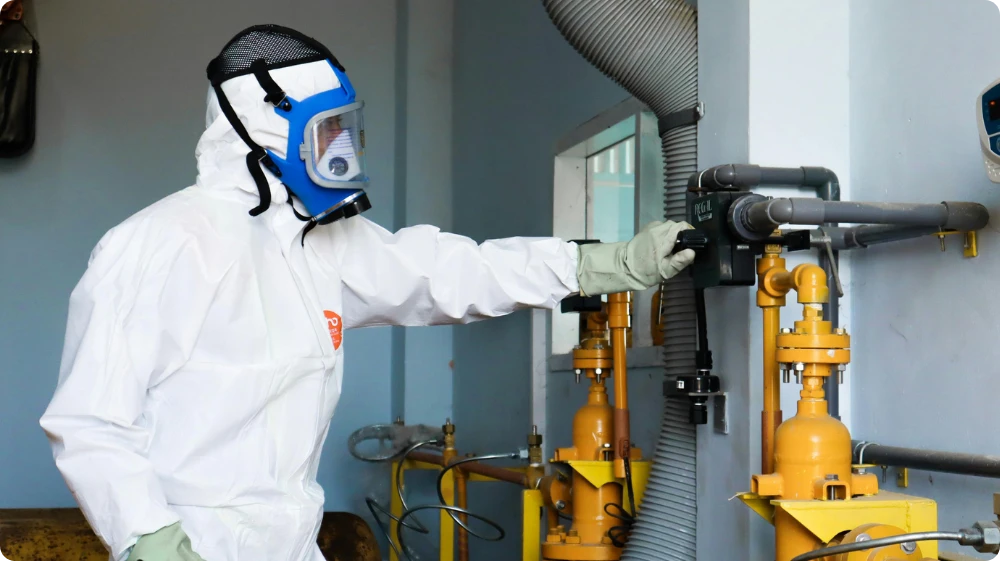
When there is a workplace or an employee who does, there are products and chemicals that can affect the environment and the way we live and work. These products include, but are not limited to, cleaning products, paint formulations, adhesives and printer toner, as well as any other chemical substances that could be harmful to your health. The Control of Substances Hazardous to Health (COSHH) Regulations 2002 in the UK provide a guideline on the steps that employers need to take to ensure that their employees are protected from the associated risk of working with hazardous substances; however, to maintain the appropriate level of COSHH compliance, there are eight steps that every employer in the UK can take to avoid liability.
COSHH stand for (Control of Substances Hazardous to Health). COSHH is a series of UK regulations that require employers to ensure their employees' safety from substances that could harm their health, e.g., chemicals that can cause burns or long-term respiratory problems.
Employers must identify all hazardous substances used in the workplace.
Assess the risk these substances pose to the employee's health.
Implement measures to reduce or remove the risk.
Monitor exposure levels and provide safe working conditions.
If an employer does not comply with the COSHH regulations, they could face enforcement action and fines, and cause an employee to suffer ill health. However, complying with COSHH can still be very simple. By following the recognised COSHH steps, you will ensure your employees' safety and adhere to the law.
Looking to Strengthen Your COSHH Knowledge
Want to ensure your workplace meets every COSHH requirement confidently?
Explore our Health and Safety Courses, including COSHH Awareness Training, Risk Assessment Courses, and more, to help you stay compliant and protect your team effectively.
While some organisations summarise six or even five steps, the Health and Safety Executive (HSE) guidance and industry best practice outline eight essential steps. These steps take you from identification to ongoing review, completing a full cycle for safely managing hazardous substances.
Here are the eight steps to working with COSHH that every employer, safety officer, and manager should understand.
Identifying the chemical, dust, fume, vapour, mist, or gas that can potentially harm workers in the workplace should be the first step in determining URL in cocomp.
Chemicals such as Cleaning Agents, Paints, Solvents, Acids
Dust, fume, vapour, mist or gas Generated Through the Work Processes
Biological Agents like Bacteria and Mould
Create a workplace inventory of all hazardous substances, including by-products (Welding Fume, Wood Dust), as sources of work-related exposure to chemical and biological agents. The inventory must be created
After Identifying All Hazardous Substances, the Next Step is to Conduct a COSHH Risk Assessment
Risk Assessment Documentation Should Include:
Hazardous property of each hazardous substance (Toxic, Corrosive, Irritant or Other)
Where or How Workers are likely to be Exposed to Hazardous Substances: Inhalation, Skin Contact, or Ingestion
Who May be Exposed to Hazardous Substances: Workers, Cleaners, Visitors or Contractors
Duration and Frequency of Potential Worker Exposure to Hazardous Substances
Existing Controls Including Current Level of Effectiveness
Further Controls Necessary to Maintain Worker Health and Safety
Risk Assessments Should Follow a Similar Logic as the Following: Identify, Assess, Control, Document and Review the Risk for Its Continuation. Risk Assessments Must be Documented and Remain Available to All Employees Who Require This Information
When you have identified a risk, you need to decide how to control it. This can be done using the COSHH Control Hierarchy. This Hierarchy provides you with a structured way to reduce risk using the most effective means first.
Eliminate: The hazardous material from your workplace (this could mean using a less dangerous cleaning product for your floors)
Substitute: The hazardous material for something less hazardous (a less dangerous alternative cleaner, for example)
Engineering Control: (local exhaust ventilation or enclosed systems)
Administrative Controls: limit the time an employee is exposed to a hazard and allow job rotation so that employees do not have long-term exposure to any one risk. Administrative controls also include providing employees with training on the process for controlling a hazard.
Personal Protective Equipment (PPE): This should be the last line of protection against a hazard.
Before you rely solely on PPE, you should check the other controls in the hierarchy. For example, you might switch to a non-solvent-based cleaning product before putting your employees at risk by requiring them to wear respirators.
Control measures must be implemented correctly in order for them to be effective, for example:-
Ventilation and/or extraction systems should be installed
Labelling and storing materials should be done correctly
Providing and maintaining PPE for all employees should be done
Safe handling procedures should be in place
Hazardous areas should be clearly marked.
All employees must be trained on how to use the controls correctly and safely. If you do not train your employees properly, even the best control systems can fail.
Many employers think that installing controls represents complete legal compliance. However, they need to continue inspecting and supervising their controls on an ongoing basis to maintain compliance with the law.
When you are doing ongoing monitoring of the effectiveness of your control systems, you should do so by performing Checklists on a regular basis:
Inspect Extraction Systems
Replace Filters and Personal Protection Equipment (PPE)
Inspect for Leaks, Spills, or Deteriorated Containers
Ensure Employees are Following Safe Working Procedures
Keep Records of all Inspections and Maintenance, as they can protect you during Audits or Inspections
Employers are required by law to monitor their employees' exposure to hazardous substances where the Risk Assessment indicates a risk exceeding Workplace Exposure Limits (WELs).
Where there is exposure to the substances listed below, it may also be a requirement to do Health Surveillance of your Employees:
Isocyanates (which can cause Asthma)
Lead, Asbestos, or Silica Dust
Certain Oils or Solvents
You must keep Health Records confidential and up to date; monitoring employee exposure levels not only allows you to comply with the law but also enables early identification of Occupational Illnesses.
Employers are required to have a plan and adequate resources to respond to Emergency Situations, even if they have implemented adequate controls.
To comply with COSHH, you should:
Provide Spill Kits and Clear Clean-Up Procedures
Train Staff in First Aid, Emergency Procedures, and Response Procedures
Post Hazard Signs and Emergency Contact Information, and keep all Safety Data Sheets (SDSs) readily available in the event an Employee is exposed to Hazardous Substances.
The final step is to review your COSHH assessment and control measures regularly, at least annually or whenever there’s a change in:
Substances used
Work processes or equipment
Employee health reports
A review ensures your COSHH compliance remains current and effective. Document every review and improvement made, as this demonstrates due diligence and helps protect your workplace.
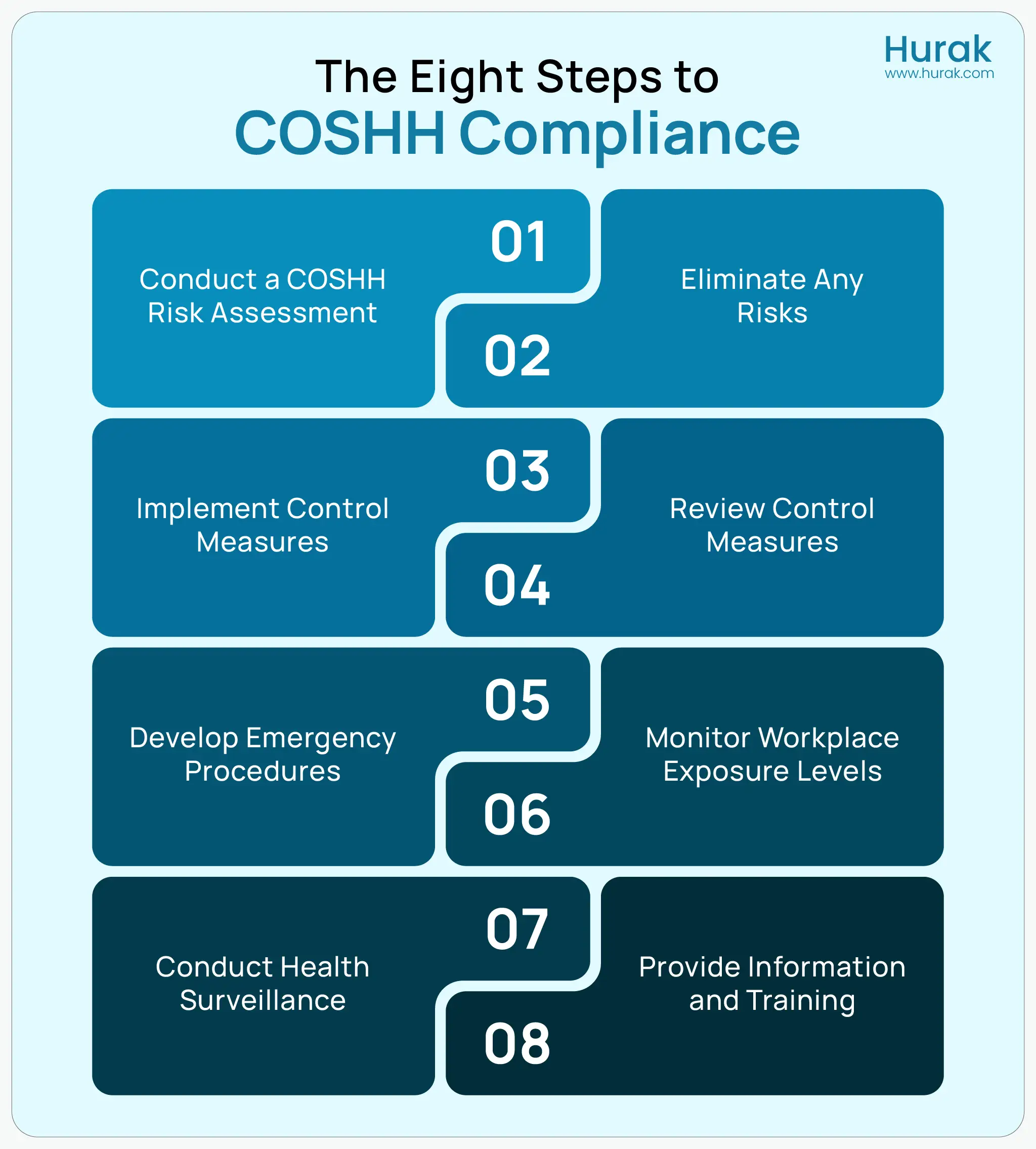
In many cases, businesses are not fully compliant with COSHH due to simple omissions. The number one reason for non-compliance is the lack of regular review of COSHH assessments; as a result, many organisations may not have updated controls, increasing exposure to risk. In addition, many organisations have an over-reliance on PPE (Personal Protective Equipment) rather than eliminating or substituting hazardous substances, and therefore often overlook higher levels of the COSHH hierarchy of control.
Also, many organisations do not provide adequate employee training or supervision, resulting in employees not knowing how to handle substances safely, respond correctly to spills and exposure incidents, or be aware of their responsibilities to themselves and others. Businesses also often overlook the substances generated by their activities (e.g., fumes, vapours, or dust) and focus solely on the raw materials they use. Finally, organisations fail to ensure that appropriate health surveillance is conducted for employees exposed to hazardous substances, leading to undetected illness and potential legal consequences.
COSHH compliance is legally mandated; it also makes good business sense. Providing a safe work environment greatly reduces the risk of accidents and, consequently, lowers absenteeism as employees take fewer days off due to injury. Supporting an employee's need for confidence in their protection from harm creates loyalty and desire to produce greater amounts of quality work for the company.
Additionally, effective COSHH management reduces the number of workers' compensation claims and ultimately lowers business-related insurance premiums, thus saving the employer money over time. Building a strong safety culture does not just improve employees' perceptions of safety; it establishes the company as a reputable business, demonstrating to clients, regulatory agencies, and employees that it takes health and safety issues seriously.
Providing COSHH-compliant working conditions is not just an option for businesses in the UK; it should be viewed as the foundation of responsible health and safety management for every business in the UK.
You must assess the risks associated with dust generated by cement, paint, and solvents during construction work.
Educators and cleaners should be mindful of all cleaning products and disinfectants, ensuring they are labelled correctly and stored appropriately.
Manufacturers should ensure that all welding fume and oil emissions are adequately ventilated and implement a health surveillance system to monitor employees' exposure.
You should consider how each sector operates and how best to approach COSHH in your industry. The COSHH framework will always follow the eight steps.

There are eight clear steps from identifying hazardous substances to regularly reviewing your controls. Following these steps not only helps your business meet legal requirements but also creates a safer, healthier environment for everyone.
COSHH isn’t just paperwork; it’s about protecting people. And with the right approach, compliance becomes part of your safety culture, not a burden.
There are eight key steps to COSHH compliance in the UK. These steps guide employers from identifying hazardous substances to continuously reviewing safety measures. Following all eight ensures legal compliance and helps protect employees from chemical, biological, or dust-related risks. COSHH compliance isn’t just about completing paperwork; it’s about building a safer workplace and demonstrating due diligence in managing hazardous substances.
The eight steps to working with COSHH include:
Identifying hazardous substances
Assessing the risks
Applying the hierarchy of control
Implementing control measures
Ensuring proper use and maintenance
Monitoring exposure
Preparing for emergencies
Reviewing and updating regularly
When thinking about risks, COSHH requires employers to follow five essential steps to effectively identify and control exposure to hazardous substances. These steps are:
Identify hazards
Assess the risk
Implement control measures
Record finding
Review regularly
The COSHH hierarchy of control helps employers reduce or eliminate risks from hazardous substances in order of effectiveness:
Elimination: Remove the hazardous substance entirely.
Substitution: Replace it with a safer alternative.
Engineering controls: Use ventilation or enclosed systems.
Administrative controls: Rotate tasks, limit exposure time, or provide training.
Personal Protective Equipment (PPE): The last line of defence.
Employers should always start from the top of the hierarchy, only relying on PPE when other methods aren’t possible.
A COSHH risk assessment should include:
Identification of hazardous substances
Who might be exposed and how
The level and duration of exposure
Current and proposed control measures
Health surveillance and emergency procedures
This ensures all potential risks are captured and appropriately managed across UK workplaces.
A hazardous substances risk assessment typically follows five main steps: identify hazards, assess exposure, decide on control measures, implement them, and review regularly. This framework aligns with COSHH requirements and helps employers maintain up-to-date safety controls.

Courses
Upskill with job-ready training.
Mock Tests
Measure your learning progress.
Create an online video course, reach students across the globe and earn money