On This Page

July 19, 202612 min read

Do You Know Where the Oyster Fork Goes in a Formal Table Setting?
Whether you're working in hospitality, catering, events, or corporate dining, knowing how to set a table correctly is a key part of presenting yourself and your organisation professionally. From high-end restaurants to formal banquets and client-facing events, a well-laid table sets the tone before a single word is spoken or dish is served.
And it's not only the host or staff who need to know. If you're an attendee, manager, or guest speaker, understanding basic table etiquette helps you appear confident, polished, and in tune with industry expectations.
In this article, we'll guide you through the essential table setting rules - from the basics of cutlery placement to formal arrangements, UK-specific etiquette, and common mistakes to avoid. Whether you're refreshing your skills or training your team, you'll find practical guidance that applies across industries.
If you're serious about maintaining high standards in hospitality or catering, mastering table etiquette is just the start.
Our Level 2 Food Hygiene and Safety Course for Catering dives deeper into what every professional should know from microbiological hazards to pest control, cross-contamination, cleaning procedures, and more.
Get certified and show your commitment to industry best practices.
First Impressions Begin at the Table
People often form an opinion about you or your business, long before they've tasted the food or spoken to you. Your table setup is one of the first things they notice, and it instantly conveys professionalism (or the lack thereof).
Whether you work in:
Hospitality or catering
Corporate settings
Event management
Training or education
The way you present a dinner table setting reflects your attention to detail and respect for the occasion.
Before guests even see the menu, they're already observing:
The restaurant's exterior appearance
The cleanliness and layout of the space
How the table setting looks
If the cutlery is placed correctly, napkins are folded neatly, and everything looks intentional, guests feel confident about the food before it's even served.
Read our article Career Guide: Hospitality and Catering for a better understanding of this profession.
At formal business lunches or networking dinners, your behaviour at the table can shape your professional reputation.
People notice:
How you carry yourself at the table
Your knowledge of cutlery etiquette (e.g., which fork to use first
Whether you know the difference between a formal table setting vs. casual dining
Your team may get to know you over time, but first impressions are often built on small, visible habits like how you sit, talk, eat, and interact during meals.
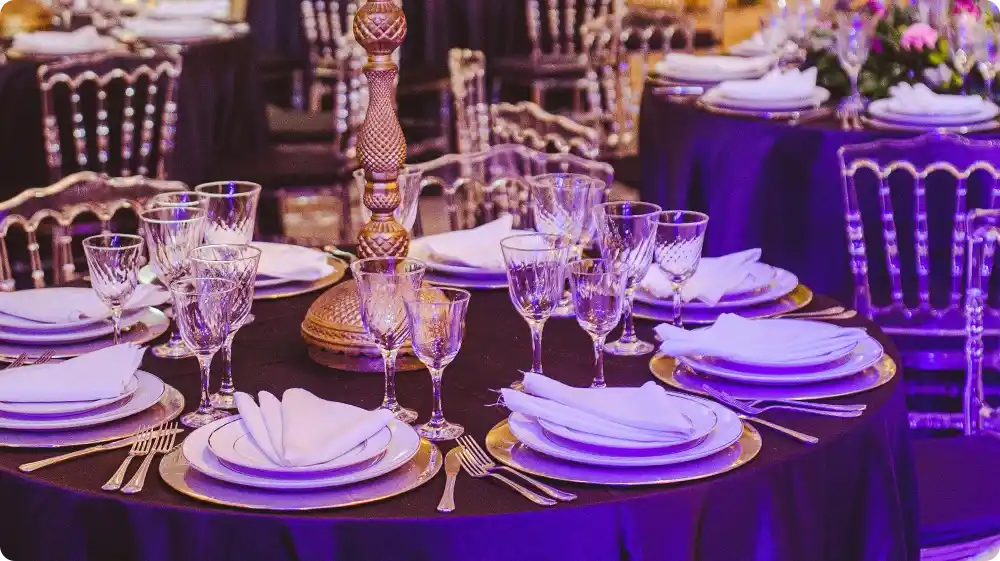
How to Set a Table: The Basics
If you're unsure where to start, here are a few fundamentals every professional should know:
Plates: The dinner plate is placed at the centre; starter or side plates are placed on top or to the left.
Cutlery: Forks on the left, knives and spoons on the right. Use cutlery from the outside in.
Glassware: Water glass sits above the knife; wine glasses go slightly right and behind.
Napkins: Placed either on the plate or to the left of the forks.
Dessert utensils: Placed horizontally above the plate if needed.
These are just the basics. For a more in-depth understanding, let's break down the different styles of table layouts and learn how to place each item correctly.
There are three types of table layouts. Each style suits different occasions, from casual meals to formal events.
Let's take a closer look at each type.
When to Use:
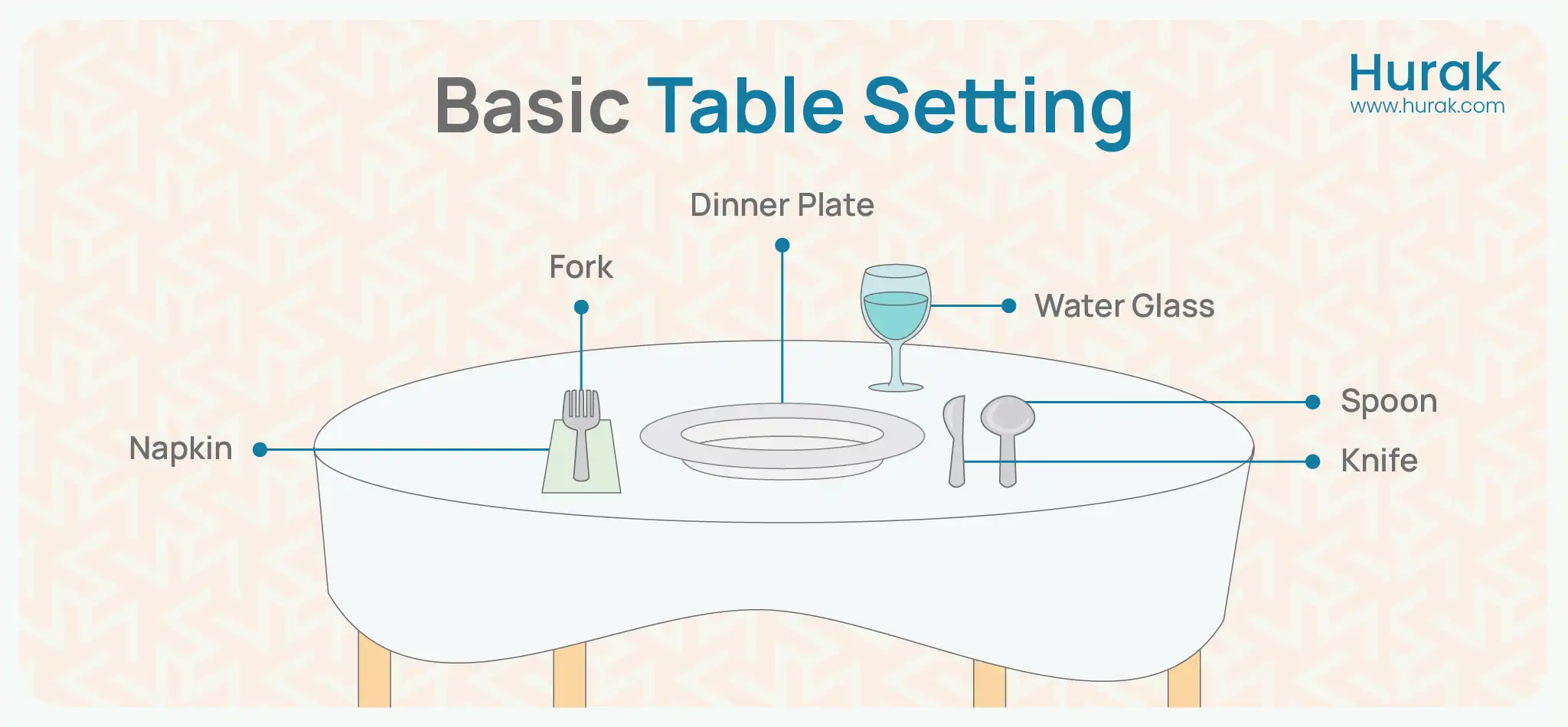
This is perfect for a regular lunch or dinner at home. Think of meals with family.
How to Set It:
Dinner Plate: Place it in the centre.
Knife: On the right side of the plate with the blade facing in.
Fork: On the left side of the plate.
Spoon: If needed (e.g. for soup), place to the right of the knife.
Water Glass: Placed directly above the knife.
Napkin: Either to the left of the fork or neatly on the plate.
Practical Scenario Example:
You're enjoying a quiet dinner at home with family after work. You place your cutlery and glass as described above -just enough to dine comfortably without any unnecessary clutter.
When to Use:
Perfect for informal gatherings, such as dinner with friends, birthday lunches, or Sunday roasts. It's a step up from basic but still relaxed.
How to Set It:
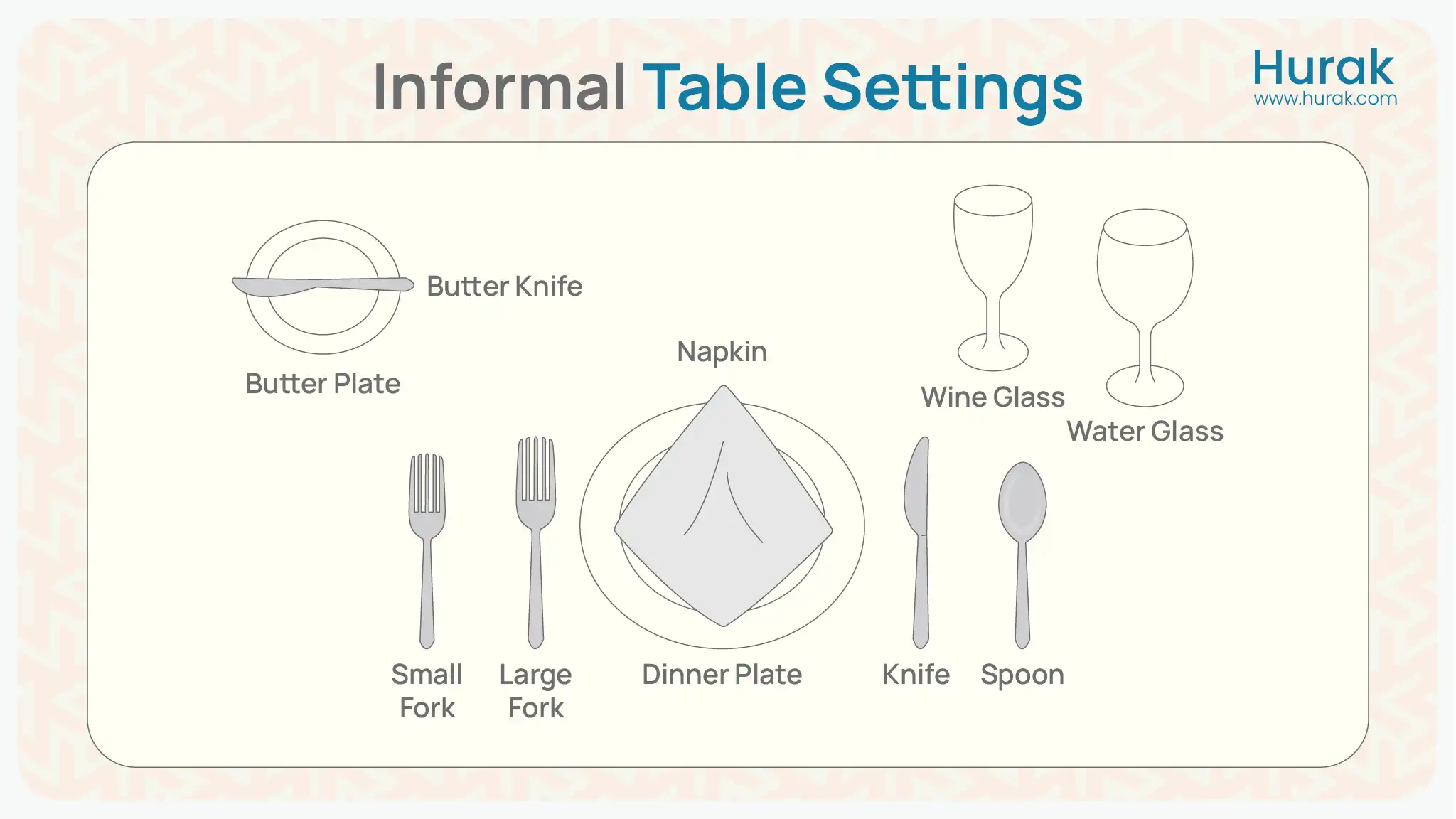
Dinner Plate: At the centre of the setting.
Salad Plate or Soup Bowl: On top of the dinner plate (depending on what's served first).
Cutlery:
Small Fork (Salad Fork): To the left, outermost.
Large Fork (Dinner Fork): To the left, closest to the plate.
Dinner Knife: To the right of the plate, blade inward.
Soup Spoon (if needed): To the right of the knife.
Bread Plate: Above the forks, to the upper left.
Butter Knife: Placed diagonally across the bread plate.
Water Glass: Above the knife.
Wine Glass (if needed): To the right of the water glass.
Napkin: Folded to the left of the forks or placed on the plate.
Practical Scenario Example:
You've invited your colleagues for a weekend lunch at home. This setup conveys informality, yet you've made an effort to make them feel special and welcome.
When to Use:
This is the go-to for high-end events such as weddings, black-tie dinners, or formal restaurant service, where guests are served multiple courses.
How to Set It:
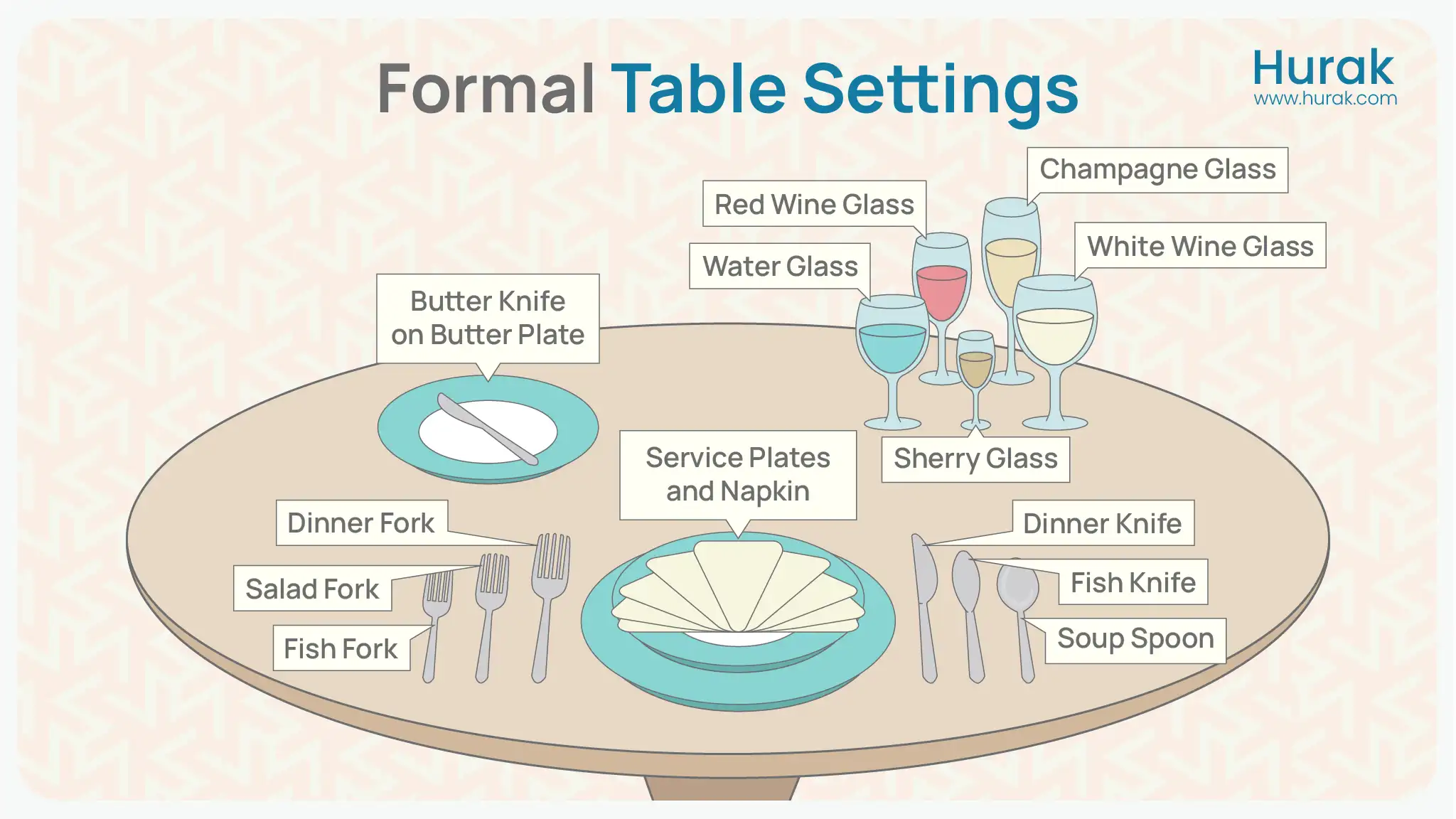
Charger Plate: This decorative base sits beneath the dinner plate and stays on the table until the main course is served.
Plates: A soup bowl, salad plate, or fish plate is placed atop the charger in the order of the courses.
Cutlery (Outside-In Rule):
Left Side:
Fish Fork: Far left.
Salad Fork: Middle.
Dinner Fork: Closest to the plate.
Right Side:
Soup Spoon: Far right.
Fish Knife: Middle.
Dinner Knife: Closest to the plate.
Dessert Fork and Spoon: Placed horizontally above the plate.
Oyster Fork (if needed): Far right, beyond the spoons.
Bread Plate: Upper left above the forks, with a butter knife placed diagonally.
Glassware:
Water Goblet: Above the knives.
White Wine Glass: Slightly right of the water glass.
Red Wine Glass: Slightly behind and right of the white wine glass.
Champagne Flute/Cocktail Glass: Behind the wine glasses.
Napkin: Elegantly folded on the charger or to the left of the forks.
Practical Scenario Example:
You're attending a black-tie fundraising dinner. As you approach the table, you know you're in a professional, high-standard environment because the setup reflects it - layered cutlery, sparkling glassware, and proper placements signal care and class.
When it comes to cutlery, knowing the proper etiquette not only helps you dine gracefully but also shows respect for tradition and your hosts. Here are the key points to remember:
Outside-In Rule
Start using the cutlery furthest from your plate first and work your way inward with each course. This classic rule helps guests know which utensils to use and when.
Resting and Finished Positions
To signal to servers you're resting between bites, place your knife and fork in a slight V shape on your plate. When finished, place them parallel, usually diagonally from 4 o clock to 10 o clock on the plate.
In the UK, traditional dining etiquette follows the Continental or European style. This is especially important in formal settings such as restaurants, catering events, and hospitality venues.
The fork is held in the left hand, with the tines facing downward.
The knife is held in the right hand, used to cut food and guide it onto the back of the fork.
Unlike the American style, there's no switching hands. The fork stays in the left hand throughout the meal.
This method is seen as efficient, polite, and professional, and is widely taught in hospitality training and workplace dining protocols in the UK.
Knife: Rest the handle in your palm and place your index finger along the top of the blade for better control.
Fork: Hold it similarly to a pencil, but with a relaxed grip, and keep the tines facing down.
Avoid stabbing food or waving cutlery while talking - these are considered poor manners.
Following proper table etiquette not only shows respect in formal settings but also reflects positively on your professionalism, especially if you're working in or entering the hospitality or catering industry.
If you're responsible for managing food handlers, overseeing hygiene standards, or training staff, it's essential to have the right qualifications in place.
Our Level 3 Food Hygiene and Safety (RQF) course is designed for supervisors, managers, and business owners working in the food industry.
CPD-Certified
Meets legal training obligations
Ideal for all supervisory roles in food businesses
In professional environments, minor errors in a table setup can create a negative impression.
Here are some common mistakes to watch out for while arranging the table:
Placing cutlery in the wrong order - always follow the correct table setting by working from the outside in, course by course.
Using mismatched tableware or leaving fingerprints on glassware while setting the table.
Confusing the bread plate with the side plate or mixing up the placement of forks and knives.
Ignoring napkin placement or simply tossing it on the table, continuously fold it neatly and place it appropriately.
Once you've mastered the basic table layout, take it a step further by enhancing both its appearance and functionality:
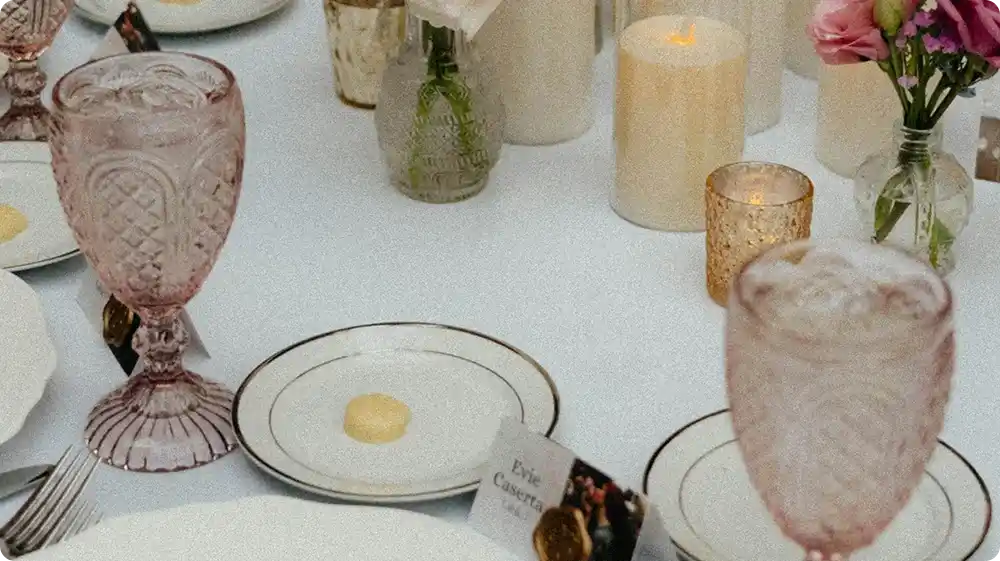
Add a centrepiece A simple vase with fresh flowers, a decorative candle, or a seasonal item can give your dinner table setup a welcoming focal point. Just ensure it's not too tall to block the view across the table.
Use coordinated colours Match your tablecloth, napkins, and tableware for a polished look. Neutral or earthy tones work well for a formal setting, while bright colours can bring life to casual meals.
Upgrade your cutlery Beautiful, polished cutlery not only enhances the dining experience but also reinforces good cutlery etiquette in the UK. Matching sets show attention to detail.
Include place cards for formal meals It adds a professional touch and helps avoid confusion in seating arrangements.
Add texture and layering Use placemats, chargers, or fabric napkins to introduce depth and elevate a basic table layout into something visually impressive.
Glassware counts too Clean, streak-free glasses arranged in the correct order add sophistication to any formal table setup.
Lighting matters Soft lighting, whether through candles or warm-toned bulbs, can instantly upgrade the dining atmosphere.
These enhancements are subtle yet effective, transforming any table setup from functional to memorable, making them ideal for both home entertaining and professional hospitality settings.
Mastering table setting rules isn't just about looks it involves creating a clean, professional, and welcoming experience. Whether you're hosting at home, preparing for a restaurant service, or setting up a corporate event, understanding proper table setting layout and cutlery etiquette makes all the difference.
From a basic to a formal table setting, paying attention to details and placing items in the correct manner helps elevate the occasion.
You Might Also Like:
Understanding table setting rules is just one part of mastering food service and safety. If you're looking to expand your knowledge, explore these helpful reads:
Place the fork to the left of the plate, the knife to the right with the blade facing inwards, and the spoon (if needed) to the right of the knife. The napkin can be placed to the left of the fork or on the plate. Glassware should be positioned above the knife.
While traditional settings place the fork on the left and the knife on the right, for informal occasions or space-saving needs, both can be placed on the same side. Ensure they are aligned neatly, with the knife blade facing the fork.
A formal table setup includes multiple courses and utensils: charger plate, soup bowl, salad plate, dinner plate, various forks and knives placed in order of use from the outside in, dessert utensils above the plate, and appropriate glassware for water, white wine, red wine, and champagne.
In the UK, the fork is held in the left hand with tines facing down, and the knife in the right hand. Utensils are placed in the order of use from the outside in. Napkins are typically placed to the left of the forks or on the plate.
Avoid overcrowding the table, mismatched or misplaced cutlery, using inappropriate settings for the occasion, and neglecting essential hygiene practices, such as clean linens and polished utensils.
Incorporate elements like a tasteful centrepiece (e.g., a vase with fresh flowers), matching tablecloth and napkins, polished cutlery, and coordinated dinnerware to elevate the dining experience.
In the UK, it's customary to hold the fork in the left hand with tines facing down and the knife in the right hand. During pauses, place the knife and fork in an inverted V on the plate; when finished, place them parallel at the 6:30 position.
Proper table setting etiquette reflects professionalism, enhances the dining experience, and is essential in hospitality and catering industries to meet guest expectations and standards.
Courses
Upskill with job-ready training.
Mock Tests
Measure your learning progress.
Create an online video course, reach students across the globe and earn money