On This Page

July 16, 20266 min read
Shock is often linked to sudden emotional or psychological distress, where a person’s mind becomes overwhelmed, and the body starts struggling to respond normally. Although it is different from medical shock, the effects can feel just as intense and frightening as physical shock. In such moments, knowing how to respond calmly and provide basic support plays a vital role in helping someone feel safe until professional help is available.
This guide can help you in understanding what to do before help arrives, using simple steps that anyone can follow. It also explains the early symptoms, root causes, immediate action plan, and what to do when someone is in a state of shock, and more regarding shock first aid.
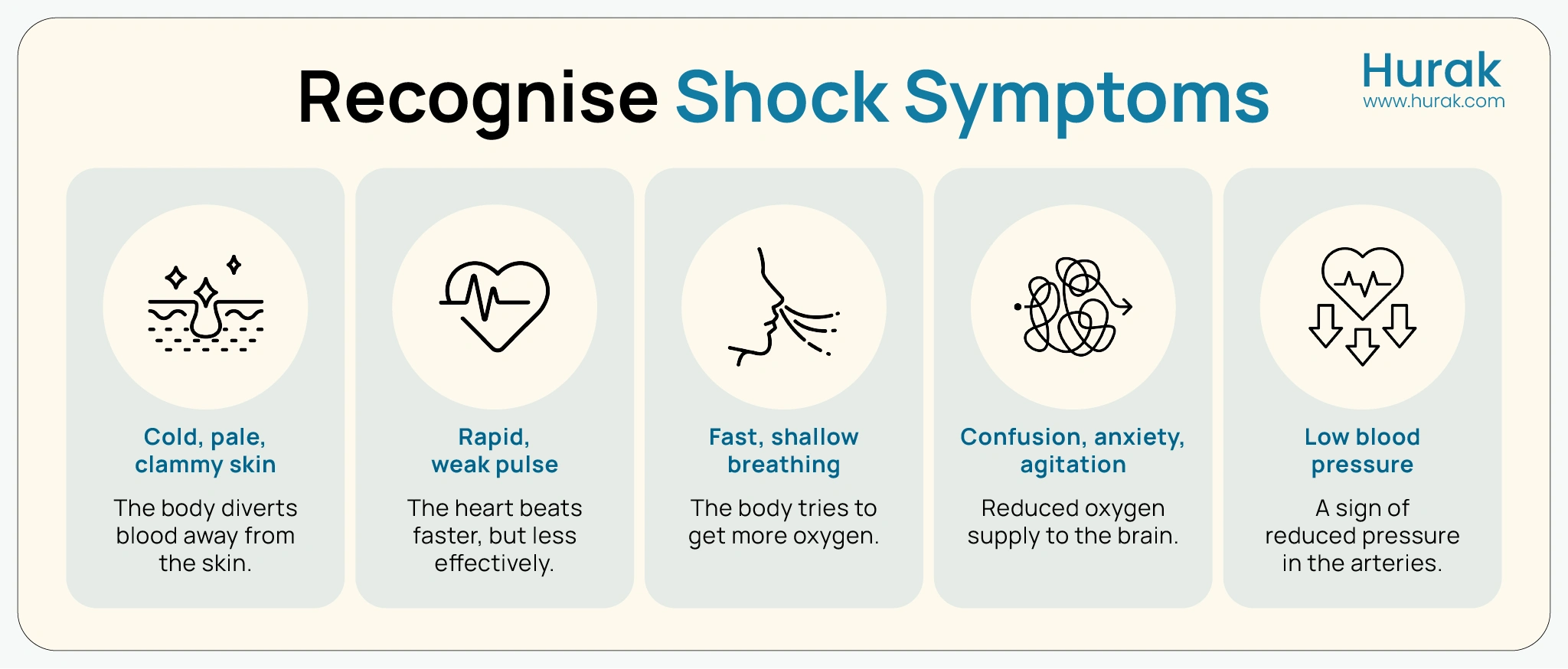
A serious medical shock can escalate within minutes, finding early recognition may feel critical at the moment. Spotting the warning signs quickly can prevent life-threatening complications and improve the person’s chances of survival. These symptoms may occur because the body is struggling to maintain blood flow to vital organs. Here are some alert signs that you must watch for in that person:
Pale, Cold, or Clammy Skin: If that person’s skin turns pale, cold, or clammy, that means blood is redirected from the skin to protect the heart, brain, and lungs.
Rapid, Shallow Breathing: This means that the person’s body might be trying to take in more oxygen to balance the poor oxygen circulation to the vital organs.
Rapid but Weak Pulse: You must check the pulse of that person. It might feel fast, as the heart beats faster when blood pressure drops.
Anxiety, Restlessness, or Agitation: If the person seems as anxious, restless, or agitated, it may be because of reduced oxygen to the brain, which can affect behaviour and awareness in the body.
Confusion, Drowsiness, or Loss of Alertness: If a person seems to lose alertness and feel confused. This is a serious sign that oxygen levels in their brain are falling.
Thirst or a Dry Mouth: Generally, when a person is in a state of shock, this can seem like a typical response to falling blood volume or dehydration.
Cold Hands and Feet: Their hands and feet can become extremely cold due to a lack of blood flow.
Nausea or Vomiting: Sometimes, shock can trigger digestive system issues due to lack of blood supply.
In any emergency, your primary focus should be the safety of yourself and the casualty. If you are alone there with casualty, it is very important to understand your key responsibilities in emergency situations to perform First Aid. Follow the steps below immediately:
Check for Danger: Do not put yourself at risk. Only move the casualty if the area is unsafe, i.e., a highway or an electrical hazard. Once you move to a safe area, you can start the first aid procedure.
Dial 999 or 112: Call for an ambulance immediately and clearly state that you suspect the person who is in shock.
Do Not Delay: Call for professional help straight away and do not wait for the symptoms to worsen before seeking medical assistance.
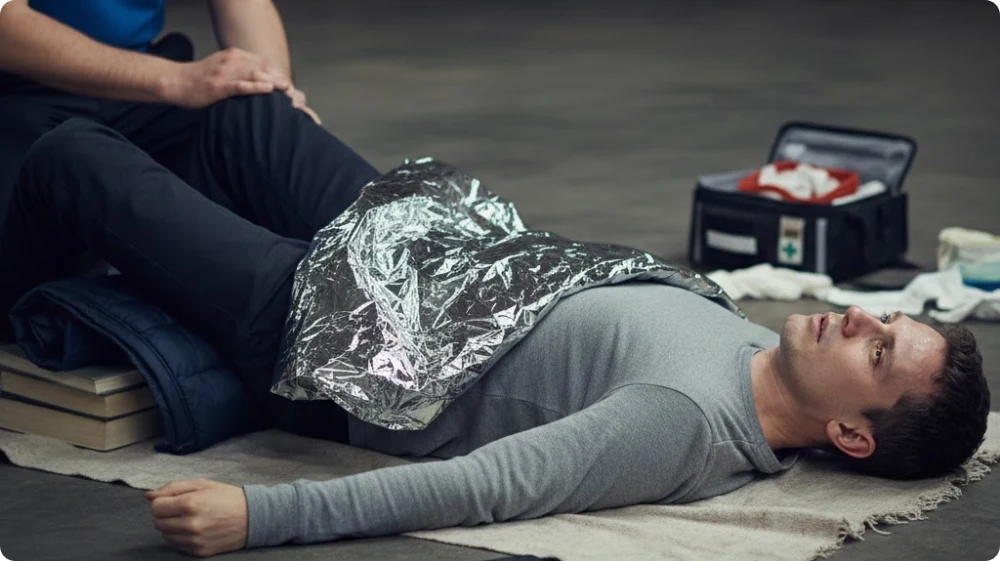
Lie Down Flat: Place the person flat on their back to improve their blood flow to the vital organs of their body.
Elevate Legs: If the person does not have a head, neck, back, or leg injury, raise their legs about 12 inches (30 cm) using a coat or any soft object.
Alternative Position: If they are struggling to breathe, unconscious, or vomiting, place them in the Recovery Position(if no spinal injury is suspected).
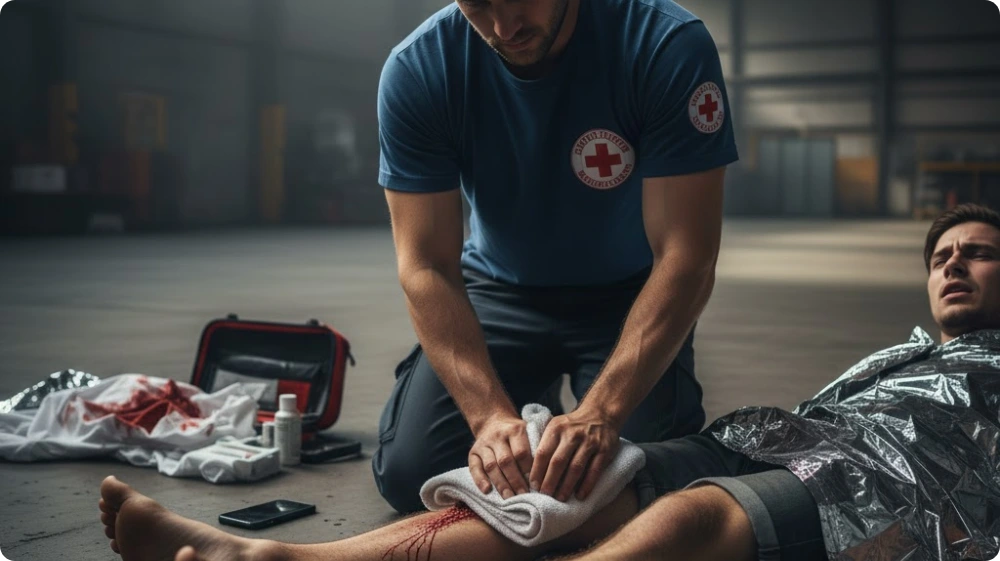
Apply Direct Pressure: If the shock is due to visible and intense bleeding (called Hypovolaemic Shock) apply direct pressure to the wound using a cotton cloth to stop the bleeding.
Use Clean Material: Use a clean dressing towel, or a piece of clothing to cover the wound, cotton clothes are more preferable, and apply pressure directly to the wound.
Maintain Pressure: If the material soaks through, do not remove the first dressing, simply place a second pad on the top and continue applying pressure.
Loosen Clothing: Gently loosen any tight clothing around the neck, chest, or waist to improve blood and oxygen circulation throughout the body.
Insulate the Body: Cover the casualty with a blanket, coat, or anything available to keep them warm and insulated from the ground.
Avoid Direct Heat: Do NOT attempt to apply direct heat sources, such as a hot water bottle, as this can be injurious.
Stay and Monitor: Stay with the casualty constantly and monitor their level of response, breathing, and pulse until the emergency services can arrive.
Offer Reassurance: Speak calmly and continuously to the casualty to reduce their anxiety, since your calm presence is vital at that moment.
Prepare for Services: Be ready to relay information to the paramedics regarding the casualty's condition and the events that led to the shock in the casualty.
Shock is a life-threatening emergency, and delaying treatment can lead to organ failure or death. You should call on emergency services immediately without waiting for symptoms to worsen the casualty’s condition. Emotional shock can sometimes turn into a deeper crisis.
So call on 999 or 112 and contact NHS services, or seek urgent support if the person:
Has chest pain, breathing difficulty, or faints.
Is extremely confused or disoriented.
Shows signs of a panic attack that isn’t improving.
If there is any external injury, immediately cover it and apply direct pressure using a cotton cloth to control extreme bleeding.
Has a medical condition affected by stress (heart disease, extreme anxiety, etc.)
Doesn’t regain awareness or calmness after 30–60 minutes
For non-emergencies, encourage them to contact:
Their GP
NHS 111
A mental health support line
A trusted friend or family member
While first aid steps are similar for all types of shock, understanding the underlying causes helps you recognise early signs, by which you can respond with confidence, and explain the situation more accurately to the medical professionals. Here are some different types of shocks with their primary causes and examples:
Type Of Shock | Primary Causes | Example |
Hypovolaemic | Severe loss of blood or fluid volume. | Major external/internal bleeding, severe burns, extreme dehydration. |
Cardiogenic | The heart fails to pump blood effectively. | Heart attack or severe heart failure. |
Distributive | Blood vessels widen (dilate), causing blood to pool. | Severe allergic reaction (Anaphylactic Shock), severe infection (Septic Shock), or spinal cord injury (Neurogenic Shock). |
Obstructive | Physical blockage of blood flow to or from the heart. | Blood clot in the lungs (Pulmonary Embolism). |
Avoid these mistakes when a person is in shock, as they can worsen the casualty’s condition:
❌ Do NOT give food, water, or medications
They may choke, and some conditions require an empty stomach for treatment.
❌ Do NOT raise their head or sit them upright
This reduces blood flow to vital organs and can accelerate collapse.
❌ Do NOT apply direct heat (hot water bottles, heating pads, warm compresses)
This can cause blood to pool away from vital organs.
❌ Do NOT move the casualty unnecessarily
Movement of a casualty can worsen injuries or disrupt blood and oxygen circulation throughout the body.
❌ Do NOT delay calling emergency services
Shock progresses rapidly, so early medical intervention is crucial.
Knowing the cause helps first aiders recognise the signs earlier, by which they can respond with greater confidence, and share crucial information with medical professionals. This can speed up the right treatment and significantly improve the person’s chances of survival. Here are some root causes of shock, which can occur due to:
Heavy internal or external bleeding, heart attacks, or sudden heart failure can significantly reduce blood flow in the person’s body, which can lead to shock.
Sepsis and major burns place can put extreme stress on the body and can trigger a dangerous drop in a person’s blood pressure.
Severe dehydration or heat stroke can prevent vital organs from receiving enough oxygen, which can lead to shock in a person.
Serious injuries like fractures, crush injuries, or spinal cord damage can interfere with blood flow and nerve control and can lead to shock in a person.
Shock may also occur after poisoning or a severe allergic reaction, both of which can affect breathing and circulation in a person’s body.
You can protect yourself and others by being prepared, as knowing what to do in the first critical minutes of shock, which can prevent the situation from worsening. You can protect yourself and others by being prepared with these steps:
Keep a first-aid kit at home, at work, and in your vehicle.
Learn basic first aid and CPR, and you can take professional training.
Store emergency numbers primarily on your phone.
Know how to use an adrenaline auto-injector if you care for someone with severe allergies.
Stay informed about common risks in your environment (workplace hazards, family health conditions, etc.).
Emotional or mental shock happens when the mind is overwhelmed by sudden, intense stress. It is not the same as medical shock or stroke, but the body can react in very similar ways. When someone experiences a traumatic event, frightening news, or extreme emotional pressure, then the brain switches into “survival mode”. This triggers a rush of stress hormones, causing physical reactions such as shaking, fast breathing, dizziness, or going completely still and silent.
Mental health conditions like anxiety, depression, trauma, or panic disorders can make a person more sensitive to stress. A strong emotional trigger, such as a loss, accident, argument, or shocking information, can push the nervous system beyond what it can cope with in that moment. As a result, the person may feel numb, disconnected, confused, or unable to respond normally.
Mental shock can leave a person feeling overwhelmed, frozen, or unable to think clearly. A calm, supportive response can help them regain a sense of safety until proper help is available.
1. Create a calm, safe space: Move them away from noise or crowds and speak gently.
2. Reassure them: Use simple phrases like “You’re safe” or “I’m here with you.”
3. Encourage slow breathing: Guide them to take steady, deep breaths to ease panic.
4. Use grounding techniques: Ask them to notice things they can see, hear, or feel to reconnect to the present.
5. Stay with them and seek help if needed - Remain close until they stabilise, and contact a professional if their distress continues.
Immediate first aid for shock is important because it helps keep the person stable until medical help arrives. By staying safe, calling emergency services, positioning the casualty correctly, controlling bleeding, and keeping them warm, you can support their survival. Acting calmly and quickly can make a real difference. Learning first aid is a valuable skill that can help save lives.
Yes. Shock can be caused by infections, heart issues, dehydration, or allergic reactions.
Yes, especially around the chest, waist, and neck to help with breathing.
They may vomit or choke. Some shock types require an empty stomach for treatment.
It persists until the cause is treated medically. First aid buys time; it doesn't cure shock.
No. Shock always requires medical evaluation and treatment.
Courses
Upskill with job-ready training.
Mock Tests
Measure your learning progress.
Create an online video course, reach students across the globe and earn money