
Mental health plays a vital role in shaping how we think, feel, and interact with the world around us. It shapes how we build relationships, make decisions, perform at work or studies, and handle stress. Today, many people across the world live with mental health conditions such as anxiety and depression, and for many, these struggles interfere with their daily routine and overall well-being. This shows that mental health concerns are not rare and highlights the need for better awareness, timely support, and easy access to care.
These days, people are finally starting to talk about mental health without hiding or feeling embarrassed, and that is a good step forward. Even then, mental health problems are still very common and continue to affect how people live, work, and connect with others. You can see its impact in homes, schools, and workplaces every day. In this article, we will break down some important mental health facts, talk about different mental illnesses and what may lead to them, and explain why caring for your mental health is necessary for living a steady, meaningful life.

What Is Mental Health?
Mental health refers to a person’s overall emotional, psychological, and social well-being. It determines how individuals process thoughts, manage emotions, and interact with others. Good mental health enables people to cope with everyday challenges, stay productive, and contribute meaningfully to their communities. On the other hand, poor mental health can make it difficult to focus, maintain relationships, or handle stress effectively.
In simple terms, mental health is about how we manage our thoughts, emotions, and stress, allowing us to cope with challenges and maintain a sense of balance when life feels overwhelming.
Mental Health Facts
When we talk about mental health facts, we’re referring to the measurable evidence that shows how many people are affected, which groups are most vulnerable, how conditions are changing over time, and where the gaps in support lie. The following insights, based on national surveys and trusted data sources, reveal the reality of mental health across the country.
Latest Mental Health Statistics
According to the Office for National Statistics (ONS) and NHS Mental Health Surveys, mental health issues continue to affect millions of people every year. Understanding how many people suffer from mental health problems reveals the growing need for awareness, early intervention, and accessible care.
Key recent statistics include:
The following table summarises recent UK mental health statistics, highlighting how widespread these challenges are across different age groups, genders, and social circumstances.
| Mental Health Indicator | Percentage |
| Adults experiencing a common mental health condition (weekly prevalence) | 20.2% |
| Adults who experience a mental health problem at some point in their life (often cited as “1 in 4”) | 25% |
| Young adults (16-24 years) with anxiety or depression | 25.8% |
| Women reporting anxiety or depression | 24.2% |
| Men reporting anxiety or depression | 15.4% |
| Adults with moderate to severe depressive symptoms | 18% |
| Adults with problem debt are experiencing mental health conditions | 39% |
| Adults without problem debt are experiencing mental health problems | 18.4% |
NOTES:
- These statistics are based on nationally representative surveys conducted by the Office for National Statistics (ONS) and NHS Digital, making them reliable and evidence-based.
- Percentages may vary slightly each year depending on survey methods, population changes, and external factors such as economic stress or public health crises.
- Higher prevalence among young adults and women highlights the need for age- and gender-specific mental health support strategies.
- Financial trauma, including problem debt, significantly increases the risk of mental health conditions, underlining the link between economic well-being and mental health.
- Early awareness, timely intervention, and accessible mental health services can help reduce the long-term impact reflected in these statistics.
Together, these figures show that mental health challenges are both common and complex, reinforcing the importance of early support, accessible care, and continued public awareness.
Mental Health Across Age Groups and Social Influences
While mental health challenges are widespread, their causes and effects differ greatly across age groups, lifestyles, and social conditions. The following insights reveal the true scope and complexity of mental well-being.
Adults Experiencing Mental Health Problems
- In recent years, the number of adults seeking help for emotional distress or psychological concerns has continued to rise, particularly since the pandemic.
- Factors such as long working hours, job insecurity, and the rising cost of living have made stress one of the leading contributors to poor mental health.
- Workplace burnout is now recognised as an occupational health issue by many UK employers.
- More adults are turning to digital therapy platforms and online counselling for accessible support.
Mental Health Among Children and Young People

- Recent research shows that many teenagers today are struggling with anxiety, body image issues and emotional ups and downs in their lives.
- Many young people find it difficult to get mental health support at the right time, whether it is through school support system or nearby local services.
- Moving from school life to college or work can also feel overwhelming and frustrating.
- At the same time, the increasing craze of social media and digital wellbeing highlights how technology can both help and harm young people’s mental health.
The Role of Economic, Social, and Environmental Stress
- The anxiety and depression rates are increasing due to economic challenges such as rising living expenses.
- Loneliness and social isolation are still major problems, especially among older adults.
- Because of limited resources in rural areas, people are more prone to face higher stress issues and anxiety.
- Supportive communities, mental health education, and access to nature can reduce these problems.
Mental health issues can happen to anyone, at any time. Our Mental Health First Aid (MHFA) course teaches you how to recognise signs, respond safely, and provide support. Learn to support someone facing mental health difficulties.
Common Mental Disorders
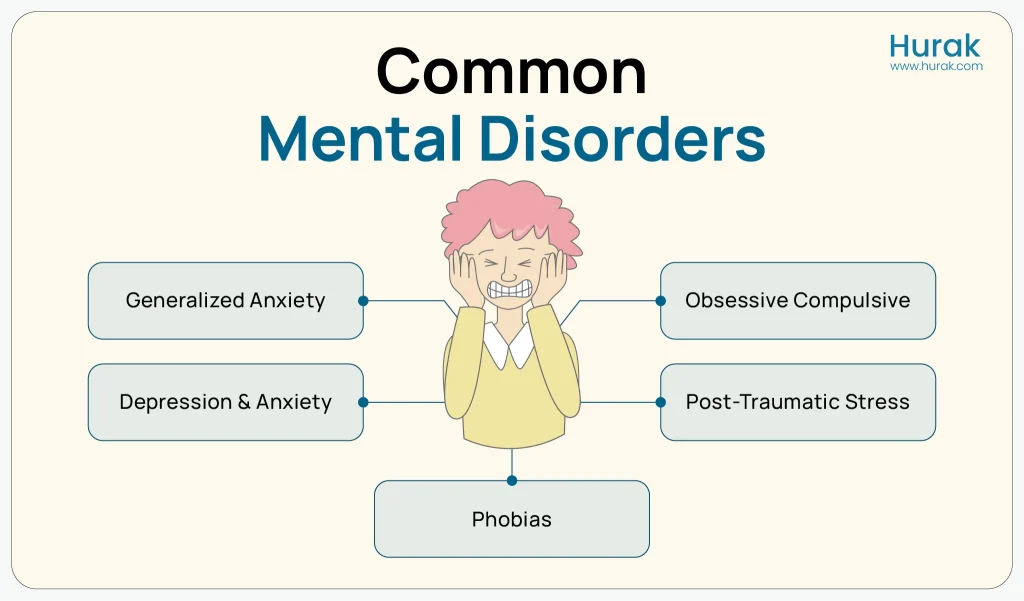
Mental health problems can take many forms, and their effects vary from person to person. The most common mental disorders often involve mood, anxiety, or behavioural disturbances that can interfere with daily life.
The following are some of the most common mental disorders:
Generalised Anxiety Disorder (GAD)
GAD is a condition where a person feels constant, excessive worry about everyday situations. People with GAD often struggle to relax and may experience physical symptoms such as restlessness, muscle tension, or trouble sleeping.
Depression and Anxiety Disorders
Depression involves persistent sadness, loss of interest, and low energy, while anxiety disorders cause fear, tension, or nervousness that can interfere with daily life. Both conditions are among the most common mental disorders, often occurring together and affecting mood, motivation, and overall well-being.
Phobias
Phobias are intense, irrational fears of specific objects, activities, or situations, such as heights, animals, or public places. These fears can lead to avoidance behaviour and significantly impact daily routines.
Obsessive-Compulsive Disorder (OCD) and Panic Disorders
OCD causes people to experience repetitive, unwanted thoughts (obsessions) and feel compelled to perform rituals or actions (compulsions) to ease anxiety.
Panic disorder involves sudden episodes of intense fear or panic attacks, often accompanied by physical symptoms like a racing heartbeat or shortness of breath.
Post-Traumatic Stress Disorder (PTSD) and Eating Disorders
PTSD develops after a person experiences a traumatic or distressing event. It can cause flashbacks, nightmares, and emotional numbness.
Eating disorders such as anorexia, bulimia, and binge-eating disorder involve unhealthy relationships with food, often linked to self-image and emotional distress.
Mental health challenges are common, and knowing about these disorders helps normalise seeking help and prioritising mental health care.
What Is Mental Illness?
A mental illness is a diagnosed condition that significantly disrupts thinking, mood, behaviour, or daily functioning. Unlike temporary stress or sadness that everyone experiences, mental illness interferes with daily life, relationships, and functioning, often requiring professional treatment or support to manage effectively. Good mental health can prevent or reduce the severity of mental illness and disorders like depression, bipolar disorder, or schizophrenia.
Types of Mental Illness
There are different types of mental illness, as it is not a single condition, each affecting thoughts, emotions, behaviours, and daily functioning in unique ways. Understanding the different categories of mental illness helps people identify symptoms and reduce stigma.
Mood Disorders (Depression, Bipolar Disorder)
Mood disorders involve persistent disturbances in emotional state.
- Depression is characterised by prolonged sadness, loss of interest, low energy, and difficulty functioning in daily life.
- Bipolar disorder involves extreme mood swings, from emotional highs (mania) to lows (depression), which can affect behaviour, decision-making, and relationships.
Personality Disorders
Personality disorders are conditions where long-term patterns of behaviour, thinking, and emotional regulation differ significantly from cultural expectations. These patterns can affect relationships, work, and social life. Examples include borderline personality disorder and antisocial personality disorder.
Psychotic Disorders (Schizophrenia, Schizoaffective Disorder)
Psychotic disorders involve distorted thinking and perception of reality.
- Schizophrenia may include hallucinations, delusions, disorganised thinking, and difficulty distinguishing reality from imagination.
- Schizoaffective disorder combines symptoms of schizophrenia with mood disorder symptoms, such as depression or mania.
Neurodevelopmental and Behavioural Conditions (ADHD, Autism)
These conditions usually appear in childhood or adolescence and affect learning, behaviour, and social interaction.
- ADHD (Attention-Deficit/Hyperactivity Disorder) causes difficulty with focus, hyperactivity, and impulsive behaviour.
- Autism Spectrum Disorder (ASD) affects social communication, behaviour patterns, and can include sensory sensitivities.
Each type of mental illness affects people differently, making it essential to seek professional guidance, access resources, and build a strong support system.
Causes of Mental Illness
Mental illness does not have a single cause. Instead, it arises from a complex mix of biological, psychological, and environmental factors.
Biological Factors
- Genetics: Family history of mental illness increases vulnerability.
- Brain chemistry: Imbalances in neurotransmitters like serotonin and dopamine can trigger conditions such as depression and anxiety.
- Physical health conditions: Chronic illnesses, hormonal changes, or neurological disorders can affect mental health.
Psychological Factors
- Trauma: Childhood abuse, neglect, or other traumatic events can have lasting effects.
- Personality traits: Certain traits, like low resilience or high sensitivity, may increase risk.
- Stress response: Poor coping strategies or chronic stress can contribute to the development of mental disorders.
Environmental and Social Factors
- Economic stress: Poverty, unemployment, financial problems, relationship breakdowns, or job insecurity.
- Social isolation: Loneliness or lack of social support can significantly affect mental health.
- Adverse living conditions: Unsafe neighbourhoods, exposure to violence, or poor housing.
- Substance abuse: Alcohol, drugs, or medication misuse can trigger or worsen mental illness.
Knowing the underlying causes of mental illness empowers individuals and communities to take preventive steps and access timely treatment.
Why Is Mental Health Important?
Mental health is vital because it affects every aspect of our lives, from physical health to work, productivity, and relationships. Having good mental health makes life easier. It helps us to calm and comfort ourselves when we’re upset, to cope with the losses, changes, fears and uncertainties in life, to make and keep good relationships with other people and to learn.
Many people are reluctant to talk about their feelings and their mental health. Ironically, not sharing our feelings with anyone, or even knowing what they are, can make our mental health worse. Promoting awareness and reducing stigma encourages people to seek help without fear, while early intervention and support can prevent long-term complications and improve recovery. Understanding why mental health is important because it empowers individuals and communities to prioritise well-being and build stronger, healthier lives.
Conclusion
Exploring mental health statistics provides a clearer picture of how widespread mental health issues are and why prioritising mental health matters. It highlights the scale of mental health challenges and the importance of early awareness, support, and prevention. By learning about the different types of mental illness, their causes, and how many people are affected, we become more prepared to notice early signs and offer support.
With growing awareness, more people are recognising the value of seeking support early, whether through professional services, community programmes, or self-help strategies. By promoting open conversations, we can make it easier for individuals to access timely care and feel understood. Ultimately, prioritising mental health is not just about managing difficulties; it’s about empowering people to lead healthier, more fulfilled lives.
FAQs
What is mental health & why is it important?
Mental health refers to your emotional, psychological, and social well-being. It affects how you handle stress, make decisions, and connect with others. Good mental health supports better relationships, productivity, and physical health. Poor mental health can lead to long-term challenges if ignored. That’s why understanding and taking care of your mental health is essential.
What are the early signs of poor mental health?
Early signs may include constant worry, mood changes, trouble sleeping, and loss of interest in normal activities. You may feel overwhelmed, withdrawn, or easily irritated. Physical symptoms like headaches or fatigue can also appear.
Can mental illness be prevented or treated?
Yes. Early intervention, lifestyle changes, and psychosocial support can significantly help. While biological conditions may require medical treatment, many mental illnesses are manageable.
How does mental health affect physical health?
Poor mental health can worsen physical health, contributing to conditions like cardiovascular disease or chronic pain. Conversely, good mental well-being promotes healthier habits and better stress management.
Are mental health issues common?
Yes, mental health problems are experienced by millions of people every year. Anxiety, depression, and stress-related conditions are especially widespread. Many people may not realise they’re struggling until symptoms worsen.
Is mental illness the same as mental health?
No. Mental health is your overall state of well-being, while mental illness refers to specific conditions that affect mood, thinking, or behaviour.