On This Page

July 16, 20267 min read
Phagophobia refers to the fear of swallowing. It's often linked to a fear of choking, but it can also come from anxiety about losing control or being unable to breathe properly while eating. This fear may lead people to avoid certain foods, reduce portion sizes, or avoid eating in public altogether. In this article, we'll break down what phagophobia is, where it tends to come from, and how it can be treated.

For many people, eating is something they look forward to. But if you live with a fear of choking on food, mealtimes can feel stressful and overwhelming. This intense discomfort often comes from a fear of swallowing, which is known as phagophobia. It can turn a normal, everyday action into something that feels frightening or even unsafe. In some cases, the fear of choking becomes so strong that it affects how much you eat, what you drink, and how you get through the day.
Although its less common than other fears, phagophobia can seriously impact your quality of life. That's why it's important to understand the possible phagophobia causes and look out for common phagophobia symptoms. With the right approach and phagophobia treatment, you can learn how to overcome swallowing anxiety and begin to feel more comfortable with food again.
Phagophobia is a type of specific phobia that is less frequently discussed in both clinical and public health circles. As a result, data on its prevalence is limited. However, we do know that specific phobias affect approximately 7-10% of the global population, and swallowing or choking fears are recognised subtypes within this group. This suggests that phagophobia, although not highly prevalent, still impacts a meaningful number of people worldwide.
In the UK, the lack of detailed data makes it hard to quantify, but clinicians report encountering it most often in anxiety clinics or among individuals with comorbid conditions like panic disorder or somatic symptom disorders. The true prevalence may be underestimated due to the tendency for sufferers to attribute their symptoms to physical conditions, leading them to medical rather than psychological care.
Phagophobia symptoms can range from mild uneasiness while swallowing to full-blown panic attacks during meals. People with this condition may avoid certain foods, skip meals altogether, or feel anxious even when swallowing saliva. Common signs include:
Racing heart or shortness of breath while eating
Muscle tightness in the throat
Dry mouth or difficulty swallowing despite no physical cause
Intense fear of choking on food
Avoidance of solid foods or public eating situations
Preoccupation with swallowing movements
Weight loss or malnutrition from food avoidance
Common causes of phagophobia include:
Traumatic experiences: These may stem from a past choking or near-choking incident, leading to a lasting fear of swallowing.
Observed events: Witnessing someone else choke, especially during childhood, can create deep-seated fear and anxiety around eating or swallowing.
33Mental health conditions: Coexisting disorders such as Generalised Anxiety Disorder or Panic Disorder may contribute to the development of phagophobia.
Somatic sensitivity: Heightened bodily awareness, often seen in somatic symptom disorders, can make normal swallowing sensations feel threatening or exaggerated.
Medical history: Previous throat-related issues, such as tonsillitis, acid reflux, or oesophageal discomfort, may cause a fear of reliving those unpleasant experiences.
Obsessive thinking patterns: Obsessive-compulsive tendencies can lead to hyperfocus on the act of swallowing, creating anxiety with each attempt.
Psychosomatic responses: Anxiety may manifest through physical sensations such as throat tightness, even when there's no medical cause, reinforcing the fear.
While the causes of phagophobia relate to underlying psychological or medical issues, triggers are the situations or sensations that activate the fear response in daily life. These triggers can vary from person to person, but common examples include:
Eating solid or textured foods: Items like meat, bread, or rice may feel harder to swallow and trigger anxiety.
Swallowing pills or tablets: The fear of pills getting stuck can lead to avoidance or panic.
Dining in public or social settings: The fear of choking in front of others may cause people to avoid eating around others.
Swallowing saliva or liquids: In severe cases, even the act of swallowing saliva can trigger a fear response.
Previous choking environments: Being in places where a choking episode occurred (e.g., a specific restaurant or kitchen) can reignite fear.
Sensations in the throat: Feeling a lump, dryness, or tightness in the throat may act as a physical trigger.
Mealtime anticipation: Anxiety can begin even before food is served, simply from the thought of having to eat.
Medical or dental appointments: Procedures involving the mouth or throat can provoke fear due to perceived risk of choking.
Triggers can be extremely dangerous in terms of experiencing phobias like phagophobia. Hurak's Mental Health First Aid Courses will teach you to learn awareness. Join the Mental Health First Aid Course today.
Diagnosing phagophobia typically involves a multidisciplinary approach. Key steps include:
Clinical interview: A mental health professional will assess the patient's fears, medical history, and emotional responses to swallowing.
Medical examination: An ENT specialist may rule out physical conditions like dysphagia, acid reflux, or throat abnormalities.
Psychological assessment: Structured questionnaires or interviews may be used to evaluate anxiety levels and coexisting conditions like panic disorder or OCD.
Differential diagnosis: Its important to distinguish phagophobia from medical swallowing disorders or trauma-related eating issues.
Final diagnosis: Once physical causes are excluded, a diagnosis of specific phobia (phagophobia) can be made based on DSM-5 criteria.
Managing phagophobia often involves a combination of therapeutic, behavioural, and supportive strategies. The table below summarises key treatments and their benefits:
Treatment Option | Description | How It Helps |
Cognitive Behavioural Therapy (CBT) | A structured form of talk therapy focused on changing negative thought patterns. | Helps reframe irrational fears and reduce anxiety around swallowing. |
Exposure Therapy | Gradual and controlled exposure to feared activities, like eating certain foods. | Desensitises the person to swallowing-related fears in a safe environment. |
Psychoeducation | Learning about the condition, its symptoms, and how fear responses work. | Empowers the individual with understanding, reducing fear through knowledge. |
Relaxation Techniques | Includes deep breathing, progressive muscle relaxation, and mindfulness. | Reduces physical tension and anxiety that contribute to swallowing difficulties. |
Speech and Language Therapy | Therapy to support proper swallowing mechanics and confidence while eating. | Improves physical control and reduces fear related to swallowing function. |
Nutritional Counselling | Guidance from a dietitian to ensure proper nutrition during recovery. | Prevents malnutrition and supports safe food intake without increasing anxiety. |
Support Groups / Peer Support | Group therapy or community forums to share experiences and coping strategies. | Provides validation, encouragement, and a sense of belonging. |
Heres a simple visual summary of the most effective strategies used to treat the fear of swallowing:
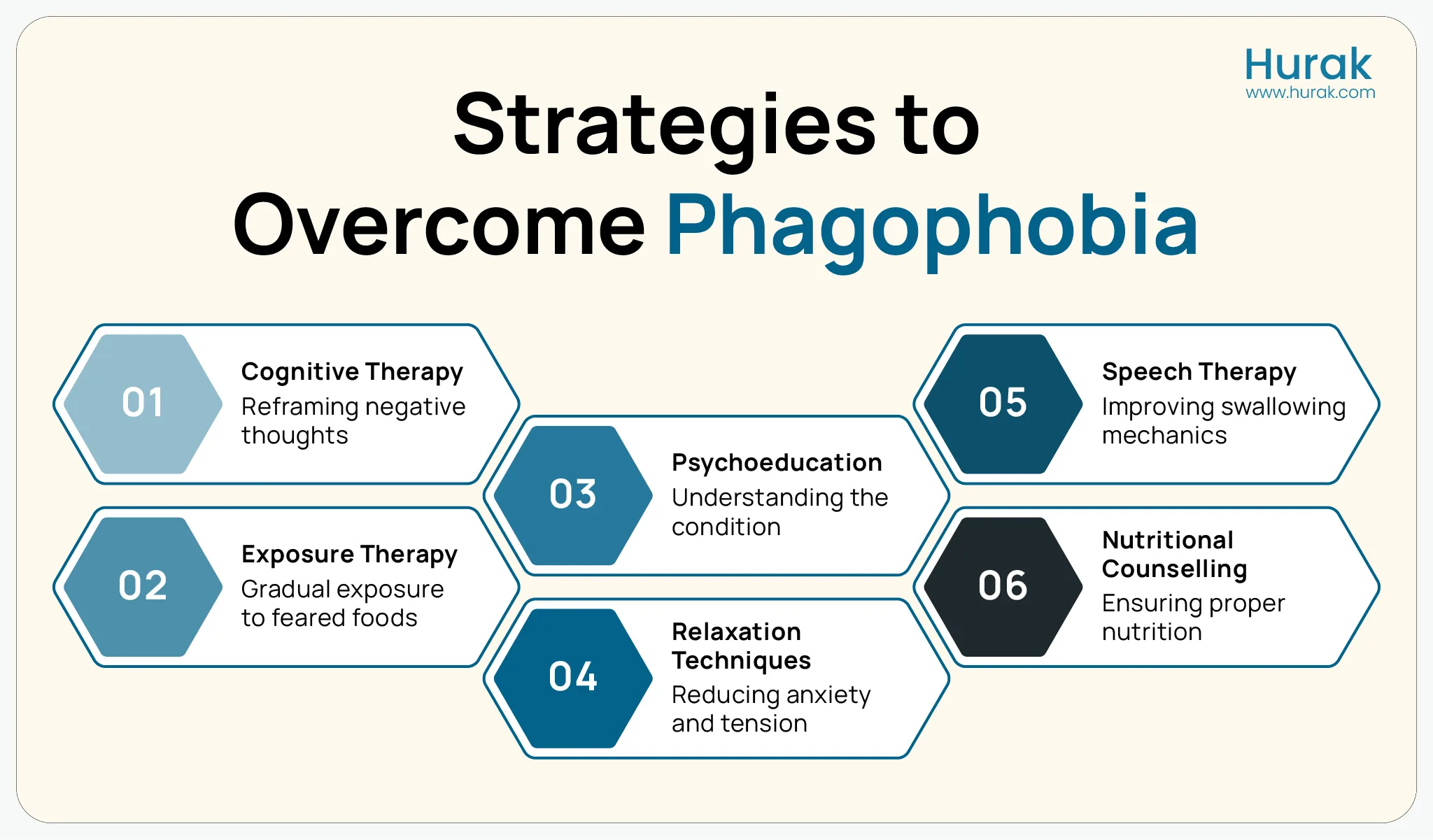
Phagophobia, the fear of swallowing or choking, can seriously impact your quality of life. But with proper phagophobia treatment, such as CBT, relaxation techniques, and medical support, recovery is achievable. Don't ignore the symptoms; early intervention can make all the difference.
Phagophobia is an anxiety disorder characterised by an intense fear of swallowing, often linked to the fear of choking on food, liquids, or even saliva. It can interfere with eating, drinking, and daily life.
Phagophobia causes may include a traumatic choking incident, witnessing someone choke, coexisting mental health conditions like anxiety or panic disorder, or obsessive-compulsive tendencies.
It often coexists with other conditions like generalised anxiety disorder, panic disorder, and, in some cases, may present alongside mania symptoms or obsessive-compulsive traits.
While some people may experience temporary relief, phagophobia rarely resolves completely without targeted treatment. Professional support significantly improves recovery outcomes.
Offer emotional support without judgment, encourage them to seek professional help, avoid pressuring them to eat, and be patient as they work through their fears.
Courses
Upskill with job-ready training.
Mock Tests
Measure your learning progress.
Create an online video course, reach students across the globe and earn money