On This Page

July 16, 20265 min read

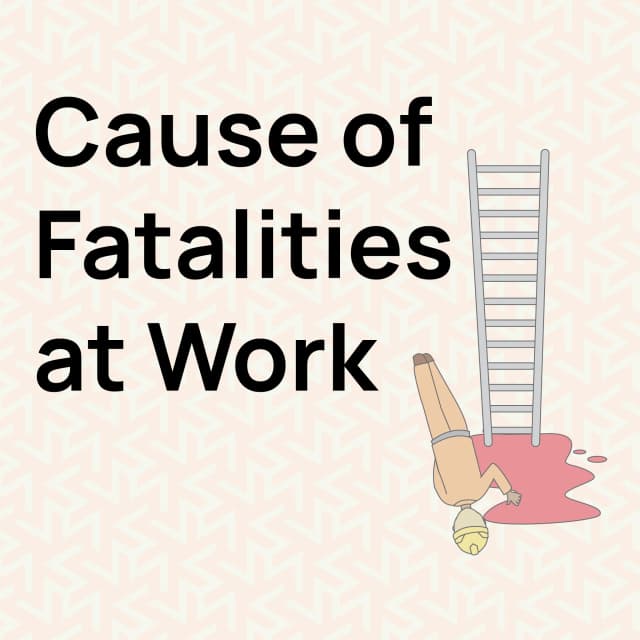
According to HSE data, falls from height are among the leading causes of occupational accidents in the UK. Various examples of individuals who have fallen from elevated locations can be found. A painter using a scaffold, a maintenance engineer replacing light bulbs, and a warehouse operative stacking goods are just a few examples of employees who are all at risk of injury if the proper methods for preventing falls are not followed.
To combat the threats associated with falling from heights, the Working at Height Regulations 2005 were enacted. This legislation was created to prevent loss of life and serious injury from falls by ensuring that all activities above ground are properly planned, supervised, and executed.
Working at Height Regulations UK apply to all industries; therefore, if your employment includes any type of activity involving a potential fall risk, you are required to comply with the regulations. Construction is a high-risk area that often requires extensive regulation due to the multitude of hazards that can occur on-site. Other workplace dangers must also be identified. Explore the top health and safety risks every site should manage.
Are your workers fully trained to meet the Working at Height Regulations?
Learn how professional training can help you comply with safety laws. Explore our Health and Safety Courses. Don’t leave safety to chance. Start today with our Working at Height Training and Safety Harness Training. Learn from experts, stay compliant, and protect lives.
The Work at Height Regulations 2005 are part of the broader requirements of the Health and Safety at Work Act 1974 to create a safe workplace for all employees. The Regulations came into force on 6 April 2005 and provide detailed instructions for planning, organising, and carrying out tasks at height.
The main purpose of the Work at Height Regulations is to prevent or reduce injury to workers by ensuring that any work done at height:
Is properly managed
Is Done Only by Competent Individuals
Uses Appropriate Equipment
It is important to remember that there is no minimum height at which the Work at Height Regulations apply. Even a fall from a step ladder can result in serious injuries, so proper safety precautions should be taken for any work at height.
The Work at Height Regulations outline specific responsibilities for both employers and employees.
1. Employer and Duty Holders
It is the responsibility of employers and duty holders to properly plan and supervise all work being performed at height. Prior to commencing any work, employers and duty holders should conduct a comprehensive risk assessment, provide suitable and properly maintained equipment, and appropriately train their employees to ensure they are competent to perform their assigned duties safely.
2. Employees
Employees also carry legal obligations under these regulations. They should adhere to any safety procedures provided by their employer, be adequately trained in them, utilise any personal protective equipment (PPE) provided by their employer correctly and safely, and report any hazards, defects, or unsafe working conditions immediately.
3. The Hierarchy of Control
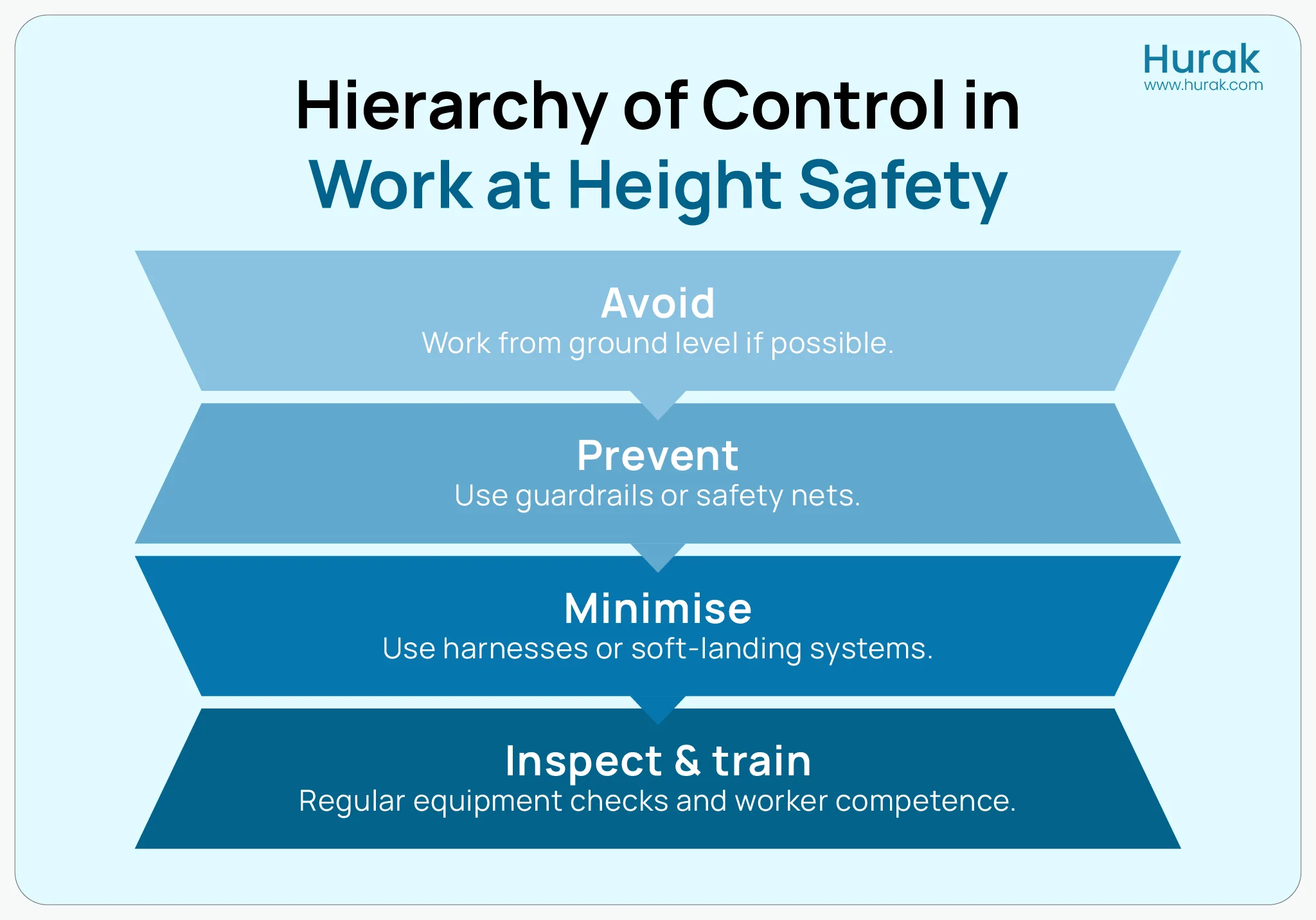
The Enforcement Priority of Controls is one of the central regulations and operates on a fundamental safety principle: avoid working at heights whenever possible. If this is not possible, prevent anything from falling by using an elimination method, such as using guards or safe falls. If part of the fall risk remains, reduce the distance of the fall using safe landing equipment, such as soft landing systems and/or harness systems.
What employers need to do, as outlined by the Work at Height Regulations 2005, specifically Regulation 7, is ensure they select and utilise appropriate access equipment that either prevents or minimises the potential for workers to fall from height. The correct choice of equipment is vital to ensuring a workplace is safe, because selecting or using the wrong piece of access equipment may result in serious injury and death.
Employers have many types of access equipment available to them when undertaking work at height. Among other things, these include:
Step ladders and ladders
Scaffold and Mobile Scaffolding Towers
Mobile Elevating Work Platforms (MEWPs)
Safety Harnesses with Appropriate Anchor Systems
All access equipment utilised by Employers should be regularly inspected, maintained, and used only by Competent and Trained personnel. Any access equipment found to be faulty and unsafe should be immediately reported, taken out of service, and repaired or replaced as appropriate.
By meeting these legal obligations, employers can not only ensure compliance with the law but also protect their employees from preventable falls and injuries by fostering safe, responsible work environments.
The Work at Height Regulations 2005 in the Constitution of the United Kingdom require that all individuals participating in work at height activities possess the demonstrated competence and training necessary to perform such work safely.
Competence should not be narrowly defined as having completed a training course; one must recognise the possible hazards associated with working at height, the ability to make appropriate safety decisions, and understand their role in protecting themselves and others.
In addition, a competent worker should be familiar with what constitutes a training program and what it should provide.
Some of the topics that may be part of a training program for people working at height are:
Recognising and evaluating risks associated with working at height
Selecting & Inspecting Access Equipment
Safe Use of Ladders and Harnesses
Emergency & Rescue Procedures
Understanding Inspection & Maintenance Records
In addition to the need for proper training prior to beginning work at height, employers have a legal obligation to provide periodic refresher training which maintains competency and thus promotes a safer working environment and continued compliance with the regulations
All experienced workers can make avoidable mistakes. Here are a few examples of common and dangerous errors made by experienced workers:
Failing to complete or rushing through a Risk Assessment before beginning a project.
Using ladders that are damaged/unstable, or not suitable for the job at hand.
Not taking into consideration the weather or ground conditions prior to starting a task.
Not using Personal Protective Equipment (PPE) in the correct way (for example, not wearing a harness properly) or not using appropriate PPE at all.
Failure to provide adequate supervision or communication for the task at hand.
A proactive approach to planning each task, inspecting equipment and keeping training current will help to avoid most falls. The reality is that most accidents occur due to workers not recognising obvious hazards such as uneven surfaces or poor housekeeping, resulting in minor slips, trips and then ultimately very serious injuries when working at height.

The Health and Safety Executive (HSE) enforces the Work at Height Regulations 2005 and inspectors may issue three types of notice to employers who do not comply with the regulations:
Improvement Notices, which require unsafe work practices to be rectified,
Prohibition Notices to stop an employer from continuing unsafe work practices immediately,
Fines and prosecutions for serious or repeated cases of non-compliance.
A roofing contractor based in the UK was fined more than £50,000 for not using safe working practices while repairing roofs, based on the need for guardrails and adequate supervision. This is proof that non-compliance can be very expensive.
The Work at Height Regulations 2005 are in place to protect everyone who works above ground level. By following the hierarchy of control, utilising the appropriate access equipment, and ensuring your team is properly trained, you can prevent accidents before they occur.
Don’t wait for an inspection or a warning to take action. Compliance starts with awareness and training.
The current working at height regulation come into force on April 6 2005. They were introduced to reduce the risk of injury and fatalities caused by falls from height in the workplace.
The Work at Height Regulations 2005, made under the Health and Safety at Work etc. Act 1974.
All employers, contractors, self-employed individuals, and anyone who controls or organises work at height.
No. The law applies whenever there’s a risk of injury from a fall, regardless of height.
Ladders, scaffolding, MEWPs, roof access systems, harnesses, and fall arrest gear.
Whether you’re looking to improve your safety, lead a team, or move into a supervisory role, these courses support your journey:
Manual Handling Awareness: Understand safe lifting techniques, reduce injury risks, and work more efficiently in physically demanding roles.
CITB SSSTS (Site Supervisor Safety Training Scheme): For team leaders responsible for safety on-site, including proper manual handling practices.
CITB SMSTS (Site Management Safety Training Scheme): Designed for site managers looking to manage risks, meet legal duties, and build safer teams.
SSSTS Refresher: Keep your supervisor certification valid while refreshing your knowledge of site safety and manual handling.
SMSTS Refresher: Update Your Understanding of Workplace Risks and Continue Leading by Example.
Health and Safety Awareness Course: A foundational course covering key responsibilities, ideal for new starters across all industries.
Working at Height Training: This course teaches workers how to safely plan, perform, and supervise tasks carried out above ground level. It covers essential topics like risk assessment, safe equipment use, and compliance with the Work at Height Regulations 2005.
Safety Harness Training: This course provides practical knowledge on the correct selection, inspection, and use of safety harnesses and fall arrest systems. Learners gain hands-on skills to prevent falls and ensure compliance with UK height safety standards.
Courses
Upskill with job-ready training.
Mock Tests
Measure your learning progress.
Create an online video course, reach students across the globe and earn money