On This Page

July 16, 20267 min read

Fire safety isn't just a box to tick; it's a legal requirement that can save lives. The Regulatory Reform (Fire Safety) Order 2005 was introduced to streamline fire safety laws and place responsibility firmly on those in control of premises. Employers, landlords, and managers should make sure that risks are evaluated, hazards are minimised, and individuals are safeguarded.
Designed to simplify multiple pieces of legislation, the Fire Safety Order 2005 clearly outlines what compliance looks like and the serious consequences of failing to meet these standards. This article examines its purpose, compliance requirements, and the penalties for non-compliance.
The Regulatory Reform (Fire Safety) Order 2005, often referred to as the Fire Safety Order 2005, is the foundation of fire safety law in England and Wales. It was enacted on 1 October 2006 and replaced more than 70 separate pieces of fire safety legislation with a single unified framework.
This act applies to almost all non-domestic premises, such as workplaces, residential buildings, and common areas. Its main aim is to make sure that the responsible person, who is an employer, a landlord, building owner, or facilities manager, takes reasonable measures to minimise the threat of fire and ensure the safety of anyone who might be present on the premises.
Unlike older regulations, the Fire Safety Order 2005 focuses on prevention and ongoing risk management, rather than prescribing specific standards. It requires regular fire risk assessments, appropriate safety measures, and ongoing monitoring to ensure the safety of people.
By combining several legislations into one, the Regulatory Reform Order 2005 made fire safety obligations clearer, easier to follow, and more enforceable across different types of buildings and organisations.
For many businesses, fire safety once meant navigating a maze of outdated regulations. Fire Safety Order 2005 was introduced to identify this confusion, and dozens of old rules were replaced by one set of clear and practical duties.
The law is structured in such a manner that it is easy to comply with because it has one responsible individual per premises; either it is an employer, a landlord, or a building manager. This shift also encouraged a proactive approach to fire safety, moving away from rigid checklists towards regular risk assessments and prevention.
The Fire Safety Order 2005 applies to almost every type of business and organisation. Whether you run a shop, manage an office, operate a factory, or oversee a school or hospital, this legislation applies to you. It also covers shared spaces in apartment blocks, such as corridors and stairwells.
The law makes the responsible person, usually the employer, landlord, or building manager, accountable for fire safety. Their job is to assess risks, implement the necessary measures, and protect everyone on the premises, including staff, customers, contractors, and visitors.
The Regulatory Reform (Fire Safety) Order 2005 makes fire safety a legal duty . Don't leave compliance to chance. Build the skills you need with our accredited training:
Fire Marshal & Fire Warden Online Train designated staff to lead safe evacuations and meet legal requirements.
NEBOSH Fire Safety Certificate Gain advanced knowledge of fire risk management and compliance.
Fire Safety Manager Advanced Diploma Develop leadership-level fire safety expertise for high-risk or multi-site organisations.
Stay compliant, protect lives, and meet your legal responsibilities with Hurak. Explore All Fire Safety Courses.
Compliance with the Regulatory Reform (Fire Safety) Order 2005 is not optional; it is a legal requirement for anyone responsible for non-domestic premises. The law makes the responsible person accountable for ensuring that fire risks are appropriately managed and that everyone on the premises is protected.
Some of the key duties include:
Conducting regular fire risk assessments: Involves identifying hazards, assessing who may be at risk, and taking action to mitigate those risks.
Maintaining fire safety equipment: Ensure alarms, extinguishers, lighting, and emergency exits are installed and kept in good working order.
Developing and communicating evacuation procedures: Ensure all occupants know how to respond promptly in the event of an emergency.
Providing staff training: Equip employees with fire prevention knowledge, emergency response skills, and confidence in using fire safety equipment.
Ongoing monitoring and reviews: Periodically update fire risk assessment and fire risk procedures, especially when there is a change in the premises or workforce.
These duties are designed to move fire safety from a reactive approach to a proactive culture of prevention. By meeting them, organisations not only comply with the law but also create a safer environment for employees, customers, visitors, and residents.

For businesses, failing to meet the requirements of the Fire Safety Order 2005 can have devastating consequences. In addition to fines and legal penalties, failure to comply may destroy customer trust, disrupt operations, and pose a risk to lives.
Authorities may:
Issue enforcement or prohibition notices that affect the normal running of the business.
Impose financial penalties that can be severe and damaging.
Pursue prosecution, which may result in huge fines or imprisonment in grave cases.
The message is also straightforward, compliance does not merely mean that you are following the legal obligations, but also that you are protecting people, your reputation and running your business smoothly.
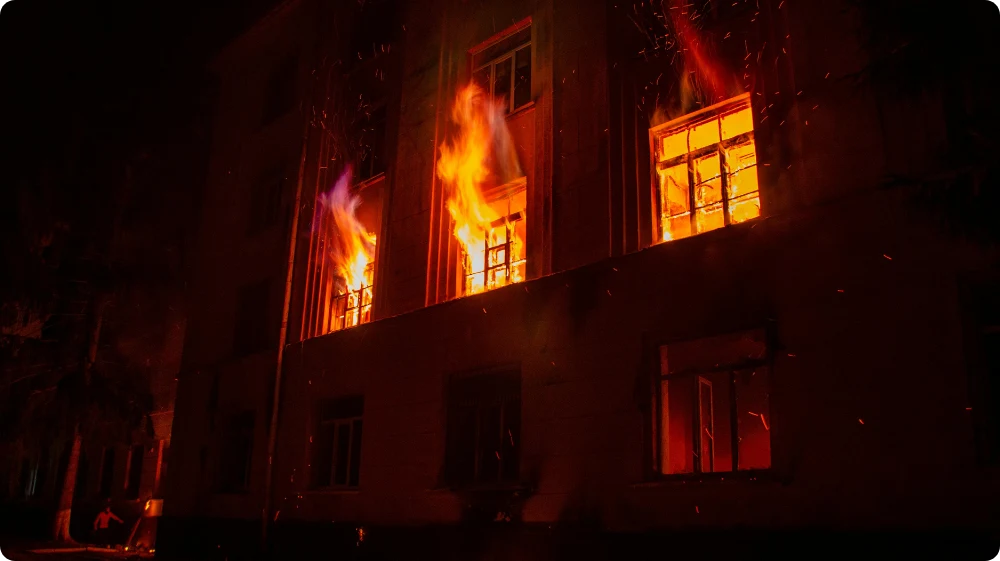
Compliance with the Regulatory Reform (Fire Safety) Order 2005 should be seen as a cycle rather than a one-off activity. It starts with a detailed fire risk assessment, followed by action to address any hazards that are identified. However, the process doesn't stop there; it must be repeated and updated whenever circumstances change, such as renovations, staff turnover, or the introduction of new equipment.
From there, organisations must ensure fire safety systems remain functional at all times. This includes regularly checking alarms, extinguishers, and escape routes. Alongside this, evacuation procedures should be tested through drills, while staff need ongoing training to reinforce awareness and responsibility.
The final piece of the cycle is recording everything. Proper documentation shows that an organisation takes its duties seriously and provides crucial evidence if challenged by authorities. Seeking advice from professionals can further strengthen compliance, especially for larger or higher-risk premises.

Nearly two decades after it came into force, the Regulatory Reform (Fire Safety) Order 2005 is still one of the pillars of fire safety in England and Wales
Even though new laws have been introduced, such as the Fire Safety Act 2021 and the Building Safety Act 2022, the Order continues to form the foundation of fire safety law.
It still matters today because:
Fire risks have not disappeared: Workplaces, public buildings, and residential blocks all continue to face hazards that must be managed.
It sets the baseline for compliance: Newer laws build on, rather than replace, the Fire Safety Order. making a clear understanding of it to achieve the existing duties.
Accountability is essential: By assigning responsibility to a clearly defined responsible person, the Order ensures that fire safety is not overlooked.
It promotes a culture of prevention: The focus on risk assessment and ongoing management keeps organisations proactive rather than reactive.
For businesses, landlords, and property managers, staying aligned with the Fire Safety Order 2005 remains the essential starting point for protecting people, safeguarding assets, and meeting legal requirements.
The Fire Safety Order 2005 continues to shape how businesses and organisations manage fire risks. Its purpose is clear: simplify the law, promote prevention, and ensure someone is always responsible for safety.
For employers, landlords, and managers, compliance entails conducting risk assessments, providing staff training, developing emergency plans, and conducting ongoing reviews. Lack of compliance may lead to fines, prosecution, and loss of reputation. The Order enables businesses to remain compliant, prevent disruptions and most importantly keep people safe when used accordingly.



Courses
Upskill with job-ready training.
Mock Tests
Measure your learning progress.
Create an online video course, reach students across the globe and earn money