On This Page

July 19, 20267 min read

Upskilling in construction doesn't have to come with a financial strain. If you're looking to gain an NVQ in Painting and Decorating, especially at Levels 2 or 3, there are multiple ways to reduce the cost, from CITB grants to flexible monthly payment plans. We've gathered all the funding support and payment plan options that make getting your CSCS card more affordable.
NVQ funding refers to financial support provided to learners and employers to help cover the cost of completing a National Vocational Qualification (NVQ). In the construction industry, this funding enables workers to acquire the necessary qualifications for CSCS cards and advance their careers.

With the Industry Accreditation (IA) CSCS cards officially expired as of 31 December 2024, it is now mandatory for construction workers to hold a valid NVQ qualification to apply for or renew their CSCS card. This shift affects thousands of workers who were previously relying on experience-based accreditation.
NVQ funding plays a crucial role in making this transition smoother and more accessible, helping workers avoid large out-of-pocket costs while staying compliant with industry standards. Grants like the CITB Short Qualification Grant significantly reduce financial barriers, allowing workers to gain recognised qualifications needed to continue working legally on-site.
The CITB Short Qualification Grant helps construction workers and employers reduce the cost of qualifying by offering direct financial support toward recognised qualifications. For Painting and Decorating NVQs, this grant provides 600 toward the cost of a Level 2 NVQ in Painting and Decorating.
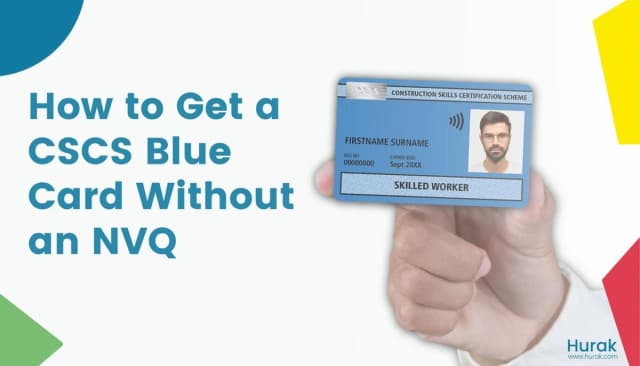
This financial support can significantly reduce your upfront costs, making it more affordable to get your CSCS Blue Skilled Worker Card and continue working on-site legally.
As of June 2025, Painting and Decorating qualifications are only eligible for the 600 grant, according to the official CITB list of short qualifications.
To qualify for the CITB Short Qualification Grant, you must be employed by a CITB-registered employer that is up to date with its Levy Returns. Additionally, you must work in a construction-related role. This includes directly employed staff who are on payroll in practical or supervisory roles, subcontractors and self-employed workers operating under a CITB-registered business, as well as business owners or partners who are actively involved on-site or in managing decorating teams.
If you're unsure about your eligibility, speak to your employer or NVQ training provider.
Fast-Track Your NVQ Level 2 in Painting and Decorating
Only 699.99 | Finish in just 3 weeks | 100% online | Guaranteed pass
Perfect for decorators already working on-site who want formal recognition and a CSCS Blue Skilled Worker Card.
Confirm eligibility with your employer or NVQ provider.
Enrol in a CITB grant-approved NVQ Level 2 in Painting and Decorating.
Complete your NVQ, and your employer must submit the grant application within 52 weeks of completion.
Your employer will need to provide:
NVQ certificate or awarding body confirmation
Completed CITB grant application form
Employer's bank details
Processing Time: Approximately 3-5 weeks. Payment is made via BACS directly to the employer, who can either pass the amount to you or retain it if they cover your training costs upfront.
If you're not eligible for funding or want to spread the cost, interest-free payment plans are an easy way to get started.
All of Hurak's NVQ courses can be split into three interest-free monthly payments through Klarna. There's no credit check, and you can start learning right away.
Hurak offers a full refund if you don't pass your NVQ, plus ongoing assessor support to guide you every step of the way.

699.99
Finish in just 3 weeks
100% online & no exams
Get your CSCS Blue Skilled Worker Card
Perfect for painters already working on-site who want formal recognition.
Get qualified without exams explore our fully online NVQ Level 2 course
899.99
Finish in 4-5 weeks
Step up to the CSCS Gold Skilled Worker Card
Ideal for team leads, supervisors, and experienced decorators
Explore the NVQ Level 3 Painting and Decorating course to access senior positions in the trade
OFQUAL & CITB approval
Guaranteed pass
Online access, assessor support, and easy uploads
Check your eligibility for CITB grants or free courses
Choose your course (Level 2 or Level 3)
Apply for funding or spread the cost with Klarna
Start learning immediately with online, self-paced access
Get your CSCS card and boost your career prospects
Upskilling doesn't have to wait. Whether you're funding your NVQ through CITB, or using an interest-free instalment plan, Hurak makes it simple, affordable, and fast.
Browse all NVQ courses offered by Hurak
Yes. If your grant covers part of the cost, you can use Klarna to cover the rest.
No, our NVQs are flexible and built around your work schedule.
Yes, if you're working under a CITB-registered contractor or via local Jobcentre schemes.
Yes. All qualifications are nationally accredited and valid for life.
Level 2 / Blue CSCS Card: £28,000 - £38,000/year According to the UK Government's Office for National Statistics (ONS) labour market data, qualified tradespeople in roles like painting and decorating earn an average salary within this range, depending on region and experience.
Level 3 / Gold CSCS Card: £38,000 - £50,000+/year Senior decorators, team leads, and site supervisors typically earn within this range. These figures are consistent with estimates from industry job boards and government-backed careers services such as the National Careers Service, which outlines potential earnings based on qualifications and responsibilities.


Courses
Upskill with job-ready training.
Mock Tests
Measure your learning progress.
Create an online video course, reach students across the globe and earn money