On This Page

July 17, 20267 min read
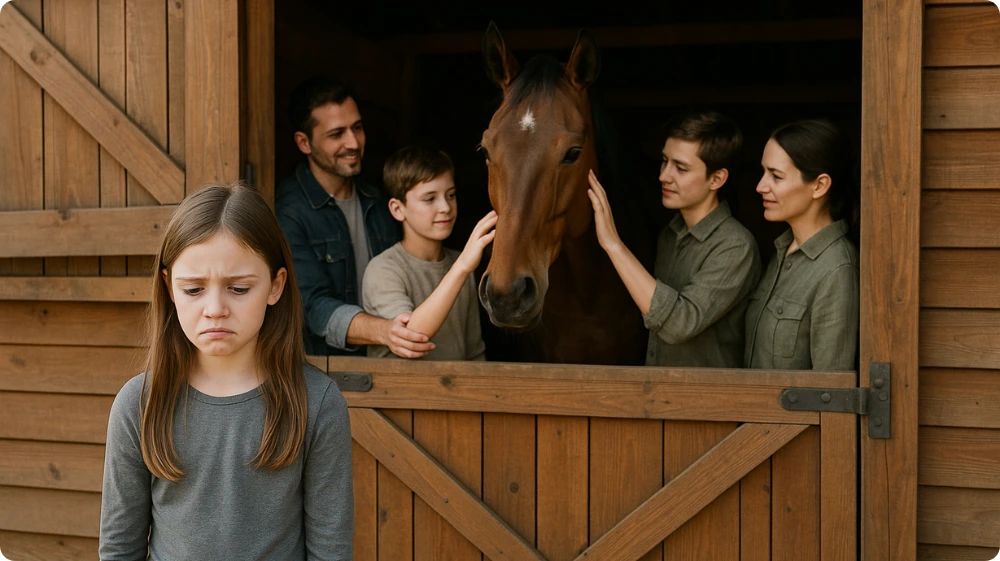
Horses are often described as gentle and graceful parts of quiet countryside scenes, childhood memories, and peaceful walks through open fields. For some, being anywhere near a horse can feel overwhelming. Maybe their chest gets tight, and their heart starts to race. Every instinct tells you to step back, even if you don’t fully understand why. These signs may show they are suffering from a phobia called Equinophobia.
Equinophobia is the fear of horses, and it can affect people of all ages, whether they grew up around animals or have never been near a stable. Like many phobias, it isn’t always logical, but it is very real. Understanding where this fear comes from is the first step toward managing it and knowing that you’re not alone.
Equinophobia (also known as hippophobia) refers to an intense, irrational fear of horses. The term originates from the Latin word “equus” meaning “horse” and the Greek “phóbos” meaning “fear”. While many people may feel uneasy around large animals, which is very common and understandable, a phobia is entirely different. It is much harsher on the people who are suffering from it than anyone else can even imagine, and it may create deep wounds in someone’s mental health that cannot be seen.
So, if any of your loved ones are suffering from this, or maybe you are suffering from it yourself, it is very important to understand this phobia to help them better.
Equinophobia is clinically classified as a specific phobia, which is a broad diagnostic category that includes intense, long-lasting fears of defined objects or situations. This category is considered broad because it groups together many different types of fears based on shared psychological features, instead of the specific trigger itself.
Specific phobias are commonly divided into subtypes such as animal phobias (e.g. fear of dogs, spiders, or horses), natural environment phobias, blood–injection–injury phobias, and situational phobias. Equinophobia falls under the animal subtype.
As a result, prevalence data is typically reported for animal-type specific phobias as a whole, rather than for fear of horses alone, which explains the lack of standalone statistics for equinophobia.
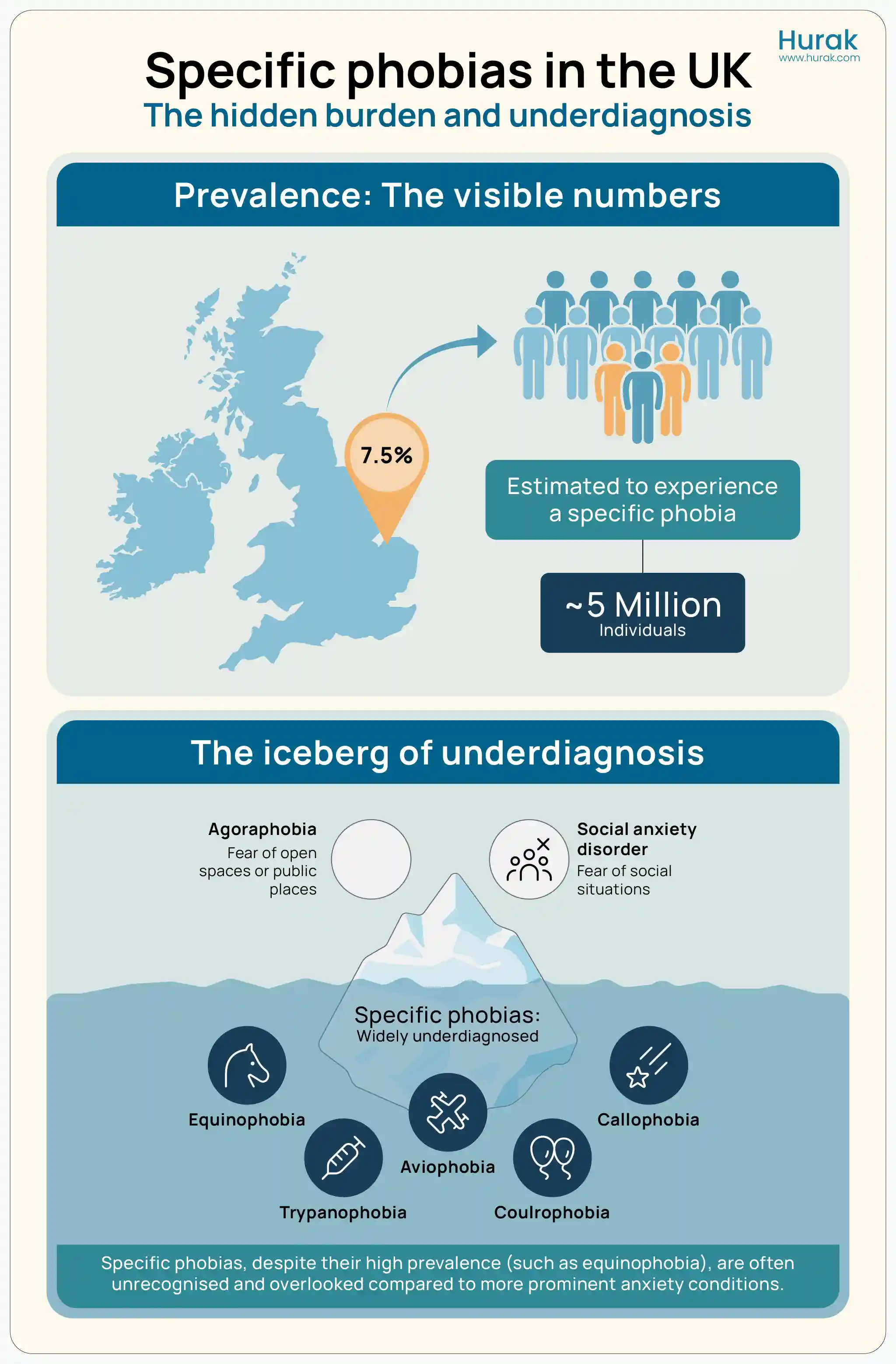
In the UK, it is estimated that around 7.5% of people experience a specific phobia, which is close to five million individuals. Despite this, specific phobias, including equinophobia, are thought to be widely underdiagnosed, especially when compared with more well-known conditions such as agoraphobia or social anxiety disorder.
The equinophobia can affect your daily life in many ways that others may not notice. People with this fear may avoid countryside walks, farms, riding schools, parks or holidays where horses might be present. Even seeing a horse from a distance, in a field or on television, can trigger anxiety and cause discomfort for that person.
In some other cases, equinophobia can disturb your work or social activities as well, especially for those who are living in rural areas or working in an environment where animals commonly move around. This phobia can make you stay alert constantly and avoid certain places, which can make you feel more exhausted and may lead to feelings of embarrassment, lower self-esteem, isolation, distorted reality or even frustration sometimes.
If not recognised soon, over the time this ongoing anxiety can take a toll on your mind, mental health or wellbeing, by affecting your confidence and overall quality of life. Many people try to hide their fear, which can make them feel even lonelier.
Understanding how equinophobia impacts your daily life is an important step towards recognising the problem and seeking the right support.
Equinophobia can restrict a person’s daily activities, such as avoiding farms, horse-riding events, or places where horses may be present. Understanding and accepting this fear is important as it can help that person to seek the right support, which can reduce the anxiety and this can help them to regain their confidence in everyday life.
Some of the symptom categories are listed below with brief details. You can take a look and understand it more clearly:
Symptoms Category | Details |
Emotional & Cognitive Symptoms | |
Intense Fear | Feeling of intense fear, dread, or panic when thinking about, seeing, or being near a horse. |
Negative Thoughts | Thoughts such as "I might be kicked," "I'll lose control," or "It's dangerous", or even when the horse is completely calm. |
Anticipatory Anxiety | Constant worrying about the possibility of encountering a horse in the future. |
Physical/Physiological Symptoms | |
Cardiovascular | Rapid heartbeat and palpitations. |
Respiratory/Motor | Shortness of breath, trembling or shaking. |
Other Reactions | Excessive sweating, nausea, dizziness, and even fainting in severe cases. |
Although there is no single cause of equinophobia, it can happen to someone due to different factors. This is the list of factors that can affect a person.
Traumatic experiences: This is one of the most common causes. This can include being thrown by a horse, kicked by a horse, or even witnessing a serious horse-related accident, which can leave a strong impact on a person's mind. Even one frightening experience can leave a strong emotional impact and lead to long-term fear.
Learned behaviour: This is also known as vicarious learning, and can also play a vital role in affecting a person's mental well-being. A person may develop fear by watching someone else react anxiously around horses or by hearing frightening stories about horse injuries or accidents. Children are especially influenced by this, as they may adopt a parent’s fear without having a negative experience themselves.
Genetic predisposition: This is another factor, people with a family history of anxiety disorders or phobias may be more likely to develop equinophobia. This does not mean the fear is inevitable, but it can make someone more sensitive to developing phobias.
Negative media representations: This can have a huge impact as well, on some people. Although rare, films, news stories, or online content that portray horses as aggressive, unpredictable, or dangerous which can increase the fear, especially in those who already feel uneasy around large animals.
Understanding the cause is very important, as it can help a person to overcome the phobia by seeking the right support before it can lead to a bad impact on someone's life
Today, as technology has developed so well, there are many treatment options available for equinophobia. Many people have overcome this phobia with the right support. Treatment doesn't mean forcing yourself into an uncomfortable situation. Instead, it's about moving to a more comfortable and cosy space, which can help you to manage this phobia.
One of the most helpful treatments in the UK is Cognitive Behavioural Therapy (CBT). It helps you understand why your mind reacts the way it does around horses. Talking things through with a therapist can slowly help you see that the fear isn’t something to be ashamed of; it’s just something the brain has learned. With time, those scary thoughts start to feel quieter and easier to manage. CBT is available through NHS talking therapies and also private counsellors.
Facing horses again doesn’t mean jumping straight into it. Most people start very small, maybe just looking at photos, videos, or seeing horses from a distance where they still feel okay. Some days you might feel ready, other days not so much. That’s normal. The important part is that you go at your own speed, so the fear slowly feels less intense over time.
When fear hits, the body usually reacts first. Breathing gets faster, muscles tense up, and everything can feel a bit too much. Simple things like slowing your breathing, grounding yourself, or focusing on what’s around you can really help. These aren’t quick fixes, but they can stop the anxiety from spiralling.
You don’t have to handle this on your own. In the UK, many people start by speaking to their GP, even if it feels awkward at first. They can help you find NHS therapy services or suggest other options. Some people choose private therapists who work with phobias. Support is also there for children and teenagers, with sessions shaped around what feels safe for them
Learning about how horses behave can help more than people think. A lot of fear comes from not really knowing what horses might do next, and once you understand why they act in certain ways, they can feel less scary overall to you.
You can use relaxation techniques like deep breathing, mindfulness, or slowly tensing and relaxing your muscles can help when anxiety shows up. These things don’t always work perfectly, and sometimes the fear still pops up, but they can help your body calm down a bit.
Taking small steps outside of therapy is also helpful for some people. This could mean watching horses from a distance, or being around them with someone you trust nearby. It’s important to go slowly, step by step, as you are ready, and not force yourself; pushing too much can make it worse. Getting support from friends or family can really matter. Having people who understand and don’t judge the fear makes it easier to cope, instead of feeling silly or alone. So it is very helpful if you can console your friend or known one who is suffering from this phobia.

Even though fear of horses can feel very overwhelming at times, there is always hope for getting better. With the right support, therapy, and self-help methods, many people have slowly regained their confidence, and you can too. Small steps still count. Learning about horses, facing fears bit by bit, and asking for help can slowly change anxiety into something calmer. Remember, you’re not alone in this, and fear can be faced with patience and support.
Fear isn’t always logical. It’s often the body’s way of protecting you from a past experience or unfamiliar situation.
Yes. You can start with videos, pictures, or learning about horse behaviour before trying real-life exposure at your own pace.
That’s common. Sharing your feelings with a therapist or supportive friend can help you feel validated and stay motivated.
No. It’s simply a specific phobia, one of the most common anxiety types, and it’s treatable with the proper guidance.
Absolutely. Gentle, supervised interactions and observing calm horses can help replace fear with trust and familiarity.
Yes, but remember that fear is a natural human response. Recognising it and seeking help shows strength, not weakness.
Be patient, avoid teasing, and never force contact. Offer reassurance and encourage gradual, safe exposure to the situation.
It varies for everyone. With consistent effort, therapy, and emotional support, improvement can begin within weeks or months.

Courses
Upskill with job-ready training.
Mock Tests
Measure your learning progress.
Create an online video course, reach students across the globe and earn money