On This Page

July 16, 20267 min read
Asbestos was once a go-to material for insulation, flooring, roofing, and fireproofing. But beneath its usefulness lies a serious health hazard. Although it has been banned from use in construction since 1999, many older homes and buildings still contain asbestos-based materials. If disturbed, these fibres can become airborne and pose life-threatening risks to anyone exposed.
If you’re wondering how to test for asbestos safely in your property, this guide explains everything you need to know, from identifying potential asbestos materials to choosing between a self-sampling kit and professional testing.
Asbestos is a naturally occurring mineral made up of fine, durable fibres resistant to heat, fire, and chemicals. Because of these properties, it was widely used in construction and manufacturing throughout much of the 20th century.
There are three main types of asbestos you might come across:
Chrysotile (white asbestos): Found in ceilings, walls, roofs, and floors.
Amosite (brown asbestos): Common in insulating boards, ceiling tiles, and thermal insulation.
Crocidolite (blue asbestos): Typically used in pipe insulation and spray-on coatings.
Asbestos-containing materials (ACMs) can still be found in many older buildings, especially those built before 2000. Common locations include Artex or textured coatings, floor tiles and adhesives, roofing sheets, pipe lagging, cement panels, and insulation boards. These materials were once popular because of their strength and resistance to heat, but they can pose a serious risk if disturbed during maintenance or renovation work.
When these materials are damaged or disturbed, they release microscopic fibres that can be inhaled. Over time, this can lead to serious illnesses such as asbestosis, mesothelioma, and lung cancer, which often take decades to develop. Testing suspected materials is the only reliable way to know if asbestos is present and to protect your health and those around you.

Unfortunately, asbestos can’t be identified by sight alone. However, some clues might suggest its presence.
The building was constructed or refurbished before 2000.
You see grey-white fibrous material in insulation, boards, or sealants.
Old vinyl floor tiles or adhesives have a dull or rigid texture.
Textured ceiling coatings (Artex) appear rough and patterned.
Corrugated roof panels look aged or brittle.
Still, these are only indicators. Some asbestos-free materials look identical to those that contain asbestos. That’s why testing is essential. According to the Health and Safety Executive (HSE), asbestos identification must always be confirmed through laboratory analysis, rather than visual inspection.
Before jumping straight into sampling, you can conduct a non-intrusive check to determine whether testing is necessary. Here’s a simple checklist:
Identify suspect materials: Focus on insulation, ceiling panels, roofing, and old pipework.
Check the age of the building: If it was built or renovated before 2000, asbestos could be present.
Avoid disturbing surfaces: Do not drill, scrape, sand, or break any materials you suspect may contain asbestos.
Observe the condition: Damaged, crumbling, or flaking materials are at higher risk.
Record locations: Note down any suspect areas for reference by a professional.
If you’re unsure, it’s better to arrange a professional inspection or use a certified testing kit following strict safety guidelines. If you or your team work in environments where asbestos may be present, it’s essential to complete certified training like the Asbestos Awareness Course, which covers everything from identification and legal duties to emergency procedures.
TIP: Never attempt to remove or break a sample on your own unless you fully understand the safety procedures. Even small amounts of asbestos dust can be hazardous if inhaled.
Once you’ve identified potential asbestos materials, there are two safe routes for testing: hiring a professional surveyor or using a home testing kit.
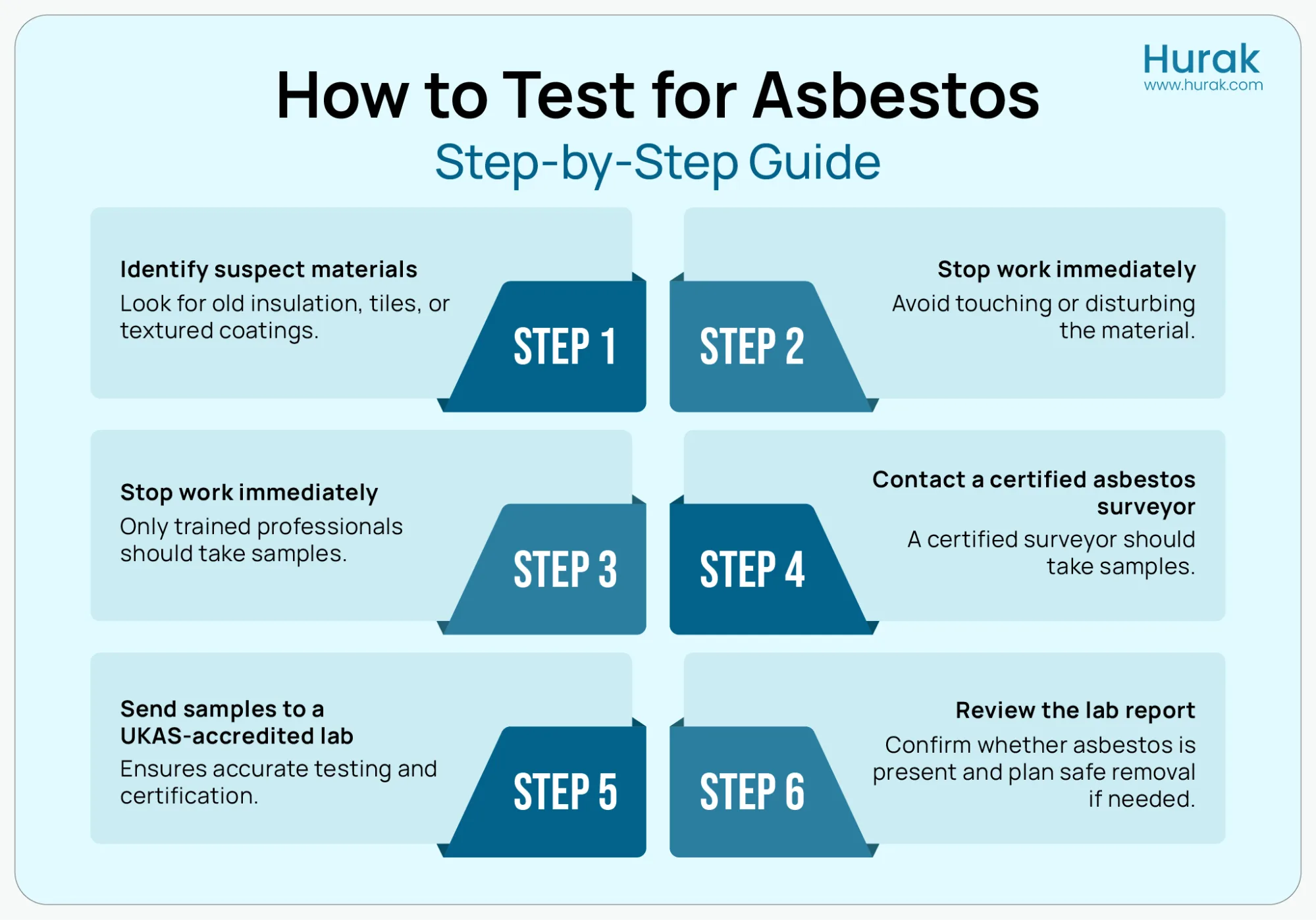
The most reliable and safest option is to hire an accredited asbestos surveyor or testing company. These professionals follow strict HSE and UKAS (United Kingdom Accreditation Service) standards.
Here’s how the process works:
Initial assessment: The surveyor inspects your property to locate potential asbestos-containing materials (ACMs).
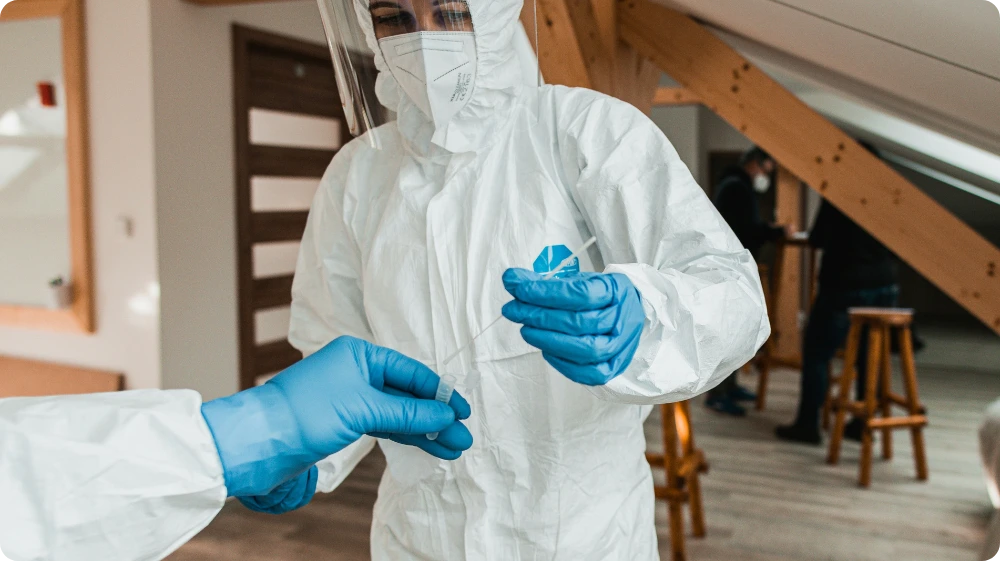
Sample collection: Using specialist tools and protective equipment, they safely remove small samples.
Laboratory analysis: The samples are sent to a UKAS-accredited lab for testing under a microscope.
Report and results: You’ll receive a detailed report outlining the type of asbestos (if present), location, condition, and recommended next steps.
Professional testing not only ensures accuracy but also eliminates your risk of exposure. If asbestos is confirmed, the surveyor can guide you on whether to remove, encapsulate, or manage the material in place. You can find accredited asbestos surveyors and labs via the HSE directory or the UKAS website.
For small, solid (non-crumbly) materials, a home asbestos testing kit can be a cost-effective option. These kits usually include protective gloves, sample bags, instructions, and a prepaid envelope for lab testing.
When collecting a sample:
Always wear a disposable mask, gloves, and coveralls.
Lightly dampen the area to prevent dust release.
Cut a small piece (no larger than a 50p coin), seal it securely, and send it to the lab.
Avoid using kits for friable materials such as pipe lagging, insulation, or sprayed coatings, as these require professional handling.
Lab results will confirm whether asbestos fibres were detected and specify the type found (e.g., chrysotile or amosite).
If the result is negative, you can proceed safely with your renovation or repair. If positive, you’ll need to decide how to manage it:
Encapsulation: Sealing the surface to prevent fibres from escaping.
Removal: Carried out by licensed asbestos contractors.
Management: Monitoring and maintaining the material in a safe condition.
Always ensure any removal or repair follows HSE-approved procedures and is performed by licensed professionals.
Testing a material for asbestos is not the same as testing for asbestos exposure. An asbestos exposure test focuses on whether you’ve been exposed to harmful fibres, especially if you suspect past contact during renovation or demolition.
Air monitoring: Measures the concentration of asbestos fibres in the air.
Medical assessment: Doctors may recommend a chest X-ray, CT scan, or lung function test.
Blood or sputum tests: Used in some cases to monitor lung inflammation or exposure markers.
After the accidental disturbance of suspect materials.
If you worked in construction or maintenance before asbestos bans.
When renovating older properties without prior inspection.
If you think you’ve been exposed, contact your GP for a medical review. Early detection and regular health monitoring are crucial.
Boost Your Health & Safety Expertise with CITB Training
Spotting asbestos is just one step toward creating a safer workplace. To effectively manage broader health and safety challenges and meet legal obligations, construction professionals need proper accredited training. Hurak’s CITB Site Safety Plus courses equip you with the essential skills to identify hazards, conduct risk assessments, and maintain safe and compliant worksites.
Popular CITB-Accredited Courses:
CITB Health and Safety Awareness (HSA): Ideal for beginners learning to identify common hazards, such as asbestos.
CITB SMSTS – Site Management Safety Training Scheme: A must-have for site managers responsible for controlling asbestos and other health and safety risks.
CITB SMSTS Refresher Course: Stay up to date with the latest safety legislation and industry best practices.
CITB SSSTS – Site Supervisor Safety Training Scheme: Train supervisors to identify, manage, and minimise on-site hazards.
CITB SSSTS Refresher Course: Renew your certification and keep your safety management skills sharp.
Empower your team, stay compliant, and take the next step in your career with Hurak’s accredited CITB training programmes.
Asbestos management is regulated under the Control of Asbestos Regulations 2012. These laws place responsibilities on employers, landlords, and property owners to prevent exposure.
Identifying and recording asbestos-containing materials.
Assessing the risk of fibre release.
Keeping an up-to-date asbestos management plan.
Ensuring only trained and licensed contractors handle asbestos.
For workplaces, compliance with guidance is mandatory. Even in domestic settings, homeowners should follow the same safety principles to protect themselves and others.
The cost of asbestos testing varies depending on the method used, the number of samples, and the size of the property.
Type of Test | Typical Cost (Approx.) |
Home Testing Kit | £30 – £60 per sample |
Professional Asbestos Survey | £200 – £400+ |
Full Management or Refurbishment Survey | £500+ for larger buildings |
Factors that affect cost:
Number of samples required
Travel distance and access difficulty
Turnaround time (same-day results often cost more)
While self-sampling kits are cheaper, professional testing offers peace of mind with certified results and legal documentation, which is essential if future proofing is required.
Even minor missteps can lead to serious health risks. Avoid these common mistakes:
Breaking or scraping materials to see what’s inside.
Skipping PPE or using low-grade masks.
Sending samples to uncertified labs.
Disposing of waste incorrectly (asbestos waste must go to licensed facilities).
Ignoring hidden materials, such as those behind tiles or under flooring.
If there’s any uncertainty, it’s safest to stop work and involve a qualified asbestos expert.
Testing for asbestos isn’t just about compliance; it’s about protecting your health and preventing long-term harm. Whether you choose a self-sampling kit or a professional survey, make sure samples are handled safely and tested by accredited experts.
By staying informed and proactive, you can keep your property and everyone in it safe from one of the world’s most silent hazards.
You can test for asbestos by either hiring an accredited surveyor or using a certified testing kit. Professionals take samples and send them to a UKAS-accredited lab for confirmation.
Yes, but only for small, non-friable materials like cement sheets or floor tiles. Always wear PPE and follow kit instructions carefully.
It can be safe if the material is intact and you avoid disturbing it. For damaged materials or insulation, hire a licensed professional specialising in asbestos removal.
Lab results usually take 24 to 72 hours, depending on the provider and delivery method.
Samples should always be sent to UKAS-accredited laboratories. Avoid cheap or uncertified online services, as they may not follow proper analysis standards.



Courses
Upskill with job-ready training.
Mock Tests
Measure your learning progress.
Create an online video course, reach students across the globe and earn money